Chapter 06 – Variable Costing and Segment Reporting: Tools for Management
62. Hansen Company produces a single product. During the last year, Hansen had net
operating income under absorption costing that was $5,500 lower than its income under
variable costing. The company sold 9,000 units during the year, and its variable costs were
$10 per unit, of which $6 was variable selling expense. If fixed production cost is $5 per unit
under absorption costing every year, then how many units did the company produce during
the year?
Chapter 06 – Variable Costing and Segment Reporting: Tools for Management
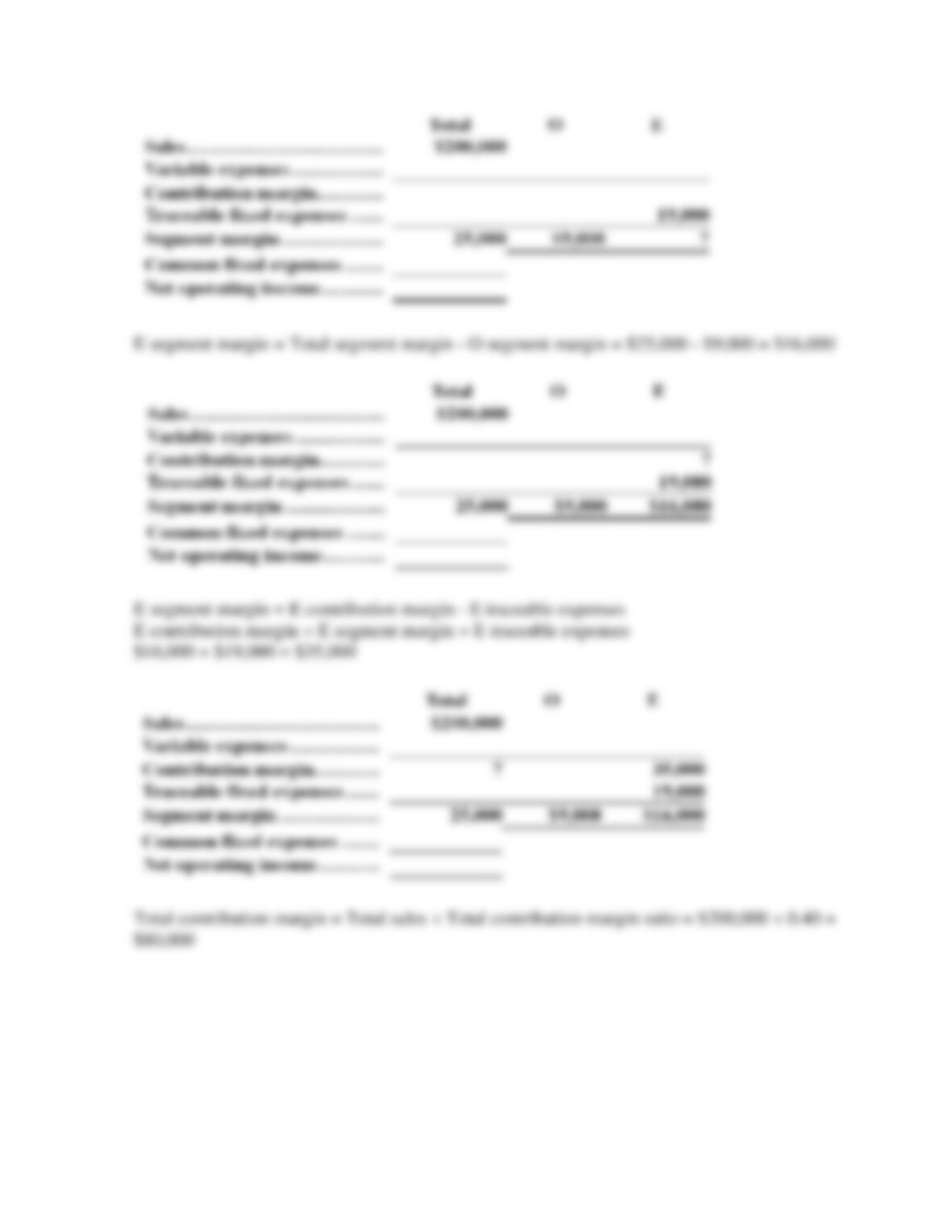
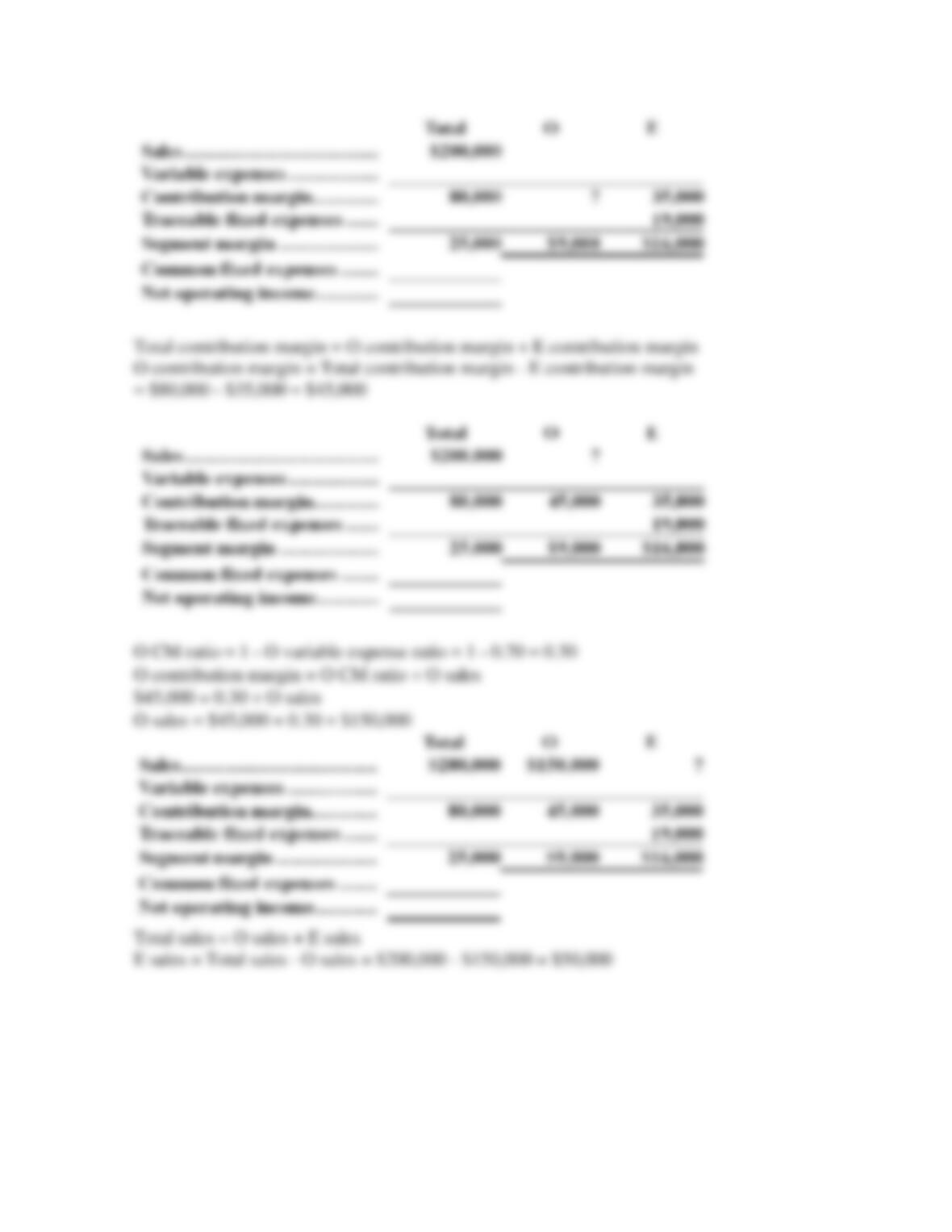
63. Hatch Company has two divisions, O and E. During the year just ended, Division O had a
segment margin of $9,000 and variable expenses equal to 70% of sales. Traceable fixed
expenses for Division E were $19,000. Hatch Company as a whole had a contribution margin
ratio of 40%, a segment margin of $25,000, and sales of $200,000. Given this data, the sales
for Division E for last year were:
Chapter 06 – Variable Costing and Segment Reporting: Tools for Management
6-43
Chapter 06 – Variable Costing and Segment Reporting: Tools for Management
6-44
Chapter 06 – Variable Costing and Segment Reporting: Tools for Management
64. During April, Division D of Carney Company had a segment margin ratio of 15%, a
variable expense ratio of 60% of sales, and traceable fixed expenses of $15,000. Division D’s
sales were closest to:
Chapter 06 – Variable Costing and Segment Reporting: Tools for Management
65. Colasuonno Corporation has two divisions: the West Division and the East Division. The
corporation’s net operating income is $88,800. The West Division’s divisional segment margin
is $39,500 and the East Division’s divisional segment margin is $166,900. What is the amount
of the common fixed expense not traceable to the individual divisions?
66. Gore Corporation has two divisions: the Business Products Division and the Export
Products Division. The Business Products Division’s divisional segment margin is $55,700
and the Export Products Division’s divisional segment margin is $70,600. The total amount of
common fixed expenses not traceable to the individual divisions is $107,400. What is the
company’s net operating income?
Chapter 06 – Variable Costing and Segment Reporting: Tools for Management
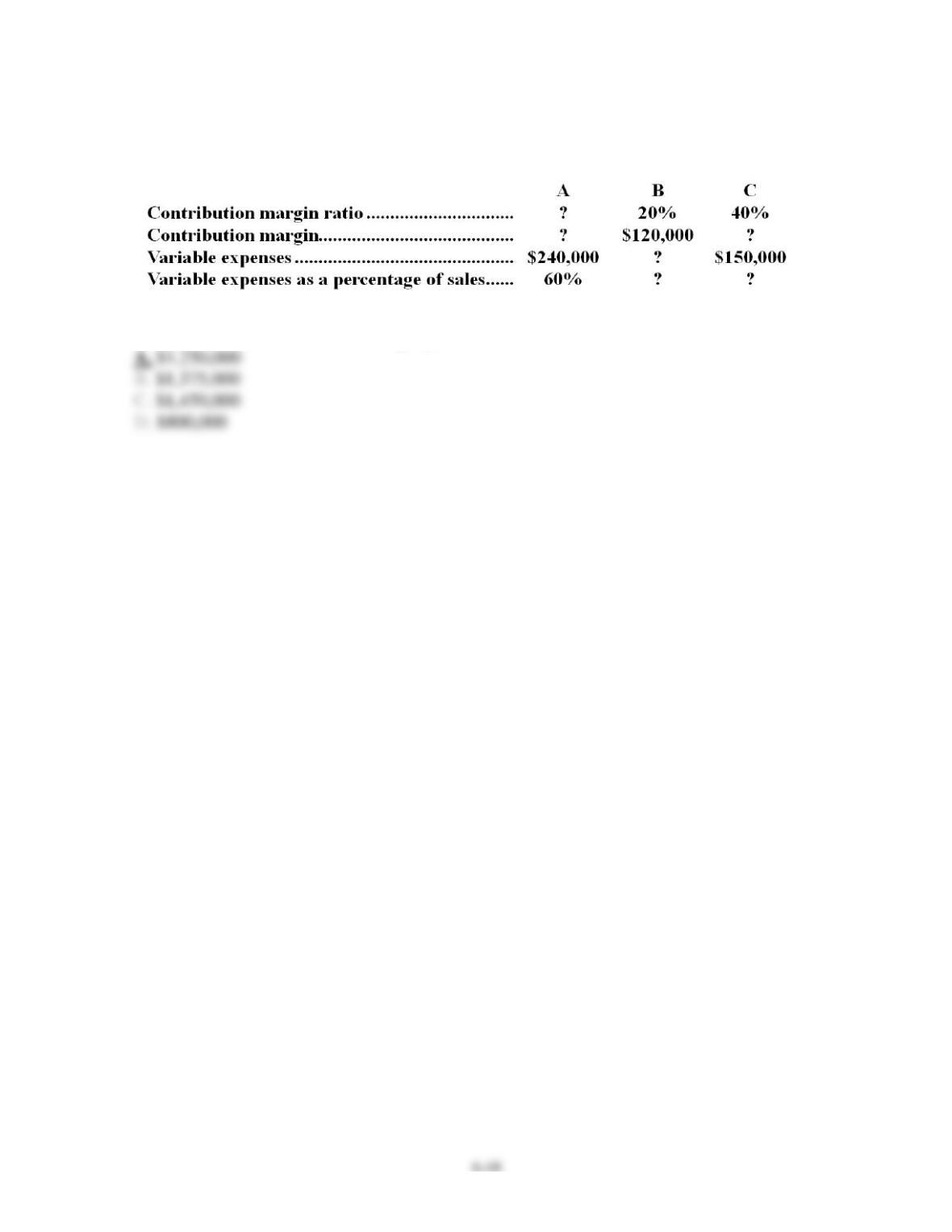
67. More Company has two divisions, L and M. During July, the contribution margin in
Division L was $60,000. The contribution margin ratio in Division M was 40% and its sales
were $250,000. Division M’s segment margin was $60,000. The common fixed expenses were
$50,000 and the company net operating income was $20,000. The segment margin for
Division L was:
Chapter 06 – Variable Costing and Segment Reporting: Tools for Management
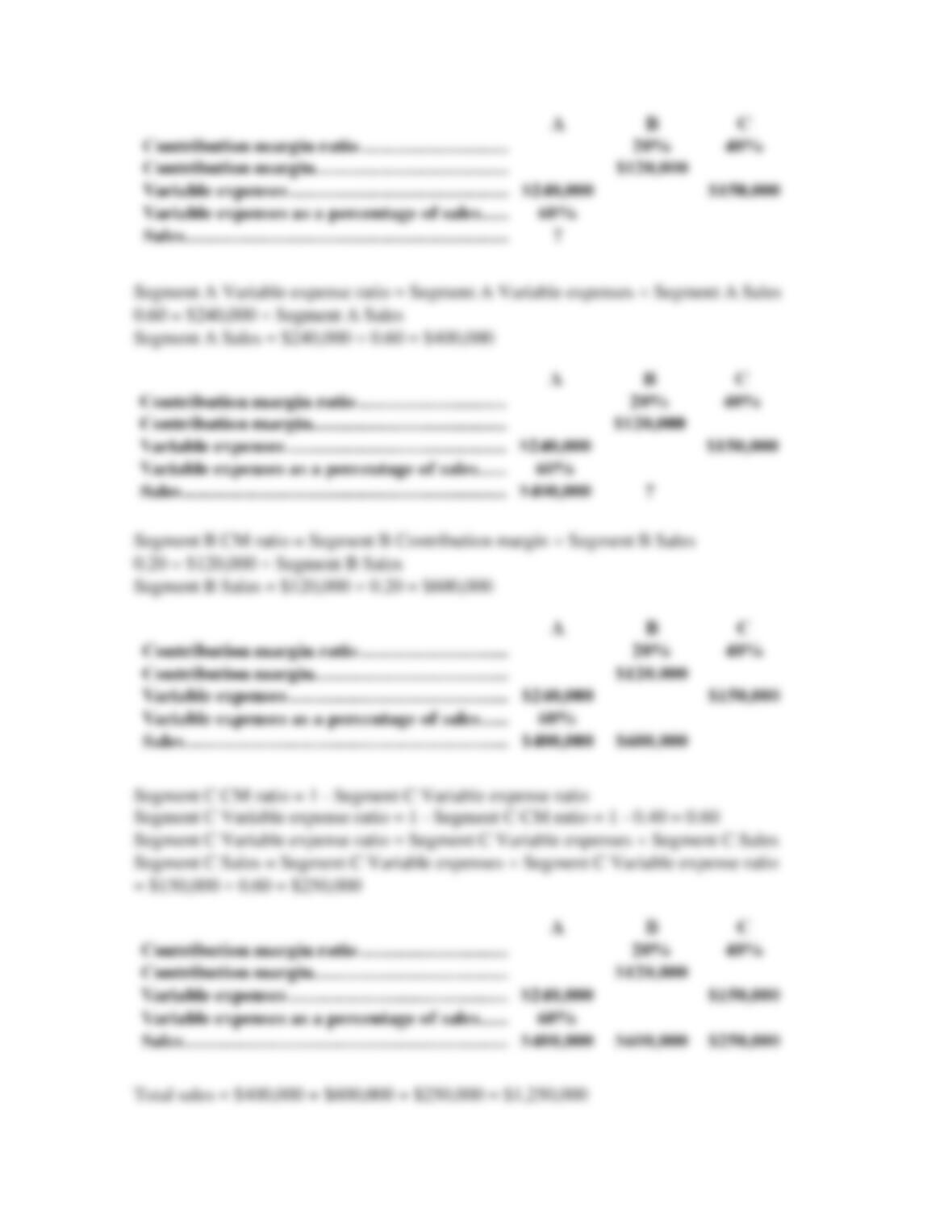
68. Stephen Company has the following data for its three stores last year:
Given the above data, the total company sales were:
Chapter 06 – Variable Costing and Segment Reporting: Tools for Management
6-49

Chapter 06 – Variable Costing and Segment Reporting: Tools for Management
Chapter 06 – Variable Costing and Segment Reporting: Tools for Management
6-51
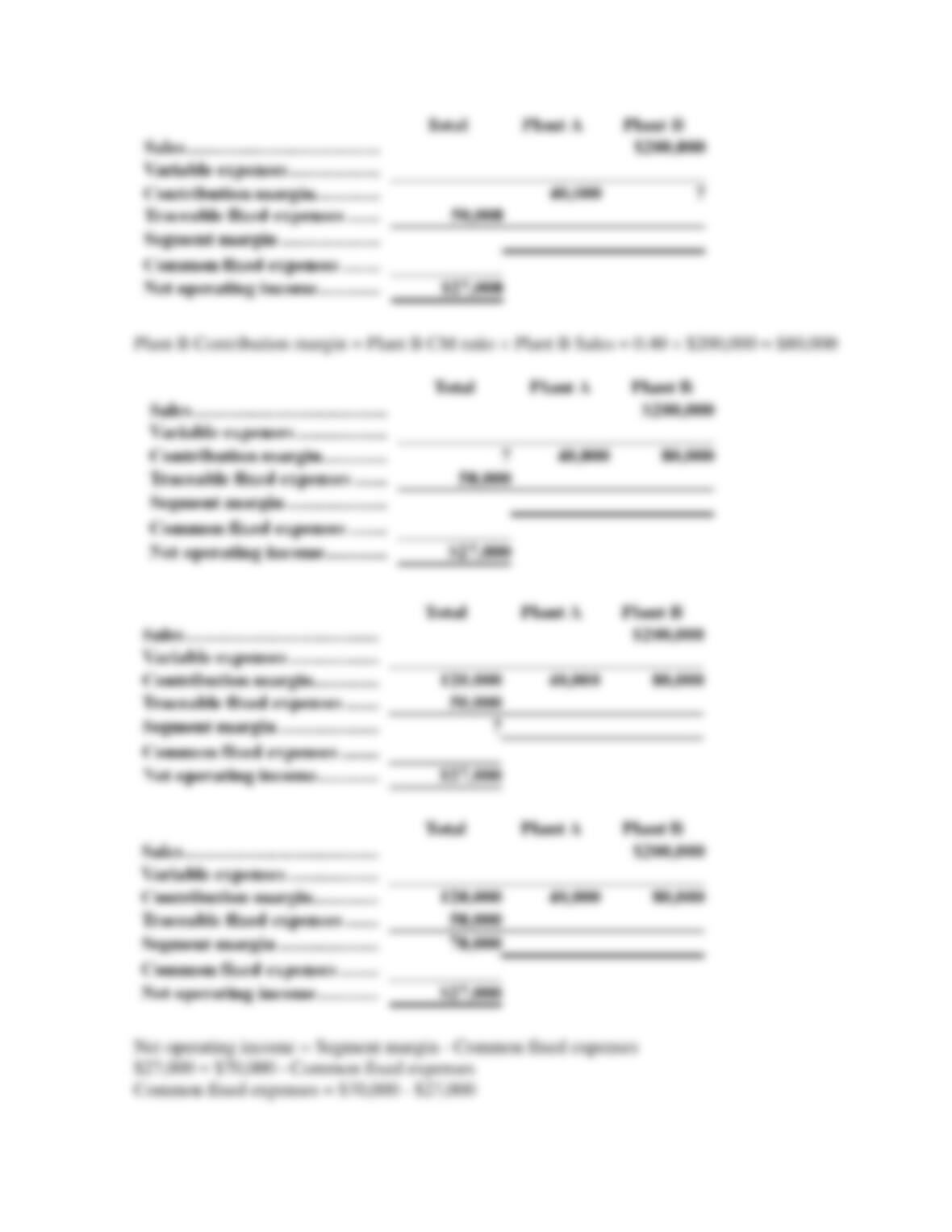
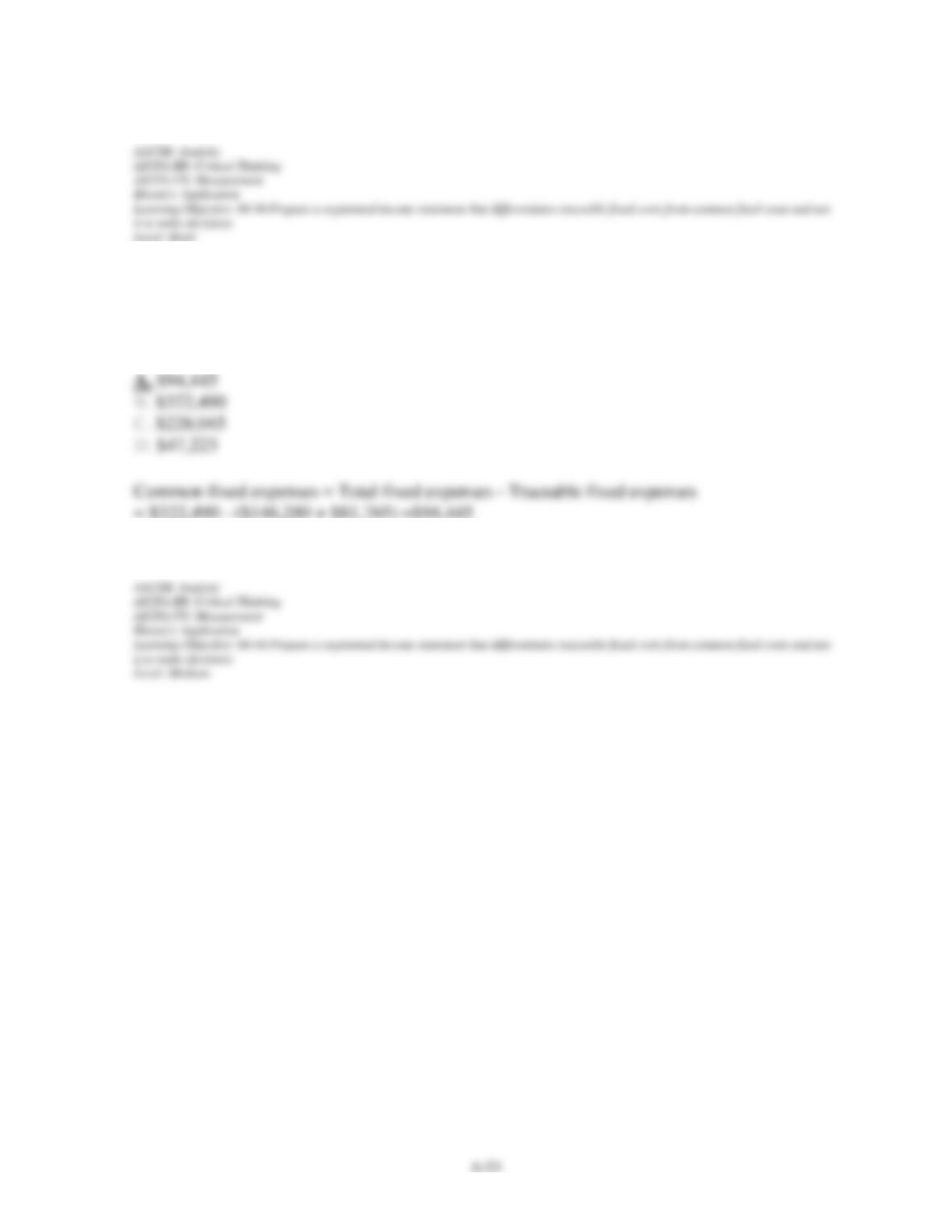
69. Johnson Company operates two plants, Plant A and Plant B. Last year, Johnson Company
reported a contribution margin of $40,000 for Plant A. Plant B had sales of $200,000 and a
contribution margin ratio of 40%. Net operating income for the company was $27,000 and
traceable fixed expenses for the two stores totaled $50,000. Johnson Company’s common
fixed expenses were:
Chapter 06 – Variable Costing and Segment Reporting: Tools for Management
6-52
Chapter 06 – Variable Costing and Segment Reporting: Tools for Management
70. The ARB Company has two divisions: Electronics and DVD/Video Sales. Electronics has
traceable fixed expenses of $146,280 and the DVD/Video Sales has traceable fixed expenses
of $81,765. If ARB Company has a total of $322,490 in fixed expenses, what are its common
fixed expenses?
Chapter 06 – Variable Costing and Segment Reporting: Tools for Management
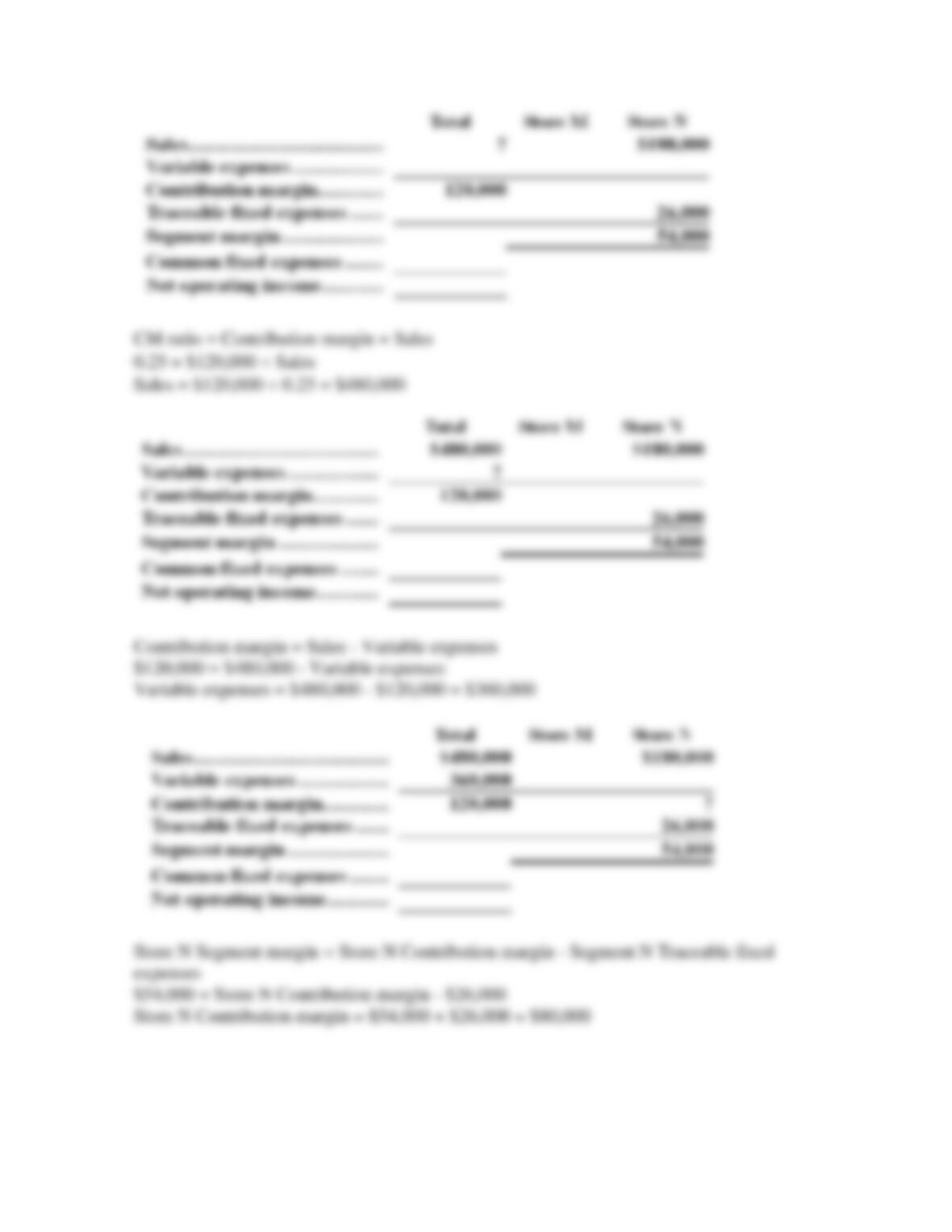
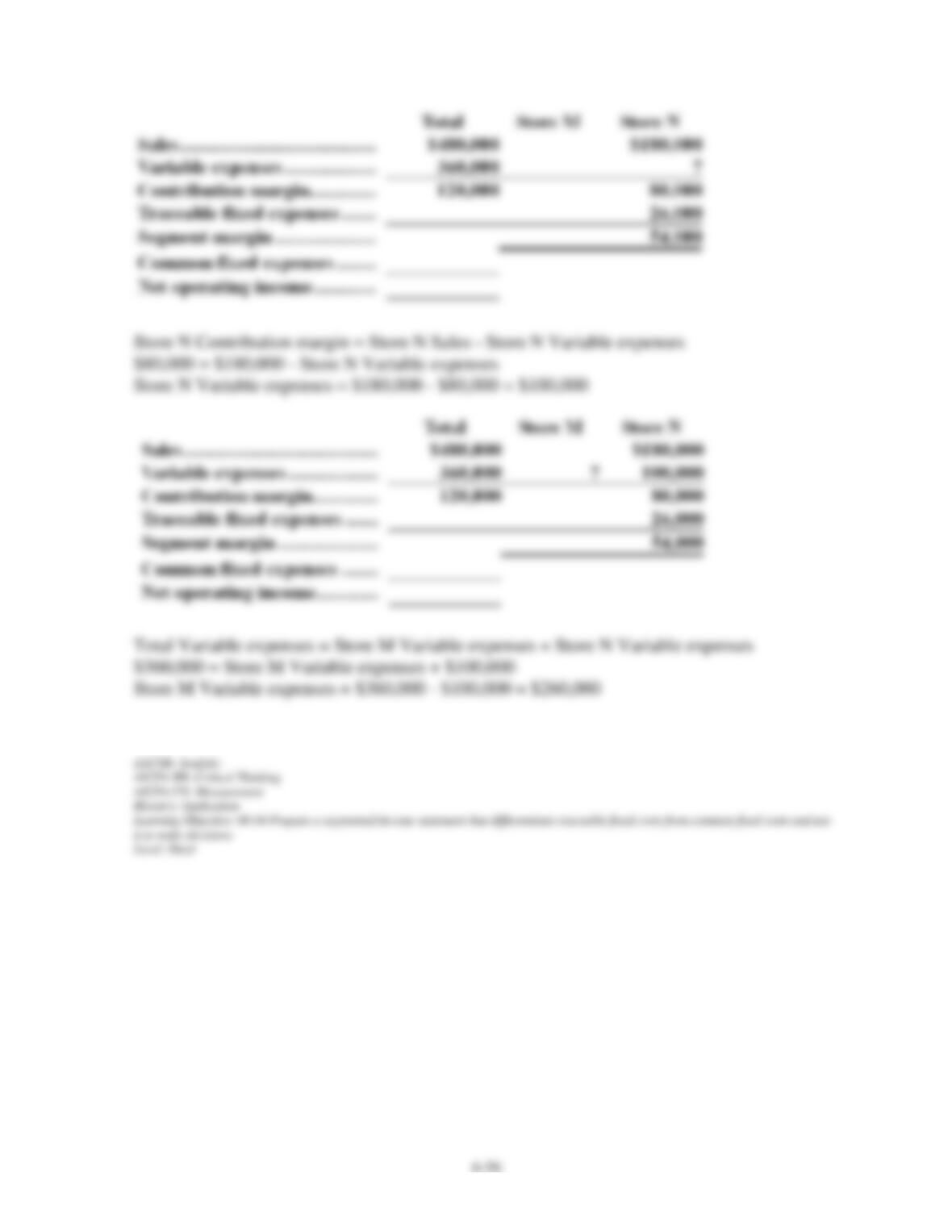
71. Leis Retail Company has two Stores, M and N. Store N had sales of $180,000 during
March, a segment margin of $54,000, and traceable fixed expenses of $26,000. The company
as a whole had a contribution margin ratio of 25% and $120,000 in total contribution margin.
Based on this information, total variable expenses in Store M for the month must have been:
Chapter 06 – Variable Costing and Segment Reporting: Tools for Management
6-55
Chapter 06 – Variable Costing and Segment Reporting: Tools for Management
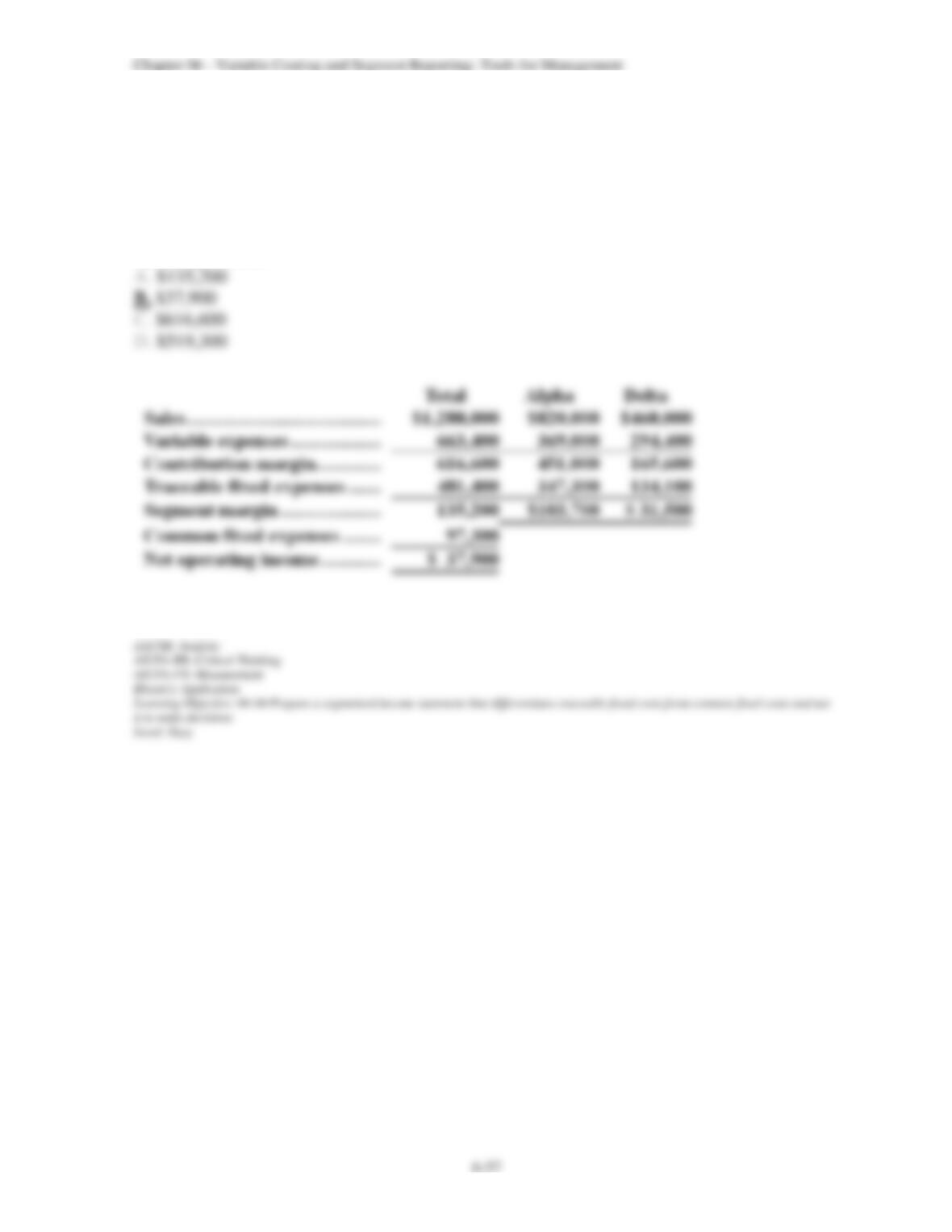
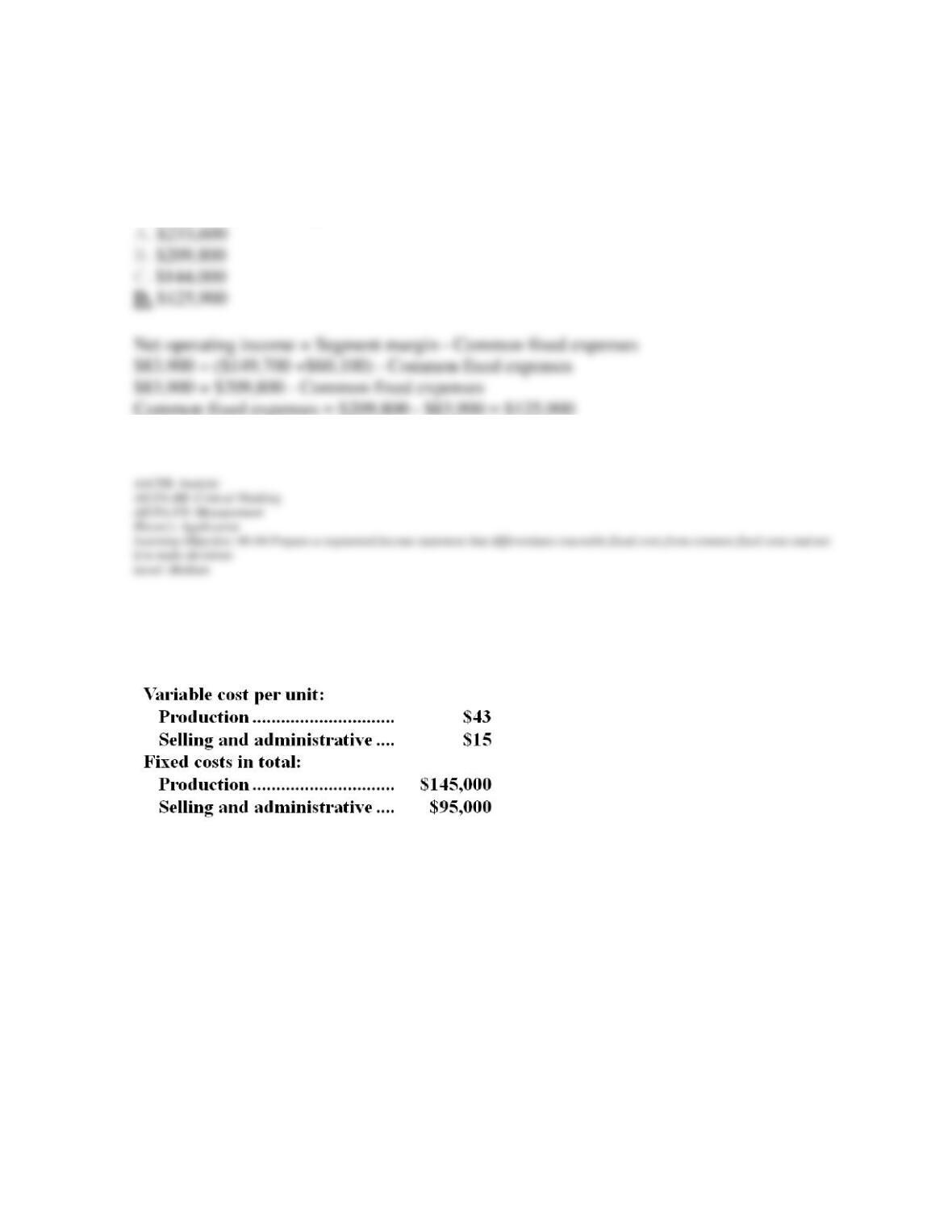
72. Sugiki Corporation has two divisions: the Alpha Division and the Delta Division. The
Alpha Division has sales of $820,000, variable expenses of $369,000, and traceable fixed
expenses of $347,300. The Delta Division has sales of $460,000, variable expenses of
$294,400, and traceable fixed expenses of $134,100. The total amount of common fixed
expenses not traceable to the individual divisions is $97,300. What is the company’s net
operating income?
Chapter 06 – Variable Costing and Segment Reporting: Tools for Management
6-58
73. Phillipson Corporation has two divisions: the IEB Division and the PIH Division. The
corporation’s net operating income is $83,900. The IEB Division’s divisional segment margin
is $149,700 and the PIH Division’s divisional segment margin is $60,100. What is the amount
of the common fixed expense not traceable to the individual divisions?
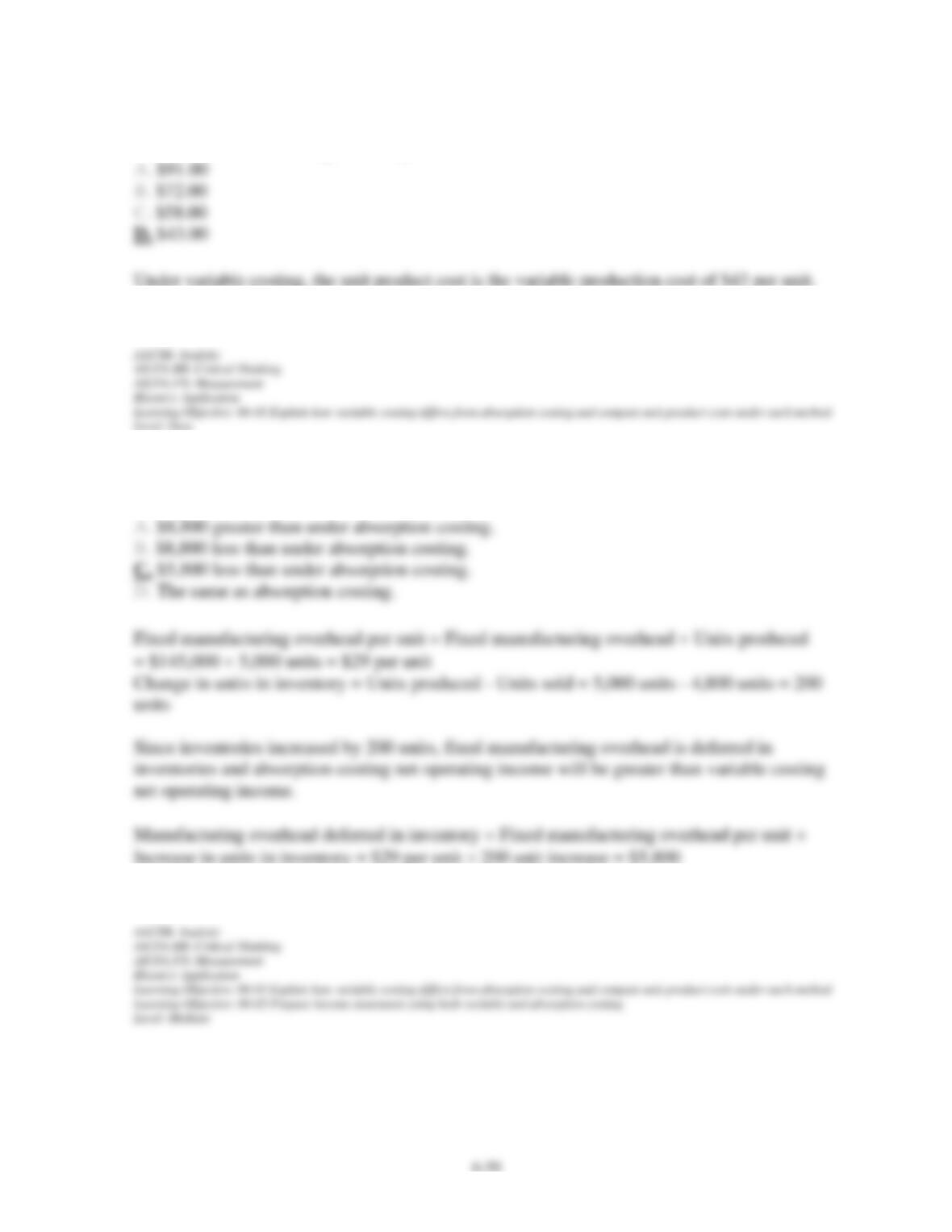
The Pacific Company manufactures a single product. The following data relate to the year
just completed:
During the last year, 5,000 units were produced and 4,800 units were sold. There were no
beginning inventories.
Chapter 06 – Variable Costing and Segment Reporting: Tools for Management
74. Under variable costing, the unit product cost would be:
75. The carrying value of finished goods inventory at the end of the year under variable
costing would be:
Chapter 06 – Variable Costing and Segment Reporting: Tools for Management
6-60
76. Under absorption costing, the cost of goods sold for the year would be:
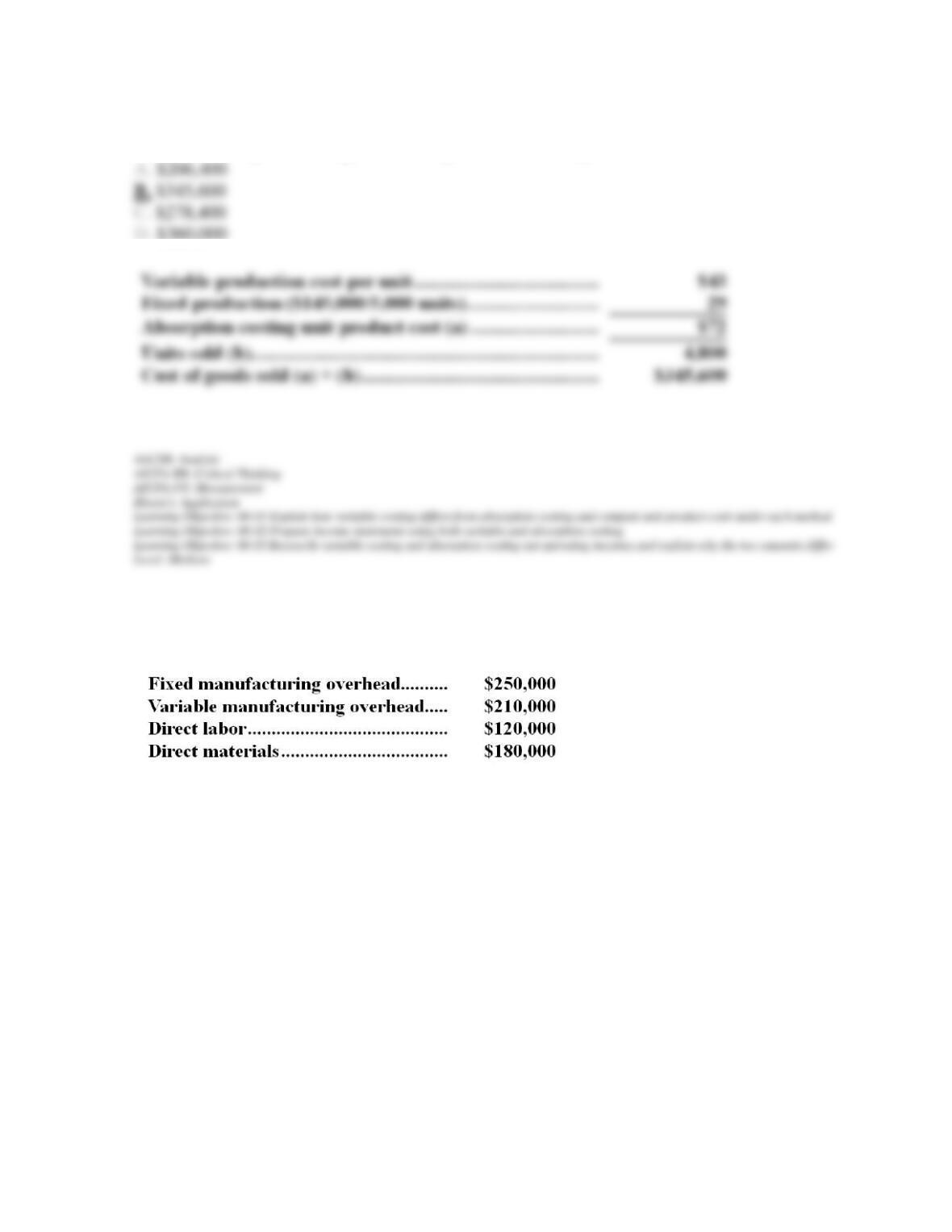
Carr Company produces a single product. During the past year, Carr manufactured 25,000
units and sold 20,000 units. Production costs for the year were as follows:
Sales totaled $850,000, variable selling expenses totaled $110,000, and fixed selling and
administrative expenses totaled $170,000. There were no units in beginning inventory.
Assume that direct labor is a variable cost.