80)
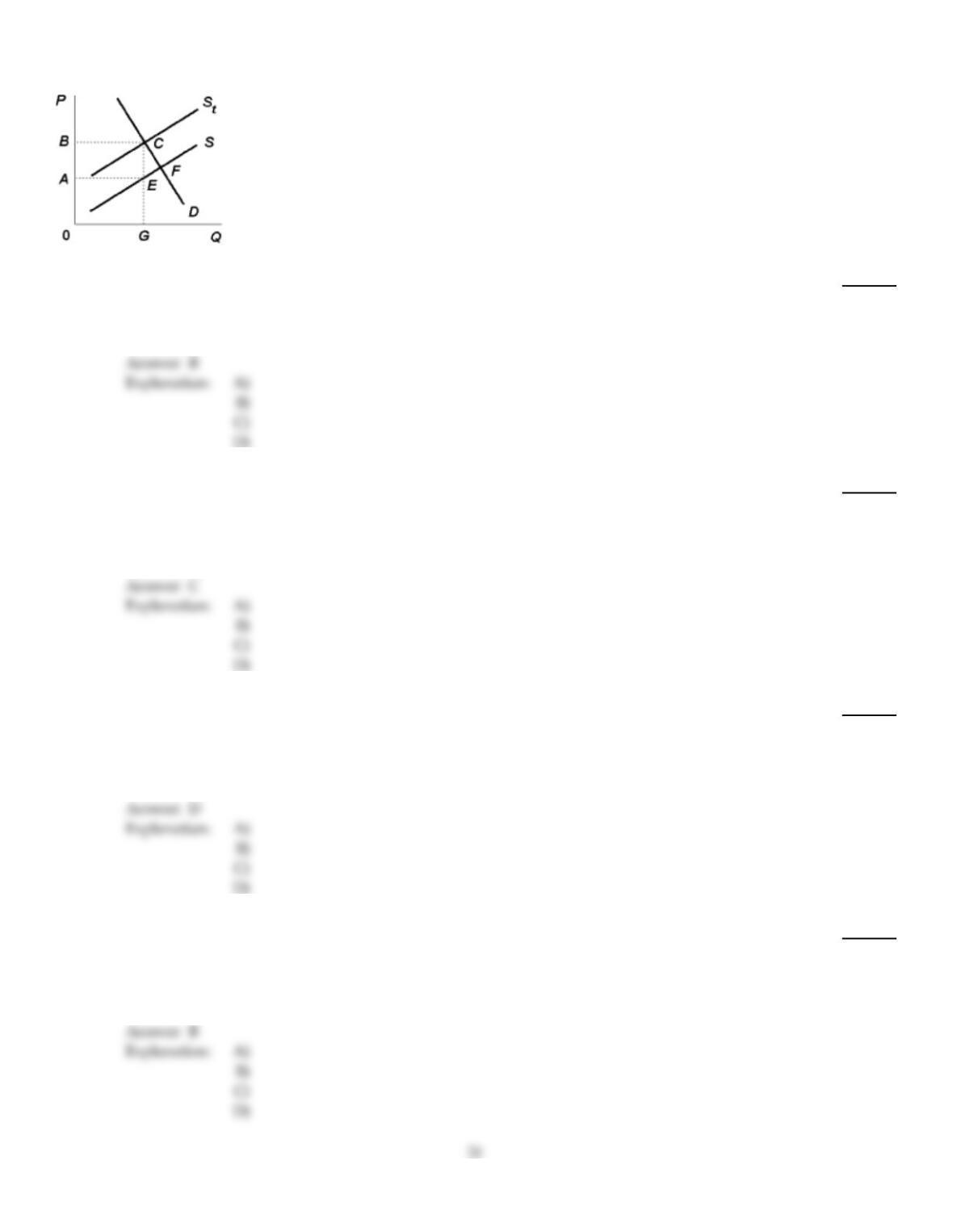
Using the above figure, if the government levies a new unit tax in this market, S represents the
original supply curve, and St represents the after–tax supply curve, then the revenues that the
government collects from imposing this tax is represented on this graph by
80)
A)
CEF.
B)
BAEC.
C)
OBCG.
D)
OAEG.
81)
A ad valorem sales tax can be thought of as
81)
A)
a revenue source for county governments only.
B)
not part of the tax base.
C)
a proportional tax.
D)
none of the above.
C
82)
A government wishing to maximize its tax revenues should
82)
A)
determine the highest possible tax rate and then back it down by exactly 4 percentage points.
B)
always assess the highest possible tax rate.
C)
always assess the lowest possible tax rate.
D)
push tax rates up to the point where revenues peak, but raise the tax rate no farther.
D
83)
Sales taxes are
83)
A)
based on each individual taxpayer‘s income level.
B)
assessed on the prices paid on a large set of goods and services.
C)
levied on purchases of a particular good or service.
D)
collected only by the U.S. government.
B
B
84)
A capital gain is defined as
84)
A)
the tax paid when one sells an asset.
B)
the positive difference between the sale price and the purchase price of an asset.
C)
an unanticipated increase in income.
D)
the tax rate one pays when one moves into a higher tax bracket.
85)
Over the long run, a government’s fundamental source of revenues is
85)
A)
user fees and taxes.
B)
printing money.
C)
exports.
D)
gold sales.
86)
Social Security taxes are
86)
A)
regressive because higher income workers pay taxes on a smaller percentage of their income.
B)
regressive because higher income workers don‘t pay the tax.
C)
progressive because all workers pay the tax.
D)
proportional because everyone is charged the same percentage tax rate.
87)
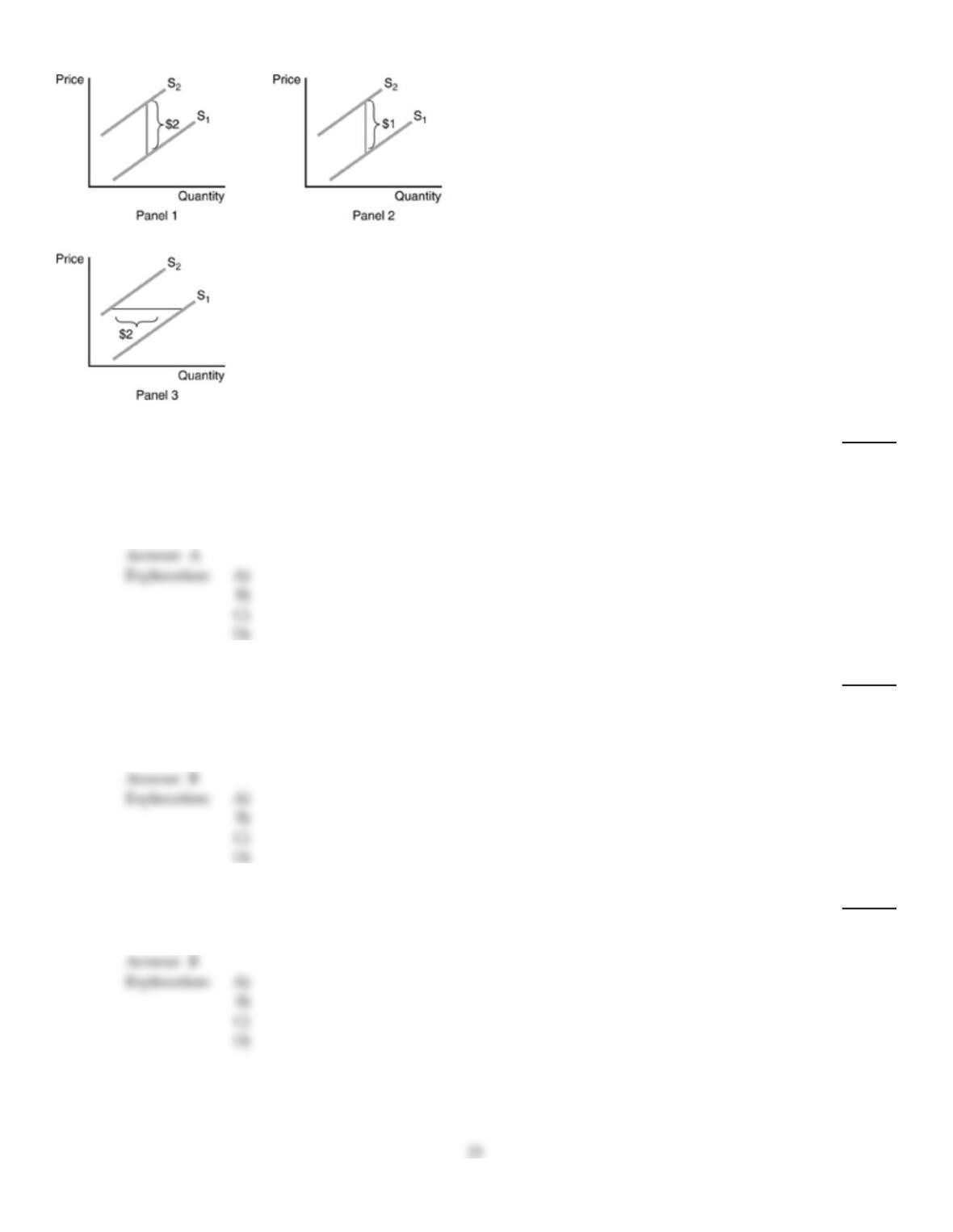
Refer to the above figures. A unit tax of $2 has been levied on a good. Which of the panels depict
the effect of the taxes?
87)
A)
Panel 1
B)
Panel 2
C)
Panel 3
D)
None of the diagrams reflect the effect of the tax.
88)
Dynamic tax analysis assumes that
88)
A)
the tax base will always remain unchanged.
B)
an increase in a tax rate may lead to a decrease in the tax base.
C)
an increase in a tax rate will leave the tax base unchanged.
D)
an increase in a tax rate will lead to an increase in the tax base.
B
89)
Which of the following is NOT an important source of revenue for the federal government?
89)
A)
social insurance taxes and contributions
B)
property taxes
C)
corporate income taxes
D)
individual income taxes
B
A
90)
Assume that Mr. Smith’s income increased from $40,000 last year to $45,000 this year and that he
paid an additional $2,000 in taxes. This would indicate that his marginal tax rate is
90)
A)
10 percent.
B)
40 percent.
C)
30 percent.
D)
25 percent.
91)
Suppose the tax rate on the first $10,000 of income is 0 percent; 10 percent on the next $20,000; 20
percent on the next $20,000; 30 percent on the next $20,000; and 40 percent on income over $60,000.
Family A has an income of $55,000. What is the tax liability of Family A?
91)
A)
$7,500
B)
$3,400
C)
$16,500
D)
$6,600
92)
To set a tax rate at the appropriate level to maximize its tax revenues, a government must engage in
92)
A)
debt–free tax analysis.
B)
dynamic tax analysis.
C)
static tax analysis.
D)
ad valorem tax analysis.
93)
If a tax system is progressive, then
93)
A)
the average tax rate is constant, but the dollar amount paid in taxes increases as income
increases.
B)
the marginal tax rate is greater than the average tax rate as income rises.
C)
the marginal tax rate is lower than the average tax rate as income rises.
D)
the average and the marginal tax rates are equal.
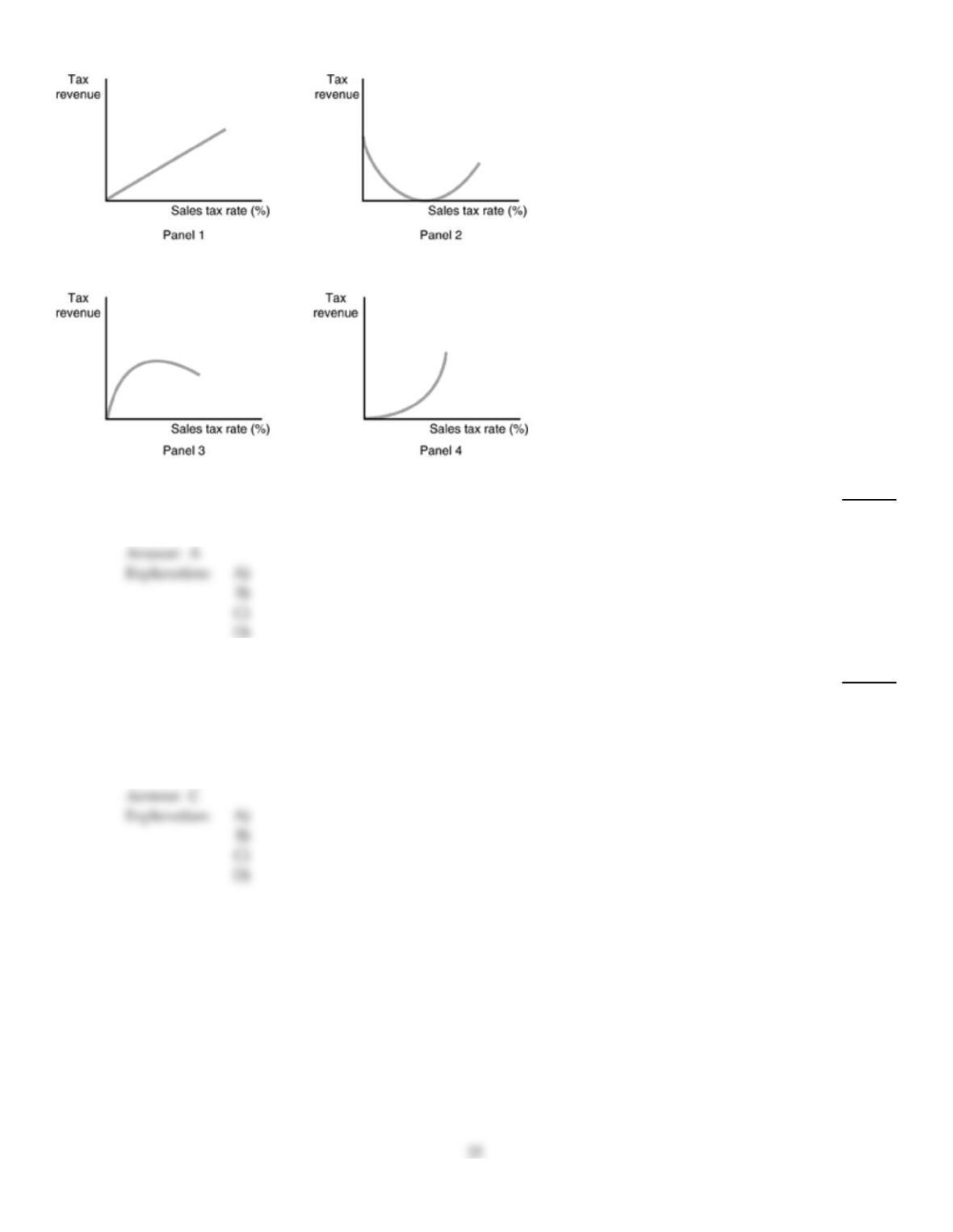
94)
Refer to the above figures. Which panel represents the expected relationship between tax revenue
and the sales tax rate if static tax analysis is used?
94)
A)
Panel 1
B)
Panel 2
C)
Panel 3
D)
Panel 4
95)
How would the market for smartphones be affected if the government charged an excise tax of
$5.00 on each smartphone sold?
95)
A)
The price of smartphones would rise by $5.00.
B)
The demand for smartphones would increase.
C)
The supply of smartphones would decrease.
D)
The demand for smartphones would decrease.
96)
How would the market for coffee be affected if the government charged an excise tax of $1.00 on
each unit of coffee sold?
96)
A)
The supply curve would shift up vertically by $1.00.
B)
There would be a shortage of coffee.
C)
The demand for coffee would increase.
D)
The demand for coffee would decrease.
97)
The largest source of receipts for the federal government is
97)
A)
personal income taxes.
B)
capital gains taxes.
C)
Social Security taxes.
D)
corporate income taxes.
98)
The tax that brings in the most revenue in the United States is the
98)
A)
Social Security tax.
B)
capital gains tax.
C)
corporate income tax.
D)
personal income tax.
99)
Which one of the following statements is TRUE?
99)
A)
In a proportional tax system, the average tax rate always exceeds the marginal tax rate.
B)
The U.S. Social Security tax is regressive.
C)
In a proportional tax system, the marginal tax rate always exceeds the average tax rate.
D)
The U.S. Social Security tax is proportional.
100)
Which of the following statements about taxation is TRUE?
100)
A)
There is a tax rate at which tax revenues are maximized.
B)
Dynamic tax analysis assumes that an increase in taxation will leave the tax base unchanged.
C)
Static tax analysis recognizes that an increase in taxation could lead to a decrease in tax
revenues.
D)
Increasing taxes will always increase tax revenues.
101)
A “flat tax” on personal income, in which the same tax rate is applied to every dollar of income
earned by each taxpayer, is an example of
101)
A)
a progressive tax.
B)
a value–added tax.
C)
a regressive tax.
D)
a proportional tax.
102)
A tax levied on purchases of a particular good or service
102)
A)
always leads to a reduction in total tax revenues.
B)
always leads to an increase in total tax revenues.
C)
is an excise tax.
D)
is illegal because it is discriminatory.
103)
Suppose you purchased 500 shares of stock in 2013 for $15 a share, and the price now is $20 a share.
If you sell the stock, then your capital gain is
103)
A)
$1000.
B)
$10000.
C)
$2500.
D)
indeterminate without knowing the inflation rate.
104)
When the purchase price of an asset is less than its sale price, then there is a
104)
A)
capital gain.
B)
corporate income tax.
C)
capital loss.
D)
budget deficit.
105)
According to dynamic tax analysis, continually increasing the tax rate will eventually
105)
A)
have no impact on the tax base.
B)
cause a decrease in the tax base.
C)
result in an initial decrease in the tax base followed ultimately by a rise in the tax base.
D)
cause an increase in the tax base.
106)
A tax rate system characterized by higher marginal tax rates as income increases is known as
106)
A)
a progressive tax system.
B)
a regressive tax system.
C)
a flat–rate tax system.
D)
a proportional tax system.
107)
Suppose you are making $50,000 per year and paying $5,000 per year in income taxes. You get a
$10,000 per year raise and your income taxes are now $6,000 per year. Based on this information,
the income tax system is
107)
A)
proportional.
B)
regressive.
C)
progressive.
D)
bracketed.
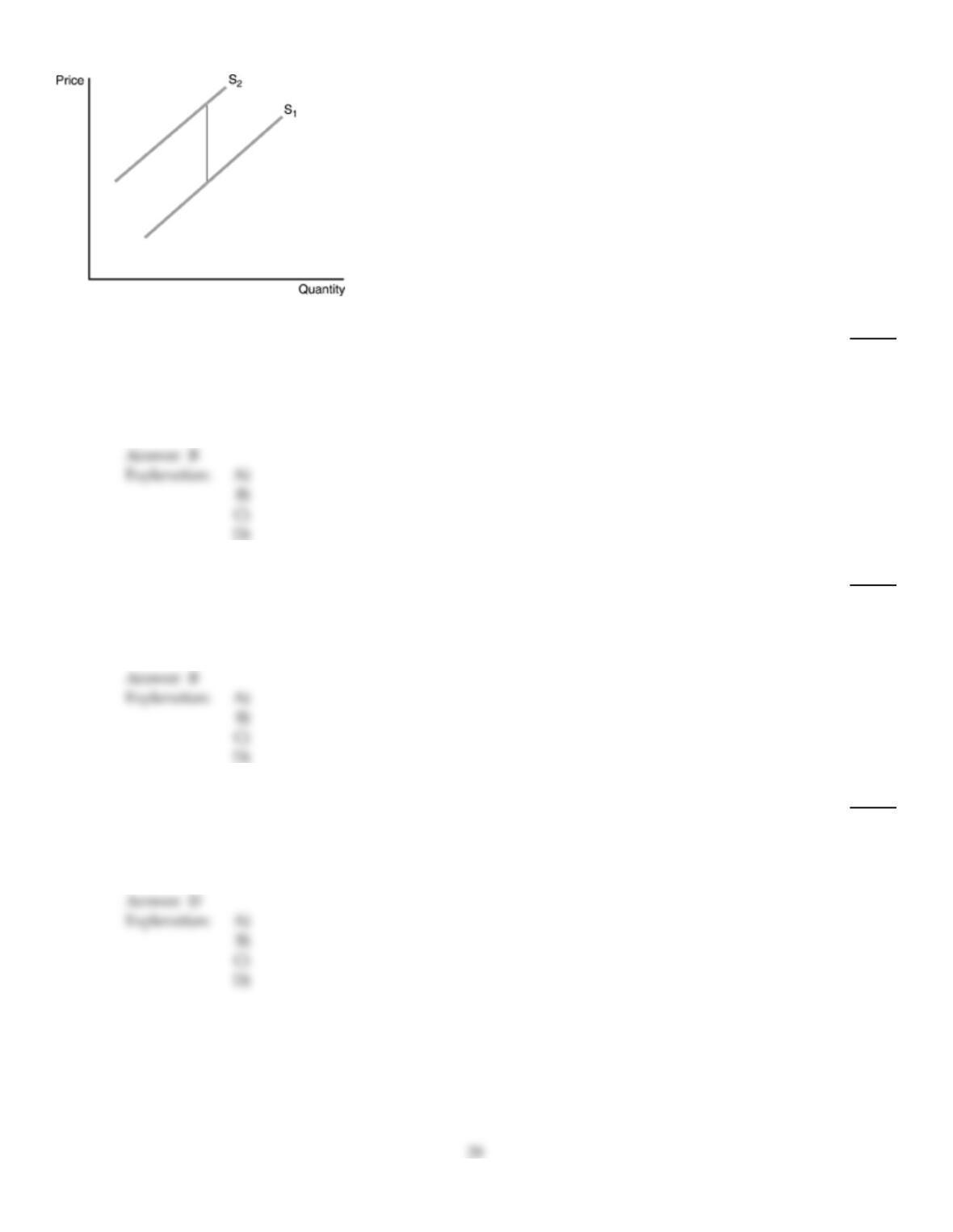
108)
Refer to the above figure. A unit tax of $2 has been placed on the good. Which of the following
statements is TRUE about the vertical distance between S1 and S2?
108)
A)
The distance is less than $2.
B)
The distance is $2.
C)
The distance is more than $2.
D)
The distance cannot be determined with the information given.
109)
The imposition of a new excise tax will
109)
A)
decrease equilibrium price and increase equilibrium quantity.
B)
increase equilibrium price and decrease equilibrium quantity.
C)
increase equilibrium price and increase equilibrium quantity.
D)
decrease equilibrium price and decrease equilibrium quantity.
110)
Which of the following is TRUE of an excise tax?
110)
A)
Imposing an excise tax shifts the market demand curve.
B)
An excise tax is always a unit tax.
C)
An excise tax is based on an individual’s income.
D)
An excise tax is levied on purchases of particular good or service.
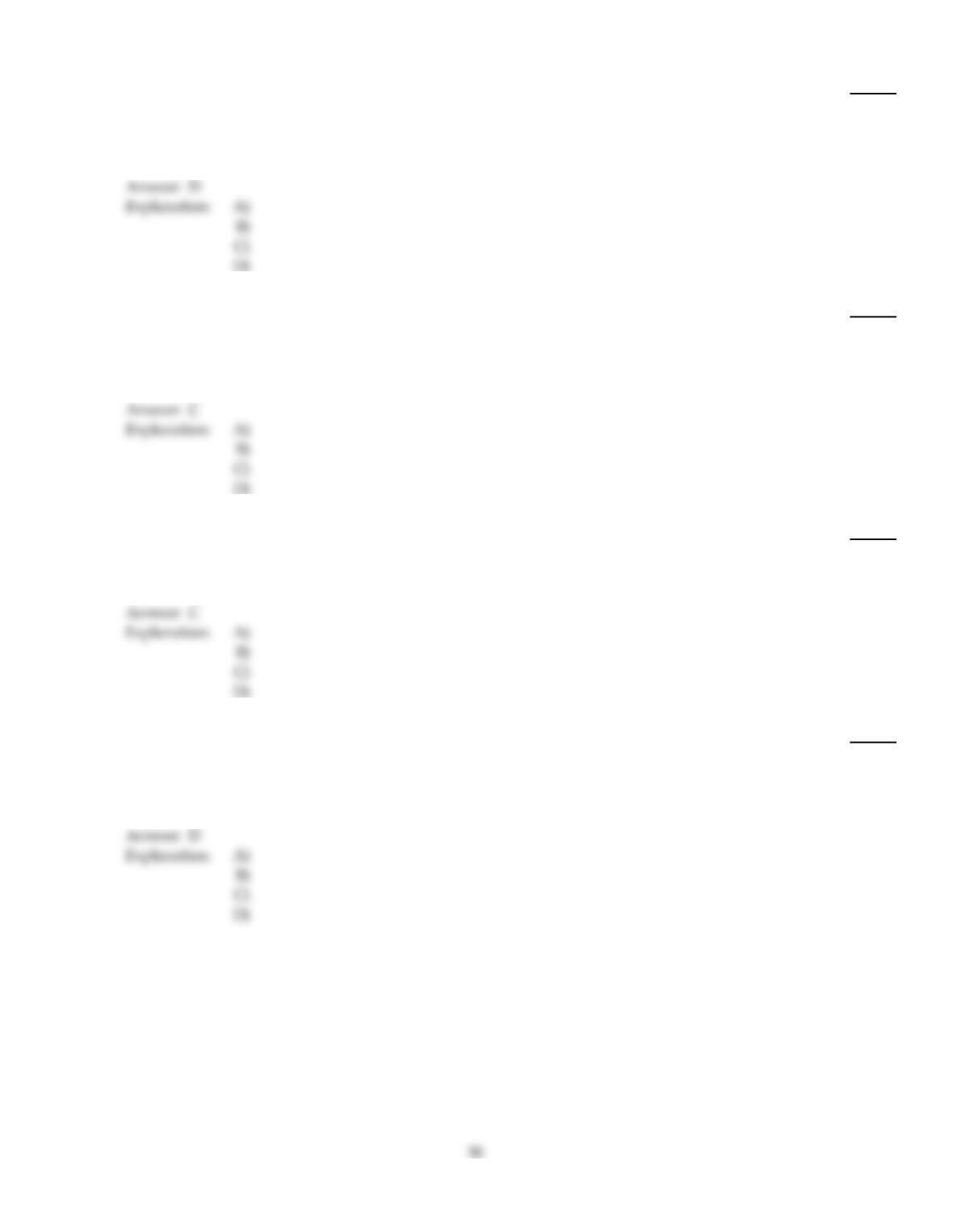
111)
Tax incidence refers to
111)
A)
determining who sends the taxes into the government.
B)
the tendency of some people to avoid paying taxes at all.
C)
determining the marginal tax rate applied to any increase in income.
D)
the distribution of tax burdens among groups, or who really pays a tax.
112)
The reason a corporation has retained earnings is to
112)
A)
be able to make unemployment payments.
B)
avoid the double taxation of corporate profits.
C)
make investments that will increase the value of the stock.
D)
pay unemployment taxes.
113)
According to the government budget constraint, any excess of public expenditures and transfers
over taxes and user fees must be funded by
113)
A)
U.S. Treasury money creation.
B)
private borrowing.
C)
government borrowing.
D)
Federal Reserve money creation.
114)
A unit tax of $1 will always
114)
A)
shift the supply curve upward by more than $1.
B)
shift the supply curve upward by less than $1.
C)
leave the supply curve unchanged.
D)
shift the supply curve up by exactly $1.
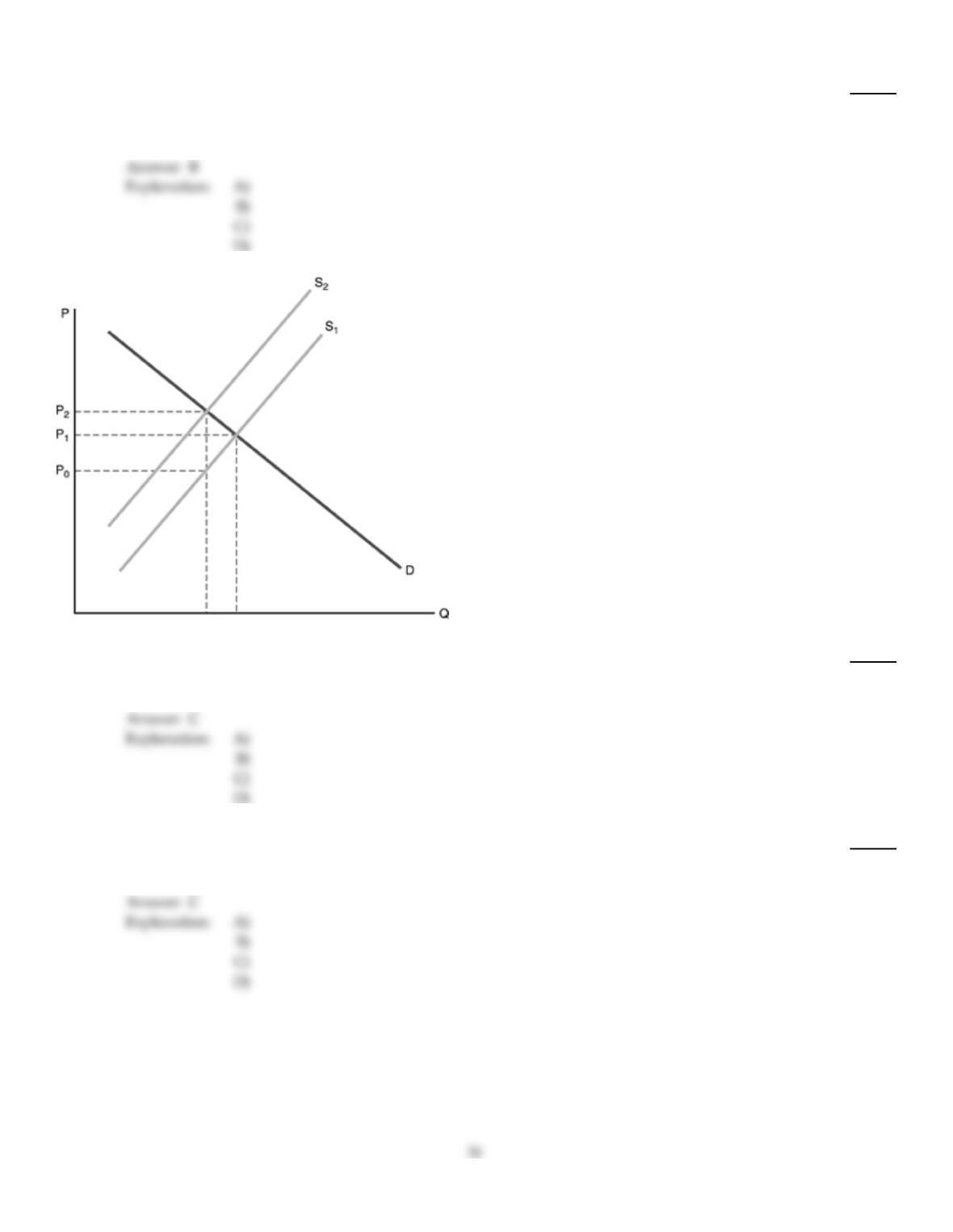
115)
If a state government wants to collect the maximum tax revenue from a unit excise tax, which of the
following would they tax?
115)
A)
luxury cars
B)
cigarettes
C)
beef hamburgers
D)
concert t–shirts
116)
Refer to the above figure. A unit tax has been placed on the good. What is the total amount of the
tax?
116)
A)
P2– P1
B)
0
C)
P2– P0
D)
P1– P0
117)
Jamal earns $160,000 per year and Josephina earns $80,000 per year. If Jamal pays $16,000 in
income taxes and Josephina pays $8,000 in income taxes, the income tax system would be
117)
A)
regressive.
B)
marginal.
C)
proportional.
D)
progressive.
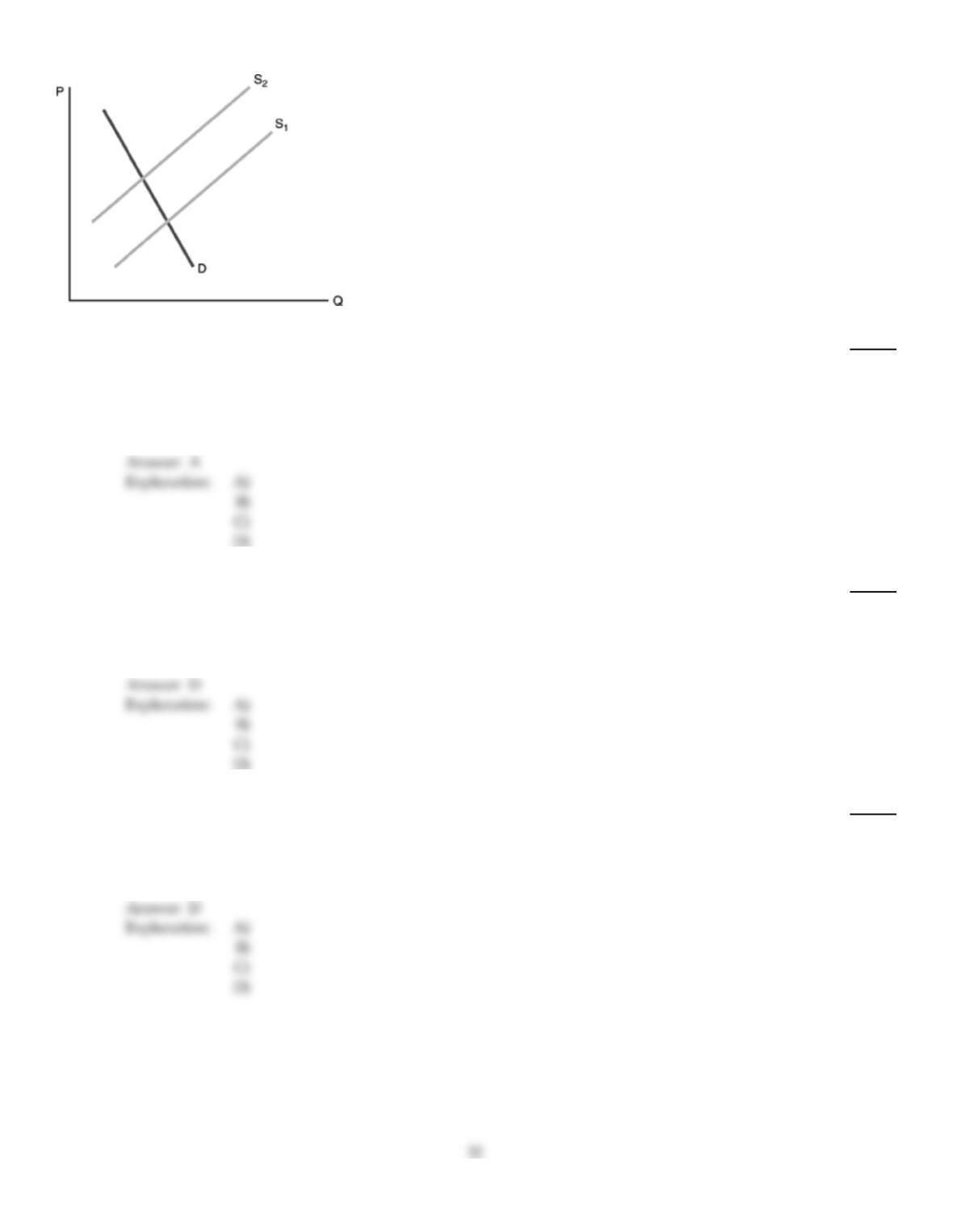
118)
Refer to the above figure. An excise tax of $0.50 was imposed on this good. From the figure we can
see that the
118)
A)
consumer will bear most of the tax.
B)
producer will bear most of the tax.
C)
amount of the tax collected is less than $0.50.
D)
consumer and producer will share the tax.
119)
Dynamic tax analysis is an economic evaluation of tax rate changes
119)
A)
by the National Tax Institute in Burlington, Massachusetts.
B)
by the tax institutes established by a consortium of business schools.
C)
by various state governments.
D)
based on the assumption that tax base declines if tax rates continuously increase.
D
120)
The marginal income tax rate is equal to
120)
A)
the percent of total income that goes to taxes.
B)
the average tax payment divided by the total tax payment.
C)
the total tax payment divided by total income.
D)
the change in the tax payment divided by the change in income.
D
A
121)
A sales tax is
121)
A)
a tax assessed on a public good.
B)
a tax assessed on personal income.
C)
the total tax base.
D)
a tax assessed on the prices paid for numerous goods and services.
122)
An example of ad valorem taxation is
122)
A)
the Social Security tax.
B)
the personal income tax.
C)
a luxury tax.
D)
the corporate profit tax.
123)
Suppose the tax rate on the first $10,000 income is 0 percent; 10 percent on the next $20,000; 20
percent on the next $20,000; 30 percent on the next $30,000; and 40 percent on any income over
$80,000. Family A has income of $40,000. What is the marginal and average tax rate for Family A?
123)
A)
marginal10 percent; average10 percent
B)
marginal20 percent; average25 percent
C)
marginal25 percent; average20 percent
D)
marginal20 percent; average10 percent
124)
A tax levied on the purchase of a specific good or service is
124)
A)
an excise tax.
B)
a purchase tax.
C)
a value tax.
D)
a consumption tax.
125)
A capital gain results when
125)
A)
a debt is settled.
B)
an asset is sold for more than it was purchased.
C)
a person purchases a bond.
D)
a person buys gold.
126)
Using the fiscal year 2014 estimates, the largest component of state and local revenue is the
126)
A)
corporate income tax.
B)
revenue from the federal government.
C)
sales, excise, and gross receipts taxes.
D)
individual income tax.
127)
Corporate profits are taxed twice because
127)
A)
the government wants to minimize the amount of tax paid on capital gains.
B)
capital gains are not indexed to the rate of inflation.
C)
it is economically efficient to reduce the amount of retained earnings.
D)
taxes are collected on profits before profits are distributed to shareholders.
128)
If the government wishes to maximize its tax revenue, it should
128)
A)
recognize that too high of a tax rate can decrease the tax base.
B)
recognize that an increase in the tax rate will lead to an increase in tax revenues.
C)
use only flat taxes.
D)
engage in static tax analysis.
129)
The government imposes a unit excise tax on bubble gum. What happens as a result?
129)
A)
There will be no change in either the market price or equilibrium quantity as long as the
excise tax rate is 5 percent or less.
B)
The equilibrium quantity of bubble gum increases.
C)
At the original market price, there is a bubble gum shortage and so price rises.
D)
At the original market price, there will be a bubble gum surplus so price decreases.
130)
The distributions of tax burdens among various groups in society is known as
130)
A)
a regressive tax.
B)
tax incidence.
C)
a progressive tax.
D)
a proportional tax.
131)
The imposition of a tax on a product
131)
A)
shifts the demand curve to the right.
B)
shifts the supply curve to the right.
C)
shifts both the supply and the demand curve to the right.
D)
shifts the supply curve to the left.
132)
Imposing a unit excise tax on the final sale of a good or service can be displayed graphically as
132)
A)
a vertical shift upward of the supply curve.
B)
a vertical shift downward of the demand curve.
C)
a vertical shift downward of the supply curve.
D)
a vertical shift upward of the demand curve.
133)
One criticism of the corporate income tax is that
133)
A)
a portion of the corporations’ tax burden is passed on to consumers via higher prices for
goods and services and to workers via lower wages.
B)
it is too flat.
C)
it is so complex to administer that corporate income taxes are rarely collected by the Internal
Revenue Service.
D)
it is too regressive.
134)
Assume a family that earns $20,000 pays $1,500 in income taxes, while a family that earns $40,000
pays $3,500 in income taxes. In this situation, the income tax system is
134)
A)
regressive.
B)
proportional.
C)
progressive.
D)
one of the above but we cannot tell which one without more information.
135)
The marginal tax rate shows
135)
A)
the deductions which are permitted for child care and medical expenses.
B)
the extra tax due on an extra dollar of income.
C)
the percentage of income which a typical family pays in tax.
D)
the average rate of taxation in the economy.
136)
The largest share of federal government tax receipts is derived from
136)
A)
individual income taxes.
B)
excise taxes.
C)
social insurance contributions.
D)
corporate income taxes.
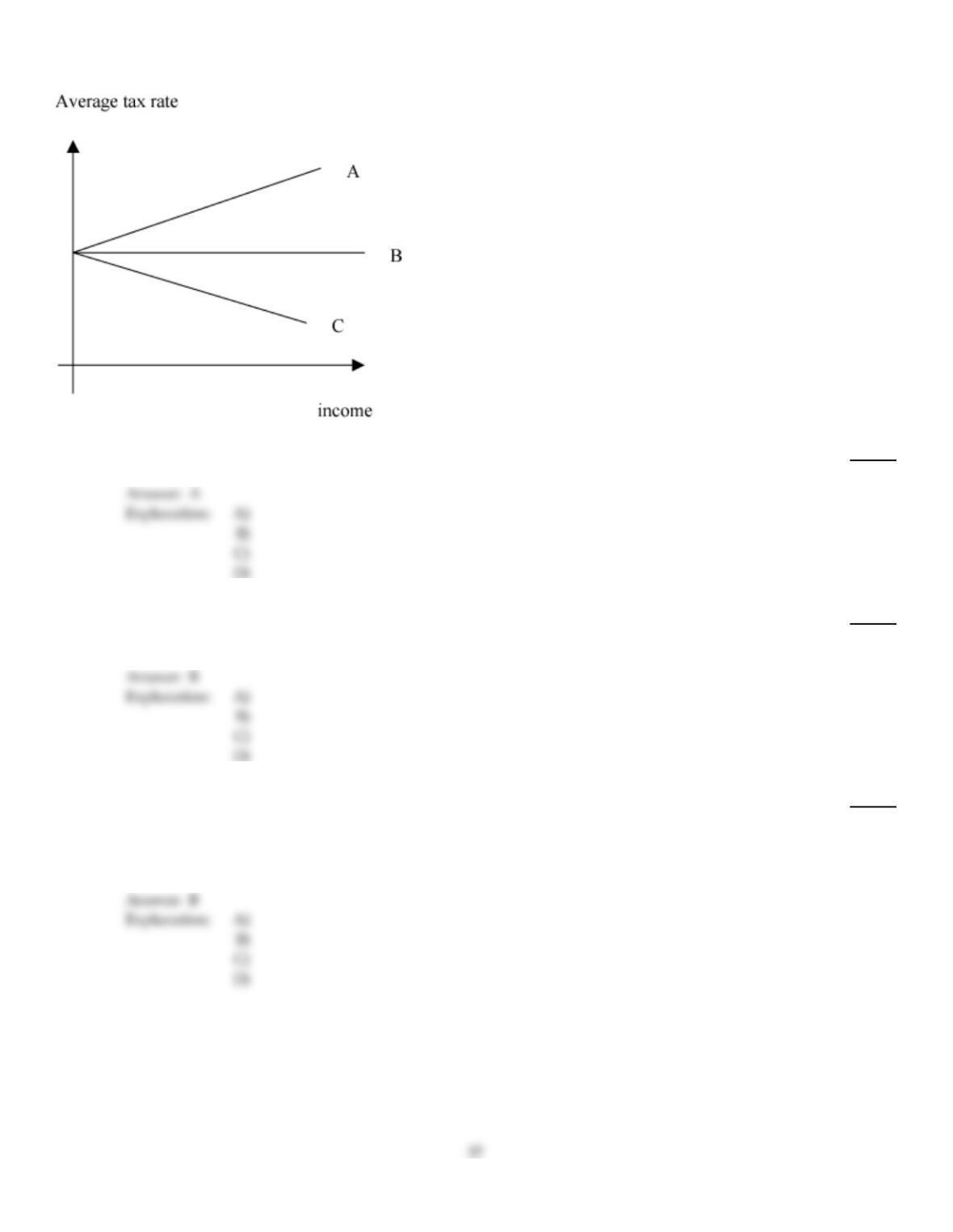
137)
Using the above figure, which of the lines in the above diagram represents a progressive tax?
137)
A)
A
B)
B
C)
C
D)
none of them
138)
In what type of analysis could an increase in the tax rate lead to a decrease in tax revenues?
138)
A)
static tax analysis
B)
dynamic tax analysis
C)
excise taxation
D)
ad valorem taxation
B
139)
Which of the following statements about excise taxes is TRUE?
139)
A)
The equilibrium price will increase and the equilibrium quantity will remain unchanged.
B)
Both the consumer and producer pay part of the excise tax.
C)
The producer will increase the price of the good by the amount of the excise tax.
D)
Consumers will refuse to pay excise taxes forcing the producers to pay it.
B
A
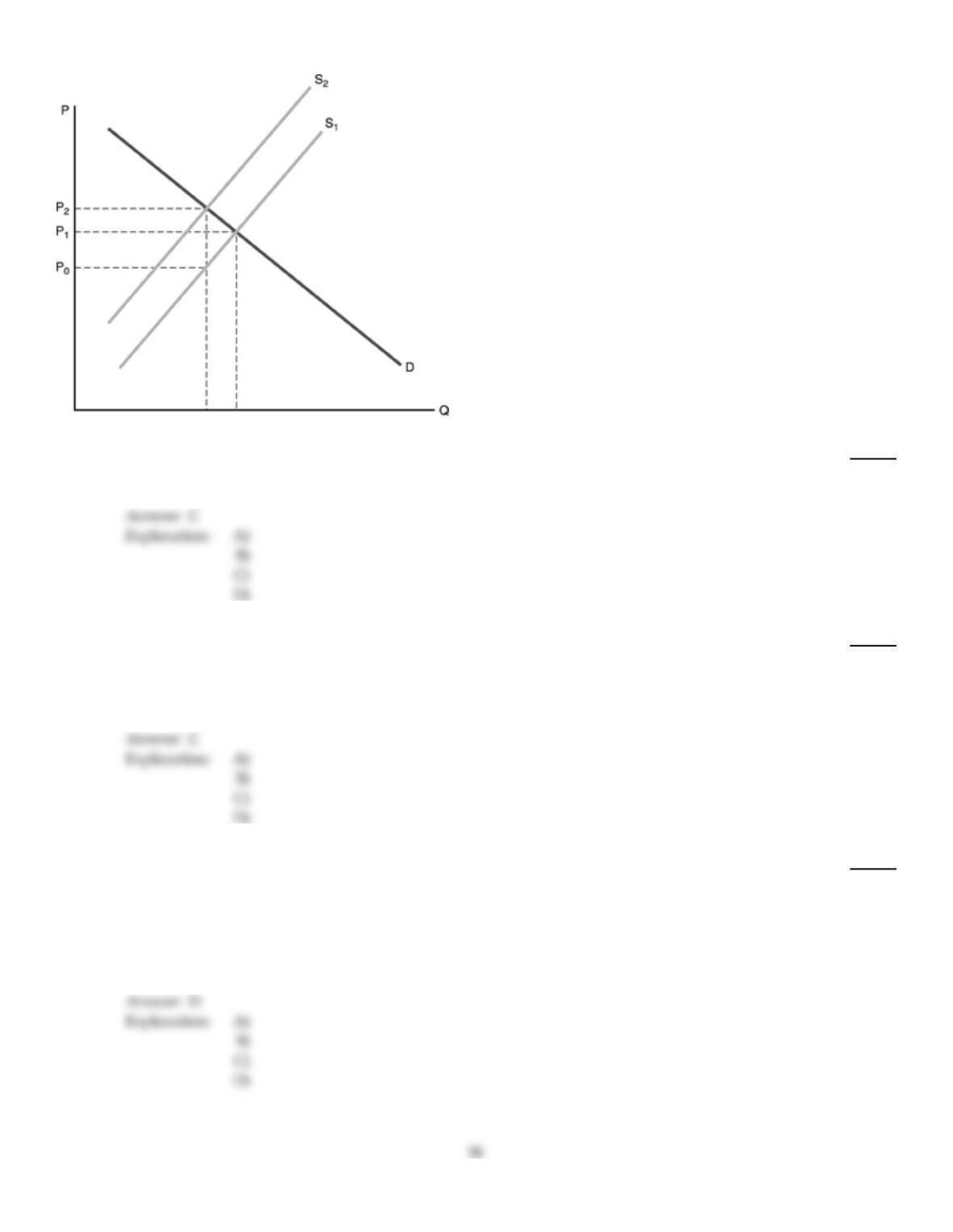
140)
Refer to the above figure. A unit tax has been placed on the good. The consumer pays what amount
of the tax?
140)
A)
none of the tax
B)
P1– P0
C)
P2– P1
D)
P2– P0
141)
An excise tax
141)
A)
is often used to encourage the use of a good.
B)
is illegal in Florida, Georgia, and Alaska.
C)
acts as a negative incentive to consume that good or service.
D)
is a value added tax (VAT).
142)
Which of the following statements is FALSE about the issues faced by the government when
contemplating a tax?
142)
A)
Consideration must be given to how taxes influence market prices.
B)
Consideration must be given to how tax rates relate to the amount actually received.
C)
Consideration must be given to how taxes influence equilibrium quantity.
D)
Consideration must be given to the amount of funds the government will be receiving from
the transfer payments paid by the public to the government.
143)
Advocates of a progressive income tax use arguments EXCEPT for which of the following?
143)
A)
A progressive tax system maximizes government revenues.
B)
A progressive tax system taxes according to benefits received.
C)
A progressive tax system taxes according to ability to pay.
D)
A progressive tax system helps redistribute income away from the rich and towards the poor.
144)
Which of the following is TRUE about the effects of an excise tax if consumers are totally
unresponsive to price changes?
144)
A)
Consumers pay all of the excise tax.
B)
Producers pay all of the excise tax.
C)
Neither consumers nor producers pay the excise tax.
D)
Consumers and producers share the excise tax equally.
145)
Assume a family that earns $20,000 pays $2,000 in income taxes, while a family that earns $40,000
pays $3,500 in income taxes. In this situation, the income tax system is
145)
A)
regressive.
B)
progressive.
C)
proportional.
D)
one of the above but we cannot tell which one without more information.
146)
How can we anticipate the proportion of a newly imposed unit excise tax that consumers will pay?
146)
A)
Since producers always pay 100 percent of an excise tax, we know consumers will not pay
any of the tax.
B)
Consumers will pay most of the tax whenever their demand for a product is relatively
unresponsive to price changes.
C)
Consumers will always pay 100 percent of an excise tax.
D)
Consumers will pay most of the tax whenever their demand for the product is very price
sensitive.