19
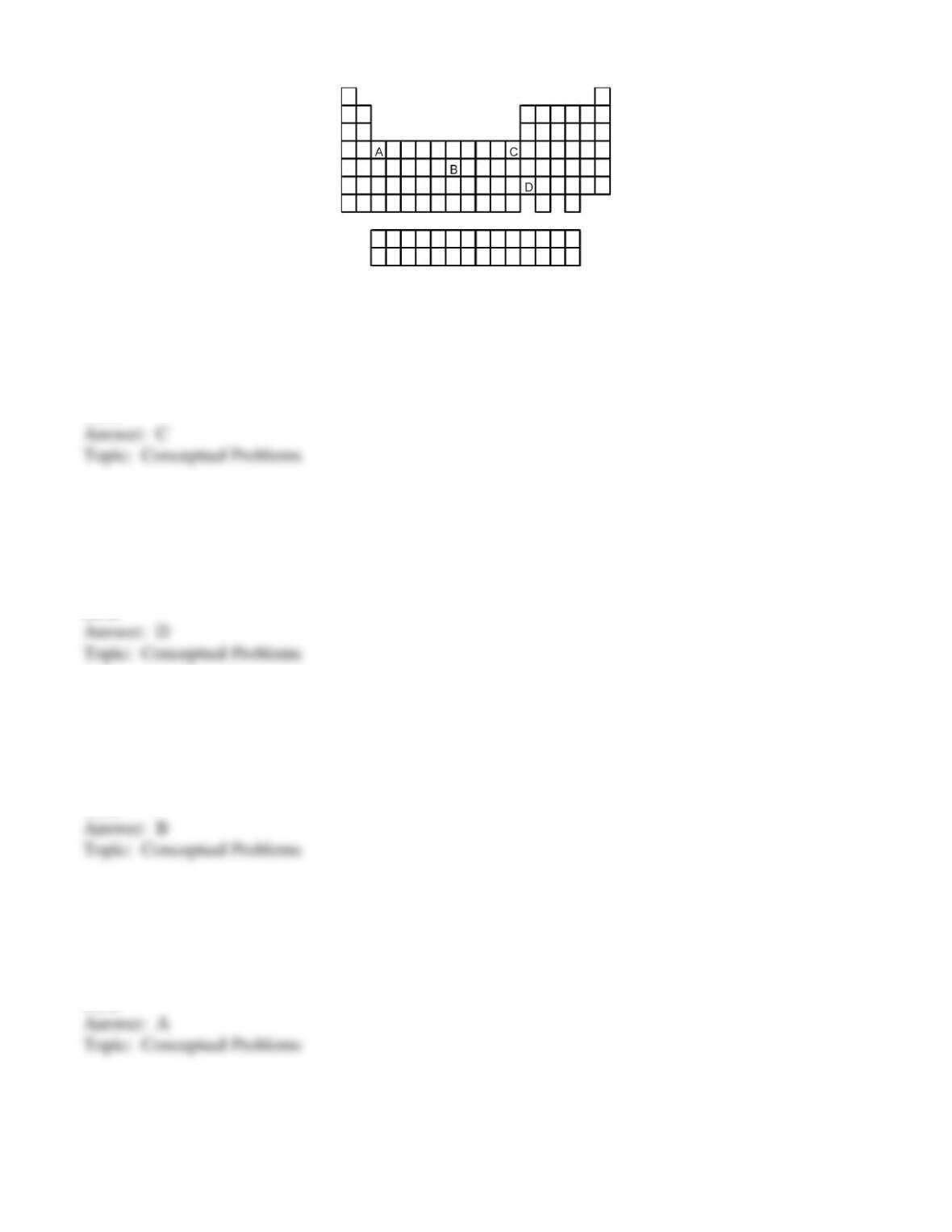
90) Which element, indicated by letter on the periodic table above, has a 2+ ion with the electron
configuration [Ar]3d10?
A) A
B) B
C) C
D) D
91) Which element, indicated by letter on the periodic table above, has a 1+ ion with the electron
configuration [Xe]6s2 4f14 5d10?
A) A
B) B
C) C
D) D
92) Which element, indicated by letter on the periodic table above, has a 3+ ion with the electron
configuration [Kr]4d5?
A) A
B) B
C) C
D) D
93) Which element, indicated by letter on the periodic table above, has a 3+ ion with the electron
configuration 1s2 2s2 2p6 3s2 3p6?
A) A
B) B
C) C
D) D
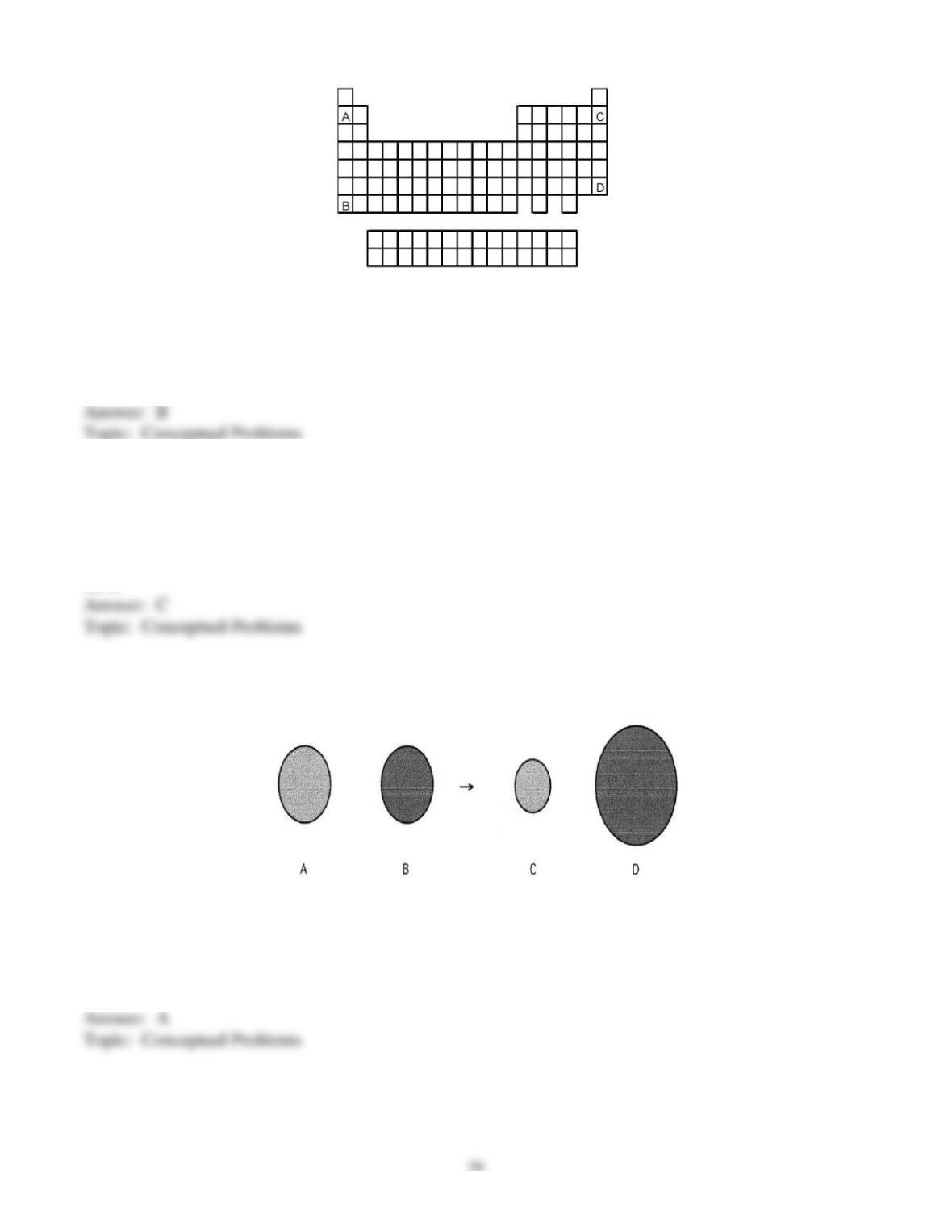
94) Atoms of which element, indicated by letter on the periodic table, are expected to have the largest
atomic radius?
A) A
B) B
C) C
D) D
95) Atoms of which element, indicated by letter on the periodic table, is expected to have the smallest
atomic radius?
A) A
B) B
C) C
D) D
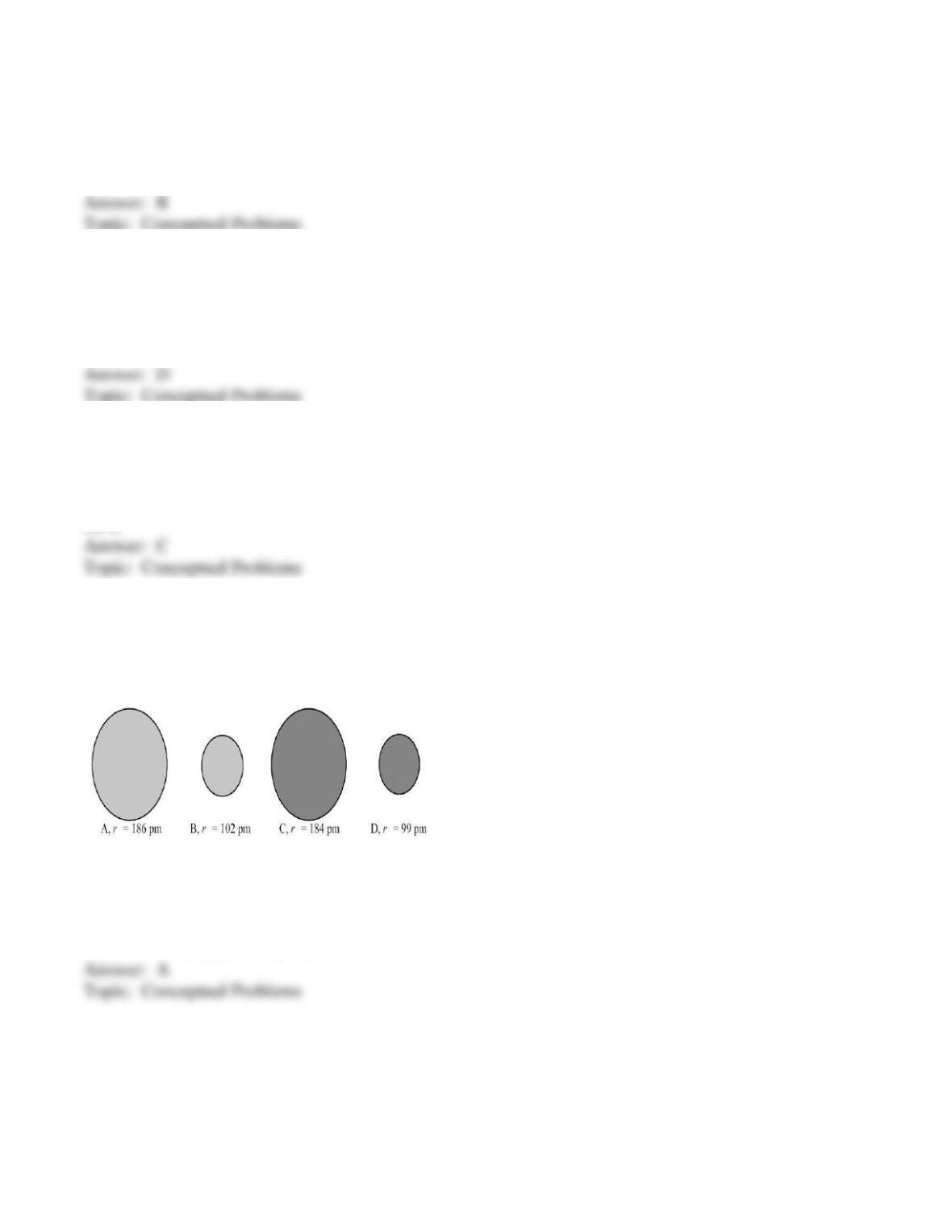
The following four spheres represent a metal atom, a nonmetal atom, a monatomic anion and a
monatomic cation, not necessarily in that order.
96) Which sphere represents the metal atom?
A) A
B) B
C) C
D) D
21
97) Which sphere represents the nonmetal atom?
A) A
B) B
C) C
D) D
98) Which sphere represents the monatomic anion?
A) A
B) B
C) C
D) D
99) Which sphere represents the monatomic cation?
A) A
B) B
C) C
D) D
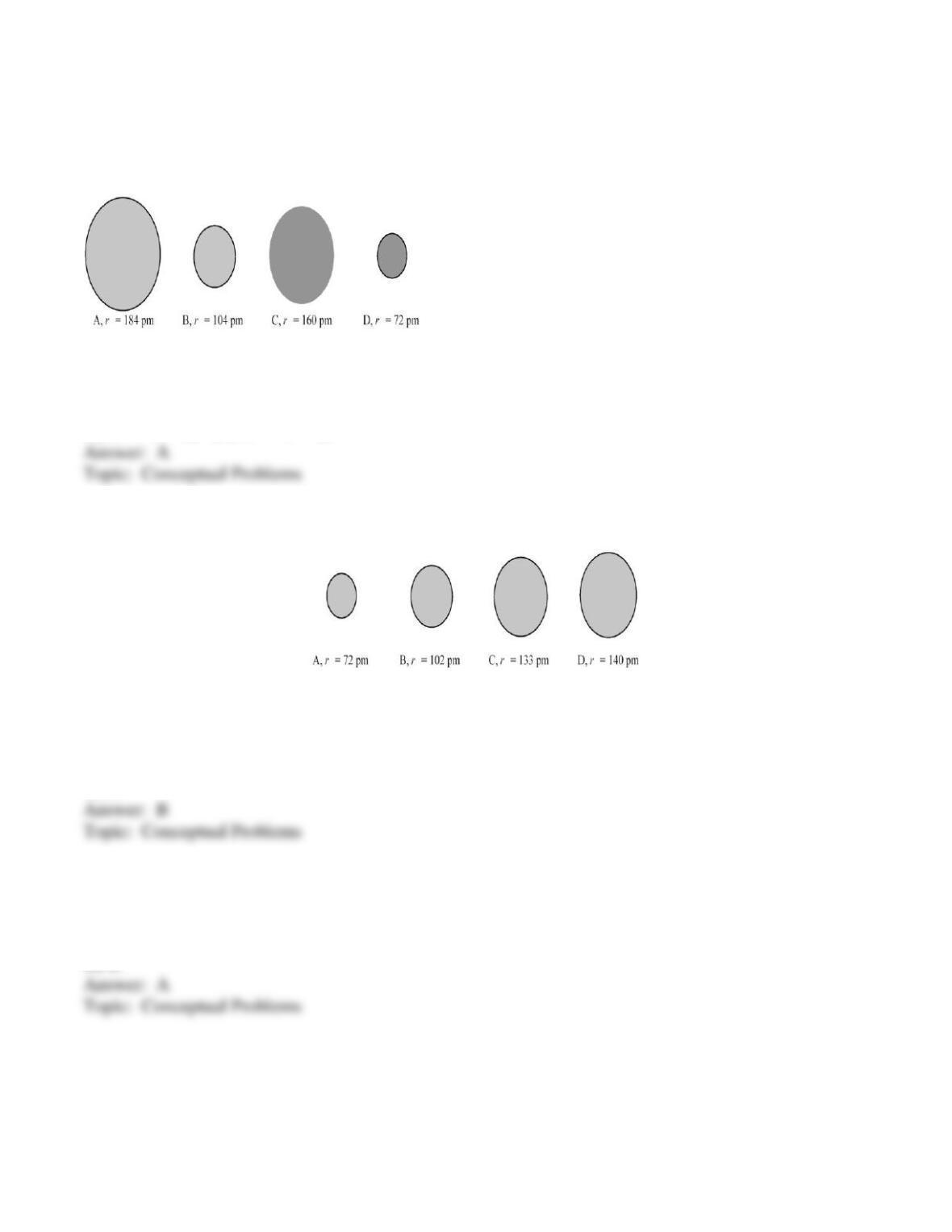
100) The following four spheres represent a Na atom, a Na+ ion, a Cl atom, and a Cl– ion, not
necessarily in that order. Use your knowledge about the relative sizes of atoms, cations, and anions to
determine which of the following sets of reactions is most consistent with the sizes of the atoms and ions
shown below.
A) A → B + e– and C → D + e–
B) A → B + e– and D → C + e–
C) B → A + e– and C → D + e–
D) B → A + e– and D → C + e–
22
101) The following four spheres represent an Mg atom, an Mg2+ ion, a S atom, and a S2- ion, not
necessarily in that order. Use your knowledge about the relative sizes of atoms, cations, and anions to
determine which of the following sets of reactions is most consistent with the sizes of the atoms and ions
shown below.
A) A → B + 2e⁻ and C → D + 2e⁻
B) A → B + 2e⁻ and D → C + 2e⁻
C) B → A + 2e⁻ and C → D + 2e⁻
D) B → A + 2e⁻ and D → C + 2e⁻
The four spheres below represent Na+, Mg2+, F⁻, and O2-, not necessarily in that order.
102) Which sphere most likely represents the Na⁺ ion?
A) A
B) B
C) C
D) D
103) Which sphere most likely represents the Mg2+ ion?
A) A
B) B
C) C
D) D
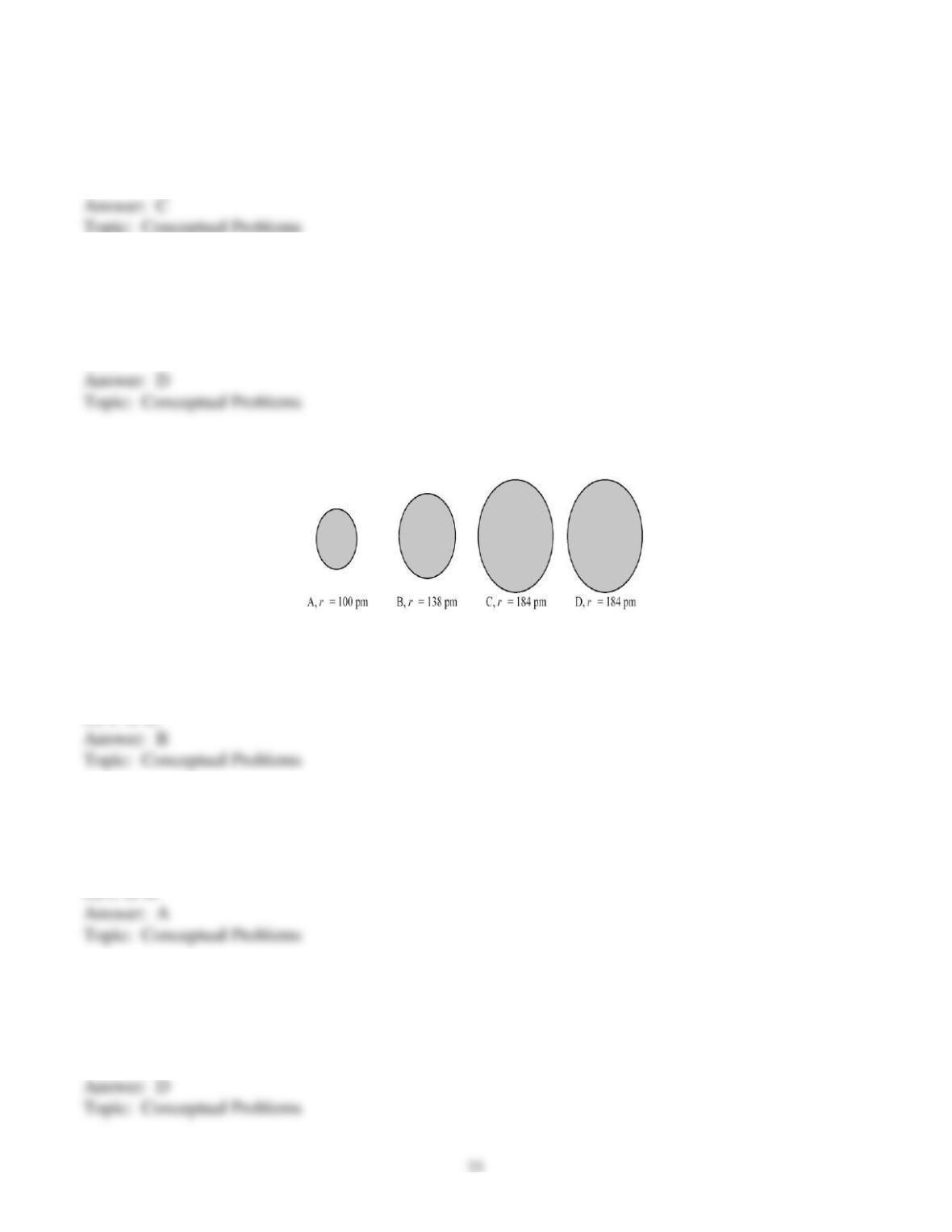
104) Which sphere most likely represents the F– ion?
A) A
B) B
C) C
D) D
105) Which sphere most likely represents the O2- ion?
A) A
B) B
C) C
D) D
The four spheres below represent K+, Ca2+, Cl–, and S2-, not necessarily in that order.
106) Which sphere most likely represents the K+ ion?
A) A
B) B
C) A or B
D) C or D
107) Which sphere most likely represents the Ca2+ ion?
A) A
B) B
C) A or B
108) Which sphere most likely represents the Cl⁻ ion?
A) A
B) B
C) A or B
D) C or D
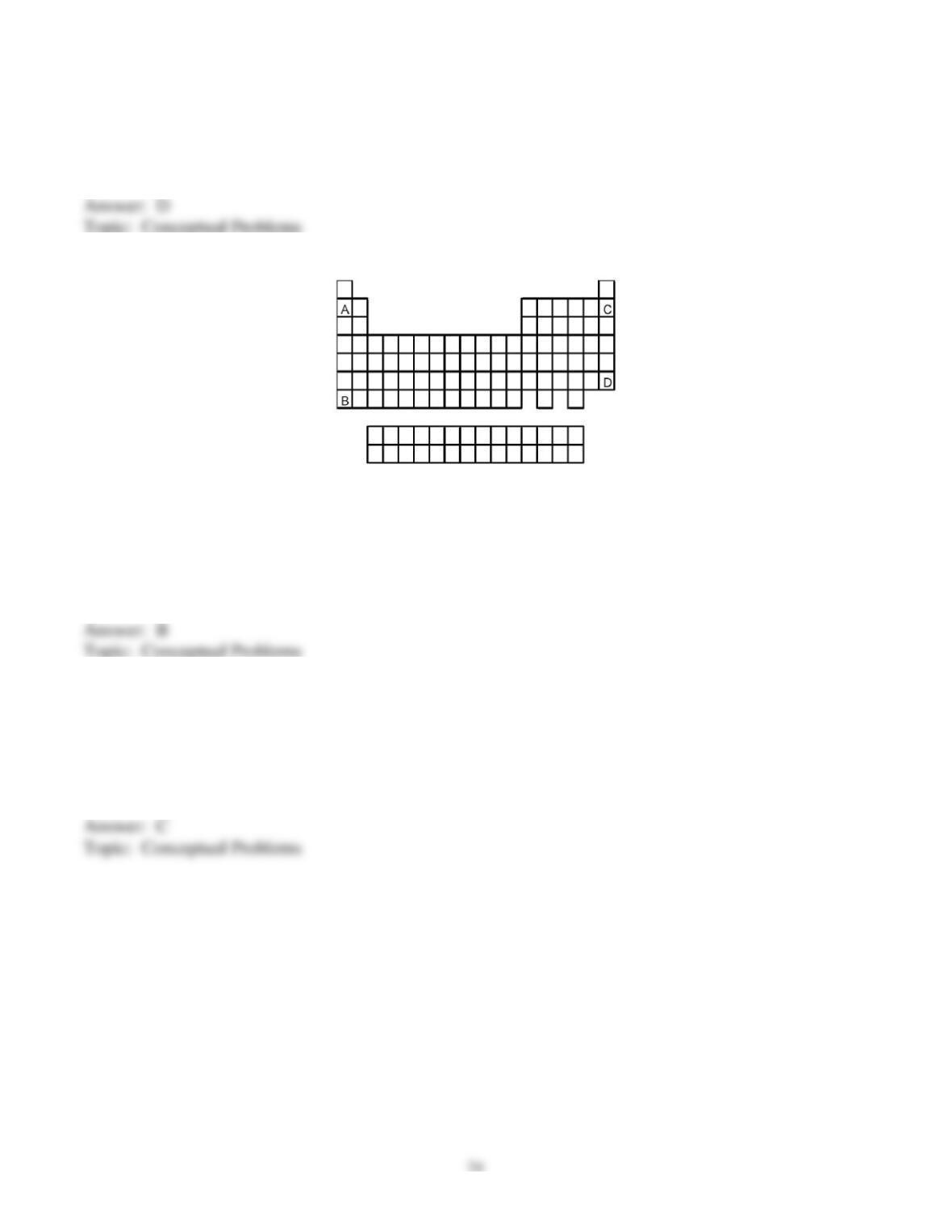
109) Which sphere most likely represents the S2- ion?
A) A
B) B
C) A or B
D) C or D
110) Atoms of which element, indicated by letter on the periodic table above, would be expected to have
the smallest first ionization energy, Ei1?
A) A
B) B
C) C
D) D
111) Atoms of which element, indicated by letter on the periodic table above, would be expected to have
the highest first ionization energy, Ei1?
A) A
B) B
C) C
D) D
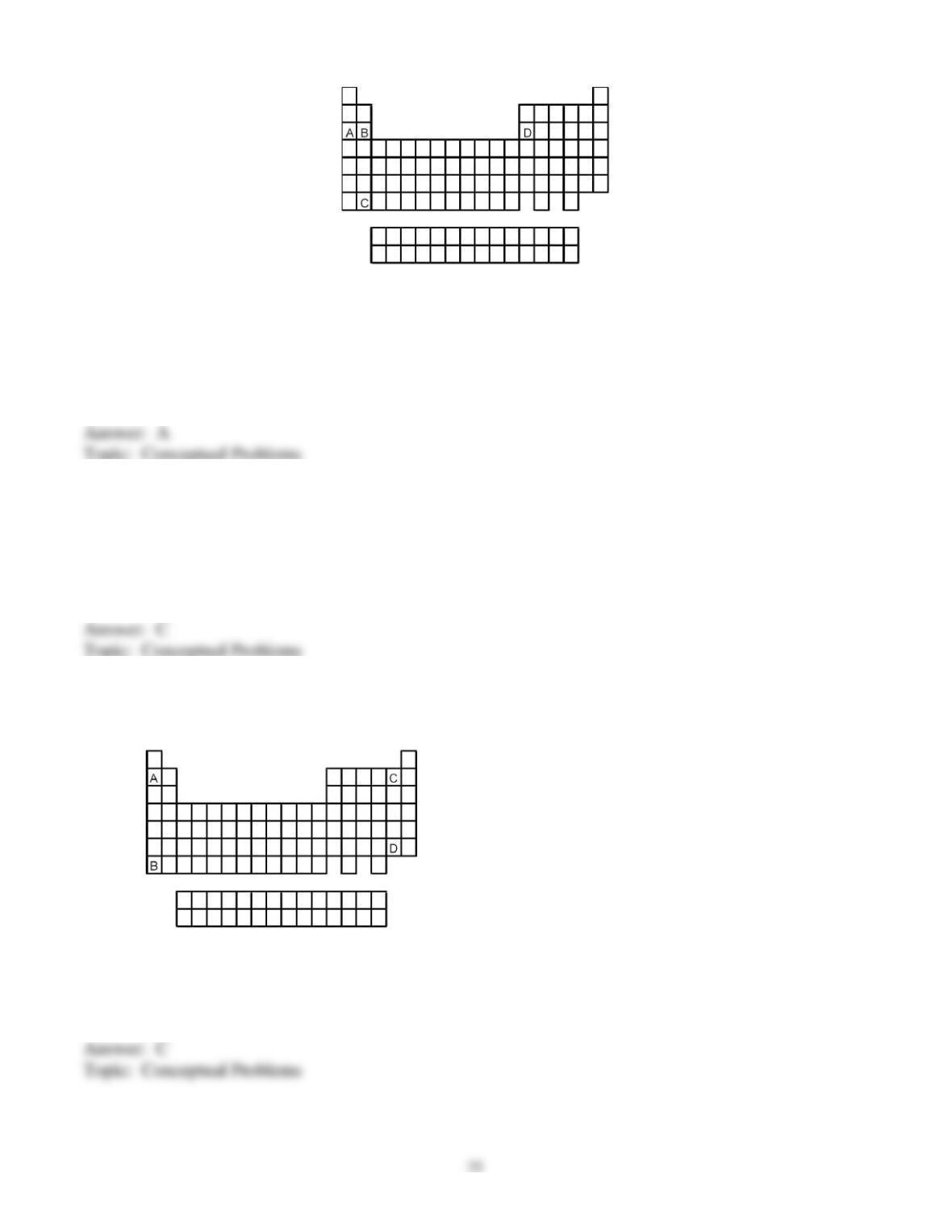
112) Atoms of which element, indicated by letter on the periodic table above, would be expected to have
the highest second ionization energy, Ei1?
A) A
B) B
C) C
D) D
113) Atoms of which element, indicated by letter on the periodic table above, would be expected to have
the lowest second ionization energy, Ei1?
A) A
B) B
C) C
D) D
114) Atoms of which element, indicated by letter on the periodic table, would be expected to have the
most negative value of Eea?
A) A
B) B
C) C
D) D
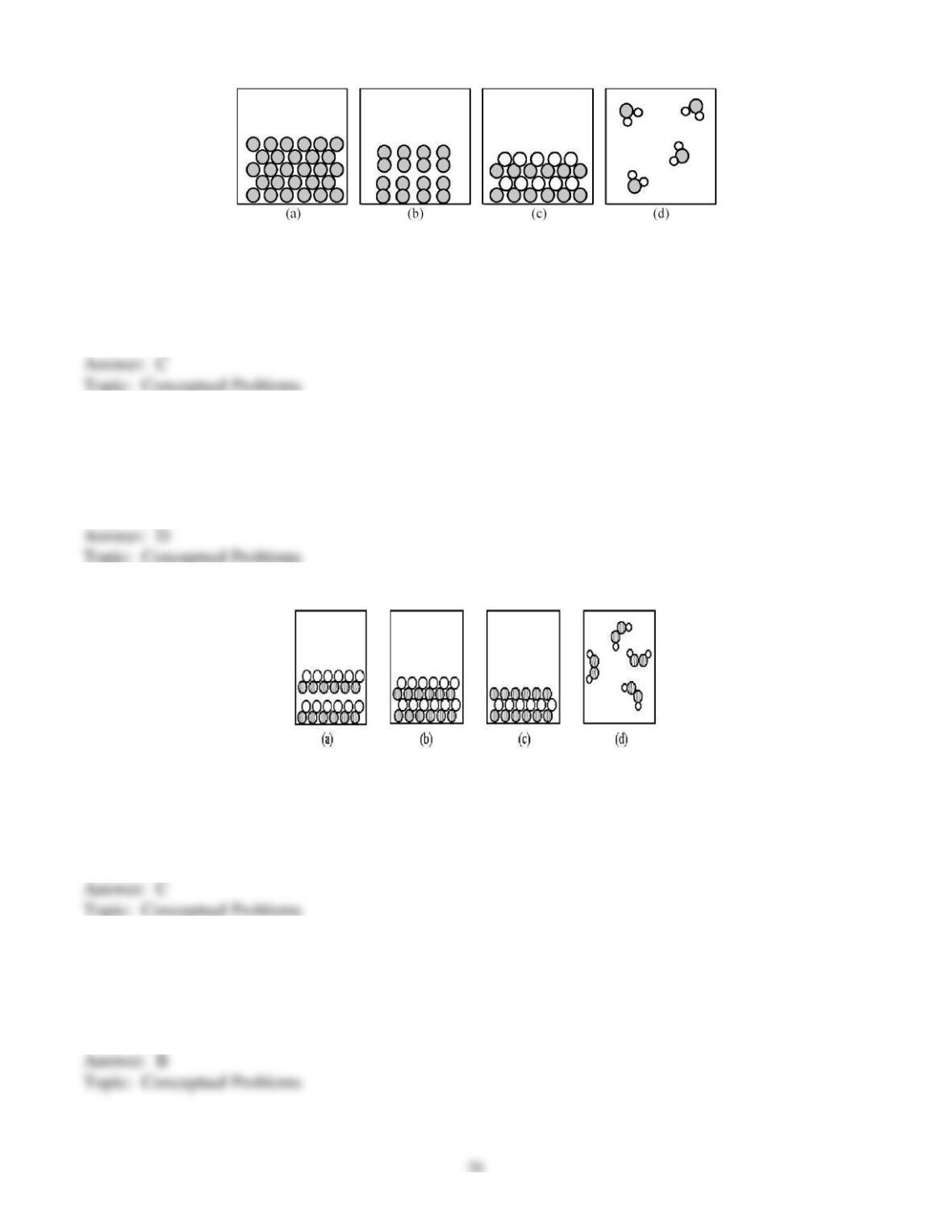
115) Which of the above pictures best represents a solid ionic compound?
A) picture (a)
B) picture (b)
C) picture (c)
D) picture (d)
116) Which of the above pictures best represents a gaseous covalent compound?
A) picture (a)
B) picture (b)
C) picture (c)
D) picture (d)
117) Which of the above pictures are more likely to represent ionic compounds?
A) pictures (a) and (b)
B) pictures (a) and (d)
C) pictures (b) and (c)
D) pictures (b) and (d)
118) Which of the above pictures are more likely to represent covalent compounds?
A) pictures (a) and (b)
B) pictures (a) and (d)
C) pictures (b) and (c)
D) pictures (b) and (d)
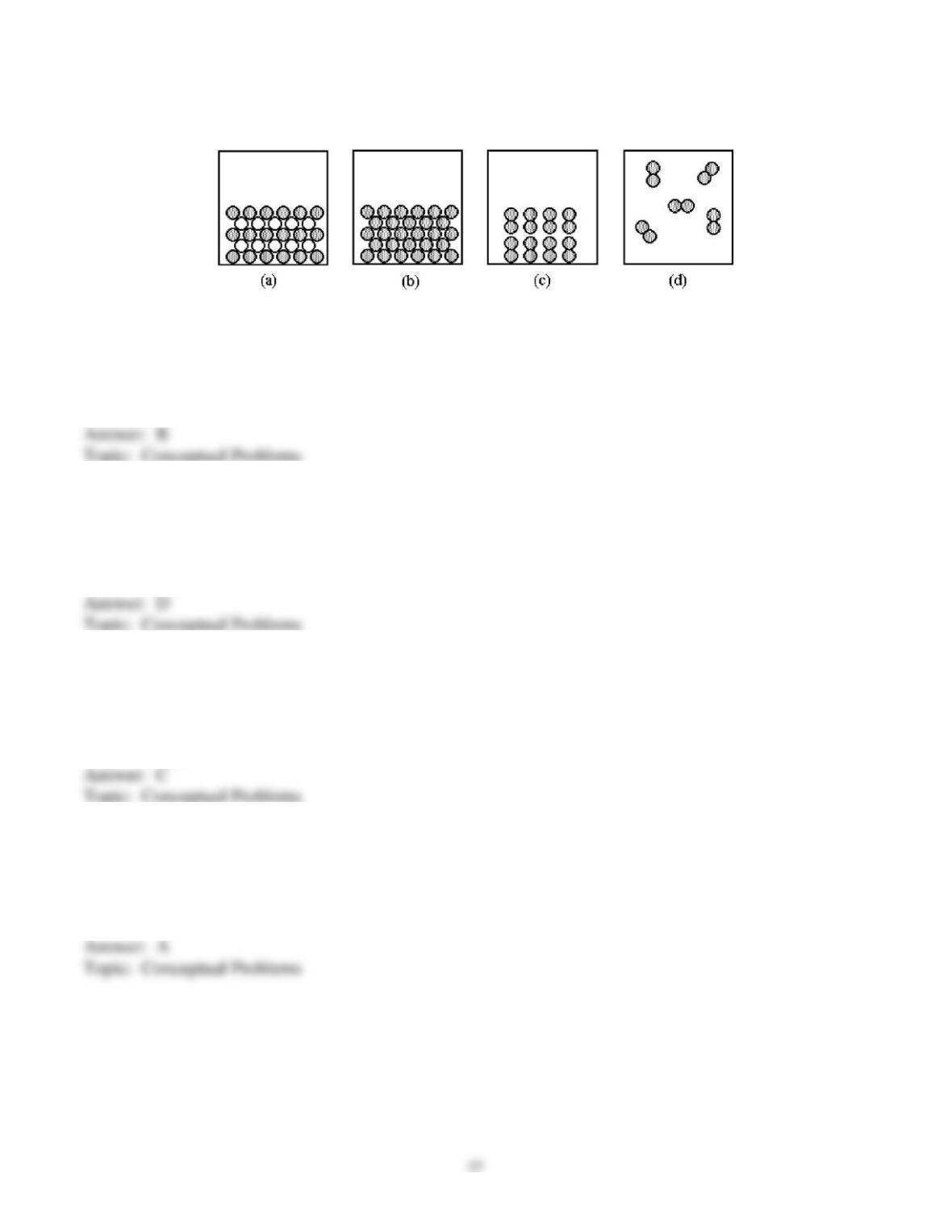
Each of the pictures (a)-(d) represents one of the following substances at 25°C: potassium, fluorine,
iodine, potassium fluoride, not necessarily in that order.
119) Which picture corresponds to potassium?
A) picture (a)
B) picture (b)
C) picture (c)
D) picture (d)
120) Which picture corresponds to fluorine?
A) picture (a)
B) picture (b)
C) picture (c)
D) picture (d)
121) Which picture corresponds to iodine?
A) picture (a)
B) picture (b)
C) picture (c)
D) picture (d)
122) Which picture corresponds to potassium fluoride?
A) picture (a)
B) picture (b)
C) picture (c)
D) picture (d)
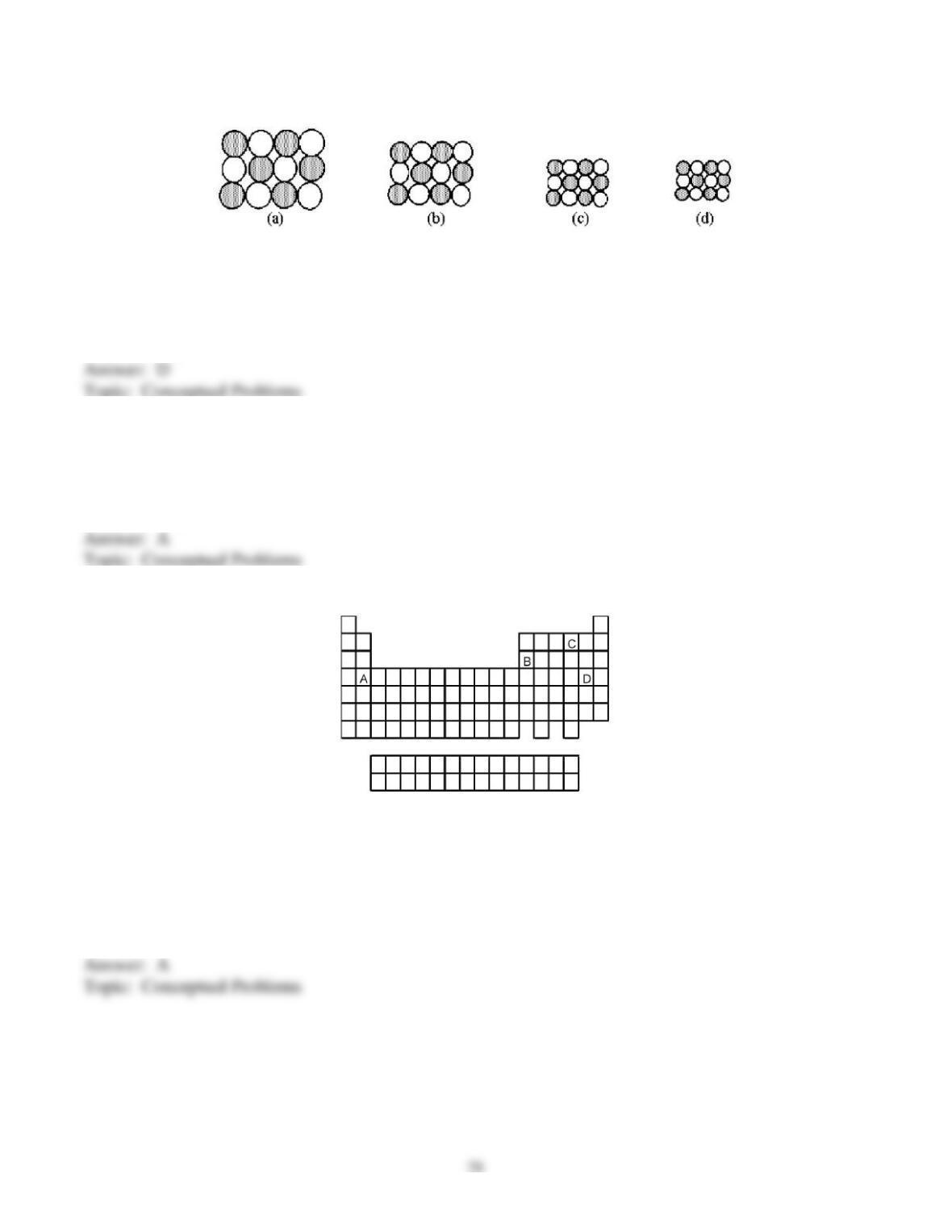
The following pictures represent alkali halide salts.
123) Which salt has the highest lattice energy?
A) picture (a)
B) picture (b)
C) picture (c)
D) picture (d)
124) Which salt has the lowest lattice energy?
A) picture (a)
B) picture (b)
C) picture (c)
D) picture (d)
125) What is the likely formula for the binary compound formed from the elements represented by
letters A and C on the periodic table above?
A) AC
B) A2C
C) AC2
D) A2C3
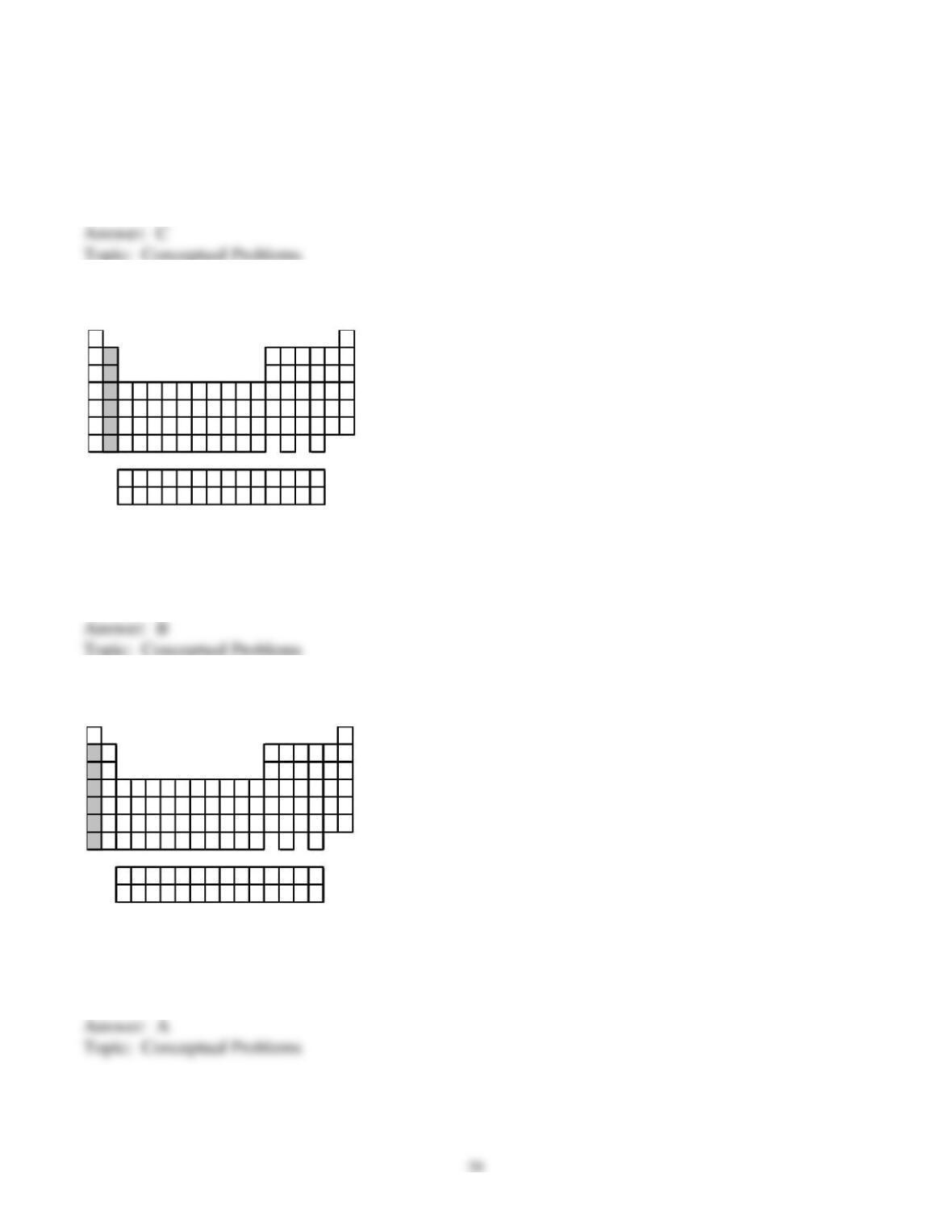
126) What is the likely formula for the binary compound formed from the elements represented by
letters A and D on the periodic table above?
A) AD
B) A2D
C) AD2
D) A2D3
127) What is the name for the group of elements indicated by the shaded portion of the periodic table?
A) alkali metals
B) alkaline earth metals
C) inner-transition metals
D) transition metals
128) What is the name for the group of elements indicated by the shaded portion of the periodic table?
A) alkali metals
B) alkaline earth metals
C) inner-transition metals
D) transition metals
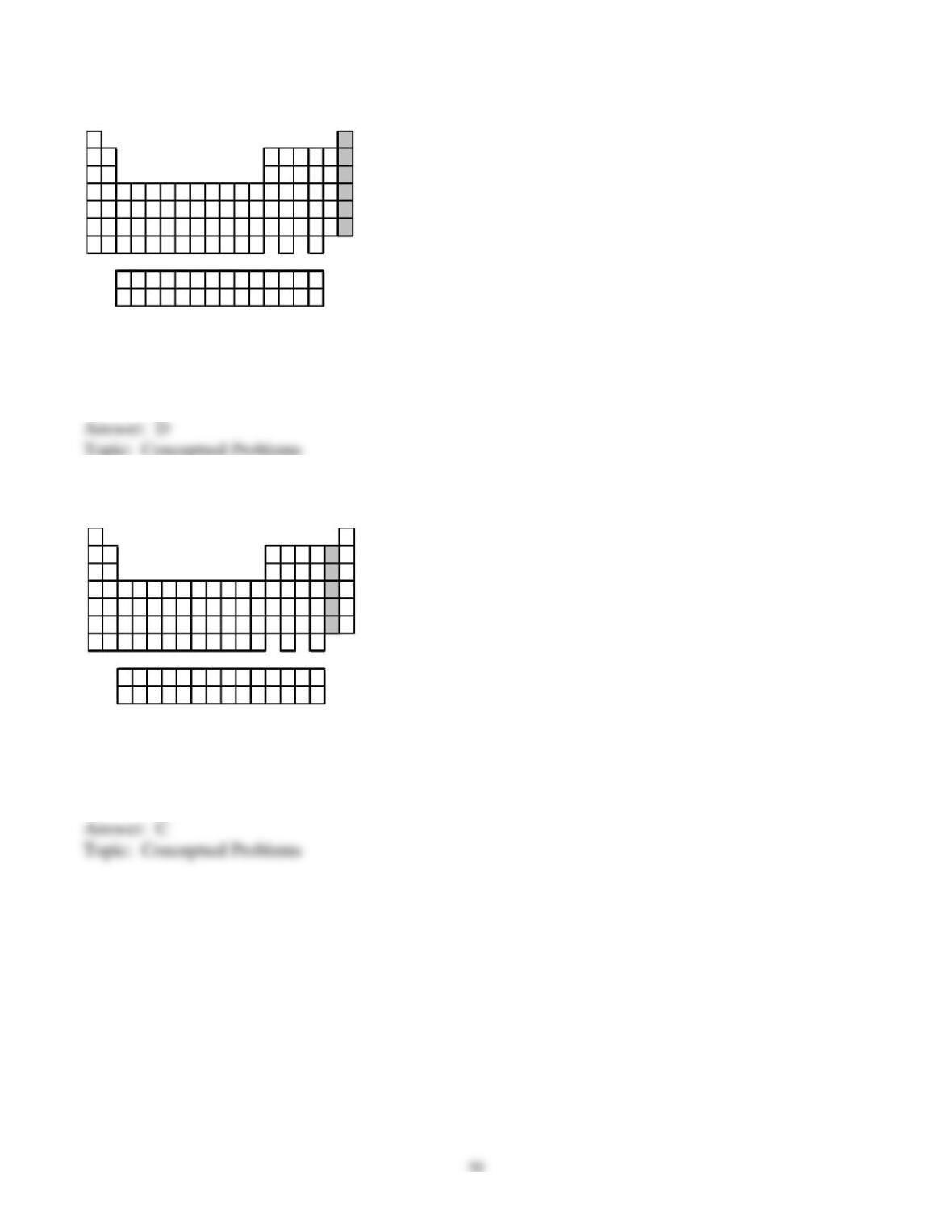
129) What is the name for the group of elements indicated by the shaded portion of the periodic table?
A) alkaline earth metals
B) group 3A elements
C) halogens
D) noble gases
130) What is the name for the group of elements indicated by the shaded portion of the periodic table?
A) alkaline earth metals
B) group 3A elements
C) halogens
D) noble gases
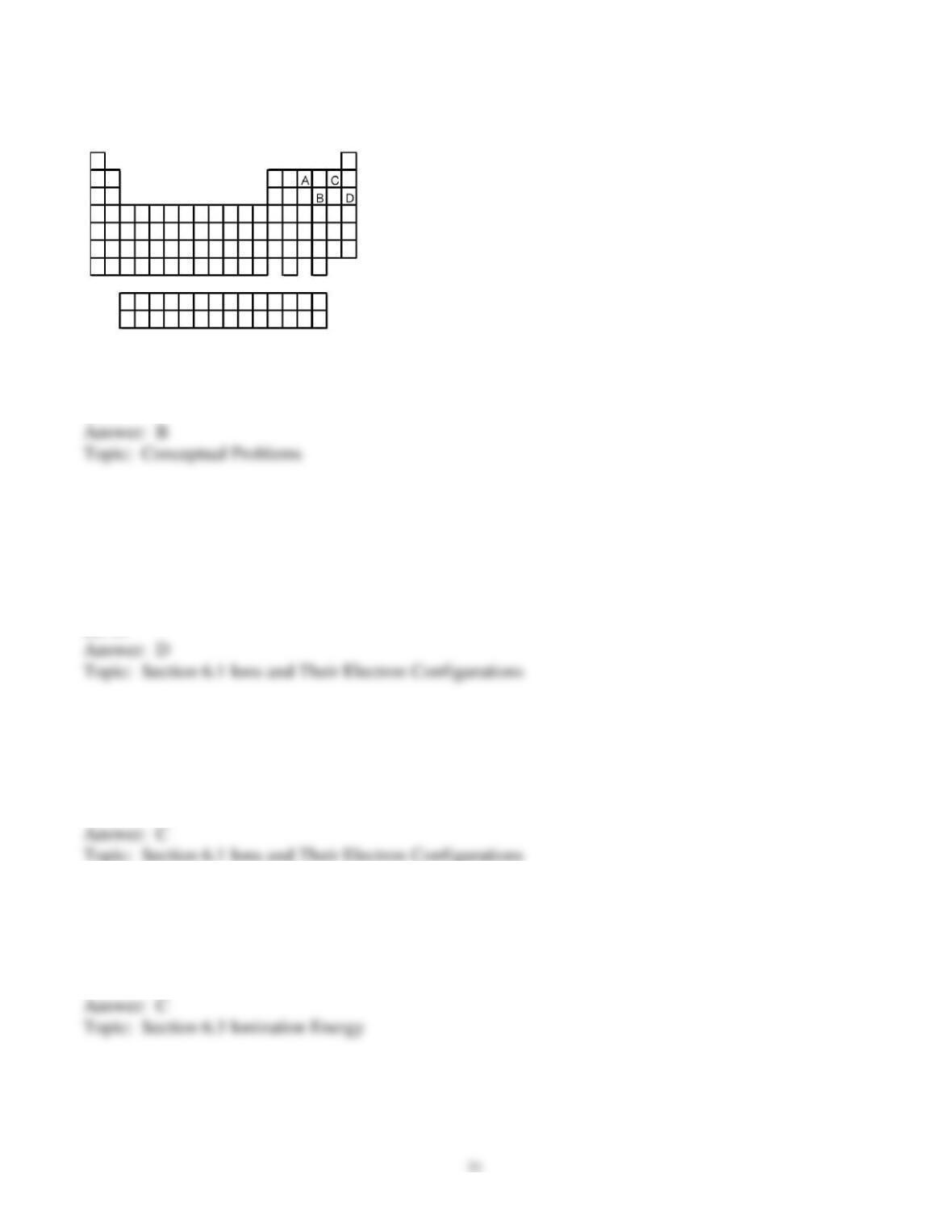
131) Which element, indicated by letter on the periodic table, is able to form compounds that do not
obey the octet rule?
A) A
B) B
C) C
D) D
6.2 Algorithmic Questions
1) How many electrons are in the outermost shell of the Ga3+ ion in its ground state?
A) 2
B) 3
C) 6
D) 18
2) Which ion does not have a noble gas configuration in its ground state?
A) Sc3+
B) Al3+
C) Ga3+
D) As3-
3) Of the following, which element has the highest first ionization energy?
A) aluminum
B) magnesium
C) phosphorus
D) sodium
32
4) Of the following, which element has the highest first ionization energy?
A) beryllium
B) boron
C) carbon
D) lithium
5) Of the following, which element has the highest first ionization energy?
A) Al
B) Cl
C) Na
D) P
6) Of the following, which element has the highest first ionization energy?
A) Sr
B) Rb
C) Na
D) Ca
7) Of the following, which element has the highest first ionization energy?
A) Sr
B) Br
C) K
D) Te
8) Which ionization process requires the most energy?
A) W(g) → W+(g) + e–
B) W+(g) → W2+(g) + e–
C) W2+(g) → W3+(g) + e–
D) W3+(g) → W4+(g) + e–
9) Which ionization process requires the most energy?
A) O(g) → O+(g) + e–
B) O+(g) → O2+(g) + e–
C) F(g) → F+(g) + e–
D) F+(g) → F2+(g) + e–
10) Which of the following species will have the highest ionization energy?
33
A) K+
B) Ar
C) Cl–
D) S2-
11) Which of the following represents the change in electronic configuration that is associated with the
first ionization energy of strontium?
A) [ Kr] 5s15p1 → [ Kr] 5s1 + e–
B) [ Kr] 5s2 → [ Kr] 5s15p1
C) [ Kr] 5s2 → [ Kr] 5s1 + e–
D) [ Kr] 5s2 + e– → [ Kr] 5s25p1
12) Which element has the highest first electron affinity?
A) Na
B) Mg
C) O
D) Ne
13) How many valence shell electrons does an atom of indium have?
A) 1
B) 2
C) 3
D) 49
14) An element that has the valence electron configuration 6s26p6 belongs to which period and group?
A) period 6; group 6A
B) period 6; group 8A
C) period 7; group 6A
D) period 7; group 8A
15) Which of the following ionic compounds would be expected to have the highest lattice energy?
A) LiF
B) LiCl
C) LiBr
D) LiI
16) Which of the following ionic compounds would be expected to have the highest lattice energy?
A) Li Cl
B) Na Cl
C) K Cl
D) Rb Cl
17) Which ionic compound would be expected to have the highest lattice energy?
A) Rb2O
B) Sr O
C) In2O3
D) C O2
6.3 Short Answer Questions
1) Using shorthand notation, the ground-state electron configuration for Sr2+ is predicted to be
________.
2) Using shorthand notation, the ground-state electron configuration for Co2+ is predicted to be
________.
3) Using shorthand notation, the ground-state electron configuration for Tl+ is predicted to be ________.
4) Using shorthand notation, the ground-state electron configuration for C4– is predicted to be
________.
5) Using shorthand notation, the ground-state electron configuration of the platinum ion in Cs2Pt is
________.
6) The tripositive ion with the electron configuration [Ar}3d6 is ________.
7) The neutral atom with the electron configuration [Ar}4s23d6 is ________.
8) The ion that has 28 protons and 26 electrons is ________.
9) The number of electrons in the ion Zn2+ is ________.
10) The number of electrons in the ion P3- is ________.
11) The ion Q2+ contains 10 electrons. The identity of element Q is ________.
12) Isoelectronic means having the same number of electrons. The dipositive ion that is isoelectronic
with Br– is ________.
13) The ionic radius of Cs+ is ________ than the atomic radius of Cs, and the ionic radius of I– is
________ than the atomic radius of I.
14) The element in period 4 with the smallest first ionization energy is ________.
15) The element in period 3 with the smallest seventh ionization energy is ________.
16) What is the third-row element having the successive ionization energies in kJ/mol: 738, 1451, 7733,
10,540, 13,630, 17,995, 21,703?
17) The element in group 7A with the least favorable (least negative) electron affinity is ________.
36
18) The third-row element having a less negative electron affinity than the elements on either side of it
on the periodic table is ________.
19) The group 4A element that always obeys the octet rule in its stable compounds is ________.
20) Lattice energy increases with ________ cation and anion charges and ________ cation and anion
radii.
21) The product of the reaction of lithium with nitrogen is ________.
22) Potassium reacts with oxygen to form a superoxide with the formula ________.
23) The oxidation number of the oxygen atoms in SrO2 is ________.
24) If niobium loses all of its valence electrons when it reacts with fluorine, what is the formula of the
neutral binary compound that results?
25) When the equation for the reaction of KBr(aq) with MnO2(s) to produce Br2 and Mn2+(aq) in
acidic solution is balanced, the coefficient in front of the Br2 is ________.