326 ♦ Chapter 6
19. In periods of rising prices the FIFO inventory method would yield the highest gross profit.
20. The FIFO inventory method will report the highest cost of goods sold and lowest inventory value
during periods of inflation.
21. The LIFO inventory method achieves the best matching of revenues and expenses in a period of
inflation.
22. The average cost method would value inventory at more recent costs.
23. In periods of falling prices the LIFO inventory method would yield the highest gross profit.
24. Net realizable value is the estimated selling price less any costs of completion.
25. Companies will use the LIFO method of inventory during periods of falling prices to lower taxable
income.
26. Under lower of cost or market, market refers to current replacement cost.
27. Quick response or efficient consumer response strategies are used to optimize inventory levels in
the value chain.
28. Inventory management techniques have been used to reduce the relative size of inventory by 70%
for US firms.
Inventories ♦ 327
29. High inventory turnover will result in a high average days inventory on hand.
ESSAY
1. Discuss the different functions of merchandising companies and manufacturing companies.. How
do the inventory accounts of these types of companies differ?
2. List the three types of inventories for a manufacturer and briefly explain what is included in each.
3. Why is control of inventory important in merchandising companies? What are the primary
objectives of inventory controls?
328 ♦ Chapter 6
4. Explain whether or NOT a physical inventory is necessary under a perpetual inventory system.
5. Discuss why internal control procedures are necessary for inventory.
6. Discuss what type of business would use the specific identification method and explain why all
businesses cannot employ this method.
7. If prices are increasing, why does FIFO produce the highest income?
8. Why would a company prefer a perpetual system over a periodic inventory system?
Inventories ♦ 329
9. Discuss why so many companies are using “quick response.”
10. Discuss the advantages and disadvantages of the LIFO inventory method.
11. Discuss the advantages and disadvantages of the FIFO inventory method.
12. State which inventory method would result in the better balance sheet presentation and which one
would result in the better income statement presentation and explain why.
330 ♦ Chapter 6
13. Under what conditions is inventory valued at other than cost? Briefly describe two other methods.
14. How are inventories being reduced through “quick response?”
15. If a company has an inventory turnover much lower than the industry average, what does this
imply about whether the company is holding too much or too little goods in inventory and what
problems may result?
Inventories ♦ 331
PROBLEM
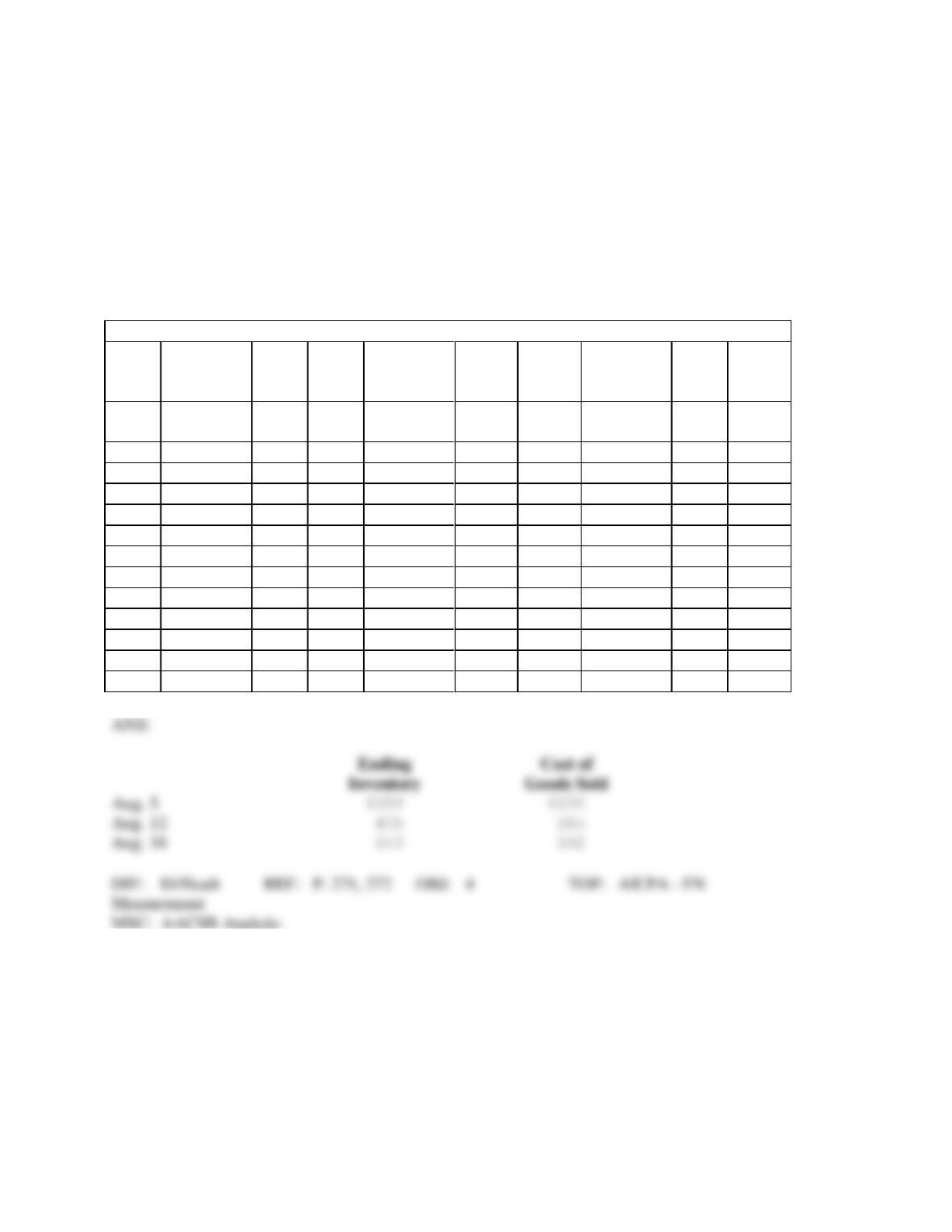
1. Lexie’s Boutique employs a perpetual inventory system and entered into the following transactions
during the month of April.
April 3
Purchased merchandise on account for $54,370
April 21
Sold merchandise on account for $74,630, the cost of the inventory was $37,600
(a)
Prepare the necessary entries to record the above transactions
(b)
Calculate Lexie’s gross profit for the month
General Journal
Apr
3
Merchandise Inventory
Accounts Payable
Sales
Cost of Merchandise Sold
Merchandise Inventory
332 ♦ Chapter 6
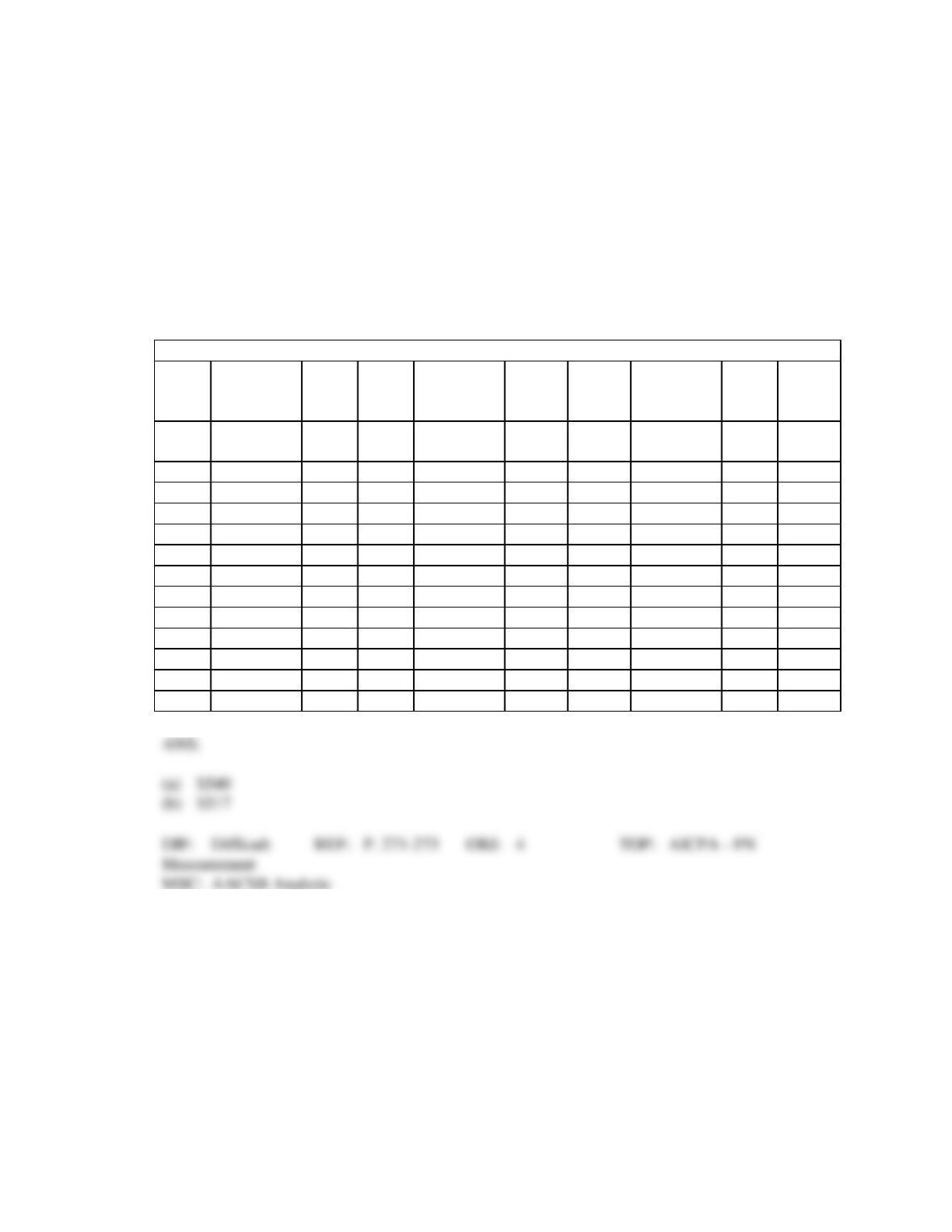
2. Beginning inventory purchases and sales data for the month of August are as follows:
August 1
Beginning Inventory
12 units @ $25
August 5
Sale
6 units
August 10
Purchase
20 units @ $27
August 12
Sale
11 units
August 16
Sale
6 units
August 27
Purchase
12 units @ $30
Assuming the business maintains a perpetual inventory system and uses the FIFO cost method,
calculate the cost of ending inventory and the cost of merchandise sold after each sale.
Perpetual Inventory Form
Purchases
Cost of
Merch
Sold
Inventory
Date
#
Unit
Cost
Total
Cost
#
Unit
Cost
Total
Cost
#
Unit
Cost
Total
Cost
Aug. 5
Aug. 12
Aug. 16
Inventories ♦ 333
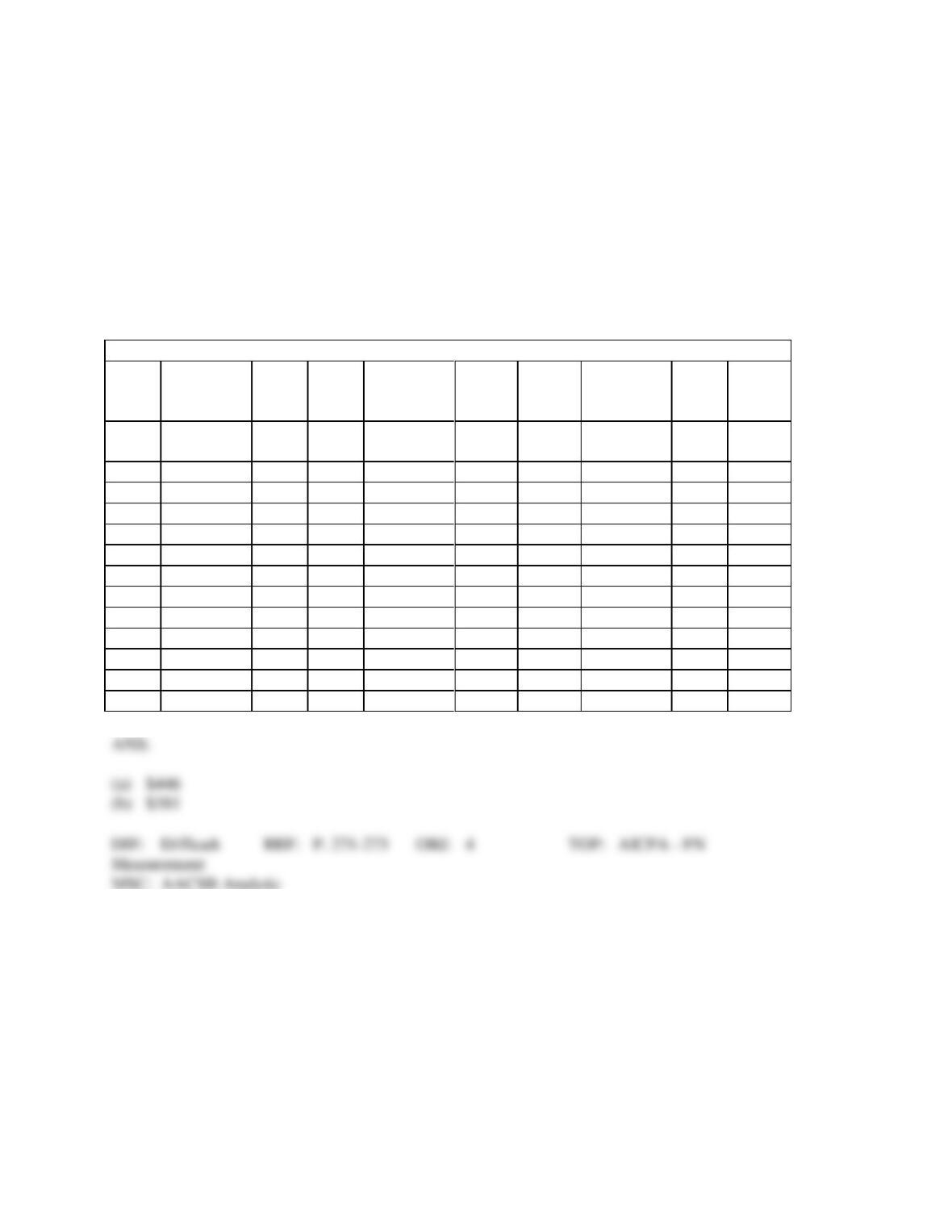
3. Beginning inventory, purchases and sales data for the month are as follows:
Beginning Inventory
10 units @ $42
Sale
4 units
First Purchase
15 units @ $44
Sale
10 units
Second Purchase
13 units @ $45
Sales
12 units
Assuming the firm uses the perpetual inventory system, determine the total cost of ending
inventory according to (a) FIFO and (b) LIFO.
Perpetual Inventory Form
Purchases
Cost of
Merch
Sold
Inventory
Date
#
Unit
Cost
Total
Cost
#
Unit
Cost
Total
Cost
#
Unit
Cost
Total
Cost
(a)
$540
(b)
$517
334 ♦ Chapter 6
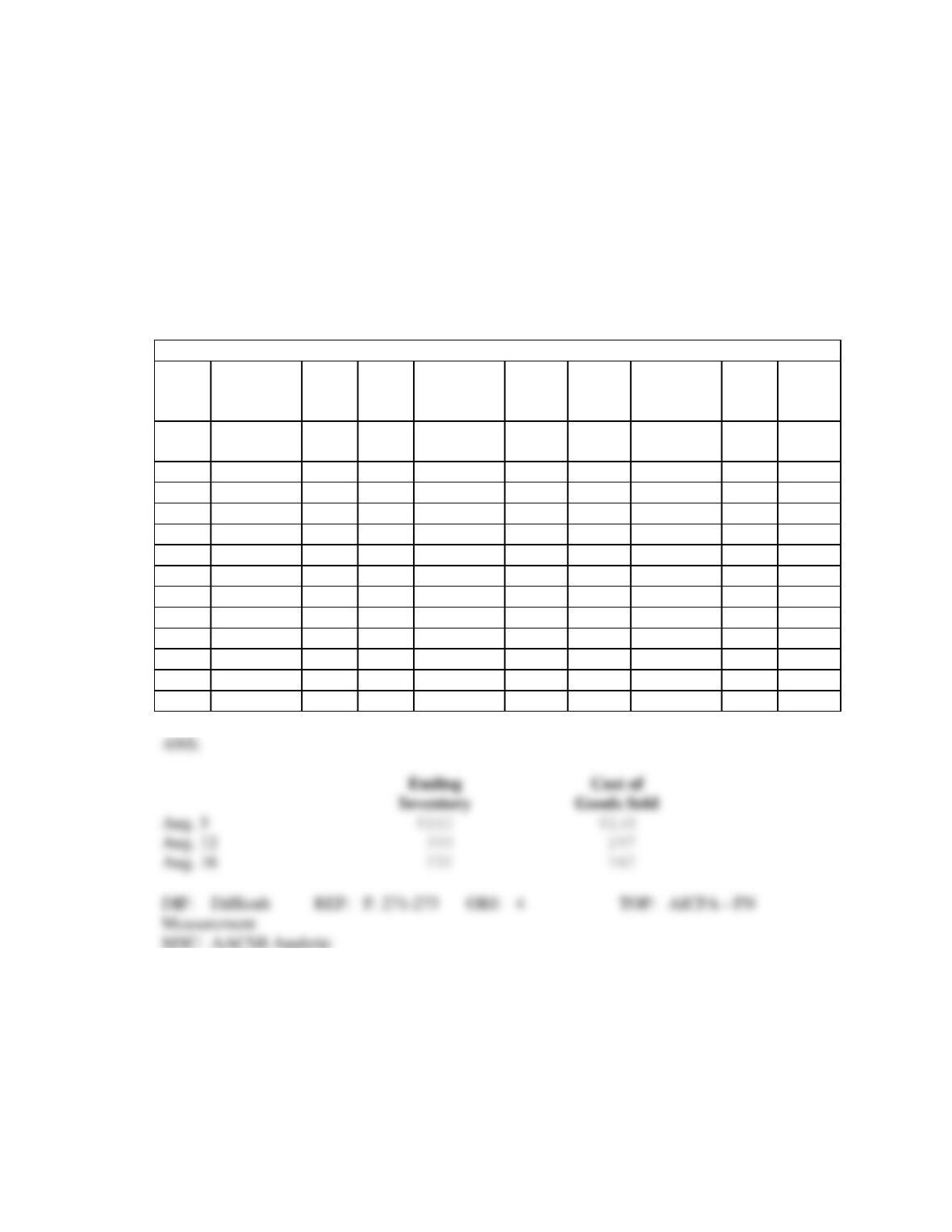
4. Beginning inventory, purchases and sales data for the month are as follows:
Beginning Inventory
50 units @ $6
Sale
20 units
First Purchase
45 units @ $7
Sale
22 units
Second Purchase
40 units @ $8
Sales
35 units
Assuming the firm uses the perpetual inventory system, determine the total cost of ending
inventory according to (a) FIFO and (b) LIFO.
Perpetual Inventory Form
Purchases
Cost of
Merch
Sold
Inventory
Date
#
Unit
Cost
Total
Cost
#
Unit
Cost
Total
Cost
#
Unit
Cost
Total
Cost
(a)
$446
(b)
$381
Inventories ♦ 335
5. Beginning inventory purchases and sales data for the month of August are as follows:
August 1
Beginning Inventory
12 units @ $25
August 5
Sale
6 units
August 10
Purchase
20 units @ $27
August 12
Sale
11 units
August 16
Sale
6 units
August 27
Purchase
12 units @ $30
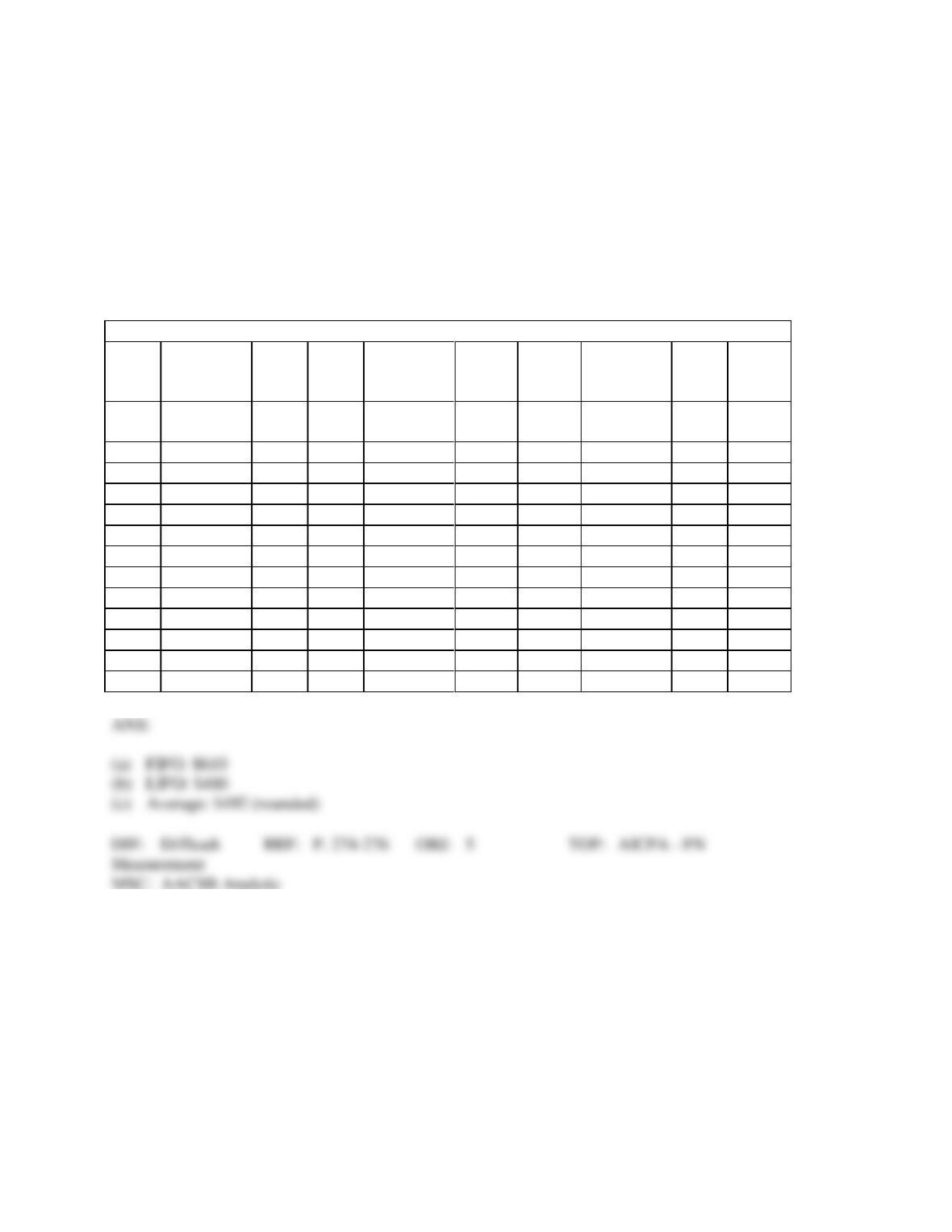
Assuming the business maintains a perpetual inventory system and uses the LIFO cost method,
calculate the cost of ending inventory and the cost of merchandise sold after each sale.
Perpetual Inventory Form
Purchases
Cost of
Merch
Sold
Inventory
Date
#
Unit
Cost
Total
Cost
#
Unit
Cost
Total
Cost
#
Unit
Cost
Total
Cost
Aug. 5
Aug. 12
Aug. 16
336 ♦ Chapter 6
6. The following units are available for sale during the year:
January 1
Beginning Inventory
10 units @ $18
April 3
Purchases
30 units @ $20
August 31
Purchases
28 units @ $25
September 29
Purchases
17 units @ $30
December 31
Ending Inventory
21 units
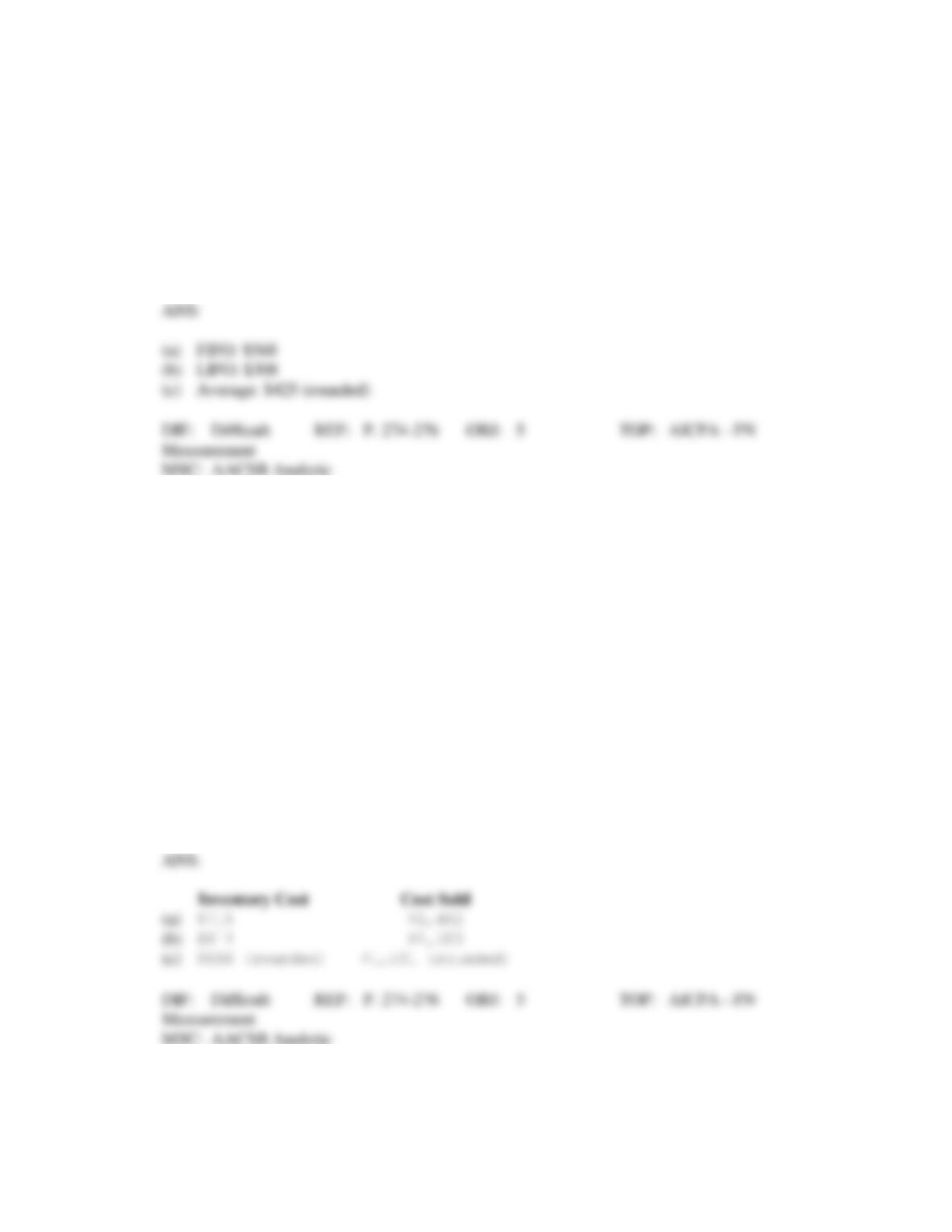
Assuming a periodic inventory system is used, determine ending inventory cost by (a) FIFO, (b)
LIFO, and (c) Average Cost.
Perpetual Inventory Form
Purchases
Cost of
Merch
Sold
Inventory
Date
#
Unit
Cost
Total
Cost
#
Unit
Cost
Total
Cost
#
Unit
Cost
Total
Cost
(a)
FIFO: $610
(b)
LIFO: $400
(c)
Average: $492 (rounded)
Inventories ♦ 337
7. The following units are available for sale during the month of September:
September 1
Beginning Inventory
52 units @ $5
September 5
Purchases
65 units @ $6
September 13
Purchases
55 units @ $8
September 29
Purchases
44 units @ $10
September 30
Ending Inventory
60 units
Assuming a periodic inventory system is used, determine ending inventory cost by (a) FIFO, (b)
LIFO, and (c) Average Cost.
8. The following units are available for sale during the year:
January 1
Beginning Inventory
13 units @ $30
March 20
Purchases
21 units @ $32
June 1
Purchases
17 units @ $35
August 15
Purchases
15 units @ $36
December 31
Ending Inventory
20 units
Assuming a periodic inventory system is used, determine the ending inventory cost and cost of
merchandise sold by the three methods using the following format.
Inventory Method
Ending Inventory
Cost
Cost of
Merchandise Sold
(a)
FIFO
$
$
(b)
LIFO
$
$
(c)
Average Cost*
(round answers)
$
$
(a)
(b)
(c)
(a)
FIFO: $568
(b)
LIFO: $308
(c)
Average: $425 (rounded)
338 ♦ Chapter 6
9. The following units are available for sale during the year:
January 1
Beginning Inventory
10 units @ $110
April 21
Purchases
18 units @ $120
August 15
Purchases
15 units @ $125
November 20
Purchases
12 units @ $128
December 31
Ending Inventory
14 units
Assuming a periodic inventory system is used, determine the inventory cost and cost of
merchandise sold by three methods using the following format.
Inventory Method
Ending Inventory
Cost
Cost of
Merchandise Sold
(a)
FIFO
$
$
(b)
LIFO
$
$
(c)
Average Cost*
(round answers to nearest
dollar)
$
$
10. In each blank below, place the correct sign, less than (<), greater than (>), or equal (=) for each
comparison, assuming rising prices.
(a)
FIFO cost of merchandise sold
_____ LIFO cost of merchandise sold
(b)
Average inventory
_____ FIFO inventory
(c)
LIFO taxable income
_____ FIFO taxable income
(d)
LIFO net income
_____ Average net income
(e)
FIFO inventory
_____ LIFO inventory
(a)
<
(b)
<
(c)
<
(d)
<
(e)
>
(a)
(b)
(c)
Inventories ♦ 339
11. Use the following data to determine the value of ending inventory at the lower of cost or market
rule, applied on an individual basis.
Commodity
Inventory
Quantity
Unit Cost
Price
Unit Market
Price
A
50
$16
$14
B
120
$21
$18
C
85
$35
$37
D
64
$25
$23
E
142
$31
$34
Inventory Worksheet
Commodity
Inventory
Quantity
Unit Cost
Price
Unit
Market
Price
Cost
Market
Lower of
C or M
A
B
C
D
E
Total
340 ♦ Chapter 6
12. Use the following data to determine the market value decline in inventory under the lower of cost
or market rule, applied on an individual basis.
Commodity
Inventory
Quantity
Unit Cost
Price
Unit Market
Price
A
16
$110
$115
B
21
$120
$124
C
8
$210
$205
D
11
$185
$162
E
22
$176
$184
Inventory Worksheet
Commodity
Inventory
Quantity
Unit Cost
Price
Unit
Market
Price
Cost
Market
Lower of
C or M
A
B
C
D
E
Total
13. The following data pertain to Johnny’s grocery market and Candy’s furniture house.
Johnny’s Groceries
Candy’s Furniture
Cost of goods sold
$675,000
$742,000
Beginning Inventory
$ 76,500
$278,900
Ending Inventory
$ 81,450
$315,400
(a)
Determine the inventory turnover for both companies (Round answers to two decimal places)
(b)
Determine the number of day’s sales in inventory for both companies (Round to nearest whole day)
(c)
Would you expect Johnny’s inventory turnover to be higher or lower than Candy’s, why?
ANS:
(a)
8.55 Johnny turnover, 2.50 for Candy
(b)
43 days for Johnny, 146 days for Candy
furniture store.
Inventories ♦ 341
CASE
1. You have recently been hired by a start up company to provide some financial advice. Your client
is undecided on selecting an inventory costing method and is concerned about the financial
reporting impact as well as tax consequences of selecting either FIFO or LIFO. Your job is to
explain the pros and cons of the two methods and recommend a method to your client considering
inventory costs are increasing and your client is most concerned about cash flows.
2. You are the owner of a small company and have just completed the first year of operations. Your
bookkeeper has determined that inventory costs equal $142,000 under FIFO and $129,500 under
LIFO. Your tax rate is 35%. You must explain which method should be used for taxes and
calculate any tax savings from using either FIFO or LIFO.
3. You have decided to start up a designer clothing store which is likely to grow over the years. You
must decide whether to implement a periodic or perpetual inventory system. Discuss the pros and
cons of each and state your reasons for selecting one system over the other.
342 ♦ Chapter 6
4. Your company reports the following data for the year:
Cost of goods sold
$1,476,000
Beginning inventory
$ 276,000
Ending inventory
$ 315,000
Industry averages:
Inventory turnover 8.5
Number of days sales in inventory 43 days
Compare your company with the industry average and discuss whether your company is holding
too much or too little inventory and what cost implications this may have.
5. You are reading a footnote to the financial statements which indicates that inventories are valued
on a LIFO cost basis and if they were valued on a FIFO cost basis they would have been greater
by $380,000. Additional data are as follows:
Earnings before taxes:
$8,567,000
Total LIFO inventory:
$1,472,000
Based on the preceding data, determine (a) what total inventory would be under the FIFO method,
and (b) what earnings before taxes would have been for the year had FIFO been used instead of
LIFO.
(a)
Inventory under FIFO would have been $1,852,000 (1,472,000 + 380,000)
(b)
Earnings would have been $8,947,000 ($8,567,000 + 380,000)