
Chapter 59 – Conservation Biology
Chapter 59
Conservation Biology
Multiple Choice Questions
1. Scientists estimate that about _____ of the world’s eukaryotic organisms have been
discovered and given scientific names.
2. As habitats are fragmented and consequently shrinking in size, a major problem is
Chapter 59 – Conservation Biology
3. Scientists speculate that extinctions did not occur in Africa as they did on other continents
because animals coevolved with _______ in Africa.
4. An organism whose decline or removal from a habitat causes many other species numbers
to change dramatically is called __________ species.
5. The process of examining the genomes of animals and plants for useful genes is
Chapter 59 – Conservation Biology
6. Areas with high levels of endemism are called species
7. A friend asks you for a definition of endemic because she is writing a history paper and this
word keeps occurring in the literature in reference to bison on the Great Plains of the United
States. Your response is that the word endemic means
8. As we study the past 50,000 years worth of information about species’ decline and
extinctions around the world

Chapter 59 – Conservation Biology
59-4
9. Regarding megafaunal extinctions, it is assumed that the driving factor was
Check All That Apply Questions
Chapter 59 – Conservation Biology
59-5
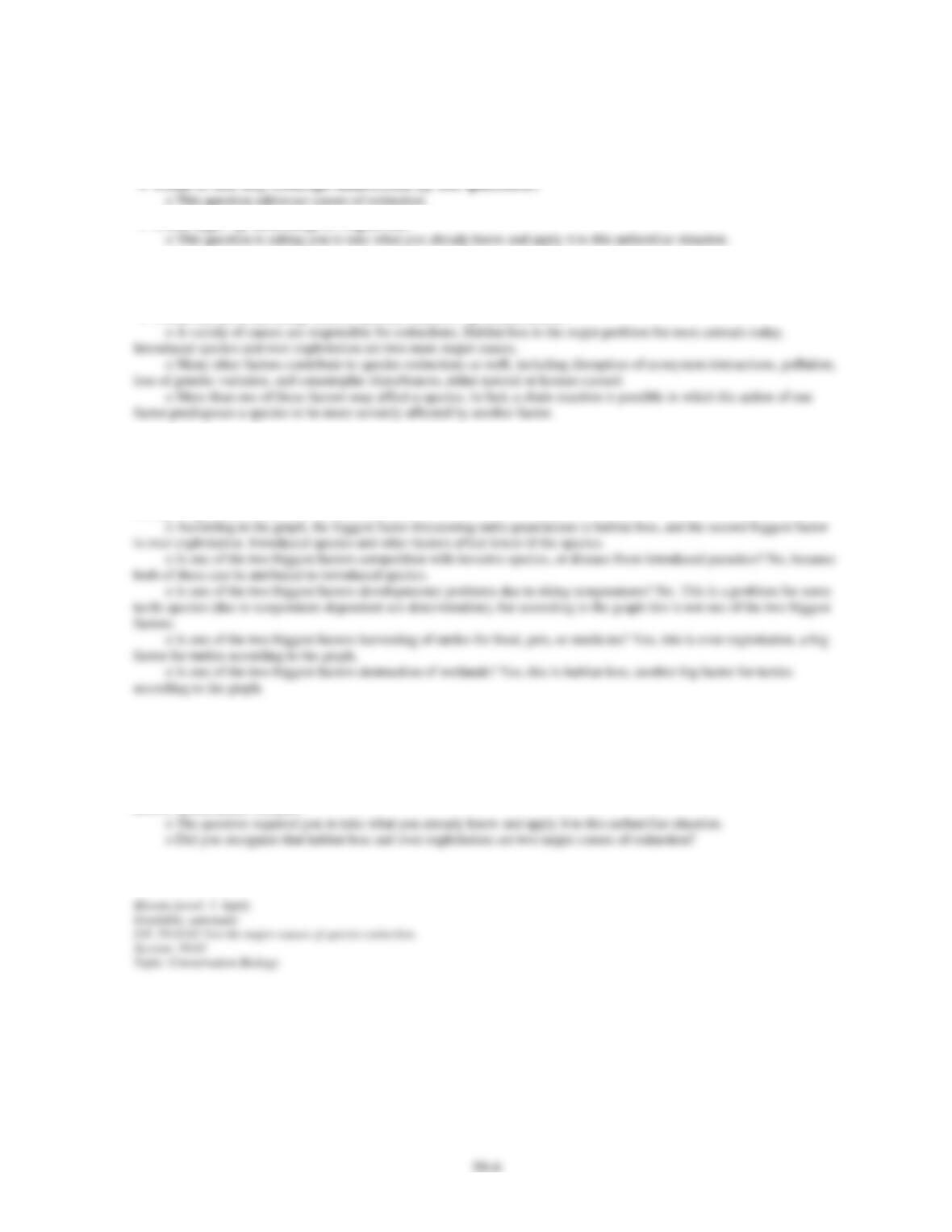
10. While reading an online science magazine, you come across an article on declining turtle
populations across the globe. Based on the graph, what would you guess are the two biggest
factors in the decline? Choose two.
__X__ Harvesting of turtles for food, pets, or medicine
_____ Competition with invasive species
__X__ Destruction of wetlands and breeding beaches
_____ Developmental problems due to rising temperatures
_____ Disease from introduced parasites
Chapter 59 – Conservation Biology
Clarify Question
•
What is the key concept addressed by the question?
•
What type of thinking is required?
Gather Content
•
What do you already know about causes of extinction?
Choose Answer
•
Given what you now know, what information and/or problem solving approach is most
likely to produce the correct answer?
Reflect on Process
•
Did your problem-solving process lead you to the correct answer? If not, where did the
process break down or lead you astray? How can you revise your approach to produce a
more desirable result?
Chapter 59 – Conservation Biology
59-7
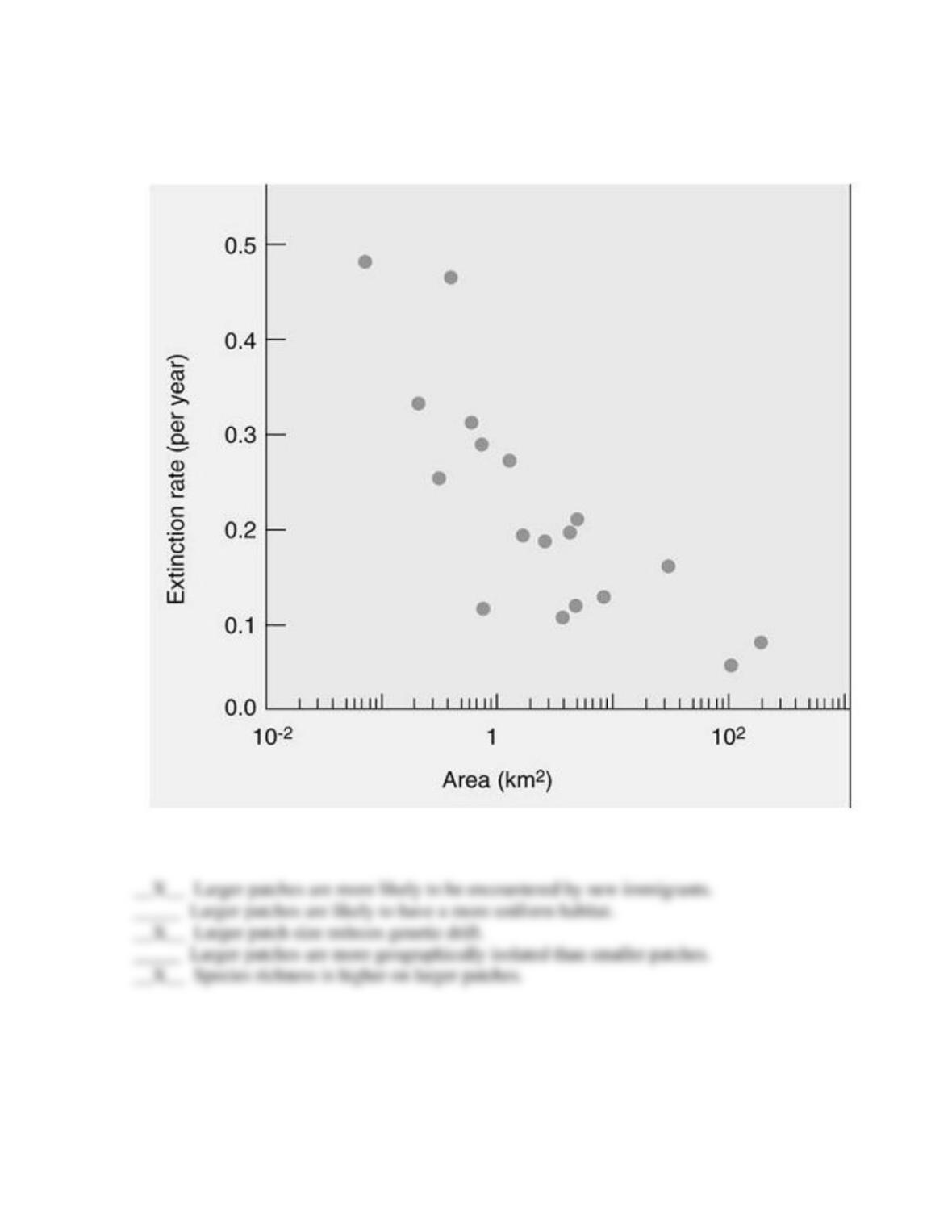
11. The following graph shows the relationship between extinction and habitat area. Which
statements help explain the trend shown on the graph? Check all that apply.
Chapter 59 – Conservation Biology
59-8
Clarify Question
•
What is the key concept addressed by the question?
•
What type of thinking is required?
Gather Content
•
What do you already know about habitat area and extinction?
Choose Answer
•
Given what you now know, what information and/or problem solving approach is most
likely to produce the correct answer?
Reflect on Process
•
Did your problem-solving process lead you to the correct answer? If not, where did the
process break down or lead you astray? How can you revise your approach to produce a
more desirable result?
Multiple Choice Questions
Chapter 59 – Conservation Biology
12. Edge effects are the result of which of the following?
13. Match the correct case study in conservation biology with its animal.
Chapter 59 – Conservation Biology
14. A scientist studied peregrine falcons to determine why the numbers of birds was
declining. She determined that
15. Sea otters have been used as an example of the “Keystone Species” concept. This means
that sea otters
16. Animals that weigh more than 100 pounds are considered as
Chapter 59 – Conservation Biology
17. Historical extinction rates are best known for
18. Island species are particularly vulnerable to extinction for all of the following reasons
except
19. As many as one-half of Earth’s plants
Chapter 59 – Conservation Biology
59–12
20. Conservationists have identified 25 areas worldwide as hotspots. This means these areas
21. A small island has stable populations of plants and animals, including one species of
hawk but no other large predators. A ship docks at the island, and the ship’s cat escapes. If the
cat was pregnant, what do you think the sailors are likely to find if they return ten years
later?
Chapter 59 – Conservation Biology
59–13
Clarify Question
•
What is the key concept addressed by the question?
•
What type of thinking is required?
Gather Content
•
What do you already know about causes of extinction?
Choose Answer
•
Given what you now know, what information and/or problem solving approach is most
likely to produce the correct answer?
Reflect on Process
Chapter 59 – Conservation Biology
59–14
•
Did your problem-solving process lead you to the correct answer? If not, where did the
process break down or lead you astray? How can you revise your approach to produce a
more desirable result?
22. A small island has stable populations of plants and animals, including one species of
hawk but no other large predators. A ship docks at the island, and the sailors huntand kill most
of the hawks. What would you expect as an immediate consequence?
Chapter 59 – Conservation Biology
Clarify Question
•
What is the key concept addressed by the question?
•
What type of thinking is required?
Gather Content
•
What do you already know about causes of extinction?
Choose Answer
•
Given what you now know, what information and/or problem solving approach is most
likely to produce the correct answer?
Reflect on Process
•
Did your problem-solving process lead you to the correct answer? If not, where did the
process break down or lead you astray? How can you revise your approach to produce a
more desirable result?
Chapter 59 – Conservation Biology
23. A major problem with hotspots is humans moving in and causing
24. The West African black rhino, one of four subspecies of rhinoceros, was declared extinct
in 2006. Their horns were believed by many to hold medicinal value. What is the most likely
reason for the extinction of the West African black rhino?
Chapter 59 – Conservation Biology
Clarify Question
•
What is the key concept addressed by the question?
•
What type of thinking is required?
Gather Content
•
What do you already know about causes of extinction?
Choose Answer
•
Given what you now know, what information and/or problem solving approach is most
likely to produce the correct answer?
Reflect on Process
•
Did your problem-solving process lead you to the correct answer? If not, where did the
process break down or lead you astray? How can you revise your approach to produce a
more desirable result?
Chapter 59 – Conservation Biology
25. Which of the following whale species are recovering their population numbers as a result
of whale harvesting regulations?
I-right whales
II-Pacific gray whales
III-sperm whales
IV-fin whales
V-humpback whales
26. The various endemic cichlid species of Lake Victoria have suffered losses in their
population numbers and species due to the introduction of
27. Why might the different species of whales fail to recover even though hunting has been
banned?
Chapter 59 – Conservation Biology
59–19
Clarify Question
•
What is the key concept addressed by the question?
•
What type of thinking is required?
Gather Content
•
What do you already know about genetic diversity?
Choose Answer
•
Given what you now know, what information and/or problem solving approach is most
likely to produce the correct answer?
Reflect on Process
•
Did your problem-solving process lead you to the correct answer? If not, where did the
process break down or lead you astray? How can you revise your approach to produce a
more desirable result?