
Chapter 56 – Community Ecology
Chapter 56
Community Ecology
Multiple Choice Questions
1. All organisms living together in a place are called a
2. Competition shapes communities because there are usually limited
3. The attempt of two organisms trying to utilize the same resource is called

Chapter 56 – Community Ecology
4. Two species of warblers colonize the same island habitat. Both species nest in similar
locations and eat the same type of prey. Eventually, competition will probably cause one
species to
5. Aposematic, or warning coloration, serves to protect an animal or plant by signaling to
potential ________ to stay away.
6. In _______ mimicry, unprotected species resemble others that are distasteful.

Chapter 56 – Community Ecology
7. In ________ mimicry, two or more unrelated but protected species resemble one another,
8. A _________ relationship is one in which two or more kinds of organisms live together in
often elaborate and more or less permanent association.
9. The way in which an organism utilizes its environment may be called
Chapter 56 – Community Ecology
10. A relationship in which both members benefit is called
11. Communities evolve to have greater biomass and species richness in a process called
12. Paleontological studies indicate that, over millions of years,

Chapter 56 – Community Ecology
13. The actual niche the organism is able to occupy in the presence of competitors is called
its
14. Competition between species is called ____________ competition.
15. Resource partitioning can often be seen in similar species that occupy the same
geographic area. These species avoid competition by living in different portions of the habitat
or by utilizing different food or other resources and are called ____________ species.

Chapter 56 – Community Ecology
16. Chemicals that play the dominant role in protecting plants from being eaten by herbivores
or predators are called
17. Cardiac glycosides, molecules causing a drastic effect on vertebrate heart function, are
produced as defensive chemicals by plants belonging to
18. Chemical defenses are found in all of the following except
Check All That Apply Questions
Chapter 56 – Community Ecology
19. Which of the following are types of symbioses? Check all that apply.
Multiple Choice Questions
20. Insects that lay eggs on living hosts are called
21. Which statement is an accurate interpretation of the outcome in an ecosystem when a
major predator is removed?
Chapter 56 – Community Ecology
22. Alligators excavate holes in the bottom of bodies of water. During times of severe drought
these holes act as refugia for various aquatic organisms that might perish if there were no
water available. Thus, alligators in this system can be classified as a(n)
23. Succession happens because species in the habitat alter that habitat in ways that assist
other species. There are three dynamic concepts that are of critical importance for succession
to take place. They are
Check All That Apply Questions

Chapter 56 – Community Ecology
24. Which of the following examples would be undergoing secondary succession? Check all
that apply.
Clarify question:
What is the key concept addressed by the question?
What type of thinking is required?
Gather Content:
What do you already know about secondary succession? What other information is related
to the question?
Choose Answer:
Given what you now know, what information is most likely to produce the correct answer?
Reflection on Process:
Did your problem-solving process lead you to the correct answer? If not, where did the
process break down or lead you astray? How can you revise your approach to produce a
more desirable result?
Chapter 56 – Community Ecology
Multiple Choice Questions
25. A species that plays a critical role in maintaining the structure of an ecological
community and helps to determine the types and numbers of various other species in the
community is known as
26. Lakes become eutrophic by

Chapter 56 – Community Ecology
27. The difference in the fundamental niche and the realized niche is
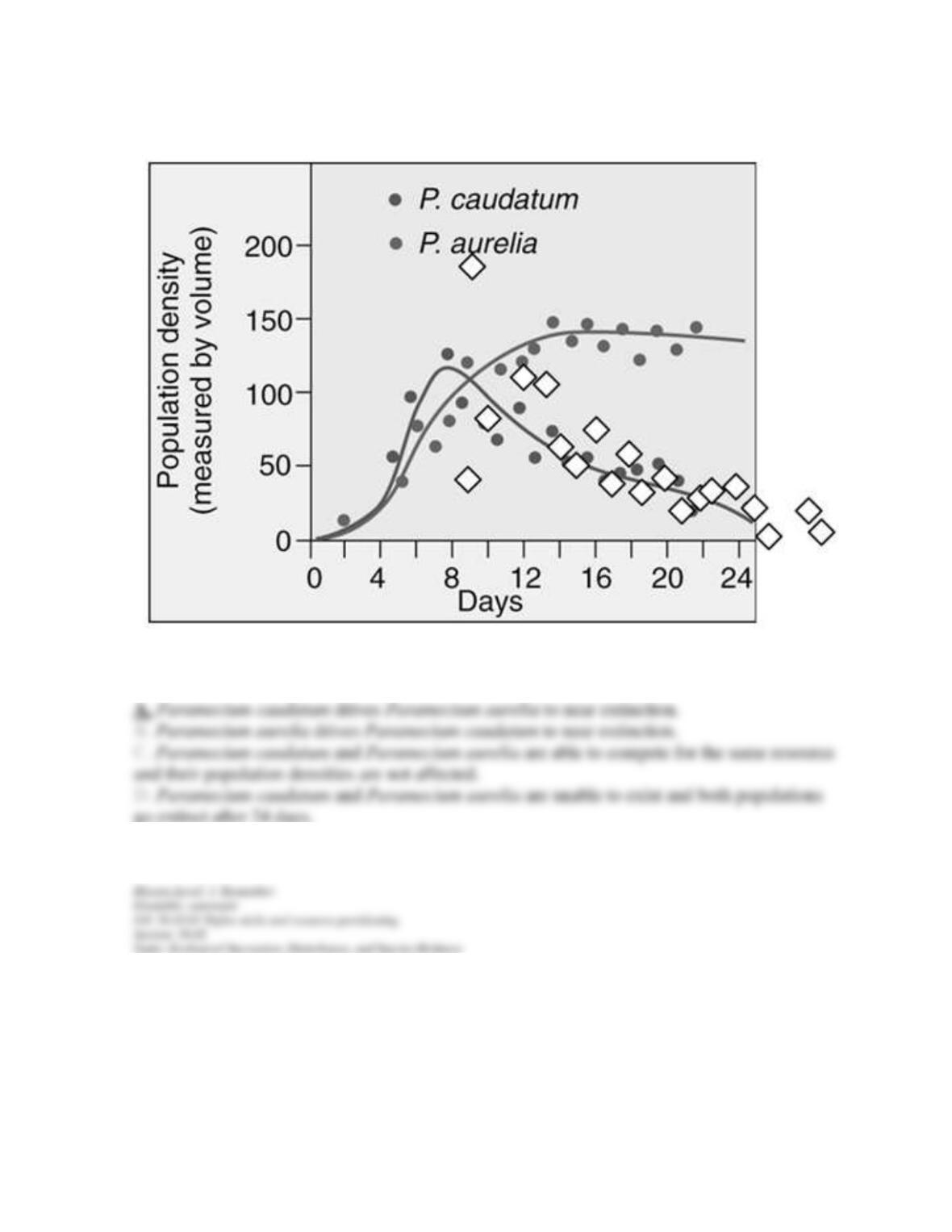
28. During the mid 1930s, G. F. Gause studied competition among three species of
Paramecium. Through his experiments he formulated a principle of
Chapter 56 – Community Ecology
29. Which statement correctly interprets the graph?
Chapter 56 – Community Ecology
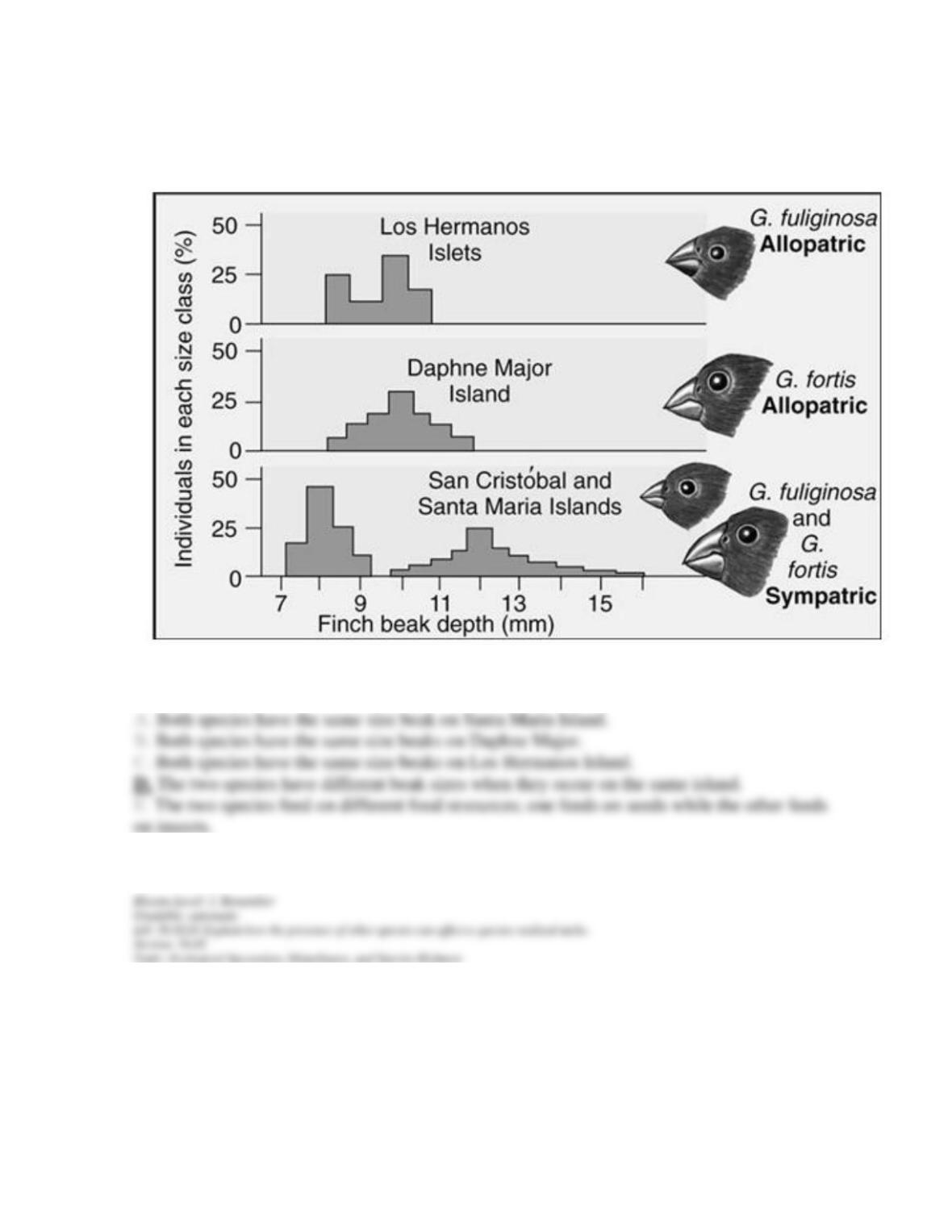
30. Two of Darwin’s finches display a character displacement when they occur as sympatric
species. Which of the statements correctly interprets the graph?
Chapter 56 – Community Ecology
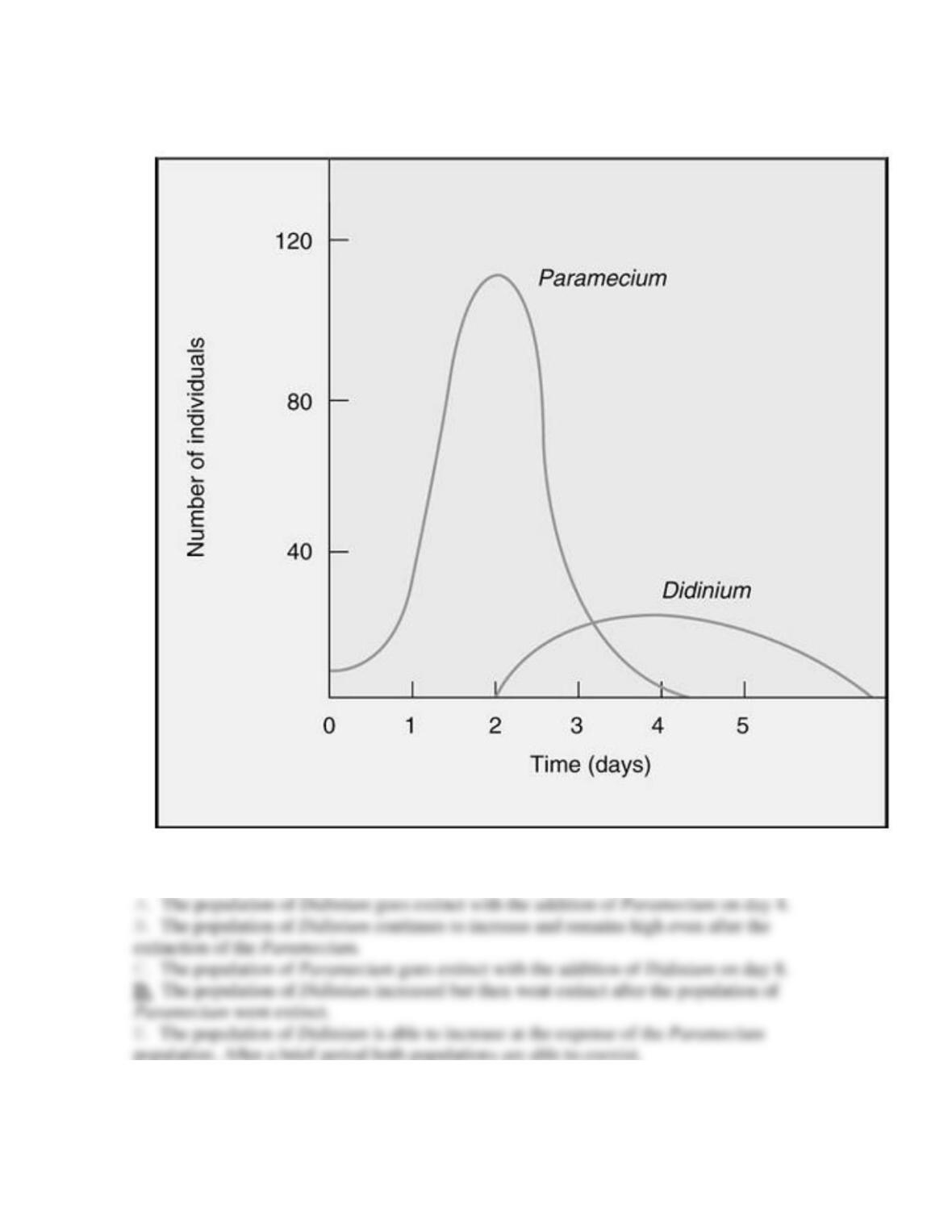
31. Which statement is the correct interpretation of the graph?

Chapter 56 – Community Ecology
Clarify question:
What is the key concept addressed by the question?
What type of thinking is required?
Gather Content:
What do you already know about the relationship between the two species? What other
information is related to the question?
Choose Answer:
Given what you now know, what information is most likely to produce the correct answer?
Reflection on Process:
Did your problem-solving process lead you to the correct answer? If not, where did the
process break down or lead you astray? How can you revise your approach to produce a
more desirable result?
Chapter 56 – Community Ecology
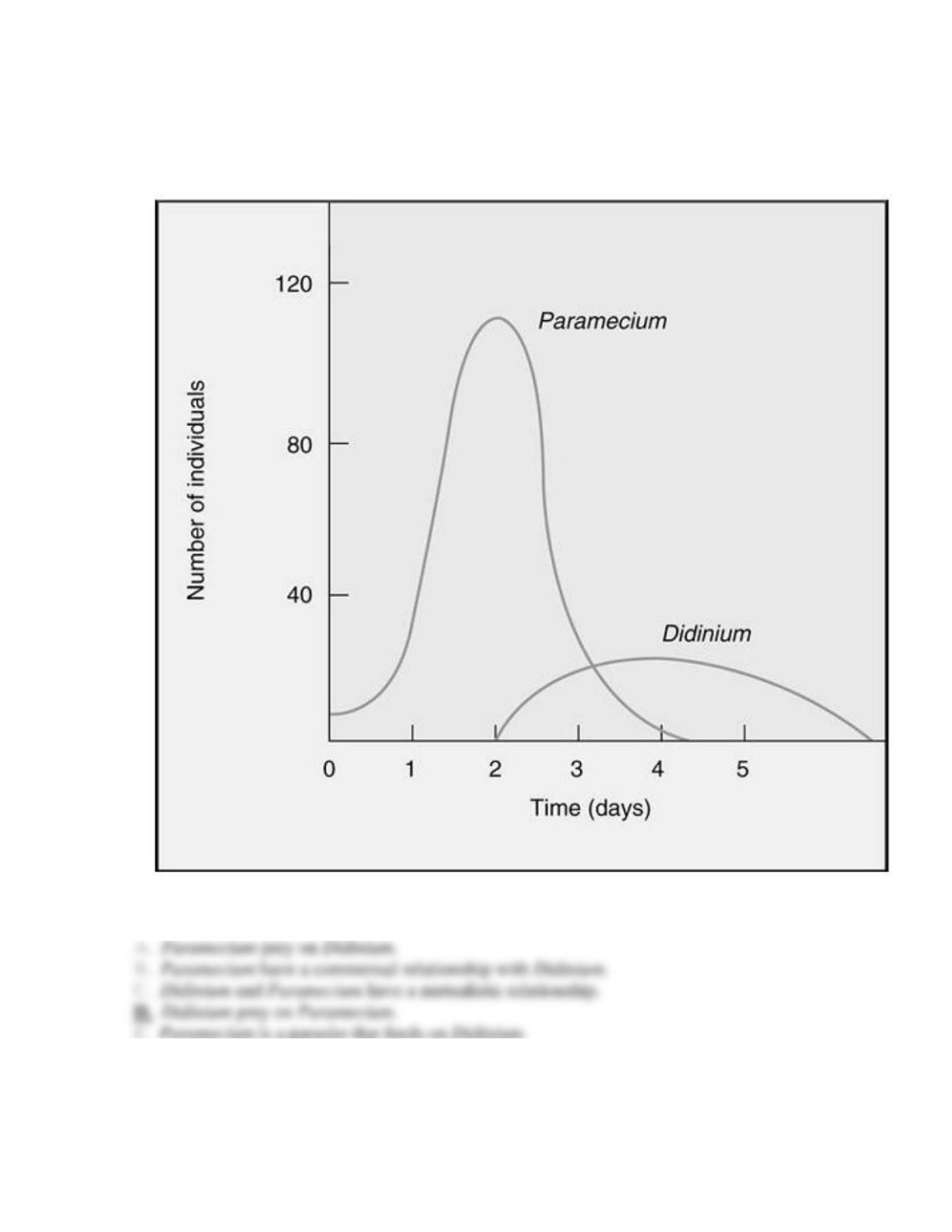
32. Based on the following graph, what is the most likely relationship between Paramecium
and Didinium?
Chapter 56 – Community Ecology
Clarify question:
What is the key concept addressed by the question?
What type of thinking is required?
Gather Content:
What do you already know about relationship between the two species? What other
information is related to the question?
Choose Answer:
Given what you now know, what information is most likely to produce the correct answer?
Reflection:
Did your problem-solving process lead you to the correct answer? If not, where did the
process break down or lead you astray? How can you revise your approach to produce a
more desirable result?
you able to select the correct answer?

Chapter 56 – Community Ecology
33. Which of the following statements accurately reflects the differences between Batesian
mimicry and Müllerian mimicry?
Chapter 56 – Community Ecology
34. Which of the following is an example of commensalism?
Clarify question:
What is the key concept addressed by the question?
What type of thinking is required?
Gather Content:
What do you already know about commensalism? What other information is related to the
question?
Choose Answer:
Given what you now know, what information is most likely to produce the correct answer?
Reflection on Process:
Did your problem-solving process lead you to the correct answer? If not, where did the
process break down or lead you astray? How can you revise your approach to produce a
more desirable result?

Chapter 56 – Community Ecology
35. In India, golden jackals that have been expelled from their pack have been known to
attach themselves to a particular tiger, trailing it at a safe distance in order to feed on the big
cat’s kills. What type of relationship exists between the jackal and the tiger?
Clarify question:
What is the key concept addressed by the question?
What type of thinking is required?
Gather Content:
What do you already know about symbiotic relationships? What other information is
related to the question?
Choose Answer:
Given what you now know, what information is most likely to produce the correct answer?
Reflection on Process:
Did your problem-solving process lead you to the correct answer? If not, where did the
process break down or lead you astray? How can you revise your approach to produce a