Chapter 50 – Osmotic Regulation and the Urinary System
32. The kidneys are important homeostatic organs, contributing to maintenance of all of the
following EXCEPT
33. What response would correct for a drop in glomerular blood pressure?
Chapter 50 – Osmotic Regulation and the Urinary System
50–22
Clarify Question
What is the key concept addressed by the question?
What type of thinking is required?
Gather Content
What do you already know about glomeruli? What other information is related to the
question?
Choose Answer
Given what you now know, what information is most likely to produce the correct answer?
Reflect on Process
Did your problem-solving process lead you to the correct answer? If not, where did the
process break down or lead you astray? How can you revise your approach to produce a
more desirable result?
Chapter 50 – Osmotic Regulation and the Urinary System
34. Where are the receptors that respond to elevated blood osmolarity?
35. The adrenal hormone, aldosterone, regulates kidney function by
36. An increase in the production of ADH affects the kidney tubules by
Chapter 50 – Osmotic Regulation and the Urinary System
50–24
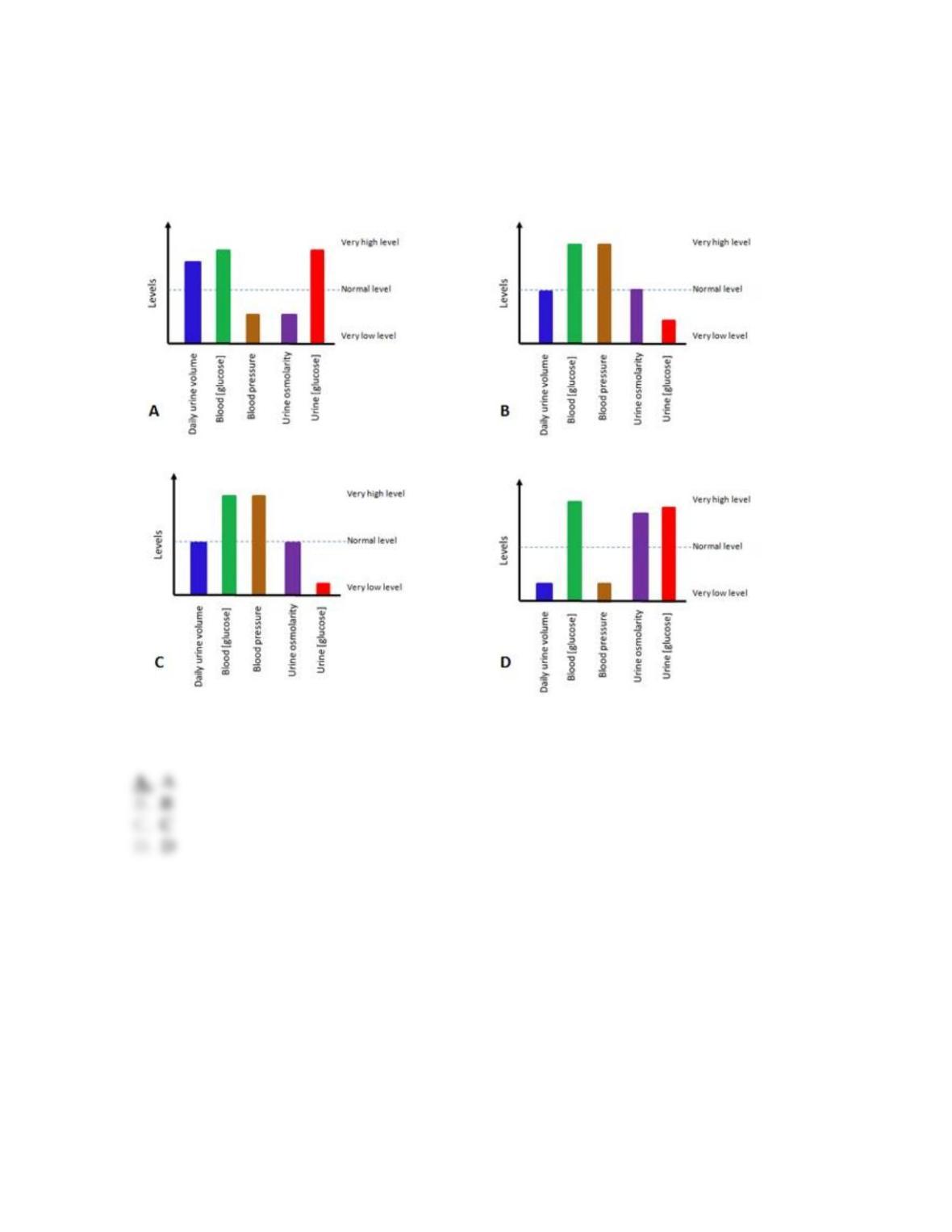
37. Roger, who has Type I diabetes mellitus, forgot to take along his insulin on a fishing trip
to a remote part of Alaska. It takes him three days to make it out of the wilderness to a
hospital. What would be the most likely match to Roger’s blood and urine profile once he
reaches the hospital?
Chapter 50 – Osmotic Regulation and the Urinary System
50–25
Clarify Question
What is the key concept addressed by the question?
What type of thinking is required?
Gather Content
What do you already know about diabetes mellitus? What other information is related to
the question?
water moves into the urine through osmosis.
Choose Answer
Given what you now know, what information is most likely to produce the correct answer?
Reflect on Process
Did your problem-solving process lead you to the correct answer? If not, where did the
process break down or lead you astray? How can you revise your approach to produce a
more desirable result?
Chapter 50 – Osmotic Regulation and the Urinary System
38. Most vertebrates maintain homeostasis in regard to the total solute concentrations of their
extracellular fluids and the concentrations of specific inorganic ions. The kidneys participate
in regulating the extracellular fluid concentration of all ions below EXCEPT
39. Most marine invertebrates are osmoconformers. This means that
40. Select the incorrectly-matched osmoregulatory organ and the organism that uses it.
Chapter 50 – Osmotic Regulation and the Urinary System
41. Select the incorrectly-matched vertebrate and its urine concentration relative to its
blood.
Chapter 50 – Osmotic Regulation and the Urinary System
42. No matter how much water a human drinks, the kidneys are always regulating various
aspects of the blood, including _________________.
I-the pH of the blood
II-the plasma concentration of iron ions
III-the plasma concentration of sodium ions
IV-the plasma concentration of potassium ions
V-the temperature of the blood
43. Select the incorrectly-matched organism and its primary nitrogenous waste product.
44. If uric acid accumulates in joints of humans the condition is referred to as
Chapter 50 – Osmotic Regulation and the Urinary System
45. Each nephron of the kidney consists of a long tubule and associated small blood vessels.
Blood cells and plasma proteins are too large to enter with the glomerular filtrate. What is the
correct path for the filtrate to follow through the nephron in the production of urine?
46. Freshwater fish are _____ with respect to osmoregulation.

Chapter 50 – Osmotic Regulation and the Urinary System
47. What animals could drink seawater and not get dehydrated?
Chapter 50 – Osmotic Regulation and the Urinary System
50–31
Clarify Question
What is the key concept addressed by the question?
What type of thinking is required?
Gather Content
What do you already know about the use of seawater? What other information is related to
the question?
Choose Answer
Given what you now know, what information is most likely to produce the correct answer?
Reflect on Process
Did your problem-solving process lead you to the correct answer? If not, where did the
process break down or lead you astray? How can you revise your approach to produce a
more desirable result?
Chapter 50 – Osmotic Regulation and the Urinary System
48. What animal cannot make hypertonic urine?
Chapter 50 – Osmotic Regulation and the Urinary System
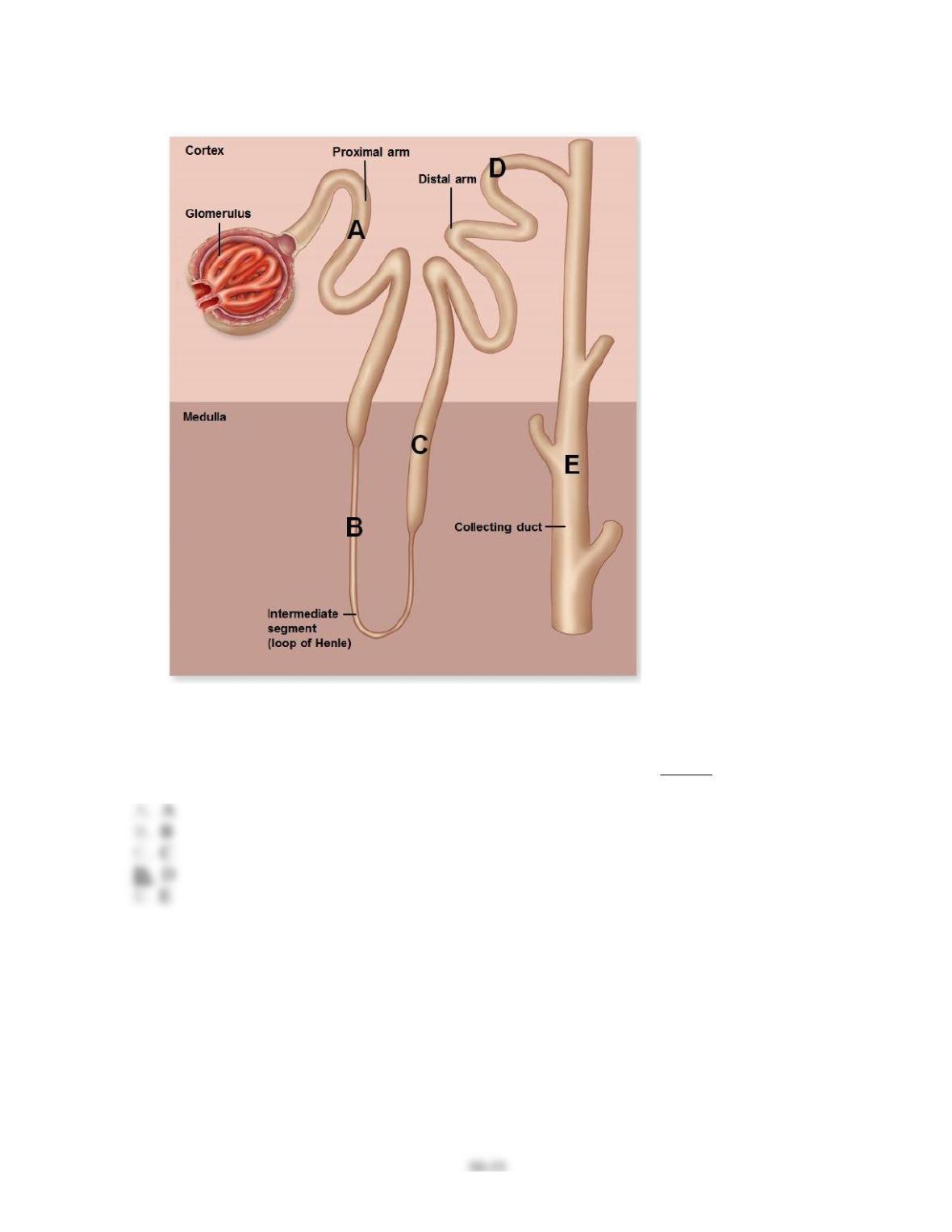
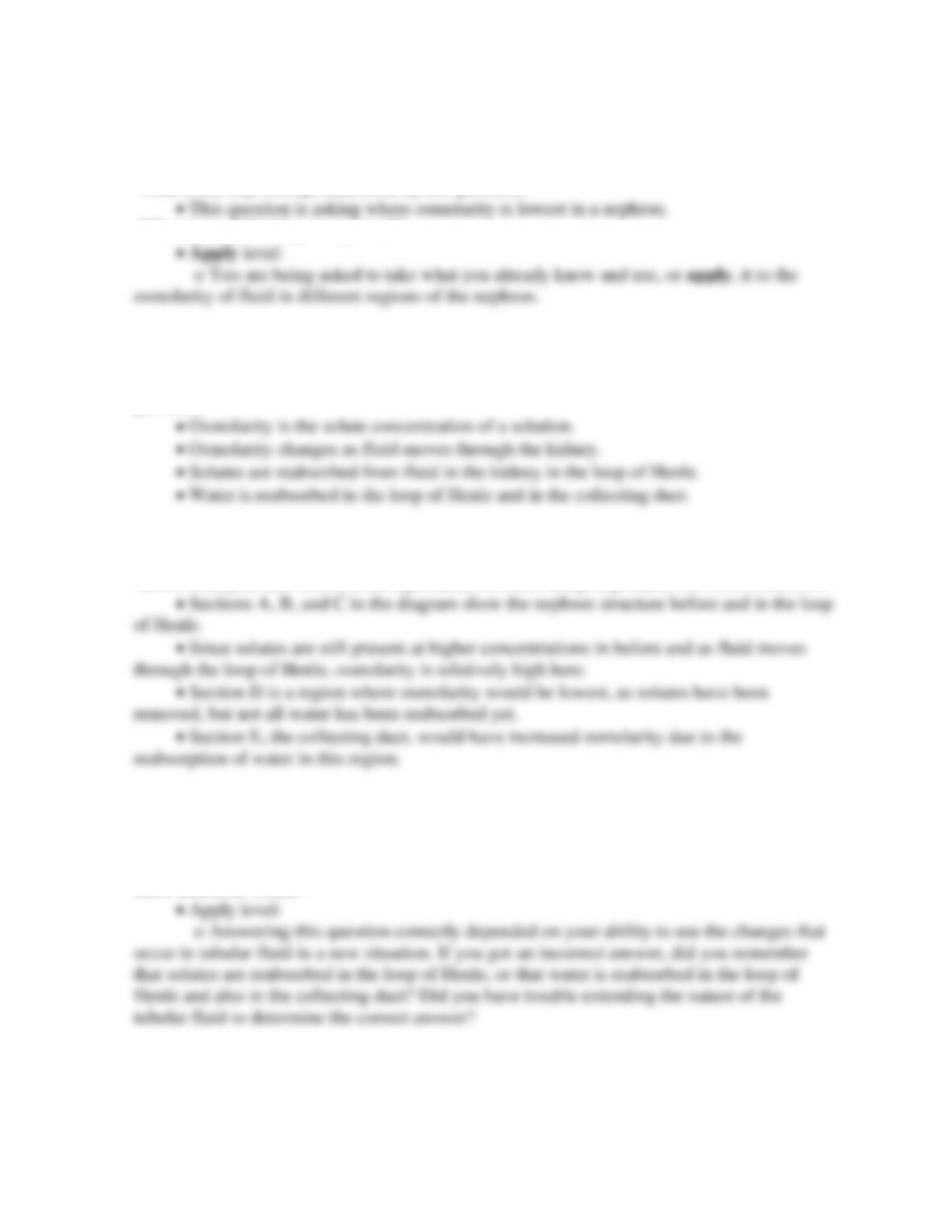
49.
According to the above figure, which letter corresponds to the lowest tubular fluid osmolarity
under normal conditions?
Chapter 50 – Osmotic Regulation and the Urinary System
50–34
Clarify Question
What is the key concept addressed by the question?
What type of thinking is required?
Gather Content
What do you already know about osmolarity? What other information is related to the
question?
Choose Answer
Given what you now know, what information is most likely to produce the correct answer?
Reflect on Process
Did your problem-solving process lead you to the correct answer? If not, where did the
process break down or lead you astray? How can you revise your approach to produce a
more desirable result?
Chapter 50 – Osmotic Regulation and the Urinary System
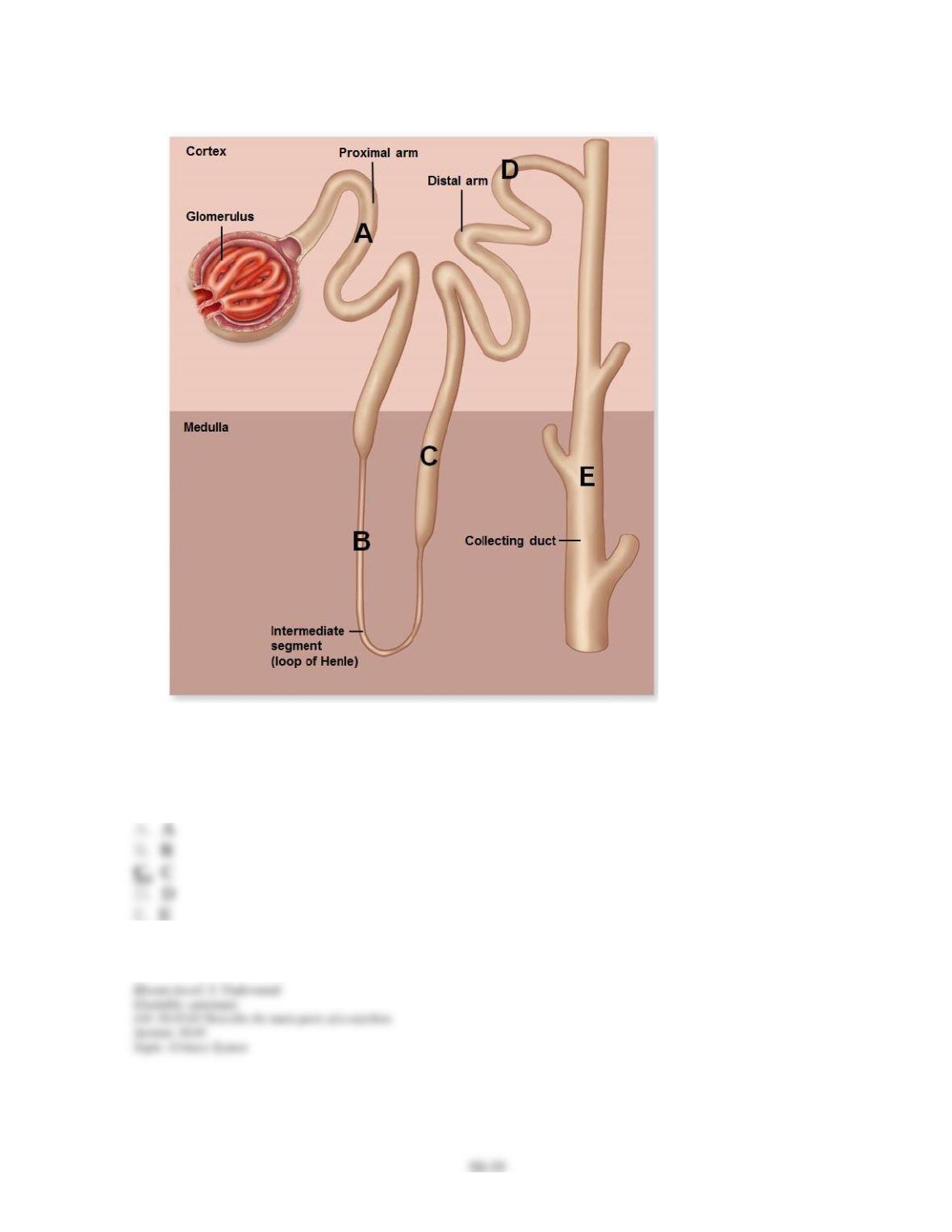
50.
According to the above figure, which letter corresponds to the area where water is absolutely
not reabsorbed?
Chapter 50 – Osmotic Regulation and the Urinary System
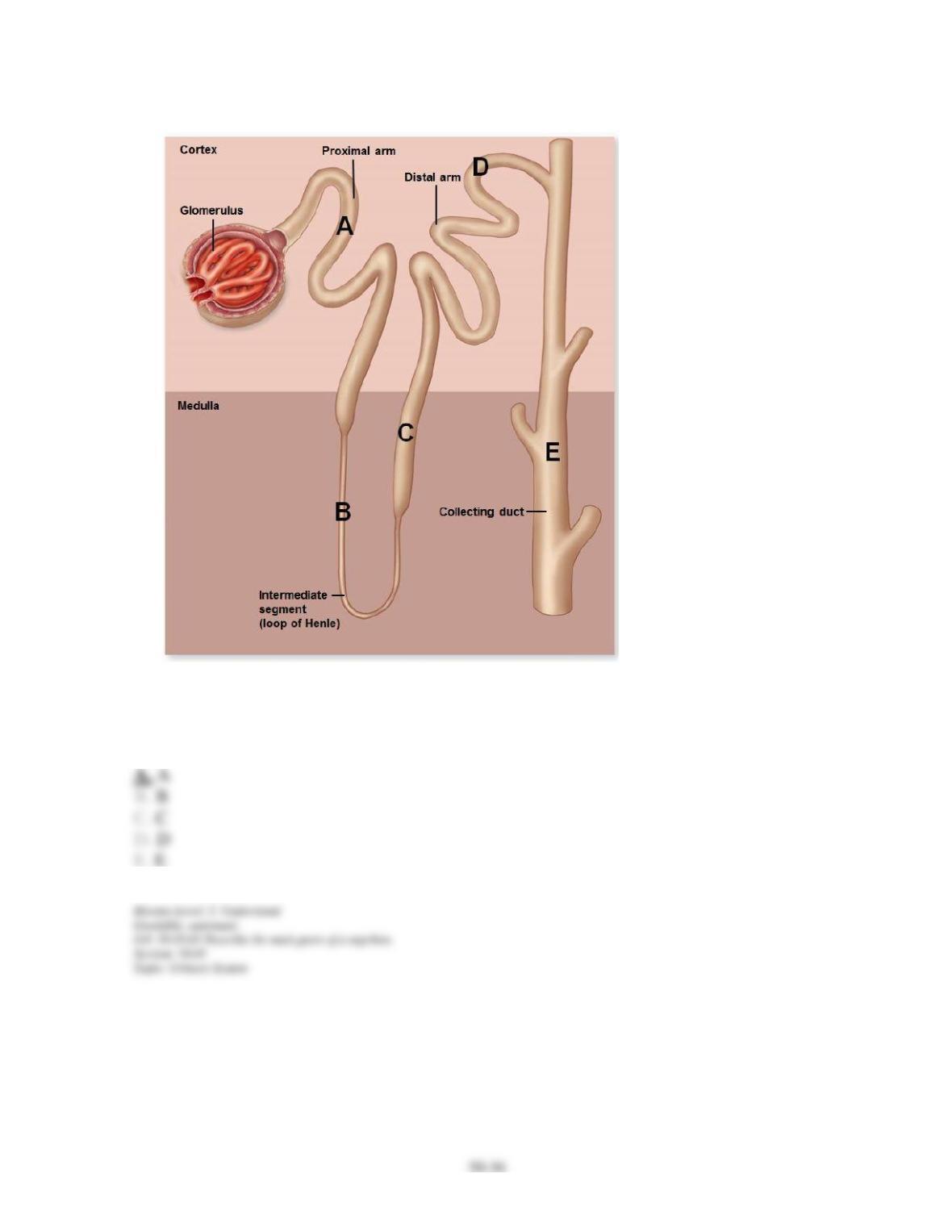
51.
According to the above figure, which letter corresponds to the area where amino acids are most likely to be reabsorbed?
Chapter 50 – Osmotic Regulation and the Urinary System
52. Connor decides to celebrate his 21st birthday by drinking a few beers at a local sports bar.
After a while, Connor notices that he is making many more trips to the men’s room than the
week before, when he drank similar amounts of carbonated water. Why is that?
Chapter 50 – Osmotic Regulation and the Urinary System
Clarify Question
What is the key concept addressed by the question?
What type of thinking is required?
Gather Content
What do you already know about the production of urine? What other information is
related to the question?
Choose Answer
Given what you now know, what information is most likely to produce the correct answer?
Reflect on Process
Did your problem-solving process lead you to the correct answer? If not, where did the
process break down or lead you astray? How can you revise your approach to produce a
more desirable result?
Chapter 50 – Osmotic Regulation and the Urinary System
50–39
53. The kidneys are both protected and held in place by cushions of fat. In cases of rapid
weight loss, the kidneys may drop to a lower position, possibly causing kinks in a nearby
tubular organ. If this happens, urine will back up into the kidneys, severely damaging them.
What organ(s) is/are most-likely kinked in this situation?
Chapter 50 – Osmotic Regulation and the Urinary System
Clarify Question
What is the key concept addressed by the question?
What type of thinking is required?
Gather Content
What do you already know about urine flow from the kidney? What other information is
related to the question?
Choose Answer
Given what you now know, what information is most likely to produce the correct answer?
Reflect on Process
Did your problem-solving process lead you to the correct answer? If not, where did the
process break down or lead you astray? How can you revise your approach to produce a
more desirable result?