Larson_Calculus_10e ch05sec02
MULTIPLE CHOICE
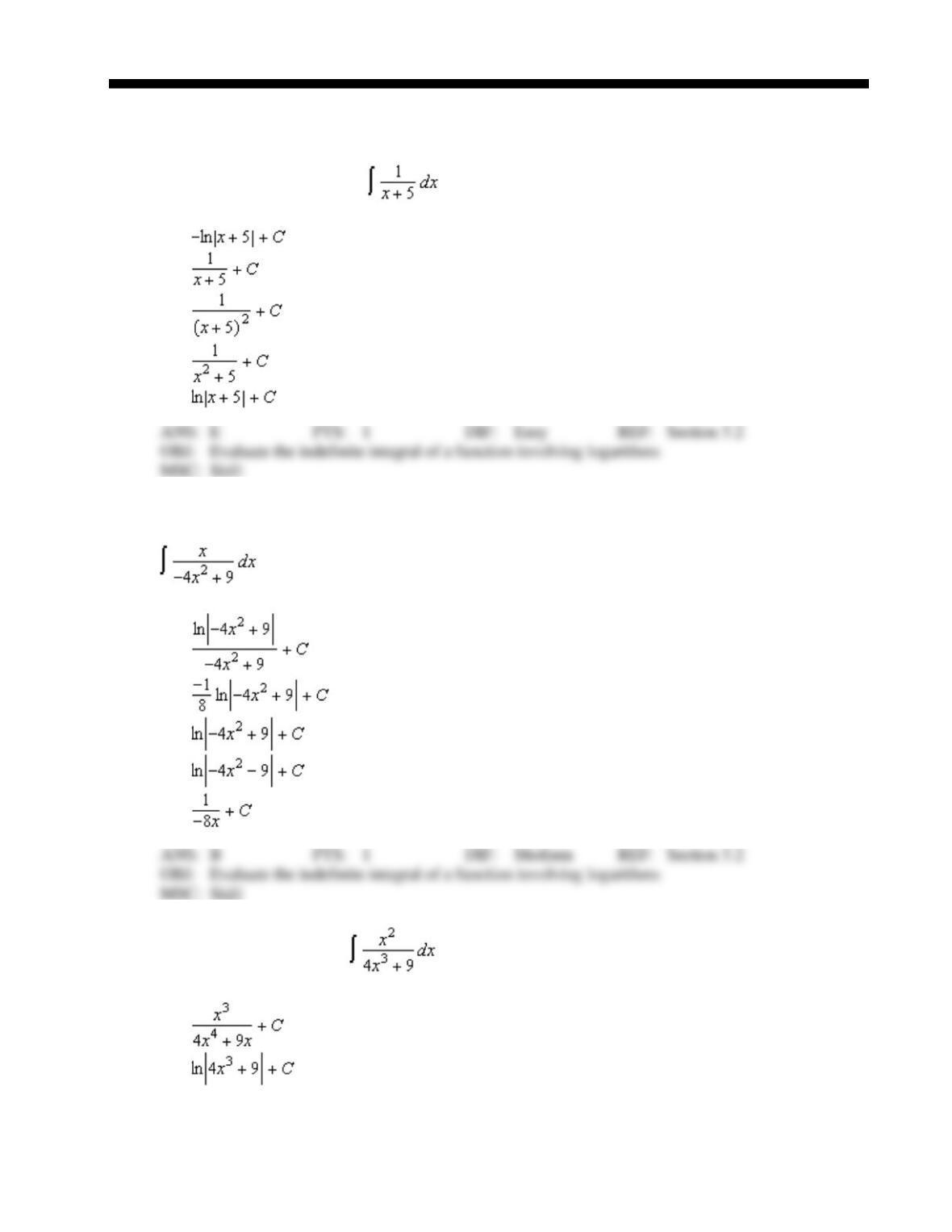
1. Find the indefinite integral of .
a.
b.
c.
d.
e.
2. Find the indefinite integral.
a.
b.
c.
d.
e.
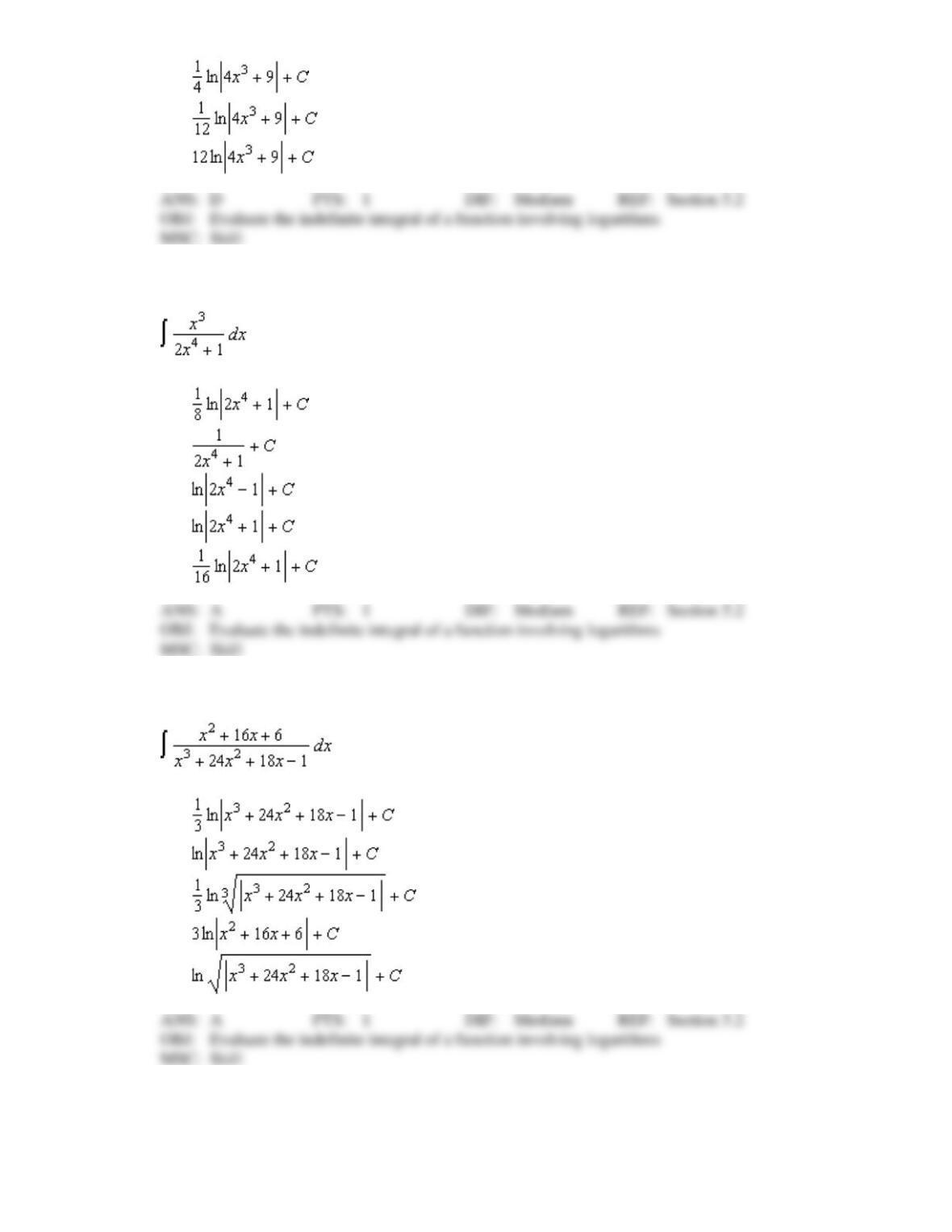
3. Find the indefinite integral .
a.
b.
c.
d.
e.
4. Find the indefinite integral.
a.
b.
c.
d.
e.
5. Find the indefinite integral.
a.
b.
c.
d.
e.
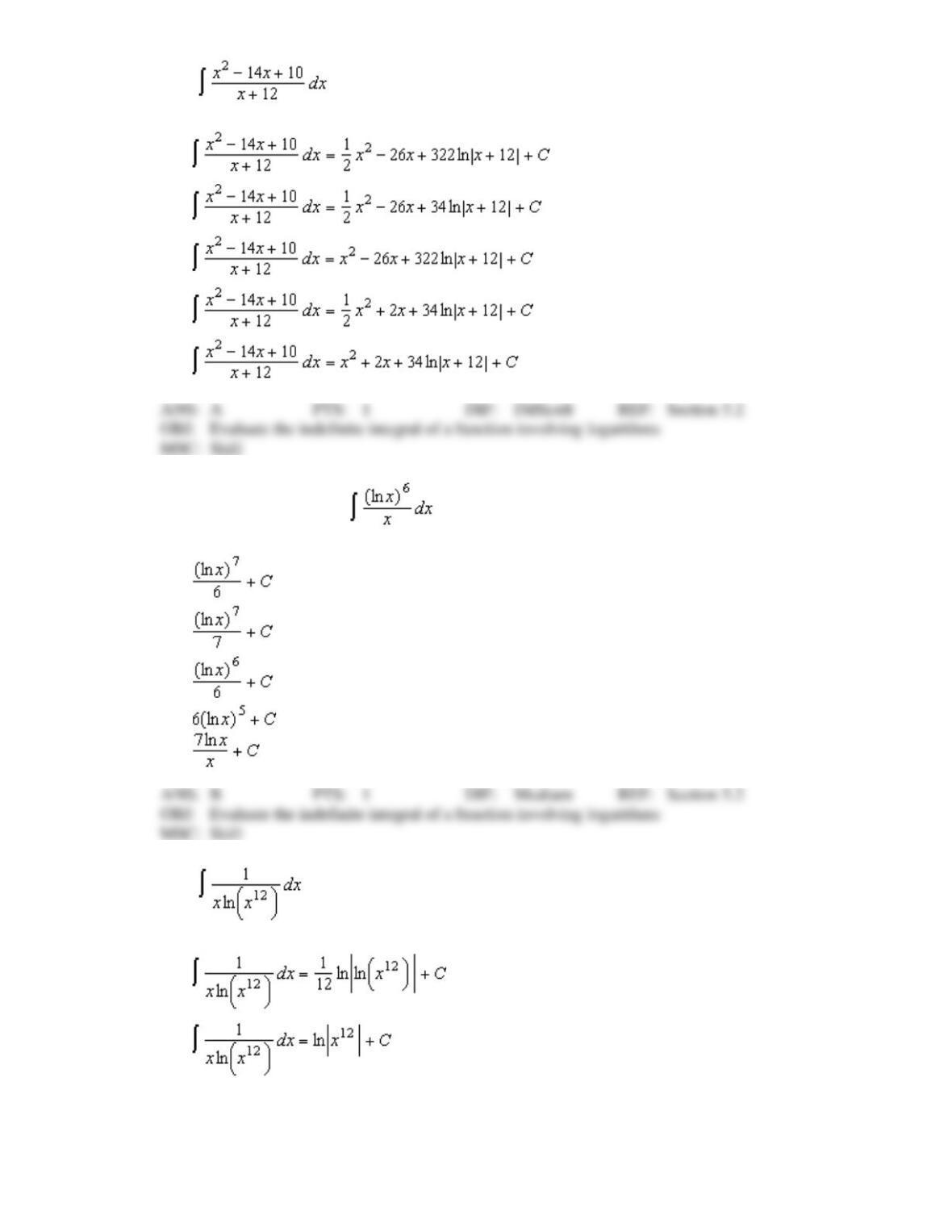
6. Find .
a.
b.
c.
d.
e.
7. Find the indefinite integral .
a.
b.
c.
d.
e.
8. Find .
a.
b.
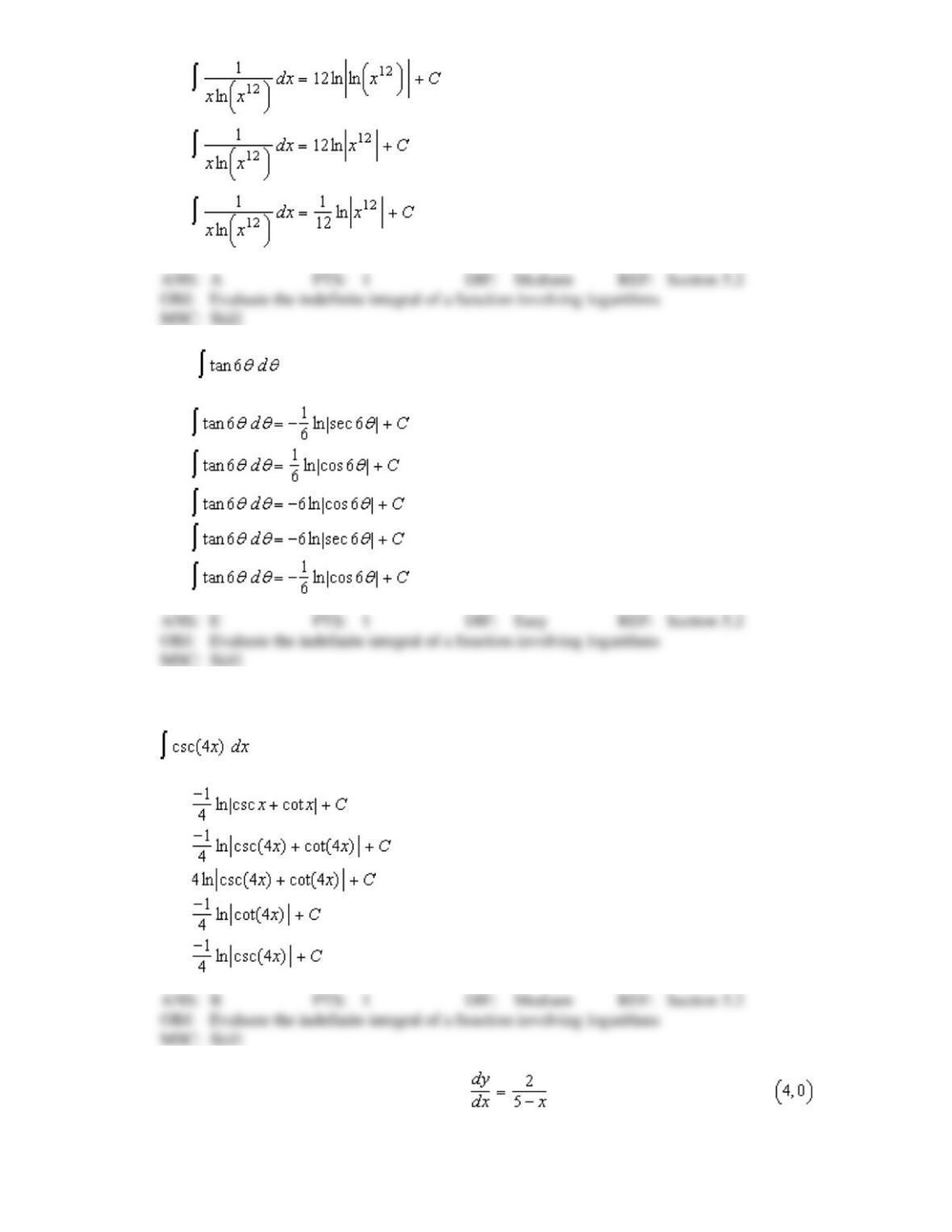
c.
d.
e.
9. Find .
a.
b.
c.
d.
e.
10. Find the indefinite integral.
.
a.
b.
c.
d.
e.
11. Find the solution of the differential equation which passes through the point .
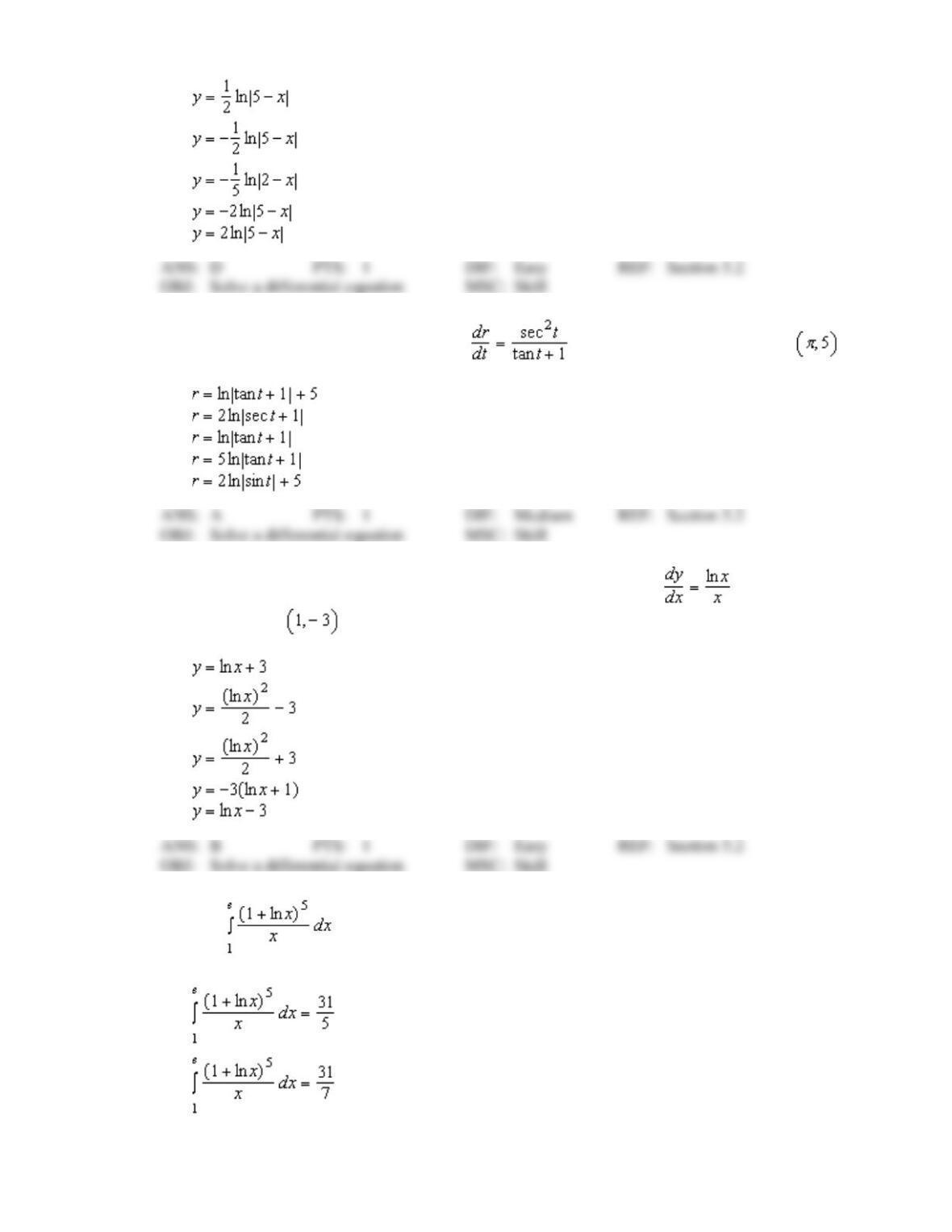
a.
b.
c.
d.
e.
12. Find the solution of the differential equation which passes through the point .
a.
b.
c.
d.
e.
13. Use integration to find the particular solution of the differential equation which passes
through the point .
a.
b.
c.
d.
e.
14. Evaluate .
a.
b.
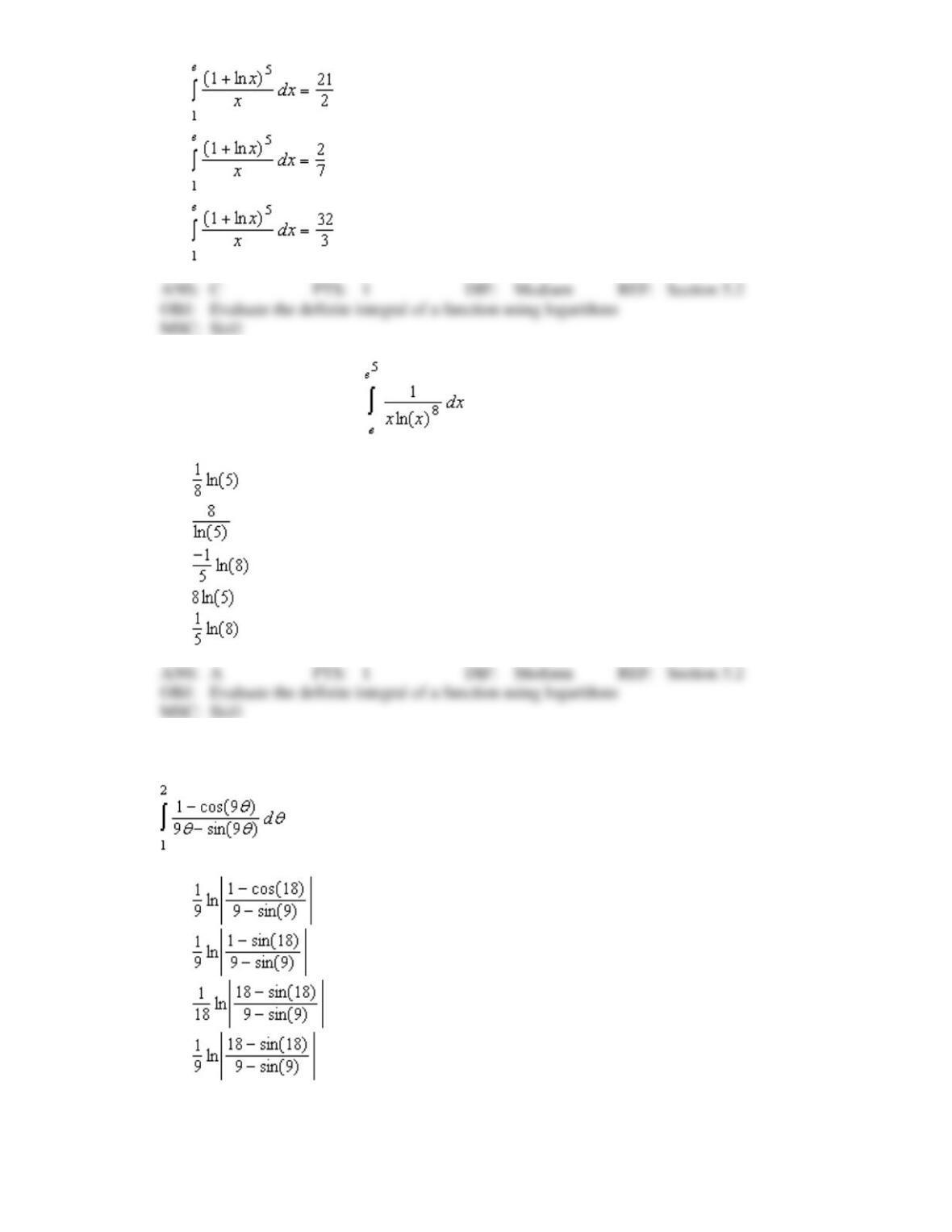
c.
d.
e.
15. Evaluate the definite integral .
a.
b.
c.
d.
e.
16. Evaluate the definite integral.
a.
b.
c.
d.
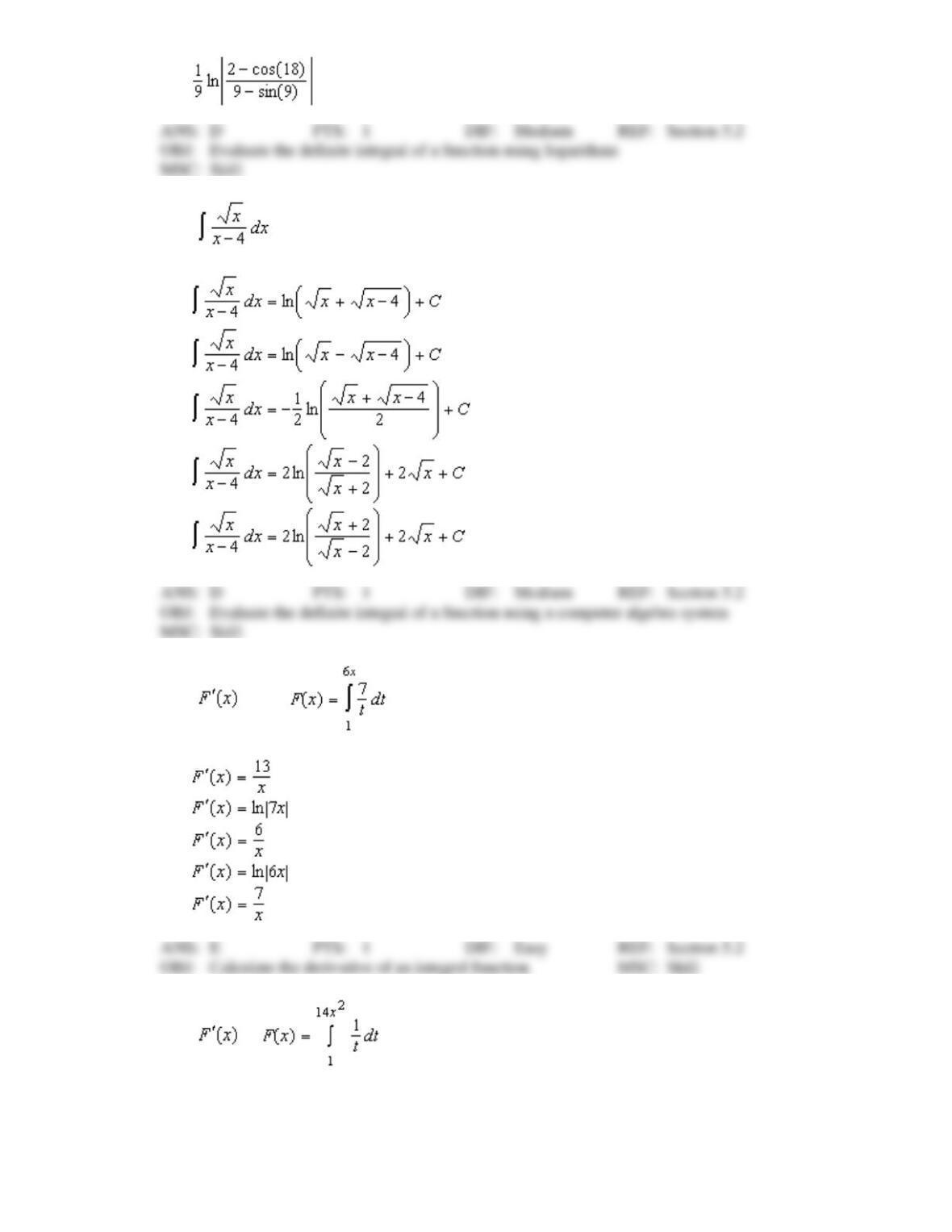
e.
17. Find .
a.
b.
c.
d.
e.
18. Find given .
a.
b.
c.
d.
e.
19. Find if .
a.
b.
c.
d.
e.
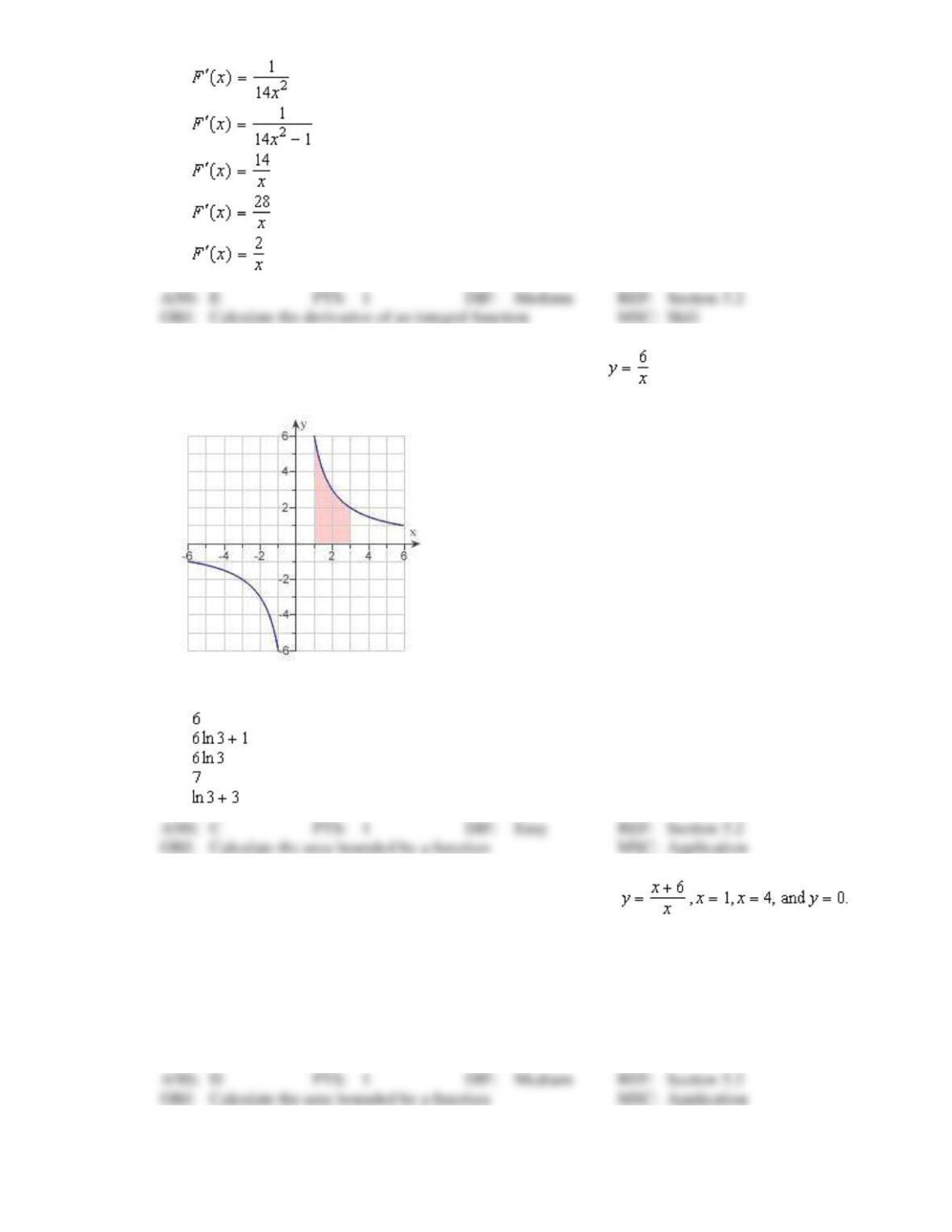
20. Find the area of the region given below bounded by the graph of .
a.
b.
c.
d.
e.
21. Find the area of the region bounded by the graphs of the equations
Round your answer to four decimal places.
a.
13.6566
b.
12.3178
c.
12.6566
d.
11.3178
e.
12.7041
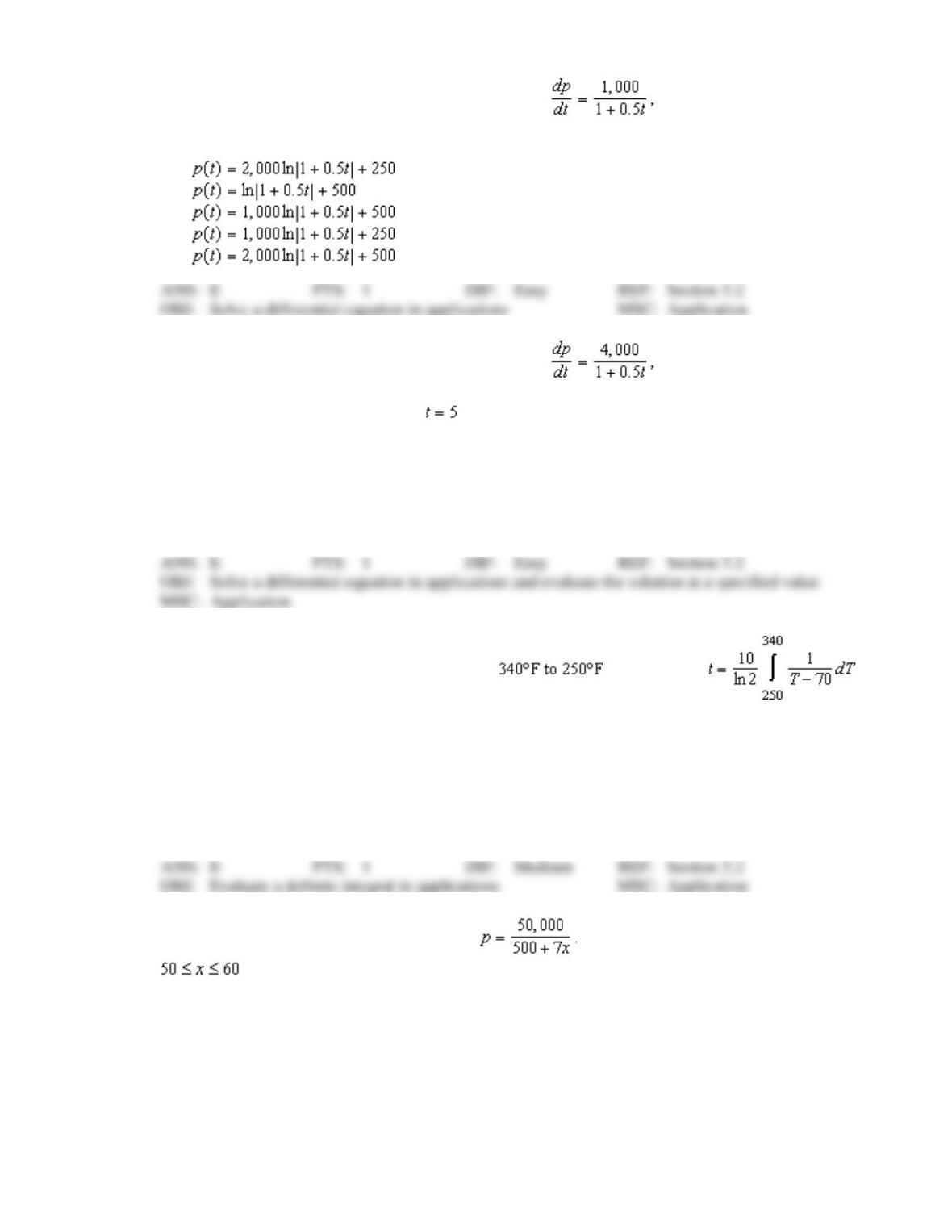
22. Suppose a population of bacteria is changing at a rate of where t is the time in days.
The initial population (when t = 0) is 500. Write an equation that gives the population at any time t.
a.
b.
c.
d.
e.
23. Suppose a population of bacteria is changing at a rate of where t is the time in days.
The initial population (when t = 0) is 1,500. Identify an equation that gives the population at any time t
and use it to find the population when days. Round your answer to the nearest integer.
a.
12,783
b.
11,525
c.
13,533
d.
10,772
e.
11,522
24. Find the time required for an object to cool from by evaluating ,
where t is time in minutes. Round your answer to four decimal places.
a.
6.4346 minutes
b.
4.4251 minutes
c.
3.6907 minutes
d.
4.0598 minutes
e.
5.8496 minutes
25. Suppose the demand equation for a product is Find the average price p on the interval
. Round your answer to the nearest dollar.
a.
$67
b.
$83
c.
$57
d.
$565
e.
$52