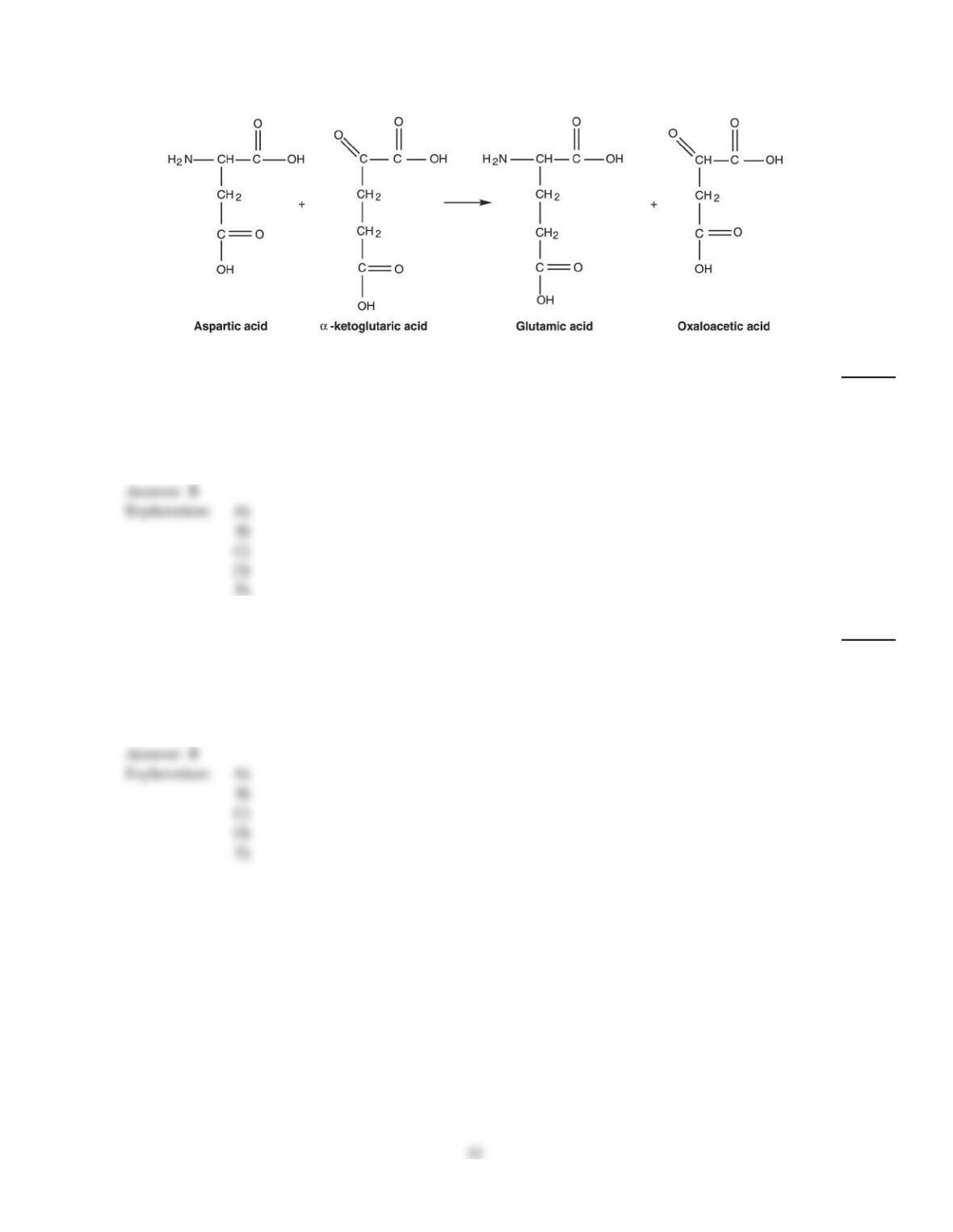
Figure 5.2
31)
What type of reaction is in Figure 5.2?
31)
A)
reduction
B)
transamination
C)
dehydrogenation
D)
decarboxylation
E)
oxidation
32)
Which of the following statements about beta oxidation is FALSE?
32)
A)
It is a method of catabolizing fatty acids.
B)
It is a step in glycolysis.
C)
It is used in petroleum degradation.
D)
It involves the formation of acetyl–CoA.
E)
It involves the formation of 2–carbon units.
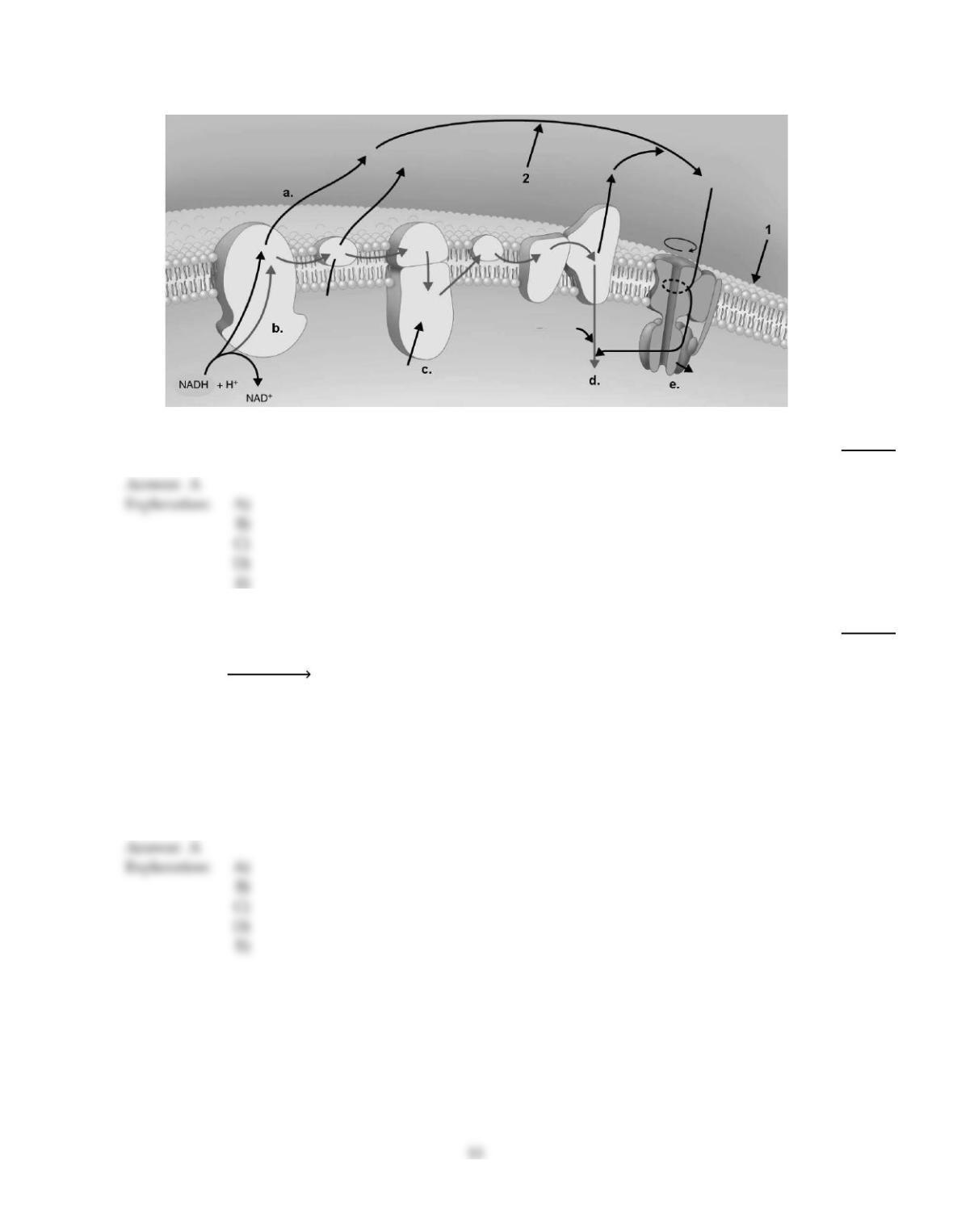
Figure 5.8
33)
What is the most acidic place in Figure 5.8?
33)
A)
a
B)
b
C)
c
D)
d
E)
e
34)
Which of the following is TRUE about this reaction?
NO3–+ 2H+Pseudomonas NO2–+ H2O
Nitrate ion Nitrite ion
34)
A)
This process occurs anaerobically.
B)
This process requires O2.
C)
This process requires the electron transport system.
D)
This process requires light.
E)
This process requires O2 and the electron transport system.
35)
Microorganisms that catabolize sugars into ethanol and hydrogen gas would most likely be
categorized as
35)
A)
aerobic respirers.
B)
homolactic fermenters.
C)
alcohol fermenters.
D)
anaerobic respirers.
E)
heterolactic fermenters.
36)
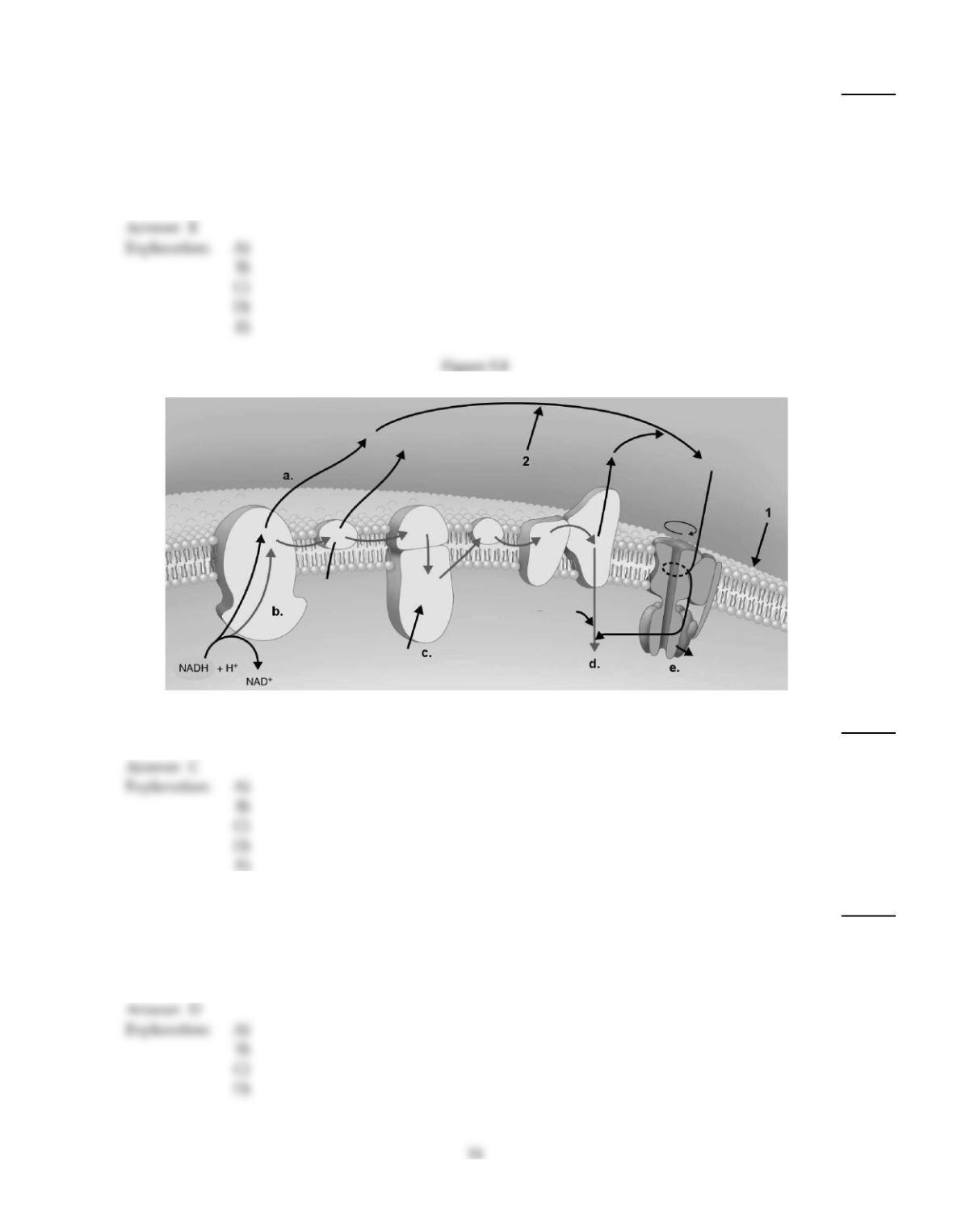
In Figure 5.8, the path labeled “2” is the flow of
36)
A)
water.
B)
glucose.
C)
protons.
D)
energy.
E)
electrons.
37)
Which of the following statements regarding metabolism is FALSE?
37)
A)
Heat may be released in both anabolic and catabolic reactions.
B)
ADP is formed in anabolic reactions.
C)
ATP is formed in catabolic reactions.
D)
Anabolic reactions are degradative.

38)
The advantage of the pentose phosphate pathway is that it produces all of the following EXCEPT
38)
A)
precursors for the synthesis of glucose.
B)
NADPH.
C)
three ATPs.
D)
precursors for the synthesis of amino acids.
E)
precursors for nucleic acids.
39)
Which of the following has bacteriochlorophylls and uses alcohols for carbon?
39)
A)
chemoautotroph
B)
photoautotroph
C)
photoheterotroph
D)
chemoheterotroph
40)
Assume you are growing bacteria on a lipid medium that started at pH 7. The action of bacterial
lipases should cause the pH of the medium to
40)
A)
stay the same.
B)
decrease.
C)
increase.
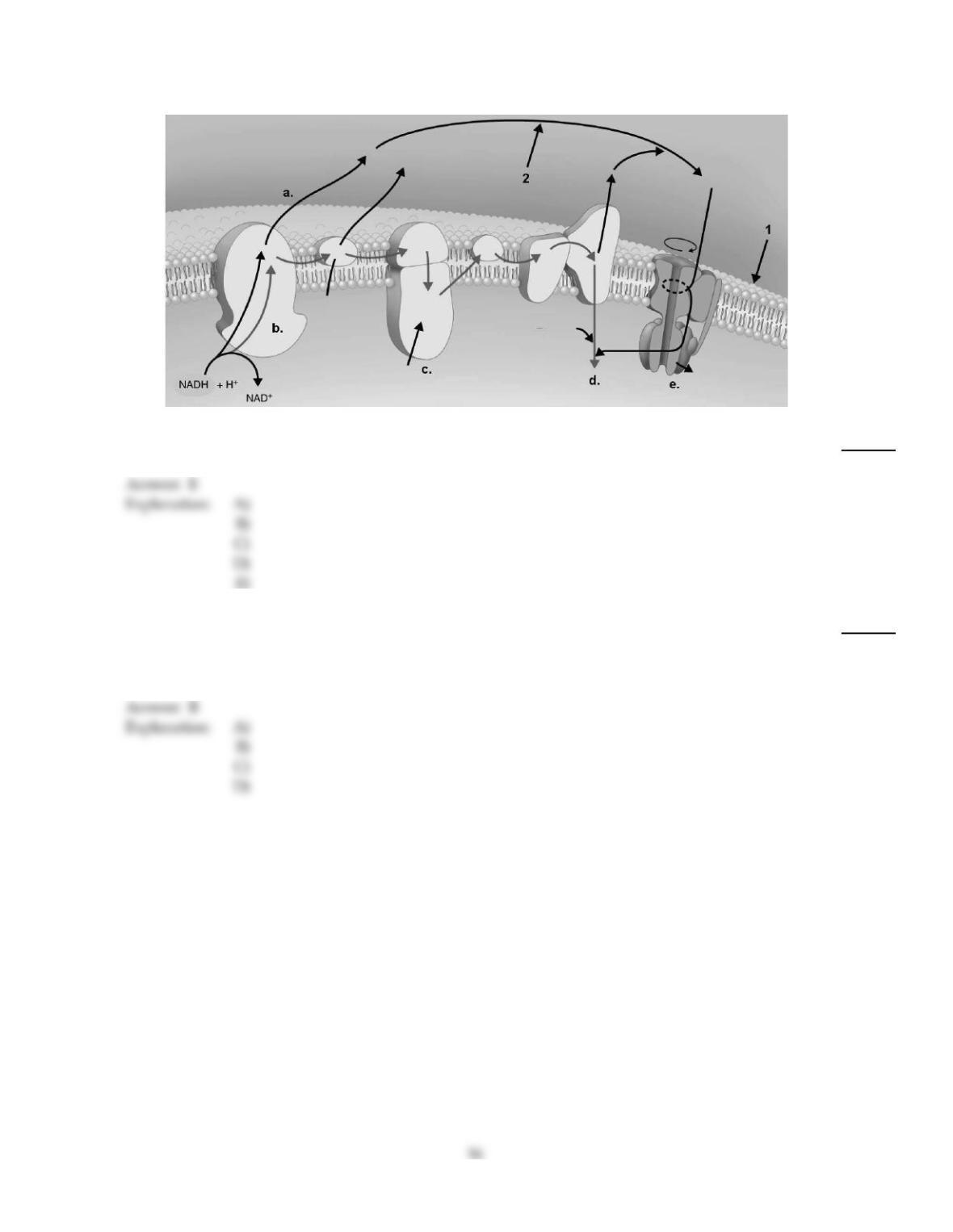
Figure 5.8
41)
In Figure 5.8, where is ATP produced?
41)
A)
a
B)
b
C)
c
D)
d
E)
e
42)
An enzyme, citrate synthase, in the Krebs cycle is inhibited by ATP. This is an example of all of the
following EXCEPT
42)
A)
feedback inhibition.
B)
competitive inhibition.
C)
noncompetitive inhibition.
D)
allosteric inhibition.
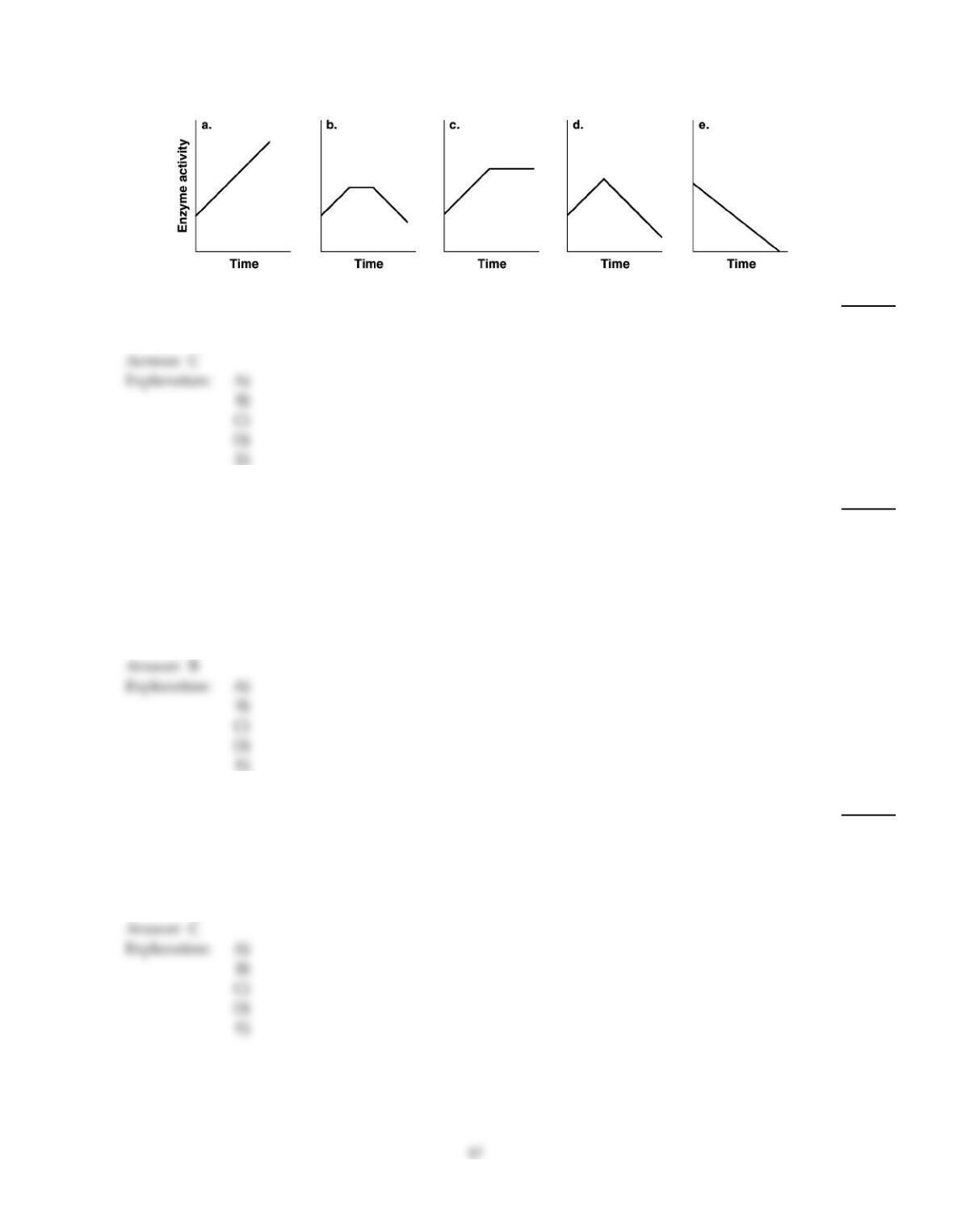
Figure 5.5
43)
Which of the graphs in Figure 5.5 best illustrates the activity of an enzyme that is saturated with
substrate?
43)
A)
a
B)
b
C)
c
D)
d
E)
e
44)
Assume you are working for a chemical company and are responsible for growing a yeast culture
that produces ethanol. The yeasts are growing well on the maltose medium but are not producing
alcohol. What is the most likely explanation?
44)
A)
The maltose is toxic.
B)
O2 is in the medium.
C)
The temperature is too low.
D)
The temperature is too high.
E)
Not enough protein is provided.
45)
Which of the following statements about anaerobic respiration is FALSE?
45)
A)
The complete Kreb’s cycle is utilized.
B)
It yields lower amounts of ATP when compared to aerobic respiration.
C)
It involves the reduction of an organic final electron acceptor.
D)
It generates ATP.
E)
It requires cytochromes.
TRUE/FALSE. Write ‘T’ if the statement is true and ‘F’ if the statement is false.
46)
An apoenzyme that loses its coenzyme subunit will be non–functional.
46)
47)
Glycolysis is utilized by cells in both respiration and fermentation.
47)
48)
The pentose phosphate pathway can be characterized as an anabolic pathway.
48)
49)
Both respiration and photosynthesis require the use of an electron transport chain.
49)
50)
Both respiration and photosynthesis use water molecules for the donation of hydrogen ions.
50)
51)
Catabolic reactions are generally degradative and hydrolytic.
51)
52)
Once an enzyme has converted substrates into products, the active site reverts back to its original
form.
52)
53)
The use of enzymes is necessary to increase the activation energy requirements of a chemical
reaction.
53)
54)
Carbon fixation occurs during the light–independent phase of photosynthesis.
54)
55)
In general, ATP is generated in catabolic pathways and expended in anabolic pathways.
55)
ESSAY. Write your answer in the space provided or on a separate sheet of paper.
56)
Rhodopseudomonas is an anaerobic photoautotroph that uses organic compounds as an electron donor. It is also
capable of chemoheterotrophic metabolism. Diagram the metabolic pathways of this bacterium.

57)
Streptococcus lacks an electron transport chain. How does this bacterium reoxidize NADH? Where is the NADH
formed?
58)
Differentiate the following two laboratory tests: starch hydrolysis and starch fermentation.
59)
You look in the refrigerator and find some orange drink you had forgotten was there. The drink now has an
“off” taste and bubbles. What is the most likely explanation for the changes in the drink?
60)
Compare and contrast photophosphorylation and oxidative phosphorylation.

Answer Key
Testname: C5

Answer Key
Testname: C5