KEY: Bloom’s: Comprehension
173. If the cross-elasticity of demand for two goods is positive, this means that the goods are:
a.
normal goods.
c.
substitutes.
b.
inferior goods.
d.
complements.
174. The number of satellite dishes increased by 50 percent when the average monthly price of cable TV
increased by 10 percent. Assuming that other factors are held constant, satellite dishes and cable TV
are classified as:
a.
complements.
c.
substitutes.
b.
unrelated goods.
d.
social goods.
175. The number of cases of Coca-Cola bought increased by 50 percent when the price of pretzels declined
by 10 percent. Assuming other factors are held constant, Coca-Cola and pretzels are classified as:
a.
complements.
c.
substitutes.
b.
unrelated goods.
d.
social goods.
176. The number of computers bought increased by 20 percent when the price of on-line services declined
by 10 percent. Assuming other factors are held constant, computers and on-line services are classified
as:
a.
complements.
c.
substitutes.
b.
unrelated goods.
d.
social goods.
177. To determine whether two goods are substitutes or complements, an economist would estimate the:
a.
price elasticity of demand.
c.
cross-elasticity of demand.
b.
income elasticity of demand.
d.
price elasticity of supply.
178. If automobiles and gasoline are complements, then their cross-elasticity coefficient will be:
a.
strictly greater than one.
c.
equal to zero.
b.
positive.
d.
negative.
179. The cross elasticity of demand for substitute products must:
a.
be greater than one.
b.
be less than one.
c.
be zero.
d.
exceed zero.
e.
be negative.
180. The cross elasticity of demand for complementary products must:
a.
be greater than one.
b.
be less than one.
c.
be zero.
d.
exceed zero.
e.
be negative.
181. If a 1 percent decrease in the price of product A brings about a 3 percent increase in the sales of
product B, then:
a.
products A and B are complementary.
b.
the cross elasticity of demand between these two products is positive.
c.
products A and B are substitutes.
d.
the demand for these products is inelastic.
e.
the total revenue earned from product A will decrease.
182. If a 10 percent decrease in the price of product A brings about a 3 percent increase in the sales of
product B, then:
a.
products A and B are complementary.
b.
the cross elasticity of demand between these two products is positive.
c.
products A and B are substitutes.
d.
the demand for these products is inelastic.
e.
the total revenue earned from product A will decrease.
183. Two goods are complementary if:
a.
they are part of the basic food group.
b.
each performs the same basic task.
c.
the cross elasticity of demand is positive.
d.
they are used together.
e.
the income elasticity of demand is negative.
184. If a good is inferior in an economic sense:
a.
it is demand price elastic.
b.
it is demand price inelastic.
c.
the income elasticity of demand is negative.
d.
it is a low-quality good.
e.
it is not the highest quality good in its class.
185. If John purchases 10 percent more compact discs when his income increases 5 percent, then:
a.
his total expenditure on compact discs will fall as his income increases.
b.
compact discs would be classified as an inferior good.
c.
compact discs would be price elastic.
d.
compact discs would be income inelastic.
e.
compact discs would be income elastic.
186. If Coke and Pepsi are close substitutes, then if:
a.
Coke raises its price, so will Pepsi.
b.
Coke raises its price, it will not lose customers to Pepsi.
c.
Pepsi lowers its price, it will not hurt Coke.
d.
Pepsi lowers its price, so will Coke.
e.
Coke raises its price, some customers will switch to Pepsi.
187. If Jackie needs special film to go with her new camera, then for her these two goods have what type of
relationship?
a.
Substitute.
b.
Complementary.
c.
Nonlinked.
d.
Reversed.
e.
Insensitive.
188. The cross elasticity between Rolaids and Tums is expected to be:
a.
negative.
b.
positive.
c.
zero.
d.
one.
e.
infinite.
189. We would expect the cross elasticity between tennis racquets and tennis balls to be:
a.
negative.
b.
positive.
c.
zero.
d.
one.
e.
infinite.
190. The cross elasticity between two goods, X and Y, is positive. From this, we can conclude that goods X
and Y are:
a.
substitute goods.
b.
complementary goods.
c.
unrelated goods.
d.
inferior goods.
e.
normal goods.
191. If two goods were to become even stronger substitutes than before, an economist would expect the
cross elasticity to become:
a.
positive.
b.
one.
c.
zero.
d.
smaller.
e.
larger.
192. When the price of bread increases by 3 percent, the quantity demanded of crackers increases by 2
percent. The cross elasticity of demand between crackers and bread is:
a.
0.67.
b.
1.5.
c.
2.5.
d.
3.2.
e.
5.0.
193. Which of the following pairs is most likely to represent substitute goods?
a.
Hamburgers and hamburger rolls.
b.
Movies and popcorn.
c.
Beer and pretzels.
d.
Shoes and shoelaces.
e.
Pork and beef.
194. Which of the following pairs is most likely to represent complementary goods?
a.
Hotels and campgrounds.
b.
Butter and margarine.
c.
Bacon and eggs.
d.
Miniature golf and bowling.
e.
Coffee and tea.
195. An increase in the price of good X causes the demand for good Y to shift inward. One can conclude
that X and Y are:
a.
complements.
b.
substitutes.
c.
unrelated goods.
d.
normal goods.
e.
exceptions to the law of demand.
196. The cross elasticity between two goods is 2.5. These goods are:
a.
perfect complements.
b.
imperfect complements.
c.
unrelated.
d.
substitutes.
e.
inferior.
197. There are three goods you are interested in purchasing, X, Y and Z. You notice that the price of Z has
fallen. Given that the cross price elasticity between Z and Y is −1.5; the cross price elasticity between
Y and X is 3.0, and the cross price elasticity between Z and X is 0.50. It would make sense that:
a.
Z and X are complements; Y and X are substitutes.
b.
Y and X are substitutes; Y is complementary to Z.
c.
X and Z are unrelated; Y is complementary to X.
d.
X and Z are complements; Y and Z are substitutes.
198. If goods X and Y are such that the cross price elasticity between them is negative, and if the income
elasticity of X is negative, then these goods are:
a.
inferior complements.
b.
luxury complements.
c.
income elastic substitutes.
d.
normal substitutes.
e.
income elastic complements.
199. The cross price elasticities among substitute goods will be extremely high when:
a.
b and d.
b.
they are very similar to each other.
c.
people are consuming them frequently.
d.
people consume them in equal quantities.
e.
they are imperfect substitutes.
200. Inferior goods have an income elasticity of demand that is:
a.
positive.
b.
negative.
c.
0.
d.
greater than 1 in absolute value.
e.
equal to 1 in absolute value.
201. An inferior good is:
a.
any good of low quality.
b.
one that consumers buy less of at a higher price.
c.
one that consumers buy less of as their income rises.
d.
one that has few substitutes.
e.
any good made with inexpensive labor.
202. As cities prospered and per-capita incomes increased, the demand for bus travel diminished. This
suggests that:
a.
cities could raise revenue by increasing bus fares.
b.
the demand for bus travel is price elastic.
c.
bus travel and automobile travel are complements.
d.
bus travel is an inferior good.
203. If the economy is in recession and the number of used baby clothing stores increases, then:
a.
used baby clothes are a necessity.
b.
used baby clothes are an inferior good.
c.
used baby clothes are a normal good.
d.
new baby clothes are a luxury.
e.
used baby clothes have price-elastic demand.
204. As the economy recovers from a recession, we should expect that demand for:
a.
inferior goods will fall and demand for non-inferior goods will rise.
b.
all goods will rise.
c.
inferior goods will rise and demand for non-inferior goods will fall.
d.
all goods will fall.
e.
complements will fall.
205. The value of cross elasticity of demand between orange soda and grape soda is:
a.
negative.
b.
positive.
c.
0.
d.
between −1 and 0.
e.
less than −1.
206. The price elasticity of demand between rifles and bullets is likely to be:
a.
negative, because the goods are complements.
b.
positive, because the goods are complements.
c.
negative, because the goods are substitutes.
d.
positive, because the goods are substitutes.
207. The price elasticity of demand between milk and soda is likely to be:
a.
negative, because the goods are complements.
b.
positive, because the goods are complements.
c.
negative, because the goods are substitutes.
d.
positive, because the goods are substitutes.
e.
0, because the goods are not usually consumed by the same person at one time.
208. Computers and software programs are:
a.
inferior goods.
b.
complementary goods.
c.
goods with a cross-price elasticity of demand of 0.
d.
substitute goods.
e.
perfectly elastic goods.
209. In order to prove that Dr. Pepper and 7-Up are substitutes, the FTC should test the ____ and get a
____.
a.
price elasticity of demand; number less than 1
b.
income elasticity; positive number
c.
price elasticity; negative number
d.
price elasticity of demand; number greater than 1
e.
cross-price elasticity; positive number
210. Suppose that the quantity of apples sold increases by 30 percent after the price of pears increases by 15
percent. What is the coefficient of cross elasticity of demand?
a.
3.0.
b.
1.5.
c.
0.2.
d.
2.0.
e.
0.3.
211. As the period for firms to expand output is lengthened, the elasticity of the market supply curve will:
a.
approach zero.
b.
increase.
c.
decrease.
d.
remain the same since time does not affect the elasticity of market supply.
212. All things equal, the price elasticity of supply:
a.
will be greater in the short run than in the long run.
b.
will be greater in the long run than in the short run.
c.
is the same for the short run and the long run.
d.
approaches zero in the long run.
213. If the price elasticity is supply coefficient is greater than one, then supply is:
a.
elastic.
c.
perfectly elastic.
b.
inelastic.
d.
perfectly inelastic.
214. A perfectly elastic supply curve is expressed graphically as a(n):
a.
downward sloping line or curve.
c.
vertical line.
b.
upward sloping line or curve.
d.
horizontal line.
215. In the very short-run period,
a.
the price elasticity of supply is very elastic.
b.
the price elasticity of demand is very elastic.
c.
the cross elasticity of demand is very inelastic.
d.
income elasticity is very elastic.
e.
the price elasticity of supply is very inelastic.
216. If the price elasticity of supply equals zero, this implies that:
a.
suppliers can easily change the quantity supplied of the product as the price of the product
changes.
b.
the period under consideration is a very long-run time period.
c.
the supply curve is perfectly vertical.
d.
the percentage change in quantity supplied exceeds the percentage change in product
price.
e.
the percentage change in quantity supplied equals the percentage change in product price.
217. The responsiveness of suppliers to changing prices is called the:
a.
cross elasticity.
b.
supply elasticity.
c.
supply period.
d.
long-run.
e.
market-day.
218. Suppose that when price is $10, quantity supplied is 20. When price is $6, quantity supplied is 12. The
price elasticity of supply is:
a.
0.5.
b.
0.8.
c.
1.0.
d.
1.5.
e.
2.0.
219. Price elasticities of supply are always:
a.
the same as price elasticities of demand.
b.
negative numbers.
c.
positive numbers.
d.
greater than one.
e.
increased when a tax is imposed.
220. If a tripling of price triples the quantity of a good supplied, the price elasticity of supply for this good
is:
a.
3.
b.
300.
c.
1.
d.
−1.
e.
−3.
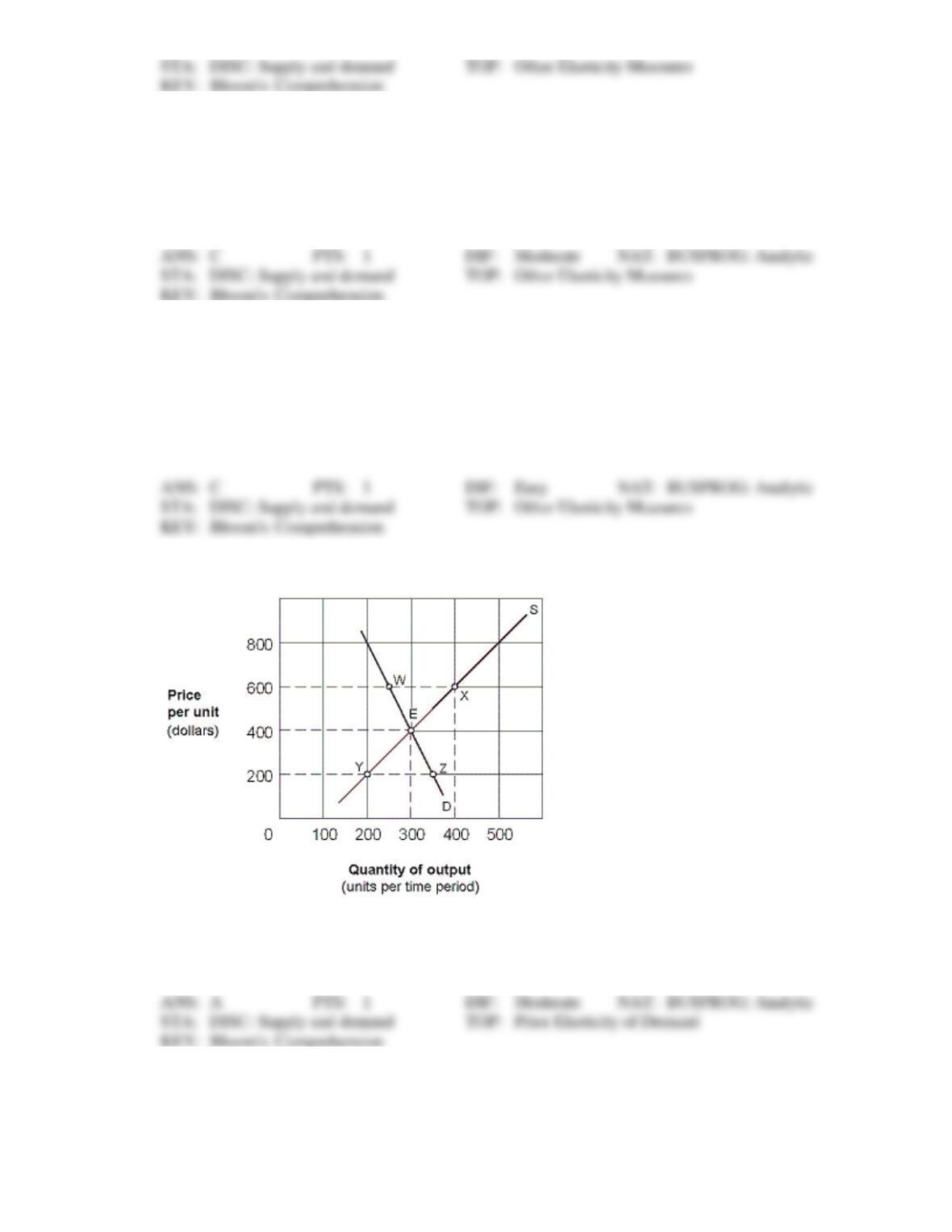
Exhibit 5-8 Supply and demand curves for good X
221. As shown in Exhibit 5-8, the price elasticity of demand for good X between points E and Z is:
a.
3/13 = 0.23.
c.
1/3 = 0.33.
b.
13/3 = 4.33.
d.
1.
222. As shown in Exhibit 5-8, the price elasticity of supply for good X between points E and X is:
a.
1/5 = 0.20.
c.
1/2 = 0.50.
b.
1/11 = 0.91.
d.
5/11 = 0.45.
223. As shown in Exhibit 5-8, assuming good X is a normal good, a decrease in consumer income, other
factors held constant, will move the equilibrium from point E to point:
a.
X.
c.
Y.
b.
Z.
d.
W.
224. As shown in Exhibit 5-8, assuming good X is an inferior good, a decrease in consumer income, other
factors held constant, will move the equilibrium from point E to point:
a.
X.
c.
Z.
b.
W.
d.
Y.
225. As shown in Exhibit 5-8, assuming goods X and Y are substitutes, a decrease in the price of Y, other
factors held constant, will move the equilibrium from point E to point:
a.
W.
c.
Y.
b.
X.
d.
Z.
226. In Exhibit 5-8, the price elasticity of supply for good X between points Y and E is:
a.
1/5 = 0.20.
c.
3/5 = 0.60.
b.
5/3 = 1.66.
d.
1.
227. In Exhibit 5-8, the price elasticity of supply for good X between points E and X is:
a.
7/5 = 1.40.
c.
5/7 = 0.71.
b.
1/5 = 0.20.
d.
1.
228. If the quantity of rental units increases by 10 percent when the monthly rental price doubles, the
supply of rental units, other factors held constant, is:
a.
elastic.
c.
perfectly elastic.
b.
inelastic.
d.
perfectly inelastic.
229. Assume 300 billion pounds of Ostrich meat is produced per year when the price is 50 cents per pound,
and 500 billion pounds when the price is 60 cents per pound. The supply of Ostrich meat, other factors
held constant, is:
a.
price elastic.
c.
income elastic.
b.
price inelastic.
d.
income inelastic.
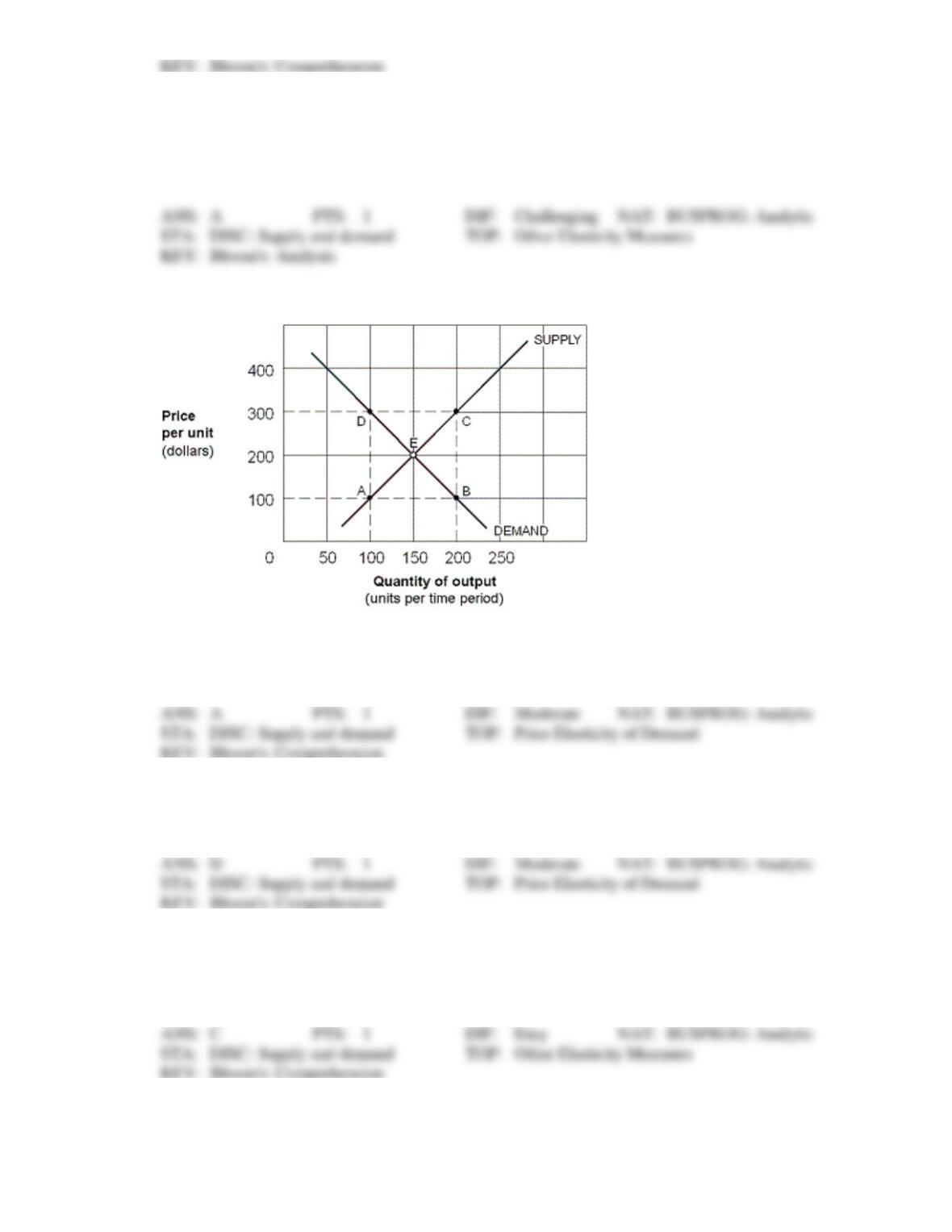
Exhibit 5-9 Supply and demand curves for good X
230. As shown in Exhibit 5-9, the price elasticity of demand for good X between points E and B is:
a.
3/7 = 0.43.
c.
1/2 = 0.50.
b.
7/3 = 2.33.
d.
1.
231. As shown in Exhibit 5-9, the price elasticity of demand for good X between points E and D is:
a.
1/5 = 0.20.
c.
1/2 = 0.50.
b.
3/7 = 0.43.
d.
1.
232. As shown in Exhibit 5-9, assuming good X is a normal good, an increase in consumer income, other
factors held constant, could move the equilibrium from point E to point:
a.
A.
c.
C.
b.
B.
d.
D.
233. As shown in Exhibit 5-9, assuming good X is an inferior good, an increase in consumer income, other
factors held constant, could move the equilibrium from point E to point:
a.
A.
c.
C.
b.
B.
d.
D.
234. As shown in Exhibit 5-9, assuming goods X and Y are substitutes, an increase in the price of Y, other
factors held constant, could move the equilibrium from point E to point:
a.
A.
c.
C.
b.
B.
d.
D.
235. In Exhibit 5-9, the price elasticity of supply for good X between points A and E is:
a.
3/5 = 0.60.
c.
1/2 = 0.50.
b.
5/3 = 1.66.
d.
1.
236. In Exhibit 5-9, the price elasticity of supply for good X between points E and C is:
a.
7/5 = 1.40.
c.
5/7 = 0.71.
b.
1/5 =0.20.
d.
1.
237. If the federal government placed a 50 cent per pack excise tax on cigarette manufacturers, and if as a
result, the price to consumers of a pack of cigarettes went up by 40 cents, the:
a.
actual burden of this tax falls mostly on consumers.
b.
actual burden of this tax falls mostly on manufacturers.
c.
actual burden of the tax would be shared equally by producers and consumers.
d.
tax would clearly be a progressive tax.
238. An excise tax levied on a product will impose a smaller relative burden on consumers (and a larger
relative burden on sellers) when:
a.
the supply of the product is relatively inelastic.
b.
the supply of the product is relatively elastic.
c.
the demand for the product is relatively elastic.
d.
either a or c is true.
239. The more elastic the supply of a product, the more the actual burden of a tax on the product will:
a.
fall on sellers.
b.
fall on buyers.
c.
fall equally on both buyers and sellers.
d.
create a smaller deadweight loss (or excess burden).
240. The more inelastic the demand for a product, the more the actual burden of a tax on the product will:
a.
fall on sellers.
b.
fall on buyers.
c.
fall equally on both buyers and sellers.
d.
create a larger deadweight loss (or excess burden).
241. Using supply and demand analysis, which of the following is true?
a.
The burden of a tax on production cannot be determined on the basis of who actually pays
the tax.
b.
The burden of a tax on production is always split evenly between consumers and sellers.
c.
Consumers bear the entire burden of a per unit tax on production.
d.
Sellers bear the entire burden of a per unit tax on production.
242. If the government wants to raise tax revenue and shift most of the tax burden to the consumers, it
would impose a tax on a good with a:
a.
flat (elastic) demand curve and a steep (inelastic) supply curve.
b.
steep (inelastic) demand curve and a flat (elastic) supply curve.
c.
steep (inelastic) demand curve and steep (inelastic) demand curve.
d.
flat (elastic) demand curve and a flat (elastic) supply curve.
243. If the government wants to raise tax revenue and shift most of the tax burden to the sellers it would
impose a tax on a good with a:
a.
flat (elastic) demand curve and a steep (inelastic) supply curve.
b.
steep (inelastic) demand curve and a flat (elastic) supply curve.
c.
steep (inelastic) demand curve and steep (inelastic) demand curve.
d.
flat (elastic) demand curve and a flat (elastic) supply curve.
244. A law requiring sellers to pay the government a tax per pack on cigarettes has the effect of:
a.
shifting the supply curve to the right.
b.
shifting the demand curve to the right.
c.
shifting the supply curve to the left.
d.
shifting the demand curve to the left.
245. Assuming the demand curve is more elastic (flatter) than the supply curve, which of the following is
true?
a.
The full tax is always passed to the consumer no matter how flat (elastic) the demand
curve is.
b.
The full tax is always passed to the seller no matter how flat (elastic) the demand curve is.
c.
The smaller the portion of a sales tax that is passed to the consumer.
d.
It does not make any difference how flat (elastic) the demand curve is; the tax is always
split evenly between buyer and seller.
246. If the government wants to raise tax revenue and shift most of the tax burden to the sellers, it would
impose a tax on a good with a:
a.
steep (inelastic) demand curve and steep (inelastic) demand curve.
b.
steep (inelastic) demand curve and a flat (elastic) supply curve.
c.
flat (elastic) demand curve and a steep (inelastic) supply curve.
d.
flat (elastic) demand curve and a flat (elastic) supply curve.
247. If a government tax has as its purpose the raising of revenue, it would be best to place the tax on a
product which:
a.
is a non-essential.
b.
has a highly elastic demand.
c.
has many good substitutes.
d.
has a highly inelastic demand.
e.
has a unit elastic demand curve.
248. To raise the most tax revenue, governments should consider taxing goods with:
a.
income elastic demands.
b.
price inelastic demands.
c.
income elastic demands.
d.
income inelastic demands.
e.
cross price elastic demands.
249. Good A has a price elasticity of demand of .27, while good B has a price elasticity of demand of 2.9.
To raise the most tax revenue, the government should:
a.
place a unit tax on good A.
b.
place a unit tax on good B.
c.
raise the price elasticity of demand for good A.
d.
subsidize the production of good B.
e.
cut its spending for various social programs.
250. In the country of Bora Bora, consumers buy large quantities of alcohol, tobacco, and coffee. Last year,
the prices of these goods each increased by 10 percent. The quantities demanded for these goods fell
by 10, 3, and 8 percent, respectively. If the government is thinking about imposing a unit tax on one of
these goods, which good should they choose to tax to raise the most tax revenue, and why?
a.
Alcohol; because the price elasticity is highest.
b.
Tobacco; because the price elasticity is lowest.
c.
Coffee; because it will have the lowest tax elasticity.
d.
Tobacco; because it will have the highest tax elasticity.
e.
Alcohol; because the burden of taxation would be more even.