5-133

226.
Gable Incorporated provides legal services. During 2018, the company provides services of
$500,000 on account. Of this amount, $70,000 remains uncollected at the end of the year.
An aging schedule as of December 31, 2018, is provided below.
Age Group
Amount
Receivable
Estimated
Percent
Uncollectible
Not yet due
$40,000
5%
0–30 days past
due
19,000
10%
31–60 days
past due
9,000
20%
More than 60
days past due
6,000
40%
Total
$74,000
Required:
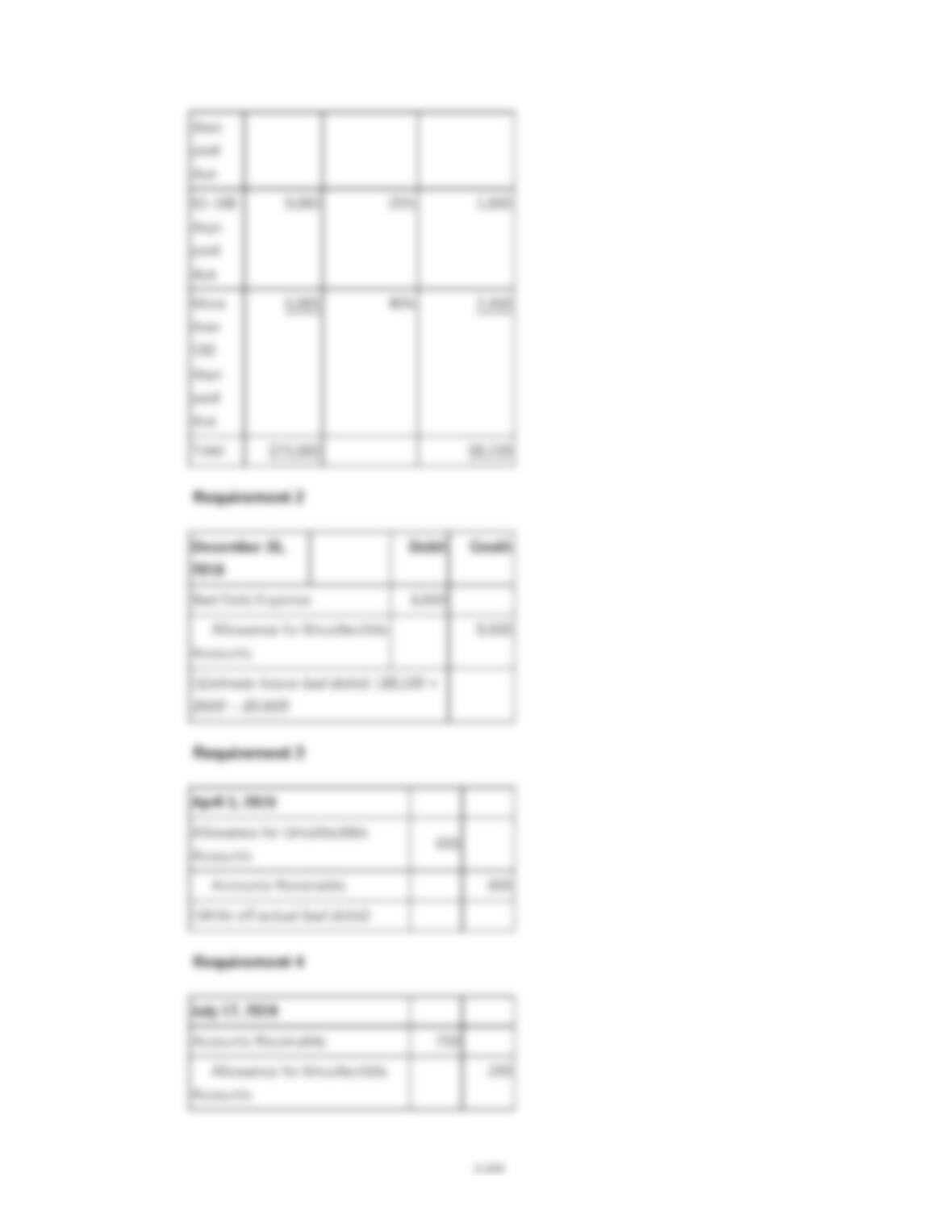
1. Calculate the allowance for uncollectible accounts.
2. Record the December 31, 2018 adjustment, assuming the balance of Allowance for
Uncollectible Accounts before adjustment is $500 (
debit
).
3. On April 3, 2019, a customer’s account balance of $600 is written off as uncollectible.
Record the write-off.
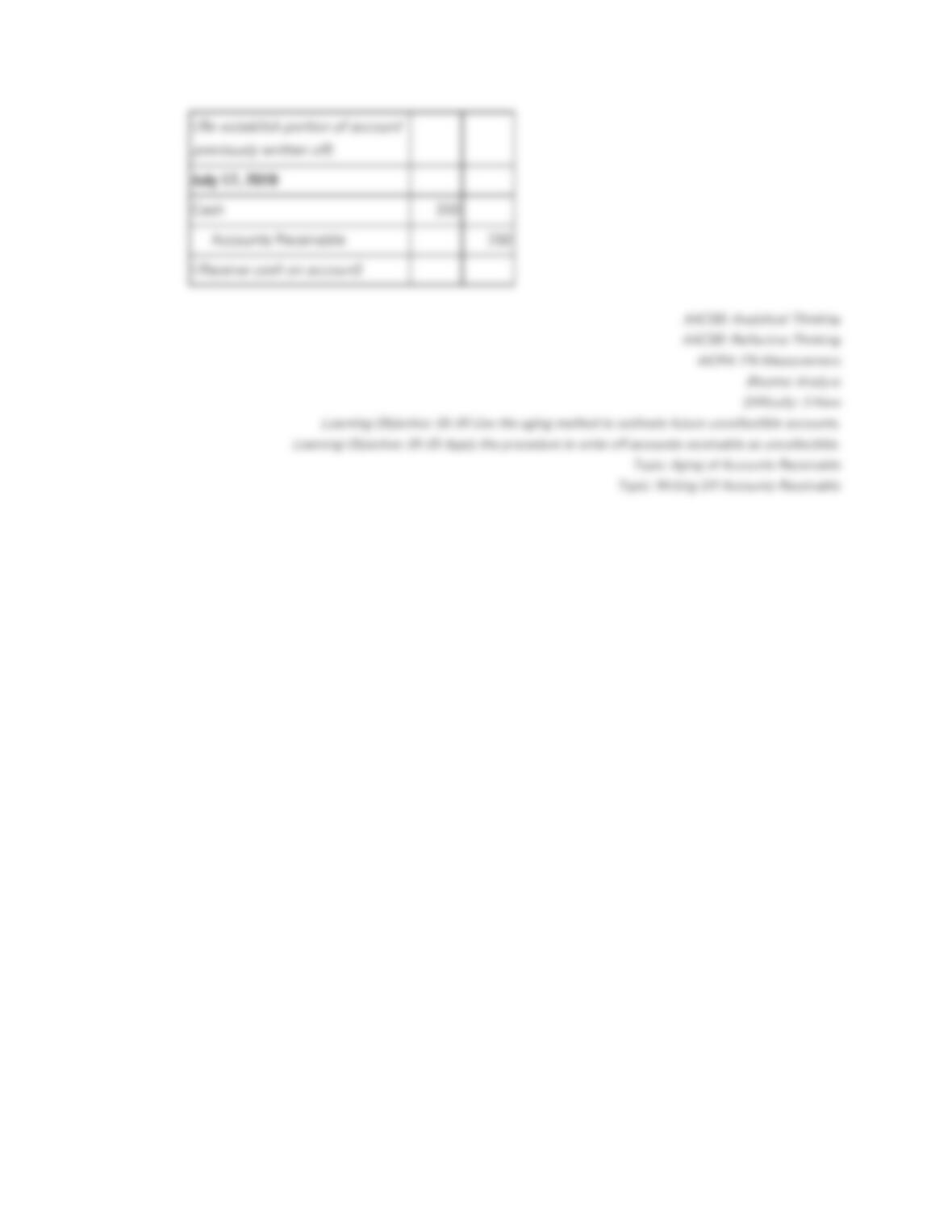
4. On July 17, 2019, the customer whose account was written off in
Requirement 3
unexpectedly pays $200 of the amount but does not expect to pay any additional amounts.
Record the cash collection.
Not yet
due
5-136
227.
On June 1, 2018, Demer Consulting provides services to a customer for $150,000. To pay
for the services, the customer signs a three-year, 12% note. The face amount is due at the
end of the third year, while annual interest is due each June 1.
Required:
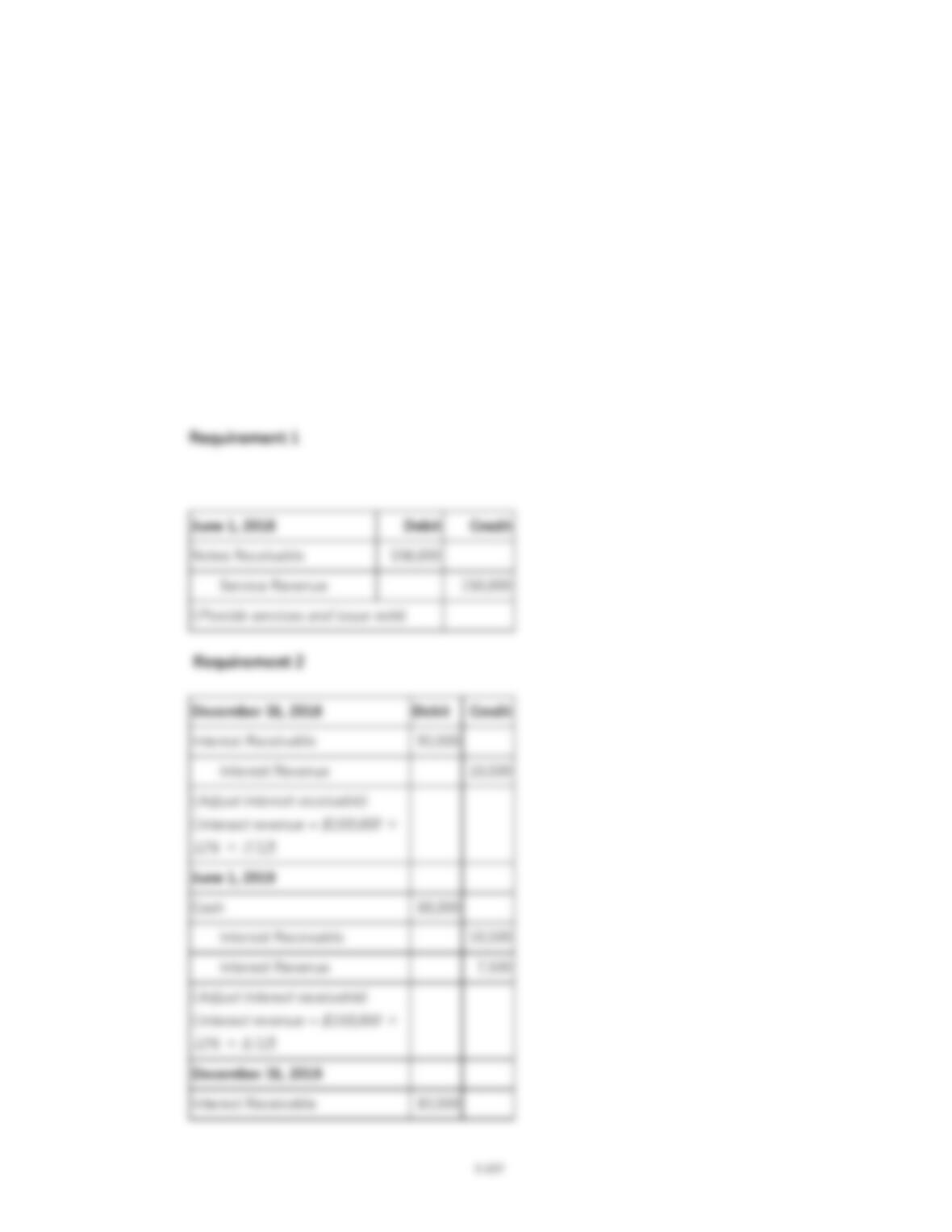
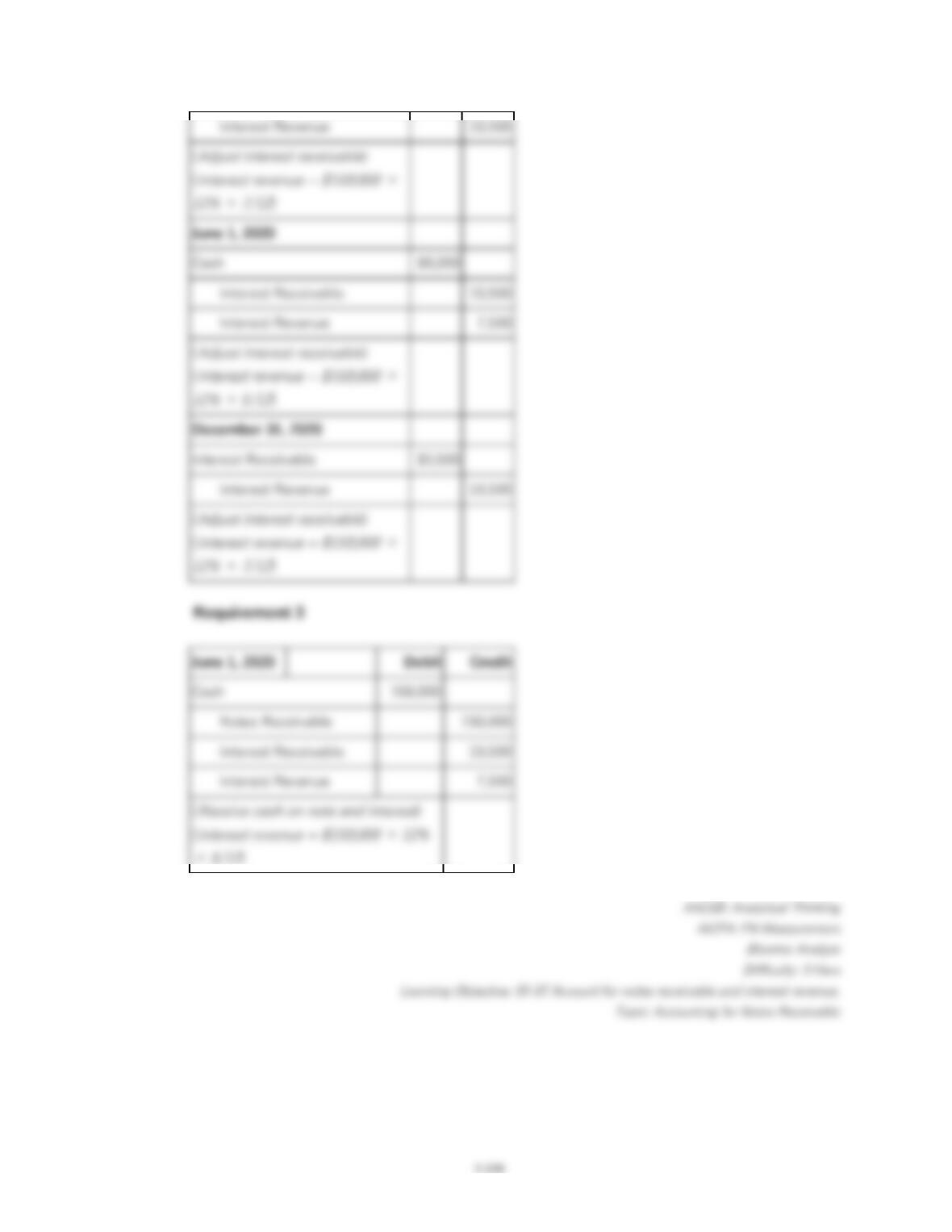
1. Record the acceptance of the note on June 1, 2018.
2. Record the interest collected on June 1 for 2019 and 2020, and the adjustment for
interest revenue on December 31, 2018, 2019, and 2020.
3. Record the cash collection on June 1, 2020.

5-139
228.
Selected financial data for Strong Health Group and Sturdy Medical Corporation, two
companies in the health-care industry, are as follows:
($ in
millions)
Net
Sales
Beginning
Accounts
Receivable
Ending
Accounts
Receivable
Strong
Health
$1,850
$200
$230
Sturdy
Medical
2,100
400
380
Required:
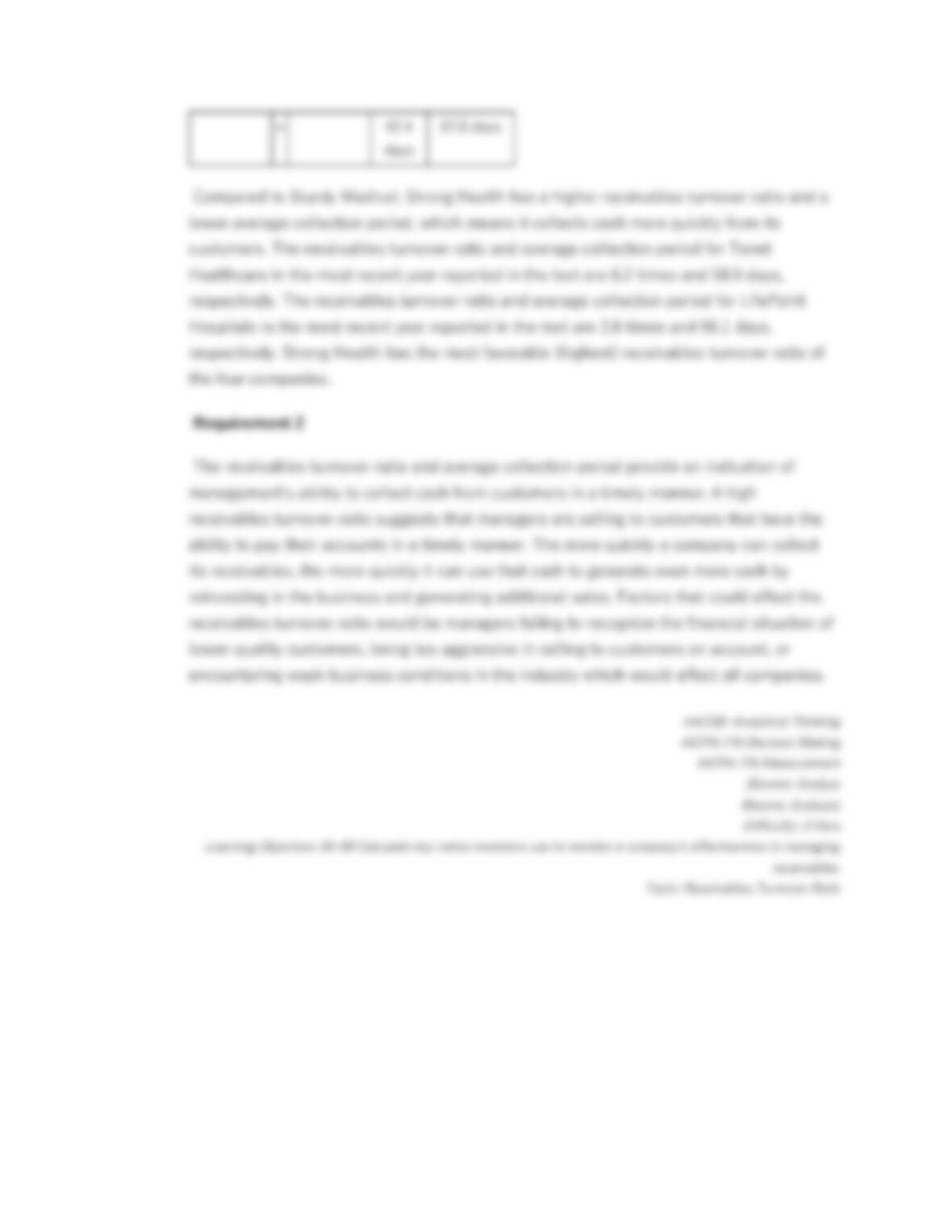
1. Calculate the receivables turnover ratio and average collection period for Strong Health
and Sturdy Medical. Round your answers to one decimal place. Compare your calculations
with those for Tenet Healthcare and LifePoint Hospitals reported in the chapter text.
Which of the four companies maintains a higher receivables turnover?
2. How does the receivables turnover ratio reflect the efficiency of management? Discuss
factors that affect the receivables turnover ratio.
5-140
Essay Questions
229.
Give three examples of contra revenue accounts and the transactions with which they are
associated.
230.
Explain how companies account for uncollectible accounts receivable (bad debts) for
financial reporting purposes.
231.
What does it mean to report accounts receivable at their net realizable value.
232.
Discuss the differences between the allowance method and the direct write-off method
for recording uncollectible accounts. Which of the two is acceptable for financial reporting
purposes?
233.
Explain why the percentage-of-receivables method is referred to as the
balance
sheet
method
and the percentage-of-credit-sales method is referred to as the
income
statement
method
. Which method is typically used in practice? Why?
234.
How is the receivables turnover ratio measured? What does this ratio indicate? Is a higher
or lower receivables turnover preferable?