
Exam
Name___________________________________
MULTIPLE CHOICE. Choose the one alternative that best completes the statement or answers the question.
1)
Which of the following is FALSE regarding wave cyclone development, intensification, and
strengthening?
1)
A)
The process can occur along the polar front.
B)
A midlatitude cyclone involves two fronts and three air masses.
C)
Cyclogenesis is the name for this process.
D)
A midlatitude cyclone, from birth to maturity to dissolution, takes an average of a month.
2)
Which is INCORRECTLY matched?
2)
A)
mTwarm, humid, variable stability depending on source region
B)
cPcold, dense air
C)
mPwarm, moist, stable conditions
D)
cAvery cold, very dry, stable
3)
The dry adiabatic rate (DAR) is
3)
A)
the rate used for a saturated parcel of air.
B)
6°C per 1000 m (3.3°F per 1000 ft).
C)
a term that refers to the temperature decrease in the still, calm air that surrounds a moving air
parcel.
D)
10°C per 1000 m (5.5°F per 1000 ft.).
4)
Which of the following is INCORRECT?
4)
A)
Precipitation = rain, sleet, snow, hail
B)
Cloud droplets = condensation nuclei and water
C)
Fog = a stratus cloud that is high in elevation off the ground
D)
Cumulus cloud = vertically developed cloud

5)
On cool spring mornings, veils of fog can often be seen rising above warm lakes and ponds. This
type fog is an example of ________ fog.
5)
A)
evaporation
B)
radiation
C)
advection
D)
convection
6)
A humidity measure that remains constant as temperature and pressure change, and which is
expressed as a mass of water vapor per mass (g/kg) of air, is
6)
A)
specific humidity.
B)
the dew–point.
C)
relative humidity.
D)
vapor pressure.
7)
Flat and puffy clouds with horizontal development are classed as
7)
A)
cumuliform.
B)
cirroform.
C)
stratiform.
8)
Which of the following phase changes of water is INCORRECTLY matched?
8)
A)
Vaporization: solid to gas
B)
Melting: solid to liquid
C)
Condensation: gas to liquid
D)
Deposition: gas to solid
9)
Which of the following is TRUE of the open stage of a midlatitude cyclone in the Northern
Hemisphere?
9)
A)
The faster moving cold front overtakes the slower warm front and wedges beneath it.
B)
A disturbance develops along the polar front with warm air converging and rising near the
surface.
C)
Warm air moves northward along an advancing front, while cold air advances southward.
D)
The lifting mechanism is completely cut off from the warm air mass.

10)
The maritime tropical Pacific (mT) and maritime tropical Gulf and Atlantic (mT) air masses are
10)
A)
both less active during summer months.
B)
both usually extremely unstable.
C)
different from one another because the Pacific air mass usually has lower specific humidity
than the Gulf/Atlantic air mass.
D)
very different because the Pacific air mass is very unstable and the Gulf/Atlantic air mass is
usually stable.
11)
Below a temperature of 4°C (39°F), water ________ and its density ________.
11)
A)
contracts; decreases
B)
expands; decreases
C)
contracts; increases
D)
expands; increases
12)
After a warm front passes, the temperature ________ and the pressure ________ (relative to the
conditions that existed prior to the passage of the front).
12)
A)
increases; decreases
B)
increases; increases
C)
decreases; decreases
D)
decreases; increases
13)
Which of the following is TRUE?
13)
A)
Thunder is caused by rapid contraction of the air.
B)
Lightning is relatively uncommon on Earth.
C)
Thunder is caused by rapid cooling of the air.
D)
Lightning results from the buildup of electrical–energy polarity within clouds.
14)
Which of the following pressure systems reside within the source region for mP air masses?
14)
A)
Aleutian low and Icelandic low
B)
Aleutian low and Pacific high
C)
Bermuda high and Pacific high
D)
Bermuda high and Icelandic low
15)
________ occurs when the relative humidity is 100%.
15)
A)
Evaporation
B)
Saturation
C)
Sublimation
D)
Deposition
16)
Variations of wind speed and direction with altitude is known as
16)
A)
convection.
B)
wind shear.
C)
convergence.
D)
supercells.
17)
The movement of water throughout the atmosphere, hydrosphere, lithosphere, and biosphere is
known as the
17)
A)
biogeochemical cycle.
B)
capillary movement.
C)
hydroflux.
D)
hydrologic cycle.
18)
When water condenses, it ________ heat energy and ________ the surrounding air.
18)
A)
absorbs heats
B)
releases; cools
C)
absorbs; cools
D)
releases; heats
19)
The highest rainfall in the world occurs in an area whose rainfall is generated by
19)
A)
convectional uplift of warm, moist air.
B)
radiative cooling of cold, moist air.
C)
orographic uplift of warm, moist air.
D)
advectional cooling of air masses over cold ocean currents.

20)
Which of the following is INCORRECT?
20)
A)
By definition, hurricanes have sustained winds that exceed 65 knots (119 kmph or 74 mph).
B)
Mature hurricanes develop a central eye of calm conditions (in which it is often possible to see
the sky) that is surrounded by a swirling eyewall.
C)
The most severe weather in a hurricane occurs in the spiral bands.
D)
Tropical cyclones range in diameter from 160 km (100 mi. to 1,000 km (600 mi).
21)
Which of the following would NOT result in the modification of the air mass?
21)
A)
A cA air mass moving across the Gulf of Alaska.
B)
A cP air mass remaining stationary over central Canada.
C)
A cT air mass moving across the Gulf of Mexico.
D)
A cP air mass moving across the Great Lakes.
E)
A mT air mass moving across Texas.
22)
Which of the following best describes a cloud?
22)
A)
Suspended raindrops that have not yet fallen under the force of gravity.
B)
Uniform featureless smoke lighter than the force of gravity.
C)
Aggregated condensation nuclei.
D)
A visible aggregation of tiny moisture droplets and ice crystals suspended in the air.
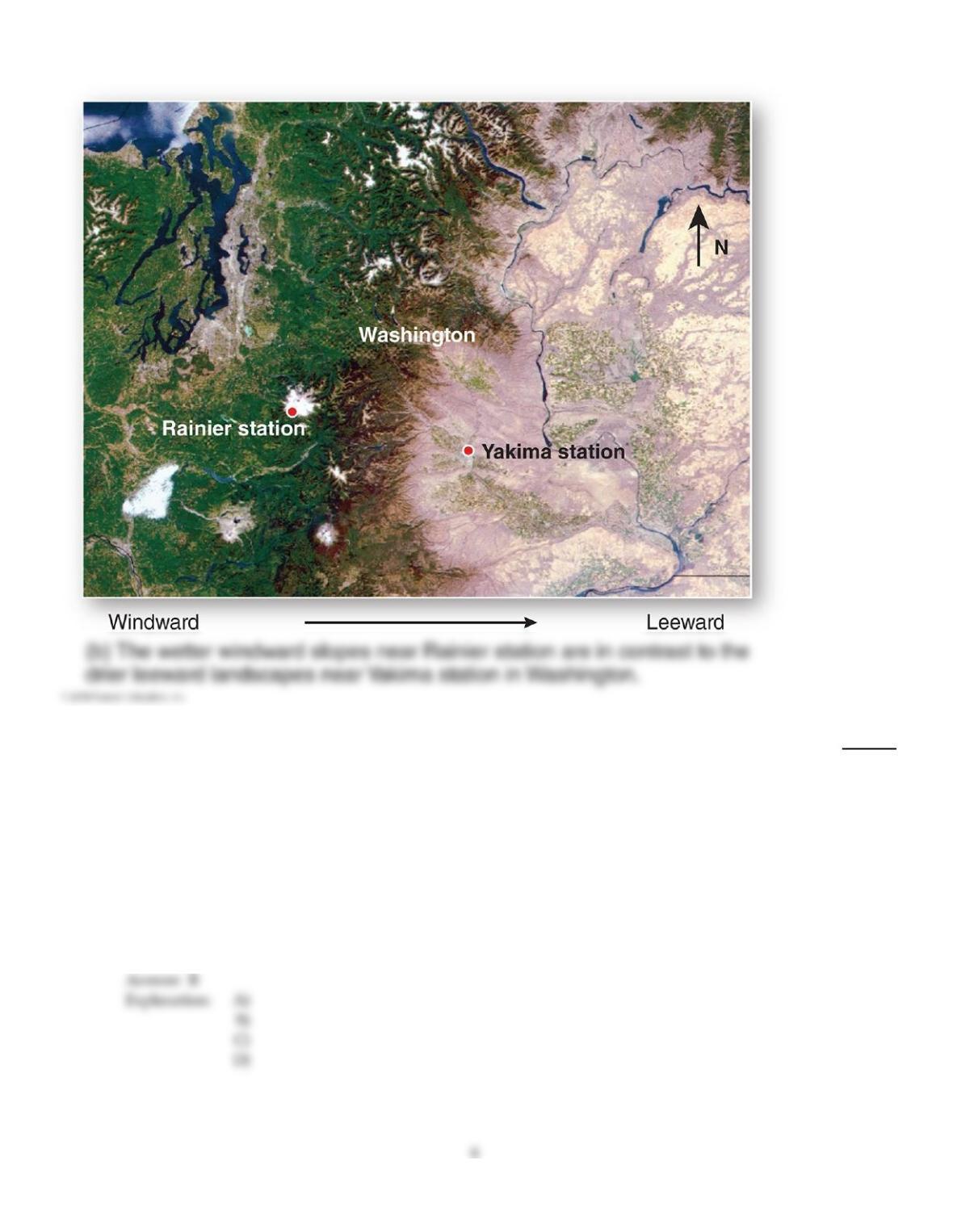
23)
In the state of Washington, the western portion of the state receives far more rainfall than the
eastern portion of the state. What accounts for this stark contrast?
23)
A)
The western portion of the state has much more moderate temperatures due to the maritime
effect and, therefore, experiences convectional uplift, while the eastern portion is governed by
continentality.
B)
The western portion of the state experiences orographic precipitation, while the eastern
portion is in the rain shadow.
C)
The western portion of the state is under the ITCZ during the summer and experiences
convergent uplift, while the eastern portion is under the Azores High and experiences
subsiding air.
D)
The western portion of the state see a great deal of frontal lifting, while the eastern portion is
under a high pressure cell.

24)
Prior to making landfall, Hurricane Sandy characteristics changed and it was classified as a
24)
A)
midlatitude anticyclone.
B)
tropical depression.
C)
post–tropical cyclone.
D)
typhoon.
25)
Which part of a hurricane consists of dry, subsiding air?
25)
A)
Spiral bands
B)
Easterly trade winds
C)
Eye
D)
Eye wall (collar clouds)
C
Explanation:
26)
When a cold cP air mass passes over the warmer Great Lakes, it absorbs heat energy and moisture
and becomes humidified. This is known as the
26)
A)
humidity effect.
B)
continental effect.
C)
lake effect.
D)
maritime effect.
C
Explanation:
27)
Which of the following characteristics is NOT associated with a well–developed newly formed cP
air mass?
27)
A)
High pressure
B)
Formation in the Southern Hemisphere
C)
Cold temperatures
D)
Anticyclonic wind flow
E)
Clear skies
B
Explanation:
C
Explanation:
28)
Given a cP air mass and cT air mass with the same relative humidity, which air mass would have
higher specific humidity?
28)
A)
The cT air mass would have the higher specific humidity.
B)
The cP air mass would have the higher specific humidity.
C)
The specific humidity of both would be the same because their relative humidities are the
same.
D)
It is impossible to say what would usually be true of their specific humidities.
29)
The point where saturation begins in a rising air parcel is
29)
A)
cloud condensation nuclei.
B)
the dry adiabatic rate.
C)
the lifting condensation level.
D)
the moist adiabatic rate.
30)
________ are the strongest thunderstorms.
30)
A)
Single–cells
B)
Multicell lines
C)
Multicell clusters
D)
Supercells
31)
Easterly waves travel from ________ in the ________ belt.
31)
A)
west to east; trade wind
B)
east to west; westerly
C)
west to east; westerly
D)
east to west; trade wind
32)
Which of the following is TRUE of tornadoes in the United States?
32)
A)
They develop within cP air masses.
B)
They occur in every month except March and April.
C)
The peak months are May and June.
D)
The peak months are November and December.

33)
The wet adiabatic rate is ________ than the dry adiabatic rate because ________.
33)
A)
greater; condensation heats the air
B)
less; condensation cools the air
C)
greater; condensation cools the air
D)
less; condensation heats the air
34)
Clouds that have vertical development and produce thunderstorms are called
34)
A)
cumulonimbus.
B)
nimbostratus.
C)
stratocumulus.
D)
cumulus.
35)
The severity of storm activity along a warm front is ________ than that along most cold fronts
because the rate of uplift is ________ along a warm front.
35)
A)
less; faster
B)
less; slower
C)
greater; faster
D)
greater; slower
36)
A fog that develops when warm, moist air blows over a cold current (such as the California
Current) is an example of ________ fog.
36)
A)
advection
B)
evaporation
C)
convection
D)
radiation
37)
Hydrogen bonding results from the fact that
37)
A)
the oxygen end of a water molecule is positively charged and the hydrogen end is negatively
charged.
B)
water molecules experience a strong gravitational attraction to one another.
C)
the hydrogen end of a water molecule is positively charged and the oxygen end is negatively
charged.
D)
there is no electrical charge on a water molecule.
E)
nuclear fusion occurs between the ends of water molecules.

38)
Water vapor in the atmosphere is called
38)
A)
deposition.
B)
humidity.
C)
sublimation.
D)
water.
39)
In which of the following areas will thunderstorms NOT develop?
39)
A)
In areas of surface convergence
B)
Under areas of strong high pressure
C)
In areas of orographic uplift
D)
Along frontal boundaries
B
40)
The portion of air pressure exerted by water vapor is the
40)
A)
dew point.
B)
psychrometer.
C)
absolute humidity.
D)
vapor pressure.
D
41)
The wetter, intercepting slope of a mountain is termed the ________ slope, whereas the drier,
downwind slope is termed the ________ slope.
41)
A)
leeward; windward
B)
west side; east side
C)
left side; right side
D)
windward; leeward
D
B
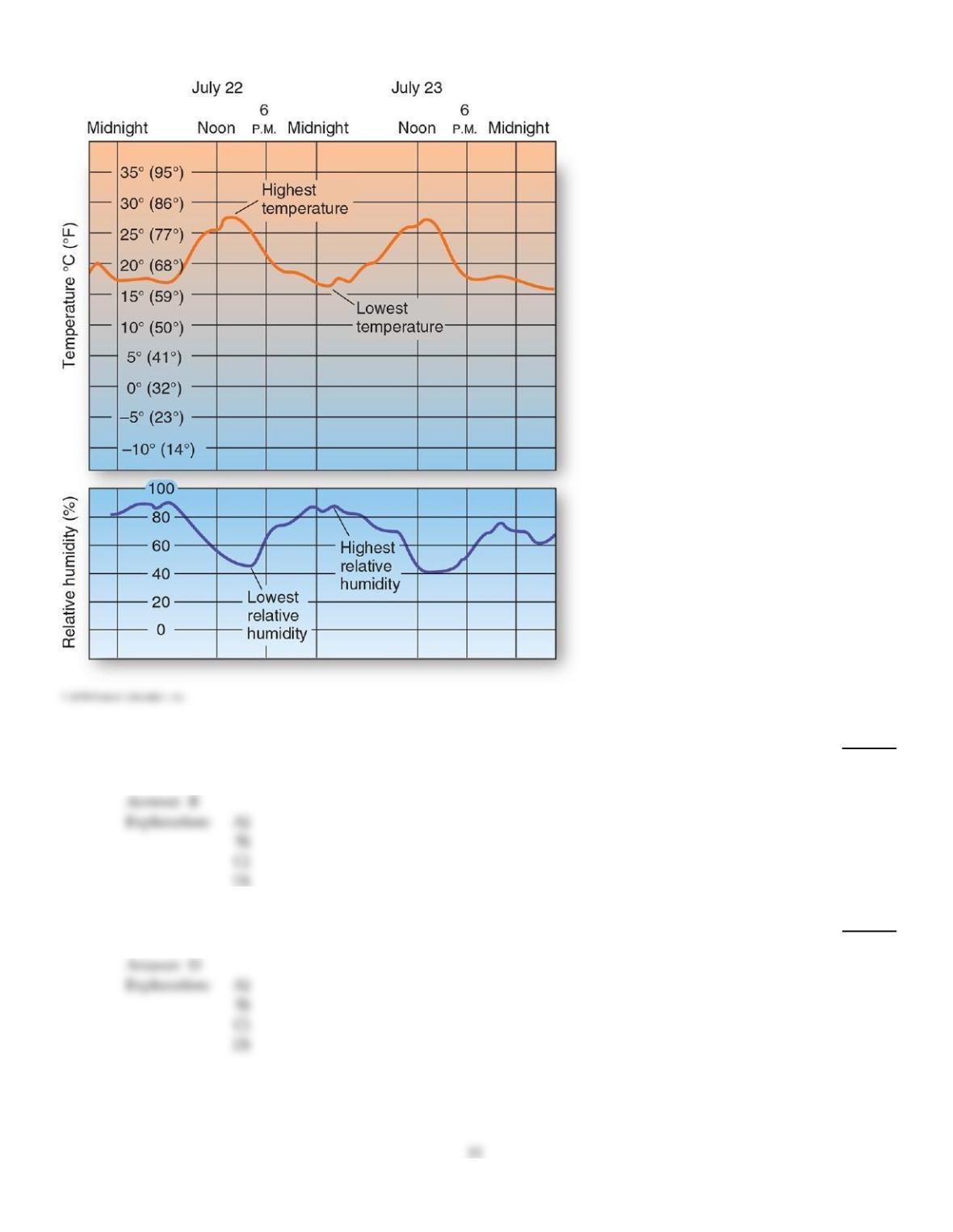
42)
On a typical day, the point of highest relative humidity is associated with
42)
A)
dusk.
B)
the time of the lowest temperature.
C)
solar noon.
D)
the time of the highest temperature.
43)
Air masses which develop over Canada are examples of ________ air masses.
43)
A)
cT
B)
mT
C)
mP
D)
cP
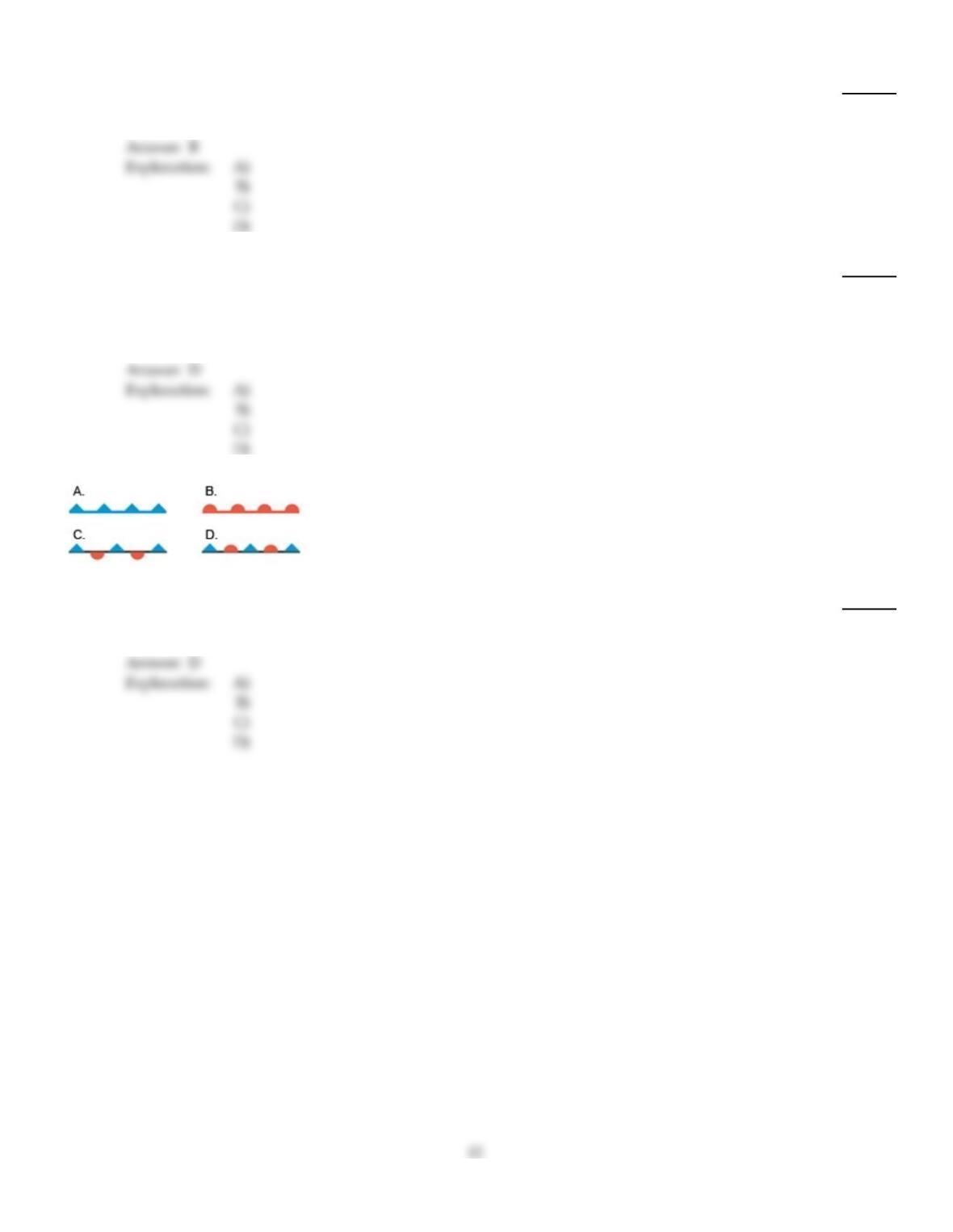
44)
Which of the following was the deadliest Atlantic hurricane of the last 100 years?
44)
A)
Hurricane Andrew
B)
Hurricane Mitch
C)
Hurricane Camille
D)
Hurricane Bonnie
45)
Which of the following is predicted to occur in the 21st century as a result of climate change?
45)
A)
Decrease in extreme snowfall events (blizzards).
B)
Less lake–effect snowfall due to warming waters.
C)
An increase in global snowfall due to an increase in atmospheric moisture.
D)
Increased frequency and intensity of tropical cyclones due to increased ocean temperatures.
D
46)
The weather station symbol symbolized by D is a(n)
46)
A)
cold front.
B)
warm front.
C)
stationary front.
D)
occluded front.
D
B
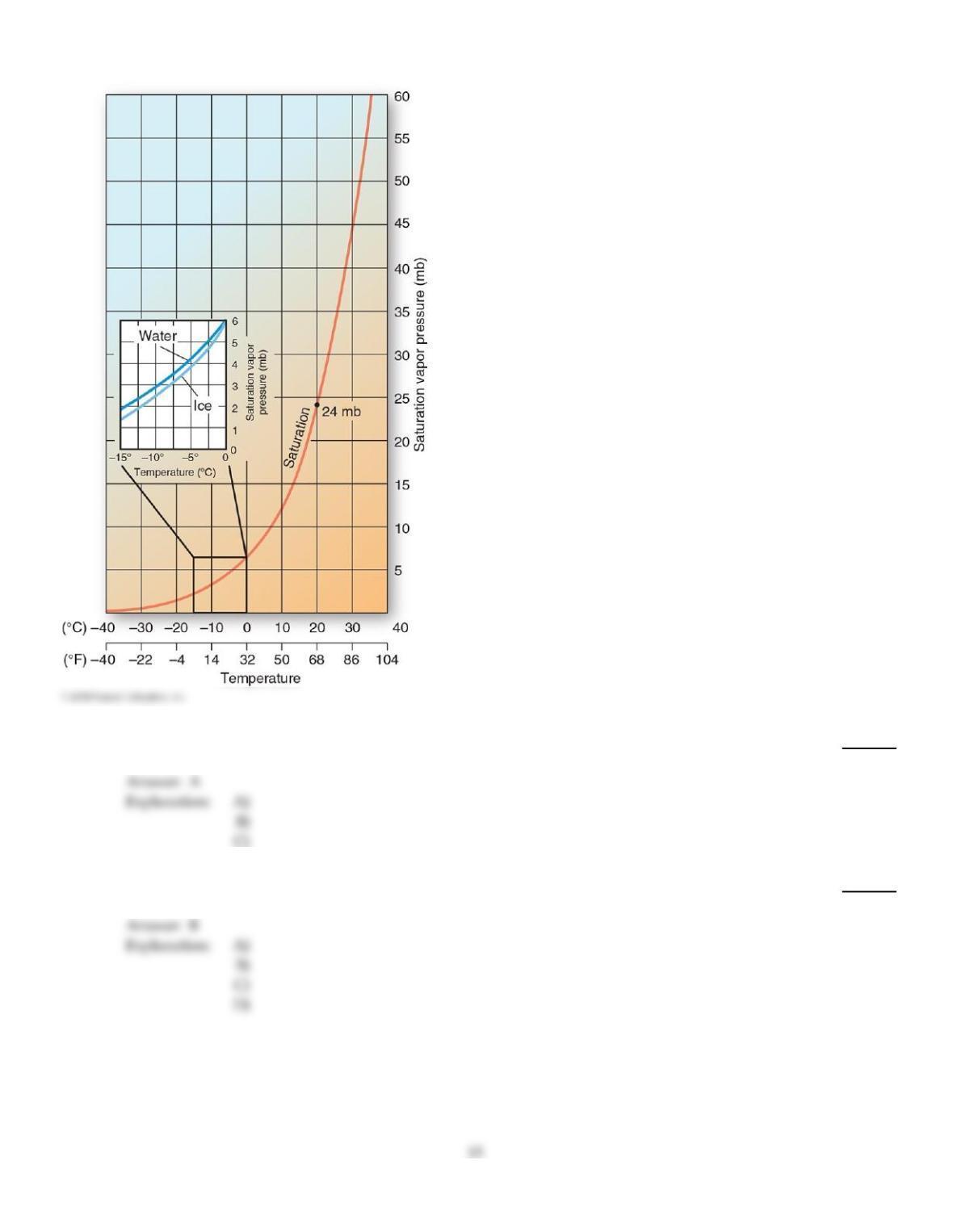
47)
As temperature increases, the saturation vapor pressure
47)
A)
increases.
B)
decreases.
C)
remains constant.
48)
The scientific study of the short–term condition of the atmosphere is
48)
A)
weather.
B)
meteorology.
C)
geography.
D)
climate.
49)
At saturation, the further addition of water vapor or a decrease in temperature results in ________.
49)
A)
condensation.
B)
freezing.
C)
sublimation.
D)
evaporation.
50)
The hydrogen bonding in water creates ________, a cohesive force that enables one to slightly
overfill a glass with water or allows denser objects, such as a lengthwise steel needle, to float on
water.
50)
A)
capillary action
B)
heat exchange
C)
surface tension
D)
friction
51)
Derechos are
51)
A)
associated with gravity drainage.
B)
named after the latin word for “hooked” or “curved.”
C)
most common in the pacific northwest of the United States.
D)
straight–line winds associated with thunderstorms.
52)
Which of the following is NOT a regional name for the most powerful tropical cyclones?
52)
A)
Cyclone
B)
Easterly wave
C)
Hurricane
D)
Typhoon
53)
The record precipitation received in a single year was
53)
A)
in the Amazon in Brazil.
B)
in Southeast Asia.
C)
in the Assam Hills in India, south of the Himalayas.
D)
in the United States.
54)
The phase changes water and other substances undergo are based on
54)
A)
nuclear fission processes between atoms of a substance.
B)
the amount of motion of molecules and the strength of the bonds between them.
C)
nuclear fusion processes between atoms of a substance.
D)
diabatic forces acting on the molecules.
E)
gravitational energy stored within the electron orbitals of atoms.
55)
A mT air mass is likely to be ________ than a cT air mass because the mT air mass ________.
55)
A)
drier; forms under the equatorial low
B)
drier; is a cold air mass
C)
hotter; forms over the ocean
D)
wetter; is warmer than the cT air mass
E)
wetter; forms over the ocean
56)
Which of the following is TRUE of migrating centers of low pressure in the Northern Hemisphere?
56)
A)
They form only a minor weather pattern in the middle and higher latitudes.
B)
These pressure systems tend to move east to west along storm tracks.
C)
These pressure systems are characterized by converging, ascending air that spirals inward in
a counterclockwise fashion.
D)
The winds diverge from the pressure system and spiral outward in a clockwise fashion.
57)
The capacity of air for water vapor is primarily a function of the ________ of both the air and water
vapor.
57)
A)
pressure
B)
density
C)
temperature
D)
volume

58)
If the amount of water vapor in the air remained constant, but the air temperature increased
throughout the day, the relative humidity would
58)
A)
increase.
B)
decrease.
C)
remain constant.
59)
A mT air mass ________ than a cT air mass.
59)
A)
forms over an ocean and is usually less humid
B)
forms over tropical rainforests and is usually less humid
C)
forms over tropical rainforests and is usually more humid
D)
forms under the equatorial low and is usually less humid
E)
forms over an ocean and is usually more humid
E
Explanation:
60)
Which of the following is NOT true regarding hurricanes and tornadoes?
60)
A)
The pressure at the center of the storm is very low.
B)
There is very limited wind shear.
C)
The pressure gradient is strong.
D)
Tremendous amounts of condensation occur in the center of the storm.
B
Explanation:
61)
An estimated ________ lightning strikes occur each day on Earth.
61)
A)
8,000
B)
80,000
C)
800,000
D)
8,000,000
D
Explanation:
62)
Out of all the water present in the Earth systems, ________ is stored in the atmosphere.
62)
A)
15%
B)
approximately 2%
C)
a variable amount, but averaging 50%
D)
less than 0.03%
D
Explanation:
B
Explanation:

63)
A mass of air always becomes saturated when it reaches the
63)
A)
dew–point temperature.
B)
highest temperature of the day.
C)
lowest temperature of the day.
D)
specific humidity point.
64)
Occlusion in a midlatitude wave cyclone can occur because
64)
A)
warm and cold fronts travel at the same speed.
B)
cold fronts travel more quickly than warm fronts.
C)
warm fronts travel more quickly than cold fronts.
D)
warm air sinks in low pressure areas.
65)
The dry leeward side of a mountain is often termed a (n)
65)
A)
chinook.
B)
orogeny.
C)
front.
D)
rain shadow.
66)
Surface tension and capillarity are the result of
66)
A)
gravitational attraction.
B)
molecular hold.
C)
hydrogen bonding.
D)
magnetic bonding.
67)
Which of the following is TRUE of the occluded stage of a midlatitude cyclone?
67)
A)
It occurs when the cold front overruns the slower moving warm front.
B)
This stage is characteristic of an early stage of cyclone development.
C)
It occurs as soon as air begins to be uplifted along the cold front.
D)
It occurs at the time when the cold front and warm front are clearly and distinctly separated
from one another.
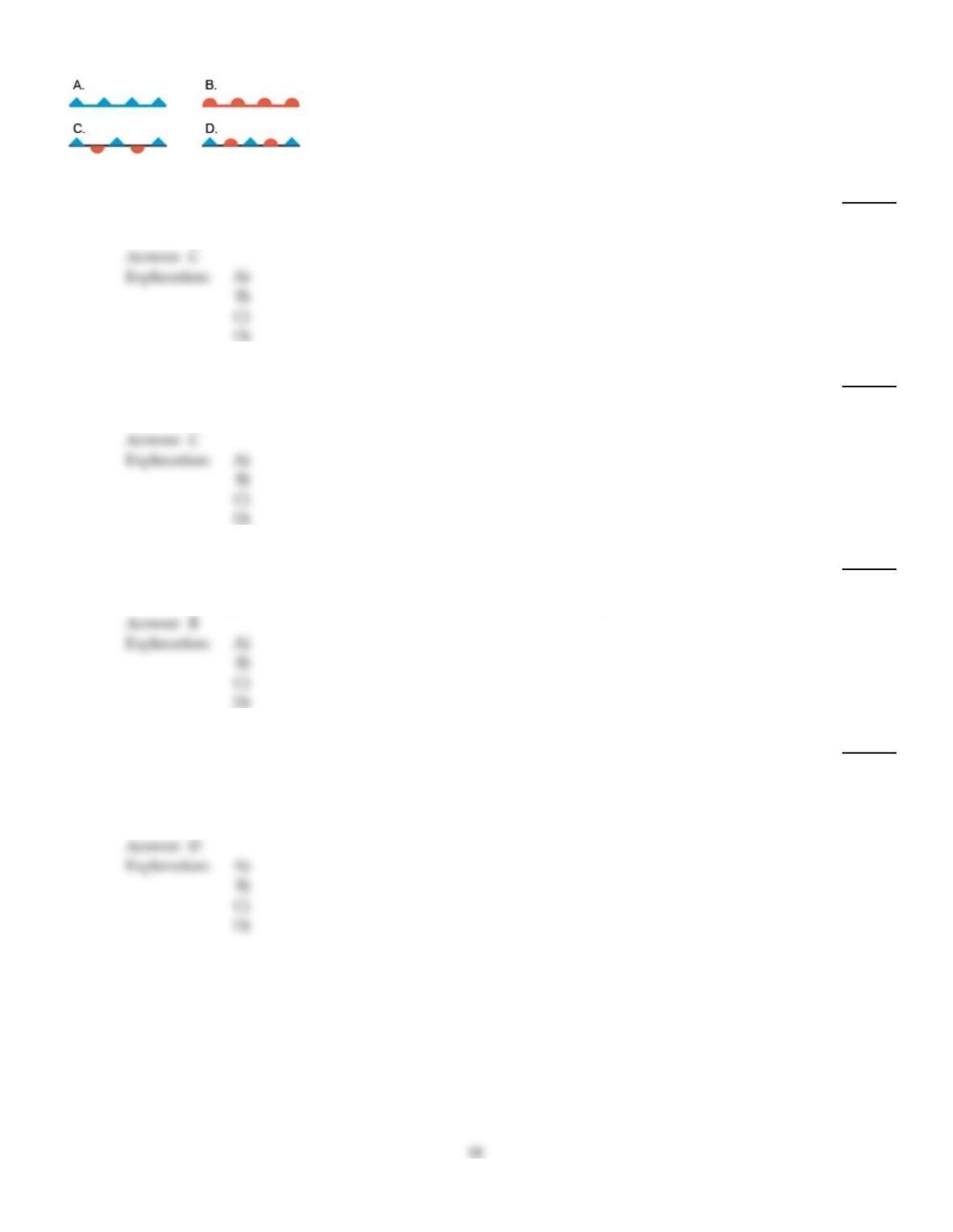
68)
The weather station symbol symbolized by C is a(n)
68)
A)
cold front.
B)
warm front.
C)
stationary front.
D)
occluded front.
69)
As water cools from room temperature to 4°C (39°F), it ________ and its density ________.
69)
A)
expands; decreases
B)
expands; increases
C)
contracts; increases
D)
contracts; decreases.
70)
The term deposition refers to
70)
A)
vapor condensing into liquid.
B)
water vapor freezing to ice.
C)
ice melting to water.
D)
water freezing to ice.
71)
A tornado classified as an EF–5 would have
71)
A)
windspeeds less than 137 kmph (85 mph) with light damage.
B)
windspeeds between 178–217 kmph (111–135 mph) with considerable damage.
C)
windspeeds between 218–26 kmph (136–165 mph) with severe damage.
D)
windspeeds greater than 322 kmph (200 mph) with incredible damage.

72)
Assuming the amount of water vapor remains constant, a temperature increase will ________ the
specific humidity.
72)
A)
increase
B)
decrease
C)
have no effect on
D)
increase until the dew point is met, then decrease
73)
Tornadoes
73)
A)
do not occur anywhere else in the world outside of the United States.
B)
are called funnel clouds after they come in contact with the ground.
C)
are associated with mesocyclones.
D)
are rarely associated with hurricanes.
74)
The general term that refers to the tendency of a parcel of air to either remain in place or change its
initial position is
74)
A)
stability.
B)
adiabatic.
C)
conditional instability.
D)
stasis.
75)
A stratus cloud that produces precipitation is known as
75)
A)
nimbostratus.
B)
altostratus.
C)
cirrostratus.
D)
stratocumulus.
76)
When water freezes, its volume
76)
A)
remains the same as in the liquid state.
B)
increases.
C)
decreases.

77)
Which is NOT true of derechos?
77)
A)
They occur mainly from May to August.
B)
They are caused by the same conditions that cause thunderstorms and tornadoes.
C)
The winds travel in a curved path.
D)
They occur mainly in the Midwest and Southeast.
E)
They have been measured at 57 m/s (128 mph).
78)
Which of the following matches is TRUE?
78)
A)
Warm, humid, very unstable air mass = mT Pacific air mass
B)
Specific humidity of 17 g/kg = average moisture content of mT Gulf air mass in the summer
C)
Tropical air mass source region = 40° to 55° N or S
D)
Very cold, dry, and stable air mass = mT Pacific air mass
79)
In which of the following months would the relative humidity likely be the highest (assuming a
Northern Hemisphere station).
79)
A)
January
B)
July
C)
March
D)
September
80)
Air rising as a result of being stimulated by local surface heating is an example of ________ lifting.
80)
A)
convergent
B)
convectional
C)
orographic
D)
frontal
81)
Air flowing from different directions to an area of low pressure, coming together, and being
displaced upward is an example of ________ lifting.
81)
A)
convergent
B)
convectional
C)
orographic
D)
frontal

82)
Weather is
82)
A)
a reference to temperature patterns only.
B)
the climate of a region.
C)
the short–term condition of the atmosphere.
D)
the long–term atmospheric condition, including extremes that may occur.
83)
Which of the following is a middle–level cloud type?
83)
A)
Stratocumulus
B)
Cumulonimbus
C)
Altostratus
D)
Cirrostratus
Explanation:
84)
Relative humidity is
84)
A)
a basically unused concept when it comes to weather topics.
B)
the amount of water vapor in the air compared to the normal amount.
C)
the amount of water vapor in the air relative to the water vapor capacity of the air.
D)
the amount of moisture in the air relative to your own sensible feelings.
Explanation:
85)
Which of the following is TRUE regarding cloud–condensation nuclei?
85)
A)
Condensation nuclei is rare in urban environments.
B)
Continental air masses contain more than 10 times the condensation nuclei of maritime air
masses.
C)
Maritime air masses generally possess more nuclei per cubic meter than continental air
masses.
D)
Continental air masses average about a billion nuclei per cubic meter.
Explanation:
86)
Which of the following phase changes of water is INCORRECTLY matched?
86)
A)
Evaporationenergy released
B)
Sublimationenergy absorbed
C)
Depositionenergy released
D)
Meltingenergy absorbed
Explanation:
Explanation:

87)
Which of the following is FALSE of tropical cyclones?
87)
A)
Sea surface temperatures must exceed 26°C (79°F) for one to form.
B)
They form around an intense high pressure center at the surface.
C)
They have hit Brazil, France, and Oman.
D)
Storm surges often account for the greatest damage from tropical cyclones.
88)
The prefix nimbo– and the suffix –nimbus means
88)
A)
clouds that occur in the middle altitudes (2000–6000 m).
B)
that the clouds are producing precipitation.
C)
that clouds are generally dissipating.
D)
that clouds are generally forming.
B
89)
Before a hurricane forms, upper–level divergence above an easterly wave
89)
A)
pulls moisture into the system.
B)
moves west to east.
C)
weakens vertical convective circulation.
D)
causes the system to dissipate.
A
90)
An air parcel is considered unstable when it
90)
A)
continues to rise until it reaches an altitude at which the surrounding air has a similar
temperature.
B)
either remains as it is, or changes its initial position.
C)
it ceases to ascend.
D)
it resists displacement upward.
A
B

91)
The two opposing forces determining the vertical position of a parcel of air are
91)
A)
buoyant force and gravitational force.
B)
gravitational force and pressure gradient force.
C)
coriolis force and buoyant force.
D)
centrifugal force and coriolis force.
92)
The process of deposition in the atmosphere produces
92)
A)
rain.
B)
frost.
C)
ice.
D)
water vapor.
93)
After a cold front passes, the temperature ________ and the pressure ________ (relative to the
conditions that existed prior to the passage of the front).
93)
A)
decreases; increases
B)
increases; increases
C)
decreases; decreases
D)
increases; decreases
94)
Which of the following is a high altitude cloud?
94)
A)
Stratus
B)
Cumulus
C)
Cirrus
D)
Altocumulus
95)
Cloud–condensation nuclei over the ocean consist primarily of
95)
A)
clay particles.
B)
salt particles.
C)
minute fragments of sea shells.
D)
pieces of coral.

96)
In winter, freezing water can break pipes and even crack engine blocks. Why does this happen?
96)
A)
Water contracts as it cools and freezes.
B)
It occurs because of the latent heat of fusion.
C)
Water expands in volume as it freezes.
D)
Ice is denser than water.
97)
The density of pure ice is
97)
A)
greater than that of water.
B)
the same as water.
C)
less than that of water.
D)
highly variable.
98)
When water freezes, its density
98)
A)
decreases.
B)
remains the same as in the liquid state.
C)
increases.
99)
Which of the following “ingredients” is NOT associated with thunderstorm formation?
99)
A)
Rising, unstable air
B)
Warm, moist air
C)
Strong high pressure cell
D)
A lifting mechanism
100)
A(n)________ is a homogeneous volume of air defined based on its temperature, and moisture
characteristics.
100)
A)
front
B)
parcel
C)
air mass
D)
cyclone
TRUE/FALSE. Write ‘T’ if the statement is true and ‘F’ if the statement is false.
101)
Urban heat islands can contribute to convectional lifting.
101)
102)
The phase change from liquid water to water vapor involves more energy than the phase change
from ice to water.
102)
103)
The frequency of tornadoes in the United States has been increasing over the last twenty years.
103)
104)
Cirrus clouds are associated with thunderstorms and hard showers.
104)
105)
The bulk of the evaporation on Earth occurs over the continents.
105)
106)
Thunderstorms and hail are associated with cumulonimbus cloud development.
106)
107)
There is an inverse relationship between temperature and relative humidity, e.g. on a typical day,
relatively humidity is highest when the temperatures are the lowest.
107)
108)
Tropical cyclones have steep pressure gradients that generate inward–spiraling winds.
108)
109)
If a parcel of air is cooled and the amount of water vapor remained constant, its relative humidity
would increase.
109)
110)
Below a temperature of 4°C (39°F), water expands as it continues to cool.
110)
111)
Vapor pressure is the share of air pressure made up of water–vapor.
111)
112)
Continental polar air masses of cold, dry air are more developed during the summer over North
America than in winter.
112)
ESSAY. Write your answer in the space provided or on a separate sheet of paper.
113)
List and describe the cloud classes and their associated cloud types, along with a discussion of the type of
weather associated with each.
114)
Compare and contrast the normal lapse rate, environmental lapse rate, the dry adiabatic rate, and the moist
adiabatic rate.
115)
Describe water’s phase changes and the latent energy associated with each.
116)
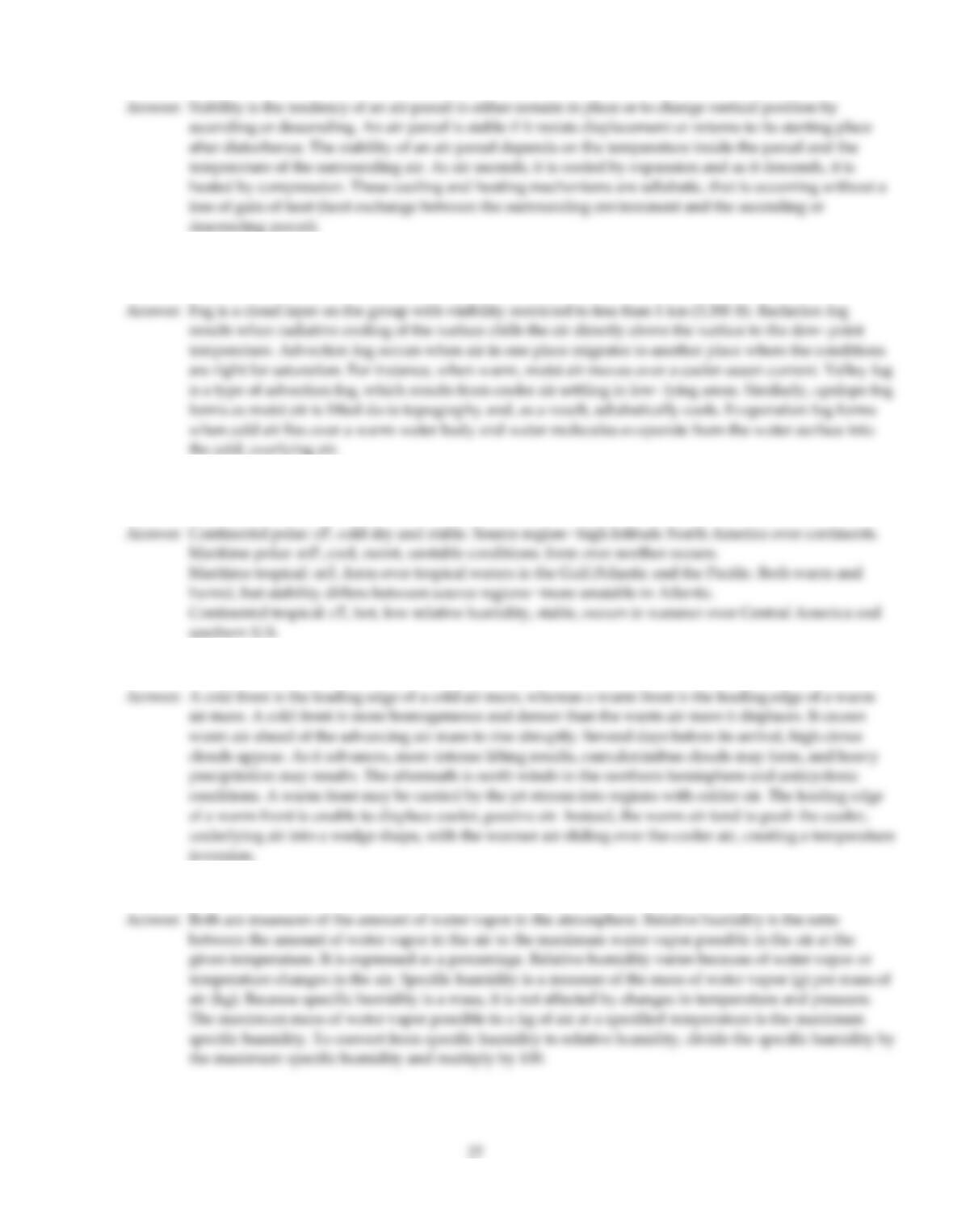
Using regional examples, explain how orographic precipitation and rain shadows are related.
117)
What is atmospheric stability? What are adiabatic processes and how they are related to atmospheric stability?
118)
Describe the formative characteristics of advection fogs, valley fog, evaporation fog, and radiation fog along
with their usual locations.
119)
Describe the typical air masses that affect North America. Give their source regions, physical characteristics and
properties, and typical directions of motion.
120)
Present the typical conditions and activities associated with both a cold front and with a warm front.
121)
Define and distinguish between relative humidity and specific humidity.
122)
Discuss the formation, physical characteristics, and typical precipitation patterns of thunderstorms.
123)
How do air masses form? What are their general characteristics?
124)
Examine the typical conditions that spawn hurricanes in the Atlantic. Describe the the physical characteristics of
a hurricane and examine why it can be so devastating to land.
125)
Using several examples, discuss how climate change may affect severe weather events.
126)
Write an essay that discusses the formation of mesocyclones and tornadoes, and also examines how scientists
rank the intensity of tornadoes.
127)
Describe the four types of atmospheric lifting and give typical geographic characteristics associated with each.
128)
Describe the typical life cycle of a midlatitude cyclone in North America, beginning with cyclogenesis and
ending with the cyclone’s dissolution.
129)
List several of water’s unique properties.
Answer Key
Testname: C5
Answer Key
Testname: C5
Answer Key
Testname: C5
32
Answer Key
Testname: C5
33
Answer Key
Testname: C5
34