220.
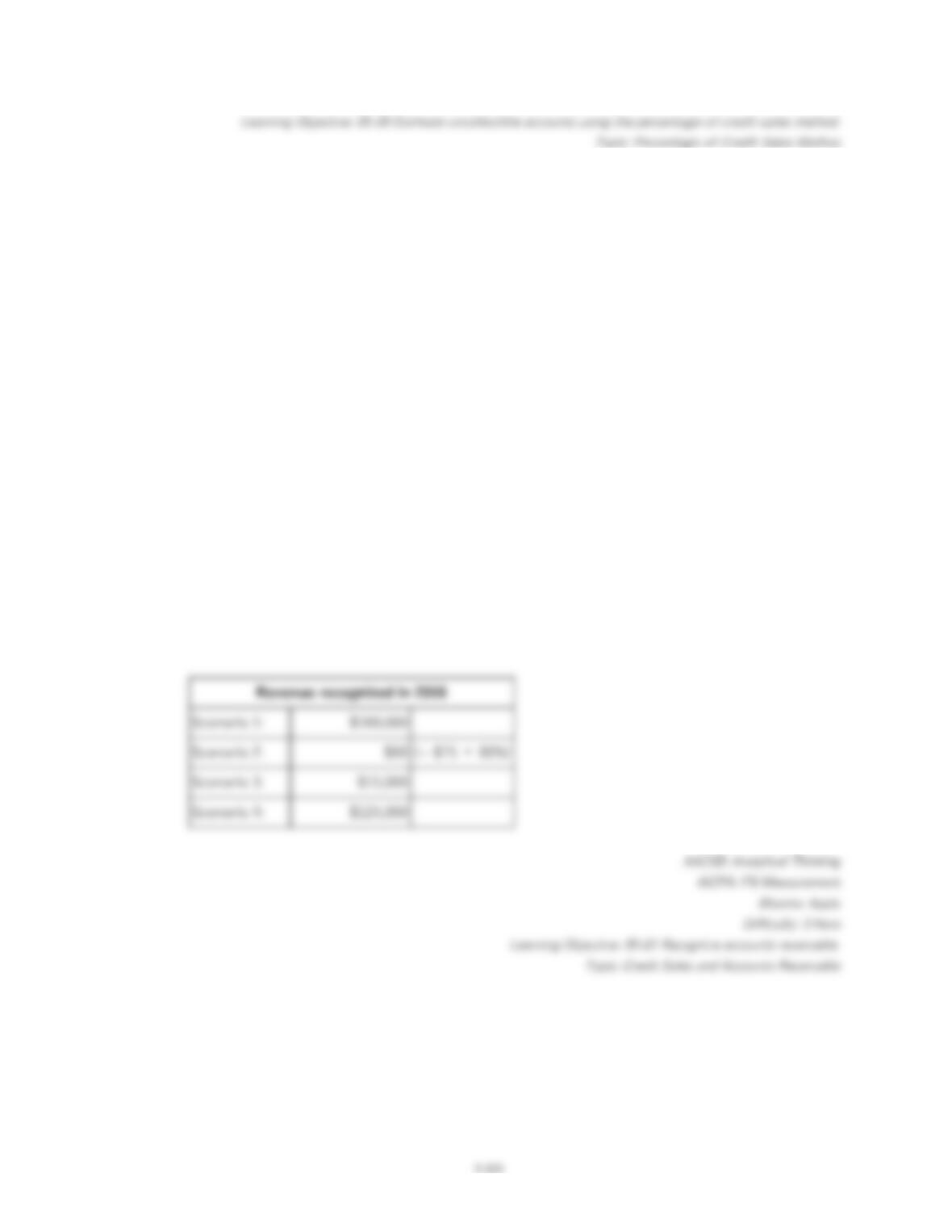
Assume the following scenarios.
Scenario 1. During 2018, Makers Consulting provides services of $100,000. The company
receives an initial payment of $75,000 with the balance to be received the following year.
Scenario 2. People-R-Us typically charges $75 for a one-year subscription. On January 1,
2018, Georgette, age 72, purchases a one-year subscription to the magazine and receives
a 20% senior citizen discount.
Scenario 3. During 2018, Waste Control provides services on account for $15,000. The
customer pays for those services in 2019.
Scenario 4. During 2018, Tasty Foods sells grocery items to one of its customers for
$125,000 on account. Cash collections on those sales are $80,000 in 2018 and $30,000 in
2019. The remaining $15,000 is written off as uncollectible in 2019.
Required:
For each scenario, calculate the amount of revenue to be recognized in 2018.
221.
Recovery Experts (RE) specializes in data recovery from crashed hard drives. The price
charged varies based on the extent of damage and the amount of data being recovered.
RE offers a 10% discount to students and faculty at educational institutions. Consider the
following transactions during the month of June.
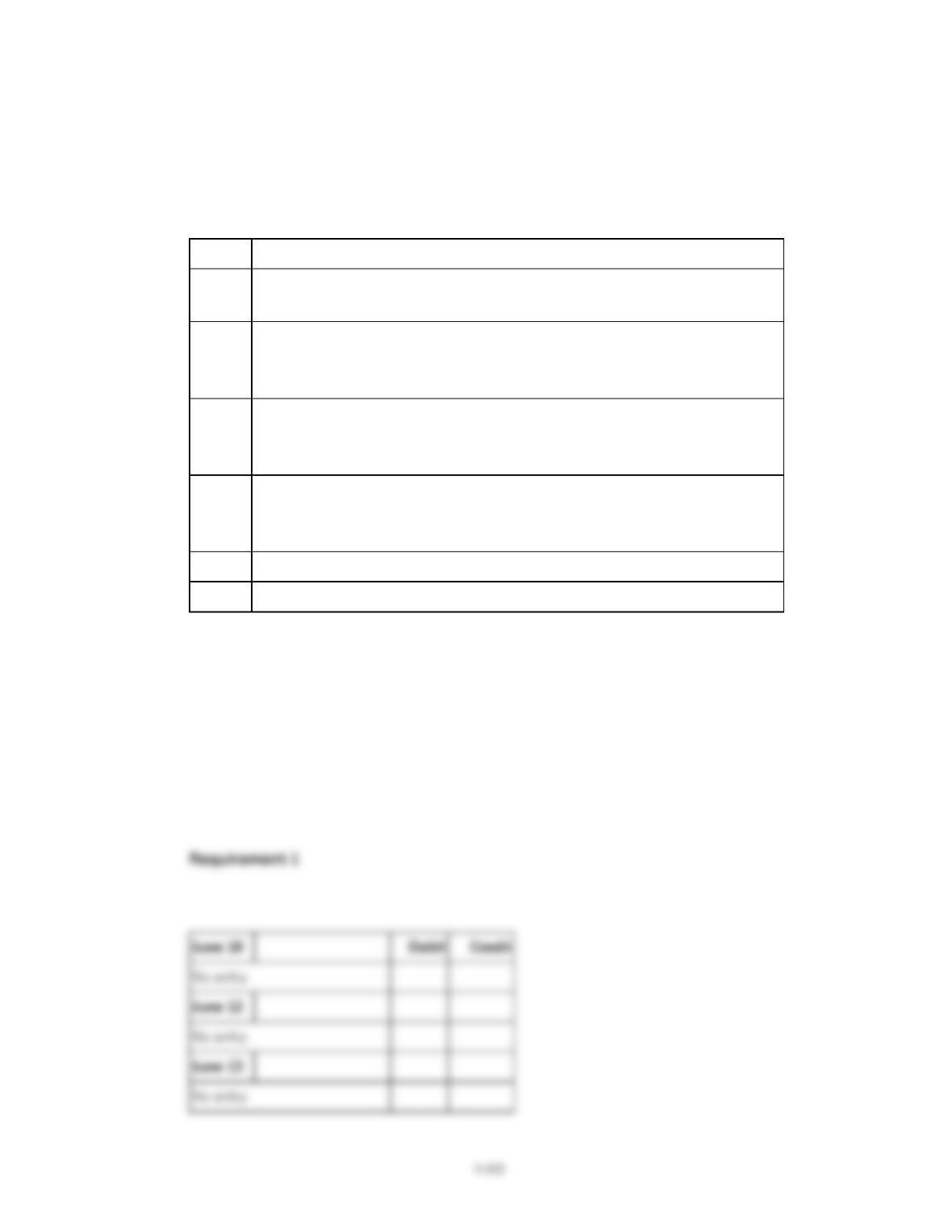
June 10
Luke’s hard drive crashes and he sends it to RE.
June 12
After initial evaluation, RE e-mails Luke to let him know that full data recovery
will cost $1,600.
June 13
Luke informs RE that he would like them to recover the data and that he is a
student at USC, qualifying him for a 10% educational discount and reducing the
cost by $160 ($1,600 × 10%).
June 16
RE performs the work and claims to be successful in recovering all data. RE asks
Luke to pay within 30 days of today’s date, offering a 5% discount for payment
within 10 days.
June 19
When Luke receives the hard drive, he notices that RE did not successfully
recover all data. Approximately 25% of the data has not been recovered and he
informs RE.
June 20
RE reduces the amount Luke owes by 25%.
June 30
Luke pays the amount owed.
Required:
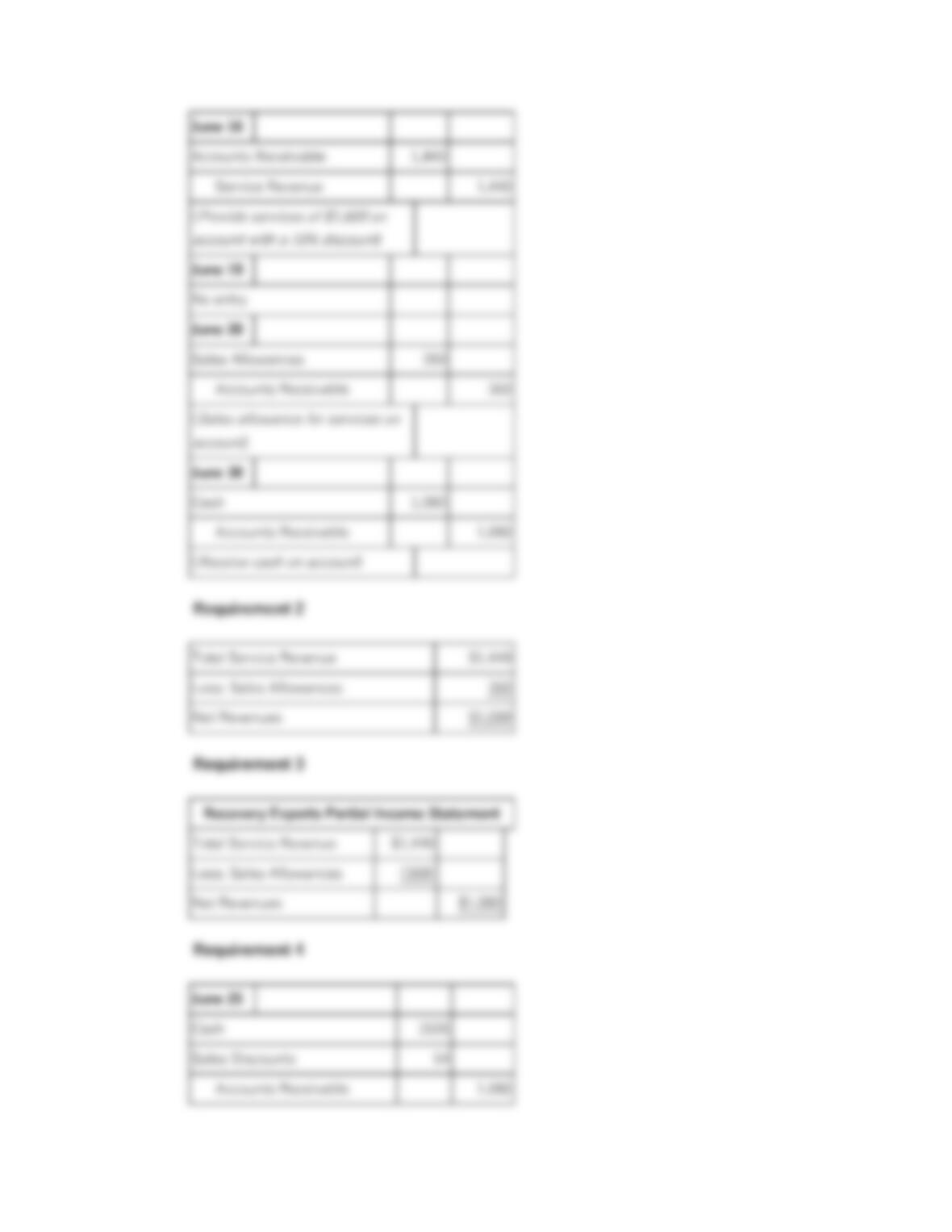
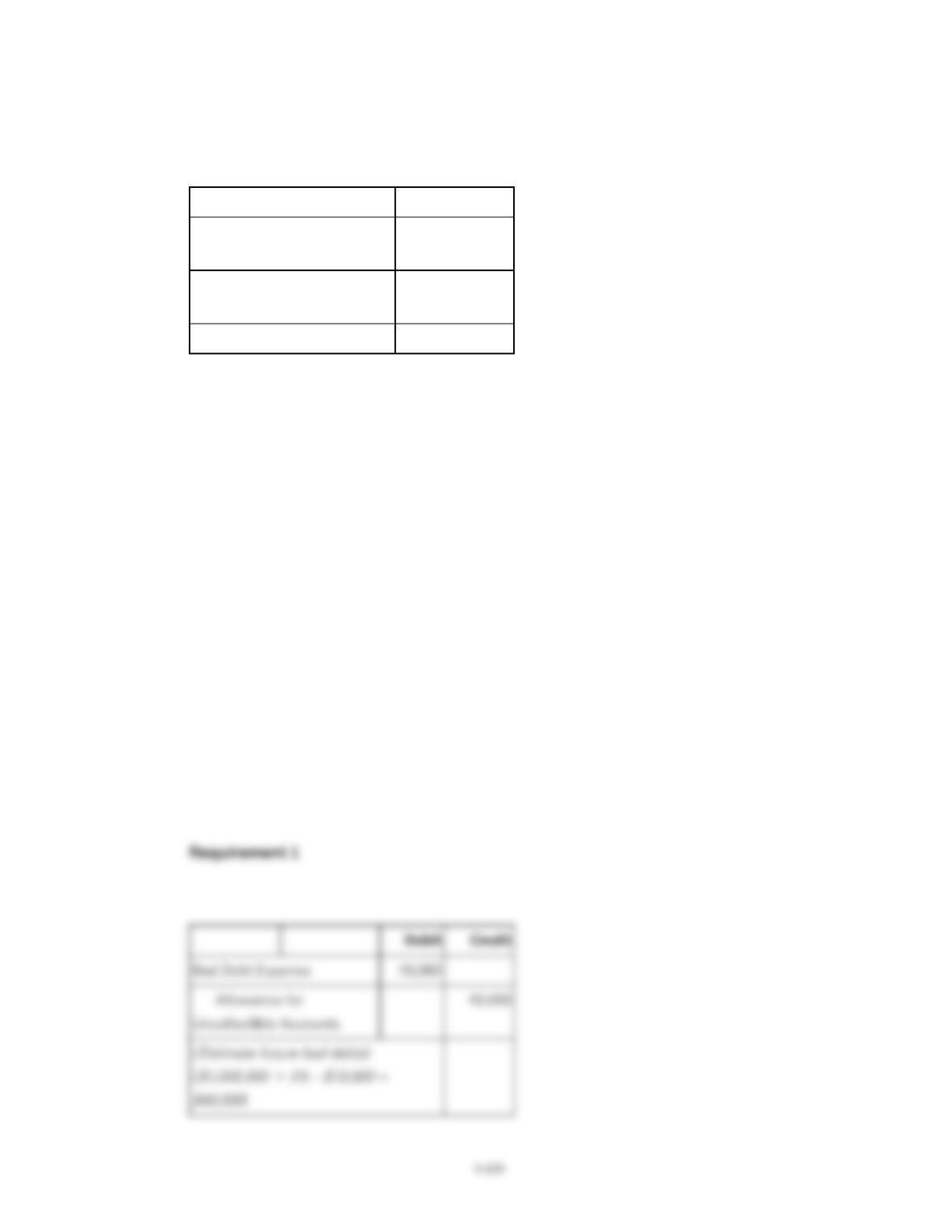
1. Record the necessary transactions(s) for Recovery Experts on each date.
2. Calculate net revenues.
3. Show how net revenues would be presented in the income statement.
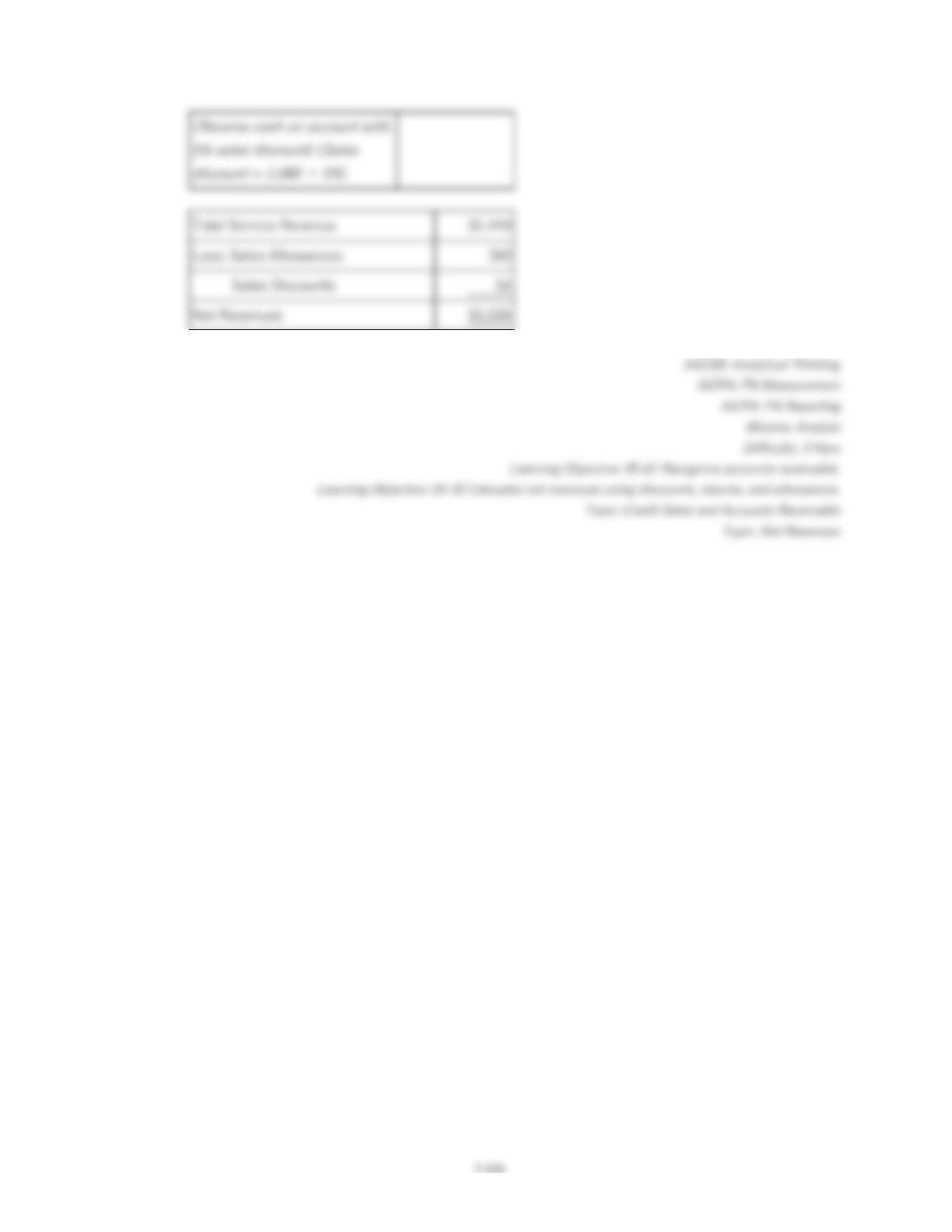
4. Calculate net revenues if Luke had paid his bill on June 25.
No entry
No entry
5-123
222.
Tatsuo is the CEO of Ginjo Gallery. At the end of the year, the company’s accountant
provides Tatsuo with the following information, before any adjusting entries.
Accounts receivable
$1,000,000
Estimated percentage
uncollectible
5%
Allowance for uncollectible
accounts
$10,000 (credit)
Operating income
$240,000
Tatsuo has significant stock ownership in the company and therefore would like to keep
the stock price high. Analysts on Wall Street expect the company to have operating income
of $170,000. The fact that actual operating income is well-above this amount will make
investors happy and help maintain a high stock price. Meeting analysts’ expectations will
also help Tatsuo keep his job.
Required:
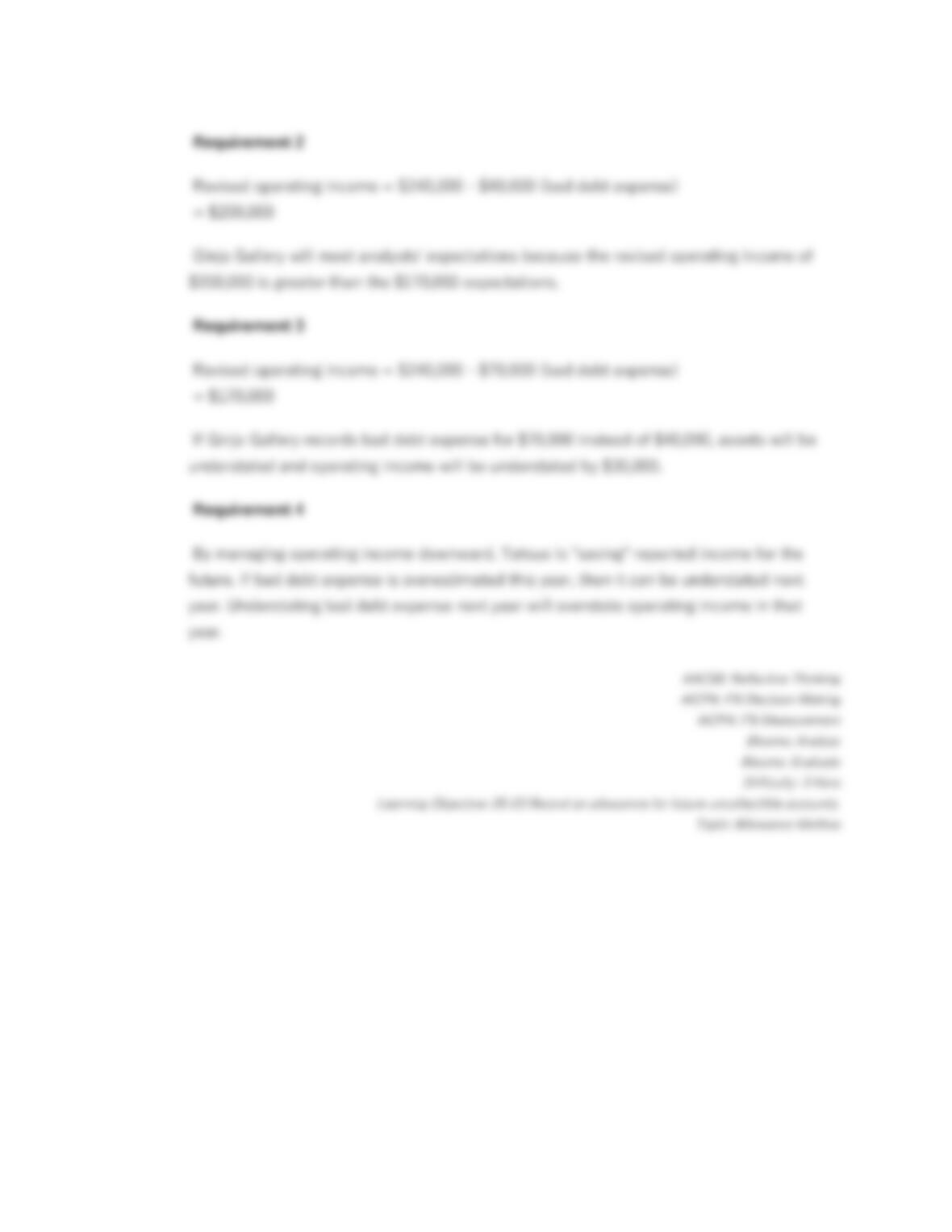
1. Record the adjustment for uncollectible accounts using the accountant’s estimate of
5% of accounts receivable.
2. After the adjustment is recorded in
Requirement 1
, what is the revised amount of
operating income? Will Ginjo Gallery still meet analysts‘ expectations?
3. Tatsuo instructs the accountant to instead record $70,000 as bad debt expense so that
operating income will exactly meet analysts’ expectations. By how much would total
assets and operating income be misstated if the accountant records this amount?
4. Why would Wanda be motivated to manage operating income in this way?
Allowance for
Uncollectible Accounts
5-126
223.
The following events occur for Wortham Landscape Design during 2018 and 2019, its first
two years of operations.
February 2, 2018
Provide services to customers on account for $26,000.
July 23, 2018
Receive $20,000 from customers on account.
December 31, 2018
Estimate that 10% of uncollected accounts will not be received.
April 12, 2019
Provide services to customers on account for $40,000.
June 28, 2019
Receive $5,000 from customers for services provided in 2018.
September 13, 2019
Write off the remaining amounts owed from services provided in 2018.
October 5, 2019
Receive $33,000 from customers for services provided in 2019.
December 31, 2019
Estimate that 10% of uncollected accounts will not be received.
Required:
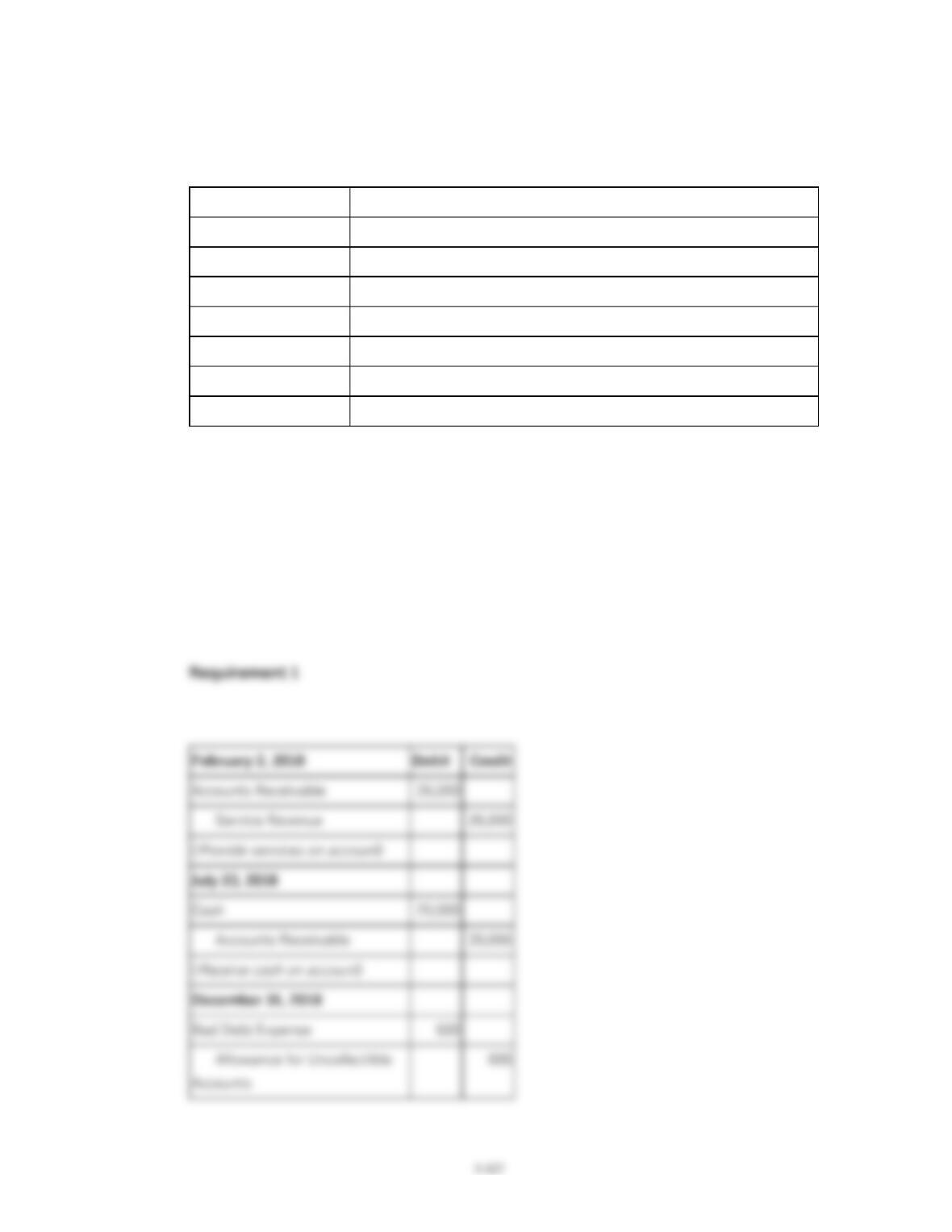
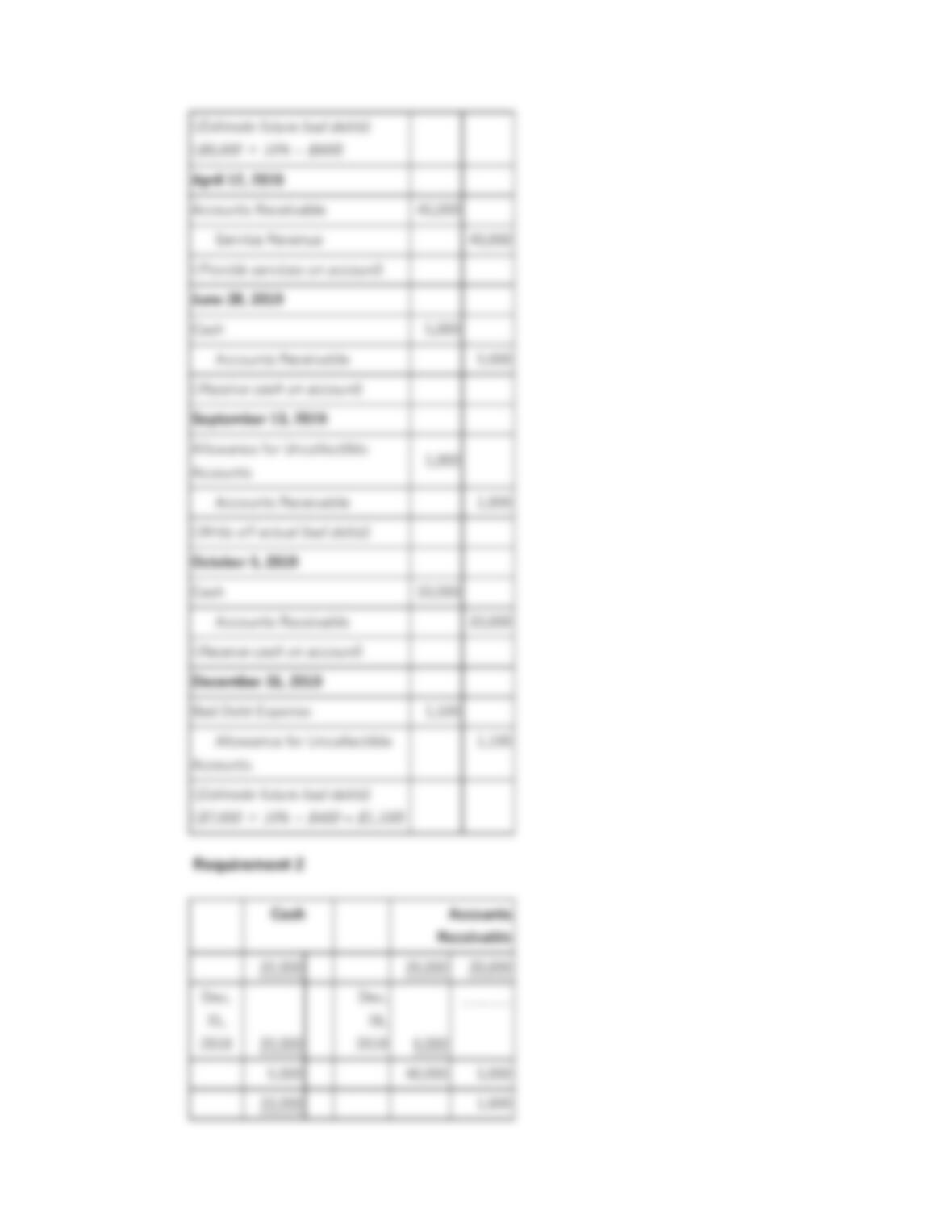
1. Record transactions for each date.
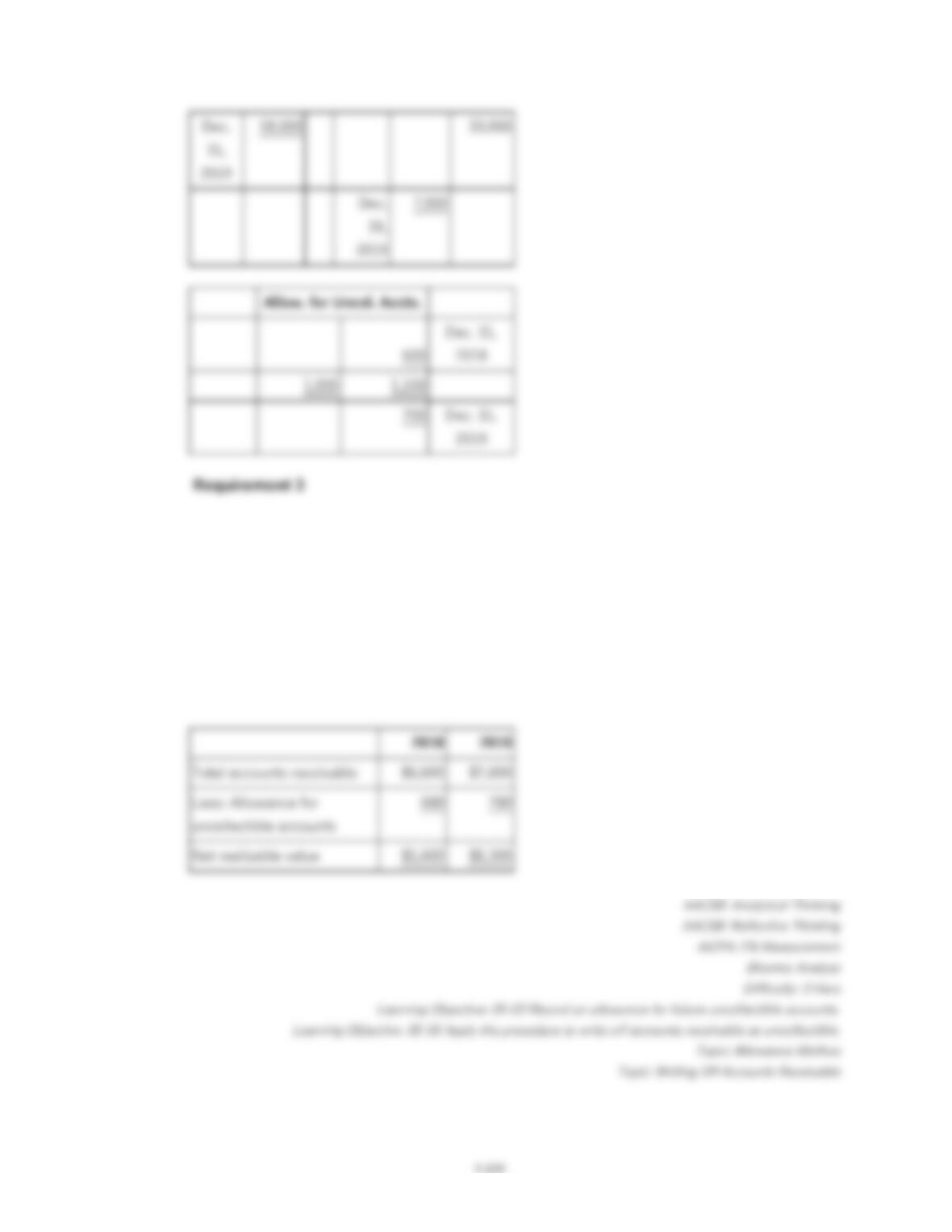
2. Post transactions to the following accounts: Cash, Accounts Receivable, and Allowance
for Uncollectible Accounts.
3. Calculate the net realizable value of accounts receivable at the end of 2018 and 2019.
Accounts Receivable
Service Revenue
(
Accounts Receivable
(
Bad Debt Expense
5-128
5-130
224.
By the end of its first year of operations, Gallen Corporation has credit sales of $580,000
and accounts receivable of $200,000. Given it’s the first year of operations, Gallen’s
management is unsure how much allowance for uncollectible accounts it should establish.
One of the company’s competitors, which has been in the same industry for an extended
period, estimates uncollectible accounts to be 3% of ending accounts receivable, so Gallen
decides to use that same amount. However, actual write-offs in the following year were
10% of the $200,000 ($20,000). Gallen’s inexperience in the industry led to making sales to
high credit risk customers.
Required:
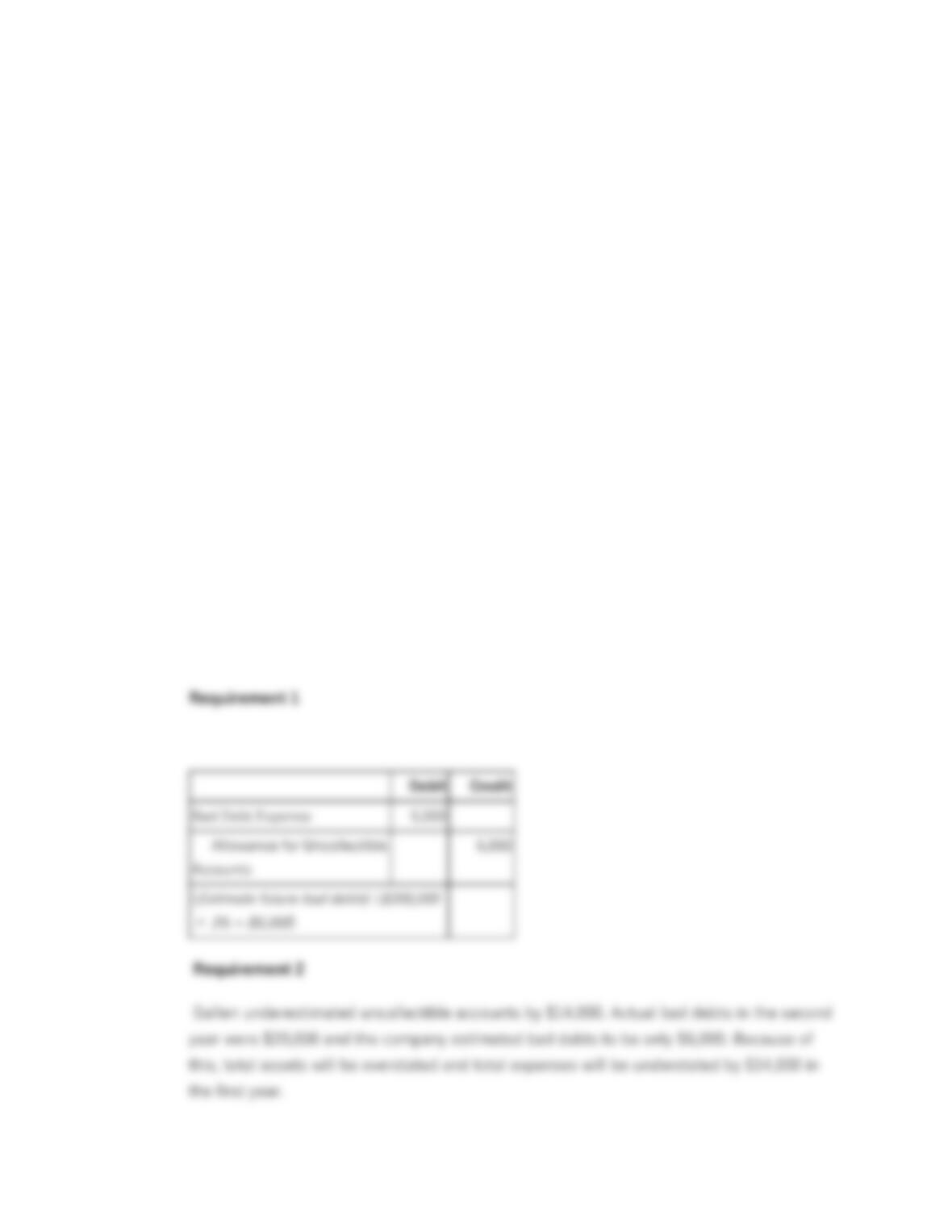
1. Record the adjustment for uncollectible accounts at the end of the first year of
operations using the 3% estimate of accounts receivable.
2. By the end of the second year, Gallen has the benefit of hindsight to know that
estimates of uncollectible accounts in the first year were too low. By how much did Gallen
underestimate uncollectible accounts in the first year? How did this underestimation
affect the reported amounts of total assets and expenses at the end of the first year?
Ignore tax effects.
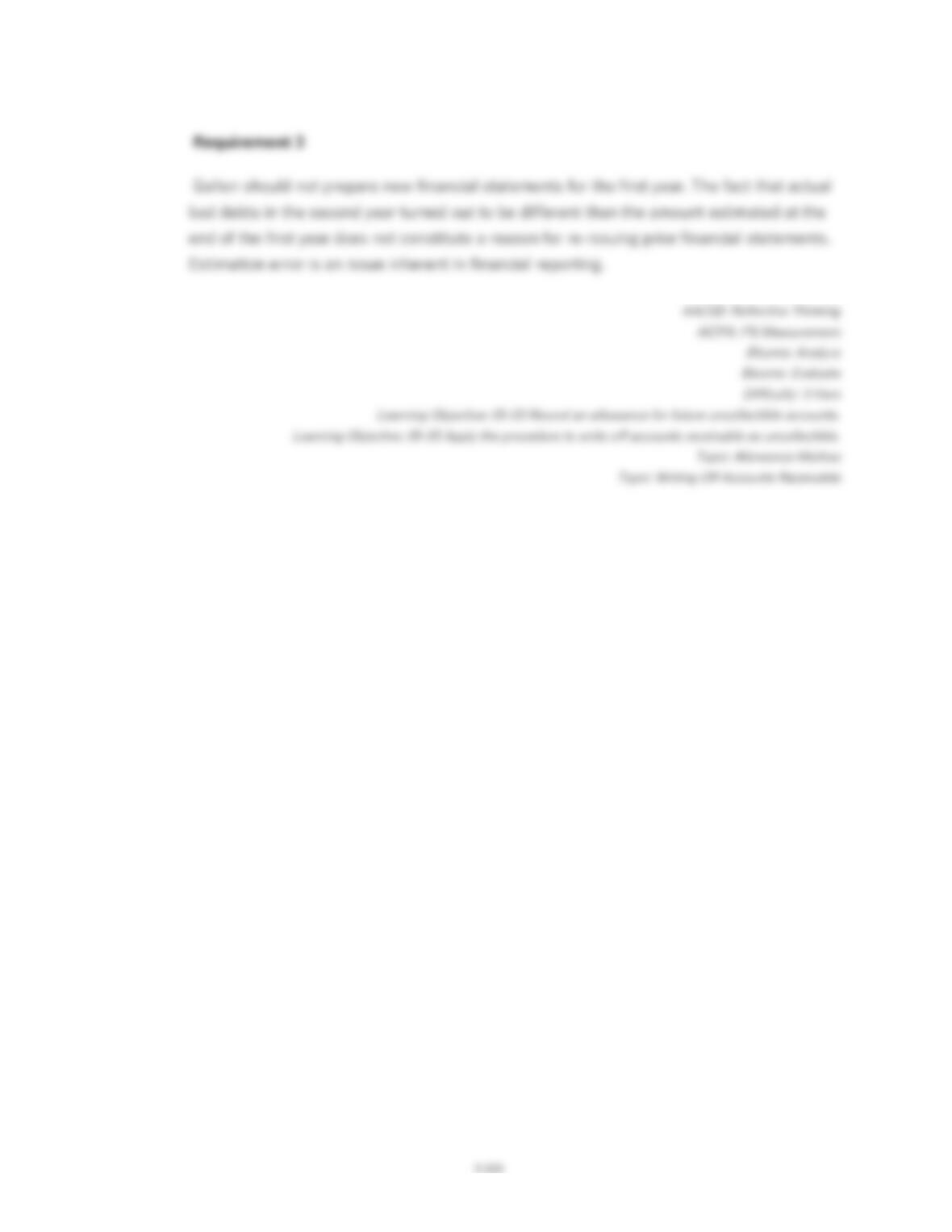
3. Should Gallen prepare new financial statements for the first year of operations to show
the correct amount of uncollectible accounts? Explain.

5-132
225.
Power Corporation engages in the manufacture and sale of equipment related to
alternative sources of energy. During the past year, operating revenues remained relatively
flat compared to the prior year but management notices a big increase in accounts
receivable. The increase in receivables is largely due to the recent economic slowdown in
the commodities market. Many of the company’s customers are having financial difficulty,
lengthening the period of time it takes to collect on account. Below are year-end amounts.
Age
Group
Operating
Revenue
Accounts
Receivable
Average
Age
Accounts
Written
Off
Two
years
ago
$2,300,000
$80,000
13 days
$10,000
Last
year
3,100,000
100,000
11 days
15,000
Current
year
3,000,000
350,000
27 days
0
Peter, the CEO of Power, notices that accounts written off over the past three years have
been minimal and therefore suggests that no allowance for uncollectible accounts be
established in the current year. Any account proving uncollectible can be charged to next
year’s financial statements (the direct write-off method).
Required:
1. Do you agree with Peter’s reasoning? Explain.
2. Suppose that other companies in these industries had similar increasing trends in
accounts receivable aging. These companies also had very successful collections in the
past but now estimate uncollectible accounts to be 30% because of the significant
downturn in the industries. If Power uses the allowance method estimated at 30% of
accounts receivable, what should be the balance of the allowance for uncollectible
accounts at the end of the current year?
3. Based on your answer in
Requirement 2
, for what amount will total assets and
expenses be misstated in the current year if Power uses the direct write-off method?
Ignore tax effects.