
Ch.5 PolynomialandRationalFunctions
5.1 PolynomialFunctionsandModels
1 IdentifyPolynomialFunctionsandTheirDegree
MULTIPLECHOICE.Choosetheonealternativethatbestcompletesthestatementoranswersthequestion.
Statewhetherthefunctionisapolynomialfunctionornot.Ifitis,giveitsdegree.Ifitisnot,tellwhynot.
1) f(x)=3x+4x2
A) Yes;degree2 B) Yes;degree1 C) Yes;degree4 D) Yes;degree3
2) f(x)=–9x3+2x2+7
A) Yes;degree3 B) Yes;degree5
C) Yes;degree6 D) No;thelasttermhasnovariable
3) f(x)=8–x4
9
A) Yes;degree4 B) Yes;degree1
C) No;itisaratio D) No;xisanegativeterm
4) f(x)=5
7
–1
4x
A) Yes;degree1 B) Yes;degree4
C) Yes;degree0 D) No;xhasafractionalcoefficient
5) f(x)=8
A) Yes;degree0 B) No;itisaconstant
C) No;itcontainsnovariables D) Yes;degree1
6) f(x)=1+9
x
A) No;xisraisedtoanegativepower B) Yes;degree0
C) Yes;degree9 D) Yes;degree1
7) f(x)=x(x–11)
A) Yes;degree2 B) Yes;degree0
C) No;itisaproduct D) Yes;degree1
8) f(x)=8–3
x2
A) No;xisraisedtothenegative2 power B) Yes;degree2
C) Yes;degree–2 D) Yes;degree1
2
9) f(x)=x2–2
x4
A) No;itisaratioofpolynomials B) Yes;degree2
C) Yes;degree4 D) Yes;degree–4
Page1
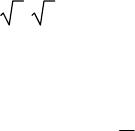
10) f(x)=x4
/
3–x3+5
A) No;xisraisedtonon–integer4
/
3 power B) Yes;degree3
C) Yes;degree4
/
3 D) Yes;degree4
11) 5(x–1)12(x+1)3
A) Yes;degree15 B) Yes;degree12 C) Yes;degree60 D) Yes;degree5
12) f(x)=x(x–9)
A) No;xisraisedtonon–integerpower B) Yes;degree1
C) Yes;degree2 D) No;itisaproduct
13) f(x)=11x5+πx4+4
7
A) Yes;degree5 B) Yes;degree9
C) Yes;degree10 D) No;x4hasanon–integercoefficient
Page2
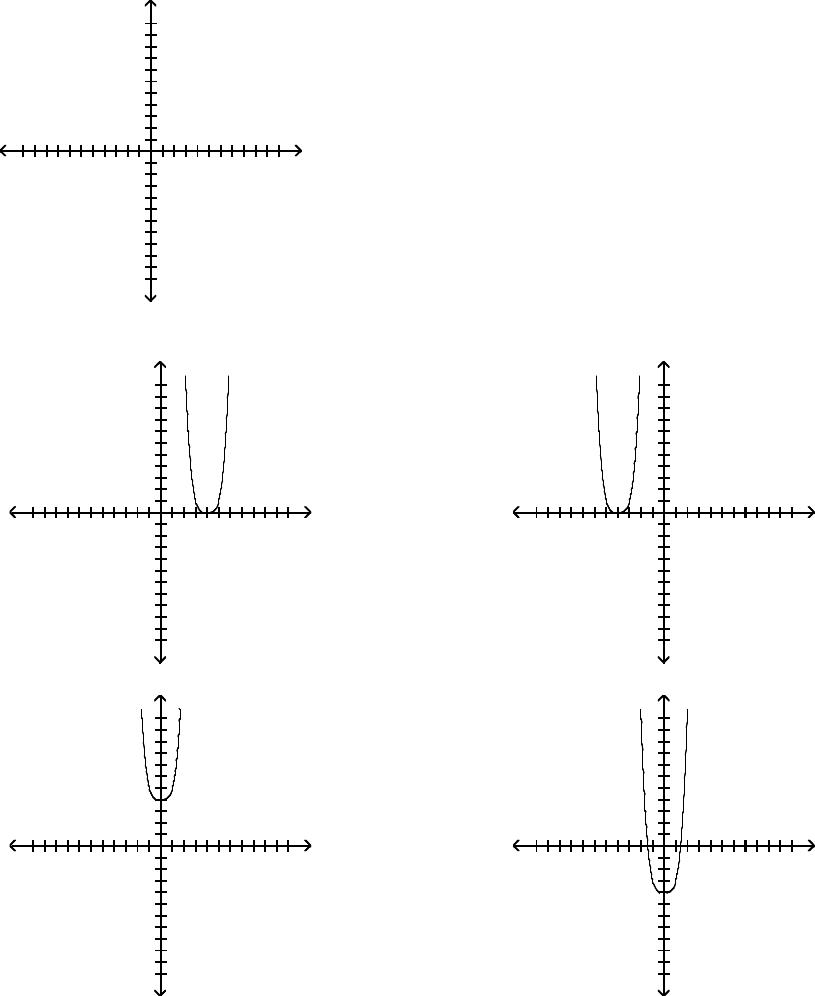
2 GraphPolynomialFunctionsUsingTransformations
MULTIPLECHOICE.Choosetheonealternativethatbestcompletesthestatementoranswersthequestion.
Usetransformationsofthegraphofy=x4ory=x5tographthefunction.
1) f(x)=(x–4)4
x
-10 -5 5 10
y
10
5
-5
-10
x
-10 -5 5 10
y
10
5
-5
-10
A)
x
-10 -5 5 10
y
10
5
-5
-10
x
-10 -5 5 10
y
10
5
-5
-10
B)
x
-10 -5 5 10
y
10
5
-5
-10
x
-10 -5 5 10
y
10
5
-5
-10
C)
x
-10 -5 5 10
y
10
5
-5
-10
x
-10 -5 5 10
y
10
5
-5
-10
D)
x
-10 -5 5 10
y
10
5
-5
-10
x
-10 -5 5 10
y
10
5
-5
-10
Page3
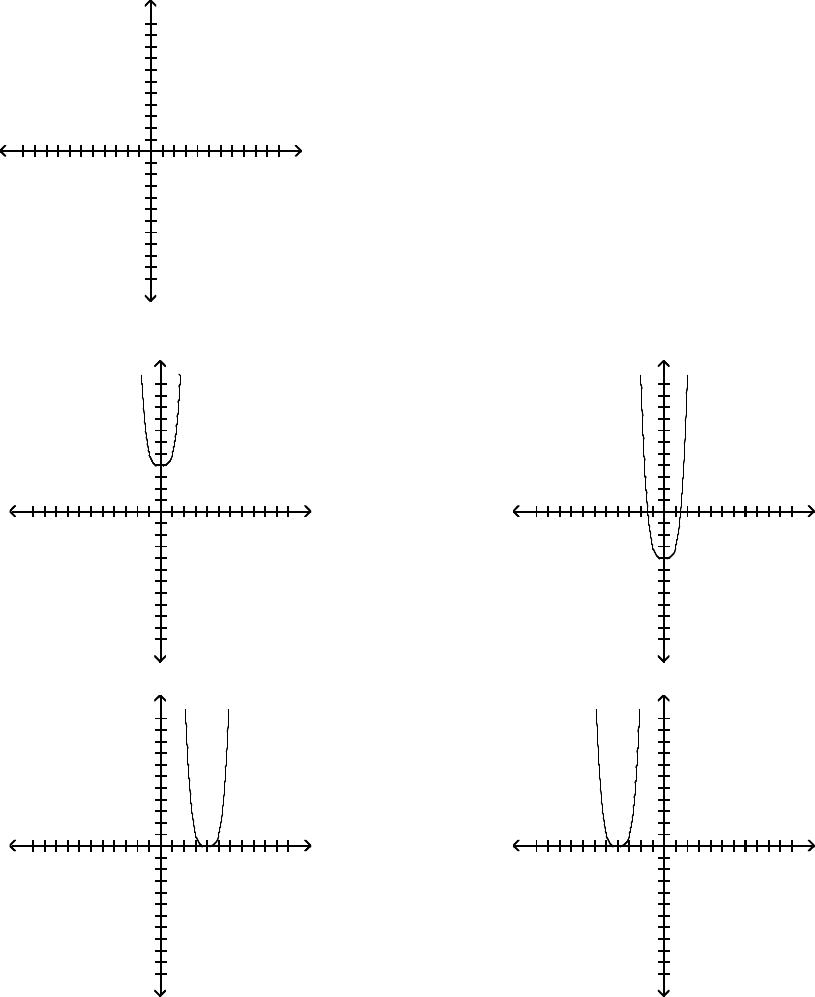
2) f(x)=x4+4
x
-10 -5 5 10
y
10
5
-5
-10
x
-10 -5 5 10
y
10
5
-5
-10
A)
x
-10 -5 5 10
y
10
5
-5
-10
x
-10 -5 5 10
y
10
5
-5
-10
B)
x
-10 -5 5 10
y
10
5
-5
-10
x
-10 -5 5 10
y
10
5
-5
-10
C)
x
-10 -5 5 10
y
10
5
-5
-10
x
-10 -5 5 10
y
10
5
-5
-10
D)
x
-10 -5 5 10
y
10
5
-5
-10
x
-10 -5 5 10
y
10
5
-5
-10
Page4
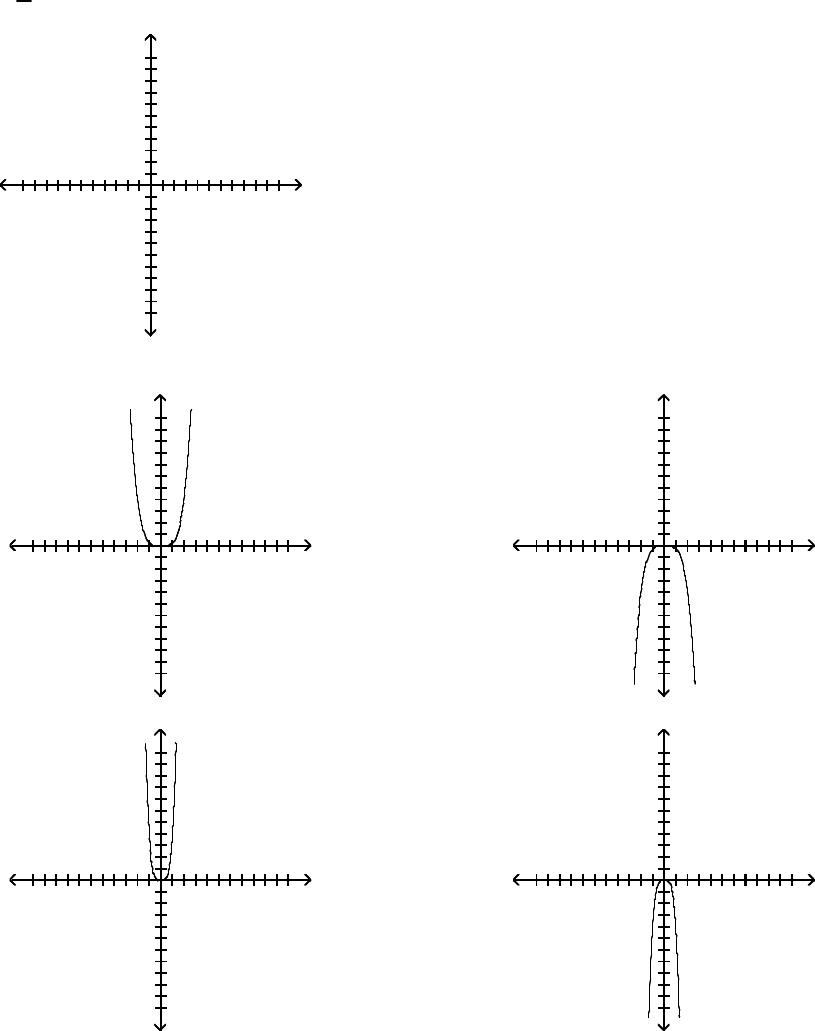
3) f(x)=1
4x4
x
-10 -5 5 10
y
10
5
-5
-10
x
-10 -5 5 10
y
10
5
-5
-10
A)
x
-10 -5 5 10
y
10
5
-5
-10
x
-10 -5 5 10
y
10
5
-5
-10
B)
x
-10 -5 5 10
y
10
5
-5
-10
x
-10 -5 5 10
y
10
5
-5
-10
C)
x
-10 -5 5 10
y
10
5
-5
-10
x
-10 -5 5 10
y
10
5
-5
-10
D)
x
-10 -5 5 10
y
10
5
-5
-10
x
-10 -5 5 10
y
10
5
-5
-10
Page5
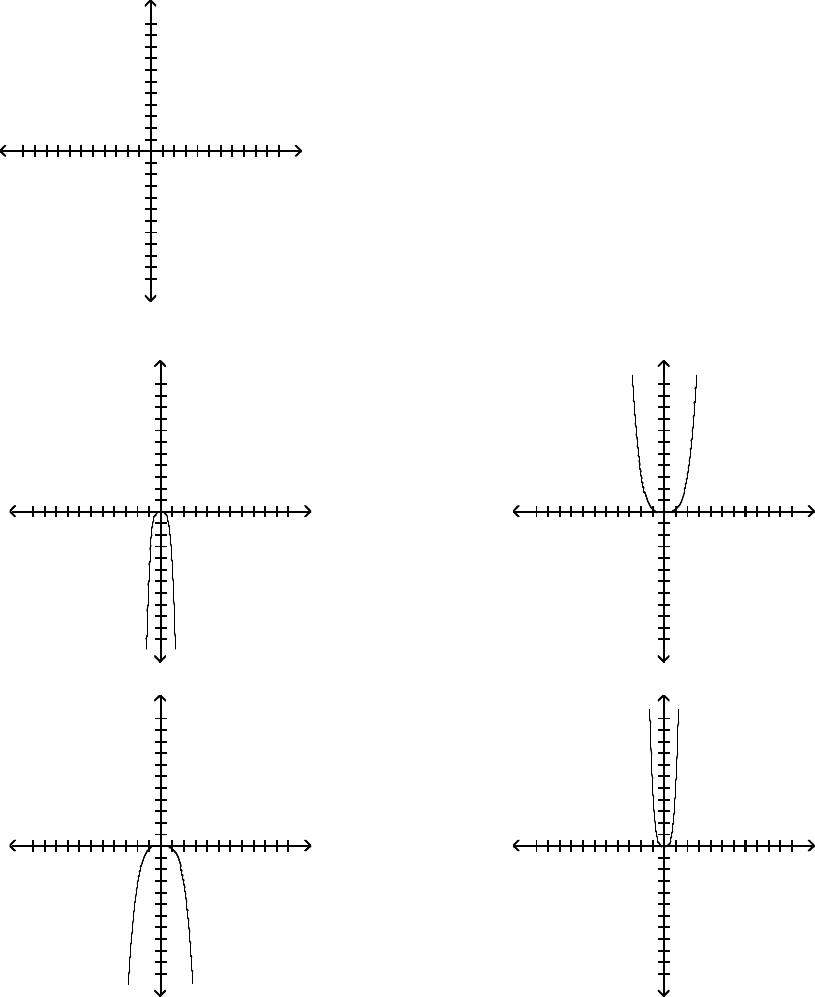
4) f(x)=–5x4
x
-10 -5 5 10
y
10
5
-5
-10
x
-10 -5 5 10
y
10
5
-5
-10
A)
x
-10 -5 5 10
y
10
5
-5
-10
x
-10 -5 5 10
y
10
5
-5
-10
B)
x
-10 -5 5 10
y
10
5
-5
-10
x
-10 -5 5 10
y
10
5
-5
-10
C)
x
-10 -5 5 10
y
10
5
-5
-10
x
-10 -5 5 10
y
10
5
-5
-10
D)
x
-10 -5 5 10
y
10
5
-5
-10
x
-10 -5 5 10
y
10
5
-5
-10
Page6
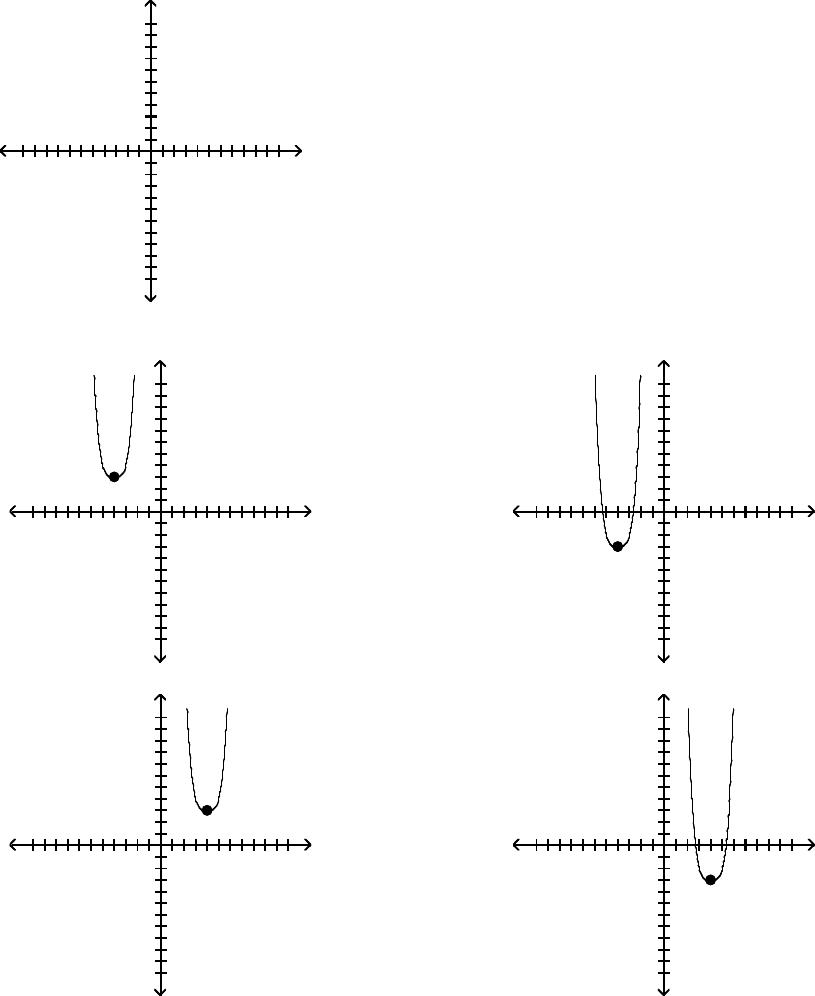
5) f(x)=(x+4)4+3
x
-10 -5 5 10
y
10
5
-5
-10
x
-10 -5 5 10
y
10
5
-5
-10
A)
x
-10 -5 5 10
y
10
5
-5
-10
x
-10 -5 5 10
y
10
5
-5
-10
B)
x
-10 -5 5 10
y
10
5
-5
-10
x
-10 -5 5 10
y
10
5
-5
-10
C)
x
-10 -5 5 10
y
10
5
-5
-10
x
-10 -5 5 10
y
10
5
-5
-10
D)
x
-10 -5 5 10
y
10
5
-5
-10
x
-10 -5 5 10
y
10
5
-5
-10
Page7
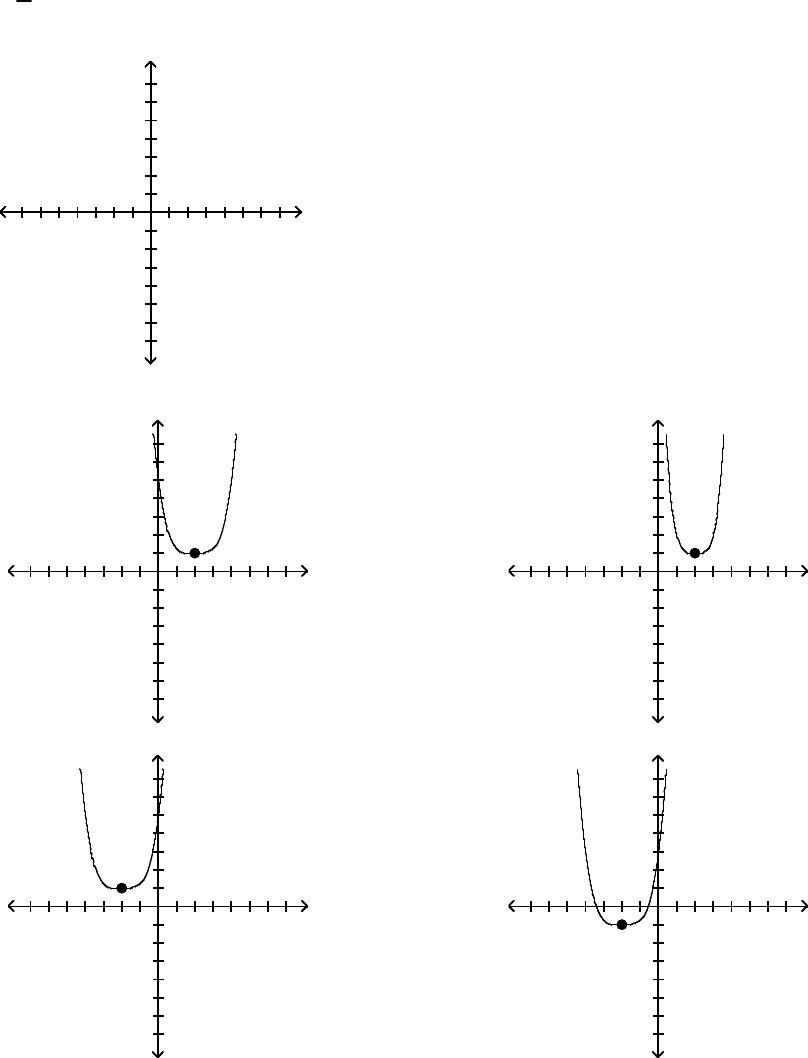
6) f(x)=1
2(x–2)4+2
x
-5 5
y
10
-10
x
-5 5
y
10
-10
A)
x
-5 5
y
10
-10
x
-5 5
y
10
-10
B)
x
-5 5
y
10
-10
x
-5 5
y
10
-10
C)
x
-5 5
y
10
-10
x
-5 5
y
10
-10
D)
x
-5 5
y
10
-10
x
-5 5
y
10
-10
Page8
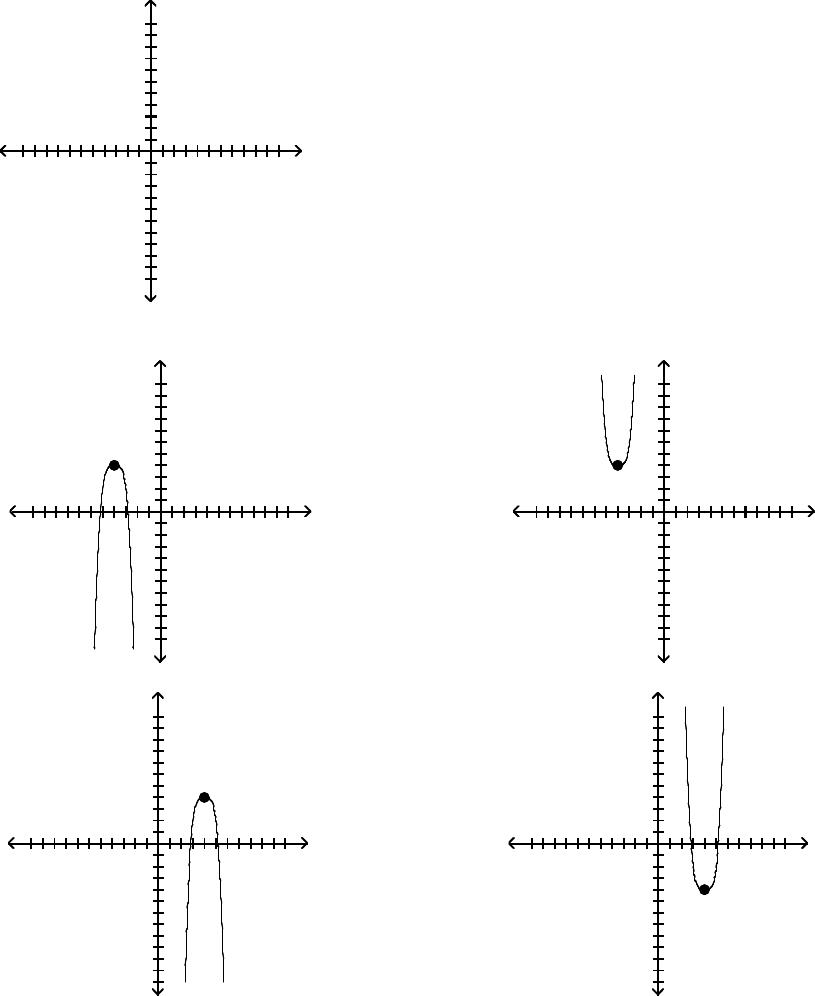
7) f(x)=–2(x+4)4+4
x
-10 -5 5 10
y
10
5
-5
-10
x
-10 -5 5 10
y
10
5
-5
-10
A)
x
-10 -5 5 10
y
10
5
-5
-10
x
-10 -5 5 10
y
10
5
-5
-10
B)
x
-10 -5 5 10
y
10
5
-5
-10
x
-10 -5 5 10
y
10
5
-5
-10
C)
x
-10 -5 5 10
y
10
5
-5
-10
x
-10 -5 5 10
y
10
5
-5
-10
D)
x
-10 -5 5 10
y
10
5
-5
-10
x
-10 -5 5 10
y
10
5
-5
-10
Page9
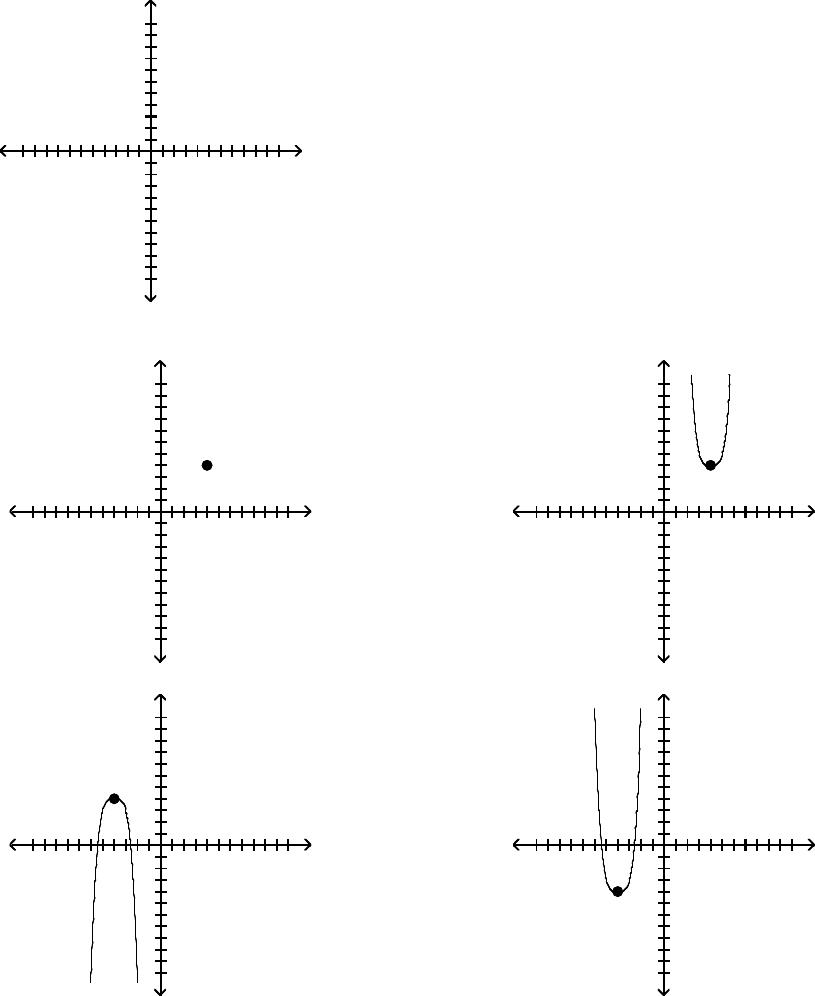
8) f(x)=4–(x–4)4
x
-10 -5 5 10
y
10
5
-5
-10
x
-10 -5 5 10
y
10
5
-5
-10
A)
x
-10 -5 5 10
y
10
5
-5
-10
x
-10 -5 5 10
y
10
5
-5
-10
B)
x
-10 -5 5 10
y
10
5
-5
-10
x
-10 -5 5 10
y
10
5
-5
-10
C)
x
-10 -5 5 10
y
10
5
-5
-10
x
-10 -5 5 10
y
10
5
-5
-10
D)
x
-10 -5 5 10
y
10
5
-5
-10
x
-10 -5 5 10
y
10
5
-5
-10
Page10
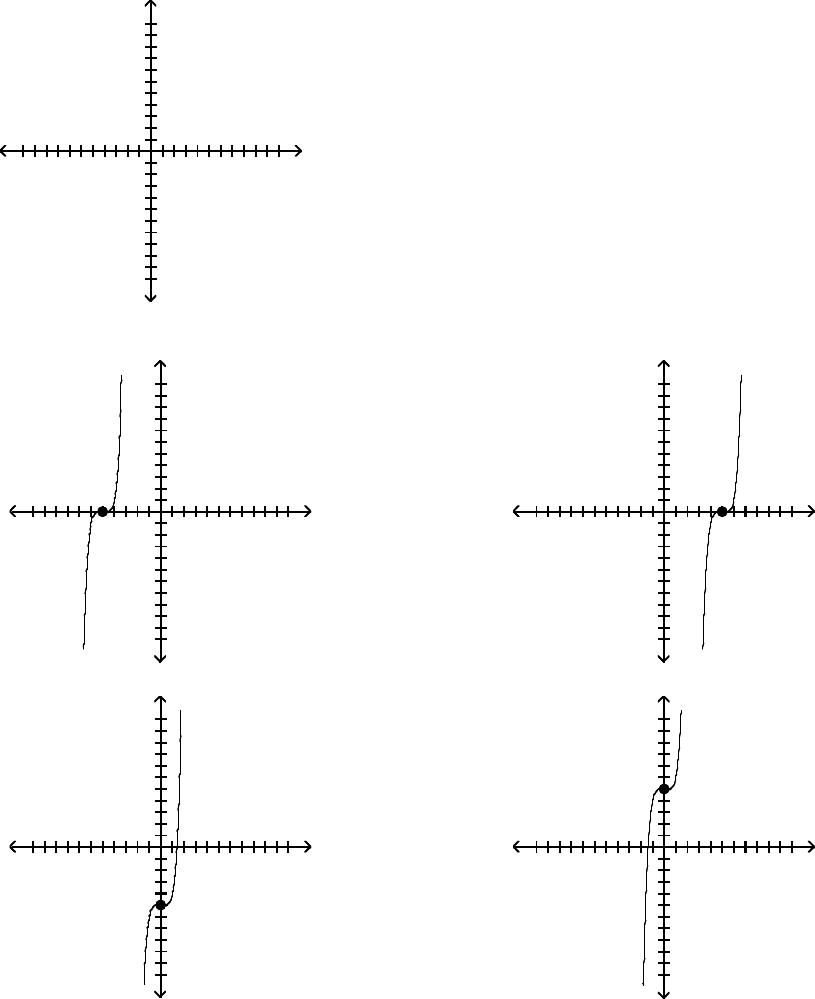
9) f(x)=(x+5)5
x
-10 -5 5 10
y
10
5
-5
-10
x
-10 -5 5 10
y
10
5
-5
-10
A)
x
-10 -5 5 10
y
10
5
-5
-10
x
-10 -5 5 10
y
10
5
-5
-10
B)
x
-10 -5 5 10
y
10
5
-5
-10
x
-10 -5 5 10
y
10
5
-5
-10
C)
x
-10 -5 5 10
y
10
5
-5
-10
x
-10 -5 5 10
y
10
5
-5
-10
D)
x
-10 -5 5 10
y
10
5
-5
-10
x
-10 -5 5 10
y
10
5
-5
-10
Page11
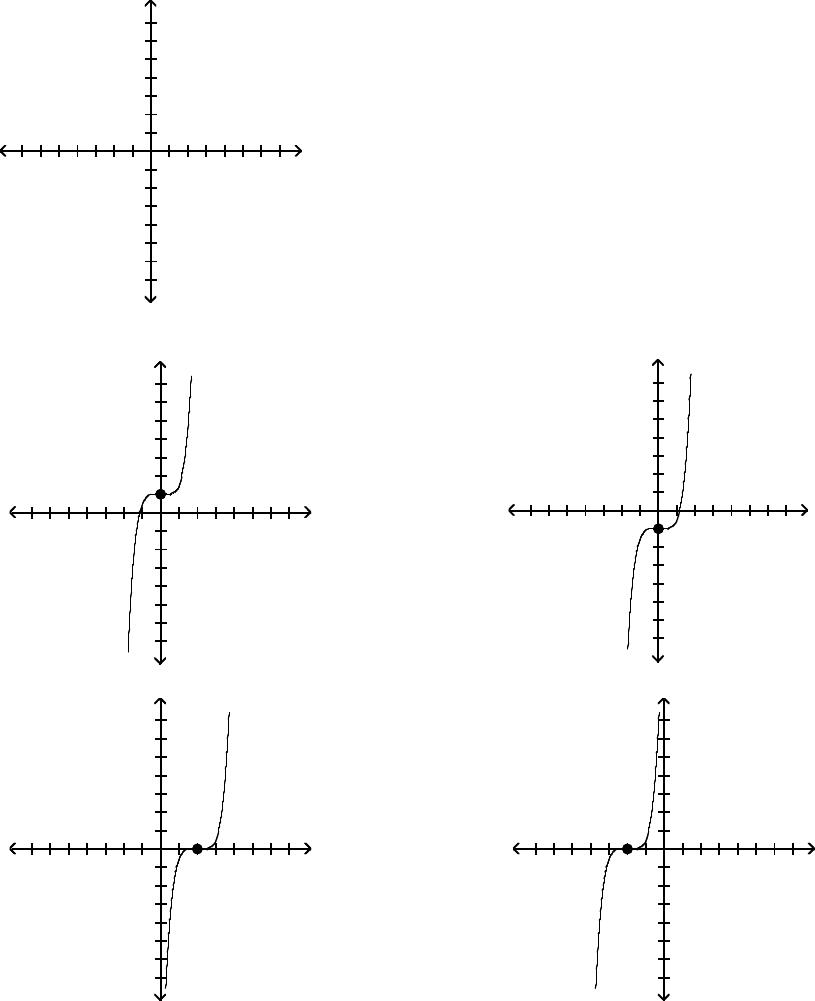
10) f(x)=x5+2
x
-5 5
y
10
-10
x
-5 5
y
10
-10
A)
x
-5 5
y
10
-10
x
-5 5
y
10
-10
B)
x
-5 5
y
10
-10
x
-5 5
y
10
-10
C)
x
-5 5
y
10
-10
x
-5 5
y
10
-10
D)
x
-5 5
y
10
-10
x
-5 5
y
10
-10
Page12
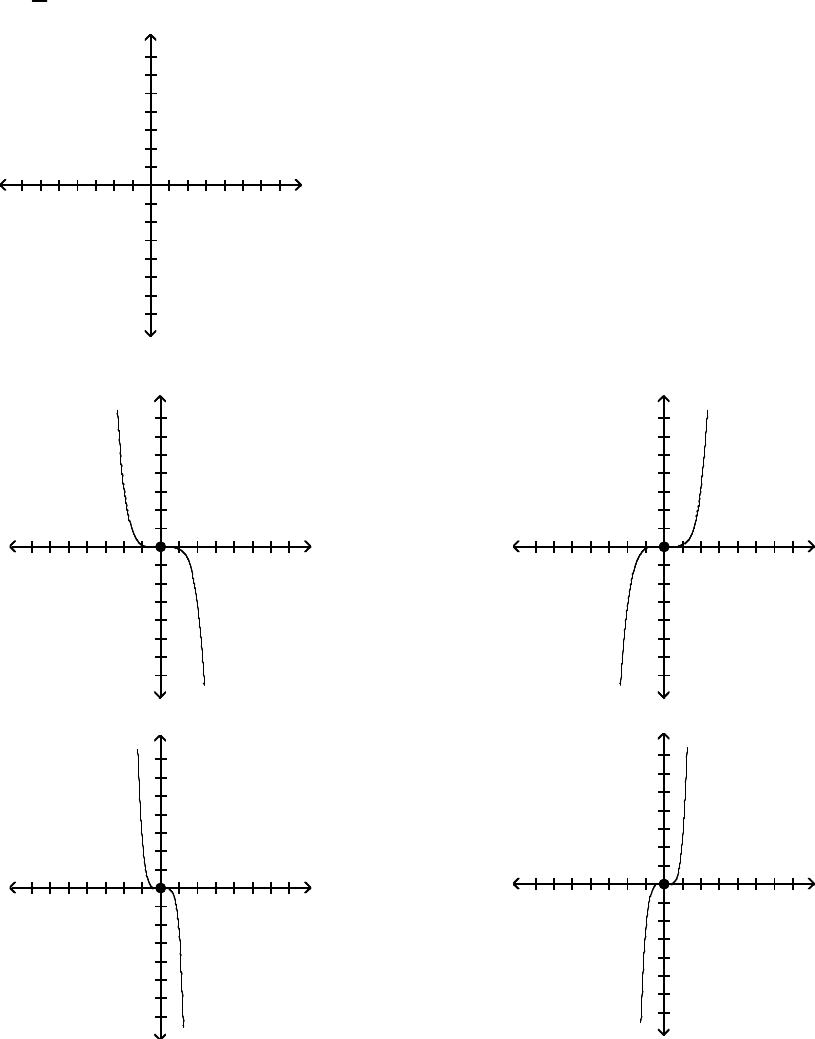
11) f(x)=–1
5x5
x
-5 5
y
10
-10
x
-5 5
y
10
-10
A)
x
-5 5
y
10
-10
x
-5 5
y
10
-10
B)
x
-5 5
y
10
-10
x
-5 5
y
10
-10
C)
x
-5 5
y
10
-10
x
-5 5
y
10
-10
D)
x
-5 5
y
10
-10
x
-5 5
y
10
-10
Page13
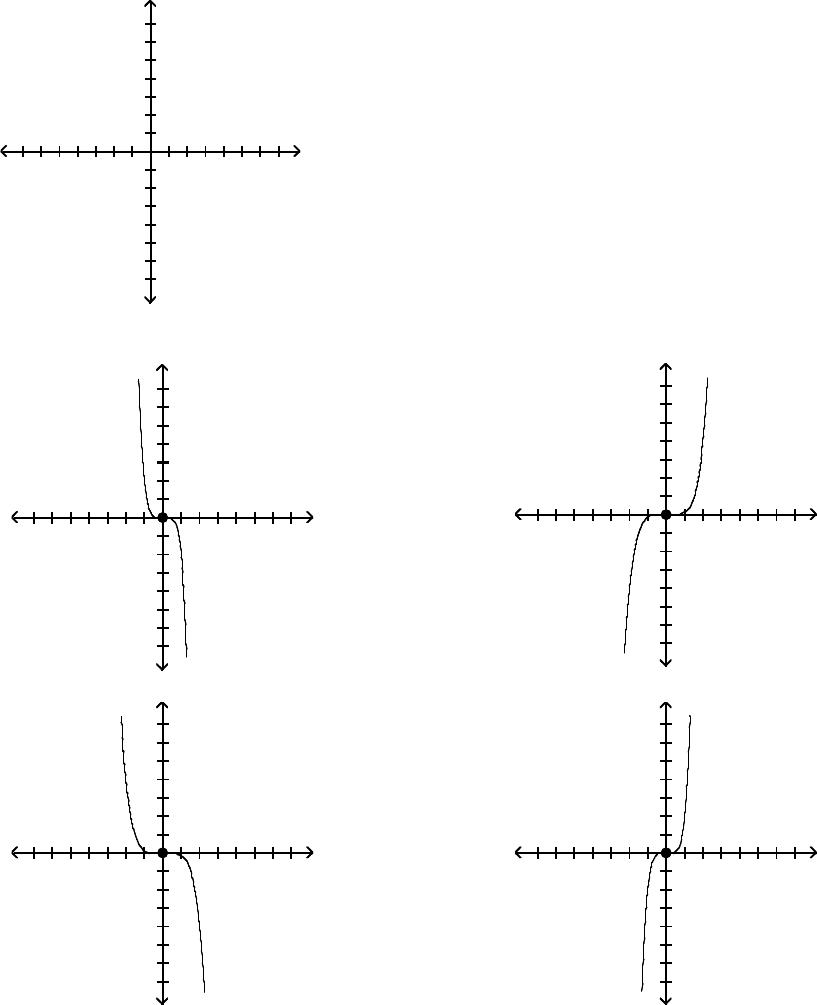
12) f(x)=–4x5
x
-5 5
y
10
-10
x
-5 5
y
10
-10
A)
x
-5 5
y
10
-10
x
-5 5
y
10
-10
B)
x
-5 5
y
10
-10
x
-5 5
y
10
-10
C)
x
-5 5
y
10
-10
x
-5 5
y
10
-10
D)
x
-5 5
y
10
-10
x
-5 5
y
10
-10
Page14
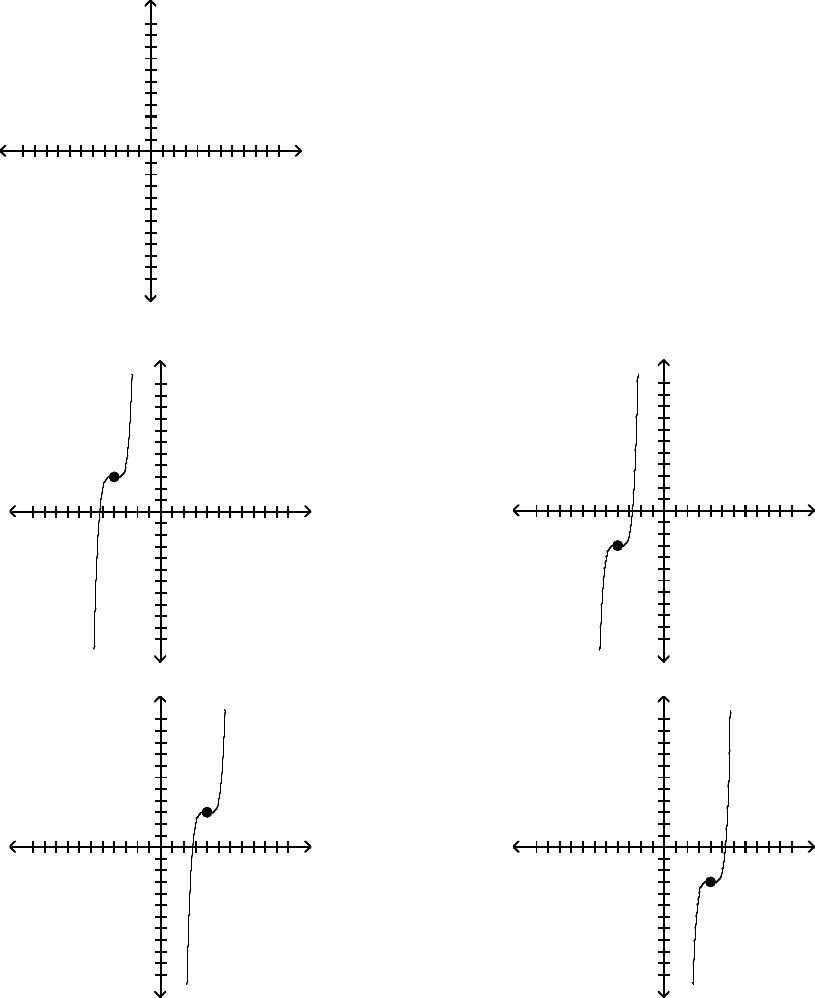
13) f(x)=(x+4)5+3
x
-10 -5 5 10
y
10
5
-5
-10
x
-10 -5 5 10
y
10
5
-5
-10
A)
x
-10 -5 5 10
y
10
5
-5
-10
x
-10 -5 5 10
y
10
5
-5
-10
B)
x
-10 -5 5 10
y
10
5
-5
-10
x
-10 -5 5 10
y
10
5
-5
-10
C)
x
-10 -5 5 10
y
10
5
-5
-10
x
-10 -5 5 10
y
10
5
-5
-10
D)
x
-10 -5 5 10
y
10
5
-5
-10
x
-10 -5 5 10
y
10
5
-5
-10
Page15
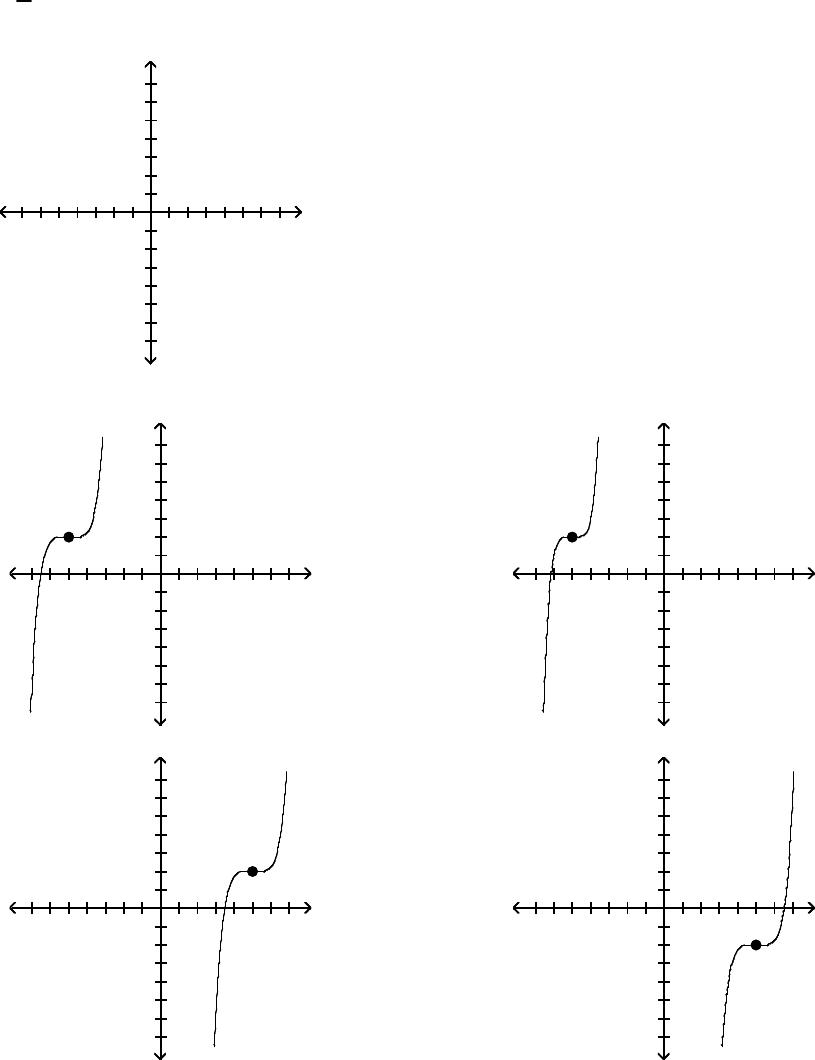
14) f(x)=1
2(x+5)5+4
x
-5 5
y
10
-10
x
-5 5
y
10
-10
A)
x
-5 5
y
10
-10
x
-5 5
y
10
-10
B)
x
-5 5
y
10
-10
x
-5 5
y
10
-10
C)
x
-5 5
y
10
-10
x
-5 5
y
10
-10
D)
x
-5 5
y
10
-10
x
-5 5
y
10
-10
Page16
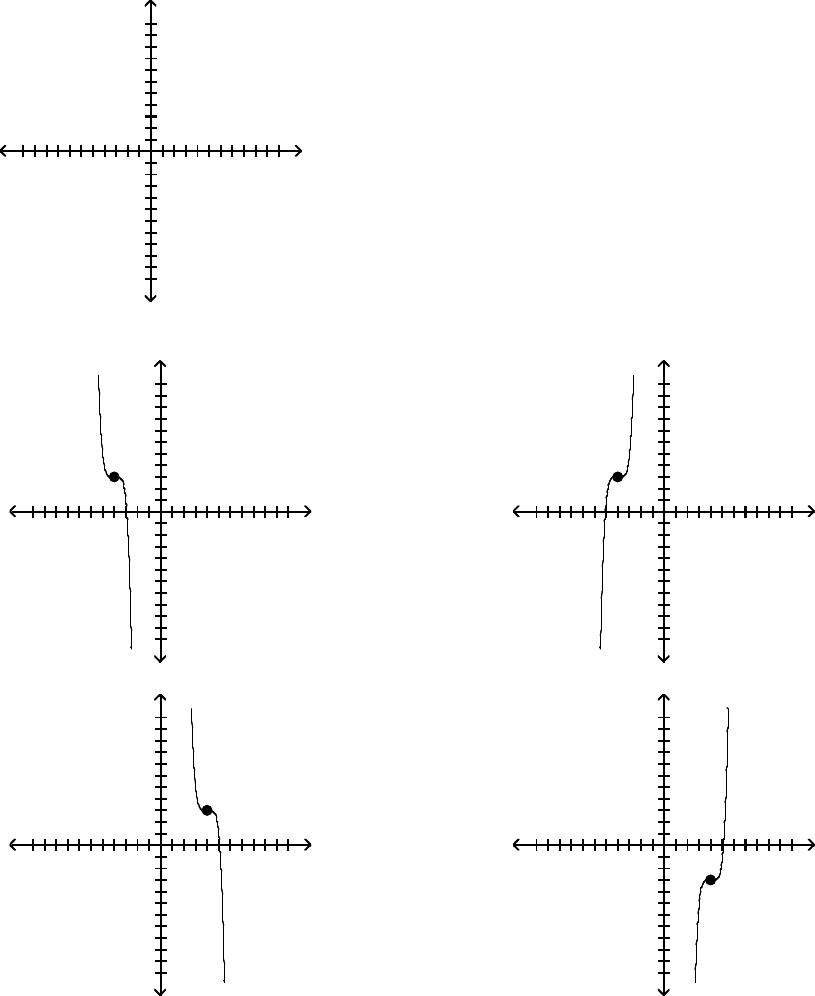
15) f(x)=–2(x+4)5+3
x
-10 -5 5 10
y
10
5
-5
-10
x
-10 -5 5 10
y
10
5
-5
-10
A)
x
-10 -5 5 10
y
10
5
-5
-10
x
-10 -5 5 10
y
10
5
-5
-10
B)
x
-10 -5 5 10
y
10
5
-5
-10
x
-10 -5 5 10
y
10
5
-5
-10
C)
x
-10 -5 5 10
y
10
5
-5
-10
x
-10 -5 5 10
y
10
5
-5
-10
D)
x
-10 -5 5 10
y
10
5
-5
-10
x
-10 -5 5 10
y
10
5
-5
-10
Page17
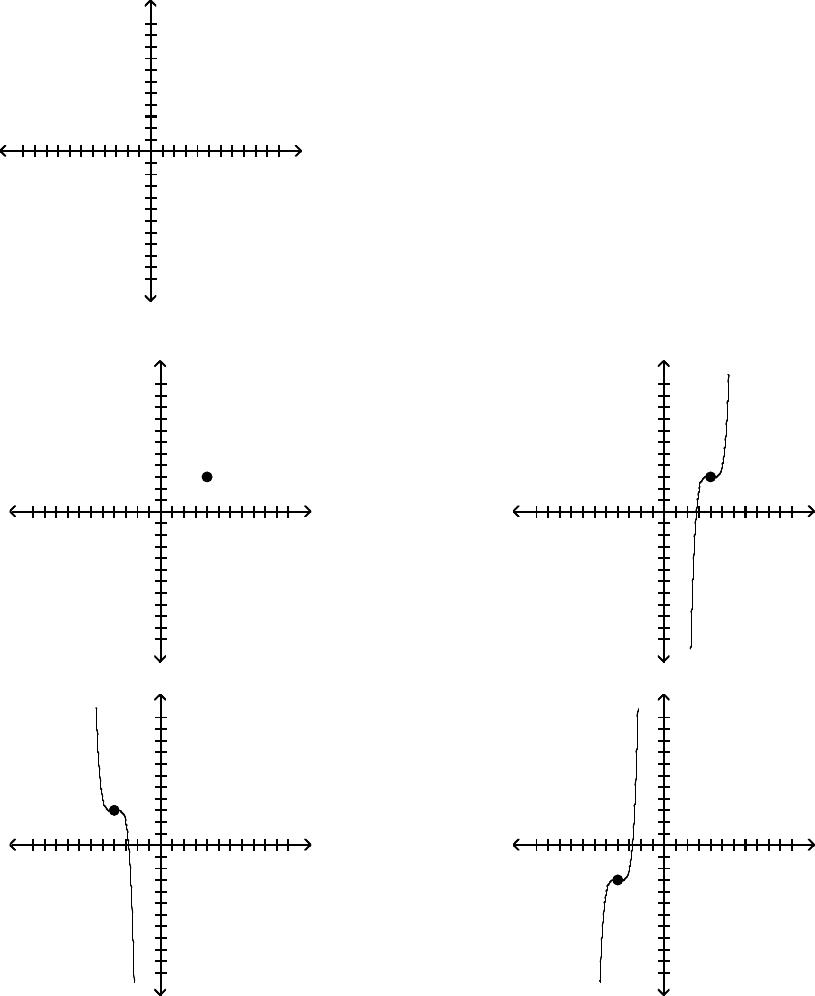
16) f(x)=3–(x–4)5
x
-10 -5 5 10
y
10
5
-5
-10
x
-10 -5 5 10
y
10
5
-5
-10
A)
x
-10 -5 5 10
y
10
5
-5
-10
x
-10 -5 5 10
y
10
5
-5
-10
B)
x
-10 -5 5 10
y
10
5
-5
-10
x
-10 -5 5 10
y
10
5
-5
-10
C)
x
-10 -5 5 10
y
10
5
-5
-10
x
-10 -5 5 10
y
10
5
-5
-10
D)
x
-10 -5 5 10
y
10
5
-5
-10
x
-10 -5 5 10
y
10
5
-5
-10
3 IdentifytheRealZerosofaPolynomialFunctionandTheirMultiplicity
MULTIPLECHOICE.Choosetheonealternativethatbestcompletesthestatementoranswersthequestion.
Formapolynomialwhosezerosanddegreearegiven.Usealeadingcoefficientof1.
1) Zeros:–3
,
–1
,
2;degree3
A) f(x)=x3+2x2–5x–6 B) f(x)=x3–2x2–5x+6
C) f(x)=x3+2x2+5x+6 D) f(x)=x3–2x2+5x–6
Page18
2) Zeros:0,–3
,
2;degree3
A) f(x)=x3+x2–6x B) f(x)=x3+x2+6x
C) f(x)=x3+x2+x–6 D) f(x)=x3+x2+x+6
3) Zeros:–1,1,–5;degree3
A) f(x)=x3+5x2–x–5 B) f(x)=x3–5x2+x–5
C) f(x)=x3–5x2–x+5 D) f(x)=x3+5x2+x+5
4) Zeros:–4
,
–5
,
5;degree3
A) f(x)=x3–25x+4x2–100 B) f(x)=x3–25x–4x2+100
C) f(x)=x3+25x+4x2+100 D) f(x)=x3+25x–4x2–100
5) Zeros:2
,
multiplicity2;–2
,
multiplicity2;degree4
A) f(x)=x4–8x2+16 B) f(x)=x4+4x3–8x2+8x–16
C) f(x)=x4+8x2+16 D) f(x)=x4–4x3+8x2–8x+16
6) Zeros:–1
,
multiplicity2;4
,
multiplicity1;degree3
A) x3–2x2–7x–4B)x
3+2x2–7x+4C)x
3+2x2–7x–4D)x
3+2x2–8x+4
7) Zeros:–4
,
–1
,
4
,
5;degree4
A) x4–4x3–21x2+64x+80 B) x4+4x3–21x2–64x+80
C) x4+24x2+80 D) x4–4x3–21x2+80x+80
Forthepolynomial,listeachrealzeroanditsmultiplicity.Determinewhetherthegraphcrossesortouchesthe
x–axisateachx–intercept.
8) f(x)=4(x+7)(x–5)2
A) –7
,
multiplicity1,crossesx–axis;5
,
multiplicity2
,
touchesx–axis
B) 7
,
multiplicity1,crossesx–axis;–5
,
multiplicity2
,
touchesx–axis
C) –7
,
multiplicity1,touchesx–axis;5
,
multiplicity2
,
crossesx–axis
D) 7
,
multiplicity1,touchesx–axis;–5
,
multiplicity2
,
crossesx–axis
9) f(x)=2(x–2)(x–6)3
A) 2
,
multiplicity1,crossesx–axis;6
,
multiplicity3,crossesx–axis
B) –2
,
multiplicity1,crossesx–axis;–6
,
multiplicity3,crossesx–axis
C) 2
,
multiplicity1,touchesx–axis;6
,
multiplicity3
D) –2
,
multiplicity1,touchesx–axis;–6
,
multiplicity3
10) f(x)=2(x2+1)(x+5)2
A) –5
,
multiplicity2,touchesx–axis
B) –1
,
multiplicity1,crossesx–axis;–5
,
multiplicity2,touchesx–axis
C) –1
,
multiplicity1,touchesx–axis;–5
,
multiplicity2,crossesx–axis
D) –5
,
multiplicity2,crossesx–axis
Page19
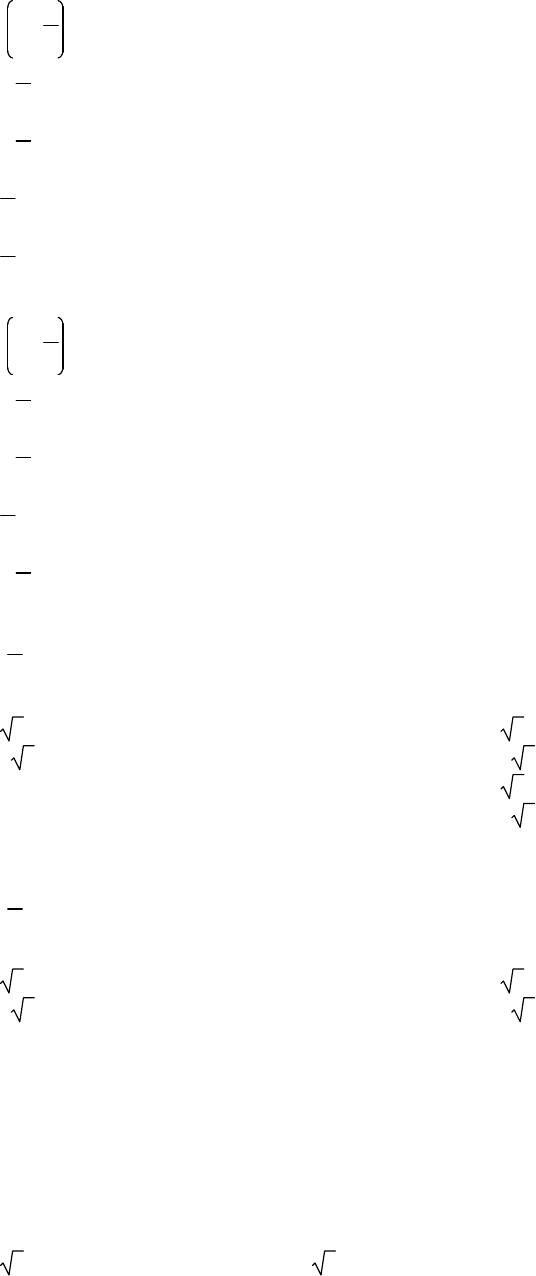
11) f(x)=x+1
5
2(x+2)3
A) –1
5,multiplicity2,touchesx–axis;–2,multiplicity3,crossesx–axis
B) –1
5,multiplicity2,crossesx–axis;–2,multiplicity3,touchesx–axis
C) 1
5,multiplicity2,touchesx–axis;2,multiplicity3,crossesx–axis
D) 1
5,multiplicity2,crossesx–axis;2,multiplicity3,touchesx–axis
12) f(x)=x+1
2
4(x2+9)5
A) –1
2,multiplicity4,touchesx–axis
B) –1
2,multiplicity4,touchesx–axis;–9,multiplicity5,crossesx–axis
C) 1
2,multiplicity4,touchesx–axis;9,multiplicity5,crossesx–axis
D) –1
2,multiplicity4,crossesx–axis
13) f(x)=1
3x(x2–5)
A) 0,multiplicity1,crossesx–axis;
5,multiplicity1,crossesx–axis;
–5,multiplicity1,crossesx–axis
B) 0,multiplicity1,touchesx–axis;
5,multiplicity1,touchesx–axis;
–5,multiplicity1,touchesx–axis
C) 0,multiplicity1D)5
,multiplicity1,touchesx–axis;
–5,multiplicity1,touchesx–axis
14) f(x)=1
2x4(x2–5)
A) 0,multiplicity4
,
touchesx–axis;
5,multiplicity1,crossesx–axis;
–5,multiplicity1,crossesx–axis
B) 0,multiplicity4
,
crossesx–axis;
5,multiplicity1,touchesx–axis;
–5,multiplicity1,touchesx–axis
C) 0,multiplicity4
,
touchesx–axis D) 0,multiplicity4
,
crossesx–axis
15) f(x)=3(x2+6)(x2+4)2
A) Norealzeros
B) –6
,
multiplicity1,crossesx–axis;–4
,
multiplicity2,touchesx–axis
C) –6
,
multiplicity1,touchesx–axis;–4
,
multiplicity2,crossesx–axis
D) 6,multiplicity1,crossesx–axis;–6,multiplicity1,crossesx–axis;
2,multiplicity2,touchesx–axis;–2,multiplicity2,touchesx–axis
Page20

16) f(x)=1
2x2(x2–3)(x+6)
A) 0,multiplicity2
,
touchesx–axis;
–6,multiplicity1,crossesx–axis;
3,multiplicity1,crossesx–axis;
–3,multiplicity1,crossesx–axis
B) 0,multiplicity2
,
crossesx–axis;
–6,multiplicity1,touchesx–axis;
3,multiplicity1,touchesx–axis;
–3,multiplicity1,touchesx–axis
C) 0,multiplicity2
,
touchesx–axis;
–6,multiplicity1,crossesx–axis
D) 0,multiplicity2
,
crossesx–axis;
–6,multiplicity1,touchesx–axis
4 AnalyzetheGraphofaPolynomialFunction
MULTIPLECHOICE.Choosetheonealternativethatbestcompletesthestatementoranswersthequestion.
Findthex–andy–interceptsoff.
1) f(x)=(x+7)2
A) x–intercept:–7;y–intercept:49 B) x–intercept:7;y–intercept:49
C) x–intercept:–7;y–intercept:0D)x
–intercept:7;y–intercept:0
2) f(x)=4x5(x–9)3
A) x–intercepts:0,9;y–intercept:0B)x
–intercepts:0,9;y–intercept:4
C) x–intercepts:0,–9;y–intercept:4D)x
–intercepts:0,–9;y–intercept:0
3) f(x)=(x+3)(x–2)(x+2)
A) x–intercepts:–3
,
–2
,
2;y–intercept:–12 B) x–intercepts:–2
,
2
,
3;y–intercept:12
C) x–intercepts:–3
,
–2
,
2;y–intercept:12 D) x–intercepts:–2
,
2
,
3;y–intercept:–12
4) f(x)=6x–x3
A) x–intercepts:0,6,–6;y–intercept:0B)x
–intercepts:0,6,–6;y–intercept:6
C) x–intercepts:0,–6;y–intercept:0D)x
–intercepts:0,–6;y–intercept:6
5) f(x)=(x+1)(x–8)(x–1)2
A) x–intercepts:–1,1,8;y–intercept:–8B)x
–intercepts:–1,1,8;y–intercept:8
C) x–intercepts:–1,1,–8;y–intercept:–8D)x
–intercepts:–1,1,–8;y–intercept:8
6) f(x)=–x2(x+8)(x2–1)
A) x–intercepts:–8
,
–1,0,1;y–intercept:0B)x
–intercepts:–1,0,1,8;y–intercept:0
C) x–intercepts:–8
,
0,1;y–intercept:–8D)x
–intercepts:–8
,
–1,0,1;y–intercept:–8
7) f(x)=–x2(x+3)(x2+1)
A) x–intercepts:–3
,
0;y–intercept:0B)x
–intercepts:–3
,
–1,0,1;y–intercept:0
C) x–intercepts:–3
,
–1,0;y–intercept:3D)x
–intercepts:–3
,
–1,0;y–intercept:–3
8) f(x)=(x–5)(x–6)
A) x–intercepts:5
,
6;y–intercept:30 B) x–intercepts:–5
,
–6;y–intercept:30
C) x–intercepts:5
,
6;y–intercept:–11 D) x–intercepts:–5
,
–6;y–intercept:–11
9) f(x)=x2(x–5)(x–3)
A) x–intercepts:0,5
,
3;y–intercept:0B)x
–intercepts:0,–5
,
–3;y–intercept:0
C) x–intercepts:0,5
,
3;y–intercept:15 D) x–intercepts:0,–5
,
–3;y–intercept:15
Page21
10) f(x)=(x–2)2(x2–9)
A) x–intercepts:–3
,
2
,
3;y–intercept:–36 B) x–intercepts:–3
,
2
,
3;y–intercept:36
C) x–intercepts:2
,
9;y–intercept:18 D) x–intercepts:–2
,
–9;y–intercept:18
Findthepowerfunctionthatthegraphoffresemblesforlargevaluesof|x|.
11) f(x)=(x+4)2
A) y=x2B) y=x16 C) y=x8D) y=x4
12) f(x)=(x–3)3
A) y=x3B) y=x9C) y=x–27 D) y=x–3
13) f(x)=(x–1)6(x+8)4
A) y=x10 B) y=x24 C) y=x6D) y=x4
14) f(x)=–x2(x+5)3(x2–1)
A) y=–x7B) y=x3C) y=x2D) y=x7
15) f(x)=8x–x3
A) y=–x3B) y=x4C) y=x2D) y=x3
Determinethemaximumnumberofturningpointsoff.
16) f(x)=–x2(x+6)3(x2–1)
A) 6 B) 7 C) 5 D) 2
17) f(x)=8x–x3
A) 2 B) 3 C) 1 D) 4
18) f(x)=(x–4)2(x+5)2
A) 3 B) 4 C) 2 D) 1
Usethex–interceptstofindtheintervalsonwhichthegraphoffisaboveandbelowthex–axis.
19) f(x)=(x+3)2
A) abovethex–axis:(–∞
,
–3),(–3
,
∞)
belowthex–axis:nointervals
B) abovethex–axis:nointervals
belowthex–axis:(–∞,–3),(–3,∞)
C) abovethex–axis:(–∞
,
–3)
belowthex–axis:(–3,∞)
D) abovethex–axis:(–3
,
∞)
belowthex–axis:(–∞,–3)
20) f(x)=(x+2)3
A) abovethex–axis:(–2
,
∞)
belowthex–axis:(–∞,–2)
B) abovethex–axis:(–∞
,
–2)
belowthex–axis:(–2,∞)
C) abovethex–axis:(–∞
,
–2),(–2
,
∞)
belowthex–axis:nointervals
D) abovethex–axis:nointervals
belowthex–axis:(–∞,–2),(–2,∞)
21) f(x)=(x–3)2(x+4)2
A) abovethex–axis:(–∞
,
–4),(–4
,
3),(3
,
∞)
belowthex–axis:nointervals
B) abovethex–axis:nointervals
belowthex–axis:(–∞,–4),(–4,3),(3,∞)
C) abovethex–axis:(–∞
,
–4),(3
,
∞)
belowthex–axis:(–4,3)
D) abovethex–axis:(–4
,
3)
belowthex–axis:(–∞,–4),(3,∞)
Page22
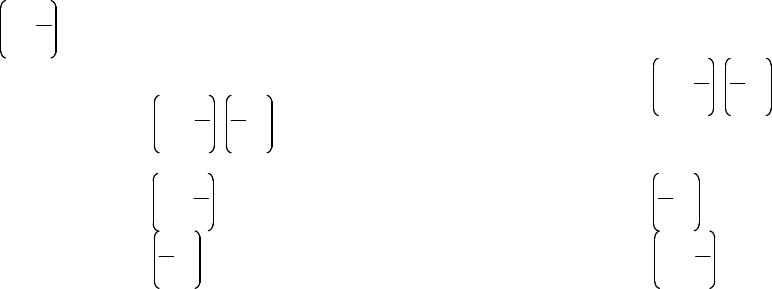
22) f(x)=x–1
3
4(x–3)5
A) abovethex–axis:(3
,
∞)
belowthex–axis:–∞,1
3,1
3,3
B) abovethex–axis:–∞,1
3,1
3,3
belowthex–axis:(3,∞)
C) abovethex–axis:–∞,1
3,(3,∞)
belowthex–axis:1
3,3
D) abovethex–axis:1
3,3
belowthex–axis:–∞,1
3,(3,∞)
SHORTANSWER.Writethewordorphrasethatbestcompleteseachstatementoranswersthequestion.
Analyzethegraphofthegivenfunctionfasfollows:
(a) Determinetheendbehavior:findthepowerfunctionthatthegraphoffresemblesforlargevaluesof|x|.
(b)Findthex–andy–interceptsofthegraph.
(c)Determinewhetherthegraphcrossesortouchesthex–axisateachx–intercept.
(d)Graphfusingagraphingutility.
(e)Usethegraphtodeterminethelocalmaximaandlocalminima,ifanyexist.Roundturningpointstotwo
decimalplaces.
(f) Usetheinformationobtainedin(a)–(e)todrawacompletegraphoffbyhand.Labelallinterceptsand
turningpoints.
(g)Findthedomainoff.Usethegraphtofindtherangeoff.
(h)Usethegraphtodeterminewherefisincreasingandwherefisdecreasing.
23) f(x)=x2(x+2)
24) f(x)=(x+3)(x–3)2
25) f(x)=–2(x–3)(x+2)3
26) f(x)=(x–3)(x–1)(x+2)
27) f(x)=–x2(x–1)(x+3)
28) f(x)=x2(x2–4)(x+4)
Analyzethegraphofthegivenfunctionfasfollows:
(a)Determinetheendbehavior:findthepowerfunctionthatthegraphoffresemblesforlargevaluesof|x|.
(b)Graphfusingagraphingutility.
(c)Findthex–andy–interceptsofthegraph.
(d)Usethegraphtodeterminethelocalmaximaandlocalminima,ifanyexist.Roundturningpointstotwo
decimalplaces.
(e)Usetheinformationobtainedin(a)–(d)todrawacompletegraphoffbyhand.Labelallinterceptsandturning
points.
(f)Findthedomainoff.Usethegraphtofindtherangeoff.
(g)Usethegraphtodeterminewherefisincreasingandwherefisdecreasing.
29) f(x)=x3–0.4x2–2.5861x+3.0912
Page23
Solvetheproblem.
30) Forthepolynomialfunctionf(x)=2x4–7x3+11x–4
a) Findthex–andy–interceptsofthegraphoff.Roundtotwodecimalplaces,ifnecessary.
b) Determinewhetherthegraphcrossesortouchesthex–axisateachx–intercept.
c) Endbehavior:findthepowerfunctionthatthegraphoffresemblesforlargevaluesof|x|.
d) Useagraphingutilitytographthefunction.Approximatethelocalmaximaroundedtotwodecimal
places,ifnecessary.Approximatethelocalminimaroundedtotwodecimalplaces,ifnecessary.
e) Determinethenumberofturningpointsonthegraph.
f) Putalltheinformationtogether,andconnectthepointswithasmooth,continuouscurvetoobtainthe
graphoff.
x
-10 -5 5 10
y
10
5
-5
-10
x
-10 -5 5 10
y
10
5
-5
-10
MULTIPLECHOICE.Choosetheonealternativethatbestcompletesthestatementoranswersthequestion.
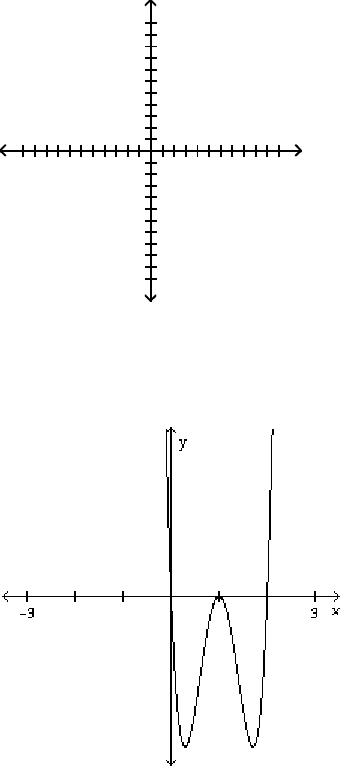
31) Whichofthefollowingpolynomialfunctionsmighthavethegraphshownintheillustrationbelow?
A) f(x)=x2(x–2)(x–1) B) f(x)=x(x–2)(x–1)2
C) f(x)=x(x–2)2(x–1) D) f(x)=x2(x–2)2(x–1)2
Page24

5 BuildCubicModelsfromData
SHORTANSWER.Writethewordorphrasethatbestcompleteseachstatementoranswersthequestion.
Solvetheproblem.
1) Theprofits(inmillions)foracompanyfor8yearswasasfollows:
Year,xProfits
1993,1
1994,2
1995,3
1996,4
1997,5
1998,6
1999,7
2000,8
1.1
1.7
2.0
1.4
1.3
1.5
1.8
2.1
Findthecubicfunctionofbestfittothedata.
MULTIPLECHOICE.Choosetheonealternativethatbestcompletesthestatementoranswersthequestion.
2) Theamountofwater(ingallons)inaleakybathtubisgiveninthetablebelow.Usingagraphingutility,fit
thedatatoathirddegreepolynomial(oracubic).Thenapproximatethetimeatwhichthereismaximum
amountofwaterinthetub,andestimatethetimewhenthewaterrunsoutofthetub.Expressallyour
answersroundedtotwodecimalplaces.
t(inminutes) 0 1234567
V(ingallons) 20 26 45 63 86 94 90 67
A) maximumamountofwaterafter5.31minutes;waterrunsoutafter8.23minutes
B) maximumamountofwaterafter5.37minutes;waterrunsoutafter11.06minutes
C) maximumamountofwaterafter8.23minutes;waterrunsoutafter19.73minutes
D) maximumamountofwaterafter5.31minutes;waterneverrunsout
5.2 PropertiesofRationalFunctions
1 FindtheDomainofaRationalFunction
MULTIPLECHOICE.Choosetheonealternativethatbestcompletesthestatementoranswersthequestion.
Findthedomainoftherationalfunction.
1) f(x)=2x
x–3
A) {x|x≠3} B) {x|x≠–3} C) {x|x≠0} D) allrealnumbers
2) g(x)=9x2
(x+6)(x–3)
A) {x|x≠–6
,
x≠3} B) {x|x≠6
,
x≠–3}
C) {x|x≠–6
,
x≠3
,
x≠–9} D) allrealnumbers
Page25
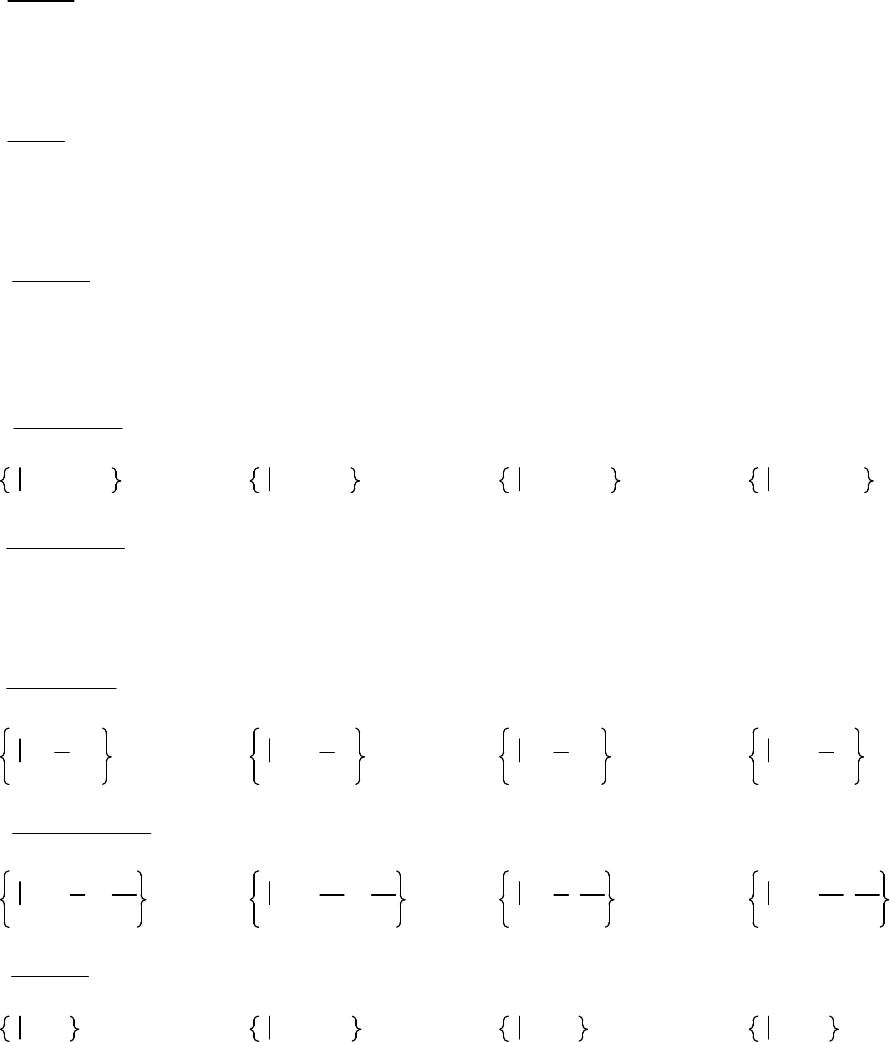
3) f(x)=x+5
x2–49
A) {x|x≠–7
,
x≠7} B) {x|x≠–7
,
x≠7
,
x≠–5}
C) {x|x≠0,x≠49} D) allrealnumbers
4) f(x)=x+2
x2+9
A) allrealnumbers B) {x|x≠–3
,
x≠3
,
x≠–2}
C) {x|x≠0,x≠–9} D) {x|x≠–3
,
x≠3}
5) h(x)=x+9
x2–16x
A) {x|x≠0,x≠16} B) {x|x≠–4
,
x≠4
,
x≠–9}
C) allrealnumbers D) {x|x≠–4
,
x≠4}
6) R(x)=–3x2
x2+9x–36
A) x x≠–12
,
3 B) x x≠12
,
3 C) x x≠12
,
–3 D) x x≠–36
,
1
7) f(x)=2x2–4
3x2+6x–45
.
A) {x|x≠3,x≠–5} B) {x|x≠–3,x≠5}
C) {x|x≠3,x≠–3,x≠–5} D) allrealnumbers
8) f(x)=–2x(x+2)
3x2–4x–7
A) x x≠7
3,–1 B) x x≠–7
3,1 C) x x≠3
7,–1 D) x x≠–3
7,1
9) f(x)=x(x–1)
49x2+98x+40
A) x x≠–4
7,–10
7B) x x≠–4
49,–10
49 C) x x≠4
7,10
7D) x x≠–10
49,50
49
10) g(x)=x
x3–125
A) x x≠5 B) x x≠–5
,
5 C) x x≠25 D) x x≠–5
Page26
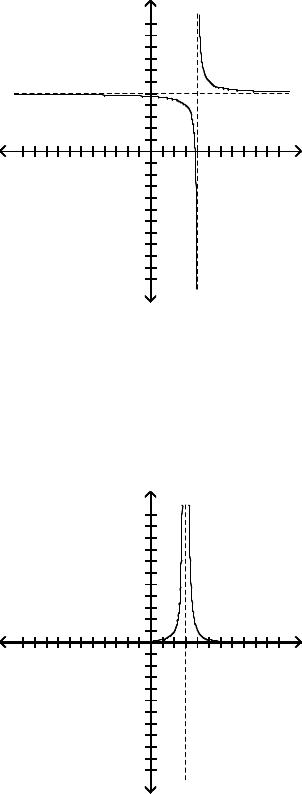
Usethegraphtodeterminethedomainandrangeofthefunction.
11)
x
-10 -5 5 10
y
10
5
-5
-10
x
-10 -5 5 10
y
10
5
-5
-10
A) domain:{x|x≠4}
range:{y|y≠5}
B) domain:{x|x≠5}
range:{y|y≠4}
C) domain:{x|x≠–4}
range:{y|y≠5}
D) domain:{x|x≠5}
range:{y|y≠–4}
12)
x
-10 -5 5 10
y
10
5
-5
-10
x
-10 -5 5 10
y
10
5
-5
-10
A) domain:{x|x≠3}
range:{y|y>0}
B) domain:{x|x≠3}
range:{y|y≥0}
C) domain:{x|x>0}
range:{y|y≠3}
D) domain:{x|x≥0}
range:{y|y≠3}
Page27
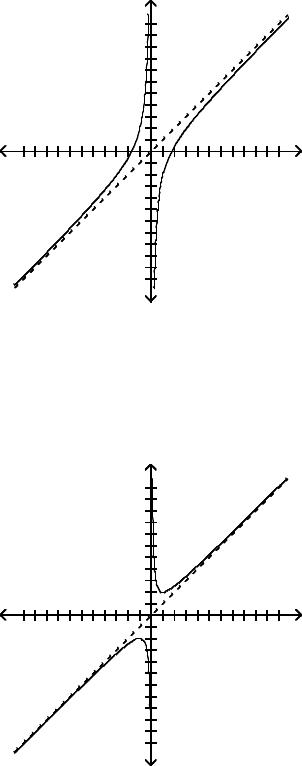
13)
x
-10 -5 5 10
y
10
5
-5
-10
x
-10 -5 5 10
y
10
5
-5
-10
A) domain:{x|x≠0}
range:allrealnumbers
B) domain:allrealnumbers
range:allrealnumbers
C) domain:allrealnumbers
range:{y|y≠0}
D) domain:{x|x≠0}
range:{y|y≠0}
14)
x
-10 -5 5 10
y
10
5
-5
-10
x
-10 -5 5 10
y
10
5
-5
-10
A) domain:{x|x≠0}
range:{y|y≤–2ory≥2}
B) domain:allrealnumbers
range:{y|y≤–2ory≥2}
C) domain:{x|x≠0}
range:allrealnumbers
D) domain: {x|x≤–2orx≥2}
range:{y|y≠0}
Page28
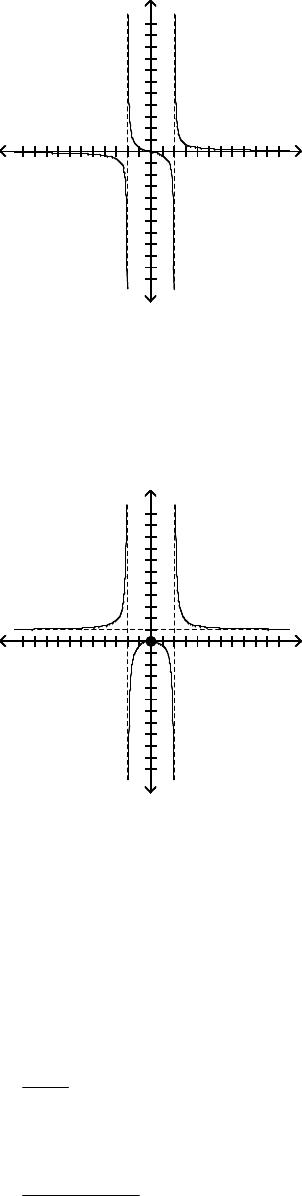
15)
x
-10 -5 5 10
y
10
5
-5
-10
x
-10 -5 5 10
y
10
5
-5
-10
A) domain:{x|x≠–2
,
x≠2}
range:allrealnumbers
B) domain:allrealnumbers
range:{y|y≠–2,y≠2}
C) domain:{x|x≠–2
,
x≠2}
range:{y|y≠0}
D) domain:allrealnumbers
range:allrealnumbers
16)
x
-10 -5 5 10
y
10
5
-5
-10
x
-10 -5 5 10
y
10
5
-5
-10
A) domain:{x|x≠–2
,
x≠2}
range:{y|y≤0ory>1}
B) domain:{x|x≤0orx>1}
range:{y|y≠–2,y≠2}
C) domain:{x|x≠–2
,
x≠2}
range:{y|y≤0ory≥1}
D) domain:allrealnumbers
range:allrealnumbers
2 FindtheVerticalAsymptotesofaRationalFunction
MULTIPLECHOICE.Choosetheonealternativethatbestcompletesthestatementoranswersthequestion.
Findtheverticalasymptotesoftherationalfunction.
1) h(x)=4x
x–9
A) x=9B)x=–9C)x=4 D) none
2) g(x)=5x
(x+4)(x+7)
A) x=–4
,
x=–7B)x=4
,
x=7
C) x=–4
,
x=–7
,
x=–5D)x= –5
Page29

3) g(x)=x+8
x2–1
A) x=–1
,
x=1B)x= –1
,
x=1
,
x= –8
C) x=0,x=1D)x=1
,
x= –8
4) h(x)=x+8
x2+16
A) none B) x= –4
,
x=4
,
x= –8
C) x=–4
,
x=4D)x= –4
,
x= –8
5) g(x)=x+11
x2–25x
A) x=0,x=25 B) x=25
,
x= –11 C) x=0,x= –5
,
x=5D)x= –5
,
x=5
6) f(x)=x(x–1)
x3+16x
A) none B) x=0,x= –16 C) x=0,x= –4
,
x=4D)x= –4
,
x=4
7) R(x)=–3x2
x2+5x–14
A) x=–7
,
x=2B)x=7
,
x= –2
C) x=–7
,
x=2
,
x=–3D)x= – 14
8) f(x)=–2x(x+2)
4x2–3x–7
A) x=7
4,x=–1B)x=–7
4,x=1C)x=4
7,x=–1D)x=–4
7,x=1
9) f(x)=x(x–1)
25x2+20x+3
A) x=–1
5,x=–3
5B) x=–1
25,x=–3
25 C) x=1
5,x=3
5D) x=–3
25,x=6
25
10) g(x)=x
x3–343
A) x=7B)x=–7
,
x=7C)x=49 D) x= –7
11) f(x)=x–5
25x–x3
A) x=0,x=–5B)x=0,x= –5
,
x=5C)x=0,x=5D)x= –5
,
x=5
12) f(x)=–x2+16
x2+5x+4
A) x=–1B)x=–1,x= –4C)x= –1,x=4D)x=1,x= –4
Page30
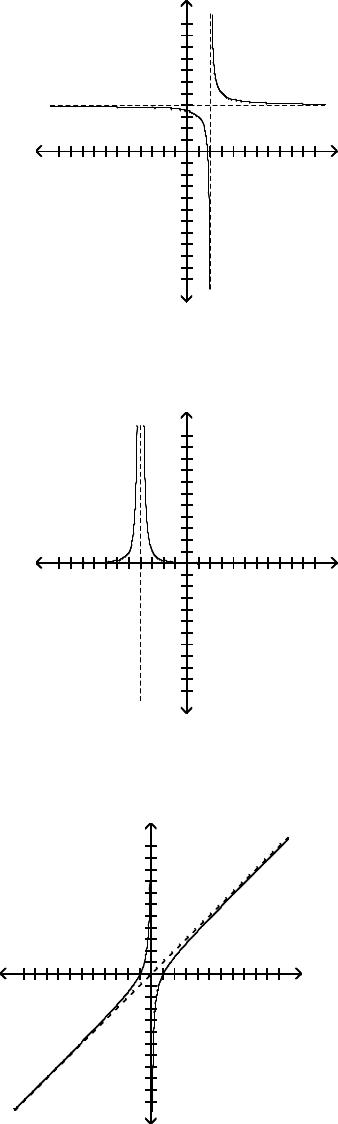
Usethegraphtofindtheverticalasymptotes,ifany,ofthefunction.
13)
x
-10 -5 5 10
y
10
5
-5
-10
x
-10 -5 5 10
y
10
5
-5
-10
A) x=2B)x=2,y=4C)y=4D)x=2
,
x=0
14)
x
-10 -5 5 10
y
10
5
-5
-10
x
-10 -5 5 10
y
10
5
-5
-10
A) x=–4B)y=–4C)x= –4
,
x=0 D) none
15)
x
-10 -5 5 10
y
10
5
-5
-10
x
-10 -5 5 10
y
10
5
-5
-10
A) x=0B)y=0C)x=0,y=0 D) none
Page31
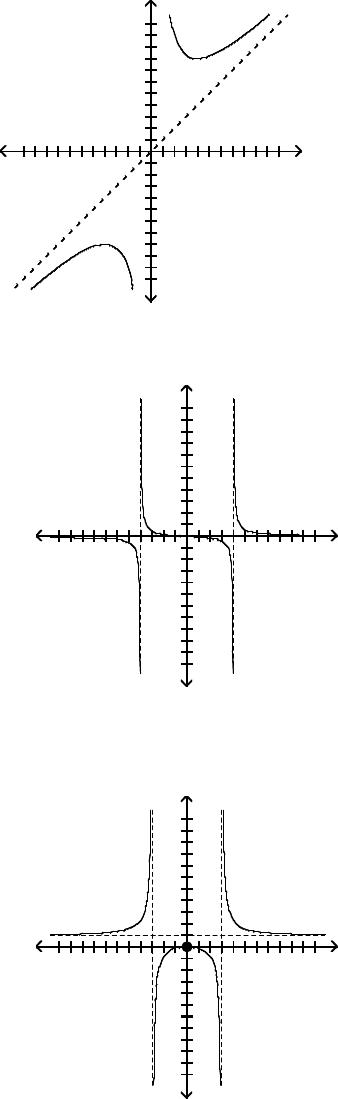
16)
x
-10 -5 5 10
y
10
5
-5
-10
x
-10 -5 5 10
y
10
5
-5
-10
A) x=0B)y=–8
,
y=8C)x=0,y=0 D) none
17)
x
-10 -5 5 10
y
10
5
-5
-10
x
-10 -5 5 10
y
10
5
-5
-10
A) x=–4
,
x=4B)x=–4
,
x=4
,
x=0C)x= –4
,
x=4
,
y=0 D) none
18)
x
-10 -5 5 10
y
10
5
-5
-10
x
-10 -5 5 10
y
10
5
-5
-10
A) x=–3
,
x=3B)x= –3
,
x=3
,
x=0
C) x=–3
,
x=3
,
y=1D)x= –3
,
x=3
,
x=0,y=1
Page32

3 FindtheHorizontalorObliqueAsymptotesofaRationalFunction
MULTIPLECHOICE.Choosetheonealternativethatbestcompletesthestatementoranswersthequestion.
Givetheequationofthehorizontalasymptote,ifany,ofthefunction.
1) h(x)=5x–7
x–2
A) y=5B)y=0
C) y=2D)nohorizontalasymptotes
2) g(x)=x2+3x–7
x–7
A) y=1B)y=7
C) y=0D)nohorizontalasymptotes
3) f(x)=2x2+3
2x2–3
A) y=1B)y=3
C) y=2D)nohorizontalasymptotes
4) h(x)=8x2–2x–2
6x2–4x+8
A) y=4
3B) y=0
C) y=1
2D) nohorizontalasymptotes
5) h(x)=7x3–7x–6
4x+2
A) y=7
4B) y=0
C) y=7D)nohorizontalasymptotes
6) g(x)=x+5
x2–9
A) y=0B)y=1
C) y=–3
,
y=3D)nohorizontalasymptotes
7) f(x)=x(x–1)
x3+16x
A) y=0B)x=0,x= –16
C) y=1D)nohorizontalasymptotes
8) R(x)=–3x2
x2+5x–66
A) y=–3B)y=0
C) y=–11
,
y=6D)nohorizontalasymptotes
Page33
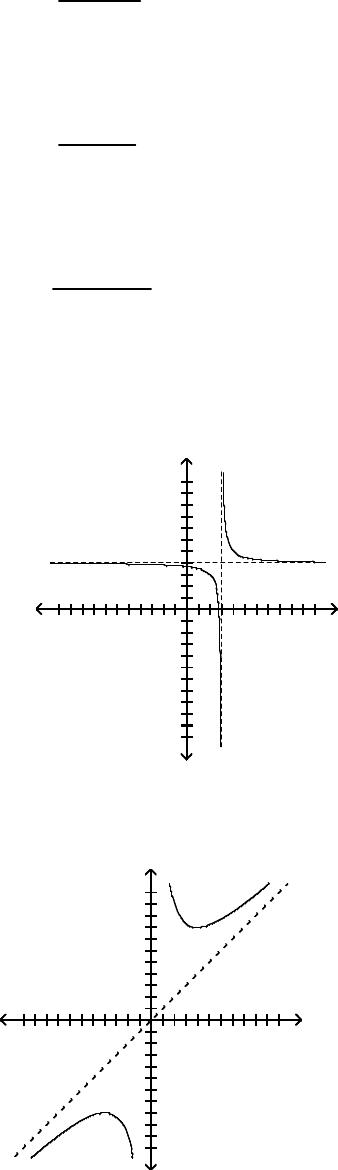
9) f(x)=x2–5
25x–x4
A) y=0B)y= –5
,
y=5
C) y=–1D)nohorizontalasymptotes
10) f(x)=36x5–6
x–x3
A) y=0B)y= –36
C) y=–1,y=1D)nohorizontalasymptotes
11) f(x)=–x2+16
x2+5x+4
A) y=–1B)y= –16
C) y=0D)nohorizontalasymptotes
Usethegraphtofindthehorizontalasymptote,ifany,ofthefunction.
12)
x
-10 -5 5 10
y
10
5
-5
-10
x
-10 -5 5 10
y
10
5
-5
-10
A) y=4B)y=0,y=4C)y=0D)x=3
13)
x
-10 -5 5 10
y
10
5
-5
-10
x
-10 -5 5 10
y
10
5
-5
-10
A) none B) y=–8C)y=8D)y=0
Page34
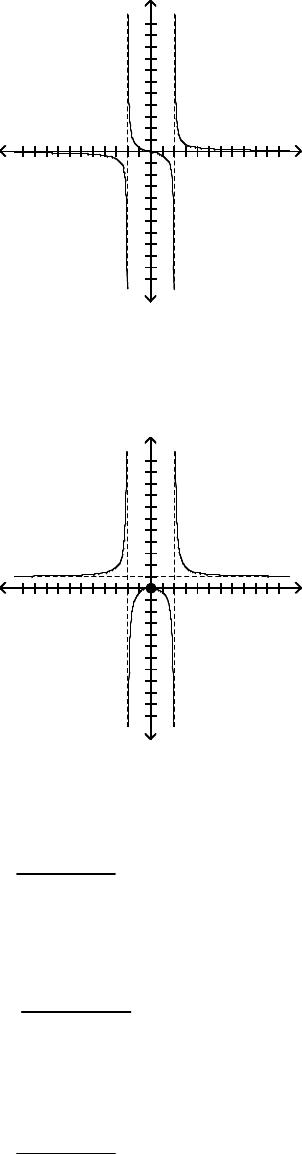
14)
x
-10 -5 5 10
y
10
5
-5
-10
x
-10 -5 5 10
y
10
5
-5
-10
A) y=0B)y= –2
,
y=2
C) x=–2
,
x=2
,
y=0D)nohorizontalasymptotes
15)
x
-10 -5 5 10
y
10
5
-5
-10
x
-10 -5 5 10
y
10
5
-5
-10
A) y=1B)y=0,y=1C)x= –2
,
x=2
,
y=1D)y= –2
,
y=2
Givetheequationoftheobliqueasymptote,ifany,ofthefunction.
16) f(x)=x2+8x–2
x–2
A) y=x+10 B) y=x+6
C) x=y+10 D) noobliqueasymptotes
17) h(x)=9x2–7x–8
3x2–8x+8
A) y=3B)y=3x
C) y=x+3D)noobliqueasymptote
18) f(x)=x2–2x+4
x+6
A) y=x–8B)y=x+6
C) x=y+2D)noobliqueasymptote
Page35
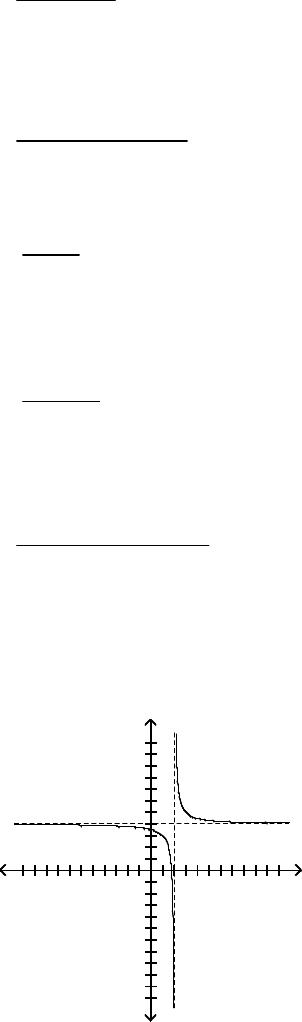
19) f(x)=x2+9x+8
x+5
A) y=x+4B)y=x–14
C) x=y+4D)noobliqueasymptotes
20) f(x)=2x3+11x2+5x–1
x2+6x+5
.
A) y=2x–1B)y=2x C) y=2x+1D)y=0
21) g(x)=x+6
x2–1
A) y=x+6B)y=0
C) y=6x D) noobliqueasymptote
22) f(x)=x2–5
25x–x4
A) y=0B)y=25x
C) y=x–5D)noobliqueasymptote
23) f(x)=–9x3+12x2+11x+6
3x+1
A) y=–3x2+5x+2B)y=0
C) y=–3x+2D)noobliqueasymptote
Usethegraphtofindtheobliqueasymptote,ifany,ofthefunction.
24)
x
-10 -5 5 10
y
10
5
-5
-10
x
-10 -5 5 10
y
10
5
-5
-10
A) y=x+2B)y=4
C) y=4x+2D)noobliqueasymptote
Page36
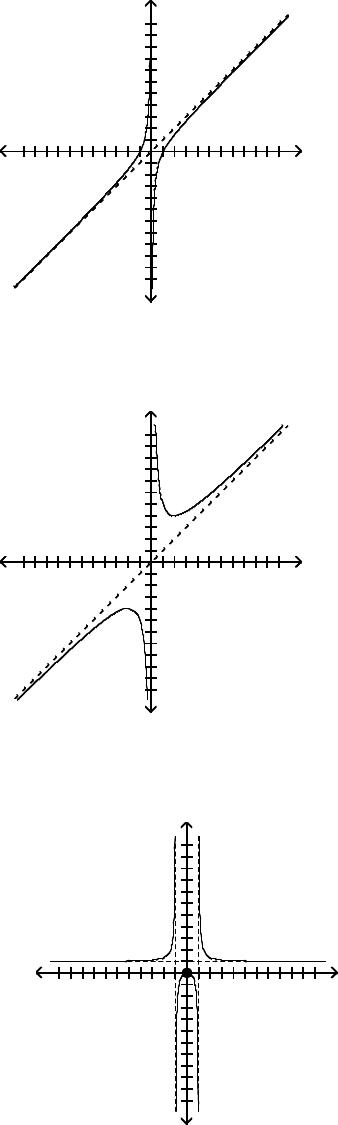
25)
x
-10 -5 5 10
y
10
5
-5
-10
x
-10 -5 5 10
y
10
5
-5
-10
A) y=xB)y= –x
C) y=x+1D)noobliqueasymptote
26)
x
-10 -5 5 10
y
10
5
-5
-10
x
-10 -5 5 10
y
10
5
-5
-10
A) y=xB)y= –x
C) y=2x D) noobliqueasymptote
27)
x
-10 -5 5 10
y
10
5
-5
-10
x
-10 -5 5 10
y
10
5
-5
-10
A) y=xB)y=1
C) y=x+1D)noobliqueasymptote
Page37
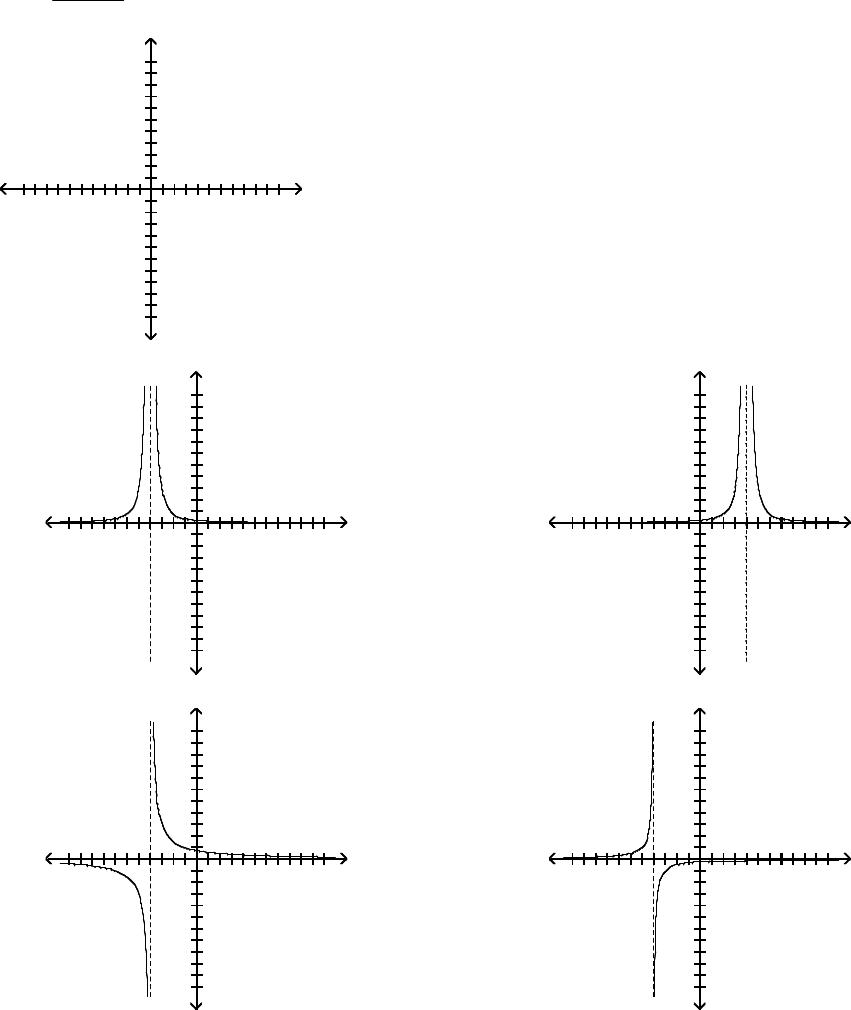
4 DemonstrateAdditionalUnderstandingandSkills
MULTIPLECHOICE.Choosetheonealternativethatbestcompletesthestatementoranswersthequestion.
Graphthefunctionusingtransformations.
1) f(x)=3
(4+x)2
x
-10 -5 5 10
y
10
5
-5
-10
x
-10 -5 5 10
y
10
5
-5
-10
A)
x
-10 -5 5 10
y
10
5
-5
-10
x
-10 -5 5 10
y
10
5
-5
-10
B)
x
-10 -5 5 10
y
10
5
-5
-10
x
-10 -5 5 10
y
10
5
-5
-10
C)
x
-10 -5 5 10
y
10
5
-5
-10
x
-10 -5 5 10
y
10
5
-5
-10
D)
x
-10 -5 5 10
y
10
5
-5
-10
x
-10 -5 5 10
y
10
5
-5
-10
Page38
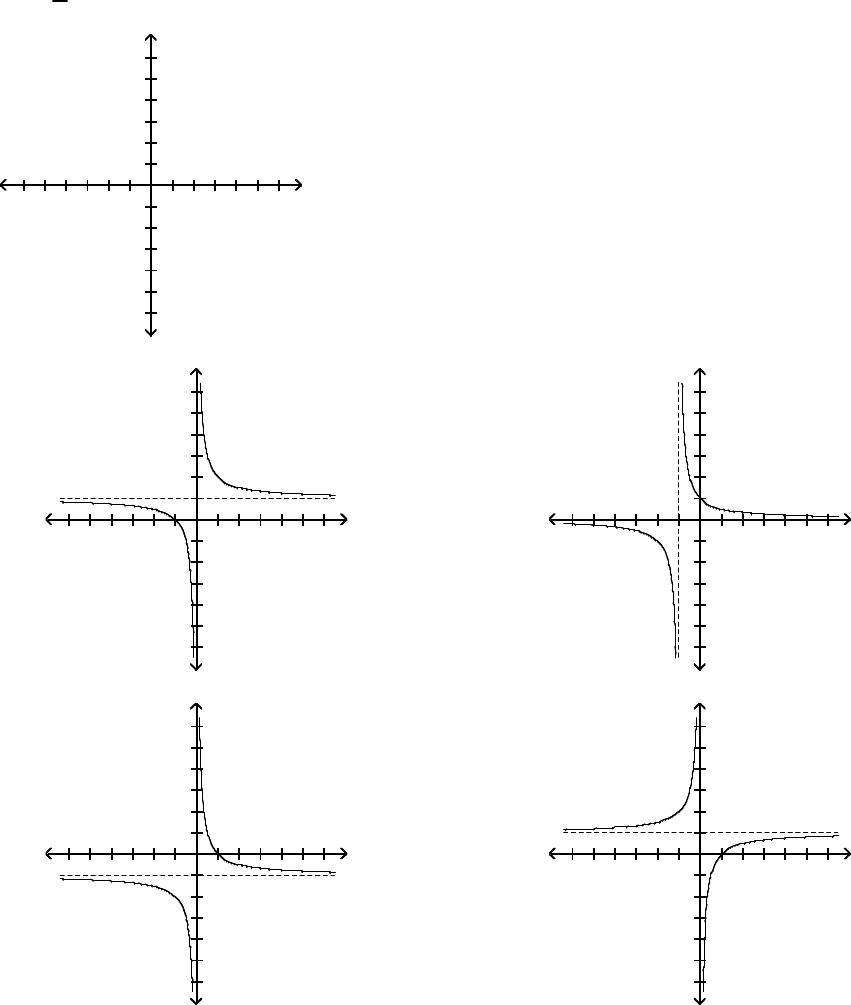
2) f(x)=1
x
+1
x
-5 5
y
5
-5
x
-5 5
y
5
-5
A)
x
-5 5
y
5
-5
x
-5 5
y
5
-5
B)
x
-5 5
y
5
-5
x
-5 5
y
5
-5
C)
x
-5 5
y
5
-5
x
-5 5
y
5
-5
D)
x
-5 5
y
5
-5
x
-5 5
y
5
-5
Page39
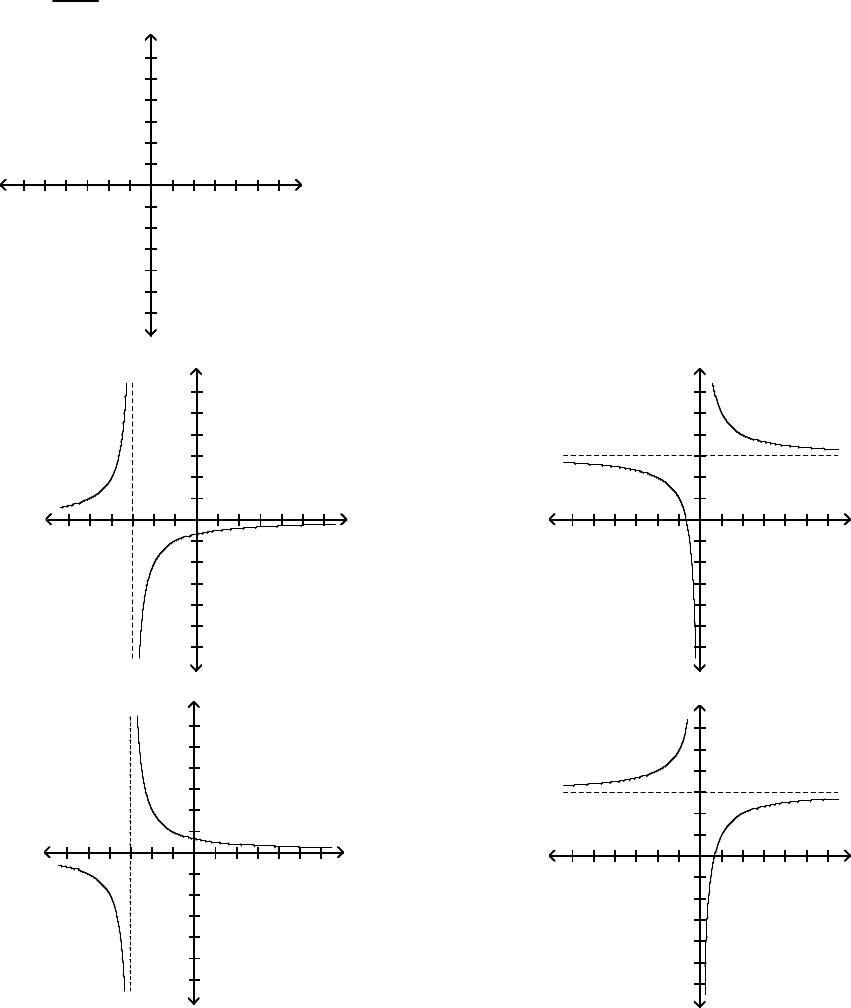
3) f(x)=–2
x+3
x
-5 5
y
5
-5
x
-5 5
y
5
-5
A)
x
-5 5
y
5
-5
x
-5 5
y
5
-5
B)
x
-5 5
y
5
-5
x
-5 5
y
5
-5
C)
x
-5 5
y
5
-5
x
-5 5
y
5
-5
D)
x
-5 5
y
5
-5
x
-5 5
y
5
-5
Page40
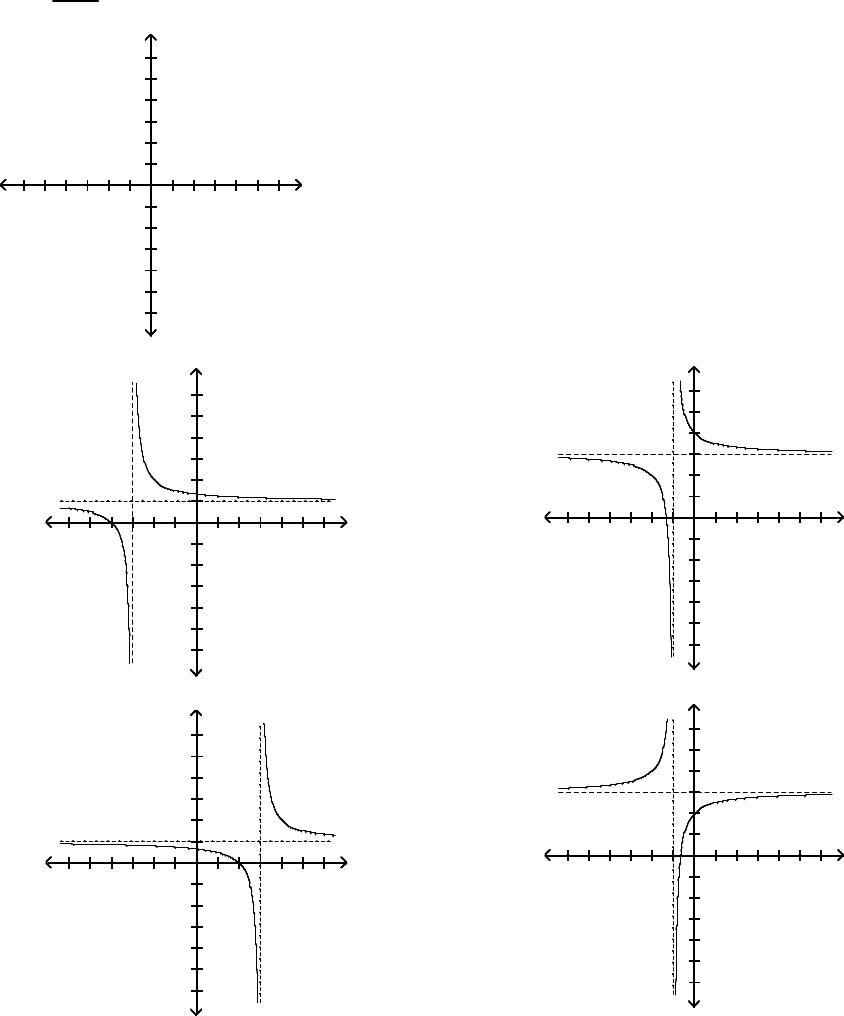
4) f(x)=1
x+3
+1
x
-5 5
y
5
-5
x
-5 5
y
5
-5
A)
x
-5 5
y
5
-5
x
-5 5
y
5
-5
B)
x
-5 5
y
5
-5
x
-5 5
y
5
-5
C)
x
-5 5
y
5
-5
x
-5 5
y
5
-5
D)
x
-5 5
y
5
-5
x
-5 5
y
5
-5
Page41
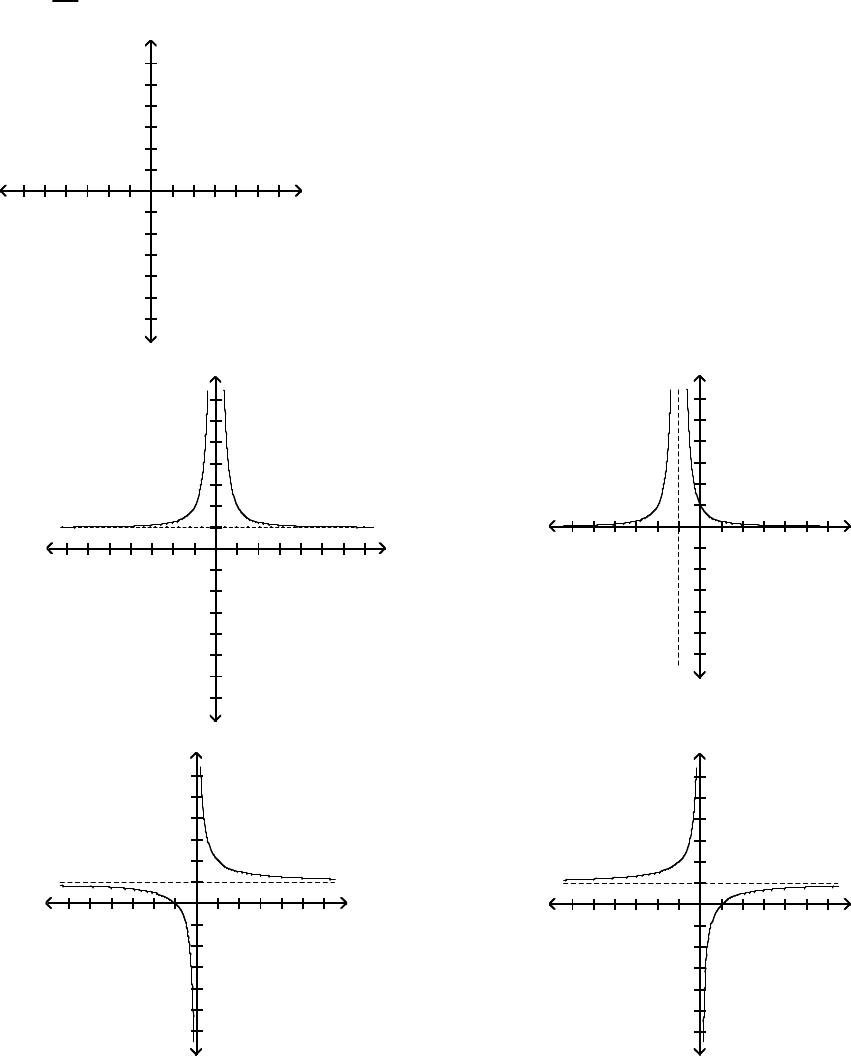
5) f(x)=1
x2
+1
x
-5 5
y
5
-5
x
-5 5
y
5
-5
A)
x
-5 5
y
5
-5
x
-5 5
y
5
-5
B)
x
-5 5
y
5
-5
x
-5 5
y
5
-5
C)
x
-5 5
y
5
-5
x
-5 5
y
5
-5
D)
x
-5 5
y
5
-5
x
-5 5
y
5
-5
Page42
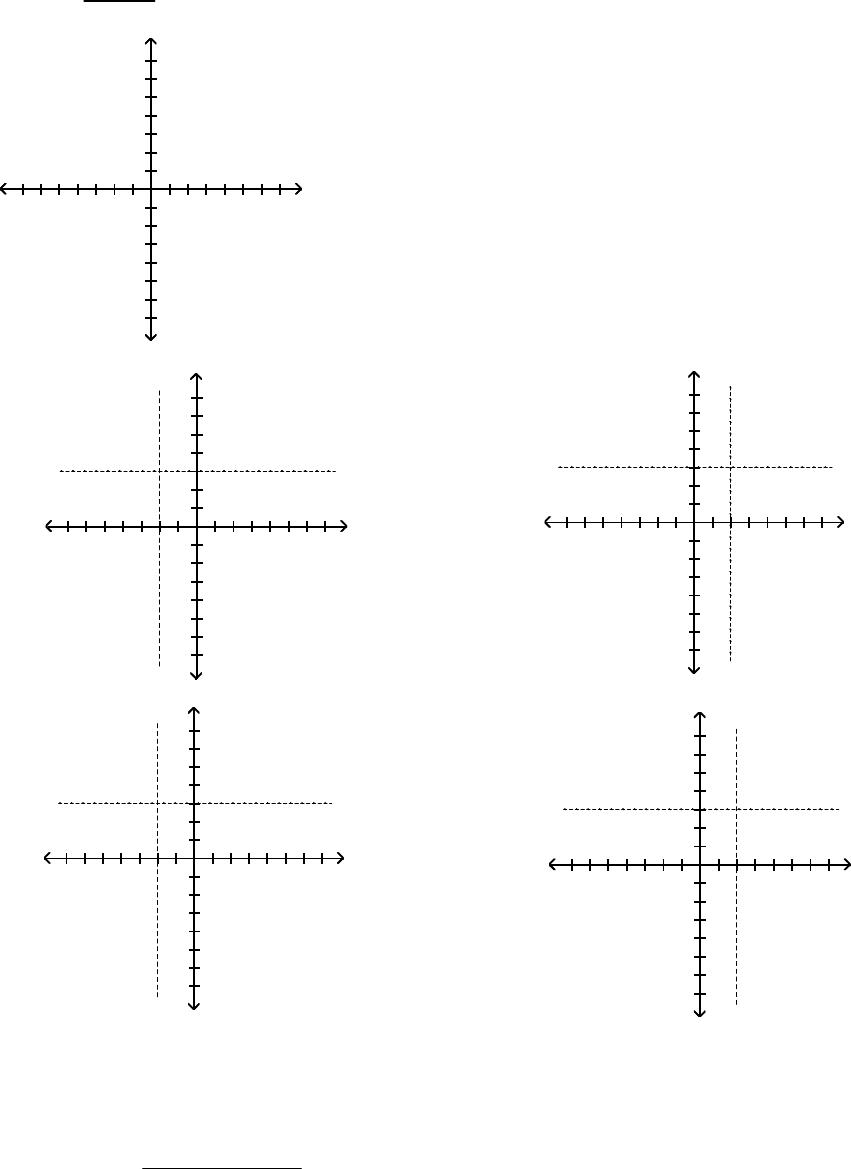
6) f(x)=6–1
(x+4)2
x
-10 10
y
10
-10
x
-10 10
y
10
-10
A)
x
-10 10
y
10
-10
x
-10 10
y
10
-10
B)
x
-10 10
y
10
-10
x
-10 10
y
10
-10
C)
x
-10 10
y
10
-10
x
-10 10
y
10
-10
D)
x
-10 10
y
10
-10
x
-10 10
y
10
-10
SHORTANSWER.Writethewordorphrasethatbestcompleteseachstatementoranswersthequestion.
Solvetheproblem.
7) Theaccelerationduetogravityg(inmeterspersecondpersecond)ataheighthmetersabovesealevelis
givenbyg(h)=3.99×10¹⁴
(6.374×10⁶+h)2
where6.374×106istheradiusofEarthinmeters.DeathValleyin
Californiais86mbelowsealevel.
a) Findthevalueofg(h)atDeathValleytofourdecimalplaces.
b) Comparethevaluein(a)tothevalueofg(h)atsealevel.
Page43

8) Thedistanceformulastatesthatd=rt.Ifacardrives50miles,thefunctionr=50
t
isarationalfunction.
Findtheasymptotesofthisfunction.
9) Alenscanbeusedtocreateanimageofanobjectontheoppositesideofthelens,suchastheimage
createdonamoviescreen.Everylenshasameasurementcalleditsfocallength,f.Thedistances1ofthe
objecttothelensisrelatedtothedistances2ofthelenstotheimagebythefunction
s1=fs2
s2–f.
Foralenswithf=0.3m,whataretheasymptotesofthisfunction?
10) Whentwolensesareplacednexttoeachother,theircombinedfocallength(ameasurementthatcanbe
negativeorpositive)isdescribedbytheequation
f=f1f2
f1+f2.
Iff1=0.001,whataretheasymptotesofthisfunction?
5.3 TheGraphofaRationalFunction
1 AnalyzetheGraphofaRationalFunction
MULTIPLECHOICE.Choosetheonealternativethatbestcompletesthestatementoranswersthequestion.
Findthedomainoftherationalfunction.
1) f(x)=6x
x–4
A) {x|x≠4} B) {x|x≠–4} C) {x|x≠0} D) allrealnumbers
2) f(x)=6x2
(x+3)(x–2)
A) {x|x≠–3
,
2} B) {x|x≠3
,
–2} C) {x|x≠–3
,
2
,
–6} D) allrealnumbers
3) f(x)=x+8
x2–9
A) {x|x≠–3
,
3} B) {x|x≠–3
,
3
,
–8} C) {x|x≠0,9} D) allrealnumbers
4) h(x)=x+5
x2–4x
A) {x|x≠0,4} B) {x|x≠–2
,
2
,
–5} C) {x|x≠–2
,
2} D) allrealnumbers
5) R(x)=–3x2
x2+2x–15
A) {x|x≠–5
,
3} B) {x|x≠5
,
3} C) {x|x≠5
,
–3} D) {x|x≠–15
,
1}
6) f(x)=2x2–4
3x2+6x–24
A) {x|x≠–4
,
2} B) {x|x≠–2
,
4} C) {x|x≠–4
,
–2
,
2} D) allrealnumbers
Page44
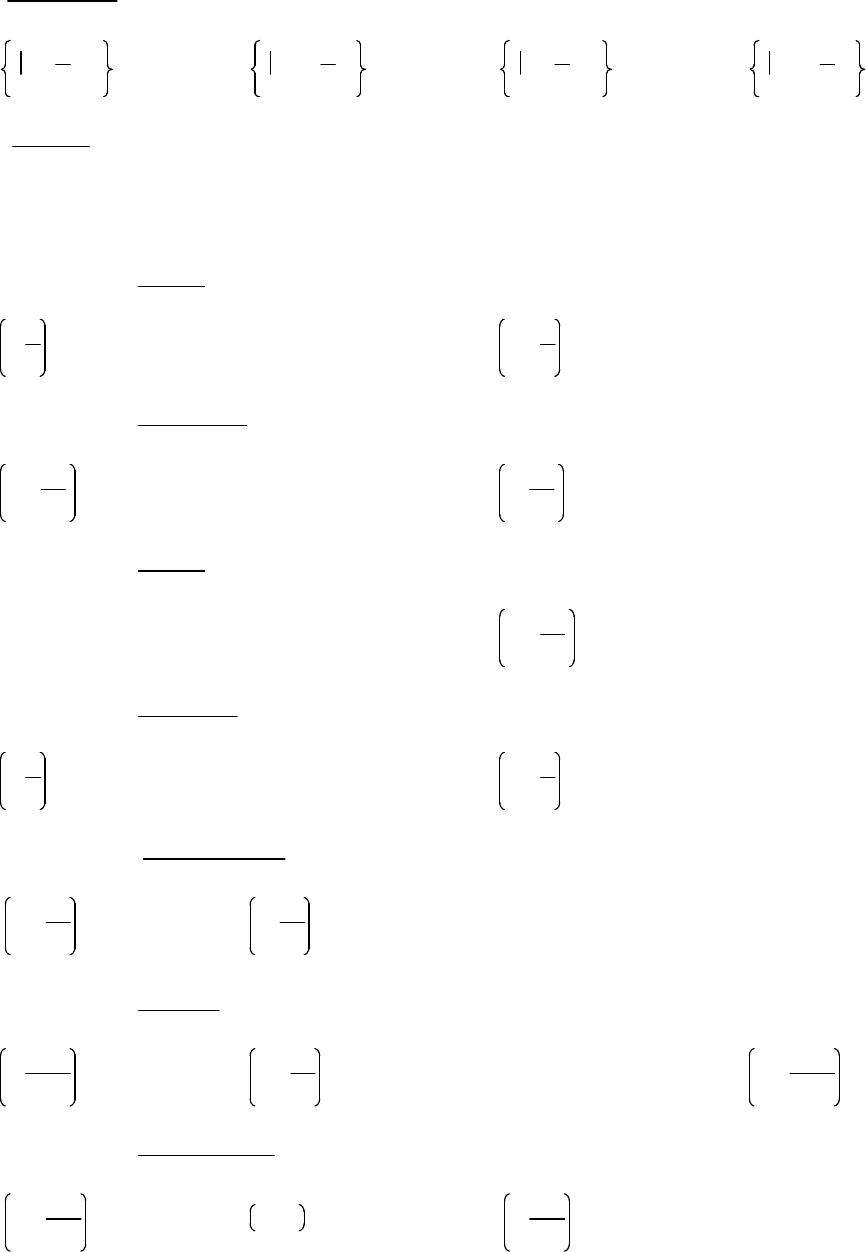
7) f(x)=–2x(x+2)
2x2–5x–7
A) x x≠7
2,–1 B) x x≠–7
2,1 C) x x≠2
7,–1 D) x x≠–2
7,1
8) g(x)=x
x3–125
A) {x|x≠5} B) {x|x≠–5
,
5} C) {x|x≠25} D) {x|x≠–5}
Findtheindicatedintercept(s)ofthegraphofthefunction.
9) y–interceptoff(x)=x–8
3x–10
A) 0,4
5B) (0,8) C) 0,–5
4D) none
10) y–interceptoff(x)=12
x2–3x–23
A) 0,–12
23 B) (0,12) C) 0, 12
23 D) none
11) y–interceptoff(x)=12x
x2–19
A) (0,0) B) (0,12) C) 0,–12
19 D) none
12) y–interceptoff(x)=x–4
x2+2x–7
A) 0,4
7B) (0,4) C) 0,–7
4D) none
13) y–interceptoff(x)= (5x–15)(x–3)
x2+9x–19
A) 0,–45
19 B) 0, 45
19 C) (0,3) D) (0,3)
14) y–interceptoff(x)=(x–8)2
(x+11)3
A) 0,64
1331 B) 0,–8
11 C) (0,8) D) 0,–64
1331
15) y–interceptoff(x)=23
(x+20)(x2–6)
A) 0,–23
120 B) 0,23 C) 0,23
120 D) none
Page45
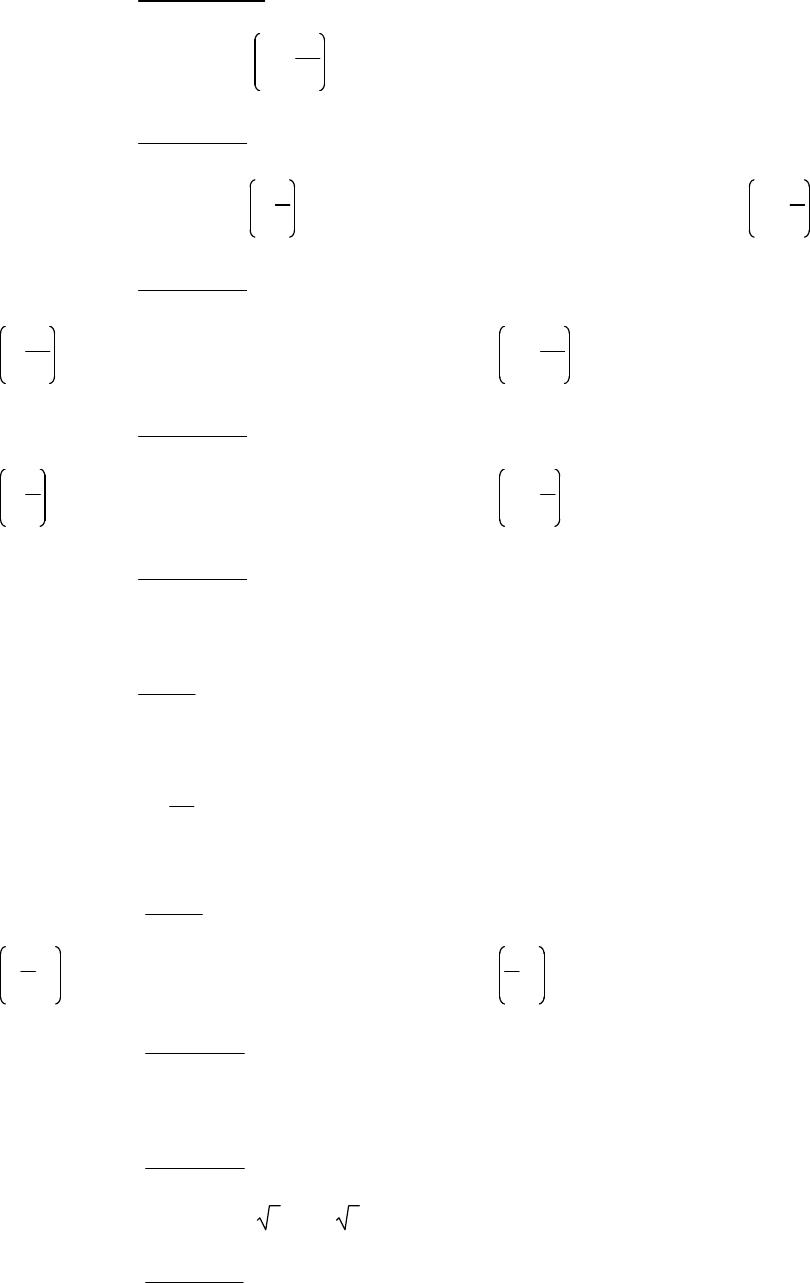
16) y–interceptoff(x)=x
(x+20)(x–4)
A) (0,0) B) 0,–1
80 C) (0,4) D) none
17) y–interceptoff(x)=x2–10x
x2+14x–6
A) (0,0) B) 0,5
3C) (0,10) D) 0,–3
5
18) y–interceptoff(x)=x2–11
x2+13x–3
A) 0,11
3B) (0,11) C) 0,–3
11 D) none
19) y–interceptoff(x)=x2–11x+5
4x
A) 0,5
4B) (0,5) C) 0,–4
5D) none
20) y–interceptoff(x)=x2–11x–6
x2+4x+2
A) (0,–3) B) (0,–6) C) (0,4) D) none
21) y–interceptoff(x)=x3–3
x2+3
A) (0,–1) B) (0,–3) C) (0,8) D) none
22) y–interceptoff(x)=x+64
x
A) (0,8) B) (0,0) C) (0,64) D) none
23) x–interceptsoff(x)=2x+9
x–5
A) –9
2,0 B) (5
,
0) C) 9
2,0 D) (–5
,
0)
24) x–interceptsoff(x)=x–2
x2+5x–2
A) (2
,
0) B) (–2
,
0) C) (5
,
0) D) none
25) x–interceptsoff(x)=x2+3
x2+2x+7
A) (7
,
0) B) ( 3,0),(–3,0) C) (–3
,
0) D) none
26) x–interceptsoff(x)=5
x2–x–42
A) (6
,
0),(–7
,
0) B) (5,0) C) (7
,
0),(–6
,
0) D) none
Page46
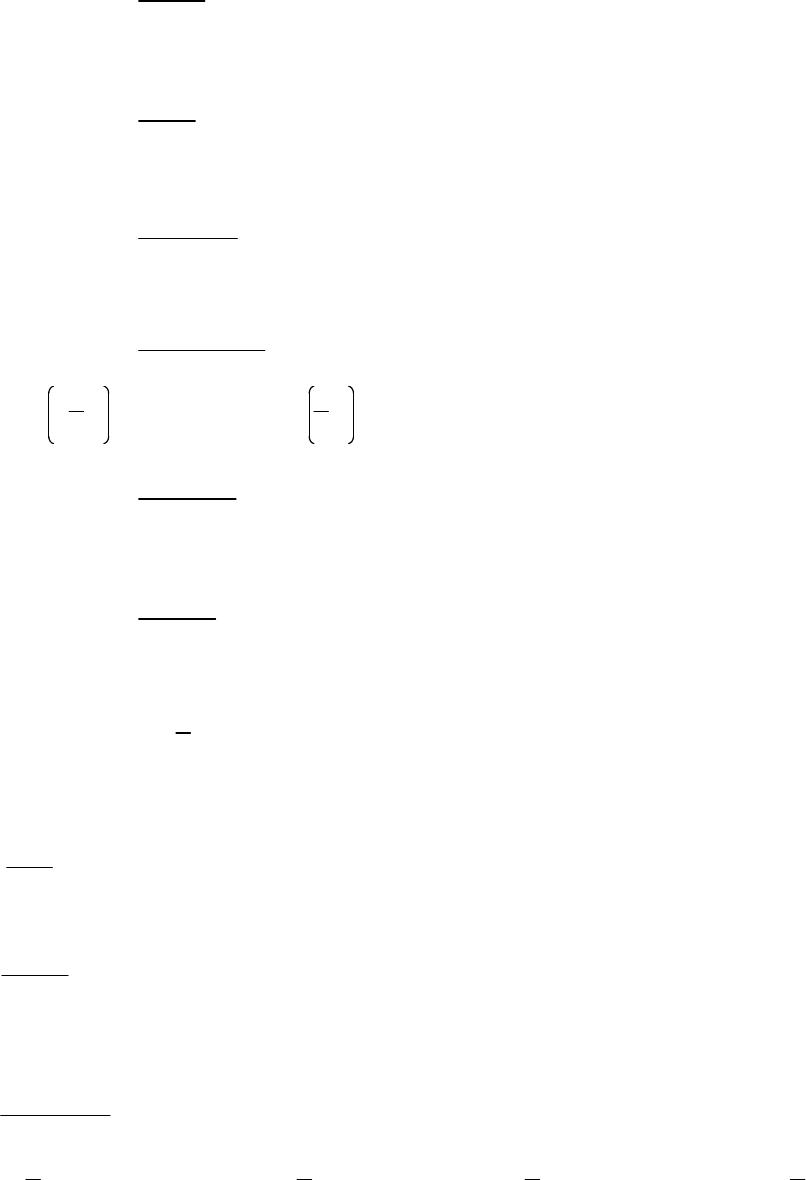
27) x–interceptsoff(x)=2x
x2–49
A) (0,0) B) (–7
,
0),(7
,
0) C) (49
,
0) D) (2
,
0)
28) x–interceptsoff(x)=x2–4
3+x4
A) (–2
,
0),(2
,
0) B) (3
,
0) C) (4
,
0) D) none
29) x–interceptsoff(x)=x2+4x
x2+9x–4
A) (0,0),(–4
,
0) B) (–4
,
0) C) (0,0),(4
,
0) D) (4
,
0)
30) x–interceptsoff(x)=(x–9)(2x+7)
x2+5x–6
A) (9,0),–7
2,0 B) (–9,0),7
2,0 C) (9
,
0),(–7
,
0) D) none
31) x–interceptsoff(x)=x2–x–20
x2+5
.
A) (–4
,
0),(5
,
0) B) (–20
,
0) C) (–5
,
0),(0,0) D) (–5
,
0),(4
,
0)
32) x–interceptsoff(x)=x3–216
x2–25
A) (6
,
0) B) (–6
,
0),(6
,
0) C) (5,0) D) (–216
,
0)
33) x–interceptsoff(x)=x+ 4
x
A) (2
,
0) B) (–2
,
0),(2
,
0) C) (–4
,
0) D) none
Findtheverticalasymptotesoftherationalfunction.
34) g(x)=3x
x+8
A) x=–8B)x=8C)x=3 D) none
35) f(x)=x+5
x2–36
A) x=–6
,
x=6B)x= –6
,
x=6
,
x= –5
C) x=0,x=36 D) x=36
,
x= –5
36) f(x)=–2x(x+2)
3x2–5x–8
A) x=8
3,x=–1B)x=–8
3,x=1C)x=3
8,x=–1D)x=–3
8,x=1
Page47
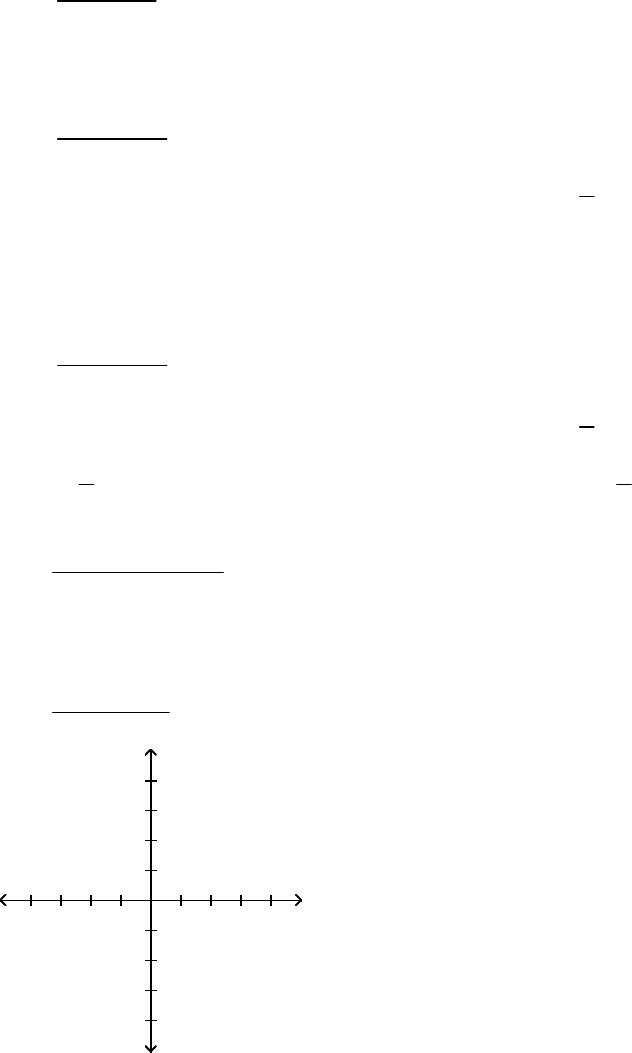
Givetheequationofthehorizontalasymptote,ifany,ofthefunction.
37) g(x)=x2+8x–5
x–5
A) nohorizontalasymptote B) y=1
C) y=5D)y=0
38) h(x)=4x3–2x–6
5x+6
A) nohorizontalasymptote B) y=4
5
C) y=0D)y=4
Givetheequationoftheobliqueasymptote,ifany,ofthefunction.
39) h(x)=9x2–5x–8
5x2–7x+6
A) noobliqueasymptote B) y=9
5
C) y=9
5xD)y=x+ 9
5
40) f(x)=2x3+11x2+5x–1
x2+6x+5
A) y=2x–1B)y=2x C) y=2x+1D)y=0
Graphthefunction.
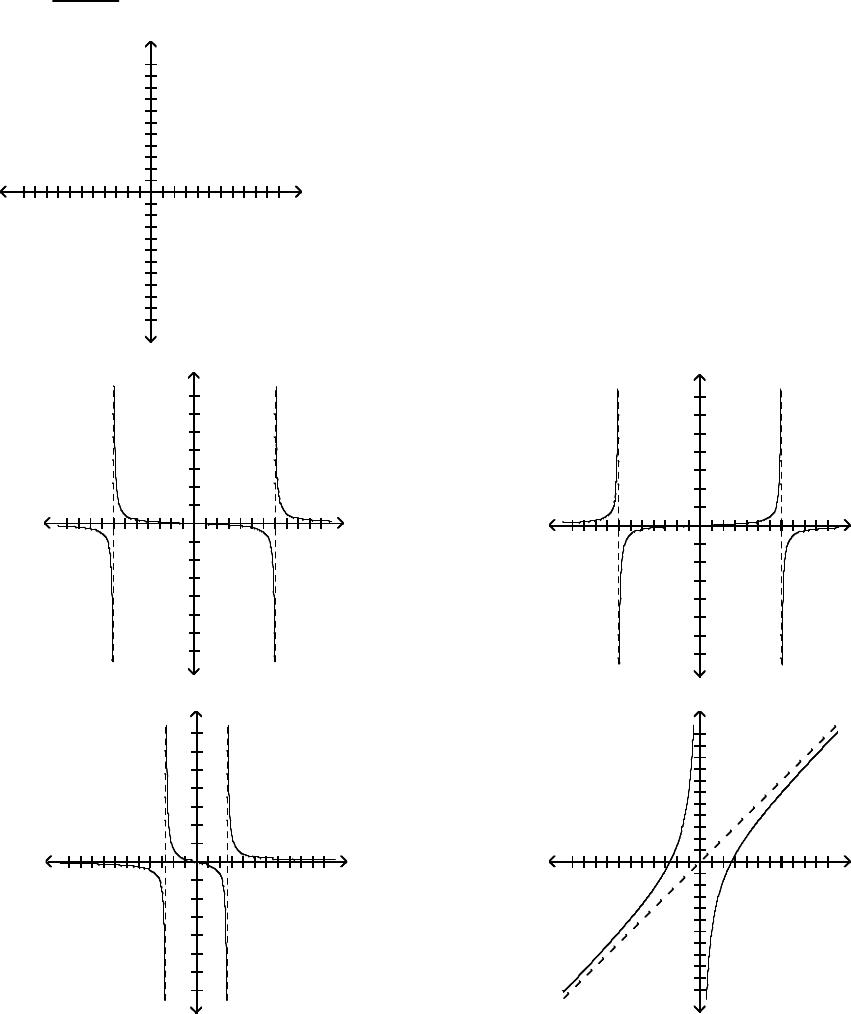
41) f(x)=2x
(x–2)(x+2)
x
-8 -4 4 8
y
40
20
-20
-40
x
-8 -4 4 8
y
40
20
-20
-40
Page48
A)
x
-8 -4 4 8
y
40
20
-20
-40
x
-8 -4 4 8
y
40
20
-20
-40
B)
x
-8 -4 4 8
y
40
20
-20
-40
x
-8 -4 4 8
y
40
20
-20
-40
C)
x
-8 -4 4 8
y
40
20
-20
-40
x
-8 -4 4 8
y
40
20
-20
-40
D)
x
-8 -4 4 8
y
40
20
-20
-40
x
-8 -4 4 8
y
40
20
-20
-40
Page49
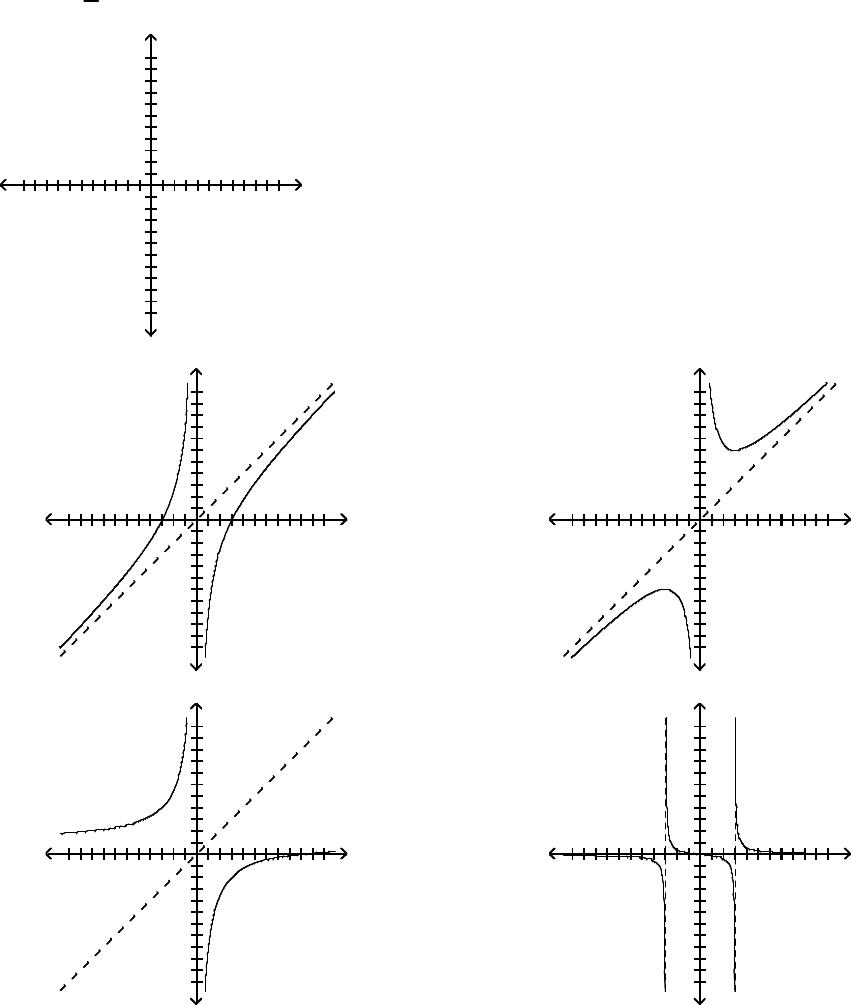
42) f(x)=x–9
x
x
-10 -5 5 10
y
10
5
-5
-10
x
-10 -5 5 10
y
10
5
-5
-10
A)
x
-10 -5 5 10
y
10
5
-5
-10
x
-10 -5 5 10
y
10
5
-5
-10
B)
x
-10 -5 5 10
y
10
5
-5
-10
x
-10 -5 5 10
y
10
5
-5
-10
C)
x
-10 -5 5 10
y
10
5
-5
-10
x
-10 -5 5 10
y
10
5
-5
-10
D)
x
-10 -5 5 10
y
10
5
-5
-10
x
-10 -5 5 10
y
10
5
-5
-10
Page50
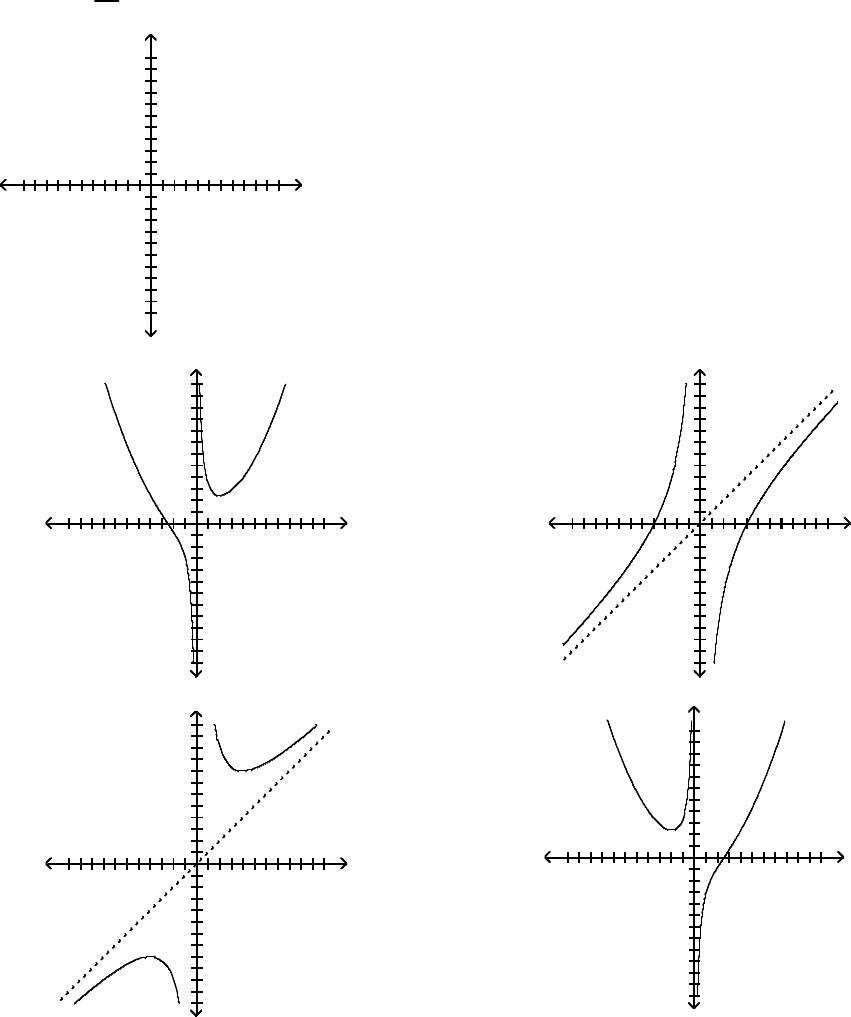
43) f(x)=x2+16
x
x
-10 -5 5 10
y
50
25
-25
-50
x
-10 -5 5 10
y
50
25
-25
-50
A)
x
-10 -5 5 10
y
50
25
-25
-50
x
-10 -5 5 10
y
50
25
-25
-50
B)
x
-10 -5 5 10
y
10
5
-5
-10
x
-10 -5 5 10
y
10
5
-5
-10
C)
x
-10 -5 5 10
y
10
5
-5
-10
x
-10 -5 5 10
y
10
5
-5
-10
D)
x
-10 -5 5 10
y
50
25
-25
-50
x
-10 -5 5 10
y
50
25
-25
-50
Page51
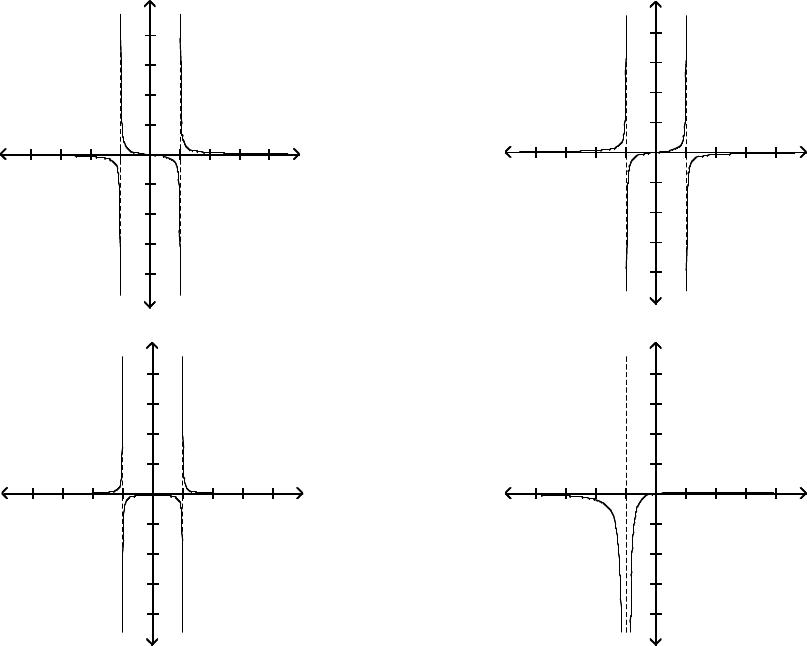
44) f(x)=x
x2–49
x
-10 -5 5 10
y
10
5
-5
-10
x
-10 -5 5 10
y
10
5
-5
-10
A)
x
-10 -5 5 10
y
5
-5
x
-10 -5 5 10
y
5
-5
B)
x
-10 -5 5 10
y
5
-5
x
-10 -5 5 10
y
5
-5
C)
x
-10 -5 5 10
y
5
-5
x
-10 -5 5 10
y
5
-5
D)
x
-10 -5 5 10
y
10
5
-5
-10
x
-10 -5 5 10
y
10
5
-5
-10
Page52
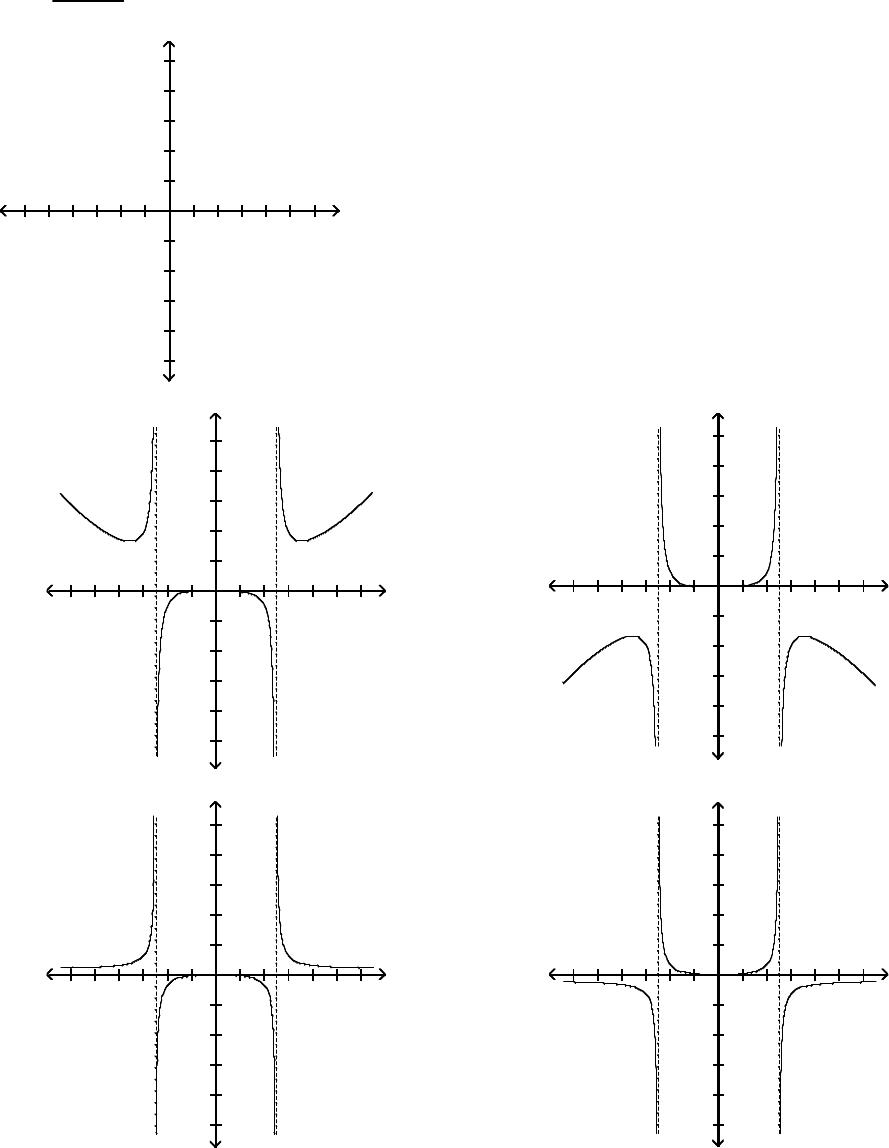
45) f(x)=x4–1
x2–25
x
-12-10 -8 -6 -4 -2 2 4 6 8 10 12
y
300
240
180
120
60
-60
-120
-180
-240
-300
x
-12-10 -8 -6 -4 -2 2 4 6 8 10 12
y
300
240
180
120
60
-60
-120
-180
-240
-300
A)
x
-12-10 -8 -6 -4 -2 2 4 6 8 10 12
y
300
240
180
120
60
-60
-120
-180
-240
-300
x
-12-10 -8 -6 -4 -2 2 4 6 8 10 12
y
300
240
180
120
60
-60
-120
-180
-240
-300
B)
x
-12 -10 -8 -6 -4 -2 2 4 6 8 10 12
y
300
240
180
120
60
-60
-120
-180
-240
-300
x
-12 -10 -8 -6 -4 -2 2 4 6 8 10 12
y
300
240
180
120
60
-60
-120
-180
-240
-300
C)
x
-12-10 -8 -6 -4 -2 2 4 6 8 10 12
y
25
20
15
10
5
-5
-10
-15
-20
-25
x
-12-10 -8 -6 -4 -2 2 4 6 8 10 12
y
25
20
15
10
5
-5
-10
-15
-20
-25
D)
x
-12 -10 -8 -6 -4 -2 2 4 6 8 10 12
y
25
20
15
10
5
-5
-10
-15
-20
-25
x
-12 -10 -8 -6 -4 -2 2 4 6 8 10 12
y
25
20
15
10
5
-5
-10
-15
-20
-25
Page53
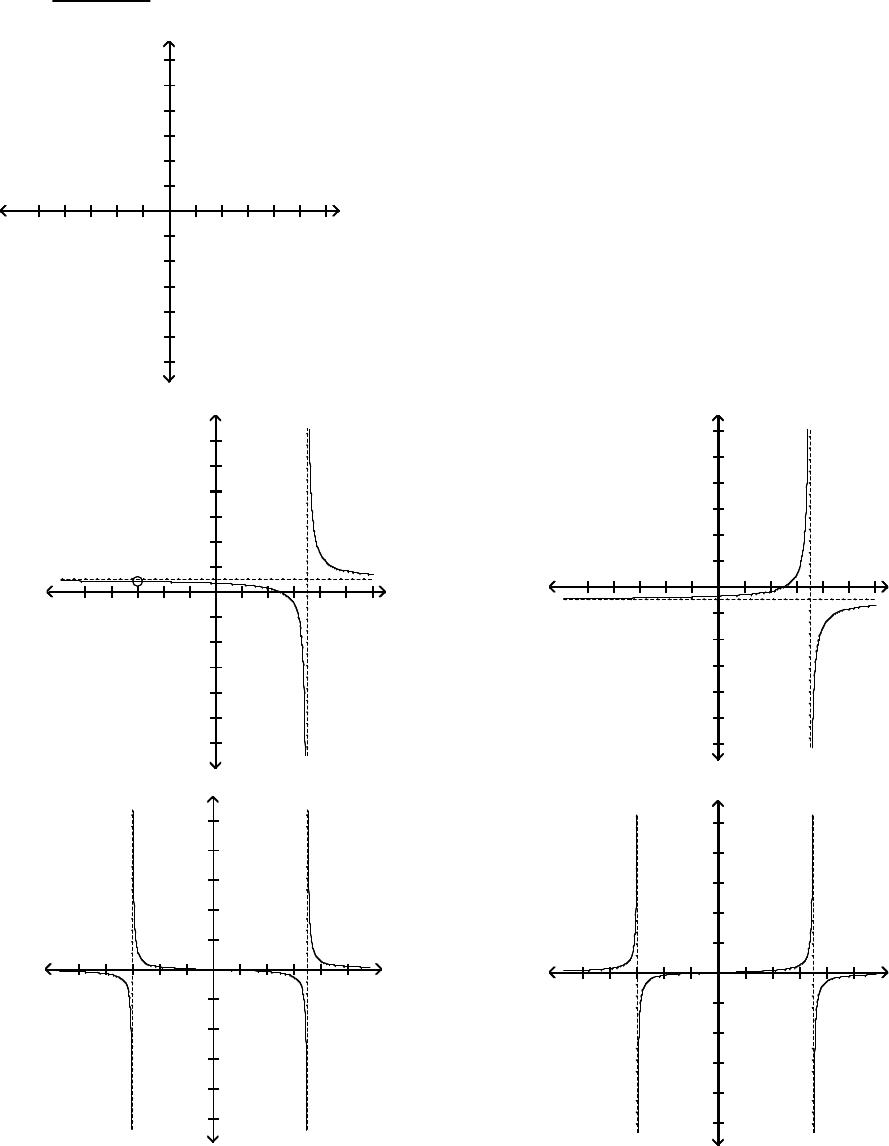
46) f(x)=x2+x–30
x2–x–42
x
–10–8-6-4-2 2 4 6 810
y
12
10
8
6
4
2
-2
-4
-6
-8
-10
-12
x
–10–8-6-4-2 2 4 6 810
y
12
10
8
6
4
2
-2
-4
-6
-8
-10
-12
A)
x
–10–8-6-4-2 2 4 6 810
y
12
10
8
6
4
2
-2
-4
-6
-8
-10
-12
x
–10–8-6-4-2 2 4 6 810
y
12
10
8
6
4
2
-2
-4
-6
-8
-10
-12
B)
x
–10–8-6-4-2 2 4 6 810
y
12
10
8
6
4
2
-2
-4
-6
-8
-10
-12
x
–10–8-6-4-2 2 4 6 810
y
12
10
8
6
4
2
-2
-4
-6
-8
-10
-12
C)
x
–10–8–6–4–2 246810
y
10
8
6
4
2
-2
-4
-6
-8
-10
x
–10–8–6–4–2 246810
y
10
8
6
4
2
-2
-4
-6
-8
-10
D)
x
–10–8-6-4-2 2 4 6 810
y
10
8
6
4
2
-2
-4
-6
-8
-10
x
–10–8-6-4-2 2 4 6 810
y
10
8
6
4
2
-2
-4
-6
-8
-10
Page54
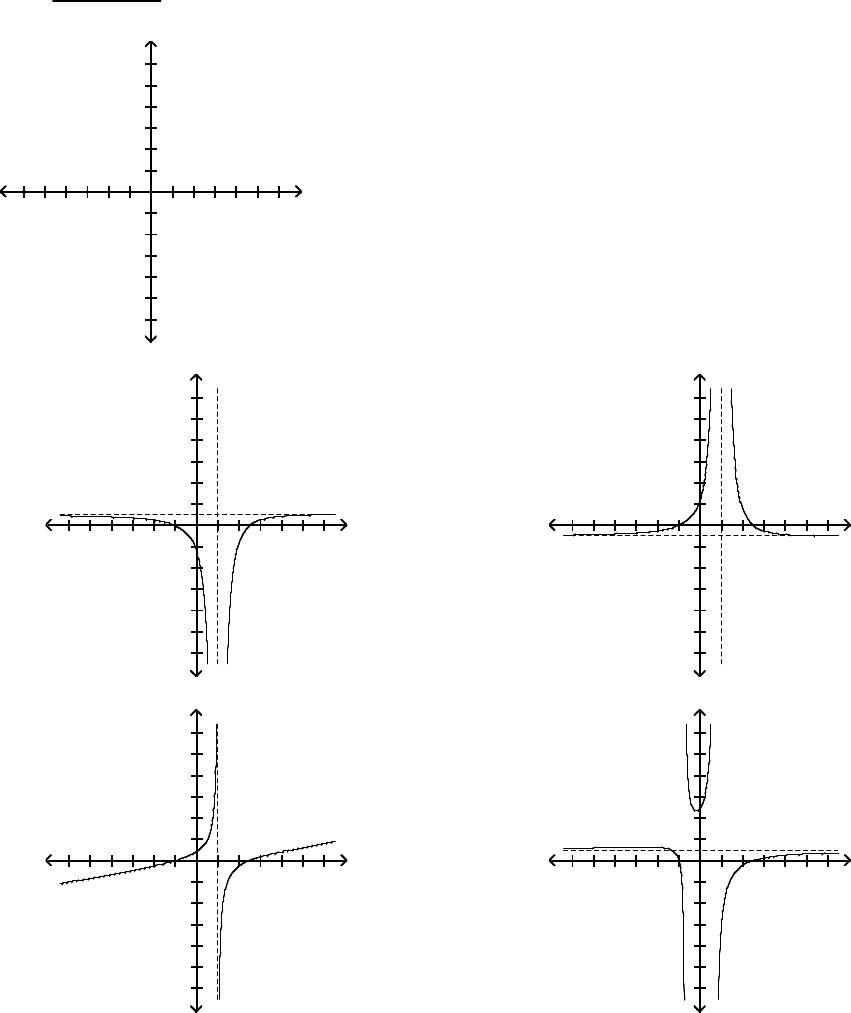
47) f(x)=x2–3x–10
(x–2)2
x
-6 -4 -2 2 4 6
y
6
4
2
-2
-4
-6
x
-6 -4 -2 2 4 6
y
6
4
2
-2
-4
-6
A)
x
-12 -8 -4 4 8 12
y
12
8
4
-4
-8
-12
x
-12 -8 -4 4 8 12
y
12
8
4
-4
-8
-12
B)
x
-12 -8 -4 4 8 12
y
12
8
4
-4
-8
-12
x
-12 -8 -4 4 8 12
y
12
8
4
-4
-8
-12
C)
x
-12 -8 -4 4 8 12
y
72
48
24
-24
-48
-72
x
-12 -8 -4 4 8 12
y
72
48
24
-24
-48
-72
D)
x
-12 -8 -4 4 8 12
y
12
8
4
-4
-8
-12
x
-12 -8 -4 4 8 12
y
12
8
4
-4
-8
-12
Page55
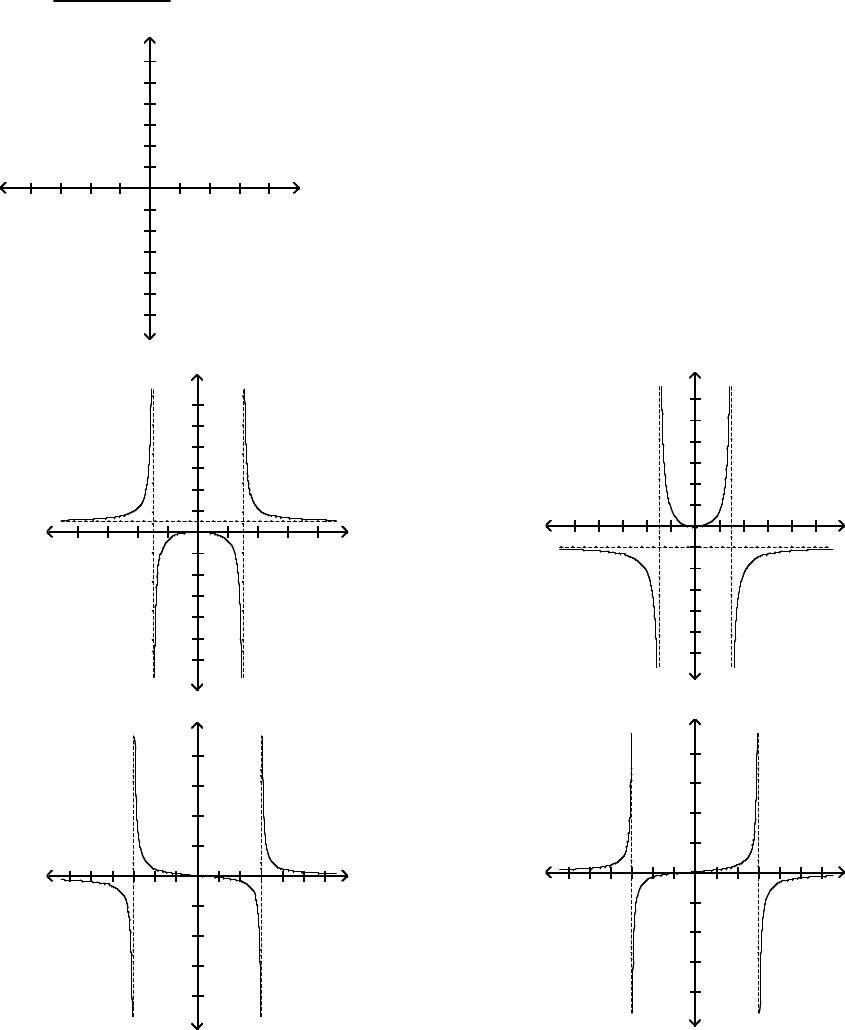
48) f(x)=(x–1)(x+1)
x2–36
x
-16 -8 8 16
y
6
4
2
-2
-4
-6
x
-16 -8 8 16
y
6
4
2
-2
-4
-6
A)
x
-16 -8 8 16
y
12
8
4
-4
-8
-12
x
-16 -8 8 16
y
12
8
4
-4
-8
-12
B)
x
-16 -8 8 16
y
6
4
2
-2
-4
-6
x
-16 -8 8 16
y
6
4
2
-2
-4
-6
C)
x
-12 -8 -4 4 8 12
y
4
2
-2
-4
x
-12 -8 -4 4 8 12
y
4
2
-2
-4
D)
x
-12 -8 -4 4 8 12
y
4
2
-2
-4
x
-12 -8 -4 4 8 12
y
4
2
-2
-4
Page56
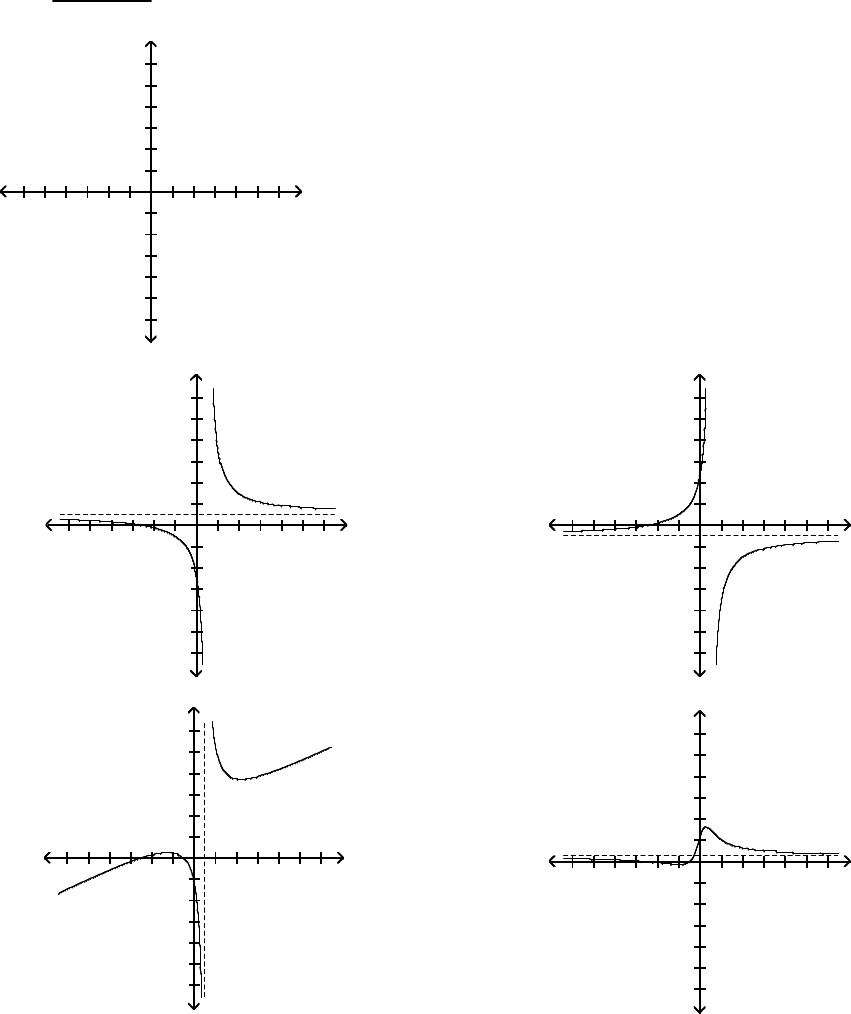
49) f(x)=x2+6x+5
x2–1
x
-6 -4 -2 2 4 6
y
6
4
2
-2
-4
-6
x
-6 -4 -2 2 4 6
y
6
4
2
-2
-4
-6
A)
x
-12 -8 -4 4 8 12
y
12
8
4
-4
-8
-12
x
-12 -8 -4 4 8 12
y
12
8
4
-4
-8
-12
B)
x
-12 -8 -4 4 8 12
y
12
8
4
-4
-8
-12
x
-12 -8 -4 4 8 12
y
12
8
4
-4
-8
-12
C)
x
-12 -8 -4 4 8 12
y
24
16
8
-8
-16
-24
x
-12 -8 -4 4 8 12
y
24
16
8
-8
-16
-24
D)
x
-12 -8 -4 4 8 12
y
24
16
8
-8
-16
-24
x
-12 -8 -4 4 8 12
y
24
16
8
-8
-16
-24
Page57
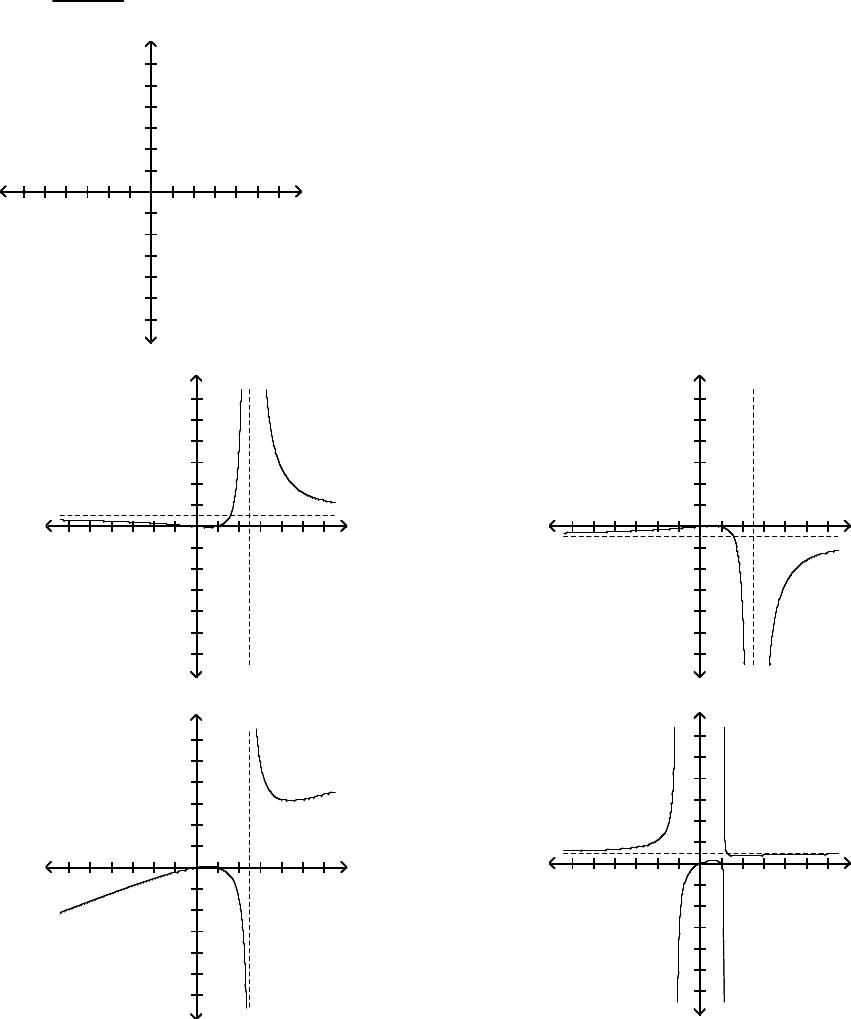
50) f(x)=x2–2x
(x–5)2
x
-12 -8 -4 4 8 12
y
12
8
4
-4
-8
-12
x
-12 -8 -4 4 8 12
y
12
8
4
-4
-8
-12
A)
x
-12 -8 -4 4 8 12
y
12
8
4
-4
-8
-12
x
-12 -8 -4 4 8 12
y
12
8
4
-4
-8
-12
B)
x
-12 -8 -4 4 8 12
y
12
8
4
-4
-8
-12
x
-12 -8 -4 4 8 12
y
12
8
4
-4
-8
-12
C)
x
-12 -8 -4 4 8 12
y
30
20
10
-10
-20
-30
x
-12 -8 -4 4 8 12
y
30
20
10
-10
-20
-30
D)
x
-12 -8 -4 4 8 12
y
12
8
4
-4
-8
-12
x
-12 -8 -4 4 8 12
y
12
8
4
-4
-8
-12
Page58
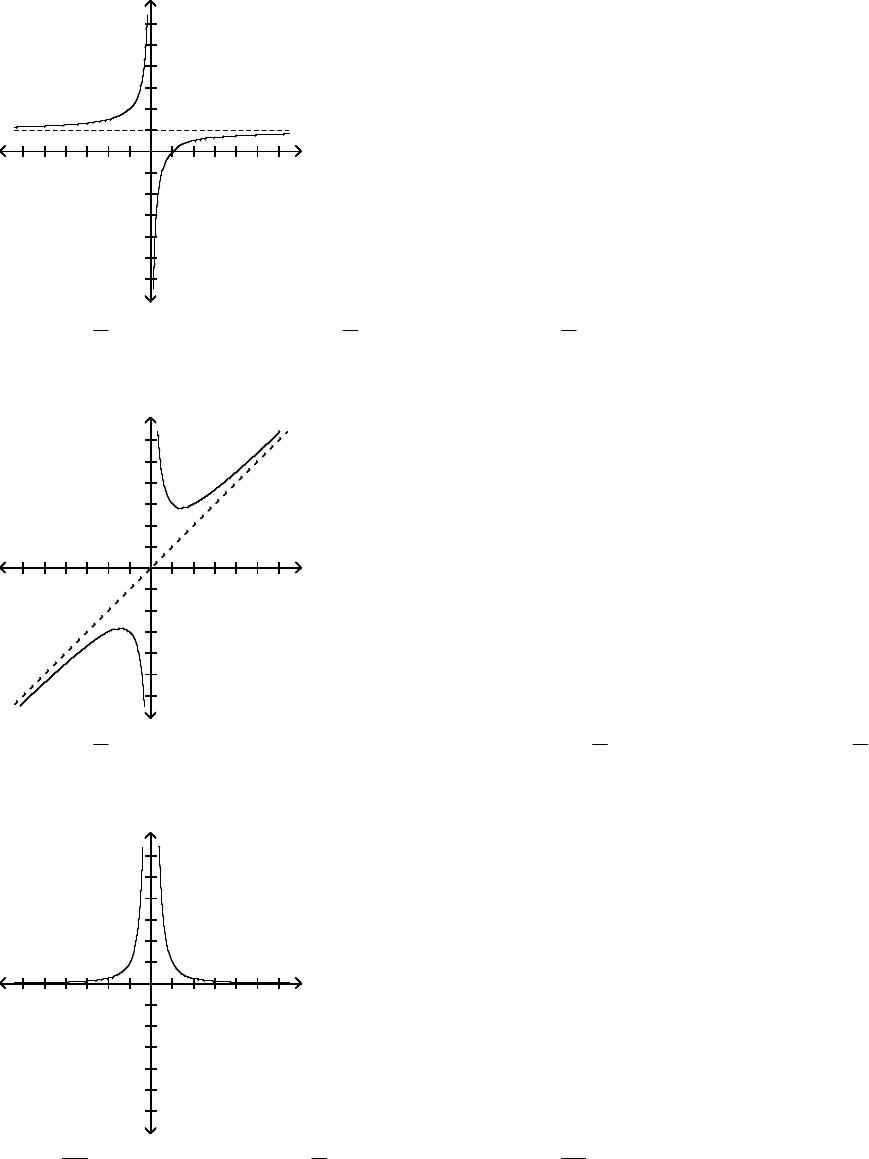
Solvetheproblem.
51) Decidewhichoftherationalfunctionsmighthavethegivengraph.
x
-5 5
y
5
-5
x
-5 5
y
5
-5
A) f(x)=1–1
xB) f(x)=1+1
xC) f(x)=1
x
–1 D) f(x)=1–x
52) Decidewhichoftherationalfunctionsmighthavethegivengraph.
x
-5 5
y
5
-5
x
-5 5
y
5
-5
A) f(x)=x+2
xB) f(x)=x+2 C) f(x)=x+1
xD) f(x)=2x+1
x
53) Decidewhichoftherationalfunctionsmighthavethegivengraph.
x
-5 5
y
5
-5
x
-5 5
y
5
-5
A) f(x)=1
x2B) f(x)=1
xC) f(x)=1
2x D) f(x)=x2
Page59
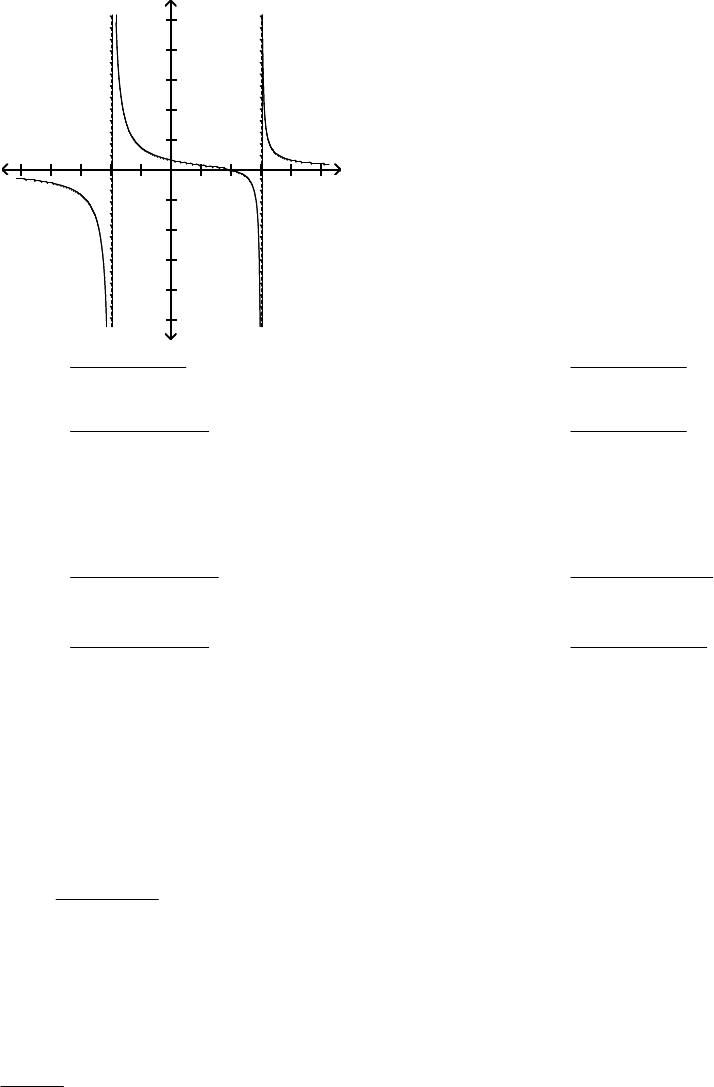
54) Decidewhichoftherationalfunctionsmighthavethegivengraph.
x
–5–4–3–2–1 12345
y
5
4
3
2
1
-1
-2
-3
-4
-5
x
–5–4–3–2–1 12345
y
5
4
3
2
1
-1
-2
-3
-4
-5
A) R(x)=x–2
(x+2)(x–3) B) R(x)=x+2
(x–2)(x+3)
C) R(x)=x–2
(x+2)2(x–3)2D) R(x)=2–x
(x+2)(x–3)
55) DeterminewhichrationalfunctionR(x)hasagraphthatcrossesthex–axisat–1,touchesthex–axisat–4,
hasverticalasymptotesatx=–2andx=3,andhasonehorizontalasymptoteaty=–2.
A) R(x)=–2(x+1)(x+4)2
(x+2)2(x–3)
,x≠–2,3 B) R(x)=–2(x–3)(x+2)2
(x+4)2(x+1)
,x≠–4,–1
C) R(x)=–(x+1)(x+4)2
2(x–2)2(x+3)
,x≠2,–3 D) R(x)=–2(x+1)(x+4)
(x+2)(x–3) ,x≠–2,3
2 SolveAppliedProblemsInvolvingRationalFunctions
SHORTANSWER.Writethewordorphrasethatbestcompleteseachstatementoranswersthequestion.
Solvetheproblem.
1) ArarespeciesofinsectwasdiscoveredintherainforestofCostaRica.Environmentaliststransplantthe
insectintoaprotectedarea.Thepopulationoftheinsecttmonthsafterbeingtransplantedis
P(t)=45(1+0.6t)
(3+0.02t) .
a) Whatwasthepopulationwhent=0?
b) Whatwillthepopulationbeafter10years?
c) Whatisthelargestvaluethepopulationcouldreach?
2) TheconcentrationCofacertaindruginapatientʹsbloodstreamisgivenby
30t
t2+49
.
a) FindthehorizontalasymptoteofC(t).
b) Usingagraphingutility,determinethetimeatwhichtheconcentrationishighest.
Page60

MULTIPLECHOICE.Choosetheonealternativethatbestcompletesthestatementoranswersthequestion.
3) Acanintheshapeofarightcircularcylinderisrequiredtohaveavolumeof700cubiccentimeters.The
topandbottomaremadeupofamaterialthatcosts8¢persquarecentimeter,whilethesidesaremadeof
materialthatcosts5¢persquarecentimeter.Whichfunctionbelowdescribesthetotalcostofthematerial
asafunctionoftheradiusrofthecylinder?
A) C(r)=0.16πr2+70
rB) C(r)=0.16πr2+140
r
C) C(r)=0.08πr2+140
rD) C(r)=0.08πr2+70
r
4) Theconcentrationofadruginthebloodstream,measuredinmilligramsperliter,canbemodeledbythe
function,C(t)=12t+4
3t2+2
,wheretisthenumberofminutesafterinjectionofthedrug.Whenwillthedrugbe
atitshighestconcentration?Approximateyouranswerroundedtotwodecimalplaces.
A) t=0.55minutesaftertheinjectionisgiven B) t=3.65minutesaftertheinjectionisgiven
C) atthetimeofinjectio
n
D) t=4minutesaftertheinjectionisgiven
5) Aclosedboxwithasquarebasehastohaveavolumeof14,000 cubicinches.Findafunctionforthe
surfaceareaofthebox.
A) S(x)=2x2+56,000
xB) S(x)=2x2+84,000
x
C) S(x)=x2+56,000
xD) S(x)=2x2+14,000
x
6) EconomistsusewhatiscalledaLeffercurvetopredictthegovernmentrevenuefortaxratesfrom0%to
100%.Economistsagreethattheendpointsofthecurvegenerate0revenue,butdisagreeonthetaxrate
thatproducesthemaximumrevenue.Supposeaneconomistproducesthisrationalfunction
R(x)=10x(100–x)
50+x,whereRisrevenueinmillionsatataxrateofxpercent.Useagraphingcalculator
tographthefunction.Whattaxrateproducesthemaximumrevenue?Whatisthemaximumrevenue?
A) 36.6%;$268million B) 41.2%;$264million
C) 34.0%;$271million D) 35.8%;$276million
7) EconomistsusewhatiscalledaLeffercurvetopredictthegovernmentrevenuefortaxratesfrom0%to
100%.Economistsagreethattheendpointsofthecurvegenerate0revenue,butdisagreeonthetaxrate
thatproducesthemaximumrevenue.Supposeaneconomistproducesthisrationalfunction
R(x)=10x(100–x)
25+x,whereRisrevenueinmillionsatataxrateofxpercent.Useagraphingcalculator
tographthefunction.Whattaxrateproducesthemaximumrevenue?Whatisthemaximumrevenue?
A) 30.9%;$382million B) 27.0%;$379million
C) 28.8%;$272million D) 38.4%;$383million
8) EconomistsusewhatiscalledaLeffercurvetopredictthegovernmentrevenuefortaxratesfrom0%to
100%.Economistsagreethattheendpointsofthecurvegenerate0revenue,butdisagreeonthetaxrate
thatproducesthemaximumrevenue.Supposeaneconomistproducesthisrationalfunction
R(x)=10x(100–x)
75+x,whereRisrevenueinmillionsatataxrateofxpercent.Useagraphingcalculator
tographthefunction.Whattaxrateproducesthemaximumrevenue?Whatisthemaximumrevenue?
A) 39.6%;$209million B) 34.9%;$207million
C) 37.5%;$210million D) 35.8%;$209million
Page61
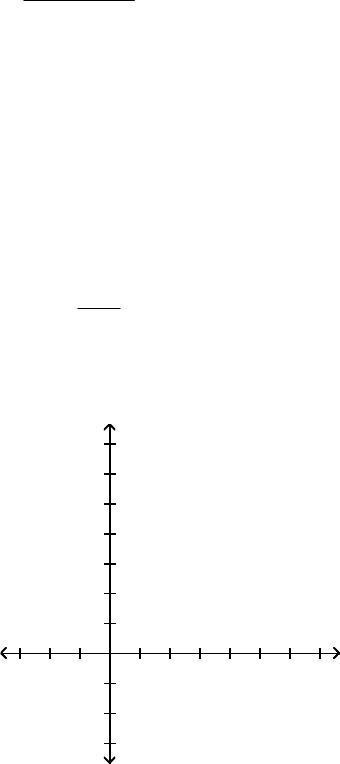
9) EconomistsusewhatiscalledaLeffercurvetopredictthegovernmentrevenuefortaxratesfrom0%to
100%.Economistsagreethattheendpointsofthecurvegenerate0revenue,butdisagreeonthetaxrate
thatproducesthemaximumrevenue.Supposeaneconomistproducesthisrationalfunction
R(x)=10x(100–x)
15+x,whereRisrevenueinmillionsatataxrateofxpercent.Useagraphingcalculator
tographthefunction.Whattaxrateproducesthemaximumrevenue?Whatisthemaximumrevenue?
A) 26.5%;$469million B) 29.7%;$467million
C) 31.4%;$464million D) 28.1%;$470million
SHORTANSWER.Writethewordorphrasethatbestcompleteseachstatementoranswersthequestion.
10) Aboxhasabasewhoselengthistwiceitswidth.Thevolumeoftheboxis7000cubicinches.
a) Findafunctionforthesurfaceareaofthebox.
b) Whatarethedimensionsoftheboxthatminimizessurfacearea?
11) Theformulay=fx
x–f
modelstherelationshipsneededtofocusanimagewhereyisthedistancebetween
thefilmandprojectorlens,xisthedistancebetweenthemovescreenandtheprojectorlens,andfisthe
focallength.
a) Sketchthegraphofthisrationalfunctionforf=5centimeters.
x
–10 102030
y
30
20
10
-10
x
–10 102030
y
30
20
10
-10
b) BobandCarolareshowinghomemovies.Usethegraphtodescribethedesireddistancebetweenthe
filmandtheprojectorlensasCarolmovestheprojectorfurtherfromthescreen.
Page62
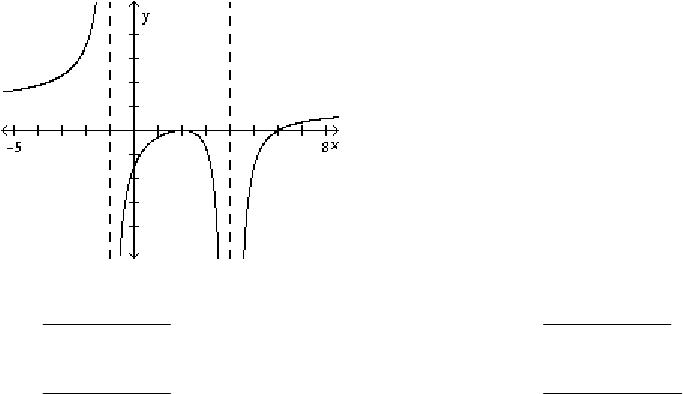
MULTIPLECHOICE.Choosetheonealternativethatbestcompletesthestatementoranswersthequestion.
12) Whichofthefollowingfunctionscouldhavethisgraph?
A) y=(x+1)(x–4)2
(x–2)2(x–6) B) y=(x–2)(x–6)2
(x+1)2(x–4)
C) y=(x–2)2(x–6)
(x+1)(x–4)2D) y=2(x–2)2(x–6)
(x+1)(x–4)2
5.4 PolynomialandRationalInequalities
1 SolvePolynomialInequalities
MULTIPLECHOICE.Choosetheonealternativethatbestcompletesthestatementoranswersthequestion.
Solvetheinequality.
1) (x+7)(x+1)>0
A) (–∞
,
–7)or(–1
,
∞)B)(
–7
,
–1) C) (–∞
,
–7) D) (–1
,
∞)
2) (x+4)(x–7)≤0
A) [–4
,
7] B) (–∞
,
–4] C) [7
,
∞)D)(
–∞
,
–4]or[7
,
∞)
3) x2–3x≥0
A) (–∞
,
0]or[3
,
∞) B) [0,3] C) (–∞
,
–3]or[0,∞)D)[
–3
,
0]
4) x2+6x≥0
A) (–∞
,
–6]or[0,∞) B) [0,6] C) (–∞
,
0]or[6
,
∞)D)[
–6
,
0]
5) x2+7x≤0
A) [–7
,
0] B) [0,7] C) (–∞
,
–7]or[0,∞)D)(
–∞
,
0]or[7
,
∞)
6) x2–3x≤0
A) [0,3] B) [–3
,
0] C) (–∞
,
–3]or[0,∞)D)(
–∞
,
0]or[3
,
∞)
7) x2–81>0
A) (–∞
,
–9)or(9
,
∞)B)(
–9
,
9)
C) (–∞
,
–81)or(81
,
∞)D)(
–81
,
81)
8) x2–9≤0
A) [–3
,
3] B) (–∞
,
–3]or[3
,
∞)C)(
–∞
,
–9]or[9
,
∞)D)[
–9
,
9]
Page63
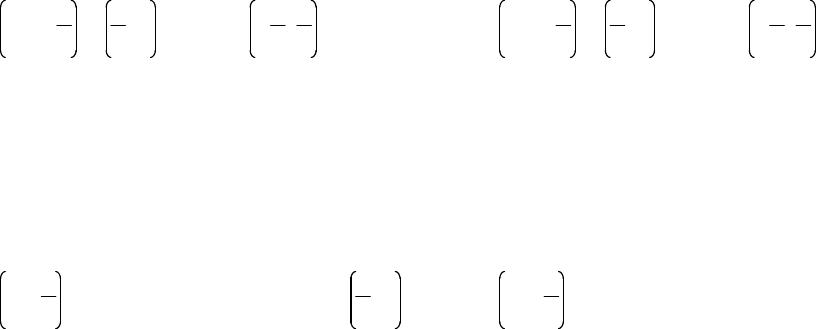
9) 36(x2–1)>65x
A) –∞,–4
9
or9
4,∞B) –4
9,9
4C) –∞,–9
4
or4
9,∞D) –9
4,4
9
10) x2+5x≥–4
A) (–∞
,
–4]or[–1
,
∞)B)[
–4
,
–1] C) (–∞
,
–4] D) [–1
,
∞)
11) x(x+5)≥–4
A) (–∞
,
–4]or[–1
,
∞)B)[
–4
,
–1] C) (–∞
,
–4] D) [–1
,
∞)
12) 2x2+3x<9
A) –3,3
2B) (–∞,–3)or3
2,∞C) –∞,3
2D) (–3
,
∞)
13) (a+4)(a+3)(a–1)>0
A) (–4
,
–3)or(1
,
∞)B)(
–∞
,
–4)or(–3
,
1) C) (1
,
∞)D)(
–∞
,
–3)
14) (b+5)(b+2)(b–6)
<
0
A) (–∞
,
–5)or(–2
,
6) B) (6
,
∞)C)(
–∞
,
–2) D) (–5
,
–2)or(6
,
∞)
15) (x–2)(x2+x+1)>
A) (2
,
∞)B)(
–∞
,
2) C) (–1
,
1) D) (–∞
,
–1)or(1,∞)
16) x2–10x+24>0
A) (–∞
,
4)or(6
,
∞)B)(4
,
6) C) (–∞
,
4) D) (6
,
∞)
17) x2–4x–21≤0
A) [–3
,
7] B) (–∞
,
–3] C) [7
,
∞)D)(
–∞
,
–3]or[7
,
∞)
18) x3+4x2–21x>0
A) (–7
,
0)or(3
,
∞)B)(
–∞
,
–7)or(0,3) C) (–3
,
0)or(7
,
∞)D)(
–7
,
∞)
19) x(x+3)(5–x)≥0
A) (–∞
,
–3]or[0,5] B) [–3,0]or[5,∞)C)[
–3,5] D) [0,5]
20) x4<36x2
A) (–6
,
0)or(0,6) B) (–∞
,
–6)or(6
,
∞)C)(
–6
,
0)or(6
,
∞)D)(
–∞
,
–6)or(0,6)
21) x3>6x2
A) (6
,
∞) B) (0,6) C) (–∞
,
0)or(6
,
∞)D)(
–∞
,
6)
22) x4–12x2–64>0
A) (–∞
,
–4)or(4
,
∞)B)(
–4
,
4)
C) (–∞
,
–4)or(–2,2)or(4
,
∞)D)(
–4
,
–2)or(2,4)
23) x3≥64
A) [4
,
∞)B)(
–∞
,
4] C) (–∞
,
–4]or[4
,
∞)D)[
–4
,
4]
Page64
Solvetheproblem.
24) Forwhatpositivenumberswillthecubeofanumberexceed7 timesitssquare?
A) {x|x>7} B) x|0
<
x
<
7} C) x|x>49} D) x|0
<
x
<
49}
25) Aballisthrownverticallyupwardwithaninitialvelocityof192 feetpersecond.Thedistanceinfeetofthe
ballfromthegroundaftertsecondsiss=192t–16t2.Forwhatintervaloftimeistheballmorethan512
abovetheground?
A) {x∣4sec
<
x
<
8sec} B) {x∣3.5 sec
<
x
<
8.5sec}
C) {x∣10sec
<
x
<
14 sec} D) {x∣5.5 sec
<
x
<
6.5sec}
26) Aballisthrownverticallyupwardwithaninitialvelocityof192 feetpersecond.Thedistanceinfeetofthe
ballfromthegroundaftertsecondsiss=192t–16t2.Forwhatintervalsoftimeistheballlessthan560
abovetheground(afteritistosseduntilitreturnstotheground)?
A) {x∣0sec
<
x
<
5secand7sec>x>12 sec} B) {x∣5 sec
<
x
<
7 sec}
C) {x∣0sec
<
x
<
4.5secand7.5sec>x>12 sec} D) {x∣0sec
<
x
<
5.5secand6.5sec>x>12 sec}
27) Therevenueachievedbysellingxgraphingcalculatorsisfiguredtobex(25 –0.2x)dollars.Thecostof
eachcalculatoris$13.Howmanygraphingcalculatorsmustbesoldtomakeaprofit(revenue–cost)ofat
least$135.00?
A) {x∣15
<
x
<
45} B) {x∣0
<
x
<
30} C) {x∣16
<
x
<
14} D) {x∣17
<
x
<
43}
28) Therevenueachievedbysellingxgraphingcalculatorsisfiguredtobex(48 –0.5x)dollars.Thecostof
eachcalculatoris$36.Howmanygraphingcalculatorsmustbesoldtomakeaprofit(revenue–cost)ofat
least$54.00?
A) {x∣6
<
x
<
18} B) {x∣9
<
x
<
21} C) {x∣7
<
x
<
17} D) {x∣8
<
x
<
16}
2 SolveRationalInequalities
MULTIPLECHOICE.Choosetheonealternativethatbestcompletesthestatementoranswersthequestion.
Solvetheinequality.
1) x–3
x+6
<0
A) (–6
,
3) B) (–∞
,
–6)or(3
,
∞)C)(3
,
∞)D)(
–∞
,
–6)
2) x–1
x+7
>0
A) (–∞
,
–7)or(1
,
∞)B)(
–7
,
1) C) (1
,
∞)D)(
–∞
,
–7)
3) x–5
x+4
<1
A) (–4
,
∞)B)(
–∞
,
–4)or(5
,
∞)C)(
–4
,
5) D) (–∞
,
–4)
4) x+16
x+6
<8
A) –∞,–6or–32
7,∞B) –6,–32
7
C) –∞,–32
7
or6,∞D) –∞
,
–6 or6
,
∞
Page65

5) x+32
x
<12
A) (–∞
,
0)or(4
,
8) B) (0,4)or(8
,
∞) C) (0,4)or(4
,
8) D) (–∞
,
0) or(8
,
∞)
6) (x–3)(x+3)
x
≤0
A) (–∞
,
–3]or(0,3] B) [–3
,
0)or(0,3] C) (–∞
,
–3]or[3
,
∞)D)[
–3
,
0)or[3
,
∞)
7) (x+4)(x–2)
x–1
≥0
A) [–4
,
1)or[2
,
∞)B)(
–∞
,
–4]or(1,2] C) (–∞
,
–4]or[2
,
∞)D)[
–4
,
1)or(1,2]
8) (x–3)2
x2–25
>0
A) (–∞
,
–5)or(5
,
∞)B)(
–5
,
3)or(3
,
5) C) (–∞
,
–5)or(3
,
5) D) (–5
,
3)or(5
,
∞)
9) (x–1)(3–x)
(x–2)2
≤0
A) (–∞
,
1]or[3,∞)B)(
–∞
,
–3]or(–2,–1)or[1,∞)
C) (–∞
,
–3)or(–1,∞)D)(
–∞
,
1)or(3,∞)
10) 4x
6–x
<x
A) (0,2)or(6
,
∞)B)(2
,
6) C) (6
,
∞)D)(
–∞
,
2)or(6
,
∞)
11) 20x
7–x
≥4x
A) (–∞
,
0]or[2
,
7) B) [0,2]or[7
,
∞)C)[7
,
∞)D)(
–∞
,
2]or[7
,
∞)
12) 8
x–3
>6
x–1
A) (–5
,
1)or(3
,
∞)B)(
–∞
,
–5)or(1
,
3) C) (–∞
,
–5)or(3
,
∞)D)(
–5
,
1)or(1
,
3)
13) x2(x–11)(x+3)
(x–5)(x+9)
≥0
A) (–∞
,
–9)or[–3
,
5)or[11
,
∞)B)(
–9
,
–3]or(5
,
11]
C) (–∞
,
–9)or[11
,
∞)D)(
–∞
,
–9)or[–3
,
0)or(0,5)or[11
,
∞)
14) 2x2–7x–9
x+2
≤0
A) (–∞,–2)or–1,9
2B) (–∞,–2]or–1,9
2C) (–2,–1]or9
2,∞D) (–∞,–1]or9
2,∞
Page66

5.5 TheRealZerosofaPolynomialFunction
1 UsetheRemainderandFactorTheorems
MULTIPLECHOICE.Choosetheonealternativethatbestcompletesthestatementoranswersthequestion.
UsetheRemainderTheoremtofindtheremainderwhenf(x)isdividedbyx–c.
1) f(x)=x4+8x3+12x2;x+1
A) R=5B)R=–5C)R=21 D) R= –21
2) f(x)=5x6–3x3+8;x+1
A) R=16 B) R=10 C) R=8D)R=6
UsetheFactorTheoremtodeterminewhetherx–cisafactoroff(x).
3) f(x)=x3+6x2–14x+16;x+8
A) Yes B) No
4) f(x)=x3+7x2–16x+18;x–9
A) Yes B) No
5) f(x)=x4–12x2–64;x–4
A) Yes B) No
6) f(x)=x4–21x2–100;x–10
A) Yes B) No
7) f(x)=x4+11x3+5x2+48x–77;x+11
A) Yes B) No
8) f(x)=x4+8x3+3x2+15x–72;x–8
A) Yes B) No
9) f(x)=21x3+71x2–40x–66;x+11
3
A) Yes B) No
10) f(x)=36x3+26x2–94x–88;x–11
9
A) Yes B) No
11) f(x)=7x4+20x3–3x2+x–3;x+3
A) Yes B) No
12) f(x)=7x4+20x3–3x2+x+3;x+3
A) Yes B) No
13) f(x)=5x3+17x2–11x+4;x+4
A) Yes B) No
14) f(x)=7x3+26x2–7x–4;x+4
A) Yes B) No
Page67

2 UsetheRationalZerosTheoremtoListthePotentialRationalZerosofaPolynomialFunction
MULTIPLECHOICE.Choosetheonealternativethatbestcompletesthestatementoranswersthequestion.
Listthepotentialrationalzerosofthepolynomialfunction.Donotfindthezeros.
1) f(x)=7x3–x2+3
A) ±1
7,±3
7,±1,±3B)
±1
3,±7
3,±1,±7
C) ±1
7,±3
7,±1,±3,±7D)
±1
7,±1
3,±1,±3,±7
2) f(x)=6x4+2x3–3x2+2
A) ±1
6,±1
3,±1
2,±2
3,±1,±2B)
±1
6,±1
3,±1
2,±2
3,±1,±2,±3
C) ±1
6,±1
3,±1
2,±1,±2D)
±1
2,±3
2,±1,±2,±3,±6
3) f(x)=–2x3+3x2–4x+8
A) ±1
2,±1,±2,±4,±8B)±1
4,±1
2,±1,±2,±4,±8
C) ±1
8,±1
4,±1
2,±1,±2,±4,±8D)±1
2,±1,±2,±4
4) f(x)=–4x4+2x2–3x+6
A) ±1
4,±1
2,±3
4,±3
2,±1,±2,±3,±6B)±1
6,±1
2,±1
3,±2
3,±4
3,±1,±2,±4
C) ±1
4,±1
2,±3
4,±3
2,±1,±2,±3,±4,±6D)±1
4,±1
2,±2
3,±3
4,±3
2,±1,±2,±3,±6
5) f(x)=7x5–3x2+6x–1
A) ±1,±1
7B) ±1,±7C)
±1,±7,±1
7D) ±7,±1
7
6) f(x)=x5–5x2+2x+2
A) ±1,±2B)
±1,±1
2C) ±1
5,±2
5,±2D)
±2,±1
2
7) f(x)=x5–3x2+3x+6
A) ±1,±3
,
±2
,
±6B)
±1,±1
3,±1
2,±1
6
C) ±1,±1
3,±1
2,±1
6,±3,±2,±6D)
±1,±3
,
±2
Page68

3 FindtheRealZerosofaPolynomialFunction
MULTIPLECHOICE.Choosetheonealternativethatbestcompletesthestatementoranswersthequestion.
UsetheRationalZerosTheoremtofindalltherealzerosofthepolynomialfunction.Usethezerostofactorfover
therealnumbers.
1) f(x)=x4+8x2–9
A) –1,1;f(x)=(x–1)(x+1)(x2+9) B) –3,3;f(x)=(x–3)(x+3)(x2+1)
C) 1;f(x)=(x–1)2(x2+9) D) –1
,
–3
,
1
,
3;f(x)=(x–1)(x+1)(x–3)(x+3)
2) f(x)=x3+2x2–5x–6
A) –3
,
–1
,
2;f(x)=(x+3)(x+1)(x–2) B) –2
,
1
,
3;f(x)=(x+2)(x–1)(x–3)
C) –3;f(x)=(x+3)(x2–x–2) D) –1;f(x)=(x+1)(x2+x–6)
3) f(x)=5x3–23x2–13x+15
A) –1,3
5,5;f(x)=(5x–3)(x–5)(x+1) B) –5,3
5,1;f(x)=(5x–3)(x–1)(x+5)
C) –1,5
3,–5;f(x)=(5x–3)(x–5)(x+1) D) 1,5
3,–5;f(x)=(5x–3)(x–1)(x+5)
4) f(x)=2x3–3x2+6x–9
A) 3
2;f(x)=(2x–3)(x2+3) B) 3,3
2,1;f(x)=(2x–3)(x–1)(x–3)
C) –3,–1,3
2;f(x)=(2x–3)(x+1)(x+3) D) 9;f(x)=(x–9)(2x2+1)
5) f(x)=5x4–9x3+29x2–45x+20
A) 1,4
5;f(x)=(x–1)(5x–4)(x2+5)
B) 5,4
5;f(x)=(x–5)(5x–4)(x2+1)
C) –5,–1,1,4
5;f(x)=(x–1)(5x–4)(x+1)(x+5)
D) –5,–1,1,–4
5;f(x)=(x–1)(5x+4)(x+1)(x+5)
6) f(x)=3x4–12x3+13x2–4x+4
A) 2,multiplicity2;f(x)=(x–2)2(3x2+1) B) –2,2;f(x)=(x–2)(x+2)(3x2+1)
C) norealroots;f(x)=(x2+4)(3x2+1) D) –2,multiplicity2;f(x)=(x+2)2(3x2+1)
Findtheinterceptsofthefunctionf(x).
7) f(x)=x3+3x2–4x–12
A) x–intercepts:–3
,
–2
,
2;y–intercept:–12 B) x–intercepts:–2
,
2
,
3;y–intercept:–12
C) x–intercept:–3;y–intercept:–12 D) x–intercept:–2;y–intercept:–12
Page69
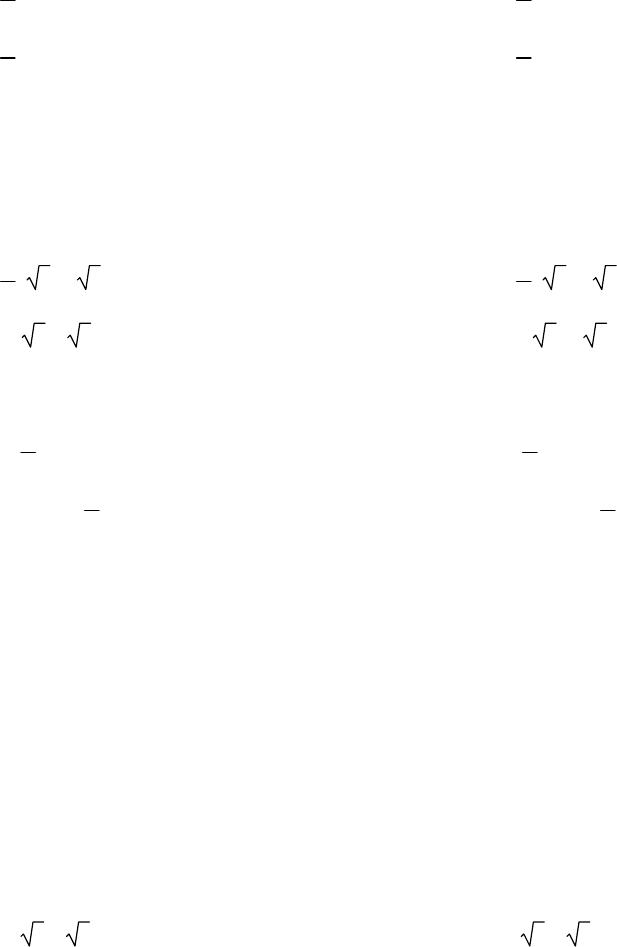
8) f(x)=2x3–11x2+17x–6
A) x–intercepts:1
2,2,3;y–intercept:–6B)x
–intercepts:–1
2,2,–3;y–intercept:–6
C) x–intercepts:3
2,1,2;y–intercept:–6D)x
–intercepts:–3
2,1,–2;y–intercept:–6
9) f(x)=x3+6x2–x–6
A) x–intercepts:1,–1,–6;y–intercept:–6B)x
–intercepts:–1,–2
,
–3;y–intercept:–6
C) x–intercepts:1,–2
,
3;y–intercept:–6D)x
–intercepts:1,–1,6;y–intercept:–6
10) f(x)=3x3–x2–15x+5
A) x–intercepts:1
3,5,–5;y–intercept:5B)x
–intercepts:–1
3,5,–5;y–intercept:5
C) x–intercepts:3,5,–5;y–intercept:5D)x
–intercepts:–3,5,–5;y–intercept:5
11) f(x)=3x4–5x3+14x2–20x+8
A) x–intercepts:1,2
3;y–intercept:8B)x
–intercepts:4,2
3;y–intercept:8
C) x–intercepts:–4,–1,1,2
3;y–intercept:8D)x
–intercepts:–4,–1,1,–2
3;y–intercept:8
12) f(x)=4x4–16x3+17x2–4x+4
A) x–intercept:2;y–intercept:4B)x
–intercepts:–2
,
2;y–intercept:4
C) x–intercepts:none;y–intercept:4D)x
–intercept:–2;y–intercept:4
13) f(x)=2x3(x+9)3
A) x–intercepts:0,–9;y–intercept:0B)x
–intercepts:0,–9;y–intercept:2
C) x–intercepts:0,9;y–intercept:2D)x
–intercepts:0,9;y–intercept:0
14) f(x)=(x+2)(x–6)(x+6)
A) x–intercepts:–2
,
–6
,
6;y–intercept:–72 B) x–intercepts:–6
,
6
,
2;y–intercept:72
C) x–intercepts:–2
,
–6
,
6;y–intercept:72 D) x–intercepts:–6
,
6
,
2;y–intercept:–72
15) f(x)=5x–x3
A) x–intercepts:0,5,–5;y–intercept:0B)x
–intercepts:0,5,–5;y–intercept:5
C) x–intercepts:0,–5;y–intercept:0D)x
–intercepts:0,–5;y–intercept:5
16) f(x)=(x+1)(x–2)(x–1)2
A) x–intercepts:–1,1,2;y–intercept:–2B)x
–intercepts:–1,1,2;y–intercept:2
C) x–intercepts:–1,1,–2;y–intercept:–2D)x
–intercepts:–1,1,–2;y–intercept:2
17) f(x)=–x2(x+3)(x2–1)
A) x–intercepts:–3
,
–1,0,1;y–intercept:0B)x
–intercepts:–1,0,1,3;y–intercept:0
C) x–intercepts:–3
,
0,1;y–intercept:–3D)x
–intercepts:–3
,
–1,0,1;y–intercept:–3
18) f(x)=–x2(x+7)(x2+1)
A) x–intercepts:–7
,
0;y–intercept:0B)x
–intercepts:–7
,
–1,0,1;y–intercept:0
C) x–intercepts:–7
,
–1,0;y–intercept:7D)x
–intercepts:–7
,
–1,0;y–intercept:–7
Page70
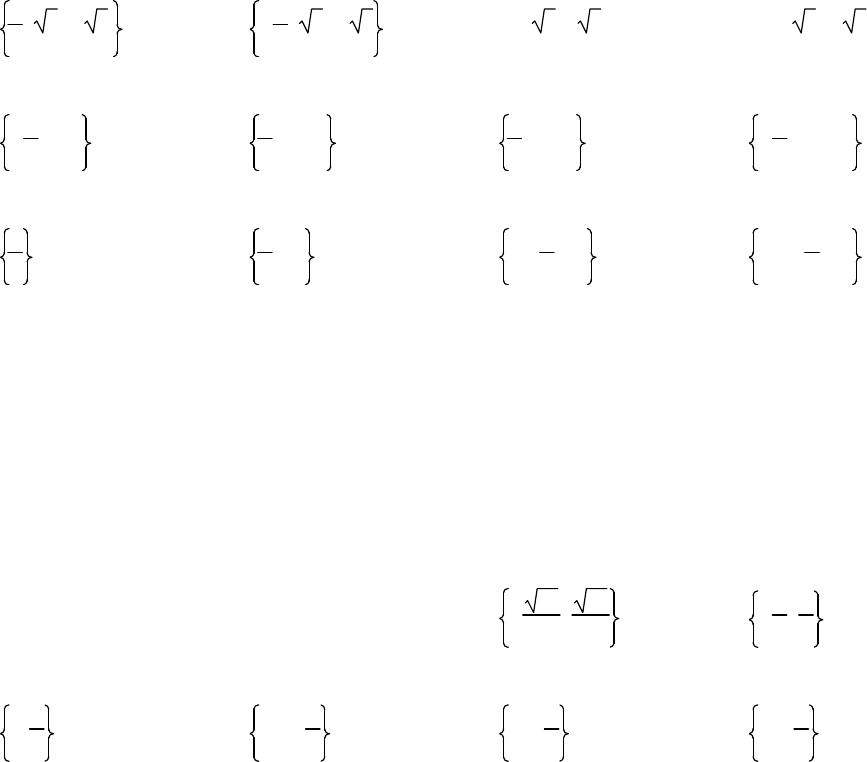
19) f(x)=x2(x–5)(x–4)
A) x–intercepts:0,5
,
4;y–intercept:0B)x
–intercepts:0,–5
,
–4;y–intercept:0
C) x–intercepts:0,5
,
4;y–intercept:20 D) x–intercepts:0,–5
,
–4;y–intercept:20
20) f(x)=(x–3)2(x2–25)
A) x–intercepts:–5
,
3
,
5;y–intercept:–225 B) x–intercepts:–5
,
3
,
5;y–intercept:225
C) x–intercepts:3
,
25;y–intercept:75 D) x–intercepts:–3
,
–25;y–intercept:75
4 SolvePolynomialEquations
MULTIPLECHOICE.Choosetheonealternativethatbestcompletesthestatementoranswersthequestion.
Solvetheequationintherealnumbersystem.
1) x3+6x2+11x+6=0
A) {–3
,
–1
,
–2} B) {2
,
1
,
3} C) {–3
,
–1} D) {1
,
3}
2) x3+8x2–18x+20=0
A) {–10} B) {10} C) {–10
,
10} D) {1}
3) 2x3–x2–10x+5=0
A) 1
2,5,–5 B) –1
2,5,–5 C) {2,5,–5}D){–2,5,–5}
4) 2x3–9x2+7x+6=0
A) –1
2,2,3 B) 1
2,2,–3 C) 3
2,–1,2 D) –3
2,–1,–2
5) 2x3–x2+2x–1=0
A) 1
2B) 1
2,–1 C) –2,1
2,–1 D) –2,–1
2,–1
6) x4–3x3+5x2–x–10=0
A) {–1,2} B) {–2,1} C) {–1,–2} D) {1,2}
7) x4–5x2–36=0
A) {–3
,
3} B) {–2,2} C) {–6
,
6} D) {–3
,
–2,2,3}
8) x4–8x3+16x2+8x–17=0
A) {–1,1} B) {–4,4} C) {–1,4} D) {–4,1}
9) 2x4–2x3+x2–5x–10=0
A) {–1,2} B) {1,–2} C) –10
2,10
2D) –5
2,5
2
10) 3x4–28x3+102x2–148x+39=0
A) 3,1
3B) –3,–1
3C) 3,–1
3D) –3,1
3
Page71
SHORTANSWER.Writethewordorphrasethatbestcompleteseachstatementoranswersthequestion.
Theequationhasasolutionrintheintervalindicated.Approximatethissolutioncorrecttotwodecimalplaces.
11) x3–8x–3=0;–3≤r≤–2
12) x3–8x–3=0;–1≤r≤0
13) x4–x3–7x2+5x+10=0;–3≤r≤–2
14) x4–x3–7x2+5x+10=0;2<r≤3
5 UsetheTheoremforBoundsonZeros
MULTIPLECHOICE.Choosetheonealternativethatbestcompletesthestatementoranswersthequestion.
Findaboundontherealzerosofthepolynomialfunction.
1) f(x)=x4–8x2–9
A) –10and10 B) –9and9C)
–17 and17 D) –18 and18
2) f(x)=x5+4x4+3x3+2x2–3x+4
A) –5and5B)
–4and4C)
–11 and11 D) –16 and16
3) f(x)=6x3–x2+0.3x–0.06
A) –1and1B)
–1.36and1.36 C) –6 and6D)
–2and2
6 UsetheIntermediateValueTheorem
MULTIPLECHOICE.Choosetheonealternativethatbestcompletesthestatementoranswersthequestion.
UsetheIntermediateValueTheoremtodeterminewhetherthepolynomialfunctionhasazerointhegiven
interval.
1) f(x)=10x3–6x2–8x+3;[1,2]
A) f(1)=–1andf(2)=43;yes B) f(1)=1 andf(2)=43;no
C) f(1)=–1andf(2)=–43;no D) f(1)=1 andf(2)=–43;yes
2) f(x)=3x5+10x3–4x2+6;[–1,0]
A) f(–1)=–11andf(0)=6;yes B) f(–1)=11 andf(0)=6;no
C) f(–1)=–11andf(0)=–6;no D) f(–1)=11 andf(0)=–6;yes
3) f(x)=–4x4–3x2+3;[–1,0]
A) f(–1)=–4andf(0)=3;yes B) f(–1)=4 andf(0)=4;no
C) f(–1)=–4andf(0)=–3;no D) f(–1)=4andf(0)=–3;yes
4) f(x)=6x4–2x3–7x–8;[–1,0]
A) f(–1)=7andf(0)=–8;yes B) f(–1)=7 andf(0)=8;no
C) f(–1)=–7andf(0)=–8;no D) f(–1)= –7 andf(0)=8;yes
5) f(x)=9x3–5x+5;[–2,–1]
A) f(–2)=–57andf(–1)=1;yes B) f(–2)= –57 andf(–1)=–1;no
C) f(–2)=57andf(–1)=1;no D) f(–2)=57 andf(–1)=–1;yes
Page72
Solvetheproblem.
6) Thepolyniomialfunctionf(x)=6x3+25x2+12x–7hasexactlyonepositivezero.
UsetheIntermediateValueTheoremtoapproximatethezerocorrectto2decimalplaces.
A) 0.33 B) 0.50 C) 0.66 D) 0.10
5.6 ComplexZeros;FundamentalTheoremofAlgebra
1 UsetheConjugatePairsTheorem
MULTIPLECHOICE.Choosetheonealternativethatbestcompletesthestatementoranswersthequestion.
Informationisgivenaboutapolynomialf(x)whosecoefficientsarerealnumbers.Findtheremainingzerosoff.
1) Degree3;zeros:2
,
4–i
A) 4+iB)
–2C)
–4+iD)nootherzeros
2) Degree4;zeros:i,3+i
A) –i,3–iB)3–iC)
–3+i,3–iD)
–i,–3+i
3) Degree4;zeros:5–5i,7i
A) 5+5i,–7i B) –5+5i,–7i C) –5–5i,–7i D) 5+5i,7–i
4) Degree3;zeros:–8
,
8–5i
A) 8+5i B) –8+5i C) 8
,
8+5i D) 8
,
–8+5i
5) Degree5;zeros:5
,
6+5i,–5i
A) 6–5i,5i B) –6–5i,5i C) –6+5i,5i D) –5
,
6–5i,5i
6) Degree5;zeros:1
,
i,2i
A) –i,–2i B) –1
,
–iC)
–1
,
–2i D) –1
,
–i,–2i
7) Degree6;zeros:–1
,
1+i,–4–i,0
A) 1–i,–4+iB)
–1+i,4–iC)1
,
1–i,–4+iD)
–1–i,4+i
8) Degree6;zeros:–4
,
3
,
4–5i,–3+i
A) 4+5i,–3–iB)
–4+5i,3–iC)4
,
4+5i D) 4
,
4+5i,–3–i
2 FindaPolynomialFunctionwithSpecifiedZeros
MULTIPLECHOICE.Choosetheonealternativethatbestcompletesthestatementoranswersthequestion.
Formapolynomialf(x)withrealcoefficientshavingthegivendegreeandzeros.
1) Degree3:zeros:1+iand–5
A) f(x)=x3+3x2–8x+10 B) f(x)=x3+3x2+10x–8
C) f(x)=x3+x2–8x+10 D) f(x)=x3–5x2–8x–12
2) Degree:3;zeros:–4and3–2i
A) f(x)=x3–2x2–11x+52 B) f(x)=x3–x2–11x+52
C) f(x)=x3–x2+11x+52 D) f(x)=x3–2x2+5x–52
3) Degree:3;zeros:–2and3+i.
A) f(x)=x3–4x2–2x+20 B) f(x)=x3–8x2+2x+20
C) f(x)=x3–6x2–10x+20 D) f(x)=x3–4x2–10x+20
Page73
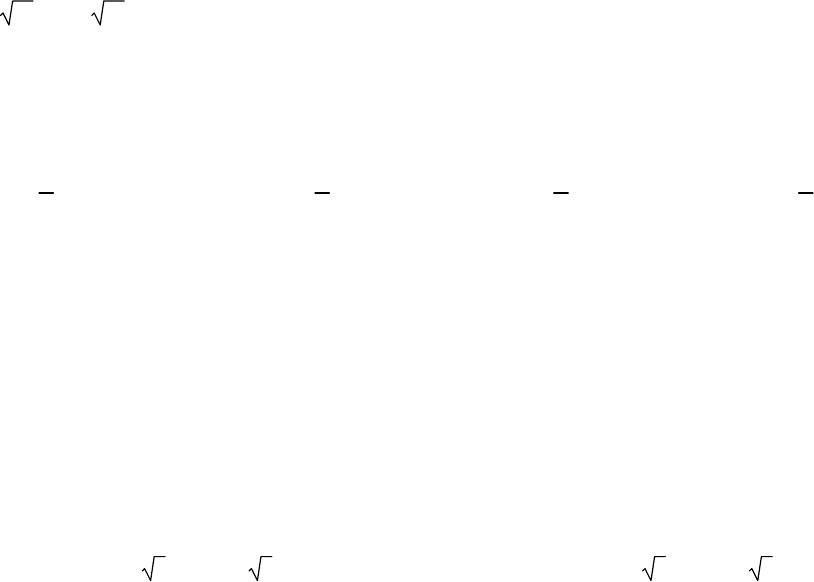
4) Degree:4;zeros:–1,2,and1–2i.
A) f(x)=x4–3x3+5x2–x–10 B) f(x)=x4–x3+x2+9x–10
C) f(x)=x4–x3+3x2–5x–10 D) f(x)=x4–3x3–3x2+7x+6
5) Degree:4;zeros:4iand–5i
A) f(x)=x4+41x2+400 B) f(x)=x4+41x2–5x+400
C) f(x)=x4–5x2+400 D) f(x)=x4–4x3+41x2+400
6) Degree:4;zeros:1,–1,and4–2i
A) f(x)=x4–8x3+16x2+8x–17 B) f(x)=x4–8x3+16x2+8x+17
C) f(x)=x4+8x3+16x2–8x–17 D) f(x)=x4+8x3+16x2–8x+17
7) Degree:5;zeros:2,–3i,and4–i
A) f(x)=x5–10x4+42x3–124x2+297x–306 B) f(x)=x5–10x4–42x3–124x2+297x+306
C) f(x)=x5–10x4+26x3–124x2–72x–306 D) f(x)=x5–10x4+26x3–124x2+72x+306
3 FindtheComplexZerosofaPolynomialFunction
MULTIPLECHOICE.Choosetheonealternativethatbestcompletesthestatementoranswersthequestion.
Usethegivenzerotofindtheremainingzerosofthefunction.
1) f(x)=x4–32x2–144;zero:–2i
A) 2i,6
,
–6 B) 2i,6i,–6i C) 2i,12
,
–12 D) 2i,12i,–12i
2) f(x)=x3+7x2–16x+18;zero:1+i
A) 1–i,–9B)1–i,9C)
–9
,
9D)1–i,9i
3) f(x)=x3–2x2–11x+52;zero:–4
A) 3+2i,3–2i B) 6+4i,6–4i
C) 1+213
i,1–213iD)1+2i,1–2i
4) f(x)=x3–5x2+17x–13;zero:2+3i
A) 2–3i,1B)3–2i,1C)3
–2i,–1D)2–3i,–1
5) f(x)=3x4–22x3+82x2–142x+39;zero:2+3i
A) 2–3i,3,1
3B) 3–2i,–3,–1
3C) 3–2i,3,–1
3D) 2–3i,–3,1
3
6) f(x)=x5–10x4+42x3–124x2+297x–306;zero:3i
A) 2,–3i,4–i,4+iB)2,–3i,–4–i,–4+i
C) –2,–3i,4–i,4+iD)
–2,–3i,–4–i,–4+i
Findallzerosofthefunctionandwritethepolynomialasaproductoflinearfactors.
7) f(x)=x3–x2+36x–36
A) f(x)=(x–1)(x+6i)(x–6i) B) f(x)=(x–1)(x+6)(x–6)
C) f(x)=(x–1)(x+1)(x+36) D) f(x)=(x–25)(x+i)(x–i)
8) f(x)=x3+11x2+36x+26
A) f(x)=(x+1)(x+5+i)(x+5–i) B) f(x)=(x+1)(x+5+i)(x–5–i)
C) f(x)=(x+1)(x+5+i2
)(x–1–i2) D) f(x)=(x–1)(x+5+i2)(x+5–i2)
Page74
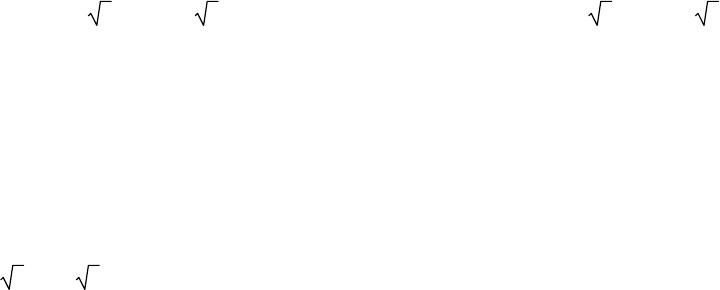
9) f(x)=x3+9x2+32x+42
A) f(x)=(x+3)(x+3+i5
)(x+3–i5) B) f(x)=(x+3)(x+3+i5)(x–3–i5)
C) f(x)=(x–3)(x+5+3i)(x+5–3i) D) f(x)=(x–3)(x+5+3i)(x–5–3i)
10) f(x)=x4+29x2+100
A) f(x)=(x+2i)(x–2i)(x+5i)(x–5i) B) f(x)=(x+2i)2(x+5i)2
C) f(x)=(x+i)(x–i)(x+10i)(x–10i) D) f(x)=(x+2+5i)2(x+2–5i)2
11) f(x)=x4+6x3+12x2+24x+32
A) f(x)=(x+4)(x+2)(x–2i)(x+2i) B) f(x)=(x–1)(x–8)(x–2i)(x+2i)
C) f(x)=(x–i8
)(x+i8)(x–2)(x+2) D) f(x)=(x–4)(x+2)(x–2)(x+2)
12) f(x)=3x4+5x3+10x2+20x–8
A) f(x)=(3x–1)(x+2)(x+2i)(x–2i) B) f(x)=(3x+1)(x–2)(x+2i)(x–2i)
C) f(x)=(3x–1)(x+2)(x+2)(x–2) D) f(x)=(3x+1)(x–2)(x+2)(x–2)
Page75

Ch.5 PolynomialandRationalFunctions
AnswerKey
5.1 PolynomialFunctionsandModels
1 IdentifyPolynomialFunctionsandTheirDegree
2 GraphPolynomialFunctionsUsingTransformations
3 IdentifytheRealZerosofaPolynomialFunctionandTheirMultiplicity
Page76
4 AnalyzetheGraphofaPolynomialFunction
Page77
Page78
Page79
Page80
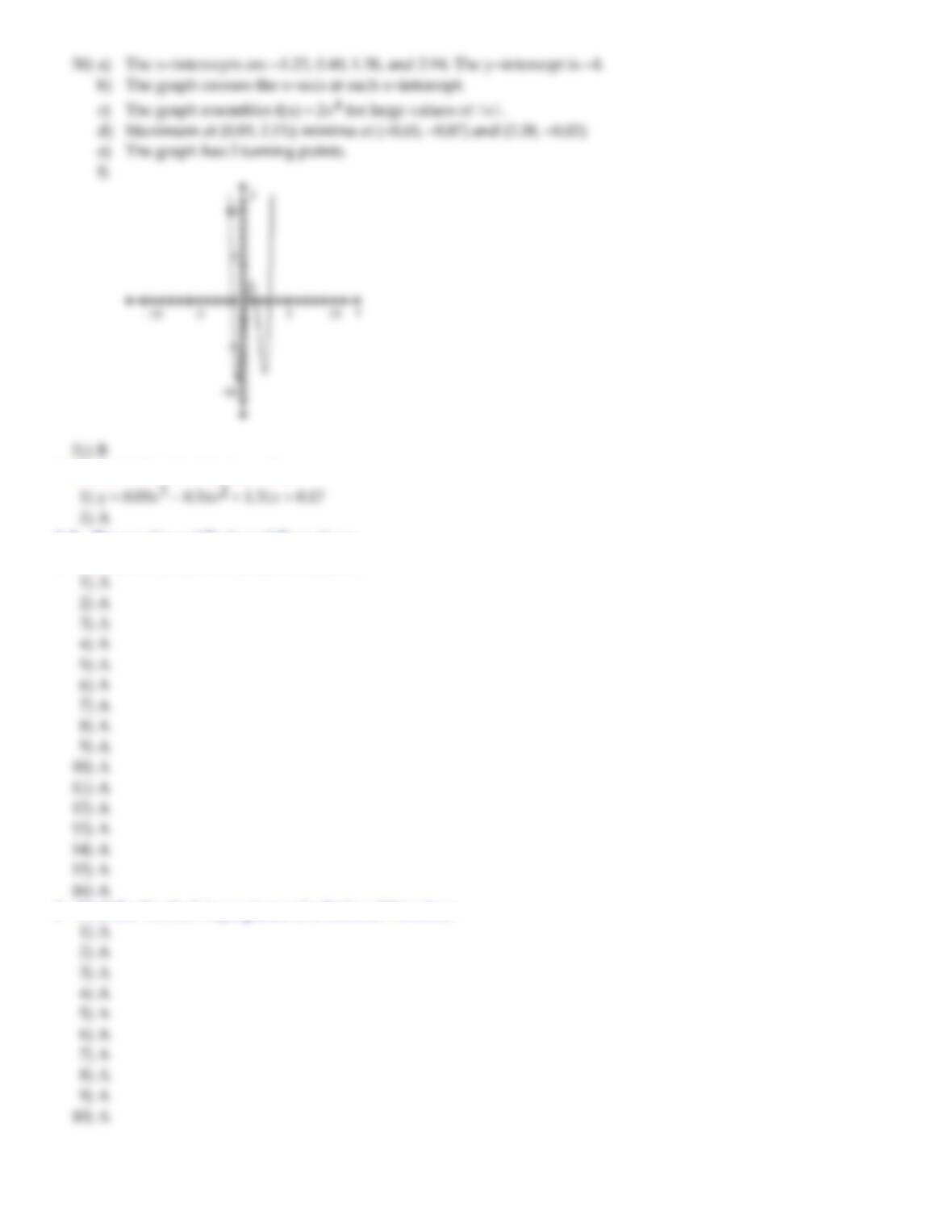
5 BuildCubicModelsfromData
5.2 PropertiesofRationalFunctions
1 FindtheDomainofaRationalFunction
2 FindtheVerticalAsymptotesofaRationalFunction
Page81
3 FindtheHorizontalorObliqueAsymptotesofaRationalFunction
4 DemonstrateAdditionalUnderstandingandSkills
5.3 TheGraphofaRationalFunction
1 AnalyzetheGraphofaRationalFunction
Page82
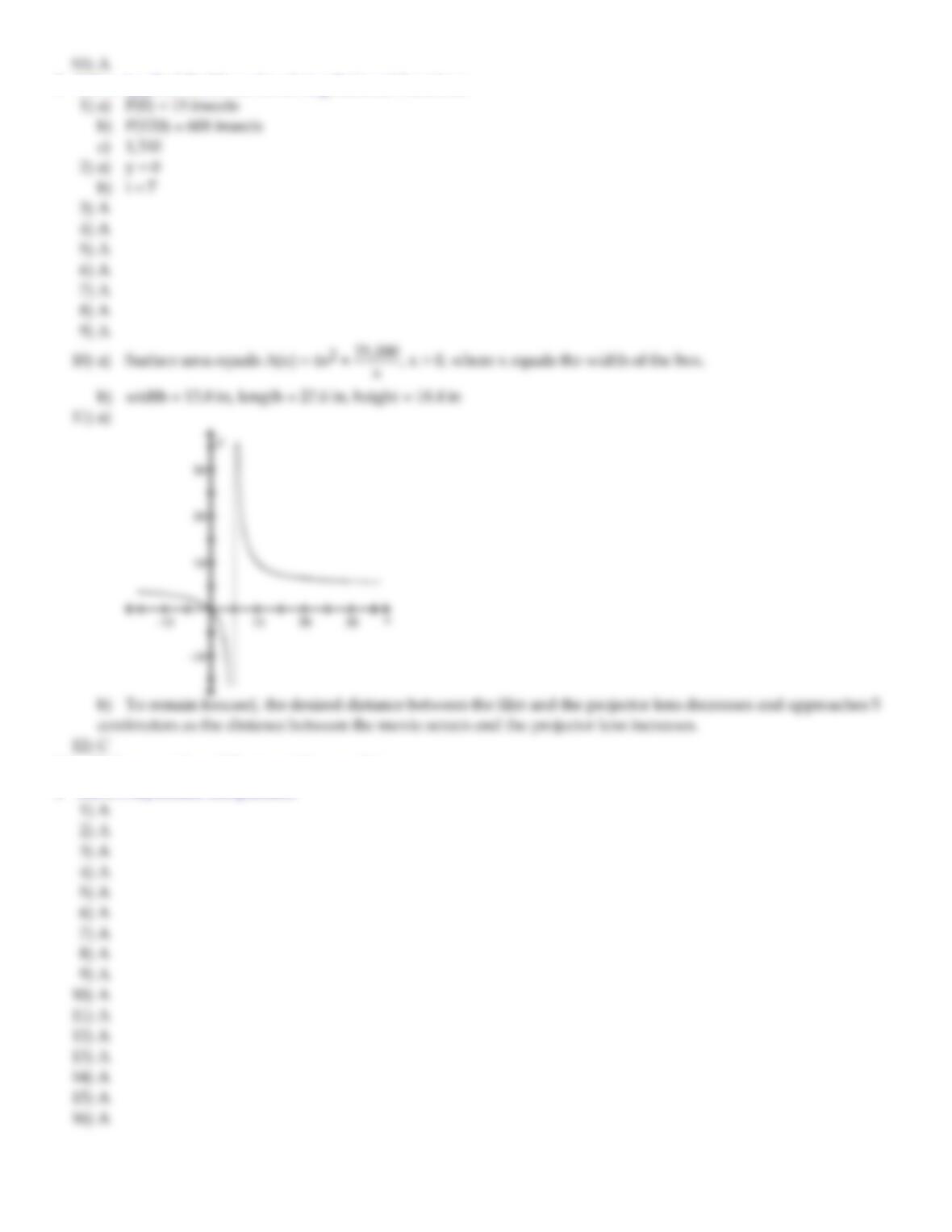
2 SolveAppliedProblemsInvolvingRationalFunctions
5.4 PolynomialandRationalInequalities
1 SolvePolynomialInequalities
Page84

2 SolveRationalInequalities
1) A
2) A
3) A
4) A
5) A
6) A
7) A
8) A
9) A
10) A
11) A
12) A
13) A
14) A
5.5 TheRealZerosofaPolynomialFunction
2 UsetheRationalZerosTheoremtoListthePotentialRationalZerosofaPolynomialFunction
Page85
3 FindtheRealZerosofaPolynomialFunction
4 SolvePolynomialEquations
5 UsetheTheoremforBoundsonZeros
6 UsetheIntermediateValueTheorem
5.6 ComplexZeros;FundamentalTheoremofAlgebra
1 UsetheConjugatePairsTheorem
Page86
2 FindaPolynomialFunctionwithSpecifiedZeros
3 FindtheComplexZerosofaPolynomialFunction
Page87