Chapter 5 – Accounting for Merchandising Businesses
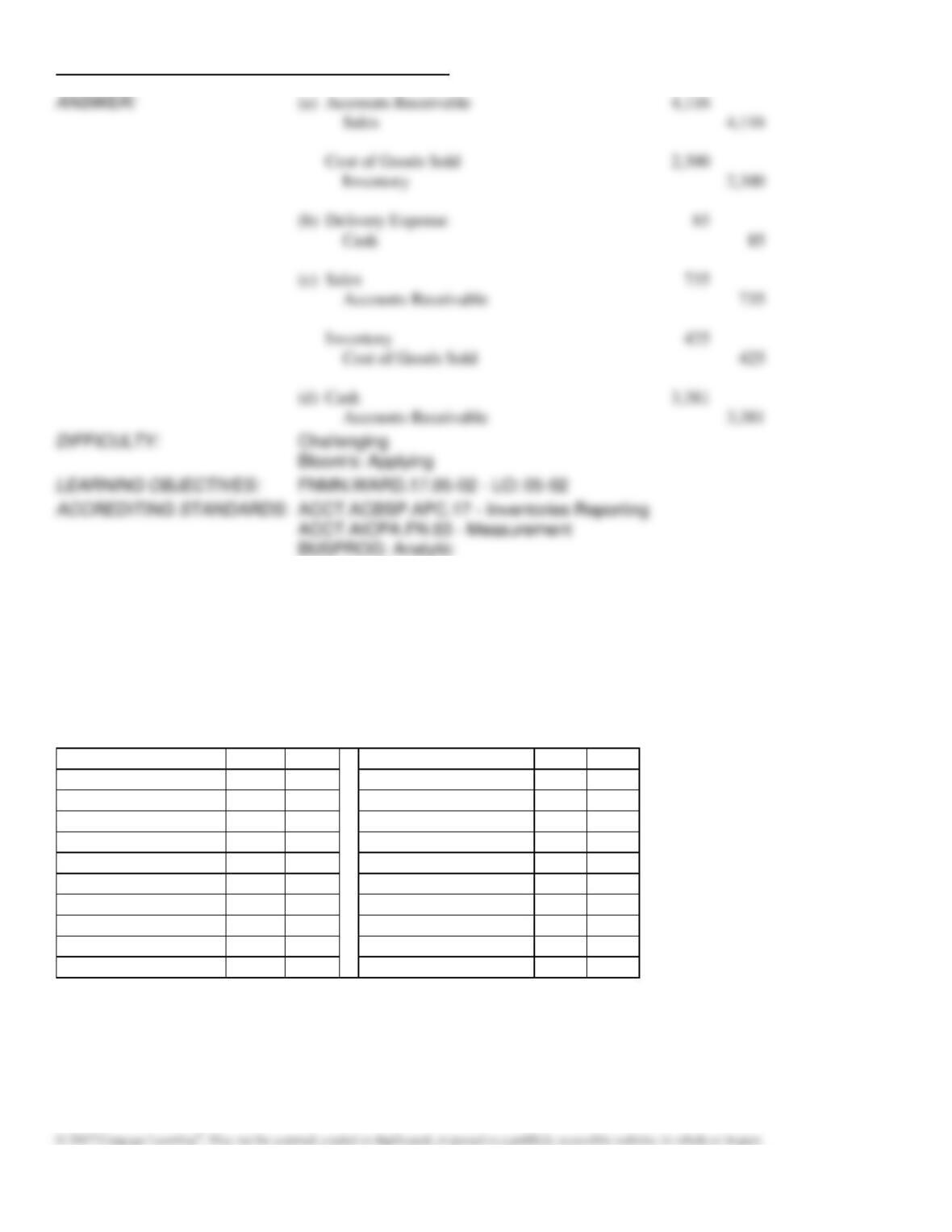
(a)
Accounts Receivable
Sales
Cost of Goods Sold
Inventory
(b)
Delivery Expense
Cash
(c)
Sales
Accounts Receivable
Inventory
Cost of Goods Sold
(d)
Cash
Accounts Receivable
LEARNING OBJECTIVES:
183. Based on the information below, journalize the entries for the seller and the buyer. Both use a perpetual inventory
system.
(a)
Seller sold merchandise on account to the buyer, $4,750, terms 2/10, net 30, FOB shipping
point. The cost of the merchandise is $2,850. The seller prepays the freight of $75.
(b)
Buyer returns $700 of merchandise as defective. The cost of the merchandise is $420.
(c)
Buyer pays within the discount period.
Seller
Buyer
Description
DR
CR
Description
DR
CR
Chapter 5 – Accounting for Merchandising Businesses
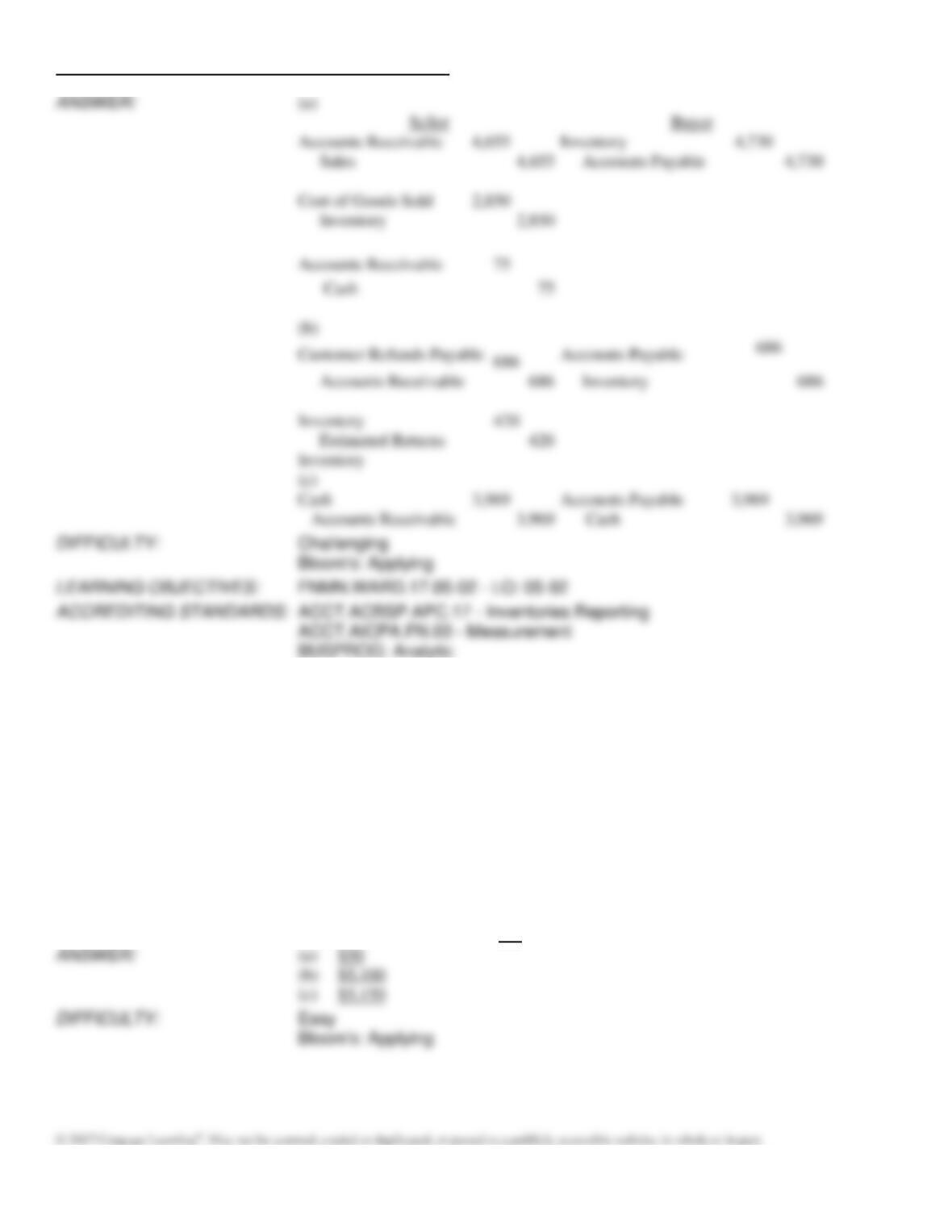
Accounts Receivable
4,655
Inventory
4,730
Sales
4,655
Accounts Payable
4,730
Cost of Goods Sold
2,850
Inventory
2,850
Cash
Accounts Receivable
Inventory
Inventory
Cash
3,969
Accounts Payable
3,969
Accounts Receivable
3,969
Cash
3,969
184. Details of a purchase invoice and related credit memo are summarized as follows:
Invoice:
Cost of merchandise listed on purchase invoice
$6,500
Prepaid freight charge added to invoice
150
Terms, FOB shipping point, 1/10, n/eom
Credit memo: Cost of merchandise returned
$1,500
Assume that the credit memo was received prior to payment and that the invoice is paid within the discount
period. Determine the following:
(a)
Amount of the cash discount allowed.
(b)
Amount to be paid by the purchaser if the discount is taken.
(c)
Cost of the merchandise to the purchaser if the discount is not taken.
(a)
(b)
$5,100
(c)
$5,150
Chapter 5 – Accounting for Merchandising Businesses
185. Conquest Company uses a perpetual inventory system. Conquest purchased $1,500 of merchandise on account and
payment was made within the discount period. The credit terms were 2/10, n/30. Journalize Conquest’s purchase and
payment.
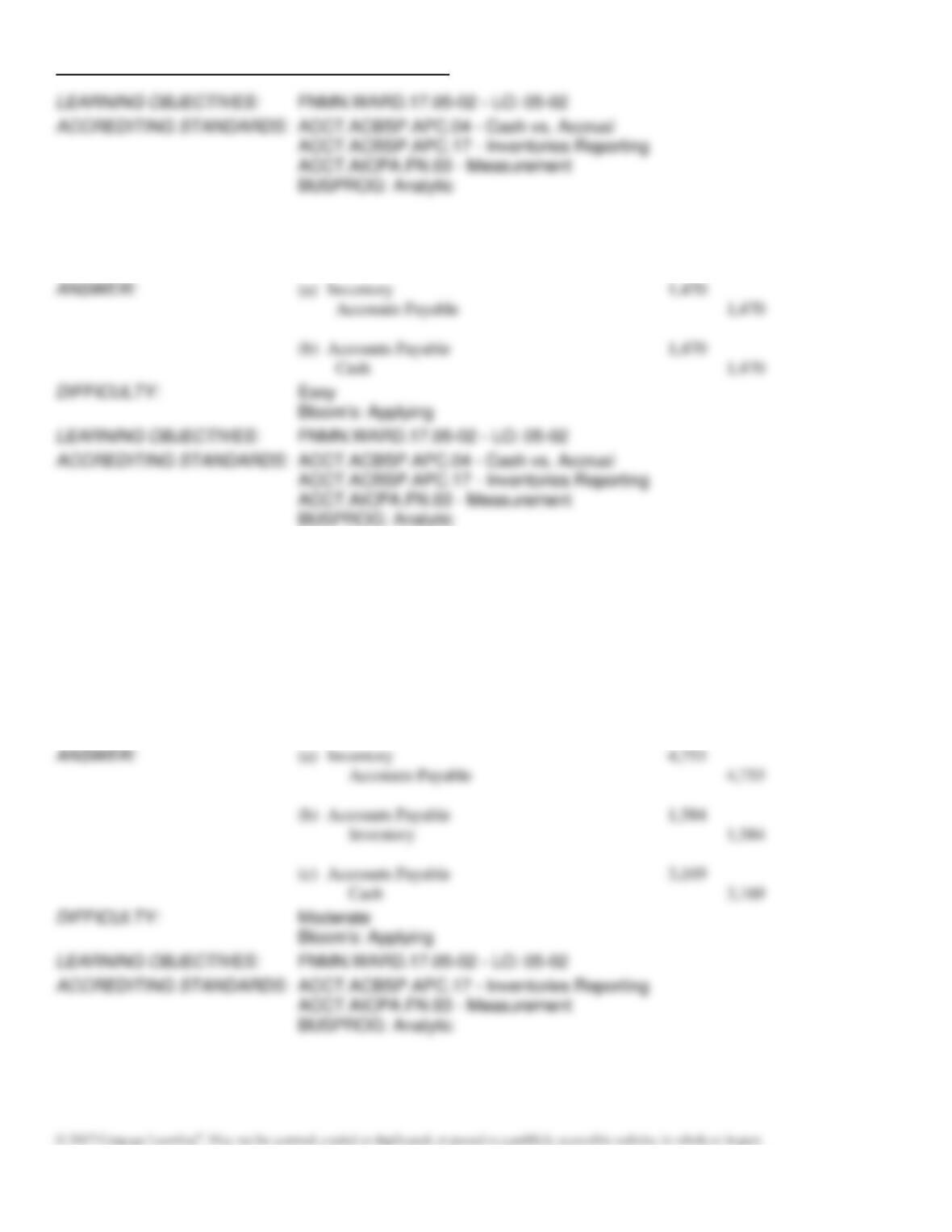
(a)
Inventory
(b)
Accounts Payable
186. Merchandise with a list price of $4,700 is purchased on account, terms FOB shipping point, 1/10, n/30. The seller
prepaid freight costs of $100. Prior to payment, $1,600 of the merchandise is returned. The invoice is paid within the
discount period.
Record the foregoing transactions of the buyer in the sequence indicated below, assuming a perpetual inventory system is
used.
(a)
Purchased the merchandise.
(b)
Recorded receipt of the credit memo for merchandise returned.
(c)
Paid the amount owed.
(a)
Inventory
(b)
Accounts Payable
(c)
Accounts Payable
Chapter 5 – Accounting for Merchandising Businesses
187. Details of invoices for purchases of merchandise are as follows:
Returns and
Merchandise
Freight
Terms
Allowances
(a)
$2,800
$45
FOB shipping point, 1/10, n/30
$200
(b)
7,600
60
FOB destination, n/30
800
(c)
1,400
55
FOB shipping point, 2/10, n/30
600
(d)
500
50
FOB destination, 1/10, n/30
0
Determine the amount to be paid in full settlement of each of the invoices, assuming that credit for returns and allowances
was received prior to payment and that all invoices were paid within the discount period.
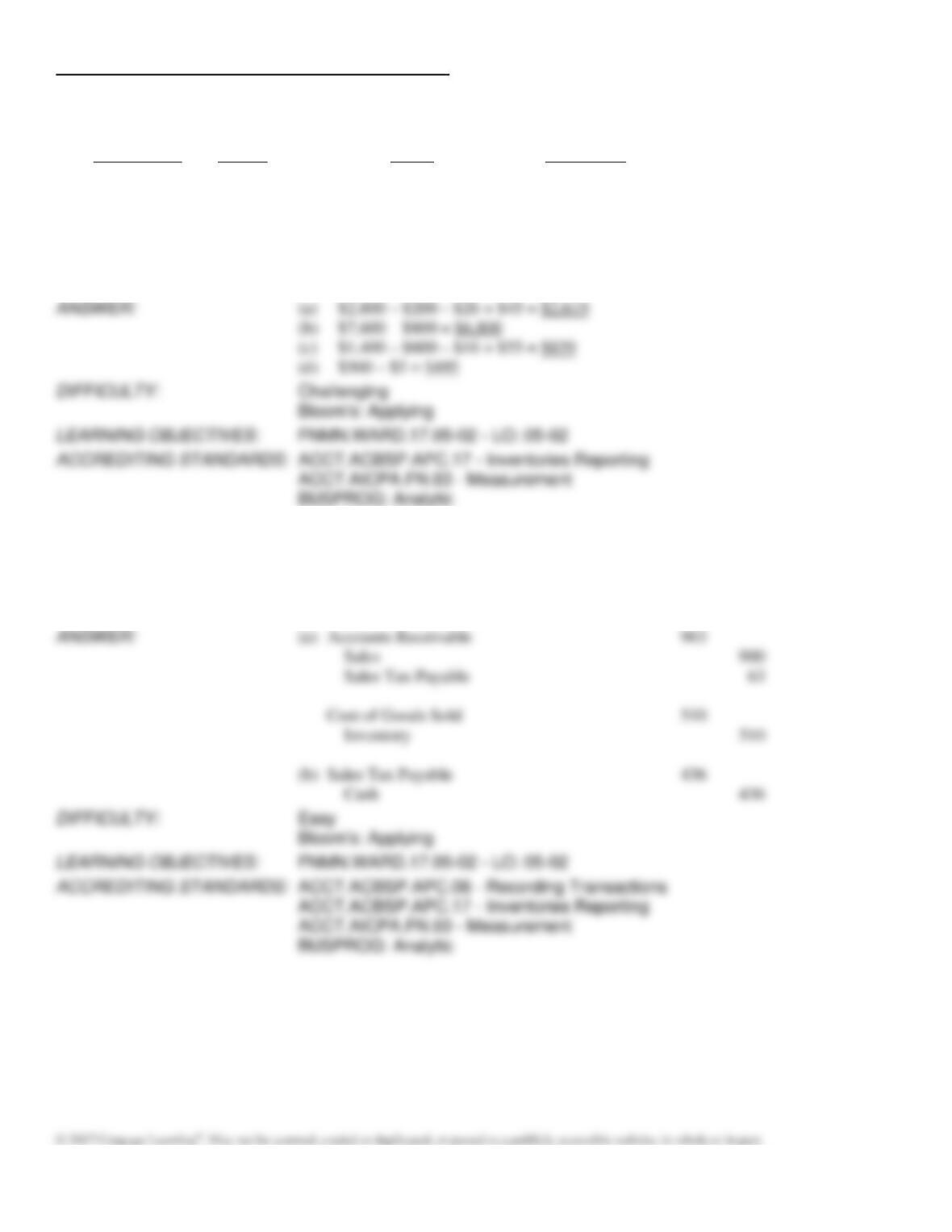
(a)
$2,800 – $200 – $26 + $45 = $2,619
(b)
$7,600 – $800 = $6,800
(c)
$1,400 – $600 – $16 + $55 = $839
(d)
188. Journalize the entries to record the following selected transactions:
(a)
Sold $900 of merchandise on account, subject to 7% sales tax. The cost of the
goods sold was $510.
(b)
Paid $436 to the state sales tax department for taxes collected.
(a)
Accounts Receivable
Sales
Sales Tax Payable
63
Cost of Goods Sold
Inventory
(b)
Sales Tax Payable
Cash
Chapter 5 – Accounting for Merchandising Businesses
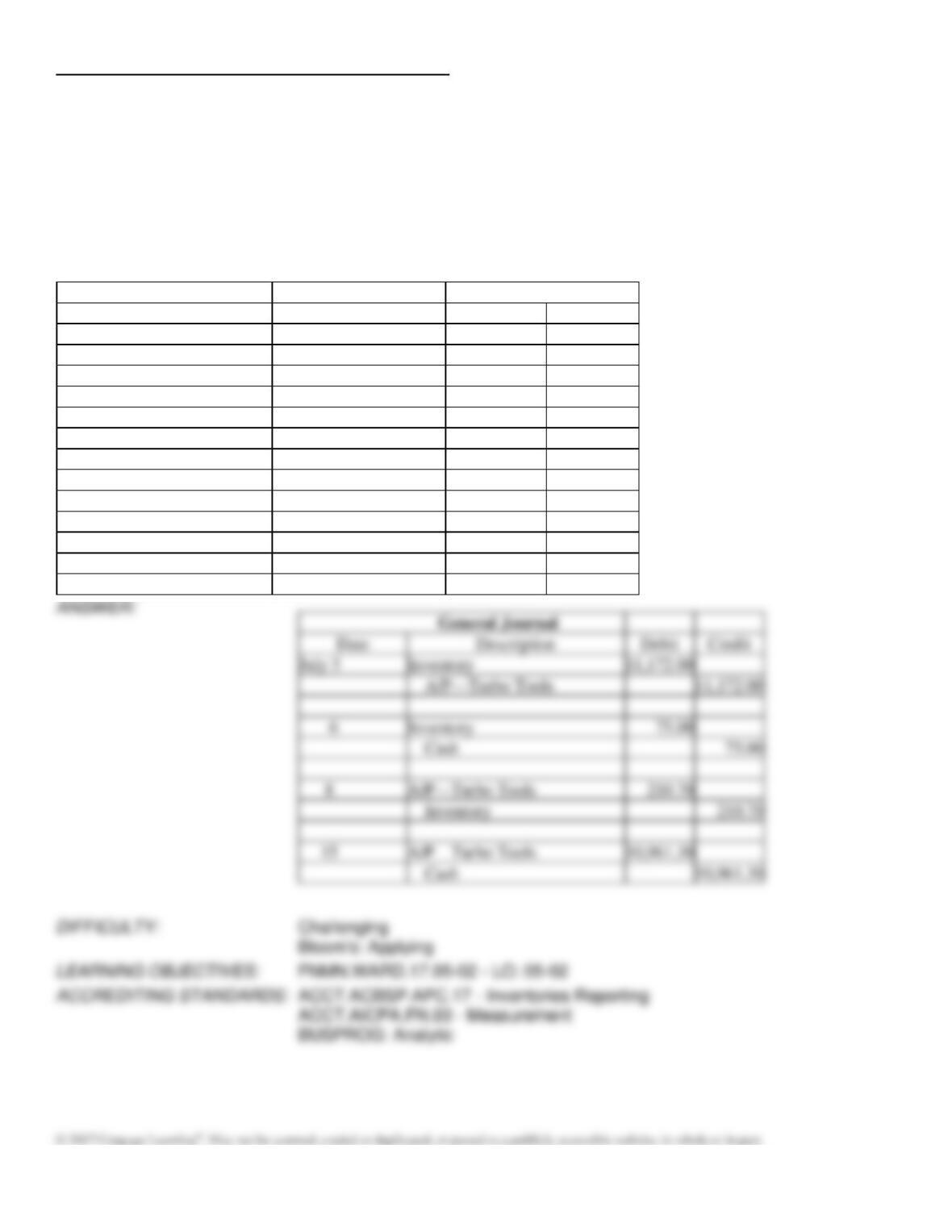
189. Gadget Palace is a retailer selling unique hardware. Gadget Palace uses a perpetual inventory system. Journalize the
following transactions:
On July 5, Gadget Palace purchases inventory for sale from Turbo Tools for $11,400.00
with terms 2/10, n/30.
On July 6, Gadget Palace pays Fast Truck Transport $75.00 for freight in on the July 5
order.
On July 8, Gadget Palace receives a credit memo from Turbo Tools for $215.00 for
damaged merchandise.
On July 15, Gadget Palace pays Turbo Tools the balance due.
General Journal
Date
Description
Debit
Credit
July 5
Inventory
11,172.00
11,172.00
6
Inventory
A/P—Turbo Tools
A/P—Turbo Tools
10,961.30
10,961.30
Chapter 5 – Accounting for Merchandising Businesses
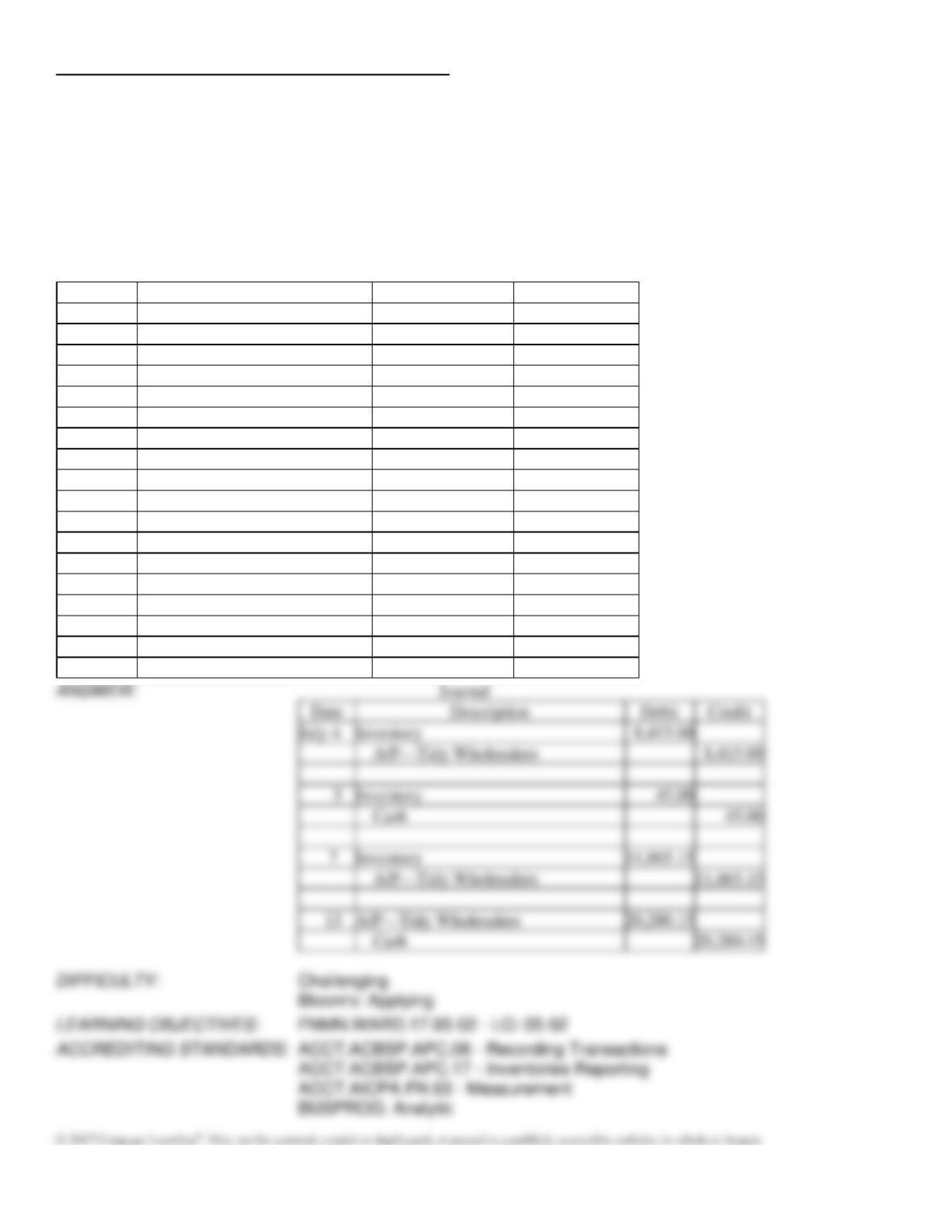
190. Marshall Supplies is a janitorial supply store that uses a perpetual inventory system. Journalize the following
transactions:
On July 4, Marshall purchases inventory for sale from Tidy Wholesalers for
$8,500.00 with terms 1/10, n/30.
On July 5, Marshall pays Express Transfer $45.00 for freight in on the July 4 order.
On July 7, Marshall buys an additional $11,985.00 in inventory from Tidy
Wholesalers with terms 1/10, n/30.
On July 13, Marshall pays Tidy Wholesalers the balance due on both invoices
Journal
Date
Description
Debit
Credit
July 4
7
13
Chapter 5 – Accounting for Merchandising Businesses
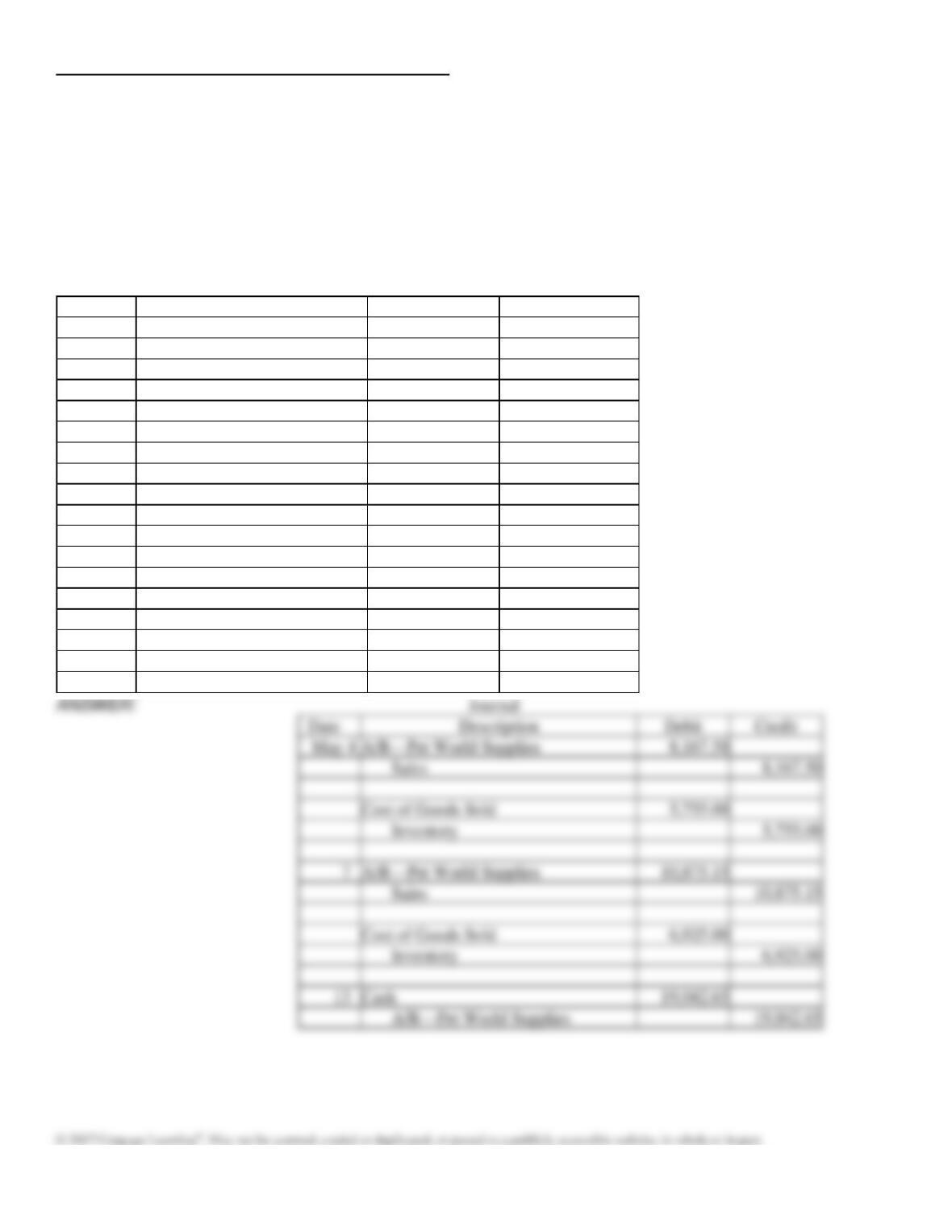
191. Bargain Wholesalers sells pet supplies to retailers including Pet World Supplies. Bargain Wholesalers uses a
perpetual inventory system. Journalize the following transactions:
May 4, Bargain Wholesalers sells inventory to Pet World Supplies for $8,250.00
with terms 1/10, n/30. The cost of the merchandise is $5,755.00.
May 7, Bargain Wholesalers sells an additional $10,985 in inventory to Pet World
Supplies with terms 1/10, n/30. The cost of the merchandise is $6,925.00.
May 13, Bargain Wholesalers receives a check from Pet World Supplies paying the
balance due on both invoices.
Journal
Date
Description
Debit
Credit
A/R—Pet World Supplies
A/R—Pet World Supplies
Cash
Chapter 5 – Accounting for Merchandising Businesses
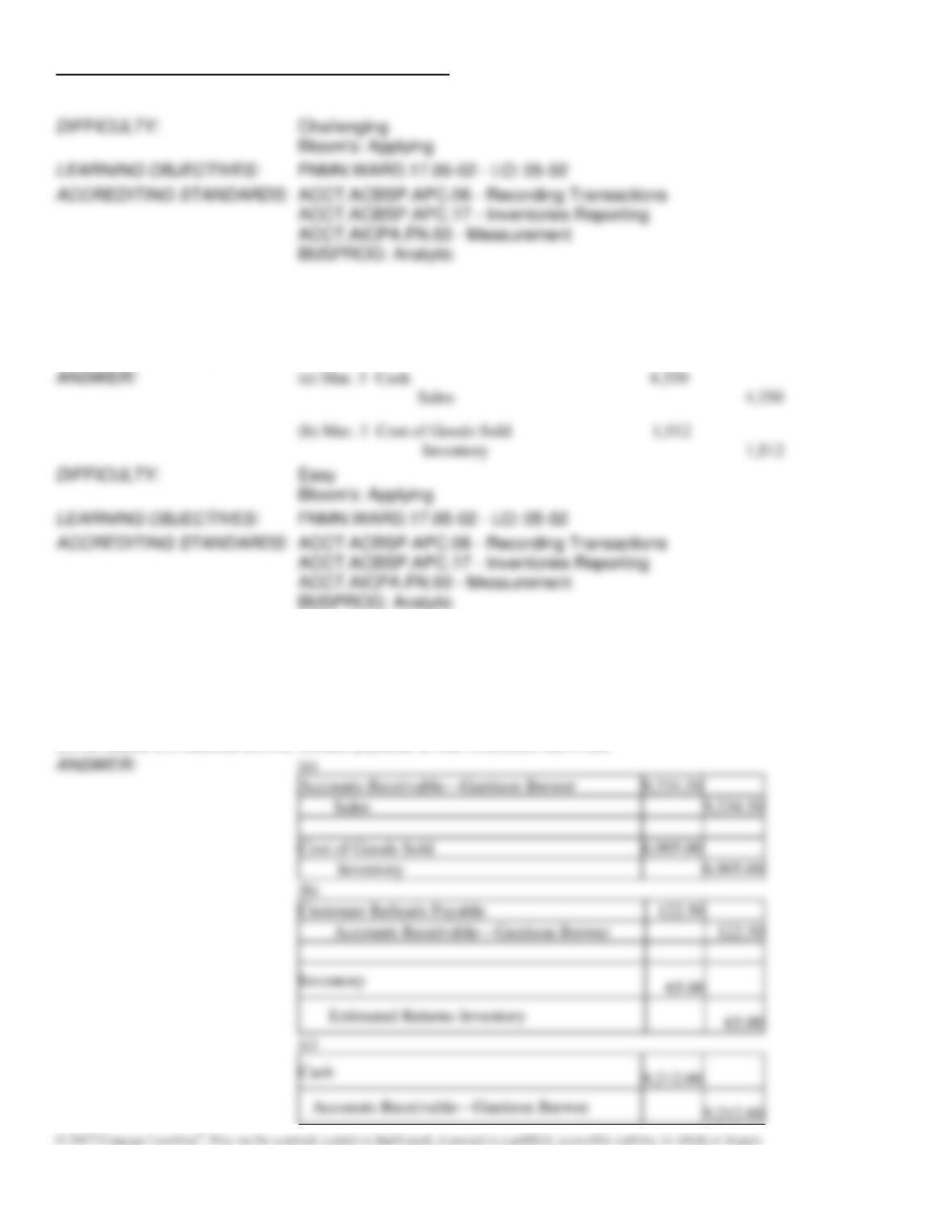
192. On March 3, Bluebird Sales makes $4,350 in cash sales of general merchandise that has a cost of $1,512. Bluebird
uses a perpetual inventory system.
(a) Journalize the sale.
(b) Journal the cost of goods sold.
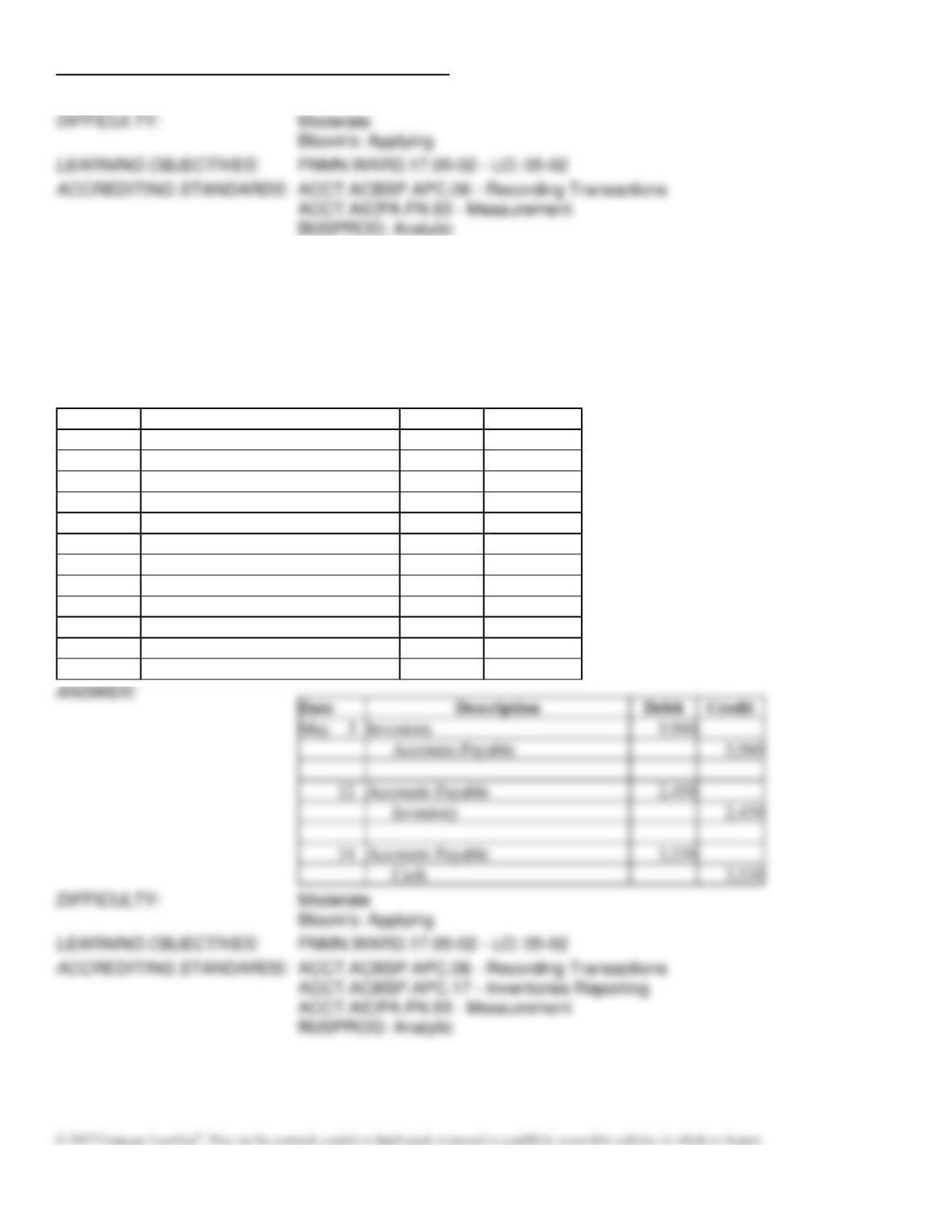
193. On March 15, Monroe Sales sells $9,525.00 on account to Garrison Brewer with terms of 2/10, n/30. The cost of
goods sold was $6,905.00.
(a) Journalize the sale and the recognition of the cost of the sale.
(b) On March 20, a $125.00 credit memo is given to Garrison Brewer due to merchandise that was the wrong color.
Journalize this event. The cost of the returned merchandise was $65.00.
(c) On March 25, Garrison Brewer submits payment in full. Journalize this event.
Chapter 5 – Accounting for Merchandising Businesses
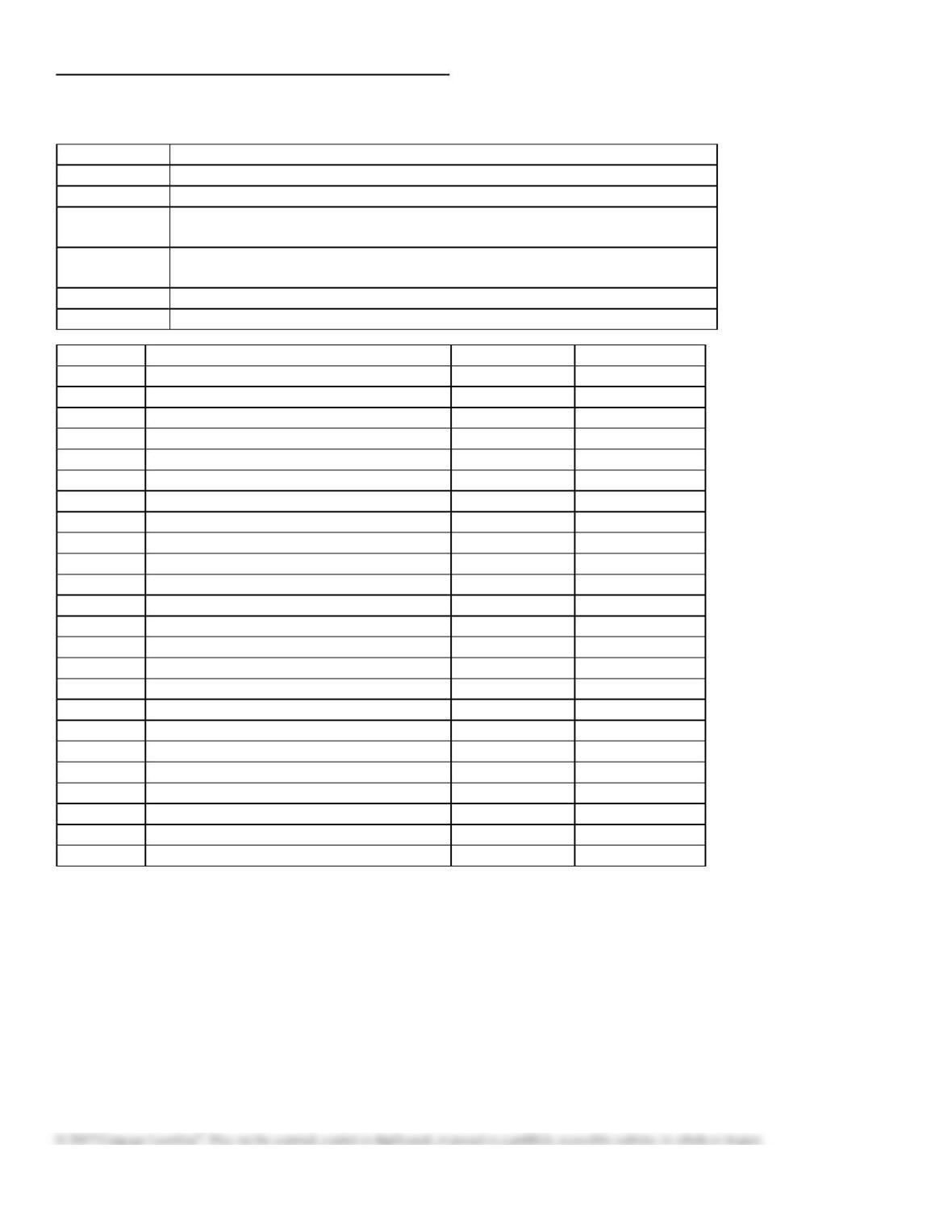
194. Journalize the following transactions assuming a perpetual inventory system:
May 5
Purchased merchandise from Archie Co., $6,000, terms FOB shipping point, 2/10, n/30.
Prepaid freight costs of $100 were added to the invoice.
12
Issued a debit memo to Archie Co. for $2,500 of merchandise returned from purchase on
May 5.
14
Paid Archie Co. for invoice of May 5, less debit memo of May 12.
Date
Description
Debit
Credit
May 5
12
Accounts Payable
14
Accounts Payable
Chapter 5 – Accounting for Merchandising Businesses
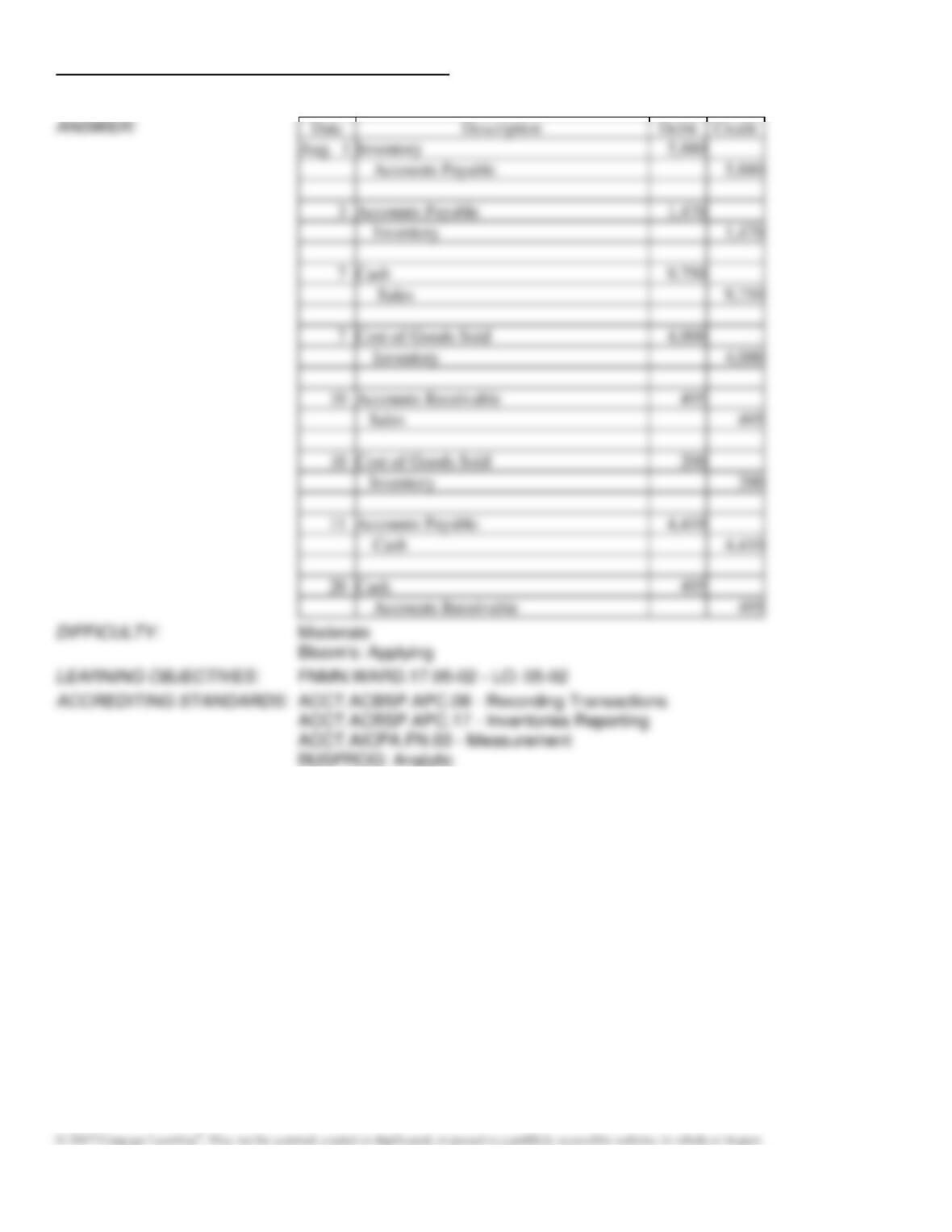
195. Record the following transactions for Sparky’s Pet Shop using the general journal form provided below. Assume
Sparky’s uses a perpetual inventory system. Omit transaction descriptions from entries:
Date
Transaction
August 1
Purchased $6,000 of merchandise on account, terms 2/10, n/30.
3
Returned $1,500 of merchandise purchased on August 1 due to defects.
7
Recorded cash sales for the first week of August, $9,750; cost of the
merchandise was $4,000.
10
Made sale on account to a local breeder for $500, terms 1/10 net 30; cost of the
merchandise was $200.
11
Paid for the merchandise purchased on August 1, less return.
20
Received payment from sale of August 10.
Date
Description
Debit
Credit
Chapter 5 – Accounting for Merchandising Businesses
Aug. 1
Accounts Payable
3
Accounts Payable
7
7
Cost of Goods Sold
Accounts Receivable
Cost of Goods Sold
Accounts Payable
Cash
LEARNING OBJECTIVES:
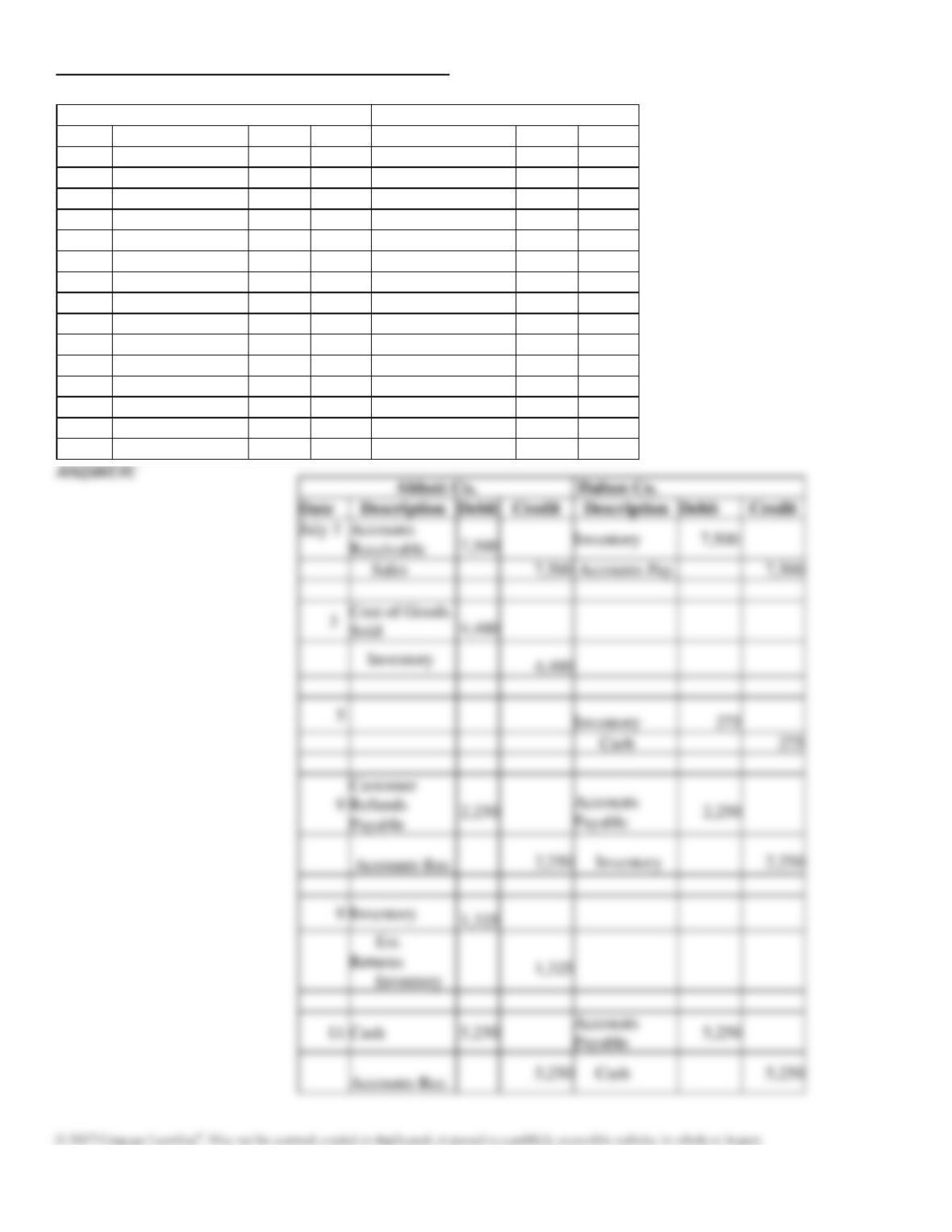
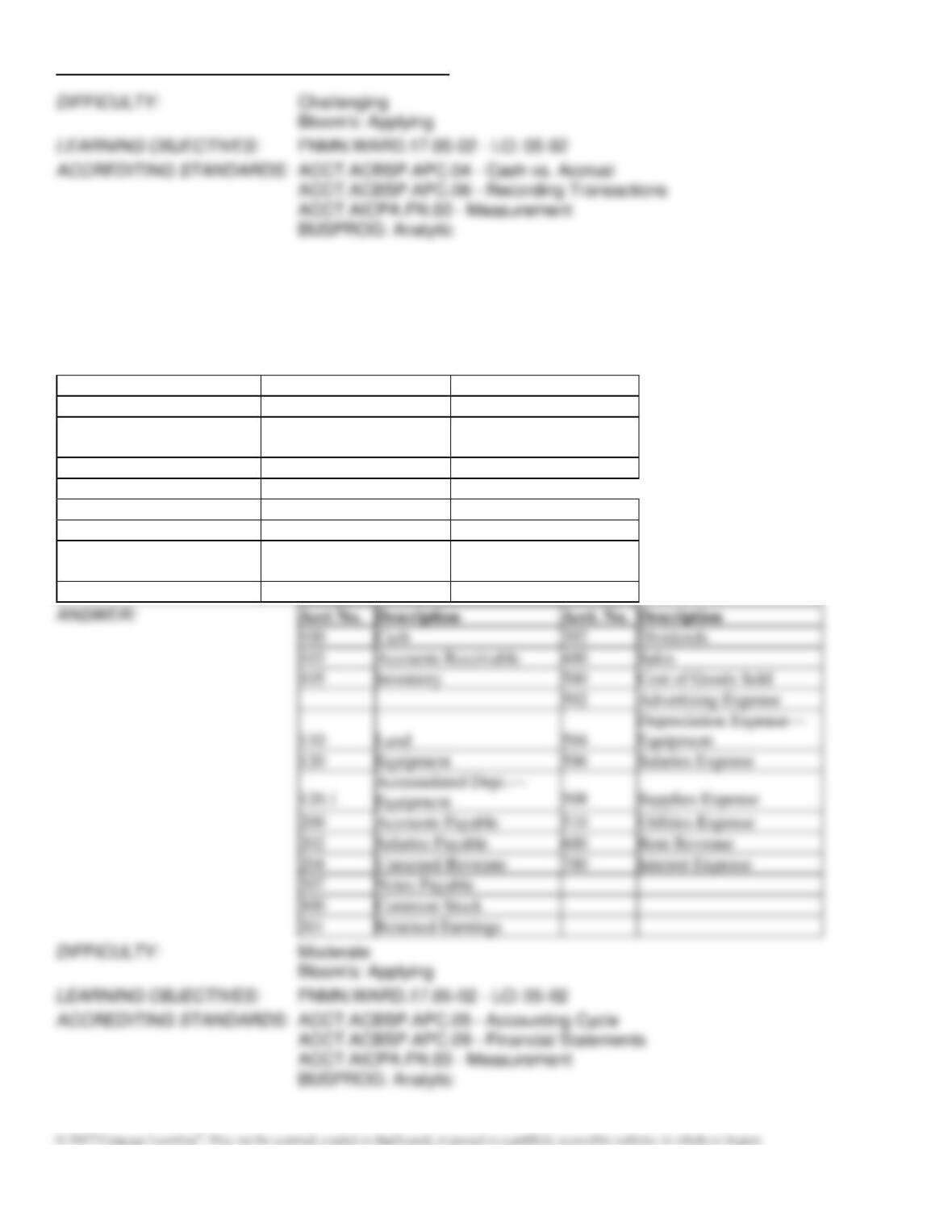
196. Journalize the following transactions for both Abbott Co. (seller) and Dalton Co. (buyer). Assume both of the
companies use the perpetual inventory system.
July 3
Abbott Co. sold merchandise on account to Dalton Co., $7,500, terms FOB shipping
point, net/eom. The cost of the goods sold was $4,400.
5
Dalton Co. paid $275 freight charges on purchase from Abbott Co.
9
Abbott Co. issued Dalton Co. a credit memo for merchandise returned, $2,250.
The cost of the merchandise returned was $1,325.
11
Abbott Co. received payment from Dalton Co. for purchase of July 3.
Chapter 5 – Accounting for Merchandising Businesses
Abbott Co.
Dalton Co.
Date
Description
Debit
Credit
Description
Debit
Credit
Dalton Co.
Description
Chapter 5 – Accounting for Merchandising Businesses
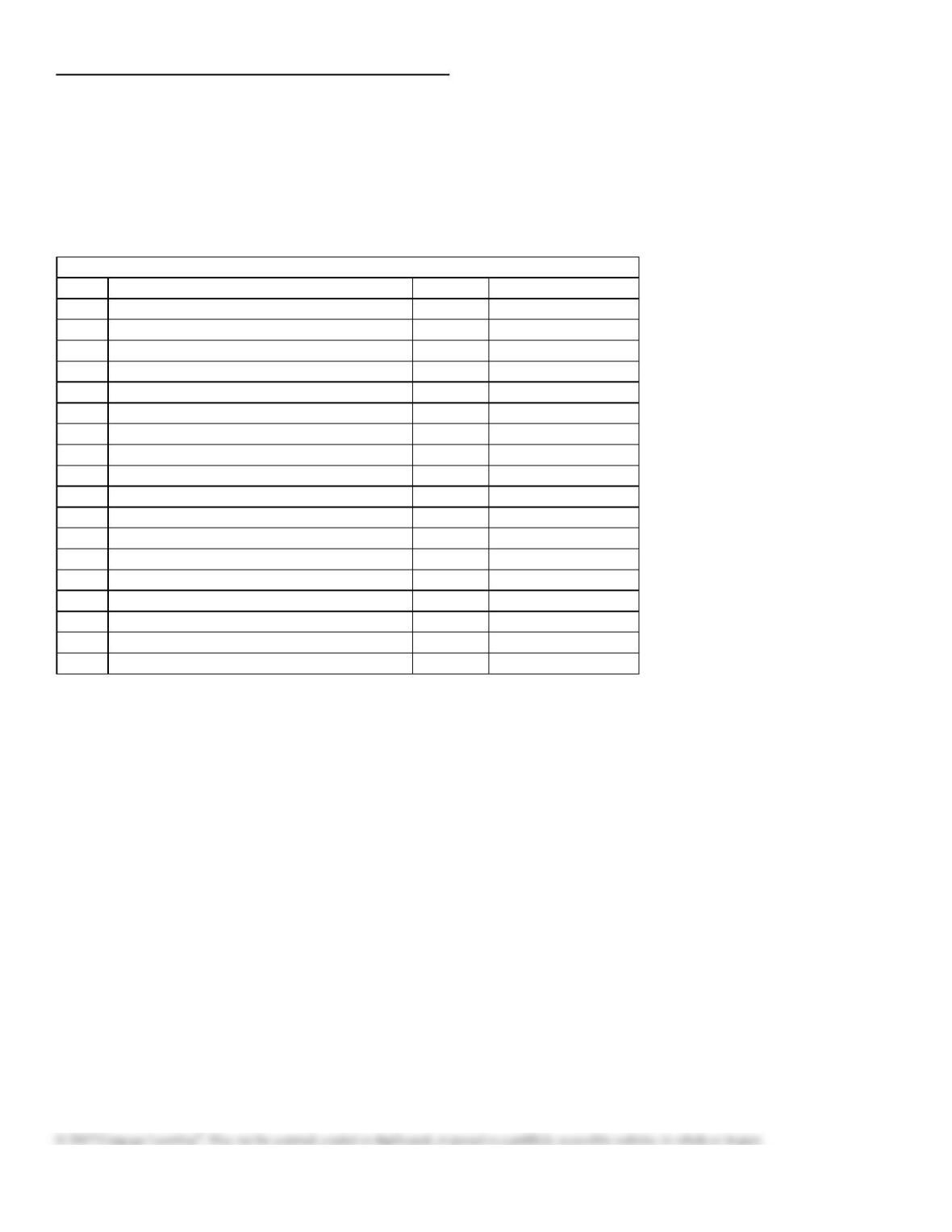
197. Using the list of accounts below, construct a chart of accounts for a merchandising business that rents out a portion of
its building, and assign account numbers and arranging the accounts in balance sheet and income statement order (“1” for
assets, and so on). Each account number should have three digits. Contra accounts should be designated with a decimal
of the account (100.1 for contra of account 100). Assets and liabilities should be in order of liquidity, expenses should
be in alphabetical order.
Accounts Payable
Equipment
Sales
Accounts Receivable
Interest Expense
Supplies Expense
Accumulated Depr.—
Equipment
Land
Unearned Revenue
Advertising Expense
Inventory
Utilities Expense
Common Stock
Notes Payable
Cash
Retained Earnings
Cost of Goods Sold
Rent Revenue
Depreciation Expense—
Equipment
Salaries Expense
Dividends
Salaries Payable
Cash
Dividends
Accounts Receivable
Sales
Inventory
Cost of Goods Sold
Advertising Expense
Land
Depreciation Expense—
Equipment
Salaries Expense
Accumulated Depr.—
Accounts Payable
Utilities Expense
Salaries Payable
Rent Revenue
Unearned Revenue
Interest Expense
Notes Payable
Common Stock
Retained Earnings
Chapter 5 – Accounting for Merchandising Businesses
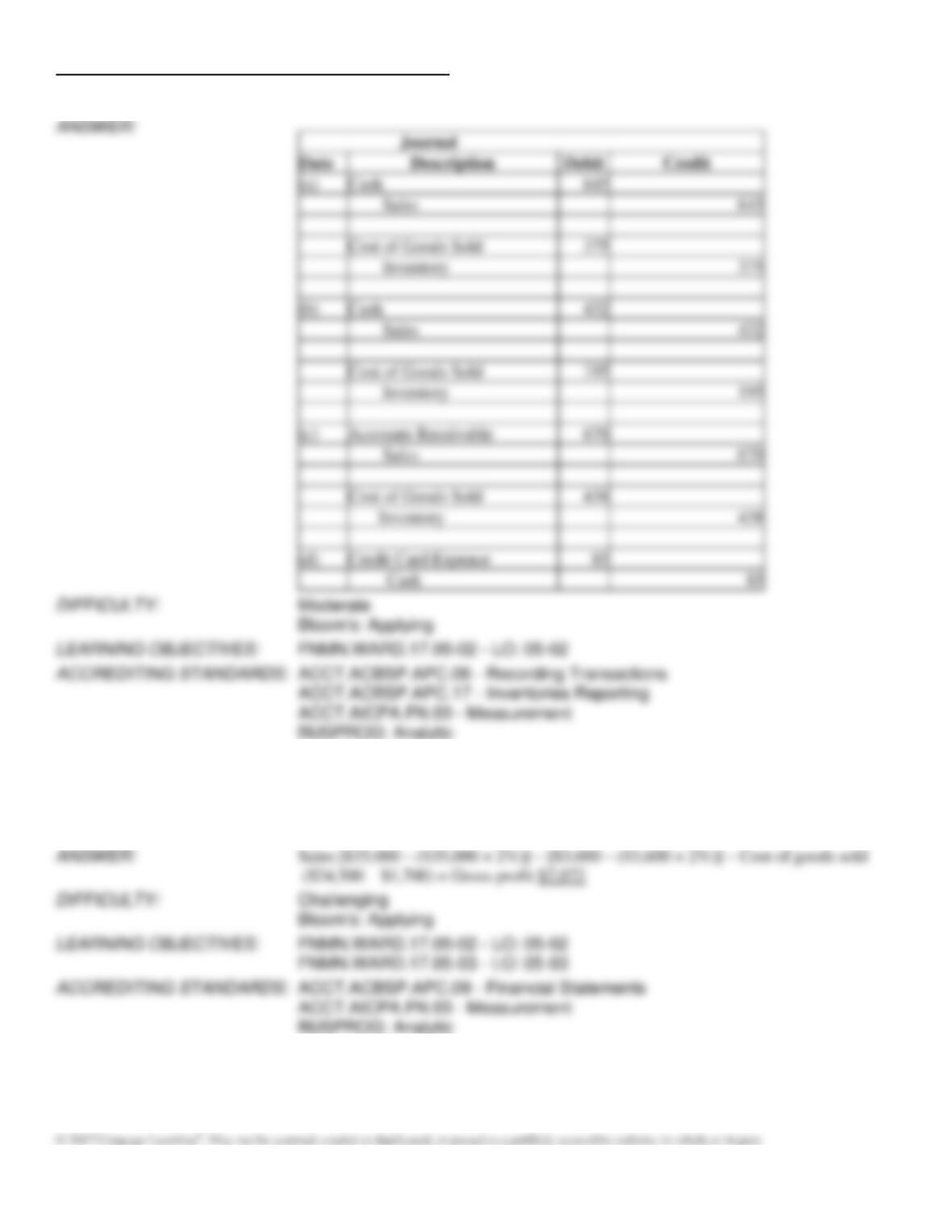
198. Journalize the following transactions for the Evans Company. Assume the company uses a perpetual inventory
system.
(a)
Sold merchandise for $645. The cost of goods sold was $375.
(b)
Sold merchandise for $432 and accepted VISA as the form of payment.
The cost of goods sold was $195.
(c)
Sold merchandise on account for $670. The cost of goods sold was $438.
(d)
Paid credit card fees for the month of $85.
Journal
Date
Description
Debit
Credit
Chapter 5 – Accounting for Merchandising Businesses
LEARNING OBJECTIVES:
199. Abbey Co. sold merchandise to Gomez Co. on account, $35,000, terms 2/15, net 45. The cost of the goods sold is
$24,500. Abbey Co. issued a credit memo for $3,600 for merchandise returned that originally cost $1,700. Gomez Co.
paid the invoice within the discount period. What is the amount of gross profit earned by Abbey Co. on the above
transactions?