5
Multiple Choice
Identify the choice that best completes the statement or answers the question.
____ 1. Lascaux’s images probably had a(n) ____ purpose linked to nature’s bounty.
a.
religious
b.
political
c.
practical
d.
ritual
____ 2. Prehistoric artists painted images in the ____ of the caves.
a.
front
b.
back
c.
shelter
d.
outside
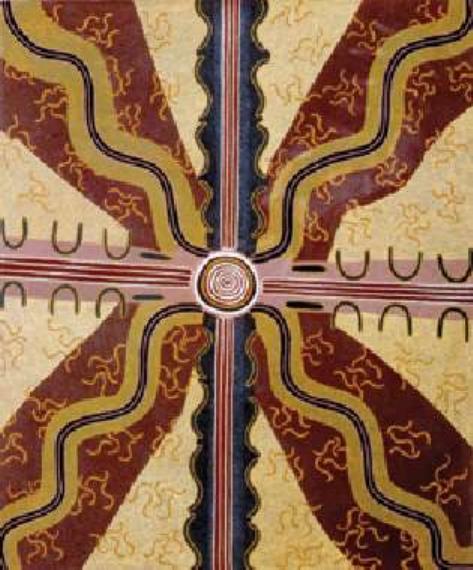
____ 3. Australian Aboriginals painted “contour maps” indicating food and water locations; these maps
were then ____ after a ritual celebration.
a.
hidden
b.
preserved
c.
destroyed
d.
painted over
____ 4. Coe’s There Is No Escape is from a series condemning the meat industry called ____.
a.
Slaughterhouse Five
b.
Animal Farm
c.
Beefopolis
d.
Porkopolis
____ 5. The ancient Chinese made ____ vessels for storing wine.
a.
clay
b.
bronze
c.
brass
d.
ceramic
____ 6. As its name suggests, the ancient Greek ____ was used for carrying and storing water.
a.
hydria
b.
hydrant
c.
fountainhead
d.
vase
____ 7. The Pomo tribal baskets, covered with feathers and shells, were made as ceremonial ____.
a.
hope chests
b.
jewelry
c.
gifts
d.
offerings
____ 8. Warhol’s work, such as Heinz 57 Tomato Ketchup, celebrated the commercial art of ____.
a.
advertising
b.
illustrating
c.
food manufacturing
d.
packaging
____ 9. Salt was considered so valuable that it was a source of wealth; the European nobility used
elaborate saltcellars as a ____ .
a.
source of trade
b.
status symbol
c.
ritual object
d.
weapon
____10. Jan Davidsz de Heem’s A Table of Desserts reflects cultural and ____ beliefs.
a.
political
b.
philosophical
c.
religious
d.
economic
____ 11. Mu Qi’s Six Persimmons emphasizes ____ in life.
a.
the importance of food
b.
the beauty of fruit
c.
meditation and simplicity
d.
the keys to regularity
____ 12. An important component of European still life painting was the idea of ____.
a.
food as sustenance
b.
food as vanitas
c.
food as innovation
d.
food as beauty
____ 13. In the early twentieth century, still life paintings were NOT concerned with ____.
a.
food as sustenance
b.
food as a political statement
c.
food as opulence
d.
food as honor
____ 14. Ritual meals do NOT include ____.
a.
religious holidays
b.
potlatches
c.
Japanese tea ceremonies
d.
Sunday brunch
____ 15. The House of Julius Polybius had a front atrium with a pool, called the____ , for collecting rainwater.
a.
calathus
b.
taberna
c.
impluvium
d.
acanthus
____ 16. Examples of ancient communities in which homes were close together in the same style include
Çatal Hüyük and ____.
a.
Lascaux
b.
Pueblo Bonito
c.
Habitat
d.
Villa Rotonda
____ 17. Trajan’s Market has tabernas whose form and arrangement suggests a ____.
a.
multistoried skyscraper
b.
Navajo pueblo
c.
kiva
d.
shopping mall
____18. In this composition, ____ suggests the balance of the cosmos and the ancestors, providing sustenance for
humans.
a.
texture
b.
symmetry
c.
rhythm
d.
color
____ 19. This artwork is an example of a(n) ____ painting.
a.
Aboriginal contour map
b.
Neolithic rock painting
c.
Banaman chi wara
d.
Native American potlach
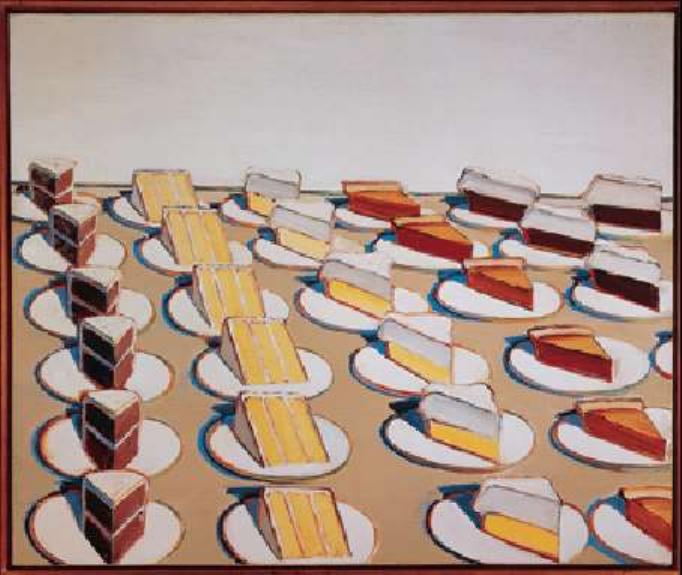
____ 20.
The function of this painting is to show food as ____.
a.
beautiful
b.
plentiful and nourishing
c.
a health hazard
d.
a popular icon
____ 21. The architect ____, who designed one of the first innovative tall buildings of the twentieth century, believed
that “form follows function” in architecture.
a.
R. Buckminster Fuller
b.
Louis Sullivan
c.
I. M. Pei
d.
Frank Lloyd Wright
____ 22. Greek ceramics are known for ____ painting, in which a thin coating of black-firing clay covers the red clay
of the vessel and details are scratched into the surface with a needle.
a.
tempera
b.
charcoal
c.
red figure
d.
black figure
____ 23. A ____ is a vessel designed specifically to contain salt.
a.
saltcellar
b.
hydria
c.
vase
d.
ting
____ 24. The Pop artist ____ created sculptures that look like mass-produced cardboard packaging for common
grocery store items using silk-screened wood.
a.
Sue Coe
b.
Wayne Thiebaud
c.
Judy Chicago
d.
Andy Warhol
____ 25. Paintings reflecting the beliefs of ____, such as Mu-Qi’s Six Persimmons from 1269, emphasize the
importance of simplicity and meditation in life.
a.
Hinduism
b.
Zen Buddhism
c.
Islam
d.
Christianity
____ 26. A ____ painting is a work of art, which uses a still life as a metaphor for the inevitability of death.
a.
landscape
b.
vanitas
c.
genre
d.
ritual
____ 27. The Native American ____ was originally a small tent used during the hunting season.
a.
toba batak
b.
yurt
c.
tipi
d.
goahti
____ 28. The concrete ____ of Frank Lloyd Wright’s Fallingwater show substantial influence from Japanese and
Chinese architecture.
a.
cantilevers
b.
buttresses
c.
brackets
d.
trusses
____ 29. Twentieth-century skyscrapers, devoid of ornamentation, are examples of the ____ style in architecture.
a.
International
b.
Deconstructivist
c.
Neoclassical
d.
Postmodern
Essay
30. Do you agree that Fallingwater is probably the most famous modern house in the United States? Why or why
not?
31. How can housing be shaped by historical necessity? Explain and give examples.
32. Discuss several modern architects and their contributions to the way buildings look now.
33. How do the drawings in the Lascaux caves in France link food, art, and ritual?
34. Discuss the use of salt to define social status.
35. Describe the function and process of the Japanese tea ceremony.
True/False
Indicate whether the statement is true or false.
____ 36. The Lascaux cave paintings, in southern France, were done from memory and focus on animals’ energy and
movements.
____ 37. The ancient Chinese made bronze vessels called hydrias for storing liquids, such as ritual wine.
____ 38. In most contemporary industrial societies, few people hunt and process the meat they eat.
____ 39. Because water is essential for survival, various cultures have developed inventive systems for storing liquids
using a variety of materials, including clay, leather, wood, and straw.
____ 40. Men from Northwest Native American tribes excelled at weaving symbolic, geometric patterns into their
baskets.
____ 41. The elaborate baskets woven by people from the Pomo tribe in California were strictly used for ritual
purposes.
____ 42. The use of the still life as a subject matter was an important vehicle for abstraction for early twentieth century
American artists.
____ 43. The earliest examples of domestic architecture feature group living.
____ 44. Due to their technological innovations in structural engineering, by the first century CE, average Romans
lived in heated apartment buildings with functional sewer systems.
____ 45. In most cultures, symbolic meaning is frequently attached to public buildings but rarely associated with
individual homes.
5
Answer Section
MULTIPLE CHOICE
ESSAY
TRUE/FALSE