189.
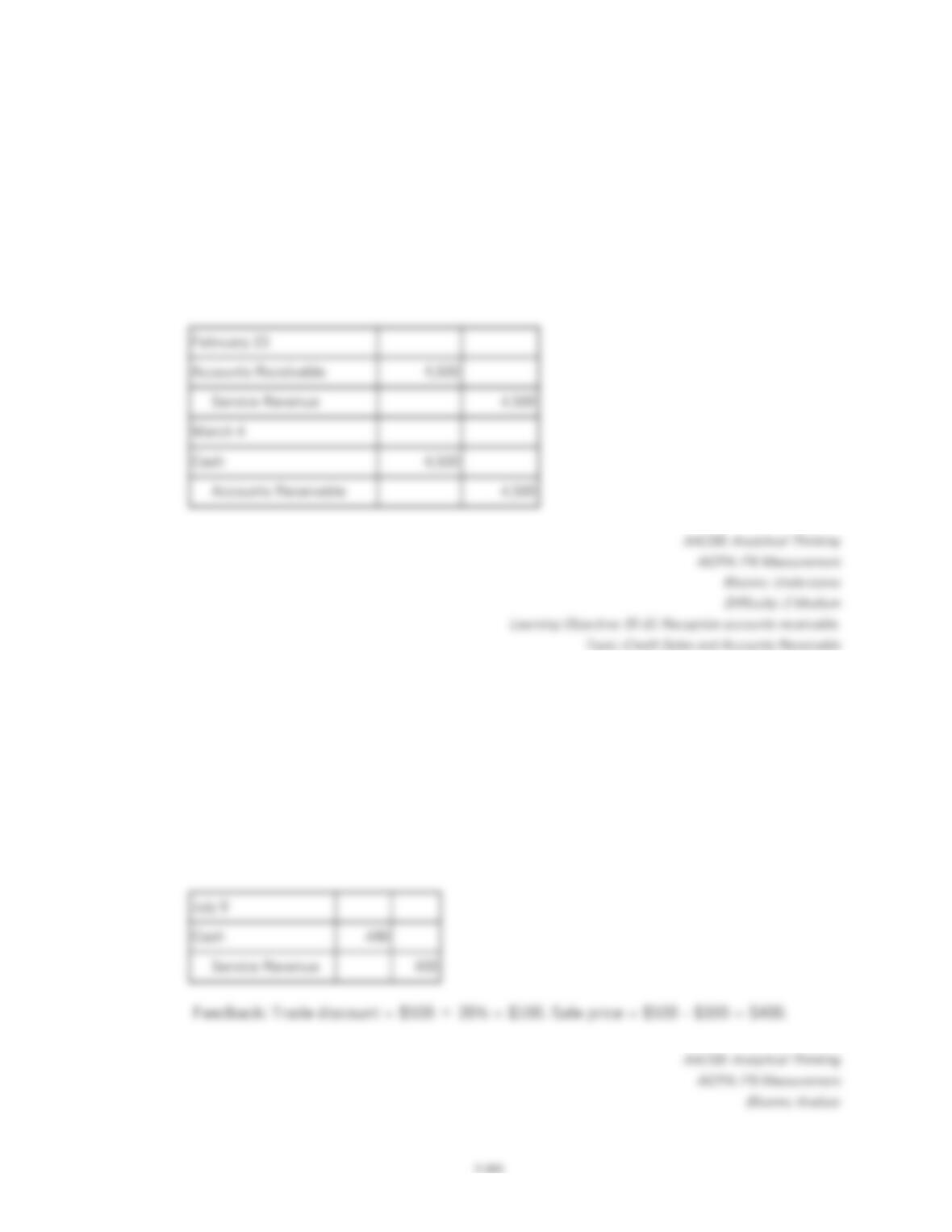
On February 23, a company provides services on account to a customer for $4,500. The
customer pays in full for those services on March 4. Record the transactions for the
company when the services are provided on February 23 and when the cash is collected
on March 4.
190.
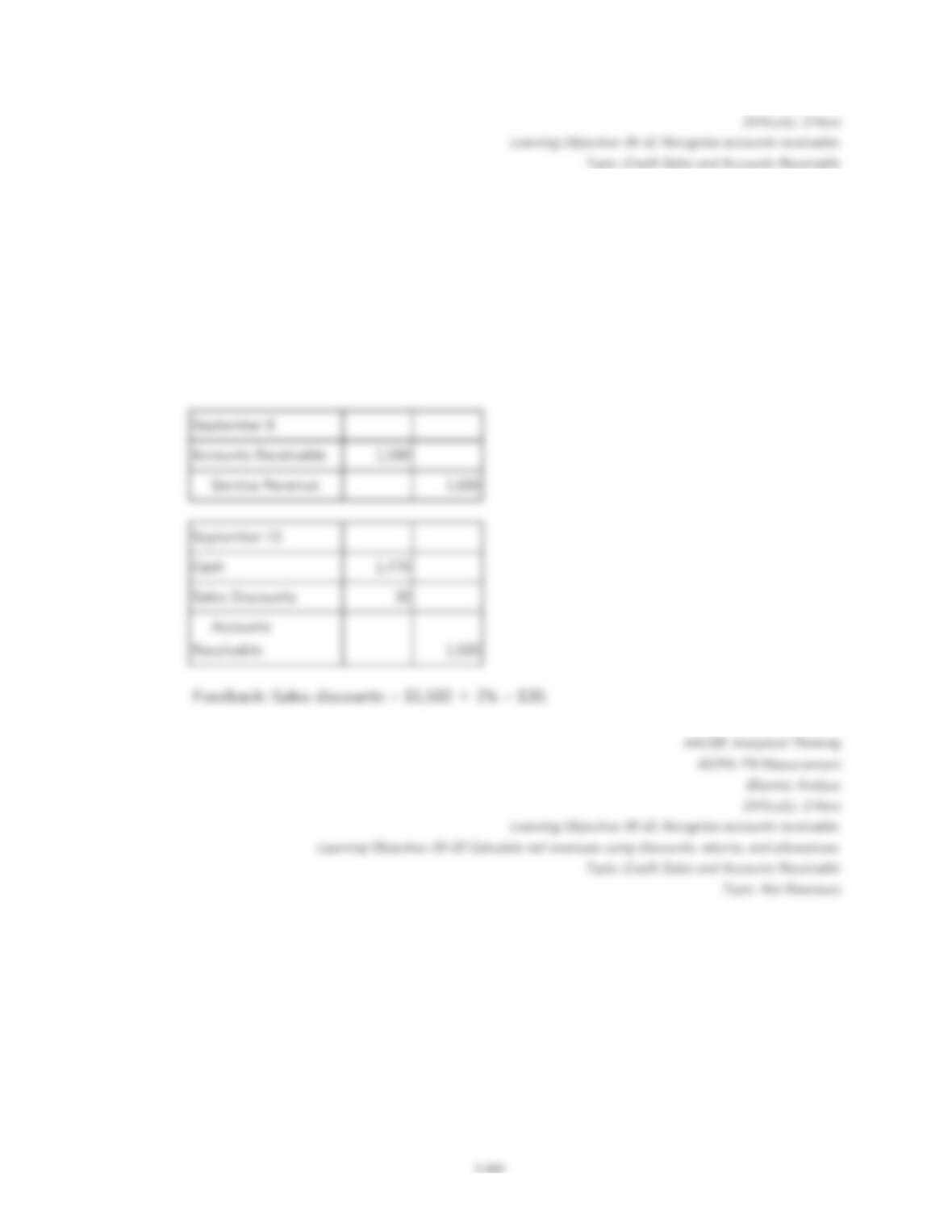
Suppose Casey Title Company normally charges $500 for services related to selling a
house. As part of a summer special, Casey offers customers a trade discount of 20%. On
July 9, Linda Holmes uses the services of Casey and pays cash equal to the discounted
price. Record the revenue earned by Casey on July 9.
191.
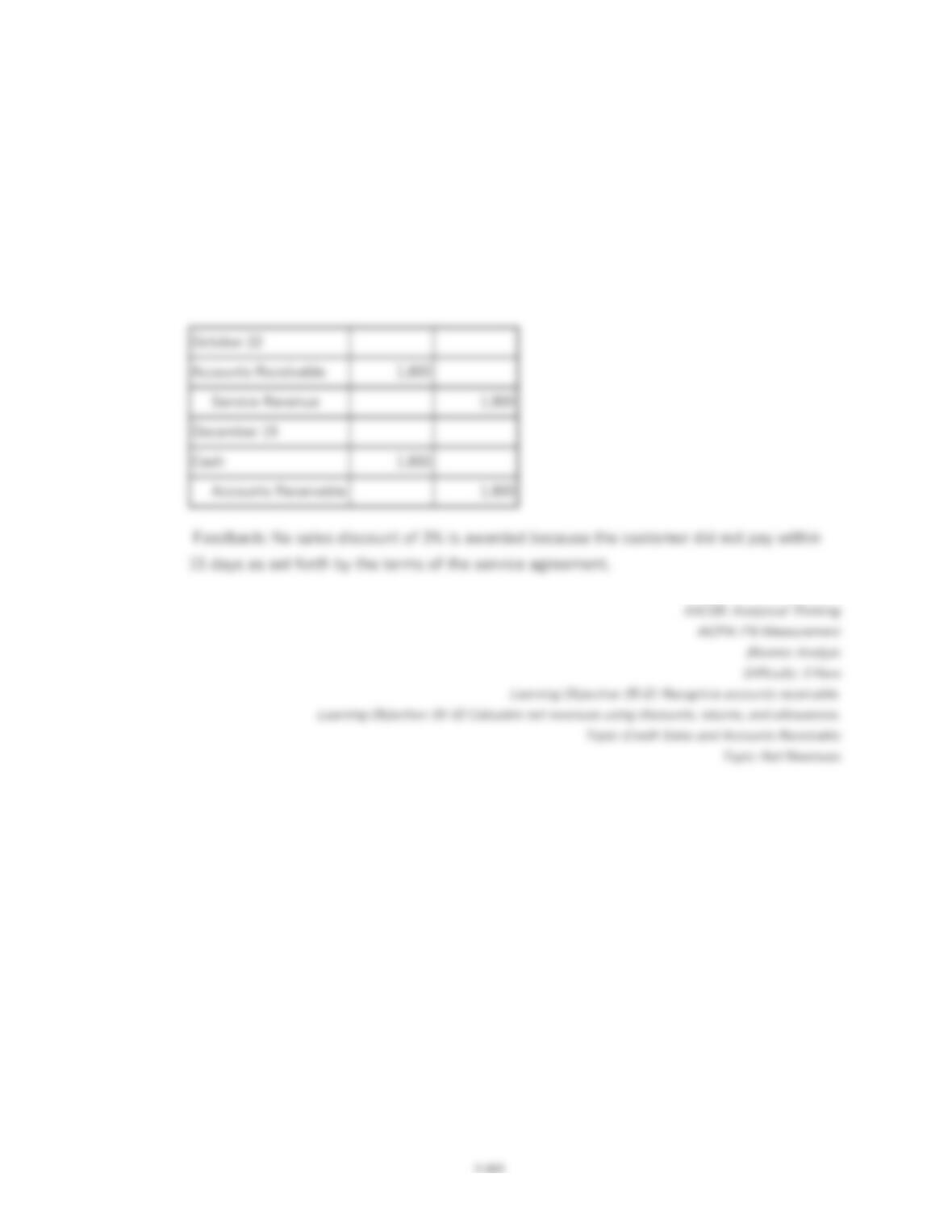
On September 8, a company provides services on account to a customer for $1,500, terms
2/10, n/30. The customer pays for those services on September 15. Record the
transactions for the company when the services are provided on September 8 and when
the cash is collected on September 15.
192.
On October 22, a company provides services on account to a customer for $1,800, terms
3/15, n/30. The customer pays for those services on December 19. Record the
transactions for the company when the services are provided on October 22 and when
cash is collected on December 19.
193.
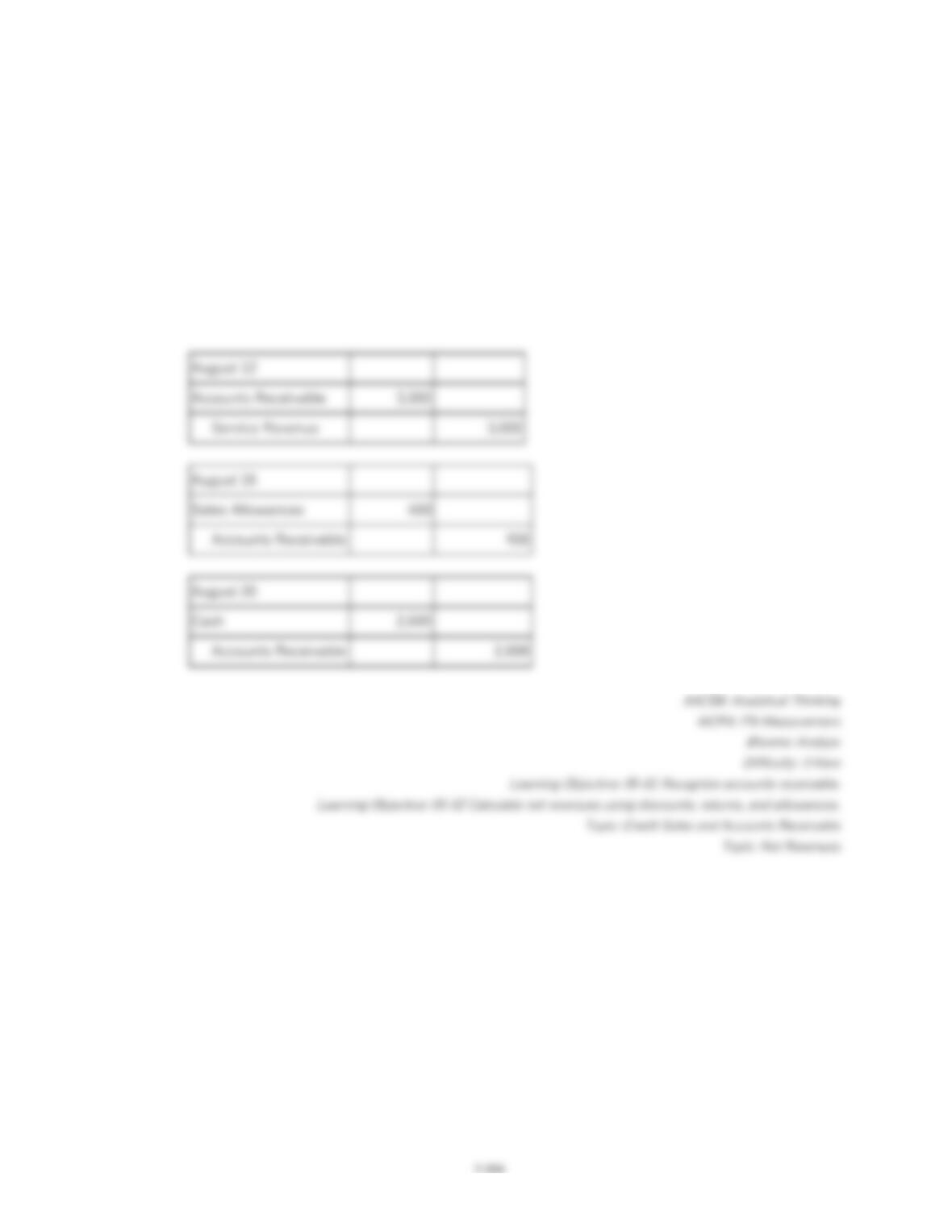
On August 12, a company provides services on account to a customer for $3,000. However,
on August 16, the customer is not completely satisfied with the service and the company
grants an allowance on the amount owed of $400. On August 20, the customer makes full
payment of the balance owed, excluding the allowance. Record the services provided on
August 12, the sales allowance on August 16, and the cash collection on August 20.
194.
A company reports the following amounts at the end of the year: Total sales = $500,000;
sales discounts = $10,000; sales returns = $30,000; sales allowances = $20,000. Compute
net revenues.
195.
A company reports the following amounts at the end of the year: Total sales = $400,000;
cash = $35,000; sales discounts = $10,000; accounts receivable = $20,000; sales returns
= $15,000; operating expenses = $70,000; sales allowances = $25,000. Compute net
revenues.
196.
At the end of the year, a company has a balance in Allowance for Uncollectible Accounts
of $200 (
credit
) before any year-end adjustment. The balance of Accounts Receivable is
$15,000. The company estimates that 10% of accounts receivable will not be collected
over the next year. Record the adjustment for uncollectible accounts.
197.
At the end of the year, a company has a balance in Allowance for Uncollectible Accounts
of $2,000 (
credit
) before any year-end adjustment. The balance of Accounts Receivable is
$180,000. The company estimates that 5% of accounts receivable will not be collected
over the next year. Record the adjustment for uncollectible accounts.
198.
At the end of the year, a company has a balance in Allowance for Uncollectible Accounts
of $2,000 (
debit
) before any year-end adjustment. The balance of Accounts Receivable is
$180,000. The company estimates that 5% of accounts receivable will not be collected
over the next year. Record the adjustment for uncollectible accounts.
199.
During 2018, its first year of operations, a company provides services on account of
$250,000. By the end of 2018, cash collections on these accounts total $130,000. The
company estimates that 10% of accounts receivable will be uncollectible. Record the
adjustment for uncollectible accounts on December 31, 2018.
Topic: Allowance Method
200.
A company has the following balances on December 31, 2018, after year–end adjustments:
Accounts Receivable = $62,000; Allowance for Uncollectible Accounts = $6,000. Calculate
the net realizable value of accounts receivable.
201.
A company has the following balances on December 31, 2018, after year–end adjustments:
Accounts Receivable = $75,000; Service Revenue = $400,000; Allowance for Uncollectible
Accounts = $5,000; Cash = $20,000. Calculate the net realizable value of accounts
receivable.
202.
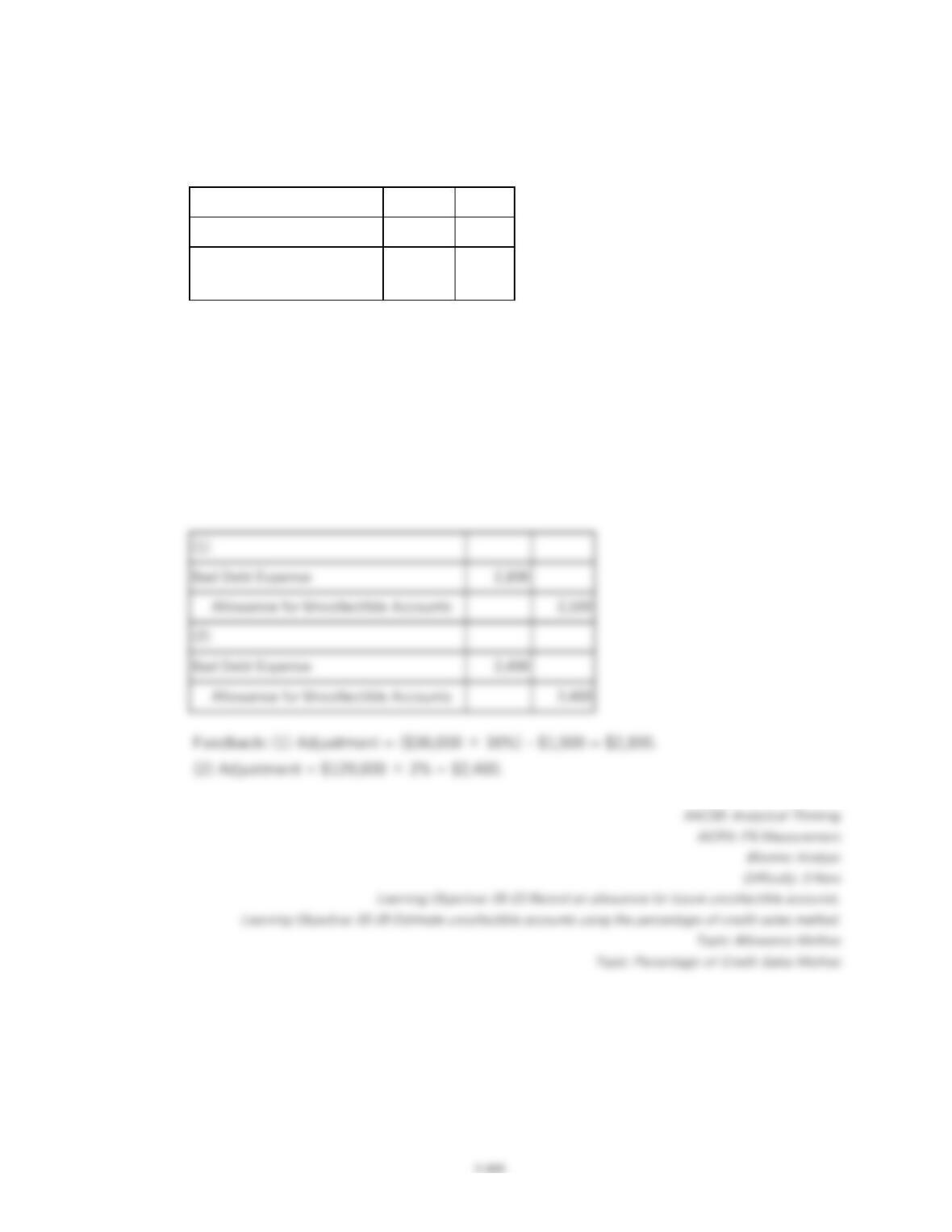
A company reports the following amounts at the end of the year (before any year-end
adjustment).
Credit sales for the year
$120,000
Accounts receivable
36,000
Allowance for uncollectible
accounts
1,500
(
credit
)
Record the adjustment for uncollectible accounts (1) using the percentage–of-receivables
method, assuming the company estimates 10% of receivables will not be collected, and (2)
using the percentage–of-credit-sales method, assuming the company estimates 2% of
credit sales will not be collected.
203.
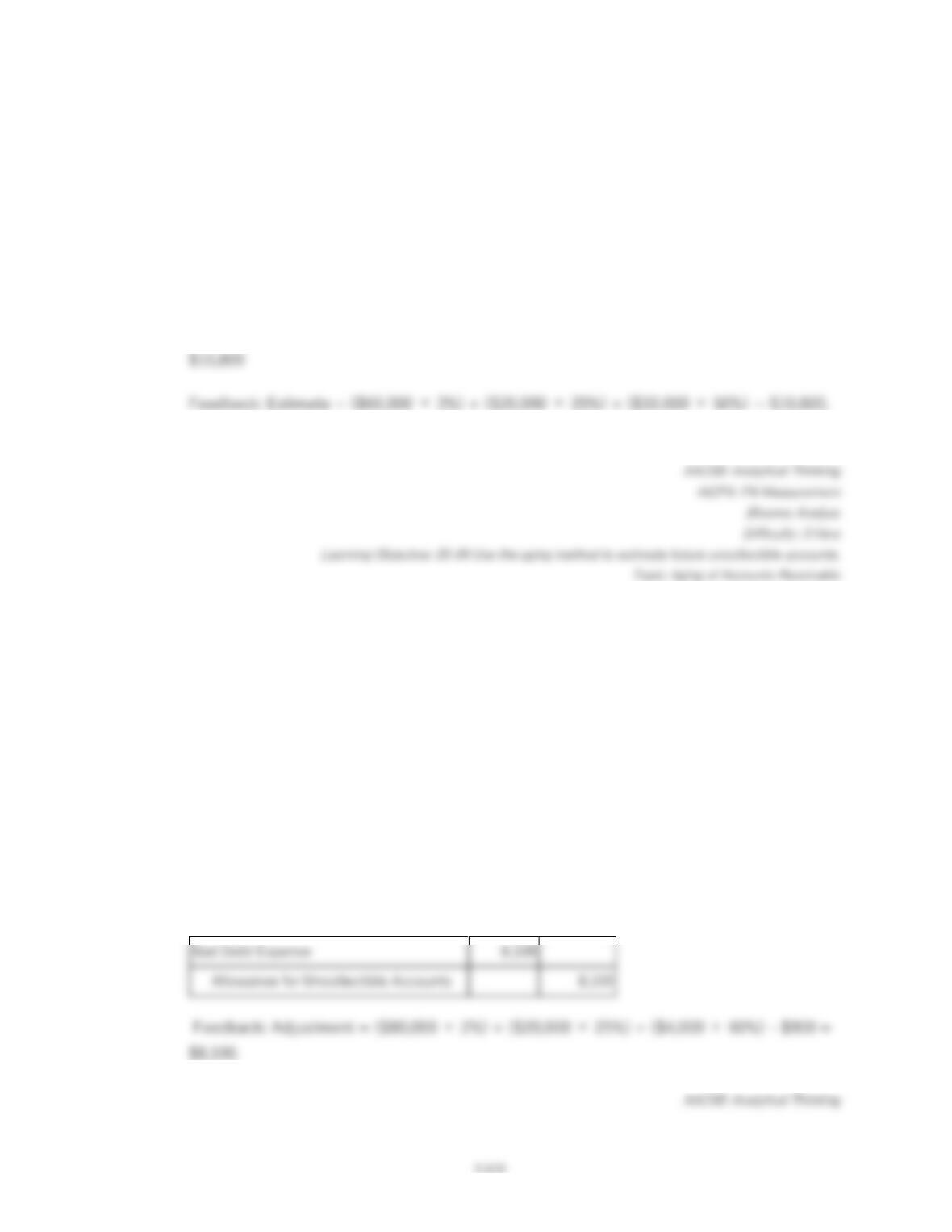
A company has the following accounts receivable and estimates of uncollectible accounts:
1. Accounts not yet due = $60,000; estimated uncollectible = 3%.
2. Accounts 1-30 days past due = $20,000; estimated uncollectible = 20%.
3. Accounts more than 30 days past due = $10,000; estimated uncollectible = 50%.
Compute the total estimated uncollectible accounts.
204.
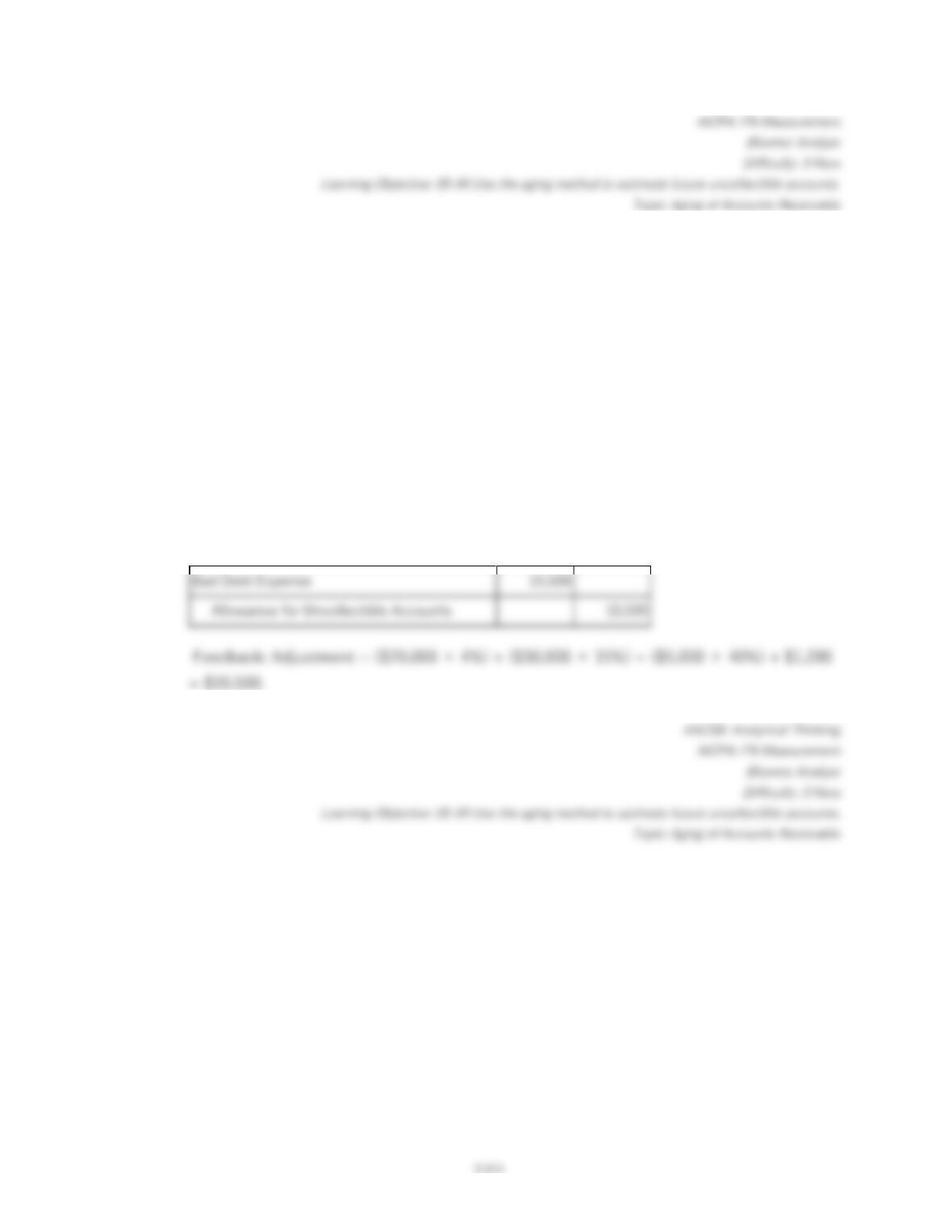
At the end of the year, a company has the following accounts receivable and estimates of
uncollectible accounts:
1. Accounts not yet due = $80,000; estimated uncollectible = 2%.
2. Accounts 1-30 days past due = $20,000; estimated uncollectible = 25%.
3. Accounts more than 30 days past due = $4,000; estimated uncollectible = 60%.
Record the year-end adjustment for uncollectible accounts, assuming the current balance
of the Allowance for Uncollectible Accounts is $900 (credit).
205.
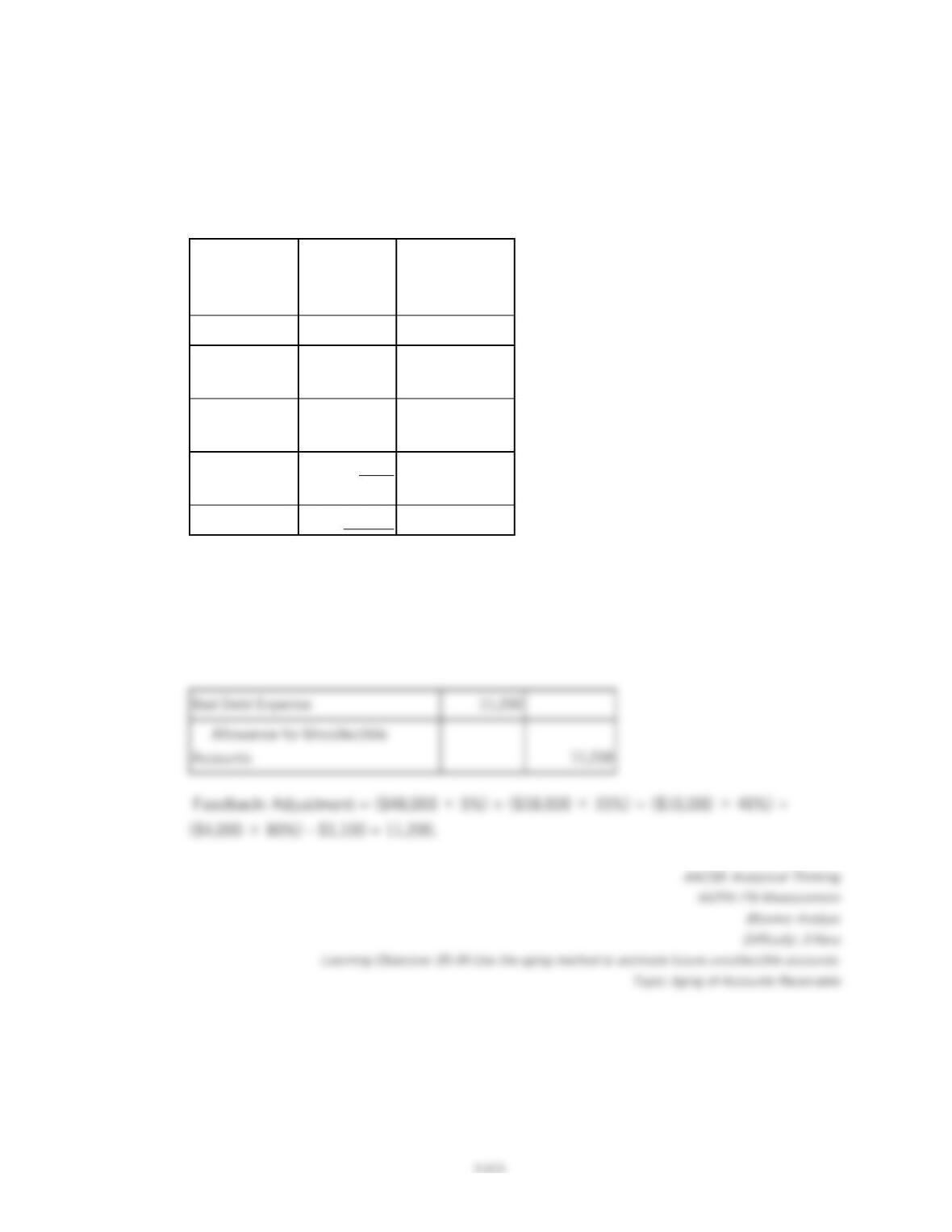
At the end of the year, a company has the following accounts receivable and estimates of
uncollectible accounts:
1. Accounts not yet due = $70,000; estimated uncollectible = 4%.
2. Accounts 1-30 days past due = $30,000; estimated uncollectible = 15%.
3. Accounts more than 30 days past due = $5,000; estimated uncollectible = 40%.
Record the year-end adjustment for uncollectible accounts, assuming the current balance
of the Allowance for Uncollectible Accounts is $1,200 (debit).
206.
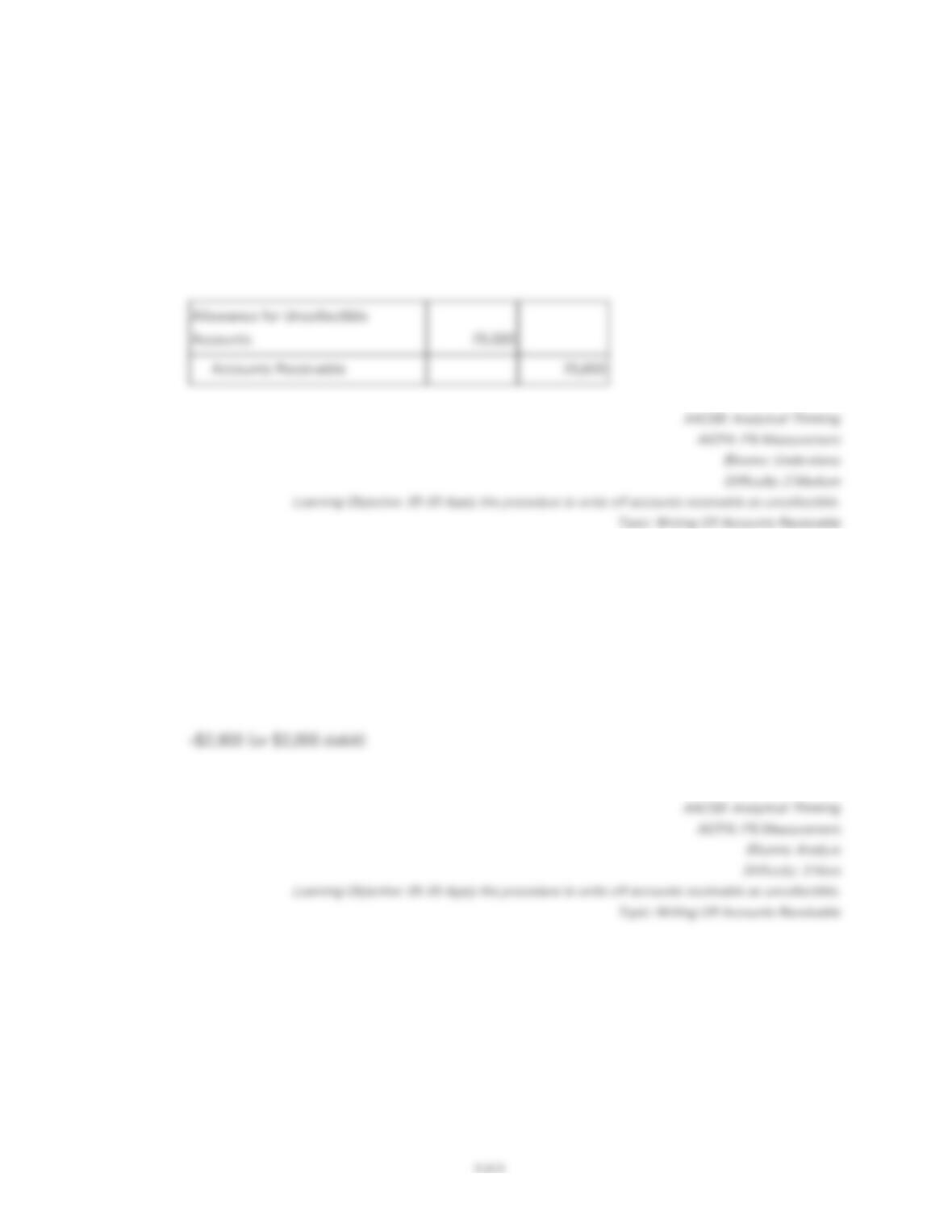
A company has the following balances on December 31, 2018, before any year-end
adjustments: Accounts Receivable = $80,000; Allowance for Uncollectible Accounts =
$1,100 (credit). The company estimates uncollectible accounts based on an aging of
accounts receivable as shown below:
Age Group
Amount
Receivable
Estimated
Percent
Uncollectible
Not yet due
$48,000
5%
0–30 days past
due
18,000
15%
31–90 days
past due
10,000
40%
More than 90
days past due
4,000
80%
Total
$80,000
Record the adjustment for uncollectible accounts on December 31, 2018.
Bad Debt Expense
Allowance for Uncollectible
207.
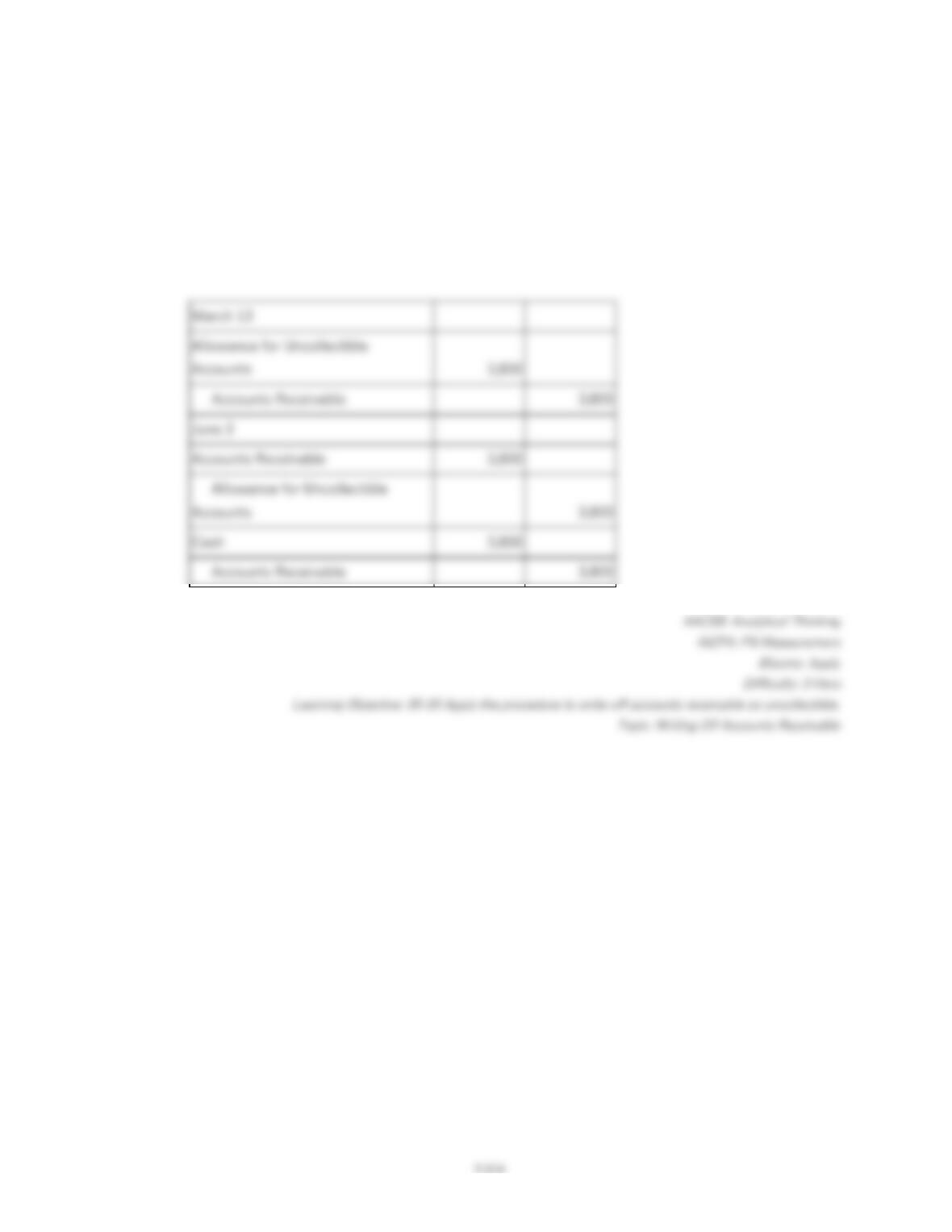
A company uses the allowance method to account for uncollectible accounts. During the
year, the company has actual bad debts of $25,000. Record the write-off of the
uncollectible accounts.
208.
At the beginning of the year, a company had an Allowance for Uncollectible Accounts of
$22,000. By the end of the year, actual bad debts total $24,000. What is the balance of the
Allowance for Uncollectible Accounts after the write-offs (before any year-end
adjustment)?
209.
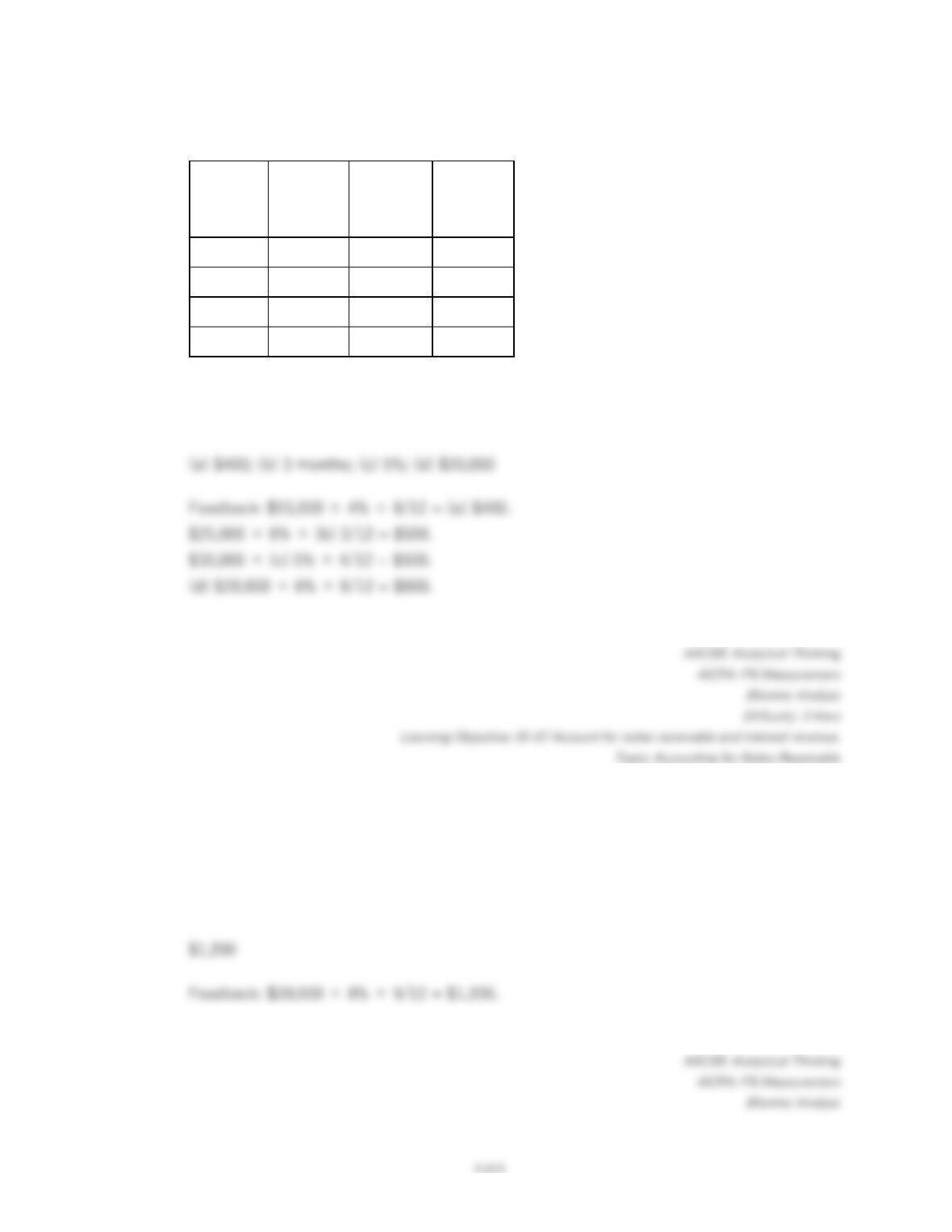
On March 13, a company writes off a customer’s account of $3,800. On June 3, the
customer unexpectedly pays the $3,800 balance. Using the allowance method, record the
write-off on March 13 and the cash collection on June 3.
210.
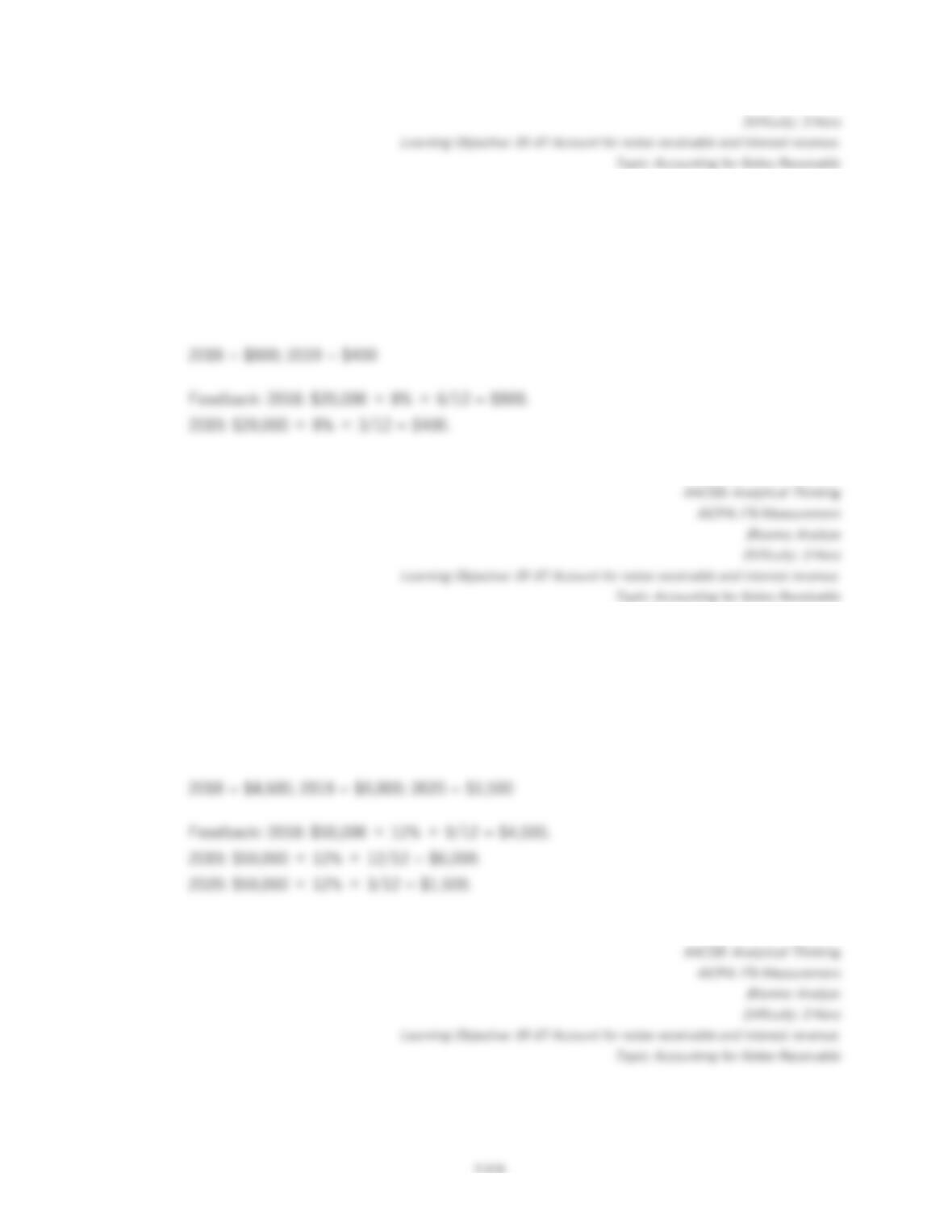
Calculate the missing amount for each of the following notes receivable.
Face
Value
Annual
Interest
rate
Fraction of
the Year
Interest
$15,000
4%
8 months
(a)
$25,000
8%
(b)
$500
$30,000
(c)
4 months
$500
(d)
6%
6 months
$600
211.
On February 1, 2018, a company loans one of its employees $20,000 and accepts a nine–
month, 8% note receivable. Calculate the amount of interest revenue the company will
recognize in 2018.
212.
On July 1, 2018, a company loans one of its employees $20,000 and accepts a nine-month,
8% note receivable. Calculate the amount of interest revenue the company will recognize
in 2018 and 2019.
213.
On April 1, 2018, a company loans one of its suppliers $50,000 and accepts a 24-month,
12% note receivable. Calculate the amount of interest revenue the company will recognize
in 2018, 2019, and 2020.
214.
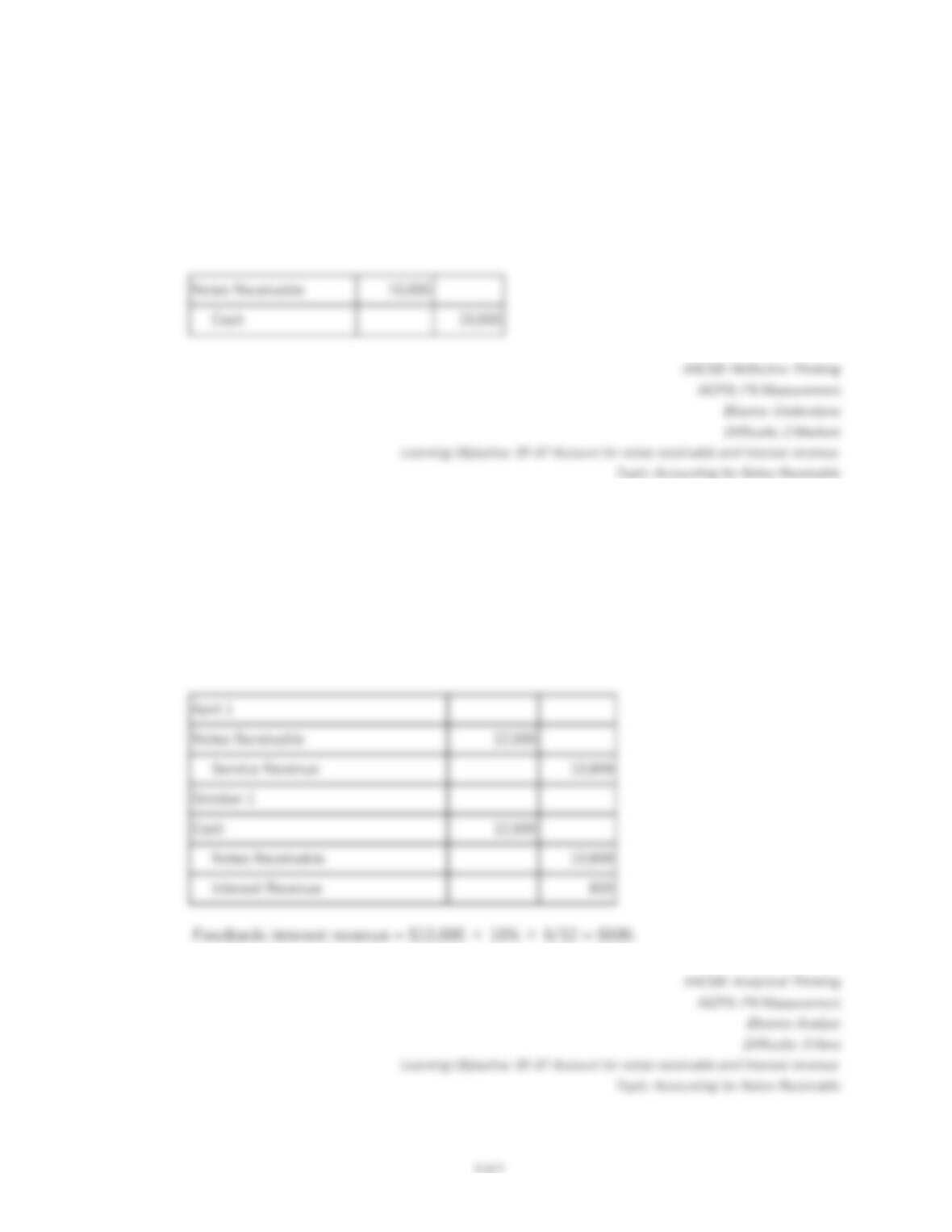
On April 14, a company lends $10,000 cash to one of its employees and accepts a six–
month, 12% note in return. Record the acceptance of the note receivable.
215.
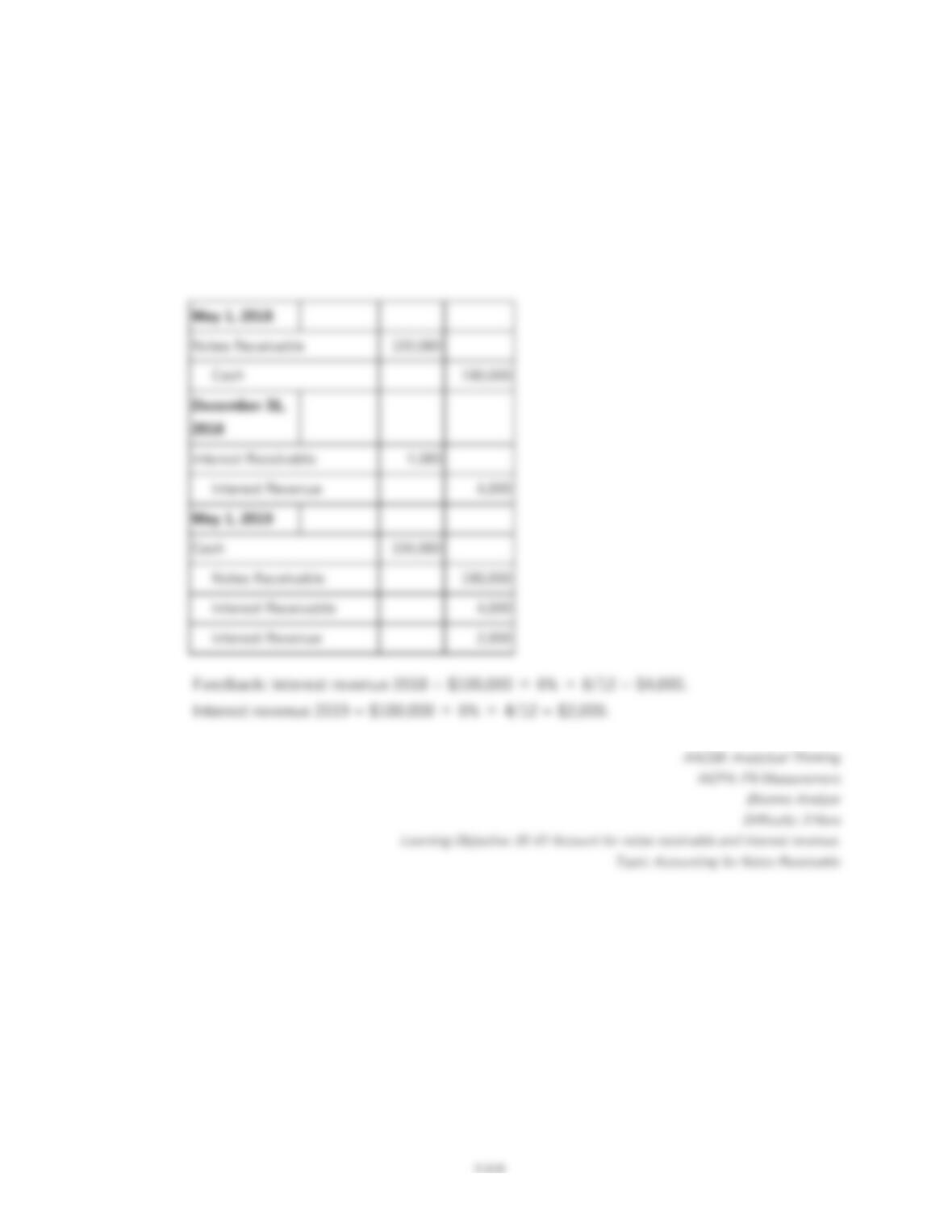
On April 1, a company provides services to one of its customers for $12,000. As payment
for the services, the company accepts a six-month, 10% note from the customer. Record
the acceptance of the note receivable on April 1 and the cash collection on October 1.
216.
On May 1, 2018, a company lends $100,000 to one of its main suppliers and accepts a 12–
month, 6% note. Record the acceptance of the note on May 1, 2018, the adjustment on
December 31, 2018, and the cash collection on May 1, 2019.

217.
Below are amounts for two companies:
Beginning
Accounts
Receivable
(net)
Ending
Accounts
Receivable
(net)
Net
Sales
Company 1
$1,500
$1,200
$29,700
Company 2
3,100
3,300
80,000
For each company, calculate the receivables turnover ratio. Which company appears more
efficient in collecting cash from sales?
218.
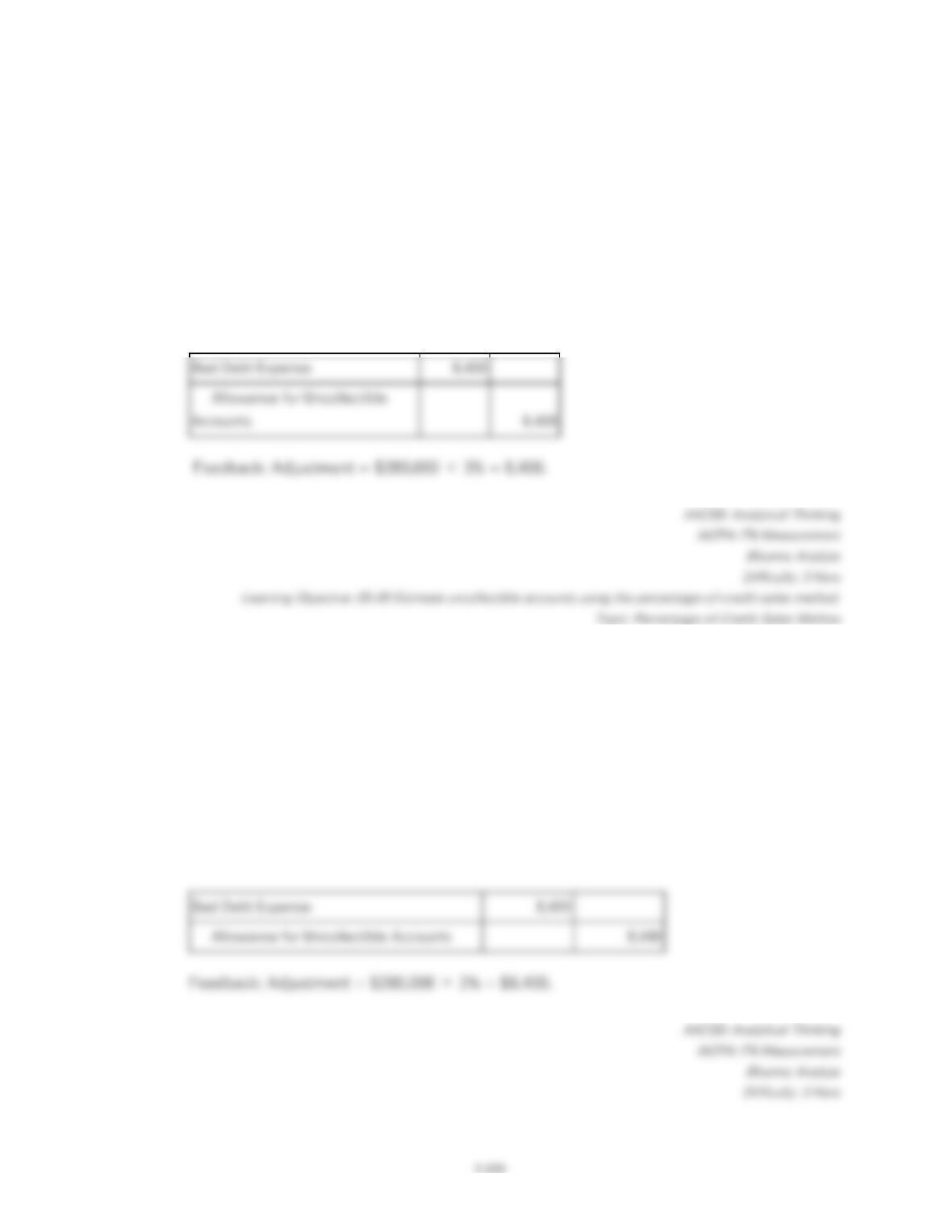
At the end of the year, a company reports a balance in its Allowance for Uncollectible
Accounts of $1,400 (
credit
) before any year-end adjustment. The company estimates
future uncollectible accounts to be 3% of credit sales for the year. Credit sales for the year
total $280,000. Record the adjustment for the allowance for uncollectible accounts using
the percentage-of-credit-sales method.
219.
At the end of the year, a company reports a balance in its Allowance for Uncollectible
Accounts of $1,400 (
debit
) before any year-end adjustment. The company estimates
future uncollectible accounts to be 3% of credit sales for the year. Credit sales for the year
total $280,000. Record the adjustment for the allowance for uncollectible accounts using
the percentage-of-credit-sales method.