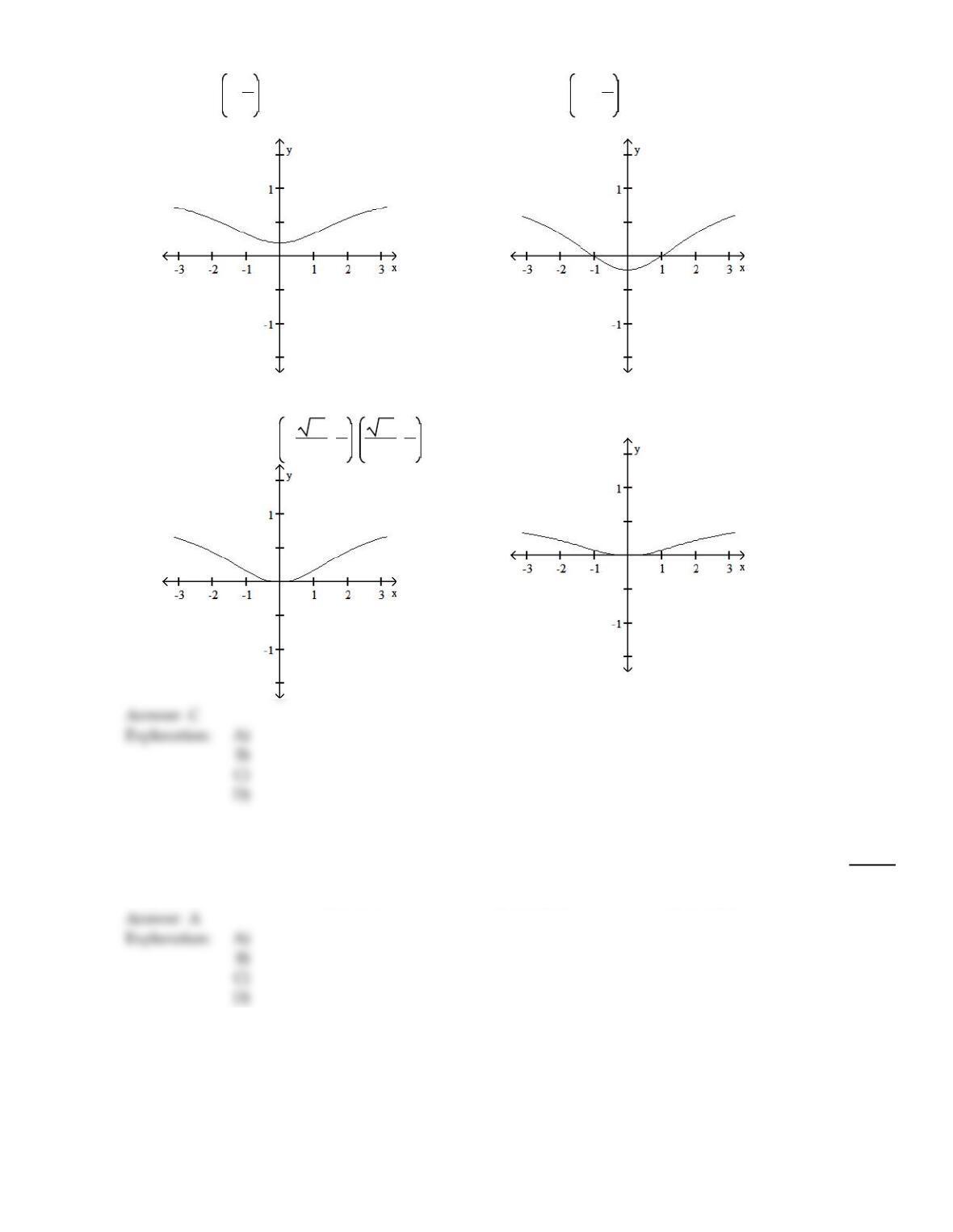
A)
Rel min: 0, 1
5
No inflection points
B)
Rel min: 0, –1
5
No inflection points
C)
Rel min: (0, 0)
Inflection points: –15
3, 1
4, 15
3, 1
4
D)
Rel min: (0, 0)
No inflection points
Solve the problem.
151)
Find the number of units, x, that produces the maximum profit P, if C(x) =20 + 52x and
p =72 – 2x.
151)
A)
5 units
B)
52 units
C)
208 units
D)
20 units
59
Find the requested value of the second derivative of the function.
152)
f(x) =7x2+ 8x – 2; Find f(0).
152)
A)
0
B)
14
C)
7
D)
–14
Find the location and value of all relative extrema for the function.
153)
153)
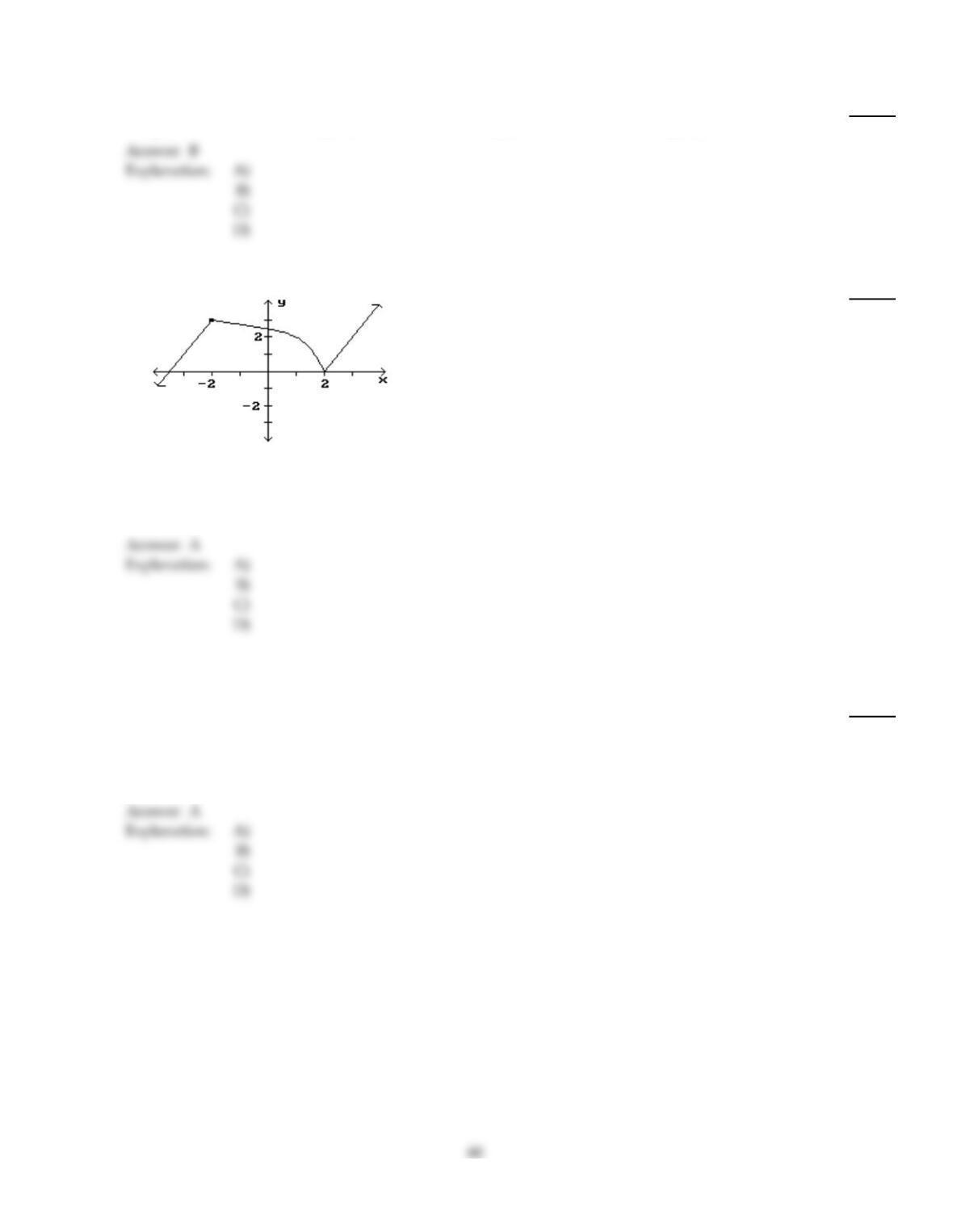
A)
Relative maximum of 3 at –2 ; Relative minimum of 0 at 2.
B)
Relative minimum of 0 at 2.
C)
Relative maximum of 3 at –2.
D)
None
Decide if the given value of x is a critical number for f, and if so, decide whether the point is a relative minimum, relative
maximum, or neither.
154)
f(x) = – x2– 16x – 64; x = 8
154)
A)
Not a critical number
B)
Critical number but not an extreme point
C)
Critical number, relative minimum at (8, –144)
D)
Critical number, relative maximum at (8, –144)
Identify the open intervals where the function is changing as requested.
155)
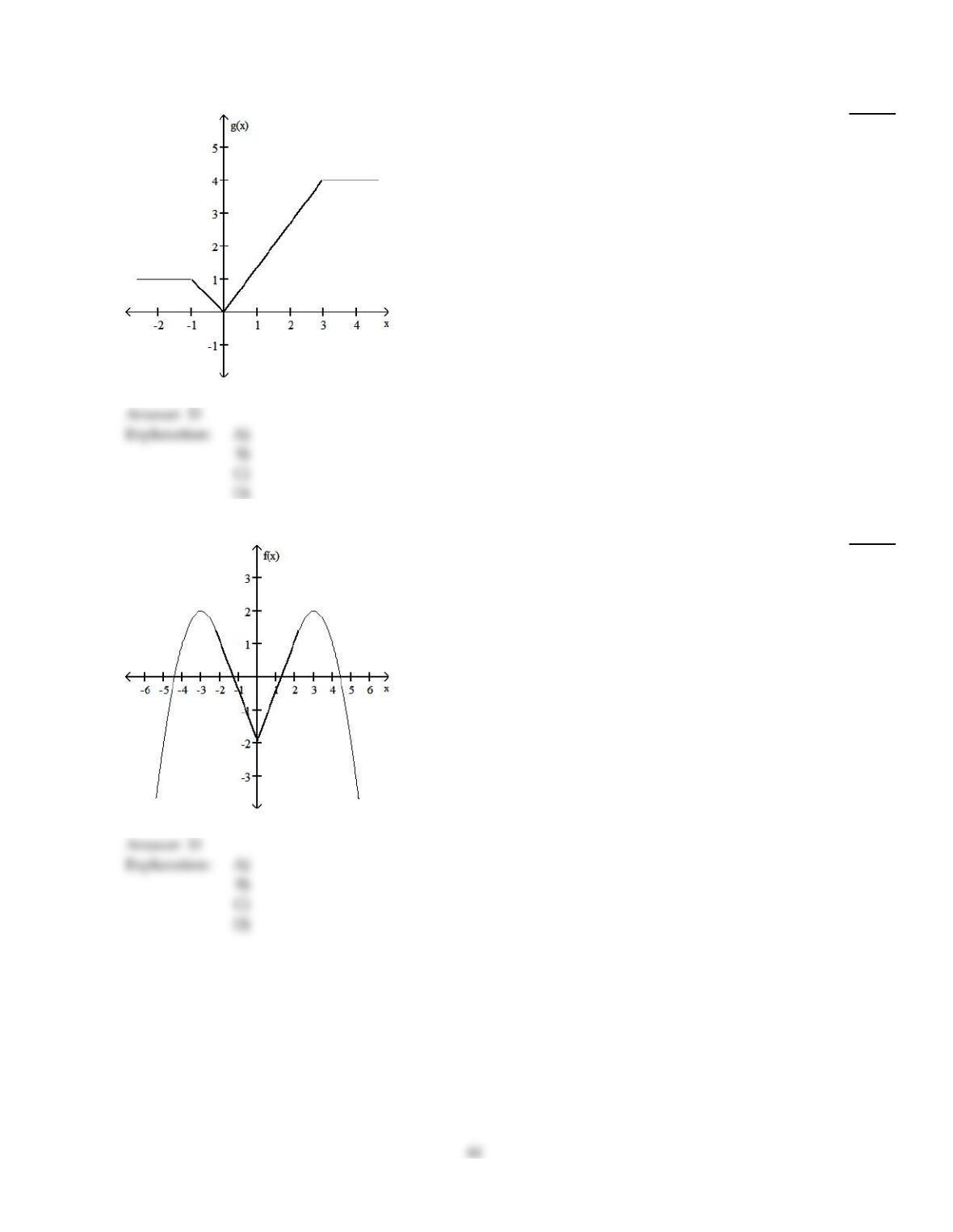
Decreasing
155)
A)
(–, 0)
B)
(0, 3)
C)
(3, )
D)
(–1, 0)
156)
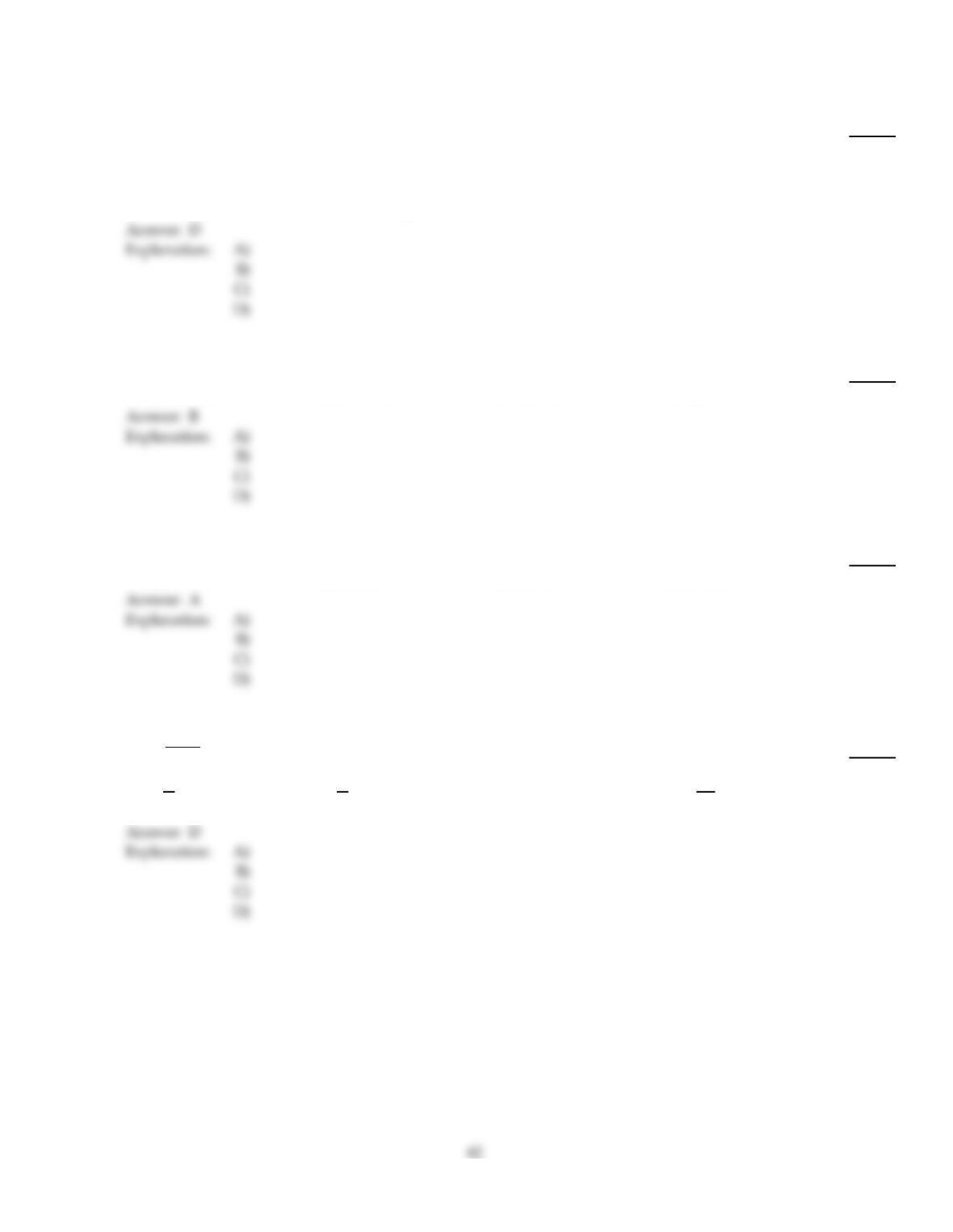
Decreasing
156)
A)
( , –3), (0, 3)
B)
(–3, 3)
C)
(–3, 0)
D)
(–3, 0), (3, )
Decide if the given value of x is a critical number for f, and if so, decide whether the point is a relative minimum, relative
maximum, or neither.
157)
f(x) = x5; x = 0
157)
A)
Not a critical number
B)
Critical number, relative maximum at (0, 0)
C)
Critical number, relative minimum at (0, 0)
D)
Critical number but not an extreme point
Find f”(x) for the function.
158)
f(x) =5x3– 6x2+ 6
158)
A)
20x – 12
B)
30x – 12
C)
12x – 30
D)
12x – 20
Find the open interval(s) where the function is changing as requested.
159)
Increasing; y = 7x – 5
159)
A)
(–, )
B)
(–5, 7)
C)
(–5, )
D)
(–, 7)
Find the requested value of the second derivative of the function.
160)
f(x) =x
x + 1 ; Find f(2).
160)
A)
2
3
B)
1
9
C)
0
D)
–2
27
Find any inflection points given the equation.
161)
f(x) = 2x3+ 15x2+ 24x
161)
A)
Inflection points at (–1, –11), (–4, 16)
B)
No inflection points
C)
Inflection point at –5
2, 5
2
D)
Inflection point: (0, 0)
The function gives the distances (in feet) traveled in time t (in seconds) by a particle. Find the velocity and acceleration at
the given time.
162)
s =7t3+ 7t2+ 4t + 6, t =2
162)
A)
v =116 ft/s, a =98 ft/s2
B)
v =70 ft/s, a =56 ft/s2
C)
v =98 ft/s, a =116 ft/s2
D)
v =56 ft/s, a =70 ft/s2
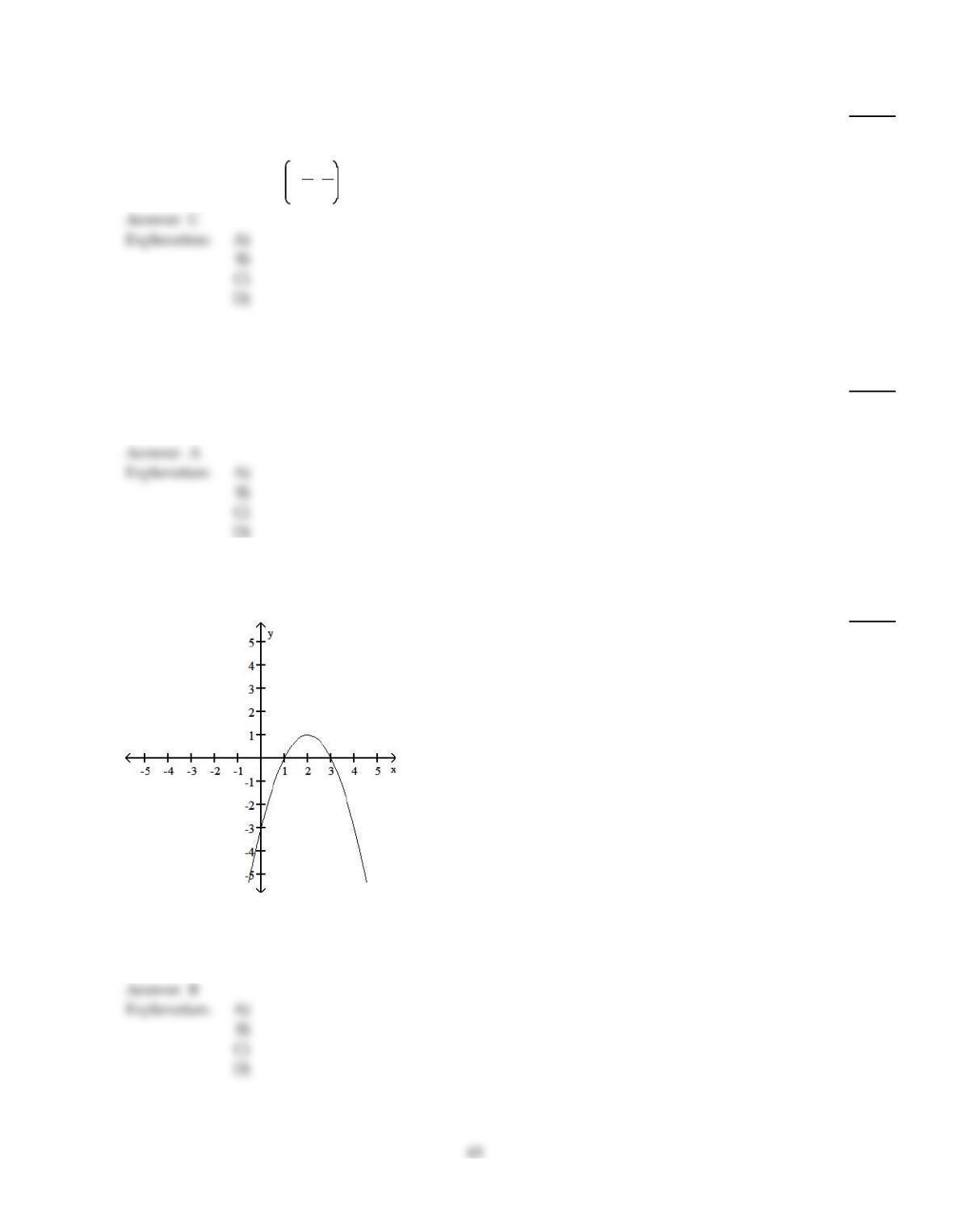
Suppose that the function with the given graph is not f(x), but f (x). Find the locations of all extrema, and tell whether
each extremum is a relative maximum or minimum.
163)
163)
A)
Relative maxima at 1 and 3
B)
Relative minimum at 1; relative maximum at 3
C)
Relative maximum at 2
D)
Relative maximum at 1; relative minimum at 3
Find the largest open intervals where the function is concave upward.
164)
f(x) = 4x3– 45x2+ 150x
164)
A)
15
4,
B)
–, –15
4
C)
–, 15
4
D)
–15
4,
Find the indicated derivative of the function.
165)
f(x) of f(x) =x
x + 1
165)
A)
6(x + 1)–3
B)
–6(x + 1)–3
C)
6(x + 1)–4
D)
–6(x + 1)–4
Solve the problem.
166)
A probability function is defined by f(x) =1
6e–x2/2. Give the intervals where the function is
increasing and decreasing.
166)
A)
increasing on (0, ); decreasing on ( , 0)
B)
increasing:on ( , 0); decreasing on (0, )
C)
decreasing on ( , )
D)
increasing on ( , )
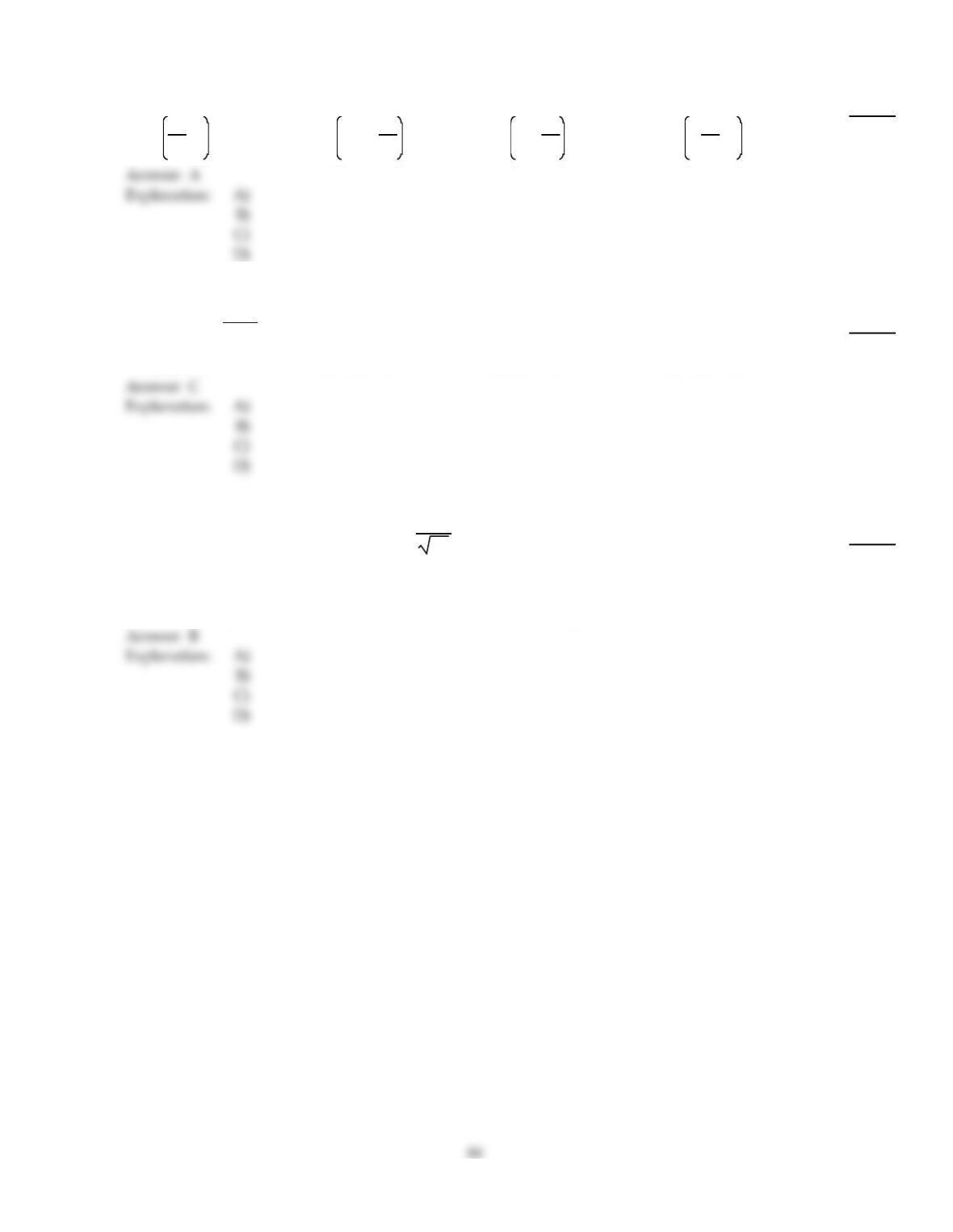
Suppose that the function with the given graph is not f(x), but f (x). Find the open intervals where f(x) is increasing or
decreasing as indicated.
167)
Increasing
167)
A)
(–2, 2)
B)
(0, )
C)
( , –2), (2, )
D)
(2, )
Find the location and value of all relative extrema for the function.
168)
168)
A)
Relative minimum of 0 at –2.
B)
Relative maximum of 2 at 0.
C)
None
D)
Relative minimum of 0 at –2 ; Relative maximum of 2 at 0.
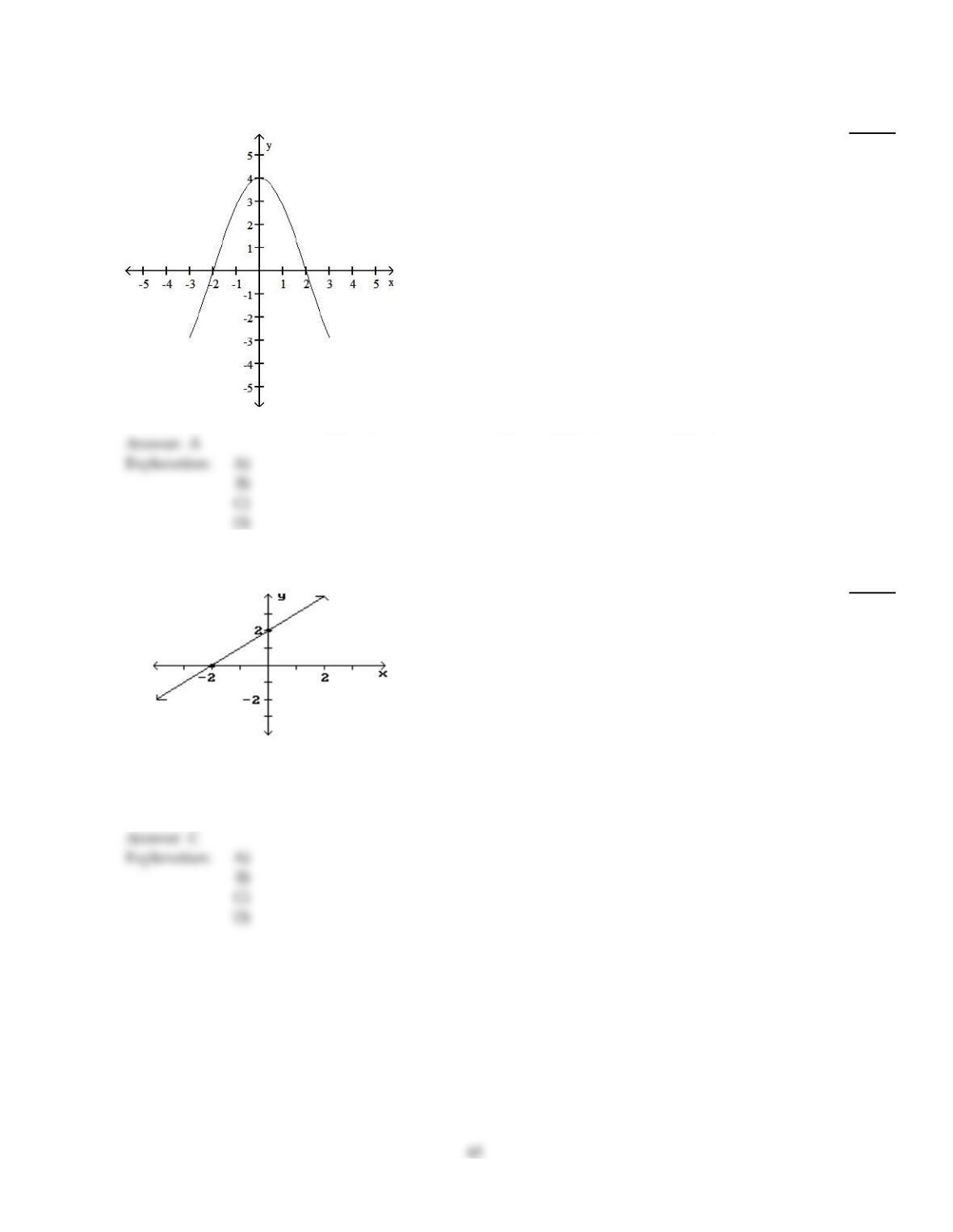
Suppose that the function with the given graph is not f(x), but f (x). Find the locations of all extrema, and tell whether
each extremum is a relative maximum or minimum.
169)
169)
A)
Relative maximum at –2; relative minimum at 2
B)
Relative minimum at –4
C)
Relative maxima at –2 and 2
D)
Relative minimum at –2; relative maximum at 2
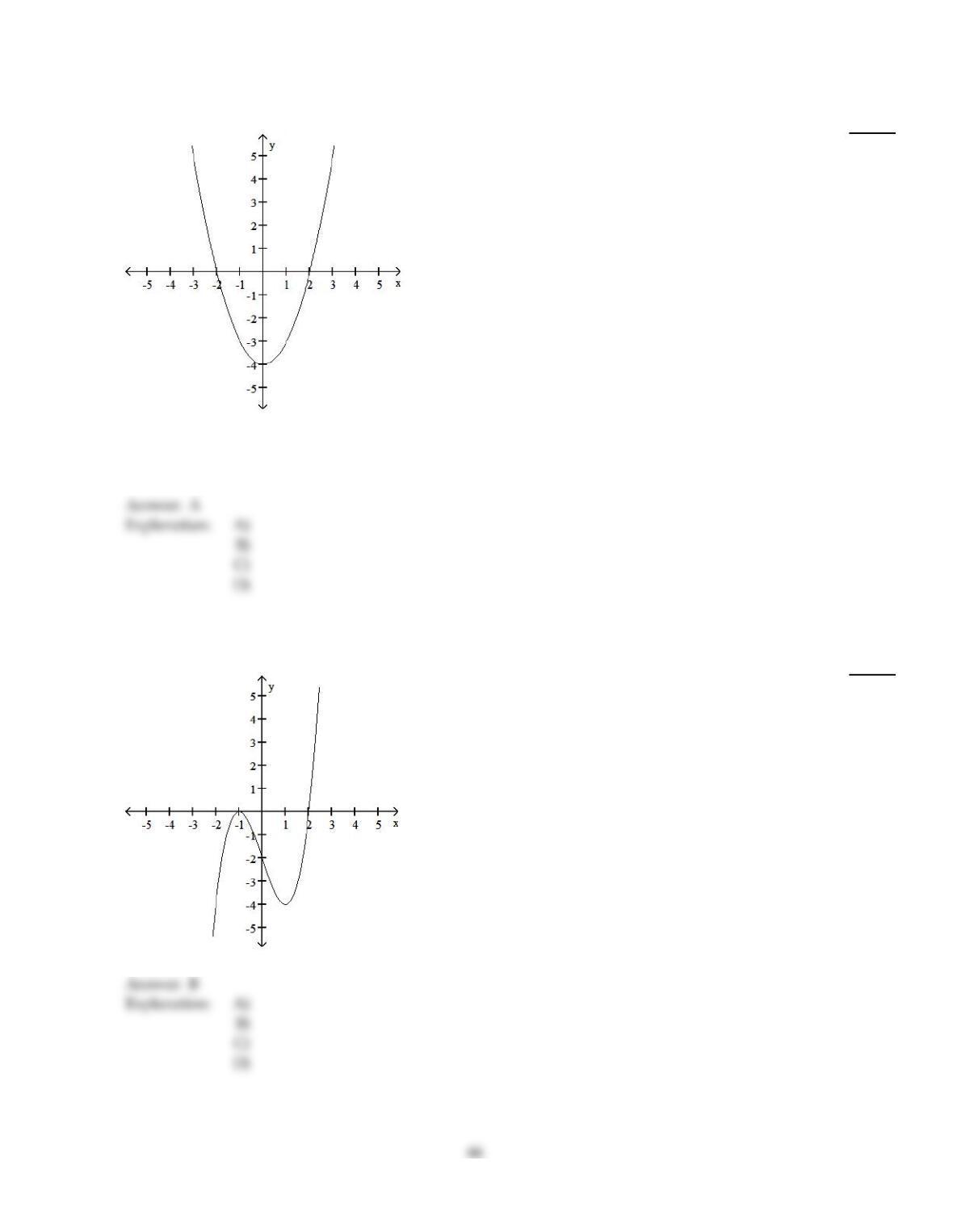
Suppose that the function with the given graph is not f(x), but f (x). Find the open intervals where f(x) is increasing or
decreasing as indicated.
170)
Decreasing
170)
A)
(–1, 2)
B)
( , –1), (–1, 2)
C)
( , 2)
D)
( , 2)
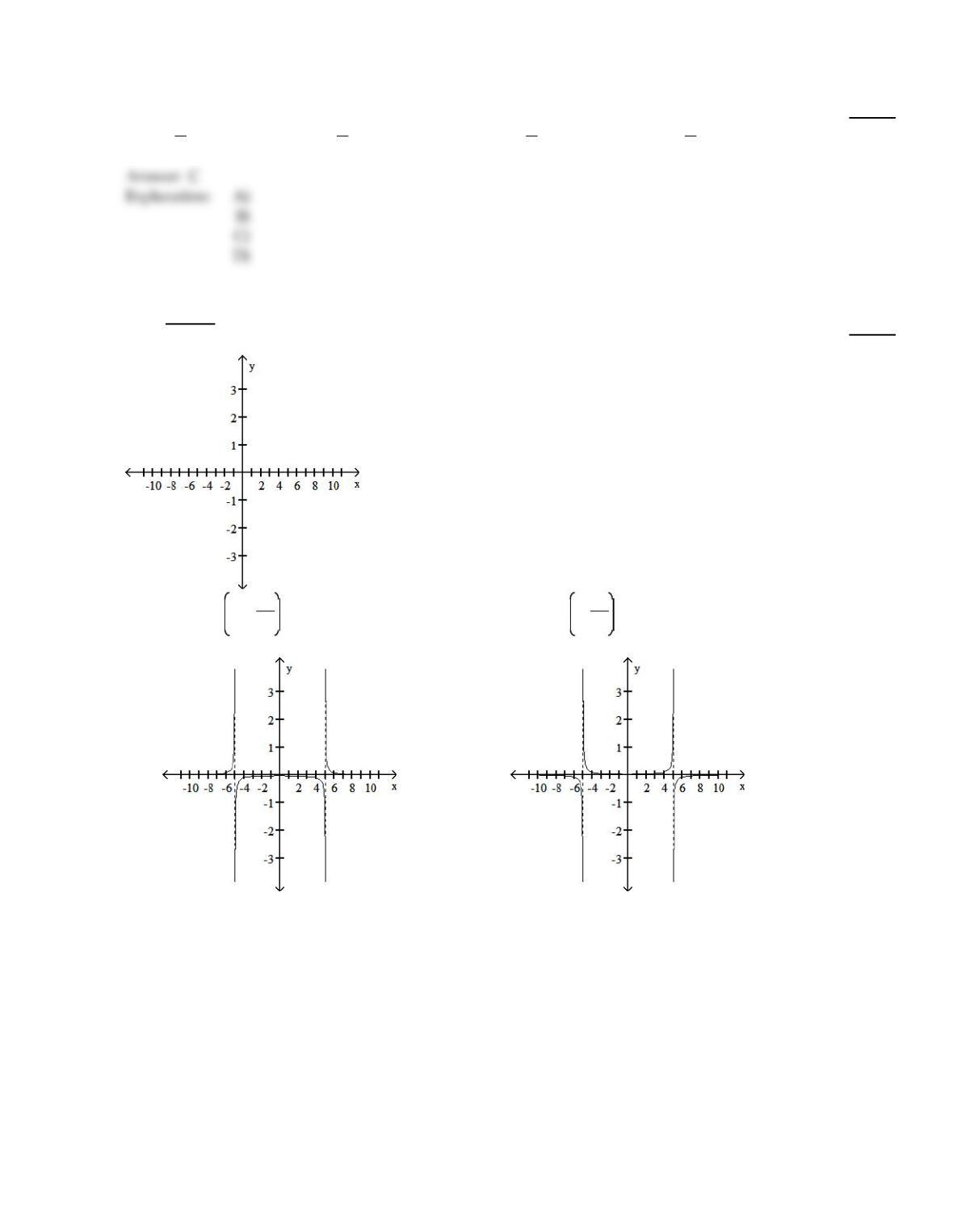
Find all the critical numbers of the function.
171)
y =x1/5 –x6/5
171)
A)
–1
5, 0
B)
1
5
C)
0, 1
6
D)
1
6
Sketch the graph and show all extrema, inflection points, and asymptotes where applicable.
172)
f(x) =3x
x2–25
172)
A)
Rel max: 0, –1
25
No inflection points
B)
Rel min: 0, 1
25
No inflection points
67
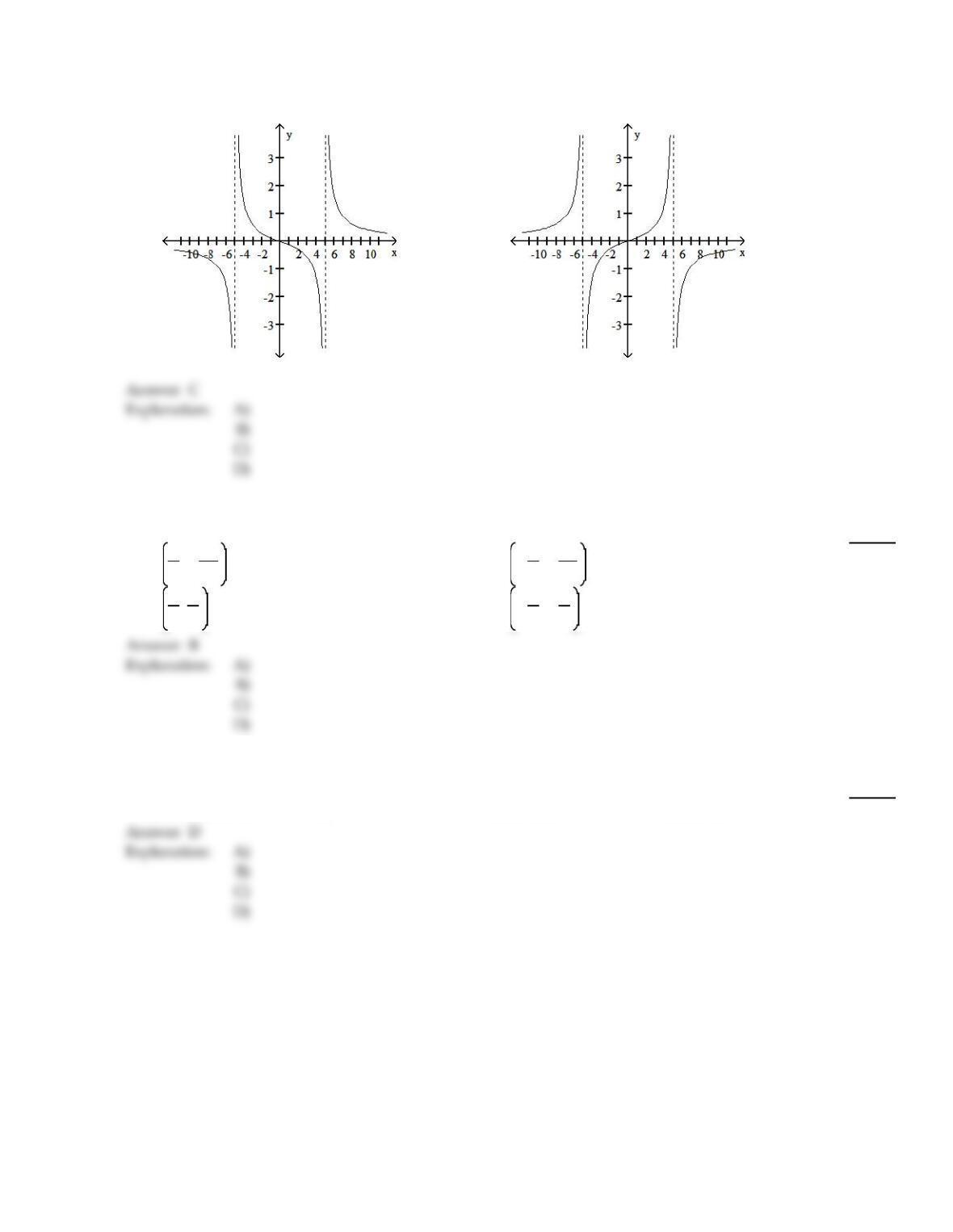
C)
No extrema
Inflection point: (0, 0)
D)
No extrema
Inflection point: (0, 0)
Find the x–value of all points where the function has relative extrema. Find the value(s) of any relative extrema.
173)
f(x) = xe5x
173)
A)
1
5, –1
5e , relative maximum
B)
–1
5, –1
5e , relative minimum
C)
1
5, e
5, relative minimum
D)
–1
5, –e
5, relative maximum
Find the largest open intervals where the function is concave upward.
174)
f(x) = x3– 3x2– 4x + 5
174)
A)
(–, 1), (1, )
B)
None
C)
(–, 1)
D)
(1, )
68
Solve the problem.
175)
Suppose the total cost C(x) to manufacture a quantity x of insecticide (in hundreds of liters) is given
by C(x) = x3– 27x2+ 240x + 500. Where is C(x) decreasing?
175)
A)
(0, 500)
B)
(8, 500)
C)
(10, 500)
D)
(8, 10)
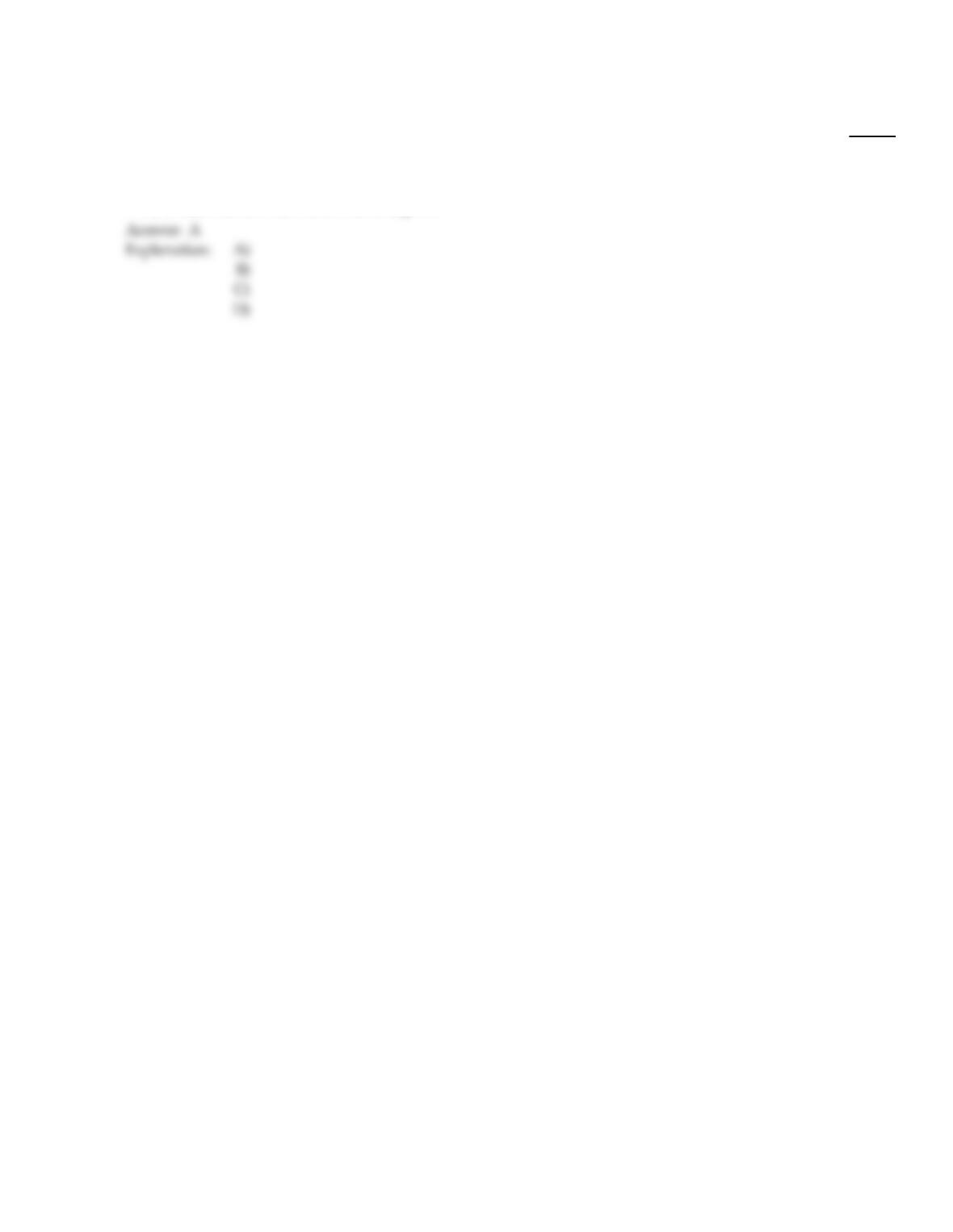
Suppose that the function with the given graph is not f(x), but f (x). Find the open intervals where the function is concave
upward or concave downward, and find the location of any inflection points.
176)
176)
A)
Concave upward on ( , 0); concave downward on (0, ); inflection point at 0
B)
Concave upward on (–1, 0) and (1, ); concave downward on ( , –1) and (0, 1); inflection
points
at –3, 0, and 3
C)
Concave upward on ( , –1) and (0, 1); concave downward on (–1, 0) and (1, ; ); inflection
points
at –1, 0, and 1
D)
Concave upward on (–1, 0) and (1, ); concave downward on ( , –1) and (0, 1); inflection
points
at –1, 0, and 1
Decide if the given value of x is a critical number for f, and if so, decide whether the point is a relative minimum, relative
maximum, or neither.
177)
f(x) = 2x3– 3x2– 12x + 18; x = 2
177)
A)
Critical number, relative minimum at (2, –2)
B)
Not a critical number
C)
Critical number, relative maximum at (2, –2)
D)
Critical number but not an extreme point
70
Answer Key
Testname: C5
71
Answer Key
Testname: C5
72
Answer Key
Testname: C5
73
Answer Key
Testname: C5
Answer Key
Testname: C5
Answer Key
Testname: C5