80) Suppose you know that at the current level of production average total cost equals marginal
cost, then you know that it is also true that
A) fixed costs are zero.
B) average fixed costs are increasing.
C) average total cost will decrease if production is increased.
D) average total cost is minimized at the current level of output.
81) The effect of diminishing marginal returns outweighing the effect of spreading out the fixed
costs is illustrated by the ________ average cost curve ________.
A) long-run; decreasing
B) long-run; increasing
C) short-run; decreasing
D) short-run; increasing
82) The effect of spreading out the fixed costs outweighing the effect of diminishing returns is
illustrated by the ________ average cost curve ________.
A) long-run; decreasing
B) long-run; increasing
C) short-run; decreasing
D) short-run; increasing
83) You observe that at your current production of lunch boxes, the average total cost of
producing lunch boxes is $5 and the marginal cost of producing lunch boxes is $2. What should
always happen if you increase lunch box production?
A) Marginal cost will rise.
B) Marginal cost will fall.
C) Average total cost will rise.
D) Average total cost will fall.
84) You observe that at your current production of rutabaga, the average total cost of producing
rutabaga is $1 and the marginal cost of producing rutabaga is $2. What should always happen if
you increase rutabaga production?
A) Marginal cost will fall.
B) Average total cost will rise.
C) Average total cost will fall.
D) Both A and B are correct.
85) Suppose that your firm’s marginal cost of producing a pencil is 5 cents and the average cost
of producing a pencil is 3 cents. If your firm is interested in minimizing average total costs, what
should your firm do?
A) Increase production.
B) Decrease production.
C) Maintain production at the current level.
D) Look for ways to increase fixed costs.
86) Suppose that your firm’s marginal cost of producing a pencil is 5 cents and the average cost
of producing a pencil is 7 cents. If your firm is interested in minimizing average total costs, what
should your firm do?
A) Increase production.
B) Decrease production.
C) Maintain production at the current level.
D) Look for ways to increase fixed costs.
87) Total cost of production is the sum of total variable cost and total fixed cost. If the total fixed
cost alone increases,
A) the average total cost curve shifts downward at all output levels.
B) the marginal cost curve shifts upward at all output levels.
C) the vertical distance between the average total cost curve and average variable cost curve
increases at all output levels.
D) the average variable cost curve shifts upward at all output levels.
88) Total cost of production is the sum of total variable cost and total fixed cost. If the total fixed
cost alone decreases,
A) the average total cost curve shifts upward at all output levels.
B) the marginal cost curve shifts downward at all output levels.
C) the vertical distance between the average total cost curve and the average variable cost curve
decreases at all output levels.
D) the average variable cost curve shifts downward at all output levels.
89) Other things being equal, if a firm’s marginal cost curve shifts upward at all output levels,
A) the average total cost curve remains unchanged at all output levels.
B) the average variable cost curve remains unchanged at all output levels.
C) the average fixed cost curve remains unchanged at all output levels.
D) all of the above
90) Other things being equal, if the average fixed cost curve shifts upward at all output levels,
A) the marginal cost curve shifts upward at all output levels.
B) the average variable cost curve shifts upward at all output levels.
C) the average total cost curve remains unchanged at all output levels.
D) the vertical distance between the average total cost curve and the average variable cost curve
increases at all output levels.
91) Recall the Application. If a firm is able to use idle capital when increasing production, the
marginal cost incurred when increasing production is
A) increasing.
B) decreasing.
C) not changing.
D) negative.
92) Recall the Application. If a firm is able to use idle capital when increasing production, the
firm will experience ________ returns.
A) increasing
B) diminishing
C) constant
D) negative
93) Diminishing marginal returns occur only in the long run.
94) Diminishing marginal returns occur in the short run.
95) Diminishing marginal returns always sets in with the hiring of the first worker.
96) The marginal product of an input is equal to the change in total product resulting from a one-
unit increase in the quantity of that input.
97) Fixed costs do not vary as output changes.
98) Fixed costs are the same in the short run as they are in the long run.
99) There are no fixed costs in the long run.
100) The increase in total cost resulting from producing one more unit of output is the marginal
cost.
101) If average cost is falling, marginal cost must also be falling.
102) If marginal cost is increasing, average variable cost must also be increasing.
103) If marginal cost is above average cost, average cost must be rising.
104) If average cost is above marginal cost, average cost must be falling.
105) If marginal cost is below average cost, marginal cost must be rising.
106) Diminishing marginal returns imply that marginal cost is falling.
107) Diminishing marginal returns imply that marginal cost is rising.
108) The marginal cost curve always intersects the average total cost curve at the minimum of
average total cost.
109) If the marginal cost is increasing over a given output range, the average total cost must
increase.
110) If the average total cost is increasing over a given output range, the average total cost must
be smaller than the marginal cost.
111) Assuming that labor is the only variable input with a fixed production facility, explain the
relationship between the marginal product of labor and the marginal production cost.
112) Explain why the marginal cost curve intersects average total cost at the point of minimum
average total cost.
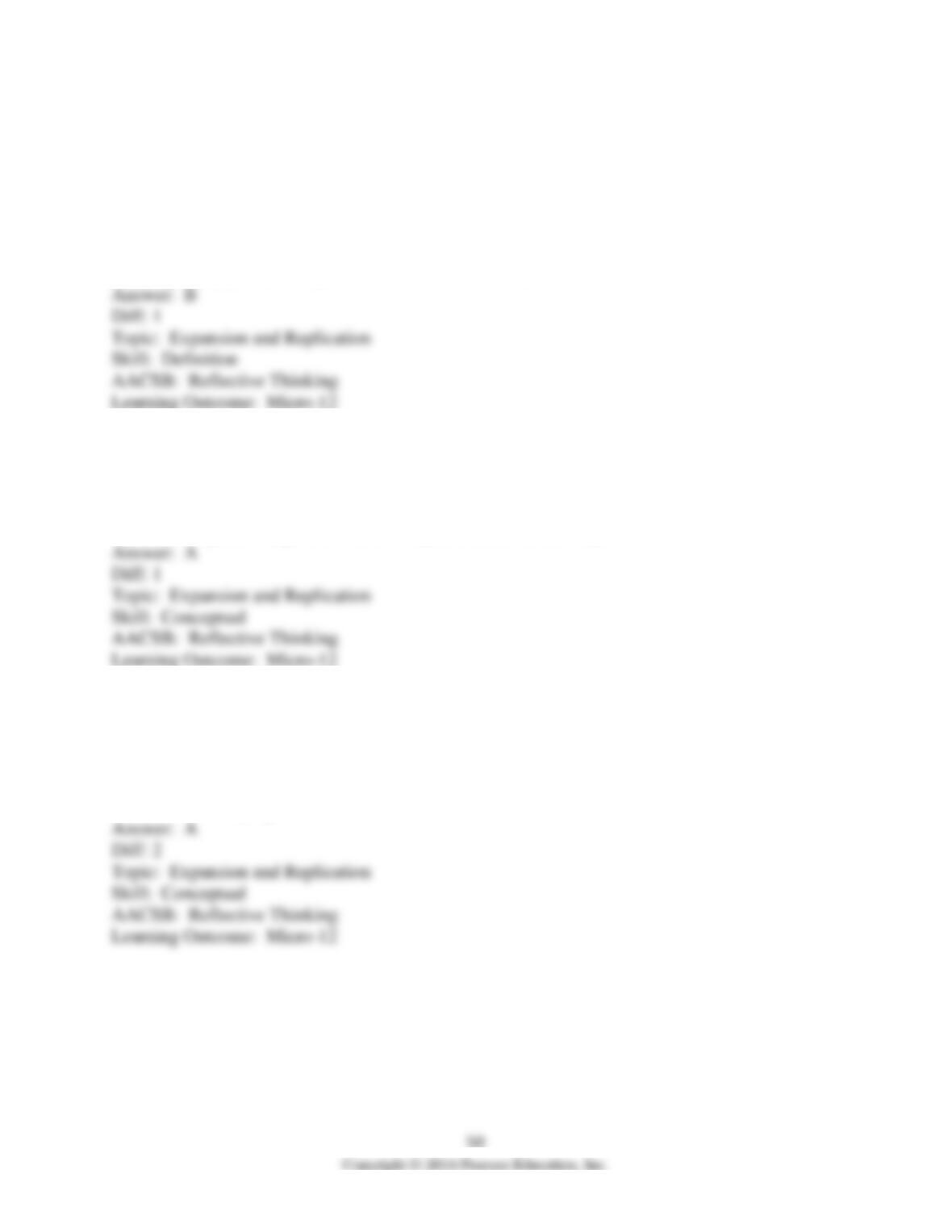
113) Draw a graph showing a short-run average variable cost curve, a short-run average total
cost curve, and a short-run marginal cost curve. Briefly explain the shape of each curve and how
they relate to each other.
5.3 Production and Cost in the Long Run
1) The long-run average cost of production is defined as
A) total cost divided by the quantity of output the firm chooses when at least one factor is fixed.
B) total cost divided by the quantity of output the firm chooses when it can choose a production
facility of any size.
C) the quantity produced by a firm that can choose any size production facility.
D) the quantity produced by a firm when at least one factor is fixed.
2) In the long-run, diminishing returns would
A) not exist because no input is held constant.
B) not exist because all inputs are held constant.
C) still exist at a lesser degree because inputs are allowed to vary.
D) exist at a greater degree, because all inputs are allowed to vary.
3) When the firm increases output and the costs rise proportionately, then the long-run average
cost curve is ________ and the firm is experiencing ________.
A) horizontal; constant returns to scale
B) downward sloping; constant returns to scale
C) upward sloping; diseconomies of scale
D) downward sloping; economies of scale
4) The long-run marginal cost (LMC) is the increase in the cost incurred by the firm when
producing one additional output, holding
A) neither the workforce nor the production facility constant.
B) the workforce and the production facility constant.
C) the workforce constant.
D) the production facility constant.
5) Total cost divided by the quantity of output the firm chooses when it can choose a production
facility of any size describes
A) the short-run average cost of production.
B) the long-run average cost of production.
C) the short-run marginal cost of production.
D) the long-run marginal cost of production.
6) Suppose a firm experiences lower average costs whenever output increases in the long run.
Then we would expect the firm to have
A) a U-shaped long-run average cost curve.
B) an L-shaped long-run average cost curve.
C) a long-run average cost curve that always decreases.
D) a minimum efficient scale relatively close to the origin.
7) Suppose McDonald’s puts up five new stores in San Francisco using exactly the same floor
plan, capital equipment and number of workers, then the long run average cost curve of
McDonald’s would be ________ and the company experiences ________.
A) horizontal; constant returns to scale
B) horizontal; economies of scale
C) upward sloping; economies of scale
D) horizontal; diseconomies of scale
8) Suppose that in 2012 ABC Corp. produced 500 million units of a good at an average cost of
$2, and in 2013 ABC Corp. expanded its plant capacity and produced 600 million units at an
average cost of also $2. In this range, one can conclude that ABC Corp. is experiencing
A) economies of scale.
B) diseconomies of scale.
C) neither economies of scale or diseconomies of scale.
D) diminishing marginal product.
9) Most empirical studies show that firms’ long-run average cost curves
A) are L-shaped.
B) are downward-sloping.
C) are upward-sloping.
D) are flat.
10) An input is indivisible if
A) it cannot be increased to produce a larger quantity of output.
B) it cannot be used as a substitute for other inputs in the production process.
C) it is sufficiently inexpensive to purchase that firms will want to buy as much as they can.
D) it cannot be scaled down to produce a smaller quantity of output.
11) Which of the following is true if a firm has indivisible inputs?
A) The long-run average cost curve is downward sloping at lower levels of output.
B) The long-run fixed cost curve is downward sloping at lower levels of output.
C) The long-run total cost curve is downward sloping at lower levels of output.
D) The long-run marginal cost curve is downward sloping at lower levels of output.
12) Which of the following is an example of an indivisible input?
A) the amount of labor a firm hires
B) flour used to produce bread
C) wood used to produce paper
D) train tracks between two cities
13) Increased specialization in large firms might lead to
A) upward-sloping marginal cost curves.
B) horizontal marginal cost curves.
C) downward-sloping long-run average cost curves.
D) upward-sloping long-run average cost curves.
14) When the firm increases output and the costs rise disproportionately slower, then the long-
run average cost curve is ________ and the firm is experiencing ________.
A) horizontal; constant returns to scale
B) downward sloping; constant returns to scale
C) upward sloping; diseconomies of scale
D) downward sloping; economies of scale
15) The minimum efficient scale is
A) the quantity after which it makes no sense for a firm to produce.
B) the minimum quantity where a firm would be able to produce profitably.
C) the output level beyond which the firm will not experience scale economies.
D) the output level beyond which the firm will experience scale economies.
16) If the firm has already reached the minimum efficient scale, then
A) any additional output will not result in a lower long run average cost.
B) any additional output will result in a lower long run average cost.
C) additional output will result in a lower long run marginal cost.
D) the firm is profit maximizing in the long run.
17) Under which conditions might economies of scale result?
A) hampered coordination brought about by bureaucracy
B) increasing costs of inputs
C) increasing output prices
D) workers having to spend less time switching back and forth between tasks.
18) Lower input prices in large firms might lead to
A) upward-sloping marginal cost curves.
B) upward-sloping short-run average cost curves.
C) upward-sloping long-run average cost curves.
D) downward-sloping long-run average cost curves.
19) Suppose that in 2012 ABC Corp. produced 500 million units of a good at an average cost of
$2, and in 2013 ABC Corp. expanded its plant capacity and produced 600 million units at an
average cost of $1.80. In this range, one can conclude that ABC Corp. is experiencing
A) economies of scale.
B) diseconomies of scale.
C) neither economies of scale or diseconomies of scale.
D) diminishing marginal product.