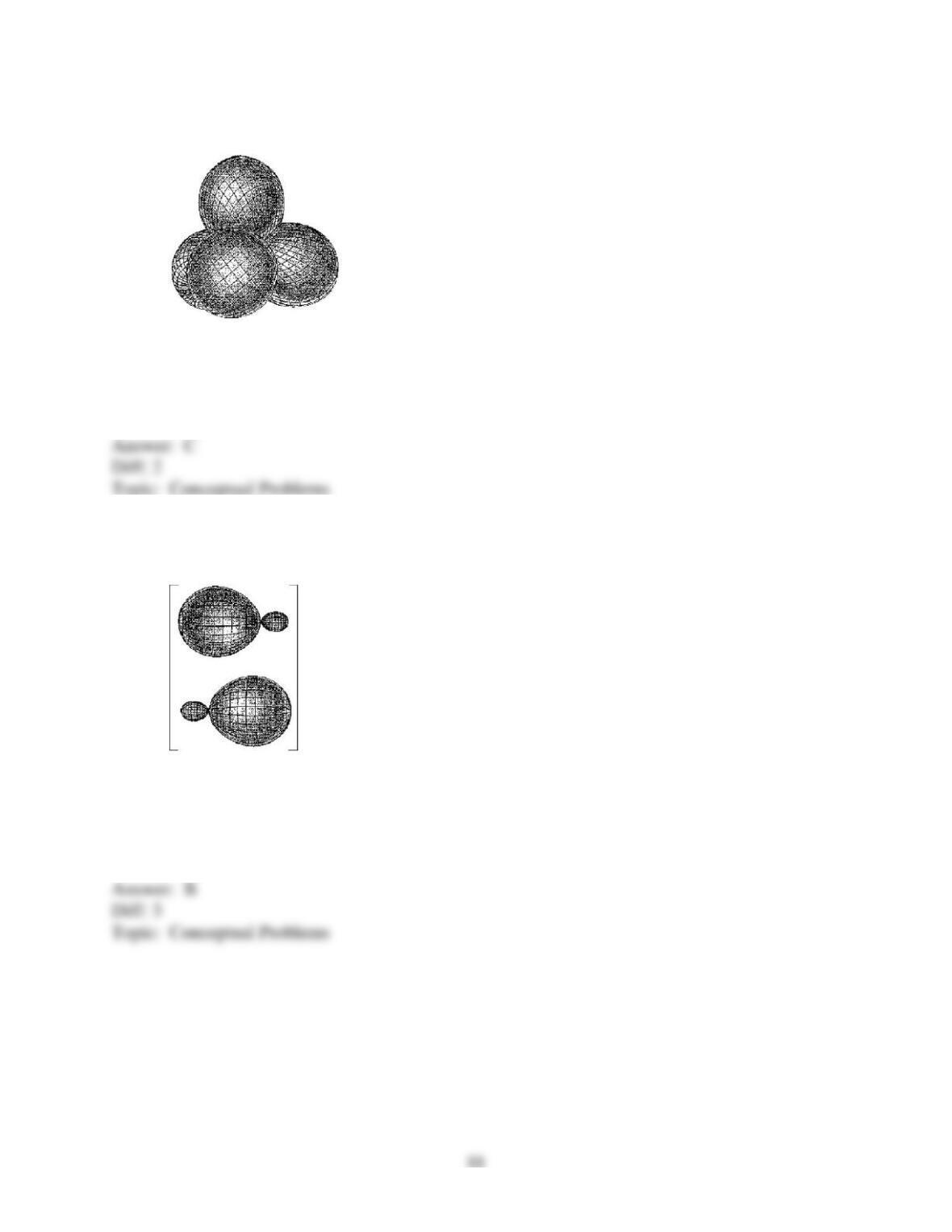
88) Identify the set of hybrid orbitals shown below.
A) sp
B) sp2
C) sp3
D) none of the above
89) Which molecule has a central atom that uses the set of hybrid orbitals shown below to form
bonds with the non-central atoms?
A) H2O
B) CO2
C) NO2–
D) ICl2–
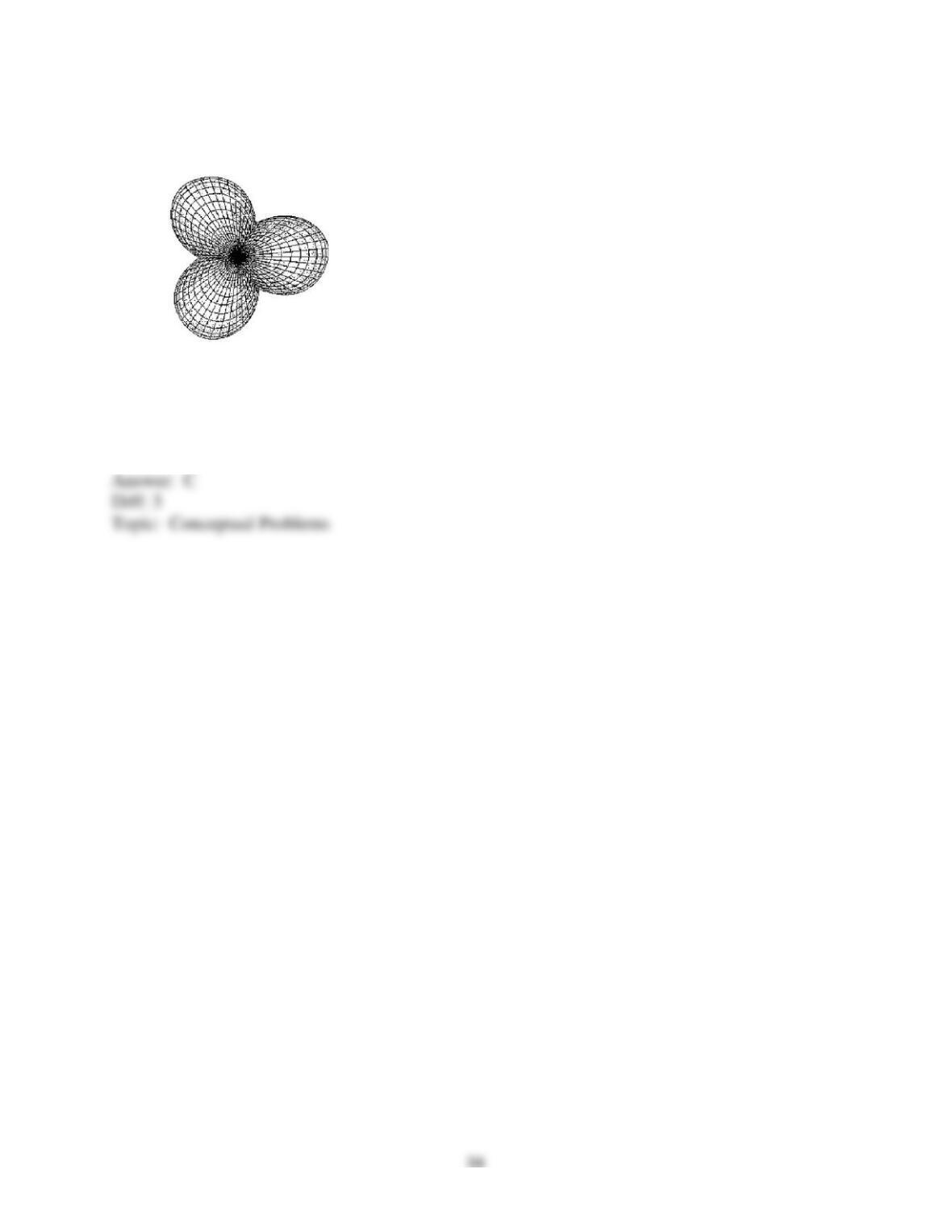
90) Which molecule has a central atom that uses the set of hybrid orbitals shown below to form
bonds with the non-central atoms?
A) H2O
B) CO2
C) NO2–
D) ICl2–
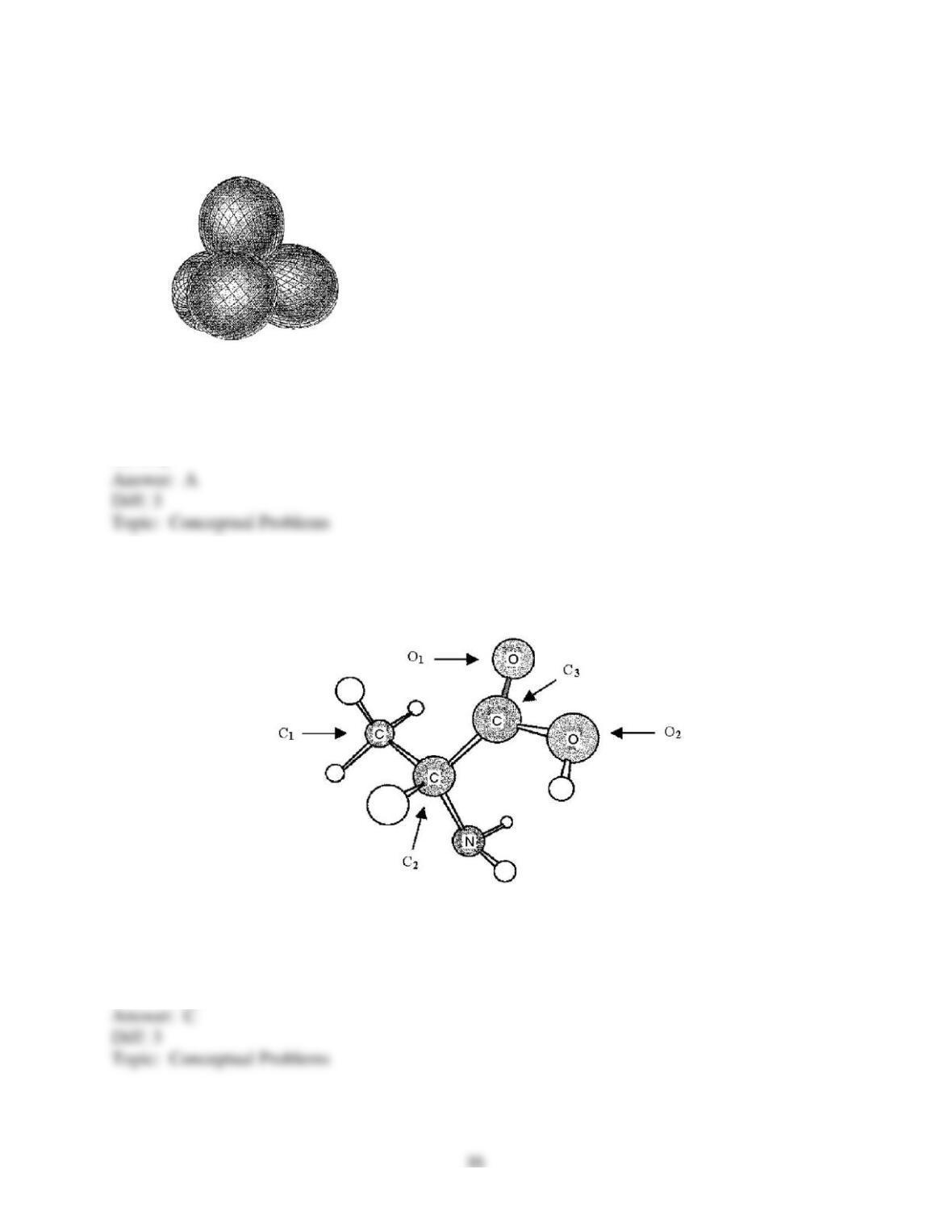
91) Which molecule has a central atom that uses the set of hybrid orbitals shown below to form
bonds with the non-central atoms?
A) H2O
B) CO2
C) NO2–
D) ICl2–
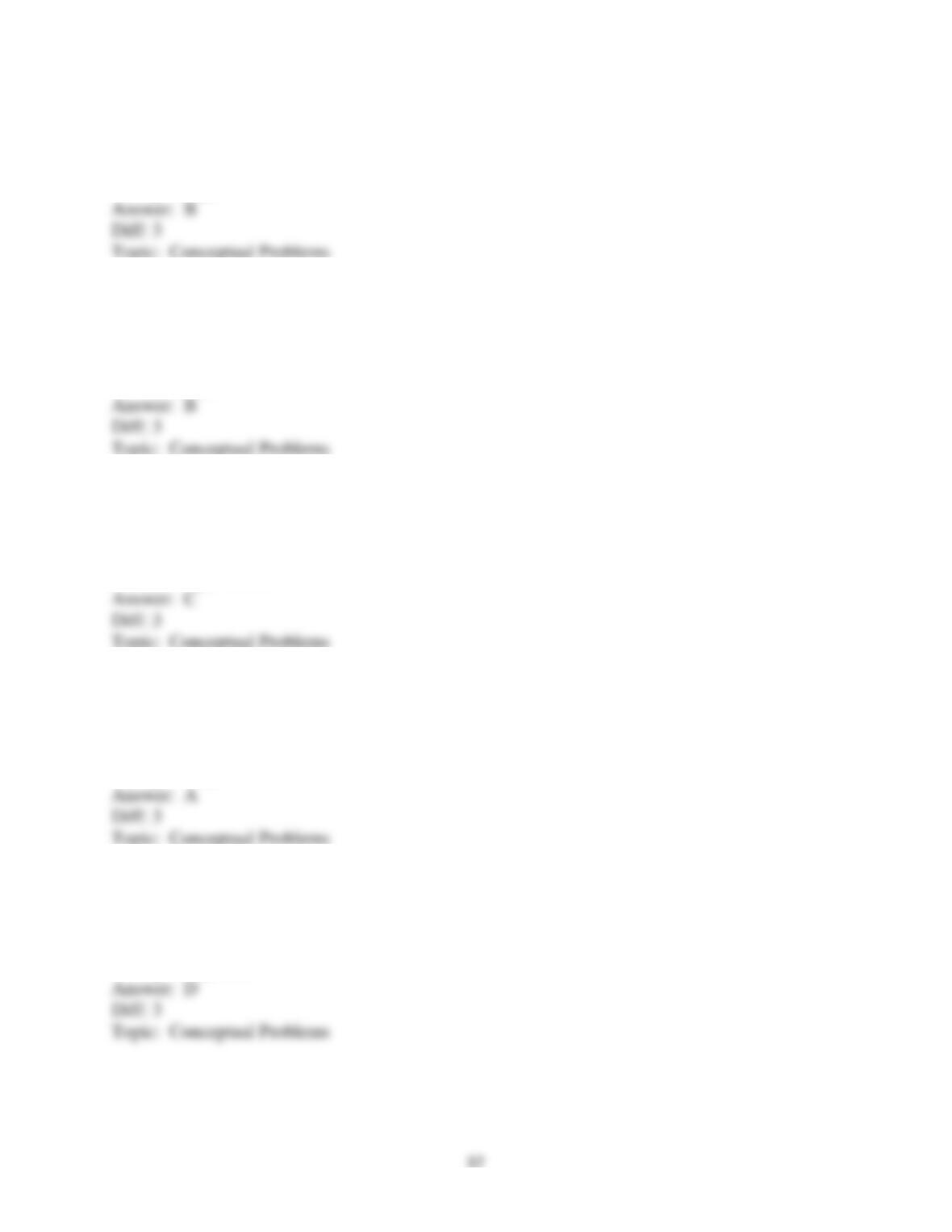
The following ball-and-stick molecular model is a representation of the amino acid alanine
(unshaded spheres = H). Only the connections between atoms are shown; multiple bonds and
nonbonded electrons are not indicated.
92) What is the hybridization of the carbon atom labeled C1?
A) sp
B) sp2
C) sp3
D) none of the above

36
93) What is the hybridization of the carbon atom labeled C2?
A) sp
B) sp2
C) sp3
D) none of the above
94) What is the hybridization of the carbon atom labeled C3?
A) sp
B) sp2
C) sp3
D) none of the above
95) What is the hybridization of the oxygen atom labeled O1?
A) sp
B) sp2
C) sp3
D) none of the above
96) What is the hybridization of the oxygen atom labeled O2?
A) sp
B) sp2
C) sp3
D) none of the above
97) What is the hybridization of the nitrogen atom?
A) sp
B) sp2
C) sp3
D) none of the above
98) What is geometry around the carbon atom labeled C1?
A) bent
B) tetrahedral
C) trigonal planar
D) trigonal pyramidal
99) What is geometry around the carbon atom labeled C2?
A) bent
B) tetrahedral
C) trigonal planar
D) trigonal pyramidal
100) What is geometry around the carbon atom labeled C3?
A) bent
B) tetrahedral
C) trigonal planar
D) trigonal pyramidal
101) What is geometry around the oxygen atom labeled O2?
A) bent
B) tetrahedral
C) trigonal planar
D) trigonal pyramidal
102) What is geometry around the nitrogen atom?
A) bent
B) tetrahedral
C) trigonal planar
D) trigonal pyramidal
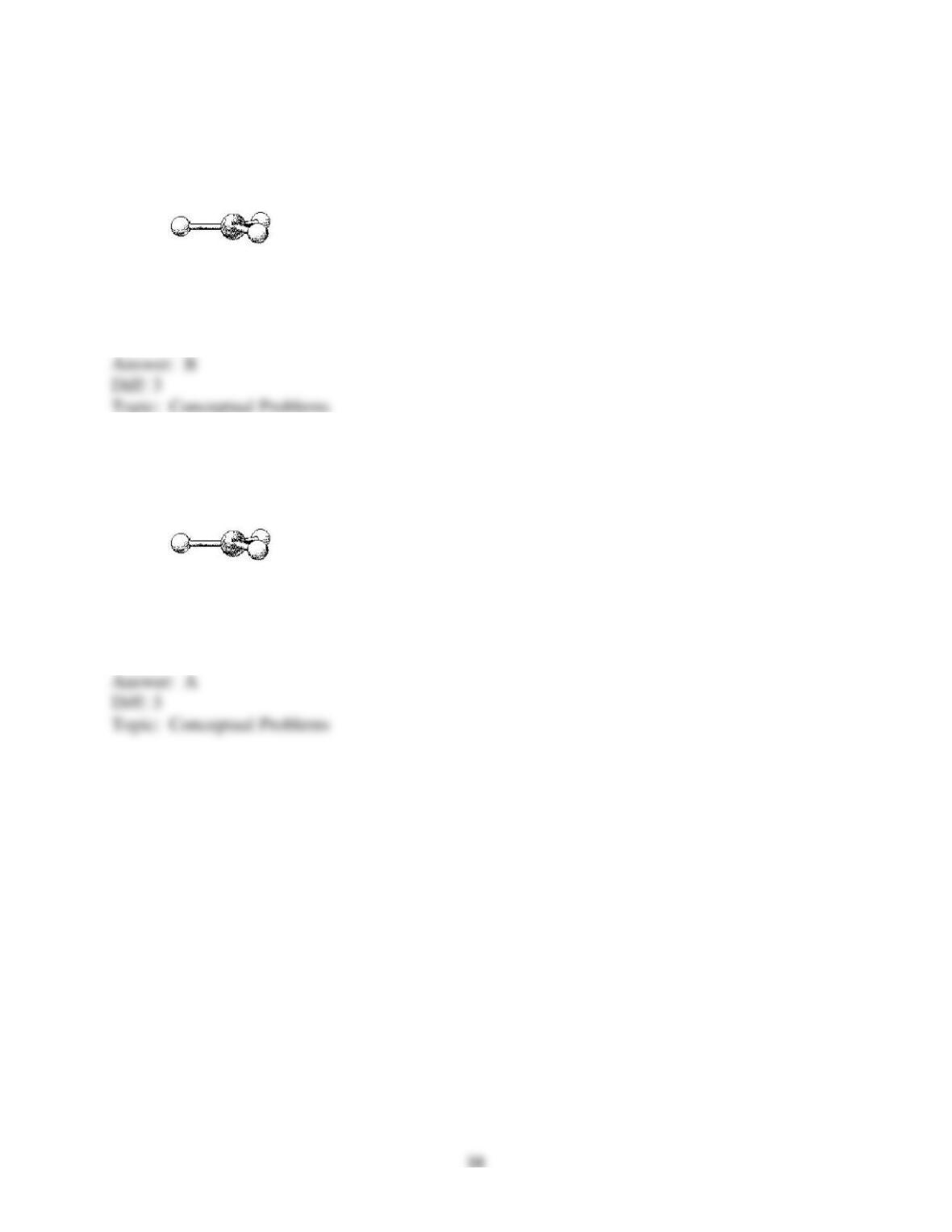
103) A molecular model of NO3– is shown below. Based on the best Lewis electron-dot structure
for NO3– and formal charge considerations, what is the predicted N-O bond order for each N-O
bond?
A) 1
B) 1.33
C) 1.5
D) 2
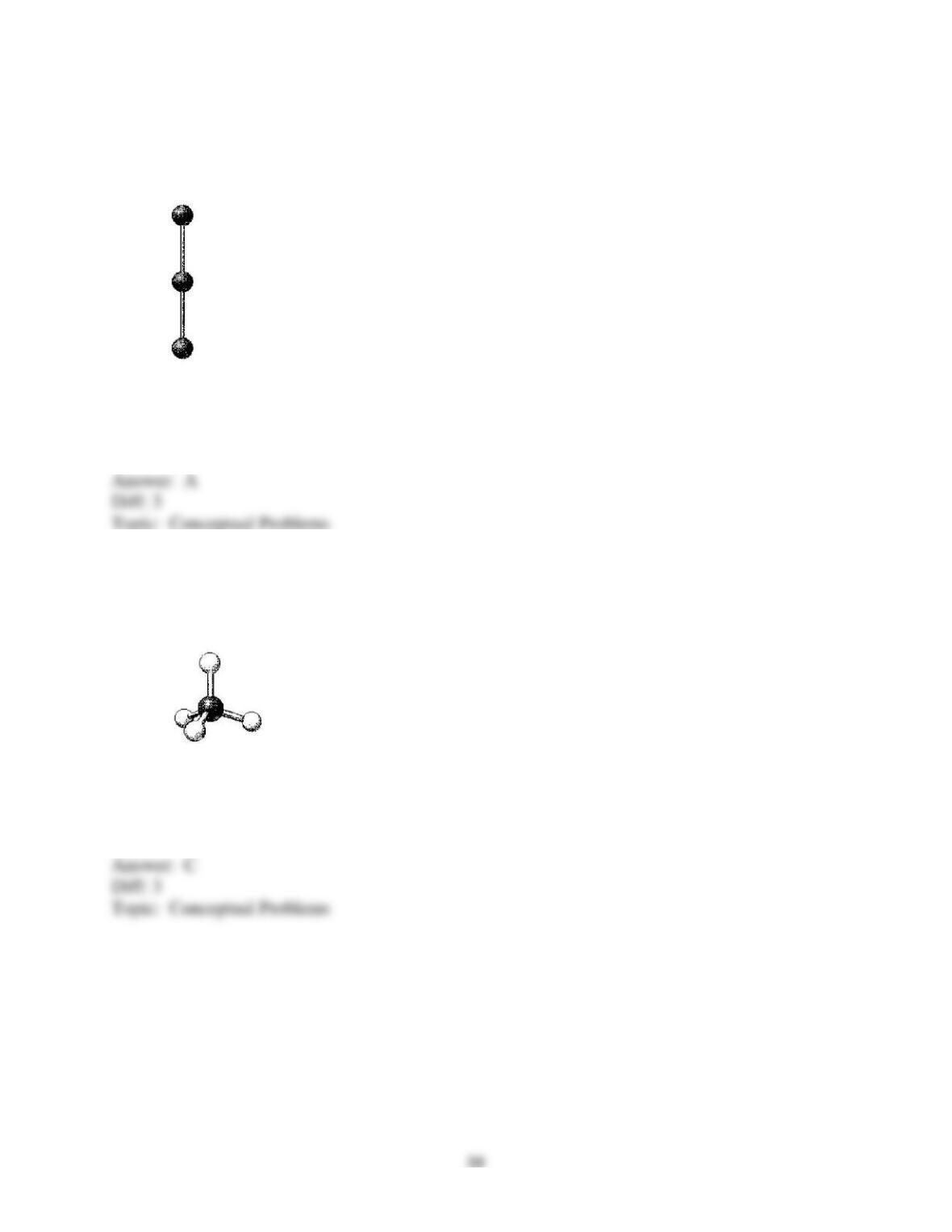
104) A molecular model of BCl3 is shown below. Based on the best Lewis electron-dot structure
for BCl3 and formal charge considerations, what is the predicted B-Cl bond order for each B-Cl
bond?
A) 1
B) 1.33
C) 1.5
D) 2
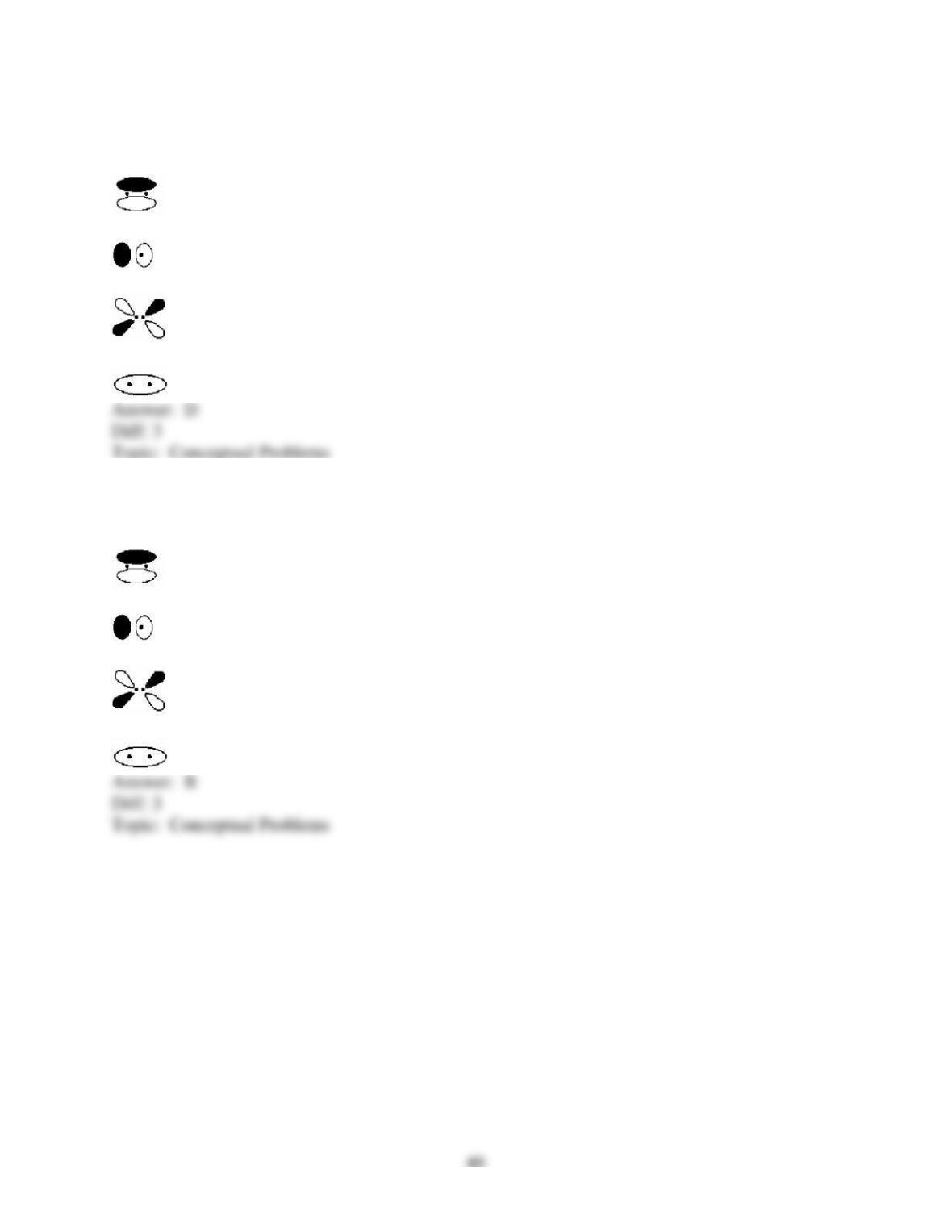
105) A molecular model of BeCl2 is shown below. Based on the best Lewis electron-dot
structure for BeCl2 and formal charge considerations, what is the predicted Be-Cl bond order for
each Be-Cl bond?
A) 1
B) 1.33
C) 1.5
D) 2
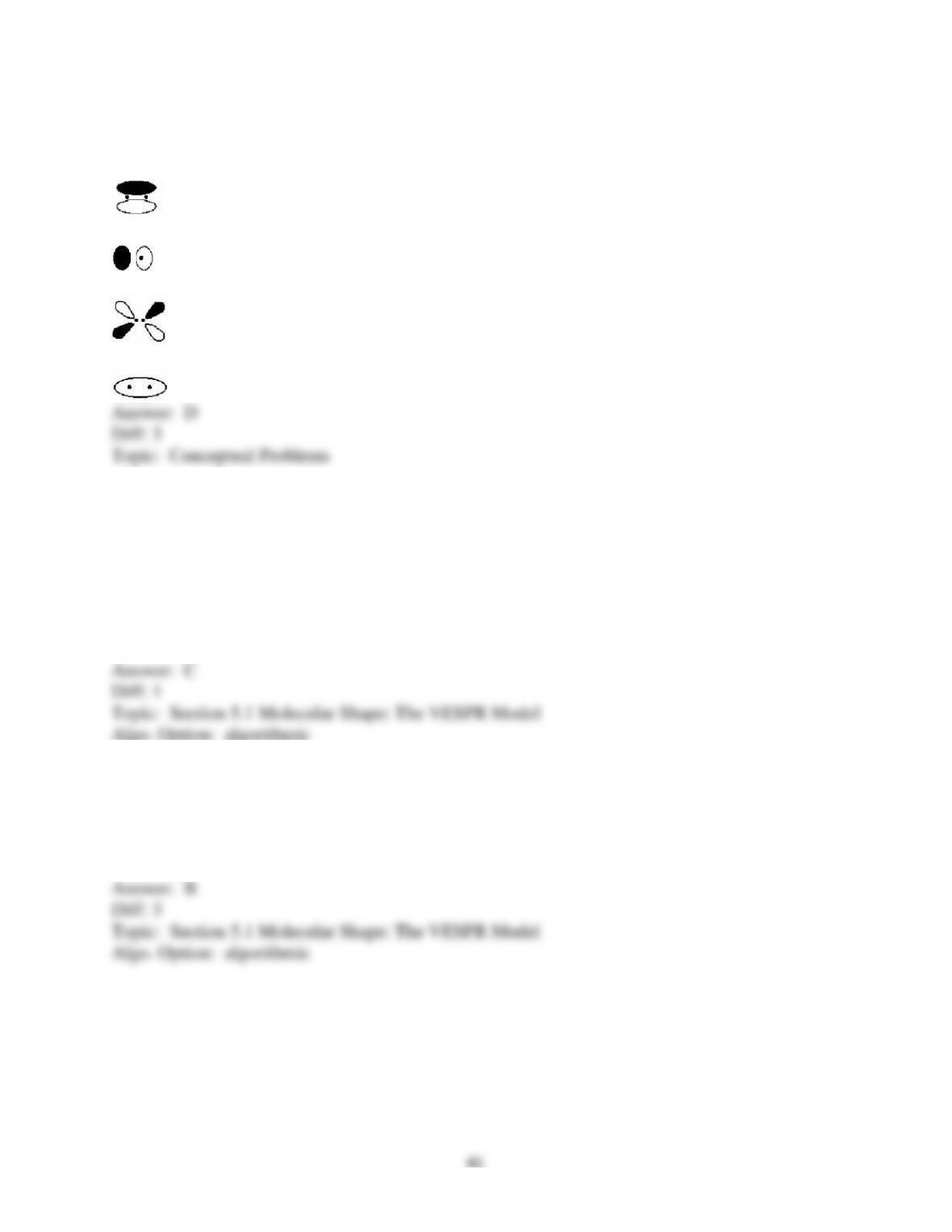
106) A molecular model of SO42- is shown below. Based on the best Lewis electron-dot
structure for SO42- and formal charge considerations, what is the predicted S-O bond order for
each S-O bond?
A) 1
B) 1.33
C) 1.5
D) 2
107) Which drawing represents a σ bonding molecular orbital for a homonuclear diatomic
molecule?
A)
B)
C)
D)
108) Which drawing represents a σ* antibonding molecular orbital for a homonuclear diatomic
molecule?
A)
B)
C)
D)
109) Which drawing represents the molecular orbital containing the highest energy electrons in
the H2 molecule in its ground state?
A)
B)
C)
D)
5.2 Algorithmic Questions
1) What geometric arrangement of charge clouds is expected for an atom that has four charge
clouds?
A) trigonal bipyramidal
B) octahedral
C) tetrahedral
D) square planar
2) What is the molecular geometry of ClF4 –?
A) seesaw
B) square planar
C) square pyramidal
D) tetrahedral
3) What is the molecular geometry of NCl3?
A) T-shaped
B) tetrahedral
C) trigonal planar
D) trigonal pyramidal
4) What is the O–B–O bond angle in BO33-?
A) less than 109.5°
B) 109.5°
C) 120°
D) greater than 120°
5) What is the molecular geometry of SF5–?
A) octahedral
B) seesaw
C) square pyramidal
D) trigonal bipyramidal
6) Which of the following best describes ClF2–? It has a molecular geometry that is
A) linear with no lone pairs on the Cl atom.
B) linear with lone pairs on the Cl atom.
C) nonlinear with no lone pairs on the Cl atom.
D) nonlinear with lone pairs on the Cl atom.
7) What is the molecular geometry of TeCl4?
A) seesaw
B) square planar
C) square pyramidal
D) tetrahedral
8) What are the F–Po–F bond angles in PoF6 ?
A) 60°
B) 90°
C) 109.5°
D) 120°
9) The VSEPR model predicts the H–O–H bond angle in H3O+ to be
A) 60°.
B) 90°.
C) less than 109.5° but greater than 90°.
D) 109.5°.
10) The orbital hybridization on the carbon atom in C2H2 is
A) sp.
B) sp2.
C) sp3.
D) sp3d2.
5.3 Short Answer Questions
1) The molecular geometry of COCl2 is ________.
2) The hybrid orbital used by nitrogen to overlap with the 1s orbital of hydrogen in CH3NH2 is
________.
3) The carbon-carbon bond in C2H2 contains ________ σ and ________ π bonds.