Accounting for Merchandise Operations ♦ 287
General Journal
Date
Description
Debit
Credit
288 ♦ Chapter 5
8. AOK Co. sells office supplies. AOK sells $10,000 of merchandise to a customer, Desktop, Inc.
that costs $7,500. The terms of the sale were 2/10, n/30 on January 18. Desktop, Inc. pays for the
merchandise on January 25. On February 2, AOK purchased $2000 of merchandise that cost
$1,200 from Filebin, Inc. with terms of 1/10, net/30. On February 5, Filebin returned $500 of the
merchandise. Filebin paid for the merchandise on February 25. In the journal provided, record the
journal entries for the sale and the payment on the sale in the general journal.
Accounting for Merchandise Operations ♦ 289
General Journal
Date
Description
Debit
Credit
290 ♦ Chapter 5
Accounting for Merchandise Operations ♦ 291
9. AOK Co. sells office supplies. On Jan 5, AOK purchases $200,000 of merchandise from
Deskmate, Inc.on account with the terms 2/15, n/30. On January 16, AOK Co.. pays for the
merchandise.. On February 12, AOK, Inc purchased $12,000 of merchandise form Papermate, Inc
with terms of 1/15, net/30. On February 17, AOK returned $500 of the merchandise to Papermate,
Inc. AOK paid for the merchandise on March 15. In the journal provided, record the journal
entries for the sale and the payment on the sale in the general journal.
General Journal
Date
Description
Debit
Credit
292 ♦ Chapter 5
10. A retailer of kitchen supplies is considering the purchase of 100 units of an item from two
different suppliers. Which offer yields the lower price?
Spoonup, Inc. – $500 per unit, total of $50,000, 2/10, n/30, plus transportation costs of $725.
Forkup, Inc. – $502 per unit, total of $50,200, 1/10, n/30, no charge for transportation.
Accounting for Merchandise Operations ♦ 293
11. For the year ending 2007, The Connecticut River, Inc. reported net income of $30,200 and paid
dividends of $9,000. The beginning cash balance in 2007 was $20,750. Comparative balance
sheets as of December 31, 2007 and December 31, 2006, are as follows:
The Connecticut River, Inc.
Balance Sheet comparison from Dec 31, 2006 to Dec. 31, 2007
ASSETS
Current Assets:
Cash
5,725
Accounts Receivable
12,040
Merchandise Inventory
1,225
Office Supplies
(60)
Prepaid Insurance
(175)
Property, Plant, and Equipment
Land
0
Store Equipment
3,550
Accumulated Depreciation on store equipment
1,550
Office Equipment
2,785
Accumulated Depreciation on office equipment
1,245
LIABILITIES
Current Liabilities:
Accounts Payable
4,075
Notes payable (current portion)
0
Salaries Payable
(180)
Unearned Rent
(300)
Long-term Liabilities:
Notes payable ( due 2012)
(2,500)
STOCKHOLDER’S EQUITY
Capital Stock
0
Retained Earnings
21,200
294 ♦ Chapter 5
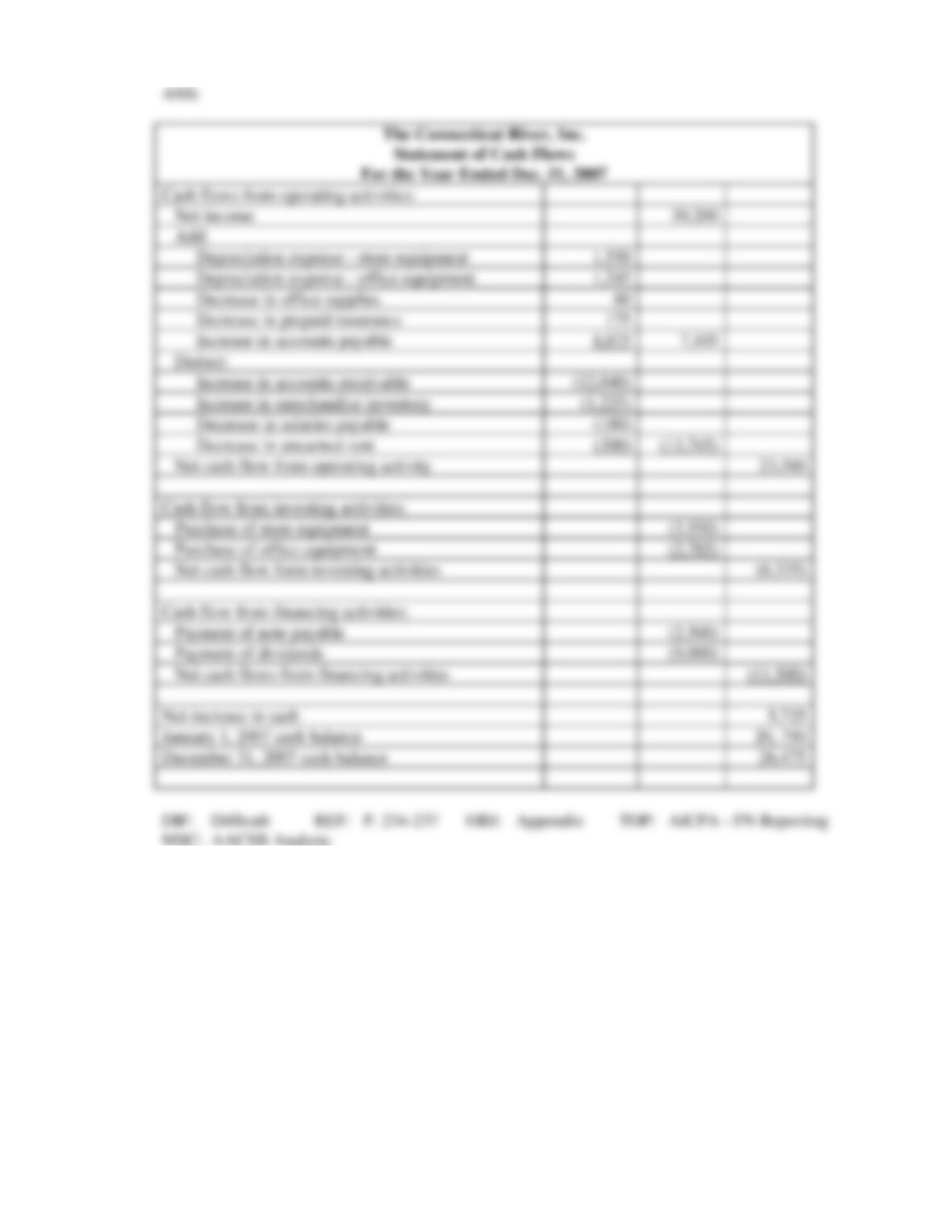
Prepare the statement of cash flows for the year ended 2007 using the indirect method.
The Connecticut River, Inc.
Statement of Cash Flows
For the Year Ended Dec. 31, 2007
Accounting for Merchandise Operations ♦ 295
296 ♦ Chapter 5
CASE
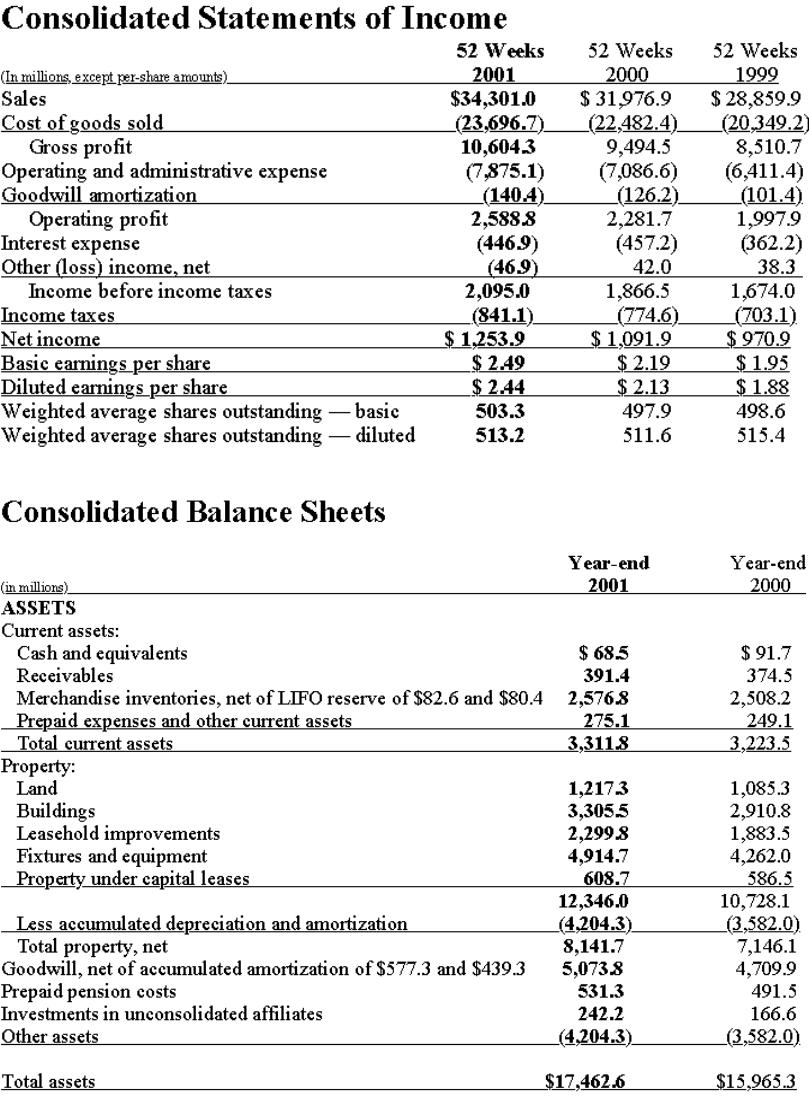
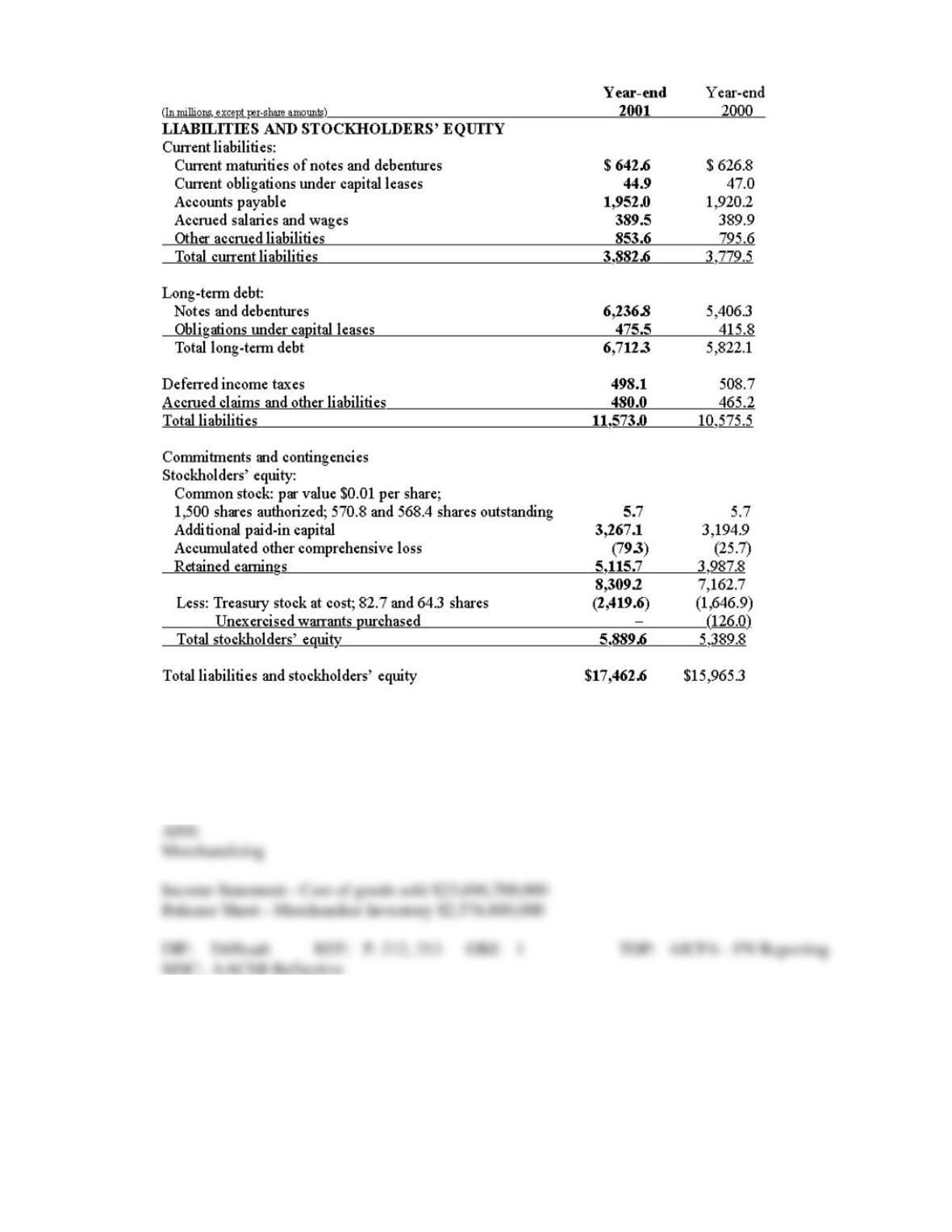
Safeway’s Financial Statements
Accounting for Merchandise Operations ♦ 297
1. Refer to Safeway’s Financial Statements. Based on the financial statements of Safeway, what type
of business is Safeway, a service or merchandising company? List at least one item from the
income statement and the balance sheet along with related dollar amounts that support your
answer.