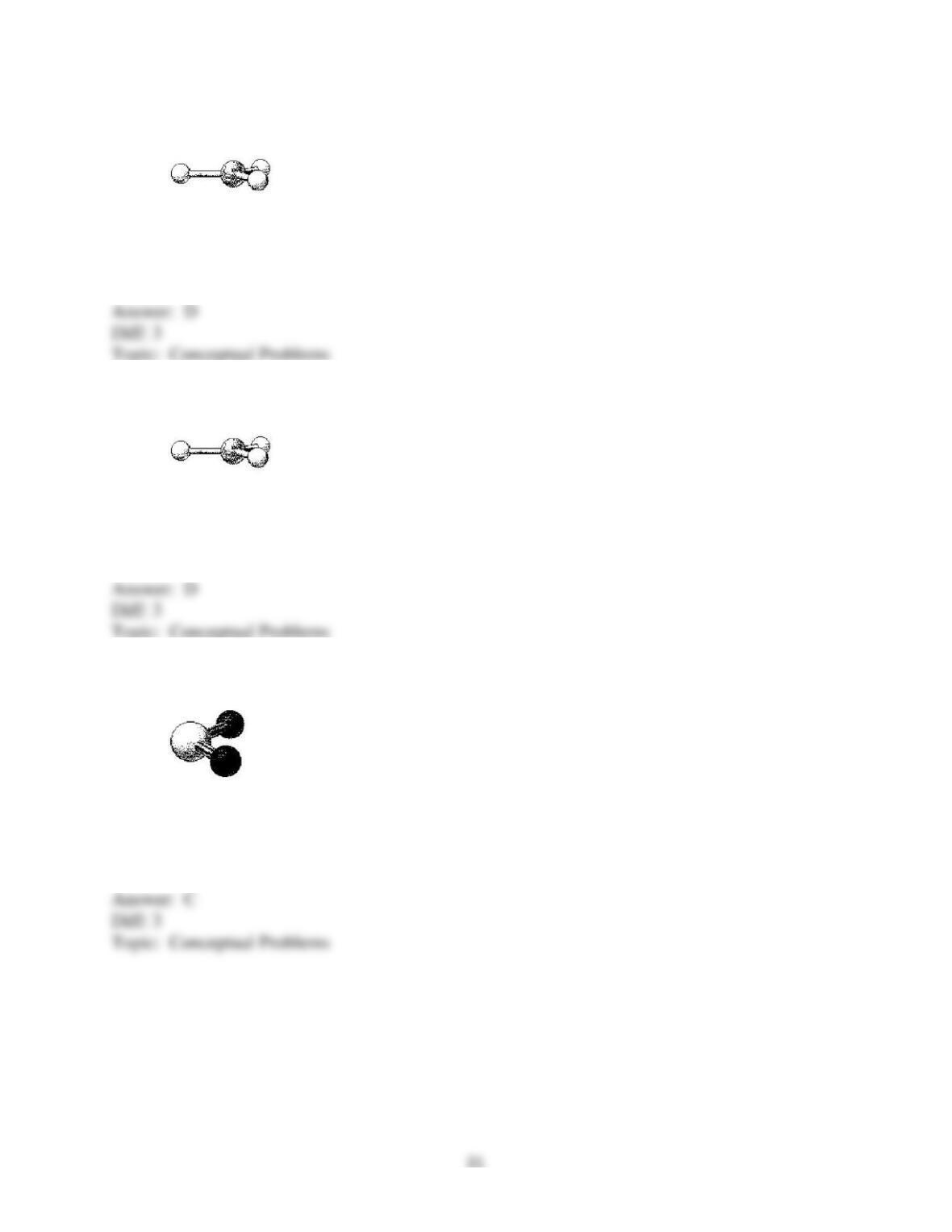
60) What are the bond angles in the following molecular model of BCl3?
A) less than 109.5°
B) 109.5°
C) less than 120° but greater than 109.5°
D) 120°
61) What are the bond angles in the following molecular model of NO3–?
A) less than 109.5°
B) 109.5°
C) less than 120° but greater than 109.5°
D) 120°
62) What is the bond angle in the following molecular model of SO2?
A) less than 109.5°
B) 109.5°
C) less than 120° but greater than 109.5°
D) 120°
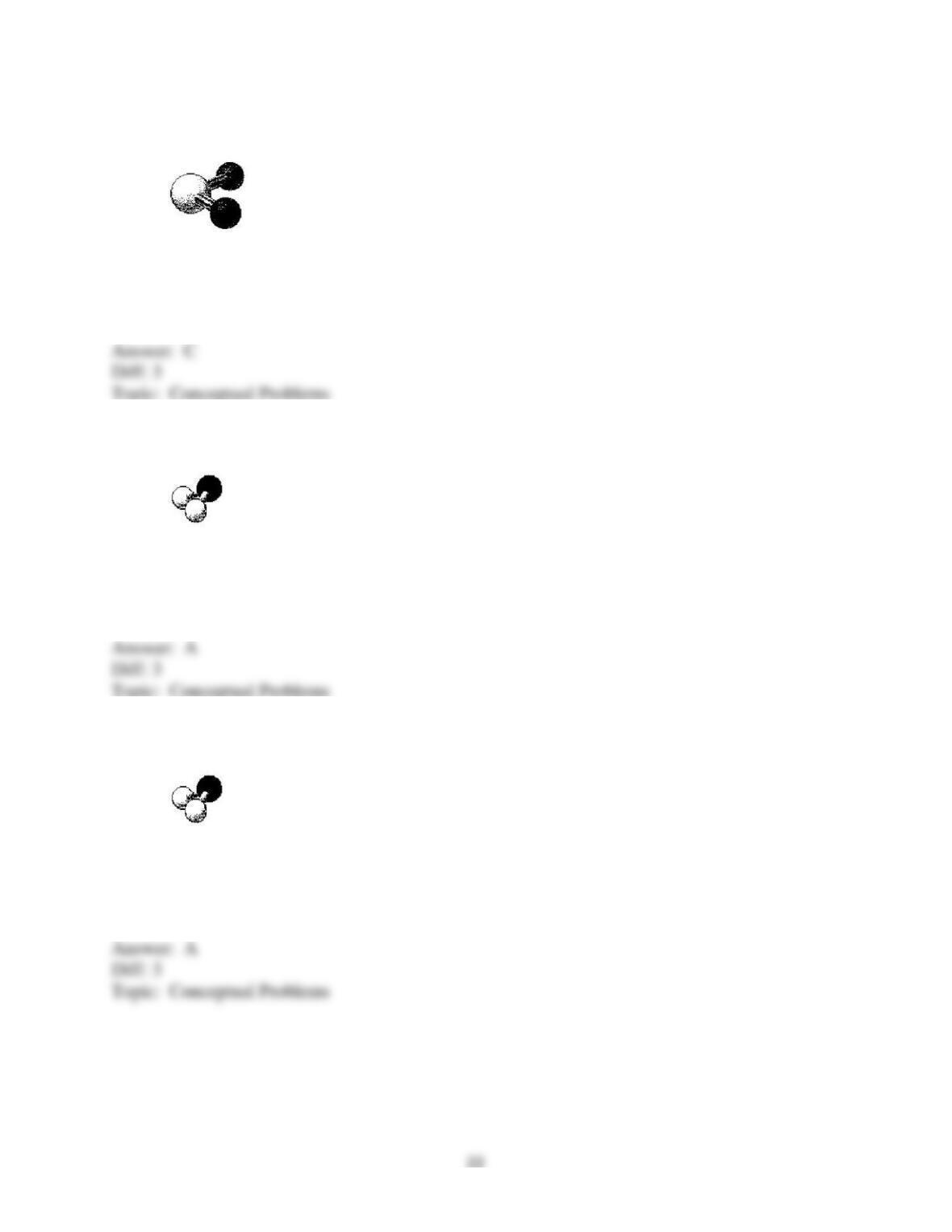
63) What is the bond angle in the following molecular model of NO2–?
A) less than 109.5°
B) 109.5°
C) less than 120° but greater than 109.5°
D) 120°
64) What is the bond angle in the following molecular model of H2S?
A) less than 109.5°
B) 109.5°
C) less than 120° but greater than 109.5°
D) 120°
65) What is the bond angle in the following molecular model of NH2–?
A) less than 109.5°
B) 109.5°
C) less than 120° but greater than 109.5°
D) 120°
23
66) What are the bond angles in the following molecular model of PH3?
A) less than 109.5°
B) 109.5°
C) less than 120° but greater than 109.5°
D) 120°
67) What are the bond angles in the following molecular model of SO32-?
A) less than 109.5°
B) 109.5°
C) less than 120° but greater than 109.5°
D) 120°
68) What are the bond angles in the following molecular model of H3O+?
A) less than 109.5°
B) 109.5°
C) less than 120° but greater than 109.5°
D) 120°
24
69) What are the bond angles in the following molecular model of CCl4?
A) less than 109.5°
B) 109.5°
C) less than 120° but greater than 109.5°
D) 120°
70) What are the bond angles in the following molecular model of NH4+?
A) less than 109.5°
B) 109.5°
C) less than 120° but greater than 109.5°
D) 120°
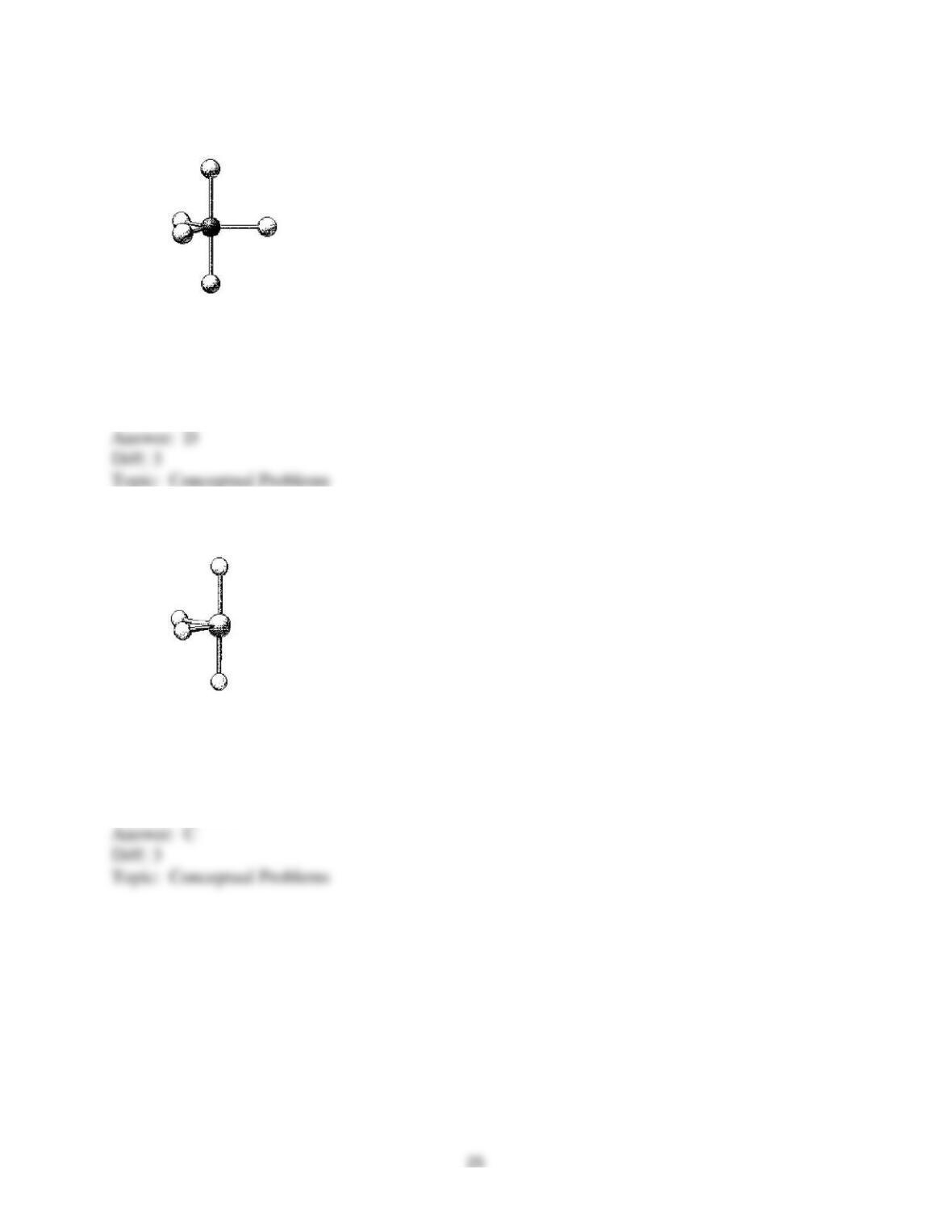
71) What are the bond angles in the following molecular model of PF5?
A) some less than 90° and one less than 180°
B) 90° and 180°
C) some less than 90° and some less than 120° but greater than 90°, and one less than 180° but
greater than 120°
D) 90°, 120°, and 180°
72) What are the bond angles in the following molecular model of SCl4?
A) some less than 90° and one less than 180°
B) 90° and 180°
C) some less than 90° one less than 120° but greater than 90°, and one less than 180° but greater
than 120°
D) 90°, 120°, and 180°
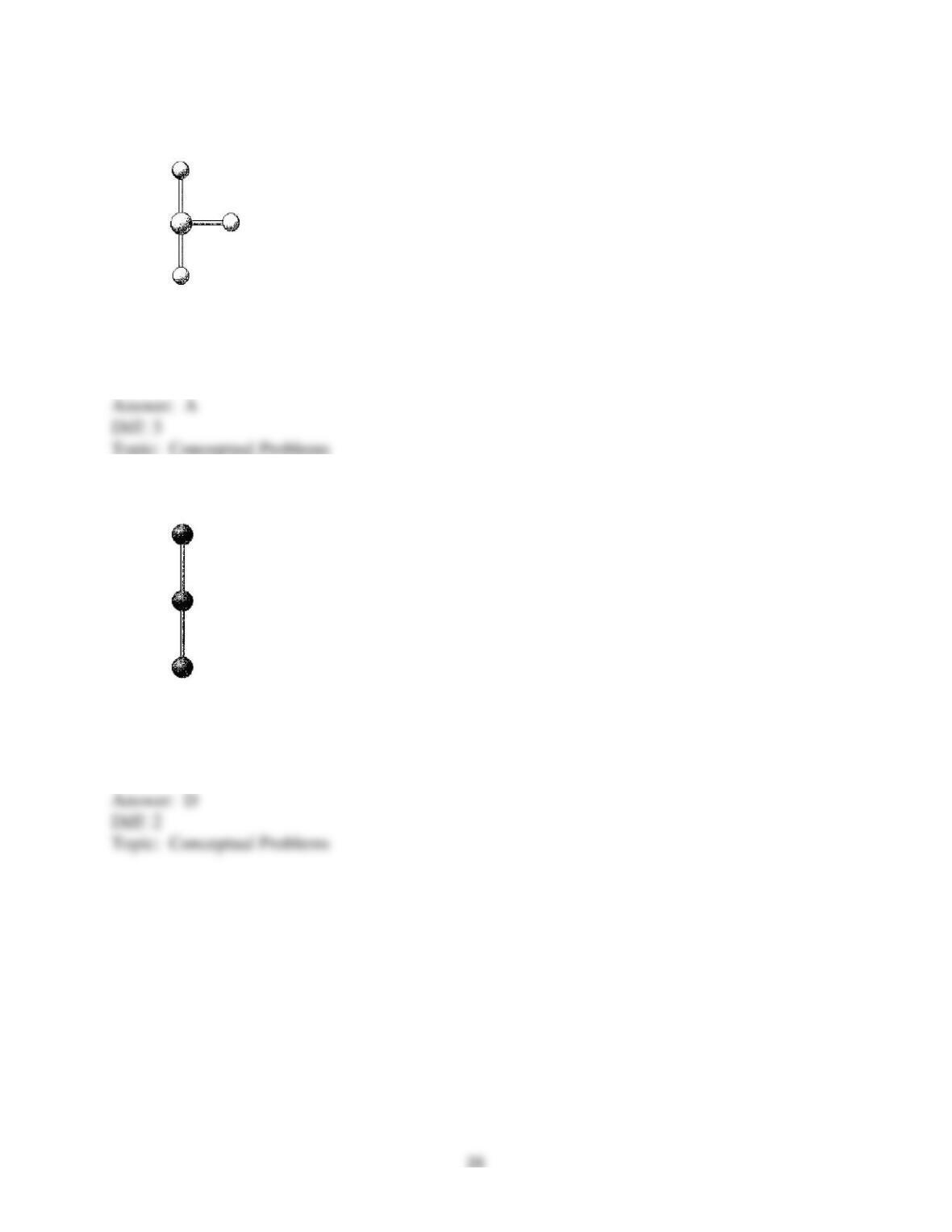
73) What are the bond angles in the following molecular model of BrF3?
A) two less than 90° and one less than 180° but greater than 90°
B) 90° and 180°
C) two less than 90° and one less than 120° but greater than 90°
D) 90° and 120°
74) What is the bond angle in the following molecular model of XeF2?
A) less than 120°
B) 120°
C) less than 180° but greater than 120°
D) 180°
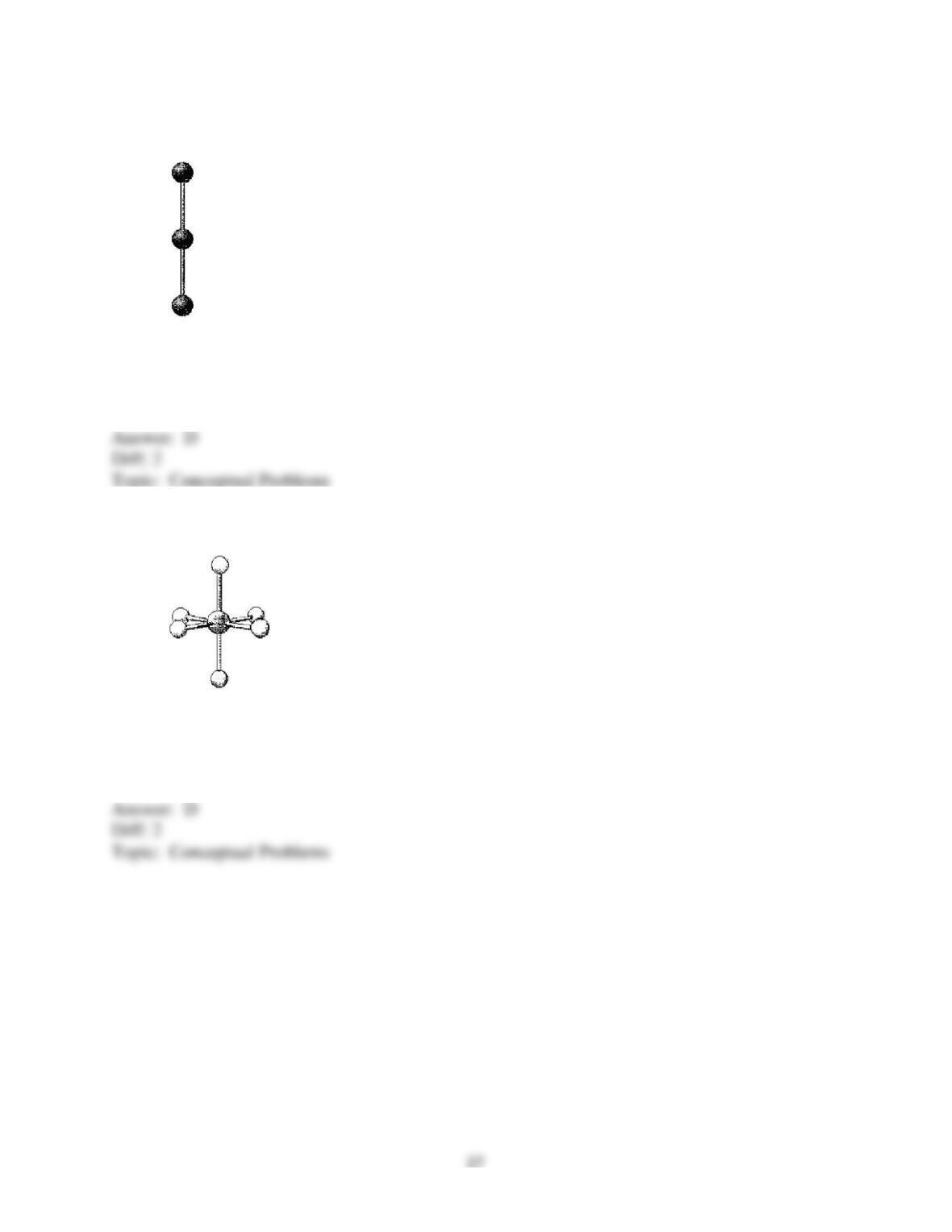
75) What is the bond angle in the following molecular model of I3–?
A) less than 120°
B) 120°
C) less than 180° but greater than 120°
D) 180°
76) What are the bond angles in the following molecular model of SF6?
A) some less than 90° and some less than 120° but greater than 90°
B) 90° and 120°
C) some less than 90° and some less than 180° but greater than 120°
D) 90° and 180°
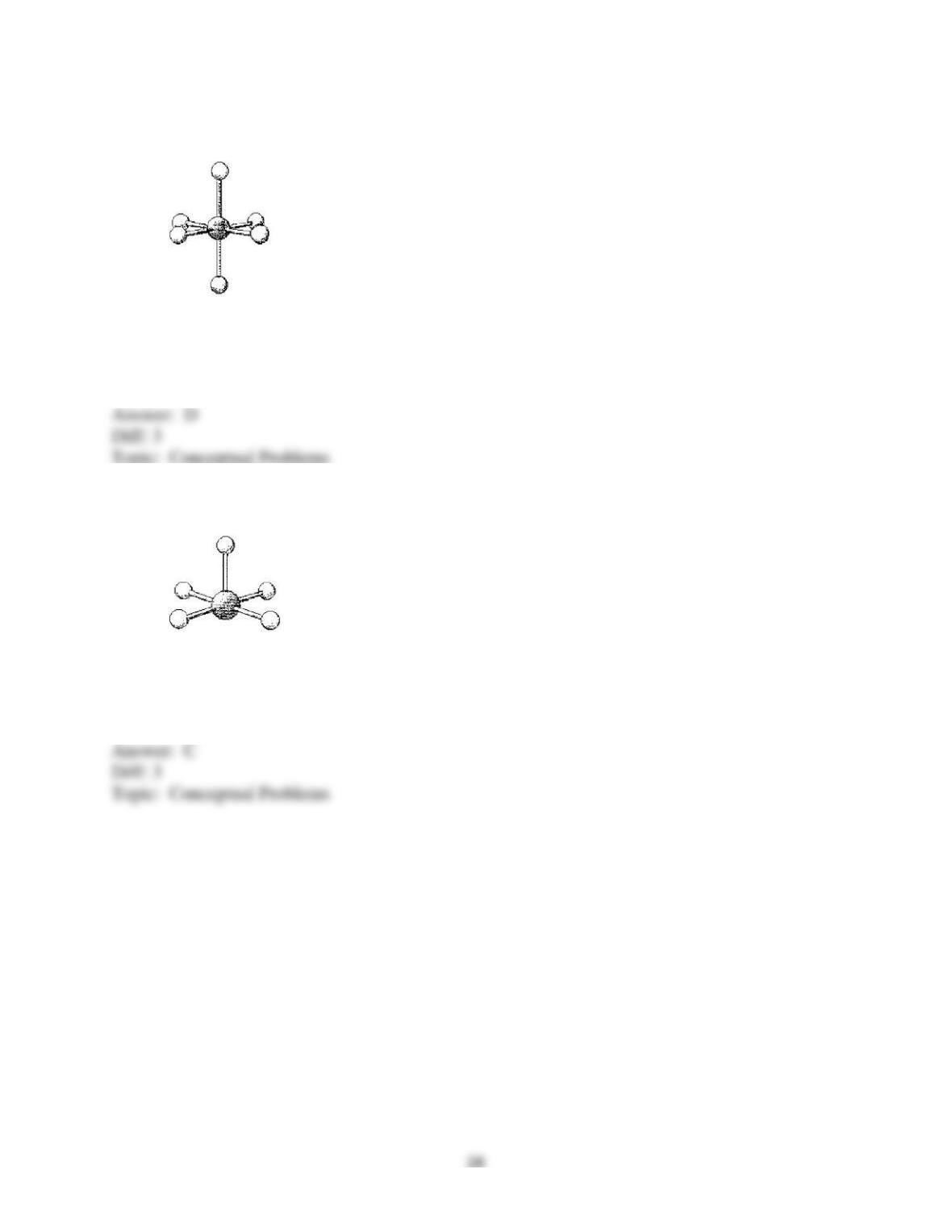
77) What are the bond angles in the following molecular model of PF6–?
A) some less than 90° and some less than 120° but greater than 90°
B) 90° and 120°
C) some less than 90° and some less than 180° but greater than 120°
D) 90° and 180°
78) What are the bond angles in the following molecular model of BrF5?
A) some less than 90° and some less than 120° but greater than 90°
B) 90° and 120°
C) some less than 90° and some less than 180° but greater than 120°
D) 90° and 180°
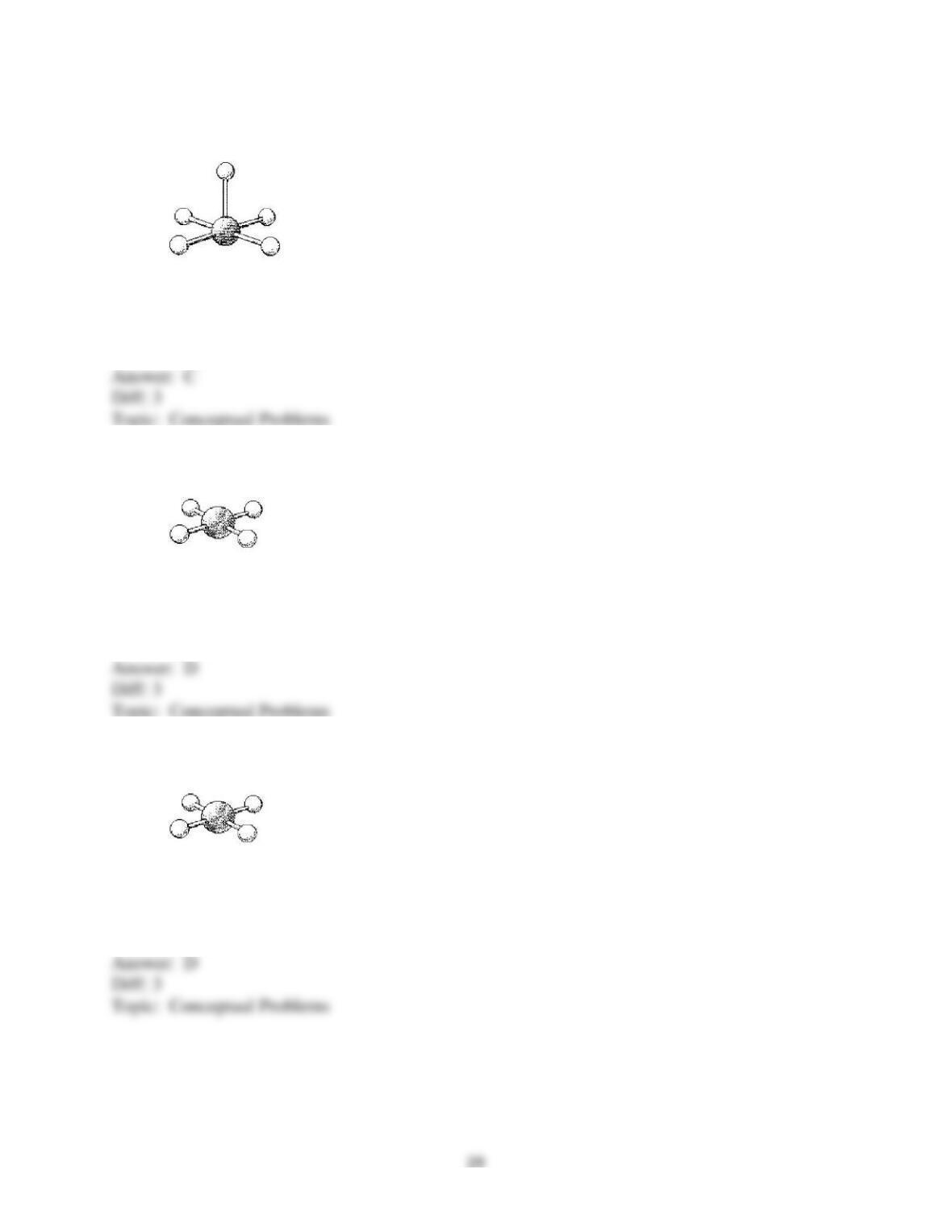
79) What are the bond angles in the following molecular model of TeF5–?
A) some less than 90° and some less than 120° but greater than 90°
B) 90° and 120°
C) some less than 90° and some less than 180° but greater than 120°
D) 90° and 180°
80) What are the bond angles in the following molecular model of XeF4?
A) some less than 90° and some less than 120° but greater than 90°
B) 90°
C) some less than 90° and some less than 180° but greater than 90°
D) 90° and 180°
81) What are the bond angles in the following molecular model of ICl4–?
A) some less than 90° and some less than 120° but greater than 90°
B) 90°
C) some less than 90° and some less than 180° but greater than 90°
D) 90° and 180°
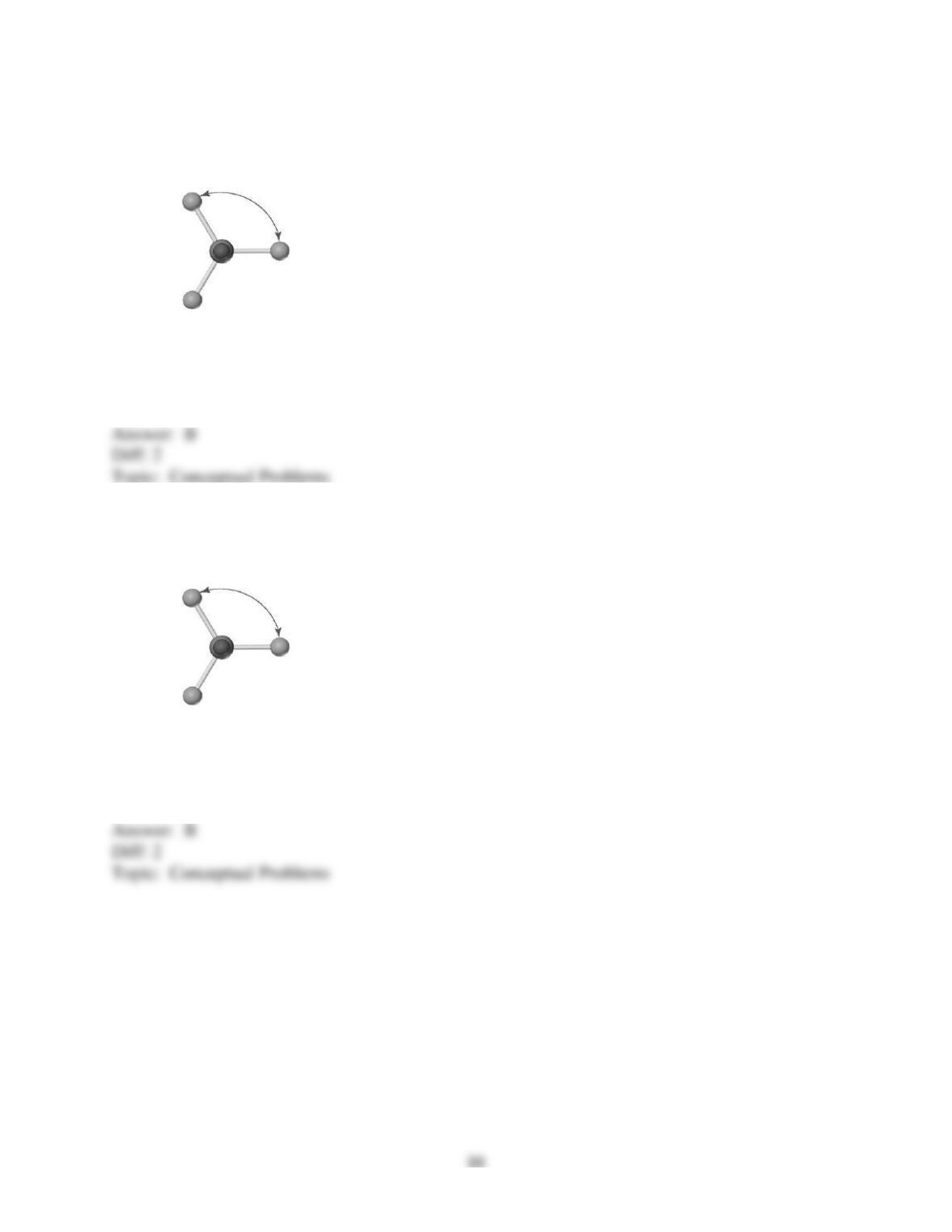
82) Shown below is a model of CH4 having an orientation in which one or more atoms are
hidden from view. What is the indicated bond angle?
A) less than 109.5°
B) 109.5°
C) less than 120° but greater than 109.5°
D) 120°
83) Shown below is a model of SiCl4 having an orientation in which one or more atoms are
hidden from view. What is the indicated bond angle?
A) less than 109.5°
B) 109.5°
C) less than 120° but greater than 109.5°
D) 120°
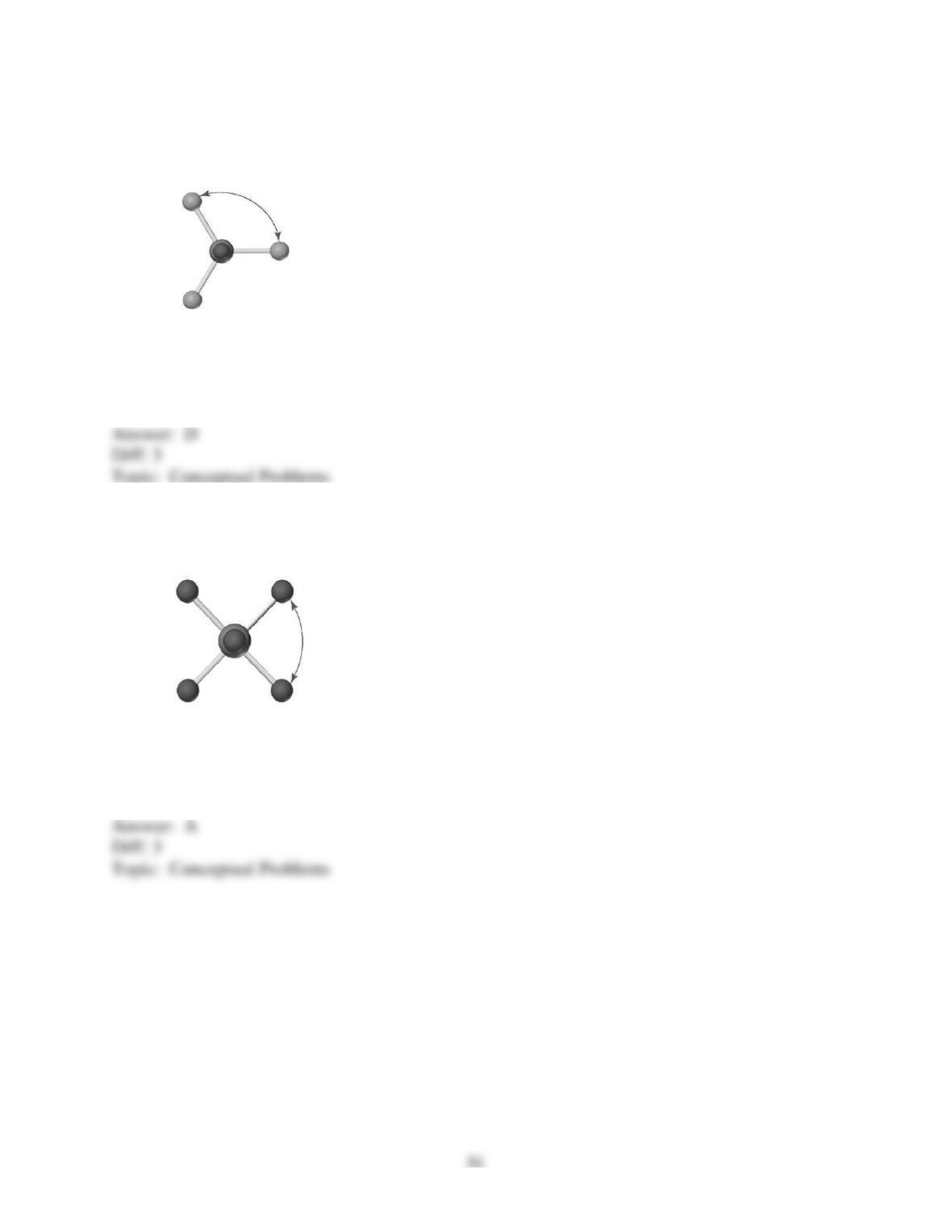
84) Shown below is a model of PF5 having an orientation in which one or more atoms are hidden
from view. What is the indicated bond angle?
A) less than 109.5°
B) 109.5°
C) less than 120° but greater than 109.5°
D) 120°
85) Shown below is a model of SF6 having an orientation in which one or more atoms are hidden
from view. What is the indicated bond angle?
A) 90°
B) less than 109.5° but greater than 90°
C) less than 120° but greater than 109.5°
D) 120°
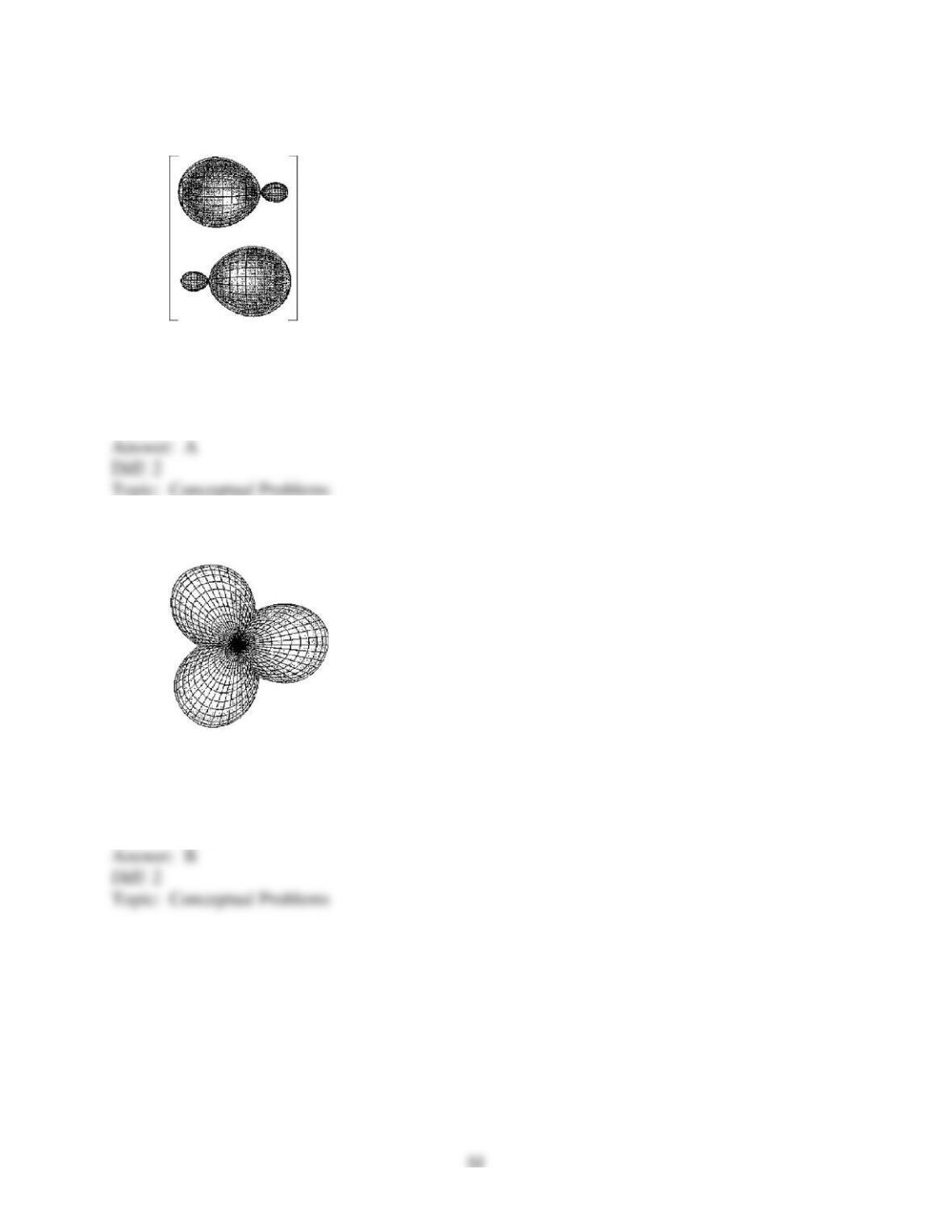
86) Identify the set of hybrid orbitals shown below.
A) sp
B) sp2
C) sp3
D) none of the above
87) Identify the set of hybrid orbitals shown below.
A) sp
B) sp2
C) sp3
D) none of the above