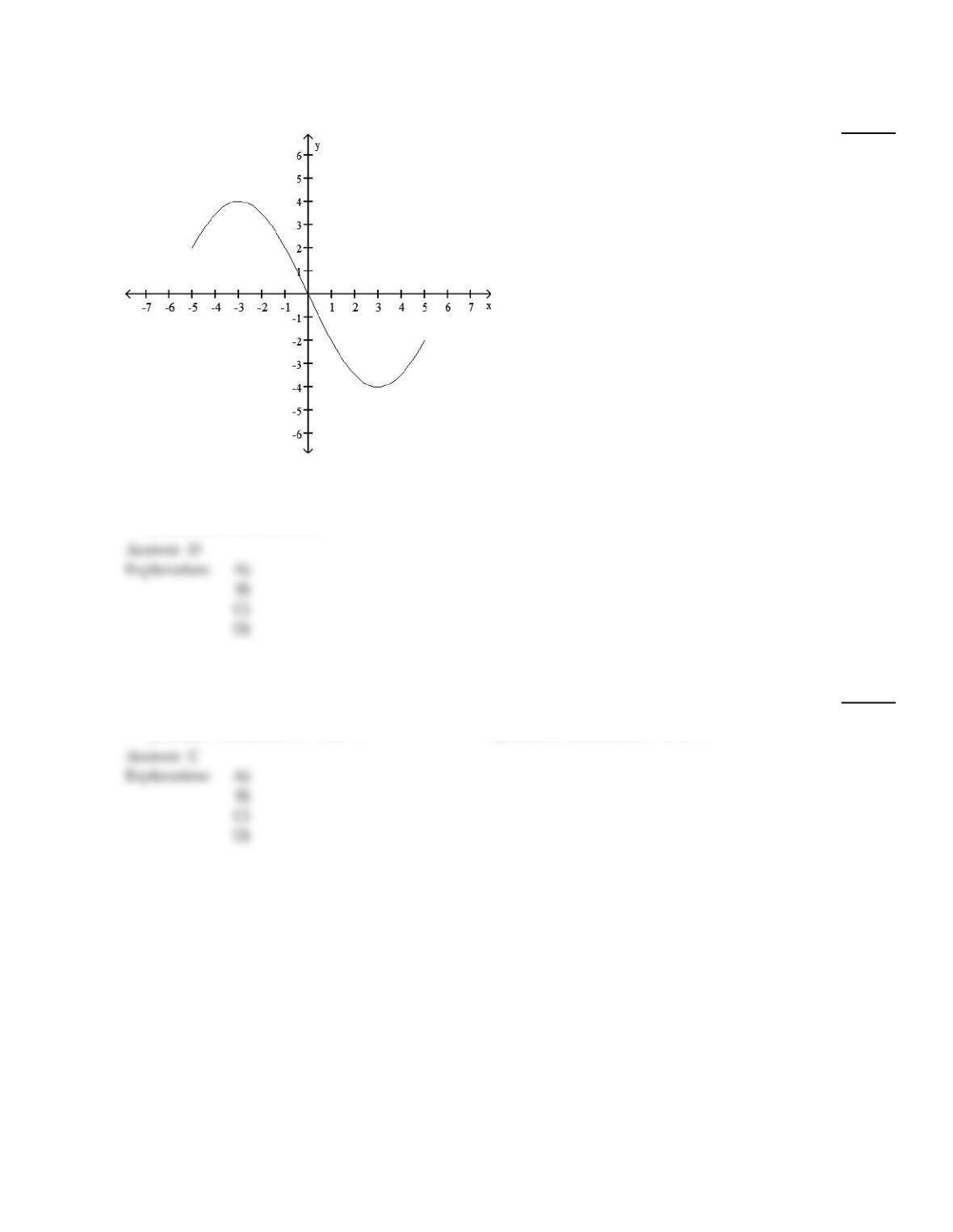
Suppose that the function with the given graph is not f(x), but f (x). Find the locations of all extrema, and tell whether
each extremum is a relative maximum or minimum.
51)
51)
A)
No relative extrema
B)
Relative maximum at –3; relative minimum at 3
C)
Relative minimum at 0
D)
Relative maximum at 0
Find the x–value of all points where the function has relative extrema. Find the value(s) of any relative extrema.
52)
f(x) = x2+ 2x – 3
52)
A)
Relative maximum of –4 at –1.
B)
Relative minimum of 0 at –2.
C)
Relative minimum of –4 at –1.
D)
Relative minimum of –2 at 0.
21
Solve the problem.
53)
The population of a certain species of fish introduced into a lake is described by the logistic
equation
G(t) =12,000
1 +24e–1.2t ,
where G(t) is the population after t years. Find the point at which the growth rate of this
population begins to decline.
53)
A)
(3.81, 6000)
B)
(3.56, 9000)
C)
(5.13, 9000)
D)
(2.65, 6000)
Decide if the given value of x is a critical number for f, and if so, decide whether the point is a relative minimum, relative
maximum, or neither.
54)
f(x) = 3x4– 4x3– 12x2+ 24; x = 0
54)
A)
Critical number but not an extreme point
B)
Critical number, relative minimum at (0, 24)
C)
Not a critical number
D)
Critical number, relative maximum at (0, 24)
Find any inflection points given the equation.
55)
f(x) =ex–6e–x–7x
55)
A)
Inflection point at (ln 6, 5–7 ln 6)
B)
Inflection point at (2, –6)
C)
Inflection point at (0, –5)
D)
Inflection point at 1
2 ln 6, –7
2 ln 6
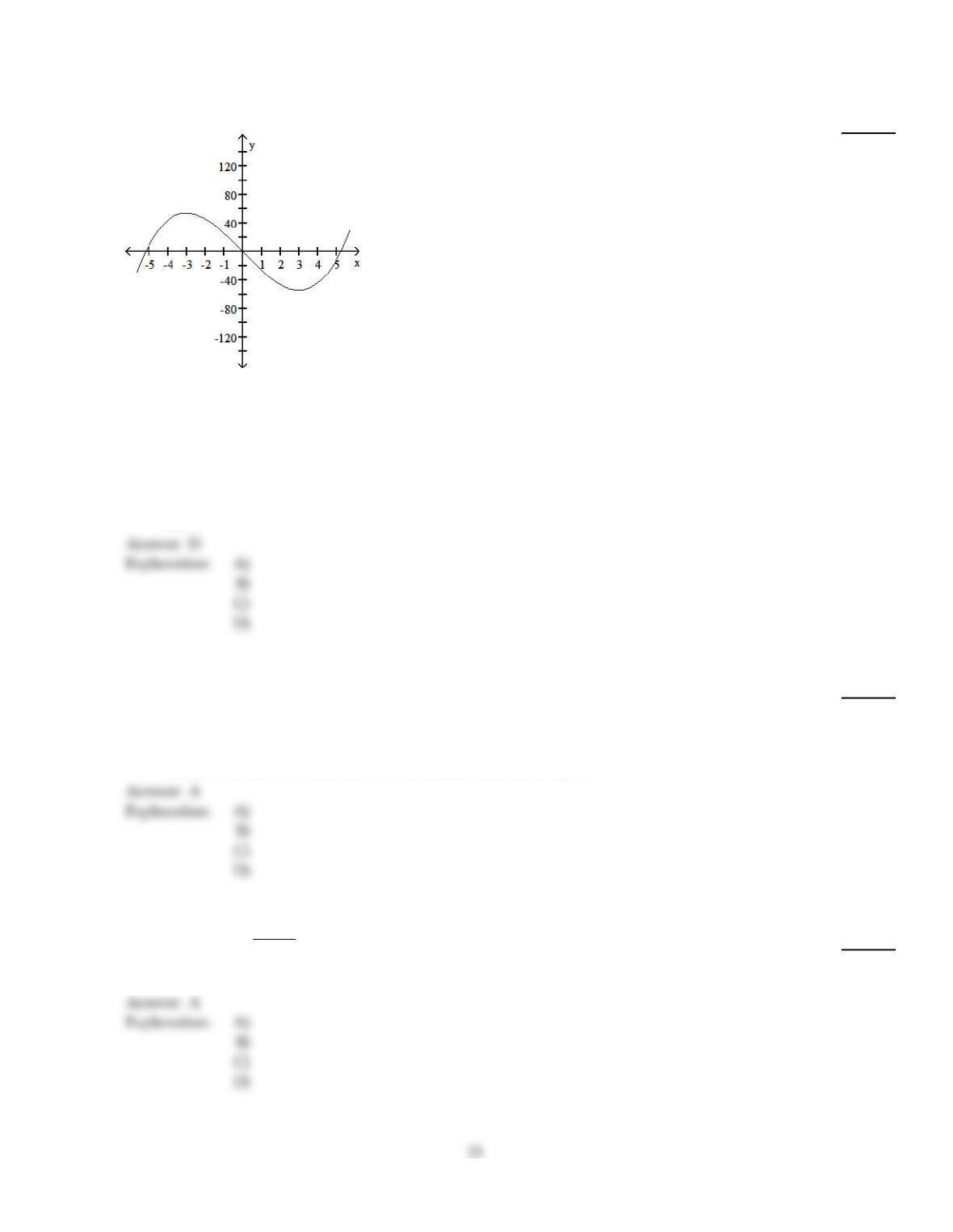
Suppose that the function with the given graph is not f(x), but f (x). Find the open intervals where the function is concave
upward or concave downward, and find the location of any inflection points.
56)
56)
A)
Concave upward on (–3, 3); concave downward on ( , –3) and (3, ); inflection points at –3
and 3
B)
Concave upward on ( , –3) and (3, ); concave downward on (–3, 3); inflection points at –20
and
20
C)
Concave upward on ( , 0); concave downward on (0, ); inflection point at 0
D)
Concave upward on ( , –3) and (3, ); concave downward on (–3, 3); inflection points at –3
and 3
Use a graphing calculator to find the location of all relative extrema (to three decimal places).
57)
f(x) =x5– 15x4–3x3– 172x2+ 135x – 0.024
57)
A)
Relative maximum at x= 0.379; relative minimum at x = 12.565
B)
Relative maximum at x = 0.379; relative minima at x = – 0.472 and x = 12.565
C)
Relative maximum at x =0.397; relative minima at x = – 0.43and x = – 12.528
D)
Relative maximum at x =0.431; relative minimum at x = – 12.546
Find the open interval(s) where the function is changing as requested.
58)
Increasing; f(x) =1
x2+ 1
58)
A)
(–, 0)
B)
(–, 1)
C)
(0, )
D)
(1, )
Use the derivative to find the vertex of the parabola.
59)
y = – 2x2– 8x + 3
59)
A)
(–2, –11)
B)
(2, 11)
C)
(–2, 11)
D)
(2, –11)
Find the x–value of all points where the function has relative extrema. Find the value(s) of any relative extrema.
60)
f(x) = x + ln x
60)
A)
(1, –1), relative maximum
B)
(–1, –1) relative maximum
C)
(–1, 0), relative minimum
D)
(1, 0), relative minimum
B
Find the largest open intervals where the function is concave upward.
61)
f(x) = x4– 8x2
61)
A)
(–, –2 3/3), (2 3/3, )
B)
(–, –2 3/3)
C)
None
D)
(2 3/3, )
A
C
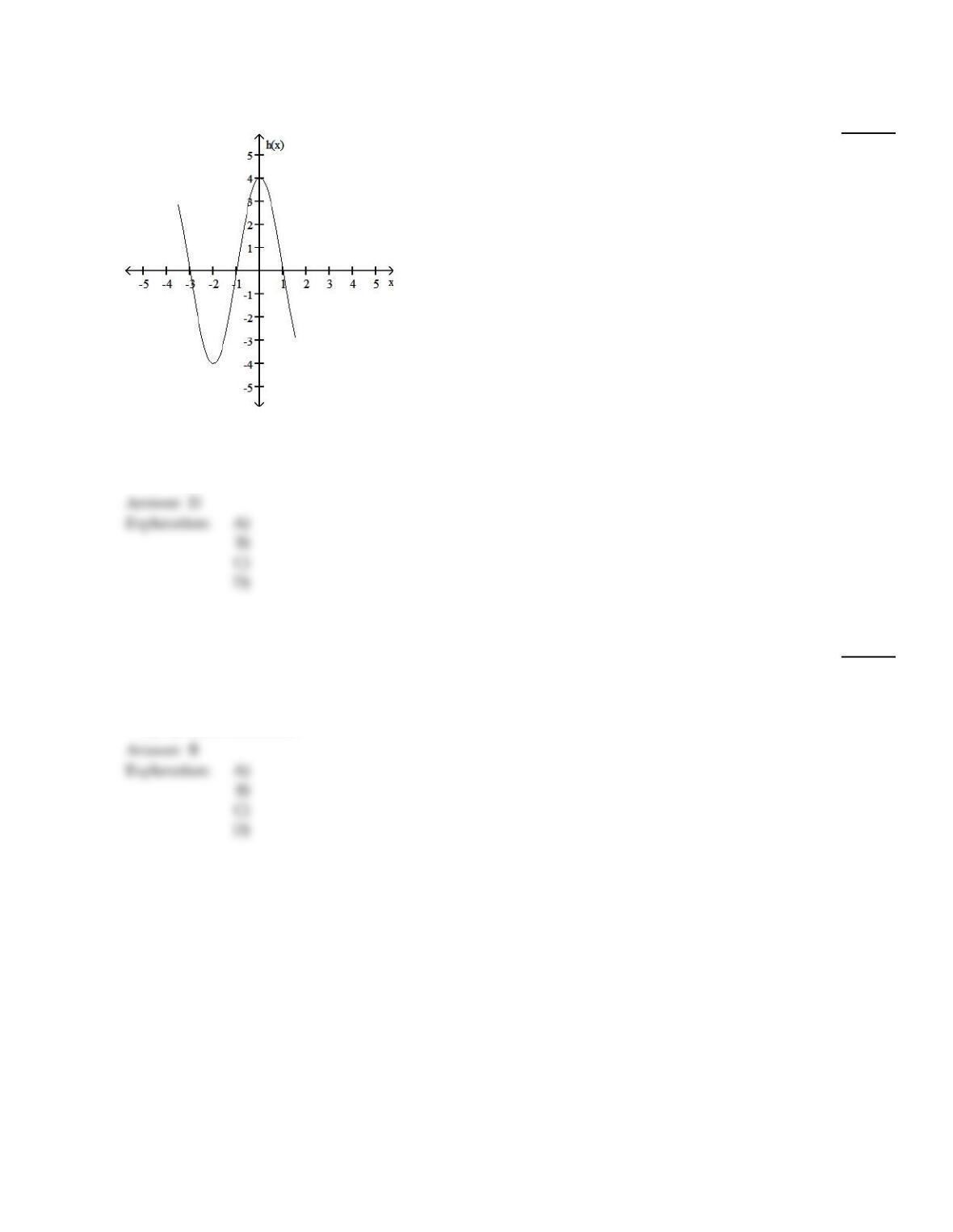
Suppose that the function with the given graph is not f(x), but f (x). Find the locations of all extrema, and tell whether
each extremum is a relative maximum or minimum.
62)
62)
A)
Relative maximum at 0; relative minimum at –2
B)
No relative extrema
C)
Relative minima at –3 and 1; relative maximum at –1
D)
Relative maxima at –3 and 1; relative minimum at –1
Find the x–value of all points where the function has relative extrema. Find the value(s) of any relative extrema.
63)
f(x) =x5ex+ 1
63)
A)
Relative maximum of 22.06 at –5; relative minimum of 1 at 0
B)
Relative minimum of –20.06 at –5
C)
Relative maximum of 1 at 0; relative minimum of –20.06 at –5
D)
No relative extrema
25
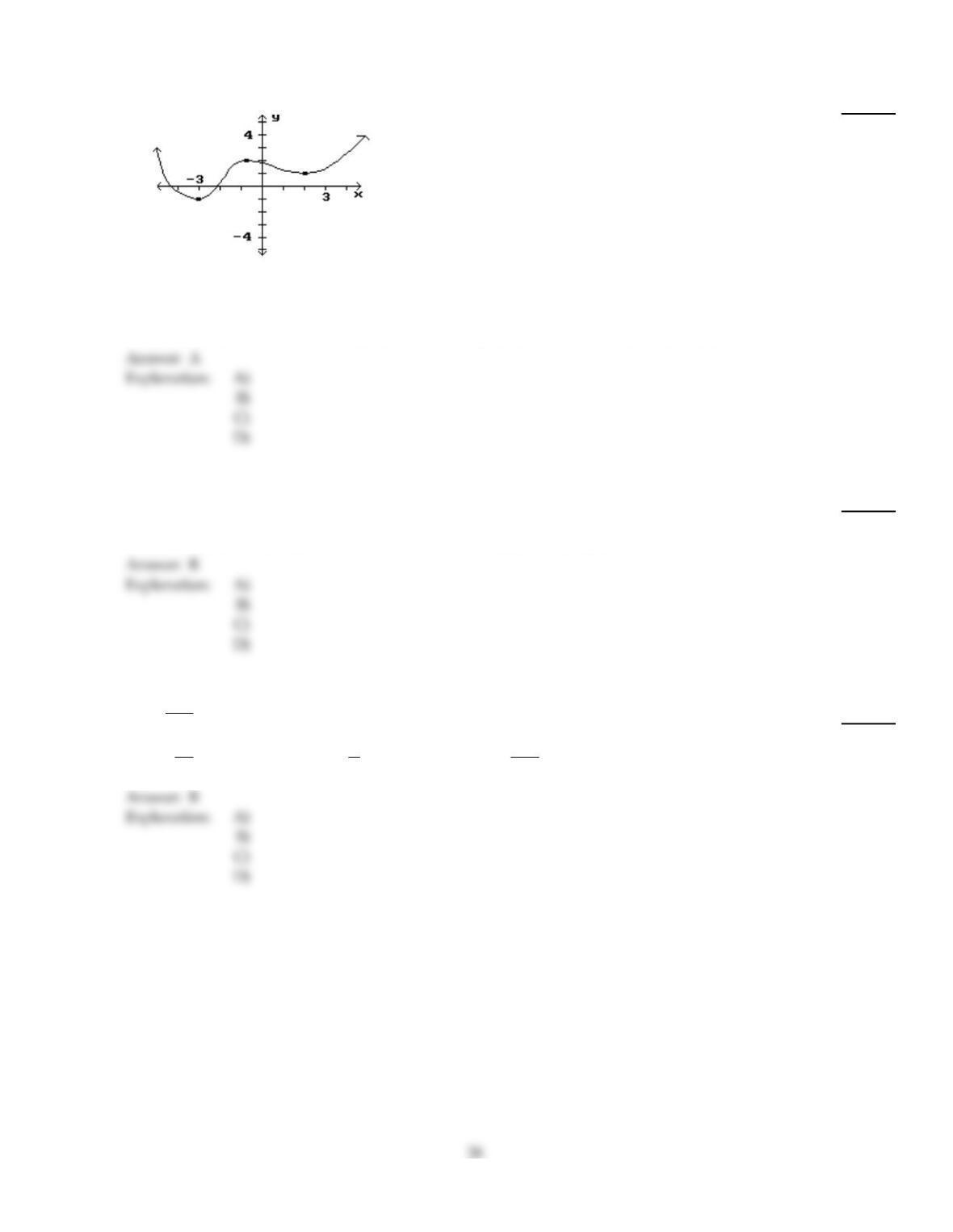
Find the location and value of all relative extrema for the function.
64)
64)
A)
Relative minimum of –1 at –3 ; Relative maximum of 2 at –1 ; Relative minimum of 1 at 2.
B)
Relative minimum of –3 at –1 ; Relative maximum of –1 at 2 ; Relative minimum of 2 at 1.
C)
Relative minimum of 0 at –2 ; Relative maximum of –1 at 2 ; Relative minimum of 2 at 1.
D)
Relative minimum of –1 at –3 ; Relative maximum of 2 at –1 ; Relative minimum of 0 at 2.
Find the x–value of all points where the function has relative extrema. Find the value(s) of any relative extrema.
65)
f(x)= (ln x)2, x > 0
65)
A)
(1, –1), relative maximum
B)
(1, 0), relative minimum
C)
(–1, 0), relative minimum
D)
(–1, –1) relative maximum
B
Find the requested value of the second derivative of the function.
66)
f(x) =ln x
5x ; Find f(1).
66)
A)
–1
10
B)
–3
5
C)
ln 2
10
D)
15
B
A
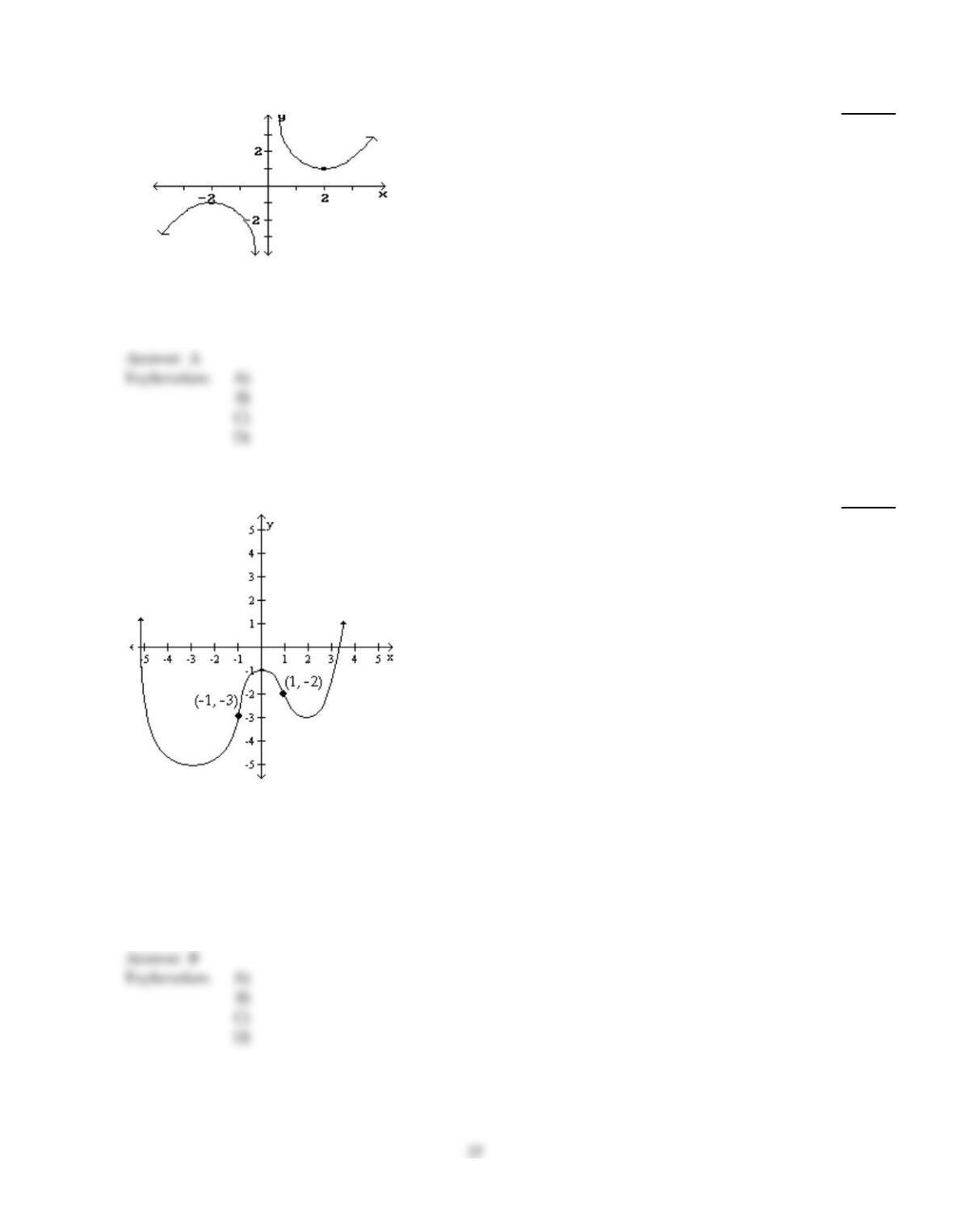
Find the location and value of all relative extrema for the function.
67)
67)
A)
Relative minimum of 1 at 2 ; Relative maximum of –1 at –2.
B)
None
C)
Relative minimum of –1 at –2.
D)
Relative maximum of 2 at 1.
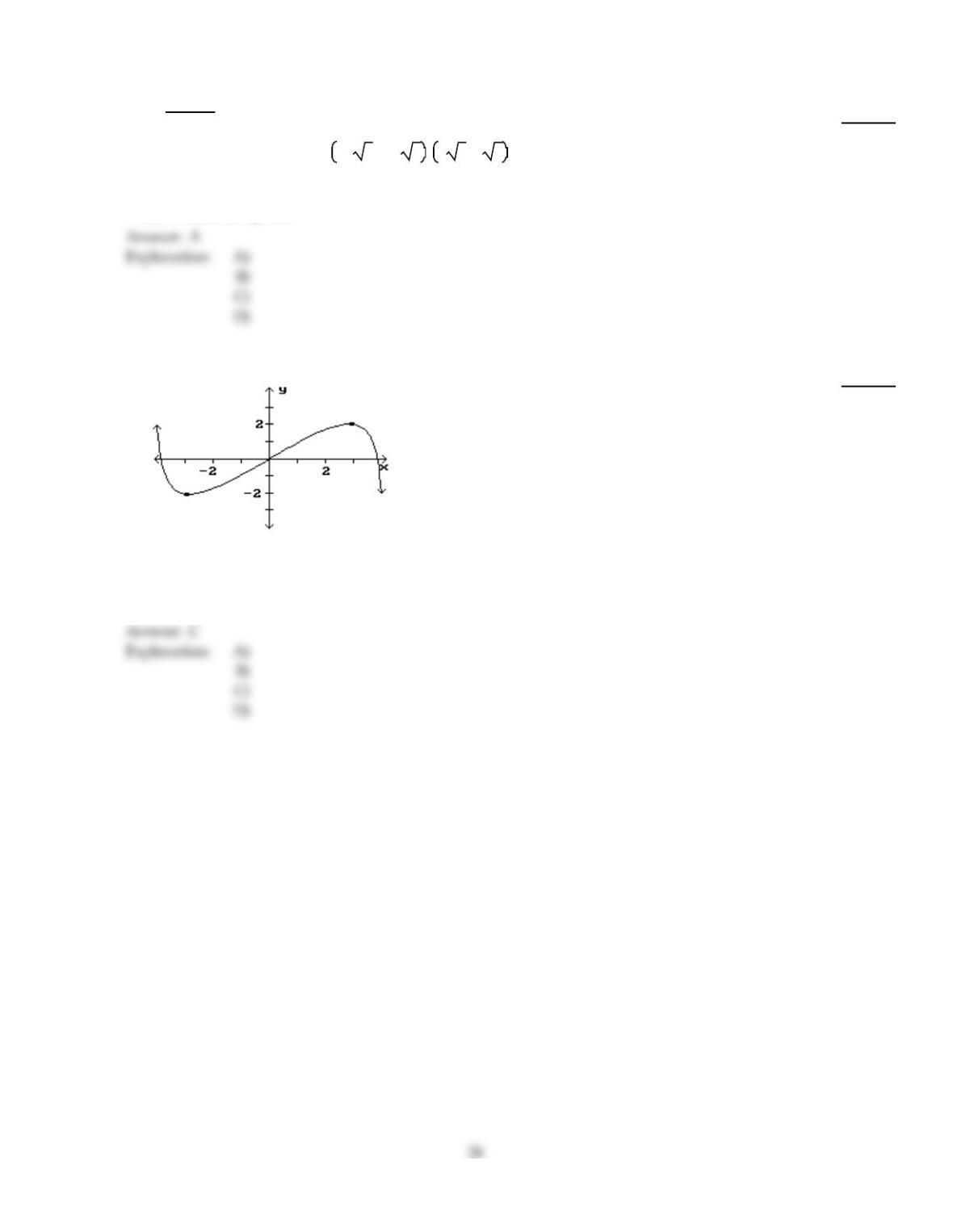
Find the open intervals where the function is concave upward or concave downward. Find any inflection points.
68)
68)
A)
Concave upward on ( , –1) and (1, ); concave downward on (–1, 1); inflection points at (–3,
–5), (0, –1), and (2, –2)
B)
Concave upward on ( , –1) and (1, ); concave downward on (–1, 1); inflection points at (–1,
–3) and (1, –2)
C)
Concave upward on ( , –1) and (2, ); concave downward on (–1, 2); inflection point at (0,
–1)
D)
Concave upward on ( , –3) and (2, ); concave downward on (–3, 2); inflection points at (–1,
–3) and (1, –2)
Find any inflection points given the equation.
69)
f(x) =32x
x2+ 16
69)
A)
Inflection points at (0, 0), –4 3, – 8 3, 4 3, 8 3
B)
Inflection points at (0, 0), (–4, –4), (4, 4)
C)
Inflection points at (–4, –4), (4, 4)
D)
No inflection points
Find the location and value of all relative extrema for the function.
70)
70)
A)
None
B)
Relative minimum of 0 at 0.
C)
Relative minimum of –2 at –3 ; Relative maximum of 2 at 3.
D)
Relative minimum of –2 at –3 ; Relative minimum of 0 at 0 ; Relative maximum of 2 at 3.
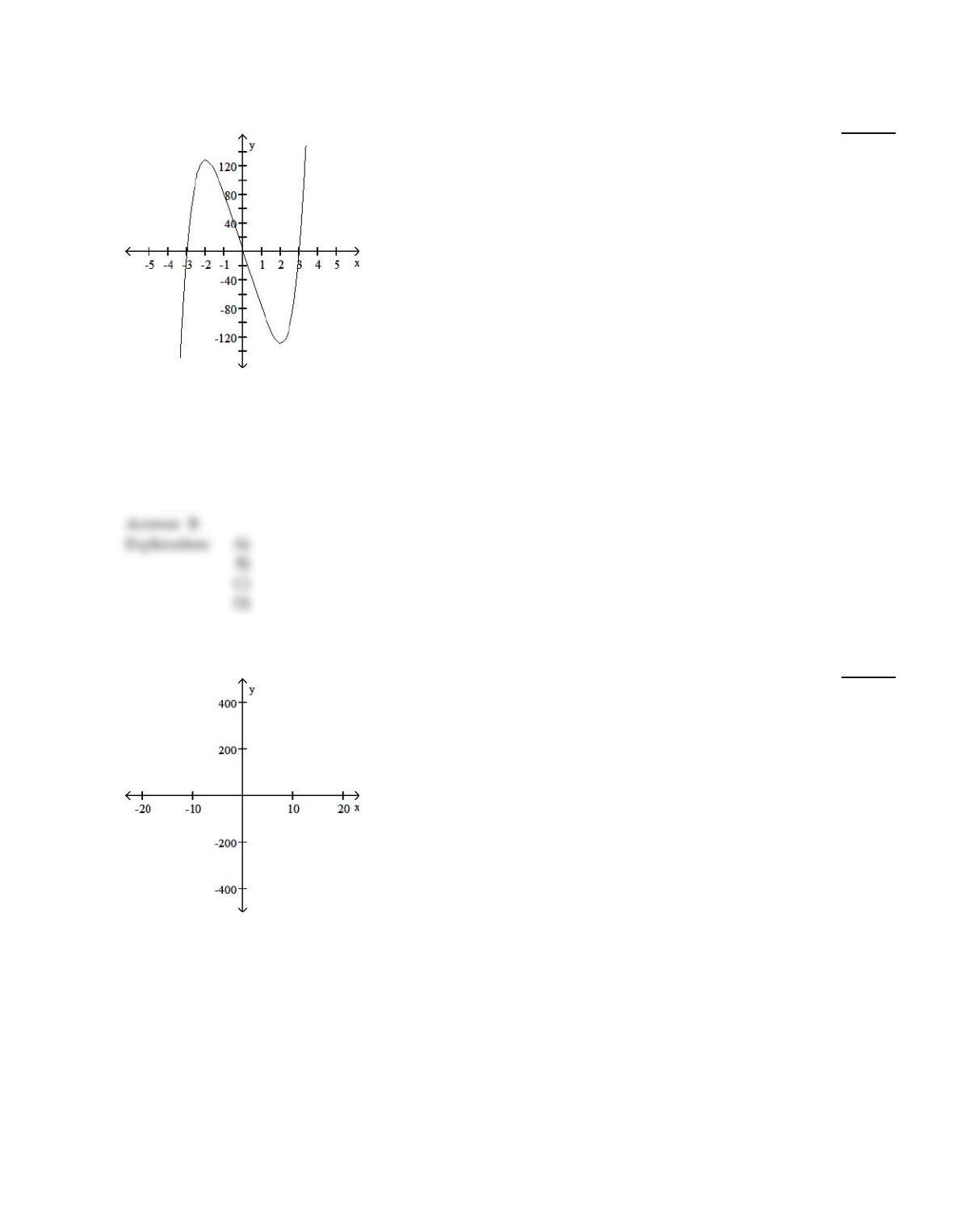
Suppose that the function with the given graph is not f(x), but f (x). Find the open intervals where the function is concave
upward or concave downward, and find the location of any inflection points.
71)
71)
A)
Concave upward on ( , –2) and (2, ); concave downward on (–2, 2); inflection points at –120
and 120
B)
Concave upward on ( , –2) and (2, ); concave downward on (–2, 2); inflection points at –2
and 2
C)
Concave upward on ( , 0); concave downward on (0, ); inflection point at 0
D)
Concave upward on (–2, 2); concave downward on ( , –2) and (2, ); inflection points at –2
and 2
Sketch the graph and show all extrema, inflection points, and asymptotes where applicable.
72)
f(x) = x1/3(x2– 28)
72)
29
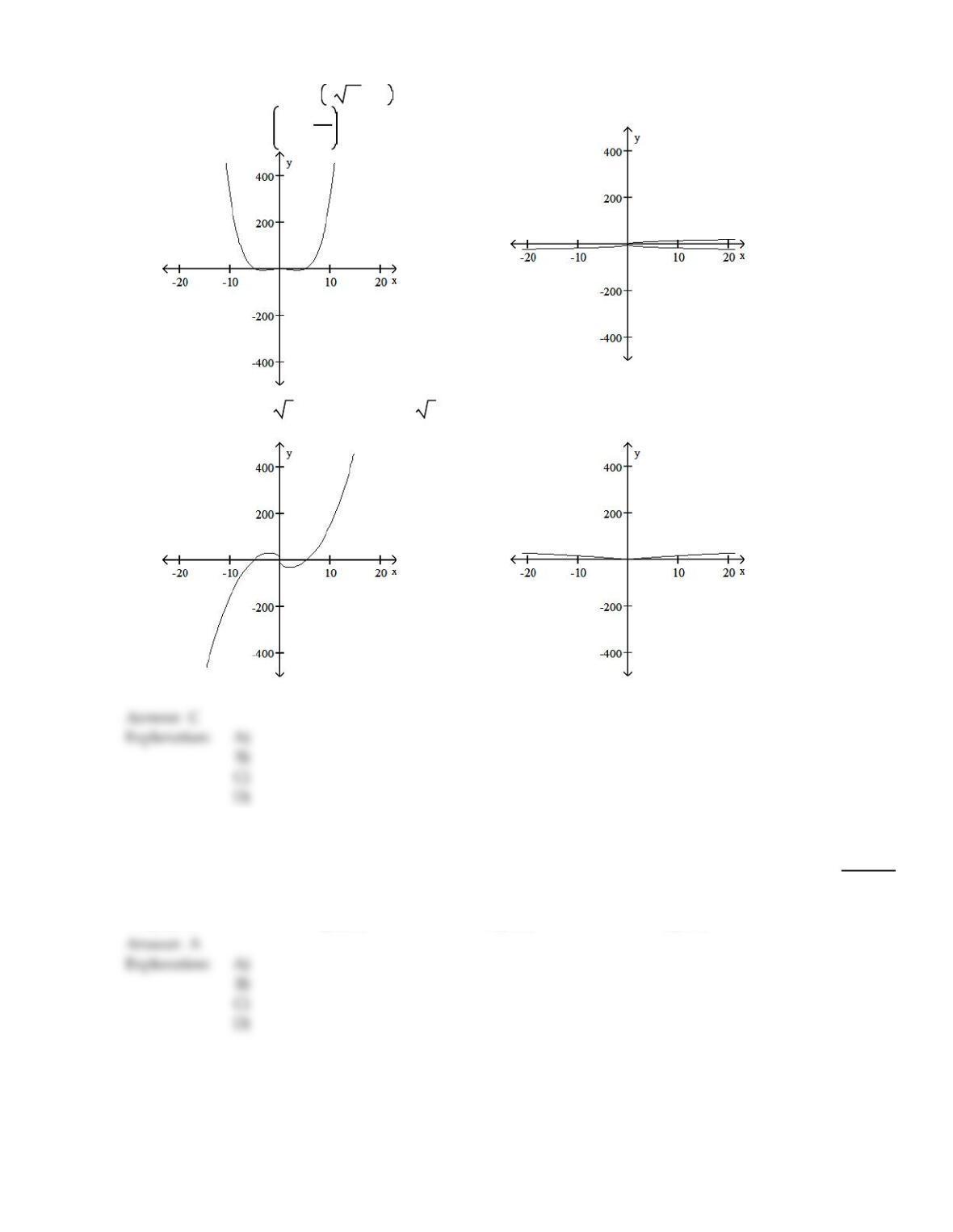
A)
Rel max: (0,0), Rel min: ±12, –6
Inflection point: ±2, –10
3
B)
No extrema
Inflection point: (0, 0)
C)
Rel max: (–2, 24 32), Rel min: (2, –24 32)
Inflection point: (0,0)
D)
Rel min: (0, 0)
No inflection points
Solve the problem.
73)
S(x) = – x3+ 6x2+ 288x + 4000, 4 x 20 is an approximation to the number of salmon swimming
upstream to spawn, where x represents the water temperature in degrees Celsius. Find the
temperature that produces the maximum number of salmon.
73)
A)
12°C
B)
20°C
C)
4°C
D)
8°C
30
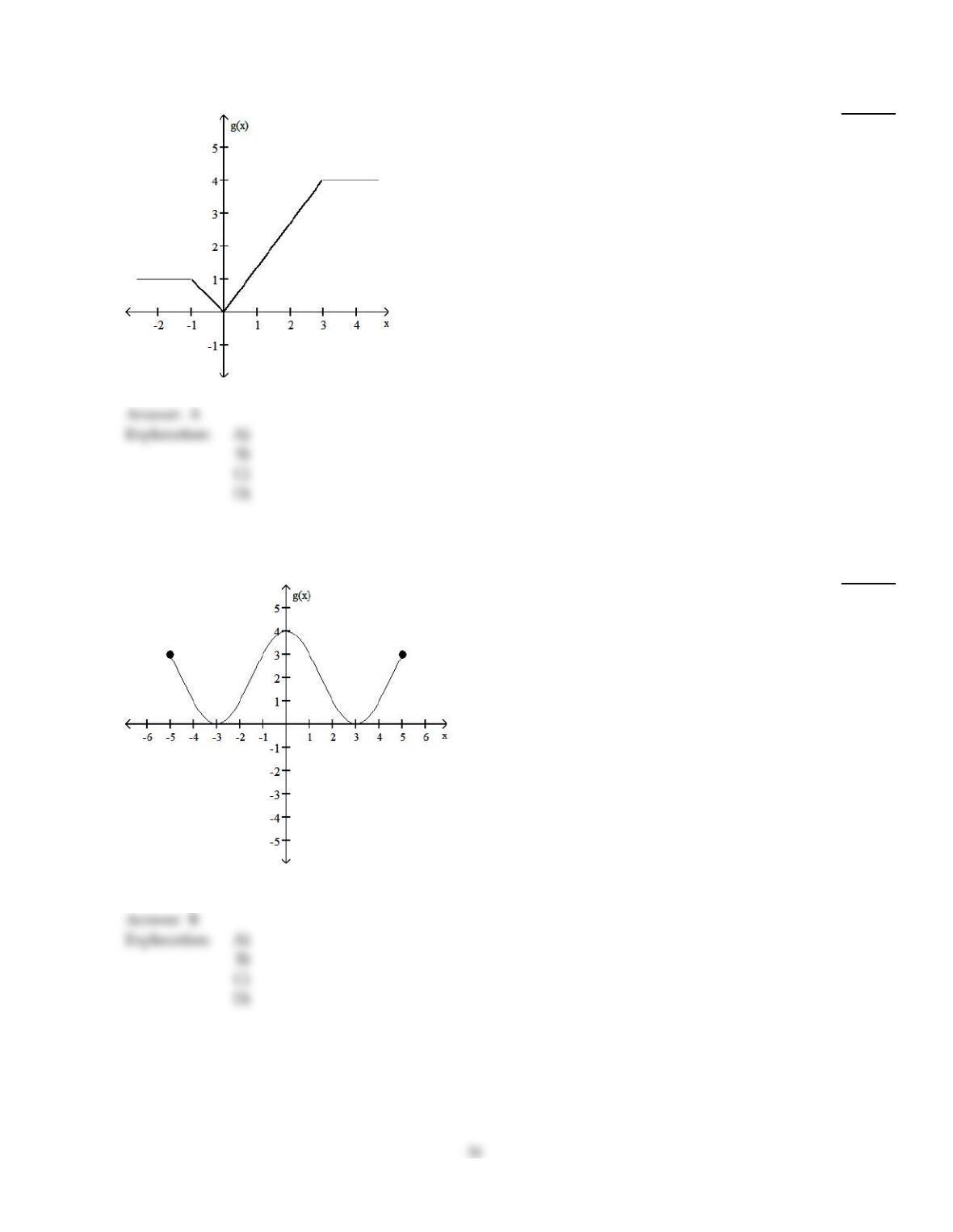
Identify the open intervals where the function is changing as requested.
74)
Increasing
74)
A)
(0, 3)
B)
(–, –1)
C)
(–1, 0)
D)
(–, 0)
Suppose that the function with the given graph is not f(x), but f (x). Find the locations of all extrema, and tell whether
each extremum is a relative maximum or minimum.
75)
75)
A)
Relative minima at –3 and 3
B)
No relative extrema
C)
Relative maxima at –3 and 3
D)
Relative maxima at 0
Find all the critical numbers of the function.
76)
f(x) =2
3x3+3
2x2–27x + 2
76)
A)
–3, 9
2
B)
–9
2, 9
2
C)
3
D)
–9
2, 3
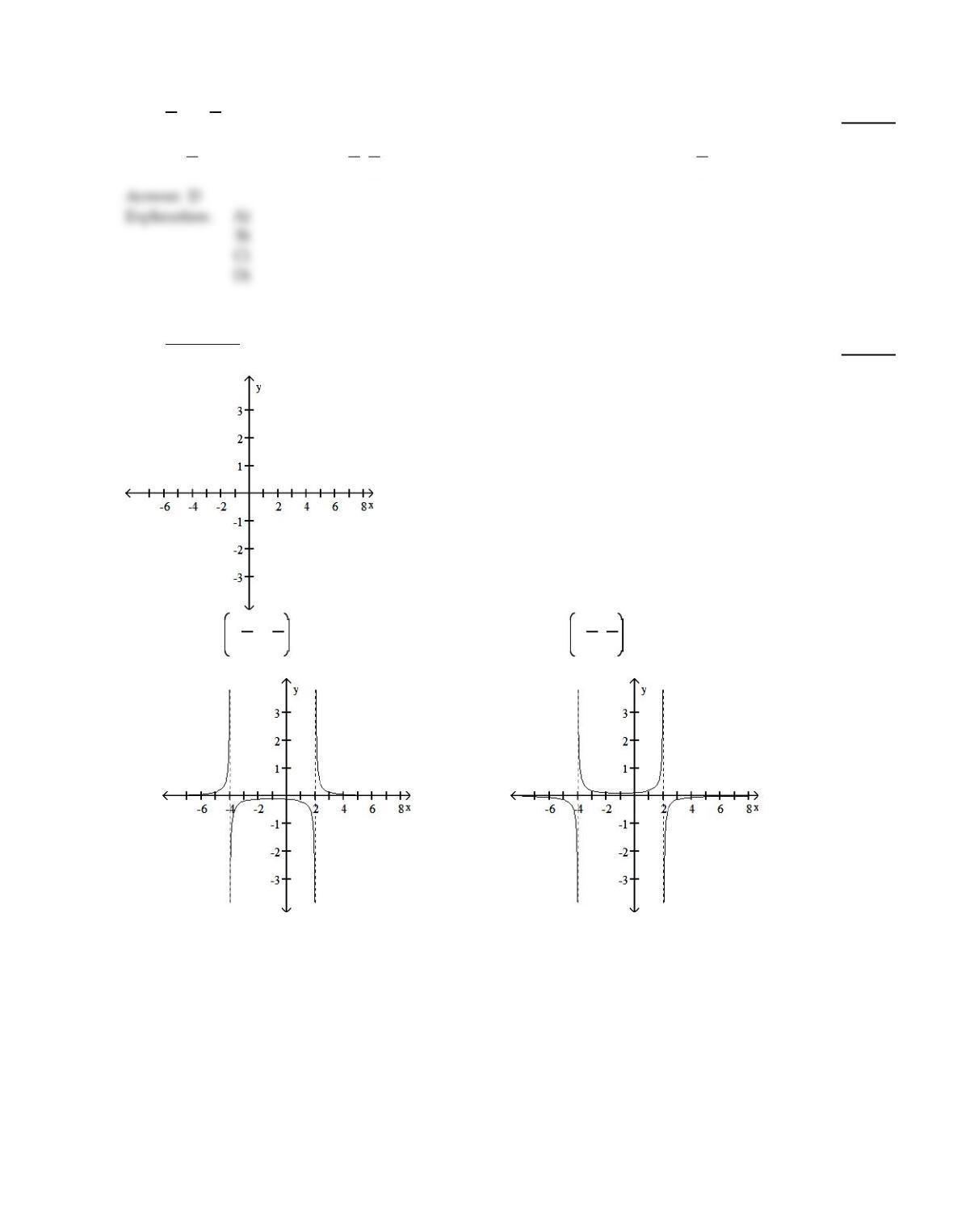
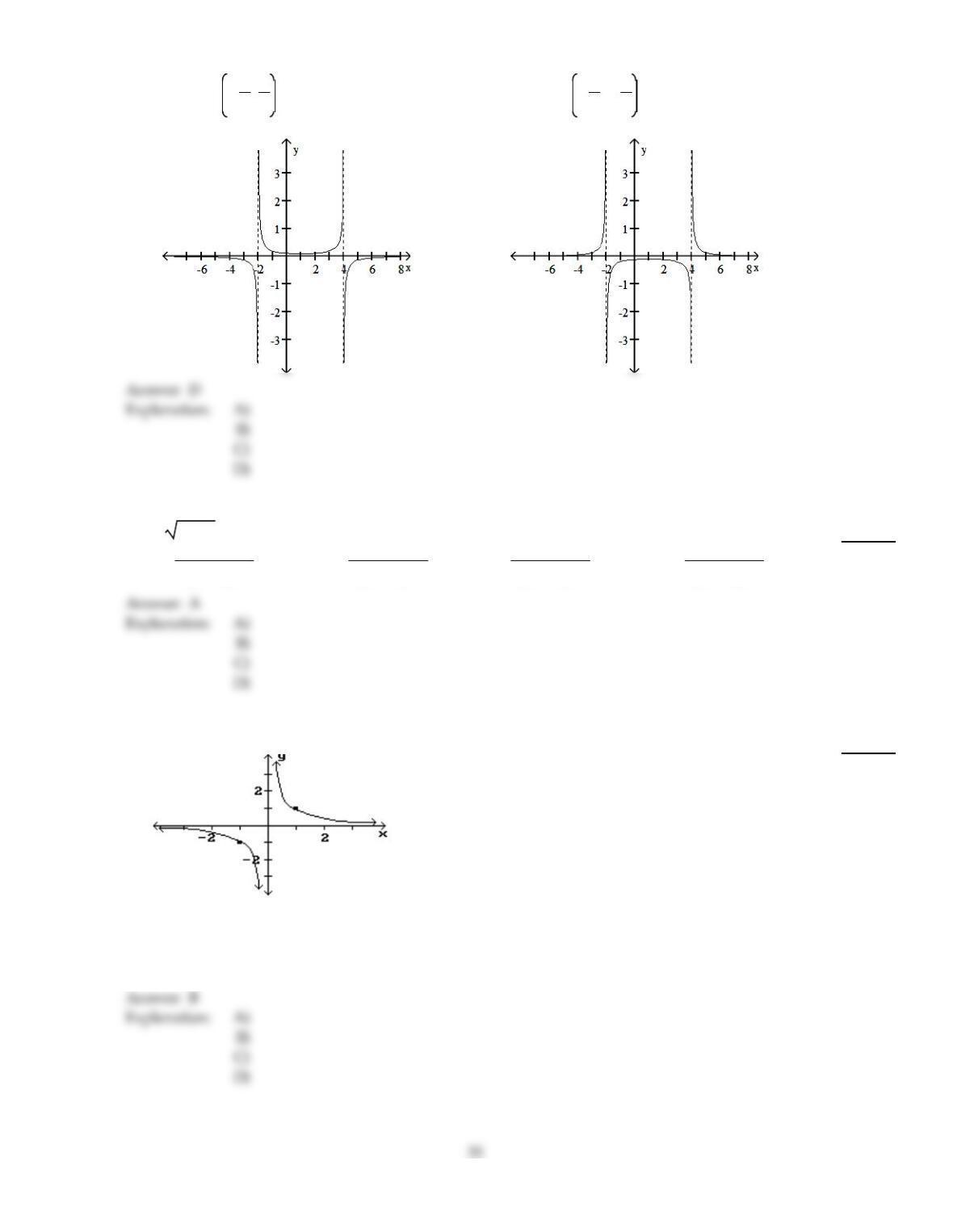
Sketch the graph and show all extrema, inflection points, and asymptotes where applicable.
77)
f(x) =1
x2– 2x – 8
77)
A)
Rel max: –5
4, –1
9
No inflection points
B)
Rel min: –5
4, 1
9
No inflection points
32
C)
Rel min: –7
4, 1
9
No inflection points
D)
Rel max: –7
4,–1
9
No inflection points
Find f”(x) for the function.
78)
f(x) =3x – 7
78)
A)
–9
4(3x – 7)3/2
B)
–10
4(3x – 7)3/2
C)
10
4(3x – 7)3/2
D)
9
4(3x – 7)3/2
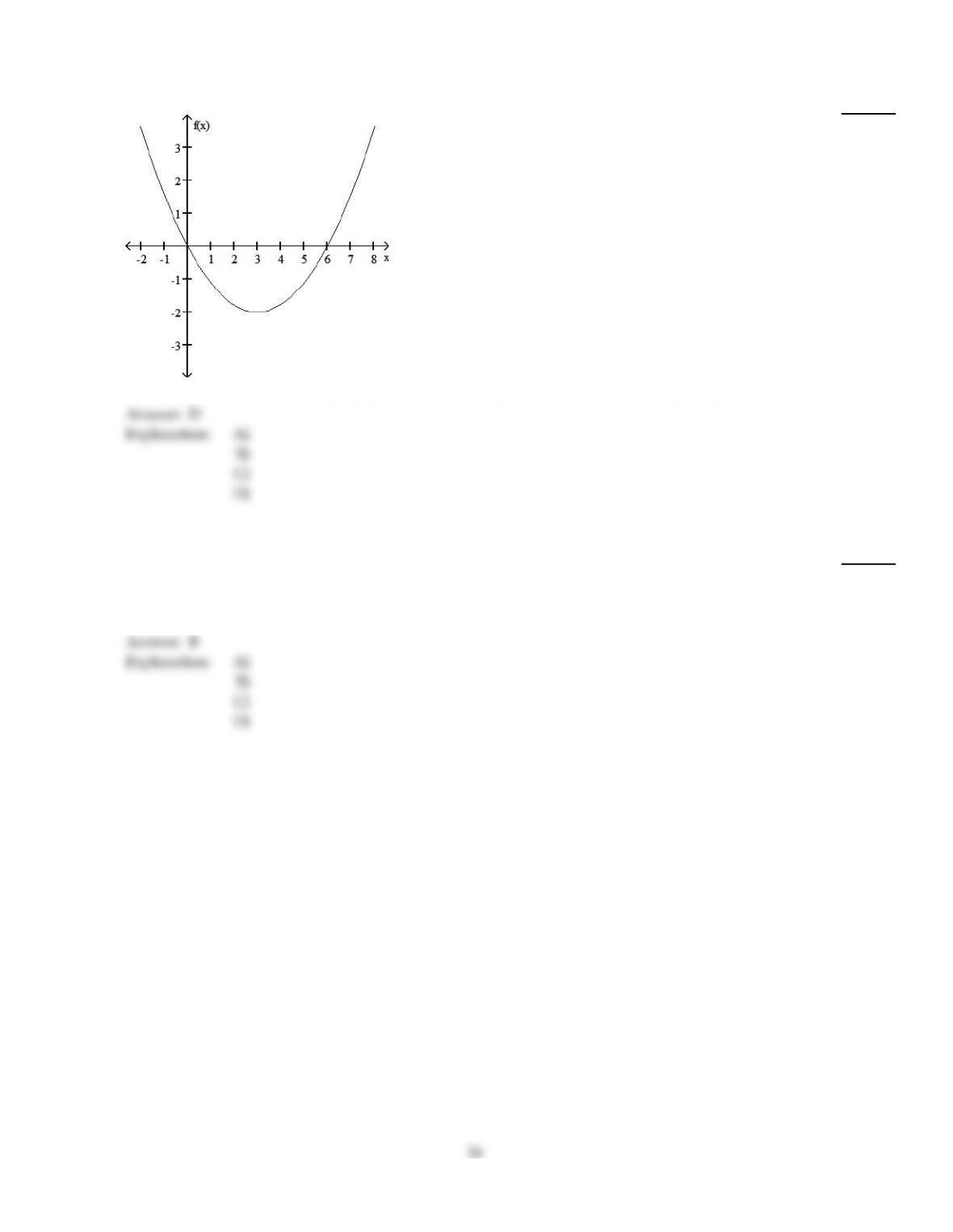
Find the location and value of all relative extrema for the function.
79)
79)
A)
Relative maximum of –1 at –1 ; Relative minimum of 1 at 1.
B)
None
C)
Relative maximum of –1 at –1.
D)
Relative minimum of 1 at 1.
Identify the open intervals where the function is changing as requested.
80)
Increasing
80)
A)
(–2, )
B)
(–2, 0)
C)
(3, 6)
D)
(3, )
Solve the problem.
81)
The annual revenue and cost functions for a manufacturer of precision gauges are approximately
R(x) =480x – 0.01x2 and C(x) =160x + 100,000, where x denotes the number of gauges made. What
is the maximum annual profit?
81)
A)
$2,560,000
B)
$2,460,000
C)
$2,660,000
D)
$2,760,000
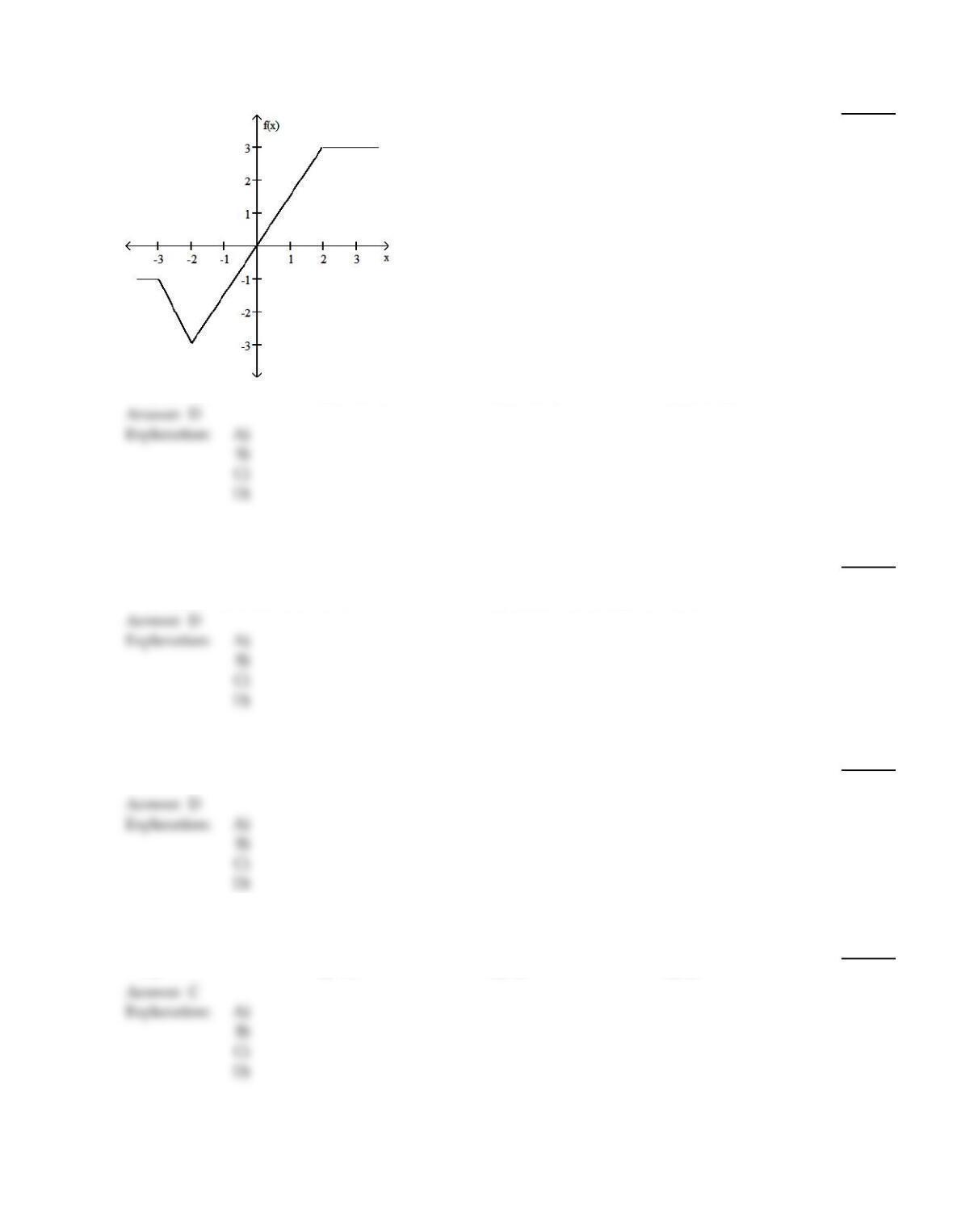
Identify the open intervals where the function is changing as requested.
82)
Decreasing
82)
A)
(0, –2)
B)
(–, –3)
C)
(–, –2)
D)
(–3, –2)
Find the x–value of all points where the function has relative extrema. Find the value(s) of any relative extrema.
83)
f(x) = 2 + 8x – x2
83)
A)
Relative maximum of 16 at – 4.
B)
Relative maximum of 50 at 0.
C)
Relative minimum of 0 at 4.
D)
Relative maximum of 18 at 4.
Solve the problem.
84)
Find the maximum profit P if C(x) =85 + 28x and p =56 – 2x.
84)
A)
$902
B)
$98
C)
$987
D)
$13
Find the requested value of the second derivative of the function.
85)
f(x) =x4+3x3–2x +7; Find f (–2).
85)
A)
7
B)
–11
C)
12
D)
16
35
Find any inflection points given the equation.
86)
f(x) =3x2+ 30x
86)
A)
Inflection point at (10,–30)
B)
Inflection point at (–5,–75)
C)
Inflection point at (–10,–30)
D)
No inflection points
Find the open interval(s) where the function is changing as requested.
87)
Increasing; f(x) = 0.25x2– 0.5x
87)
A)
(–, )
B)
(–1, 1)
C)
(–, –1)
D)
(1, )
Find all the critical numbers of the function.
88)
y =2.6 –3.6x +1.6x2
88)
A)
13
18
B)
–13
16
C)
9
8
D)
5
16
36
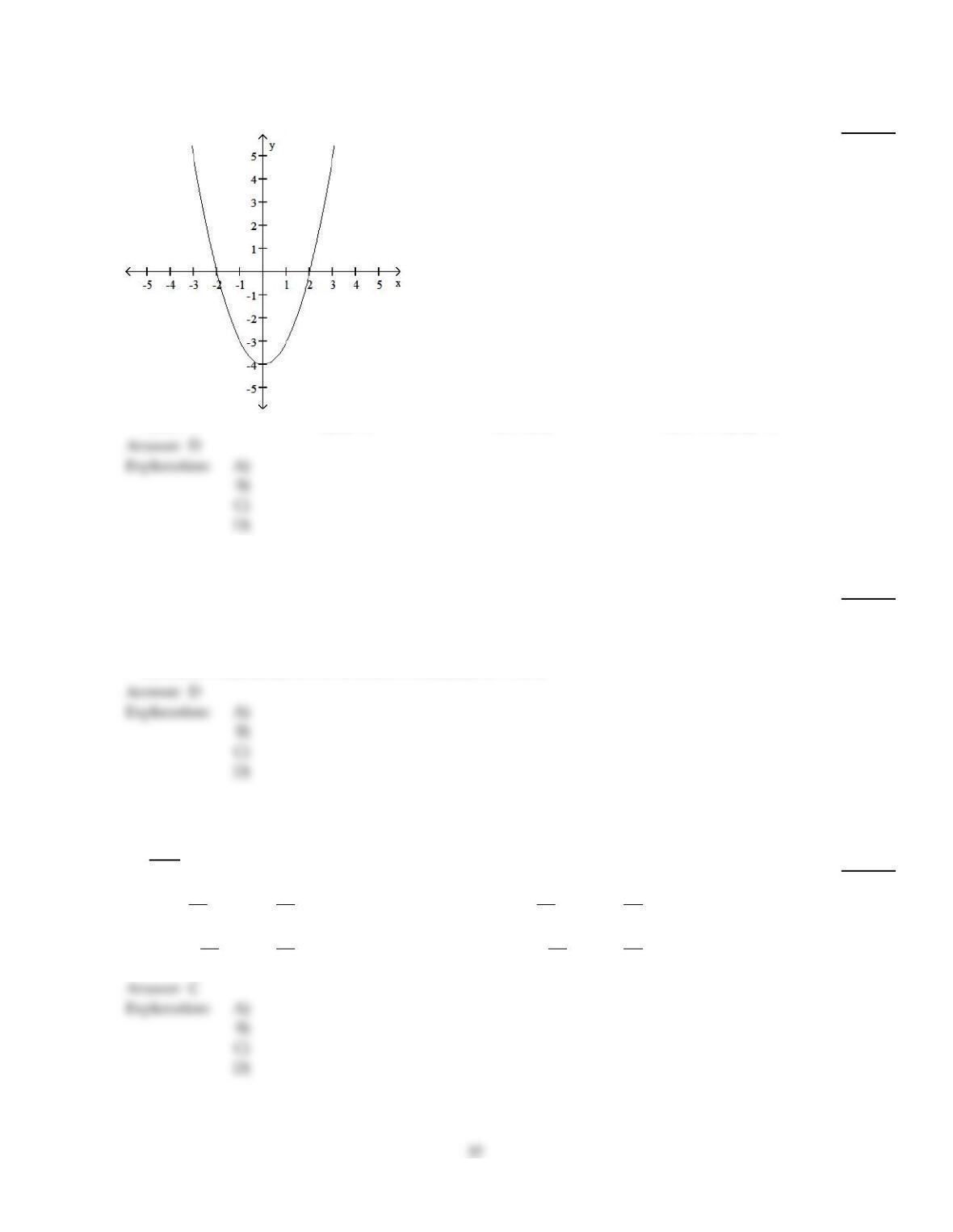
Suppose that the function with the given graph is not f(x), but f (x). Find the open intervals where f(x) is increasing or
decreasing as indicated.
89)
Increasing
89)
A)
(0, )
B)
(2, )
C)
(–2, 2)
D)
( , –2), (2, )
Find the x–value of all points where the function has relative extrema. Find the value(s) of any relative extrema.
90)
f(x) = x3– 3x2+ 1
90)
A)
Relative maximum of 0 at 1; Relative minimum of –3 at –2.
B)
Relative maximum of 1 at 0.
C)
No relative extrema.
D)
Relative maximum of 1 at 0; Relative minimum of –3 at 2.
The function gives the distances (in feet) traveled in time t (in seconds) by a particle. Find the velocity and acceleration at
the given time.
91)
s =1
t + 1 , t =3
91)
A)
v =2
64 ft/s, a = – 1
16 ft/s2
B)
v =1
16 ft/s, a = – 2
64 ft/s2
C)
v = – 1
16 ft/s, a =2
64 ft/s2
D)
v = – 2
64 ft/s, a =1
16 ft/s2
Find the x–value of all points where the function has relative extrema. Find the value(s) of any relative extrema.
92)
f(x) = ln x – x, x > 0
92)
A)
(1, –1), relative maximum
B)
(–1, 0), relative minimum
C)
(–1, –1) relative maximum
D)
(1, 0), relative minimum
D)
Find f”(x) for the function.
93)
f(x) =2x4– 7x2+ 6
93)
A)
24x2– 14
B)
8x2– 14
C)
8x2– 14x
D)
24x2– 14x
A
D)
Find the x–value of all points where the function has relative extrema. Find the value(s) of any relative extrema.
94)
f(x) = x2/5 – 1
94)
A)
Relative minimum of –2 at 0.
B)
Relative minimum of –1 at 0.
C)
Relative maximum of 2 at 10.
D)
No relative extrema.
B
D)
Find the largest open intervals where the function is concave upward.
95)
f(x) =4x –6e–x
95)
A)
( 0 , )
B)
(– , 0 )
C)
( –, )
D)
None
D
D)
Find the requested value of the second derivative of the function.
96)
f(x) =4e–x2; Find f (5) .
96)
A)
408e–50
B)
392e–25
C)
400e25
D)
396e–50
B
D)
A
Solve the problem.
97)
The percent of concentration of a certain drug in the bloodstream x hours after the drug is
administered is given by K(x) =4x
x2+ 64 . At what time is the concentration a maximum?
97)
A)
4 hr
B)
8 hr
C)
3.2 hr
D)
6.4 hr
Identify the open intervals where the function is changing as requested.
98)
Decreasing
98)
A)
(0, –2)
B)
(–, 3)
C)
(–, –2)
D)
(0, 3)
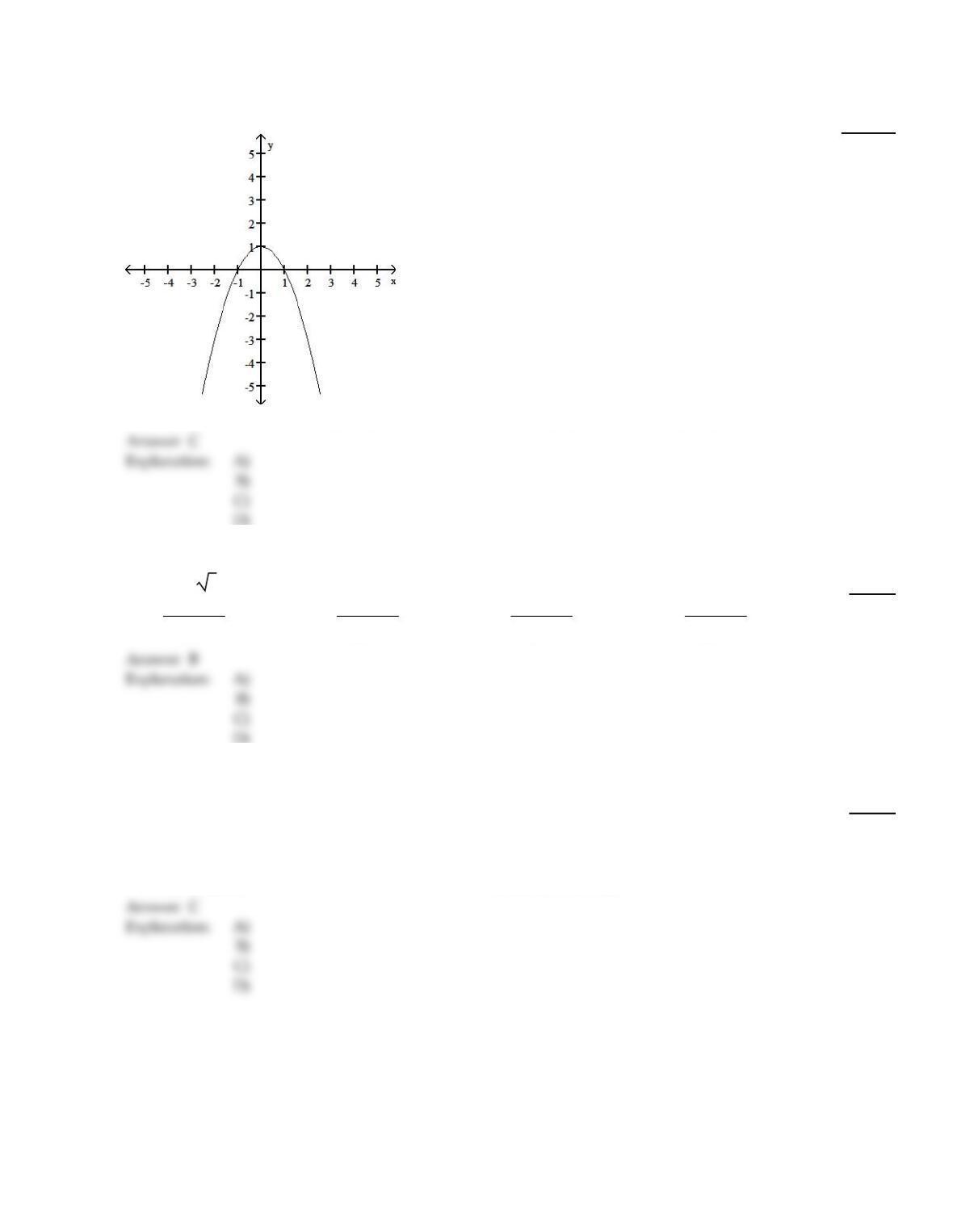
Suppose that the function with the given graph is not f(x), but f (x). Find the open intervals where f(x) is increasing or
decreasing as indicated.
99)
Decreasing
99)
A)
(0, )
B)
(–1, 1)
C)
( , –1), (1, )
D)
( , 0)
D)
Find f”(x) for the function.
100)
f(x) = x2+x
100)
A)
2x3/2 + 1
x3/2
B)
8x3/2 – 1
4x3/2
C)
2x3/2 – 1
x3/2
D)
8x3/2 + 1
4x3/2
B
D)
Solve the problem.
101)
Find the point of diminishing returns (x, y) for the function R(x) =3000 –x3+36x2+700x,
0 x 20, where R(x) represents revenue in thousands of dollars and x represents the amount
spent on advertising in tens of thousands of dollars.
101)
A)
(14 , 17,112)
B)
(55.43, –17,897.38)
C)
(12 , 14,856)
D)
(14.4, 17,558.98)
C
D)
40
C