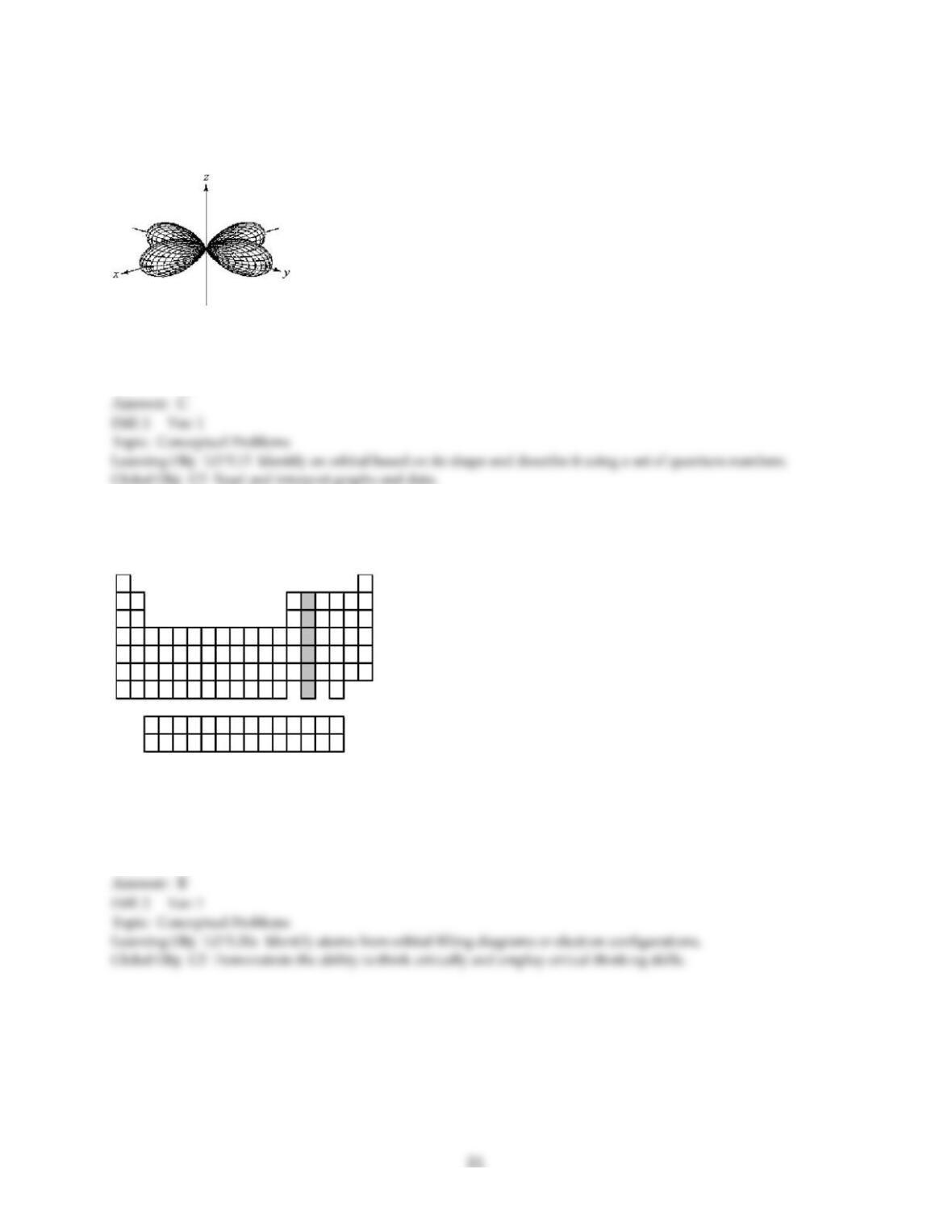
71) For the fourth-shell orbital shown below, what are the principal quantum number, n, and the angular
momentum quantum number, l?
A) n = 4 and l = 0
B) n = 4 and l = 1
C) n = 4 and l = 2
D) n = 4 and l = 3
72) What is the ground-state valence-shell electron configuration of the group of elements indicated by
the shaded portion of the periodic table?
A) ns2
B) ns2np2
C) ns2(n–1)d2
D) ns2(n–2)f2
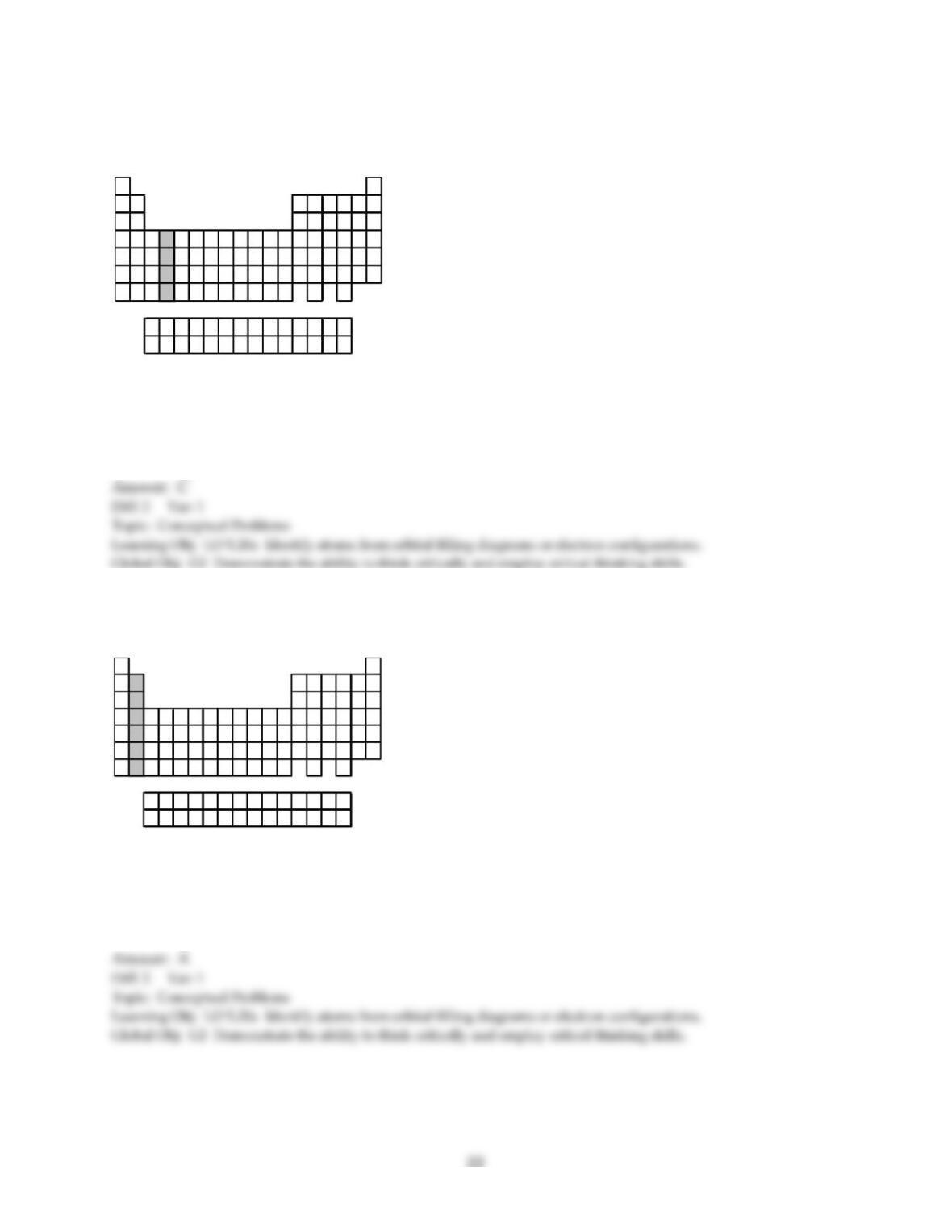
73) What is the ground-state valence-shell electron configuration of the group of elements indicated by
the shaded portion of the periodic table?
A) ns2
B) ns2np2
C) ns2(n–1)d2
D) ns2(n–2)f2
74) What is the ground-state valence-shell electron configuration of the group of elements indicated by
the shaded portion of the periodic table?
A) ns2
B) ns2np2
C) ns2(n–1)d2
D) ns2(n–2)f2
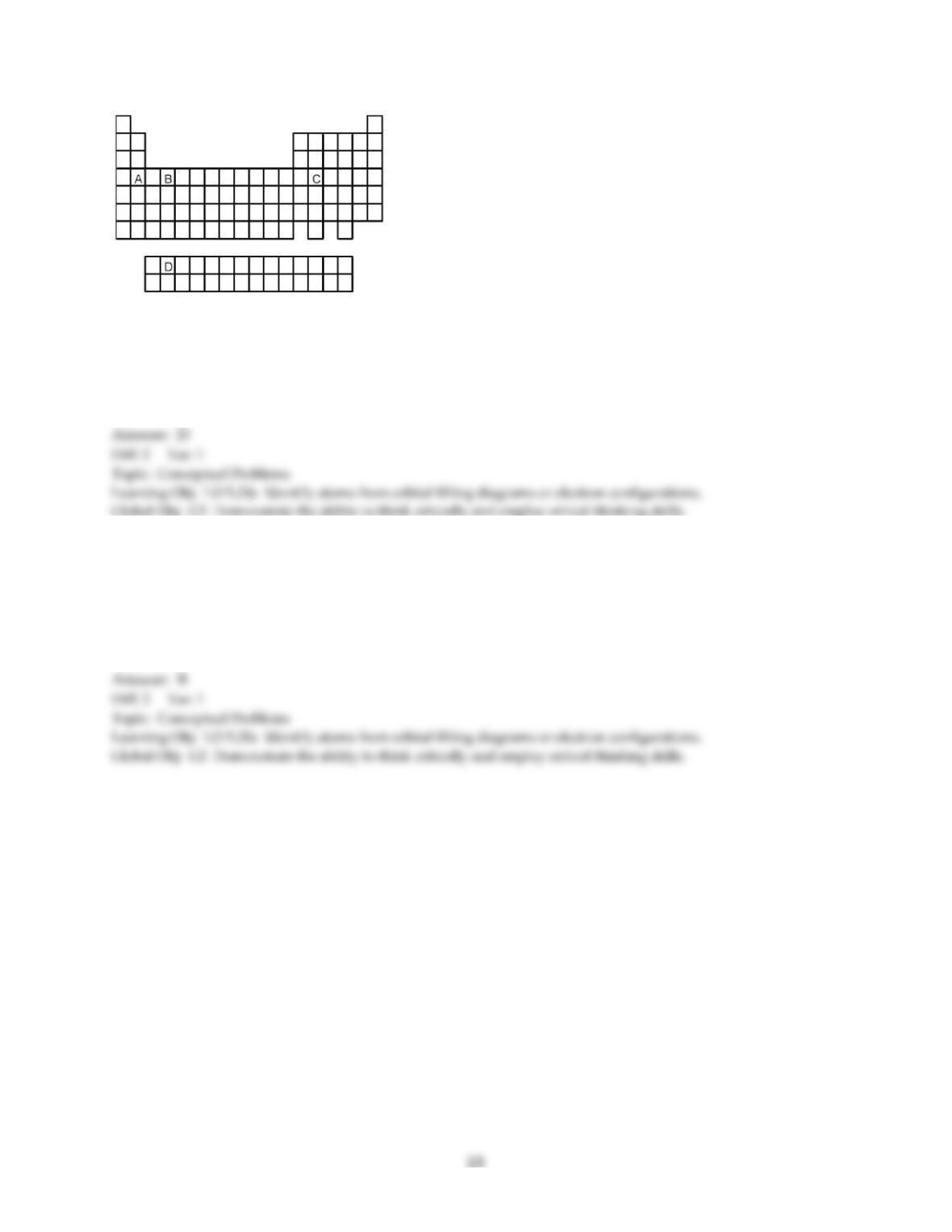
75) Which element, indicated by letter on the periodic table above, contains one f electrons?
A) A
B) B
C) C
D) D
76) Which element, indicated by letter on the periodic table above, has the ground-state electron
configuration [Ar]4s2 3d2?
A) A
B) B
C) C
D) D
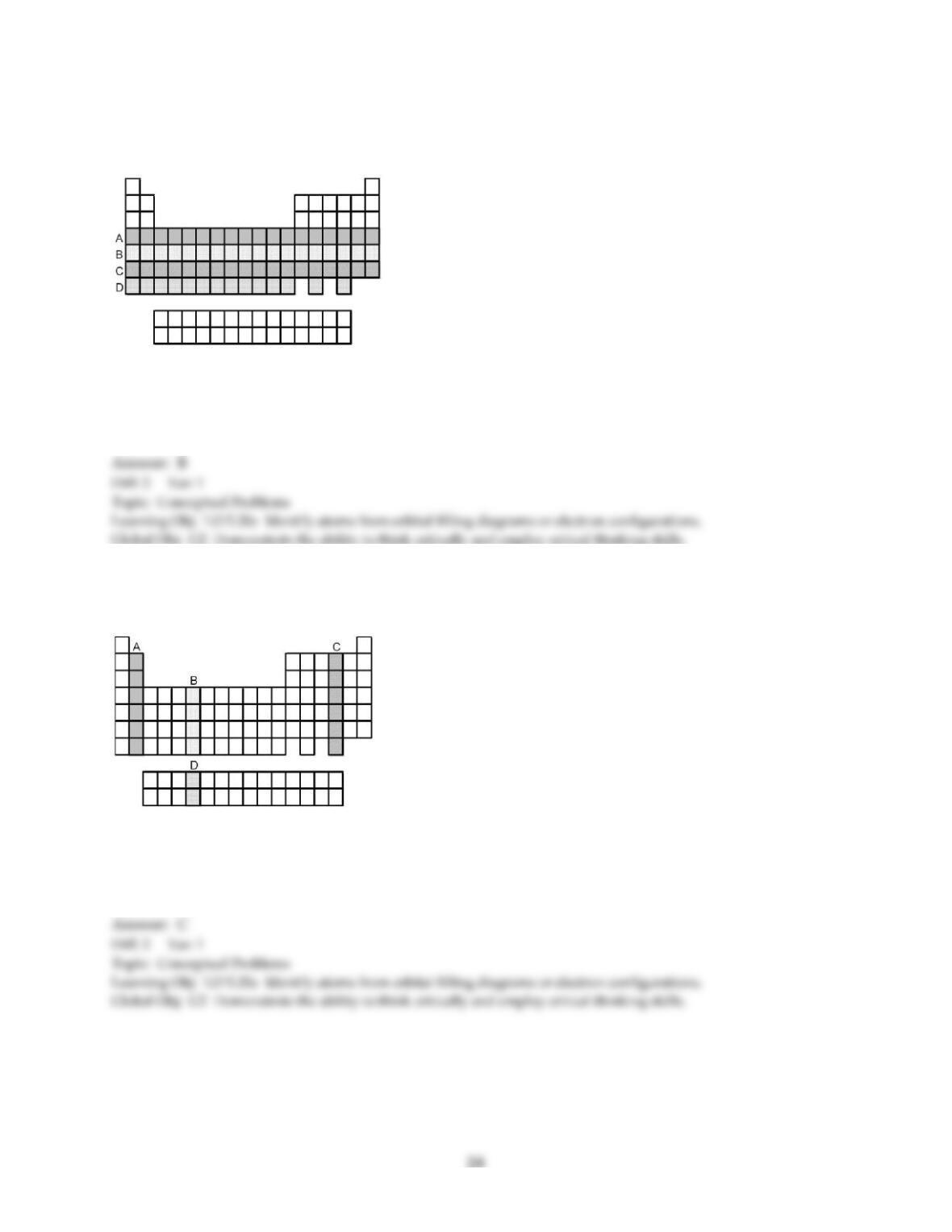
77) Which period of elements, indicated by letter on the periodic table, has electrons whose highest
principal quantum number n is 5?
A) A
B) B
C) C
D) D
78) Which group of elements, indicated by letter on the periodic table, has electrons with the ground-state
valence-shell electron configuration ns2 np4?
A) A
B) B
C) C
D) D
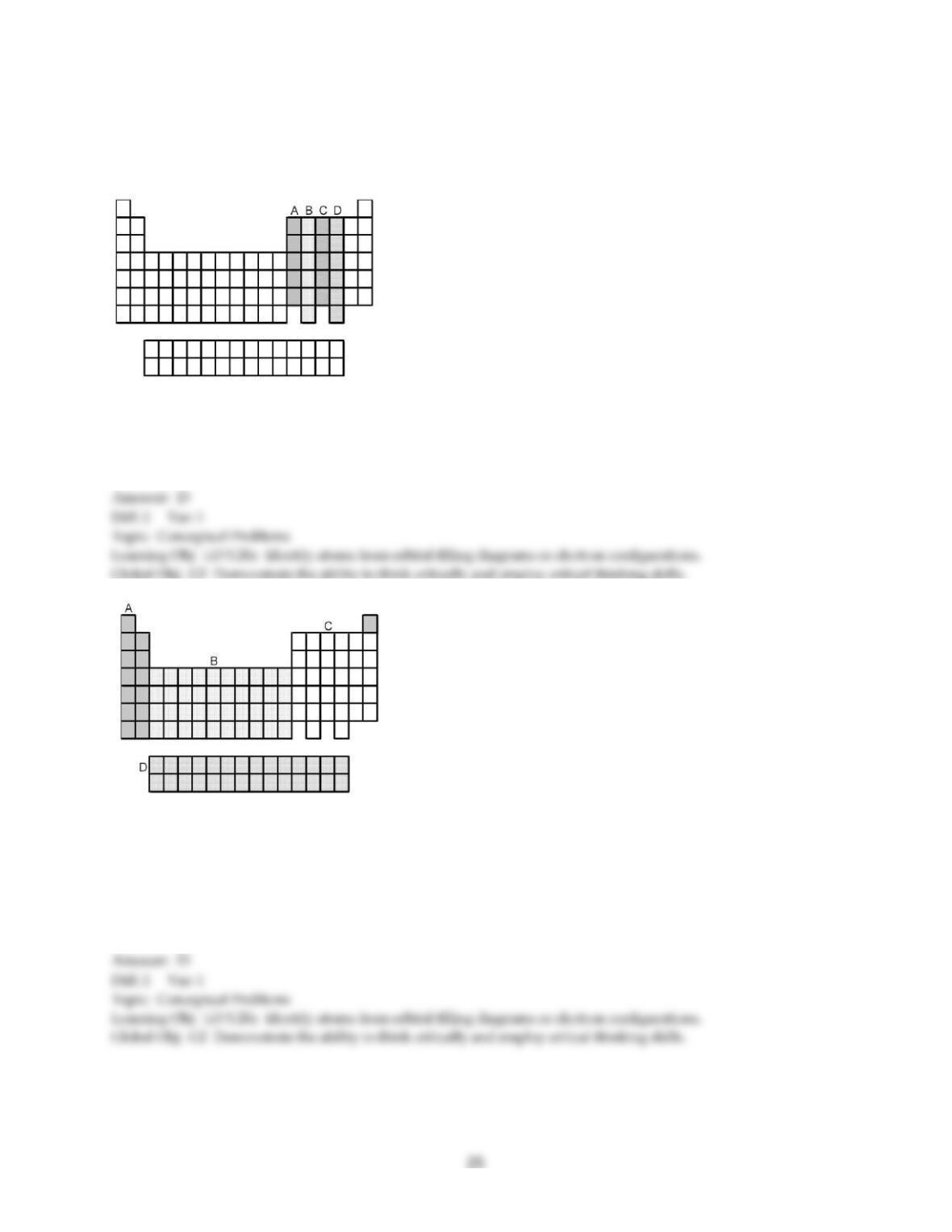
79) Which groups of elements, indicated by letter on the periodic table, have two unpaired p electrons in
their valence shell?
A) A and B
B) A and C
C) B and C
D) B and D
80) Which grouping of elements, indicated by letter on the periodic table above, represents the f–block
elements?
A) A
B) B
C) C
D) D
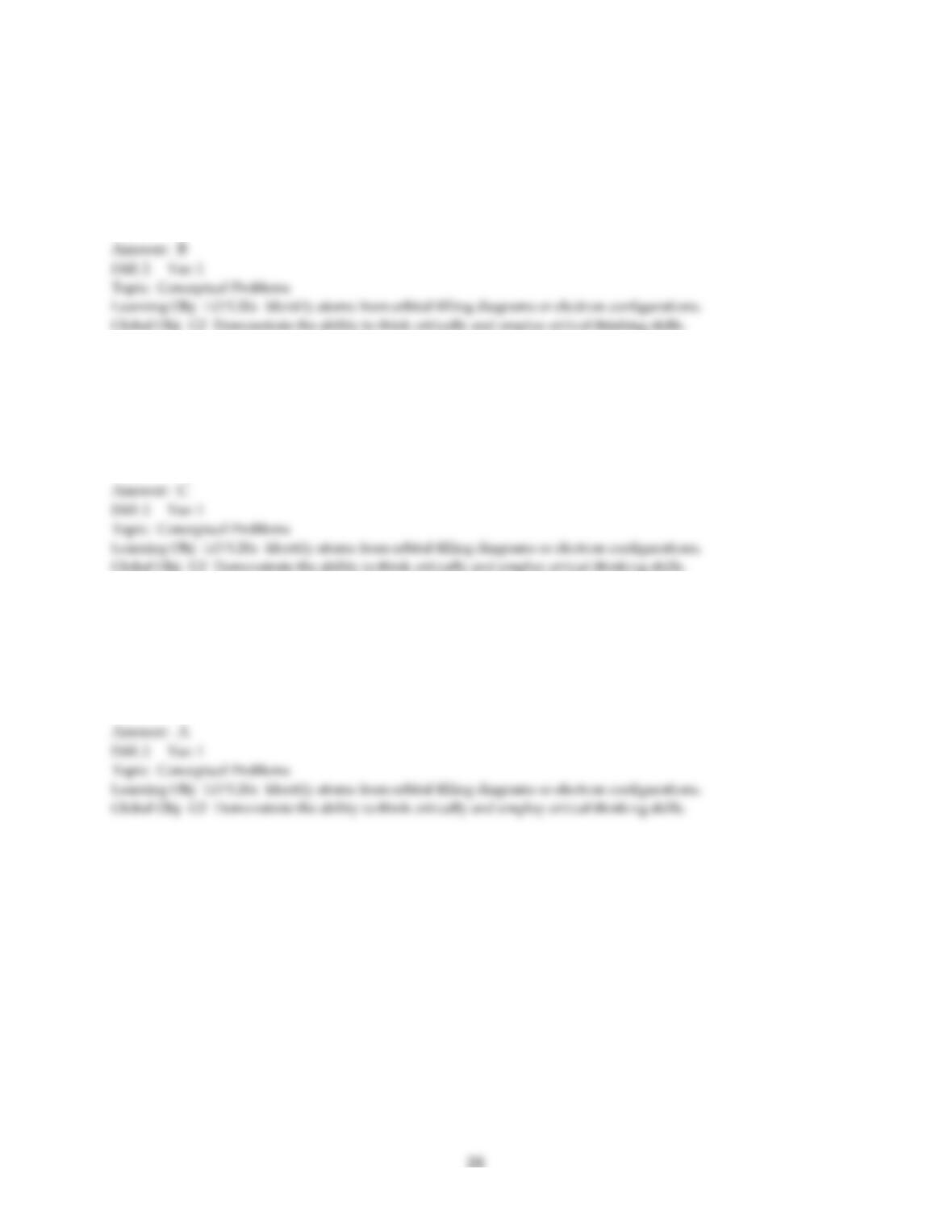
81) Which grouping of elements, indicated by letter on the periodic table above, represents the d–block
elements?
A) A
B) B
C) C
D) D
82) Which grouping of elements, indicated by letter on the periodic table above, represents the p–block
elements?
A) A
B) B
C) C
D) D
83) Which grouping of elements, indicated by letter on the periodic table above, represents the s-block
elements?
A) A
B) B
C) C
D) D
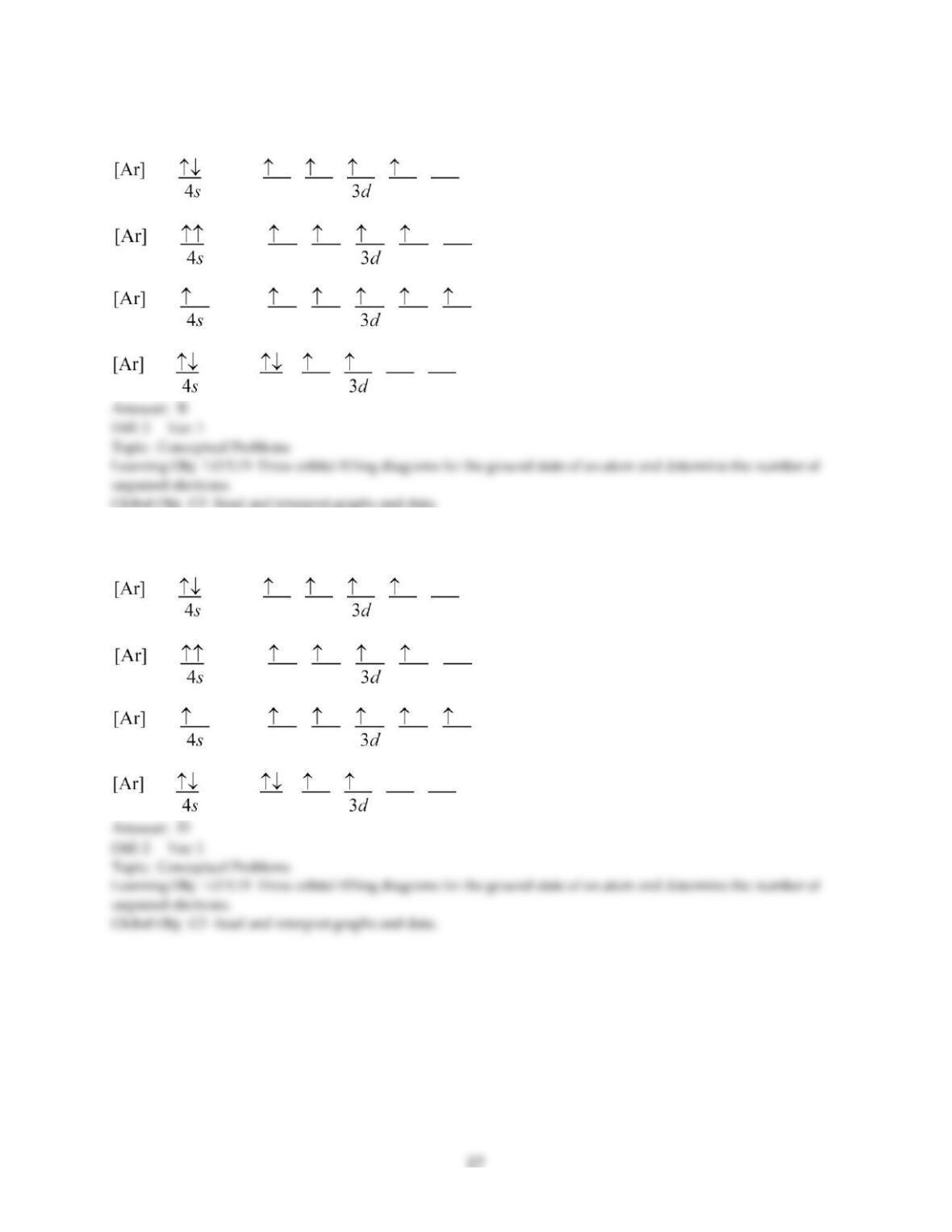
84) Which orbital-filling diagram violates the Pauli exclusion principle?
A)
B)
C)
D)
85) Which orbital-filling diagram violates Hund’s rule?
A)
B)
C)
D)
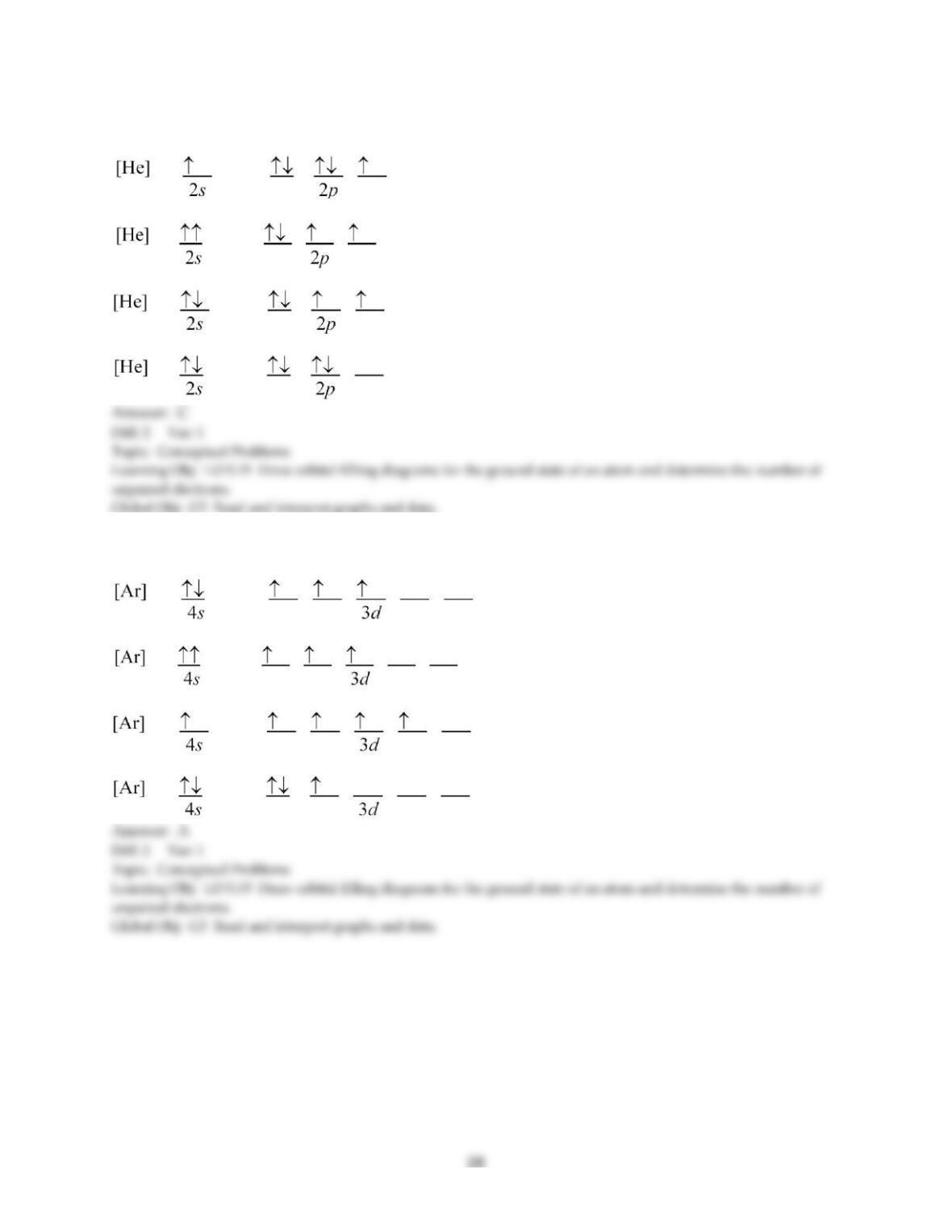
86) Which orbital-filling diagram represents the ground state of oxygen?
A)
B)
C)
D)
87) Which orbital-filling diagram represents the ground state of vanadium?
A)
B)
C)
D)
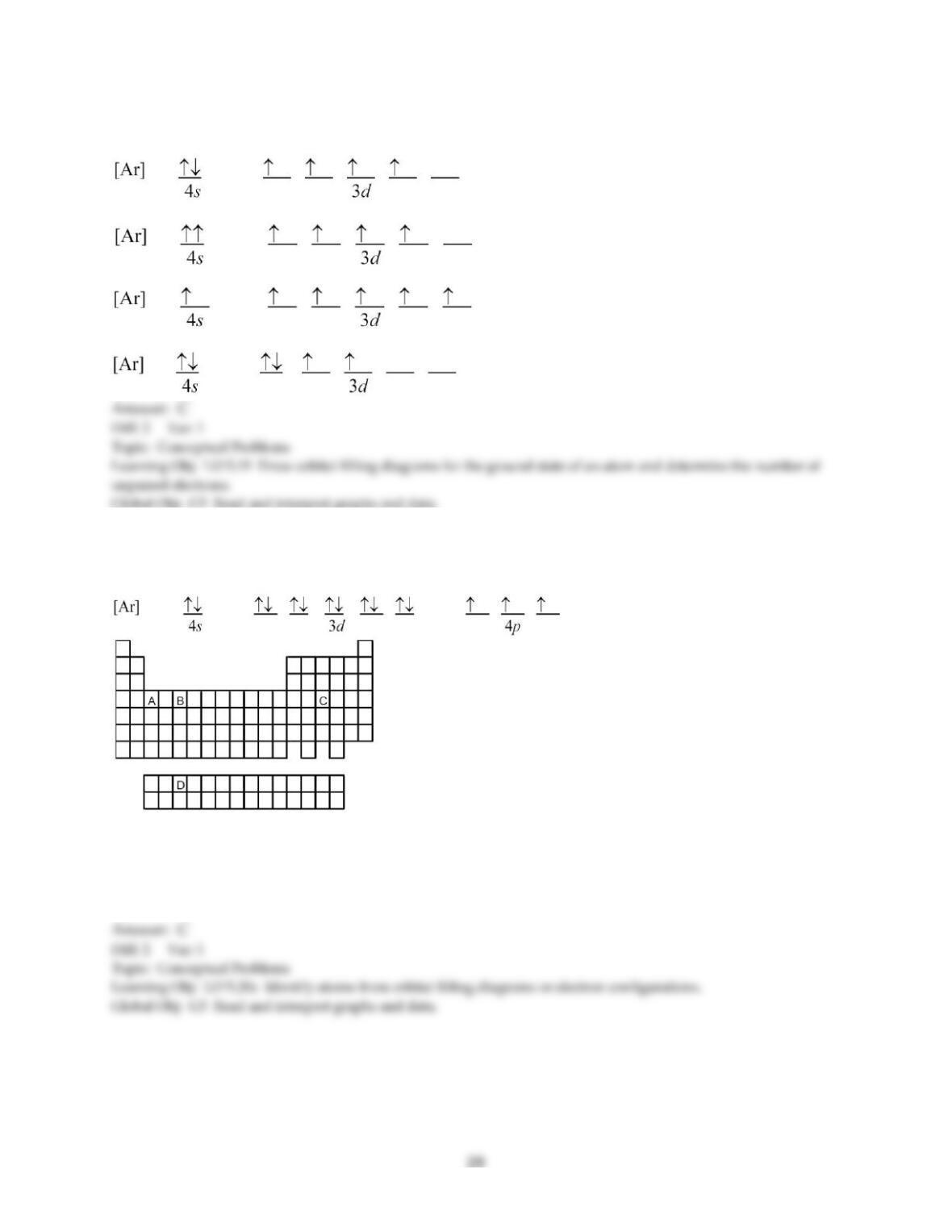
88) Which orbital-filling diagram represents the anomalous ground state of chromium?
A)
B)
C)
D)
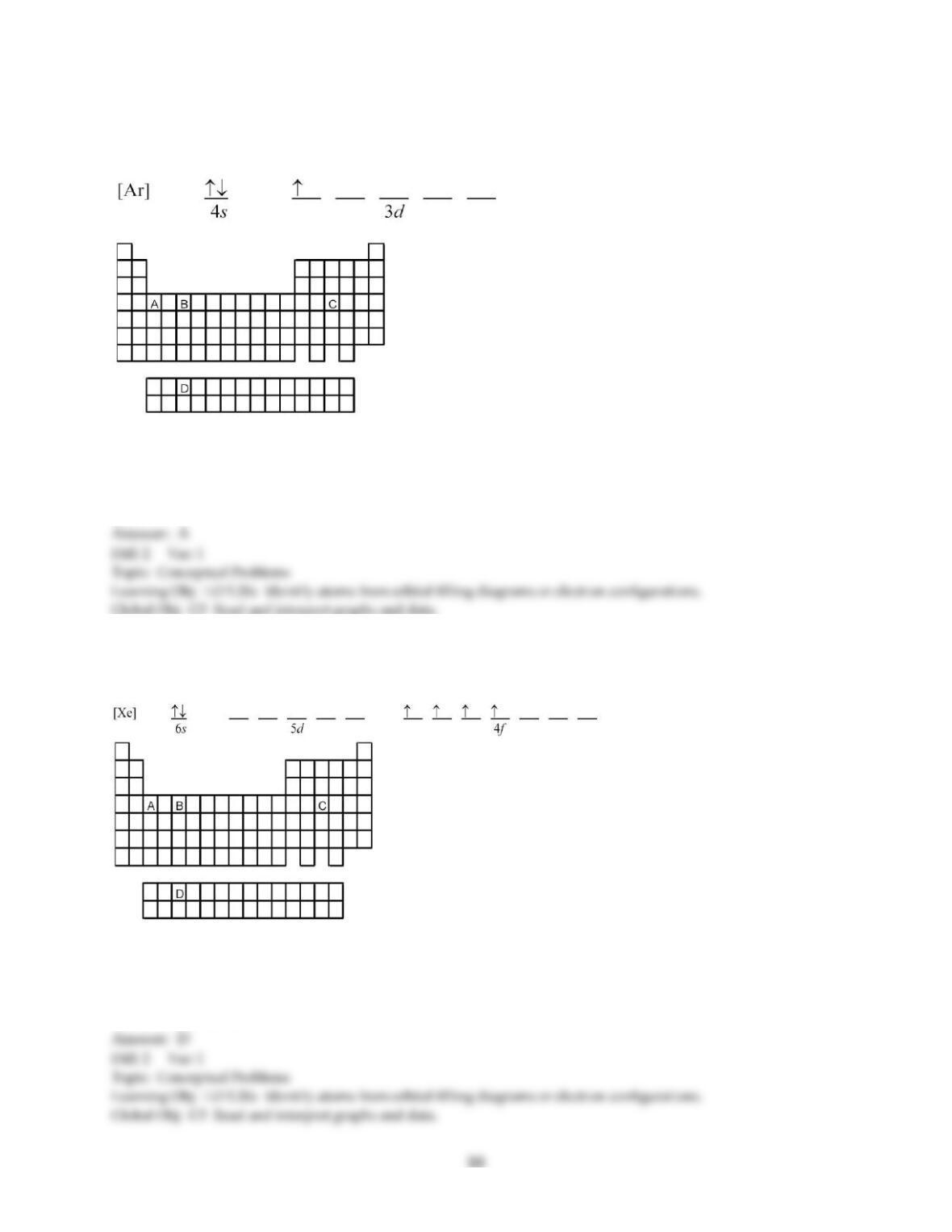
89) Atoms of which element, indicated by letter on the periodic table, have the orbital–filling diagram
shown below?
A) A
B) B
C) C
D) D
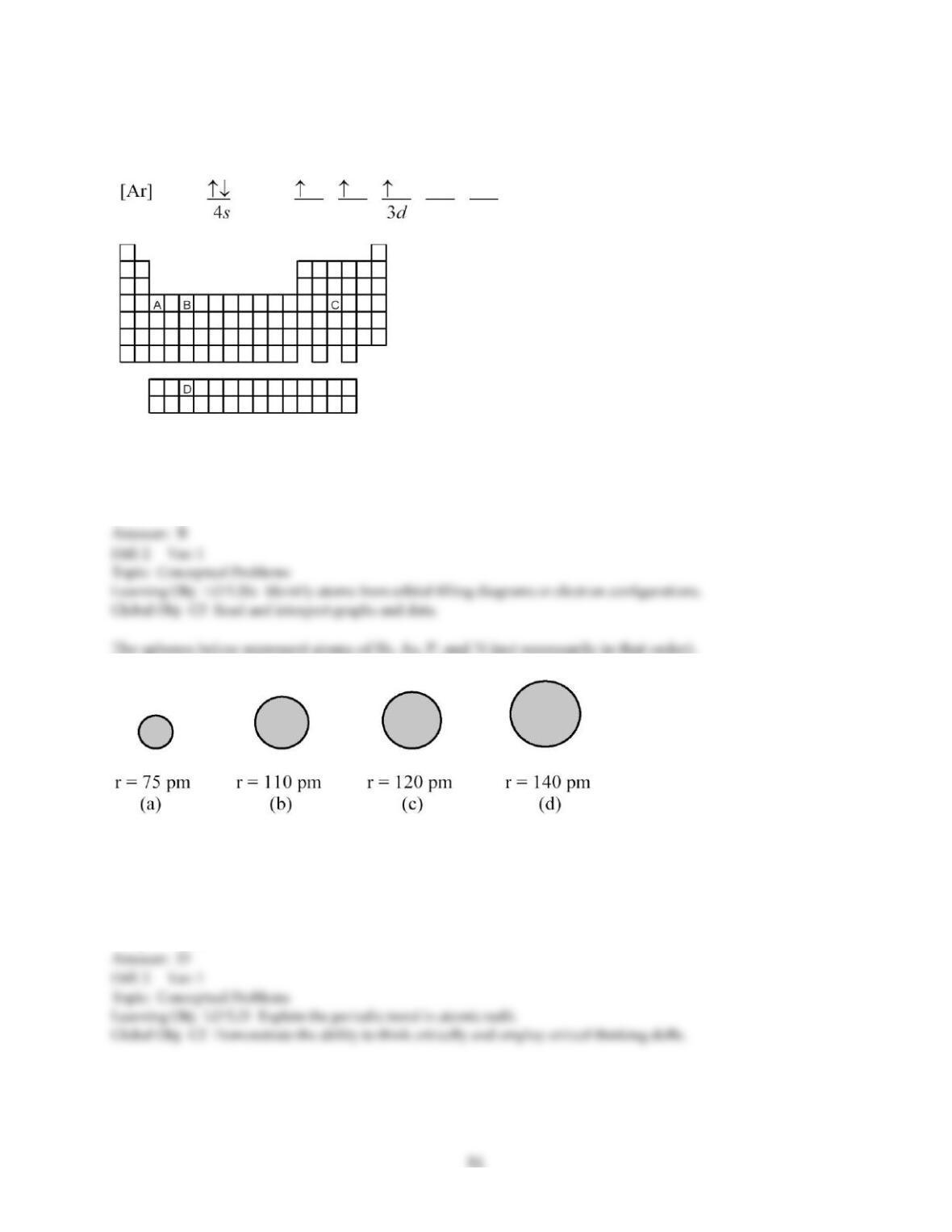
90) Atoms of which element, indicated by letter on the periodic table, have the orbital–filling diagram
shown below?
A) A
B) B
C) C
D) D
91) Atoms of which element, indicated by letter on the periodic table, have the orbital-filling diagram
shown below?
A) B
B) C
C) D
D) None of the above.
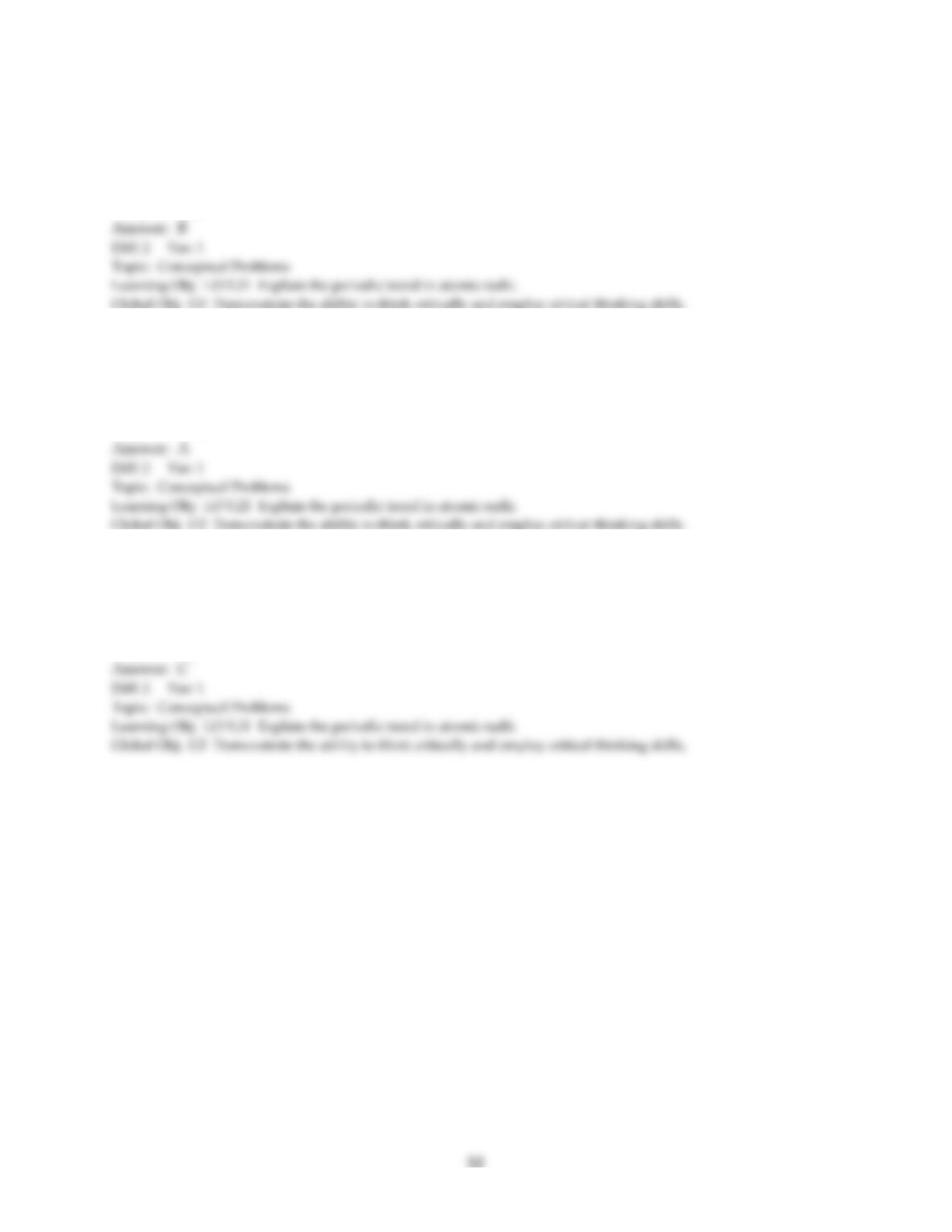
92) Atoms of which element, indicated by letter on the periodic table, have the orbital–filling diagram
shown below?
A) A
B) B
C) C
D) D
93) Which one of these spheres represents an atom of Sb?
A) sphere (a)
B) sphere (b)
C) sphere (c)
D) sphere (d)
94) Which one of these spheres represents an atom of P?
A) sphere (a)
B) sphere (b)
C) sphere (c)
D) sphere (d)
95) Which one of these spheres represents an atom of N?
A) sphere (a)
B) sphere (b)
C) sphere (c)
D) sphere (d)
96) Which one of these spheres represents an atom of As?
A) sphere (a)
B) sphere (b)
C) sphere (c)
D) sphere (d)
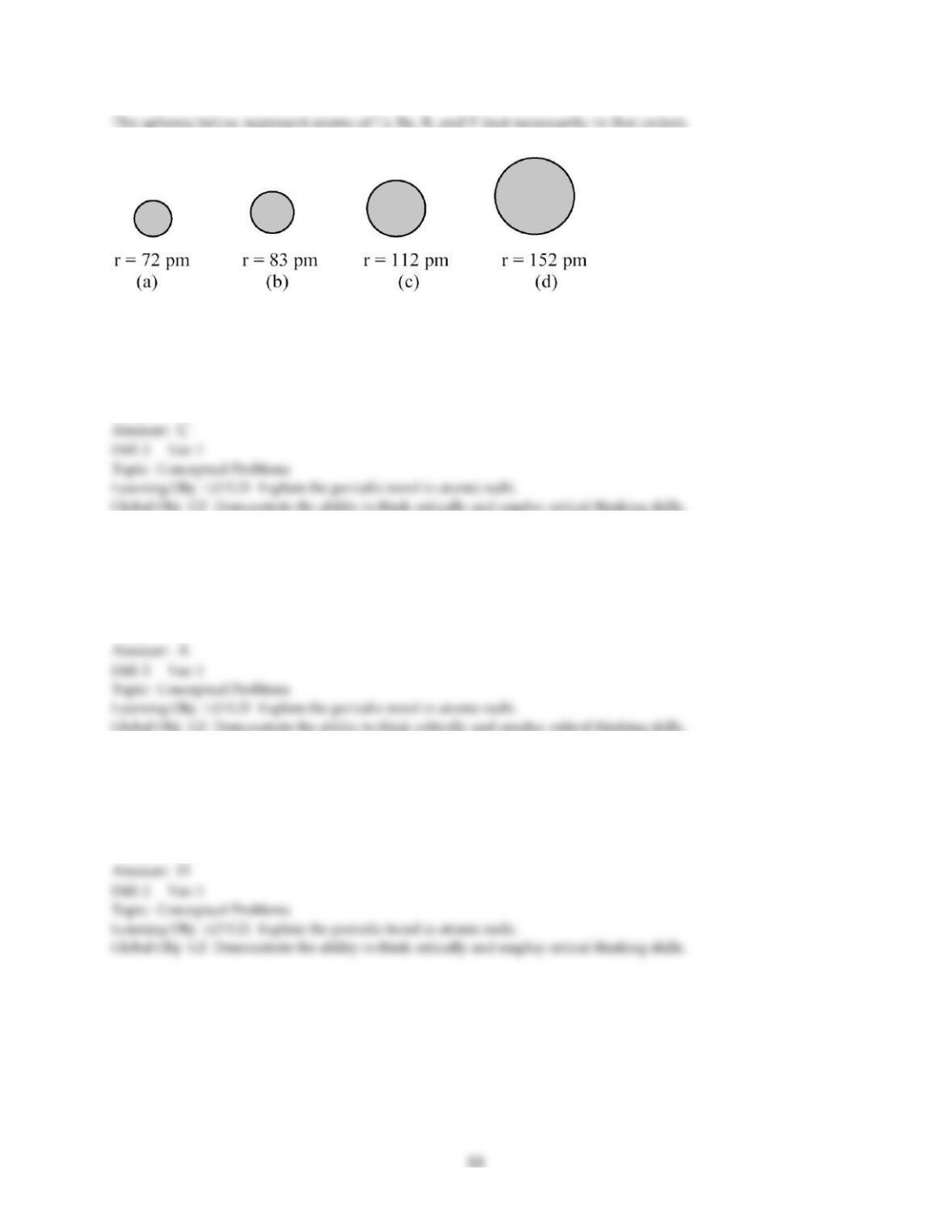
97) Which one of these spheres represents an atom of Be?
A) sphere (a)
B) sphere (b)
C) sphere (c)
D) sphere (d)
98) Which one of these spheres represents an atom of F?
A) sphere (a)
B) sphere (b)
C) sphere (c)
D) sphere (d)
99) Which one of these spheres represents an atom of Li?
A) sphere (a)
B) sphere (b)
C) sphere (c)
D) sphere (d)
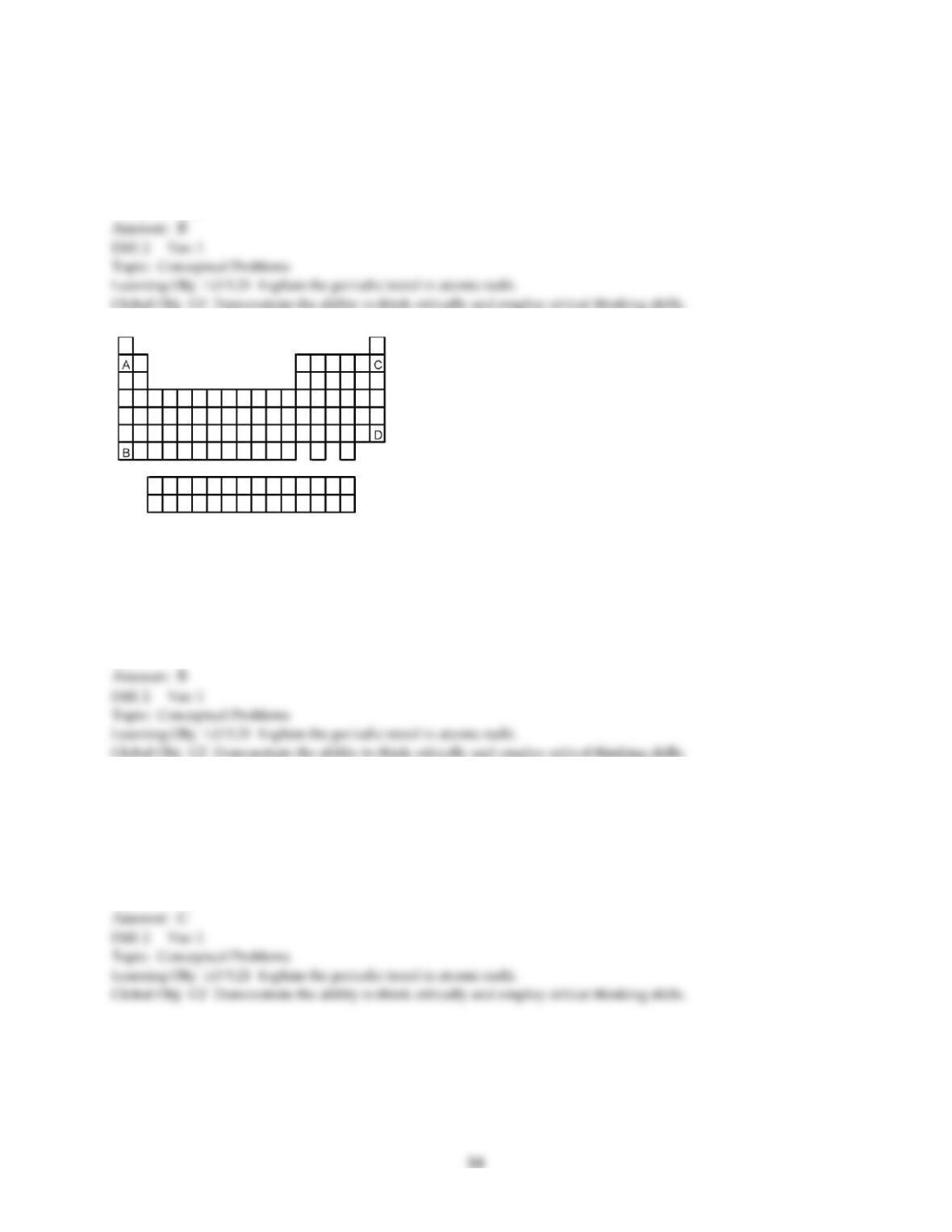
100) Which one of these spheres represents an atom of B?
A) sphere (a)
B) sphere (b)
C) sphere (c)
D) sphere (d)
101) Atoms of which element, indicated by letter on the periodic table, are expected to have the largest
atomic radius?
A) A
B) B
C) C
D) D
102) Atoms of which element, indicated by letter on the periodic table, is expected to have the smallest
atomic radius?
A) A
B) B
C) C
D) D
5.2 Algorithmic Questions
1) Dentists employ light-cured materials to fill cavities. The wavelength of electromagnetic radiation used
to photopolymerize restorative materials falls in the ultraviolet or visible region, depending on the
instrument employed. Which of these wavelengths is in the UV region?
A) 31 nm
B) 300 nm
C) 440 nm
D) 840 nm
2) A person is most likely to experience serious tissue damage when exposed to which of the following
forms of electromagnetic radiation?
A) microwaves
B) ultraviolet
C) radio waves
D) x-rays
3) What is the energy of a wavelength of light of 550 nm?
A) 1.09 × 10⁻³¹ J
B) 3.61 × 10–37 J
C) 3.61 × 10⁻¹⁹ J
D) 1.09 × 10⁻²² J