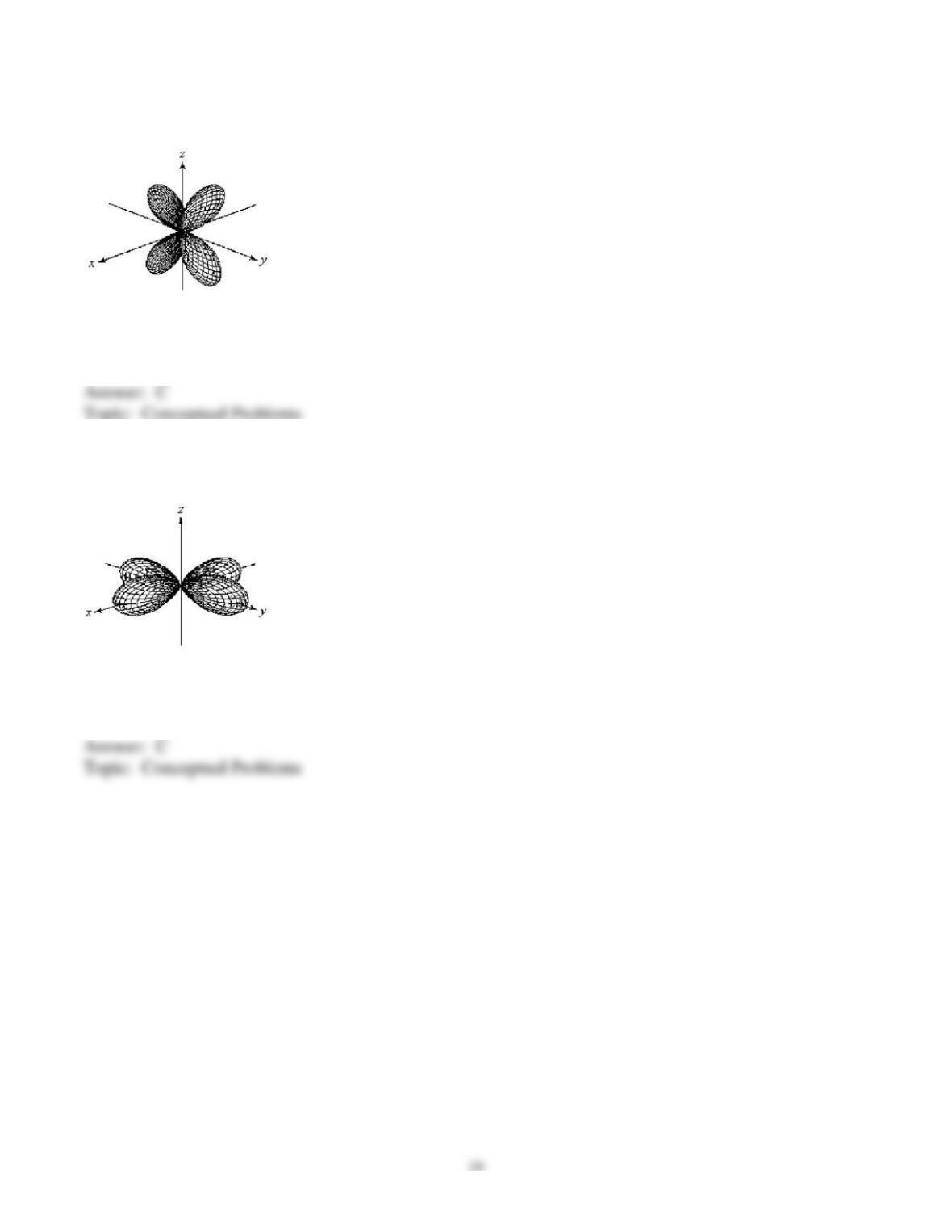
88) For the fourth-shell orbital shown below, what are the principal quantum number, n, and the angular
momentum quantum number, l?
A) n = 4 and l = 0
B) n = 4 and l = 1
C) n = 4 and l = 2
D) n = 4 and l = 3
89) For the fourth-shell orbital shown below, what are the principal quantum number, n, and the angular
momentum quantum number, l?
A) n = 4 and l = 0
B) n = 4 and l = 1
C) n = 4 and l = 2
D) n = 4 and l = 3
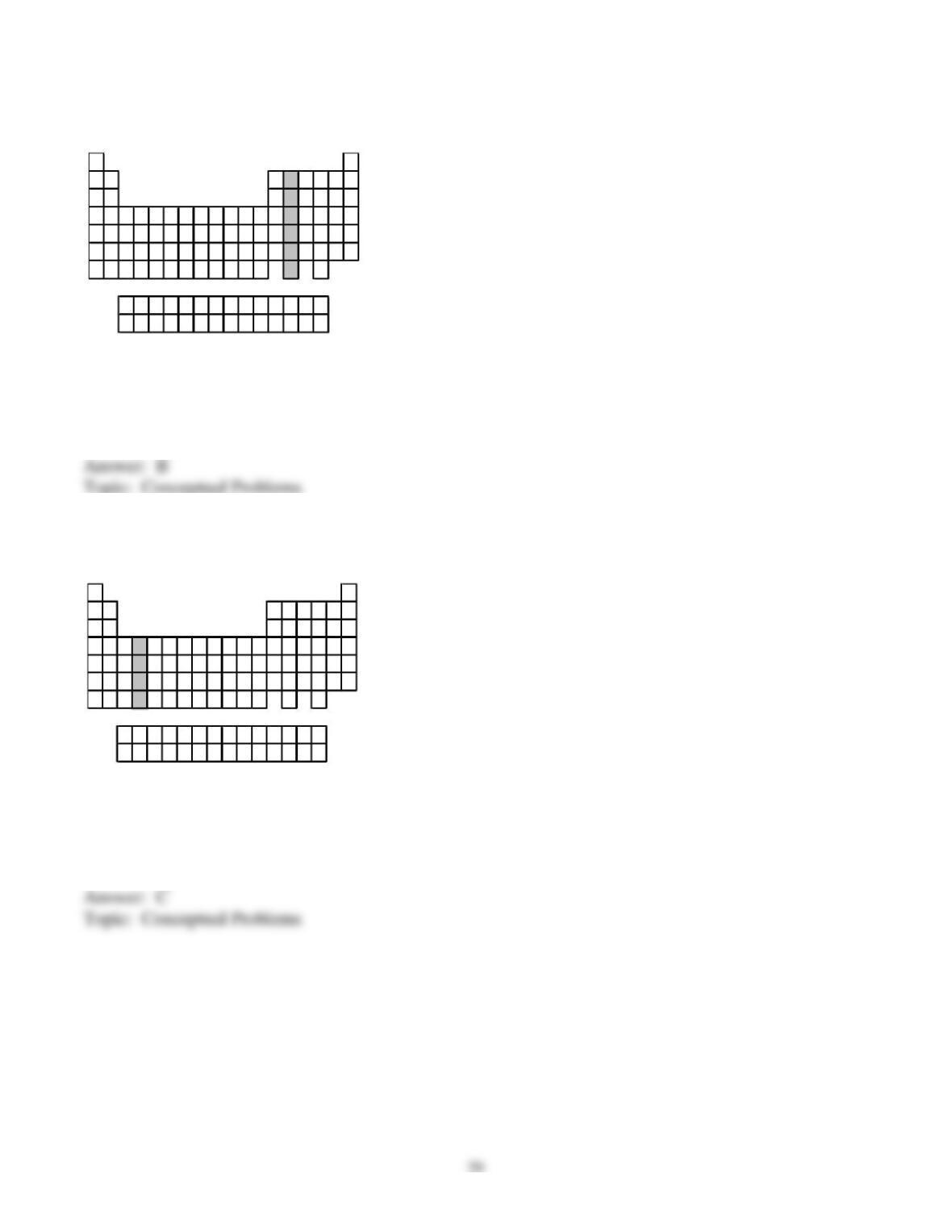
90) What is the ground-state valence-shell electron configuration of the group of elements indicated by
the shaded portion of the periodic table?
A) ns2
B) ns2np2
C) ns2(n-1)d2
D) ns2(n-2)f2
91) What is the ground-state valence-shell electron configuration of the group of elements indicated by
the shaded portion of the periodic table?
A) ns2
B) ns2np2
C) ns2(n-1)d2
D) ns2(n-2)f2
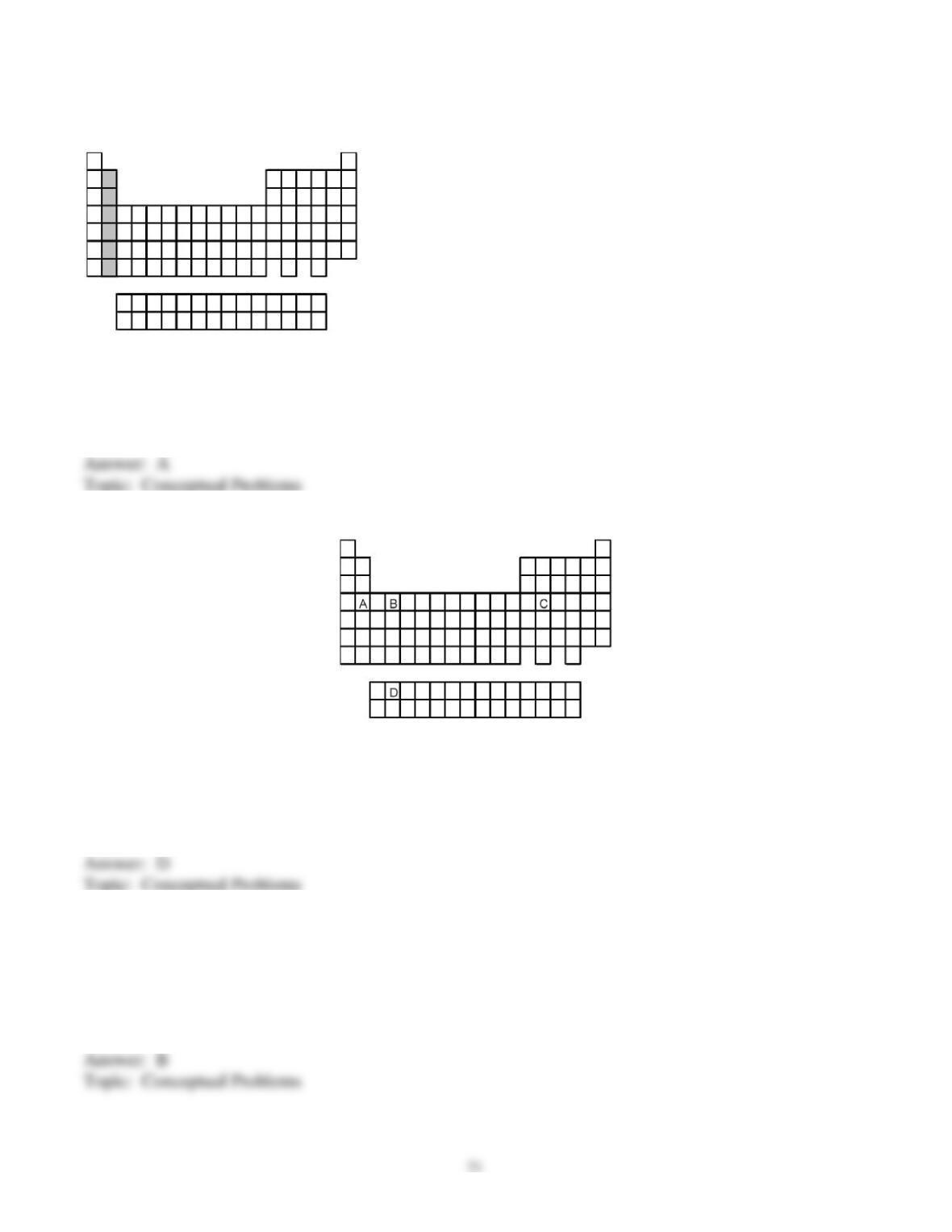
92) What is the ground-state valence-shell electron configuration of the group of elements indicated by
the shaded portion of the periodic table?
A) ns2
B) ns2np2
C) ns2(n-1)d2
D) ns2(n-2)f2
93) Which element, indicated by letter on the periodic table above, contains three f electrons?
A) A
B) B
C) C
D) D
94) Which element, indicated by letter on the periodic table above, has the ground-state electron
configuration [Ar]4s2 3d2?
A) A
B) B
C) C
D) D
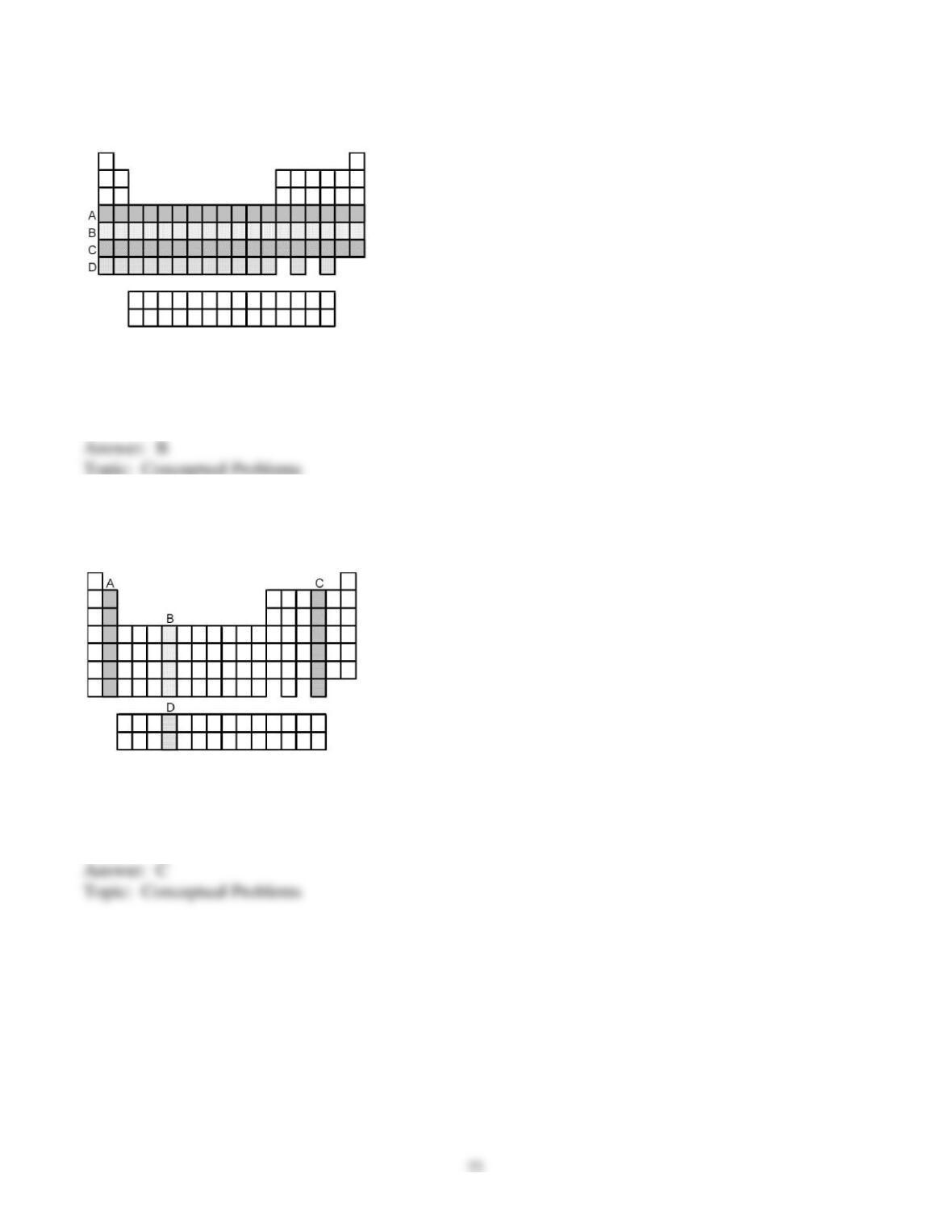
95) Which period of elements, indicated by letter on the periodic table, has electrons whose highest
principal quantum number n is 5?
A) A
B) B
C) C
D) D
96) Which group of elements, indicated by letter on the periodic table, has electrons with the ground-
state valence-shell electron configuration ns2 np4?
A) A
B) B
C) C
D) D
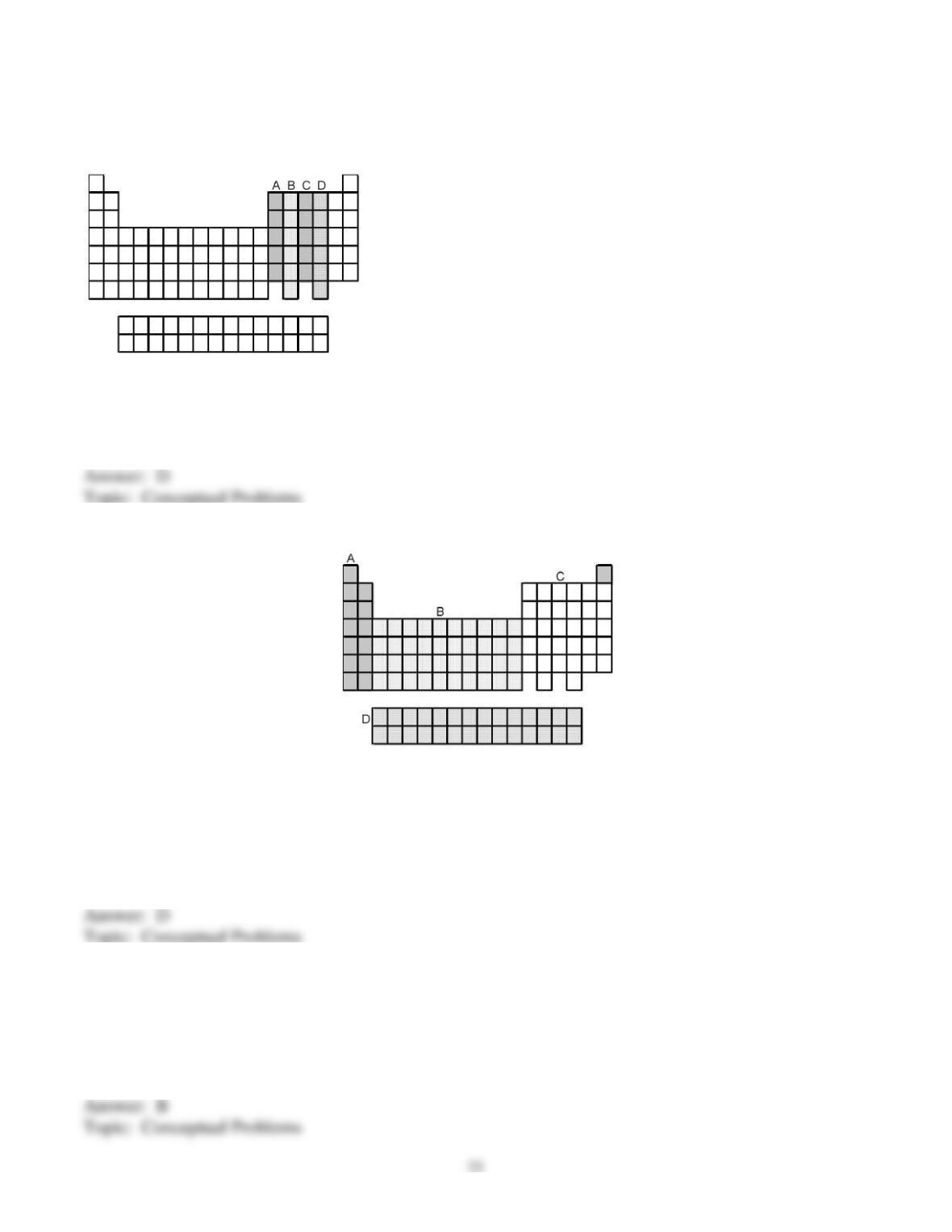
97) Which groups of elements, indicated by letter on the periodic table, have two unpaired p electrons in
their valence shell?
A) A and B
B) A and C
C) B and C
D) B and D
98) Which grouping of elements, indicated by letter on the periodic table above, represents the f-block
elements?
A) A
B) B
C) C
D) D
99) Which grouping of elements, indicated by letter on the periodic table above, represents the d-block
elements?
A) A
B) B
C) C
D) D
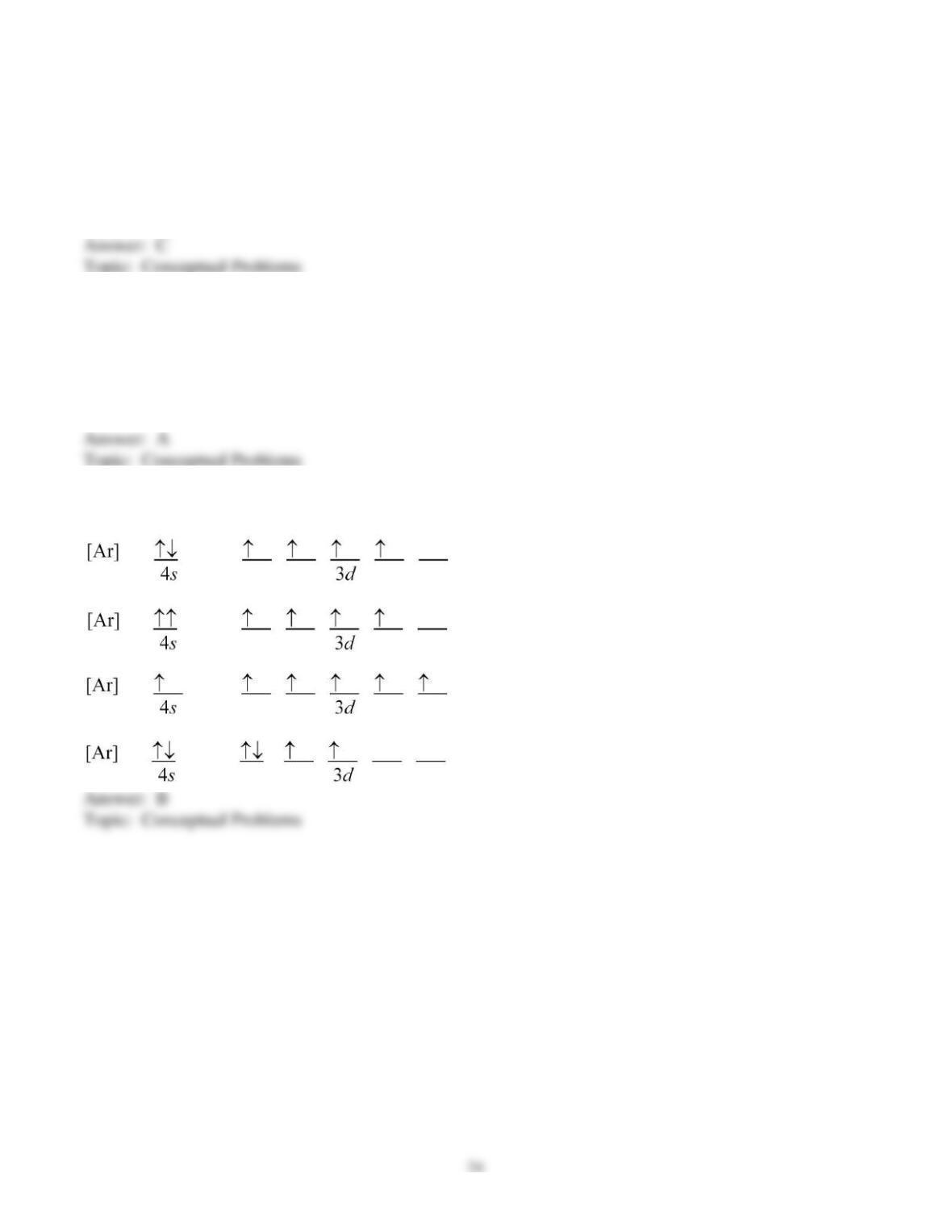
100) Which grouping of elements, indicated by letter on the periodic table above, represents the p-block
elements?
A) A
B) B
C) C
D) D
101) Which grouping of elements, indicated by letter on the periodic table above, represents the s-block
elements?
A) A
B) B
C) C
D) D
102) Which orbital-filling diagram violates the Pauli exclusion principle?
A)
B)
C)
D)
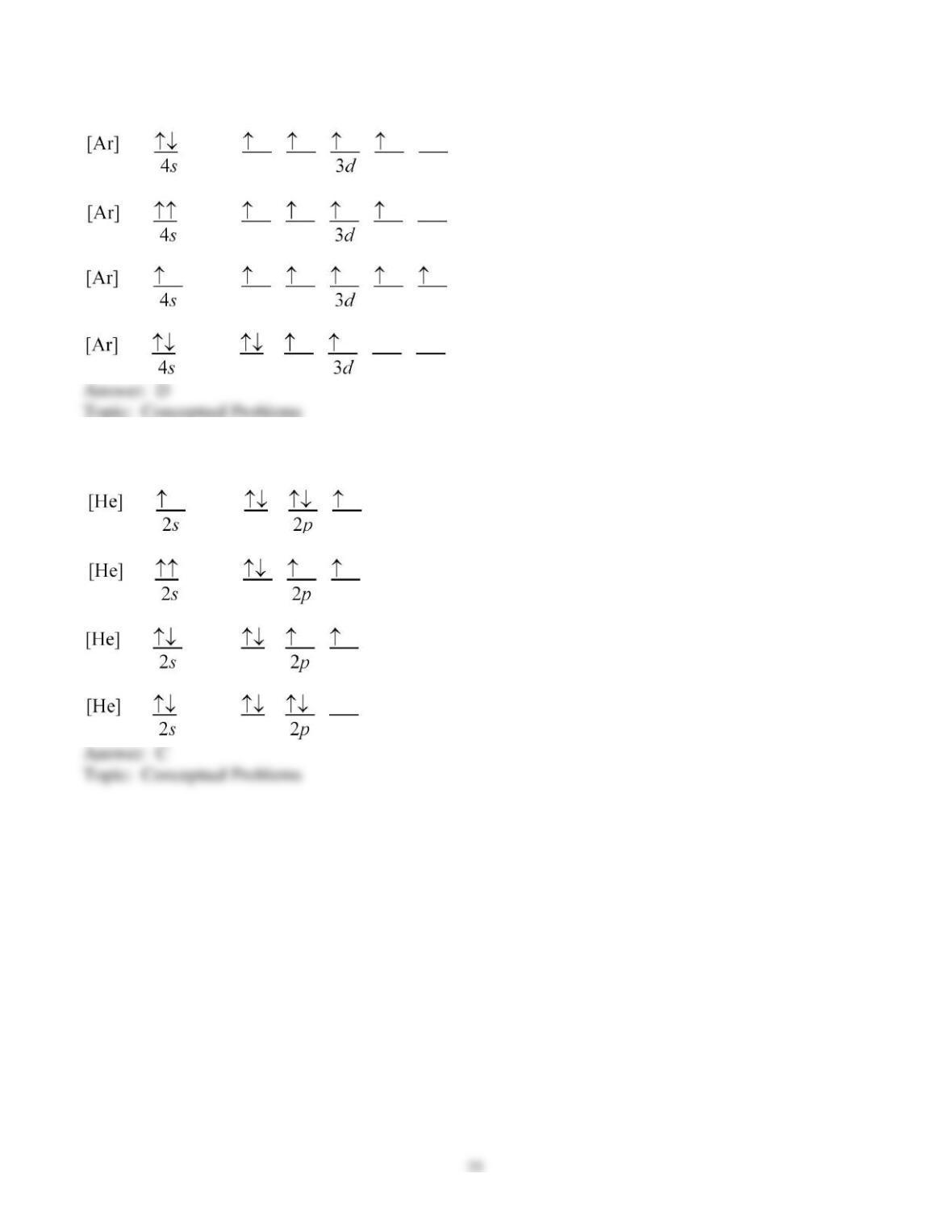
103) Which orbital-filling diagram violates Hund’s rule?
A)
B)
C)
D)
104) Which orbital-filling diagram represents the ground state of oxygen?
A)
B)
C)
D)
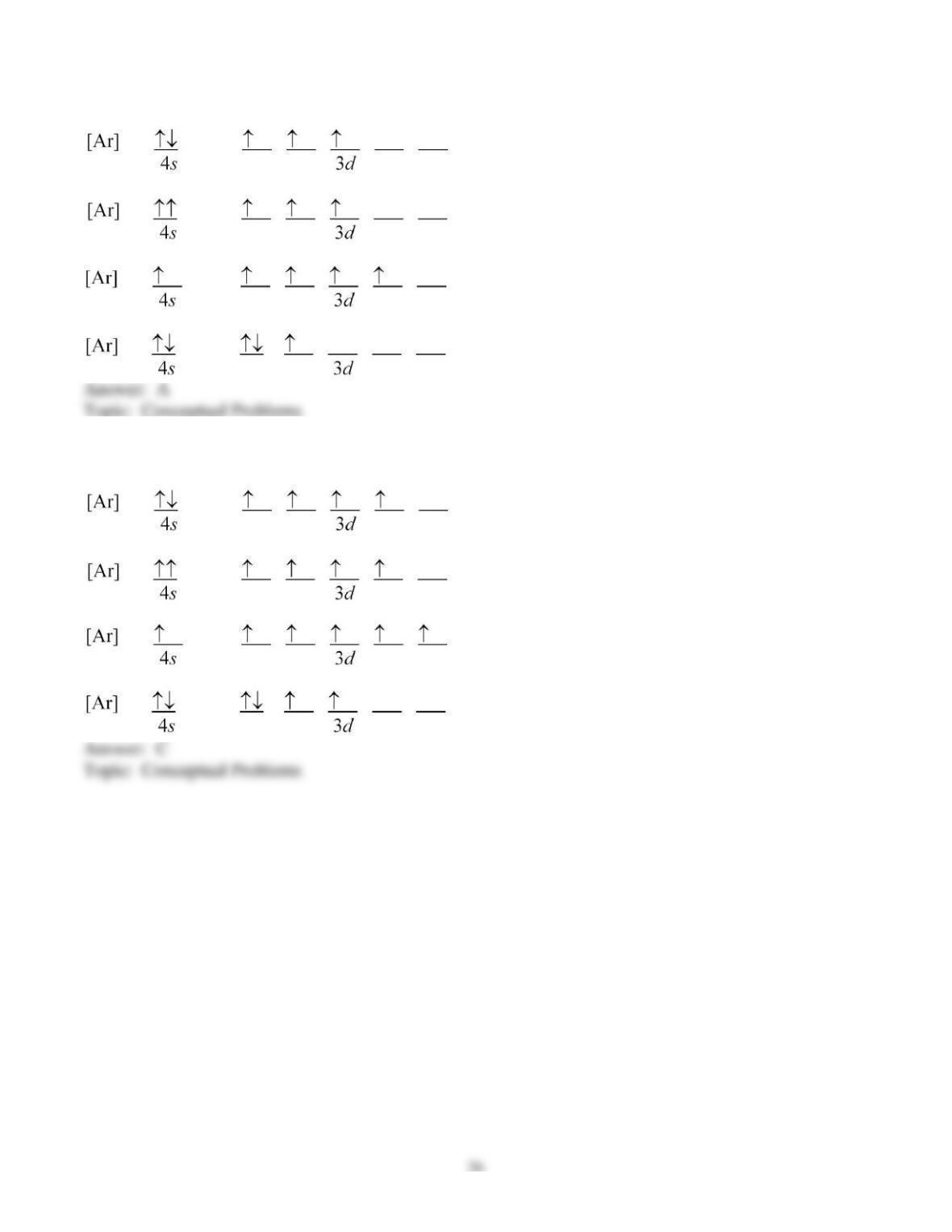
105) Which orbital-filling diagram represents the ground state of vanadium?
A)
B)
C)
D)
106) Which orbital-filling diagram represents the anomalous ground state of chromium?
A)
B)
C)
D)
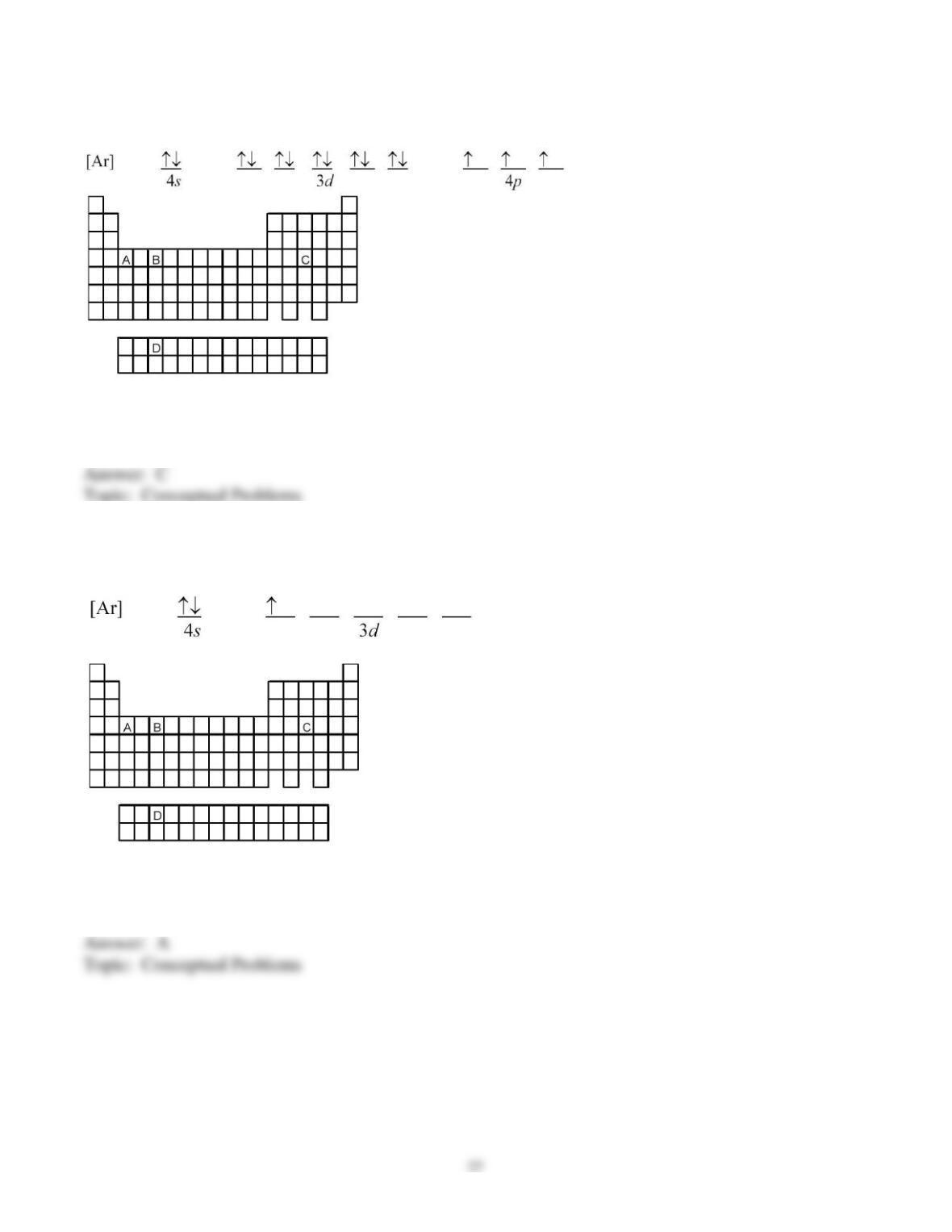
107) Atoms of which element, indicated by letter on the periodic table, have the orbital-filling diagram
shown below?
A) A
B) B
C) C
D) D
108) Atoms of which element, indicated by letter on the periodic table, have the orbital-filling diagram
shown below?
A) A
B) B
C) C
D) D
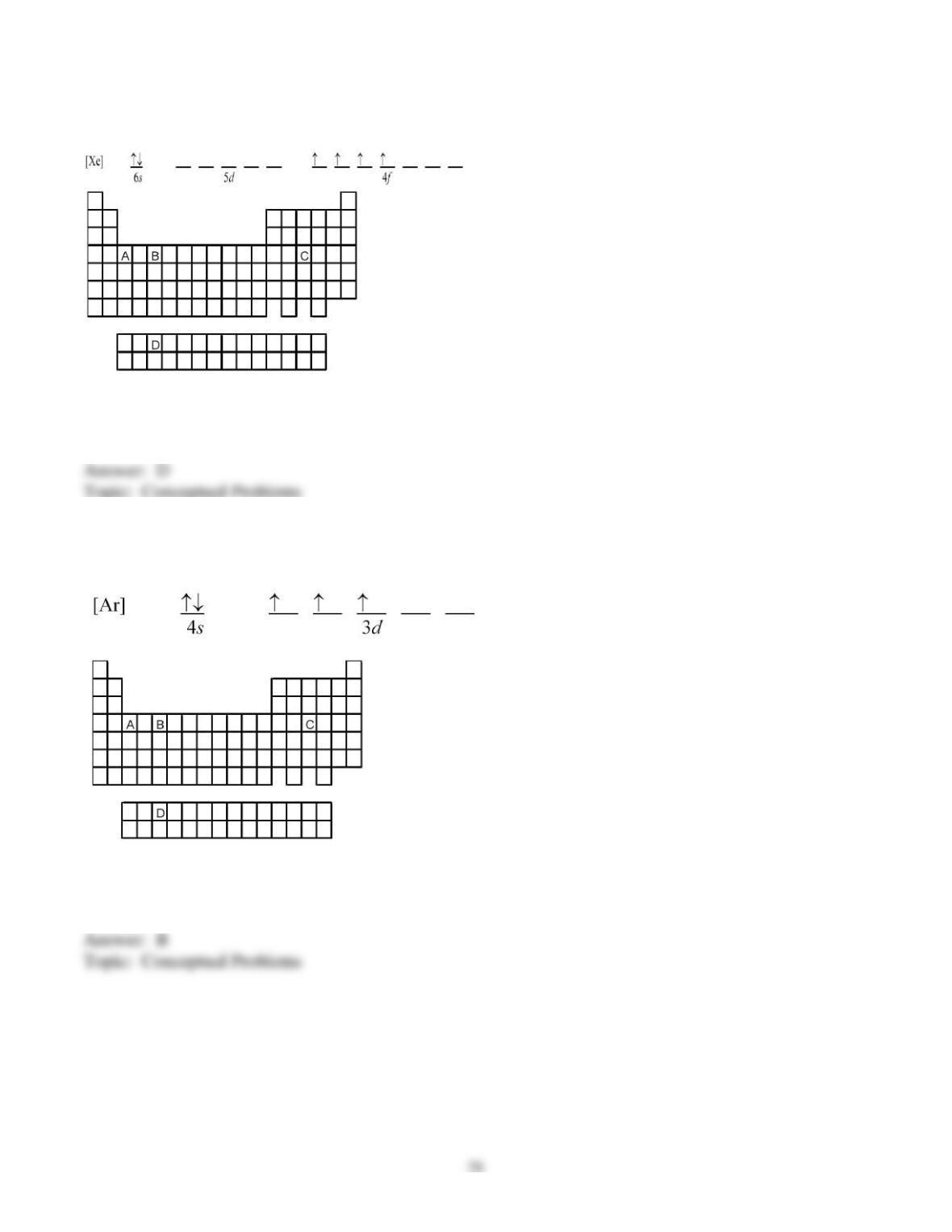
109) Atoms of which element, indicated by letter on the periodic table, have the orbital-filling diagram
shown below?
A) A
B) B
C) C
D) D
110) Atoms of which element, indicated by letter on the periodic table, have the orbital-filling diagram
shown below?
A) A
B) B
C) C
D) D
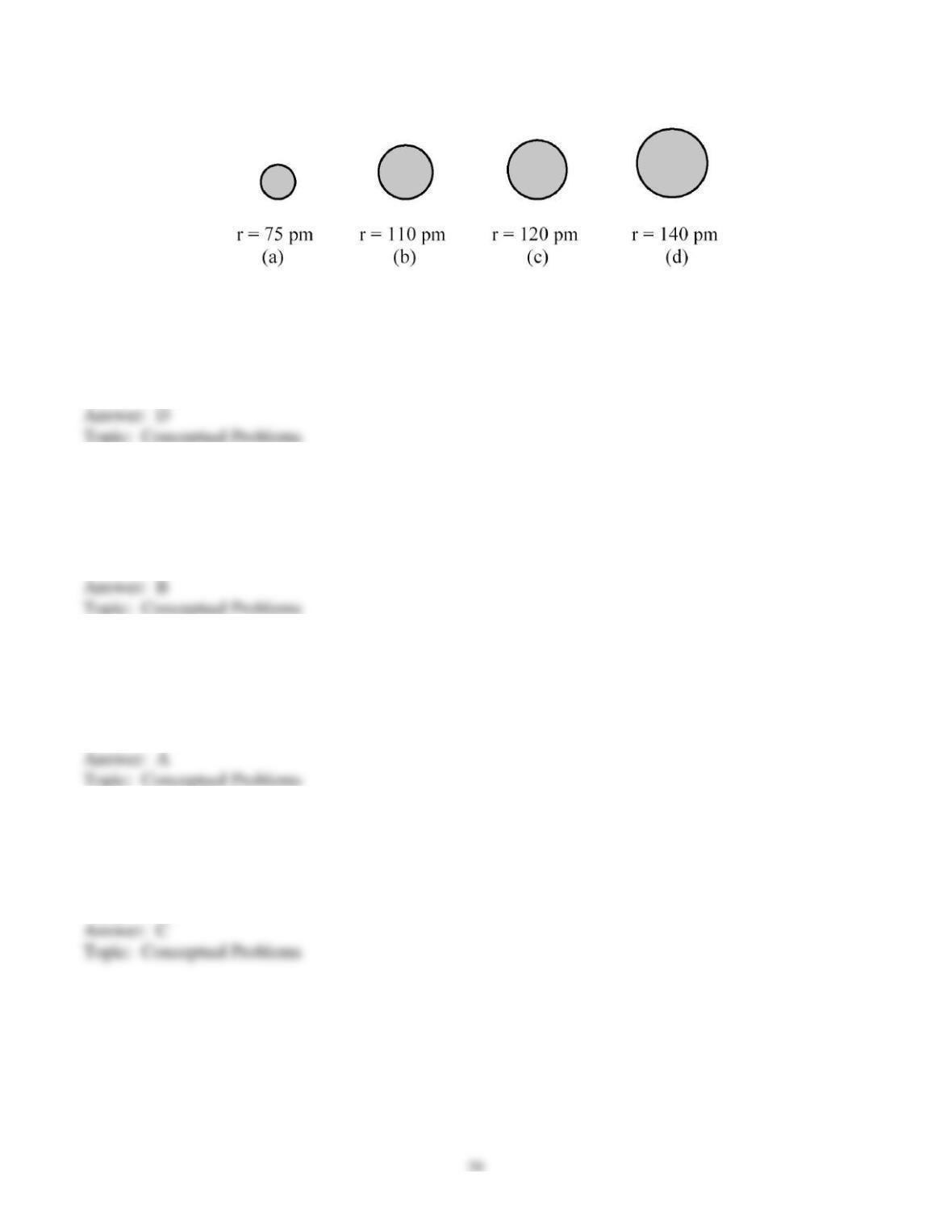
The spheres below represent atoms of Sb, As, P, and N (not necessarily in that order).
111) Which one of these spheres represents an atom of Sb?
A) sphere (a)
B) sphere (b)
C) sphere (c)
D) sphere (d)
112) Which one of these spheres represents an atom of P?
A) sphere (a)
B) sphere (b)
C) sphere (c)
D) sphere (d)
113) Which one of these spheres represents an atom of N?
A) sphere (a)
B) sphere (b)
C) sphere (c)
D) sphere (d)
114) Which one of these spheres represents an atom of As?
A) sphere (a)
B) sphere (b)
C) sphere (c)
D) sphere (d)
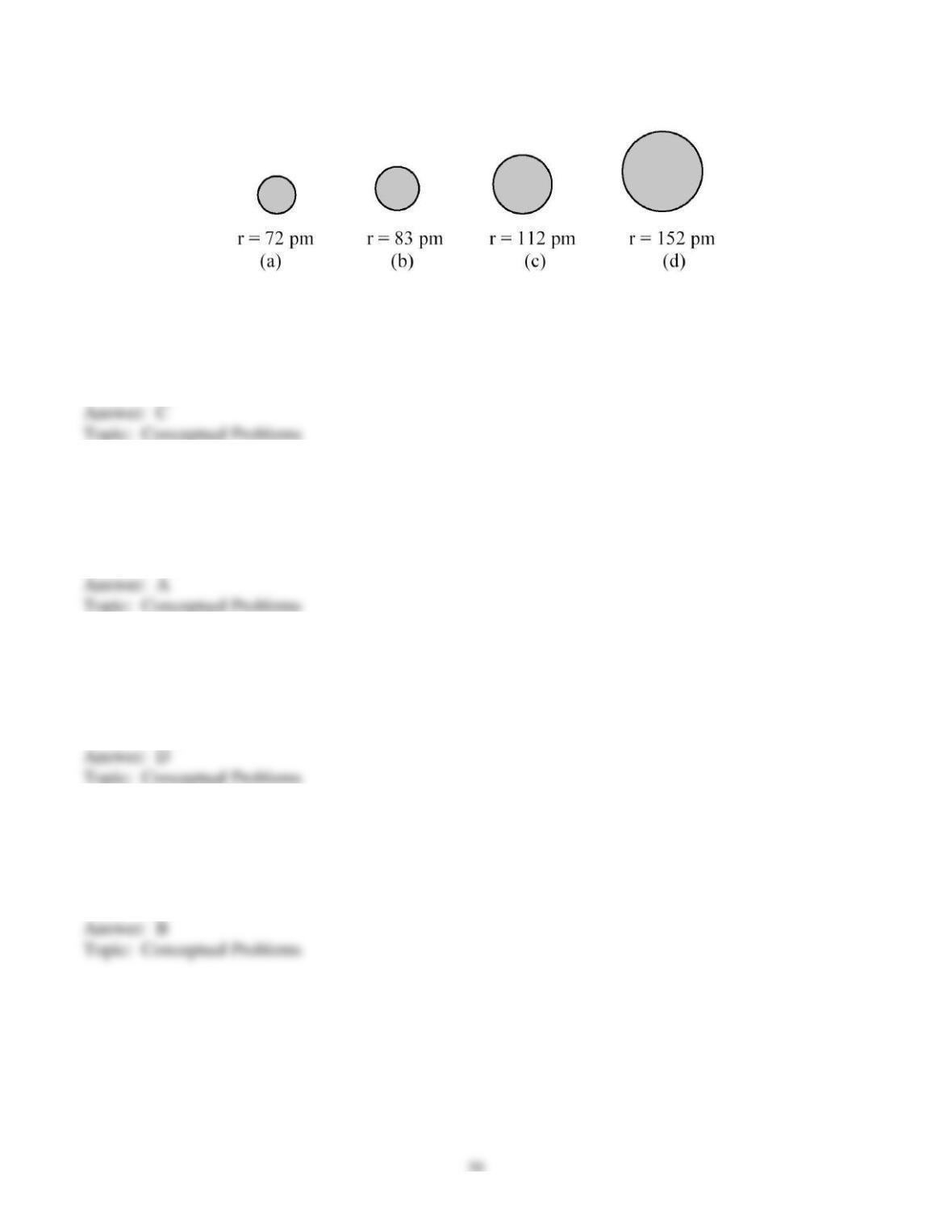
The spheres below represent atoms of Li, Be, B, and F (not necessarily in that order).
115) Which one of these spheres represents an atom of Be?
A) sphere (a)
B) sphere (b)
C) sphere (c)
D) sphere (d)
116) Which one of these spheres represents an atom of F?
A) sphere (a)
B) sphere (b)
C) sphere (c)
D) sphere (d)
117) Which one of these spheres represents an atom of Li?
A) sphere (a)
B) sphere (b)
C) sphere (c)
D) sphere (d)
118) Which one of these spheres represents an atom of B?
A) sphere (a)
B) sphere (b)
C) sphere (c)
D) sphere (d)
5.2 Algorithmic Questions
1) What are the possible values of n and ml for an electron in a 4dorbital?
A) n = 1, 2, 3, or 4 and ml = 2
B) n = 1, 2, 3, or 4 and ml = -2, -1, 0, +1, or +2
C) n = 4 and ml = 2
D) n = 4 and ml = -2, -1, 0, +1, or +2
2) How many subshells are there in the shell with n = 6?
A) 5
B) 6
C) 15
D) 36
3) What are the possible values of l if n = 3?
A) 3
B) 0, 1, or 2
C) -4, -3, -2, -1, 0, +1, +2, +3, or +4
D) -5, -4, -3, -2, -1, 0, +1, +2, +3, +4, or +5
4) How many orbitals are there in the third shell?
A) 2
B) 3
C) 4
D) 9
5) For a hydrogen atom, which electronic transition would result in the emission of a photon with the
highest energy?
A) 2s → 3p
B) 2p → 6d
C) 4p → 2s
D) 5f → 3d
6) For hydrogen, what is the wavelength of the photon emitted when an electron drops from a 4f orbital
to a 2p orbital in a hydrogen atom? The Rydberg constant is 1.097 × 10⁻² nm-1.
A) 656.3 nm
B) 486.2 nm
C) 364.6 nm
D) 2.057 × 10⁻³ nm
7) Which has the highest Zeff for its valence electrons?
A) Rb
B) Cs
C) Sn
D) I
8) Which of the following have their valence electrons in the same shell?
A) Na, P, Cl
B) Al, Ge, Sb
C) P, As, Sb
D) Ne, Ar, Cl
9) Which of the following have the same number of valence electrons?
A) Li, N, F
B) B, Si, As
C) N, As, Bi
D) He, Ne, F
10) What is the general valence-electron ground-state electron configuration for neutral alkaline earth
metals?
A) ns1
B) ns2
C) 1s22s1
D) 1s22s2
11) Which element has the ground-state electron configuration [ Rn] 7s26d2 ?
A) Rf
B) Sg
C) Th
D) Pa
12) How many valence electrons does a neutral tellurium atom have?
A) 2
B) 4
C) 6
D) 52
13) Of the following, which atom has the largest atomic radius?
A) Li
B) F
C) Na
D) Cl
14) Of the following, which atom has the smallest atomic radius?
A) Na
B) S
C) K
D) Se
15) Which atom in each group (I and II) has the smallest atomic radius?
(I) Ba, Hf, At (II) As, Sb, Bi
A) Ba; As
B) Ba; Bi
C) At; As
D) At; Bi
5.3 Short Answer Questions
1) Compared to ultraviolet radiation, infrared radiation occurs at ________ wavelengths, ________
frequencies, and ________ energies.
2) The visible region of the electromagnetic radiation spectrum extends from ________ nm to ________
nm.
3) Middle C on a piano has a frequency of 262 Hz. In a vacuum 262 Hz has a corresponding wavelength
of ________ m.
4) The property of a wave that is associated with brightness or intensity is ________.
5) A radio station that broadcasts at 99.5 MHz is broadcasting at a frequency of ________ s-1.
6) The amount of data that can be stored in an optical disc storage medium is related to the wavelength
of the laser employed. Blu-Ray discs that are read by a laser having a wavelength of 405 nm have a
much greater storage capacity than a DVD that is read by a 650 nm laser. The color of the 405 nm laser
beam is ________, whereas the color of the 650 nm laser is ________.
7) The smallest number that can be used for m or n in the Balmer-Rydberg equation is ________ and the
largest number is ________.
8) According to the Balmer-Rydberg equation, transitions from n = 5 to m = 2 result in a photons of light
that give rise to a spectral line with what color?
9) Light behaves as if it were a stream of small particles, called ________, each having an amount of
energy called a ________.
35
10) The average bond dissociation energy of a carbon-carbon bond is 410 kJ/mol. What wavelength in
nanometers of ultraviolet radiation has an energy of 410 kJ/mol?
11) The laser used to read Blu-Ray discs have a wavelength of 405 nm. 405 nm photons have of an
energy of ________ J, and a mole of 405 nm photons has an energy of ________ kJ/mol.
12) What is the deBroglie wavelength in meters of a 1-ton (907 kg) vehicle having a velocity of 95
km/hr?
13) A solution to the Schrödinger wave equation is a ________, or orbital, represented by the symbol Ψ,
and the probability of finding an electron defined by Ψ within a given volume of space around the
nucleus is ________.
14) The energy of an electron in a multielectron atom depends on the quantum numbers ________ and
________.
15) An orbital with n = 4 and l = 1 is a ________ orbital.
16) The number of orbitals having the quantum numbers, n = 4 and l = 2 is ________.
17) The number of orbitals in the n = 3 shell is ________.
18) In a representation of an orbital, a region having zero probability of finding an electron is called a
19) The algebraic signs (+ and -) sometimes written within the lobes of orbitals are analogous to
20) An orbital that as the appearance of a three-dimensional clover leaf has a quantum number l =
________.
21) According to the Bohr model of the atom, when an electron goes from a higher-energy orbit to a
lower-energy orbit, it ________ electromagnetic energy with an energy that is equal to the ________
between the two orbits.
22) Copper has the anomalous electron configuration ________.
23) Using shorthand notation, the electron configuration of Ni is ________.
24) The ground-state electron configuration of the oxide ion, O2-, is the same as which noble gas?
25) Compared to sulfur, chlorine has a ________ effective nuclear charge, Zeff, and a ________ atomic
radius.