Factor the greatest common factor from the polynomial. Assume any variable exponents represent whole numbers.
71)
21x5y +15xy3
71)
A)
3x(7x4y +5y3)
B)
xy(21x4+15y2)
C)
3y(7x5+5xy2)
D)
3xy(7x4+5y2)
Factor any difference of two squares, or state that the polynomial is prime. Assume any variable exponents represent
whole numbers.
72)
x12 –y12
72)
A)
(x10 +y10)(x10 –y10)
B)
prime
C)
(x6+y6)(x6–y6)
D)
(x6–y6)2
Solve the problem.
73)
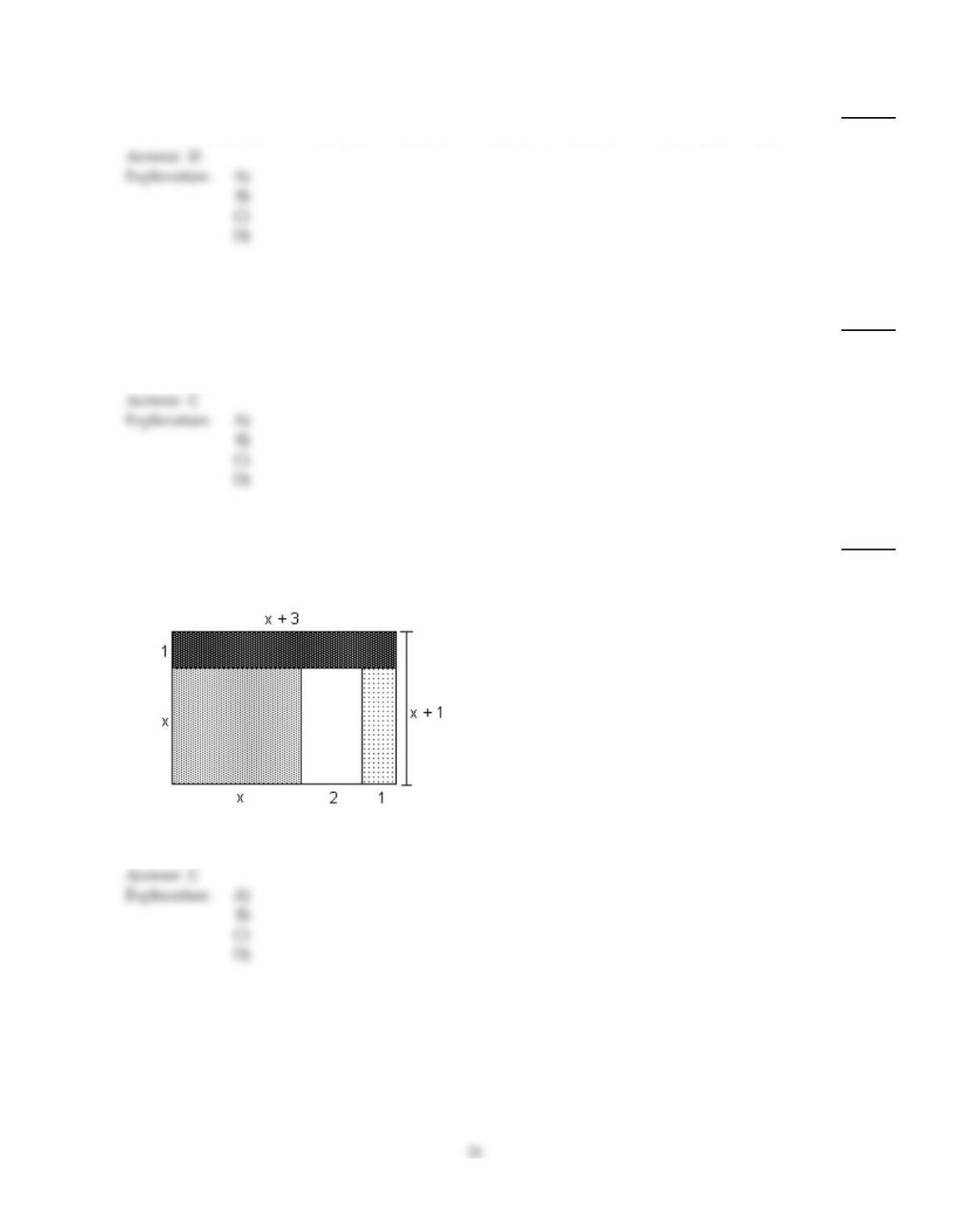
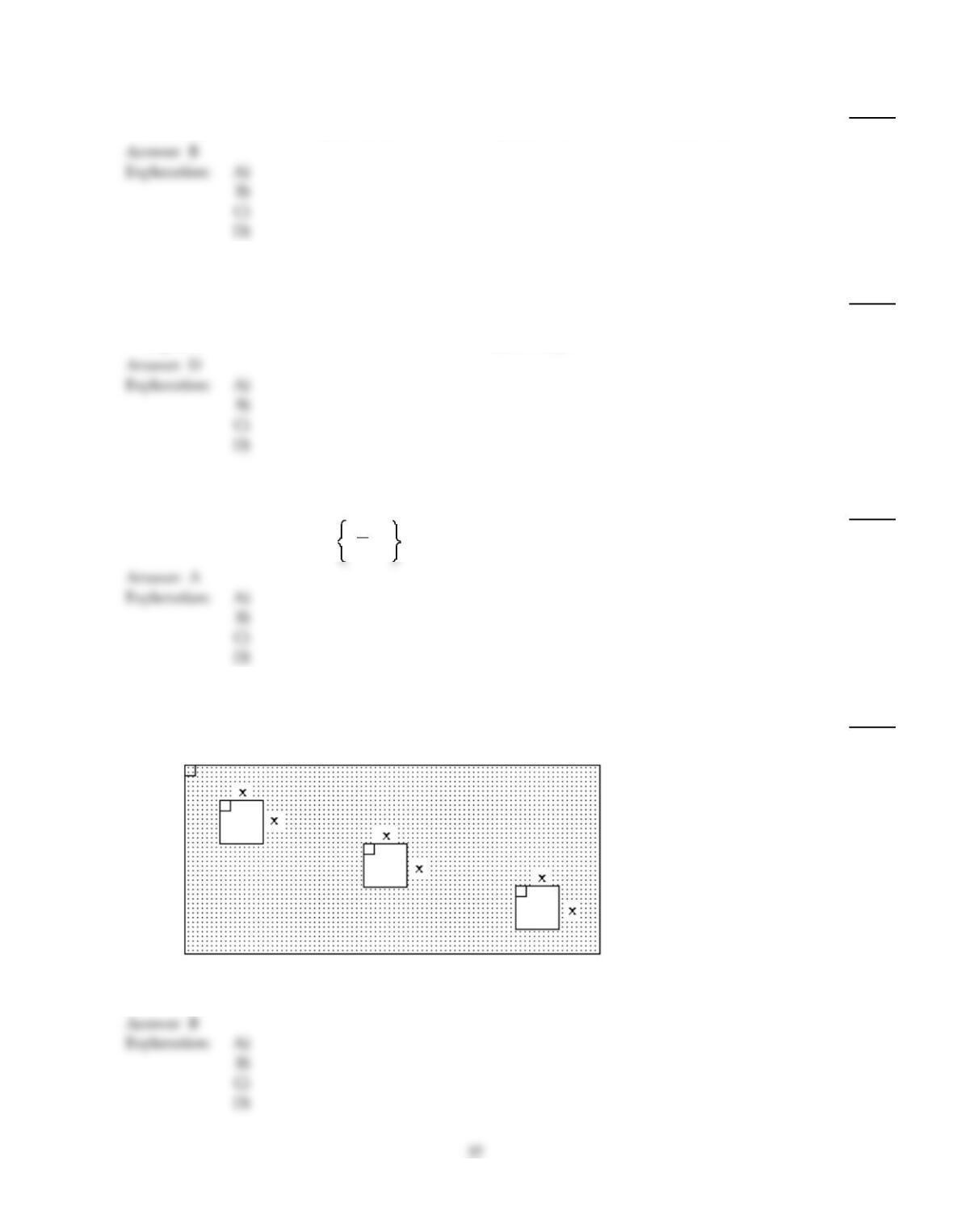
Find the area of the large rectangle below in two ways. First, find the sum of the areas of the four
smaller rectangles. Second, express the area of the large rectangle as the product of its length and
width.
73)
A)
area =x2+ 3x + 2 = (x + 2)(x + 1)
B)
area =x2+ 3x – 2 = (x + 2)(x – 1)
C)
area =x2+ 4x + 3 = (x + 3)(x + 1)
D)
area =x2+ 4x – 3 = (x + 3)(x – 1)
Factor using the formula for the sum or difference of two cubes.
74)
(16 – x)3–x3
74)
A)
(16 – x)(x2– 16x + 256)
B)
(16 – 2x)(3x2– 16x + 256)
C)
(16 – 2x)(x2– 16x + 256)
D)
(16 + 2x)(x2– 16x + 256)
Factor the trinomial, or state that the trinomial is prime.
75)
x2– 10xy + 21y2
75)
A)
(x + 7y)(x – 3y)
B)
prime
C)
(x + 7y)(x + y)
D)
(x – 7y)(x – 3y)
Subtract the polynomials. Assume all variable exponents represent whole numbers.
76)
Subtract 9a2b4+4ab2– ab from –6a2b4+7ab2+5ab.
76)
A)
–15a2b4– 3ab2+ 4ab
B)
15a2b4– 3ab2– 6ab
C)
3a2b4+ 11ab2+ 4ab
D)
–15a2b4+ 3ab2+ 6ab
Factor by grouping to obtain the difference of two squares.
77)
x4–x2– 6x – 9
77)
A)
(x2+ x – 3)(x2– x – 3)
B)
(x2+ x – 3)(x2– x + 3)
C)
(x2+ x + 3)(x2– x – 3)
D)
(x2+ x + 3)(x2– x + 3)
Factor using the formula for the sum or difference of two cubes.
78)
x3– 216
78)
A)
(x – 6)(x2+ 6x + 36)
B)
(x + 6)(x2– 6x + 36)
C)
(x + 216)(x2– 1)
D)
(x – 6)(x2+ 36)
Subtract the polynomials. Assume all variable exponents represent whole numbers.
79)
Subtract 9x3+4x2y +8xy2+2y3 from 12x3+10xy2+6y3.
79)
A)
3x3+ 4x2y + 2xy2+ 4y3
B)
3x3– 4x2y + 2xy2+ 4y3
C)
–3x3+ 4x2y – 2xy2– 4y3
D)
21x3+ 4x2y + 20xy2+ 8y3
80)
(2x5– 7x4– 2x3+ 6) – (8x5+ 4x4+ 4x3+ 4)
80)
A)
10x5– 3x4+ 2x3+ 10
B)
–6x5– 3x4+ 2x3+ 10
C)
10x5– 3x4+ 2x3+ 2
D)
–6x5– 11x4– 6x3+ 2
Perform the indicated operations.
81)
[(5x – 1) + 7y][(5x – 1) – 7y]
81)
A)
25x2– 10x + 1 + 49y2
B)
25x2+ 10x + 1 – 49y2
C)
25x2– 10x + 1 – 49y2
D)
25x2– 10x + 1 + 70xy – 14y + 49y2
Factor the trinomial by grouping, or state that the trinomial is prime.
82)
9x2– x – 38
82)
A)
(9x – 19)(x + 2)
B)
(9x – 2)(x + 19)
C)
(9x + 19)(x – 2)
D)
(9x + 2)(x – 19)
Factor completely, or state that the polynomial is prime.
83)
250x3– 54y3
83)
A)
2(5x – 3y)(25x2– 15xy + 9y2)
B)
2(5x – 3y)(25x2+ 15xy + 9y2)
C)
prime
D)
2(5x + 3y)(25x2– 15xy + 9y2)
Find the product. Assume all variable exponents represent whole numbers.
84)
(x + y)(x2+ 3xy –y2)
84)
A)
x3+ 3x2y + 3xy2–y3
B)
x3+ 4x2y + 2xy2–y3
C)
x3y + 3x2y – xy3
D)
x3+ 3x2y – xy2
Factor using the formula for the sum or difference of two cubes.
85)
x6–216y3
85)
A)
(x +6y)(x4–6x2y +36y2)
B)
(x2+6y)(x4–6x2y +36y2)
C)
(x2–6y)(x4+6x2y +36y2)
D)
(x –6y)(x2+6xy +36y2)
C
Factor completely, or state that the polynomial is prime. Assume any variable exponents represent whole numbers.
86)
9x2–9y2
86)
A)
prime
B)
9(x + y)(x – y)
C)
(x + y)(9x –9)
D)
(x +9y)(9x – y)
B
Give the requested components for the polynomial.
87)
5x9y +x8y3+16y2; leading term and leading coefficient of the polynomial
87)
A)
leading term: x8y3; leading coefficient: 1
B)
leading term: 5x9y; leading coefficient: 5
C)
leading term: 16y2; leading coefficient: 16
D)
leading term: x8y3; leading coefficient: 16
A
Factor the polynomial using the greatest common binomial factor.
88)
2(x +4) – a(x +4)
88)
A)
(x +4)(2 + a)
B)
(x +4)(2 – a)
C)
(x –4)(a –2)
D)
(2x +8) – (ax +4a)
B
24
B
Use factoring to solve the quadratic equation.
89)
3x(x –1) =6x2–4x
89)
A)
{0}
B)
0, 1
3
C)
{0, 3}
D)
–1
3, 0
Add the polynomials. Assume all variable exponents represent whole numbers.
90)
–1
3x2–3
5x +2
5+ – 3
4x2–1
2x –4
5
90)
A)
5
2x2+ 3x –16
5
B)
–131
60 x6–2
5
C)
–13
12 x4–11
10 x2–2
5
D)
–13
12 x2–11
10 x –2
5
Factor the greatest common factor from the polynomial. Assume any variable exponents represent whole numbers.
91)
30x2n –18xn
91)
A)
6xn(5xn–3x)
B)
6xn(5xn–3)
C)
6x2n(5xn–3)
D)
6x2(5xn–3)
Multiply using one of the rules for the square of a binomial. Assume any variable exponents represent whole numbers.
92)
(x + 15)2
92)
A)
x + 225
B)
225x2+ 30x + 225
C)
x2+ 30x + 225
D)
x2+ 225
25
Factor the polynomial using the greatest common binomial factor.
93)
x(y –3) –11(y –3)
93)
A)
–11x(y –3)
B)
(y –3)(x +11)
C)
(y –3)(x –11)
D)
(y –3)(11 – x)
Factor any difference of two squares, or state that the polynomial is prime. Assume any variable exponents represent
whole numbers.
94)
16x2+ 25
94)
A)
(4x + 5)(4x – 5)
B)
(4x + 5)2
C)
(4x – 5)2
D)
prime
95)
x2y2–81
95)
A)
prime
B)
(xy +9)(xy –9)
C)
(xy –9)2
D)
(x +9y)(x –9y)
Multiply the monomial and the polynomial. Assume any variable exponents represent whole numbers.
96)
5y(10y2–11y)
96)
A)
50y2–55y2
B)
50y3+55y2
C)
50y3–55y
D)
50y3–55y2
Use the FOIL method to multiply the binomials. Assume any variable exponents represent whole numbers.
97)
(2xn– 11yn)(xn– 12yn)
97)
A)
2x2n – 35xnyn+ 132y2n
B)
2xn + 2 – 35xnyn+ 132yn + 2
C)
2x2n – 35xnyn– 132y2n
D)
2xn– 35xnyn+ 132yn
Factor completely, or state that the polynomial is prime. Assume any variable exponents represent whole numbers.
98)
48a4b – 75b3
98)
A)
3b(4a + 5b)2
B)
prime
C)
3b(4a – 5b)2
D)
3b(4a2+ 5b)(4a2– 5b)
99)
7x2+7y2
99)
A)
(7x +7y)(x – y)
B)
7(x2+y2)
C)
prime
D)
7(x – y)(x + y)
Find the product. Assume all variable exponents represent whole numbers.
100)
(x +y)(x2–xy +y2)
100)
A)
x3+ 2x2y+ 2xy2+y3
B)
x3– 2x2y– 2xy2+y3
C)
x3+y3
D)
x3–y3
Find the indicated function value.
101)
Find f(0) when f(x) =x2– 3x + 2.
101)
A)
0
B)
–2
C)
4
D)
2
Use factoring to solve the quadratic equation.
102)
x2=20x –100
102)
A)
{10}
B)
{–10, 10]
C)
{–10}
D)
{10}
Factor completely, or state that the trinomial is prime.
103)
4x4+ 8x3– 32x2
103)
A)
prime
B)
4x2(x + 2)(x – 4)
C)
(4x3+ 8x)(x – 4)
D)
4x2(x – 2)(x + 4)
Factor the trinomial, or state that the trinomial is prime.
104)
x2– x – 54
104)
A)
(x – 54)(x + 1)
B)
prime
C)
(x – 6)(x + 9)
D)
(x + 6)(x – 9)
Factor completely, or state that the polynomial is prime. Assume any variable exponents represent whole numbers.
105)
4x3–36x
105)
A)
4(x +3)(x2–3x)
B)
prime
C)
x(x +3)(4x –12)
D)
4x(x +3)(x –3)
Factor the greatest common factor from the polynomial. Assume any variable exponents represent whole numbers.
106)
2x2+ 14x
106)
A)
x(2x + 14)
B)
2x(x + 7x)
C)
2(x2+ 7x)
D)
2x(x + 7)
Factor using the formula for the sum or difference of two cubes.
107)
343x +x4
107)
A)
x(7+ x)(49 –7x +x2)
B)
x(343 +x3)
C)
x(7– x)(49 +7x +x2)
D)
(7x +x2)(49 –7x +x2)
28
Use factoring to solve the polynomial equation.
108)
4x4=108x
108)
A)
{0, 3}
B)
{0}
C)
{–3, 0, 3}
D)
{0, 4, 3}
Use factoring to solve the quadratic equation.
109)
16x2+ 32x = 0
109)
A)
–2, 0
B)
{0}
C)
–2
D)
–2, 32
A
Factor by grouping to obtain the difference of two squares.
110)
36x2– 84x + 49 – 121y2
110)
A)
(6x +7+11y)(6x –7–11y)
B)
(6x +7+11y)(6x +7–11y)
C)
(6x –7+11y)(6x –7–11y)
D)
(6x +7–11y)2
C
Factor the trinomial by grouping, or state that the trinomial is prime.
111)
15x2+ 32x + 16
111)
A)
prime
B)
(3x – 4)(5x – 4)
C)
(3x + 4)(5x + 4)
D)
(15x + 4)(x + 4)
C
Factor completely, or state that the polynomial is prime.
112)
25x2–40x + 16 –y2
112)
A)
(5x –4+ y)(5x –4– y)
B)
prime
C)
(5x +4+ y)(5x +4– y)
D)
(5x –4+ y)(5x +4– y)
A
29
A
113)
486x2–6y2
113)
A)
(54x + y)(54x – y)
B)
prime
C)
6(9x + y)(9x – y)
D)
(9x +6y)(9x –6y)
Factor the trinomial by grouping, or state that the trinomial is prime.
114)
5x2+ 3x + 2
114)
A)
(5x + 2)(x – 1)
B)
(5x – 2)(x + 1)
C)
(5x + 1)(x – 2)
D)
prime
D
Perform the indicated operations.
115)
(–10x4y)(–3x2y7)
115)
A)
30x6y8
B)
30x8y7
C)
–30x6y8
D)
30x6y7
A
Solve the problem.
116)
A ball is thrown directly upward from the top of a building that is 80 feet high. The function
f(t) = – 16t2+64t +80 describes the ball’s height above the ground, in feet, after t seconds. Factor the
expression for f(t) and write the function in completely factored form. Use the factored form of the
function to find f(2).
116)
A)
f(t) = – 16(t2+4t +5); 272 ft
B)
f(t) = 16(t2+4t +5); 17 ft
C)
f(t) = 16(t –1)(t +5); 112 ft
D)
f(t) = – 16(t +1)(t –5); 144 ft
D
Factor by grouping to obtain the difference of two squares.
117)
x3–9x2– x +9
117)
A)
(x +9)(x + 1)(x – 1)
B)
(x –9)(x2+ 1)
C)
(x +9)(x2+ 1)
D)
(x –9)(x + 1)(x – 1)
D
30
C
Factor the trinomial by grouping, or state that the trinomial is prime.
118)
12y2– 17y + 6
118)
A)
(3y + 2)(4y + 3)
B)
(12y + 2)(y + 3)
C)
prime
D)
(3y – 2)(4y – 3)
Factor completely, or state that the polynomial is prime.
119)
9y2– 25
119)
A)
(3y – 5)2
B)
prime
C)
(3y + 5)2
D)
(3y + 5)(3y – 5)
D
Factor by grouping. Assume any variable exponents represent whole numbers.
120)
6x2– 15x – 8x + 20
120)
A)
(3x – 4)(2x – 5)
B)
(6x + 4)(x + 5)
C)
(6x – 4)(x – 5)
D)
(3x + 4)(2x + 5)
A
Factor the trinomial by grouping, or state that the trinomial is prime.
121)
5x2– 13xy –6y2
121)
A)
prime
B)
y(5x +2)(x –3)
C)
(5x +3y)(x –2y)
D)
(5x +2y)(x –3y)
D
Factor completely, or state that the polynomial is prime.
122)
10x3–10
122)
A)
10(x – 1)(x2+ x + 1)
B)
10(x + 1)(x2– x + 1)
C)
prime
D)
10(x3– 1)
A
D
Solve the polynomial equation.
123)
(x +5)(x + 1) =60
123)
A)
{–11, 5}
B)
{1, 5}
C)
{–5, –1}
D)
{–5, 11}
D)
Factor completely, or state that the polynomial is prime.
124)
x6+ 7x3+ 10
124)
A)
(x3– 5)(x3– 2)
B)
(x3+ 5)(x3– 2)
C)
(x3– 5)(x3+ 2)
D)
(x3+ 5)(x3+ 2)
D
D)
Multiply the monomial and the polynomial. Assume any variable exponents represent whole numbers.
125)
–8x2(–6x6– 4x4+ 3)
125)
A)
48x8+ 32x6– 24x2
B)
48x8– 4x4+ 3
C)
48x8+ 32x6
D)
48x6+ 32x4– 24
A
D)
Factor completely, or state that the trinomial is prime.
126)
12a2b + 30ab –72b
126)
A)
6b(2a –3)(a –4)
B)
6b(2a –3)(a +4)
C)
prime
D)
6b(2a +3)(a –4)
B
D)
Factor any difference of two squares, or state that the polynomial is prime. Assume any variable exponents represent
whole numbers.
127)
16 –a2n
127)
A)
(4 +a)(4– a)
B)
(4 +an)(4–an)
C)
(4 +a2n)(4–a2n)
D)
prime
B
D)
A
Multiply using one of the rules for the square of a binomial. Assume any variable exponents represent whole numbers.
128)
(3xy2+ xy)2
128)
A)
6x2y4+6x2y3+x2y2
B)
9x2y4+6x2y3+x2y2
C)
9x2y4+x2y2
D)
9x2y4+9x2y3+x2y2
Factor the trinomial by grouping, or state that the trinomial is prime.
129)
7x2+ 25x – 12
129)
A)
(7x + 4)(x – 3)
B)
(7x – 3)(x + 4)
C)
prime
D)
(7x + 3)(x – 4)
Factor the trinomial, or state that the trinomial is prime.
130)
a2– 15ab + 56b2
130)
A)
prime
B)
(a + 8b)(a + b)
C)
(a + 8b)(a – 7b)
D)
(a – 8b)(a – 7b)
Factor any perfect square trinomial, or state that the polynomial is prime.
131)
9x2– 6x + 1
131)
A)
(x – 3)2
B)
(3x – 1)2
C)
(3x + 1)(3x – 1)
D)
prime
Use the Leading Coefficient Test to describe the end behavior of the graph of the polynomial function.
132)
f(x) =6x3+ 2x2– 3x + 3
132)
A)
rises to the left and rises to the right
B)
falls to the left and falls to the right
C)
rises to the left and falls to the right
D)
falls to the left and rises to the right
33
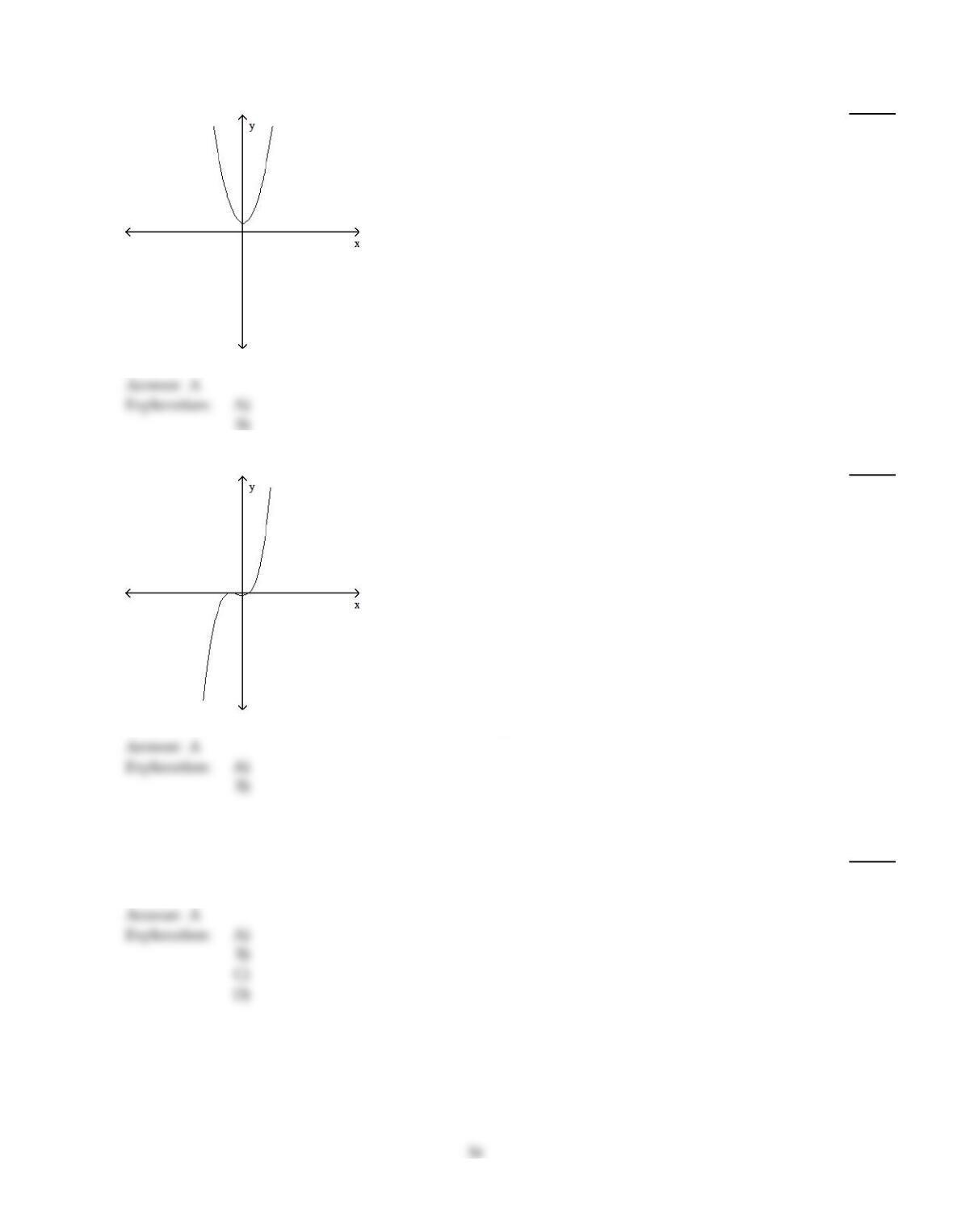
Determine whether the graph shown is the graph of a polynomial function.
133)
133)
A)
Yes
B)
No
134)
134)
A)
Yes
B)
No
Factor completely, or state that the polynomial is prime. Assume any variable exponents represent whole numbers.
135)
9a3c2–225ax2y2
135)
A)
9a(ac +5xy)(ac –5xy)
B)
9a(c +5xy)(c –5xy)
C)
9a(ac +25xy)(ac –25xy)
D)
prime
Factor the greatest common factor from the polynomial. Assume any variable exponents represent whole numbers.
136)
30x6y +42xy3
136)
A)
6xy(5x5+7y2)
B)
6y(5x6+7xy2)
C)
6x(5x5y +7y3)
D)
xy(30x5+42y2)
Solve the problem.
137)
Find the area of the rectangle by multiplying the length and the width of the large rectangle using
the FOIL method.
4x 9
x
10
137)
A)
4x2+49x
B)
4x2+49x +90
C)
4x2+40x +90
D)
4x2+9x +90
B
Add the polynomials. Assume all variable exponents represent whole numbers.
138)
(–9x6+ 4x5– 9x4+ 1) + (3x6+ 9x5– 7x4+ 7)
138)
A)
–6x6+ 13x5– 16x4+ 8
B)
–6x6+ 5x5+ 2x4+ 6
C)
12x6+ 5x5+ 2x4+ 6
D)
12x6+ 5x5+ 2x4+ 8
A
Factor completely, or state that the polynomial is prime.
139)
25x2– 90x + 81 – 49y2
139)
A)
(5x –9+7y)(5x –9–7y)
B)
(5x +9+7y)(5x –9–7y)
C)
prime
D)
(5x +9+7y)(5x +9–7y)
A
35
A
Factor the greatest common factor from the polynomial. Assume any variable exponents represent whole numbers.
140)
18x3n –30x2n
140)
A)
6x2n(3xn–5)
B)
6xn(3x2n –5xn)
C)
6x2n(3xn–5x)
D)
6x3n(3xn–5)
Add the polynomials. Assume all variable exponents represent whole numbers.
141)
(10x5y3+5x3y2+6xy) + (4x5y3+2x3y +11xy)
141)
A)
14x5y3+5x3y2+2x3y +17xy
B)
14x5y3+7x3y2+17xy
C)
7x6y3+14x5y3+17xy
D)
14x5y3+7x3y +17xy
Factor completely, or state that the polynomial is prime.
142)
x2– 2x – 63
142)
A)
(x + 1)(x – 9)
B)
prime
C)
(x + 7)(x – 9)
D)
(x – 7)(x + 9)
Factor the greatest common factor from the polynomial. Assume any variable exponents represent whole numbers.
143)
32x2y3–28xy2
143)
A)
xy2(32xy –28)
B)
4xy2(8xy –7)
C)
4xy(8xy2–7y)
D)
4xy2(8xy +7)
Factor completely, or state that the polynomial is prime.
144)
2x3+250
144)
A)
prime
B)
2(x +5)(x2–5x +25)
C)
2(x3+125)
D)
2(x +5)3
36
Use factoring to solve the polynomial equation.
145)
x3– 2x2– 15x = 0
145)
A)
{–3, 5}
B)
{0, –3, 5}
C)
{0, 3, –5}
D)
{3, –5}
Factor any perfect square trinomial, or state that the polynomial is prime.
146)
49x2+ 84xy + 36y2
146)
A)
(7x – 6y)2
B)
(7x + 6y)(7x – 6y)
C)
prime
D)
(7x + 6y)2
D
Use factoring to solve the polynomial equation.
147)
20x3+100x2+120x = 0
147)
A)
{0, –2, –3}
B)
–1
2, –3
C)
{0, 2, 3}
D)
{–2, –3}
A
Solve the problem.
148)
Write a polynomial that represents the area of the shaded region.
12x +5
12x –5
148)
A)
144x2– 3x –25
B)
141x2–25
C)
147x2–25
D)
141x2+25
B
B
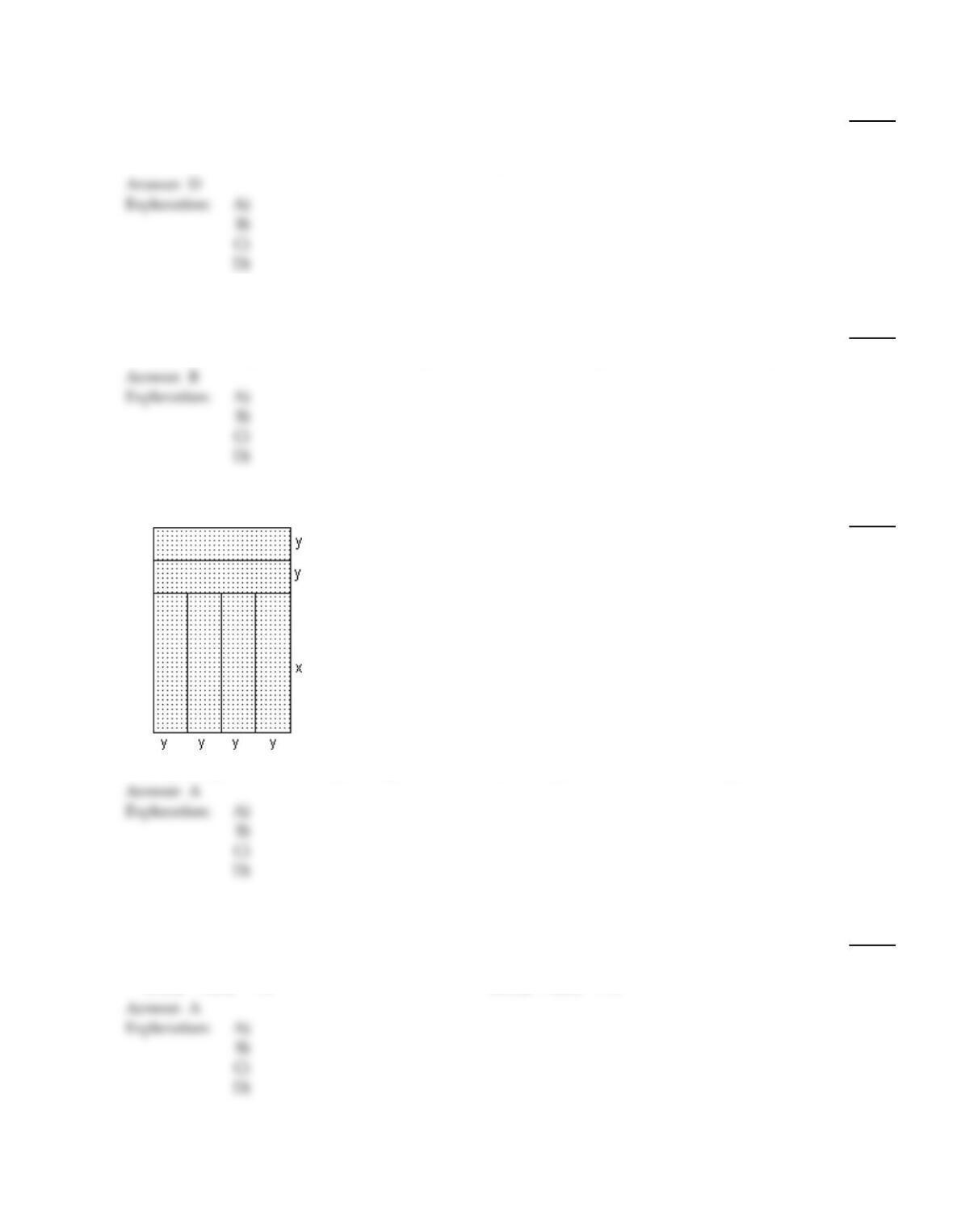
Multiply using one of the rules for the square of a binomial. Assume any variable exponents represent whole numbers.
149)
(7an–bn)2
149)
A)
49a2n –14ab +b2n
B)
49an–14anbn+bn
C)
49a2n –7anbn+b2n
D)
49a2n –14anbn+b2n
Factor by grouping. Assume any variable exponents represent whole numbers.
150)
x3– 9 – 2x3y + 18y
150)
A)
(x3+ 9)(1 – 2y)
B)
(x3– 9)(1 – 2y)
C)
(x3– 9)(1 + 2y)
D)
(x3+ 9)(1 + 2y)
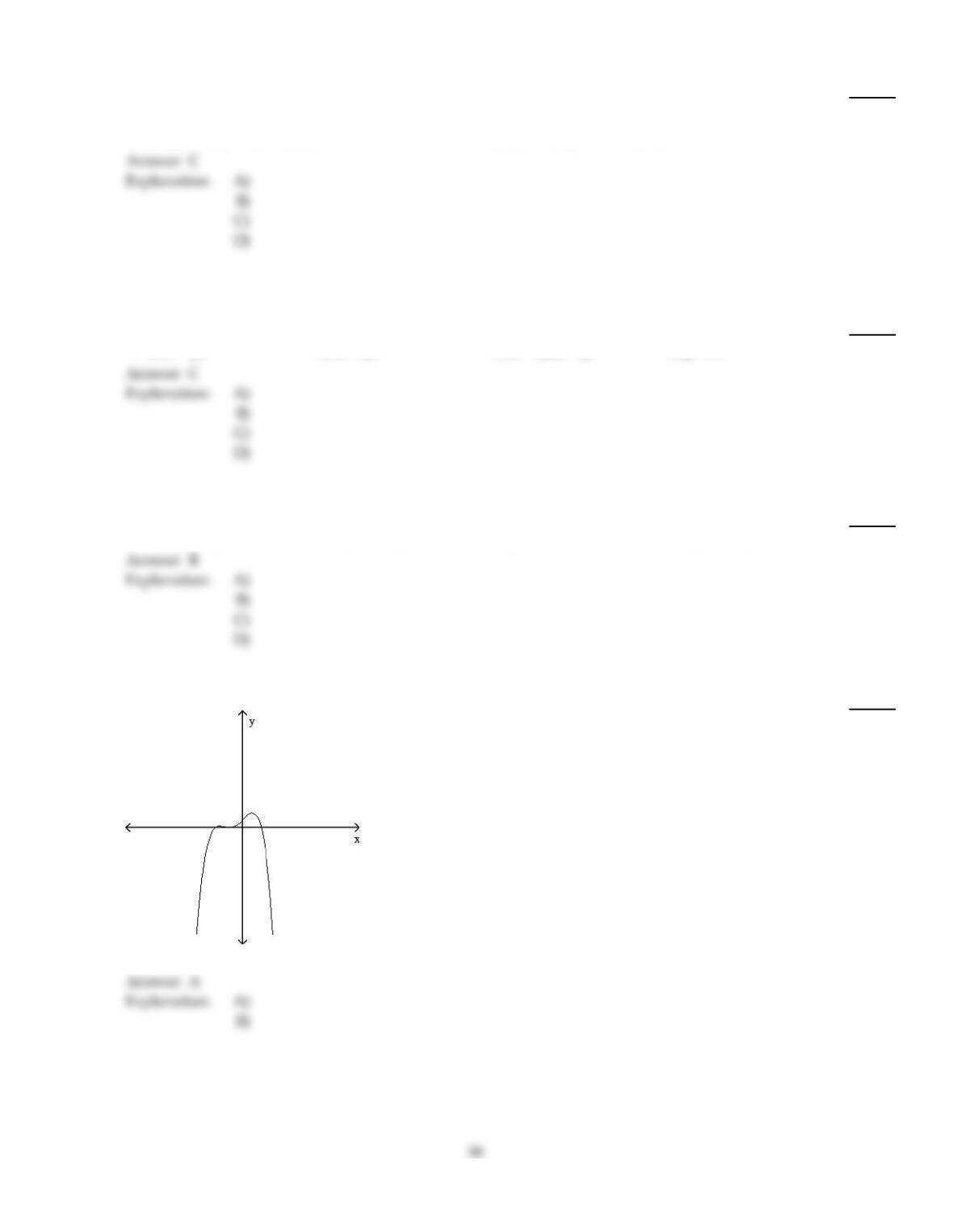
Write an expression in completely factored form for the area of the shaded figure.
151)
151)
A)
4y(x + 2y)
B)
y4(x + 2y)
C)
2(x + 6y)
D)
x(x + 2y)
Factor completely, or state that the polynomial is prime.
152)
5y4– 25y3+ 9y2– 45y
152)
A)
y(y – 5)(5y2+ 9)
B)
prime
C)
y(y – 5)(5y2– 9)
D)
y(y + 5)(5y2+ 9)
38
153)
x + 216x4
153)
A)
prime
B)
x(1 + 6x)(1 + 6x + 36x2)
C)
x(1 + 6x)(1 – 6x + 36x2)
D)
x(1 – 6x)(1 + 6x + 36x2)
Factor any difference of two squares, or state that the polynomial is prime. Assume any variable exponents represent
whole numbers.
154)
16 –y2
154)
A)
(4 – y)2
B)
(4 + y)2
C)
(4 + y)(4– y)
D)
prime
Use the method of your choice to factor the trinomial, or state that the trinomial is prime.
155)
9y2– 18y + 8
155)
A)
(9y + 2)(y + 4)
B)
(3y – 2)(3y – 4)
C)
prime
D)
(3y + 2)(3y + 4)
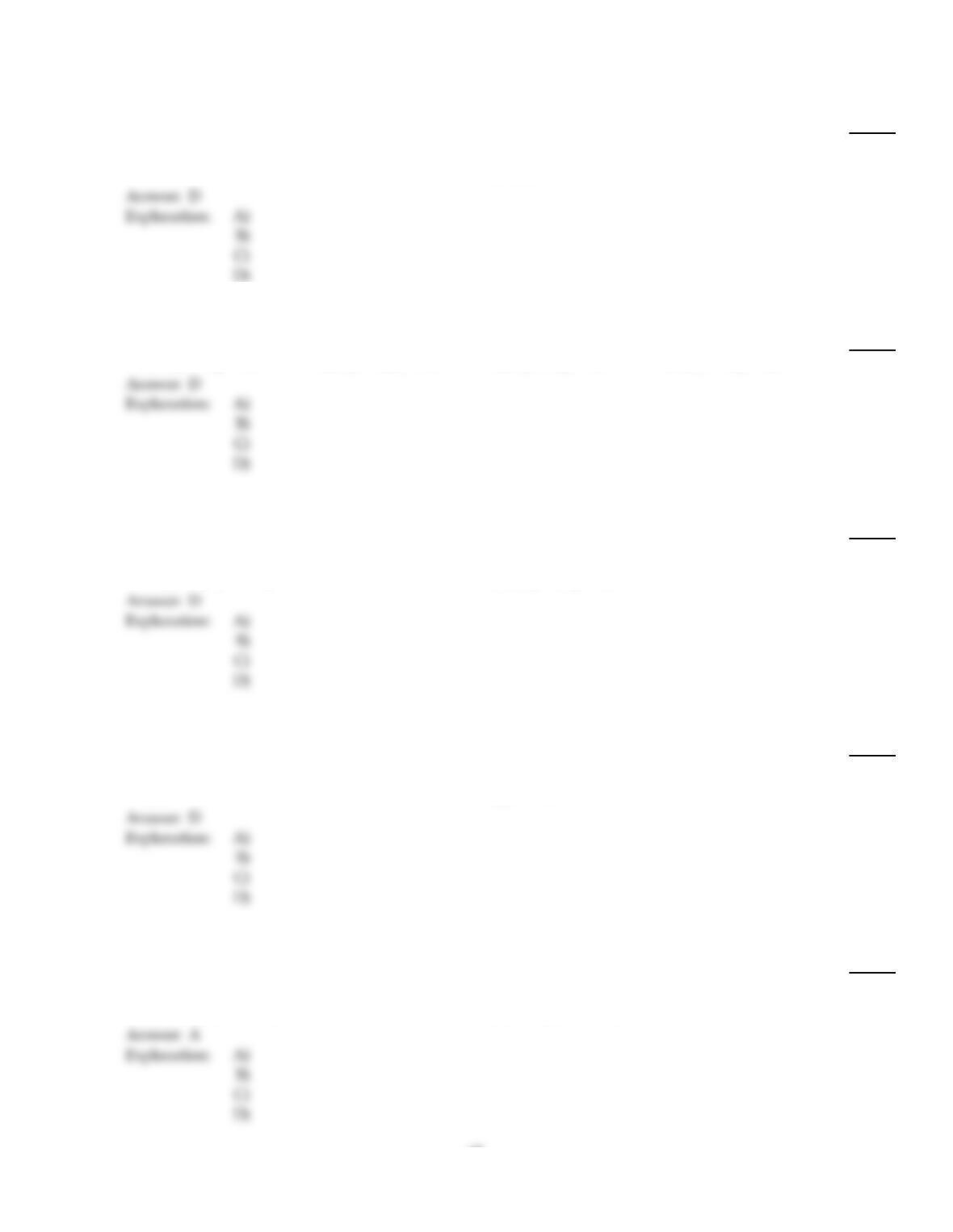
Determine whether the graph shown is the graph of a polynomial function.
156)
156)
A)
Yes
B)
No
Multiply using the rule for the product of the sum and difference of two terms. Assume any variable exponents represent
whole numbers.
157)
[5y + (7x + 2)][5y – (7x + 2)]
157)
A)
25y2– 49x2+ 28x + 4
B)
25y2– 49x2– 28x + 4
C)
25y2– 49x2– 14x – 4
D)
25y2– 49x2– 28x – 4
Use the method of your choice to factor the trinomial, or state that the trinomial is prime.
158)
5y2–22y +21
158)
A)
5(y –7)(y –3)
B)
(5y –7)(5y +3)
C)
(5y +3)(y –7)
D)
(5y –7)(y –3)
D
Factor completely, or state that the trinomial is prime.
159)
3y3+ 21y2+ 30y
159)
A)
3y(y + 10)(y + 1)
B)
prime
C)
(y + 2)(3y2+ 15y)
D)
3y(y + 2)(y + 5)
D
Find the product. Assume all variable exponents represent whole numbers.
160)
(x + 3)(x2– 3x +9)
160)
A)
x3+ 6x2+ 6x + 27
B)
x3– 6x2– 6x + 27
C)
x3– 27
D)
x3+ 27
D
Factor by grouping. Assume any variable exponents represent whole numbers.
161)
5a2x – 10a2y + 9bx – 18by
161)
A)
(x – 2y)(5a2+ 9b)
B)
(x – 2y)(5a2+ 9)
C)
(x + 2y)(5a2+ 9b)
D)
(x – 2y)(5a + 9b)
A
40
D