Accounting for Merchandise Operations ♦ 267
ESSAY
1. Discuss the differences between the operating activities of a service business from a merchandise
business.
2. List the accounts/steps in arriving at Gross Profit in a merchandising company using a multiple-
step income statement using the perpetual inventory system.
3. Discuss the main differences between the multiple-step and single-step income statements.
268 ♦ Chapter 5
4. Discuss the differences between the following categories as they relate to merchandise inventory:
(1)
Cost of merchandise purchased
(2)
Merchandise available for sale
(3)
Cost of merchandise sold
5. Describe the difference between a sales discount and a purchase discount.
6. Often one must determine who “pays the freight” on a purchase of inventory. Discuss who pays
the freight cost when the terms of the sale are FOB shipping vs. FOB destination.
Accounting for Merchandise Operations ♦ 269
7. Inventory shrinkages is a normal part of doing business. Discuss some of the causes of shrinkage
and how to account for this cost.
8. Explain what consignment is, and who owns this type of inventory.

270 ♦ Chapter 5
PROBLEM
1. Sunnyside Software Store, Inc. entered following the transactions. In the journal provided, prepare
Sunnyside’s necessary entries, assuming use of the perpetual inventory system.
Mar.
2
Purchased $9,000 of merchandise on account with credit terms, n/30.
6
Returned $250 of the items purchased on March 2.
16
Sold merchandise on account for $1,200 with credit terms of n/30. The cost of the
merchandise sold was $1,000.
17
Of the merchandise sold on March 16, $1,000 of it was returned. The cost of the returned
merchandise was $834.
25
Received payment in full from the customer of March 16.
31
Paid for the merchandise purchased on March 2.
General Journal
Date
Description
Debit
Credit
Accounting for Merchandise Operations ♦ 271
SlideRock Corporation
Income statement accounts from the June 30, 2006 year-end adjusted trial balance of SlideRock
Corporation appear as follows.
Account Name
Debit
Credit
Sales
$536,160
Sales Returns
$ 10,230
Cost of Goods Sold
234,950
Sales Salaries Expense
149,940
Supplies Expense
2,420
Utility Expense
14,370
Advertising Expense
21,990
Depreciation Expense – Store Equipment
10,030
Insurance Expense
2,700
Interest Expense
3,600
Loss on Sale of Equipment
2,500
Interest Income
800
Dividend Income
1,000
Income Taxes Expense
15,000
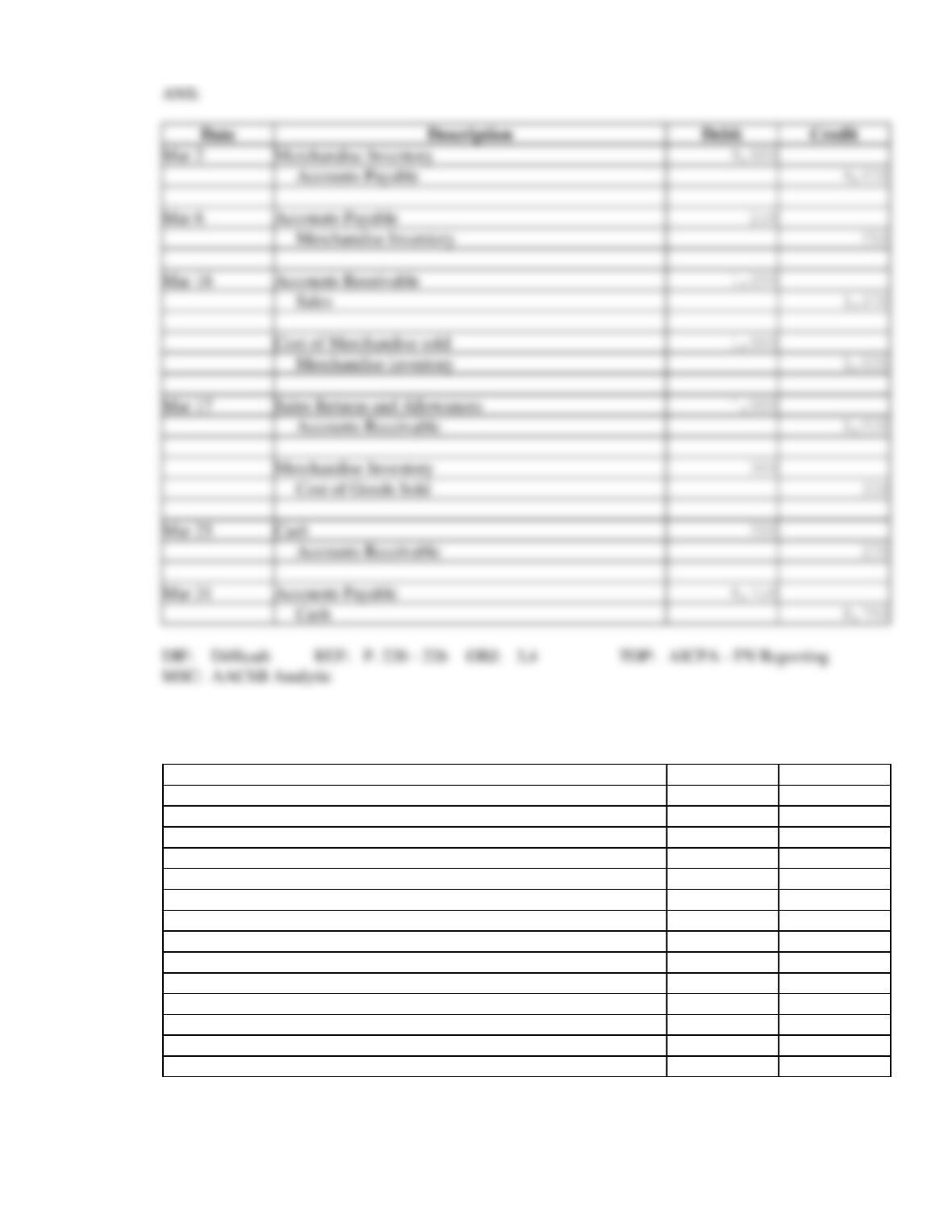
Mar 2
Merchandise Inventory
9,000
Accounts Payable
9,000
Mar 6
Accounts Payable
Merchandise Inventory
250
Mar 16
Accounts Receivable
1,200
Sales
1,200
Cost of Merchandise sold
1,000
Merchandise inventory
1,000
Mar 17
Sales Returns and Allowances
1,000
Accounts Receivable
1,000
Merchandise Inventory
Cost of Goods Sold
300
Mar 25
Cash
Accounts Receivable
200
Mar 31
Accounts Payable
8,750
Cash
8,750
272 ♦ Chapter 5
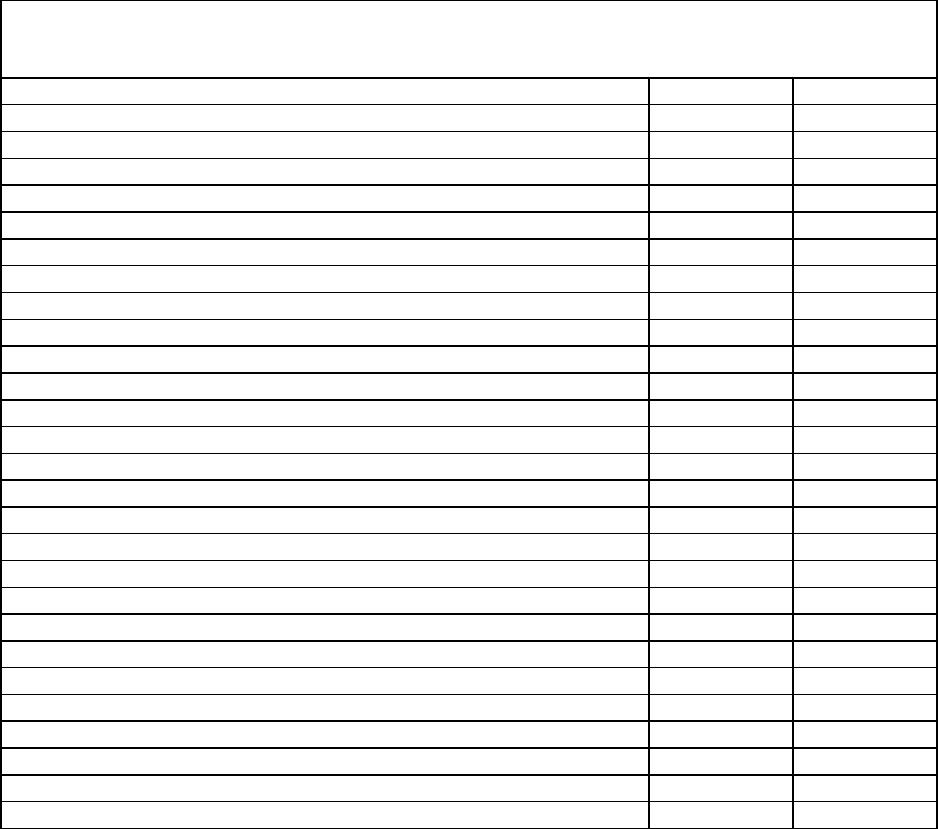
2. Refer to SlideRock Corporation. Prepare a detailed multiple-step income statement.
SlideRock Corporation
Income Statement
Accounting for Merchandise Operations ♦ 273
274 ♦ Chapter 5
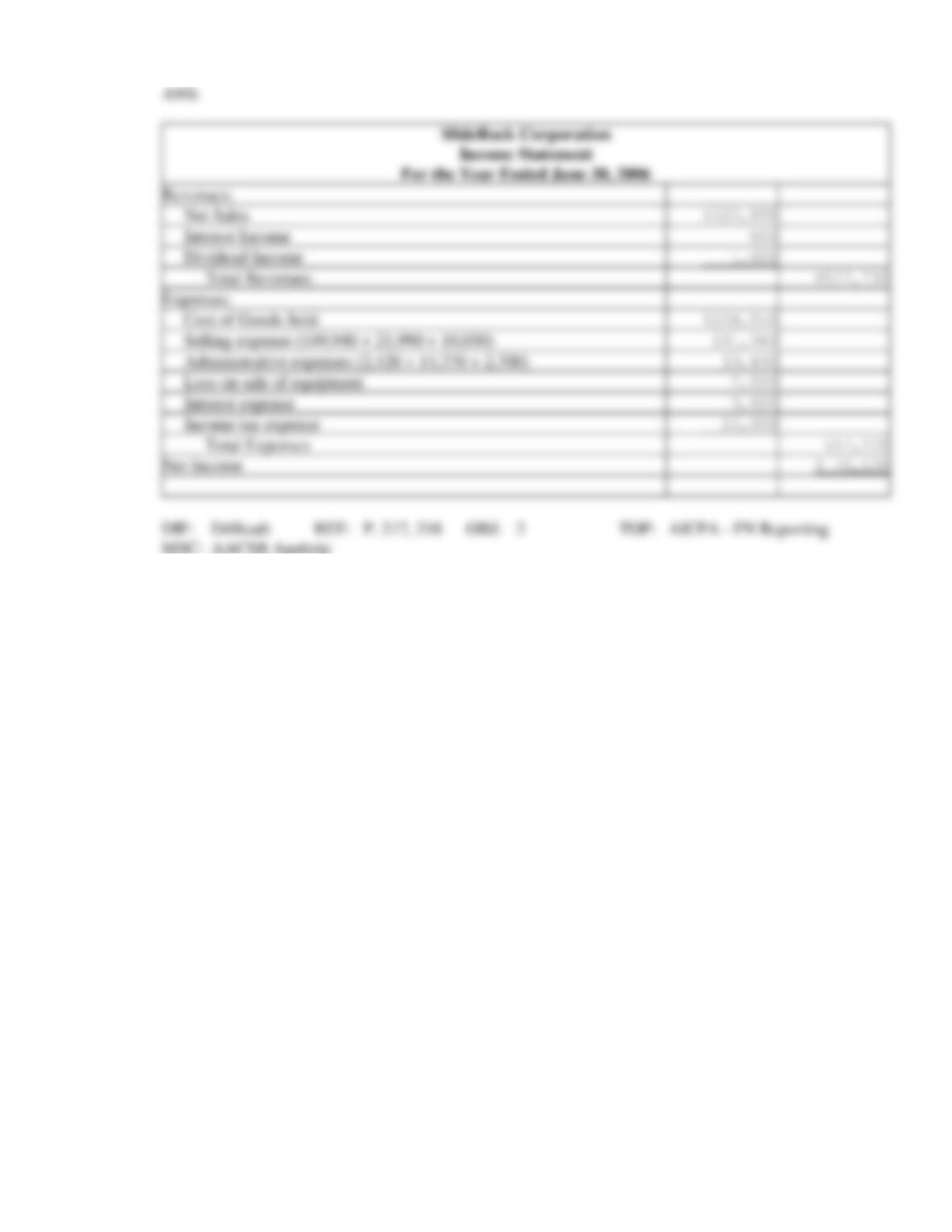
3. Refer to SlideRock Corporation. From the information provided, prepare a single-step income
statement.
SlideRock Corporation
Income Statement
Accounting for Merchandise Operations ♦ 275
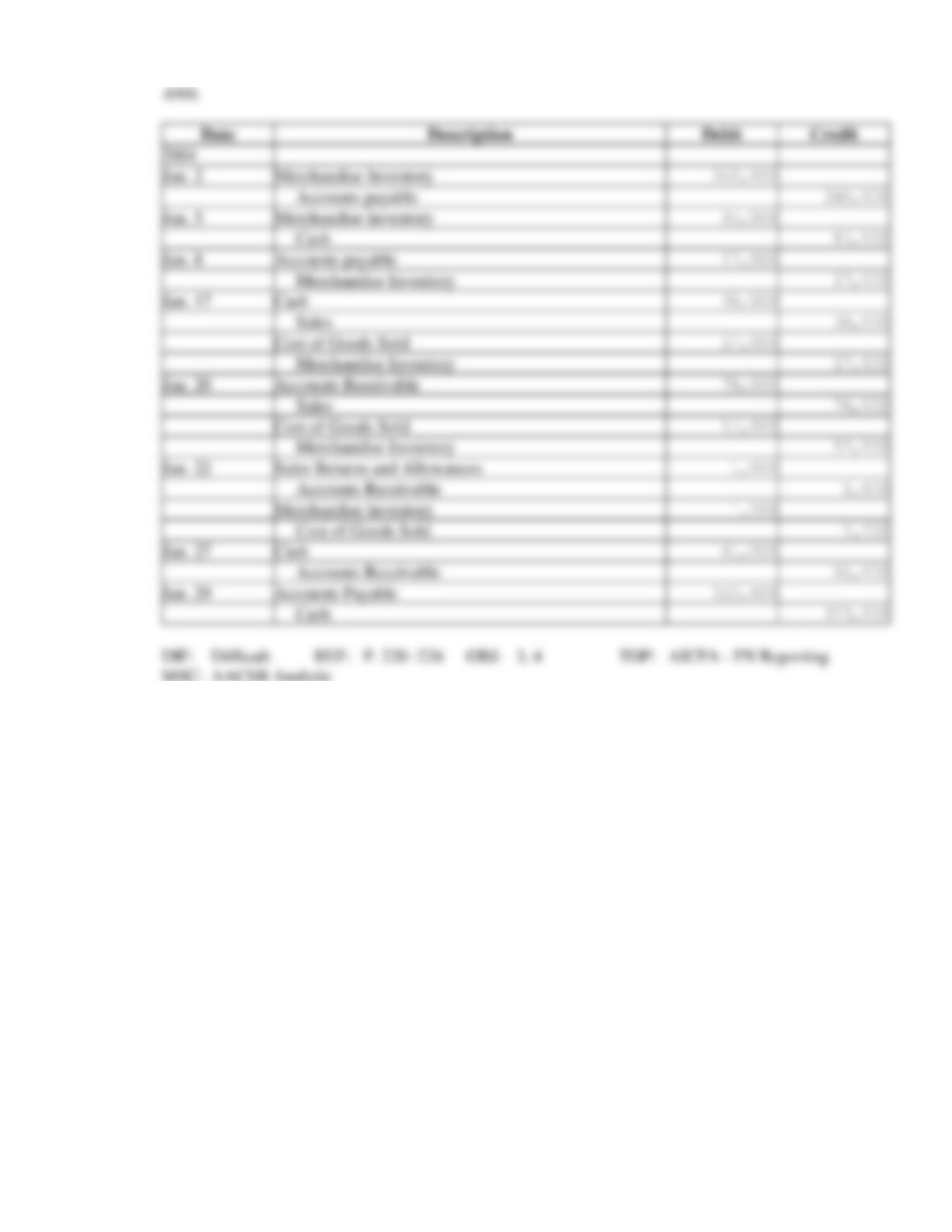
4. Presented are selected transactions pertaining to Big Air Mountain Skis and Skates, Inc.
merchandise inventory for the month of January 2004. Big Air Skis and Skates purchases skis and
in-line skating gear from manufacturers and then resells them to consumers in the Northwest. Big
Air Mountain Skis and Skates uses the perpetual inventory method.
In the journal provided, prepare the necessary entries.
Jan.
2
Purchased $340,000 of merchandise on account from Sunrise Skis, Inc.credit terms of n/30.
5
Purchased $85,000 of merchandise for cash from Skates and Such Suppliers.
8
Returned $17,000 of merchandise purchased from Sunrise Skis, Inc.purchased on January 2.
17
Sold merchandise to customers for cash, $36,000. Cost of merchandise, $27,000.
20
Sold merchandise to customers on account, $76,000. Cost of merchandise $57,000.
22
A customer returned $1,800 of merchandise sold to him on January 20. Cost of the
merchandise returned was $1,200.
27
Received $61,000 from customers on account receivable.
29
Paid amount owed to Sunrise Skis, Inc. after transactions on January 2 and 8.
Revenues:
Net Sales
Interest Income
Dividend Income
Total Revenues
Expenses:
Cost of Goods Sold
Selling expense (149,940 + 21,990 + 10,030)
Administrative expenses (2,420 + 14,370 + 2,700)
Interest expense
Income tax expense
Total Expenses
Net Income

276 ♦ Chapter 5
General Journal
Date
Description
Debit
Credit
Accounting for Merchandise Operations ♦ 277
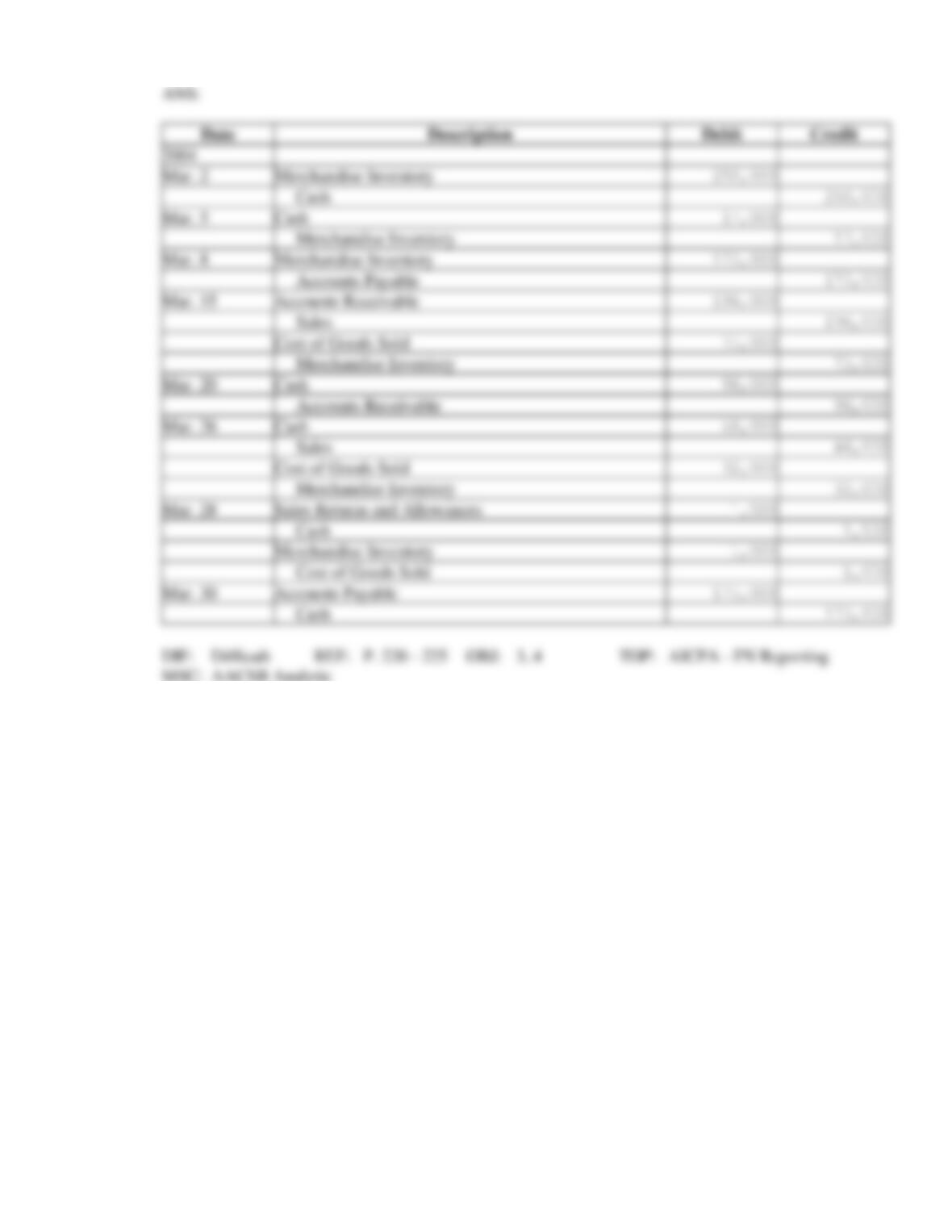
5. Presented are selected transactions pertaining to Pam’s Plants, Inc.’s merchandise inventory for the
month of March 2004. Pam’s Plants purchases plants and sprinkler equipment from manufacturers
and then resells them to consumers throughout Northern California. Pam’s Plants uses the
perpetual inventory method.
In the journal provided, prepare the necessary entries.
Mar.
2
Purchased $250,000 of merchandise for cash from Northwest Plants, Inc.
5
Returned $17,000 of merchandise purchased from Northwest Plants, Inc. for a cash refund.
8
Purchased $175,000 of merchandise on account from Sprinkler World, credit terms n/30.
15
Put in a sprinkler system for a softball field to a Parks and Recreation customer on account,
$196,000. Cost of merchandise, $75,000.
20
Received $96,000 from customers on account receivable.
26
Sold plants to customers for cash, $46,000. Cost of merchandise, $32,000.
28
A customer returned $1,500 of plants sold to him on March 26 for a cash refund. Cost of the
plants was $1,000.
30
Paid amount owed to Sprinkler World from the transaction on March 8.
2004
Jan. 2
Merchandise Inventory
Accounts payable
Jan. 5
Merchandise Inventory
Cash
Jan. 8
Accounts payable
Merchandise Inventory
Jan. 17
Cash
Sales
Cost of Goods Sold
Merchandise Inventory
Sales
Cost of Goods Sold
Merchandise Inventory
Jan. 22
Sales Returns and Allowances
Accounts Receivable
Merchandise Inventory
Cost of Goods Sold
Jan. 27
Cash
Accounts Receivable
Jan. 29
Accounts Payable
Cash

278 ♦ Chapter 5
General Journal
Date
Description
Debit
Credit
Accounting for Merchandise Operations ♦ 279
280 ♦ Chapter 5
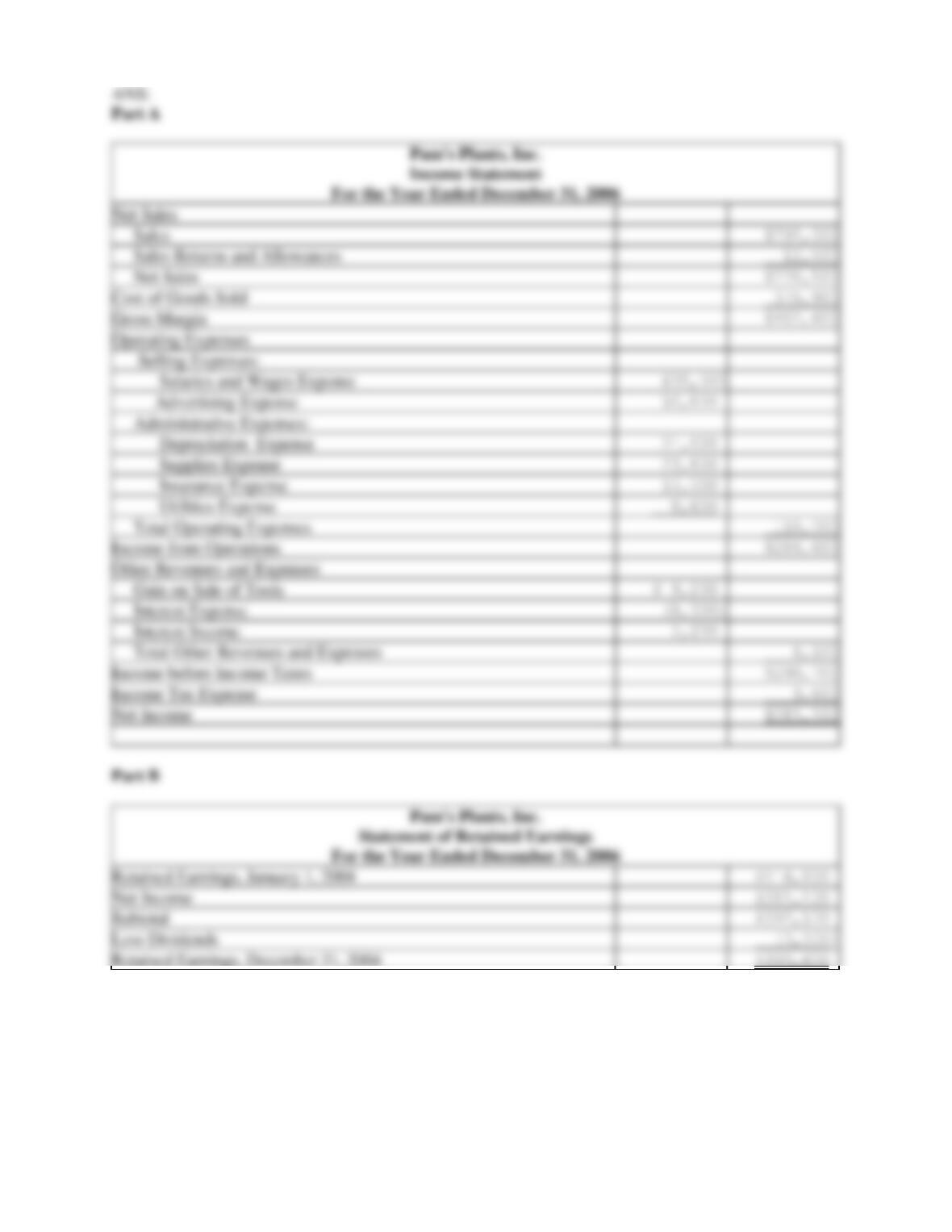
6. Part A
From the adjusted trial balance for Pam’s Plants, prepare a multiple-step income statement.
Pam’s Plants, Inc.
Adjusted Trial Balance
December 31, 2006
Accounts Payable
25,200
Accounts Receivable
125,000
Accumulated Depreciation – Tools
22,600
Accumulated Depreciation – Trucks
15,900
Advertising Expense
10,800
Tools
215,900
Cash
35,000
Capital Stock, $1 par value
333,700
Cost of Goods Sold
375,900
Depreciation Expense
24,000
Dividends
3,500
Trucks
106,300
Income Tax Expense
9,600
Income Taxes Payable
9,600
Insurance Expense
15,500
Interest Expense
8,300
Interest Income
5,200
Interest Payable
2,000
Interest Receivable
3,600
Land (used in the business for truck storage)
80,000
Long-term Investment in Stock
150,000
Gain on Sale of Tools
9,200
Merchandise Inventory (plants and sprinkler parts)
92,000
Mortgage Payable ($ 9,270 due this year)
92,700
Notes Payable (due in 3 months)
9,800
Notes Receivable (due in 6 months)
5,100
Prepaid Insurance
3,600
Retained Earnings (beginning balance at January 1, 2004)
116,000
Salaries and Wages Expense
35,300
Salaries and Wages Payable
6,400
Sales
791,000
Sales Returns and Allowances
12,500
Short-term Investments
89,000
Supplies
7,700
Supplies Expense
23,800
Unearned Revenue
1,700
Utilities Expense
8,600
Totals
1,441,000
1,441,000
* Note: classify advertising and salaries and wages expense as selling expenses and depreciation,
insurance, utilities and supplies expenses as administrative expenses.
Accounting for Merchandise Operations ♦ 281
Pam’s Plants, Inc.
Income Statement
Part B
Using the information in Part A, prepare a Statement of Retained Earnings for Pam’s Plants.
Pam’s Plants, Inc.
Statement of Retained Earnings

282 ♦ Chapter 5
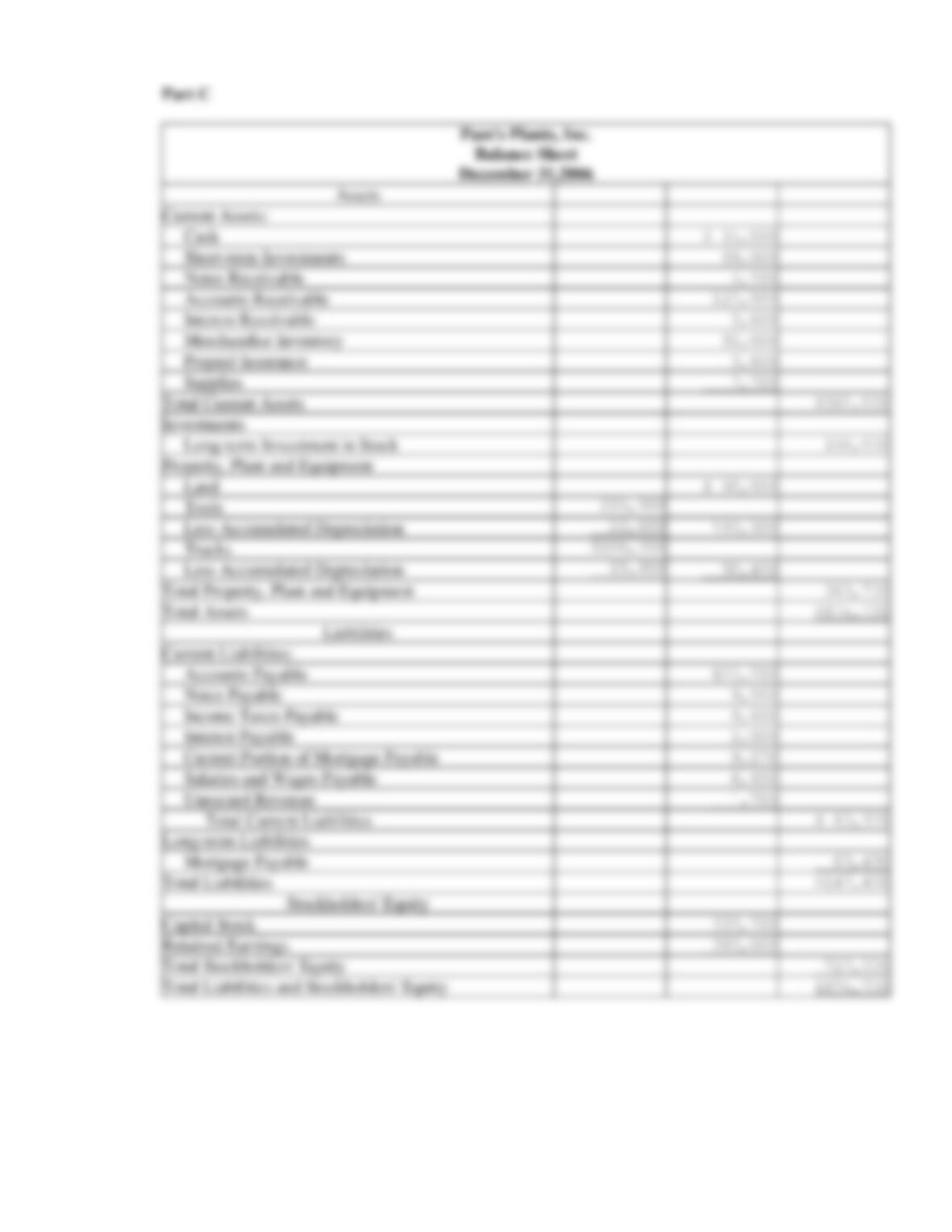
Part C
Using the information in Part A and Part B, prepare a classified Balance Sheet for Pam’s Plants.
Pam’s Plants, Inc.
Balance Sheet

Accounting for Merchandise Operations ♦ 283
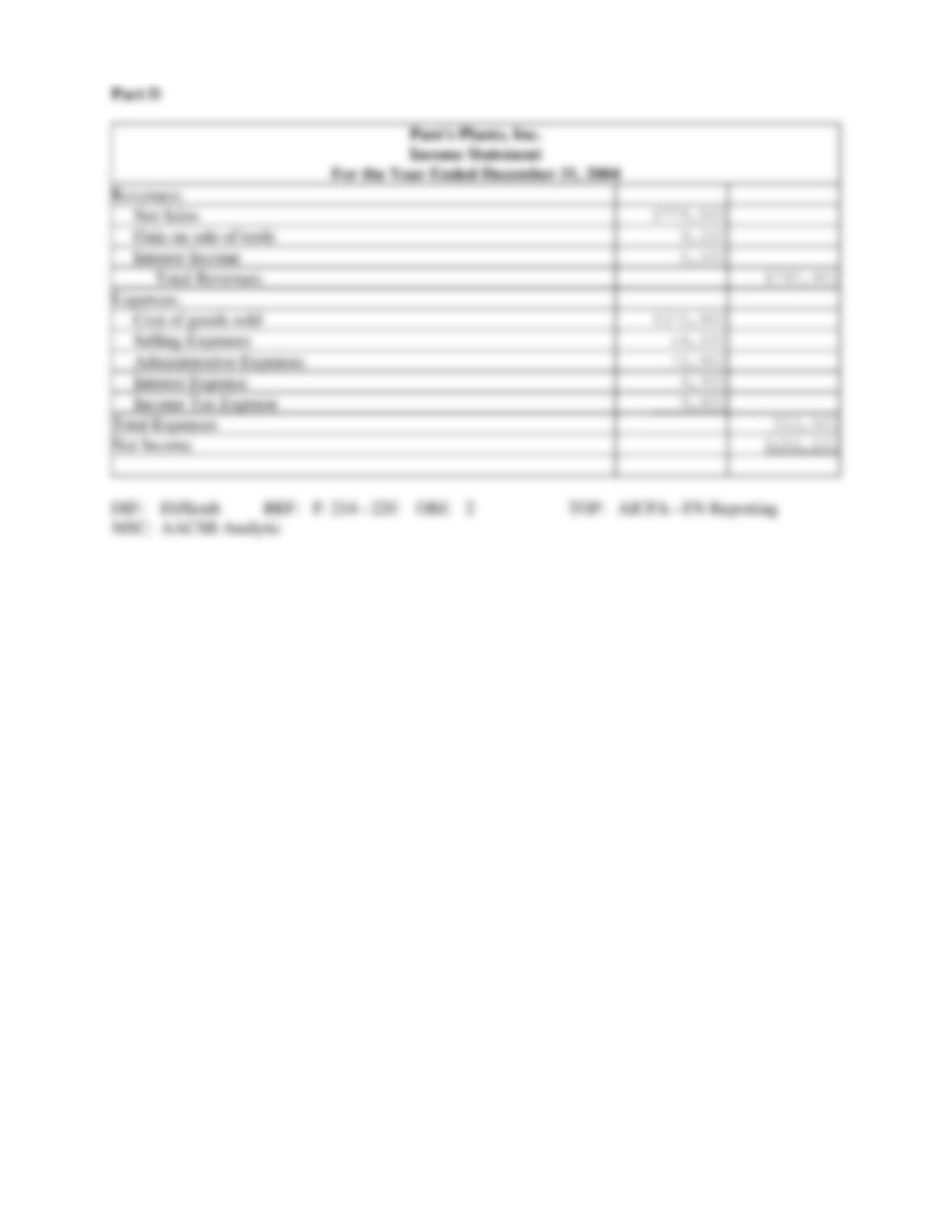
Part D
Using the information from Part A, prepare a single-step income statement.
Pam’s Plants, Inc.
Income Statement
284 ♦ Chapter 5
Accounting for Merchandise Operations ♦ 285
286 ♦ Chapter 5
7. TLC Co. uses a perpetual inventory system. In the journal provided, record the journal entries for
the following transactions:
2004
Jul.
1
Purchased $1,000 of merchandise on account. Credit terms n/30.
6
Returned $100 of the items purchased on July 1.
16
Sold merchandise on account for $750. The merchandise cost $350. Credit terms n/30.
17
Of the merchandise sold on July 18, $400 of it was returned. The items had cost TLC $250
25
Received payment in full from the customer of July 16.
26
Purchased merchandise for cash of $2,000
31
Paid for the merchandise purchased on July 1 less return on July 6..
Revenues:
Net Sales
Gain on sale of tools
Interest Income
Total Revenues
Expenses:
Cost of goods sold
Selling Expenses
Administrative Expenses
Income Tax Expense
Total Expenses
Net Income