Exam
Name___________________________________
SHORT ANSWER. Write the word or phrase that best completes each statement or answers the question.
Answer the question.
1)
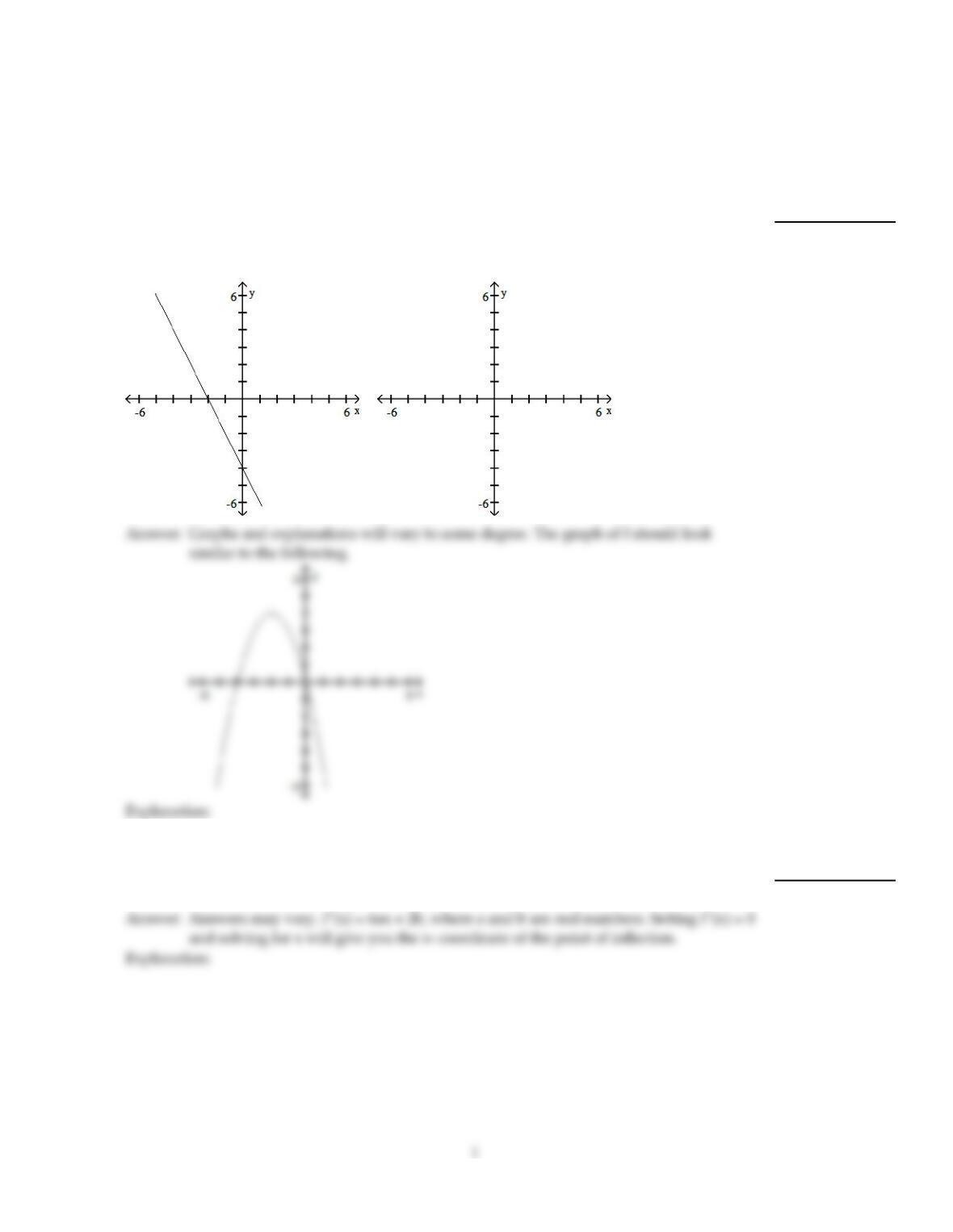
The given graph is that of the derivative of a function f. Using information obtained from
the graph of f’ and the fact that f(–2) = 4, sketch the graph of f. Explain how you obtained
the graph of f.
1)
Provide the proper response.
2)
Explain why every polynomial function of the form
f(x) = ax3+ bx2+ cx + d, a 0, must have exactly one point of inflection.
2)
Answer the question.
3)
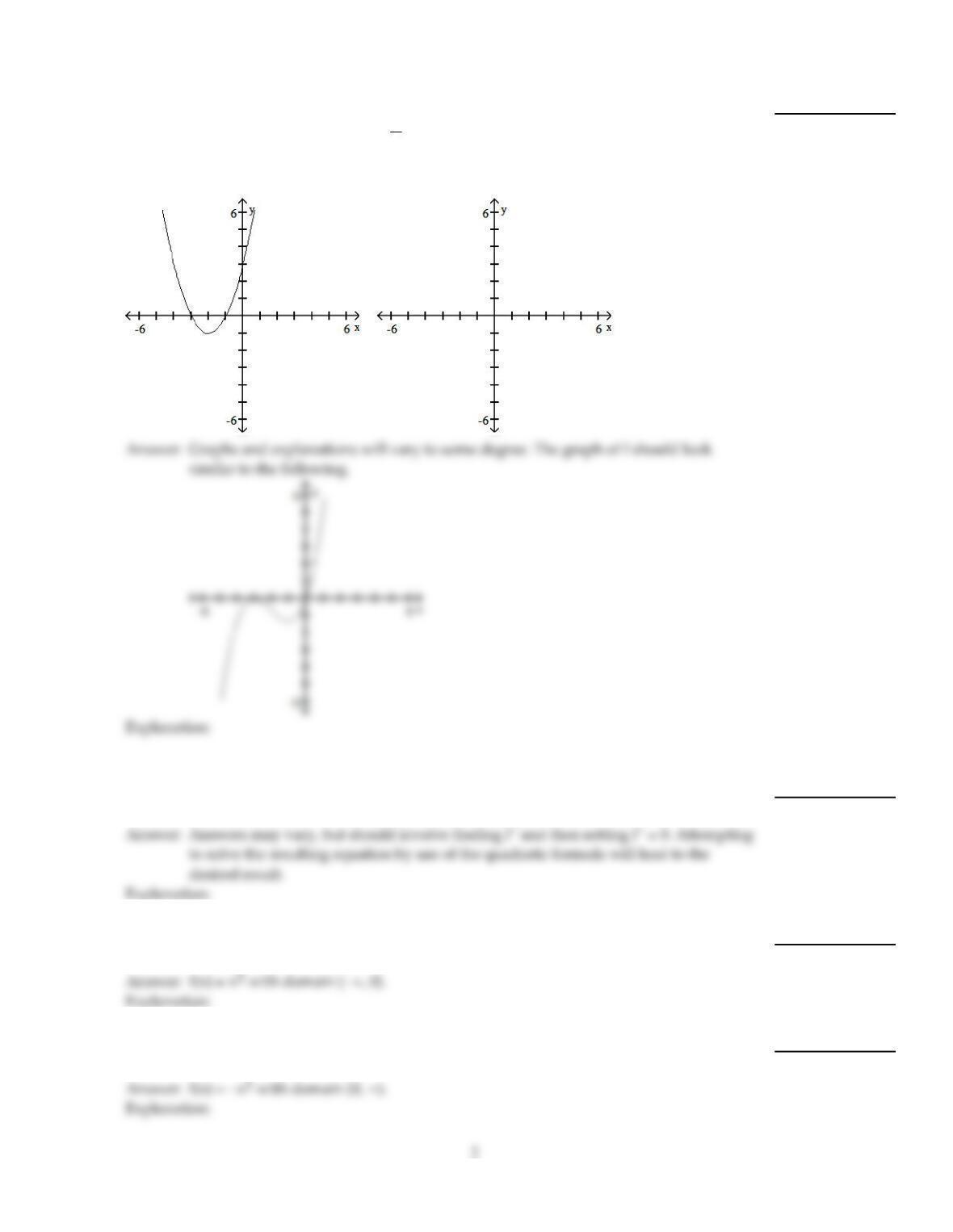
The given graph is that of the derivative of a function f. Using information obtained from
the graph of f’ and the fact that f(–1) = – 4
3 and f(–3) = 0, sketch the graph of f. Explain how
you obtained the graph of f.
3)
Provide the proper response.
4)
Show that a function of the form
f(x) = ax4+ bx3+ cx2+ dx + e has no points of inflection whenever 8ac > 3b2.
4)
5)
Give an example of a function for which the first derivative is always negative and the
second derivative is always positive.
5)
6)
Give an example of a function for which the first derivative and the second derivative are
both always negative.
6)
Answer the question.
7)
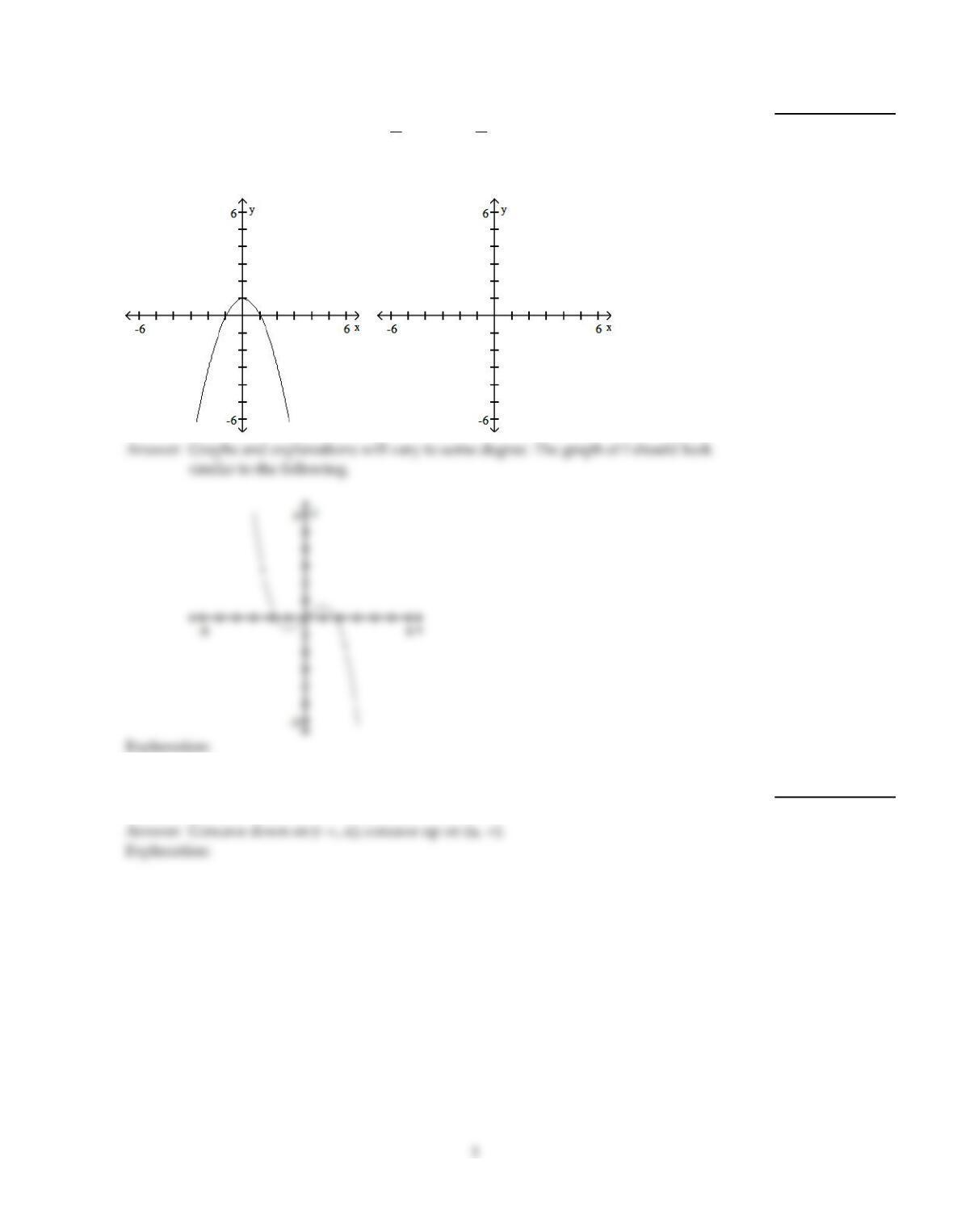
The given graph is that of the derivative of a function f. Using information obtained from
the graph of f’ and the fact that f(–1) = – 2
3 and f(1) =2
3, sketch the graph of f. Explain how
you obtained the graph of f.
7)
8)
The graph of f’(x) is a parabola with vertex at (a, 0). The parabola opens up. What does this
information tell us about the concavity associated with f(x)? Explain.
8)
Sketch a graph of a single function that has these properties.
9)
a) Continuous and differentiable for all real numbers
b) f(x) < 0 on (– , –3 ) and ( 3 , )
c) f(x) > 0 on (–3 , 3)
d) f(x) > 0 on (– , 0 )
e) f(x) < 0 on ( 0 , )
f) f (–3) =f(3) = 0
g) An inflection point at (0,0)
9)
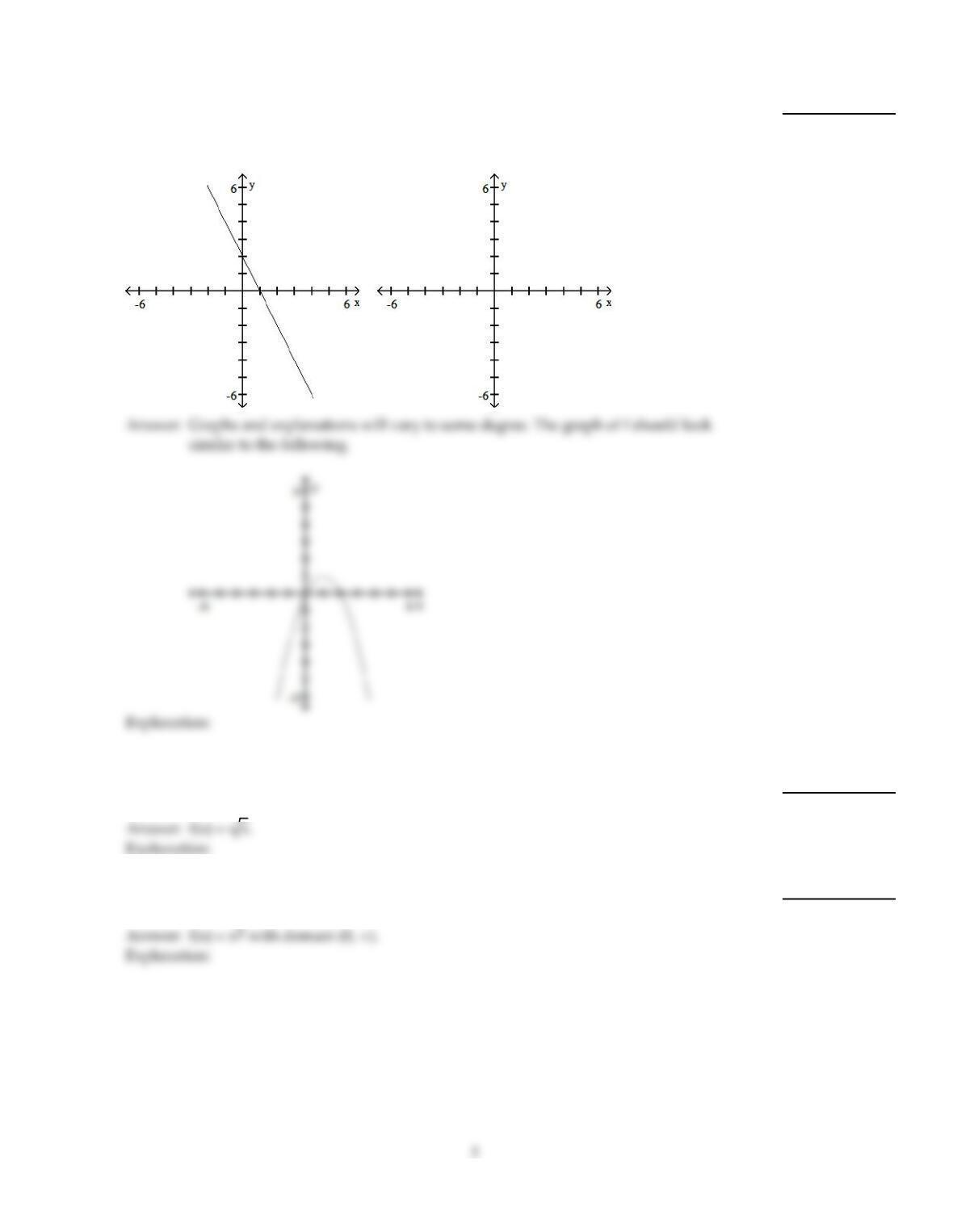
Answer the question.
10)
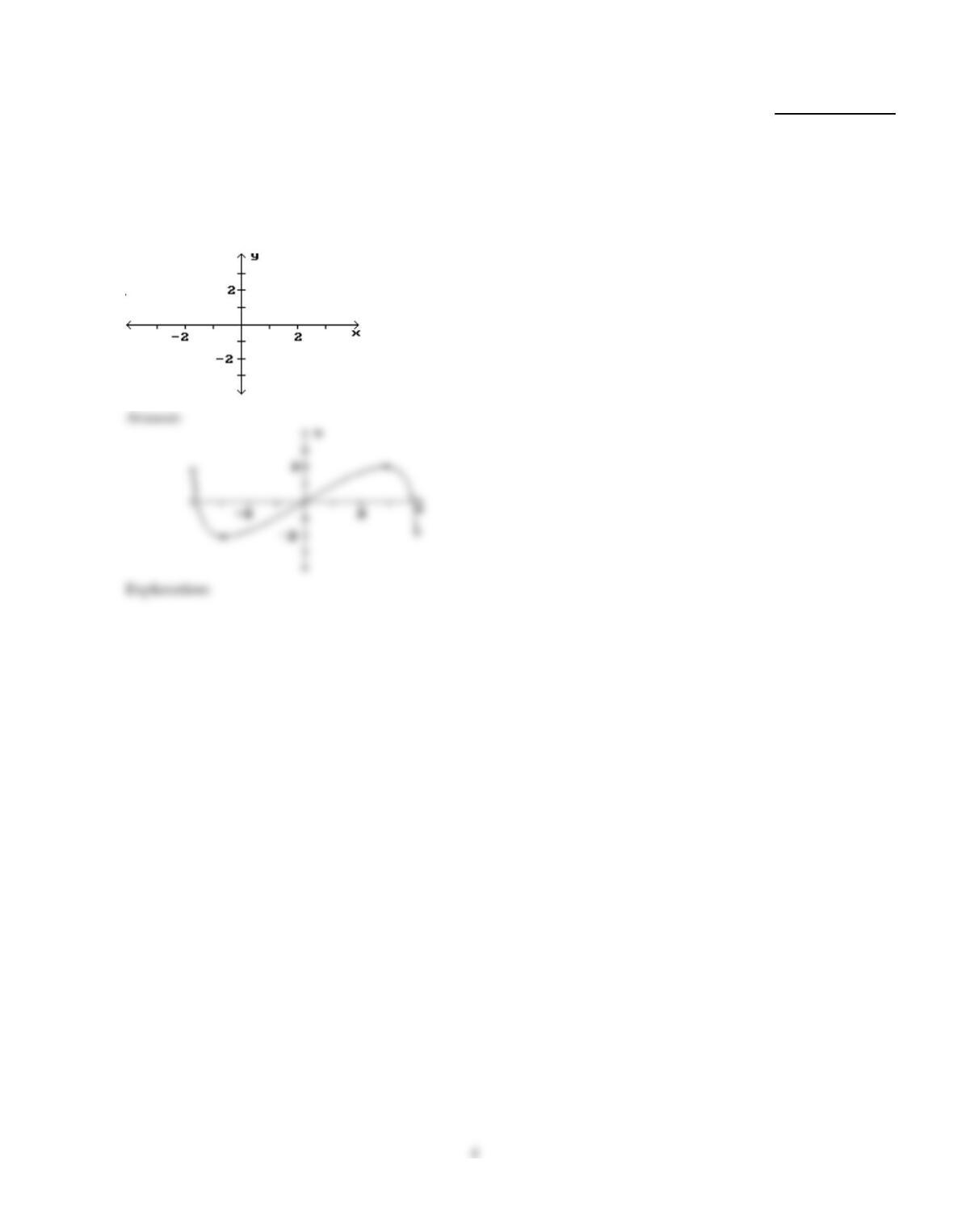
The given graph is that of the derivative of a function f. Using information obtained from
the graph of f’ and the fact that f(1) = 1, sketch the graph of f. Explain how you obtained the
graph of f.
10)
Provide the proper response.
11)
Give an example of a function for which the first derivative is always positive and the
second derivative is always negative.
11)
12)
Give an example of a function for which the first derivative and the second derivative are
both always positive.
12)
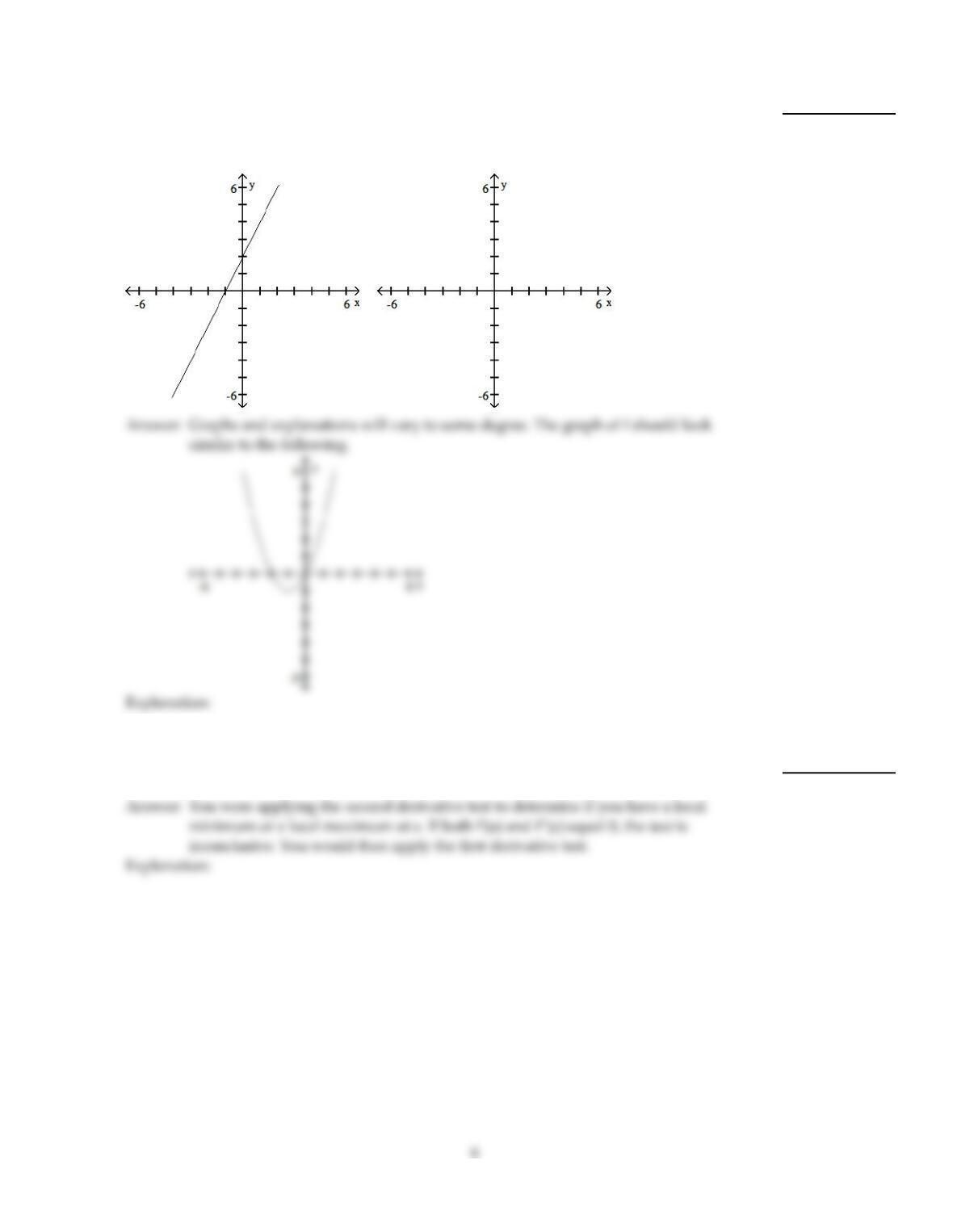
Answer the question.
13)
The given graph is that of the derivative of a function f. Using information obtained from
the graph of f’ and the fact that f(–1) = – 1, sketch the graph of f. Explain how you obtained
the graph of f.
13)
Provide the proper response.
14)
You are applying the second derivative test and you find that f'(a) = 0 and f”(a) = 0. What
does that tell you? What would be your next step?
14)
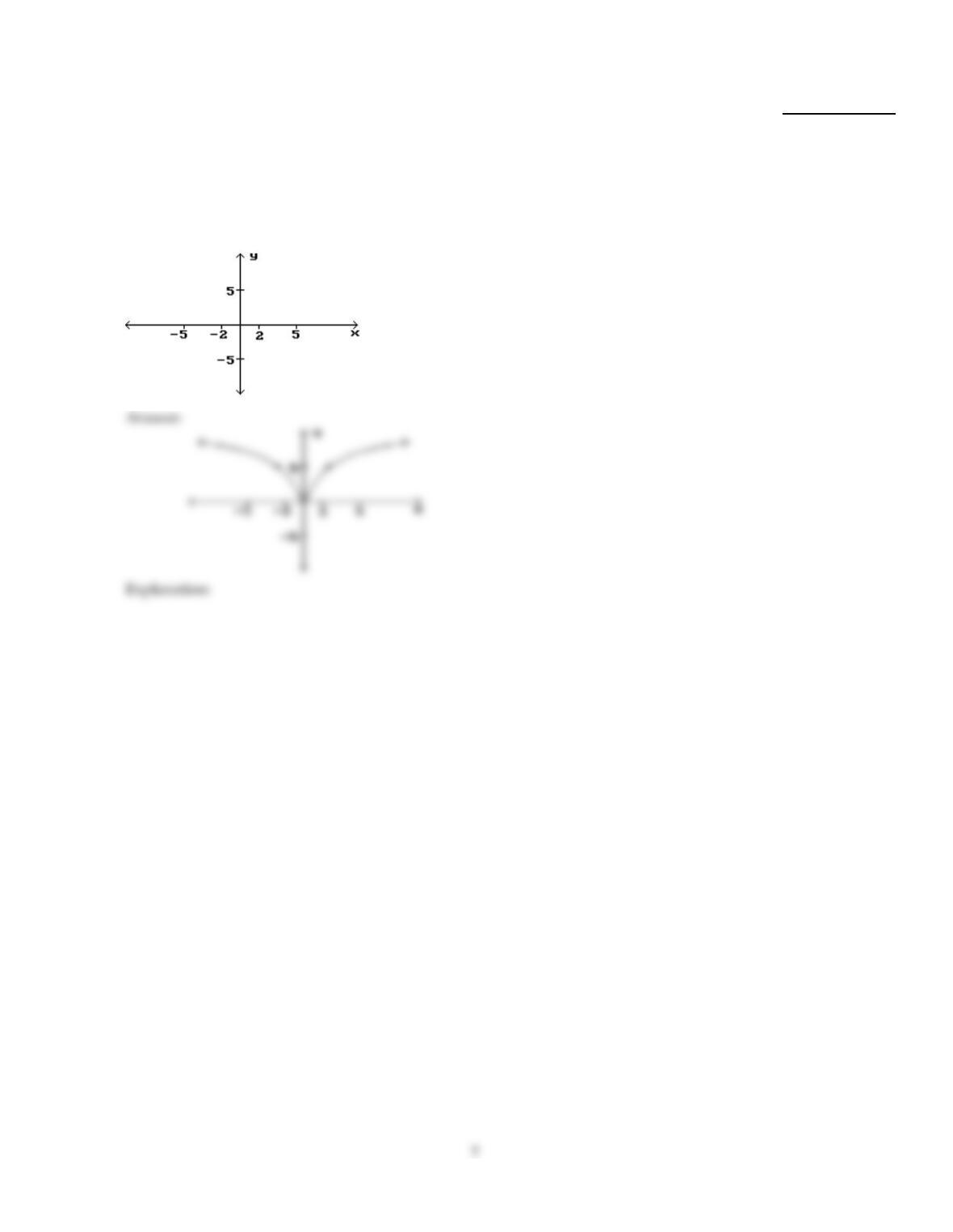
Sketch a graph of a single function that has these properties.
15)
a) Continuous for all real numbers
b) Differentiable everywhere except x = 0
c) f(x) < 0 on (– , 0)
d) f(x) > 0 on ( 0 , )
e) f(x) < 0 on (– , 0) and (0, )
f) f(–2) = f (2) = 5
g) y–intercept and x–intercept at (0,0)
15)
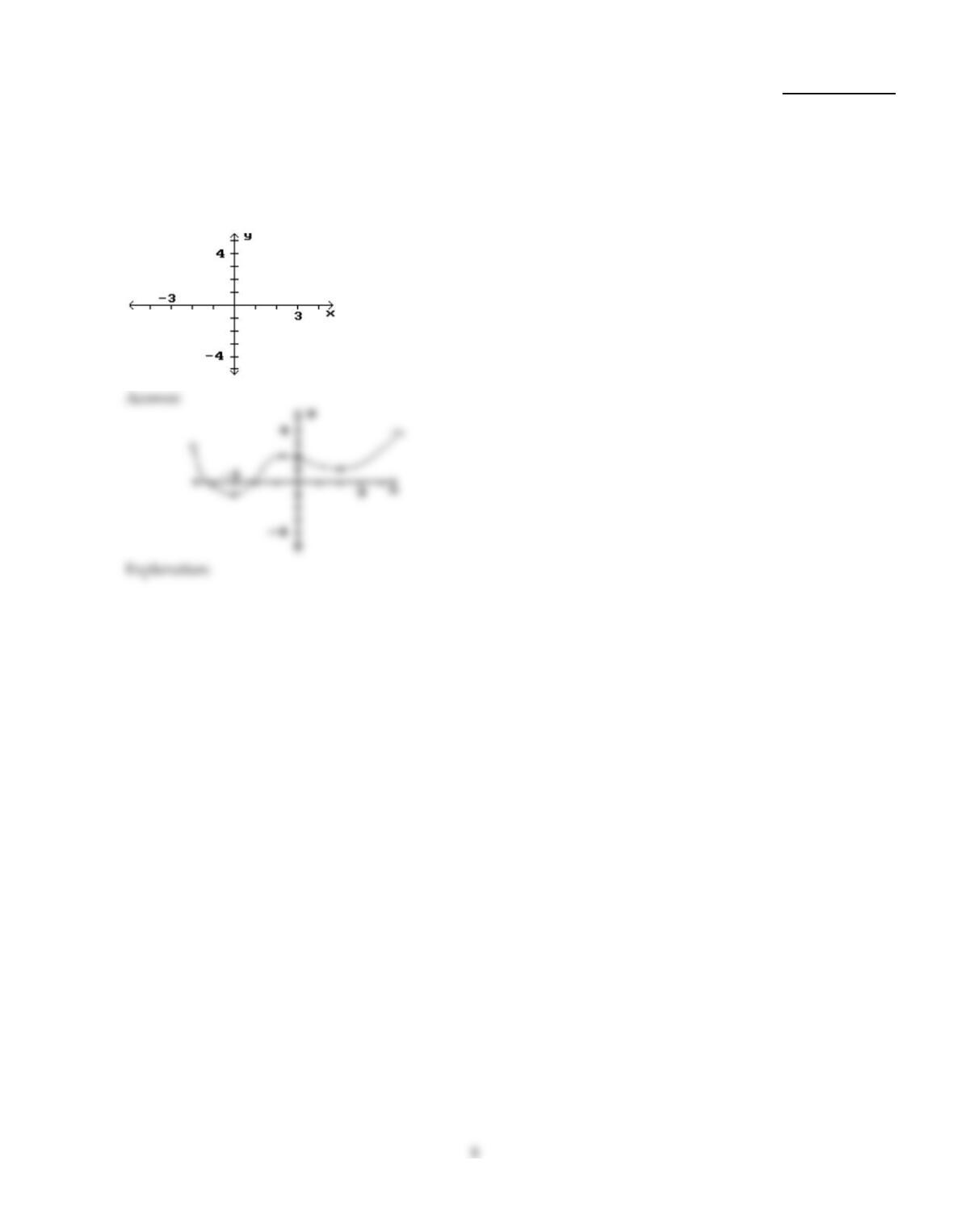
16)
a) Continuous and differentiable for all real numbers
b) f(x) > 0 on (–3 , –1) and ( 2 , )
c) f(x) < 0 on (–, –3) and ( –1 , 2)
d) f(x) > 0 on (– , –2) and ( 1 , )
e) f(x) < 0 on (–2 , 1)
f) f (–3) =f (–1) =f(2) = 0
g) f(x) = 0 at (–2 , 0) and (1, 1)
16)
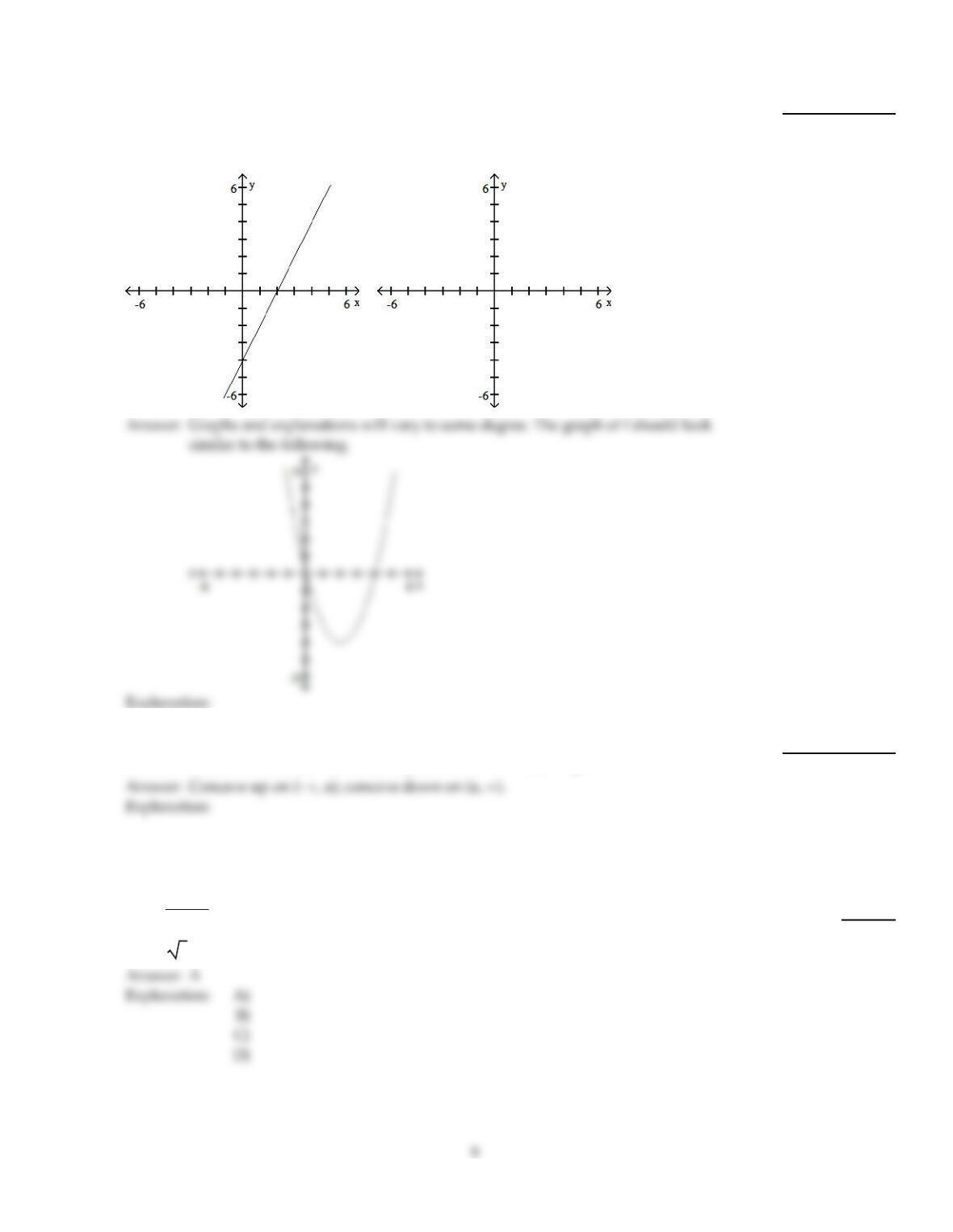
Answer the question.
17)
The given graph is that of the derivative of a function f. Using information obtained from
the graph of f’ and the fact that f(2) = – 4, sketch the graph of f. Explain how you obtained
the graph of f.
17)
18)
The graph of f'(x) is a parabola with vertex at (a, 0). The parabola opens down. What does
this information tell us about the concavity associated with f(x)? Explain.
18)
MULTIPLE CHOICE. Choose the one alternative that best completes the statement or answers the question.
Find the largest open intervals where the function is concave upward.
19)
f(x) =x
x2+ 1
19)
A)
( 3, )
B)
(–, –1)
C)
None
D)
(–, –1), (–1, )
Find f”(x) for the function.
20)
f(x) = 2x3/2 – 6x1/2
20)
A)
3x1/2 – 3x–1/2
B)
1.5x–1/2 + 1.5x–3/2
C)
3x–1/2 + 3x–3/2
D)
1.5x1/2 + 1.5x–1/2
Find the open interval(s) where the function is changing as requested.
21)
Increasing; y =x4– 18x2+ 81
21)
A)
(–3, 0)
B)
(–3, 3)
C)
(–, 0)
D)
(–3, 0), (3, )
Find the largest open intervals where the function is concave upward.
22)
f(x) = – 3x2+ 18x + 16
22)
A)
(–, 3)
B)
(3, )
C)
None
D)
(–, )
The function gives the distances (in feet) traveled in time t (in seconds) by a particle. Find the velocity and acceleration at
the given time.
23)
s =8t3+ 4t2+ 7t + 7, t =3
23)
A)
v =96 ft/s, a =48 ft/s2
B)
v =152 ft/s, a =247 ft/s2
C)
v =48 ft/s, a =96 ft/s2
D)
v =247 ft/s, a =152 ft/s2
Find the indicated derivative of the function.
24)
f(4)(x) of f(x) =6x5– 3x2– 3x + 1
24)
A)
360x
B)
480x + 6
C)
720x
D)
480x2+ 6
10
Solve the problem.
25)
P(x) = – x3+ 15x2– 48x + 450, x
3 is an approximation to the total profit (in thousands of dollars)
from the sale of x hundred thousand tires. Find the number of hundred thousands of tires that must
be sold to maximize profit.
25)
A)
10 hundred thousand
B)
8 hundred thousand
C)
5 hundred thousand
D)
3 hundred thousand
Decide if the given value of x is a critical number for f, and if so, decide whether the point is a relative minimum, relative
maximum, or neither.
26)
f(x) = x2– x – 6; x =1
2
26)
A)
Critical number, relative maximum at 1
2,–25
4
B)
Not a critical number
C)
Critical number but not an extreme point
D)
Critical number, relative minimum at 1
2,–25
4
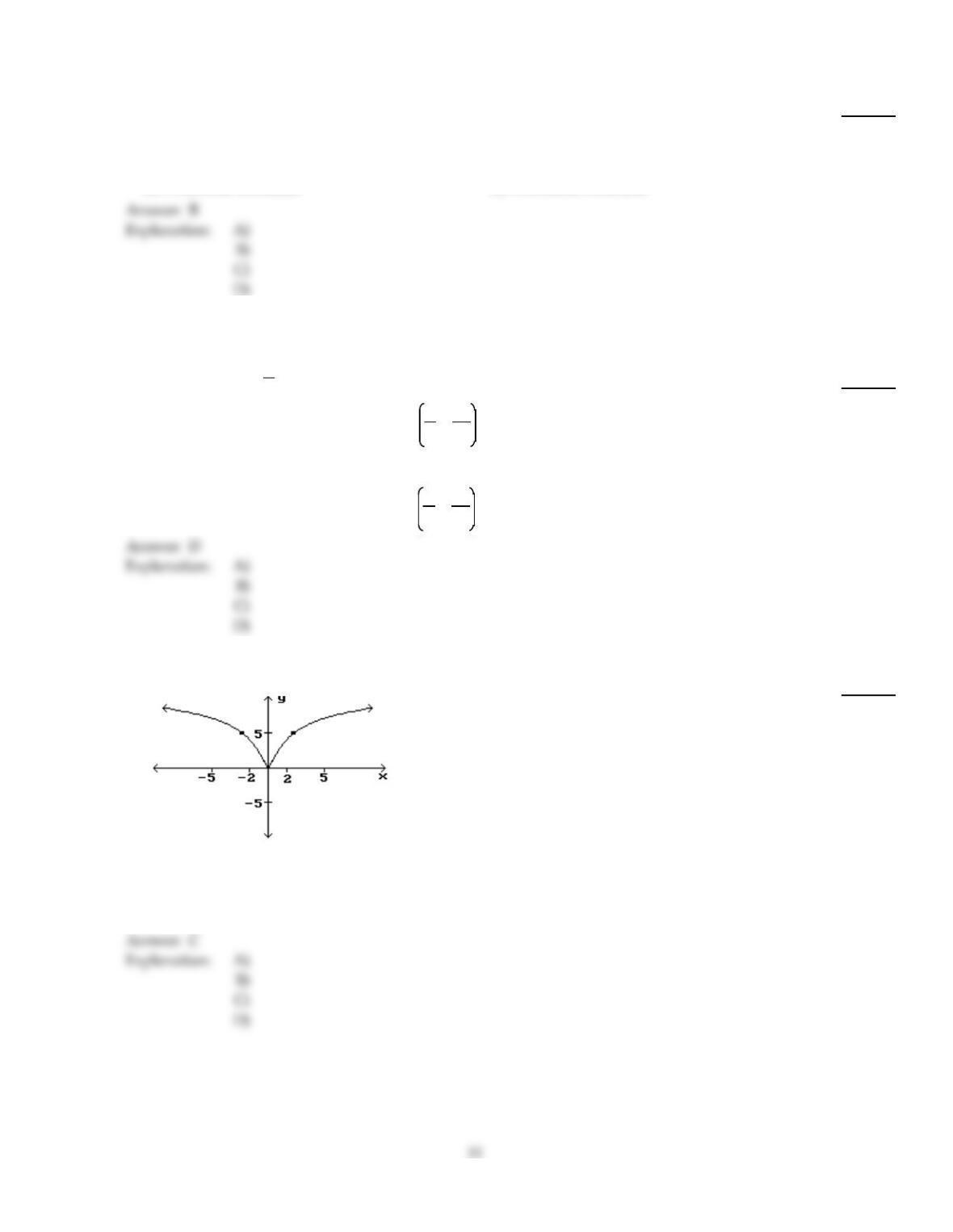
Find the location and value of all relative extrema for the function.
27)
27)
A)
Relative maximum of 5 at –2 ; Relative minimum of 0 at 0 ; Relative maximum of 1 at 2.
B)
None
C)
Relative minimum of 0 at 0.
D)
Relative maximum of 5 at –2 ; Relative maximum of 1 at 2.
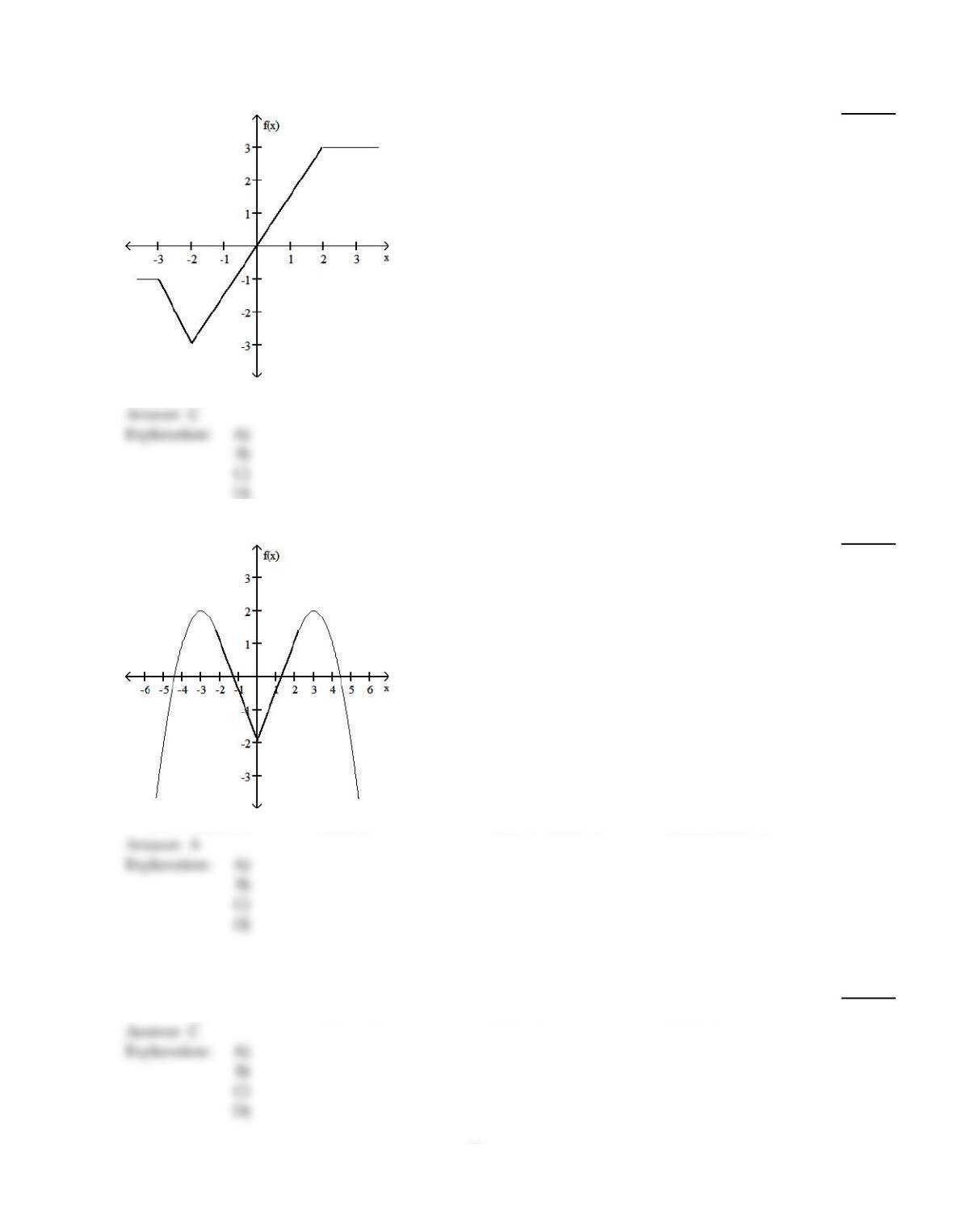
Identify the open intervals where the function is changing as requested.
28)
Increasing
28)
A)
(–3, )
B)
(–2, )
C)
(–2, 2)
D)
(–3, 3)
29)
Increasing
29)
A)
( , –3), (0, 3)
B)
(0, 3)
C)
( , –3), (3, )
D)
(–3, 0), (3, )
Find the open interval(s) where the function is changing as requested.
30)
Increasing; f(x) = x2– 2x + 1
30)
A)
(–, 0)
B)
(–, 1)
C)
(1, )
D)
(0, )
12
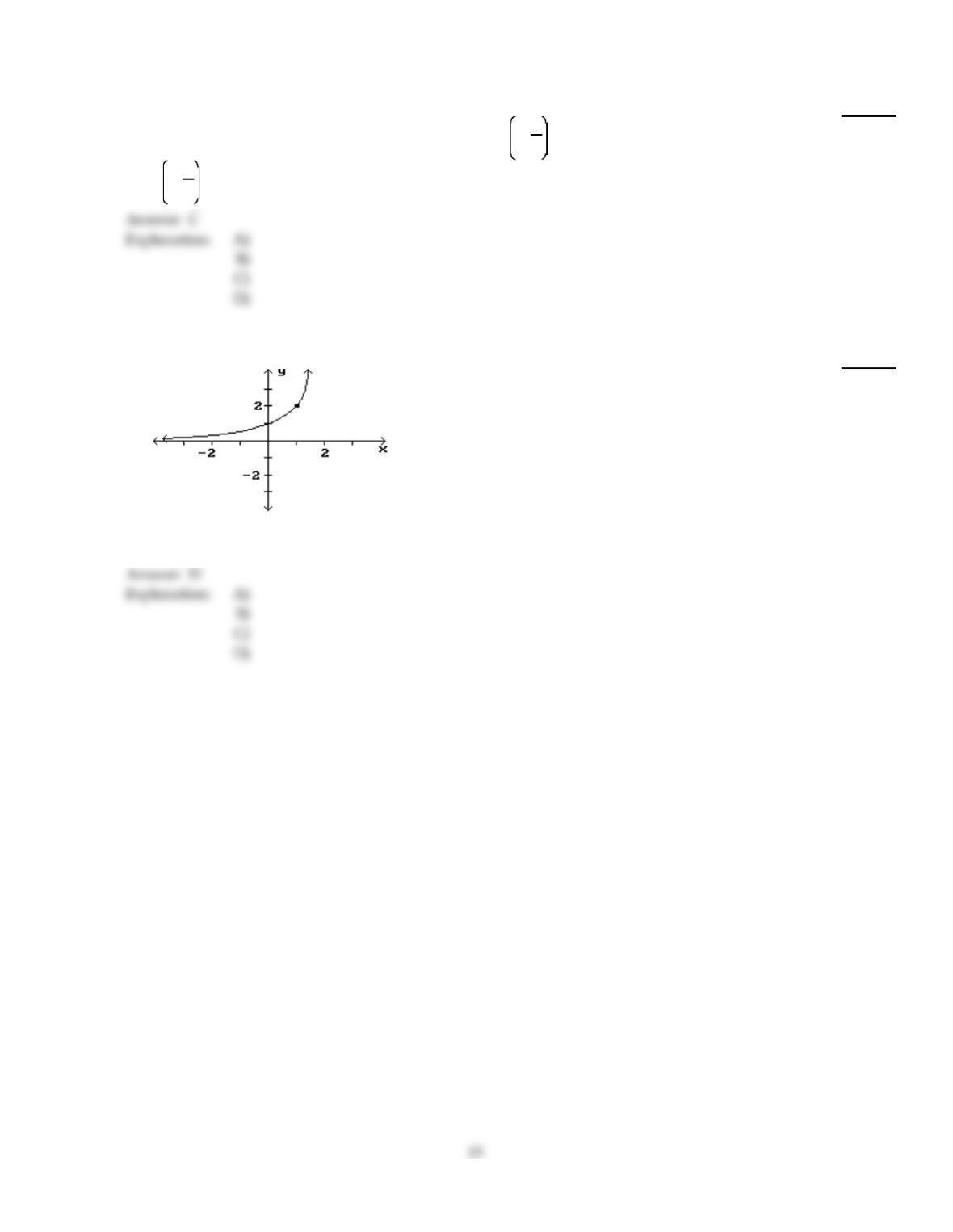
Find the x–value of all points where the function has relative extrema. Find the value(s) of any relative extrema.
31)
f(x) = 2xe–x
31)
A)
(–1, –2e), relative minimum
B)
1, 2
e, relative minimum
C)
1, 2
e, relative maximum
D)
(–1, –2e), relative maximum
Find the location and value of all relative extrema for the function.
32)
32)
A)
Relative maximum of 0 at 1.
B)
Relative minimum of 2 at 1.
C)
Relative minimum of 1 at 0.
D)
None
D
C
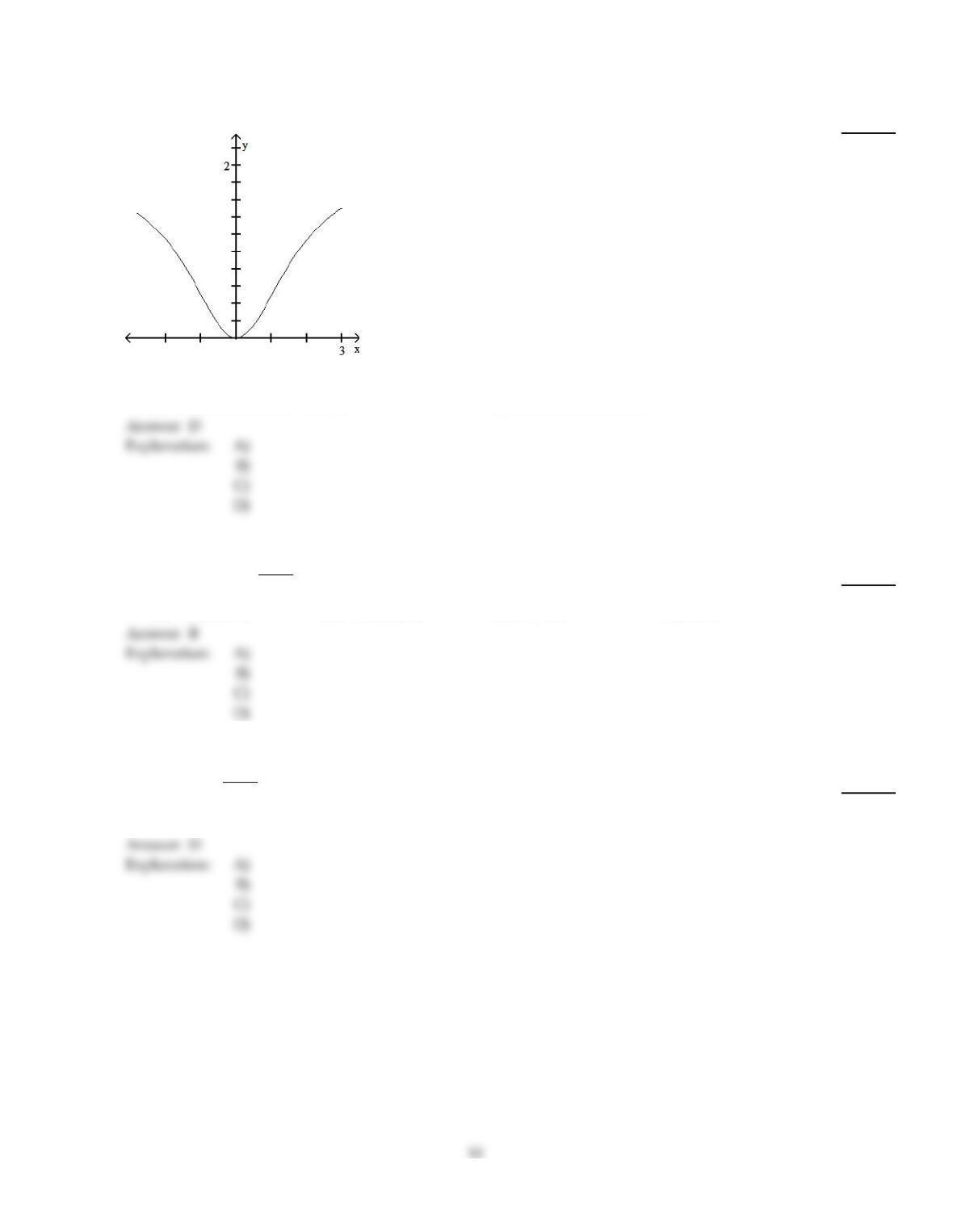
Suppose that the function with the given graph is not f(x), but f (x). Find the locations of all extrema, and tell whether
each extremum is a relative maximum or minimum.
33)
33)
A)
Relative minimum at 0
B)
Relative maximum at 0
C)
Relative maxima at –3 and 3
D)
No relative extrema
Find the open interval(s) where the function is changing as requested.
34)
Decreasing; f(x) =x +6
x –2
34)
A)
(–, 6), (6, )
B)
(–, 2), (2, )
C)
(–, –2)
D)
none
Find the indicated derivative of the function.
35)
f(x) of f(x) =1
x + 1
35)
A)
6(x + 1)–4
B)
6(x + 1)–3
C)
–6(x + 1)–3
D)
–6(x + 1)–4
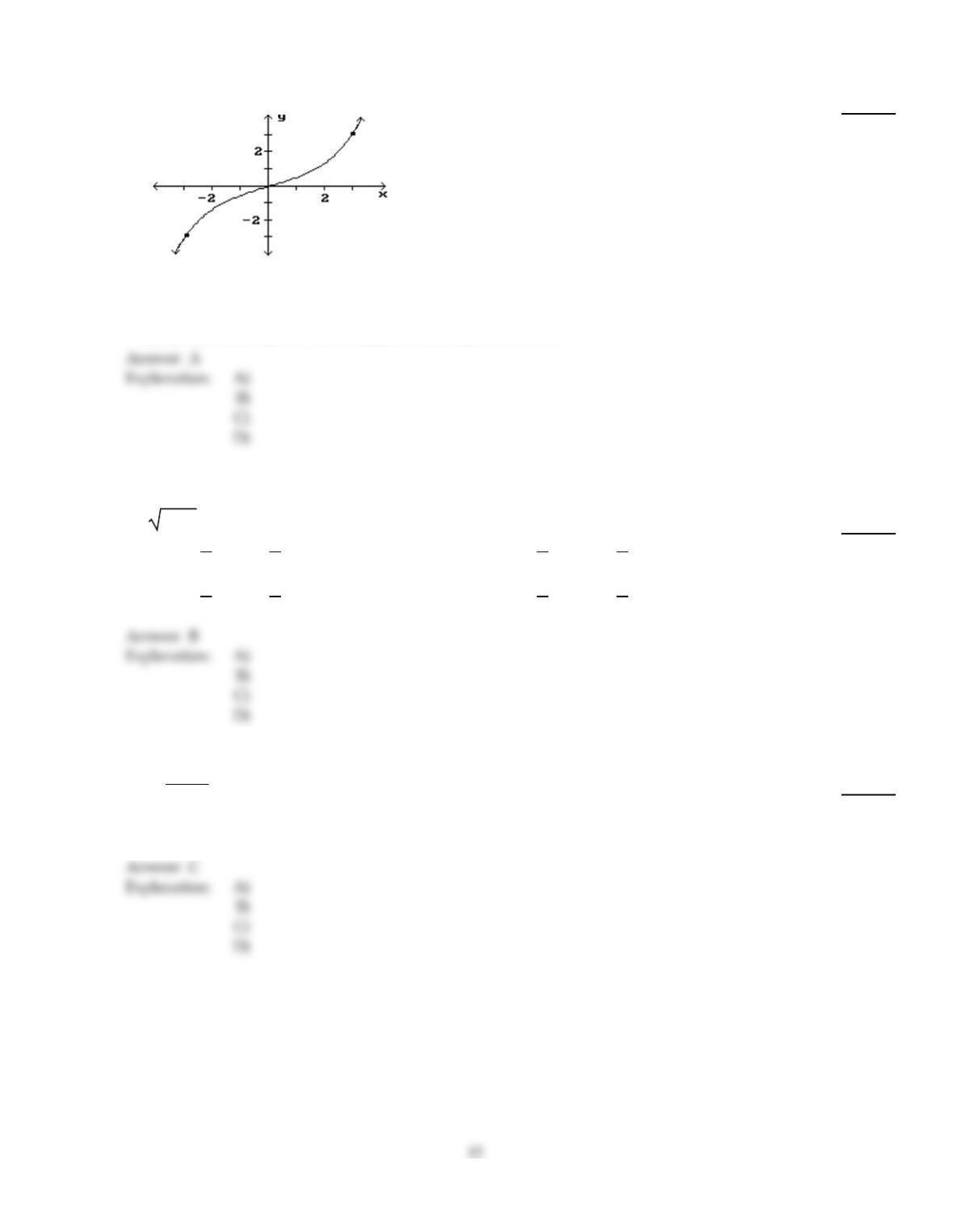
Find the location and value of all relative extrema for the function.
36)
36)
A)
None
B)
Relative minimum of –1 at –3.
C)
Relative minimum of 3 at 3 ; Relative minimum of 0 at 0 ; Relative maximum of –3 at –3.
D)
Relative minimum of 3 at 3 ; Relative maximum of –3 at –3.
The function gives the distances (in feet) traveled in time t (in seconds) by a particle. Find the velocity and acceleration at
the given time.
37)
s =t2– 5, t = 3
37)
A)
v = – 5
8 ft/s, a =3
2 ft/s2
B)
v =3
2 ft/s, a = – 5
8 ft/s2
C)
v = – 3
2 ft/s, a =5
8 ft/s2
D)
v =5
8 ft/s, a = – 3
2 ft/s2
Find the x–value of all points where the function has relative extrema. Find the value(s) of any relative extrema.
38)
f(x) =1
x2+ 1
38)
A)
Relative maximum of 0 at 1.
B)
No relative extrema.
C)
Relative maximum of 1 at 0.
D)
Relative minimum of 0.5 at 0.
Find f”(x) for the function.
39)
f(x) =1
x2– 1
39)
A)
6x2– 2
(x2– 1)4
B)
6x2+ 2
(x2– 1)3
C)
6x2+ 2
(x2– 1)4
D)
6x2– 2
(x2– 1)3
Solve the problem.
40)
The annual revenue and cost functions for a manufacturer of grandfather clocks are approximately
R(x) =480x – 0.03x2 and C(x) =120x + 100,000, where x denotes the number of clocks made. What
is the maximum annual profit?
40)
A)
$1,180,000
B)
$1,080,000
C)
$1,280,000
D)
$980,000
Find the location and value of all relative extrema for the function.
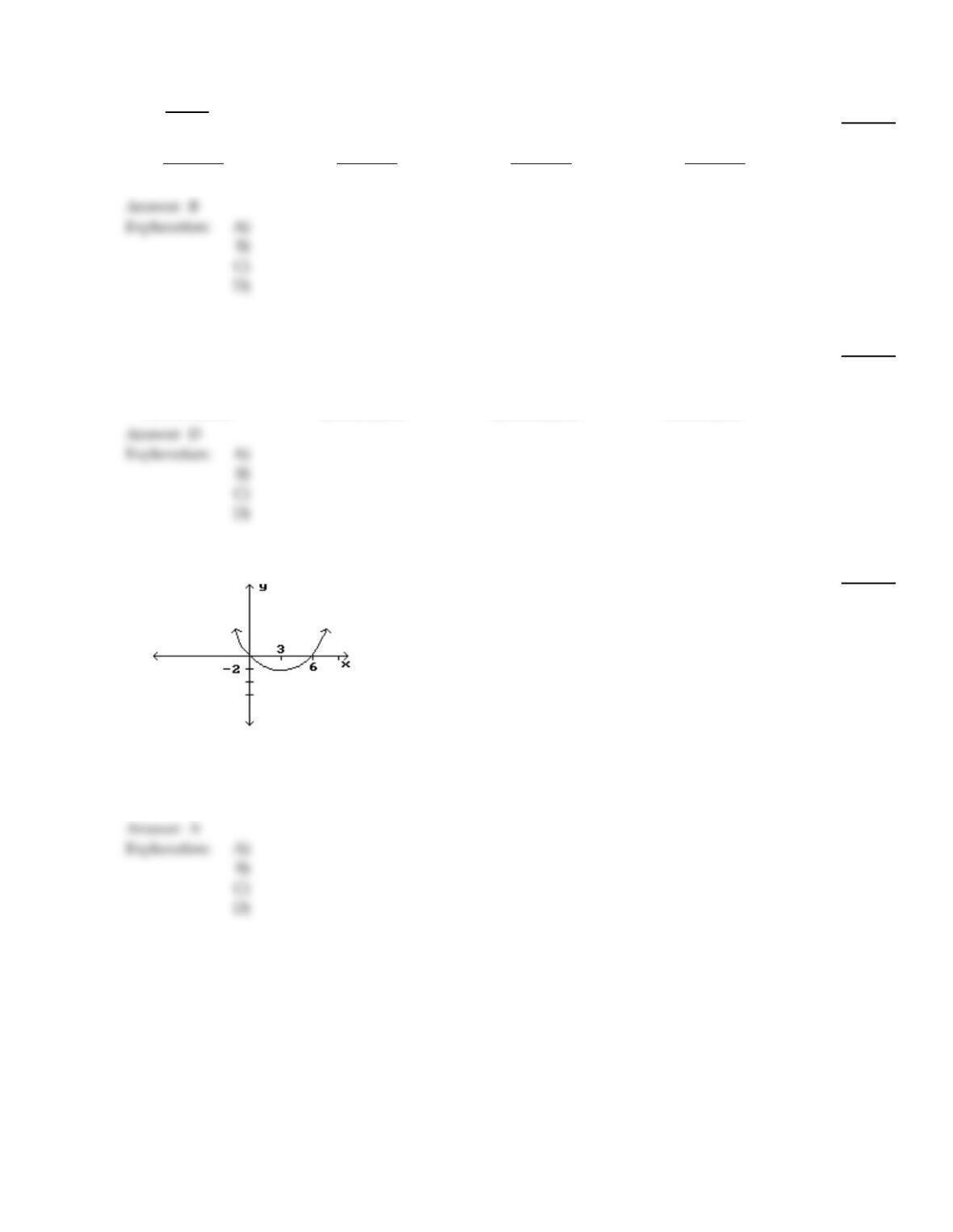
41)
41)
A)
Relative minimum of –2 at 3.
B)
Relative minimum of –2 at 3 ; Relative maximum of 0 at 6.
C)
Relative maximum of 0 at 0 ; Relative minimum of 3 at –2; Relative minimum of 0 at 6.
D)
Relative maximum of 0 at 0 ; Relative maximum of 0 at 6.
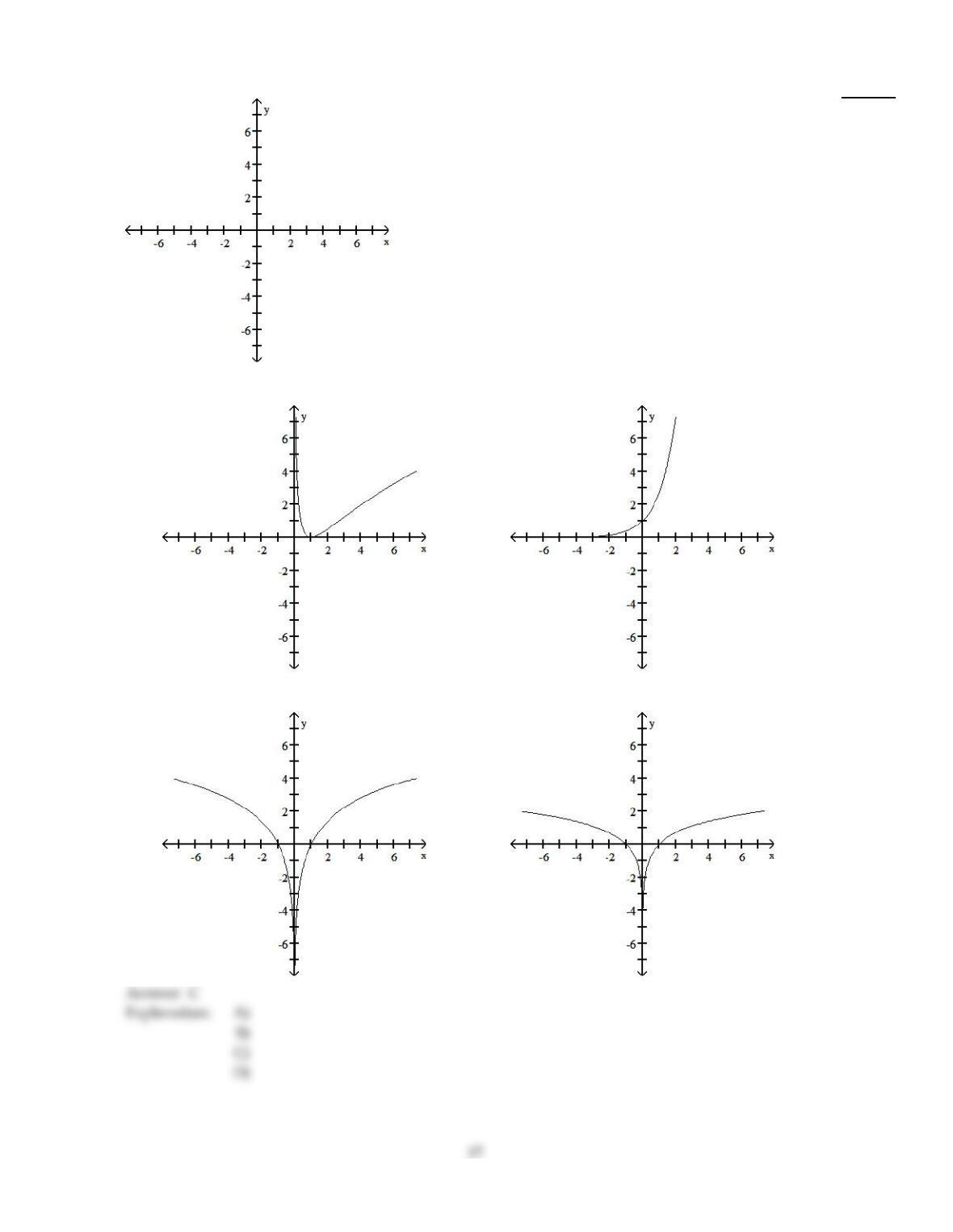
Sketch the graph and show all extrema, inflection points, and asymptotes where applicable.
16
42)
f(x) = ln (x2)
42)
A)
Rel min: (1, 0)
Inflection point: (1, 0)
B)
Rel min: (–3, 0)
No inflection points
C)
No extrema
No inflection points
D)
No extrema
No inflection points
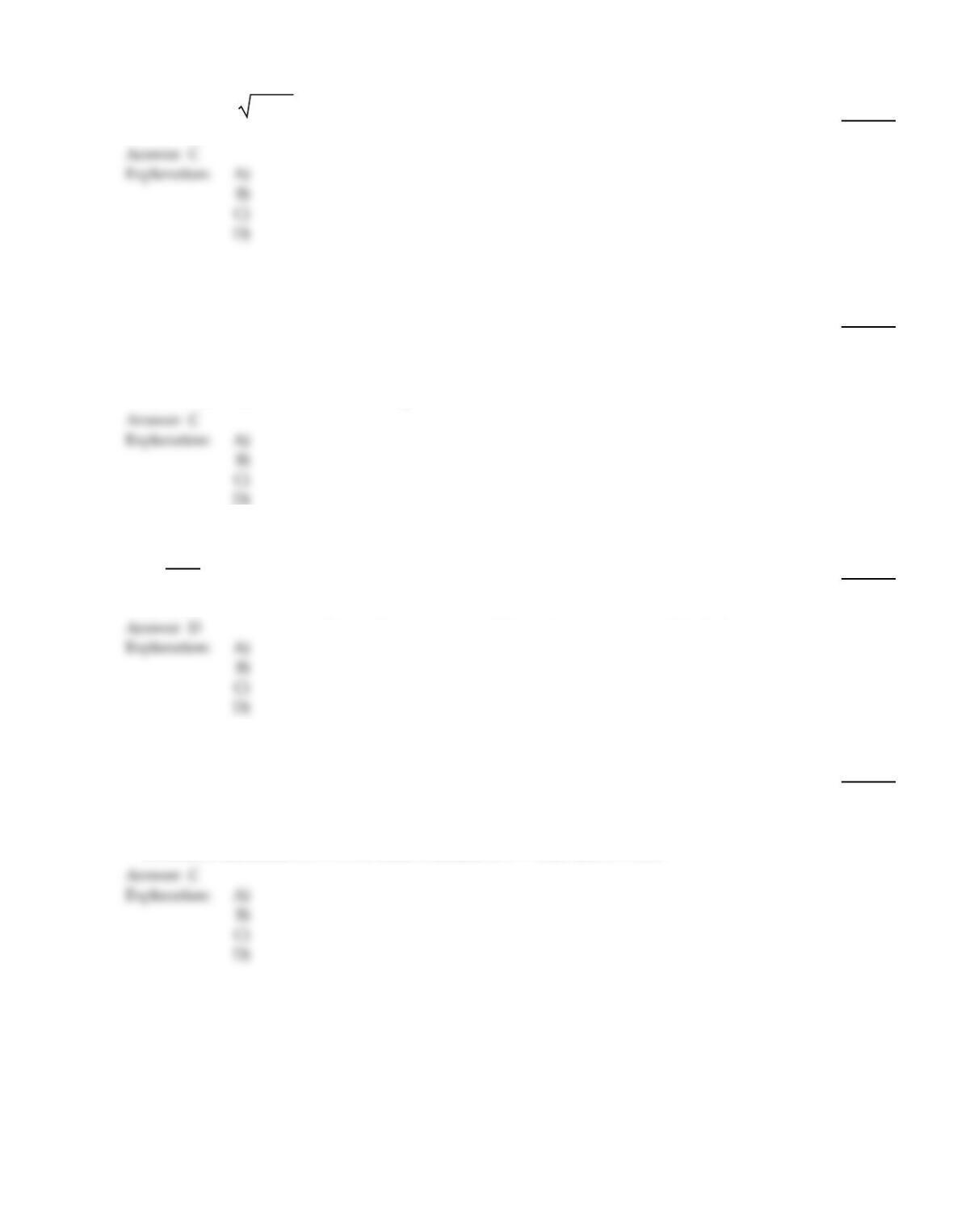
Find the open interval(s) where the function is changing as requested.
43)
Increasing; y =x2+7
43)
A)
(–, 0)
B)
(–1, )
C)
(0, )
D)
none
Decide if the given value of x is a critical number for f, and if so, decide whether the point is a relative minimum, relative
maximum, or neither.
44)
f(x) = 4x5– 5x4; x = 1
44)
A)
Not a critical number
B)
Critical number, relative maximum at (1, –1)
C)
Critical number, relative minimum at (1, –1)
D)
Critical number but not an extreme point
Find the largest open intervals where the function is concave upward.
45)
f(x) =3
x + 2
45)
A)
None
B)
(–, –2)
C)
(–, )
D)
(–2, )
Use a graphing calculator to find the location of all relative extrema (to three decimal places).
46)
f(x) =x4– 4x3– 53x2– 86x + 92
46)
A)
Relative maximum at x =0.92; relative minima at x = – 3.237 and x =7.137
B)
Relative maximum at x =0.954; relative minima at x = – 3.103 and x =7.054
C)
Relative maximum at x = – 0.944; relative minima at x = – 3.192 and x = 7.136
D)
Relative maximum at x =0.969; relative minima at x = – 3.268 and x =7.038
18
Solve the problem.
47)
The number of people P(t) (in hundreds) infected t days after an epidemic begins is approximated
by
P(t) =10 ln(0.29t + 1)
0.29t + 1 . When will the number of people infected start to decline?
47)
A)
Day 10
B)
Day 7
C)
Day 8
D)
Day 9
48)
Find the price p per unit that produces the maximum profit P if C(x) =85 + 12x and p =48 – 2x.
48)
A)
$36
B)
$26
C)
$40
D)
$30
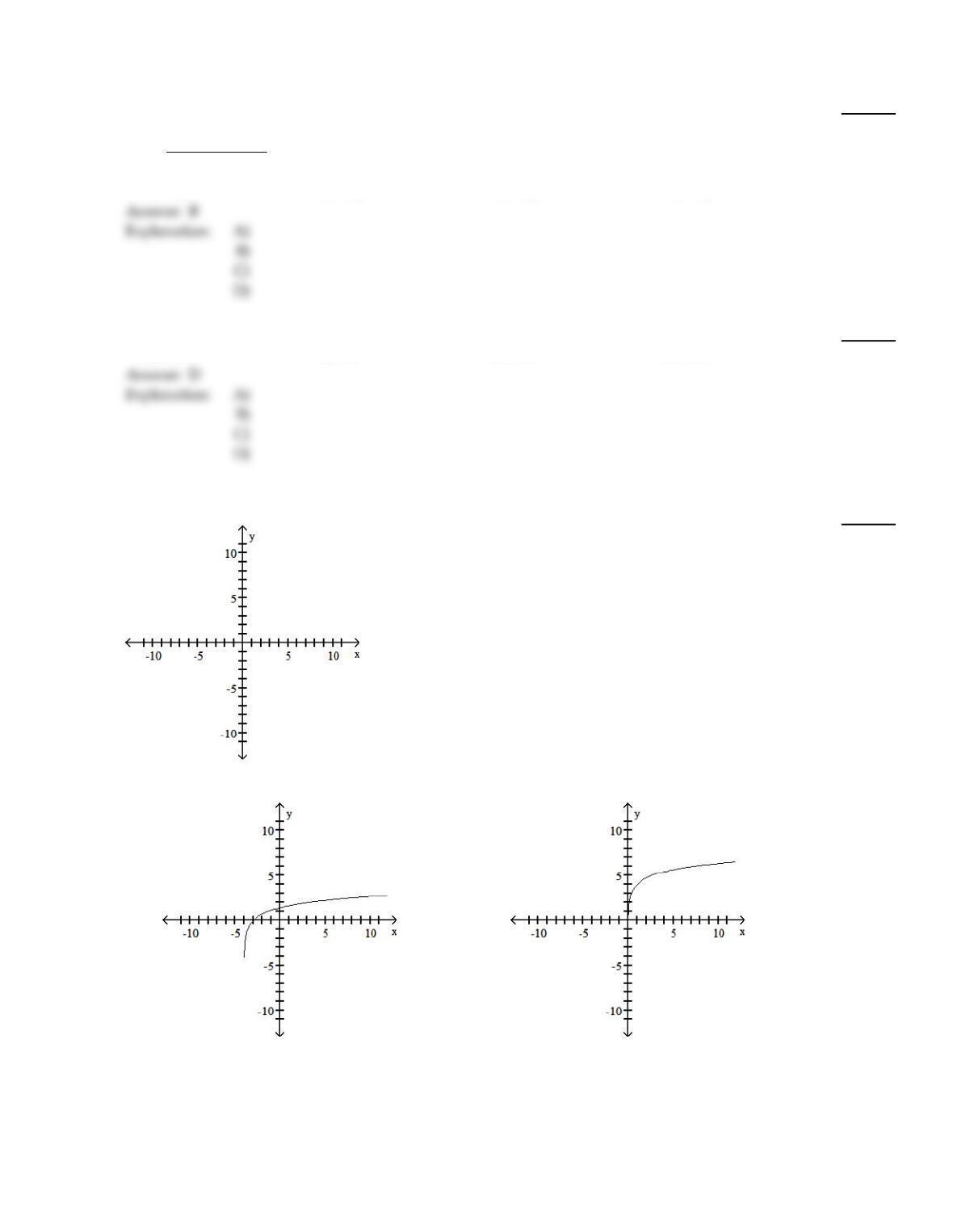
Sketch the graph and show all extrema, inflection points, and asymptotes where applicable.
49)
f(x) = ln x + 4
49)
A)
No extrema
No inflection points
B)
No extrema
No inflection points
19
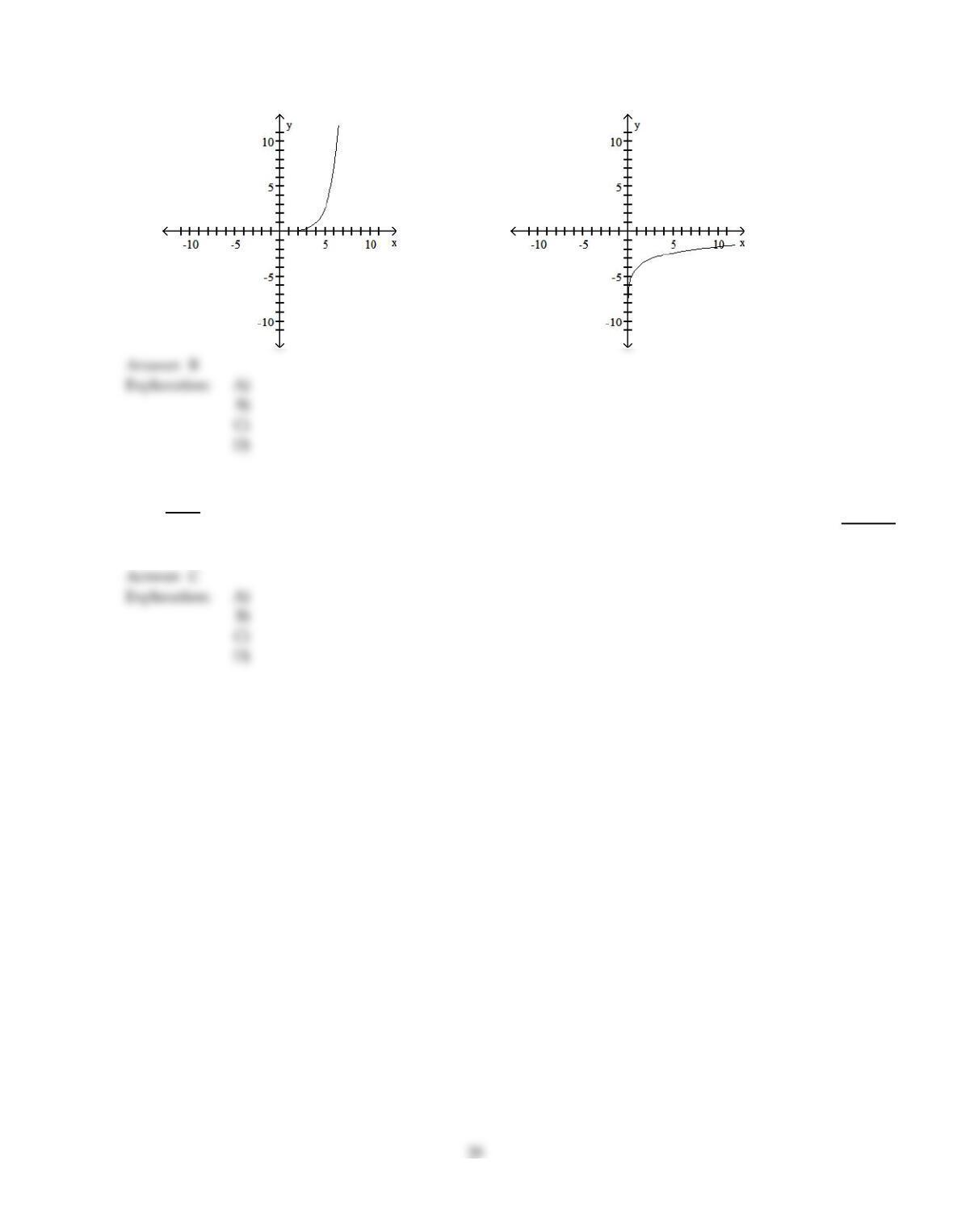
C)
No extrema
No inflection points
D)
No extrema
No inflection points
Find f”(x) for the function.
50)
f(x) =x
x + 1
50)
A)
(x + 1)–2
B)
(x + 1)–3
C)
–2(x + 1)–3
D)
–2(x + 1)–2