Chapter 49 – The Circulatory System
Chapter 49
The Circulatory System
Multiple Choice Questions
1. Why is an open circulatory system less efficient than a closed circulatory system?
Chapter 49 – The Circulatory System
49-2
Clarify Question
What is the key concept addressed by the question?
What type of thinking is required?
Gather Content
What do you already know about open circulatory systems? What other information is
related to the question?
Choose Answer
Given what you now know, what information is most likely to produce the correct answer?
Reflect on Process
Did your problem-solving process lead you to the correct answer? If not, where did the
process break down or lead you astray? How can you revise your approach to produce a
more desirable result?
Chapter 49 – The Circulatory System
2. In 2012, Lance Armstrong was stripped of his record-setting, seven Tour de France titles
and banned for life from competitive cycling because of his alleged use of performance-
enhancing drugs (PEDs). One of the PEDs Armstrong was accused of taking is erythropoietin
(EPO). Why would systematic use of this PED give Armstrong an unfair advantage in a bike
race?
Chapter 49 – The Circulatory System
49-4
Clarify Question
What is the key concept addressed by the question?
What type of thinking is required?
Gather Content
What do you already know about erythropoietin? What other information is related to the
question?
Choose Answer
Given what you now know, what information is most likely to produce the correct answer?
Reflect on Process
Did your problem-solving process lead you to the correct answer? If not, where did the
process break down or lead you astray? How can you revise your approach to produce a
more desirable result?
Chapter 49 – The Circulatory System
49-5
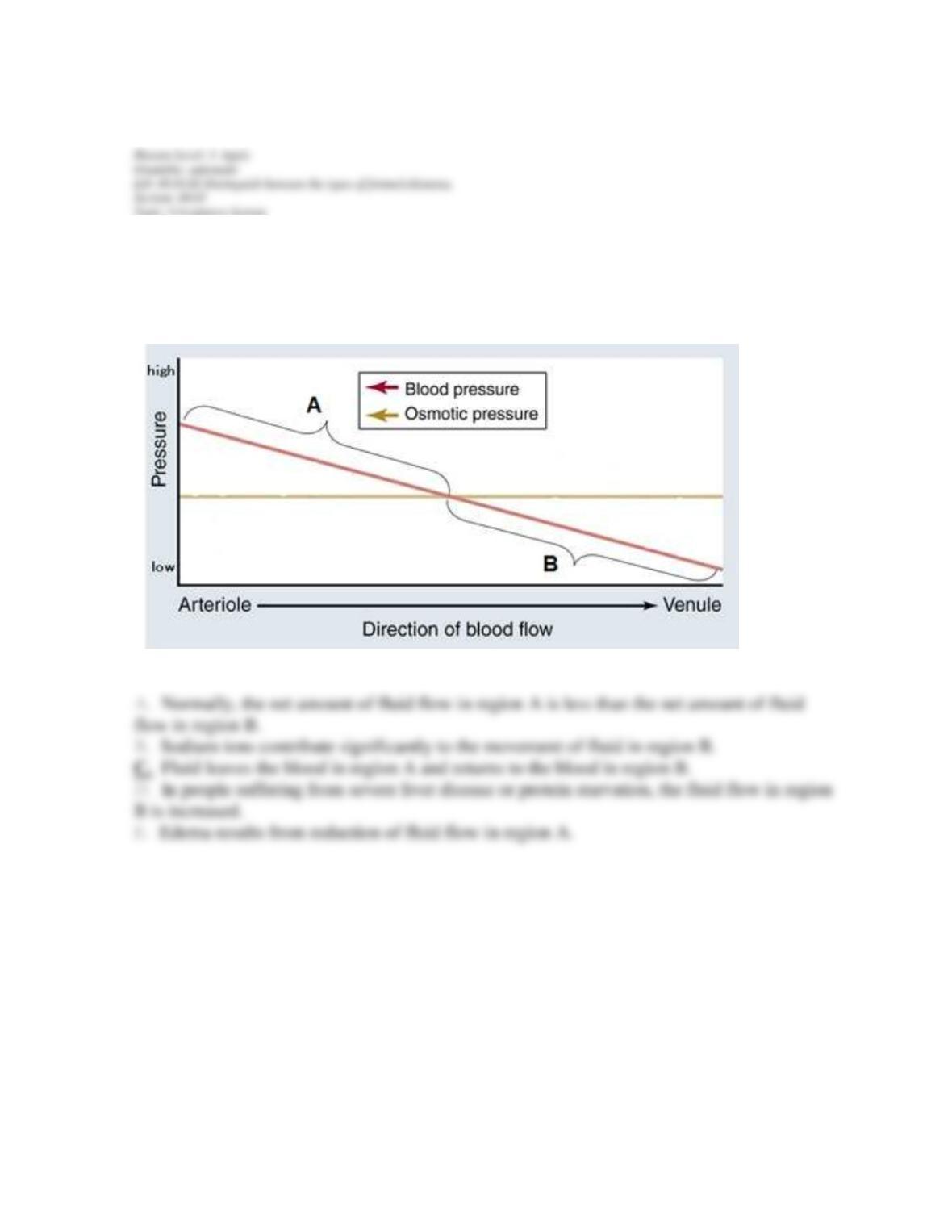
3. The graph below can be used to understand the forces underlying the movement of fluid
between the blood and the interstitial fluid. What is a true statement concerning these
processes?
Chapter 49 – The Circulatory System
49-6
Clarify Question
What is the key concept addressed by the question?
What type of thinking is required?
Gather Content
What do you already know about the movement of materials in and out of the circulatory
system? What other information is related to the question?
Choose Answer
Given what you now know, what information is most likely to produce the correct answer?
Reflect on Process
Did your problem-solving process lead you to the correct answer? If not, where did the
process break down or lead you astray? How can you revise your approach to produce a
more desirable result?
Chapter 49 – The Circulatory System
4. The liquid portion of blood that contains metabolites, wastes, hormones, ions, and a variety
of proteins is called the _______________.
5. Leukocytes (white blood cells) account for about _______ of the cells in human blood.
6. Blood is pumped from the heart into the arterial system, which branches from arteries into
fine _________.
Chapter 49 – The Circulatory System
7. As compared to the circulatory system of most fishes, the circulatory system of adult
amphibians has the advantage of
8. The benefit provided by all hearts with two atria is
9. Mammalian, bird, and crocodile hearts have four chambers with two separate atria and
ventricles to ensure _____ different circuits for blood flow.
10. Jim is suffering from congestive heart failure, in which blood flow is backed up in his
lungs and excess fluid is escaping the blood and accumulating in his lung tissue. If untreated,
increasing pulmonary edema will lead to death by suffocation. What is the most-likely cause
of Jim’s congestive heart failure?
Chapter 49 – The Circulatory System
49-9
Clarify Question
What is the key concept addressed by the question?
What type of thinking is required?
Gather Content
What do you already know about the path of blood between the heart and the lungs? What
other information is related to the question?
Choose Answer
Given what you now know, what information is most likely to produce the correct answer?
Reflect on Process
Did your problem-solving process lead you to the correct answer? If not, where did the
process break down or lead you astray? How can you revise your approach to produce a
more desirable result?
Chapter 49 – The Circulatory System
11. A higher protein concentration within the distal portion of capillaries draws water into
them through the process of
12. In birds and mammals, a vestige of the sinus venosus of the fish heart remains as the
sinoatrial node, which serves as a(n)
13. What would be the physiological effect of an increase in the venous return to the heart?
Chapter 49 – The Circulatory System
49–11
Clarify Question
What is the key concept addressed by the question?
What type of thinking is required?
Gather Content
What do you already know about blood return to the heart? What other information is
related to the question?
Choose Answer
Given what you now know, what information is most likely to produce the correct answer?
Reflect on Process
Did your problem-solving process lead you to the correct answer? If not, where did the
process break down or lead you astray? How can you revise your approach to produce a
more desirable result?
Chapter 49 – The Circulatory System
14. Changes in the arterial blood pressure are detected by __________ located in the walls of
the carotid artery and the arch of the aorta.
15. All of the following are functions of the circulatory system EXCEPT
Chapter 49 – The Circulatory System
16. A bone marrow sample from Patient X has abnormally-low numbers of megakaryocytes.
What body process would you expect to be impaired in Patient X?
Chapter 49 – The Circulatory System
49–14
Clarify Question
What is the key concept addressed by the question?
What type of thinking is required?
Gather Content
What do you already know about megakaryocytes? What other information is related to the
question?
Choose Answer
Given what you now know, what information is most likely to produce the correct answer?
Reflect on Process
Did your problem-solving process lead you to the correct answer? If not, where did the
process break down or lead you astray? How can you revise your approach to produce a
more desirable result?
Chapter 49 – The Circulatory System
17. Which of the following solutes is NOT normally found in the plasma?
18. Which blood cell type is correctly matched to its function?
19. You are taking a lab practical exam. One station has a microscope slide of a cross section
through an artery and vein. Which vessel is the artery?
Chapter 49 – The Circulatory System
20. Exchange of gases and metabolites between the blood and tissues occurs in the
21. When you are upright, what is the primary mechanism that propels blood in your feet
back to your inferior vena cava?
Chapter 49 – The Circulatory System
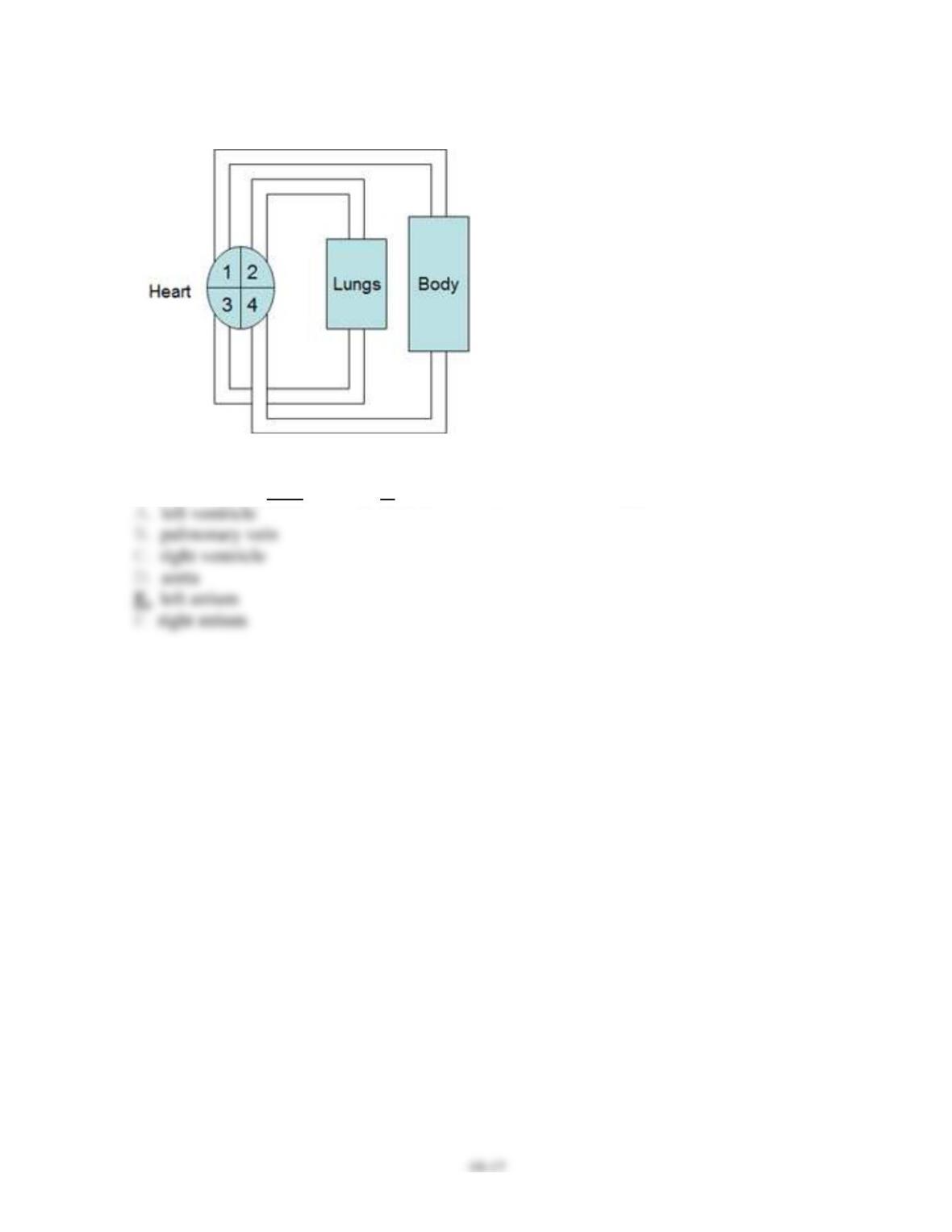
22. Refer to the diagram below of the mammalian circulatory system.
If blood is going from the lungs to space 3, what is the name of space 3?
Chapter 49 – The Circulatory System
Clarify Question
What is the key concept addressed by the question?
What type of thinking is required?
Gather Content
What do you already know about CONCEPT X? What other information is related to the
question?
Choose Answer
Given what you now know, what information is most likely to produce the correct answer?
Reflect on Process
Did your problem-solving process lead you to the correct answer? If not, where did the
process break down or lead you astray? How can you revise your approach to produce a
more desirable result?
Chapter 49 – The Circulatory System
23. Elephantiasis is an infectious disease in which blockage of the circulatory system by
microscopic, parasitic roundworms results in a dramatic swelling of the tissues in the lower
half of the body. What region is most likely blocked by these small, thread-like worms?
Chapter 49 – The Circulatory System
49–20
Clarify Question
What is the key concept addressed by the question?
What type of thinking is required?
Gather Content
What do you already know about the drainage of fluid from tissue? What other
information is related to the question?
Choose Answer
Given what you now know, what information is most likely to produce the correct answer?
Reflect on Process
Did your problem-solving process lead you to the correct answer? If not, where did the
process break down or lead you astray? How can you revise your approach to produce a
more desirable result?