Chapter: Chapter 43
Learning Objectives
LO 43.1.0 Solve problems related to nuclear fission.
LO 43.1.1 Distinguish atomic and nuclear burning, noting that in both processes energy is
produced because of a reduction of mass.
LO 43.1.2 Define the fission process.
LO 43.1.3 Describe the process of a thermal neutron causing a 235U to undergo fission, and
explain the role of the intermediate compound nucleus.
LO 43.1.4 For the absorption of a thermal neutron, calculate the change in the system’s mass and
the energy put into the resulting oscillation of the intermediate compound nucleus.
LO 43.1.5 For a given fission process, calculate the Q value in terms of the binding energy per
nucleon.
LO 43.1.6 Explain the Bohr–Wheeler model for nuclear fission, including the energy barrier.
LO 43.1.7 Explain why thermal neutrons cannot cause 238U to undergo fission.
LO 43.1.8 Identify the approximate amount of energy (MeV) in the fission of any high-mass
nuclide to two middle-mass nuclei.
LO 43.1.9 Relate the rate at which nuclei fission and the rate at which energy is released.
LO 43.2.0 Solve problems related to the nuclear reactor.
LO 43.2.1 Define chain reaction.
LO 43.2.2 Explain the neutron leakage problem, the neutron energy problem, and the neutron
capture problem.
LO 43.2.3 Identify the multiplication factor and apply it to relate the number of neutrons and
power output after a given during of cycles to the initial number of neutrons and power output.
LO 43.2.4 Distinguish subcritical, critical, and supercritical.
LO 43.2.5 Describe the control over the response time.
LO 43.2.6 Give a general description of a complete generation.
LO 43.3.0 Solve problems related to a natural nuclear reactor.
LO 43.3.1 Describe the evidence that a natural nuclear reactor operated in Gabon, West Africa,
about 2 billion years ago.
LO 43.3.2 Explain why a deposit of uranium ore could go critical in the past but not today.
LO 43.4.0 Solve problems related to thermonuclear fusion: the basic process.
LO 43.4.1 Define thermonuclear fusion, explaining why the nuclei must be at a high temperature
to fuse.
LO 43.4.2 For nuclei, apply the relationship between their kinetic energy and their temperature.
LO 43.4.3 Explain the two reasons why fusion of two nuclei can occur even when the kinetic
energy associated with their most probable speed is insufficient to overcome their energy barrier.
LO 43.5.0 Solve problems related to thermonuclear fusion in the sun and other stars.
LO 43.5.1 Explain the proton–proton cycle for the Sun.
LO 43.5.2 Explain the stages after the Sun has consumed its hydrogen.
LO 43.5.3 Explain the probable source of the elements that are more massive than hydrogen and

helium.
LO 43.6.0 Solve problems related to controlled thermonuclear fusion.
LO 43.6.1 Give the three requirements for a thermonuclear reactor.
LO 43.6.2 Define Lawson’s criterion.
LO 43.6.3 Give general descriptions of the magnetic confinement approach and the inertial
confinement approach.
Multiple Choice
1. Fission fragments usually decay by emitting:
A) alpha particles
B) electrons and neutrinos
C) positrons and neutrinos
D) only neutrons
E) only electrons
2. Consider all possible fission events. Which of the following statements is true?
A) Light initial fragments have more protons than neutrons and heavy initial fragments have
fewer protons than neutrons
B) Heavy initial fragments have more protons than neutrons and light initial fragments have
fewer protons than neutrons
C) All initial fragments have more protons than neutrons
D) All initial fragments have about the same number of protons and neutrons
E) All initial fragments have more neutrons than protons
3. In the uranium disintegration series:
A) the emission of a
– particle increases the mass number A by one and decreases the atomic
number Z by one
B) the disintegrating element merely ejects atomic electrons
C) the emission of an
particle decreases the mass number A by four and decreases the atomic
number Z by two
D) the nucleus always remains unaffected
E) the series of disintegrations continues until an element having eight outermost orbital
electrons is obtained

4. Consider the following energies:
1. minimum energy needed to excite a hydrogen atom
2. energy needed to ionize a hydrogen atom
3. energy released in 235U fission
4. energy needed to remove a neutron from a 12C nucleus
Rank them in order of increasing value.
A) 1, 2, 3, 4
B) 3, 4, 2, 1
C) 1, 2, 4, 3
D) 2, 1, 4, 3
E) 2, 4, 1, 3
5. If the nucleus of a lead atom were broken into two identical nuclei, the total mass of the result
would be:
A) the same as before
B) greater than before
C) less than before
D) converted into radiation
E) converted into kinetic energy
6. When 236U fissions the fragments are:
A) always 140Xe and 94Sr
B) always identical
C) never 140Xe and 94Sr
D) never identical
E) none of the above
7. When 𝑈
92
236 fissions, the products might be:
A) 𝐵𝑎
56
146 , 𝐵𝑟
36
89 , and a proton
B) 𝐵𝑎
56
146 , 𝐵𝑟
36
89 , and a neutron
C) 𝐶𝑠
55
148 and 𝐵𝑟
36
85
D) 𝐼
53
133 , 𝑆𝑟
38
92 , and an alpha particle
E) two uranium nuclei
8. The energy supplied by a thermal neutron in a fission event is essentially its:
A) excitation energy
B) binding energy
C) kinetic energy
D) rest energy
E) electric potential energy
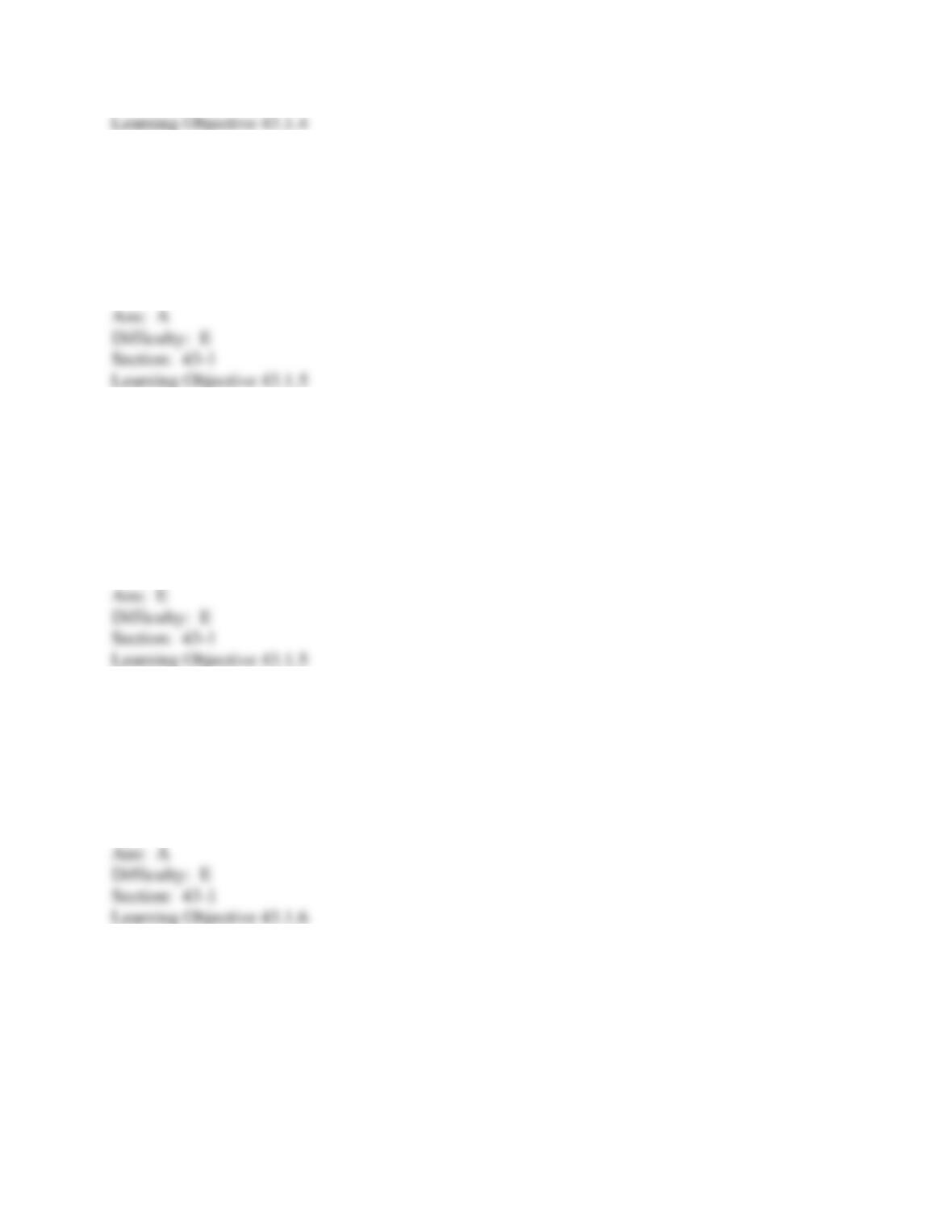
9. The table lists properties of several heavy nuclei when they are struck by thermal neutrons; En
is the excitation energy and Eb is the energy barrier. Which quantity, or combination of
quantities, represents the energy put into the oscillation of the resulting compound nucleus?
A) En
B) Eb
C) En – Eb
D) Eb – En
E) Mass of the target nuclide + Eb
10. The binding energy per nucleon:
A) increases for all fission events
B) increases for some, but not all, fusion events
C) decreases for all fusion events
D) decreases for some, but not all, fission events
E) remains the same for all fusion events
11. When uranium undergoes fission as a result of neutron bombardment, the energy released is
due to:
A) oxidation of the uranium
B) kinetic energy of the bombarding neutrons
C) radioactivity of the uranium nucleus
D) radioactivity of the fission products
E) a reduction in binding energy
12. The barrier to fission comes about because the fragments:
A) attract each other via the strong nuclear force
B) repel each other electrically
C) produce magnetic fields
D) have large masses
E) attract electrons electrically
13. Which one of the following represents a fission reaction that can be activated by slow
neutrons?
A) 238U92 + 1n0 → 90Kr36 + 146Cs55 + 2H1 + 1n0
B) 239Pu94 + 1n0 → 96Sr38 + 141Ba56 + 31n0
C) 238U92 → 234Th90 + 4He2
D) 3H1 + 2H1 → 4He2 + 1n0
E) 107Ag47 + 1n0 → 108Ag47 → 108Cd48 + 0e–1

14. 235U is readily made fissionable by a thermal neutron but 238U is not because:
A) the neutron has a smaller binding energy in 236U
B) the neutron has a smaller excitation energy in 236U
C) the potential barrier for the fragments is less in 239U
D) the neutron binding energy is greater than the barrier height for 236U and less than the barrier
height for 239U
E) the neutron binding energy is less than the barrier height for 236U and greater than the barrier
height for 239U
15. The approximate amount of energy emitted in the fission of a nucleus such as 235U is:
A) 200 eV
B) 7.6 MeV
C) 200 MeV
D) 760 MeV
E) 200 GeV
16. Separation of the isotopes of uranium requires a physical, rather than chemical, method
because:
A) mixing other chemicals with uranium is too dangerous
B) the isotopes are chemically the same
C) the isotopes have exactly the same number of neutrons per nucleus
D) natural uranium contains only 0.7% 235U
E) uranium is the heaviest element in nature
17. Which one of the following is NOT needed in a nuclear fission reactor?

A) Moderator
B) Fuel
C) Coolant
D) Control device
E) Accelerator
18. In a nuclear power plant, the power discharged to the environment:
A) can be made zero by proper design
B) must be less than the electrical power generated
C) must be greater than the electrical power generated
D) can be entirely recycled to produce an equal amount of electrical power
E) is none of the above
19. An explosion does not result from a small piece of 235U because:
A) it does not fission
B) the neutrons released move too fast
C) 238U is required
D) too many neutrons escape, preventing a chain reaction from starting
E) a few neutrons must be injected to start the chain reaction
20. In a nuclear reactor the fissionable fuel is formed into pellets rather than finely ground and
mixed with the moderator. This reduces the probability of:
A) non-fissioning absorption of neutrons
B) loss of neutrons through the reactor container
C) absorption of two neutrons by single fissionable nucleus
D) loss of neutrons in the control rods
E) none of the above
21. A nuclear reactor is operating at a certain power level, with its multiplication factor adjusted
to unity. The control rods are now used to reduce the power output to one-half its former value.
After the reduction in power the multiplication factor is maintained at:
A) 1/4
B) 1/2
C) 1
D) 2
E) 4
22. In a subcritical nuclear reactor:
A) the number of fission events per unit time decreases with time
B) the number of fission events per unit time increases with time
C) each fusion event produces fewer neutrons than when the reactor is critical
D) each fusion event produces more neutrons than when the reactor is critical
E) none of the above
23. In the normal operation of a nuclear reactor:
A) control rods are adjusted so the reactor is subcritical
B) control rods are adjusted so the reactor is critical
C) the moderating fluid is drained
D) the moderating fluid is continually recycled
E) none of the above
24. If a control rod is pulled rapidly out of a nuclear reactor core, what controls the response time
(how fast the power level increases)?
A) the speed at which the rod can be removed
B) the speed at which neutrons are captured
C) the rate at which delayed neutrons from beta decay of fission fragments are emitted
D) the rate at which the coolant circulates in the core
E) the time between when a neutron is captured and when the nucleus actually fissions
25. The function of the control rods in a nuclear reactor is to:
A) increase fission by slowing down the neutrons
B) decrease the energy of the neutrons without absorbing them
C) increase the ability of the neutrons to cause fission
D) decrease fission by absorbing neutrons
E) provide the critical mass for the fission reaction
26. The purpose of a moderator in a nuclear reactor is to:
A) provide neutrons for the fission process
B) slow down fast neutrons to increase the probability of capture by uranium
C) absorb dangerous gamma radiation
D) shield the reactor operator from dangerous radiation
E) none of the above
27. In a neutron-induced fission process, delayed neutrons come from:
A) the fission products
B) the original nucleus just before it absorbs the neutron
C) the original nucleus just after it absorbs the neutron
D) the moderator material
E) the control rods
28. What was the most convincing evidence that a natural nuclear reactor formed two billion
years ago in a uranium deposit in Africa?
A) the relative depletion of 235U in the deposit
B) the relative depletion of 238U in the deposit
C) the relative abundance of lead in the deposit
D) the isotopic distribution of neodymium in the deposit
E) the appearance of radiation damage in the surrounding rock
29. Two billion years ago, a natural nuclear reactor formed in a uranium deposit in Africa. Why
is it not possible for such a natural reactor to form somewhere on Earth today?
A) It is in fact possible for this to occur.
B) Too much uranium has already been mined for this to occur.
C) Too much 235U has now decayed for a critical mass to form naturally.
D) The remaining uranium deposits are too far underground for this to occur.
E) Uranium in the remaining deposits is mixed with too many other elements for this to occur.
30. The binding energy per nucleon:
A) increases from all fusion events
B) increases for some, but not all, fusion events
C) remains the same for some fusion events
D) decreases for all fusion events
E) decreases for some, but not all, fusion events
31. To produce energy by fusion of two nuclei, the nuclei must:
A) have at least several thousand electron volts of kinetic energy
B) both be above iron in mass number
C) have more neutrons than protons
D) be unstable
E) be magic number nuclei

32. Which one of the following represents a fusion reaction that would yield large amounts of
energy?
A) 238U92 + 1n0 → 90Kr36 + 146Cs55 + 2H1 + 1n0
B) 239Pu92 + 1n0 → 96Sr38 + 141Ba56 + 31n0
C) 238U92 → 234Th90 + 4He2
D) 3H1 + 2H1 → 4He2 + 1n0
E) 107Ag47 + 1n0 → 108Ag47 → 108Cd48 + 0e–1
33. The barrier to fusion comes about because protons:
A) attract each other via the strong nuclear force
B) repel each other electrically
C) produce magnetic fields
D) attract neutrons via the strong nuclear force
E) attract electrons electrically
34. High temperatures are required in thermonuclear fusion so that:
A) some nuclei are moving fast enough to overcome the barrier to fusion
B) there is a high probability some nuclei will strike each other head on
C) the atoms are ionized
D) thermal expansion gives the nuclei more room
E) the uncertainty principle can be circumvented
35. Most of the energy produced by the Sun is due to:
A) nuclear fission
B) nuclear fusion
C) chemical reaction
D) gravitational collapse
E) induced emfs associated with the Sun’s magnetic field

36. Nuclear fusion in the Sun is increasing its supply of:
A) hydrogen
B) helium
C) nucleons
D) positrons
E) neutrons
37. The first step of the proton-proton cycle is:
A) 1H + 1H → 2H
B) 1H + 1H → 2H + e+ +
C) 1H + 1H → 2H + e– +
D) 1H + 1H → 2H +
E) 1H + 1H → 3H + e– +
38. The overall proton-proton cycle is equivalent to:
A) 21H → 2H
B) 41H → 4H
C) 41H → 4H +4n
D) 41H + 2e– → 4He + 2 + 6
E) 41H + 2e+ → 4He + 2
39. The energy released in a complete proton-proton cycle is about:
A) 3 keV
B) 30 keV
C) 3 MeV
D) 30 MeV
E) 300 MeV

40. The Sun has enough hydrogen in its core to continue fusing hydrogen to helium for about
another:
A) million years
B) five million years
C) five billion years
D) five trillion years
E) The Sun can continue to fuse hydrogen to helium indefinitely.
41. Nuclear fusion in stars produces all the chemical elements with mass numbers less than:
A) 56
B) 66
C) 70
D) 82
E) 92
42. Which of the following chemical elements is not produced by thermonuclear fusion in stars?
A) Carbon (Z = 6, A = 12)
B) Silicon (Z = 14, A = 28)
C) Oxygen (Z = 8, A = 16)
D) Mercury (Z = 80, A = 200)
E) Chromium (Z = 24, A = 52)
43. For a controlled nuclear fusion reaction, one needs:
A) high number density n and high temperature T
B) high number density n and low temperature T

C) low number density n and high temperature T
D) low number density n and low temperature T
E) high number density n and temperature T = 0 K
44. For purposes of a practical (energy producing) reaction one wants a disintegration energy Q
that is:
A) positive for fusion reactions and negative for fission reactions
B) negative for fusion reactions and positive for fission reactions
C) negative for both fusion and fission reactions
D) positive for both fusion and fission reactions
E) as close to zero as possible for both fusion and fission reactions
45. Lawson’s number is 1020 sm–3. If the density of deuteron nuclei is 2 1021 m–3 what should
the confinement time be to achieve sustained fusion?
A) 16 ms
B) 50 ms
C) 160 ms
D) 250 ms
E) 20 s
46. Tokamaks confine deuteron plasmas using:
A) thick steel walls
B) magnetic fields
C) laser beams
D) vacuum tubes
E) electric fields

47. Most magnetic confinement projects attempt:
A) proton-proton fusion
B) proton-deuteron fusion
C) deuteron-deuteron fusion
D) deuteron-triton fusion
E) triton-triton fusion
48. Compared to fusion in a tokamak, laser fusion makes use of:
A) smaller particle number densities
B) greater particle number densities
C) longer confinement times
D) higher temperatures
E) lower temperatures
49. Most laser fusion projects attempt:
A) proton-proton fusion
B) proton-deuteron fusion
C) deuteron-deuteron fusion
D) deuteron-triton fusion
E) triton-triton fusion
50. In laser fusion, the laser light is:
A) emitted by the reacting nuclei
B) used to cause transitions between nuclear energy levels
C) used to cause transitions between atomic energy levels
D) used to replace the emitted gamma rays
E) used to heat the fuel pellet