
Hall: Guyton and Hall Textbook of Medical Physiology, 12th Edition
Chapter 40: Transport of Oxygen and Carbon Dioxide in Blood and Tissue Fluids
Test Bank
1. A patient with no respiratory problems is given a blood transfusion. Which of the
following will occur?
A. Arterial pO2 will increase
B. Arterial pCO2 will decrease
C. Arterial saturation will increase
D. Arterial oxygen content will decrease
E. Arterial oxygen content will increase
2. Which of the following should decrease the affinity of hemoglobin for oxygen?
A. Low pCO2
B. Alkalosis
C. Acidosis
D. Decreased body temperature
3. A person with anemia has a Hb concentration of 12 g/dL. He starts exercising and uses
12 mL O2/dL. What is the mixed venous pO2?
A. 0 mmHg
B. 10 mmHg
C. 20 mmHg
D. 40 mmHg
E. 100 mmHg
4. A man fell asleep in his running car one evening. He was brought into the ER
unconscious. His arterial pO2 was 95 mmHg. His arterial pCO2 was 40 mmHg. With
carbon monoxide poisoning you would expect his arterial oxygen saturation would be
_______ while his venous oxygen saturation would be ______ .
A. Normal, decreased
B. Decreased, decreased
C. Increased, normal
D. Increased, normal

Test Bank
40-2
5. An otherwise normal person has lost enough blood to decrease his body’s hemoglobin
concentration from 15 g/100 mL blood to 12 g/100 mL blood. Which of the following
would be expected to decrease?
A. Arterial pO2
B. Blood oxygen-carrying capacity
C. Arterial hemoglobin saturation
D. Arterial carbon dioxide content
6. Using the following values calculate saturation:
Hemoglobin concentration = 11 g/dL
Oxygen content = 12 mL/dL
A. 100%
B. 81%
C. 65%
D. 56%
E. 43%
7. Acute hemorrhage causes a reduction of Hb concentration to 60% of normal in an
otherwise health individual. If the alveolar ventilation and oxygen consumption rates
remain the same as before the hemorrhage, which of the following will occur after the
hemorrhage?
A. Normal arterial pO2, normal venous pO2
B. Low arterial pO2, normal venous pO2
C. Low arterial pO2, Low venous pO2
D. Normal arterial pO2, low venous pO2
E. High arterial pO2, normal venous pO2
8. Initial conditions for a normal female subject (12 g Hb/100 mL blood) are the following
(in the steady state).
Arterial pO2 = 100 mmHg
Arterial O2 saturation = 90%
Venous O2 saturation = 28%
Venous pO2 = 25 mmHg
Cardiac output = 5,000 mL/min
Oxygen consumption = 500 mL/min
If you ignore the contribution of dissolved O2 to the total O2 content, what is the venous
O2 content?
A. 3.3 mL O2/100 mL blood
B. 4.5 mL O2/100 mL blood
C. 5.6 mL O2/100 mL blood
Test Bank
40-3
D. 7.5 mL O2/100 mL blood
9. An increase in carbon monoxide will:
A. Increase firing from the peripheral chemoreceptors
B. Increase pCO2
C. Decrease arterial pO2
D. Decrease in arterial oxygen content
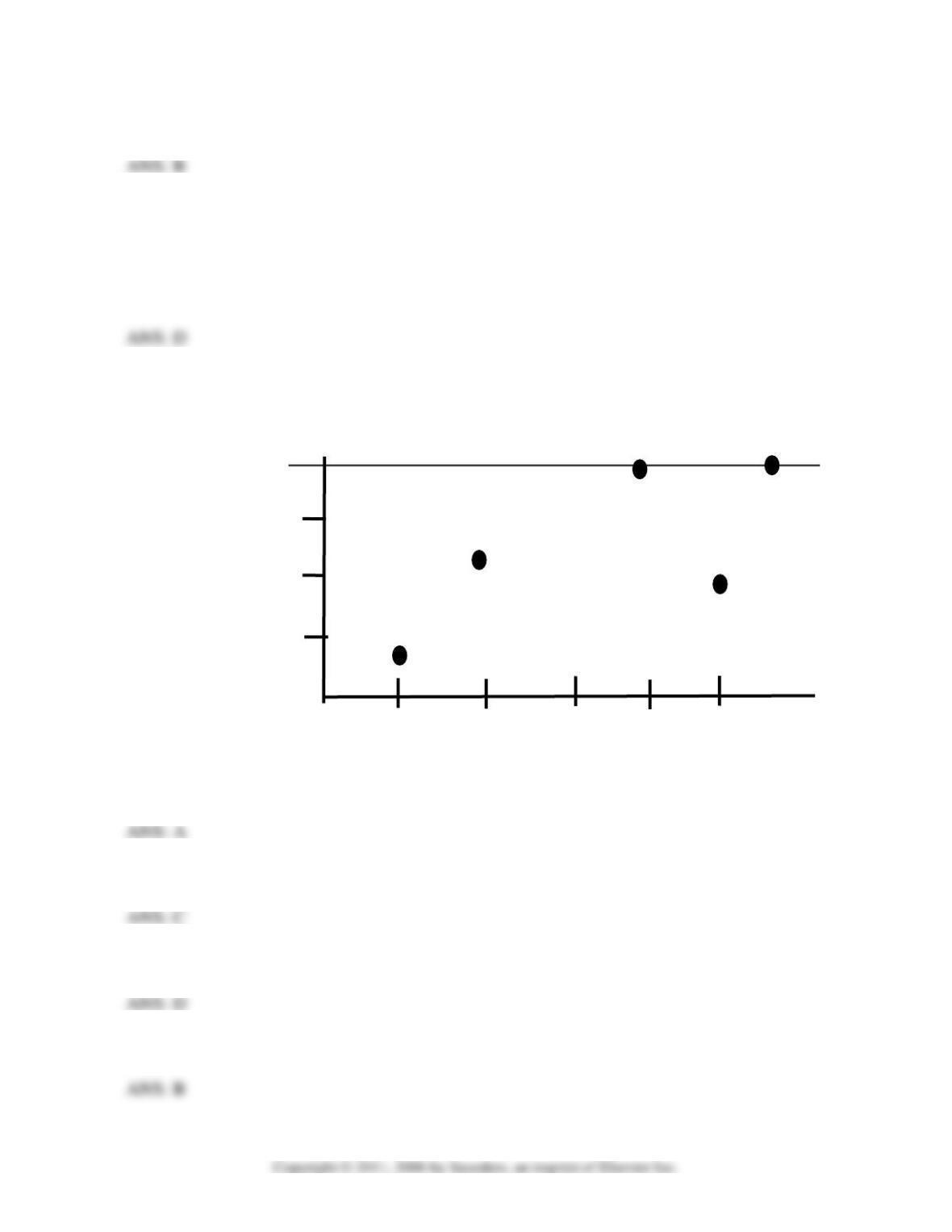
Question 10-13: Using the following figure determine which points will describe the
following conditions? The same point may describe more than one condition.
10. Coronary sinus blood.
11. Arterial blood in a person with end stage renal disease.
12. Arterial blood in a normal person.
13. Mixed venous blood of person at 500 ft above sea level.
40
pO2
100
B
20
0
Content
ml O2/100 ml blood
C
D
E
20
60
80

14. Arterial pO2 is 100 mmHg and arterial pCO2 is 40 mmHg. Total blood flow to all muscle
is 700 mL/min. There is a sympathetic activation resulting in a decrease in blood flow to
350 mL/min. Which of the following will occur?
Venous pO2 Venous pCO2
A. ↑ ↓
B. ↓ ↑
C. ↓ ↔
D. ↔ ↑
E. ↑ ↑
F. ↓ ↓
G. ↔ ↔
15. A 22-year-old man was involved in a fight and received a blow to the head. On arrival to
emergency department he was unconscious and was receiving assisted ventilation via a
manual bag. His blood gases were:
pO2 = 45 mmHg
pCO2 = 80 mmHg
pH = 7.05
HCO3– = 27 mM
In which form was most CO2 being transported in this patient?
A. Dissolved
B. Bicarbonate ions
C. Carbaminohemoglobin compounds
D. CO2 bound to plasma proteins
16. If the blood lacked red blood cells but the lungs were functioning normally:
A. The arterial pO2 would be normal
B. The oxygen content of arterial blood would be normal
C. Both A and B would apply
D. Neither A nor B would apply