Achievement Test 4: Chapters 7-8 Name _________________________
Managerial Accounting, 6e Instructor ______________________
Section # _______ Date _________
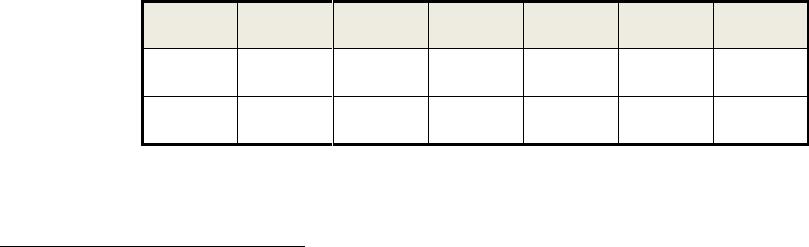
Part
I
II
III
IV
V
Total
Points
20
10
26
20
24
100
Score
PART I — MULTIPLE CHOICE (20 points)
Instructions: Designate the best answer for each of the following questions.
____ 1. Danolin Signs is bidding on painting buildings in a large apartment complex. The
company has gathered the following information:
Estimated wages of 8 painters for the project $14,040
Estimated labor hours for the entire company 16,000
Estimated cost of fringes 15% of labor
Desired profit margin per direct labor hour $12
Expected number of units to be produced and sold 800
The cost of paint and other materials is $9,400. The average hourly wage per
employee is $18 per hour with 780 hours estimated for the project. The overhead rate
is 20% of total labor cost (including fringes.) The material loading charge is 10%. How
much is the bid price if time-and-material pricing is used?
a. $38,135
b. $28,735
c. $39,075
d. Some other answer.
____ 2. What is a relevant cost?
a. It is a sunk cost.
b. It is a past cost.
c. It is a cost that differ across alternatives.
d. It is an opportunity cost.
____ 3. The Cookie Division of Kaboodle Foods manufactures home-style cookies which are
sold for $4 per box. Its variable cost is $1.50 per box, and its fixed cost per unit is
$0.90. Management would like the Mixing Division to transfer 20,000 boxes of cookies
to another division within the company to be used to make snack pack lunches. The
Cookie Division has available capacity to produce the 20,000 boxes for the Mixing
division. What is the minimum transfer price the Cookie Division should accept for
each box of cookies?
a. $4.00
b. $1.50
c. $2.40
d. $3.20

Test Bank for Managerial Accounting, Sixth Edition
AT4- 2
____ *4. Landau Gears provides the following cost information related to its production of its
primary product:
Per Unit
Variable manufacturing cost $12
Fixed manufacturing cost 8
Variable selling and administrative expenses 2
Fixed selling and administrative expenses 3
Desired ROI per unit 7
What is the markup percentage assuming that Landau Gears uses absorption costing?
a. 60%
b. 35%
c. 100%
d. 28%
____ 5. Bride-To–Be produces three-tier wedding cakes. Costs for producing one cake appear
below: Direct materials $11
Direct labor 24
Variable overhead 16
Fixed overhead 14
An outside supplier has offered to produce the cakes for $66 per cake. If Bride-To–Be
decides to buy instead of making the cakes, what is the maximum price it would be
willing pay?
a. $65
b. $66
c. $51
d. $35
____ 6. Which one of the following is used to determine the selling price when cost-plus
pricing is used?
a. Selling price = fixed costs + (markup percentage × variable costs)
b. Selling price = cost + (markup percentage × cost)
c. Selling price = variable costs + (markup percentage × fixed costs)
d. Selling price = cost + (markup percentage × variable costs)
____ 7. The following information is provided by Garden Gears for a new product it recently
introduced:
Total unit cost $50
Desired ROI per unit $22
Target selling price $72
How much is Garden Gears’ percentage of markup on cost?
a. 44%
b. 55%
c. 30.6%
d. 69.4%

Achievement Test 4
AT4- 3
____ 8. Target costing assumes
a. the market price is known and works to achieve an acceptable cost.
b. the cost is known and works to achieve an acceptable market price.
c. the desired profit is known and works to achieve an acceptable market price.
d. the desired profit is known and works to achieve an acceptable cost.
____ 9. The Molding Division of White Corporation manufactures plastic molds and then sells
them to customers for $40 per unit. Its variable cost is $15 per unit, and its fixed cost
per unit is $5. Management would like the Molding Division to transfer 15,000 of these
molds to another division within the company at a price of $23. The Molding Division is
operating at full capacity. What is the minimum transfer price the Molding Division
should accept?
a. $23
b. $20
c. $40
d. $25
____ 10. Which one of the following is a qualitative factor as it relates to make-or-buy
decisions?
a. The cost to buy the part or product
b. Loss of customers due to eliminating a product line
c. Customer perceptions due to a change in pricing
d. Quality of products from the supplier
PART II — TRUE/FALSE (10 points)
Instructions: Designate whether each of the following statements is true or false by circling the T
or F.
T F 1. A sunk cost is the potential benefit that may be obtained by following an alternative
course of action.
T F 2. A company should process further as long as the incremental costs of further
production exceed the incremental revenue of further production.
T F 3. Joint costs are all costs incurred prior to the point at which two products are
separately identified.
T F 4. Sunk costs are relevant costs that differ across alternatives.
T F 5. In the minimum transfer price formula, variable cost is defined as the variable cost
of units sold internally.

Test Bank for Managerial Accounting, Sixth Edition
AT4- 4
PART III — INCREMENTAL ANALYSIS (26 points)
This problem consists of two independent mini-problems.
A. Zane Wheels produces lawn mower tires in batches of 1,200 at a cost of $2.40 each. The
tires can be sold without further processing for $5.00 per tire, or can be processed further by
injecting solid foam which insures the tires will never become flat. The solid foam tires can be
sold for $11.00 each. The additional processing costs total $6,600 per batch.
Instructions
Compute the incremental income from further production of one batch of solid foam tires.
B. Lansing Manufacturers produces can openers. For the first six months of 2014, the company
reported the following operating results for 16,000 units, while operating at 80% of plant
capacity.
Sales $2,000,000
Cost of goods sold 1,200,000
Gross profit 800,000
Operating expenses 420,000
Net income $ 380,000
Cost of goods sold was 75% variable and 25% fixed. Operating expenses were 60% variable
and 40% fixed. In July of 2014, Lansing receives a special order for 2,000 can openers at
$85 each from a foreign company. The can openers normally sell for $112.00. Acceptance
of the special order would result in $1,000 of shipping costs but no increase in fixed
operating expenses.
Instructions
Prepare an incremental analysis for the special order.

Achievement Test 4
AT4- 5
*PART IV — PRODUCT COSTING (20 points)
Big Time Bags provides the following information related to the production of its primary product,
backpacks:
Per Unit
Variable manufacturing cost $12.50
Fixed manufacturing cost $1.50
Variable selling and administrative expenses $1.30
Fixed selling and administrative expenses $1.80
Desired ROI per unit $4.60
A. What is the markup percentage, assuming that Big Time Bags uses absorption costing?
B. What is the markup percentage, assuming that Big Time Bags uses variable costing?
PART V — COST-PLUS PRICING (24 points)
Lanahan Corporation is in the process of setting a selling price for a new product it has just
designed. The following data relate to this product for a budgeted volume of 10,000 units.
Per Unit Total
Direct materials $ 30
Direct labor 25
Variable manufacturing overhead 15
Fixed manufacturing overhead $200,000
Variable selling and administrative expenses 10
Fixed selling and administrative expenses 110,000
Lanahan uses cost-plus pricing to set its target selling price. The markup on total unit cost is 25%.
Instructions
Compute each of the following for the new product:
1. Total variable cost per unit, total fixed cost per unit, and total cost per unit.
2. Desired ROI per unit.
3. Target selling price.
Test Bank for Managerial Accounting, Sixth Edition
AT4- 6
Solutions — Achievement Test 4: Chapters 7-8
Achievement Test 4
AT4- 7