Chapter 4 Part 1—Markets in Action
MULTIPLE CHOICE
1. An increased equilibrium price and a decreased equilibrium quantity results from a(an):
a.
decrease in demand.
b.
increase in supply.
c.
decrease in supply.
d.
increase in demand.
2. A decrease in demand leads to a (an):
a.
increased equilibrium price and an increased equilibrium quantity.
b.
decreased equilibrium price and a decreased equilibrium quantity.
c.
decreased equilibrium price and an increased equilibrium quantity.
d.
increased equilibrium price and a decreased equilibrium quantity.
3. If the demand for a good decreased, what would be the effect on the equilibrium price and quantity?
a.
Price would increase, and quantity would decrease.
b.
Price would decrease, and quantity would decrease.
c.
Price would increase, and quantity would increase.
d.
Price would decrease, and quantity would increase.
4. If we observe a decrease in the price of a good and a decrease in the amount of the good bought and
sold, this could be explained by a(an):
a.
increase in the supply of the good.
c.
decrease in the demand for the good.
b.
increase in the demand for the good.
d.
decrease in the supply of the good.
5. Over a ten year period, the monthly charge for cellular phone service decreased from $120 per month
to $30 per month. At the same time, the number of subscribers increased from less than 10 million to
more than 75 million. Which of the following provides the best explanation for these changes?
a.
An increase in consumer income over this ten year period
b.
A reduction in the price of residential phone service, a substitute for cellular phone service
c.
An increase in the wages of workers in the cellular phone industry
d.
Technological improvements that reduced the cost of supplying cellular phone service
6. If the supply of a good decreased, what would be the effect on the equilibrium price and quantity?
a.
Price would increase, and quantity would decrease.
b.
Price would decrease, and quantity would decrease.
c.
Price would increase, and quantity would increase.
d.
Price would decrease, and quantity would increase.
7. If we observe a decrease in the price of a good and an increase in the amount of the good bought and
sold, this could be explained by a(n):
a.
increase in the supply of the good.
c.
decrease in the demand for the good.
b.
increase in the demand for the good.
d.
decrease in the supply of the good.
8. How would a decrease in consumer income affect the market for new automobiles?
a.
Demand would decrease, leading to an increase in price and a reduction in quantity sold.
b.
Demand would decrease, leading to a reduction in price and a reduction in quantity sold.
c.
Demand would increase, leading to an increase in price and an increase in quantity sold.
d.
Demand would increase, leading to a reduction in price and an increase in quantity sold.
9. If there is a decrease in demand for lettuce, we would expect:
a.
both the price and quantity sold to increase.
b.
both the price and quantity sold to decrease.
c.
the price to decrease and the quantity sold to increase.
d.
the price to increase and the quantity sold to decrease.
10. Which of the following is the most likely effect of lower apple juice prices on the price and quantity
purchased of orange juice, a substitute product?
a.
The price of orange juice will increase, and the quantity purchased will fall.
b.
The price of orange juice will fall, and the quantity purchased will increase.
c.
The price of orange juice will increase, and the quantity purchased will increase.
d.
The price of orange juice will fall, and the quantity purchased will fall.
11. Each year around Valentine’s Day, we would expect:
a.
the demand for roses to increase.
c.
the quantity of roses sold to increase.
b.
the price of roses to increase.
d.
all of these.
12. After a hurricane in Florida knocked out the regional water supply for several days, the demand for
bottled water increased sharply. In a market economy, how will this increase in demand affect the
equilibrium price and quantity of bottled water?
a.
Price will increase, and quantity will decrease.
b.
Price will decrease, and quantity will decrease.
c.
Price will decrease, and quantity will increase.
d.
Price will increase, and quantity will increase.
13. An increase in the demand for tattoos will lead to a:
a.
higher price and a larger quantity sold.
b.
lower price and a larger quantity sold.
c.
higher price and a smaller quantity sold.
d.
lower price and a smaller quantity sold
14. Suppose a new law requires all piercing studios to pass tougher licensing tests and to begin using more
costly sterilization methods. Other things constant, this law would cause:
a.
an increase in the supply of piercings and a lower price for piercings.
b.
an increase in the supply of piercings and a higher price for piercings.
c.
a decrease in the supply of piercings and a higher price for piercings.
d.
a decrease in the supply of piercings and a lower price for piercings.
15. How would a decrease in the price of the feed grains used to feed cattle affect the market for beef?
a.
The demand for beef would increase, increasing beef prices.
b.
The demand for beef would decrease, decreasing beef prices.
c.
The supply of beef would increase, decreasing beef prices.
d.
The supply of beef would decrease, increasing beef prices.
16. Which of the following would decrease the price of packaged hot dogs?
a.
An increase in the price of hot dog buns, a complement to packaged hot dogs.
b.
A decrease in the price of hamburger meat, a substitute for packaged hot dogs.
c.
A technological advance that lowers the cost of producing packaged hot dogs.
d.
All of these.
17. If you were a government official and wanted to raise the price of wheat, which of the following
actions would you take?
a.
Take wheat from government storage and sell it.
b.
Encourage farmers to use more fertilizer.
c.
Lower the price of rye.
d.
Subsidize purchases of farm equipment.
e.
Encourage farmers to grow less wheat.
18. If Congress decides to increase the tax per pack paid by sellers of cigarettes, other things being equal,
the price of cigarettes will rise. This rise in prices can be attributed to a(n):
a.
upward movement along the supply curve for cigarettes.
b.
rightward shift of the supply curve for cigarettes.
c.
upward movement along the demand curve for cigarettes.
d.
leftward shift of the supply curve for cigarettes.
19. If Congress decides to reduce the tax per pack paid by sellers of cigarettes, other things being equal,
the equilibrium price of cigarettes will fall. This fall in the equilibrium price can be attributed to a(n):
a.
upward movement along the supply curve for cigarettes.
b.
rightward shift of the supply curve for cigarettes.
c.
upward movement along the demand curve for cigarettes.
d.
leftward shift of the supply curve for cigarettes.
20. If you were a government official that wanted to raise the equilibrium price of milk, which of the
following actions would you take?
a.
Take milk from government storage and sell it.
b.
Encourage farmers to produce more milk.
c.
Subsidize purchases of dairy equipment.
d.
Encourage farmers to produce less milk.
21. Consider the market for grapes. An increase in the wage paid to grape pickers will cause the:
a.
demand curve for grapes to shift to the right, resulting in a higher equilibrium price for
grapes and a reduction in the quantity consumed.
b.
demand curve for grapes to shift to the left, resulting in a lower equilibrium price for
grapes and an increase in the quantity consumed.
c.
supply curve for grapes to shift to the left, resulting in a lower equilibrium price for grapes
and a decrease in the quantity consumed.
d.
supply curve for grapes to shift to the left, resulting in a higher equilibrium price for
grapes and a decrease in the quantity consumed.
22. A technological breakthrough lowers the cost of manufacturing DVDs. As a result, the market changes
to a new equilibrium because of a(n):
a.
upward movement along the demand curve for DVDs.
b.
rightward shift in the demand curve for DVDs.
c.
rightward shift in the supply curve for DVDs.
d.
shortage of DVDs.
23. An increase in the price of plastic raises the cost of manufacturing DVDs. As a result, the market
changes to a new equilibrium because of a(n):
a.
surplus of DVDs.
b.
increase in the demand for DVDs.
c.
leftward shift in the demand curve for DVDs.
d.
leftward shift in the supply curve for DVDs.
24. A hurricane destroyed the peach crop in South Carolina. Shortly thereafter the price of peaches rose
significantly. These events suggest that a(n):
a.
decrease in the supply of peaches caused the price of peaches to rise.
b.
increase in the supply of peaches caused the price of peaches to rise.
c.
increase in demand caused the price of peaches to rise.
d.
decrease in demand caused the price of peaches to rise.
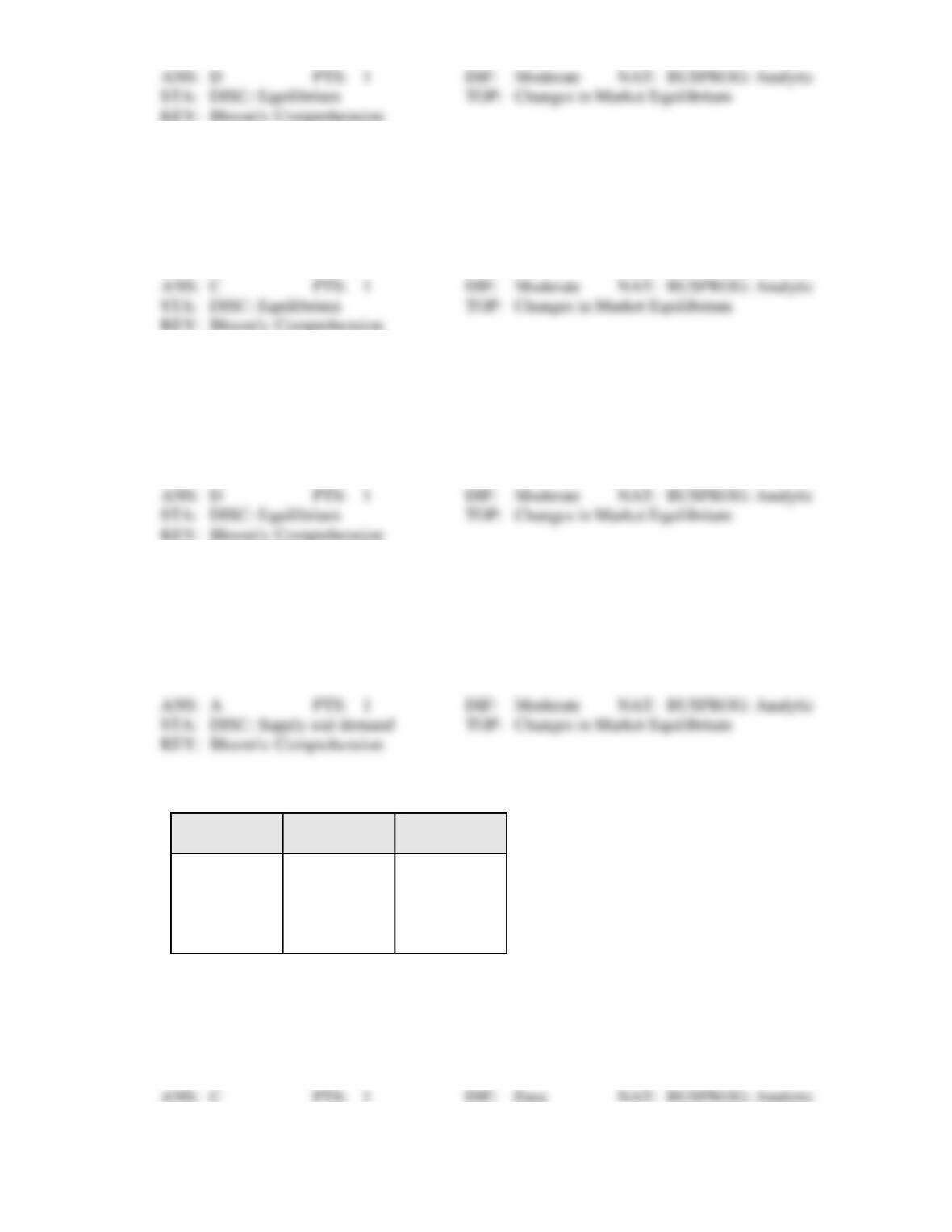
Exhibit 4-1 Supply and demand data
Price
Quantity
demanded
Quantity
supplied
$1.00
500
50
1.50
450
150
2.00
400
250
2.50
300
300
3.00
150
350
25. Exhibit 4-1 shows that at a price of $3.00,
a.
the market is in equilibrium.
b.
there will be excess quantity demanded.
c.
there will be excess quantity supplied.
d.
there is a price ceiling in effect.
26. In Exhibit 4-1, suppose that a reduction in the price of an important input used to produce the good
causes an increase in quantity supplied of 150 units at every price level. Assuming that demand does
not change, the new equilibrium price will be:
a.
$1.00.
c.
$2.00.
b.
$1.50.
d.
$2.50.
27. A decrease in consumer income decreases the demand for compact discs. As a result of the change to a
new equilibrium, there is a(n):
a.
leftward shift of the supply curve.
b.
rightward shift of the supply curve.
c.
upward movement along the supply curve.
d.
downward movement along the supply curve.
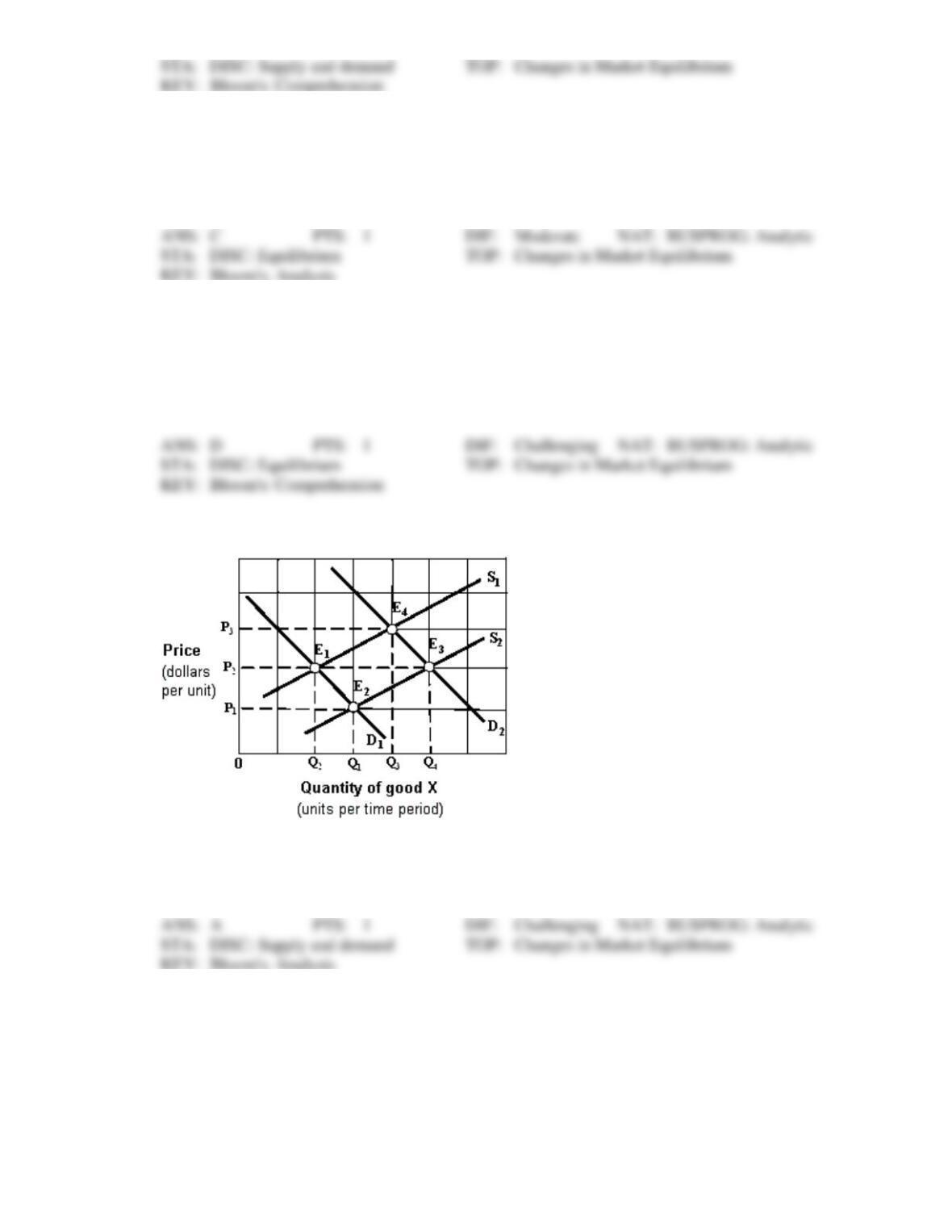
Exhibit 4-2 Supply and demand curves
28. In Exhibit 4-2, which of the following might cause a shift from S1 to S2?
a.
A decrease in input prices.
c.
An increase in input prices.
b.
A decrease in consumer prices.
d.
An increase in consumer income.
29. The market shown in Exhibit 4-2 is initially in equilibrium at point E1. Union negotiations for workers
producing good X result in a wage increase. Other things being equal, which of the following is the
new equilibrium after this wage increase is in effect?
a.
E1.
c.
E3.
b.
E2.
d.
E4.
30. The market shown in Exhibit 4-2 is initially in equilibrium at E1. Changes in market conditions result
in a new equilibrium at E2. This change is stated as a(n):
a.
increase in supply and an increase in quantity demanded.
b.
increase in supply and a decrease in demand.
c.
decrease in supply and a decrease in quantity demanded.
d.
increase in demand and an increase in supply.
31. The market shown in Exhibit 4-2 is initially in equilibrium at E3. Changes in market conditions result
in a new equilibrium at E4. This change is stated as a(n):
a.
increase in demand and an increase in supply.
b.
decrease in demand and a decrease in quantity supplied.
c.
increase in quantity demanded and an increase in quantity supplied.
d.
decrease in supply and a decrease in quantity demanded.
e.
increase in supply and an increase in quantity demanded.
32. In Exhibit 4-2 an increase in supply would cause a movement from which equilibrium point to another,
other things being equal?
a.
E1 to E2.
c.
E4 to E1.
b.
E1 to E3.
d.
E3 to E4.
33. In Exhibit 4-2, a decrease in quantity demanded would cause a movement from which equilibrium
point to another, other things being equal?
a.
E1 to E2.
c.
E4 to E1.
b.
E1 to E3.
d.
E3 to E4.
34. Beginning from an equilibrium at point E1 in Exhibit 4-2, an increase in demand for good X, other
things being equal, would move the equilibrium point to:
a.
E1, no change.
c.
E3.
b.
E2.
d.
E4.
Exhibit 4-3 Supply and demand curves
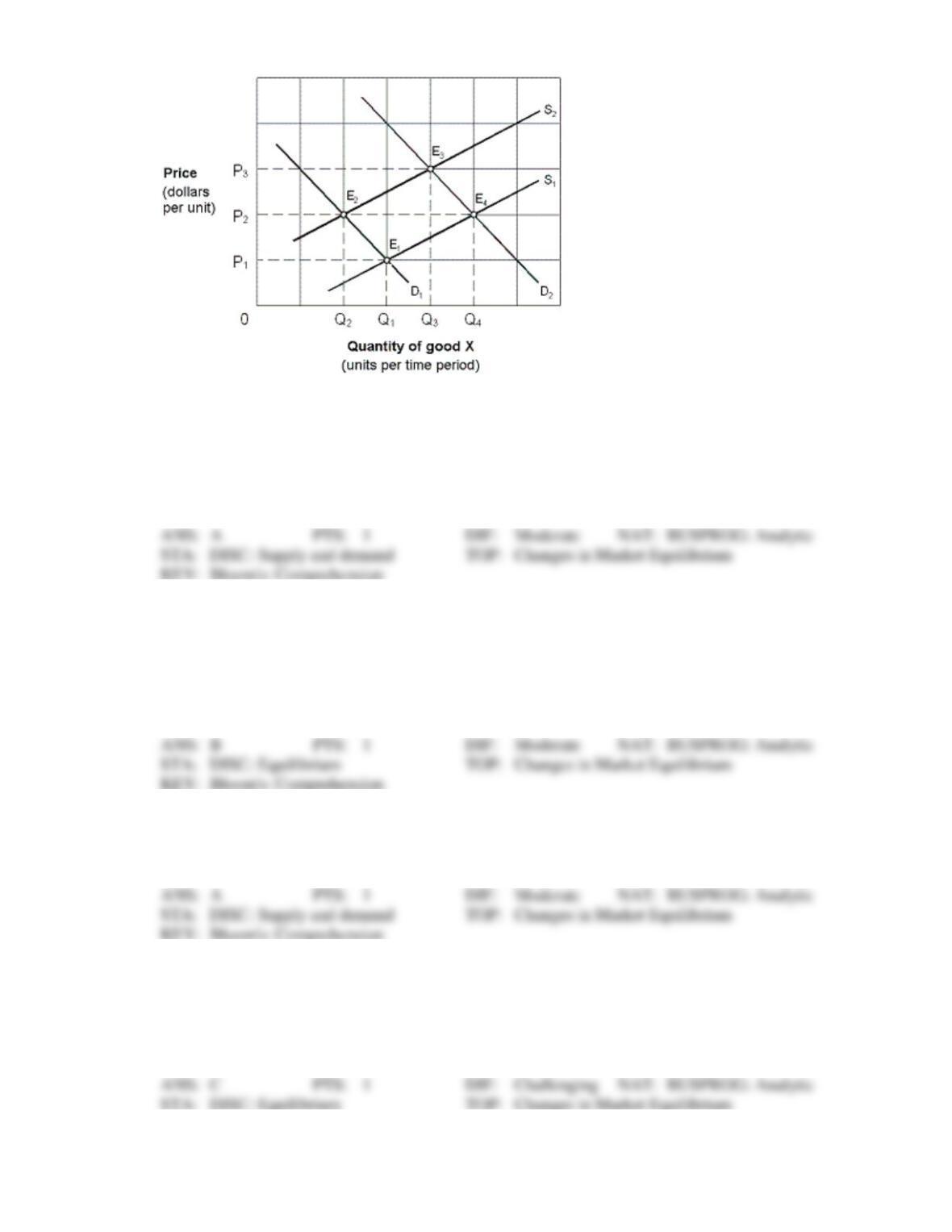
35. Initially the market shown in Exhibit 4-3 is in equilibrium at P2, Q2 (E2). Changes in market conditions
result in a new equilibrium at P2, Q4 (E4). This change is stated as a(n):
a.
increase in supply and an increase in demand.
b.
increase in supply and a decrease in demand.
c.
decrease in demand and a decrease in supply.
d.
increase in demand with supply held constant at S2.
36. Initially the market shown in Exhibit 4-3 is in equilibrium at P3, Q3 (E3). Changes in market conditions
result in a new equilibrium at P2, Q2 (E2). This change is stated as a:
a.
decrease in demand and an increase in supply.
b.
decrease in demand and a decrease in quantity supplied.
c.
decrease in quantity demanded and an increase in quantity supplied.
d.
decrease in quantity demanded and an increase in supply.
37. In Exhibit 4-3, which of the following might cause a shift from S2 to S1?
a.
A decrease in input prices.
c.
An increase in input prices.
b.
An improvement in technology.
d.
An increase in consumer income.
38. The market shown in Exhibit 4-3 is initially in equilibrium at point E4. Union negotiations result in a
wage increase. Other things being equal, which of the following is the new equilibrium after this wage
increase is in effect?
a.
E1.
c.
E3.
b.
E2.
d.
E4.
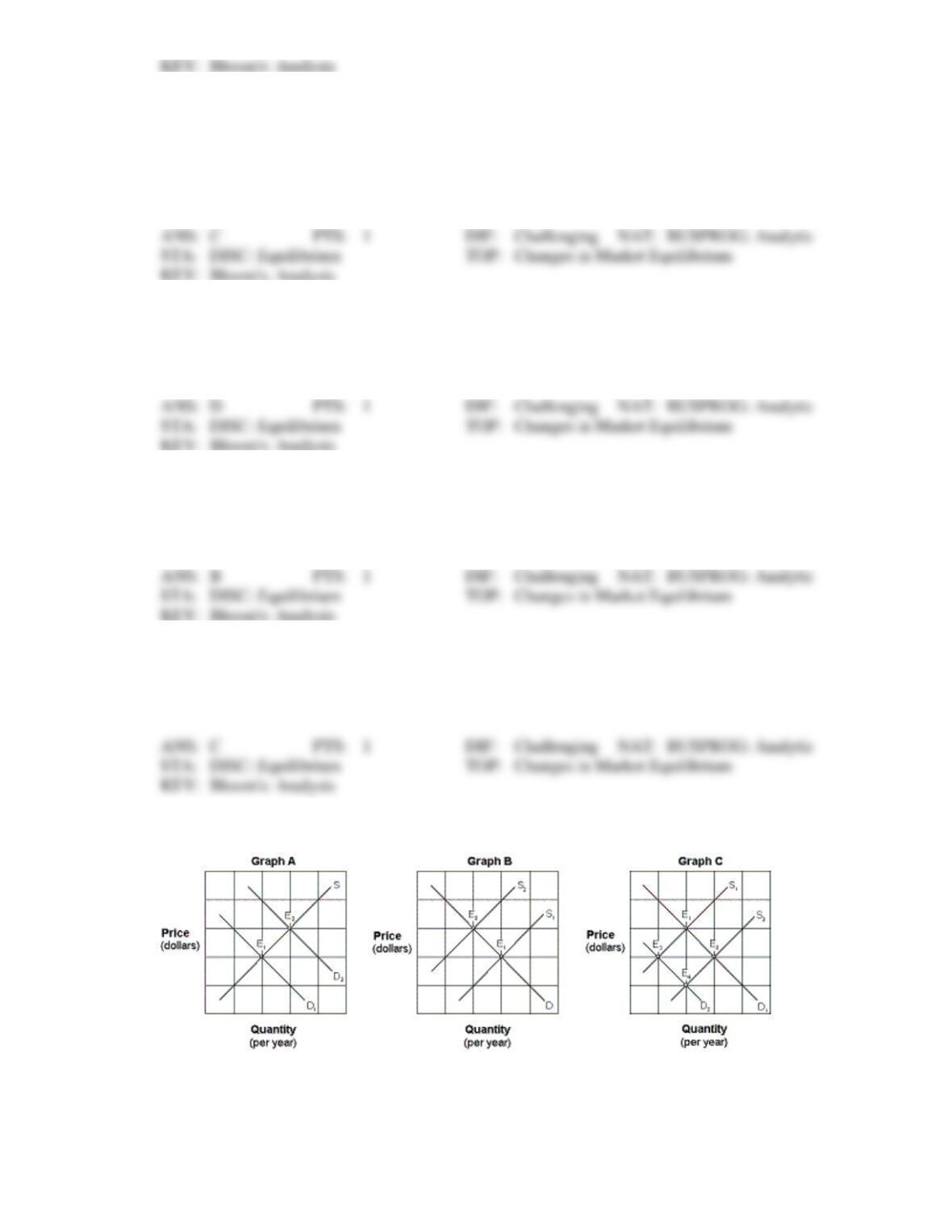
39. The market shown in Exhibit 4-3 is initially in equilibrium at E4. Changes in market conditions result
in a new equilibrium at E3. This change is stated as a(n):
a.
increase in supply and an increase in quantity demanded.
b.
increase in supply and a decrease in demand.
c.
decrease in supply and a decrease in quantity demanded.
d.
increase in demand an increase in supply.
40. In Exhibit 4-3, an increase in demand would cause a movement from which equilibrium point to
another, other things being equal?
a.
E1 to E2.
c.
E4 to E1.
b.
E1 to E3.
d.
E1 to E4.
41. In Exhibit 4-3, an increase in quantity supplied would cause a movement from which equilibrium point
to another, other things being equal?
a.
E1 to E2.
c.
E4 to E1.
b.
E1 to E4.
d.
E3 to E4.
42. Beginning from an equilibrium at point E2 in Exhibit 4-3, an increase in demand for good X, other
things being equal, would move the equilibrium point to:
a.
E1.
c.
E3.
b.
E2.
d.
E4.
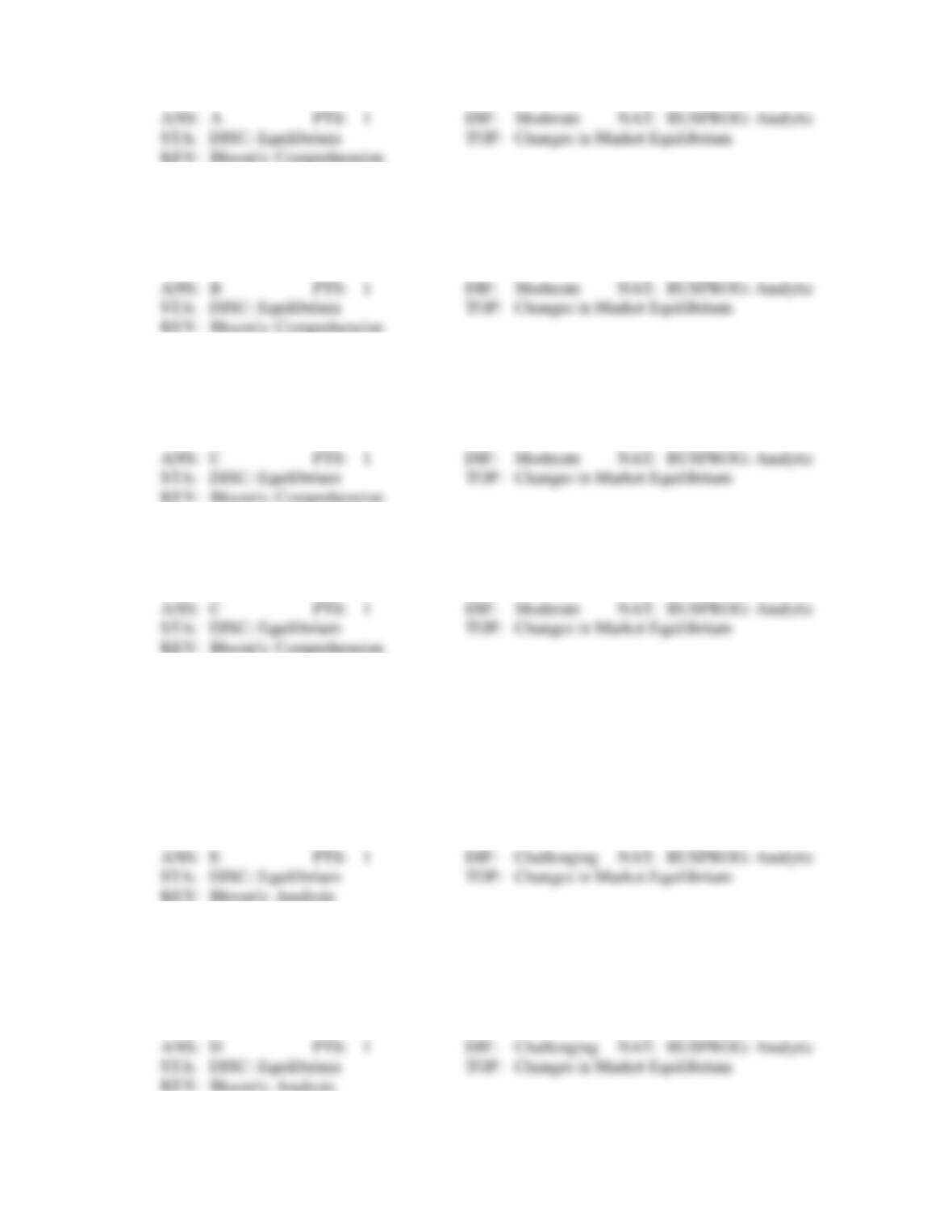
Exhibit 4-4 Supply and demand curves for good X
43. Which of the graphs in Exhibit 4-4 illustrates an increase in buyers’ income, assuming that good X is a
normal good?
a.
Graph A.
c.
Graph C.
b.
Graph B.
d.
None of these.
44. An increase in the wage rate paid to workers producing good X would be represented by which of the
graphs in Exhibit 4-4?
a.
Graph A.
c.
Graph C.
b.
Graph B.
d.
None of these.
45. An increase in the price of a complementary good would be represented in which of the graphs in
Exhibit 4-4?
a.
Graph A.
c.
Graph C.
b.
Graph B.
d.
None of these.
46. Which of the graphs in Exhibit 4-4 represents a decrease in the price of a factor of production?
a.
Graph A.
c.
Graph C.
b.
Graph B.
d.
None of these.
47. An increase in buyers’ income, assuming good X is a normal good, combined with an increase in the
wage rate paid to workers producing good X would be represented by which of the following changes
in equilibrium shown in Graph C of Exhibit 4-4?
a.
E1 to E2.
b.
E1 to E3.
c.
E3 to E2.
d.
E1 to E3.
e.
E4 to E1.
48. A decrease in buyers’ income, assuming good X is a normal good, combined with a decrease in the
wage rate paid to workers producing good X would be represented by which of the following changes
in equilibrium shown in Graph C of Exhibit 4-4?
a.
E1 to E2.
c.
E3 to E2.
b.
E1 to E3.
d.
E1 to E4.
49. If the cost of fertilizer rises, then the price of corn will:
a.
rise.
c.
remain unchanged.
b.
fall.
d.
react unpredictably.
50. Which of the following would raise both the equilibrium price and the equilibrium quantity of
strawberries?
a.
A decrease in the demand for strawberries.
b.
An increase in the demand for strawberries.
c.
A decrease in the supply of strawberries.
d.
An increase in the supply of strawberries.
51. Which of the following is the best description of the effects of an increase in the supply of bread?
a.
Consumers will pay more for bread.
b.
Bread prices will fall, and bread sales will rise.
c.
A permanent surplus of bread will remain on the market.
d.
Bakers will have higher marginal costs.
52. Suppose prices for new homes have risen, yet sales of new homes have also risen. We can conclude
that:
a.
the demand for new homes has risen.
b.
the law of demand has been violated.
c.
new firms have entered the construction industry.
d.
construction firms must be facing higher costs.
53. Which of the following statements is true of a market?
a.
An increase in demand, with no change in supply, will increase the equilibrium price and
quantity.
b.
An increase in supply, with no change in demand, will decrease the equilibrium price and
the equilibrium quantity.
c.
A decrease in supply, with no change in demand, will decrease the equilibrium price and
increase the equilibrium quantity.
d.
All of these.
54. Consider the market for chicken. Assuming that chicken and beef are substitutes, an increase in the
price of beef will:
a.
decrease the demand for chicken creating a lower price and a smaller amount of chicken
purchased in the market.
b.
decrease the supply of chicken creating a higher price and a smaller amount of chicken
purchased in the market.
c.
increase the demand for chicken creating a higher price and a greater amount of chicken
purchased in the market.
d.
increase the supply of chicken creating a lower price and a greater amount of chicken
purchased in the market.
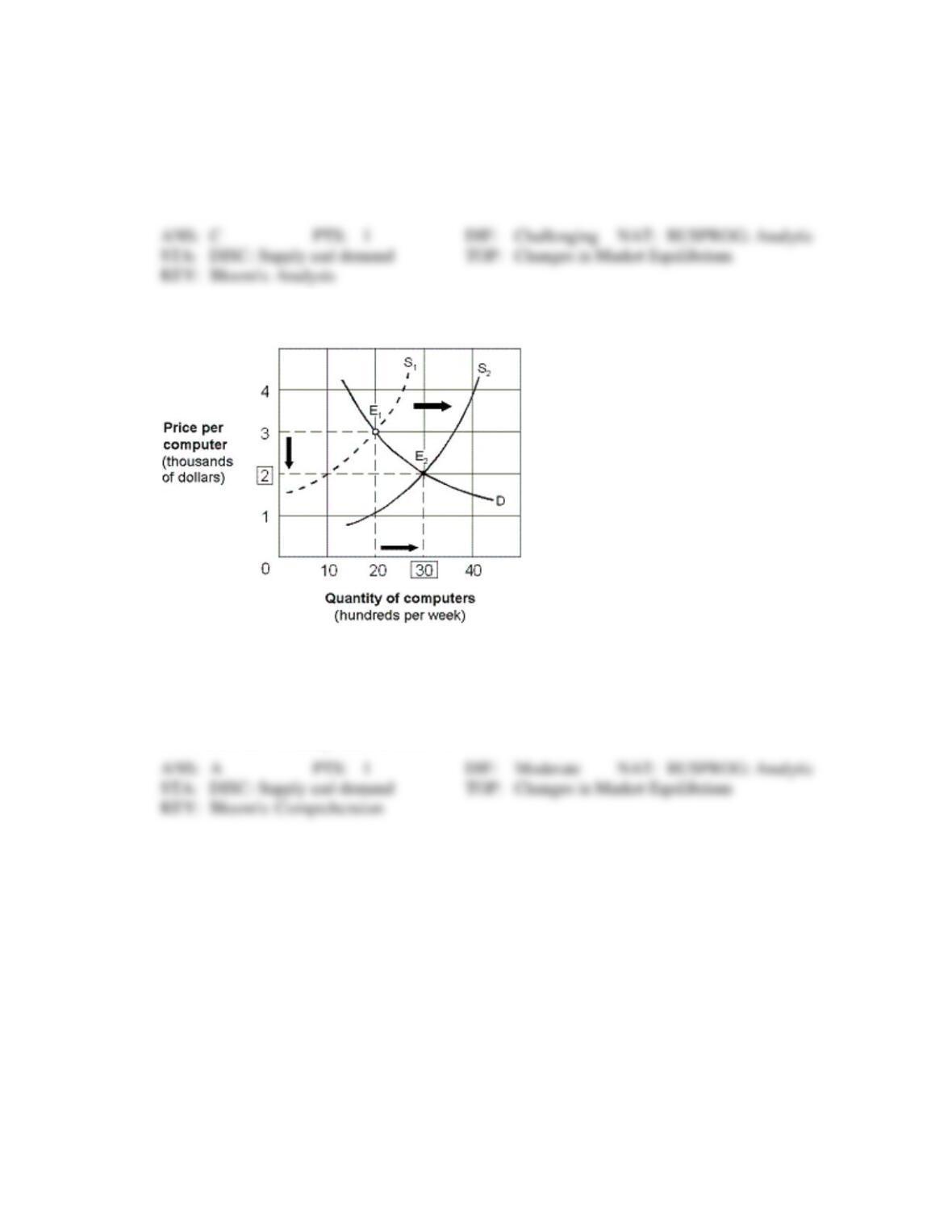
Exhibit 4-5 Supply and demand curves for computers
55. Which of the following changes could cause the computer market to change as shown in Exhibit 4-5?
a.
Lower costs for computer chips and motherboards.
b.
The failure of several computer manufacturers.
c.
Higher prices for computer software.
d.
More features and greater ease of use.
Exhibit 4-6 Demand and supply curves
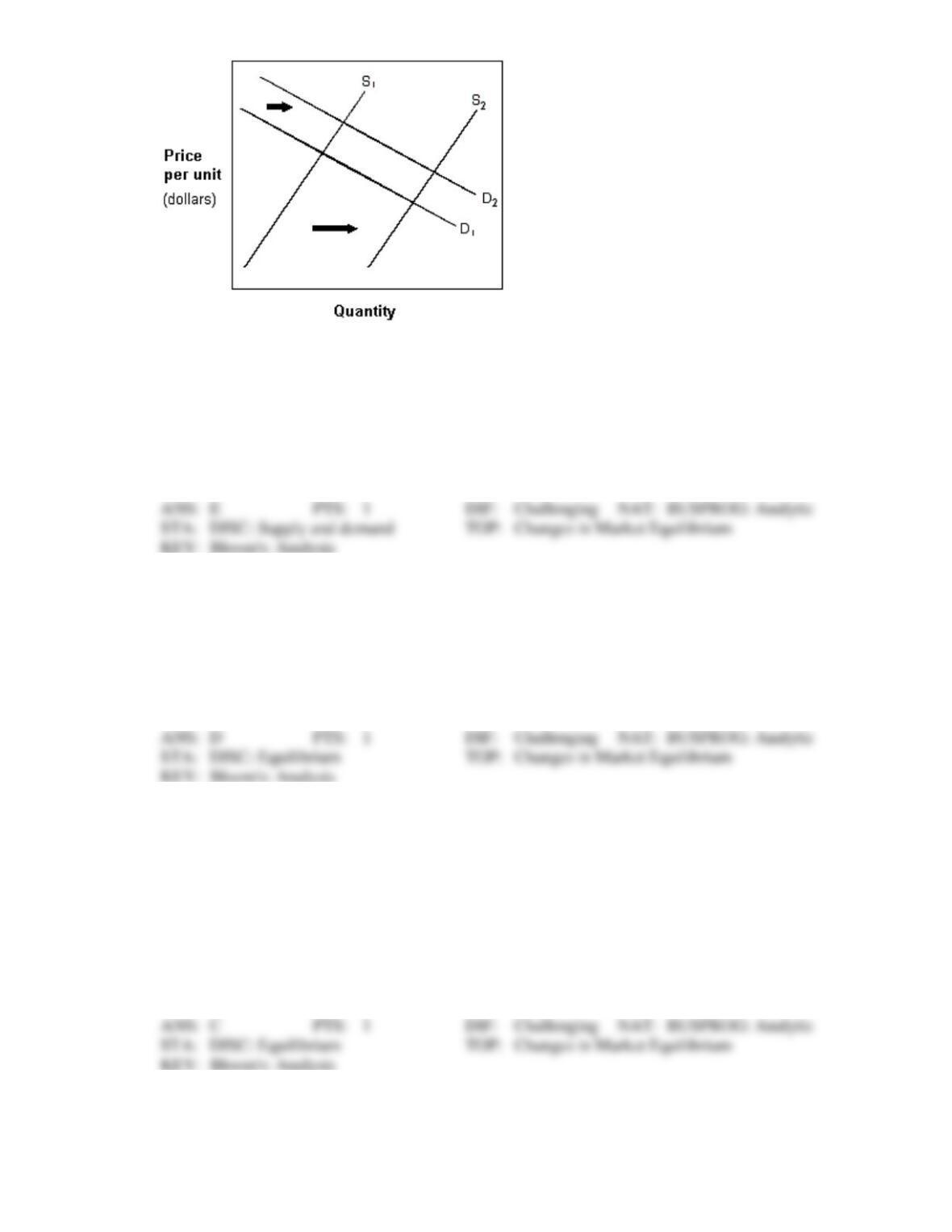
56. In Exhibit 4-6, the demand curve has shifted from D1 to D2 and, simultaneously, the supply curve has
shifted from S1 to S2. Describe these actions in this market.
a.
Market supply has decreased, and market demand has increased.
b.
Market supply has increased, and market demand has decreased.
c.
Market supply has decreased, and market demand has decreased.
d.
The quantity supplied has decreased, and the quantity demanded has increased.
e.
Market supply has increased, and market demand has increased.
57. If the market demand and supply curves shift as given in Exhibit 4-6, the resulting new equilibrium
will show a(n):
a.
increase in market price and a decrease in the quantity exchanged.
b.
decrease in market price and a decrease in the quantity exchanged.
c.
increase in market price and an increase in the quantity exchanged.
d.
decrease in market price and an increase in the quantity exchanged.
e.
decrease in market price and no change in the quantity exchanged.
58. If market supply decreases and, simultaneously, market demand increases, the new equilibrium will
show:
a.
market price will decrease, and market quantity exchanged will increase.
b.
market price will increase, and market quantity exchanged will decrease.
c.
market price will increase, and the quantity exchanged could increase, decrease, or remain
the same.
d.
market price could increase, decrease, or remain the same, and quantity exchanged will
increase.
e.
market price will increase, decrease, or remain the same, and quantity exchanged will
decrease.
59. If the market supply increases and, simultaneously, market demand decreases, the new equilibrium
will show:
a.
market price will decrease, and market quantity exchanged could increase, decrease, or
remain unchanged.
b.
market price will increase, and market quantity exchanged will decrease.
c.
market price will increase, and the quantity exchanged could increase, decrease, or remain
the same.
d.
market price could increase, decrease, or remain the same, and quantity exchanged will
increase.
e.
market price will increase, decrease, or remain the same, and quantity exchanged will
decrease.
60. An increase in consumers’ incomes will have what effect on the equilibrium in the restaurant meals
market?
a.
Price will increase, and quantity will increase.
b.
Price will decrease, and quantity will increase.
c.
Price will increase, and quantity will decrease.
d.
Price will decrease, and quantity will decrease.
e.
Price will increase, and quantity will stay the same.
61. An increase in the wages paid to fishermen will have what effect on the fish market equilibrium?
a.
Price will decrease, and quantity will decrease.
b.
Price will increase, and quantity will increase.
c.
Price will decrease, and quantity will increase.
d.
Price will increase, and quantity will decrease.
e.
Price and quantity will stay the same.
62. Ceteris paribus, if consumer tastes change so that more people are eating broccoli, then what will
happen to the market equilibrium for cabbage, a substitute good for broccoli?
a.
Price will increase, and quantity will increase.
b.
Price and quantity will stay the same.
c.
Price will decrease, and quantity will increase.
d.
Price will increase, and quantity will decrease.
e.
Price will decrease, and quantity will decrease.
63. If consumers switch away from eating margarine at the same time that the number of margarine
suppliers increases, then:
a.
these two effects cancel each other out and there is no change in the margarine market
equilibrium.
b.
the demand curve shifts left and the supply curve shifts right.
c.
there is a margarine price increase.
d.
there is an excess demand for margarine.
e.
the equilibrium quantity of margarine must increase.
Exhibit 4-7 Demand and supply schedules for movie tickets
Price
Quantity
Demanded
Quantity
Supplied
$10
200
500
8
240
470
6
370
420
4
390
390
2
410
310
64. In Exhibit 4-7, the equilibrium price of a movie ticket is:
a.
$10.
b.
$8.
c.
$6.
d.
$4.
e.
$2.
65. In Exhibit 4-7, a 100 decrease in quantity demanded at every price level would cause the new
equilibrium price to become:
a.
$10.
b.
$8.
c.
$6.
d.
$4.
e.
$2.
66. Suppose the market for “soda X” is in equilibrium. If the FDA announced today that this soda has been
proven to cause a fatal disease, what would be most likely to happen to the equilibrium price and
equilibrium quantity of soda X?
a.
Price increases and quantity increases
b.
Price decreases and quantity increases
c.
Price increases and quantity increases
d.
Price decreases and quantity decreases
e.
No change in price and quantity
67. Ceteris paribus, an increase in the supply of a good causes which of the following?
a.
Lowers the equilibrium price, and reduces the quantity bought and sold.
b.
Raises the equilibrium price, and raises the quantity bought and sold.
c.
Raises the equilibrium price, and increases the quantity bought and sold.
d.
Lowers the equilibrium price, and increases the quantity bought and sold.
e.
Equilibrium price and equilibrium quantity change are indeterminate.
68. An increase in both supply and demand causes which of the following?
a.
Equilibrium price falls.
b.
Equilibrium price rises.
c.
Equilibrium price change is indeterminate.
d.
Equilibrium quantity decreases.
e.
Equilibrium quantity change is indeterminate.
69. An increase in demand and a decrease in supply cause which of the following?
a.
Equilibrium price change is indeterminate.
b.
Equilibrium quantity decreases.
c.
Equilibrium price falls.
d.
Equilibrium price rises.
e.
Equilibrium quantity increases.
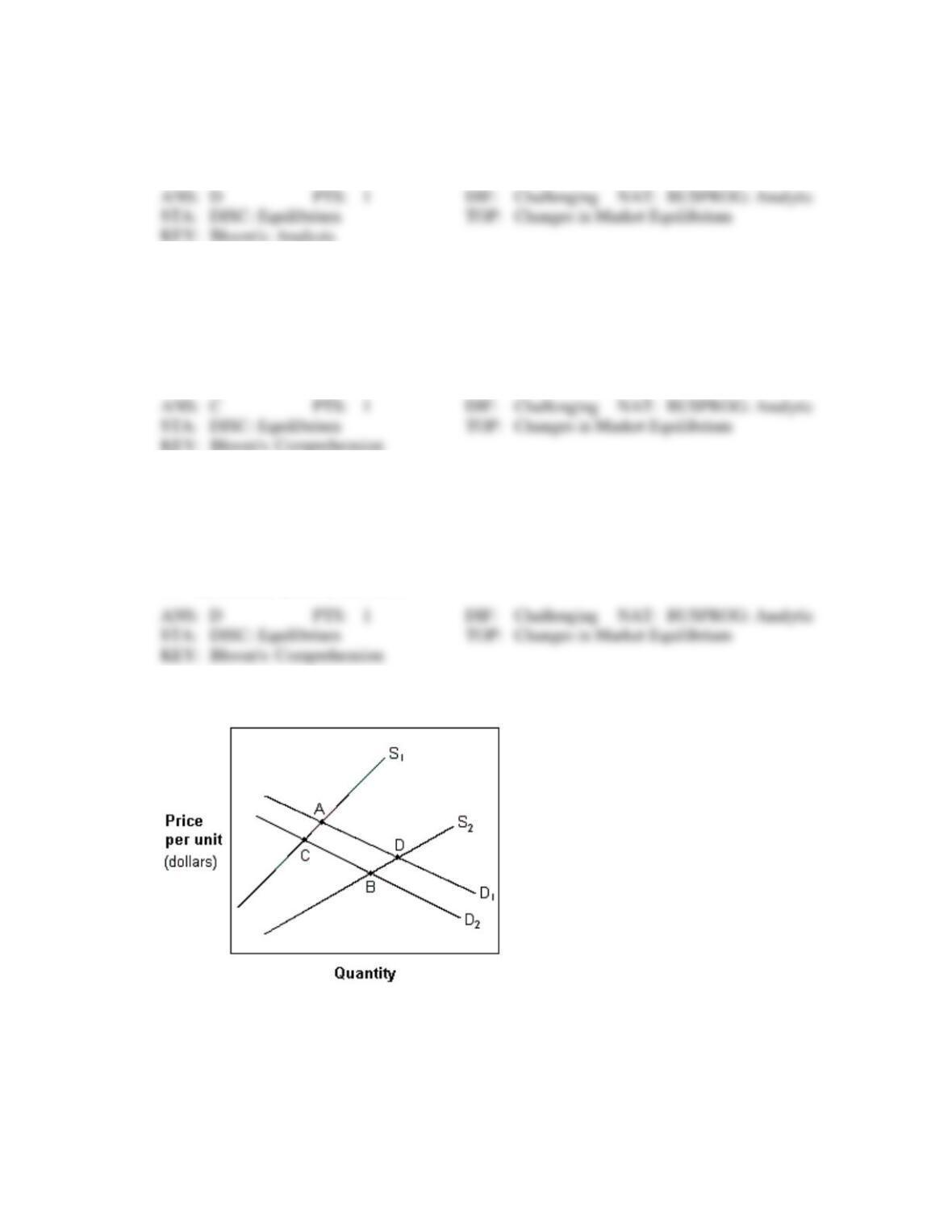
Exhibit 4-8 Demand and supply curves
70. In Exhibit 4-8, a movement from A to C is best described as a(n):
a.
increase in the quantity supplied and an increase in the demand.
b.
decrease in the quantity supplied and a decrease in demand.
c.
decrease in the quantity supplied and an increase in demand.
d.
decrease in the quantity demanded and a decrease in supply.
e.
decrease in both quantity demanded and quantity supplied.
71. In Exhibit 4-8, a movement from A to D is best described as a(n):
a.
increase in the quantity demanded and an increase in supply.
b.
increase in supply and demand.
c.
increase in both the quantity demanded and supplied.
d.
increase in the quantity supplied and in the demand.
e.
decrease in the quantity demanded and a decrease in supply.
72. In Exhibit 4-8, a movement from A to B is best explained by:
a.
an increase in income and in the number of suppliers.
b.
an increase in the price of other goods.
c.
an increase in the population.
d.
a decrease in income and an improvement in the technology used to produce the good.
e.
equilibrium quantity increases and the equilibrium price change is indeterminate.
73. In Exhibit 4-8, a movement from A to B in which price has decreased and quantity has increased is
best explained by a(n):
a.
increase in supply and demand.
b.
decrease in supply and demand.
c.
increase in supply that dominates a decrease in demand.
d.
increase in demand that dominates a decrease supply.
e.
decrease in demand that dominates an increase in supply.
74. A price ceiling that sets the price of a good below market equilibrium will cause:
a.
An increase in quantity demanded of the good.
b.
A decrease in quantity supplied of the good.
c.
A shortage of the good.
d.
All of these.
75. If a government imposed price ceiling legally sets the price of beef below market equilibrium, which
of the following will most likely happen?
a.
The quantity of beef demanded will decrease.
b.
The quantity of beef supplied will increase.
c.
There will be a surplus of beef.
d.
There will be a shortage of beef.
76. Many student government candidates at colleges and universities propose rent controls on local rental
housing as a way to help students afford rental housing. Economic theory suggests that this policy
would harm students as a whole despite the fact that some students who are able to find housing at the
reduced price would benefit. Which of the following are some of the offsetting secondary effects of the
rent controls that would work to the disadvantage of students?
a.
There would be a shortage of rental housing, making it very difficult for students to find
places to rent and causing increased discrimination in the rental housing market.
b.
There would be a reduction in the quality of rental housing.
c.
There would be a reduction in the future supply of rental housing.
d.
All of these would be secondary effects of the rent controls.
77. Rent control applies to about two-thirds of the private rental housing in New York City. Economic
theory suggests that a below-equilibrium price established by rent control:
a.
creates a surplus of rental housing.
b.
promotes a rapid increase in the future supply of housing.
c.
results in poor service and quality deterioration of many rental units.
d.
leads to a reduction in housing discrimination against minorities.
78. If the equilibrium price of natural gas is $4 per thousand cubic feet and a price ceiling is imposed at $3
per thousand cubic feet, the result will be:
a.
a surplus of natural gas.
b.
a shortage of natural gas.
c.
an accumulation of inventories of unsold gas.
d.
None of these.
79. If the equilibrium price of aspirins is $2.50 and a price ceiling is imposed at $3.00, the eventual result
after market adjustment will be a(n):
a.
surplus.
c.
accumulation of inventories.
b.
shortage.
d.
equilibrium.
80. There was an extensive black market (illegal market) for many consumer products in the United States
during World War II. A likely explanation of the black market is that:
a.
the prices of goods were artificially held down by price controls.
b.
black markets were legal during the war.
c.
goods were not subject to price controls.
d.
gasoline rationing greatly restricted civilians from driving to stores.
81. If the government imposes a price ceiling below the market equilibrium price, which of the following
will result?
a.
There will be a surplus of the good.
b.
The quantity demanded will exceed the quantity supplied.
c.
The quantity supplied will exceed the quantity demanded.
d.
The demand curve will shift to the left.
82. Price ceilings set below the equilibrium create:
a.
externalities.
c.
shortages.
b.
unemployment.
d.
surpluses.
83. Which of the following is not a common effect of imposing a rent control?
a.
Discriminatory practices by landlords.
b.
More time on waiting lists and searching for housing.
c.
A “black market” for rentals.
d.
An excess supply of rentals at the controlled price.
84. Suppose a price ceiling is set by the government below the market equilibrium price. Which of the
following will result?
a.
The demand curve will shift to the left.
b.
The quantity demanded will exceed the quantity supplied.
c.
The quantity supplied will exceed the quantity demanded.
d.
There will be a surplus.
85. Suppose the government imposes rent control (a price ceiling) below the equilibrium price for rental
housing. Which of the following could result?
a.
Tenants risk breaking rent control law.
b.
The quality of existing rental housing deteriorates.
c.
Shortages.
d.
All of these.
86. If the equilibrium price of good X is $4 and a price ceiling is imposed at $5, the result will be a(n):
a.
depletion of inventories.
c.
surplus.
b.
shortage.
d.
equilibrium.
87. If the equilibrium price of good X is $5 and a price ceiling is imposed at $4, the result will be a(n):
a.
accumulation of inventories of unsold gas.
b.
shortage.
c.
surplus.
d.
all of these.
88. When the government imposes a price ceiling on a good whose price is too high,
a.
surpluses are created.
b.
supply will increase to meet the demand.
c.
rationing is not necessary.
d.
quantity demanded of the good will fall.
e.
chronic excess demand occurs.
89. If the equilibrium price of bread is $2 and the government imposes a $1.50 price ceiling on the price of
bread, then:
a.
more bread will be produced.
b.
there will be a shortage of bread.
c.
the demand for bread will decrease.
d.
producers will charge $0.50 for bread.
e.
$0.50 in tax revenue will be paid for each unit of bread.
90. Rent controls create distortions in the housing market by:
a.
increasing rents received by landlords
b.
raising property values.
c.
encouraging landlords to overspend for maintenance.
d.
discouraging new housing construction.
e.
increasing the supply of housing in the long run.