Cost Accounting: A Managerial Emphasis, 6e
Chapter 4 – Job Costing
41) A wholesale automobile company that buys and resells cars has the following data for June:
Actual Budget
Units bought 2,600 2,500
Units sold 2,500 2,400
Cost Assignment Actual $ Budget $
Total cost of sales # of units sold 30,000,000 26,400,000
Buyers’ expenses # of units bought 162,000 175,000
Cleaning of sold units Cleaning dept. 150,000 156,000
Customer relations Sales support 244,000 213,000
Rent on showroom # of units bought 20,000 20,000
Sales staff commissions # of units sold 300,000 264,000
Utilities Sales support 3,500 3,000
Required:
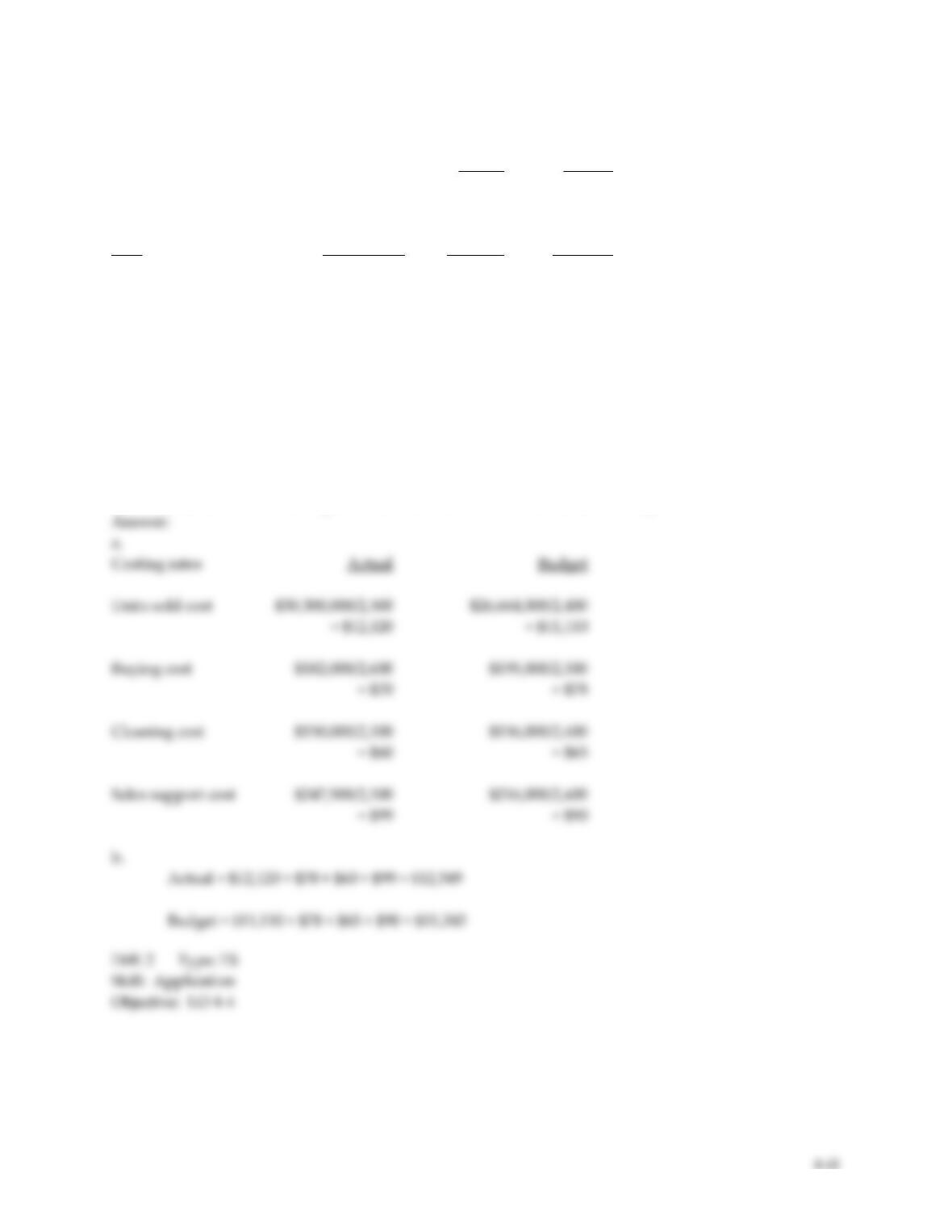
a. Compute the costing rates for each cost assignment category using both actual and budget costing
techniques.
b. Calculate the total cost assigned to the each vehicle sold under each costing rate method.
Cost Accounting: A Managerial Emphasis, 6e
Chapter 4 – Job Costing
42) An accounting firm provides tax consulting for estates and trusts. Their job costing system has a
single direct cost category (professional labour) and a single indirect cost pool (research support). The
indirect cost pool contains all the costs except direct personnel costs. All budgeted indirect costs are
allocated to individual jobs using actual professional labour hours.
Required:
a. Discuss the reasons a consulting firm might use normal costing in its job system rather than actual
costing.
b. What might be some ways for the firm to change from a one pool allocation concept?
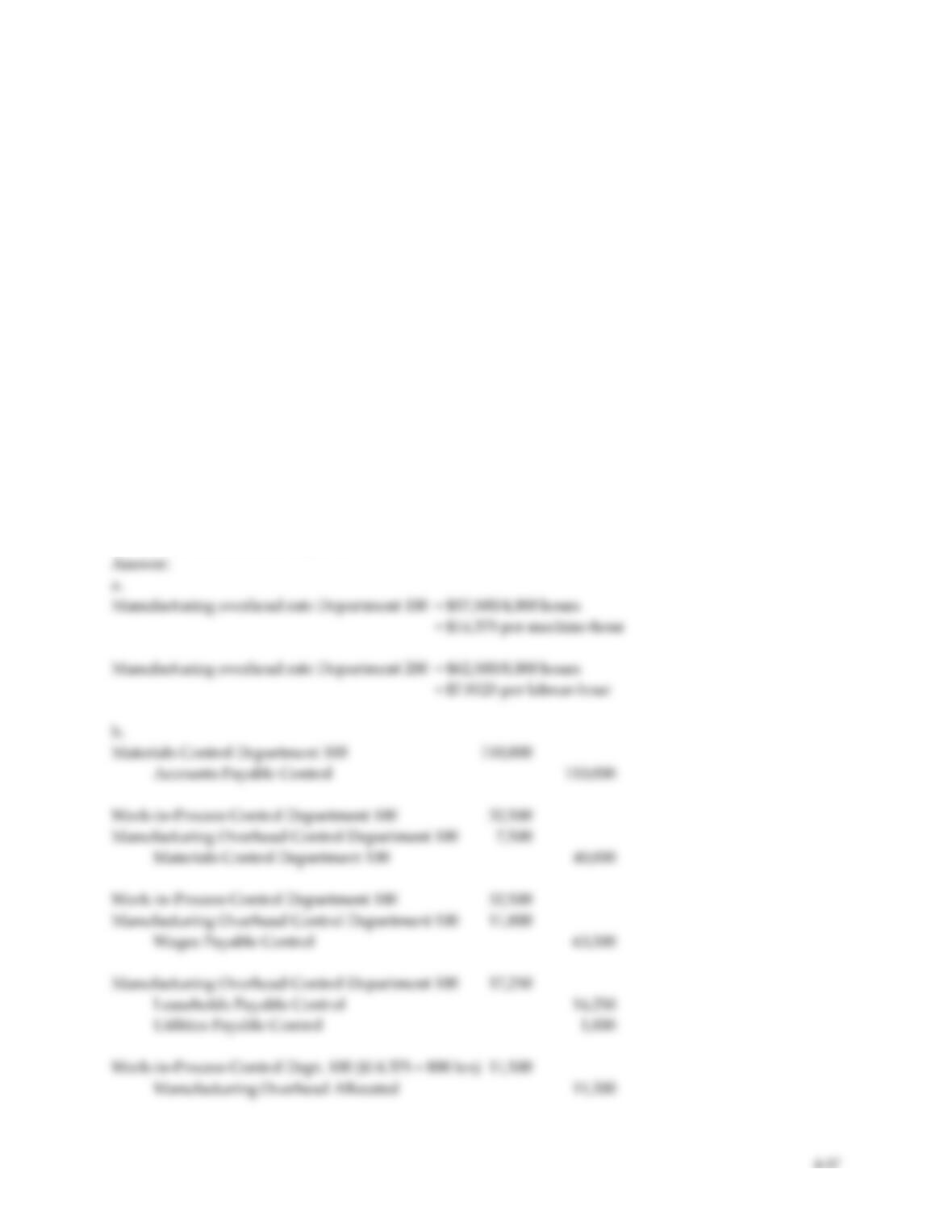
43) Explain how a budgeted indirect cost allocation rate is determined.
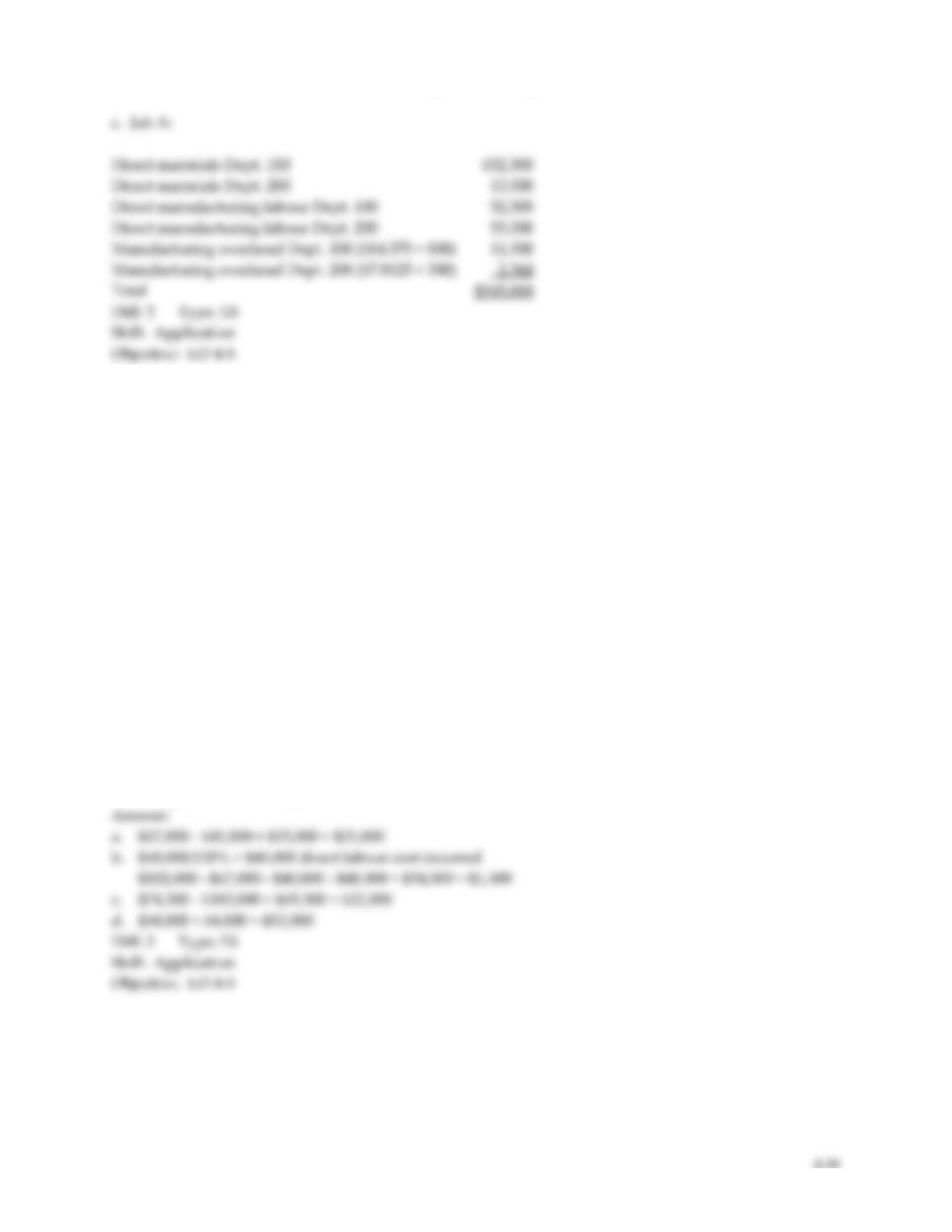
44) What is the difference between an actual cost system and a normal cost system?
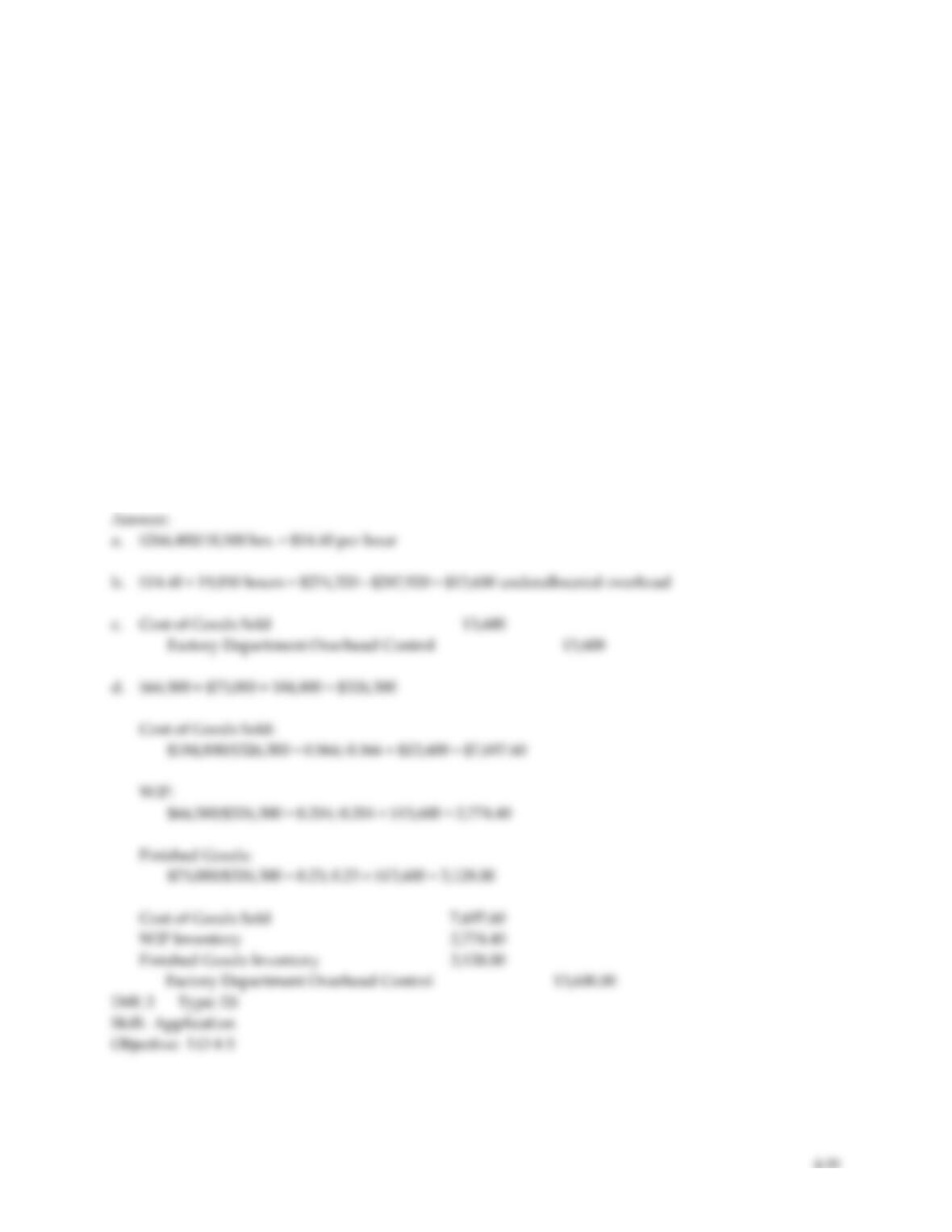
Cost Accounting: A Managerial Emphasis, 6e
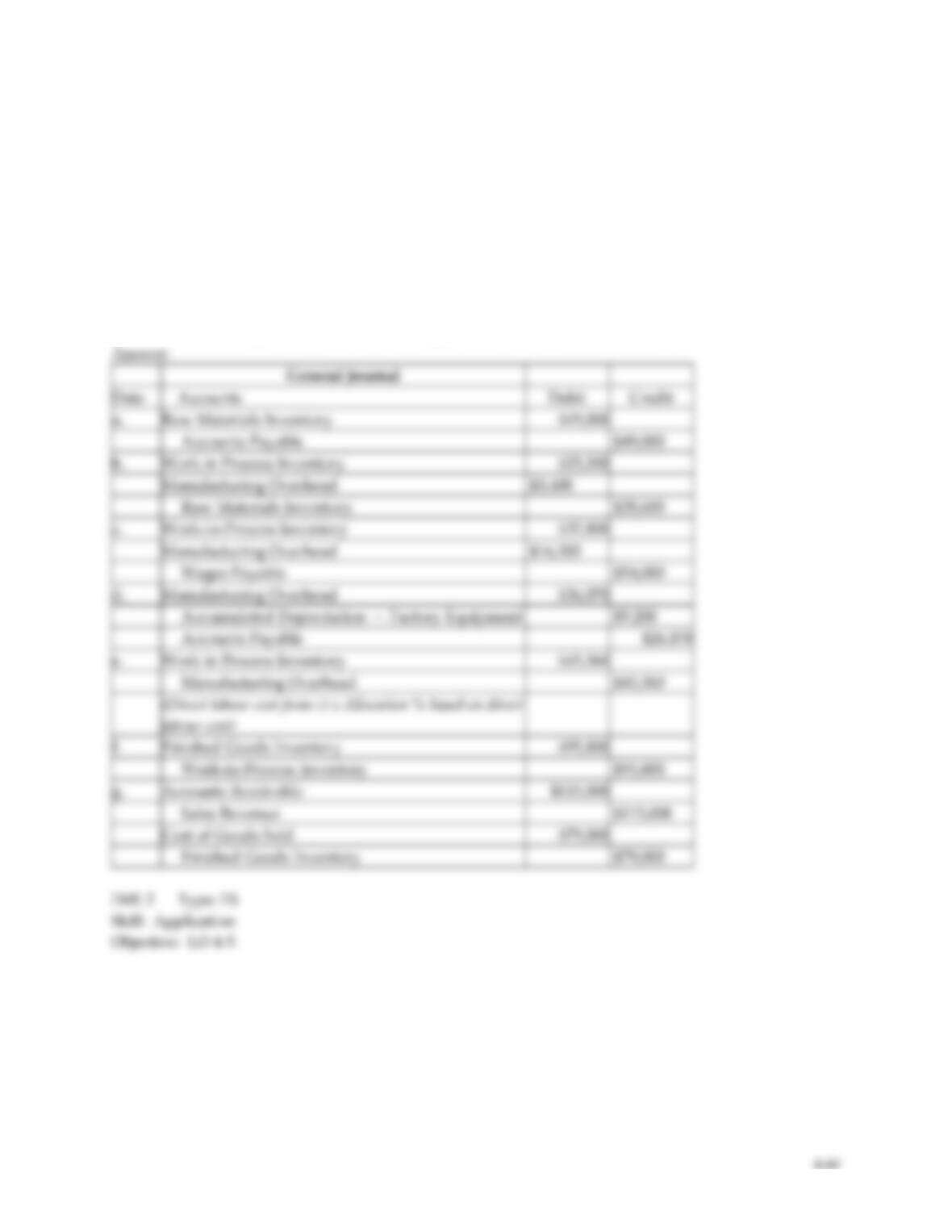
Chapter 4 – Job Costing
4.5 Analyze the flow of costs from direct and indirect cost pools to inventory accounts,
including adjustments for over- and underallocated costs.
1) The Work-in-Process Control account tracks job costs from the time jobs are started until they are
completed.
2) Underallocated indirect costs cannot occur when normal costing is used.
3) Proration is the equalization of the overhead allocation rates between finished goods inventory and
work-in-process inventory.
4) Instead of proration, a company could choose to simply write-off the balance of any underallocated
overhead to cost of goods sold providing the amount is immaterial.
5) The balance in the manufacturing overhead allocated account, is carried over to the balance sheet for
the subsequent year, to properly track all costs for job costing.
6) The actual costs of all individual overhead categories are recorded in the Manufacturing Overhead
Control account as credit entries.
Cost Accounting: A Managerial Emphasis, 6e
Chapter 4 – Job Costing
7) The manufacturing overhead control account and the manufacturing overhead allocated account both
have zero balances at the end of each year after all adjustments are recorded.
8) Manufacturing Overhead Control and Manufacturing Overhead Allocated in the General Ledger
respectively, refer to
A) the record of actual overhead costs, and the record of overhead allocated to specific jobs using
budgeted rates × actual base units.
B) the record of total budgeted overhead costs and the record of actual overhead allocated to date.
C) the record of actual overhead costs, and the record of overhead allocated to specific jobs using actual
rates × budgeted base units.
D) the record of total budgeted overhead costs, and the record of overhead allocated to specific jobs using
budgeted rates × actual base units.
E) the record of actual overhead costs, and the record of overhead allocated to specific jobs using
budgeted rates × budgeted base units.
9) To allocate or spread the under/overallocated overhead between Ending Inventory, Cost of Goods
Sold, and the Work–in-Process control accounts is called the
A) adjusted allocation-rate approach.
B) proration approach.
C) flexible budget approach.
D) allocation variance approach.
E) inventory adjustment approach.
10) When using the proration approach the final balance in the Manufacturing Overhead Control account
can be closed to which account(s) at year-end?
A) Work-in-Process Control
B) Income Summary
C) Finished Goods Inventory
D) Cost of Goods Sold
E) Work-in-Process Control, Finished Goods Inventory or Cost of Goods Sold would normally be used.
Cost Accounting: A Managerial Emphasis, 6e
Chapter 4 – Job Costing
11) The Manufacturing Overhead Control account is debited for
A) the actual costs in all the individual overhead categories ( such as indirect materials and electric
power).
B) the amount of the under applied overhead.
C) the budgeted costs in all the individual overhead categories ( such as indirect materials and electric
power).
D) indirect materials purchased.
E) the overhead allocated to Work–in-Process inventory.
12) Which method for dealing with under/over allocated overhead provides the most accurate inventory
and cost of goods sold account balances?
A) proration approach
B) adjusted allocation-rate approach
C) immediate write-off to cost of goods sold
D) either proration or adjusted allocation-rate approach
E) either the proration approach or the immediate write-off to cost of goods sold
13) Which method for dealing with under/over allocated overhead provides the most accurate individual
job cost records?
A) proration approach
B) adjusted allocation-rate approach
C) immediate write-off to cost of goods sold
D) either proration or adjusted allocation-rate approach would give same result
E) either the proration approach or the immediate write-off to cost of goods sold
Cost Accounting: A Managerial Emphasis, 6e
Chapter 4 – Job Costing
14) What is the appropriate journal entry if $100,000 of materials were purchased on account for the
month of August?
A)
Materials Control
100,000
Accounts Payable Control
100,000
B)
Work-in-Process Control
100,000
Accounts Payable Control
100,000
C)
Manufacturing Overhead Control
100,000
Accounts Payable Control
100,000
D)
Manufacturing Overhead Allocated
100,000
Accounts Payable Control
100,000
E)
Materials Control
100,000
Work-in-Process Control
100,000
Cost Accounting: A Managerial Emphasis, 6e
Chapter 4 – Job Costing
15) What is the appropriate journal entry if direct materials of $50,000 and indirect materials of $3,000 are
sent to the manufacturing plant floor?
A)
Work-in-Process Control
50,000
Materials Control
50,000
B)
Work-in-Process Control
53,000
Materials Control
53,000
C)
Manufacturing Overhead Control
3,000
Materials Control
50,000
Work-in-Process Control
53,000
D)
Work-in-Process Control
50,000
Manufacturing Overhead Control
3,000
Materials Control
53,000
E)
Work-in-Process Control
50,000
Manufacturing Overhead Allocated
3,000
Materials Control
53,000
Cost Accounting: A Managerial Emphasis, 6e
Chapter 4 – Job Costing
16) Manufacturing overhead costs incurred for the month are:
Utilities
$15,000
Depreciation on equipment
$25,000
Repairs
$10,000
Which is the correct journal entry assuming utilities and repairs were on account?
A)
Manufacturing Overhead Allocated
50,000
Accounts Payable Control
25,000
Accumulated Depreciation Control
25,000
B)
Work-in-Process Control
50,000
Accounts Payable Control
50,000
C)
Manufacturing Overhead Control
50,000
Work-in-Process Control
50,000
D)
Accumulated Depreciation Control
25,000
Accounts Payable Control
25,000
Manufacturing Overhead Control
50,000
E)
Manufacturing Overhead Control
50,000
Accounts Payable Control
25,000
Accumulated Depreciation Control
25,000
Cost Accounting: A Managerial Emphasis, 6e
Chapter 4 – Job Costing
Answer the following question(s) using the information below.
Sunny Company manufactures pipes and applies manufacturing overhead costs to production at a
budgeted indirect cost allocation rate of $15 per direct labour hour. The following data are obtained from
the accounting records for June 2012:
Direct materials
$280,000
Direct labour (7,000 hours @ $11/hour)
$77,000
Indirect labour
$20,000
Plant facility rent
$60,000
Depreciation on plant machinery and equipment
$30,000
Sales commissions
$40,000
Administrative expenses
$50,000
17) The actual amount of manufacturing overhead costs incurred in June 2012 totals
A) $557,000.
B) $200,000.
C) $110,000.
D) $80,000.
E) $105,000.
18) The amount of manufacturing overhead allocated to all jobs during June 2012 totals
A) $77,000.
B) $105,000.
C) $110,000.
D) $200,000.
E) $557,000.
Cost Accounting: A Managerial Emphasis, 6e
Chapter 4 – Job Costing
19) For June 2012, manufacturing overhead was
A) overallocated by $90,000.
B) underallocated by $5,000.
C) neither underallocated or overallocated.
D) underallocated by $33,000.
E) overallocated by $5,000.
Cost Accounting: A Managerial Emphasis, 6e
Chapter 4 – Job Costing
Use the information below to answer the following question(s).
Because the Abernathy Company used a budgeted indirect cost allocation rate for its manufacturing
operations, the amount allocated ($200,000) was different from the actual amount incurred ($225,000).
Before disposition of under/overallocated overhead, the following information was available:
Account
Balance
Overhead
Allocated
Direct materials
$60,000
$nil
WIP
$190,000
$10,000
Finished goods
$250,000
$20,000
Cost of goods sold
$560,000
$170,000
20) What is the journal entry used to write-off the difference between allocated and actual overhead
directly to cost of goods sold?
A)
Cost of Goods Sold
25,000
Manufacturing Overhead Control
25,000
B)
Cost of Goods Sold
25,000
Manufacturing Overhead Allocated
25,000
C)
Manufacturing Overhead Allocated
25,000
Cost of Goods Sold
25,000
D)
Manufacturing Overhead Control
25,000
Cost of Goods Sold
25,000
E)
Work-in-Process Control
25,000
Cost of Goods Sold
25,000
Cost Accounting: A Managerial Emphasis, 6e
Chapter 4 – Job Costing
21) What is the journal entry used to write-off the difference between allocated and actual overhead using
the proration approach?
A)
Work-in-Process Control
4,750
Finished Goods Control
6,250
Cost of Goods Sold
14,000
Manufacturing Overhead Control
25,000
B)
Manufacturing Overhead Allocated
25,000
Work-in-Process Control
4,750
Finished Goods Control
6,250
Cost of Goods Sold
14,000
C)
Manufacturing Overhead Control
25,000
Work-in-Process Control
1,250
Finished Goods Control
2,500
Cost of Goods Sold
21,250
D)
Work-in-Process Control
1,250
Finished Goods Control
2,500
Cost of Goods Sold
21,250
Manufacturing Overhead Control
25,000
E)
Work-in-Process Control
1,250
Finished Goods Control
2,500
Cost of Goods Sold
21,250
Manufacturing Overhead Allocated
25,000
Cost Accounting: A Managerial Emphasis, 6e
Chapter 4 – Job Costing
22) Correct the following journal entry, and explain your changes.
Manufacturing overhead control 32,000
Work-in-process-control 32,000
To record the cost of machinery repair labour.
23) Job-cost records for Boucher Company contained the following data:
Total Cost
Date Date Date of Job
Job No. Started Finished Sold at June 30
220 May 18 June 12 June 20 $6,000
221 May 20 June 19 June 21 4,000
222 June 7 July 5 July 12 7,000
223 June 10 June 28 July 1 6,500
224 June 19 July 16 July 25 8,000
Required:
a. Compute WIP inventory at June 30.
b. Compute finished goods inventory at June 30.
c. Compute cost of goods sold for June.
Cost Accounting: A Managerial Emphasis, 6e
Chapter 4 – Job Costing
24) Moira Company has just finished its first year of operations and must decide which method to use for
adjusting cost of goods sold. The company used a budgeted indirect-cost rate for its manufacturing
operations. The amount that was allocated ($435,000) to cost of goods sold was different from the actual
amount incurred ($425,000).
Ending balances in the relevant accounts were:
Work-in-Process $40,000
Finished Goods 80,000
Cost of Goods Sold 680,000
Required:
a. Prepare a journal entry to write off the difference between allocated and actual overhead directly to
Cost of Goods Sold. Be sure your journal entry closes the related overhead accounts.
b. Prepare a journal entry that prorates the write-off of the difference between allocated and actual
overhead using ending account balances. Be sure your journal entry closes the related overhead
accounts.
Cost Accounting: A Managerial Emphasis, 6e
Chapter 4 – Job Costing
25) A manufacturing company has actual overhead of $570,000, budgeted overhead of $620,000, and
budgeted 18,000 direct labour hours. Management believes that direct labour hours are the best allocation
base to use for allocation of overhead. Actual direct labour hours were 20,000 hours.
Assuming that the company used normal costing methods for allocation, and has the following account
balances in its General Ledger, what are the adjustments for each account using the proration method?
Manuf OVH
Balance Allocated Adjustment
Work-in-process control $62,000 $58,000 ________
Finished Goods $91,000 $210,000 ________
Cost of Goods Sold $1,500,000 $1,200,000 ________
26) What are three possible ways to dispose of underallocated or overallocated overhead costs at the end
of a fiscal year? Briefly comment on the theoretical correctness or incorrectness of each method.
Cost Accounting: A Managerial Emphasis, 6e
Chapter 4 – Job Costing
27) Why does the Manufacturing Overhead Control account (debit) need to equal the Manufacturing
Control account (credit)? What will be the effect of having an end of year remaining balance, debit or
credit, on the evaluation of profitability?
28) A company’s manufacturing overhead control account balance at the fiscal period end is a $905,000
debit, its work-in-process control is $75,000, and the manufacturing overhead allocated is $850,000. Direct
manufacturing labour was 10,000 hours, and the budget rate is $85 per hour.
Required:
Calculate the total amount of over or underallocated overhead to be adjusted and specify whether the
manufacturing overhead control account should be debited or credited for the adjustment.
Cost Accounting: A Managerial Emphasis, 6e
Chapter 4 – Job Costing
29) The Dougherty Furniture Company manufactures tables. In March, the two production departments
had budgeted allocation bases of 4,000 machine hours in Department 100 and 8,000 direct manufacturing
labour hours in Department 200. The budgeted manufacturing overheads for the month were $57,500 and
$62,500, respectively. For Job A, the actual costs incurred in the two departments were as follows:
Department 100 Department 200
Direct materials purchased on account $110,000 $177,500
Direct materials used 32,500 13,500
Direct manufacturing labour 52,500 53,500
Indirect manufacturing labour 11,000 9,000
Indirect materials used 7,500 4,750
Lease on equipment 16,250 3,750
Utilities 1,000 1,250
Job A incurred 800 machine hours in Department 100 and 300 manufacturing labour hours in Department
200. The company uses a budgeted indirect cost allocation rate for applying overhead to production.
Required:
a. Determine the budgeted manufacturing indirect cost allocation rate for each department.
b. Prepare the necessary journal entries to summarize the March transactions for Department 100.
c. What is the total cost of Job A?
Cost Accounting: A Managerial Emphasis, 6e
Chapter 4 – Job Costing
30) LeBlanc Company has the following balances as of the year ended December 31, 2012.
Direct Materials Inventory $15,000 Dr.
WIP Inventory 34,500 Dr.
Finished Goods Inventory 49,500 Dr.
Factory Department Overhead Control 4,000 Dr.
Cost of Goods Sold 74,500 Dr.
Additional information is as follows:
Cost of direct materials purchased during 2012 $41,000
Cost of direct materials requisitioned in 2012 47,000
Cost of goods completed during 2012 102,000
Factory overhead applied (120% of direct labour) 48,000
Required:
a. Compute beginning direct materials inventory.
b. Compute beginning WIP inventory.
c. Compute beginning finished goods inventory.
d. Compute actual factory overhead incurred.
Cost Accounting: A Managerial Emphasis, 6e
Chapter 4 – Job Costing
31) Schulz Corporation applies overhead based upon machine-hours. Budgeted factory overhead was
$266,400 and budgeted machine-hours were 18,500. Actual factory overhead was $287,920 and actual
machine-hours were 19,050. Before disposition of under/overallocated overhead, the following
information was available:
Account Overhead
Balance Allocated
Direct materials $60,000 $nil
WIP $190,000 $66,500
Finished goods $250,000 $75,000
Cost of goods sold $560,000 $184,800
Required:
a. Determine the budgeted factory overhead rate per machine-hour.
b. Compute the over/underallocated overhead.
c. Prepare the journal entry to dispose of the variance using the write-off to cost of goods sold
approach.
d. Prepare the journal entry to dispose of the variance using the proration approach.
Cost Accounting: A Managerial Emphasis, 6e
Chapter 4 – Job Costing
32) JamJee Enterprises uses a job costing system. Record the following transactions in JamJee Enterprise’s
general journal for the current month:
a. Purchased raw materials on account, $49,000.
b. Requisitioned $25,200 of direct materials and $3,400 of indirect materials for use in production.
c. Factory payroll incurred, $54,000; 70% direct labour, 30% indirect labour.
d. Recorded depreciation expense factory equipment $9,200, and other manufacturing overhead of
$26,870 (credit accounts payable).
e. Allocated manufacturing overhead costs based on 120% of direct labour cost.
f. Cost of completed production for the current month, $95,800.
g. Cost of finished goods sold, $79,000; selling price, $115,000 (all sales on account).