Solve.
170)
The function A =A0e–0.01155x models the amount in pounds of a particular radioactive material
stored in a concrete vault, where x is the number of years since the material was put into the vault.
If 700 pounds of the material are initially put into the vault, how many pounds will be left after 170
years?
170)
A)
992 pounds
B)
124 pounds
C)
548 pounds
D)
98 pounds
Find the domain of the logarithmic function.
171)
f(x) = ln (2– x)
171)
A)
(–, 0)
B)
(–2, )
C)
(–, 2)
D)
(–, 2) or (2, )
Evaluate the expression without using a calculator.
172)
log 27 3
172)
A)
3
B)
1
3
C)
1
D)
9
Evaluate or simplify the expression without using a calculator.
173)
log 109
173)
A)
109
B)
9
C)
log 9
D)
10
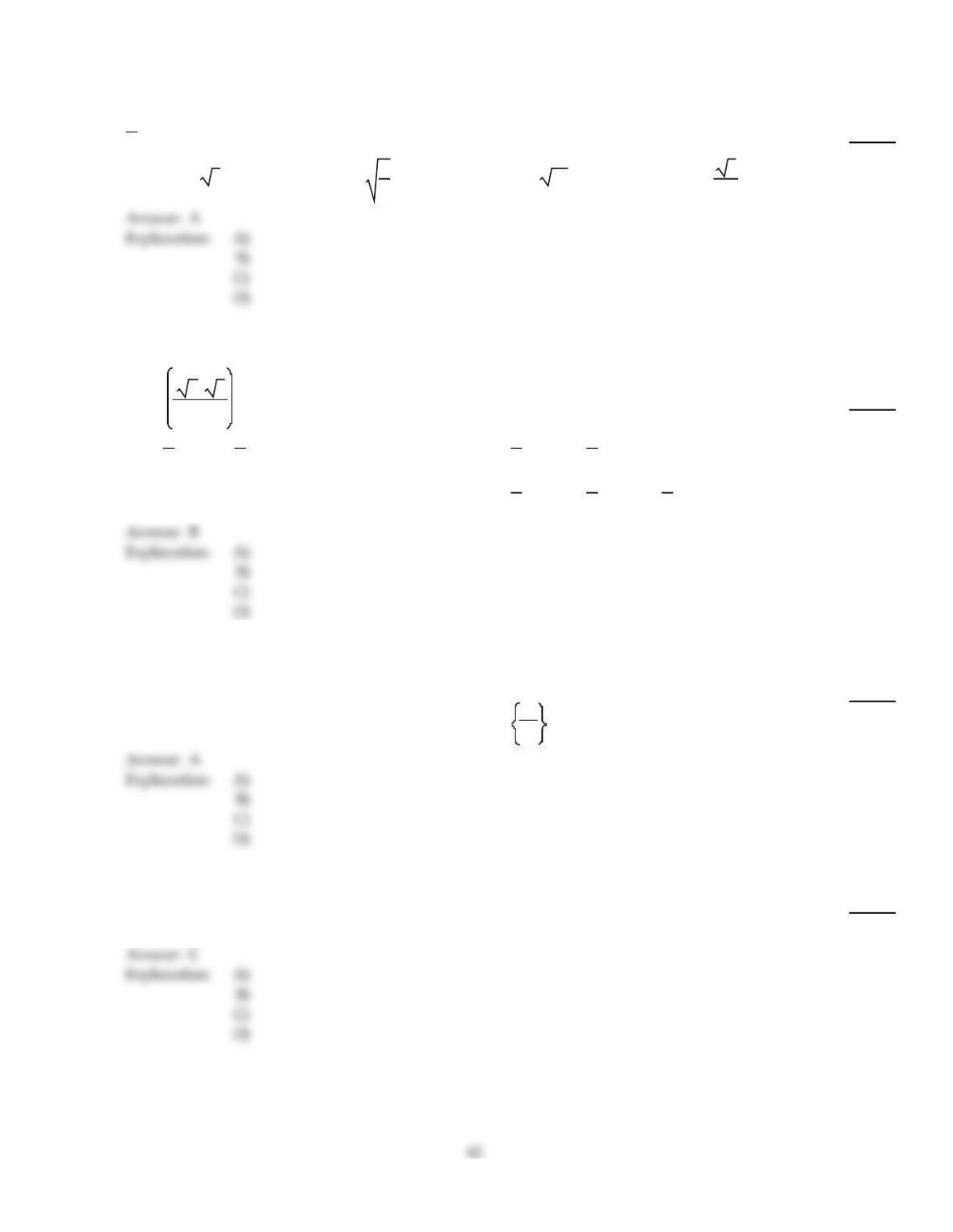
Use properties of logarithms to condense the logarithmic expression. Write the expression as a single logarithm whose
coefficient is 1. Where possible, evaluate logarithmic expressions.
174)
1
2log3x +log3y
174)
A)
log3y x
B)
log3
x
y
C)
log3xy
D)
log3
x
y
Use properties of logarithms to expand the logarithmic expression as much as possible. Where possible, evaluate
logarithmic expressions without using a calculator.
175)
log 5
3p4q
t2
175)
A)
1
3log 5p·1
4log 5q÷ 2 log 5t
B)
1
3log 5p+1
4log 5q– 2 log 5t
C)
3log 5p+ 4 log 5q– 2 log 5t
D)
3
5log 5p+4
5log 5q–2
5log 5t
Solve the logarithmic equation. Be sure to reject any value that is not in the domain of the original logarithmic
expressions. Give the exact answer.
176)
2log x = log 529
176)
A)
{23}
B)
{±23}
C)
23
2
D)
{–23}
Write the equation in its equivalent logarithmic form.
177)
52=25
177)
A)
log 52=25
B)
log 25 5=2
C)
log 525 =2
D)
log 225 =5
Solve the logarithmic equation. Be sure to reject any value that is not in the domain of the original logarithmic
expressions. Give the exact answer.
178)
ln x =4
178)
A)
e4
B)
4
ln 1
C)
4e
D)
{ln 4}
Evaluate or simplify the expression without using a calculator.
179)
ln 1
179)
A)
1
B)
e
C)
–1
D)
0
Solve the problem.
180)
A sample of 900 g of lead–210 decays to polonium–210 according to the function given by
A(t) =900e–0.032t, where t is time in years. What is the amount of the sample after 50 years (to the
nearest g)?
180)
A)
4458 g
B)
182 g
C)
28 g
D)
132 g
Use properties of logarithms to expand the logarithmic expression as much as possible. Where possible, evaluate
logarithmic expressions without using a calculator.
181)
logb (yz4)
181)
A)
4 logb y +4logb z
B)
logb y +4logb z
C)
4logb yz
D)
logb y +logb4z
Solve the logarithmic equation. Be sure to reject any value that is not in the domain of the original logarithmic
expressions. Give the exact answer.
182)
ln x +2=6
182)
A)
e6
2+2
B)
{e6– 2}
C)
{e12 – 2}
D)
{e12 +2}
Solve.
183)
A fossilized leaf contains 15% of its normal amount of carbon 14. How old is the fossil (to the
nearest year)? Use 5600 years as the half–life of carbon 14.
183)
A)
15,299
B)
1311
C)
21,839
D)
35,828
Use properties of logarithms to condense the logarithmic expression. Write the expression as a single logarithm whose
coefficient is 1. Where possible, evaluate logarithmic expressions.
184)
log cm+log cn
184)
A)
log cm·log cn
B)
log c(m
n)
C)
log c(m + n)
D)
log c(mn)
Solve the equation by expressing each side as a power of the same base and then equating exponents.
185)
8(x –10)/6=8
185)
A)
{22}
B)
12
C)
{16}
D)
{13}
Graph the function.
64
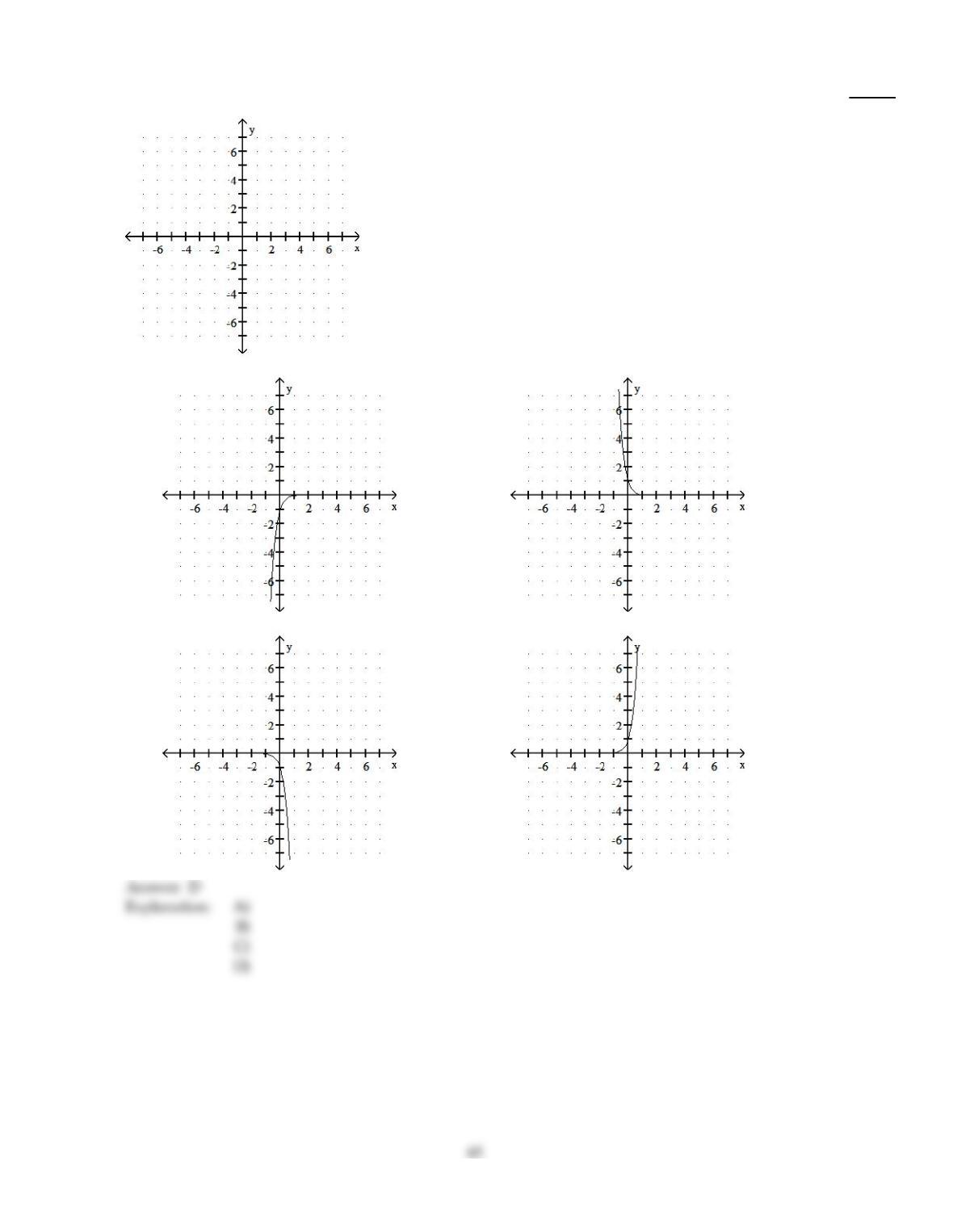
186)
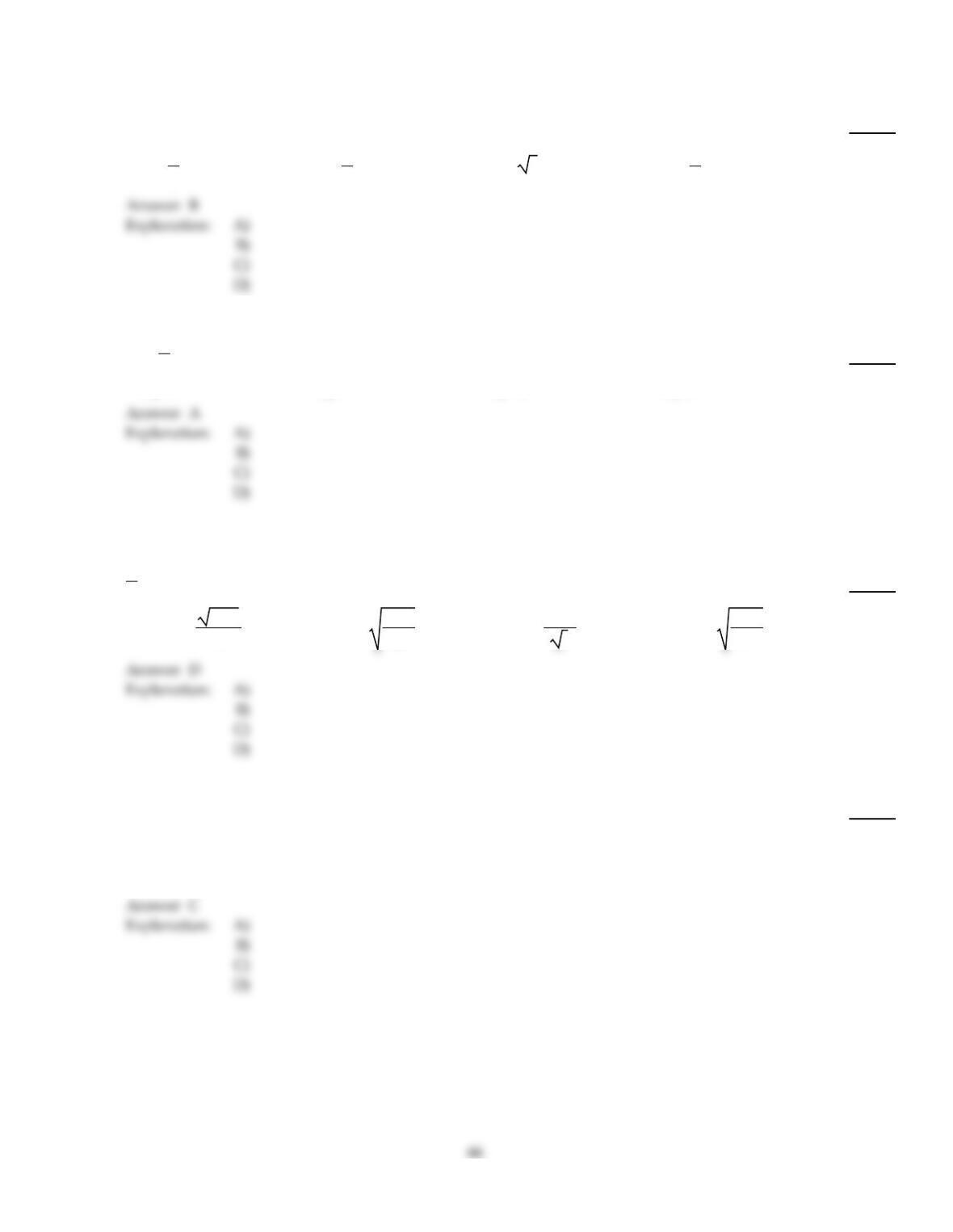
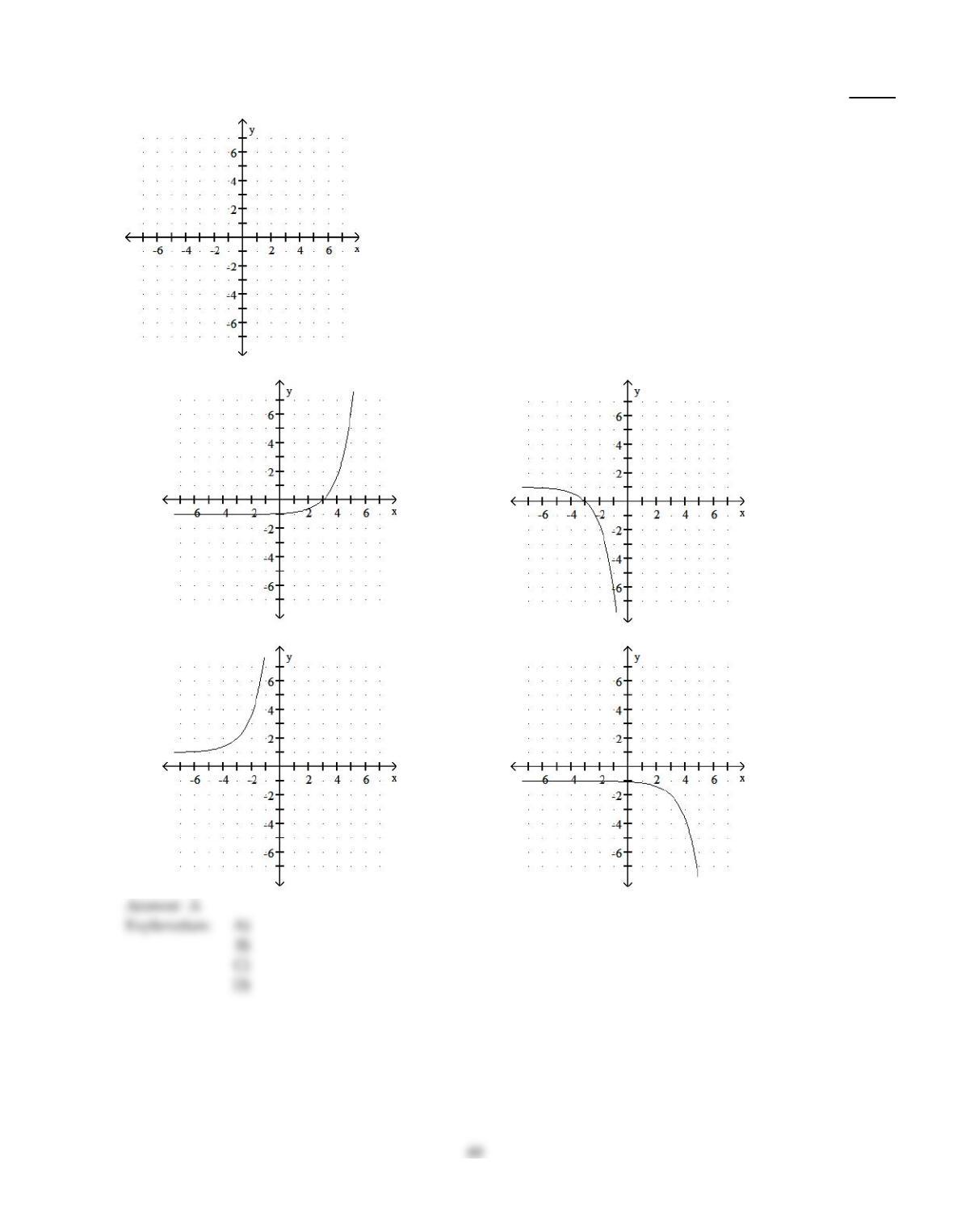
Use the graph of f(x) =ex to obtain the graph of g(x) =e3x.
186)
A)
B)
C)
D)
Solve the logarithmic equation. Be sure to reject any value that is not in the domain of the original logarithmic
expressions. Give the exact answer.
187)
log54+log5 x = 1
187)
A)
{1
4}
B)
{5
4}
C)
{45}
D)
{4
5}
Evaluate the expression without using a calculator.
188)
log51
5
188)
A)
–1
B)
1
C)
–5
D)
5
Use properties of logarithms to condense the logarithmic expression. Write the expression as a single logarithm whose
coefficient is 1. Where possible, evaluate logarithmic expressions.
189)
1
2(log5 (r –5) –log5 r)
189)
A)
log5r –5
r
B)
log5r –5
2r
C)
log5r –5
r
D)
log5r –5
r
Solve the problem.
190)
The population in a particular country is growing at the rate of 2.8% per year. If 7,638,000 people
lived there in 1999, how many will there be in the year 2005? Use f(x) =y0e0.028t and round to the
nearest ten–thousand.
190)
A)
8,850,000
B)
10,840,000
C)
9,040,000
D)
9,940,000
Solve the equation by expressing each side as a power of the same base and then equating exponents.
191)
4x +2=8x –6
191)
A)
{20}
B)
{10}
C)
{22}
D)
{8}
192)
4(3x – 7)=16
192)
A)
1
4
B)
{4}
C)
{3}
D)
{–3}
Evaluate or simplify the expression without using a calculator.
193)
9 log 106.2
193)
A)
558
B)
16.4209
C)
5.58
D)
55.8
Evaluate the expression without using a calculator.
194)
log 11 11
194)
A)
0
B)
11
C)
1
11
D)
1
Rewrite the equation in terms of base e. Express the answer in terms of a natural logarithm, and then round to three
decimal places.
195)
y =2.2(0.9)x
195)
A)
y = (ln 2.2)ex ln 0.9, y =0.788e–0.105x
B)
y =0.9ex ln 2.2, y =0.9e0.788x
C)
y =2.2ex ln 0.9, y =2.2e–0.105x
D)
y =2.2e0.9x, y =2.22.718–0.105x
Solve the exponential equation. Use a calculator to obtain a decimal approximation, correct to two decimal places, for the
solution.
196)
7x=6x + 7
196)
A)
81.36
B)
3.36
C)
40.68
D)
42.00
Use the compound interest formulas A = P 1 +r
n
nt and A = Pert to solve.
197)
Find the accumulated value of an investment of $3000 at 7% compounded continuously for 6 years.
197)
A)
$4665.88
B)
$4565.88
C)
$4260.00
D)
$4502.19
Find the domain of the logarithmic function.
198)
f(x) =log 8(x +6)
198)
A)
(8, )
B)
(6, )
C)
(–, 0) or (0, )
D)
(–6, )
Use properties of logarithms to expand the logarithmic expression as much as possible. Where possible, evaluate
logarithmic expressions without using a calculator.
199)
logax43x + 5
(x –2)2
199)
A)
4 loga x – 3 loga (x + 5) – 2 loga ( x – 2)
B)
logax4+loga(x + 5)–3–loga(x – 2)2
C)
4 loga x +1
3loga (x + 5) – 2 loga (x – 2)
D)
logax4+loga(x + 5)1/3 –loga(x – 2)2
Graph the function.
68
200)
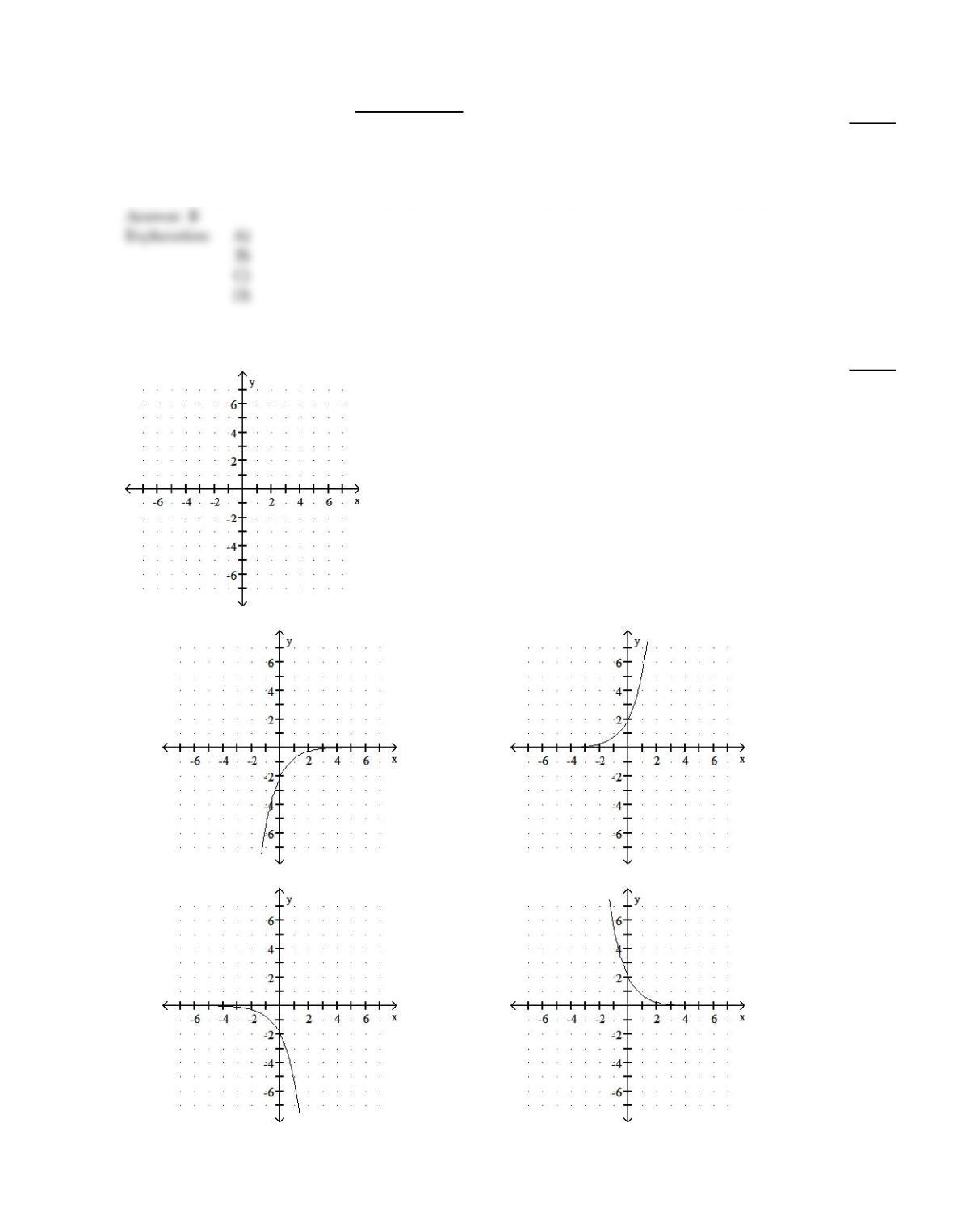
Use the graph of f(x) =ex to obtain the graph of g(x) =ex – 3 – 1.
200)
A)
B)
C)
D)
Solve the problem.
201)
The logistic growth function f(t) =92,000
1 +1313.3e–1.4t models the number of people who have
become ill with a particular infection t weeks after its initial outbreak in a particular community.
What is the limiting size of the population that becomes ill?
201)
A)
1313 people
B)
92,000 people
C)
1314 people
D)
184,000 people
Graph the function.
202)
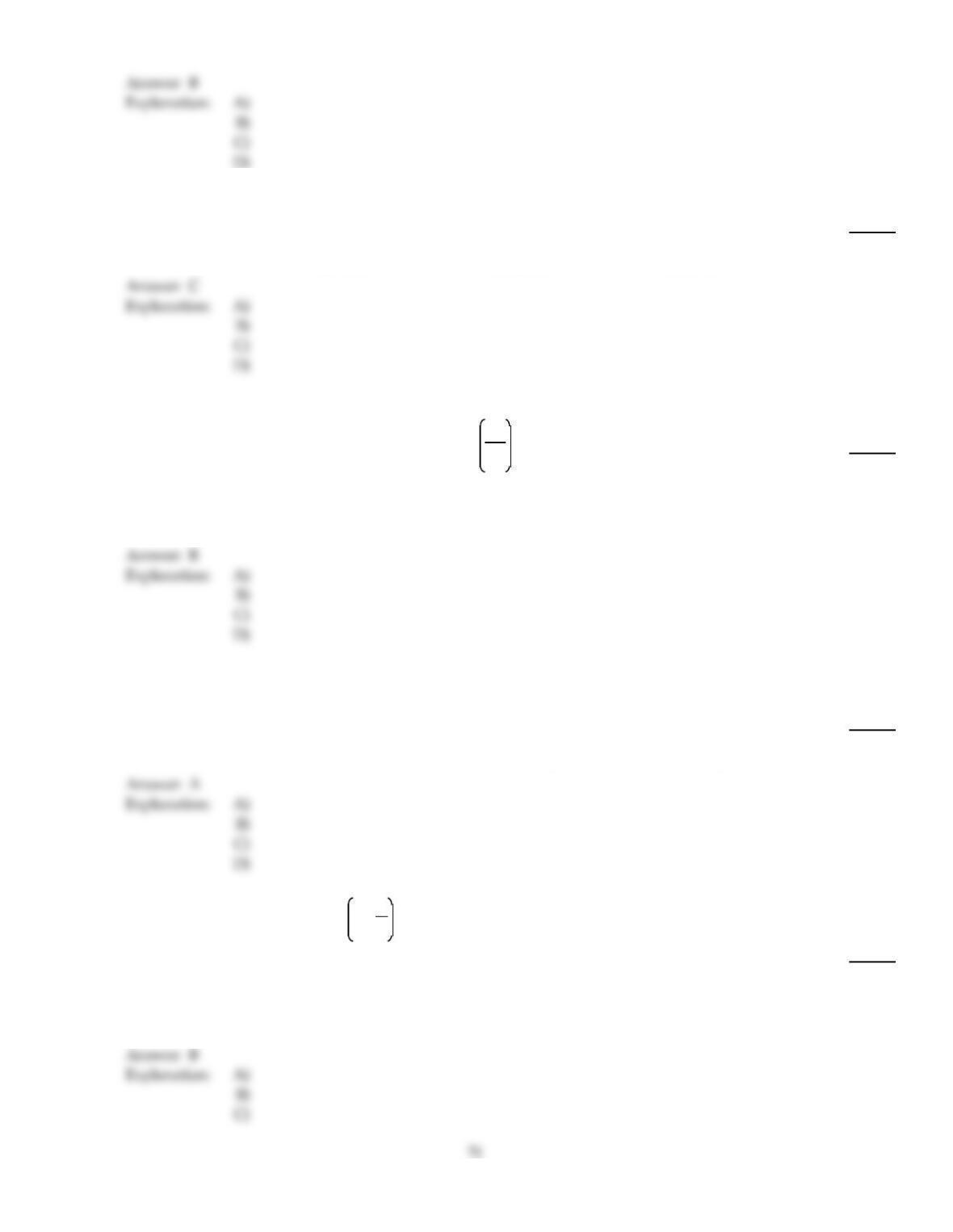
Use the graph of f(x) =ex to obtain the graph of g(x) =2ex.
202)
A)
B)
C)
D)
70
Solve.
203)
The half–life of silicon–32 is 710 years. If 30 grams is present now, how much will be present in 300
years? (Round your answer to three decimal places.)
203)
A)
0
B)
1.604
C)
22.383
D)
29.134
Solve the problem.
204)
Use the mathematical model for power gain, G = log P0
Pi
10
, where P0 is the output power in watts
and Pi is the input power in watts. Determine the power gain G, in decibels, for an amplifier with
an output P0 of 19 watts and an input Pi of 1.9 watts. Round to five decimal places if necessary.
204)
A)
15.57507 dB
B)
10 dB
C)
11 dB
D)
12.32996 dB
Use properties of logarithms to expand the logarithmic expression as much as possible. Where possible, evaluate
logarithmic expressions without using a calculator.
205)
log 7x6
205)
A)
6log 7x
B)
7 log x
C)
7log 6x
D)
6log 7x6
Use the compound interest formulas A = P 1 +r
n
nt and A = Pert to solve.
206)
Suppose that you have $10,000 to invest. Which investment yields the greater return over 6 years:
8.75% compounded continuously or 8.9% compounded semiannually?
206)
A)
$10,000 invested at 8.9% compounded semiannually over 6 years yields the greater return.
B)
$10,000 invested at 8.75% compounded continuously over 6 years yields the greater return.
C)
Both investment plans yield the same return.
Graph the function by making a table of coordinates.
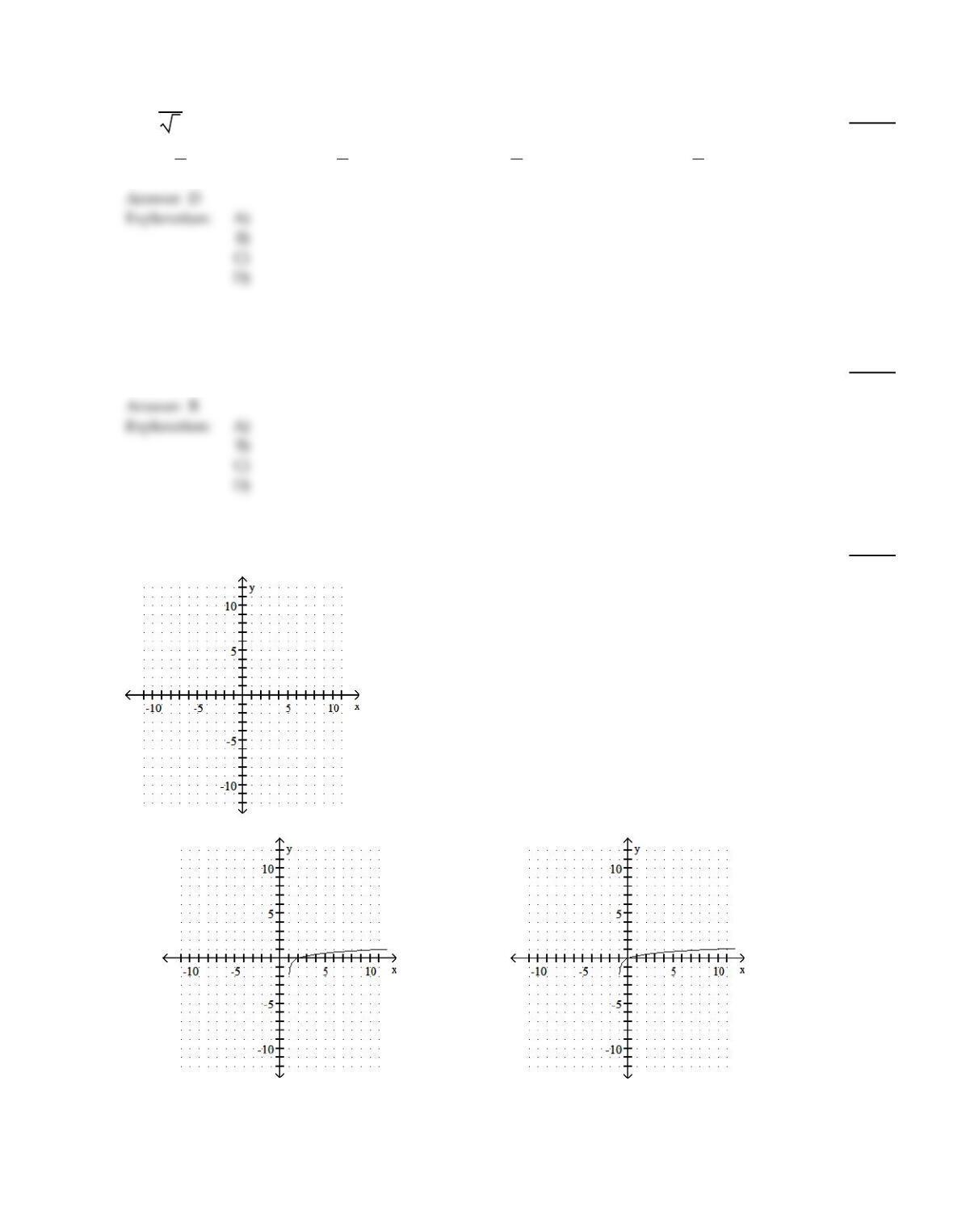
207)
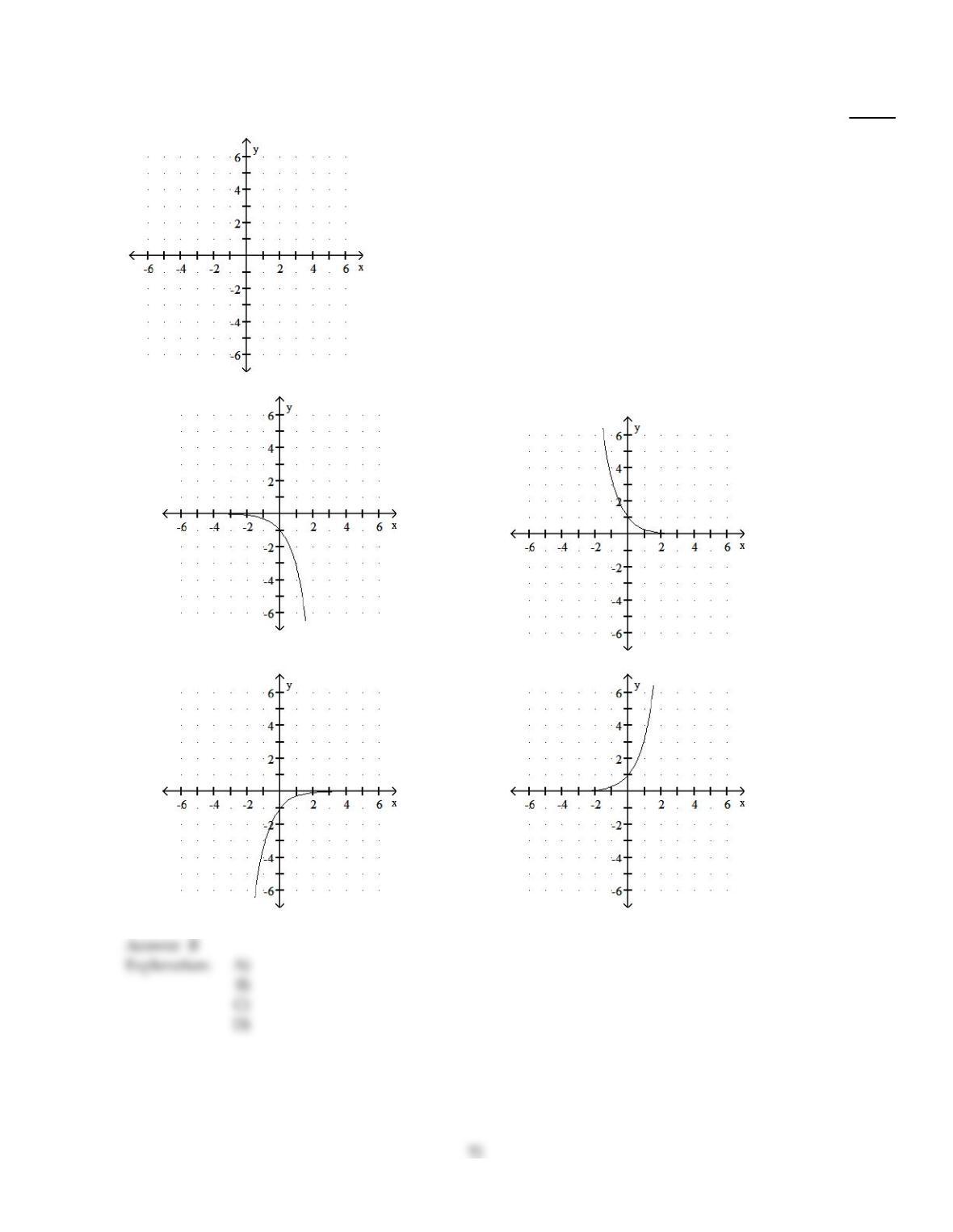
f(x) =0.3x
207)
A)
B)
C)
D)
Evaluate the expression without using a calculator.
208)
log61
6
208)
A)
–1
6
B)
1
6
C)
1
2
D)
–1
2
Solve the exponential equation. Use a calculator to obtain a decimal approximation, correct to two decimal places, for the
solution.
209)
10x=3.16
209)
A)
1.15
B)
0.5
C)
1445.44
D)
31.6
Graph the function.
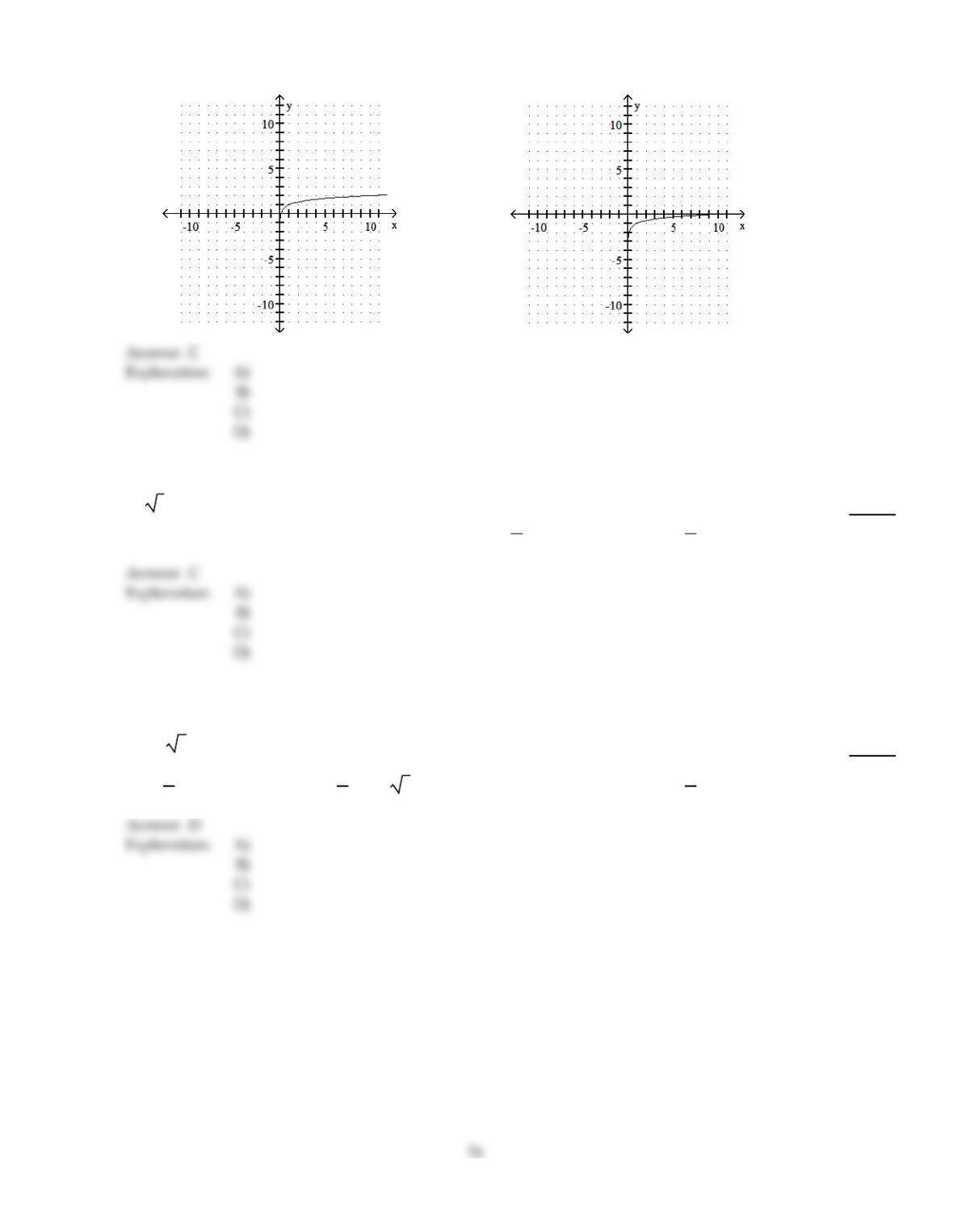
210)
Use the graph of f(x) = log x to obtain the graph of g(x) = log x + 1.
210)
A)
B)
73
C)
D)
Evaluate or simplify the expression without using a calculator.
211)
ln 6e
211)
A)
6
B)
6e
C)
1
6
D)
e
6
Use properties of logarithms to expand the logarithmic expression as much as possible. Where possible, evaluate
logarithmic expressions without using a calculator.
212)
log 8
3y
212)
A)
1
8log 3y
B)
1
3log 8
3y
C)
3log 8y
D)
1
3log 8y
Solve the problem.
213)
The function D(h) =6e–0.4h can be used to determine the milligrams D of a certain drug in a
patient’s bloodstream h hours after the drug has been given. How many milligrams (to two
decimals) will be present after 9 hours?
213)
A)
0.82 mg
B)
0.16 mg
C)
219.59 mg
D)
4.02 mg
Use properties of logarithms to expand the logarithmic expression as much as possible. Where possible, evaluate
logarithmic expressions without using a calculator.
214)
log35x4y
9
214)
A)
1
5(log3x4+log3 y – 2)
B)
1
5(log3x4y –log39)
C)
4
5log3 x –1
5log3 y +2
5
D)
4
5log3 x +1
5log3 y –2
5
Answer Key
Testname: C4
Answer Key
Testname: C4
Answer Key
Testname: C4
78
Answer Key
Testname: C4
Answer Key
Testname: C4