Chapter 04 Time Value of Money 1: Analyzing Single Cash Flows
Answer Key
Multiple Choice Questions
1.
Which of the following is NOT true when developing a time line?
2.
People borrow money because they expect:
3.
How are future values affected by changes in interest rates?
4.
How are present values affected by changes in interest rates?
5.
We call the process of earning interest on both the original deposit and on the earlier
interest payments:
6.
The process of figuring out how much an amount that you expect to receive in the future is
worth today is called:
7.
The interest rate,
i
, which we use to calculate present value, is often referred to as the:
8.
The Rule of 72 is a simple mathematical approximation for:
9.
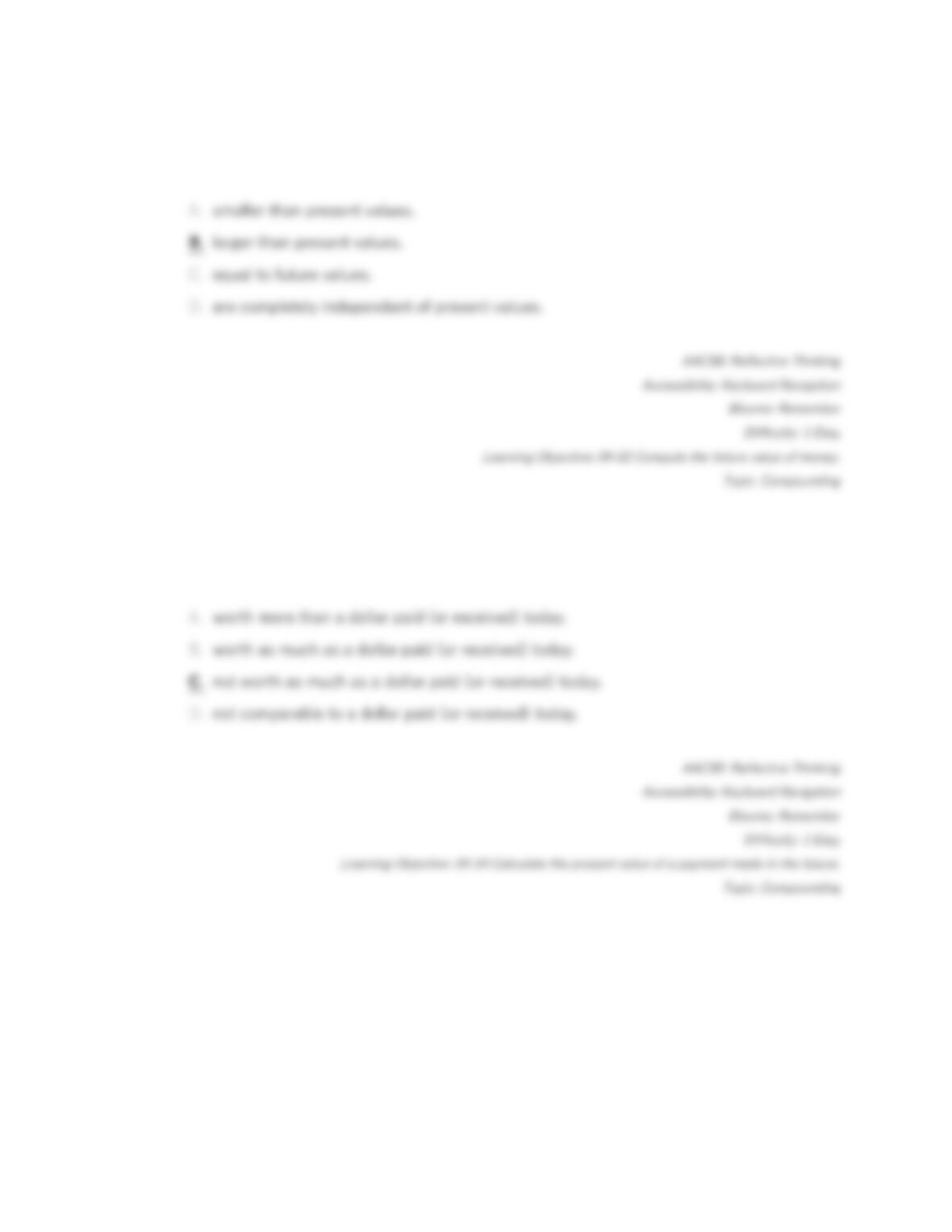
With regard to money deposited in a bank, future values are:
10.
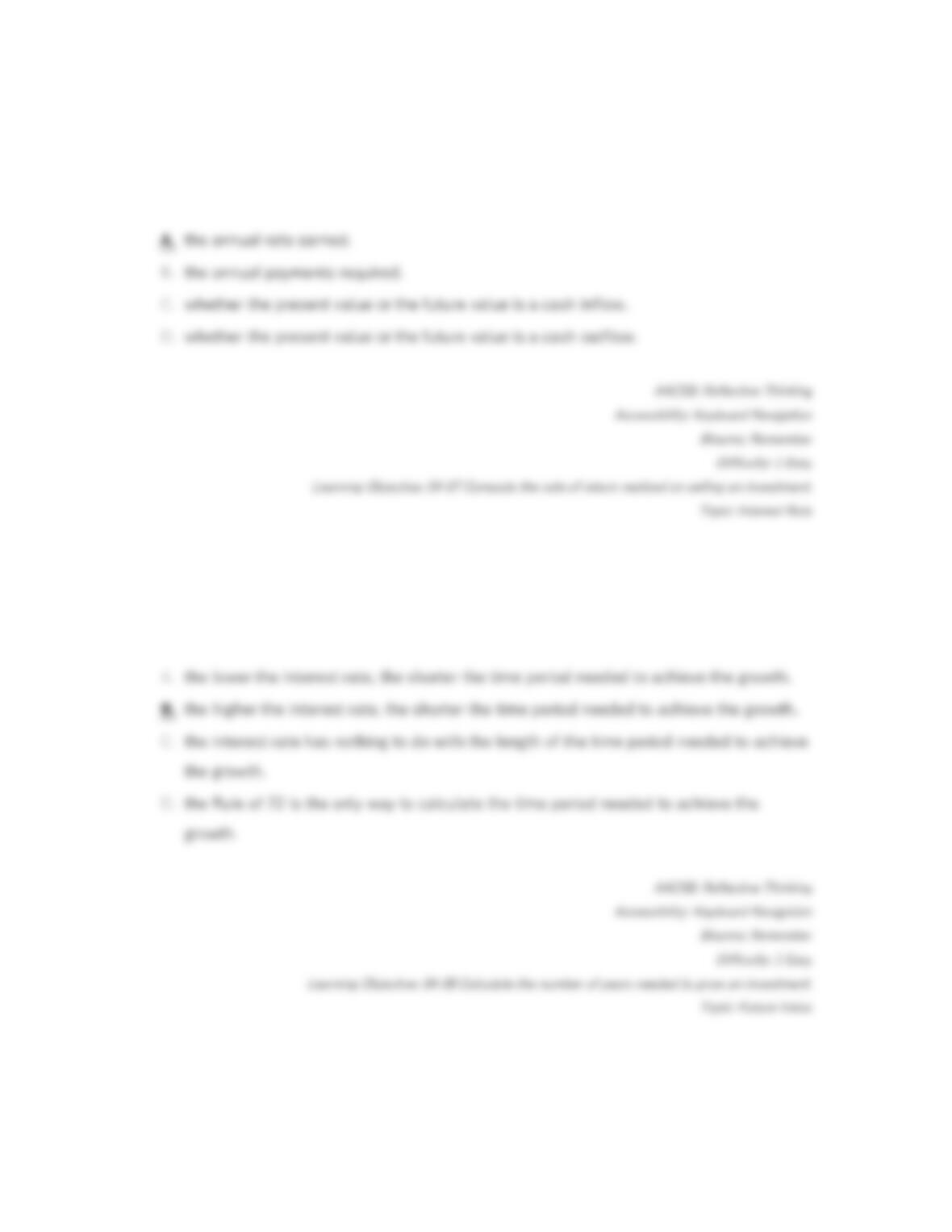
A dollar paid (or received) in the future is:
11.
When computing the rate of return from selling an investment, the number of years
between the present and future cash flows is an important factor in determining:
12.
When calculating the number of years needed to grow an investment to a specific amount
of money:
13.
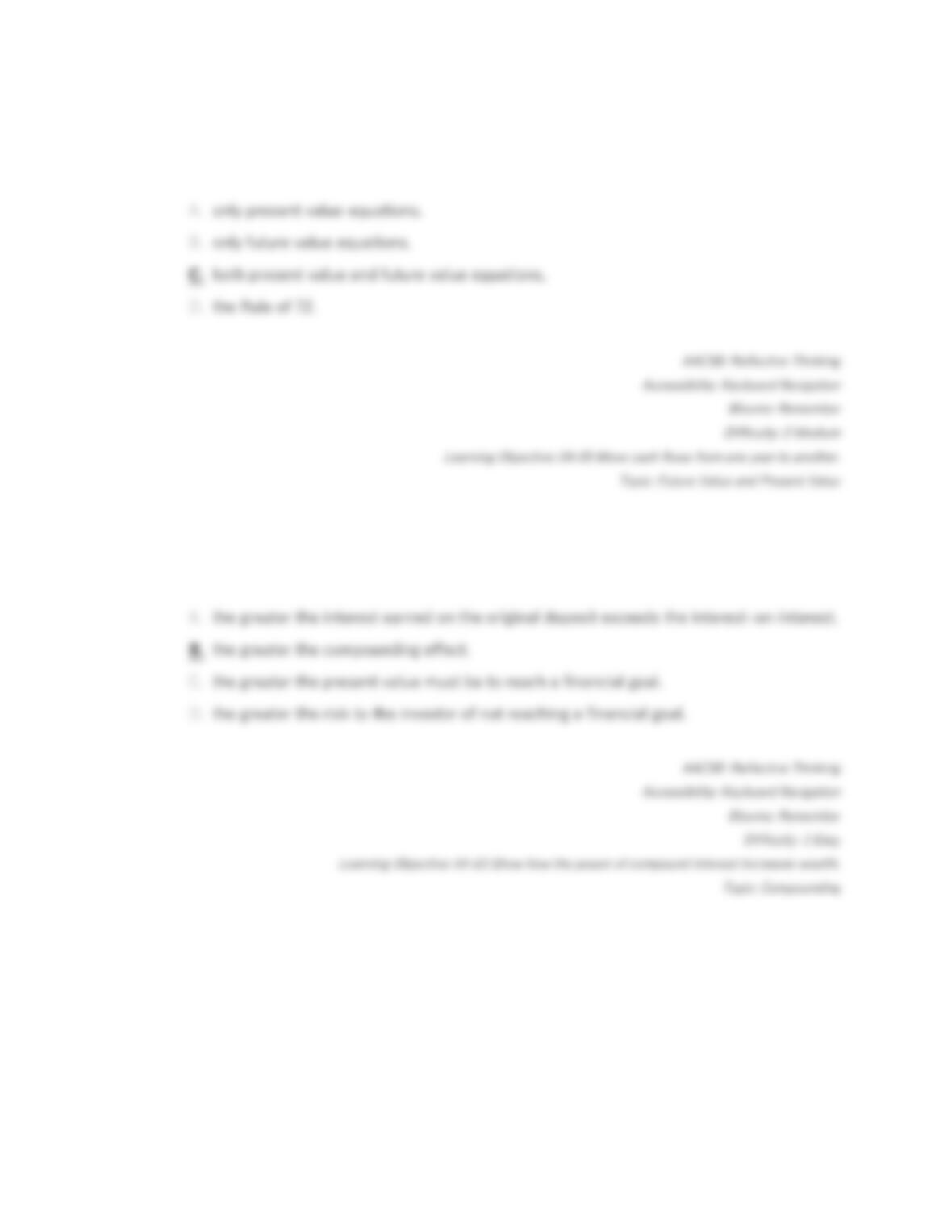
Moving cash flows from one point in time to another requires us to use:
14.
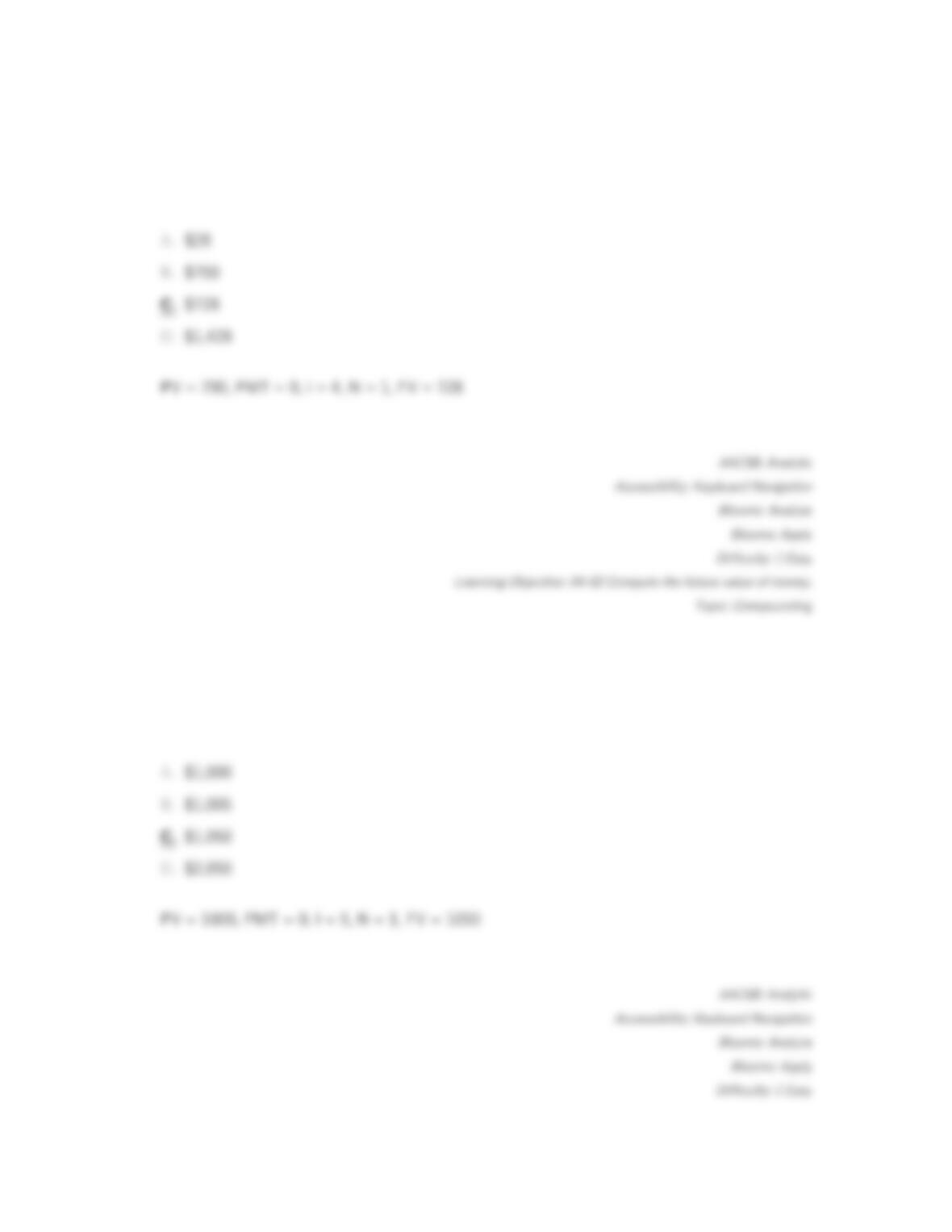
The longer money can earn interest,
15.
One Year Future Value What is the future value of $700 deposited for one year earning 4
percent interest rate annually?
16.
What is the future value of $1,000 deposited for one year earning 5 percent interest rate
annually?
17.
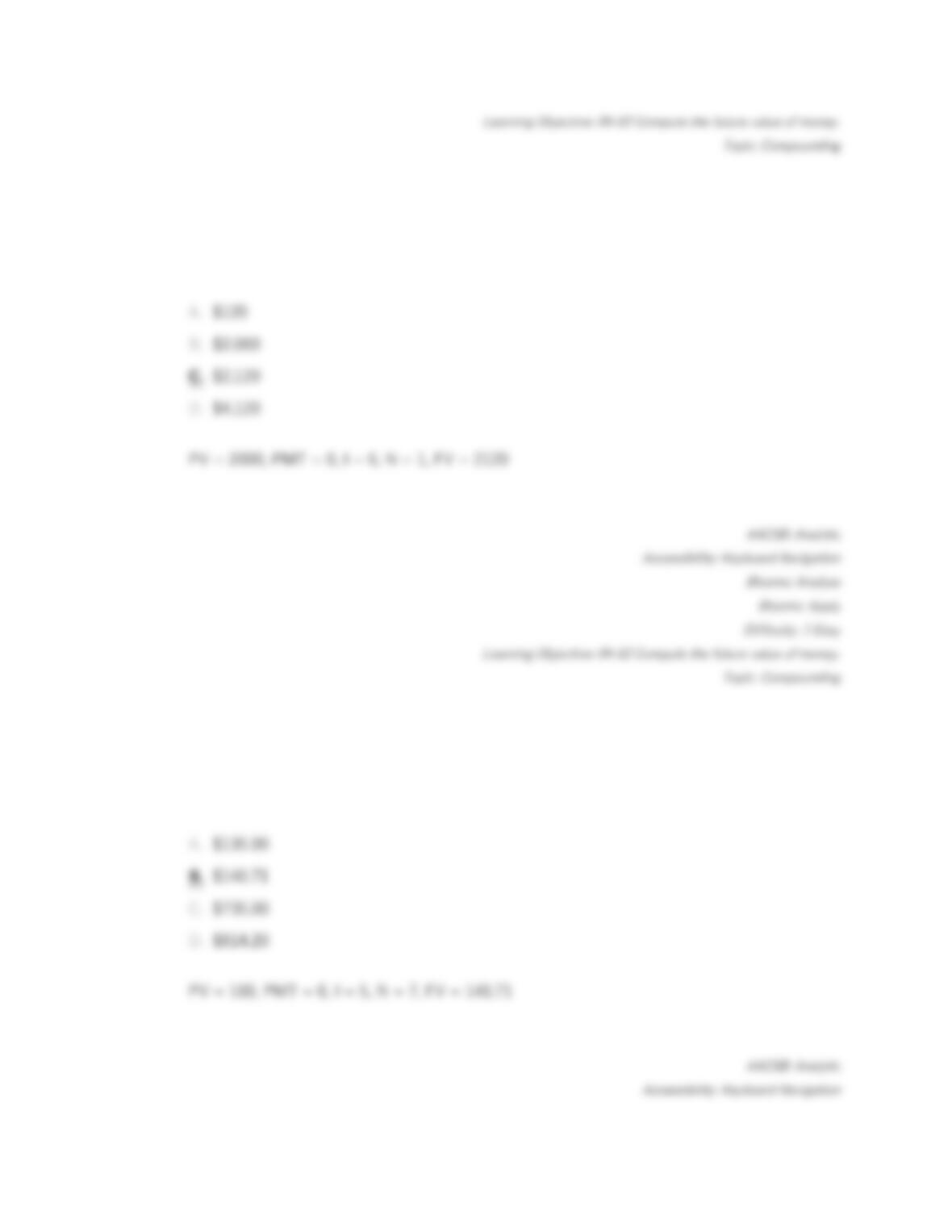
What is the future value of $2,000 deposited for one year earning 6 percent interest rate
annually?
18.
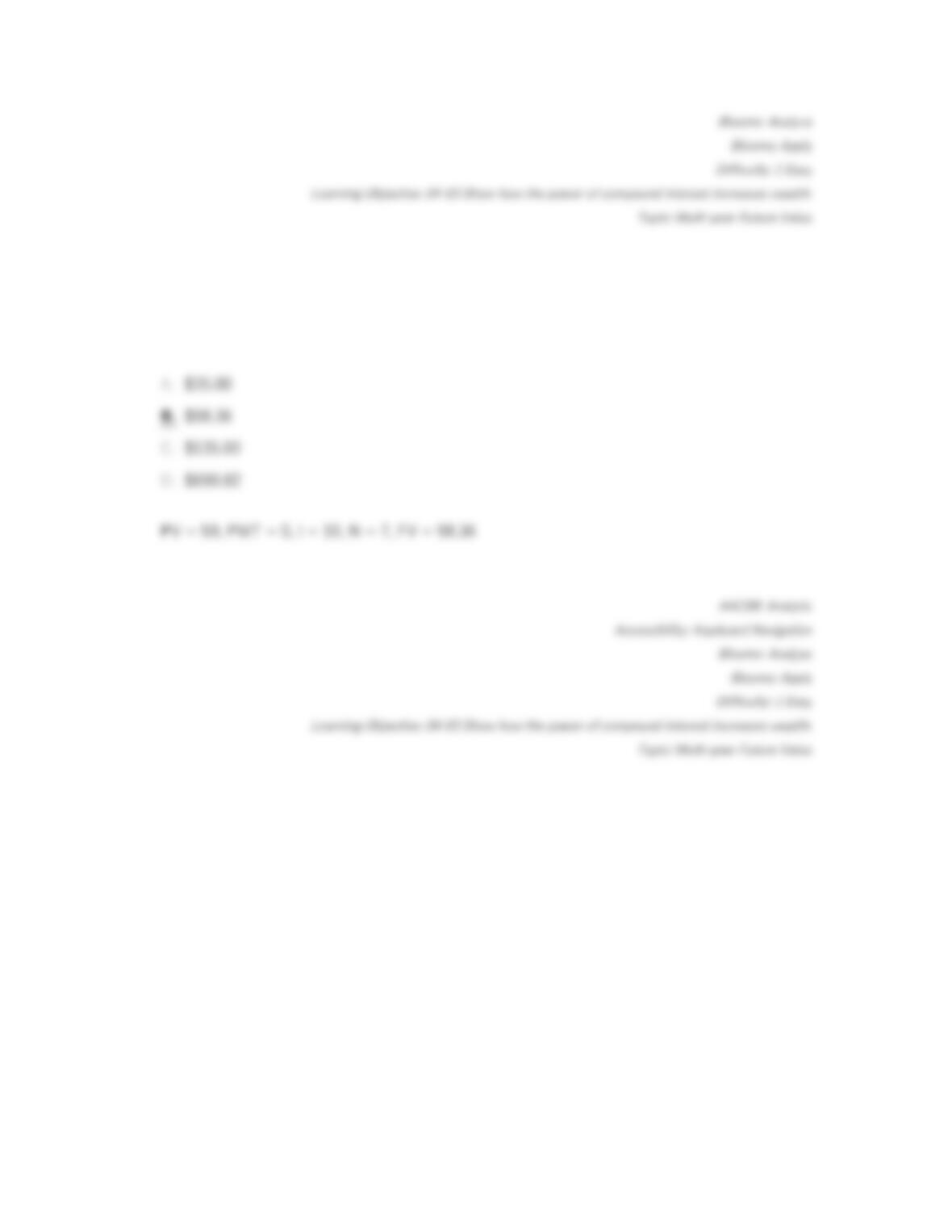
How much would be in your savings account in 7 years after depositing $100 today if the
bank pays 5 percent interest per year?
19.
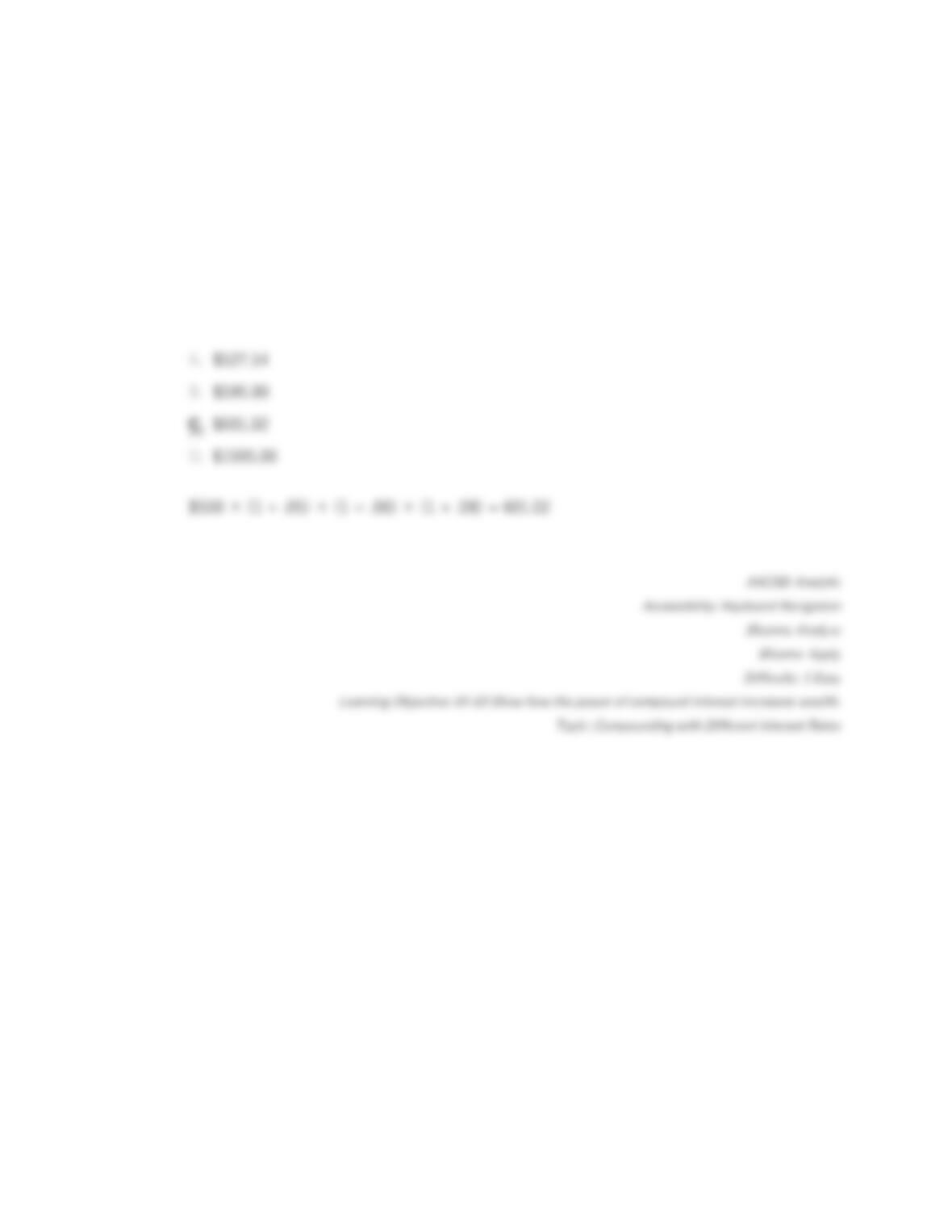
Multi-Year Future Value How much would be in your savings account in 10 years after
depositing $50 today if the bank pays 7 percent interest per year?
20.
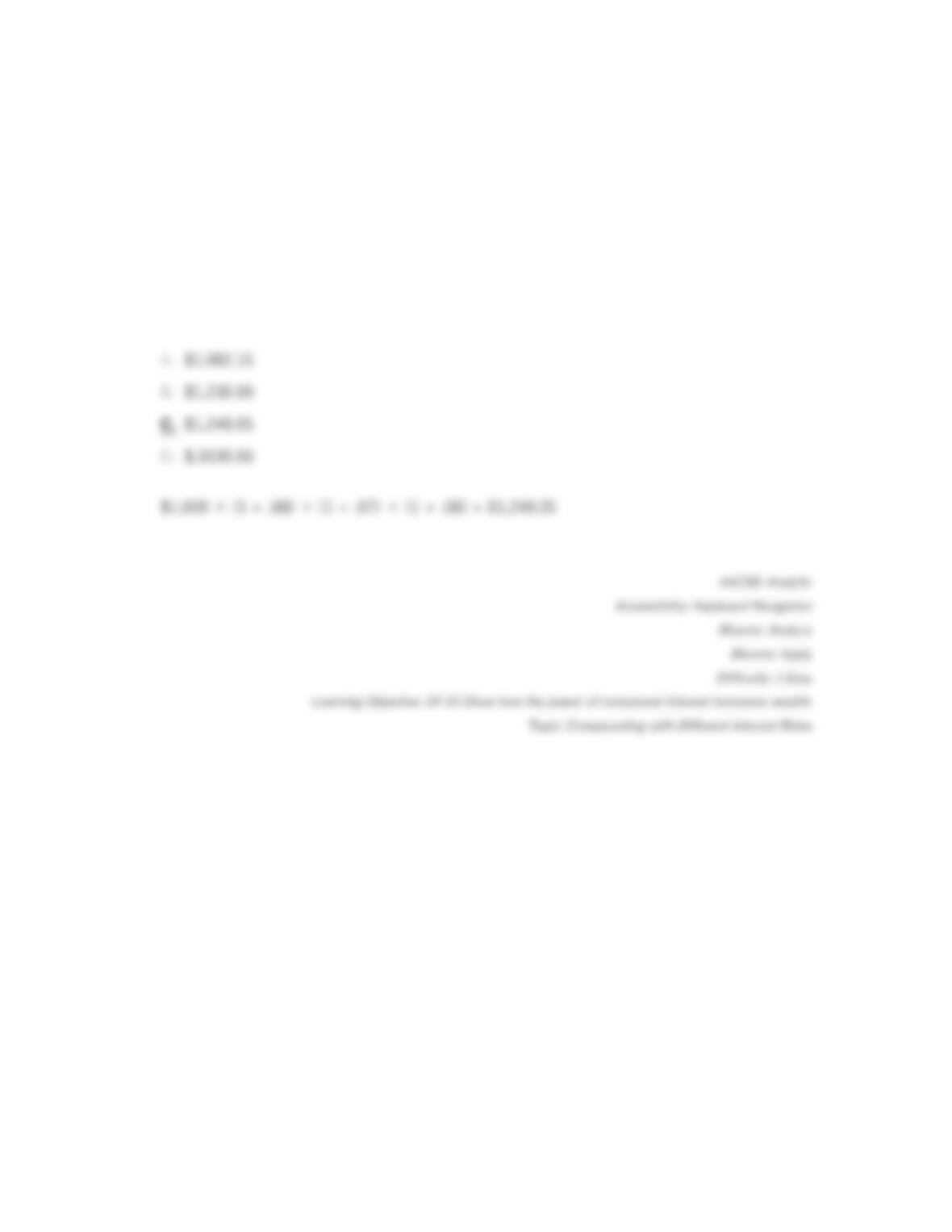
Compounding with Different Interest Rates A deposit of $500 earns the following
interest rates:
5 percent in the first year
6 percent in the second year, and
8 percent in the third year.
What would be the third year future value?
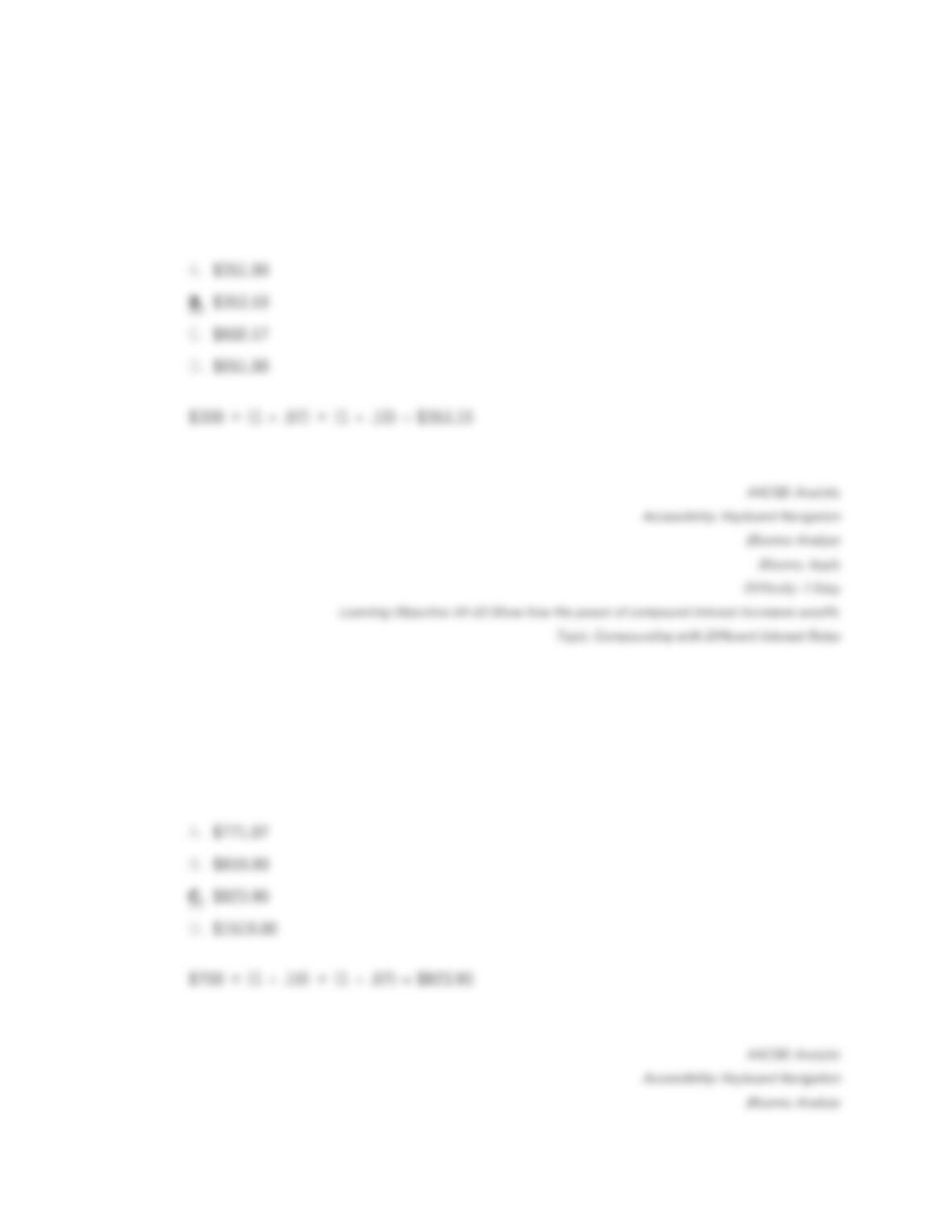
21.
Compounding with Different Interest Rates A deposit of $1,000 earns the following
interest rates:
8 percent in the first year
7 percent in the second year, and
8 percent in the third year.
What would be the third year future value?
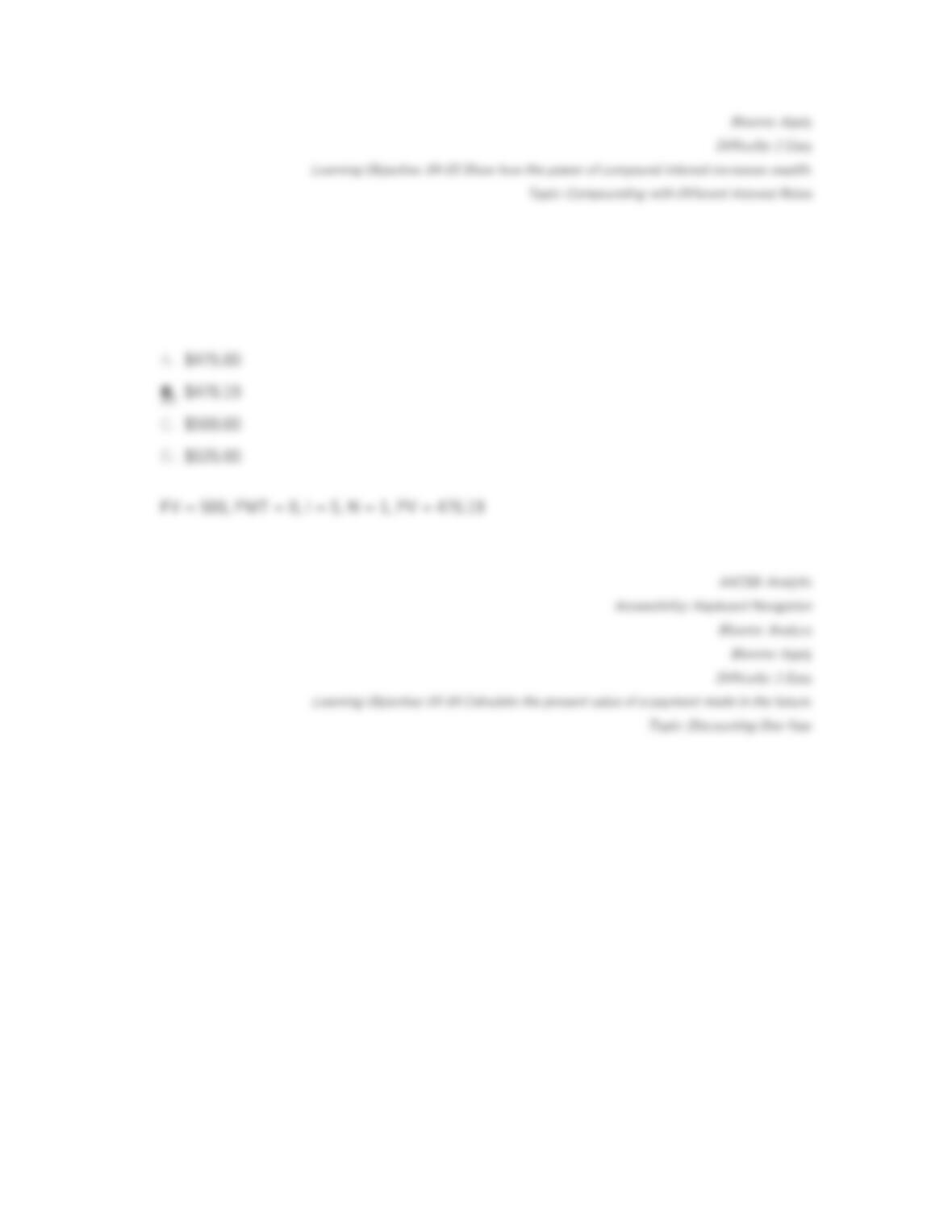
22.
Compounding with Different Interest Rates A deposit of $300 earns interest rates of 7
percent in the first year and 10 percent in the second year. What would be the second year
future value?
23.
Compounding with Different Interest Rates A deposit of $700 earns interest rates of 10
percent in the first year and 7 percent in the second year. What would be the second year
future value?
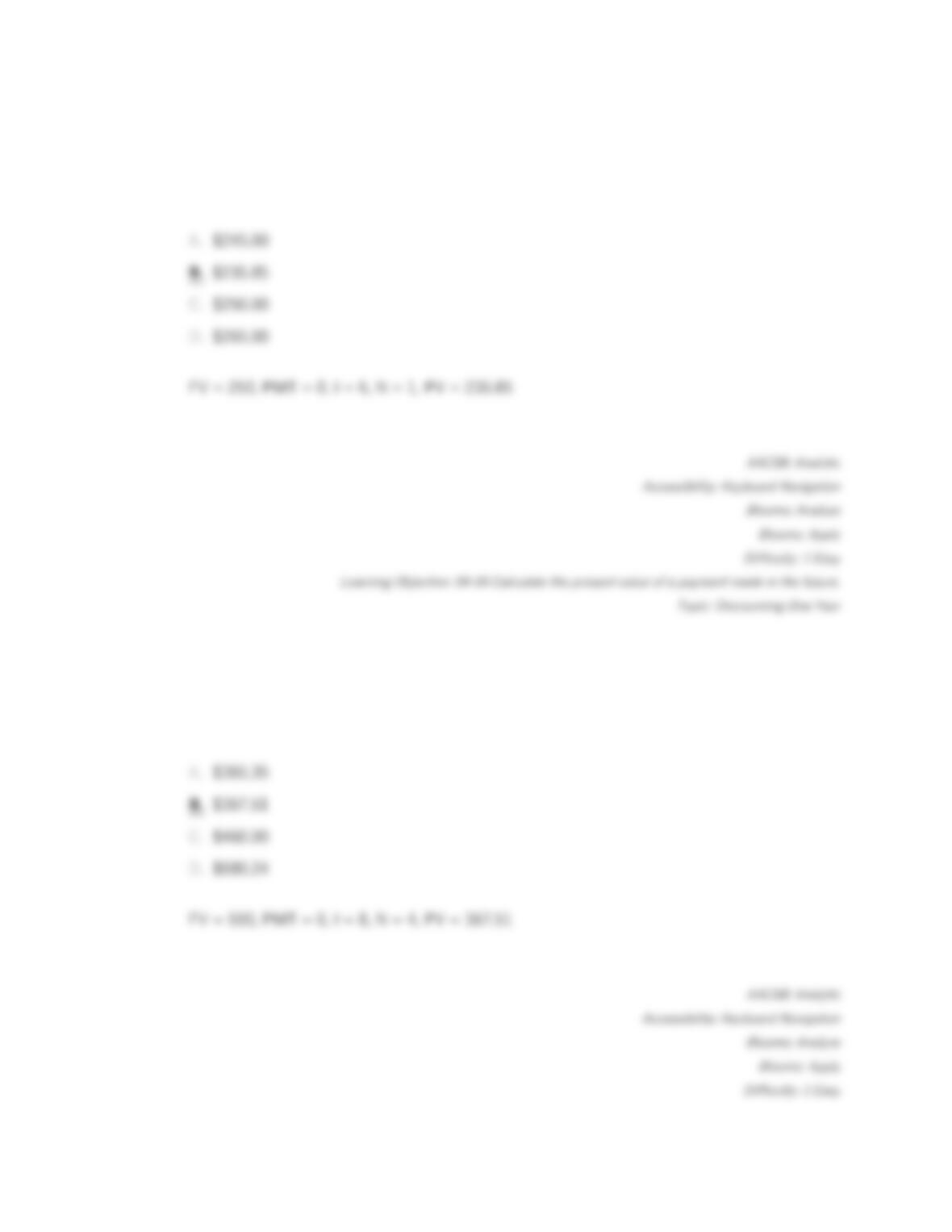
24.
Discounting One Year What is the present value of a $500 payment in one year when the
discount rate is 5 percent?
25.
Discounting One Year What is the present value of a $250 payment in one year when the
discount rate is 6 percent?
26.
Present Value What is the present value of a $500 payment made in 4 years when the
discount rate is 8 percent?
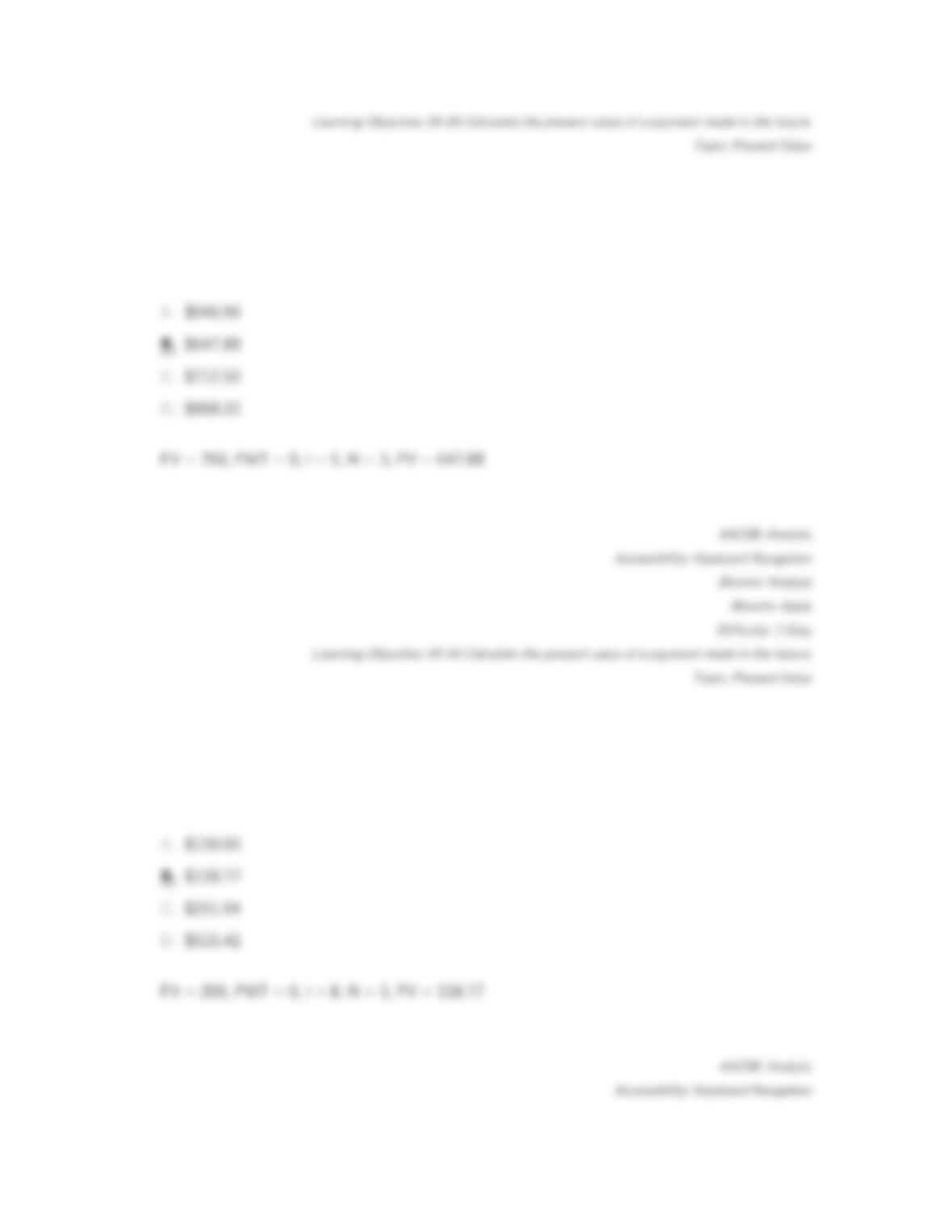
27.
Present Value What is the present value of a $750 payment made in 3 years when the
discount rate is 5 percent?
28.
Present Value What is the present value of a $200 payment made in 3 years when the
discount rate is 8 percent?
29.
Rule of 72 Approximately how many years does it take to double a $300 investment when
interest rates are 8 percent per year?
30.
Rule of 72 Approximately how many years does it take to double a $500 investment when
interest rates are 4 percent per year?
31.
Rule of 72 Approximately how many years does it take to double a $600 investment when
interest rates are 6 percent per year?
32.
Rule of 72 Approximately what interest rate is needed to double an investment over six
years?
33.
Rule of 72 Approximately what interest rate is needed to double an investment over four
years?
34.
Rule of 72 Approximately what interest rate is needed to double an investment over eight
years?