Chapter 37 – Transport in Plants
34. Water molecules can “stick” to certain surfaces by
35. Water may be lost in the form of liquid from the surface of leaves through a process
known as
Chapter 37 – Transport in Plants
36. The pressure-flow hypothesis describes
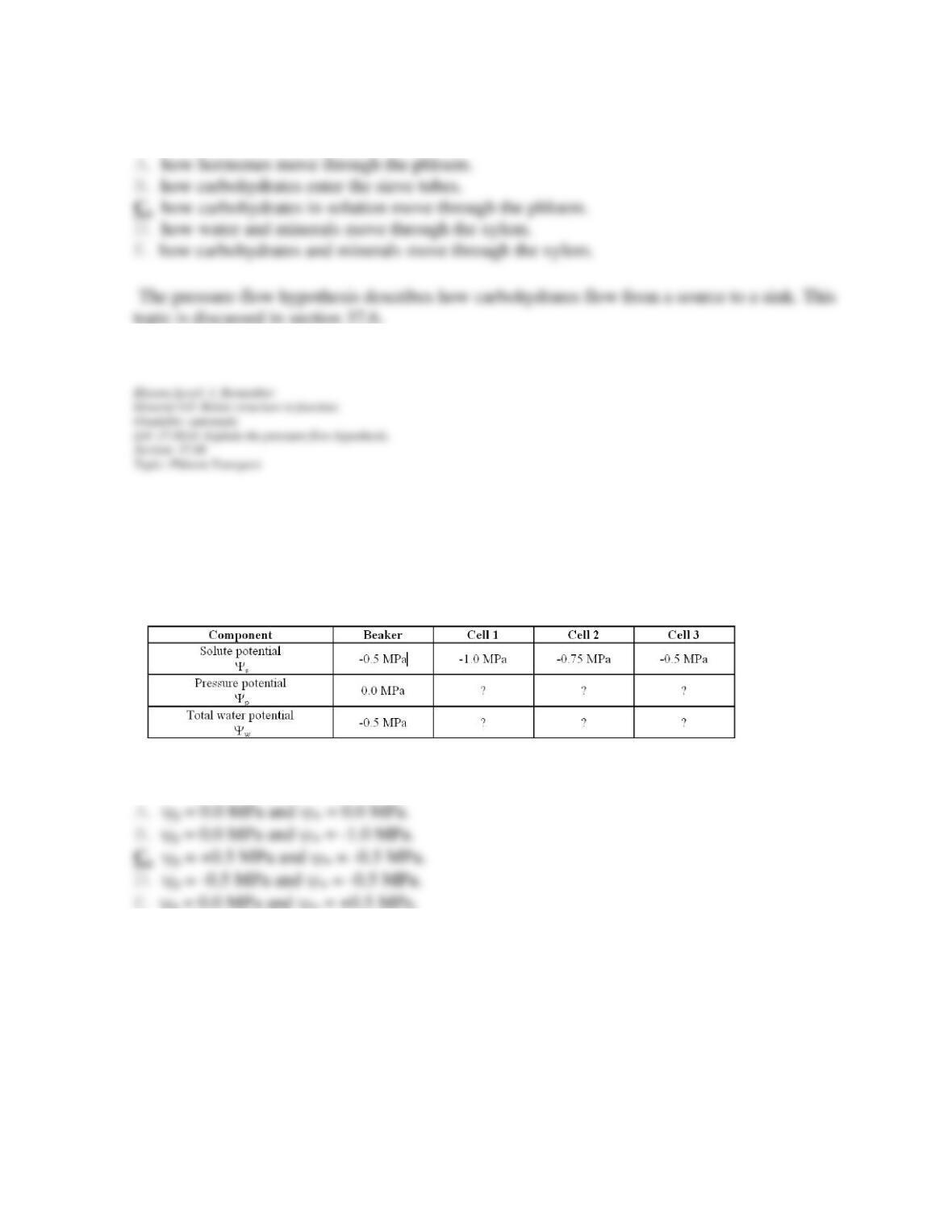
Consider the following plant cells floating in an open beaker containing 0.2M sucrose. By
definition, an open beaker has a pressure potential 0 MPa. Assume that the cells have come to
equilibrium with the solution in the beaker.
37. In Cell 1,
Chapter 37 – Transport in Plants
Clarify Question
What is the key concept addressed by the question?
What type of thinking is required?
What key words does the question contain and what do they mean?
Gather Content
What do you already know about water potential? How does it relate to the question?
Consider Possibilities
What other information is related to the question? Which information is most useful?
Choose Answer
Given what you now know, what information and/or problem solving approach is most
likely to produce the correct answer?
Reflect on Process
Did your problem-solving process lead you to the correct answer? If not, where did the
process break down or lead you astray? How can you revise your approach to produce a
more desirable result?
Chapter 37 – Transport in Plants
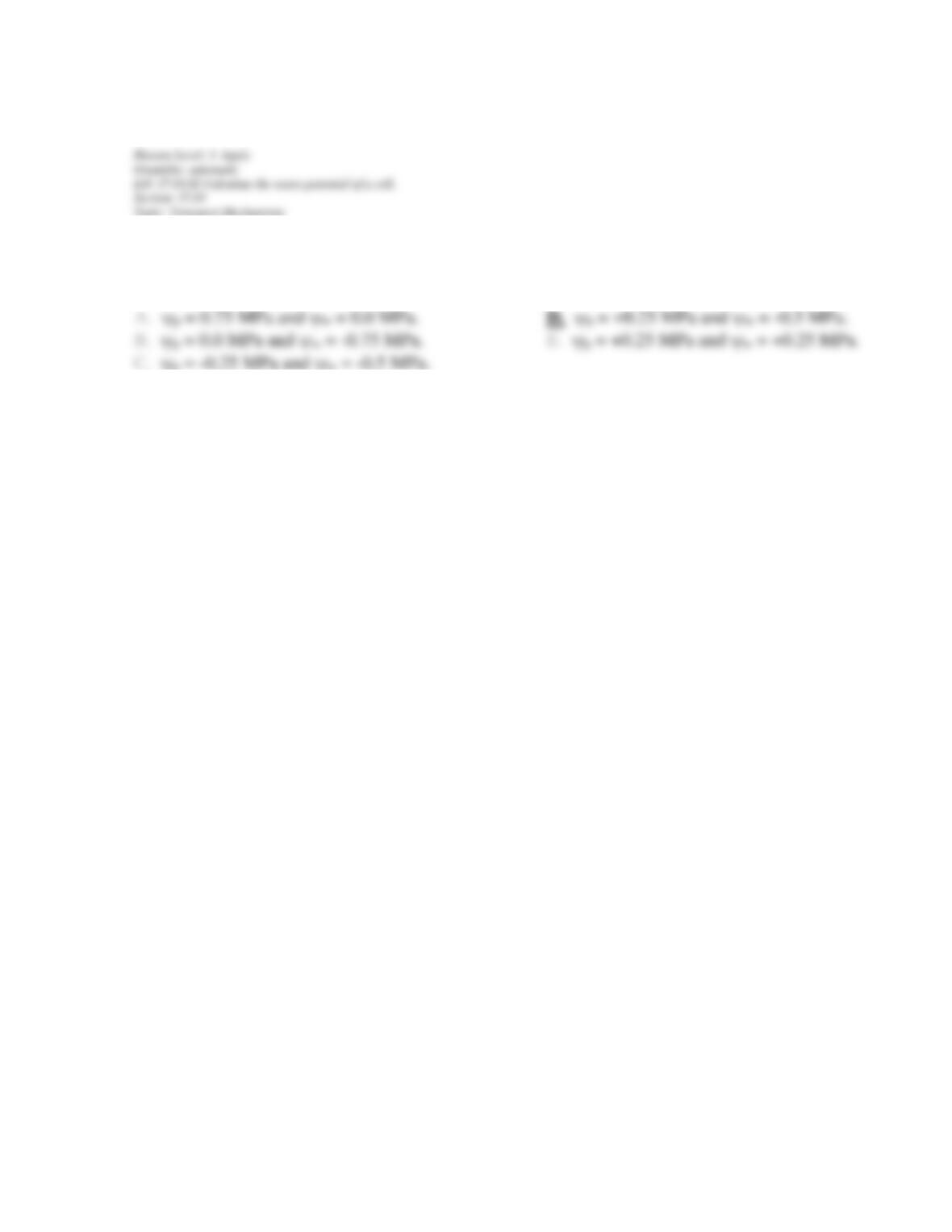
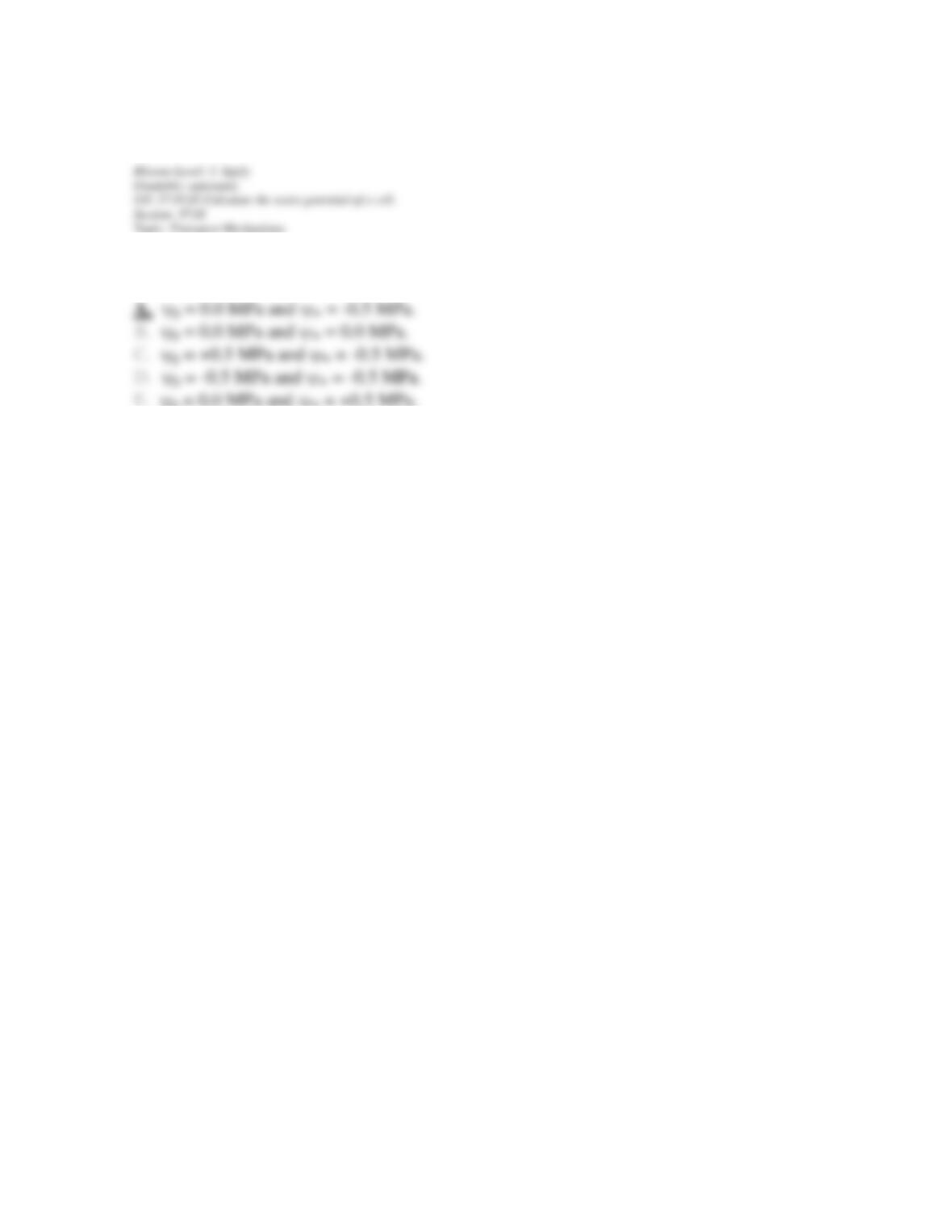
38. In Cell 2,
Chapter 37 – Transport in Plants
Clarify Question
What is the key concept addressed by the question?
What type of thinking is required?
What key words does the question contain and what do they mean?
Gather Content
What do you already know about water potential? How does it relate to the question?
Consider Possibilities
What other information is related to the question? Which information is most useful?
Choose Answer
Given what you now know, what information and/or problem solving approach is most
likely to produce the correct answer?
Reflect on Process
Did your problem-solving process lead you to the correct answer? If not, where did the
process break down or lead you astray? How can you revise your approach to produce a
more desirable result?
Chapter 37 – Transport in Plants
39. In Cell 3,
Chapter 37 – Transport in Plants
Clarify Question
What is the key concept addressed by the question?
What type of thinking is required?
What key words does the question contain and what do they mean?
Gather Content
What do you already know about water potential? How does it relate to the question?
Consider Possibilities
What other information is related to the question? Which information is most useful?
Choose Answer
Given what you now know, what information and/or problem solving approach is most
likely to produce the correct answer?
Reflect on Process
Did your problem-solving process lead you to the correct answer? If not, where did the
process break down or lead you astray? How can you revise your approach to produce a
more desirable result?
Chapter 37 – Transport in Plants
40. Most often, the largest gradient in water potential is between
41. Mycorrhizal fungi interact with plants at the
Chapter 37 – Transport in Plants
42. A large watermelon fruit is very heavy and contains nearly 90% water. Since the skin of a
watermelon is thick and lacks stomata, transpiration does not “pull” water into the
watermelon. So, how does all that water get into the fruit?
Chapter 37 – Transport in Plants
Clarify Question
What is the key concept addressed by the question?
What type of thinking is required?
What key words does the question contain and what do they mean?
Gather Content
What do you already know about how water moves through the tissues in a plant? How
does it relate to the question?
Consider Possibilities
What other information is related to the question? Which information is most useful?
Choose Answer
Given what you now know, what information and/or problem solving approach is most
likely to produce the correct answer?
Reflect on Process
Did your problem-solving process lead you to the correct answer? If not, where did the
process break down or lead you astray? How can you revise your approach to produce a
more desirable result?
Chapter 37 – Transport in Plants
43. Which of these structures is not likely to contain significant amounts of aerenchyma
tissue?
44. Halophytes are plants that live in saline soils. The high osmotic potential of the salt
solution in the soil creates a very negative water potential. What can halophytes do so that
water will flow into the roots?
Chapter 37 – Transport in Plants
Clarify Question
What is the key concept addressed by the question?
What type of thinking is required?
What key words does the question contain and what do they mean?
Gather Content
What do you already know about the adaptations that occurs in plants that live in salty
environments? How does it relate to the question?
Consider Possibilities
What other information is related to the question? Which information is most useful?
Choose Answer
Given what you now know, what information and/or problem solving approach is most
likely to produce the correct answer?
Reflect on Process
Did your problem-solving process lead you to the correct answer? If not, where did the
Chapter 37 – Transport in Plants
process break down or lead you astray? How can you revise your approach to produce a
more desirable result?
45. Which of these situations regarding phloem sources and sinks is not correct?
Fill in the Blank Questions
Choose the letter of the best match from the following:
A. abscisic acid
B. trichomes
C. aquaporin
D. endodermis
E. stoma
Chapter 37 – Transport in Plants
46. Pore in plasma membrane that allows water movement.
47. Triggers K+ to pass rapidly out of guard cells.
48. Pore in leaves that regulates gas exchange.
49. Regulates movement of mineral ions into root xylem.
Chapter 37 – Transport in Plants
50. Reflects sunlight at leaf surface.
True / False Questions
51. Closing the stomata for an extended period of time would lead to an increase in G3P in
the mesophyll cells.
52. If the soil around a plant is treated with a fungicide, the plant may experience a decline in
DNA synthesis.