
Hall: Guyton and Hall Textbook of Medical Physiology, 12th Edition
Chapter 32: Red Blood Cells, Anemia and Polycythemia
Test Bank
Bleeding time (template)
2–7 minutes
Erythrocyte count
Male: 4.3–5.9 million/uL
Female: 3.5–5.5 million/uL
Hematocrit
Male: 41–53%
Female: 36–46%
Hemoglobin, blood
Male: 13.5–17.5 g/dL
Female: 12.0–16.0 g/dL
Mean corpuscular hemoglobin
25.4–34.6 pg/cell
Mean corpuscular hemoglobin concentration
31–36% Hb/cell
Mean corpuscular volume
80–100 fL
Reticulocyte count
0.5–1.5% of red cells
Platelet count
150,000–400,000/uL
Leukocyte count and differential
Leukocyte count
4500–11,000/uL
Neutrophils
54–62%
Eosinophils
1–3%
Basophils
0–0.75%
Lymphocytes
25–33%
Monocytes
3–7%
Partial thromboplastin time (activated)
25–40 seconds
Prothrombin time
11–15 seconds
Bleeding time
2–7 minutes
1. A 52-year-old female with type 1 diabetes has had progressive renal failure over the past
three years. She is not on dialysis and her examination shows no abnormalities. Her
hemoglobin level is 9 g/dL, hematocrit is 29%, and mean corpuscular volume is 92 fL,
and a blood smear shows normocytic, normochromic cells. Which of the following is the
most likely cause of the anemia?
A. Acute blood loss
B. Pernicious anemia
C. Sickle cell disease
D. Erythropoietin deficiency
E. Hemolytic anemia
F. Polycythemia vera
2. Which of the following anemias has normocytic RBCs?
A. Hemolytic anemia
B. Vitamin B12 deficiency
C. Folate deficiency
D. Anemia of chronic disease
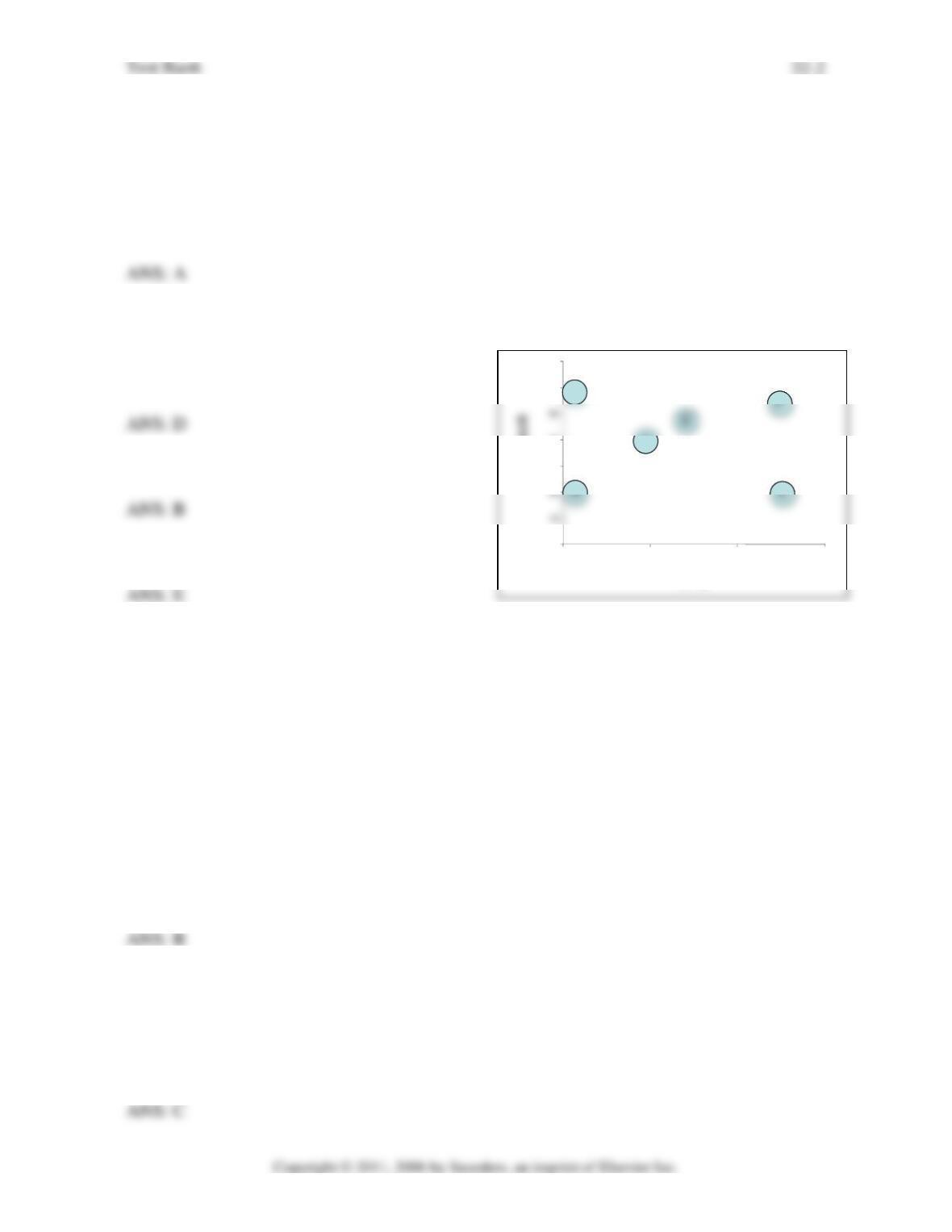
Questions 3 – 5: Which point on the graph most closely defines the following conditions?
Normal erythropoietin (EPO) levels are approximately 10.
3. Olympic marathon runner.
4. Polycythemia vera.
5. Chronic disease.
6. A healthy 3-year-old girl is brought to the emergency department because of severe
uncontrolled nosebleed. She has a history of ear infections that have improved after
treatment. Her temperature is elevated. She has numerous small bruises on her arms and
legs. Her laboratory studies show:
Hemoglobin 4.6 g/dL
Leukocyte count 3,000/mm3
Reticulocyte count 0.1%
Platelet count 12,000/mm3
Which of the following is the most likely explanation for these findings?
A. Anemia due to blood loss
B. Aplastic anemia
C. Sickle cell disease
D. Mononucleosis
7. In the 5 month (middle trimester) fetus hematopoiesis is most active in the:
A. Yolk sac
B. Spleen
C. Liver
D. Bone marrow
0
30
40
60
70
110 100 1000
EPO
Hematocrit
B
C
0
30
40
60
70
110 100 1000
EPO
Hematocrit
BB
CC

8. Following the donation of a unit of blood, how long before hematocrit begins to
increase?
A. One hour
B. Two hours
C. 24 hours
D. Five days
E. Two weeks
9. How would a cell that has a diameter of 9 m and an MCV of 106 be classified?
A. Macrocyte
B. Microcyte
C. Normal
D. Either normal or slightly microcytic
10. What are the laboratory findings in polycythemia vera?
A. Decreased hemoglobin and/or hematocrit, increased RBCs and granulocytes,
decreased platelets
B. Increased hemoglobin and/or hematocrit; increased RBCs, granulocytes, and platelets
C. Normal hemoglobin and hematocrit, normal RBCs, increased granulocytes and
platelets
D. Increased hemoglobin and/or hematocrit, increased RBCs, decreased granulocytes
and platelets
11. Regarding erythropoietin, choose the correct answer:
A. Erythropoietin is mainly secreted by the liver
B. Injection of erythropoietin leads to a rapid increase in the number of circulating red
blood cells within the next 48 hours
C. Excessive exposure to x-rays with destruction of the bone marrow leads to an
increased erythropoietin secretion
D. Erythropoietin also acts on the spleen by decreasing red blood cell destruction
12. What is the safest and least expensive treatment for patients with polycythemia vera?
A. High altitude
B. Decrease of iron levels
C. Therapeutic phlebotomy
D. Decrease of erythropoietin levels