Workbook, Heavy Duty Truck Systems, 6E
Chapter Thirty-One – Answer Key
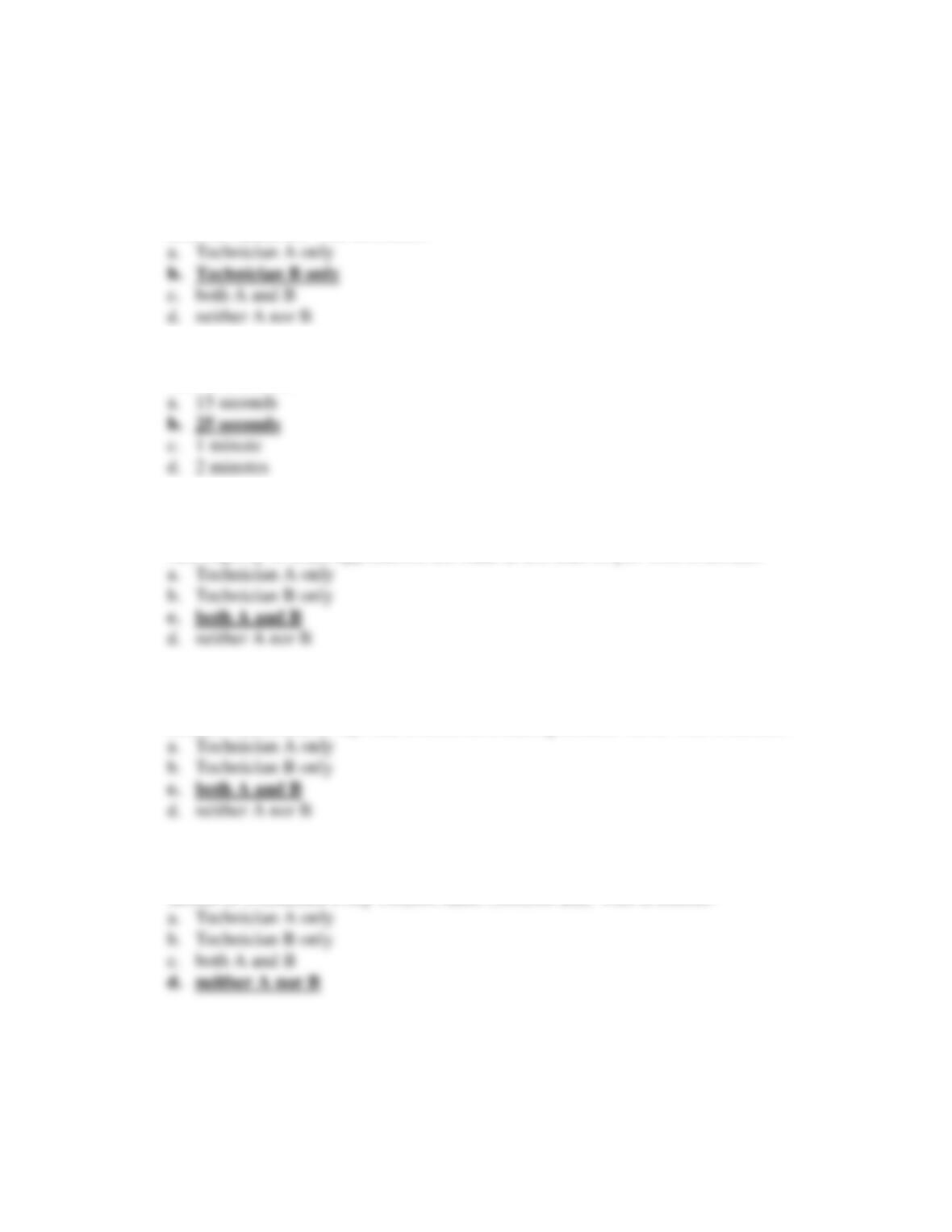
1. Technician A drains the air reservoirs weekly. Technician B says that spring brake
chambers are designed to apply the parking brakes in the event of loss of pressure in the
hold-off chambers. Who is correct?
2. In an air brake system, the FMVSS 121 standard for pressure build from 85 to 100 psi
should be within:
3. Technician A says that timing compatibility is ensured when tractors and trailers meet
FMVSS No. 121 application and release timing requirements. Technician B says that the
vast majority of brake applications are made at less than 30 psi. Who is correct?
4. A truck air compressor is under effective cycle almost continuously and even then fails to
maintain sufficient pressure. Technician A says that the problem could be a dirty intake
cleaner. Technician B says that it could be a leaking exhaust valve. Who is correct?
5. Technician A says that it is recommended practice to disassemble, clean, and inspect the
air governor every 100,000 miles (160,000 km). Technician B says that a compressor
should be overhauled every 100,000 miles (160,000 km). Who is correct?
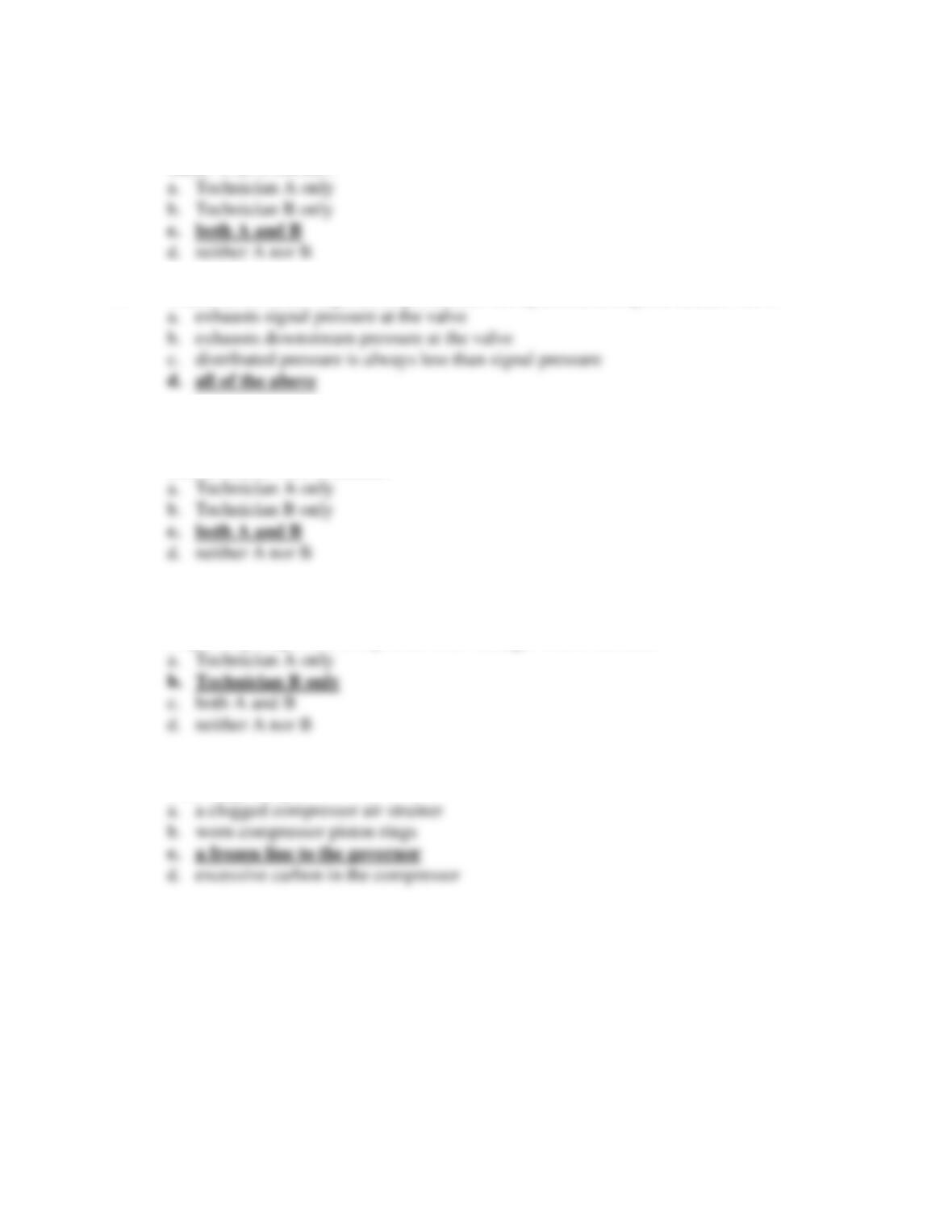
6. The purge cycle of an air dryer lasts more than 40 seconds. Technician A says that the
one-way check valve may be defective. Technician B says that the purge valve may be
stuck. Who is correct?
7. Which of the following correctly describes the operation of a quick-release valve?
8. Technician A says that some types of spring brake valves are designed to regulate the
hold-off pressure. Technician B says that a quick-release valve can act to speed up brake
release times. Who is correct?
9. Technician A says that the difference between air governor cut-in and cut-out pressures
can be adjusted with the governor adjusting screw. Technician B says that a cause of
frequent cycling of the compressor is air leakage. Who is correct?
10. Air pressure builds in the system far too slowly. This could be caused by any of the
following, except: