Chapter 3: Review of a Company’s Accounting System
103. An organization will typically utilize a subsidiary ledger to
a.
make sure all debits equal credits.
b.
make it easier to handle cash received from customers.
c.
keep customer accounts up to date.
d.
record customer credit sales outside of the normal double entry system.
c
1
Easy
ACCT.WHAL.16.3.1 – LO: 3.1
United States – BUSPROG: Reflective Thinking – BUSPROG: Analytic
United States – OH – Default City – AICPA: FN-Decision Modeling
104.The total of the individual customer account balances should equal the balance in Accounts Receivable, which is the
a.
control account.
b.
periodic account.
c.
nominal account.
d.
contra account.
a
1
Easy
ACCT.WHAL.16.3.1 – LO: 3.1
United States – BUSPROG: Reflective Thinking – BUSPROG: Analytic
United States – OH – Default City – AICPA: FN-Decision Modeling
105.Which of the following transactions would be recorded in a sales journal of the type illustrated in the text?
a.
customer return of merchandise originally bought on credit
b.
customer purchase of merchandise for cash
c.
sale by a used car dealer of part of the property surrounding his display lot
d.
d
1
Easy
ACCT.WHAL.16.3.1 – LO: 3.1
United States – BUSPROG: Reflective Thinking – BUSPROG: Analytic
United States – OH – Default City – AICPA: FN-Decision Modeling
customer purchase of merchandise on credit terms
Chapter 3: Review of a Company’s Accounting System
106.Marlin Company has all of the special journals that were described in your text (other than the voucher register) as a
part of its accounting system. Which of the following journal entries would therefore be recorded in Marlin’s general
journal?
a.
an entry to record the sale of merchandise on credit
b.
an entry to record the purchase of merchandise on credit
c.
an entry to record the return of defective purchased merchandise for credit
d.
an entry to record a cash purchase of merchandise
c
1
Moderate
ACCT.WHAL.16.3.1 – LO: 3.1
United States – BUSPROG: Reflective Thinking – BUSPROG: Analytic
United States – OH – Default City – AICPA: FN-Decision Modeling
107. Which statement is true?
a.
All purchases should be recorded in a purchases journal.
b.
Closing and reversing entries will be found in the sales journal.
c.
Returned merchandise from a customer should be entered in the sales journal.
d.
All cash sales should be recorded in the cash receipts journal.
d
1
Moderate
ACCT.WHAL.16.3.1 – LO: 3.1
United States – BUSPROG: Reflective Thinking – BUSPROG: Analytic
United States – OH – Default City – AICPA: FN-Decision Modeling
108. A subsidiary ledger is
a.
a journal used by a company to record its transactions with a similar characteristic.
b.
a group of accounts, all of which relate to one specific company activity.
c.
the entire group of accounts for a company.
d.
a record of all the daily activities.
b
1
Easy
ACCT.WHAL.16.3.1 – LO: 3.1
United States – BUSPROG: Reflective Thinking – BUSPROG: Analytic
Chapter 3: Review of a Company’s Accounting System
109. Which of the following is a reason why companies use special journals?
a.
to reduce the time needed to complete the various accounting activities
b.
to provide for a chronological listing of similar transactions
c.
to divide the accounting task
d.
All of the above are reasons why companies use special journals.
d
1
Easy
ACCT.WHAL.16.3.1 – LO: 3.1
United States – BUSPROG: Reflective Thinking – BUSPROG: Analytic
United States – OH – Default City – AICPA: FN-Decision Modeling
110. Which statement is false?
a.
The general journal is still a necessity, even when special journals are used.
b.
If a cash payments journal is in use, postings are usually made only at the end of the month.
c.
All transactions involving the receipt of cash are recorded in the cash receipts journal.
d.
A purchase of a desk calculator for the office should not be recorded in the purchases journal.
b
1
Moderate
ACCT.WHAL.16.3.1 – LO: 3.1
United States – BUSPROG: Reflective Thinking – BUSPROG: Analytic
United States – OH – Default City – AICPA: FN-Decision Modeling
111. Long, Inc. uses the accrual basis of accounting. Long’s rent expense account had a balance of $18,000 at the end of
the year. The prepaid rent account had a balance of $5,000 at the beginning of the year and a balance of $9,000 at the
end of the year. How much cash was paid for rent during the year?
a.
$ 5,000
b.
$9,000
c.
$18,000
d.
$22,000
d
1
Challenging
ACCT.WHAL.16.3.10 – LO: 3.11
United States – BUSPORG: Analytic
Chapter 3: Review of a Company’s Accounting System
112.Walker Company uses the accrual basis of accounting. Walker Company’s wages expense account had a $610,000
balance at the end of the year. The wages payable account had a $23,000 balance at the beginning of the year and a
$45,000 balance at the end of the year. How much cash was paid for wages during the year?
a.
$588,000
b.
$610,000
c.
$632,000
d.
$555,000
a
1
Challenging
ACCT.WHAL.16.3.10 – LO: 3.11
United States – BUSPORG: Analytic
United States – OH – Default City – AICPA: FN-Decision Modeling
113.Slater Company uses the cash basis of accounting. Slater Company collected $950,000 from its customers during
2015. Customers owed Slater $150,000 of accounts receivable at the beginning of 2015, and $190,000 of accounts
receivable at the end of 2015. What is Slater’s sales revenue for 2015 under the accrual basis of accounting?
a.
$810,000
b.
$950,000
c.
$990,000
d.
$940,000
c
1
Challenging
ACCT.WHAL.16.3.10 – LO: 3.11
United States – BUSPORG: Analytic
United States – OH – Default City – AICPA: FN-Measurement
Chapter 3: Review of a Company’s Accounting System
114. Merry Company uses the cash basis of accounting. Merry Company made $600,000 in payments to its suppliers
during the year. Merry’s beginning inventory was $20,000, and its ending inventory was $35,000. In addition, Merry
had a beginning accounts payable of $40,000 and an ending accounts payable of $70,000. What is Merry’s cost of
goods sold under the accrual basis of accounting?
a.
$585,000
b.
$600,000
c.
$615,000
d.
$625,000
c
1
Challenging
ACCT.WHAL.16.3.10 – LO: 3.11
United States – BUSPORG: Analytic
United States – OH – Default City – AICPA: FN-Measurement
115 Joseph, Inc. uses the accrual basis of accounting. Joseph’s insurance expense account had a $23,000 balance at the end
of the year. The prepaid insurance account had a $6,000 balance at the beginning of the year and a $3,000 balance at
the end of the year. How much cash was paid for insurance during the year?
a.
$4,000
b.
$20,000
c.
$21,000
d.
b
1
Challenging
ACCT.WHAL.16.3.10 – LO: 3.11
United States – BUSPORG: Analytic
United States – OH – Default City – AICPA: FN-Measurement
$29,000
Chapter 3: Review of a Company’s Accounting System
116 Little Company uses the cash basis of accounting. Little Company made $28,000 in payments to its suppliers during
the year. Little’s beginning inventory was $2,000, and its ending inventory was $1,000. In addition, Little had a
beginning accounts payable of $7,000 and an ending accounts payable balance of $4,000. What is Little’s cost of
goods sold under the accrual basis of accounting?
a.
$26,000
b.
$30,000
c.
$32,000
d.
a
1
Challenging
ACCT.WHAL.16.3.10 – LO: 3.11
United States – BUSPORG: Analytic
United States – OH – Default City – AICPA: FN-Measurement
$37,000
117.Under cash-basis accounting,
a.
revenue is recorded when earned.
b.
revenue is recorded when cash is received.
c.
expenses are recorded when incurred.
d.
expenses are recorded when due.
b
1
Easy
ACCT.WHAL.16.3.10 – LO: 3.11
United States – BUSPROG: Reflective Thinking – BUSPROG: Analytic
United States – OH – Default City – AICPA: FN-Decision Modeling
118. When a company uses cash-basis accounting, it frequently does not keep up with
a.
accounts receivable.
b.
accounts payable.
c.
prepaid expenses.
d.
The company keeps up with all of the above.
d
1
Easy
ACCT.WHAL.16.3.10 – LO: 3.11
United States – BUSPROG: Reflective Thinking – BUSPROG: Analytic
Chapter 3: Review of a Company’s Accounting System
119. Cash-basis accounting as a basis for preparing financial statements is
a.
allowed under GAAP.
b.
not allowed under GAAP.
c.
preferred under GAAP.
d.
used by most companies.
b
1
Easy
ACCT.WHAL.16.3.10 – LO: 3.11
United States – BUSPROG: Reflective Thinking – BUSPROG: Analytic
United States – OH – Default City – AICPA: FN-Decision Modeling
120. Several accounts are listed below:
a.
Purchases Returns and Allowances
b.
Sales Discounts
c.
Wages Expense
d.
Allowance for Doubtful Accounts
e.
Unearned Rent
f.
Income Taxes Payable
g.
Dividends
h.
Interest Revenue
i.
Discount on Bonds Payable
j.
Common Stock
k.
Additional Paid in Capital-Common Stock
l.
Inventory
a, d, e, f, h, j, k
1
Challenging
ACCT.WHAL.16.3.1 – LO: 3.1
United States – BUSPROG: Reflective Thinking – BUSPROG: Analytic
United States – OH – Default City – AICPA: FN-Decision Modeling
Required:
List the accounts above that would normally have a credit balance.
Chapter 3: Review of a Company’s Accounting System
121. Several accounts are listed below:
a.
Purchases Returns and Allowances
b.
Sales Discounts
c.
Wages Expense
d.
Allowance for Doubtful Accounts
e.
Unearned Rent
f.
Income Taxes Payable
g.
Dividends
h.
Interest Revenue
i.
Discount on Bonds Payable
j.
Common Stock
k.
Additional Paid in Capital-Common Stock
l.
Inventory
Required:
List the accounts above that would normally have a debit balance.
b, c, g, i, l
1
Challenging
ACCT.WHAL.16.3.1 – LO: 3.1
United States – BUSPROG: Reflective Thinking – BUSPROG: Analytic
United States – OH – Default City – AICPA: FN-Decision Modeling
Chapter 3: Review of a Company’s Accounting System
122. Several accounts are listed below:
____
a.
Cash
____
b.
Retained Earnings
____
c.
Unearned Rent
____
d.
Purchases Discounts
____
e.
Accounts Payable
____
f.
Accumulated Depreciation
____
g.
Dividends
____
h.
Sales Revenue
____
i.
Capital Stock
____
j.
Rent Expense
____
k.
Prepaid Insurance
____
l.
Interest Income
Required:
In the space to the left of each account, write the word “Permanent” or “Temporary” to identify the type of account.
a.
Permanent
g.
b.
Permanent
h.
c.
Permanent
i.
d.
Temporary
j.
e.
Permanent
k.
Permanent
l.
United States – OH – Default City – AICPA: FN-Decision Modeling
Chapter 3: Review of a Company’s Accounting System
123.
The Long Horn Music Store uses a perpetual inventory system and had the
following transactions during the Month of July.
1
Made credit sales of $1,475; the cost of inventory sold was $785.
4
Purchased $1,500 worth of inventory, paying $1,000 with cash.
7
Sold equipment that cost $1,900 for $2,300. The equipment was fully
depreciated and had no salvage value.
10
Paid wages of $1,250 and salaries of $3,250. Neither the wages or the
salaries had been previously accrued in Long Horn’s records.
12
Made cash sales of $4,450 and credit sales of $3,250. The cost of the
inventory sold was $4,050.
18
Purchased new equipment of $3,780 paying $1,780 in cash and signing a
90 day note for the remainder.
24
Made cash sales of $1235; cost of inventory sold $650.
Paid wages of $1,470 and salaries of $3,250. Neither had been previously
accrued.
29
Paid the remainder of the July 4 inventory.
Required:
Record the preceding transactions in a general journal.
ANSWER:
1
Accounts Receivable
Sales Revenue
Cost of Goods Sold
Inventory
4
Inventory
Cash
Accounts Payable
7
Cash
Accumulated Depreciation-Equipment
Equipment
Gain on Sale
10
Salaries & Wages Expense
Cash
Wages Expense
Cash
Salaries Expense
12
Cash
Account Receivable
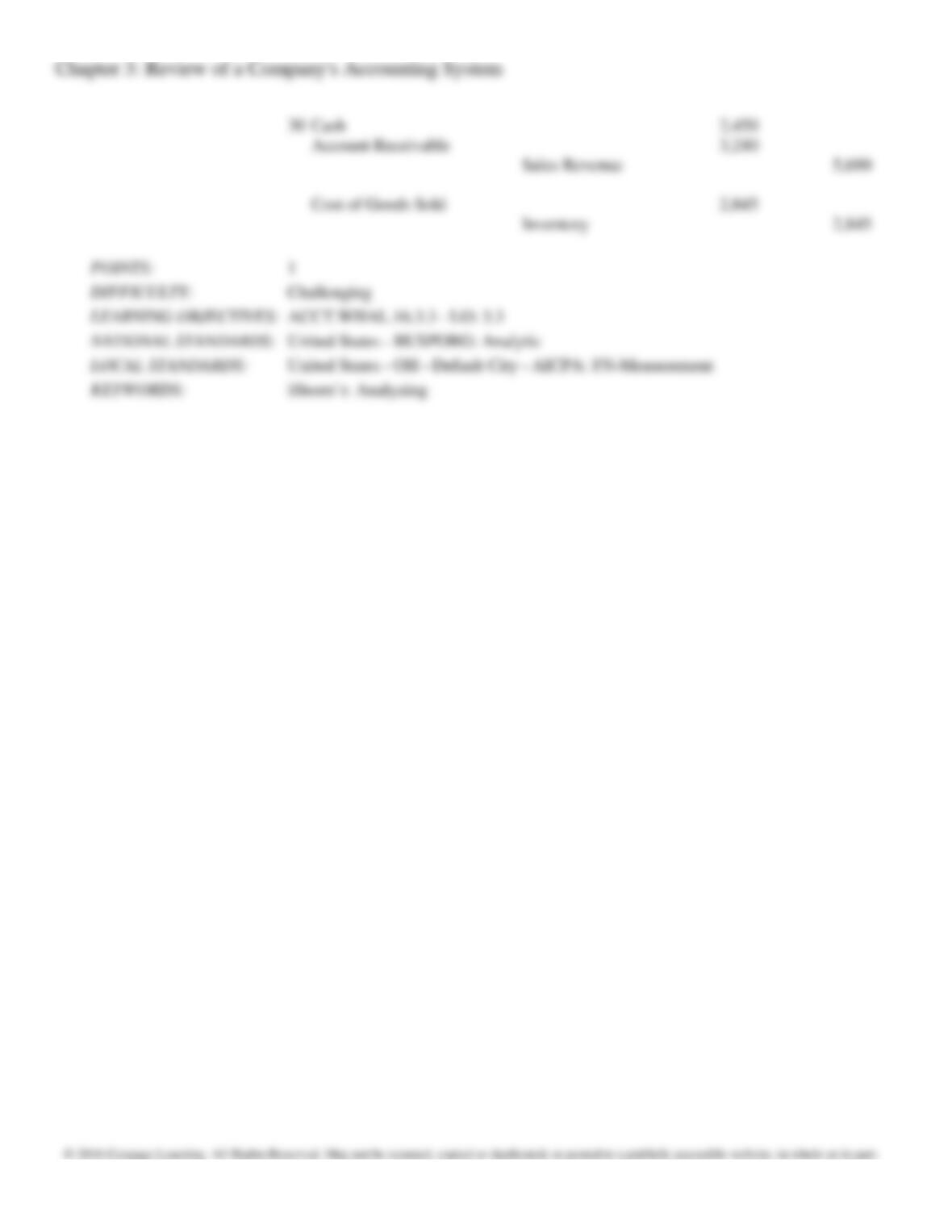
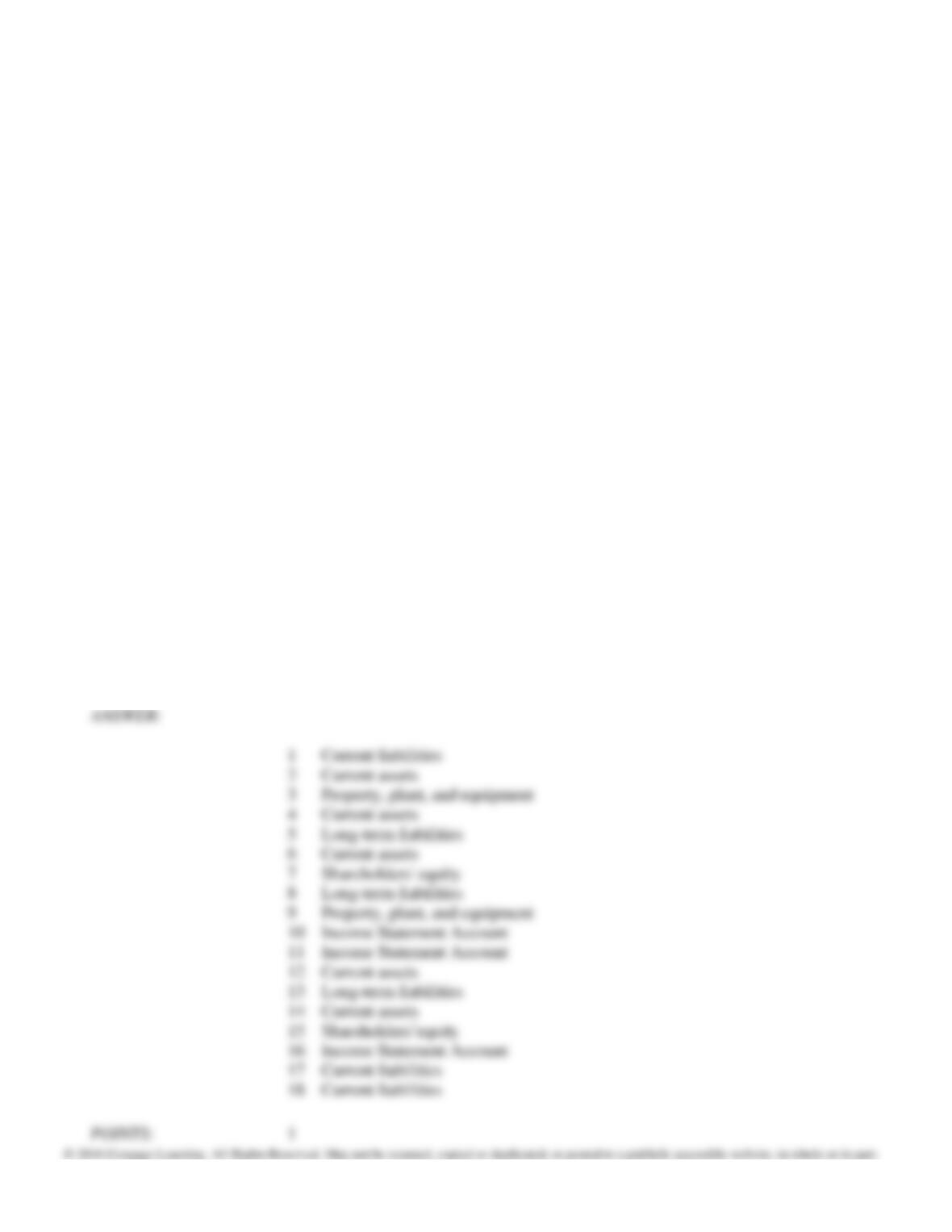
124. The Puzzle Maze Company sells games and puzzles using a perpetual inventory method. The following transactions
took place during the month of April.
1
Paid $12,000 in advance for rent.
3
Purchased supplies for the office paying cash in the amount of $1,560.
4
Cash sales in the amount of $3,450 and credit sales of $1,240 were received for puzzles
sold. Inventory cost was $2,345
8
Purchased inventory on account in the amount of $2,345.
14
Paid wages of $2,367. The wages had not been previously accrued.
16
Received cash sales in the amount of $1,246; the cost of inventory sold was $623.
24
Paid for the inventory purchased on April 8.
26
Paid the utility bill for $256 and paid for internet access in the amount of $175.
29
Purchased advertising on account in the amount of $650. The advertising charge was for
three months, starting May 1.
30
Received cash sales in the amount of $2,450 and credit sales of $3,240 for puzzles sold.
Inventory costs were $2,845.
1
Prepaid Rent
Cash
3
Supplies
Cash
4
Cash
Account Receivable
Sales Revenue
Cost of Goods Sold
Inventory
8
Inventory
Account Payable
14
Wage Expense
Cash
16
Cash
Sales Revenue
Cost of Goods Sold
Inventory
24
Account Payable
Cash
26
Utility Expense
Internet Expense
29
Prepaid Advertising
650
Cash
Chapter 3: Review of a Company’s Accounting System
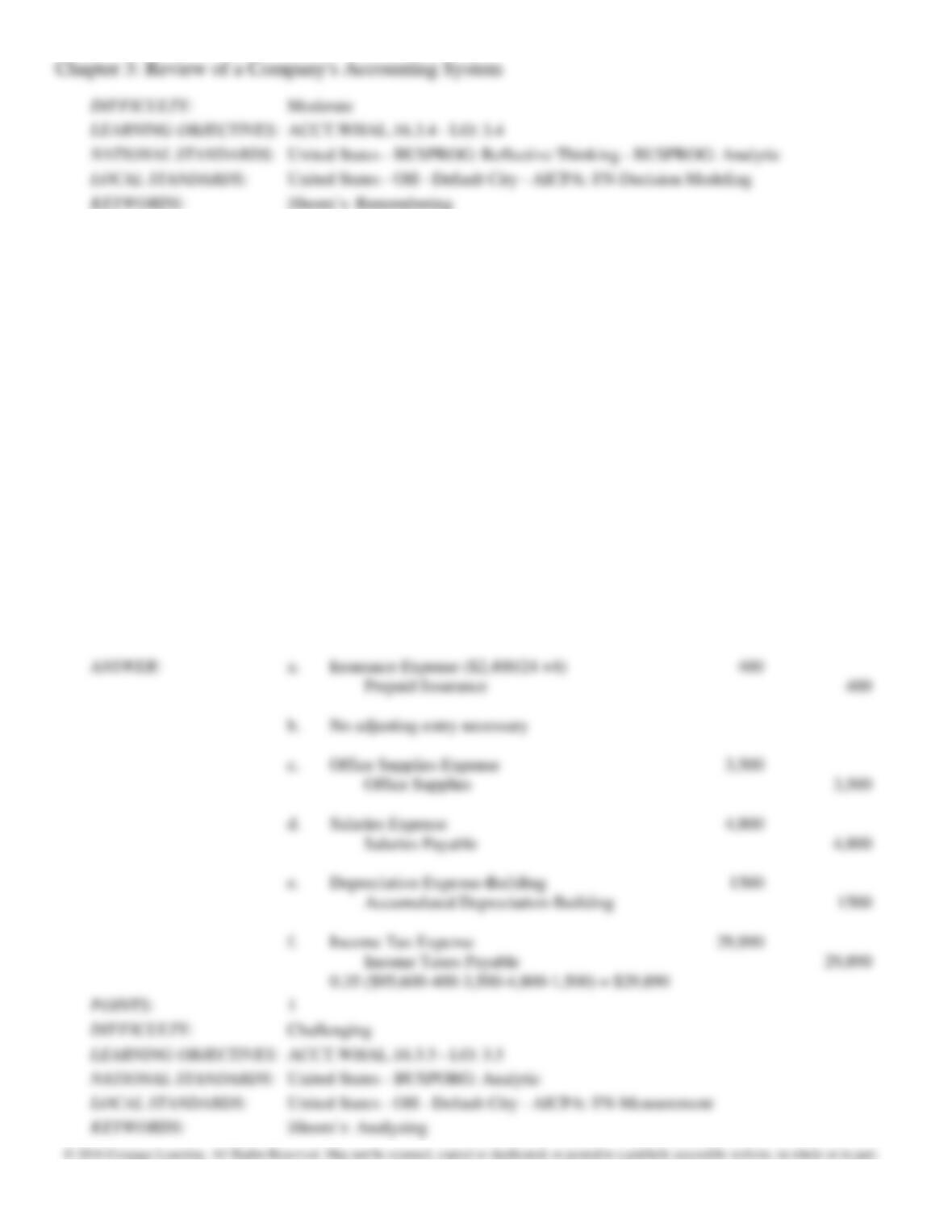
125. Below is a list of accounts for the Duclaw Dog Company.
1
Accounts Payable
2
Accounts Receivable
3
Accumulated Depreciation-Equipment
4
Allowance for Doubtful Accounts
5
Bonds Payable
6
Cash
7
Common Stock
8
Discount on Bonds Payable
9
Equipment
10
Insurance Expense
11
Interest Expense
12
Inventory
13
Notes Payable, due in 5 years
14
Prepaid Rent
15
Retained Earnings
16
Salaries and Wages Expense
17
Salaries and Wages Payable
18
Unearned Revenue
Indicate the proper balance sheet classification of each of the 18 numbered accounts by inserting the appropriate
classification, taken from the list below, after each of the numbers
Current assets
Property, plant, and equipment
Current liabilities
Long-term liabilities
Shareholders’ Equity
Income Statement account
1
Current liabilities
2
Current assets
3
Property, plant, and equipment
4
Current assets
5
Long-term liabilities
6
Current assets
7
Shareholders’ equity
8
Long-term liabilities
9
Property, plant, and equipment
10
Income Statement Account
11
Income Statement Account
12
Current assets
13
Long-term liabilities
14
Current assets
15
Shareholders’equity
16
Income Statement Account
1
126. Events concerning the Ellen Company for 2015 are described below:
a.
On September 1, 2015, a two-year comprehensive insurance policy was purchased for
$2,400. The payment was debited to Prepaid Insurance.
b.
On December 1, 2015, a customer paid $1,250 in advance for services to be performed in
January of 2016. The payment was credited to Unearned Revenue.
c.
On January 1, 2015, the office supplies account had a $500 balance. Supplies costing
$3,100 were purchased during the year. At December 31, an inventory count showed $100
of supplies on hand.
d.
On December 31, 2015, $4,800 of unpaid employee salaries had accumulated. No entry for
these salaries has been recorded.
e.
Straight-line depreciation is recorded only at year-end and is being used for a building that
was purchased at the beginning of 2014 for $48,000, with an expected life of 30 years and
an estimated residual value of $3,000.
f.
The income tax rate is 35% on current income. Pretax income before the above adjusting
entries was $95,600.
Required:
Prepare the appropriate December 31, 2015, adjusting entry for each item, or indicate that an adjusting entry is not
necessary. Assume that Ellen’s transactions were initially recorded in permanent (balance sheet) accounts unless
otherwise indicated.
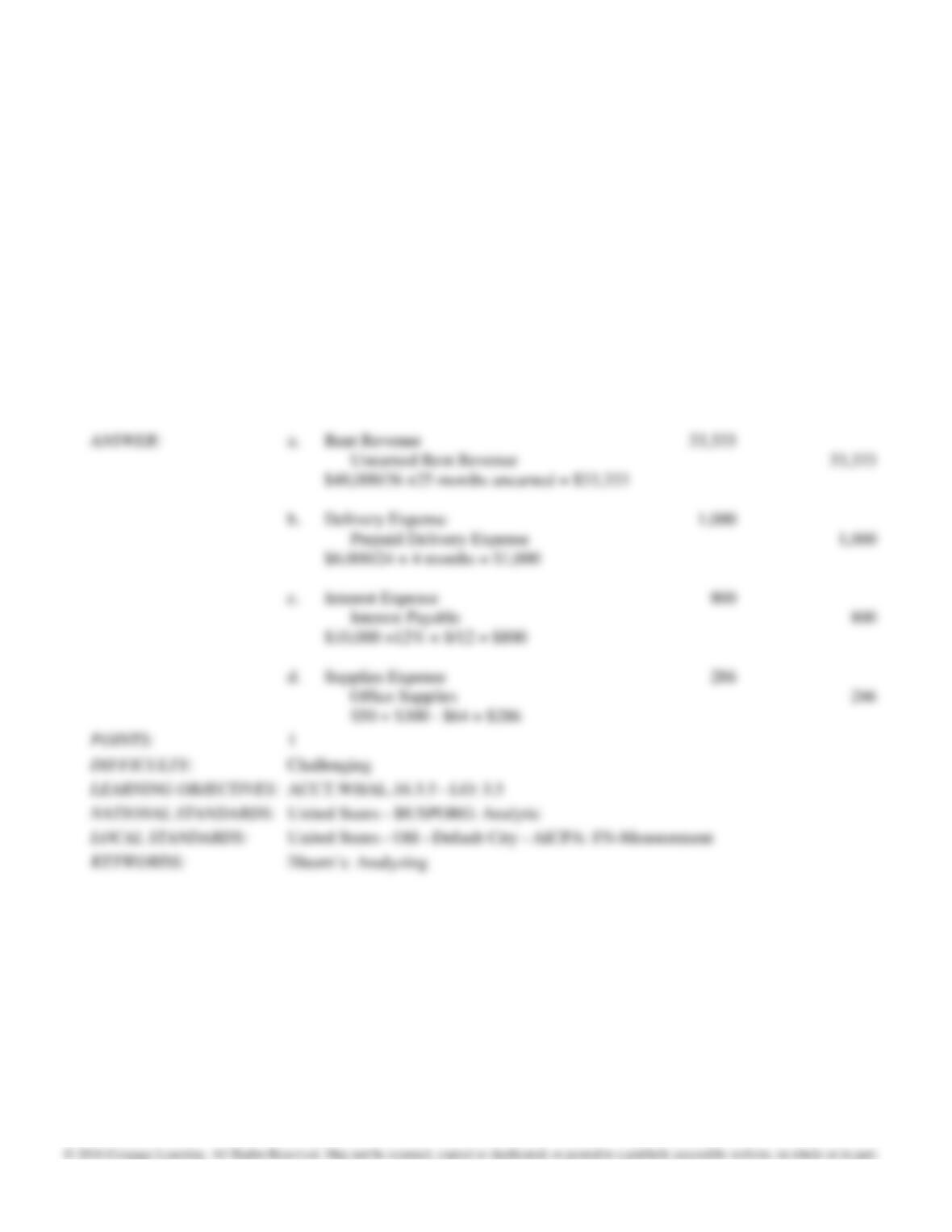
a.
Insurance Expense ($2,400/24 ×4)
c.
Office Supplies Expense
Salaries Payable
Income Tax Expense
0.35 ($95,600-400-3,500-4,800-1,500) = $29,890
1
ACCT.WHAL.16.3.5 – LO: 3.5
United States – OH – Default City – AICPA: FN-Measurement
Moderate
United States – BUSPROG: Reflective Thinking – BUSPROG: Analytic
United States – OH – Default City – AICPA: FN-Decision Modeling
Chapter 3: Review of a Company’s Accounting System
127. Several transactions for Kincaid Co. are presented below. The company adjusts its books only at year-end.
a.
On February 1, Kincaid Co. leased a warehouse to another company for $48,000 for a
three-year period. The company credited a revenue account on February 1 when the total
amount of $48,000 was received in cash.
b.
On September 1, Kincaid Co. paid $6,000 to a local trucking company for certain
deliveries spread evenly over a two-year period of time. The company charged an asset
account on September 1.
c.
On May 1, the company borrowed $10,000 on a 12%, one-year note.
d.
On March 10, Kincaid Co. bought $300 of office supplies and debited the office supplies
account. At the beginning of the year, office supplies of $50 were on hand and disclosed on
the January 1 balance sheet. At the end of the year, there were $64 of office supplies on
hand.
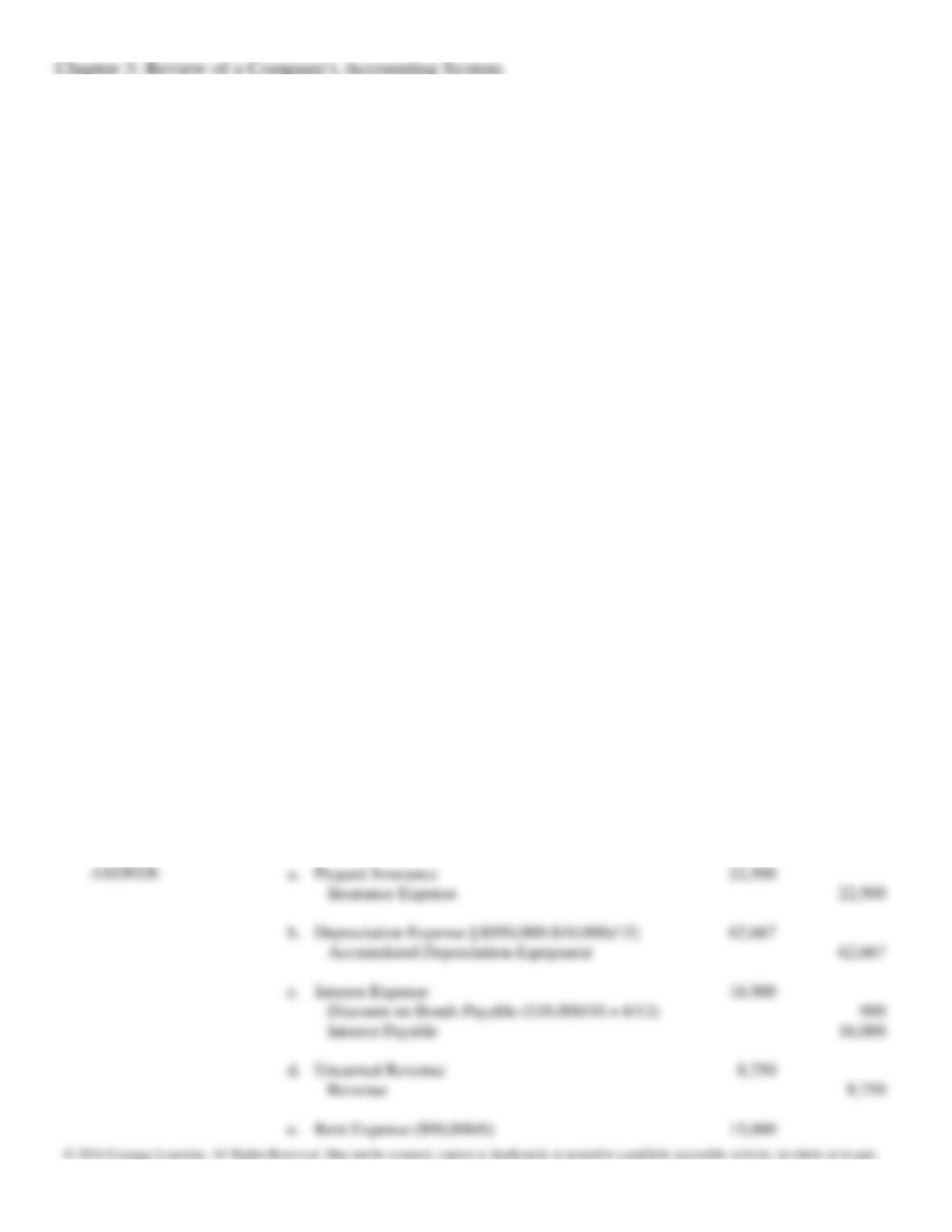
Rent Revenue
$48,000/36 ×25 months unearned = $33,333
b.
Delivery Expense
$6,000/24 × 4 months = $1,000
Interest Expense
$10,000 ×12% × 8/12 = $800
d.
Supplies Expense
1
Challenging
ACCT.WHAL.16.3.5 – LO: 3.5
United States – BUSPORG: Analytic
United States – OH – Default City – AICPA: FN-Measurement
Required:
Prepare adjusting entries for December 31.
128. The following information is from the trial balance of the Basil Herb Company.
Accounts Payable
$ 234,000
Accounts Receivable
164,000
Accumulated Depreciation—Equipment
225,000
Allowance for Doubtful Accounts
16,500
Bonds Payable
1,000,000
Cash
325,000
Common Stock
60,000
Discount on Bonds Payable
17,100
Equipment
950,000
Insurance Expense
30,000
Interest Expense
16,900
Inventory
300,000
Notes Payable (due 6/1/16)
200,000
Prepaid Rent
90,000
Retained Earnings
824,000
Salaries and Wages Expense
178,000
Salaries and Wages Payable
17,600
Unearned Revenue
15,000
(All of the above accounts have their normal debit or credit balances.)
Required:
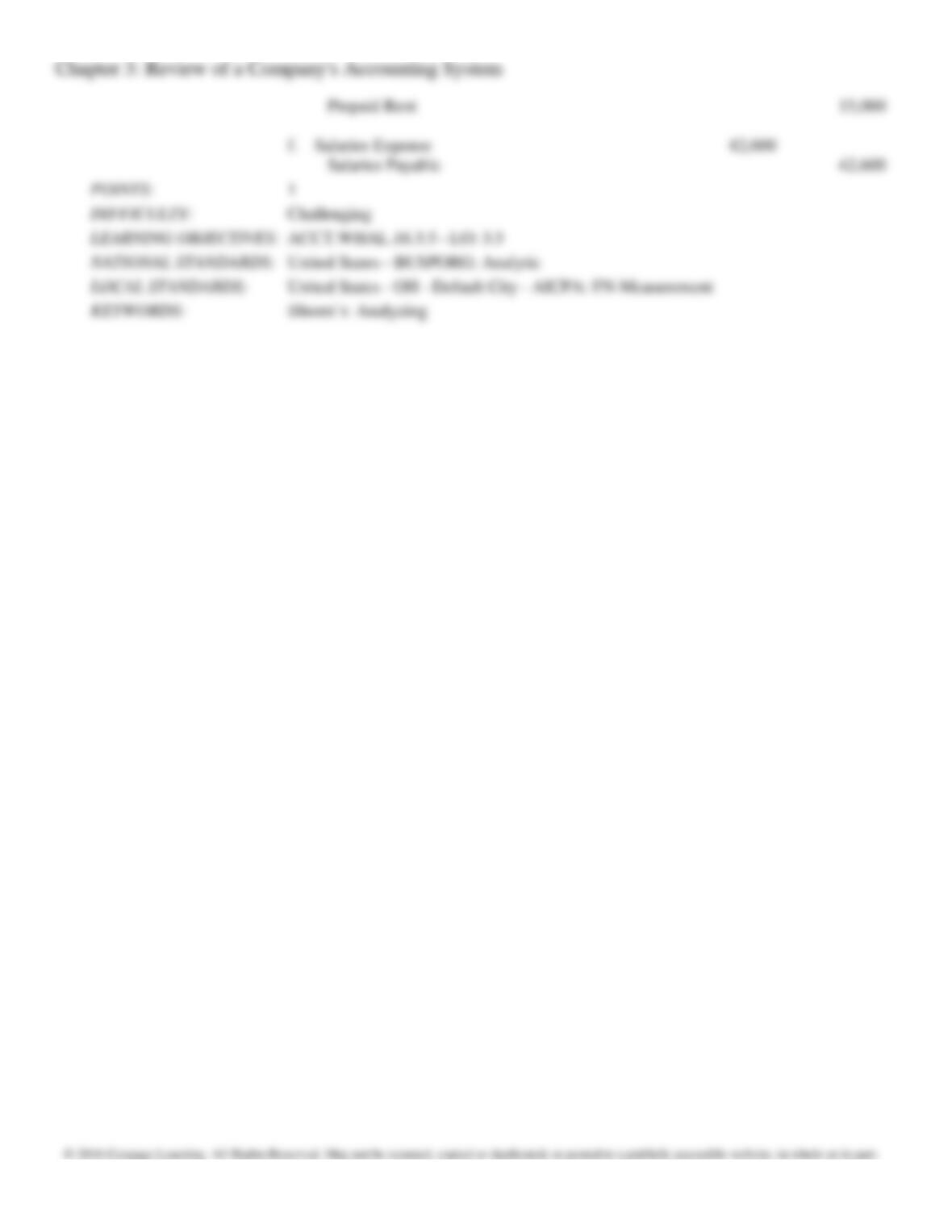
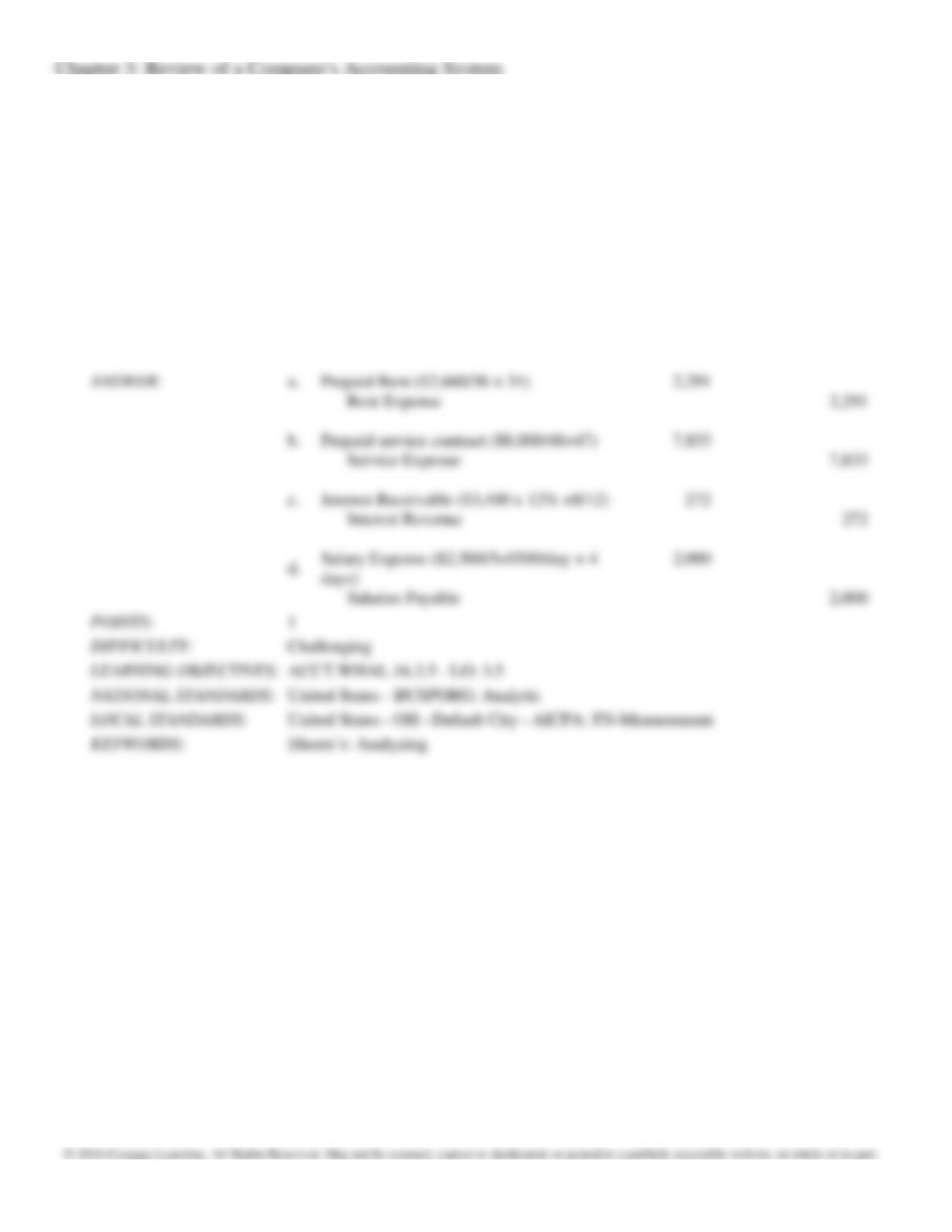
Prepare adjusting journal entries at year end, December 31, 2015, for the Basil Herb Company using the following
supplemental information. (Round to the nearest whole dollar.)
a.
Unexpired insurance at 12/31/15 is $22,500.
b.
The equipment has a useful life of 15 years with $10,000 salvage value. (Straight-line
method being used.)
c.
Interest accrued on the bonds payable is $16,000 as of 12/31/15. The discount is
amortized using straight line over the life of the bonds. Bonds were issued January 1,
2015 for $318,000 due in 10 years paying interest semiannually on July 1, and Jan. 1.
d.
The unearned revenue of $15,000 was received June 1, 2015 to be earned evenly over
the course of the year.
e.
The rent payment of $90,000 covered the six months from November 30, 2015
through May 31, 2016.
f.
Salaries and wages earned but unpaid at 12/31/15, $42,600.
Prepaid Insurance
Insurance Expense
b.
Depreciation Expense [($950,000-$10,000)/15]
Accumulated Depreciation-Equipment
Interest Expense
Discount on Bonds Payable ($18,000/10 × 6/12)
Interest Payable
Rent Expense ($90,000/6)
129. Several transactions for Trolley, Inc. are presented below. The company adjusts its books only at year-end.
a.
On August 1, the company rented some land from another company for $2,660 for a three-
year time period. Trolley charged an expense account on August 1.
b.
On February 1, Trolley paid $8,000 for a four-year technical service contract. Trolley will
receive services evenly throughout the four-year period. The company debited the asset
account, Prepaid Service Contract, on February 1.
c.
On May 1, Trolley loaned $3,400 to another company on a 12%, one-year note.
d.
The weekly (five-day) payroll of Trolley amounts to $2,500. All employees are paid at the
close of business each Friday. December 31 falls on a Thursday.
Rent Expense
b.
Prepaid service contract ($8,000/48×47)
Service Expense
c.
Interest Receivable ($3,400 x 12% ×8/12)
Interest Revenue
Salary Expense ($2,500/5=$500/day × 4
Salaries Payable
1
Challenging
ACCT.WHAL.16.3.5 – LO: 3.5
United States – BUSPORG: Analytic
United States – OH – Default City – AICPA: FN-Measurement
Required:
Prepare adjusting entries for December 31. (Round to the nearest whole dollar.)
130. Selected account balances from the December 31, 2015, trial balance of the Gracy Company are listed below:
Debit
Credit
Inventory, January 1, 2015
$12,500
Purchases
25,000
Salaries Expense
5,000
Rent Expense
3,250
General and Administrative Expenses
2,500
Sales
$61,000
Dividends Declared
3,500
In addition, the following information is available:
·
The cost of the ending inventory at December 31, 2015, is $7,500.
·
$890 of salaries have accrued as of December 31.
·
On March 30, Gracy purchased a 12-month insurance policy for $240. The purchase was
debited to Prepaid Insurance.
·
On December 1, the company paid 2 months’ rent in advance. The $1500 payment was
debited to Rent Expense.
·
In December, a customer paid $1,000 in advance for merchandise that will be shipped by
Gracy in 2016. The amount received was credited to Sales.
·
Gracy estimates its bad debts to be 1% of sales (after all adjustments).
·
The income tax rate is 30%.
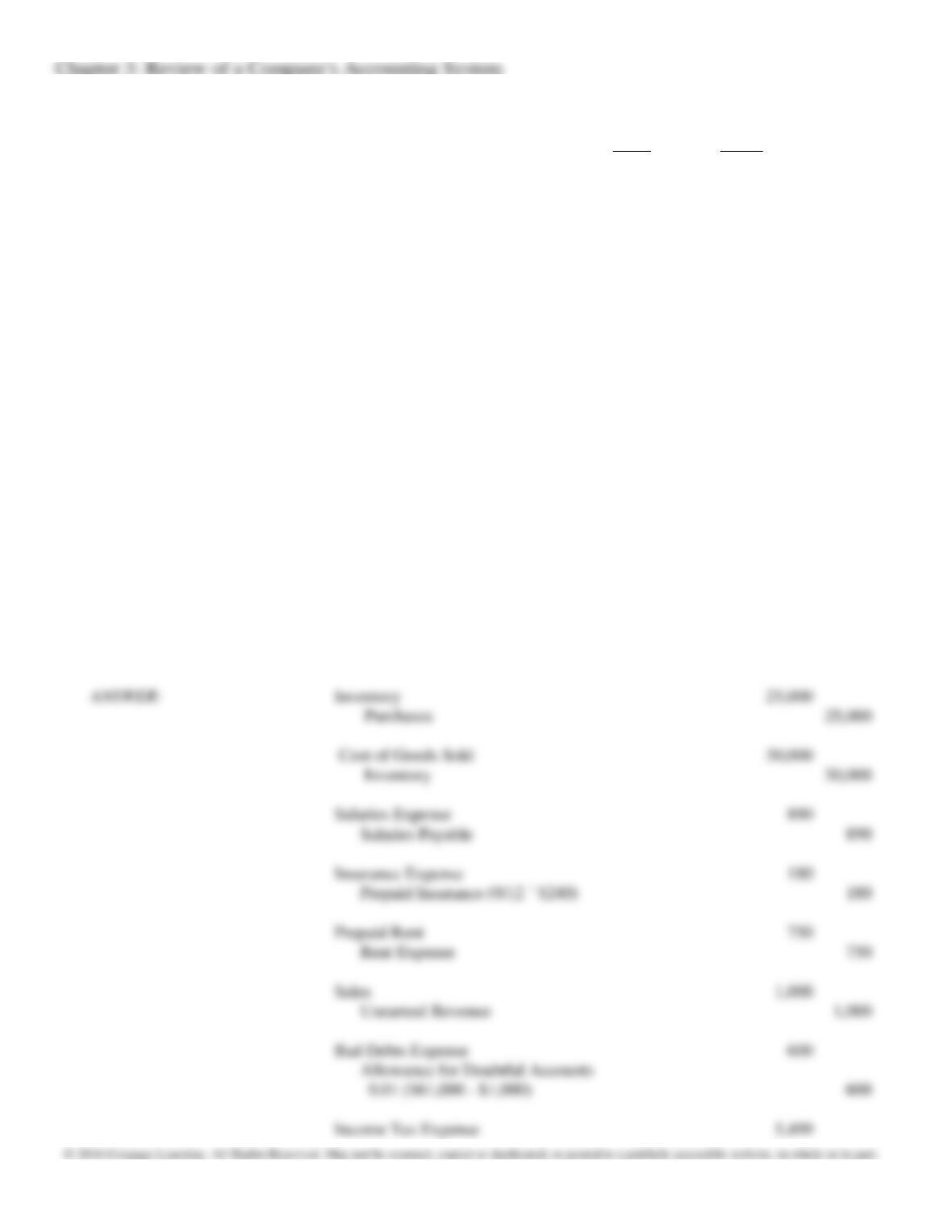
Inventory
Purchases
Cost of Goods Sold
Inventory
Salaries Expense
Salaries Payable
Insurance Expense
Prepaid Insurance (9/12 ´ $240)
Prepaid Rent
Rent Expense
Sales
Unearned Revenue
Bad Debts Expense
Income Tax Expense
Gracy Company uses a periodic inventory system.
Required:
Using a general journal format, prepare the required adjusting entries.