Chapter 3 – The Adjusting Process
126. The adjusting entry to adjust supplies was omitted at the end of the year. This would affect the income statement by
having
a.
expenses understated and therefore net income overstated
b.
revenues understated and therefore net income understated
c.
expenses understated and therefore net income understated
d.
expenses overstated and therefore net income understated
127. Which of the accounts below would most likely appear on an adjusted trial balance but probably would not appear
on the unadjusted trial balance?
a.
Fees Earned
b.
Accounts Receivable
c.
Unearned Fees
d.
Depreciation Expense
128. Which of the accounting steps in the accounting process below would be completed last?
a.
preparing the adjusted trial balance
b.
posting
c.
preparing the financial statements
d.
journalizing
Chapter 3 – The Adjusting Process
129. When is the adjusted trial balance prepared?
a.
before adjusting journal entries are posted
b.
after adjusting journal entries are posted
c.
after the adjusting journal entries are journalized
d.
before the adjusting journal entries are journalized
130. What is the purpose of the adjusted trial balance?
a.
to verify that all of the adjusting entries have been posted
b.
to verify that the net income (loss) is correctly reported
c.
to verify that no adjusting journal entry has been omitted
d.
to verify that the debits and credits balance
131. All of the following statements regarding vertical analysis are true except
a.
vertical analysis may be prepared for several periods to analyze changes in relationships over time
b.
in a vertical analysis of a balance sheet, each asset item is stated as a percent of total assets
c.
in a vertical analysis of an income statement, each item is stated as a percent of total expenses
d.
major differences between a company’s vertical analysis and industry averages should be investigated
Chapter 3 – The Adjusting Process
132. Two income statements for Toby Sam Enterprises are shown below:
Toby Sam Enterprises
Income Statement
For the Years 2 and 1 Ending December 31
Year 2
Year 1
Fees earned
$674,350
$520,600
Operating expenses
472,045
338,390
Operating income
$202,305
$182,210
Prepare a vertical analysis of Toby Sam Enterprises’ income statements. Has operating income increased or decreased as
a percentage of revenue?
a.
increased by 5%
b.
increased by 111%
c.
decreased by 5%
d.
decreased by 111%
133. Explain the difference between accrual basis accounting and cash basis accounting.
received or paid.
Chapter 3 – The Adjusting Process
134. Indicate with a Yes or No whether or not each of the following accounts would, under normal circumstances, require
an adjusting entry.
1. Cash
2. Prepaid Expenses
3. Depreciation Expense
4. Accounts Payable
5. Accumulated Depreciation
6. Equipment
135. Classify the following items as: (1) prepaid expense, (2) unearned revenue, (3) accrued expense, or (4) accrued
revenue.
a) fees received but not yet earned
b) fees earned but not yet received
c) paid premium on a one-year insurance policy
d) property tax owed to be paid beginning of next year
Chapter 3 – The Adjusting Process
l
ACCT.
ACBS
P.APC
.13 –
Long–
term
Assets
Report
ing
ACCT.
ACBS
P.APC
.16 –
Curren
t
Liabiliti
es
Report
ing
ACCT.
AICPA
.FN.03
–
Measu
rement
BUSP
ROG:
Analyti
c
136. List the four basic types of accounts that require adjusting entries and give an example of each.
137. Under the accrual basis, some accounts in the ledger require updating at the end of the period. Discuss the three main
reasons for this updating and give an example of each.
Chapter 3 – The Adjusting Process
138. (a) Explain the differences between accrued revenues and unearned revenues.
(b) Explain the differences between accrued expenses and prepaid expenses.
(c) Give an example of each.
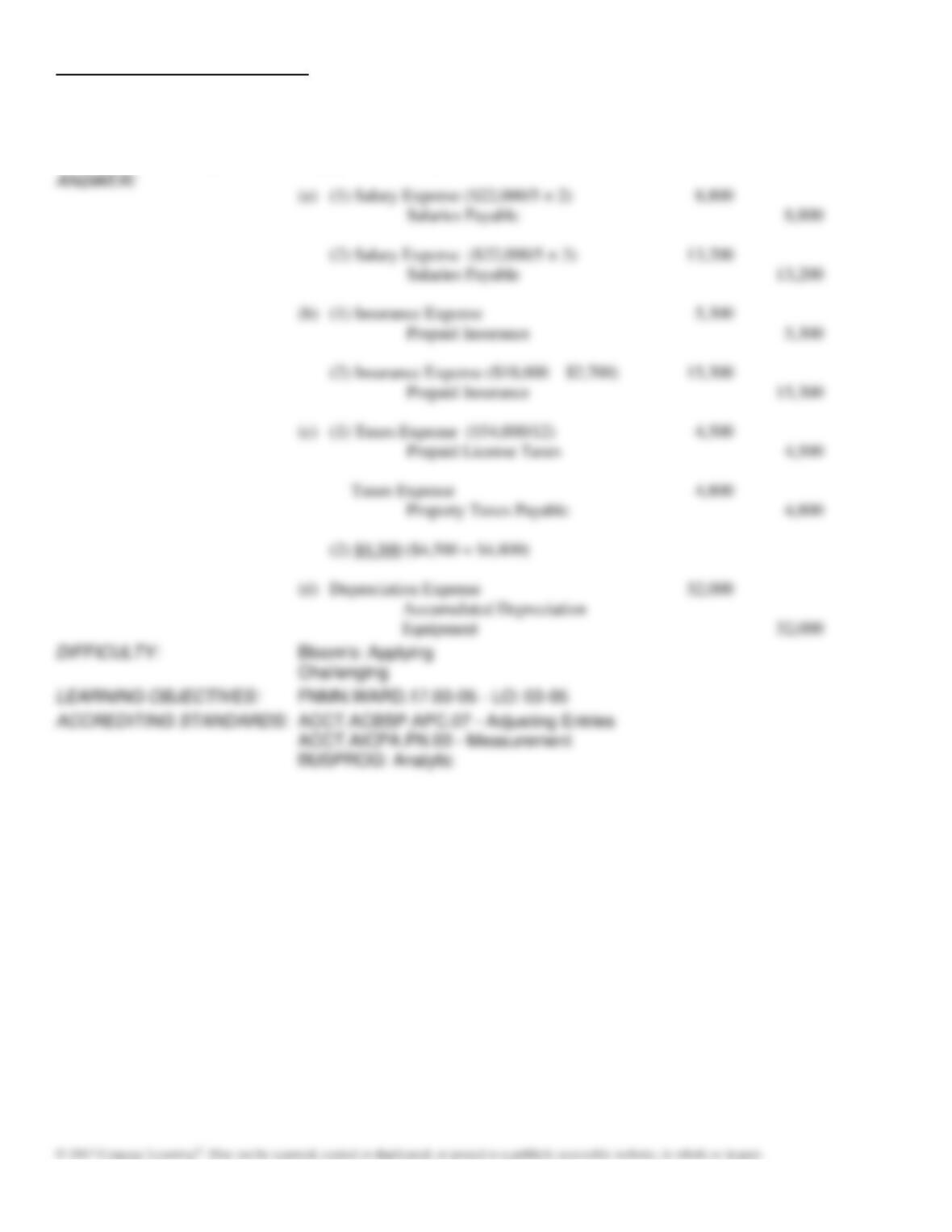
(a)
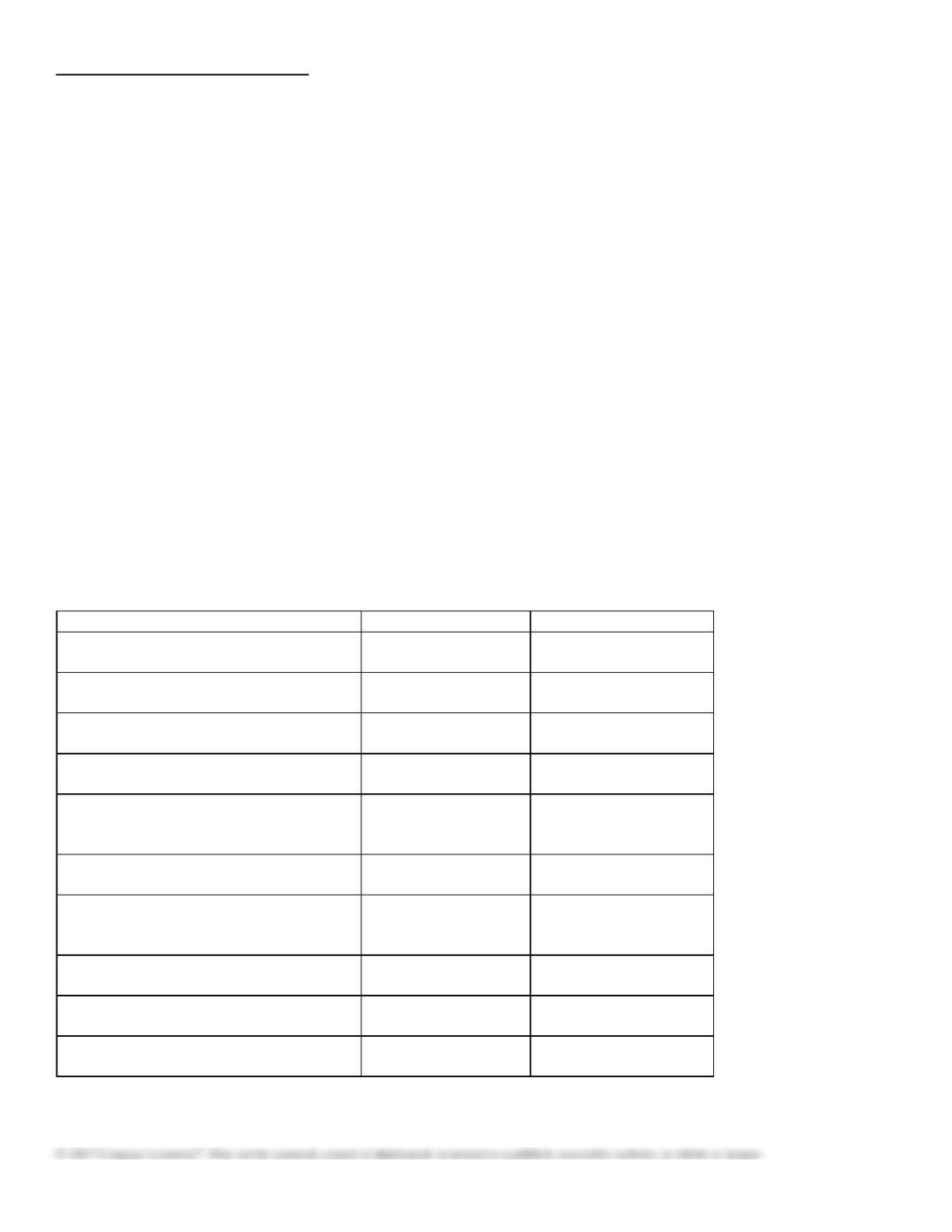
Accrued revenues are revenues that have been earned but not recorded in the
accounts. Unearned revenues are payments that have been received for services
for which economic benefits will be enjoyed in future accounting periods.
Accrued revenues – unbilled services on account
Unearned revenues – rental payments received by a landlord in advance
Accrued expenses – unpaid wages due to employees
Prepaid expenses – insurance policy purchased to cover future periods
139. For each of the following, journalize the necessary adjusting entry:
(a)
A business pays weekly salaries of $22,000 on Friday for a five-day week ending on
that day. Journalize the necessary adjusting entry at the end of the fiscal period,
assuming that the fiscal period ends (1) on Tuesday, (2) on Wednesday.
(b)
The balance in the prepaid insurance account before adjustment at the end of the year
is $18,000. Journalize the adjusting entry required under each of the following
alternatives: (1) the amount of insurance expired during the year is $5,300, (2) the
amount of unexpired insurance applicable to a future period is $2,700.
(c)
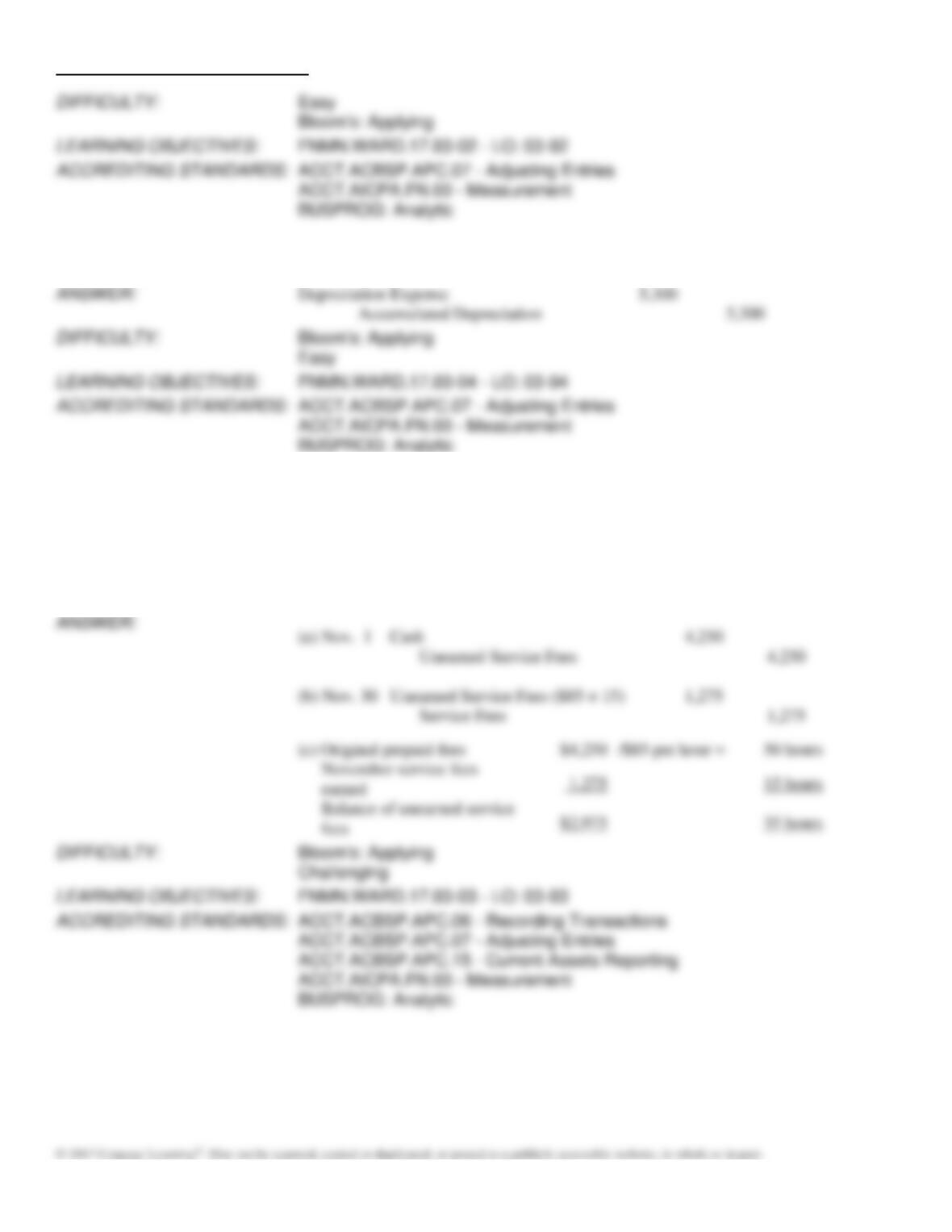
On July 1 of the current year, a business pays $54,000 to the city for license taxes for
the coming fiscal year. The same business is also required to pay an annual property
tax at the end of the year. The estimated amount of the current year’s property tax
Chapter 3 – The Adjusting Process
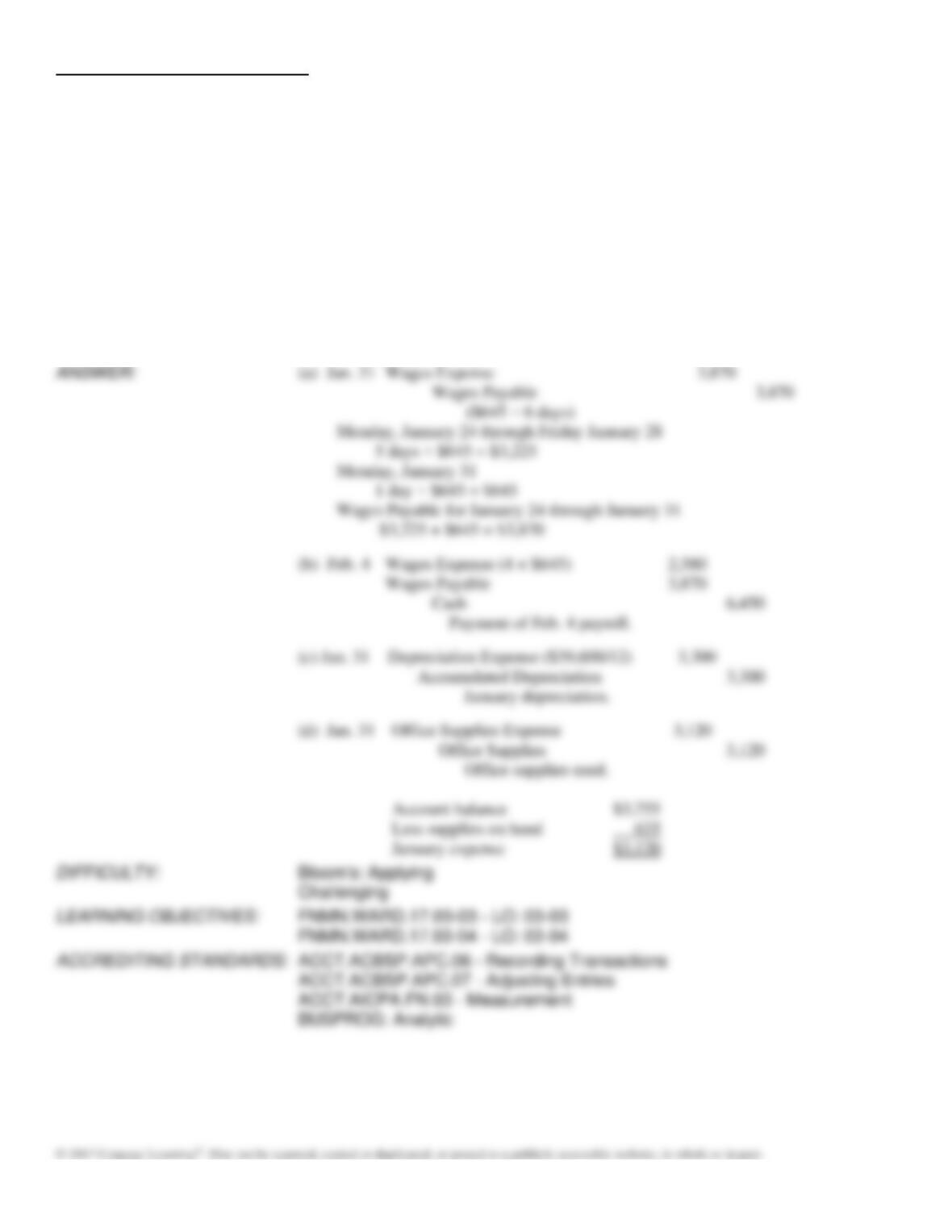
allocated to July is $4,800. (1) Journalize the two adjusting entries required to bring
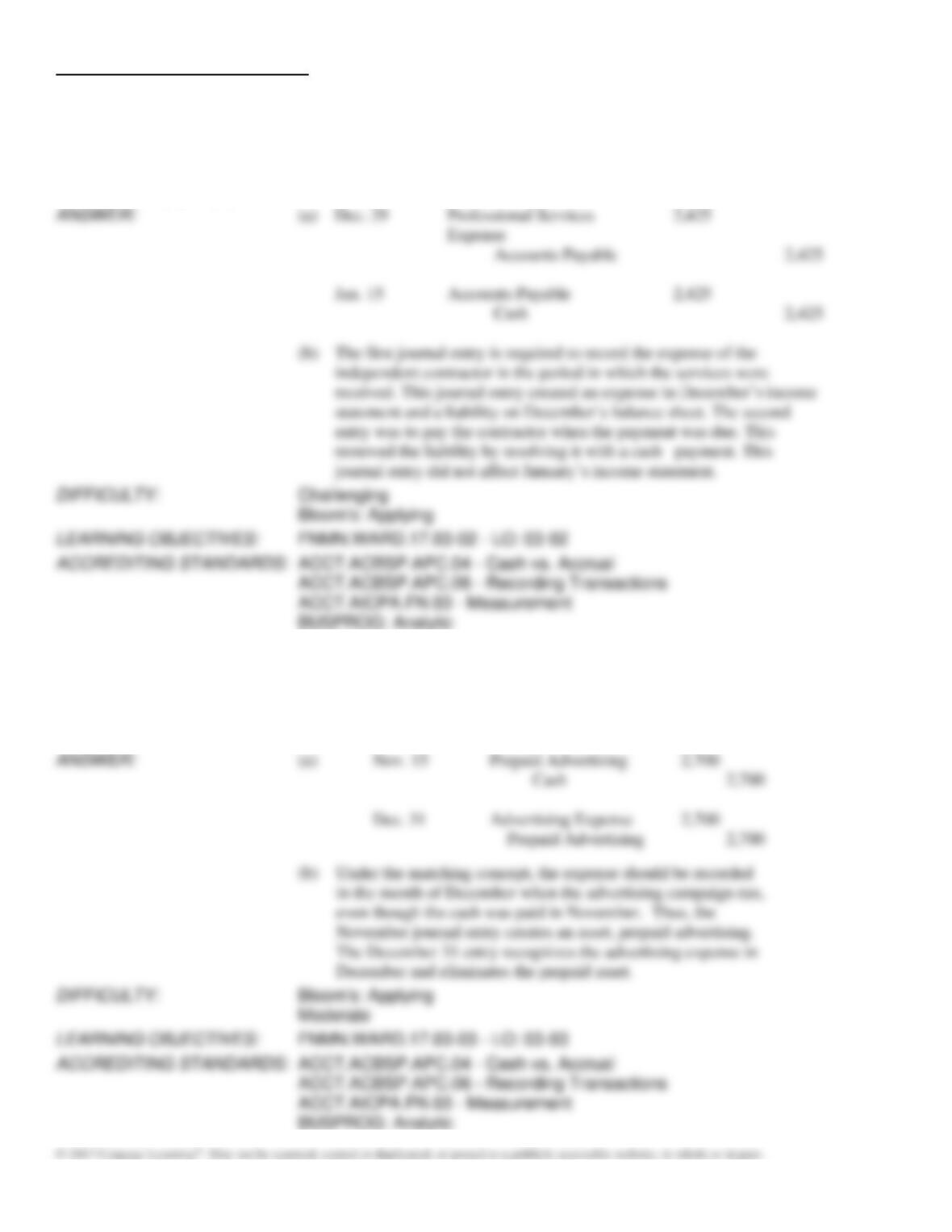
the accounts affected by the taxes up to date as of July 31. (2) What is the amount of
tax expense for July?
(d)
The estimated depreciation on equipment for the year is $32,000.
(a)
(1) Salary Expense ($22,000/5 × 2)
(2) Salary Expense ($22,000/5 × 3)
(b)
(1) Insurance Expense
(2) Insurance Expense ($18,000 – $2,700)
(c)
(1) Taxes Expense ($54,000/12)
Taxes Expense
(2) $9,300 ($4,500 + $4,800)
(d)
Depreciation Expense
Chapter 3 – The Adjusting Process
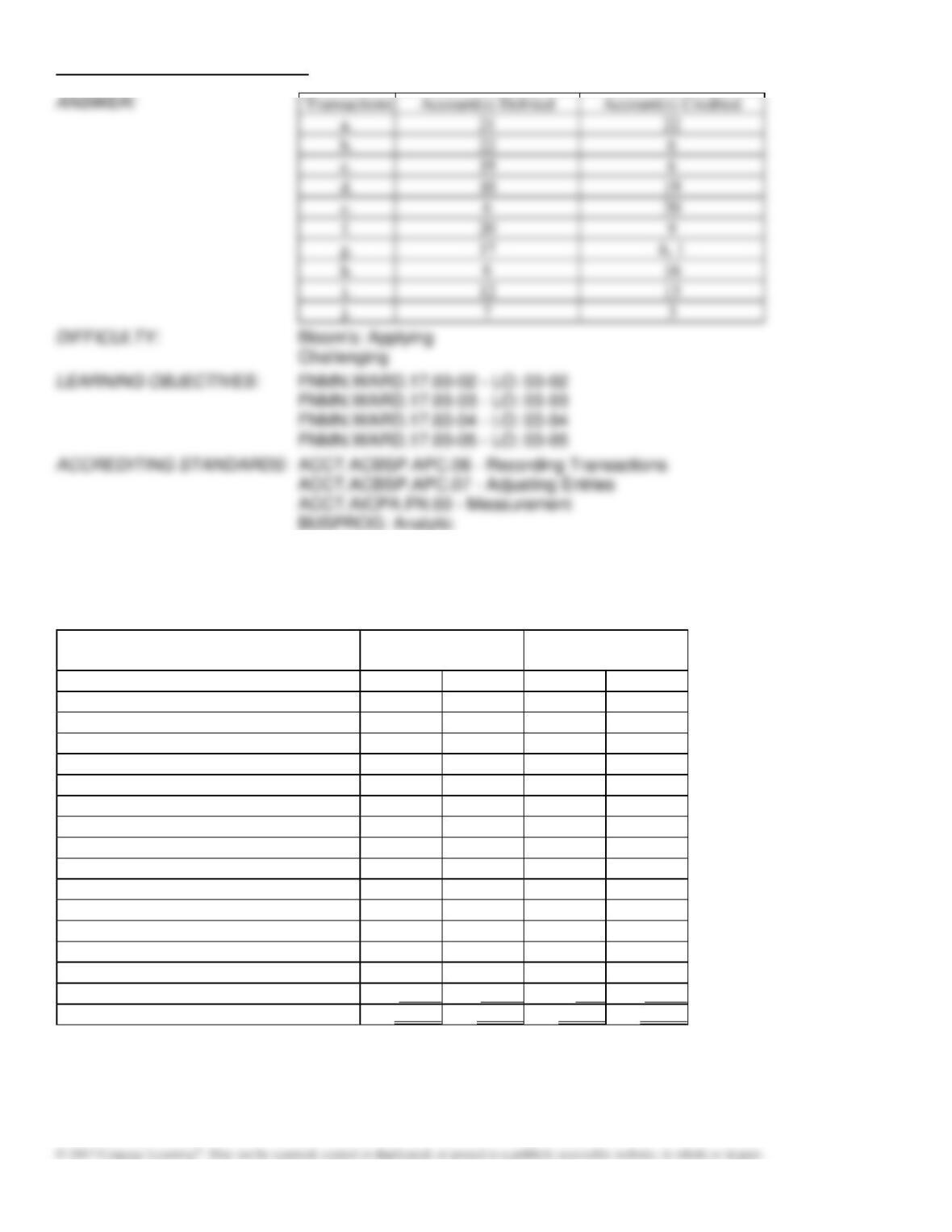
140. Listed below are accounts to use for transactions (a) through (j), each identified by a number. Following this list are
the transactions. You are to indicate for each transaction the accounts that should be debited and credited by placing the
account number(s) in the appropriate box.
1.
Accounts Payable
2.
Accounts Receivable
3.
Accumulated Depreciation—Office Equipment
4.
Building
5.
Common Stock
6.
Cash
7.
Depreciation Expense—Office Equipment
8.
Dividends
9.
Fees Earned
10.
Insurance Expense
11.
Insurance Payable
12.
Interest Expense
13.
Interest Payable
14.
Interest Receivable
15.
Land
16.
Notes Payable
17.
Office Supplies
18.
Office Supplies Expense
19.
Prepaid Insurance
20.
Unearned Fees
21.
Utilities Expense
22.
Utilities Payable
Transactions
Account(s) Debited
Account(s) Credited
a. Utility bill is received; payment will be
made in 10 days
b. Paid the utility bill previously recorded in
transaction (a)
c. Bought a three-year insurance policy and
paid in full
d. Made an entry to adjust for the expired
portion of the insurance premium
e. Received $7,000 from a contract to
perform accounting services over the
next two years
f. Made an entry to adjust for half of the
services performed in (e)
g. Purchased office supplies, paying part
cash and charging the balance on
account
h. Borrowed money from a bank and
signed a note payable due in six months
i. Recorded one month’s accrued interest
on the note payable
j. Depreciation is recorded on office
equipment
Chapter 3 – The Adjusting Process
141. REM Consulting is completing the accounting information processing at the end of the fiscal year, December
31. The following trial balances are available.
Accounts
Unadjusted
Trial Balance
Adjusted
Trial Balance
Debit
Credit
Debit
Credit
Cash
13,000
13,000
Accounts Receivable
1,500
1,800
Prepaid Insurance
600
200
Supplies
3,800
3,000
Machines
30,000
30,000
Accumulated Depreciation
12,000
17,500
Wages Payable
900
Unearned Fees
6,700
6,500
Common Stock
24,000
24,000
Dividends
4,800
4,800
Fees Earned
25,000
25,500
Wages Expense
14,000
14,900
Depreciation Expense
5,500
Supplies Expense
800
Insurance Expense
400
67,700
67,700
74,400
74,400
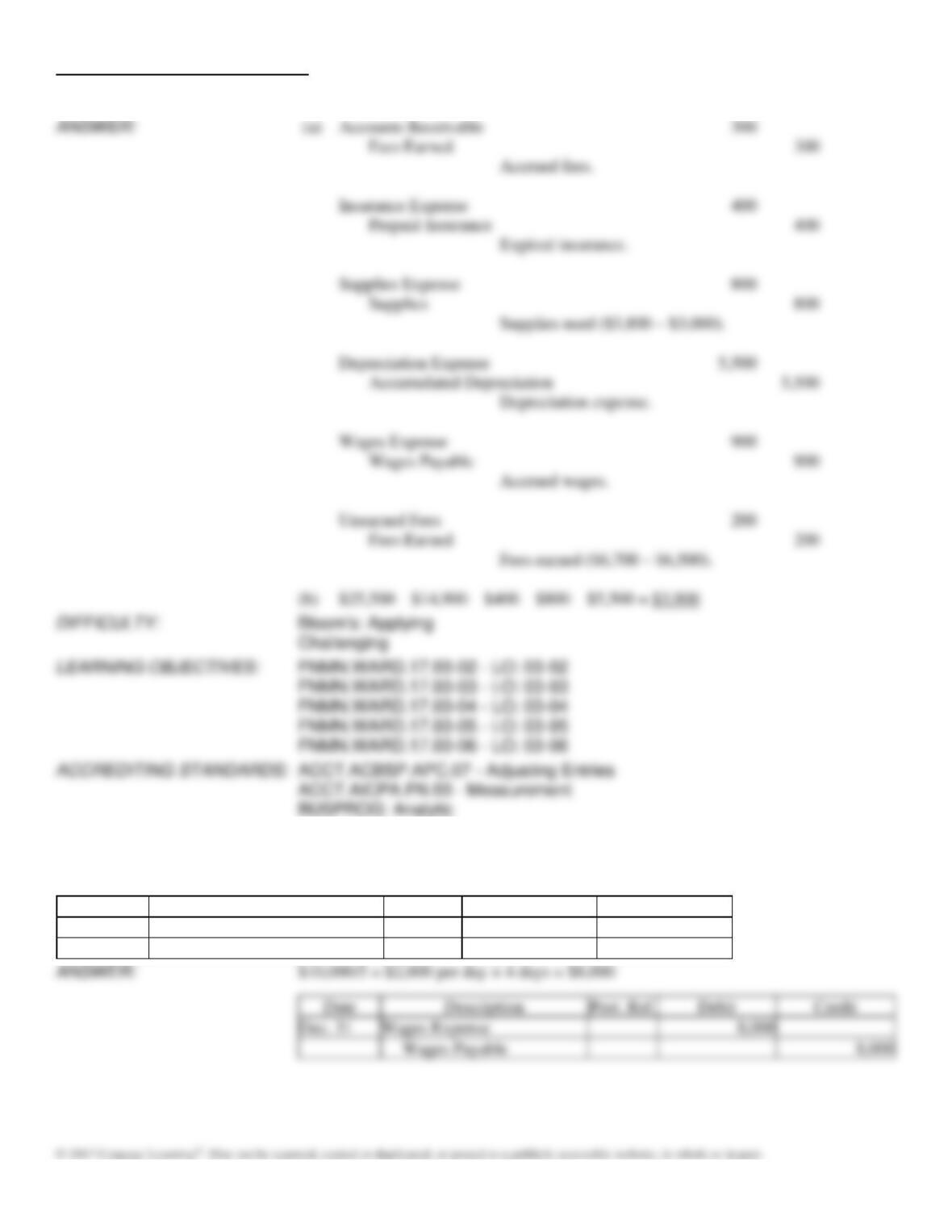
(a) Reconstruct the adjusting entries and give a brief explanation of each.
(b) What is the amount of net income?
Chapter 3 – The Adjusting Process
(a)
Accounts Receivable
Accrued fees.
Insurance Expense
Expired insurance.
Supplies Expense
Supplies used ($3,800 – $3,000).
Depreciation Expense
Depreciation expense.
Wages Expense
Accrued wages.
Unearned Fees
Fees earned ($6,700 – $6,500).
$25,500 – $14,900 – $400 – $800 – $5,500 = $3,900
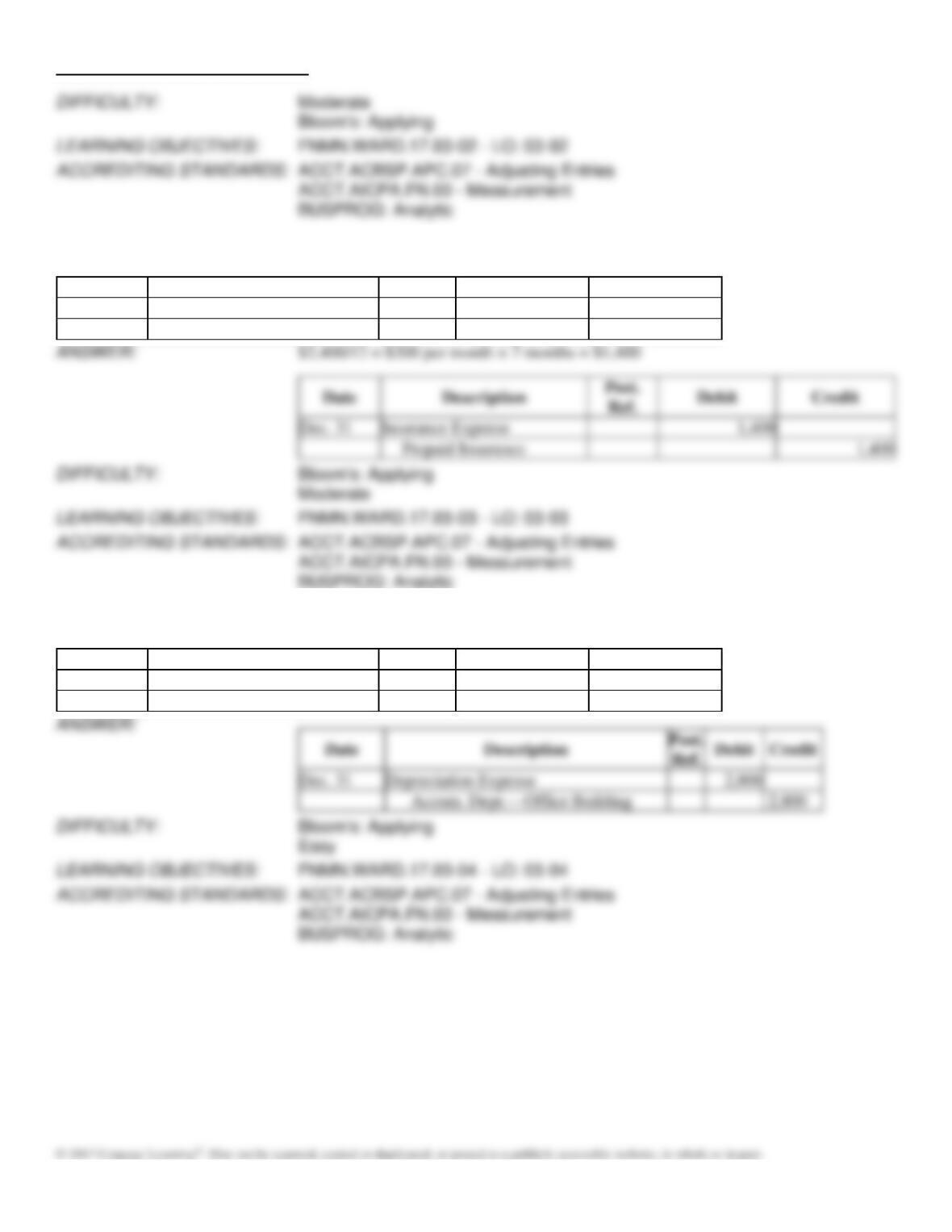
142. Zoey Bella Corp. has a payroll of $10,000 for a five-day workweek. Its employees are paid each Friday for the five-
day workweek. Prepare the adjusting entry on December 31 assuming the year ends on Thursday.
Date
Description
Post. Ref.
Debit
Credit
Wages Expense
Chapter 3 – The Adjusting Process
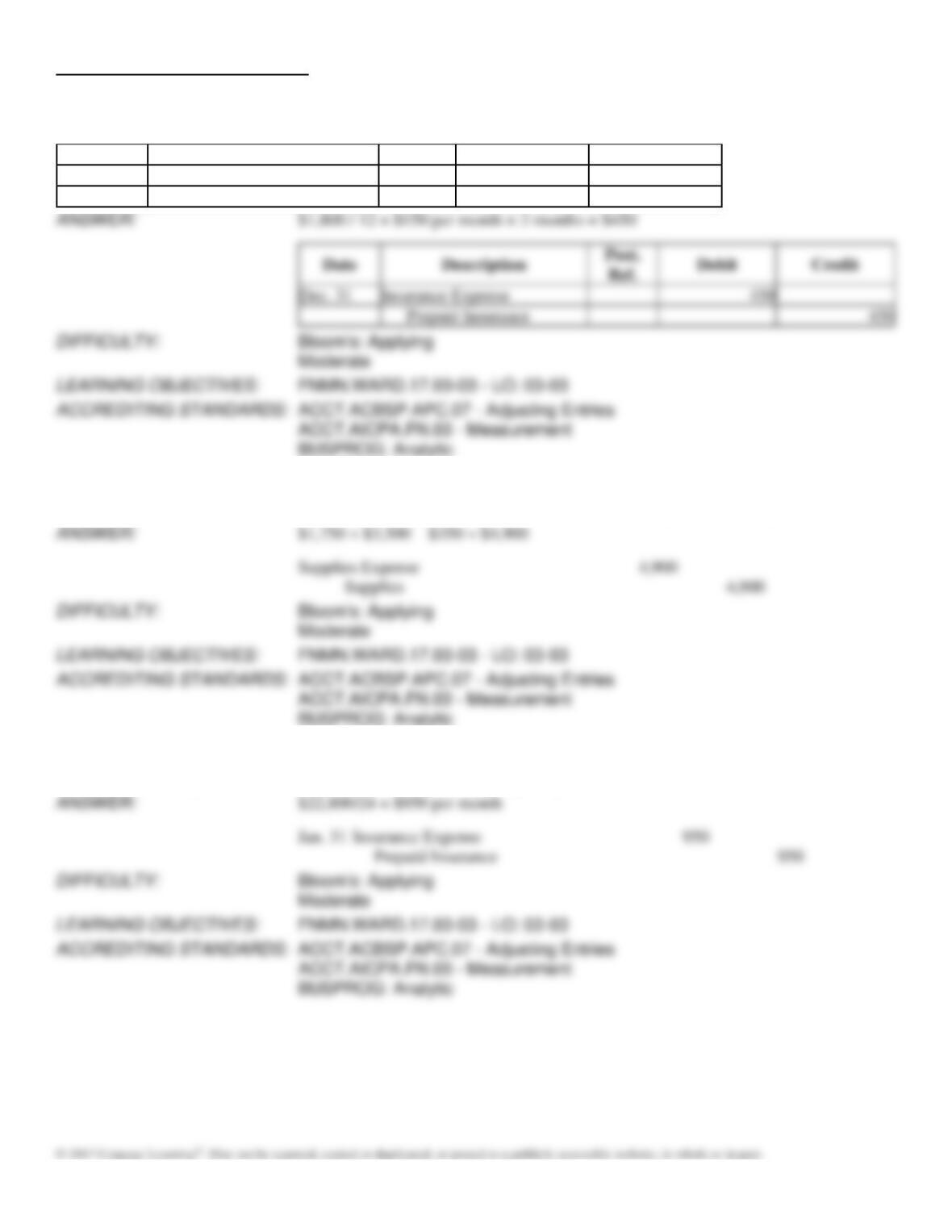
143. A one-year insurance policy was purchased on June 1 for $2,400. The adjusting entry on December 31 would be:
Date
Description
Post. Ref.
Debit
Credit
144. Depreciation on an office building is $2,800. The adjusting entry on December 31 would be
Date
Description
Post. Ref.
Debit
Credit
Chapter 3 – The Adjusting Process
145. Gizmo Inc. purchased a one-year insurance policy on October 1 for $1,800. The adjusting entry on December 31
would be
Date
Description
Post. Ref.
Debit
Credit
146. The supplies account had a beginning balance of $1,750. Supplies purchased during the period totaled $3,500. At the
end of the period before adjustment, $350 of supplies were on hand. Prepare the adjusting entry for supplies.
147. On January 1, DogMart Company purchased a two-year liability insurance policy for $22,800 cash. The purchase
was recorded to Prepaid Insurance. Prepare the January 31 adjusting entry.
Chapter 3 – The Adjusting Process
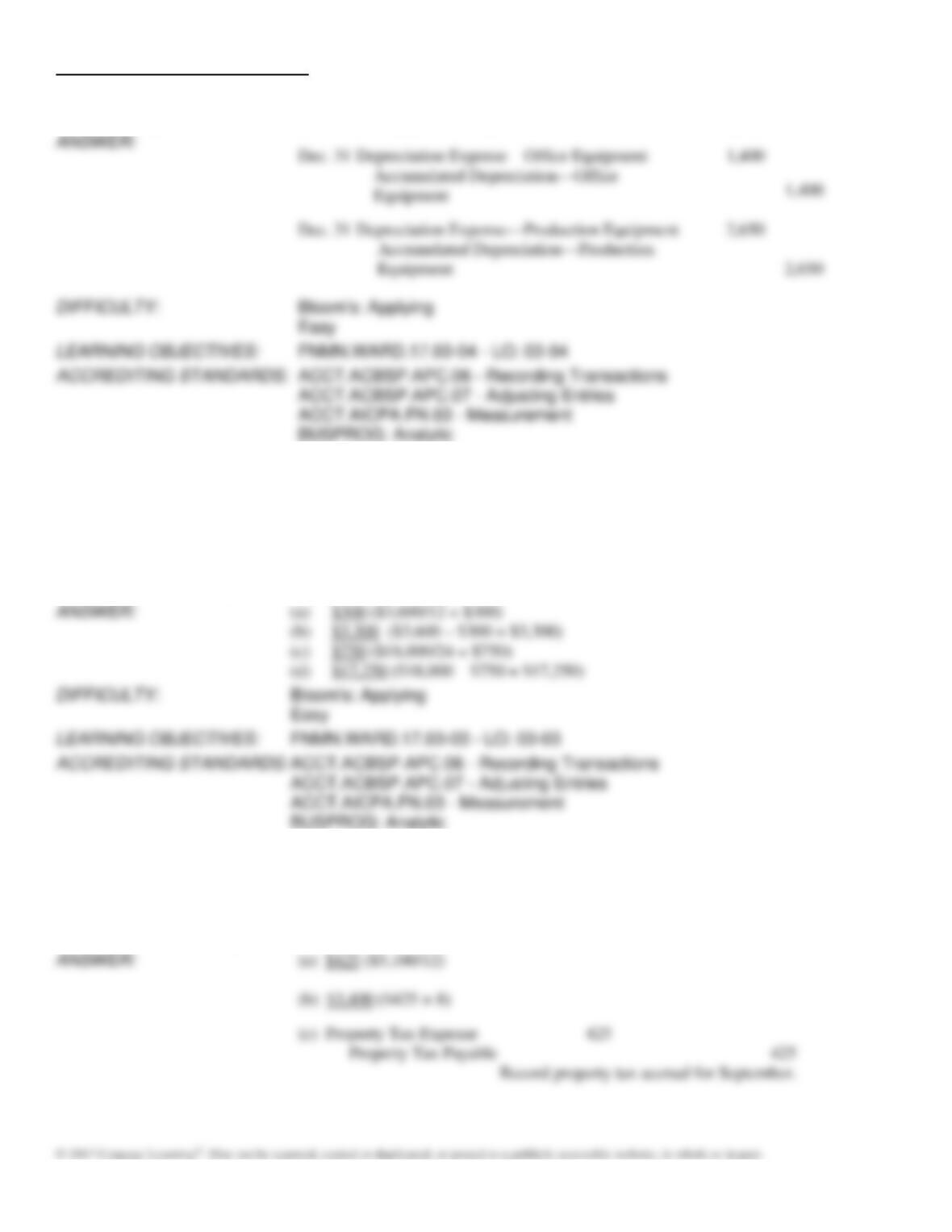
148. DogMart Company records depreciation for equipment. Depreciation for the period ending December 31 is $1,400
for office equipment and $2,650 for production equipment. Prepare the two entries to record the depreciation.
Depreciation Expense—Office Equipment
Depreciation Expense—Production Equipment
149. On March 1, a business paid $3,600 for a twelve-month liability insurance policy. On April 1, the business entered
into a two-year rental contract for equipment at a total cost of $18,000. Determine the following amounts:
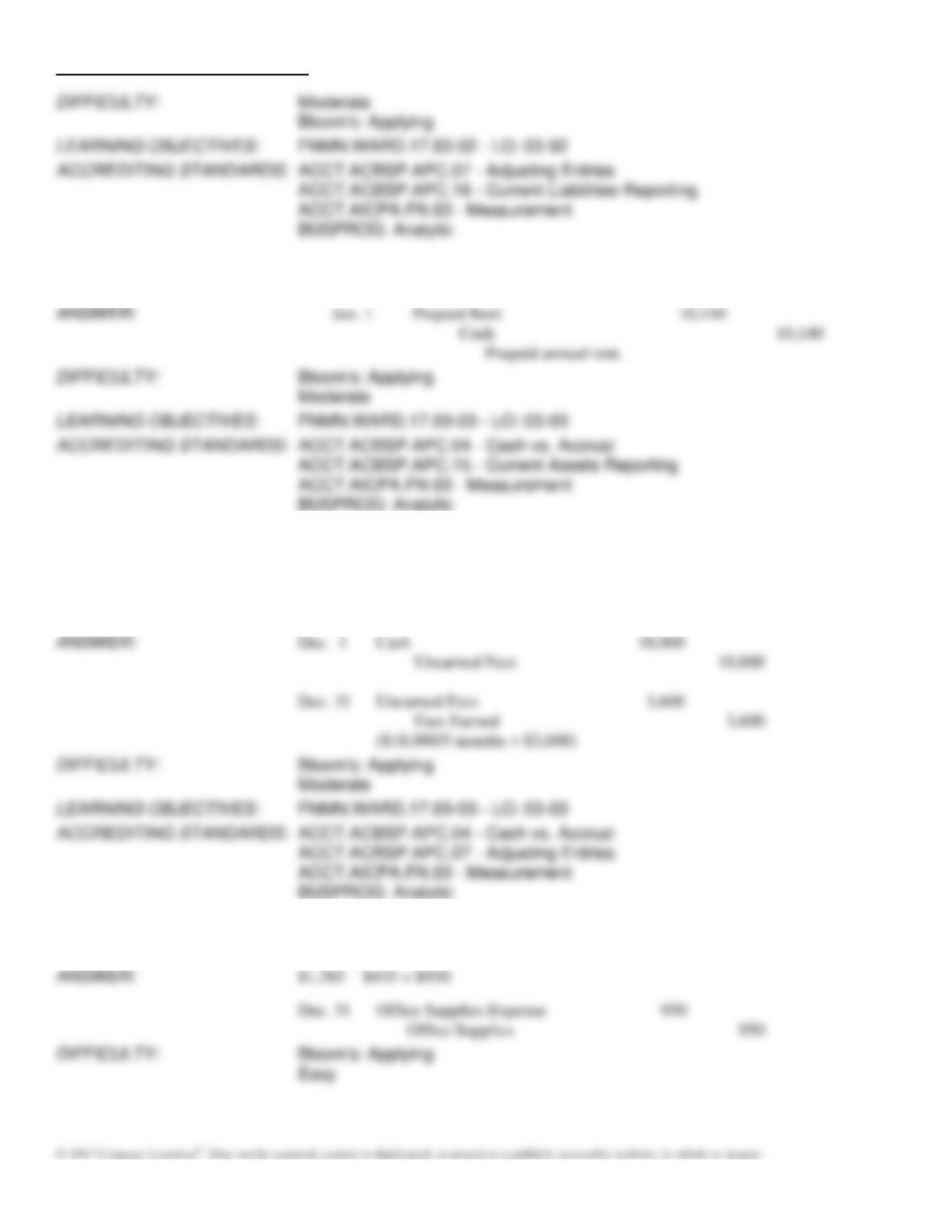
(a) insurance expense for the month of March
(b) balance in prepaid insurance as of March 31
(c) equipment rent expense for the month of April
(d) balance in prepaid equipment rental as of April 30
(a)
(b)
$3,300 ($3,600 – $300 = $3,300)
(c)
(d)
150. On January 1, the Newman Company estimated its property tax to be $5,100 for the year.
(a)
How much should the company accrue each month for property taxes?
(b)
Calculate the balance in Property Tax Payable as of August 31.
(c)
Prepare the adjusting journal entry for September.
(c) Property Tax Expense
Property Tax Payable
Chapter 3 – The Adjusting Process
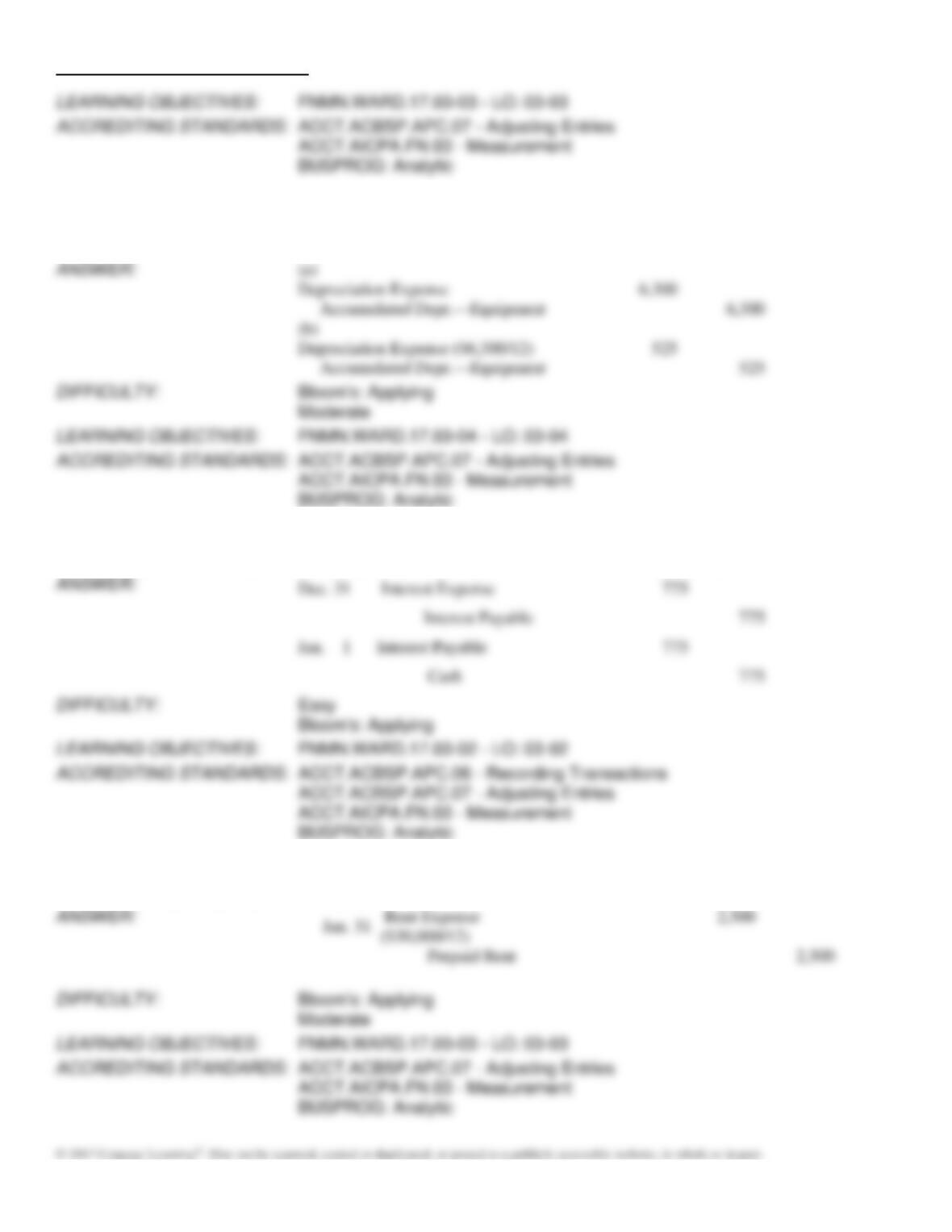
151. On January 1, Power House Co. prepaid the annual rent of $10,140. Prepare the journal entry to record this
transaction.
152. Record journal entries for the following transactions.
(a) On December 1, $18,000 was received for a service contract to be performed from December 1 through April 30.
(b) Assuming the work is performed evenly throughout the contract period, prepare the adjusting journal entry on
December 31.
153. On December 31, the balance in the office supplies account is $1,385. A physical count shows $435 worth of
supplies on hand. Prepare the adjusting entry for supplies.
Chapter 3 – The Adjusting Process
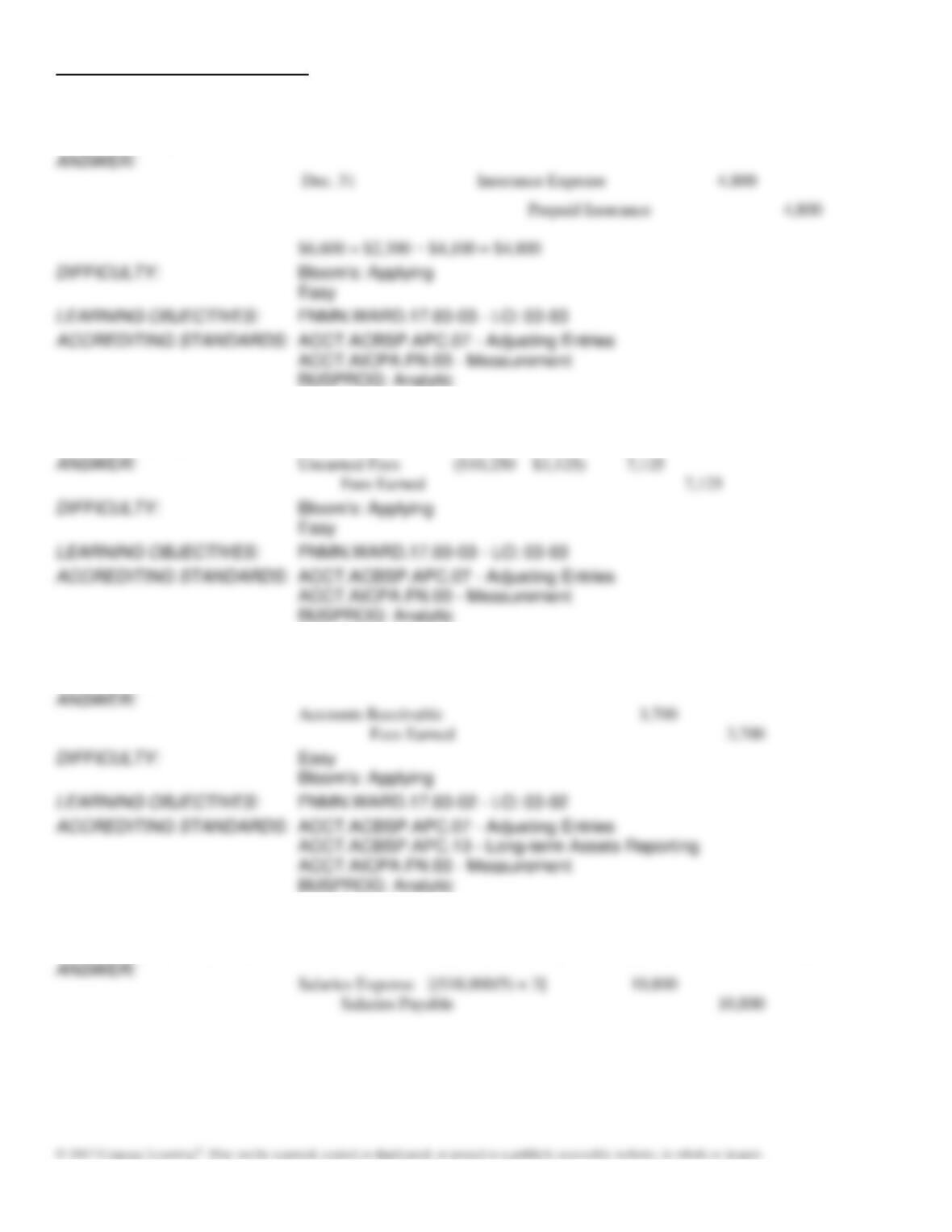
154. Depreciation on equipment for the year is $6,300.
(a) Record the journal entry if the company prepares adjustments once a year.
(b) Record the journal entry if the company prepares adjustments on a monthly basis.
155. The company determines that the interest expense on a note payable for the period ending December 31 is $775. This
amount is payable on January 1. Prepare the journal entries required on December 31 and January 1.
156. On January 2, Dog Mart prepaid $30,000 rent for the year and recorded the prepayment in an asset account. Prepare
the January 31 adjusting entry for rent expense.
Chapter 3 – The Adjusting Process
157. The prepaid insurance account had a beginning balance of $6,600 and was debited for $2,300 for premiums paid
during the year. Journalize the adjusting entry required at the end of the year, assuming the amount of unexpired insurance
related to future periods is $4,100.
158. The balance in the unearned fees account, before adjustment at the end of the year, is $10,250. Journalize the
adjusting entry required if the amount of unearned fees at the end of the year is $3,125.
159. At the end of the current year, $3,700 fees have been earned but have not been billed to clients. Journalize the
adjusting entry to record the accrued fees.
160. Ski Master Company pays weekly salaries of $18,000 on Friday for a five-day week ending on that day. Journalize
the necessary adjusting entry at the end of the accounting period, assuming that the period ends on Wednesday.
Chapter 3 – The Adjusting Process
161. The estimated amount of depreciation on equipment for the current year is $5,300. Journalize the adjusting entry to
record the depreciation.
162. On November 1, clients of Great Designs Company prepaid $4,250 for services to be provided in the future at a rate
of $85 per hour.
(a) Journalize the receipt of cash.
(b) As of November 30, Great Designs shows that 15 hours of services have been provided on this agreement. Prepare
the necessary journal entry.
(c) Determine the total unearned fees in hours and dollars at November 30.
Chapter 3 – The Adjusting Process
163. Prepare the required entries for the following transactions:
(a)
Austin Company pays daily wages of $645 (Monday – Friday). Paydays are every other
Friday. Prepare the Monday, January 31 adjusting entry, assuming that the previous
payday was Friday, January 21.
(b)
Prepare the journal entry to record the Austin Company’s payroll on Friday, February 4.
(c)
Annual depreciation expense on the company’s fixed assets is $39,600. Prepare the
adjusting entry to recognize depreciation for the month of January.
(d)
The company’s office supplies account shows a debit balance of $3,755. A count of
office supplies on hand on January 31 shows $635 worth of supplies on hand. Prepare
the January 31 adjusting entry for Office Supplies.
(a)
Jan. 31
Wages Expense
Monday, January 24 through Friday January 28
(b)
Feb. 4
Wages Expense (4 × $645)
Wages Payable
(c) Jan. 31
Depreciation Expense ($39,600/12)
(d) Jan. 31
Office Supplies Expense
Office supplies used.
Account balance
$3,755
Less supplies on hand
January expense
$3,120
Chapter 3 – The Adjusting Process
164. On December 15, Great Designs Company hired an independent contractor for a project. The contractor completed
the project on December 29 and submitted an invoice for $2,425 which was due on January 15. The amount was duly paid
on January 15.
(a) Prepare the journal entry or entries necessary to record these transactions.
(b) Explain why you prepared this/these journal entries.
165. On November 15, Great Designs Company purchased an advertising campaign for the month of December. Great
Designs paid cash of $2,700 in advance. The advertising campaign ran in December and was completed on December 31.
(a) Prepare all necessary journal entries for the advertising campaign for November and December.
(b) Explain why you prepared this/these journal entries.