Chapter 3: Cost-Volume-Profit Analysis
Learning Questions
True /
False
Multiple Choice
Matching
Exercises
Short
Answer
Problems
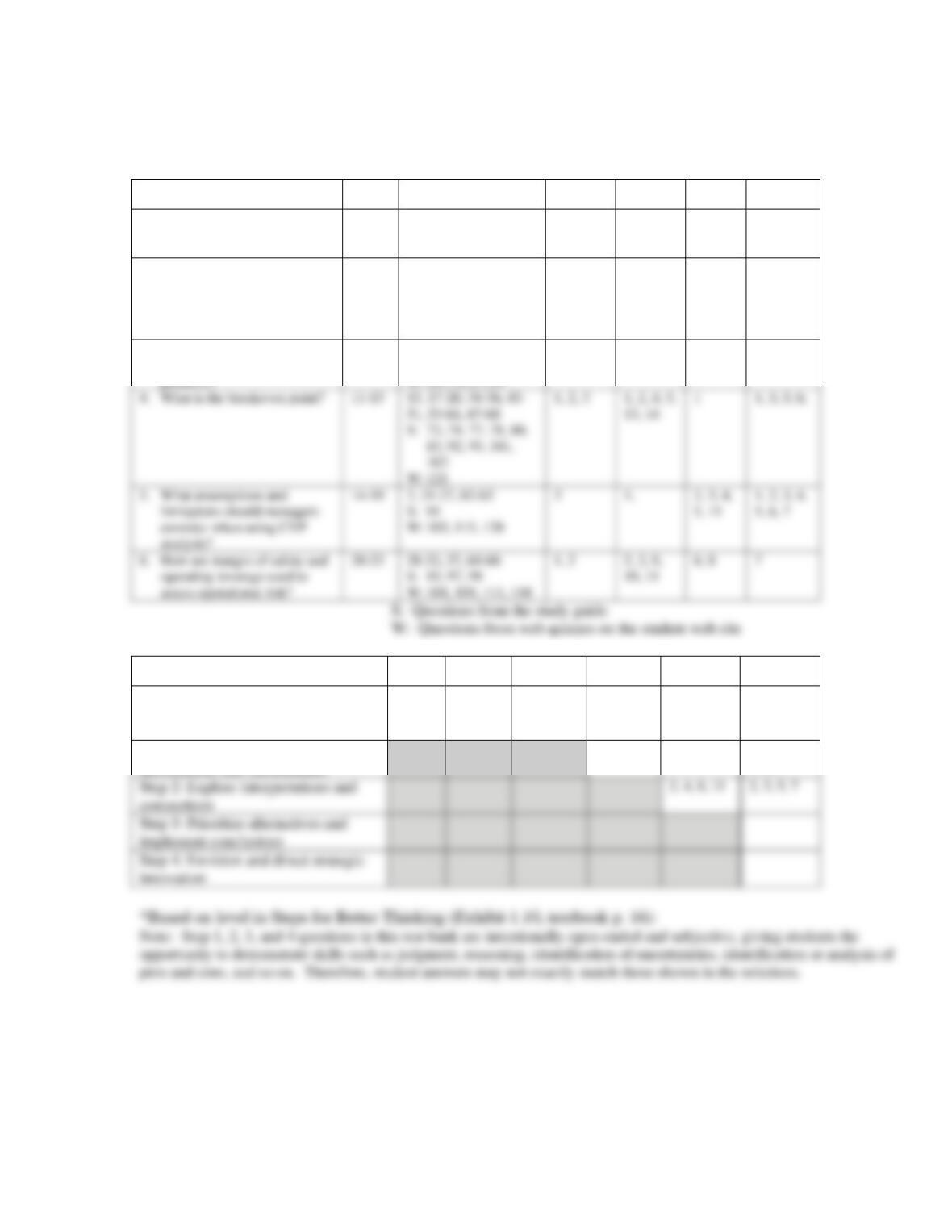
1. What is CVP analysis and
how is it used for decision
making?
1-3
1, 3-6
S: 84, 95, 103, 104
W: 117, 119
3
11, 12
2, 7
1, 4, 6, 7
2. How are CVP calculations
performed for a single
product?
4-5
7-8, 16, 38–42
S: 75, 76, 79, 81, 82,
86-90, 94, 96
W: 106, 110, 112, 116,
122
1, 2, 3
1, 2, 3, 4,
5, 6, 9,
10, 11,
12, 14
1, 4, 5, 6,
3. How are CVP calculations
performed for multiple
products?
6-10
9-14, 52, 69-72
S: 99, 100
W: 107, 111, 114
3
7, 8,
3, 9, 10
2,
Level of Complexity*
True /
False
Multiple
Choice
Matching
Exercises
Short
Answer
Problems
Foundation: Repeat or paraphrase
information; Reason to single correct
solution; Perform computations; etc.
All
All
All
All
6, 7, 9, 10
1, 2, 3, 4,
5, 6
Step 1: Identify the problem, relevant
information, and uncertainties
1, 3, 5
1, 2, 3, 4,
5, 6, 7
Step 3: Prioritize alternatives and
implement conclusions
Step 4: Envision and direct strategic
51, 53-61, 67-68
S: 73, 74, 77, 78, 80,
W: 121
13, 14
limitations should managers
consider when using CVP
analysis?
W: 105, 115, 120
5, 11
1, 2, 3, 4,
5, 6, 7
assess operational risk?
W: 108, 109, 113, 118

3-2 Cost Management
True-False
1. Accountants typically do not perform CVP analysis; instead, they delegate that responsibility to
production managers.
2. Accountants develop CVP analysis to help managers decide which products or services to emphasize.
3. CVP analysis can assist in budgeting for discretionary expenditures, such as fixed costs for
advertising.
4. The contribution margin per unit is calculated as Selling Price per unit minus Variable Cost per unit.
5. If a company can produce and sell 500 units at $10 each and its variable costs are $6 per unit,
expected profit using the profit equation will be $2,000.
6. CVP calculations can only be used in companies that sell a single product.
7. CVP analysis can be used in companies that sell multiple products.
8. An assumption needed for CVP analysis in multiple-product companies is that the sales mix remains
constant.
9. For companies with multiple products, the sales mix should be stated as a proportion of units when
performing CVP computations in units.
10. When an organization produces and sells a number of different products or services, the weighted
average contribution margin per unit is used to determine the breakeven point or target profit in units.
11. The breakeven point can be expressed as a number of units or as total amount of revenue.
12. The breakeven point is often expressed as a cost per unit.
13. On a cost-volume-profit graph, the breakeven point is located where the fixed cost line intersects the
x-axis.
14. Assumptions and limitations are irrelevant when using CVP analysis.
15. Managers implicitly assume that operations will be within the relevant range when using CVP
analysis.
16. A linear revenue function is one of the assumptions involved in CVP analysis.
17. In CVP analysis, costs are assumed to be linear; that is, they can be expressed as “TC = F + VxQ”
format, where F represents total fixed costs.
18. A CVP analysis indicates that the breakeven point for Rebo Company is 2,000 units. If the company
sells 2,100 units, then it will be guaranteed to earn a profit.
19. Because managers cannot usually be certain about their cost function, they also cannot be certain
about the level of sales needed to earn a target profit.
20. The margin of safety is the excess of a firm’s profits above the breakeven point.
21. The margin of safety can be expressed in units, dollars, or a percentage.
22. A larger margin of safety gives managers greater confidence in making plans such as incurring
additional fixed costs.
23. RKH Corporation’s fixed costs total $10,000, while EMO Corporation’s fixed costs total $12,000 for
the same period of time. Therefore, EMO has a higher margin of safety than RKH.

Chapter 3: Cost-Volume-Profit Analysis 3-3
Multiple Choice
1. Managers can use cost-volume-profit analysis to
I. Plan operating activity levels
II. Achieve targeted profits
III. Monitor organizational performance
a. I only
b. II and III only
c. I and III only
d. I, II, and III
2. Which of the following is an uncertainty faced by managers in CVP analysis?
I. Unexpected changes in costs
II. How quickly demand for new products will change
III. The amount of budgeted advertising costs
a. III only
b. I and II only
c. I and III only
d. I, II, and III
3. CVP analysis is most likely to be used for which of the following decisions?
a. The amount of discretionary expenditures for the next period
b. The organizational vision
c. The exact level of operations at which the organization will operate
d. Whether to buy a business segment operating in Germany
4. Which of the following techniques examine changes in profits in response to changes in volume,
costs, and prices?
a. Activity-based costing
b. Financial statement analysis
c. Cost-volume-profit analysis
d. Balanced scorecard
5. CVP analysis can be used to make decisions about discretionary expenditures, such as
a. Advertising
b. Taxes
c. Direct materials purchases
d. City license fees
6. CVP analysis can be used in the following type(s) of organization
I. Manufacturing
II. Service
III. Not-for-profit
a. I and III only
b. II and III only
c. I and II only
d. I, II, and III
7. If sales are $80,000, variable costs are $50,000, and fixed costs are $20,000, the contribution margin
ratio is
a. 37.5%
b. 12.5%
c. 62.5%
d. 25.0%

3-4 Cost Management
8. Howe Hinges Co. manufactures and sells a single product. This product has the following operational
data: Unit sales price $ 30
Variable manufacturing cost per unit 17
Fixed manufacturing costs 72,000
Variable selling cost per unit 1
Fixed selling costs 27,000
Marginal tax rate 40%
What amount of total revenue would be needed to meet an after-tax profit target of $48,000?
a. $365,000
b. $547,500
c. $630,000
d. $447,500
Use the following information for the next 5 questions.
ZTL Corporation produces three products. Cost, price, and volume data is shown below:
Total Fixed costs $2,400
Tax rate 40%
Picture Candle CD
Holders Holders Holders
Normal volume 300 150 200
Price per unit $5 $7 $10
Variable cost per unit 2 3 4
9. The weighted average contribution margin per unit, rounded to the nearest cent, is
a. $3.00
b. $4.00
c. $4.15
d. $6.00
10. The weighted average contribution margin ratio, rounded to the nearest whole percent, is
a. 57%
b. 59%
c. 60%
d. Some other number
11. When using units as the measure, what proportion of the sales mix do picture holders represent?
Round to the nearest whole percent.
a. 33%
b. 46%
c. Some other percentage
d. Cannot be determined
12. When using revenues as the measure, what proportion of the sales mix do CD holders represent?
Round to the nearest whole percent.
a. 44%
b. 38%
c. 31%
d. Cannot be determined

Chapter 3: Cost-Volume-Profit Analysis 3-5
13. ZTL’s pretax profit next period is expected to be
a. $240
b. $300
c. More than $300
d. Cannot be determined
14. A firm with fixed costs of $61,500 per month sells three products with the following characteristics:
Sales Mix Contribution
Product Percentage Margin
P 25% $48
Q 50% 50
R 25% 52
How many total units must be sold to breakeven?
a. 1,230
b. 1,500
c. 1,533
d. 1,600
Use the following information for the next 2 questions.
The Pierson Co. has the following unit and mix data:
Do Dah Total
Unit sales price $5.00 $4.00
Unit contribution margin 0.75 1.20
Sales mix ($) 80% 20%
Fixed costs $99,000
Target profit 24,750
15. How many units of Dah must be sold at the breakeven point?
a. 75,000
b. 27,500
c. 37,500
d. 55,000
16. How many units in total must be sold to earn the target profit?
a. 687,500
b. 165,000
c. 112,500
d. 144,375
17. Nunn Company produces a single product. Following is cost information:
Variable Cost
Fixed Costs Per Unit
Manufacturing costs $35,000 $15
Non-manufacturing costs 60,000 10
If the product sells for $60, how many units must be sold to break even?
a. 1,000
b. 2,375
c. 2,714
d. 3,800
3-6 Cost Management
18. Ryan Company manufactures a single product. The product sells for $10. The variable
manufacturing cost per unit is $2 and the variable selling cost is $2 per unit. Ryan incurs monthly
fixed costs of $100,000 for manufacturing and $140,000 for administration and selling.
Ryan is considering changes to its production and distribution procedures. If the changes are made,
total variable costs (manufacturing and selling) will be $3 and total fixed costs (manufacturing,
administration, and selling) will be $350,000 per month. The selling price will remain at $10. If the
changes are made, the number of units required to break even will be
a. Greater than before
b. The same as before
c. Less than before
d. Cannot be determined
19. The breakeven point can be defined as
a. The point at which sales equal variable costs
b. The point at which the total contribution margin equals the total fixed costs
c. The level of operations at which the firm earns a profit
d. The level of operations that equals budgeted sales
20. At the breakeven point
a. Sales will be equal to variable costs plus target profit
b. Sales will be equal to variable costs plus fixed costs
c. Sales will be equal to fixed costs plus target profit
d. Fixed costs will be equal to variable costs
21. Managers should consider which of the following in CVP analysis
I. Assumptions
II. Uncertainties
III. Biases
a. I and III only
b. I and III only
c. I and II only
d. I, II, and III
22. Which of the following is not an assumption in CVP analysis?
a. Actual costs will be exactly the amount that we predict in the analysis
b. Operations are within the relevant range
c. The revenue function is linear
d. The cost function is linear
23. In CVP analysis, managers usually assume that the cost function is linear. Which of the following
equations best represents a linear function for total cost if the cost is a mixed cost?
a. y = $200 + $60x
b. y = $60×2
c. y = $60x
d. y = $200
24. The assumption of cost function linearity means
I. Fixed costs remain fixed.
II. Sales mix remains constant.
III. The average cost per unit remains constant.
a. I only
b. I and II only
c. I, II, and III
d. III only
Chapter 3: Cost-Volume-Profit Analysis 3-7
25. When the assumption of linearity is applied to revenue in CVP analyses
a. Fixed cost per unit increases as revenue decreases
b. Variable cost per unit is linear with respect to total revenue
c. The sales mix and all of the prices remain constant
d. The sales mix remains constant, but prices decrease as volumes increase
26. How is the relevant range of activity related to CVP analysis?
a. Managers are normally uncertain about the relevant range
b. In CVP analysis, operations are assumed to be within the relevant range
c. The relevant range is irrelevant to CVP analysis
d. The relevant range affects costs but not revenues
27. Which of the following business conditions may violate an assumption of CVP analysis?
I. Supplier volume discounts
II. Learning curves
III. Customer discounts
a. I and II only
b. II and III only
c. I, II, and III
d. I and III only
28. The cost function for Liao Company is: TC = $800 + 0.375 × Revenue. If Liao expects after-tax
income of $600 and the tax rate is 40%, what is the firm’s margin of safety?
a. $3,680
b. $2,400
c. $2,880
d. $1,600
29. Baldwin’s Bagel Shop had the following activity for December:
Total bagels sold 17,000
Total revenues $595,000
Total fixed costs 99,000
Total variable costs 357,000
What was Baldwin’s margin of safety, in dollars?
a. $430,000
b. $247,500
c. $347,500
d. $357,000
30. The margin of safety is
a. The difference between estimated sales and breakeven sales.
b. Not a useful measure for management in understanding the risk associated with a product line.
c. The amount sales can drop before the target profit is met.
d. How far sales must increase to earn a profit.
31. Which of the following is the amount by which sales could drop before profits reach the breakeven
point?
a. Operating leverage
b. Total contribution margin
c. Margin of safety
d. Incremental sales
3-8 Cost Management
32. The ratio of contribution margin profit is used to compute a company’s
a. Expected fixed costs
b. Degree of operating leverage
c. Margin of safety
d. Margin of safety percentage
33. What is the relationship between the margin of safety percentage and the degree of operating
leverage?
a. They are unrelated
b. They are always the same
c. They are reciprocals
d. They are both subject to management bias
Use the following information for the next 4 questions.
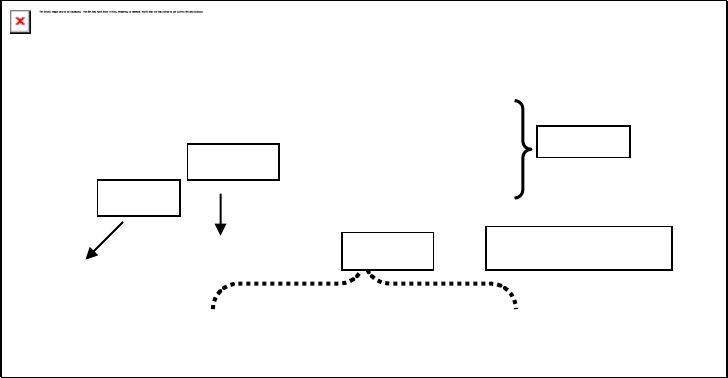
SXF Corporation sells its single product for $14 per unit, and its variable cost per unit is $4. Total fixed costs
are $800. Its CVP graph is as follows:
34. Point A is best described as
a. Fixed cost
b. Margin of safety
c. Estimated profit at actual volume
d. Breakeven point
35. Point B is best described as
a. Fixed cost
b. Margin of safety
c. Estimated profit at actual volume
d. Breakeven point
36. Area C is best described as
a. Fixed cost
b. Margin of safety
c. Estimated profit at actual volume
d. Breakeven point
37. Area D is best described as
a. Fixed cost
b. Margin of safety
c. Estimated profit at actual volume
d. Breakeven point
Actual volume
Point A
Point B
Area C
Area D

Chapter 3: Cost-Volume-Profit Analysis 3-9
38. The Nunn Co. produces a single product. Its cost structure is:
Variable Cost
Fixed Cost Per Unit
Manufacturing costs $35,000 $15
Non-manufacturing costs 60,000 10
If the firm sells 5,000 units per period, what price should be charged to earn $35,000?
a. $44
b. $45
c. $50
d. $51
More Difficult Multiple Choice
These multiple choice questions require more complex computations or present information differently than
in the textbook.
39. At a breakeven point of 200 units, the variable costs were $400 and the fixed costs were $200. What
will the next (i.e., 401st) unit sold contribute to profit before income taxes?
a. $0
b. $2.00
c. $1.00
d. Cannot be determined
40. Steiner Manufacturer’s contribution margin is $200, after-tax income is $96, and the tax rate is 40%.
What are the fixed costs?
a. $60
b. $50
c. $40
d. $33
41. Smith Co. has a contribution margin ratio of 40% and a breakeven point of $200,000 in sales. If the
firm reports net income of $50,000 after taxes of 50%, what were total sales for the year?
a. $450,000
b. $466,667
c. $500,000
d. $700,000
42. If the total contribution margin decreases and fixed costs do not change, pretax income
a. Decreases by an equal amount
b. Increases by an equal amount
c. Does not change
d. Increases by some other amount

3-10 Cost Management
Use the following information for the next 9 questions.
Data extracted from the accounting information system of TXC Corporation produced the following graph.
The equation of the dashed line is y = $25x; the equation of the solid line is y = $200 + $5x.
43. Which of the following terms best describes the graph?
a. Learning curve graph
b. Operating leverage graph
c. Margin of safety graph
d. Cost-volume-profit graph
44. The solid line represents
a. Total variable costs
b. Total fixed costs
c. Total costs
d. Total revenues
45. The dashed line represents
a. Total variable costs
b. Total fixed costs
c. Total costs
d. Total revenues
46. The point where the dashed line intersects the solid line is the
a. Variable cost per unit
b. Breakeven point
c. Unit contribution margin
d. None of the above
47. The horizontal (“x”) axis shows
a. Fixed costs
b. Revenues
c. Units
d. Variable costs
48. The vertical (“y”) axis shows
a. Dollars
b. Units
c. Contribution margin
d. Total profit

Chapter 3: Cost-Volume-Profit Analysis 3-11
49. The solid line intersects the y-axis at the
a. Fixed cost per unit
b. Variable cost per unit
c. Total fixed cost
d. Total variable cost
50. The area to the right of the point where the two lines intersect, where the dashed line is above the
solid line, shows where TXC
a. Operates at a loss
b. Operates at a profit
c. Breaks even if product mix remains constant
d. Cannot be determined
51. The area to the left of the point where the two lines intersect, where the dashed line is below the solid
line, shows where TXC
a. Operates at a loss
b. Operates at a profit
c. Breaks even if product mix remains constant
d. Cannot be determined
52. A firm selling three products has the following data:
Unit Unit Variable
Product Sales Mix Price Cost
P 60,000 units $40 $20
Q 40,000 units 60 30
R 20,000 units 30 15
If the firm can change the sales mix from 60,000 P, 40,000Q, and 20,000 R to 60,000 P, 20,000 Q,
and 40,000 R, pretax income will be
a. Lower
b. Higher
c. Unchanged
d. Cannot be determined
53. Grady, Inc. produces a single product and projects the following costs for a normal month in which
100 units are produced and sold:
Manufacturing Nonmanufacturing
Fixed costs $8,000 $5,000
Total variable costs 7,700 6,050
The selling price per unit is $300. What volume, in units, must Grady sell to break even?
a. 36
b. 58
c. 80
d. 90
54. When sales are $1,000, the contribution margin is $600 and a pretax loss of $60 occurs. What is the
breakeven point in dollars?
a. $ 833
b. $1,100
c. $1,167
d. $1,750
3-12 Cost Management
Use the following information for the next 3 questions.
Ruben, Inc. is a management consulting firm specializing in pension plans. Its billing rate to clients is $120
per hour, and variable costs average $80 per hour. Fixed costs are $24,000 per month. The income tax rate is
20%.
55. If variable costs increase by 10% and management increases its billing rate by 8%, what is the effect
on the breakeven point, in billable hours?
a. It increases the breakeven point
b. The breakeven point will not change
c. It decreases the breakeven point
d. Cannot be determined
56. If variable costs increase by 10% and management increases its billing rate by 10%, what is the effect
on the breakeven point, in billable hours?
a. It increases the breakeven point
b. The breakeven point will not change
c. It decreases the breakeven point
d. Cannot be determined
57. If fixed costs increase by 10% and management increases its billing rate by 10%, what is the effect on
the breakeven point, in billable hours?
a. It increases the breakeven point
b. The breakeven point will not change
c. It decreases the breakeven point
d. Cannot be determined
58. Ryan Company manufactures a single product. The product sells for $10. The variable
manufacturing cost per unit is $2 and the variable selling cost is $2 per unit. Ryan incurs monthly
fixed costs of $100,000 for manufacturing and $140,000 for administration and selling.
If Ryan raises its selling price by 10% in response to a 10% increase in variable costs, and income
taxes are 40%, its new breakeven point in sales dollars (relative to that of the original data above) will
be
a. Higher
b. Unchanged
c. Lower
d. Cannot be determined
59. The breakeven point for a service organization will decrease if
a. The variable cost ratio increases
b. The mix of less profitable services increases
c. The contribution margin ratio increases
d. Fixed costs increase
60. The breakeven point for a service organization will decrease if
a. Volume increases
b. The variable cost ratio decreases
c. Fixed costs increase
d. The contribution margin ratio decreases
61. If all other factors remain unchanged, a 10% decrease in both the selling price and variable costs for a
product will
a. Lower the breakeven point in dollars
b. Raise the breakeven point in dollars
c. Have no effect on the breakeven point in dollars
d. Cannot be determined
Chapter 3: Cost-Volume-Profit Analysis 3-13
62. In CVP analysis, managers usually assume that the revenue function is linear. Which of the
following equations best represents a linear revenue function if the cost is a variable cost?
a. y = $200 + $60x
b. y = $60×2
c. y = $60x
d. y = $200
63. A limiting assumption in CVP analysis is that
a. The behavior of both revenues and costs is linear throughout the entire relevant range
b. Inventories change in breakeven computations
c. The sales mix is not constant
d. Efficiency in operations is not constant
Use the following information for the next 5 questions.
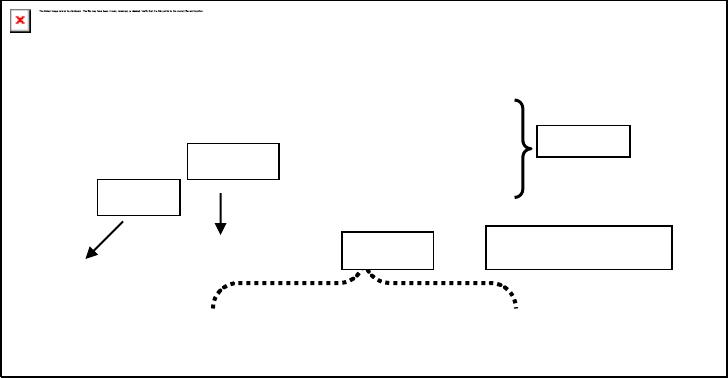
SXF sells its single product for $14 per unit, and its variable cost per unit is $4. Total fixed costs are $800.
Its CVP graph is as follows:
64. If SXF increases its volume of sales by 10%, what will happen to its degree of operating leverage?
a. It will decrease
b. It will increase
c. It will stay the same
d. Cannot be determined
65. If SXF increases its sales volume by 10%, what will happen to its margin of safety?
a. It will decrease
b. It will increase
c. It will stay the same
d. Cannot be determined
66. If SXF increases its sales volume by 10%, what will happen to its breakeven point?
a. It will decrease
b. It will increase
c. It will stay the same
d. Cannot be determined
67. Which of the following actions will move Point B higher on the y axis?
a. An increase in the price of materials
b. A decrease in the number of units sold
c. Purchase of new equipment
d. An increase in variable overhead cost
Actual volume
Point A
Point B
Area C
Area D

3-14 Cost Management
68. Which of the following actions will move Point A to the right on the x axis?
a. An increase in the number of units sold
b. A decrease in the number of units sold
c. An increase in the product’s selling price
d. An increase in the variable cost per unit
69. Dane Co. sells three products and incurs $18,000 per period in fixed costs. The three products have
the following characteristics:
Product Price Variable Cost Sales Mix
P $40 $20 3 units
Q 20 10 9 units
R 49 24 12 units
How many units of Product P will be sold at the breakeven point?
a. 40
b. 360
c. 120
d. 200
Use the following information for the next 3 questions.
Nelson Co. incurs $568,000 in fixed costs while producing three products with the following characteristics:
Sales Mix Unit Contribution Contribution
Product (Units) Margin Margin Ratio
T 5 $900 45%
Q 3 600 40%
R 2 400 35%
70. What is the selling price of Product T?
a. $1,200
b. $1,143
c. $2,000
d. $1,500
71. What is the breakeven point in units?
a. 400
b. 240
c. 299
d. 800
72. At the breakeven point, what is the dollar sales volume for Product Q?
a. $800,000
b. $360,000
c. $288,000
d. $120,000
Multiple Choice from Study Guide
s73. Stuart, Inc. produces one item which sells for $2.40 and costs $1.40 per unit to make. All
manufacturing costs are variable. If fixed selling and administrative costs total $140,000, how many
units must be sold in order to break even?
a. 100,000
b. 140,000
c. 58,333
d. None of the above
Chapter 3: Cost-Volume-Profit Analysis 3-15
s74. The Jean Company expects sales of $500,000 and total variable costs of $200,000 in 2005. Total
budgeted fixed costs are $180,000. What is the breakeven volume in sales dollars?
a. $450,000
b. $300,000
c. $360,000
d. None of the above
s75. MacDonald Oil Co. expects sales of $1,000,000 and total variable costs of $600,000 for 2005. Total
budgeted fixed costs are $200,000. What is the dollar amount of sales necessary to achieve pretax
profits of $400,000?
a. $2,000,000
b. $1,200,000
c. $1,500,000
d. $1,000,000
s76. The Martinez Game Co. produces and sells parlor games. In 2005 sales were $400,000, total variable
costs were $200,000, and total fixed costs were $150,000. What is the total revenue required to
increase pretax profits by $40,000 and to cover an expected increase of $20,000 in fixed costs?
a. $300,000
b. $400,000
c. $480,000
d. $520,000
s77. The breakeven sales volume of the Patin Co. is $800,000. If the variable cost per unit increases next
year, then the new breakeven point will be
a. The same
b. Higher
c. Lower
d. Cannot be determined
s78. The breakeven sales volume of the Tuck Co. is 800,000 units. If the variable cost per unit increases
by $1.50 and the selling price per unit increases by $2.00 next year, then the new breakeven point will
be
a. The same
b. Higher
c. Lower
d. Cannot be determined
s79. The contribution margin ratio of Yoshi enterprises is 60%. If total fixed costs are $200,000, then what
is the cost of producing and selling $1,000,000 of Yoshi’s product?
a. $600,000
b. $400,000
c. $900,000
d. None of the above
s80. The breakeven point occurs when
a. Sales equal fixed costs plus contribution margin
b. Total variable costs equal total contribution margin
c. Fixed costs plus profit equals sales
d. Total costs equal total revenue

3-16 Cost Management
s81. If the selling price per unit and the variable cost per unit both increase by 5%, what is the effect on
the contribution margin per unit and on the contribution margin ratio?
Contribution margin per unit Contribution margin ratio
a. Increase Increase
b. Increase No effect
c. Decrease No effect
d. Decrease Increase
s82. Harvey Enterprises expects sales of $1,000,000 and total variable costs of $250,000 for 2005. Total
budgeted fixed costs are $200,000. What is the dollar amount of sales necessary to achieve after-tax
profits of $700,000 if the tax rate is 30%?
a. $1,200,000
b. $1,600,000
c. $3,377,333
d. $4,800,000
s83. Once a firm reaches the breakeven point, the next unit sold will increase profit by an amount equal to
the
a. Selling price per unit
b. Variable cost per unit
c. Contribution margin per unit
d. Difference between contribution margin and fixed costs
s84. Harmel, Inc. incurs the following costs each period:
Variable manufacturing costs per unit $10
Variable selling costs per unit $2
Total fixed manufacturing costs $18,530
Total fixed selling costs $41,370
If the company sells 6,000 units, what price must be charged to earn a pretax profit of $25,000?
a. $26.15
b. $13.20
c. $17.25
d. $24.15
s85. Bultena Enterprises projects the following for next year:
Sales $300,000
Fixed costs $100,000
After-tax profit $12,000
Tax rate 40%
What is the firm’s margin of safety in revenue?
a. $200,000
b. $20,000
c. $188,000
d. $50,000
Chapter 3: Cost-Volume-Profit Analysis 3-17
Use the following information for the next 2 questions.
Old MacDonald had a farm with expected fixed costs for next year of $91,000. The projected selling price per
bushel is $12, with variable costs of $5 per bushel.
s86. How many bushels past the breakeven point does MacDonald have to sell to realize a pretax profit of
$37,100?
a. 18,300
b. 5,300
c. 7,420
d. 13,000
s87. How much revenue past the breakeven point does MacDonald have to earn to realize a pretax profit
of $36,000 if variable costs drop to $3 per bushel?
a. $61,718
b. $169,333
c. $48,000
d. $54,000
s88. Wierschem, Inc. projects the following for next year:
Selling price per unit $30
Variable manufacturing costs per unit $16
Fixed manufacturing costs $74,000
Variable selling costs per unit $2
Fixed administrative costs $24,480
After-tax profit $48,000
Tax rate 40%
How many units will Wierschem have to sell to realize the projected after-tax profit?
a. 12,833
b. 12,207
c. 12,749
d. 14,873
s89. The Patterson Company is subject to income taxes of 20% on income through $25,000 and 40% on
income in excess of $25,000. Projected information for next year follows:
Selling price per unit $40
Variable costs per unit $15
Fixed costs $400,000
Sales in units 20,000
What is Patterson’s projected after-tax profit?
a. $65,000
b. $60,000
c. $70,000
d. $75,000
s90. Tilker Manufacturing sells its product for $40 per unit. Last year variable costs per unit were $15, and
fixed costs were $400,000. How many units must be sold this year to earn a pretax profit of $45,000
if variable costs increase by 10%?
a. 27,813
b. 18,936
c. 17,021
d. 19,778
3-18 Cost Management
s91. Which of the following is not an assumption of CVP analysis?
a. The selling price per unit is constant
b. Total variable costs vary in proportion with changes in activity levels
c. The sales mix varies in proportion with changes in activity levels
d. Employee productivity is constant across all activity levels
s92. After a company exceeds the breakeven point
a. The total contribution margin increases
b. The profit per unit equals the contribution margin ratio
c. Fixed costs become zero
d. The contribution margin ratio increases
s93. Before a company reaches the breakeven point
a. The total contribution margin is negative
b. The contribution margin per unit is less than the fixed costs per unit
c. Total fixed costs are increasing
d. The contribution margin ratio is negative
s94. Bauer Company’s sales increased, but its pretax profits did not change. If the increase was within the
relevant range, which of the following statements is true?
a. Bauer’s total fixed costs equal zero
b. Bauer’s contribution margin is zero throughout the relevant range
c. Bauer’s tax rate must have changed
d. None of the above; this could not have happened
s95. Southwest Log Kits makes kits for pool cabanas. Currently, the company does not advertise and has a
low selling price for its kits compared to competitors. Next year, the company plans to increase the
selling price and begin a wide advertising campaign. Which of the following statements is true?
a. Southwest’s breakeven point will be lower next year
b. Southwest’s operating leverage will be higher next year if the same number of units is sold
c. Southwest’s profits will be higher next year
d. Southwest’s margin of safety will be lower next year
s96. Bhuyan Company’s budgeted profit for next year is lower than this year’s actual profit. The selling
price, variable cost per unit, and total fixed costs did not change. Which of the following is false?
a. Bhuyan’s margin of safety next year will be lower than this year
b. Bhuyan’s breakeven point is the same last year as this year
c. Bhuyan’s degree of operating leverage will be higher this year than last year
d. Bhuyan’s contribution margin ratio this year will be lower than last year
s97. Mike Manager prefers alternatives that lower the degree of operating leverage. Which of the
following statements about Mike is probably true?
a. Mike loves to gamble in Las Vegas
b. Mike is a pessimist
c. Mike likes to avoid risk
d. Both (b) and (c) are likely to be true
s98. Melissa Manager expects next year’s degree of operating leverage to increase. Which of the following
statements is consistent with Melissa’s expectations?
a. Next year’s activity level is budgeted to be lower than this year’s
b. Next year’s total fixed costs are expected to be lower than this year’s
c. Next year’s selling price is expected to increase
d. Next year’s variable costs per unit are expected to decrease

Chapter 3: Cost-Volume-Profit Analysis 3-19
Use the following information for the next 2 questions.
The Harris Co. sells three products in a ratio of 3:2:6. The contribution margins for the units are $10, $25, and
$30, respectively. Total fixed costs are $119,600.
s99. What is the breakeven point in total number of units?
a. 20,420
b. 10,120
c. 15,180
d. 5,060
s100. How many of each product must be sold to realize a pretax profit of $39,000?
a. 450; 300; 900
b. 1,830; 1,220; 3,660
c. 1,380; 920; 2,760
d. 7,320; 4,880; 14,640
s101. Johnston Co. has total variable costs equal to 40% of sales. Fixed costs are $120,000. What is the
breakeven point in revenues?
a. $300,000
b. $200,000
c. $120,000
d. Cannot be determined
s102. Ramser Co. has total variable costs equal to 40% of sales. Fixed costs are $120,000. What is the
breakeven point in units?
a. 300,000
b. 200,000
c. 480,000
d. Cannot be determined
Use the following information for the next 2 questions.
Blackmon Co. is deciding between two compensation plans. In Plan A, salaries are $100,000 and the
commission is $2 per unit. In Plan B, salaries are $40,000 and the commission is $4 per unit.
s103. At what level of sales, in units, is Blackmon indifferent between the two compensation plans?
a. 30,000
b. 20,000
c. 10,000
d. Cannot be determined
s104. Which of the following statements is true?
a. If expected sales are lower than the indifference point, Blackmon would prefer Plan A
b. Plan A has a lower breakeven point than Plan B
c. If Plan B is adopted, the degree of operating leverage will decrease
d. The margin of safety will be larger if Plan A is adopted
Multiple Choice from Web Quizzes (Available on Student Web Site)
w105. All of the following data can be used to develop CVP analysis except
a. Historical cost information
b. Data that reflects anticipated future changes
c. Irrelevant costs
d. Data found within the accounting records
3-20 Cost Management
w106. The contribution margin is
a. Used to determine the amount of fixed costs needed
b. Total fixed costs plus total variable costs
c. The dollars that contribute to fixed costs and then to profit once fixed costs are covered
d. Not necessary when we solve for the volume of units sold at target profit
w107. Sales mix reflects
a. The weighted average contribution margin per unit
b. The average price per product when there are a variety of products
c. The number of products and each product’s proportional weight within total sales
d. Total number of units produced
w108. The margin of safety is the
a. Volume of units or revenues needed to cover fixed costs
b. Amount by which volume of units or sales can drop before an organization reaches the breakeven
point
c. Amount of confidence decision makers have in a CVP analysis
d. Unrelated to operating leverage
w109. Degree of operating leverage is
a. The contribution margin divided by profit
b. The ratio of total variable costs to total revenues
c. The volume of revenue needed to breakeven
d. Only important when the organization is very profitable
w110. When performing CVP analysis for a single product
a. The contribution margin per unit can be used to solve for the breakeven point
b. The price per unit is always needed
c. Fixed costs are usually low
d. Operating leverage is usually high
w111. When performing CVP analysis for a multi-product organization
a. The sales mix is not important
b. There is no relationship between changes in sales mix and changes in total revenue
c. The contribution margin ratio can be used to solve for the breakeven point
d. There is no relationship between changes in sales mix and changes in total variable cost
w112. The contribution margin ratio is
a. Total variable cost divided by total revenue
b. Total contribution margin divided by total revenue
c. The same as the margin of safety
d. Total fixed costs divided by price minus variable cost
w113. Higher operating leverage
a. Should be lowered
b. Increases risk of loss if operations are near the breakeven point
c. Reduces risk of loss if operations are near the breakeven point
d. Does not affect the risk of loss regardless of the level of operations
w114. If the sales mix changes
a. The fixed costs will change
b. The change in mix affects the contribution margin ratio
c. Nothing else changes
d. Each product’s variable cost will change
Chapter 3: Cost-Volume-Profit Analysis 3-21
w115. The relevant range is important because
a. CVP assumptions are not valid when operations are in the relevant range
b. Operations cannot be in any other range
c. Fixed and variable costs may change outside the relevant range
d. It describes the limits of operations
w116. A cost function is used in CVP analysis to predict
a. Total revenue at the breakeven point
b. The volume of sales
c. The relevant range of operations
d. The number of sales needed for the next period
w117. Information from CVP analysis helps with all of the following decisions except
a. The appropriate volume of production
b. Which products to emphasize
c. Whether to lay off a specific employee
d. The most effective cost structure
w118. Compared to organizations with low operating leverage, organizations with high operating leverage
have
a. Higher risk of loss if they are close to the breakeven point
b. Lower risk of loss if they are close to the breakeven point
c. The same level of risk of loss as low operating leverage firms when they are close to the
breakeven point
d. A low proportion of fixed costs in total cost
w119. CVP analysis is most likely to be used for
a. A decision to merge two organizations
b. Separating mixed costs into fixed and variable portions
c. Predicting the costs of a long term project
d. Predicting profits across a range of operations
w120. (CMA) A widely used approach that is used to recognize uncertainty about individual economic
variables while obtaining an immediate financial estimate of the consequences of possible prediction
errors is
a. Expected value analysis
b. Learning curve analysis
c. Sensitivity analysis
d. Regression analysis
w121. At the breakeven point, the contribution margin equals total
a. Variable costs
b. Sales revenues
c. Selling and administrative costs
d. Fixed costs
w122. (CPA) Del Co. has fixed costs of $100,000 and breakeven sales of $800,000. What is its projected
profit at $1,200,000 in sales?
a. $50,000
b. $150,000
c. $200,000
d. $400,000

3-22 Cost Management
Matching
1. MGZ Corporation sells its product for $25 per unit. Its cost function is TC = $390 + $12Q. Match
the lettered items on the right with the appropriate item on the left. Each numbered item has only one
correct answer. Each lettered item may be used once, more than once, or not at all.
____ 1. $12
____ 2. $13
____ 3. $25
____ 4. $250
____ 5. $390
____ 6. 30 units
A. Breakeven point
B. Contribution margin per unit
C. Loss area
D. Profit area
E. Profit at 50 units
F. Slope of the cost line
G. Slope of the revenue line
H. Total fixed costs
I. None of the above
2. EWL Corporation sells its product for $130 per unit. Its total cost function is TC = $15,000 + $80Q.
EWL’s production capacity is 500 units per month. It normally operates at 80% of capacity. Match
the lettered items on the right with the appropriate item on the left. Each numbered item has only one
correct answer. Each lettered item may be used once, more than once, or not at all.
____ 1. Actual unit activity minus Breakeven
point in units
____ 2. Breakeven point in sales dollars
____ 3. Breakeven point in units
____ 4. Contribution margin / Profit
____ 5. Margin of safety in revenue dollars
under normal operations
____ 6. Margin of safety in units when
operating at full capacity
A. Margin of safety
B. Degree of operating leverage
C. 100
D. 300
E. 400
G. $15,000
H. $39,000
I. 200
J. None of the above

Chapter 3: Cost-Volume-Profit Analysis 3-23
3. Match the lettered items on the right with the appropriate item on the left. Each numbered item has
only one correct answer. Each lettered item may be used once, more than once, or not at all.
____ 1. (Fixed costs + Target profit) / (Price per
unit – Variable cost per unit)
____ 2. A diagram that shows changes in
profitability based on activity
____ 3. A technique that examines changes in
profit based on changes in volume, prices
and costs
____ 4. Fixed costs remain constant in total within
the relevant range
____ 5. Evaluating performance
____ 6. Planning and monitoring operations
____ 7. Preparing financial statements
____ 8. Proportion of different products or
services a company sells
____ 9. Revenue and cost function linearity
____ 10. Revenue minus Variable costs
A. A use of CVP information
B. An uncertainty, limitation, or
assumption
C. Breakeven point
D. Contribution margin
E. Cost-volume-profit analysis
F. Cost-volume-profit graph
G. Sales mix
H Units needed to achieve target
profit
I. None of the above
Exercises
1. Desert Blades Manufacturing is considering the production of a new type of in-line skate, the Razor.
The skates sell for $80.00 per pair, and direct materials and direct labor will cost about $47.20 per
pair. Fixed costs will increase by $984,000 per year because a new manufacturing assembly line will
be required. The income tax rate is 30%.
a. What is the breakeven point for the Razor?
b. How many units must Desert Blades sell to earn $492,000 after taxes?
c. List the assumptions made in this CVP analysis.
2. Julie’s Jewels sells cubic zirconium (fake diamond) rings for $80 each. The projected income
statement for 2006 follows:
Sales $4,000,000
Variable costs (2,200,000)
Contribution Margin 1,800,000
Fixed costs (1,600,000)
Pretax profit $ 200,000
a. Compute the contribution margin per ring and the number of rings that must be sold to break
even.
b. Compute the contribution margin ratio and the breakeven point in total revenue.
c. Suppose the total revenues were $200,000 greater than expected. What is the total pretax profit?
d. What is the margin of safety in number of rings?
e. Assume a tax rate of 25%. How many rings must be sold to earn an after-tax profit of $300,000?

3-24 Cost Management
3. Quarterly budget data for Hamburger Haven
Sales $100,000
Costs:
Ingredients $30,000
Hourly employees 20,000
Manager’s salary 10,000
Napkins, straws, and miscellaneous 15,000
Rent, marketing, and administration 20,000
Total Costs 95,000
Budgeted pretax profit $ 5,000
Hourly employees go home when the outlet is not busy. The rent, marketing, and administration
costs include $16,000 that does not vary proportionately with sales volumes. The income tax rate is
20%.
a. Compute the revenues needed to achieve a target after-tax income of $45,000.
b. What is the margin of safety in revenue?
4. SDZ Corporation produces and sells a single product. Its selling price is $15 per unit, and variable
cost per unit is $12. Total fixed costs per month are $3,000.
a. What is SDZ’s contribution margin per unit?
b. Calculate the monthly breakeven point in units.
c. How many units must SDZ sell for a pretax target profit of $10,000 per month?
5. NTQ Corporation produces and sells a single product with a price of $12 per unit and variable costs
of $8 per unit. Total fixed costs per month are $8,000.
a. Calculate NTQ’s contribution margin per unit.
b. How many units must NTQ sell monthly to break even?
c. If fixed costs increase by $500 per month, how many extra units must NTQ sell each month to
continue breaking even?
6. Heesacker Co. sells a product with a $2 per unit contribution margin. Fixed costs are $70,000 and the
tax rate is 60%. What amount of revenue is needed to obtain an after-tax profit of $30,000 if the unit
selling price is $5?
7. FTH Corporation produces and sells two products: regular scooters and electric scooters. Last
month, the company produced and sold 500 regular and 300 electric scooters. Last month’s per-unit
financial data for both models is presented below:
Regular Electric
Selling price $100 $150
Variable cost 30 40
Product line fixed cost 25 45
Corporate fixed cost 10 10
Product line fixed costs can be avoided if the product is dropped, but corporate fixed costs can only
be avoided if FTH goes out of business entirely. Calculate the following amounts:
a. Total fixed product line costs for each product
b. Total corporate fixed costs
c. Overall corporate breakeven point in sales dollars assuming a constant sales mix
d. Breakeven point in sales dollars for regular scooters, ignoring corporate fixed costs
e. Breakeven point in sales dollars for electric scooters, ignoring corporate fixed costs

Chapter 3: Cost-Volume-Profit Analysis 3-25
8. CTR Corporation produces and sells three products: chairs, tables, and artificial plants. Data related
to the three products appears in the table below:
Artificial
Chairs Tables Plants
Expected sales volume (units) 800 200 150
Price per unit $50.00 $70.00 $20.00
Variable cost per unit 12.00 30.00 3.00
CTR’s total fixed costs are $9,000, and its tax rate is 30%. Based on the preceding information,
calculate the following amounts:
a. Expected sales mix in units for each product as a percent of total unit sales
b. Expected sales mix in revenues for each product as a percent of total revenue
c. Expected after-tax income for CTR as a whole
d. Breakeven point in units for CTR as a whole
9. RSE Corporation sells its product for $10 per unit. Its variable cost is $3 per unit, and total fixed
costs are $700. Calculate the following:
a. Breakeven sales in units
b. Margin of safety in units if RSE sells 150 units
c. Margin of safety in revenues if RSE sells 200 units
d. Estimated income or loss if RSE sells 75 units
10. RSE Corporation sells its product for $10 per unit. Its variable cost is $3 per unit, and total fixed
costs are $700. Assuming next period’s estimated sales are 250 units and that 250 units is within the
relevant range, calculate the following amounts:
a. Degree of operating leverage
b. Margin of safety in units
c. Margin of safety in revenues
d. Estimated income or loss (indicate which)
11. Dakota Gold sells gold bracelets for $40.00 each. The manufacturing cost (all variable) is $12 per
bracelet. The company is planning to rent an exhibition booth to display and sell the jewelry in a
kiosk at a local mall. The mall management allows three options for each kiosk vendor. They are:
* Pay a fixed booth fee of $40,000.
* Pay a $33,600 fee plus 10% of all revenue from candy sold at the convention.
* Pay 25% of all revenue from merchandise sold at the kiosk.
a. Compute the breakeven sales in units for each option.
b. Which option should Dakota Gold choose, assuming sales are expected to be 2,000 bracelets per
month?
c. At what level of sales in units should the company be indifferent between options 2 and 3?
d. Which option has the highest risk of loss for the organization? Explain.

3-26 Cost Management
More Difficult Exercises
These exercises require more complex computations or present information differently than in the textbook.
12. SLP Corporation produces and sells a single product for $15 per unit. Variable cost per unit is $6,
and total fixed costs currently are $18,000. SLP’s owner, Lee Cord, can decrease variable cost per
unit to $4 if he increases total fixed costs by 20%, with no change in product price or demand. Lee
normally sells 3,000 units each month.
a. Calculate total expected profit under current conditions.
b. Calculate total expected profit under the proposed new conditions.
c. Calculate the indifference point (in units) between the two alternatives.
d. If Lee expects his monthly sales (in units) to increase by 30% within two months, should he stay
with his current cost structure or move to the proposed new structure? Justify your answer with
appropriate computations.
13. A product with a 40% contribution margin broke even at a sales level of $120,000. New safety
regulations will raise fixed costs by $20,000. If no other cost changes occur, what will be the new
breakeven point?
14. EDC Corporation sells a single product for $25 per unit, with variable costs of $10 per unit. Annual
fixed costs are $30,000.
a. Assuming fixed costs are spread evenly throughout the year, what is EDC’s monthly breakeven
point in units?
b. EDC currently sells 500 units per month. What is its annual profit?
c. If EDC increases its selling price by 20% and all other factors (including demand) remain
constant, by what percentage will annual profits increase?
d. Assume the price remains at $25 per unit and variable costs remain at $10 per unit, but fixed costs
increase by 30% annually. Calculate the percentage increase in unit sales required to achieve the
same level of annual profit calculated in part (b).
Short Answer
1. SBN Corporation produces and sells custom cabinets. The following facts apply to its operation:
• Cabinets are produced in two colors: brown and black.
• Custom cabinets are priced from $300 to $500.
• Last year, SBN’s profit was $45,000.
• SBN finances its assets with debt (60%) and equity (40%).
• SBN operates in a competitive market.
• SBN has a relatively high degree of operating leverage.
• Variable cost per unit is generally 40% of the product price.
Managers need to perform a breakeven analysis, but they are not sure which information they need.
From the list above, identify relevant information to calculate the breakeven point with cost-volume-
profit analysis. Discuss why each item you identify is relevant to the calculation.
2. The managers of SBN Corporation are considering an increase in advertising costs that should
increase sales by 10%. Describe the pros and cons of using cost-volume-profit analysis for this
decision.
3. SBN Corporation produces and sells custom cabinets in two colors: brown and black. SBN sells two
brown cabinets for every black cabinet sold. Identify at least three reasons why this sales mix might
change.
Chapter 3: Cost-Volume-Profit Analysis 3-27
4. SBN Corporation produces and sells custom cabinets. The following facts apply to its operation:
• Cabinets are produced in two colors: brown and black.
• Custom cabinets are priced from $300 to $500.
• Last year, SBN’s profit was $45,000.
• SBN finances its assets with debt (60%) and equity (40%).
• SBN operates in a competitive market.
• SBN has a relatively high degree of operating leverage.
• Variable cost per unit is generally 40% of the product price.
The managers are uncertain about the volume of sales for the next period because mortgage rates are
the lowest they have been in 30 years, driving a large increase in home sales and remodeling. How
can the accountant help the managers use CVP analysis to explore alternatives around this expected
housing boom?
5. To perform CVP analysis, a number of assumptions are made about revenues and costs across a range
of activity. List these assumptions. Also list one reason why each assumption might not hold.
6. Suppose a service organization has a mixed cost function. When it experiences a 5% increase in
sales, income increases by more than 5%. Explain why this occurs.
7. CVP analysis has a number of uses. Describe two of these.
8. Define operating leverage and explain its importance to managers and accountants when the business
environment in which they operate becomes more risky.
9. Franco’s Flowers is a wholesale flower shop that sells two types of flowers, roses and carnations, by
the dozen. The contribution margin on roses is higher than the contribution margin on carnations.
During February, Franco’s sells twice as many roses as in other months, but the same amount of
carnations as in other months. Will the contribution margin in February be higher or lower than in
other months? Explain your answer.
10. To calculate a breakeven point for an organization that has multiple products, the weighted average
contribution margin is calculated. What are the components of a weighted average contribution
margin?
11. Hammond House is a not-for-profit museum. The directors of the museum are considering whether
to increase the museum’s admission prices. The museum charges one price for adults and a lower
price for children. The museum’s accountant performed CVP analysis to help the directors make this
decision. Before conducting the analysis, the accountant estimated the following information for next
year: admission volumes for adults and children, fixed costs, variable cost per admission, and
donation revenues. Each of the following is an assumption of CVP analysis. For each assumption,
list two examples of factors that could cause the assumption to be violated for Hammond House.
* Fixed costs remain constant in total
* Sales mix remains constant
Problems
1. Dr. Alisa Fleur is a dentist who charges (on average) $90 per patient hour for her services. She incurs
the following office-related costs per month:
Office rent $1,000
Secretary/receptionist/assistant 2,300
Utilities 400
Total fixed costs $3,700
3-28 Cost Management
Dr. Fleur is required to obtain continuing education of 40 hours per year, and she budgeted this cost at
an average cost of $800 per month. Due to the nature of her practice, variable costs are minimal,
amounting to only $15 per patient hour.
a. How many patient hours does Dr. Fleur need to generate each month to break even?
b. Dr. Fleur would like an after-tax income of $7,000 per month. She is in a 30% tax bracket. How
many patient hours does she need each month to produce this income?
c. The doctor enjoys scuba diving in summer and skiing in winter. To pursue these hobbies, she
wants to know if she could work 6-hour days and 4-day weeks and still earn the level of income
she desires from part (b) above (assume 4 weeks per month). What average charge per patient
hour will generate this level of income?
d. Discuss whether the actual amount for each of the fixed costs is likely to vary from the amounts
shown above during the next year.
2. Music Masters produces and sells two CDs, Rap Runner which has a contribution margin of $4, and
Mo’ Rap Now which has a contribution margin of $10. The planned sales mix is 5 CDs of Rap
Runner for each CD of Mo’ Rap Now. Fixed costs are $42,000.
a. What is the breakeven point in units for the two products?
b. Define sales mix generally and as it is used in this problem.
c. Explain why managers and accountants cannot know for certain what the sales mix will be.
d. The managers at Music Masters have worked with Mr. Iced Tee, Rap Runner’s artist, for a
number of years. A strong bond has developed between the artist and managers. However, the
artist on Mo’ Rap Now is difficult to work with. Although sales for the last several CDs featuring
Mr. Iced Tee have been disappointing, the managers are confident that this new CD will sell well.
Assume that the managers are biased. How might their bias affect business decisions and
profitability at Music Masters?
3. [Requires Chapter 2] Data for the most recent four months of operations for the Newtown Family
Practice Clinic appear below:
March April May
Patient-visits 1,600 1,500 1,900
Costs:
Physicians’ salaries $60,000 $60,000 $ 90,000
Nurses’ salaries 20,000 20,000 30,000
Supplies 2,100 2,250 2,850
Utilities 600 480 400
Rent 1,000 1,000 1,000
Miscellaneous 9,400 9,000 10,600
Total $86,000 $85,680 $125,930
At the beginning of May, part-time employees were hired to handle increasing numbers of patients.
a. Newtown Family Practice Clinic is a not-for-profit medical clinic serving low income patients.
Develop a cost function that can be used to forecast June costs. Explain the decisions you made
in developing the cost function.
b. If the average fee per patient-visit is $60, estimate how many patient-visits would be required in
June to break even.
c. If 1,900 patient visits are expected during June, what average fee must be set for the clinic to
break even?
d. List factors that would affect patient volumes in a medical clinic.
Chapter 3: Cost-Volume-Profit Analysis 3-29
4. This year Bigtree County made a $400,000 lump-sum budget appropriation to a not-for-profit agency
that counsels substance abusers. The county requires the entire appropriation to be spent by the end
of the fiscal year. The variable costs for pharmaceuticals and supplies used by clients average $400
per patient per year. Fixed costs are $150,000. The accountant at the agency is developing a CVP
analysis for the agency director. She has asked you to do the following.
a. Compute the number of clients that could be served per year.
b. Suppose the total budget for the following year is reduced by 10%. Fixed costs will remain the
same. The same quality of client service will be maintained. Compute the number of clients that
could be served in a year.
c. Continue to assume a budget reduction of 10%. Fixed costs are to remain the same. The drug
counselors determine the amount of pharmaceuticals and supplies that each client needs. The
agency director does not want to reduce the number of clients served from the original amount in
part (a). Compute the amount by which pharmaceuticals and supplies need to be reduced to
maintain current volumes of services.
d. List reasons why the actual cost of pharmaceuticals and supplies cannot be estimated with
complete accuracy.
5. Organic Strawberry Growers provide gourmet organic strawberries for restaurants in the local area.
The income statement for last year follows (based on sales of 4,000 cases):
Income Statement for Last Year
Revenue $400,000
Costs:
Wages for pickers and packers $200,000
Packing materials 40,000
Lease of land and growing costs 50,000
Administration and selling 95,000
Inspection wages 10,000 395,000
Pretax income 5,000
Income taxes @ 30% 3,000
After-tax income $ 2,000
Pickers, packers, and inspectors are employed on an hourly basis and can be laid off whenever
necessary. Salespeople mostly deliver the product and are paid on a salaried basis.
a. What is the cost function for Organic Strawberry Growers? Explain your assumptions about cost
behavior.
b. What is the breakeven point for this business?
c. What sales volume would be necessary for an after-tax profit of $5,000?
d. The manager believes that he can raise and sell 5,000 cases next year. Estimate after-tax profits
at that level of sales.
e. Over the last several years, 4,000 cases of strawberries have been grown and sold. What does this
information suggest about the quality of information you calculated for part (d)?
f. Describe reasons why the cost function you developed for sales of 4,000 cases might not hold for
sales of 5,000 cases.
6. Trimex Corporation manufactures desk lamps. Following is information for next year’s operations,
based on an estimated volume of 20,000 units:
Expected revenues $1,000,000
Unit costs:
Direct materials $ 6.25
Direct labor 15.75
Variable overhead 5.50
Fixed manufacturing overhead 2.50
Total $30.00
3-30 Cost Management
Other fixed costs:
Administration, marketing, etc. $225,000
Income tax rate 30%
a. What is the breakeven point for next year?
b. What is next year’s projected after-tax income?
c. Suppose the managers set a target after-tax income of $100,000. Estimate the number of units
that must be sold.
d. Suppose the marketing department would like to spend $22,500 on a new promotion for this
product. What minimum amount of new revenue should be generated from this expenditure to
make it worthwhile?
e. Identify reasons why the managers cannot be certain that the new promotion would generate the
amount of new revenue you calculated in part (d).
7. Anya is the marketing manager at Education Plus, an Internet retail company that sells children’s
educational books and supplies. Anya believes that the company could increase sales by $5 million
next year if the company spends a fixed $2 million on advertisements with Google and other popular
search engines. Using CVP analysis, she estimated that her proposal would increase pretax income
by $0.5 million.
a. Discuss possible reasons why Anya might be biased in her revenue and cost estimates.
b. Discuss how uncertainties and biases affect interpretation of CVP results.
c. Assume that Anya is not biased in her analysis. How could sensitivity analysis help her analyze
the reasonableness of her estimates?
d. Discuss how consideration of the company’s degree of operating leverage could affect whether
the top managers accept Anya’s proposal.
Chapter 3: Cost-Volume-Profit Analysis 3-31
Answers
True-False
Multiple-choice
3-32 Cost Management
Matching
Chapter 3: Cost-Volume-Profit Analysis 3-33
Exercises
3-34 Cost Management
Chapter 3: Cost-Volume-Profit Analysis 3-35
Short Answer
3-36 Cost Management
Problems
Chapter 3: Cost-Volume-Profit Analysis 3-37
3-38 Cost Management
Chapter 3: Cost-Volume-Profit Analysis 3-39