Larson_Calculus_10e ch03sec04
MULTIPLE CHOICE
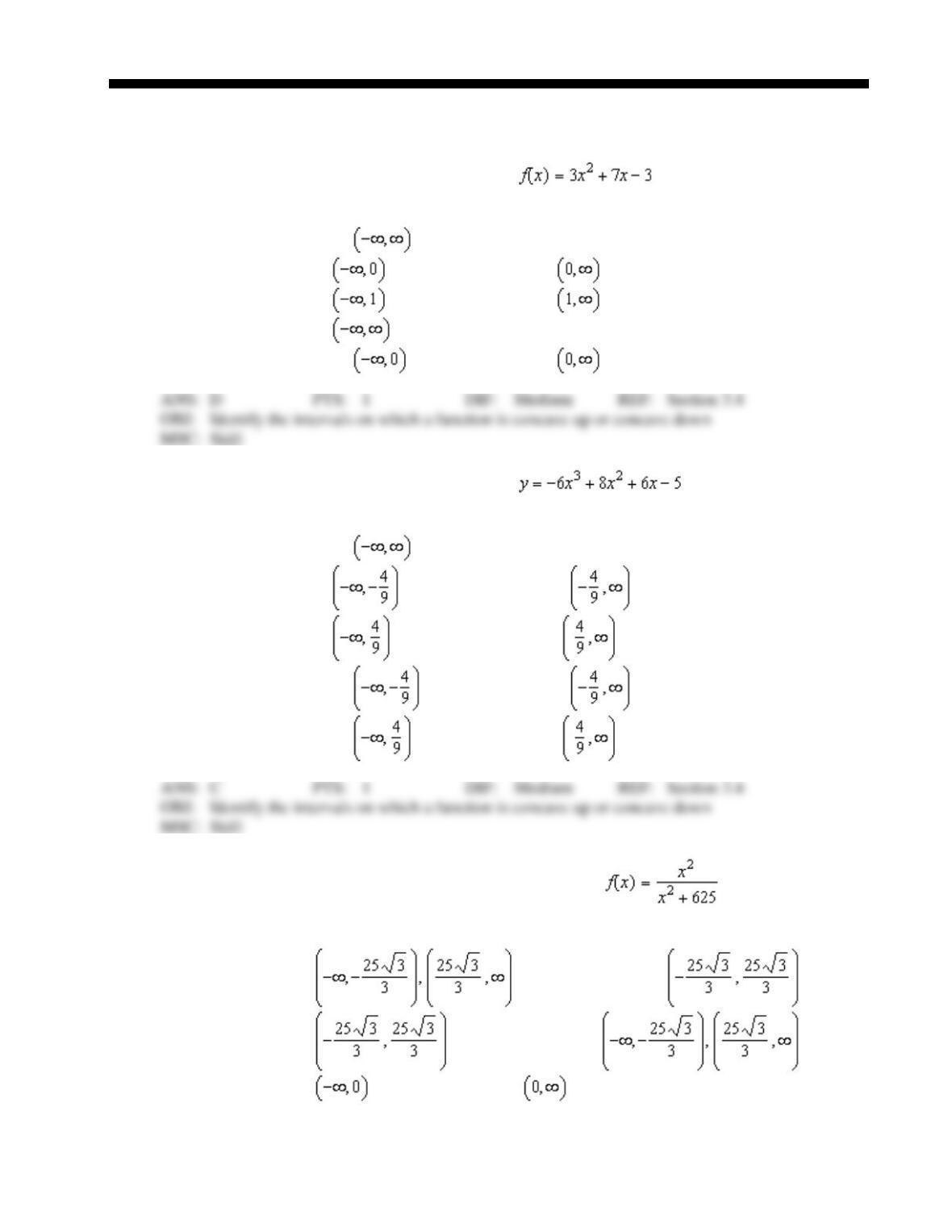
1. Determine the open intervals on which the graph of is concave downward or
concave upward.
a.
concave downward on
b.
concave upward on ; concave downward on
c.
concave upward on ; concave downward on
d.
concave upward on
e.
concave downward on ; concave upward on
2. Determine the open intervals on which the graph of is concave downward or
concave upward.
a.
concave downward on
b.
concave upward on ; concave downward on
c.
concave upward on ; concave downward on
d.
concave downward on ; concave upward on
e.
concave downward on ; concave upward on
3. Determine the open intervals on which the graph of the function is concave upward
or concave downward.
a.
concave upward: ; concave downward:
b.
concave upward: ; concave downward:
c.
concave upward: ; concave downward:
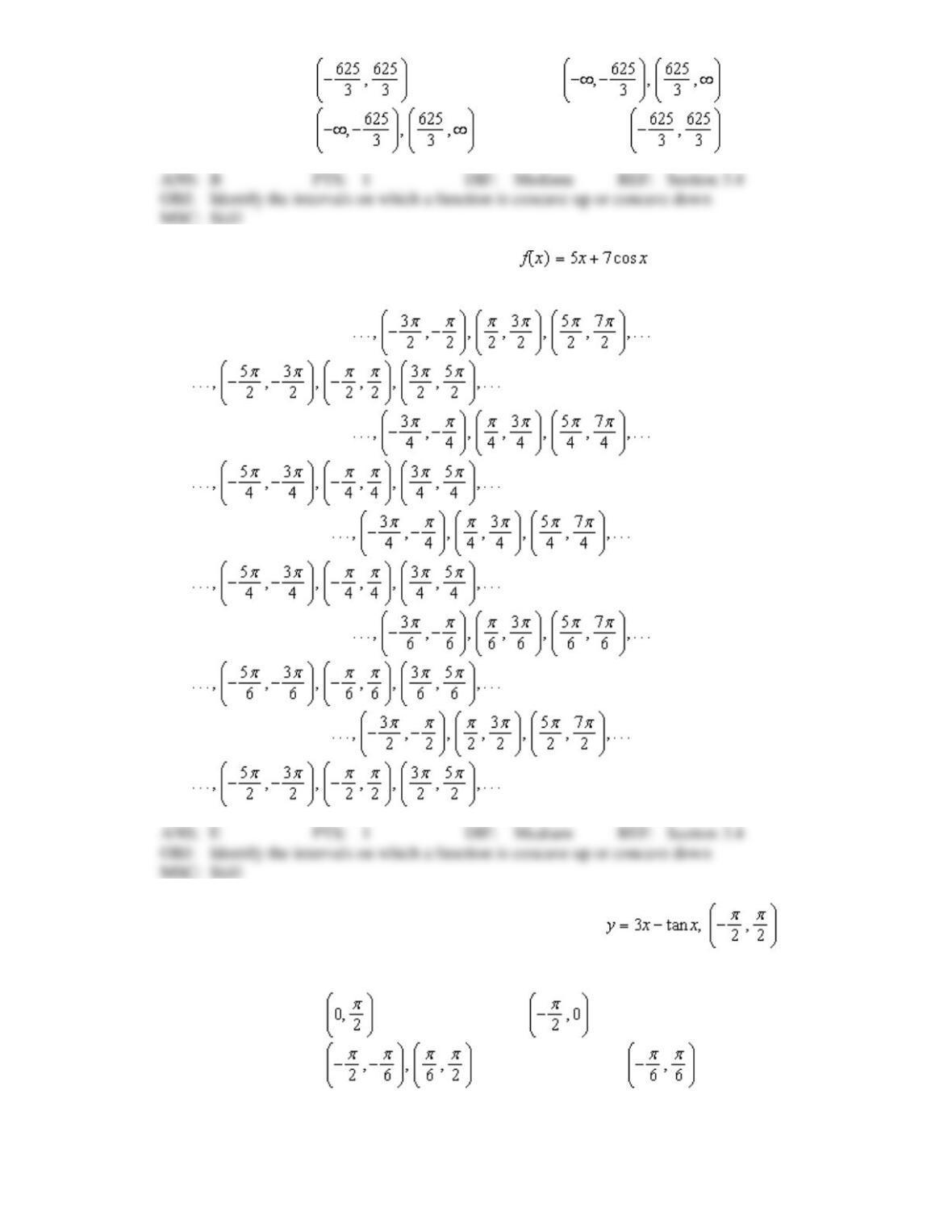
d.
concave upward: ; concave downward:
e.
concave upward: ; concave downward:
4. Determine the open intervals on which the graph of is concave downward or
concave upward.
a.
concave downward on ; concave upward on
b.
concave downward on ; concave upward on
c.
concave upward on ; concave downward on
d.
concave downward on ; concave upward on
e.
concave upward on ; concave downward on
5. Determine the open intervals on which the graph of the function is concave
upward or concave downward.
a.
concave upward: ; concave downward:
b.
concave upward: ; concave downward:
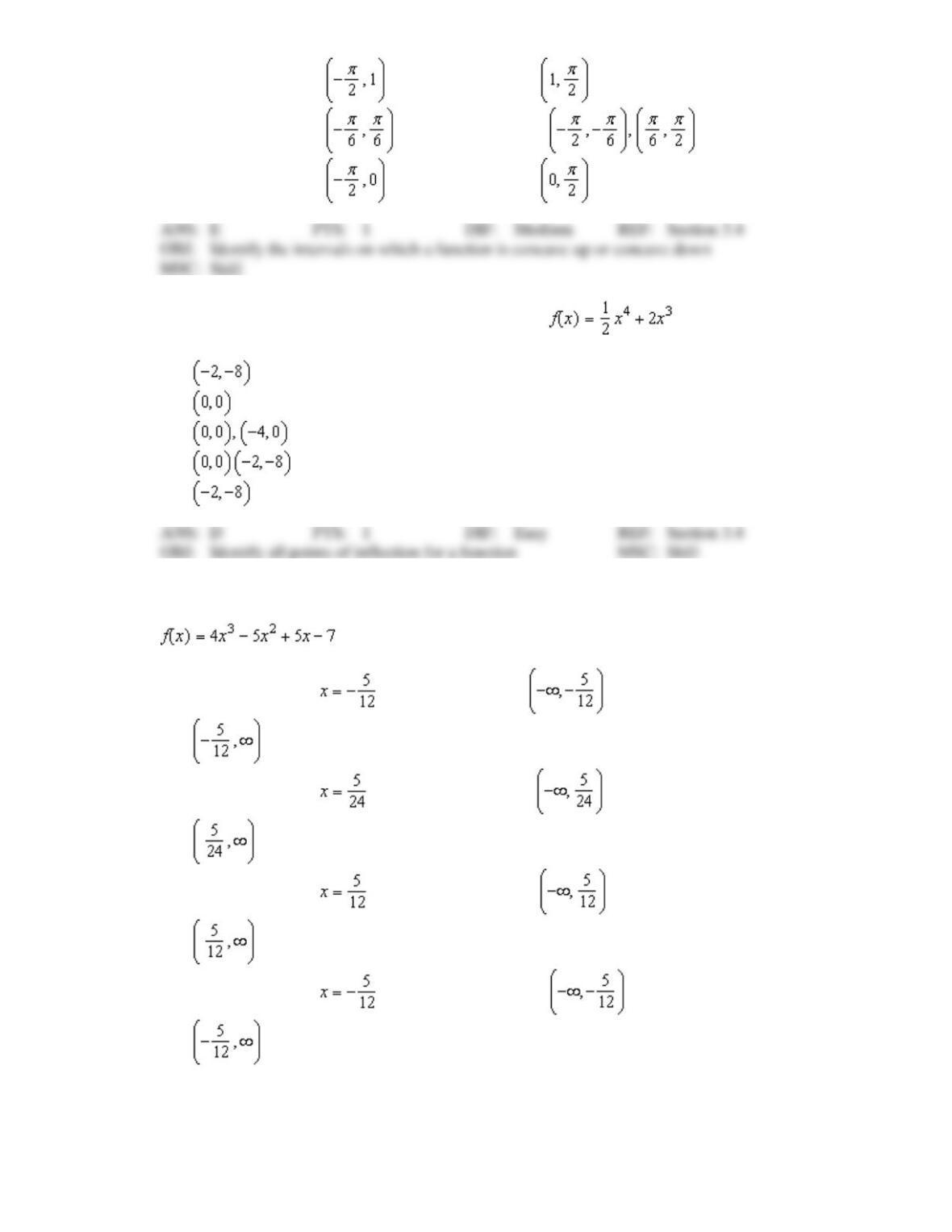
c.
concave upward: ; concave downward:
d.
concave upward: ; concave downward:
e.
concave upward: ; concave downward:
6. Find all points of inflection on the graph of the function .
a.
b.
c.
d.
e.
7. Find the points of inflection and discuss the concavity of the function.
a.
inflection point at ; concave upward on ; concave downward on
b.
inflection point at ; concare downward on ; concave upward on
c.
inflection point at ; concave downward on ; concave upward on
d.
inflection point at ; concave downward on ; concave upward on
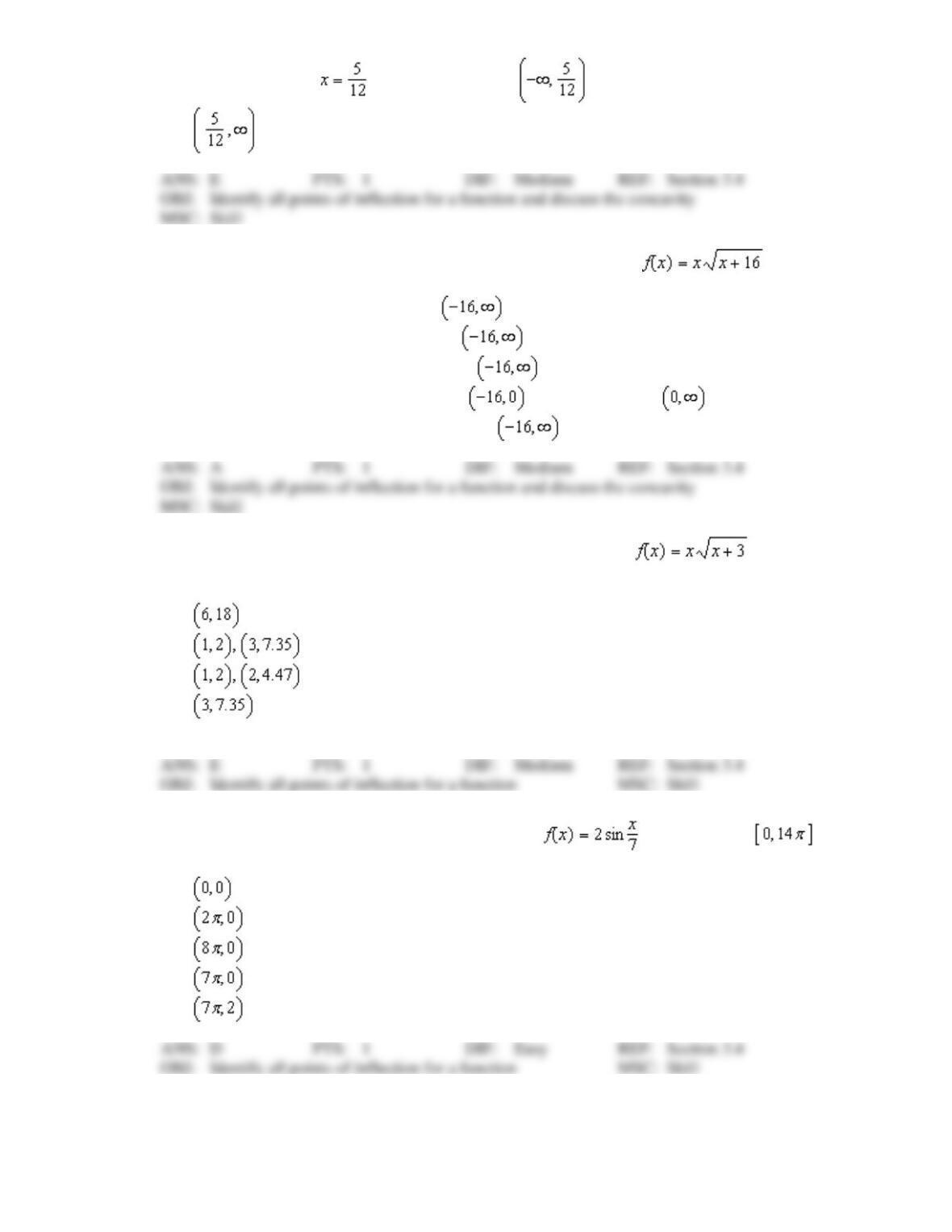
e.
inflection point at ; concave upward on ; concave downward on
8. Find the points of inflection and discuss the concavity of the function .
a.
no inflection points; concave up on
b.
no inflection points; concave down on
c.
inflection point at x = 16; concave up on
d.
inflection point at x = 0; concave up on ; concave down on
e.
inflection point at x = 16; concave down on
9. Find all points of inflection, if any exist, of the graph of the function . Round your
answers to two decimal places.
a.
b.
c.
d.
e.
no points of inflection
10. Find the point of inflection of the graph of the function on the interval .
a.
b.
c.
d.
e.
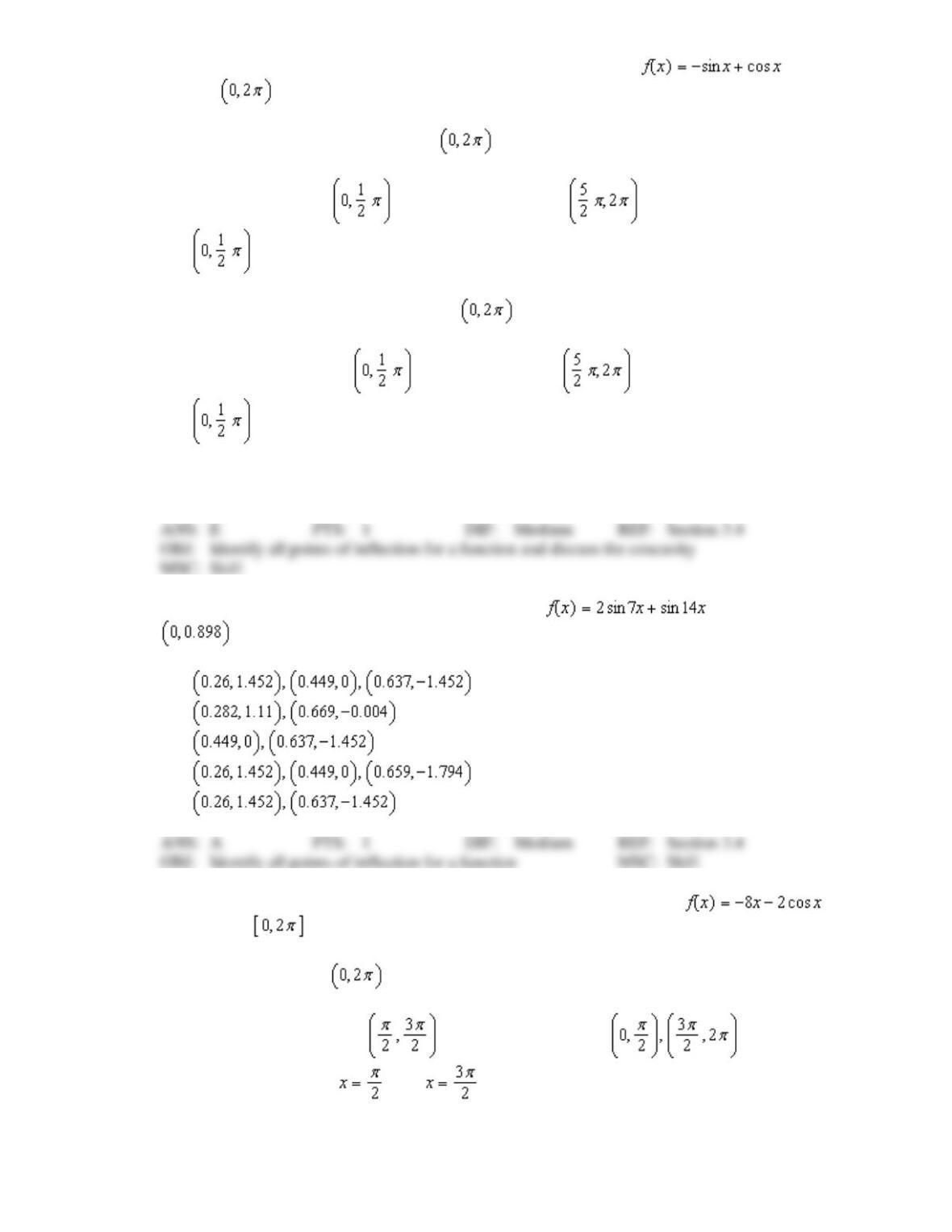
11. Find the points of inflection and discuss the concavity of the function on the
interval .
a.
no inflection points. concave up on
b.
concave upward on ; concave downward on ; inflection point at
c.
no inflection points. concave down on
d.
concave downward on ; concave upward on ; inflection point at
e.
none of the above
12. Find all points of inflection of the graph of the function on the interval
. Round your answer to three decimal places wherever applicable.
a.
b.
c.
d.
e.
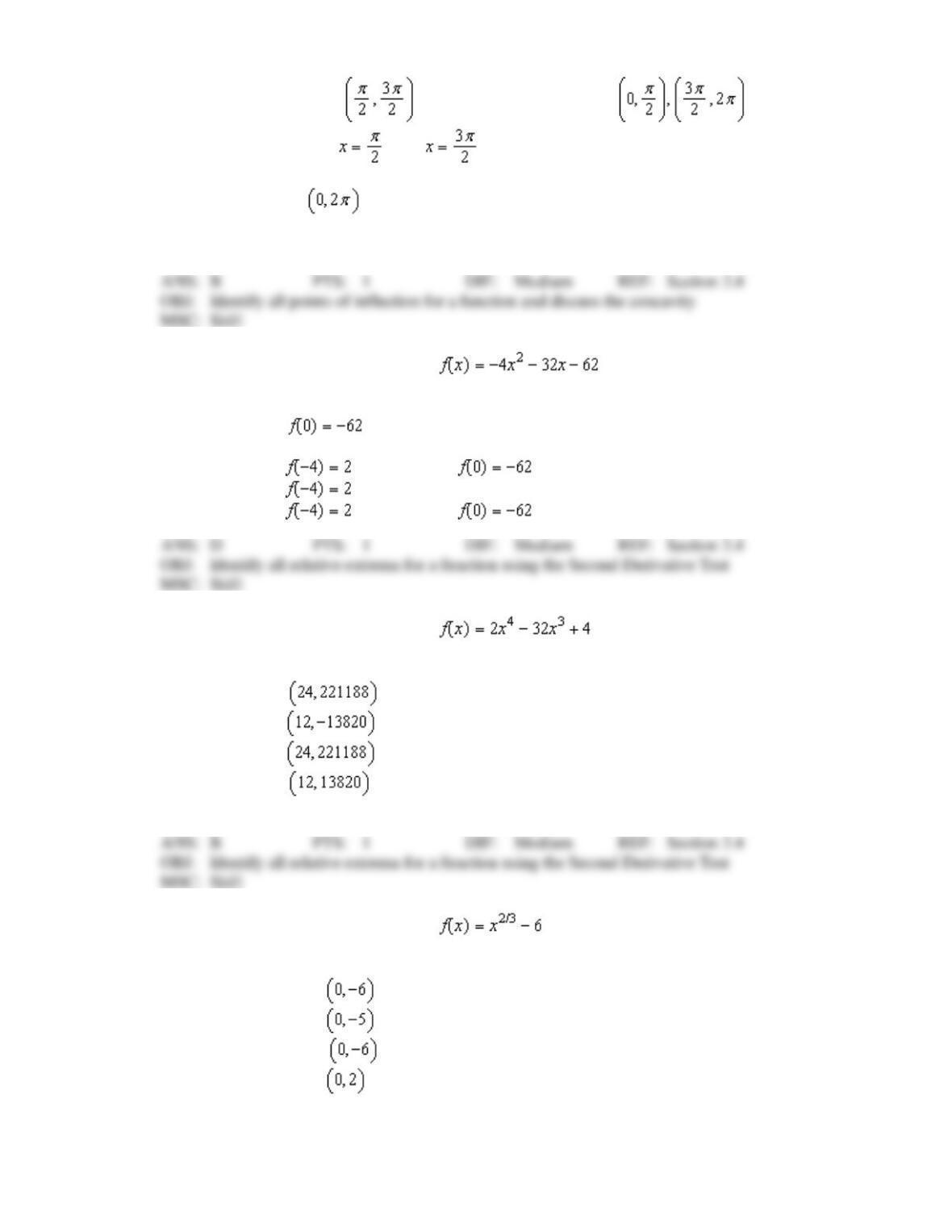
13. Find the points of inflection and discuss the concavity of the function on
the interval .
a.
concave down on ; no points of inflection
b.
concave downward on ; concave upward on ;
inflection points at and
c.
concave upward on ; concave downward on ;
inflection points at and
d.
concave up on ; no points of inflection
e.
none of the above
14. Find all relative extrema of the function . Use the Second Derivative Test
where applicable.
a.
relative max: ; no relative min
b.
no relative max; no relative min
c.
relative min: ; relative max:
d.
relative min: ; no relative max
e.
relative min: ; relative max:
15. Find all relative extrema of the function . Use the Second Derivative Test where
applicable.
a.
relative max: ; no relative min
b.
relative min: ; no relative max
c.
relative min: ; no relative max
d.
relative max: ; no relative min
e.
no relative max or min
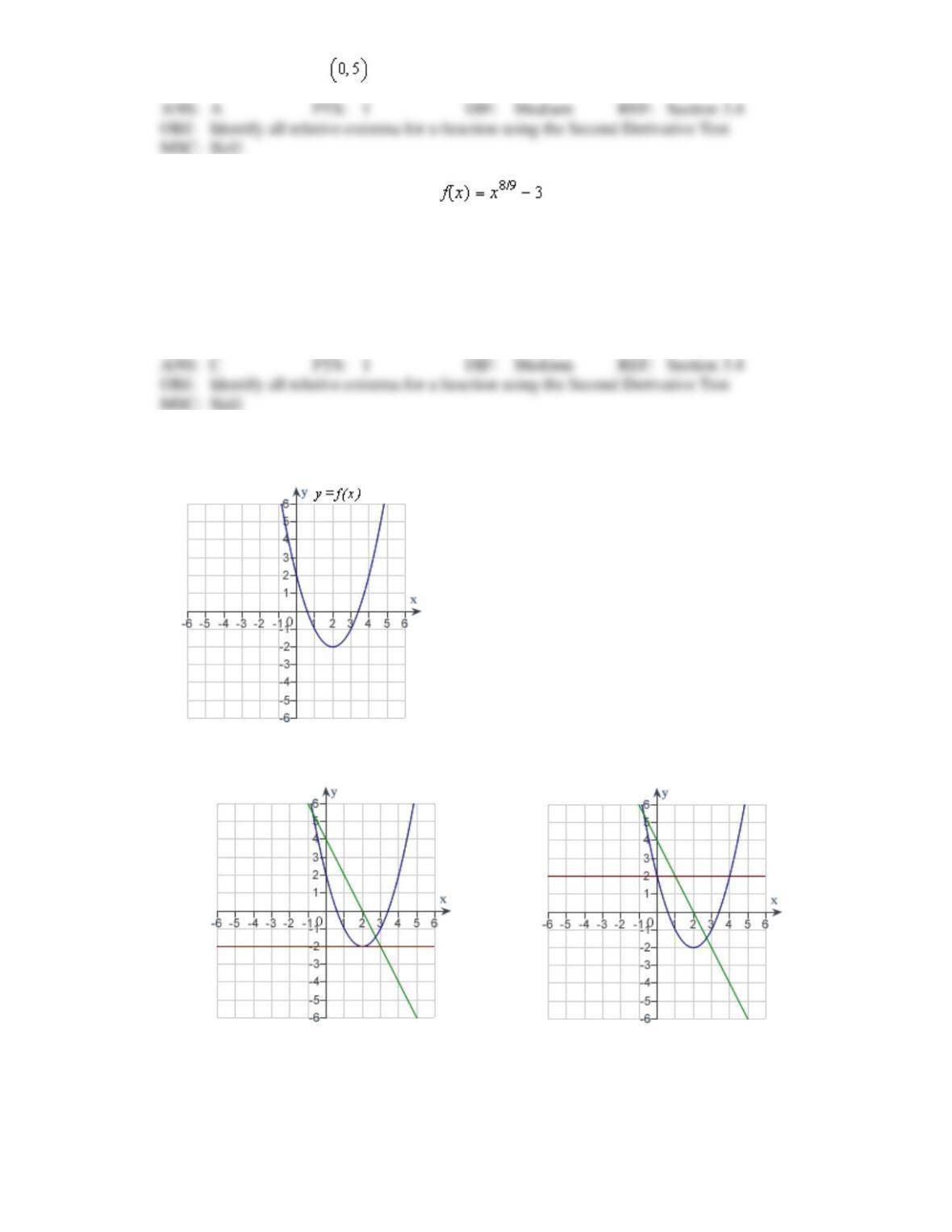
16. Find all relative extrema of the function . Use the Second Derivative Test where
applicable.
a.
relative minimum:
b.
relative minimum:
c.
relative maximum:
d.
relative minimum:
e.
relative maximum:
17. Find all relative extrema of the function . Use the Second Derivative Test where
applicable.
a.
relative max: (1, –2); no relative min
b.
no relative max or min
c.
relative min: (0, –3); no relative max
d.
relative max: (1, –2); relative min: (0, –3)
e.
relative max: (0, –3); no relative min
18. The graph of f is shown. Graph f, f’ and f” on the same set of coordinate axes.
a.
d.
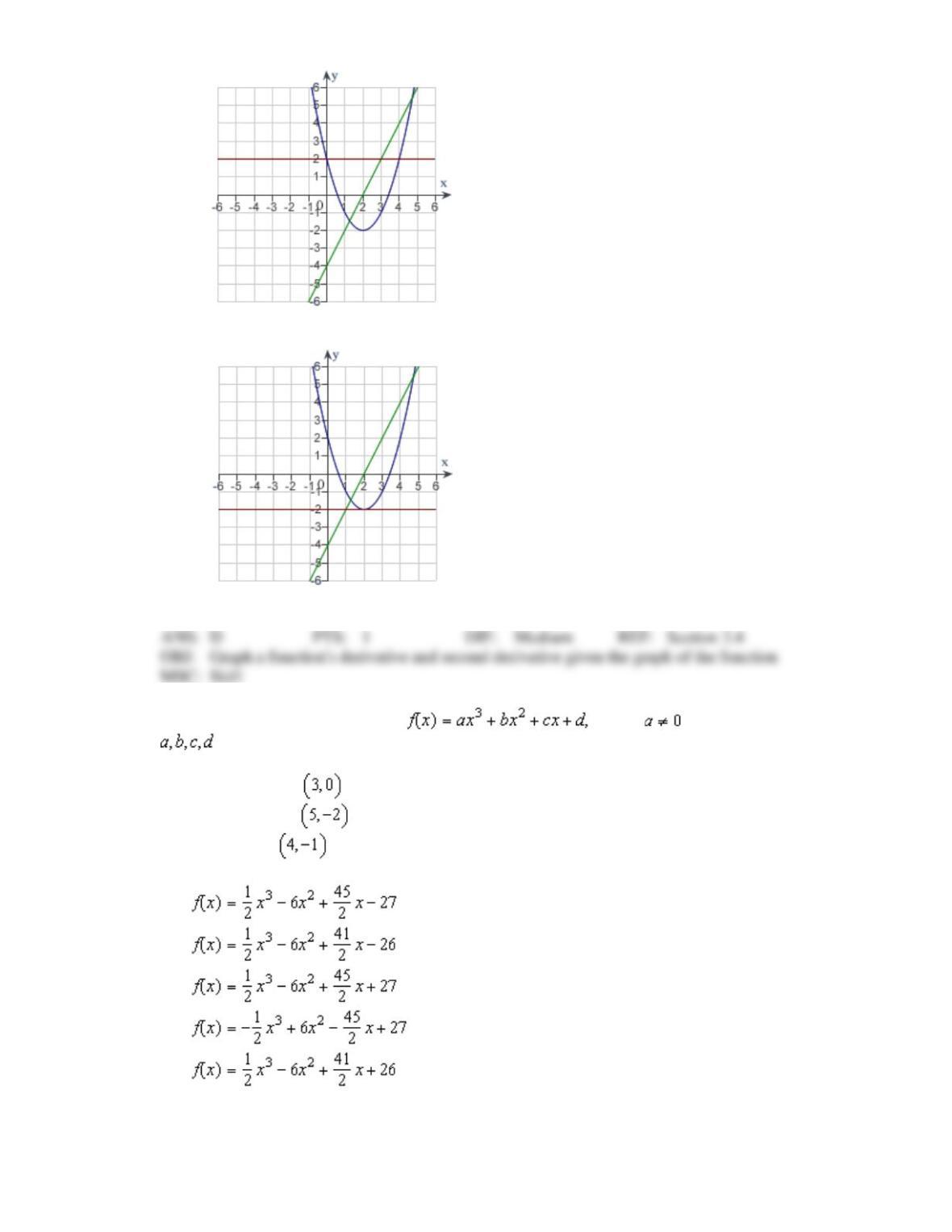
b.
e.
none of the above
c.
19. Find the cubic function of the form where and the coefficients
are real numbers, which satisfies the conditions given below.
Relative maximum:
Relative minimum:
Inflection point:
a.
b.
c.
d.
e.
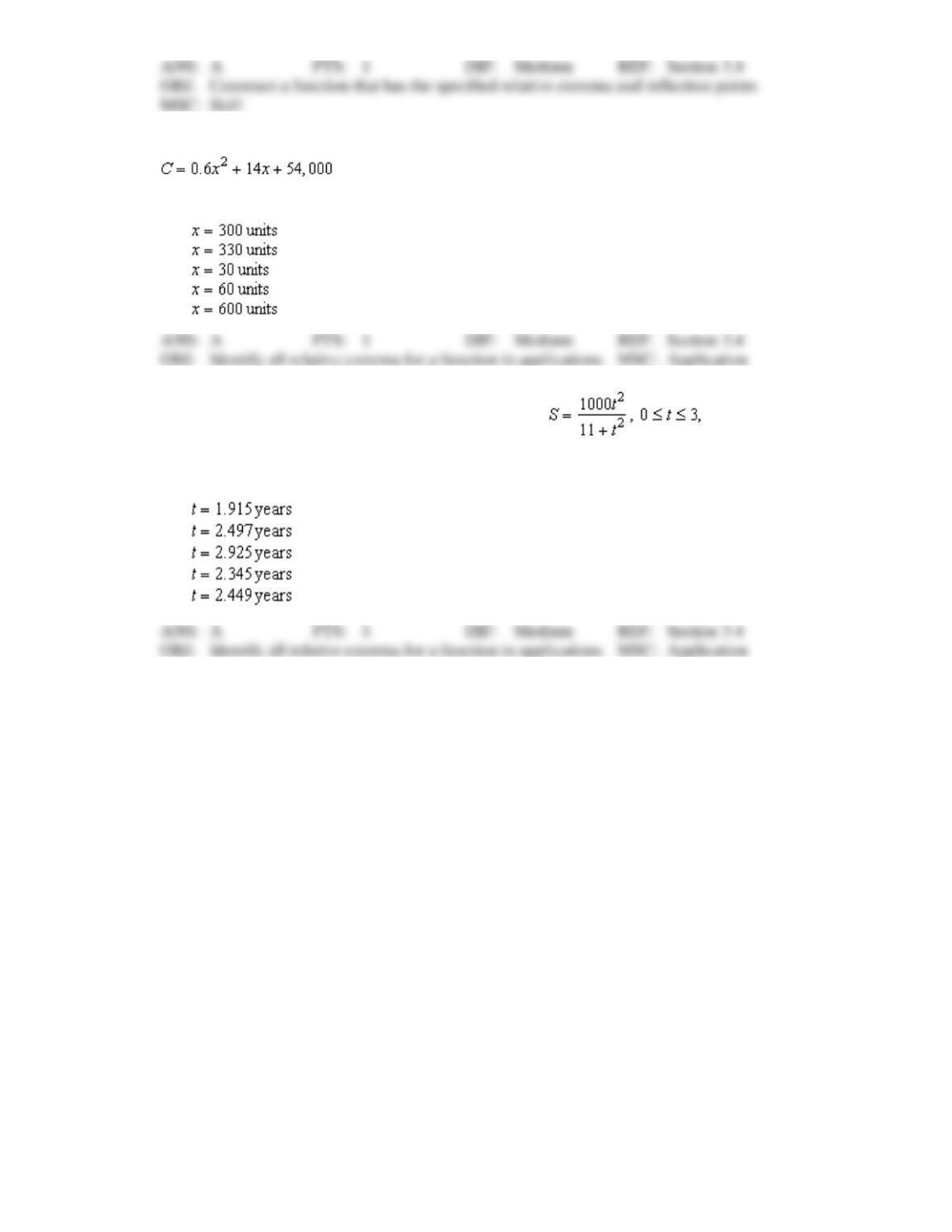
20. Suppose a manufacturer has determined that the total cost C of operating a factory is
where x is the number of units produced. At what level of production will
the average cost per unit be minimized? (The average cost per unit is C/x.)
a.
b.
c.
d.
e.
21. Suppose the annual sales S of a new product is given by where t is time in
years. Find the exact time when the annual sales are increasing at the greatest rate. Round your answer
to three decimal places.
a.
b.
c.
d.
e.