Chapter 3 Consumer Behavior and Rational Choice
MULTIPLE CHOICE
1. Points along an indifference curve represent bundles of goods that:
a.
cost the same amount to buy
b.
consumers don’t like very much
c.
decline in marginal utility
d.
deliver equal utility
e.
cannot be compared
2. Indifference curves describe:
a.
various consumer income levels
b.
alternative market prices for goods and services
c.
the quantities of a good or service that people are willing and able to buy at
alternative prices
d.
producer production levels at alternative market prices
e.
consumer preferences
3. Sarah Jones believes that Coke and Pepsi are perfect substitutes. That is, she is equally
happy with a Coke or a Pepsi and cannot tell the difference between them. Her indifference
curves:
a.
are linear, with slope equal to –1
b.
are upward-sloping
c.
are linear, with slope equal to 1
d.
cross where she consumes equal amounts of Coke and Pepsi
e.
cannot be defined, since she likes both equally well
4. Indifference curves cannot cross because:
a.
consumers will always substitute 1 unit of a good for 1 unit of another good
b.
consumers prefer more to less
c.
a single consumption bundle would bring two different levels of utility
d.
all of the above
e.
b and c
5. At equilibrium, the marginal rate of substitution describes:
a.
the slope of the budget constraint
b.
the number of units of one good that a consumer is willing to trade for an
additional unit of another good, holding utility fixed
c.
the slope of the demand curve
d.
the number of units of one good that a consumer is willing to trade for an
additional unit of another good in order to increase utility by 1 unit
e.
a and b
6. The marginal rate of substitution:
a.
remains constant as the consumer moves around an indifference curve
b.
is constant if the goods are perfect complements
c.
decreases as the consumer moves down a typical indifference curve
d.
cannot be defined if the goods are perfect substitutes
e.
none of the above
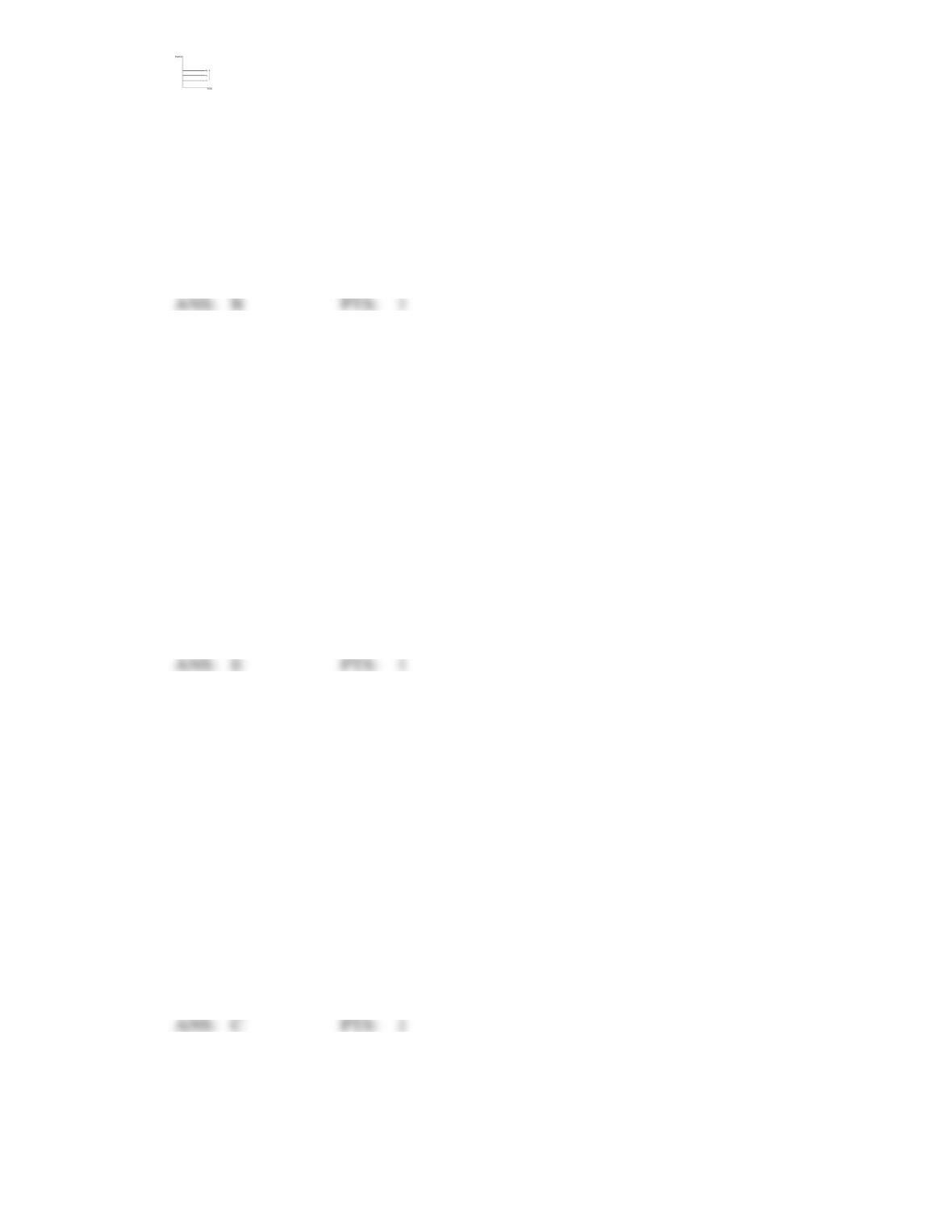
7. Consider the indifference map below. This map represents Larry’s preferences over two
goods, oranges and grapefruits. Larry:
a.
does not like oranges and will not eat them
b.
gets greater utility from additional grapefruits, but not from additional oranges
c.
prefers oranges to grapefruits
d.
will always choose to consume equal amounts of oranges and grapefruits
e.
will always choose to consume a combination of oranges and grapefruits
8. Suppose Al is currently consuming five movies and two concerts per month. If his utility
function is given by U = 15MC, where M represents the number of movies seen and C
represents the number of concerts attended, Al’s total utility is equal to:
a.
10
b.
15
c.
30
d.
75
e.
150
9. Suppose Al is currently consuming four movies and four concerts per month. If his utility
function is given by U = 15M0.5C, where M represents the number of movies seen and C
represents the number of concerts attended, what is Al’s total utility equal to?
a.
15
b.
30
c.
120
d.
240
e.
960

10. Suppose Al is currently consuming four movies and four concerts per month. If his utility
function is given by U = 15M0.5C, where M represents the number of movies consumed and
C represents the number of concerts attended, what is the marginal utility of the next concert
Al will attend?
a.
15
b.
30
c.
60
d.
120
e.
960
11. Points along a budget constraint describe:
a.
market baskets that cost the same amount of money
b.
market baskets that bring the consumer equal utility
c.
quantities of a good that the consumer is willing and able to buy at alternative
market prices
d.
alternative prices that a producer might charge for a good
e.
alternative levels of utility that a consumer might get from consuming a given
market basket
12. A budget constraint:
a.
must be convex to the origin if consumers prefer more to less
b.
will be upward-sloping if consumers consider one good a “bad”
c.
must be downward-sloping if both goods have positive prices
d.
will be concave to the origin if the consumer’s budget is fixed
e.
will always have slope equal to –1

13. Nancy has $100 to spend on books and compact disks. Books cost $10 and compact disks
cost $20. The slope of Nancy’s budget constraint (where the quantity of books is on the
horizontal axis) is:
a.
–0.5
b.
–2
c.
–5
d.
–10
e.
none of the above
14. Consider the budget constraints below. These constraints represent the market baskets that
Edith can afford to buy at alternative:
a.
prices of good X
b.
levels of income
c.
prices of good Y
d.
preferences over goods X and Y
e.
prices of goods X and Y
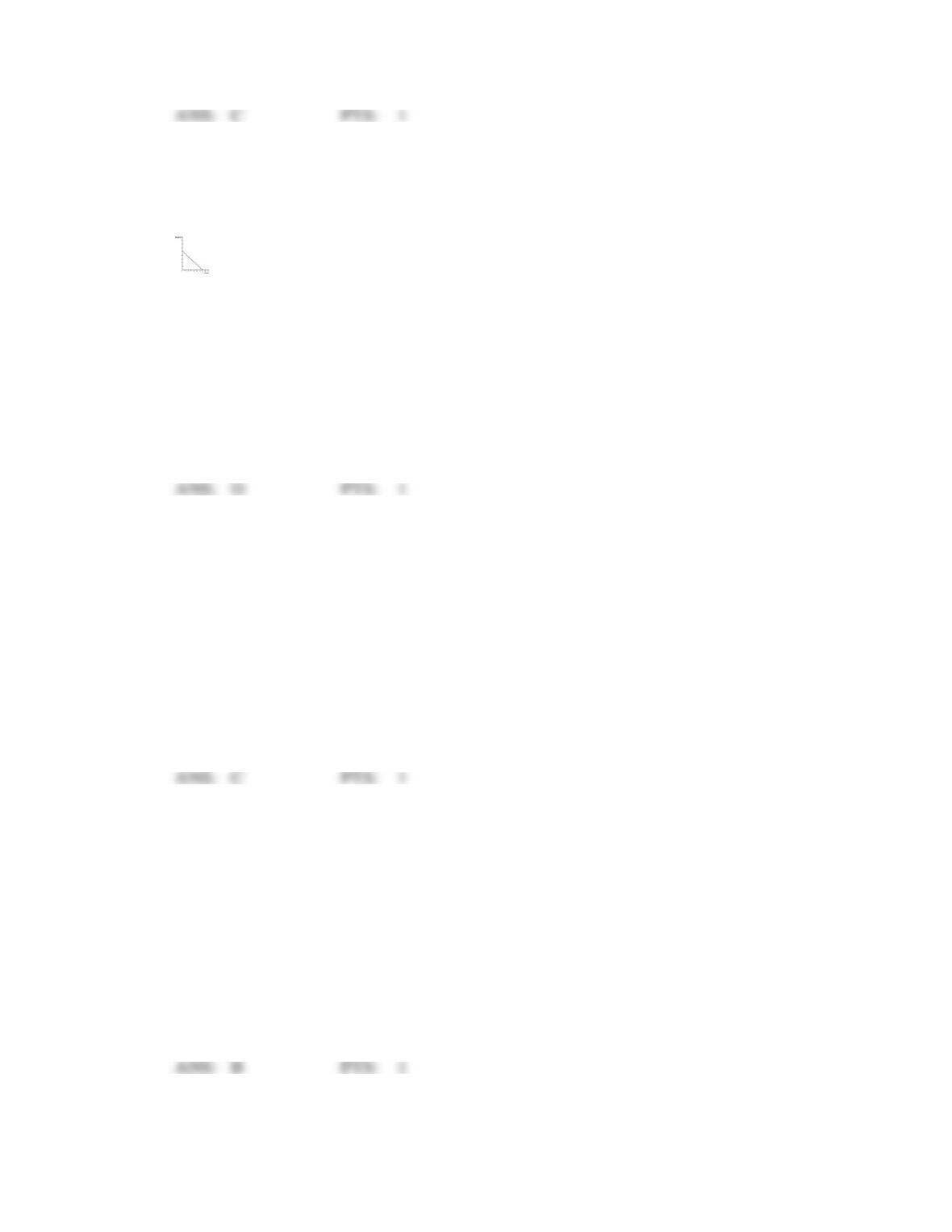
15. Consider the budget constraint below. Dennis spends all his money on sweaters and
sweatshirts. If the price of sweaters is $15, how much money does Dennis have in his
budget?
a.
$7
b.
$75
c.
$105
d.
$178
e.
none of the above
16. Consider the budget constraint below. Dennis spends all his money on sweaters and
sweatshirts. If the price of sweaters is $15, what is the price of sweatshirts?
a.
$5
b.
$7
c.
$15
d.
$21
e.
none of the above
17. An increase in a consumer’s income:
a.
shifts the consumer’s indifference curves out
b.
causes the consumer to buy more of every good
c.
shifts the consumer’s budget constraint out
d.
causes the consumer to increase her purchases of inferior goods
e.
causes the consumer to buy more inferior goods
18. A consumer’s budget constraint changes slope whenever:
a.
the consumer buys a different combination of goods
b.
relative prices change
c.
the consumer’s income increases
d.
an indifference curve is tangent to it
e.
absolute prices change
19. The consumer’s optimal consumption of X and Y is characterized by:
a.
(MUX)(MUY) = PXPY
b.
MUX = PX
c.
MUX /MUY = PY / PX
d.
MUX /PY = MUX / PX
e.
MUX /MUY = PX / PY
20. The marginal rate of substitution of X for Y is defined as:
a.
PX /PY
b.
PX PY
c.
MUX MUY
d.
MUX /MUY
e.
MUX /PX
21. The consumer’s optimal consumption of X and Y occurs where the consumer:
a.
reaches the highest indifference curve that intersects the budget constraint
b.
reaches the highest budget constraint that is tangent to the indifference curve
c.
reaches the lowest indifference curve that intersects the budget constraint at any
point
d.
reaches the highest indifference curve that is just tangent to the budget constraint
e.
is satiated with X and Y
22. Mary’s indifference map and budget constraint for goods X and Y are shown below. If Mary
spends all her money on X and Y, which bundle will she choose to maximize her utility?
a.
A
b.
B
c.
C
d.
D
e.
E
23. Don consumes bagels and cream cheese. He likes to place 2 ounces of cream cheese on each
bagel, no more, no less. In this case, Don’s indifference curves for bagels and cream cheese
will be:
a.
straight lines with slopes equal to –2
b.
L-shaped, or right angles
c.
upward-sloping
d.
horizontal lines
e.
vertical lines
24. Betty spends all her income on cheese and crackers. She finds that the marginal utility of
cheese is 10 and the marginal utility of crackers is 15. The price of cheese is $5 per unit and
the price of crackers is $3 per unit. At this point, Betty:
a.
is maximizing her utility subject to her budget constraint
b.
should consume more cheese and fewer crackers
c.
should consume more crackers and less cheese
d.
should consume more crackers and more cheese
e.
should switch her consumption over to other goods that she likes better
25. Tom spends all his monthly income on pretzels and potato chips. Currently, he is
maximizing his utility; the marginal utility of pretzels is 150 and the marginal utility of
potato chips is 125. If pretzels cost $6 per box, how much do potato chips cost?

a.
$2
b.
$3
c.
$4
d.
$5
e.
$6
26. Which of the following does not affect the shape of a consumer’s indifference curves?
a.
age
b.
education
c.
tastes
d.
prices
e.
advertising
27. Assume that the utility function of wine for a certain consumer is given by TU = 96Q – 3Q2.
If wine is free, to maximize utility, the amount the consumer should consume is:
a.
6 bottles of wine
b.
16 bottles of wine
c.
90 bottles of wine
d.
93 bottles of wine
e.
unknown; there is insufficient information to determine this
28. John spends his budget on food and clothing each month. His utility function is given by TU
= 100C0.25F0.75. The marginal rate of substitution of clothing for food is:
a.
0.33F/C
b.
0.25FC
c.
0.33F2C
d.
25F/C
e.
0.66C/F
29. In most cases, at the optimal consumption bundle:
a.
the consumer cannot increase utility without some change in market conditions or
preferences
b.
the last dollar spent on each good brings the same amount of satisfaction to the
consumer
c.
the marginal rate of substitution is equal to the absolute values of the slope of the
budget constraint
d.
the indifference curve is just tangent to the budget constraint
e.
all of the above
30. A corner solution to a consumer choice problem suggests that:
a.
the consumer is not rational
b.
one product is not purchased at all
c.
both products are preferred, but one at a lower rate than the other
d.
neither product is a normal good
e.
all of the above
31. The table below describes Ben’s preferences over cake and ice cream. The utility from
consumption of one good is independent of the consumption of the other. The price of cake
is $10 per unit and the price of ice cream is $4 per unit.
Units
MU
MU
Consumed
Cake
Ice Cream
1
80
20
2
60
19
3
40
18
4
20
17
5
0
16
If Ben has $50 to spend, the optimal combination of these goods is:
a.
4 units of cake and 1 unit of ice cream
b.
3 units of cake and 5 units of ice cream
c.
3 units of cake and 1 unit of ice cream
d.
5 units of cake
e.
none of the above
32. Referring to problem 31, Ben’s total utility at his optimal consumption bundle will be:
a.
56
b.
200
c.
270
d.
310
e.
none of the above
33. An indifference map can be used to find a demand curve for a consumer. Given an initial
equilibrium point, to find a demand curve for good X, change the:
a.
consumer’s income and draw a new budget constraint
b.
price of Y and draw a new budget constraint
c.
consumer’s preferences
d.
price of X and draw a new budget constraint
e.
price of a substitute and draw a new budget constraint
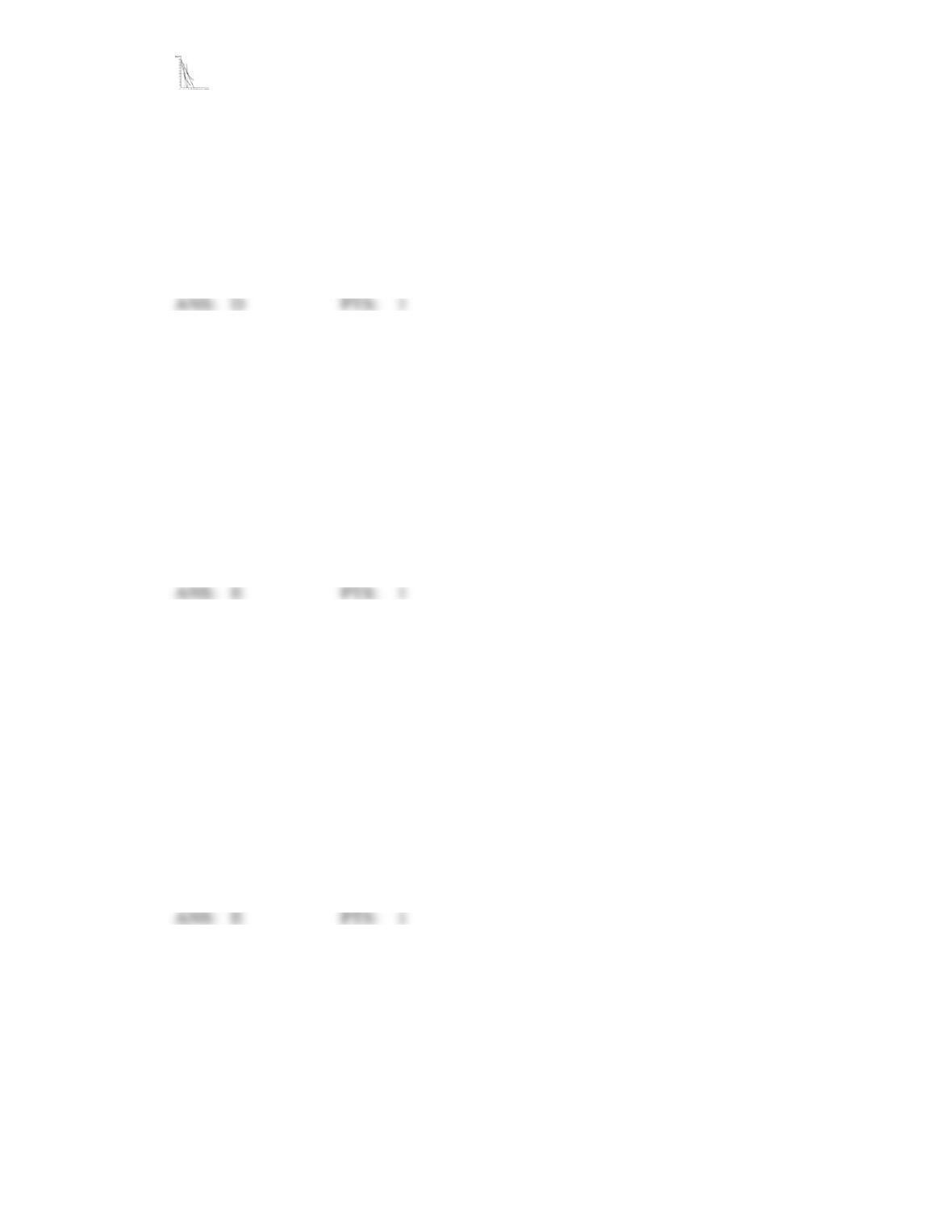
34. Consider the indifference map below. The price of Y is $5. Two points on a demand curve
for good X are:
a.
(8, $5) and (10, $5)
b.
(3, $10) and (5, $20)
c.
(3, $20) and (8, $5)
d.
(3, $20) and (5, $10)
e.
none of the above
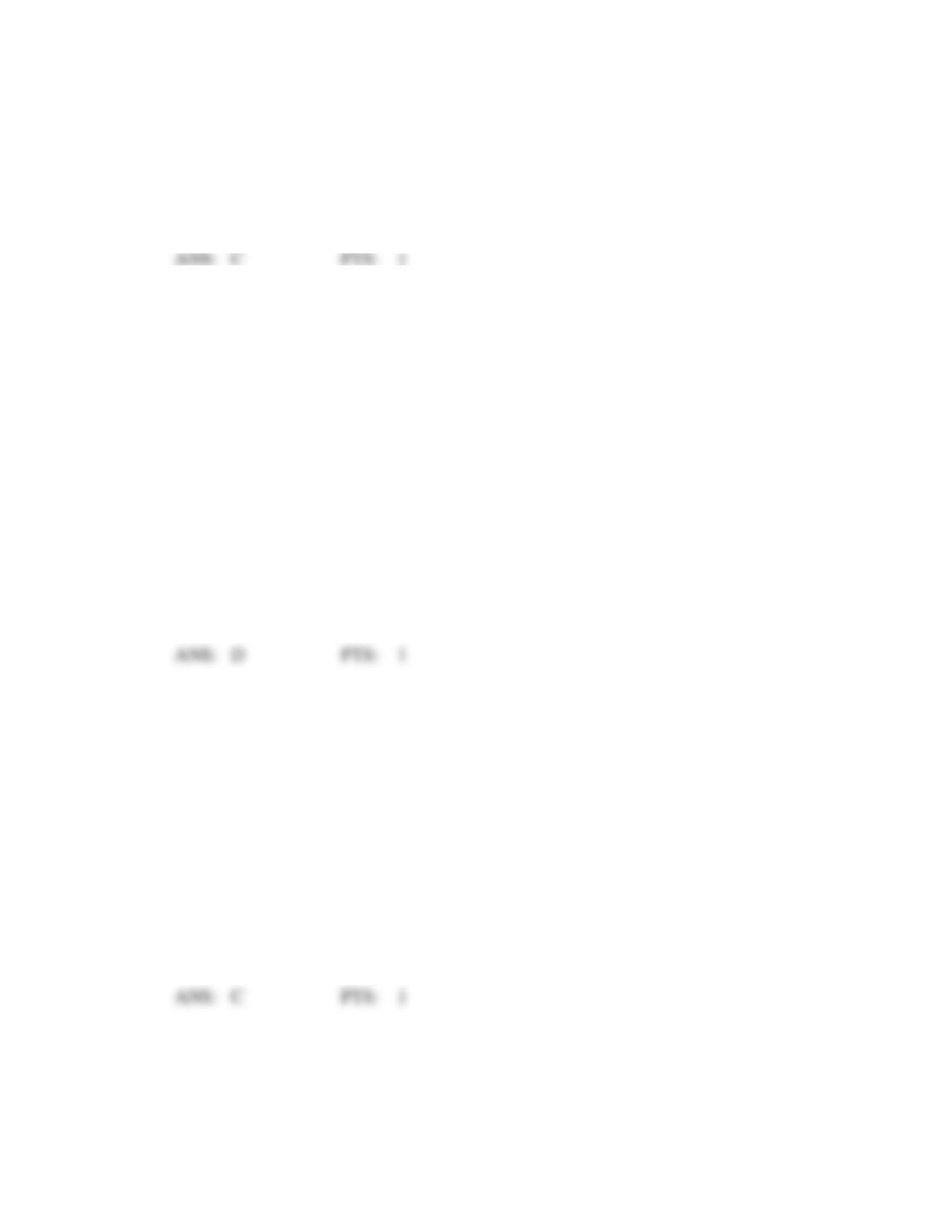
35. Using the indifference map from problem 34, two points on a demand curve for good Y are:
a.
(8, $5) and (10, $5)
b.
(3, $10) and (5, $20)
c.
(3, $20) and (8, $5)
d.
(3, $20) and (5, $10)
e.
cannot be determined from the information given
36. The market demand curve is:
a.
the vertical summation of the individual demand curves
b.
the horizontal summation of the individual demand curves
c.
the sum of the prices that each consumer is willing to pay for each quantity of
output
d.
the sum of the quantities that each consumer is willing to buy at each price
e.
b and d
37. Susan is investing in the stock market. She is choosing among a variety of stocks; each
stock has an expected return and a level of risk attached. Susan likes higher returns, but she
dislikes risk. If we were to draw indifference curves for Susan over risk and expected return,
they would be:
a.
L-shaped
b.
linear
c.
upward-sloping
d.
downward-sloping
e.
vertical lines
38. Betty is investing in the stock market. She is choosing among a variety of stocks; each stock
has an expected return and a level of risk attached. Betty likes higher returns and she likes
risk. If we were to draw indifference curves for Betty over risk and expected return, they
would be:
a.
L-shaped
b.
linear
c.
upward-sloping
d.
downward-sloping
e.
vertical lines
39. Fred consumes quantities of butter and margarine; his utility function is given by U = 5M +
2B. If Fred has $10 to spend on butter and margarine, and if butter costs $2 per pound and
margarine costs $1 per pound, what is his optimal bundle of butter and margarine?
a.
3 butter and 4 margarine
b.
5 butter and 0 margarine
c.
0 butter and 10 margarine
d.
2 butter and 6 margarine
e.
none of the above

40. Jane spends $210 per month on wine and beer. Her utility function is given by TU = 100WB,
where W represents the number of bottles of wine that she buys and B represents the number
of cases of beer that she buys. If wine costs $10 per bottle and beer costs $15 per case, she
will maximize utility by buying:
a.
10.5 bottles of wine and 7 cases of beer
b.
2 bottles of wine and 3 cases of beer
c.
equal amounts of wine and beer
d.
10 bottles of wine and 13.33 cases of beer
e.
none of the above
41. Points along an indifference curve represent bundles of goods that:
a.
cost the same amount to buy
b.
consumers don’t like very much
c.
decline in marginal utility
d.
deliver equal utility
e.
cannot be compared
42. Consumer surplus is defined as:
a.
the quantities of a good or service that bring equal utility to the consumer
b.
the quantity of a good or service that is utility maximizing for the consumer
c.
the difference between what a consumer is willing to pay and what he or she
actually pays for a good or service
d.
the difference between the market price and the marginal cost of producing a good
or service
e.
none of the above
43. Consumer surplus is important to firms because:
a.
it represents value consumers receive that they do not pay for
b.
market prices must incorporate consumer surplus
c.
they must pay taxes based on the level of consumer surplus
d.
if firms can capture it, they can increase their profitability
e.
a and d
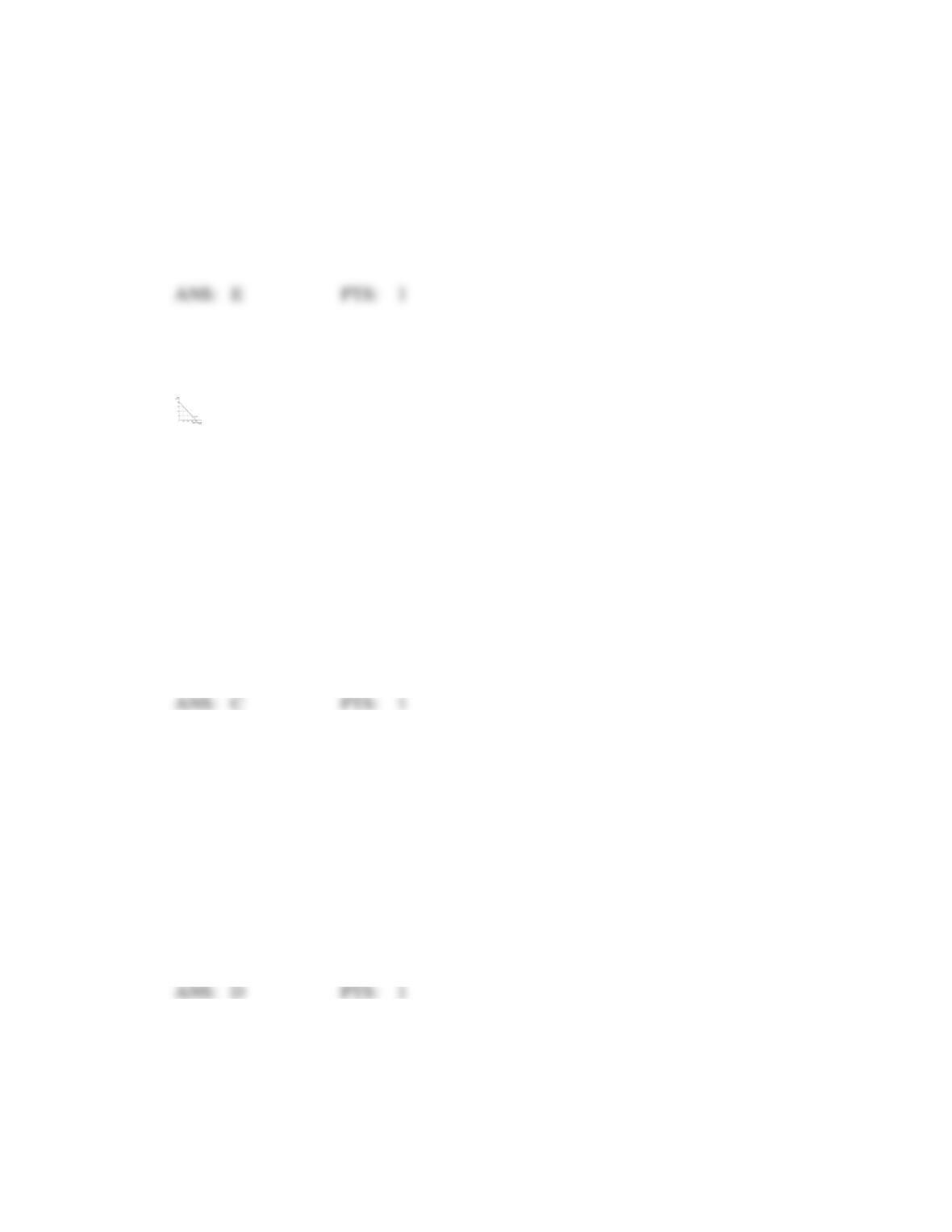
The diagram below represents the demand for trips to a local swimming pool during the
summer. Please use it to answer the following questions.
44. If the price of a day of swimming is $5 per person, consumer surplus will be:
a.
$0
b.
$1,500
c.
$11,250
d.
$20,000
e.
none of the above
45. If the city subsidizes the swimming pool so that swimming is free, consumer surplus will be:
a.
$0
b.
$1,500
c.
$11,250
d.
$20,000
e.
none of the above
46. If the city subsidizes the swimming pool so that swimming is free, the number of people
swimming each day will be:

a.
0
b.
500
c.
1,000
d.
1,500
e.
2,000
47. Fred loves tomatoes. He makes soups, sauces, and stews with them; stuffs them; roasts
them; and grills them. Fred has discovered a farmer’s market where the price of a bushel of
tomatoes depends on how many bushels are purchased. The first bushel is $15; the second,
$12; the third, $10; and four or more, $9.00 each. Fred has $82 to spend on tomatoes and on
“all other things” during the coming week. All other things sell for $1 per unit. Assume that
all other things are measured on the vertical axis. What is the horizontal intercept of Fred’s
budget constraint?
a.
14
b.
7.5
c.
8
d.
6
e.
5
48. Fred loves tomatoes. He makes soups, sauces, and stews with them; stuffs them; roasts
them; and grills them. Fred has discovered a farmer’s market where the price of a bushel of
tomatoes depends on how many bushels are purchased. The first bushel is $15; the second,
$12; the third, $10; and four or more, $9.00 each. Fred has $82 to spend on tomatoes and on
“all other things” during the coming week. All other things sell for $1 per unit. Assume that
all other things are measured on the vertical axis. What is Fred’s marginal rate of
substitution if he chooses to buy 5 bushels of tomatoes?
a.
−9

b.
0.10
c.
12
d.
1/15
e.
1/9
49. Jamie is considering the purchase of a new Ferrari for $100,000. Her income is $200,000,
and her alternative is “all other things,” which sell for $1 each. If all other things are plotted
on the vertical axis and her marginal rate of substitution is _____, then she will buy _____
Ferrari(s).
a.
200,000; 1
b.
200,000; 2
c.
1/200,000; 1
d.
1/200,000; 2
e.
none of the above
50. Jamie is considering the purchase of a new car for $20,000. Her income is $60,000, and her
alternative is “all other things,” which sell for $1 each. If all other things are plotted on the
vertical axis and her marginal rate of substitution is _____, then she will buy _____ car(s).
a.
15,000; 0
b.
15,000; 1
c.
15,000; 2
d.
15,000; 3
e.
1/15,000; 3

51. A consumer buys 12 units of entertainment, measured on the horizontal axis, and 84 units of
“all other things.” The consumer’s income elasticity of demand is equal to 1 for both goods.
If income increases by 10 percent, then the consumer’s marginal rate of substitution at the
utility-maximizing market bundle will:
a.
increase
b.
decrease
c.
be equal to 1
d.
remain constant
e.
there is insufficient information to answer the question
52. A consumer buys 12 units of entertainment and 84 units of “all other things.” The
consumer’s income elasticity of demand is greater than 1 for entertainment and less than 1
for all other things. If income increases by 10 percent, then the consumer’s marginal rate of
substitution at the utility-maximizing market bundle will:
a.
increase
b.
decrease
c.
be equal to 1
d.
remain constant
e.
there is insufficient information to answer the question