156 Chapter 3: Applications of Differentiation
3.3 Increasing and Decreasing Functions and the First Derivative Test
Multiple Choice
Identify the choice that best completes the statement or answers the question.
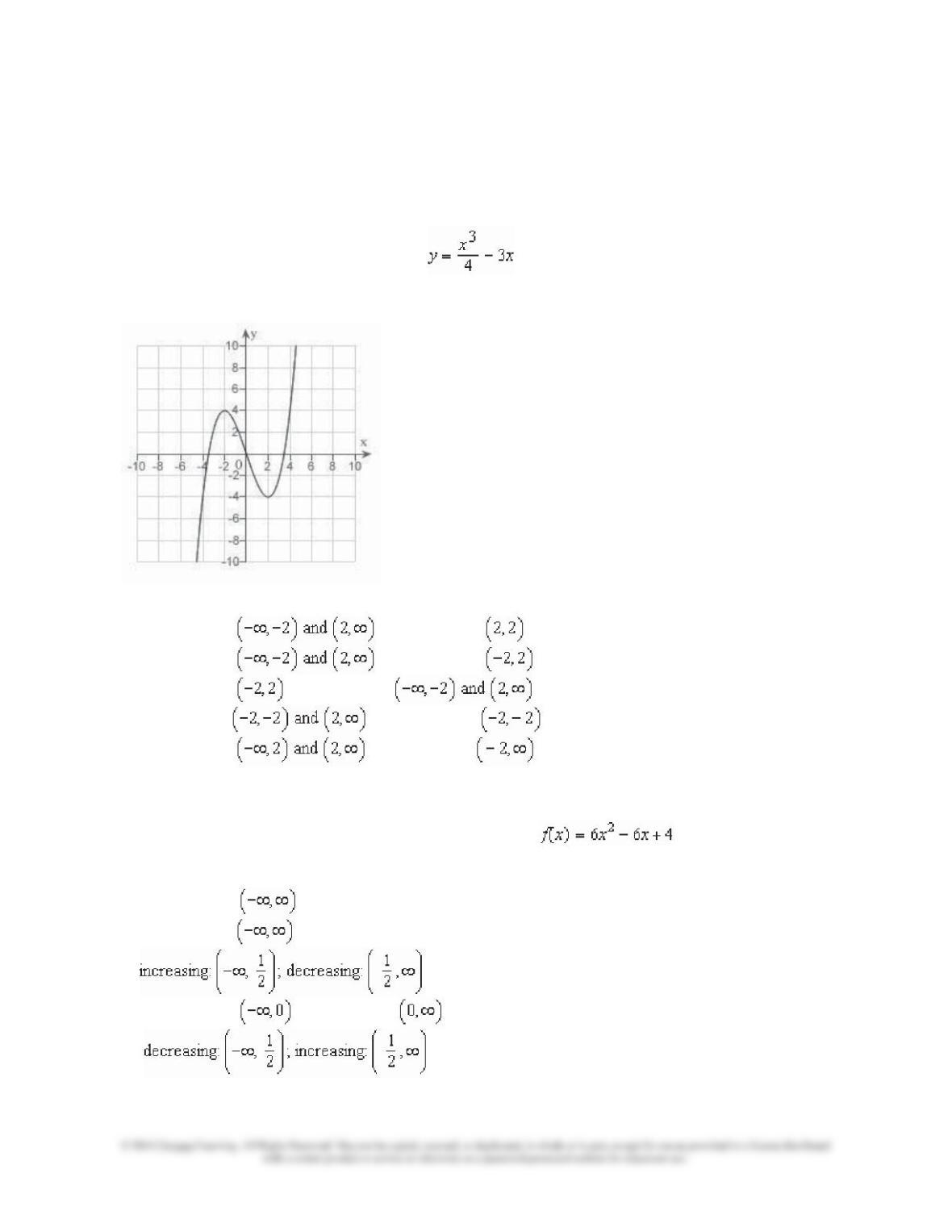
____ 1. Use the graph of the function given below to estimate the open intervals
on which the function is increasing or decreasing.
a. increasing on ; decreasing on
b. increasing on ; decreasing on
c. increasing on ; decreasing on
d. increasing on ; decreasing on
e. increasing on ; decreasing on
____ 2. Identify the open intervals where the function is increasing or
decreasing.
a. decreasing on
b. increasing on
c.
d. decreasing on ; increasing on
e.
3.3 Increasing and Decreasing Functions and the First Derivative Test 157
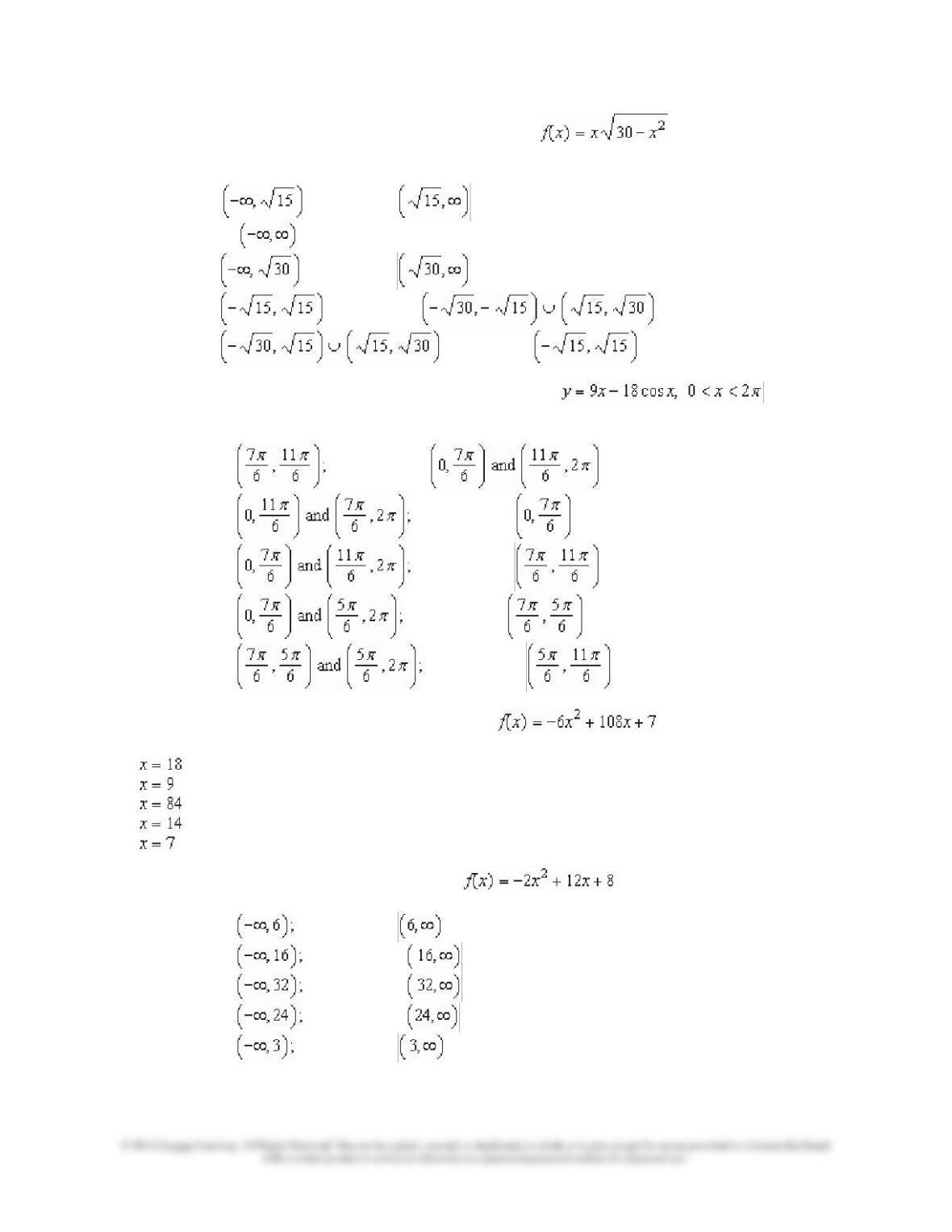
____ 3. Identify the open intervals where the function is increasing or
decreasing.
a. decreasing: ; increasing:
b. decreasing on
c. increasing: ; decreasing:
d. increasing: ; decreasing:
e. increasing: ; decreasing:
____ 4. Identify the open intervals on which the function is
increasing or decreasing.
a. increasing on decreasing on
b. increasing on decreasing on
c. increasing on decreasing on
d. increasing on decreasing on
e. increasing on decreasing on
____ 5. Find the critical number of the function .
a.
b.
c.
d.
e.
____ 6. Find the open interval(s) on which is increasing or decreasing.
a. increasing on decreasing on
b. increasing on decreasing on
c. increasing on decreasing on
d. increasing on decreasing on
e. increasing on decreasing on
158 Chapter 3: Applications of Differentiation
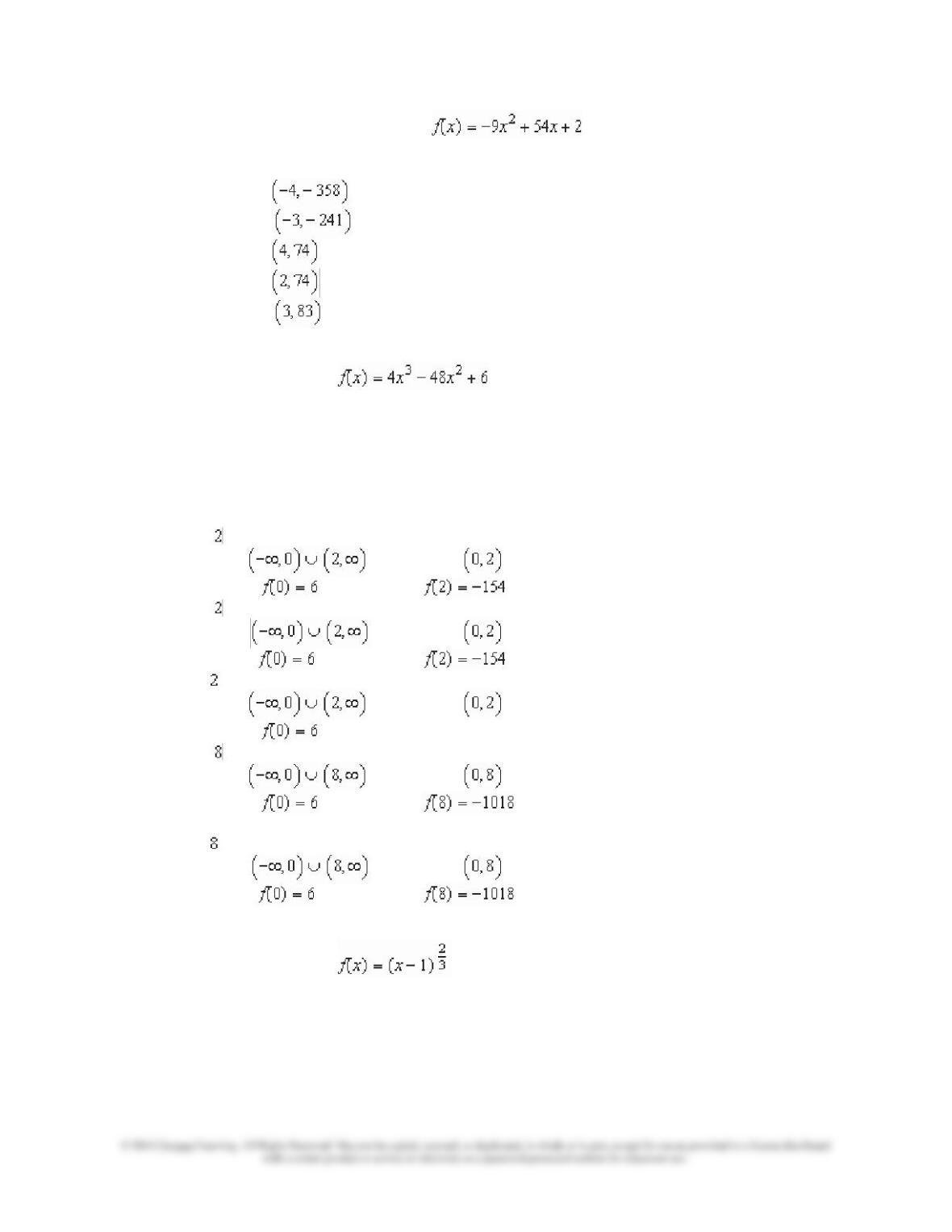
____ 7. Find the relative extremum of by applying the First Derivative
Test.
a. relative minimum:
b. relative maximum:
c. relative minimum:
d. relative minimum:
e. relative maximum:
____ 8. For the function :
(a) Find the critical numbers of f (if any);
(b) Find the open intervals where the function is increasing or decreasing; and
(c) Apply the First Derivative Test to identify all relative extrema.
Then use a graphing utility to confirm your results.
a. (a) x = 0 ,
(b) increasing: ; decreasing:
(c) relative max: ; relative min:
b. (a) x = 0 ,
(b) decreasing: ; increasing:
(c) relative min: ; relative max:
c. (a) x = 0 ,
(b) increasing: ; decreasing:
(c) relative max: ; no relative min.
d. (a) x = 0 ,
(b) increasing: ; decreasing:
(c) relative max: ; relative min:
e. (a) x = 0 ,
(b) decreasing: ; increasing:
(c) relative min: ; relative max:
____ 9. For the function :
(a) Find the critical numbers of f (if any);
(b) Find the open intervals where the function is increasing or decreasing; and
(c) Apply the First Derivative Test to identify all relative extrema.
Use a graphing utility to confirm your results.
3.3 Increasing and Decreasing Functions and the First Derivative Test 159
a. (a)
(b) increasing: ; decreasing:
(c) relative max:
b. (a)
(b) increasing: ; decreasing:
(c) relative max:
c. (a)
(b) decreasing: ; increasing:
(c) relative min:
d. (a)
(b) decreasing: ; increasing:
(c) relative min: ; relative max:
e. (a)
(b) decreasing: ; increasing:
(c) relative min:
____ 10. Find the open interval(s) on which the function is increasing in the
interval Round numerical values in your answer to three decimal places.
a. increasing on:
b. increasing on:
c. increasing on:
d. increasing on:
e. increasing on:
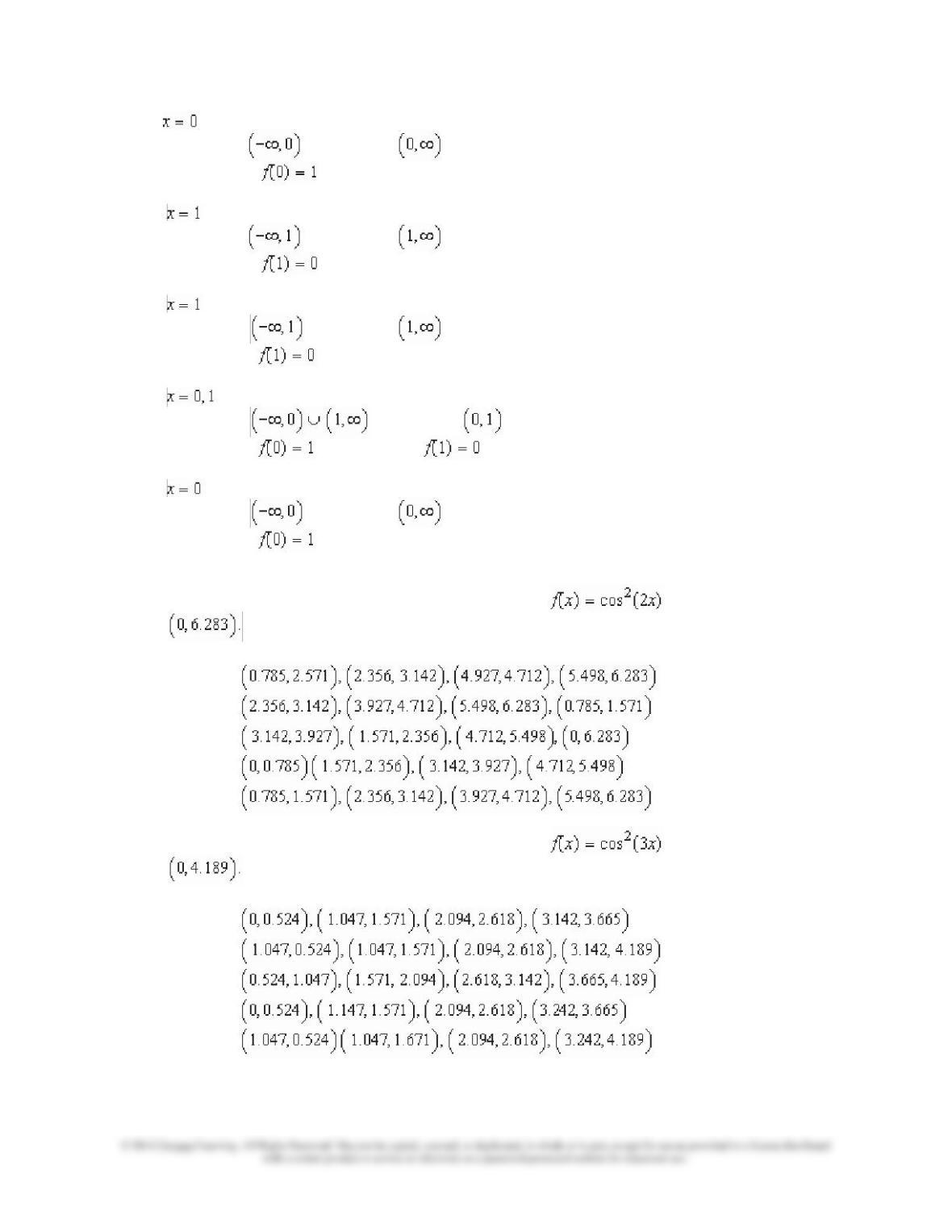
____ 11. Find the open interval(s) on which the function is increasing in the
interval Round numerical values in your answer to three decimal places.
a. increasing on:
b. increasing on:
c. increasing on:
d. increasing on:
e. increasing on:
160 Chapter 3: Applications of Differentiation
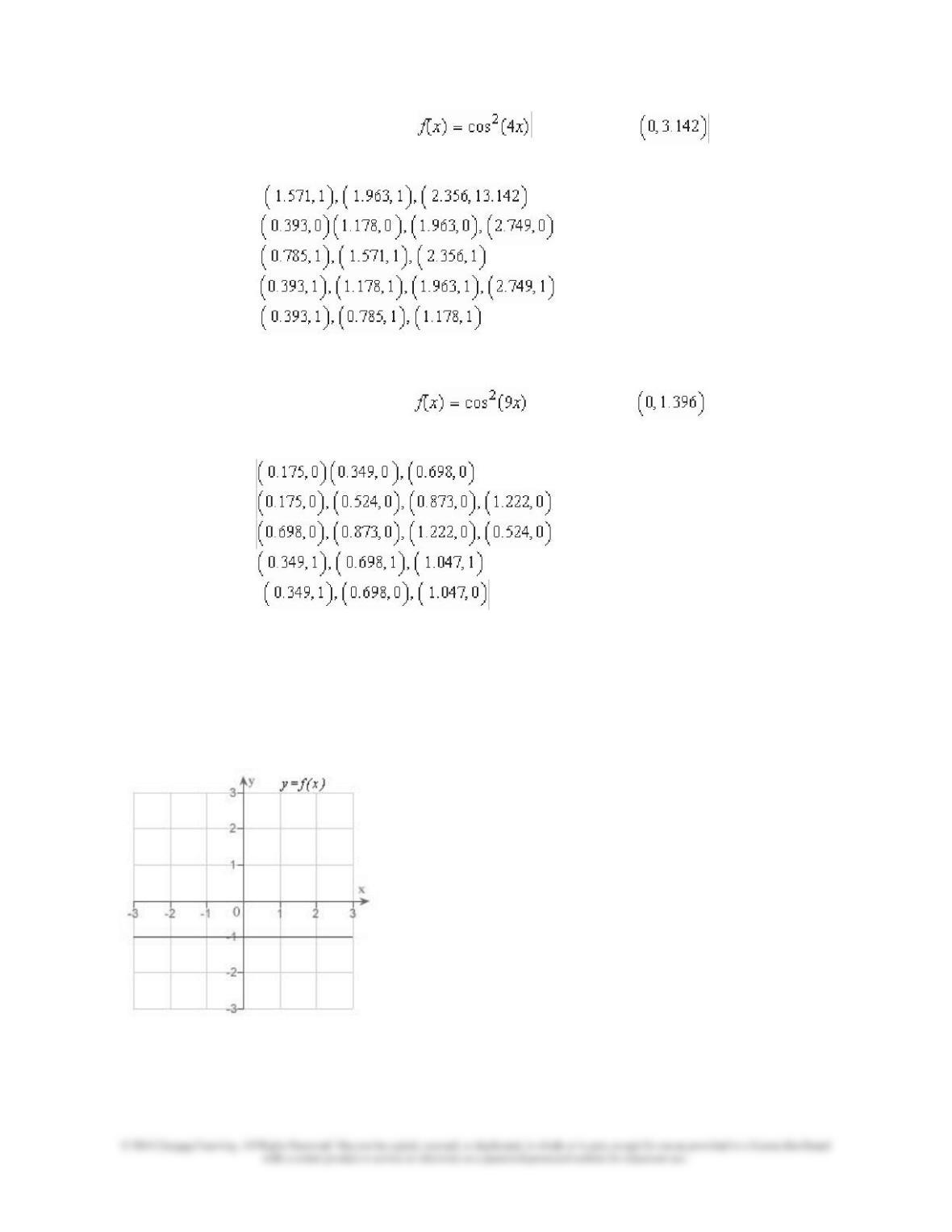
____ 12. Find the relative maxima of on the interval by applying
the First Derivative Test. Round numerical values in your answer to three decimal places.
a. relative maxima:
b. relative maxima:
c. relative maxima:
d. relative maxima:
e. relative maxima:
____ 13. Find the relative minima of on the interval by applying
the First Derivative Test. Round numerical values in your answer to three decimal places.
a. relative minima:
b. relative minima:
c. relative minima:
d. relative minima:
e. relative minima:
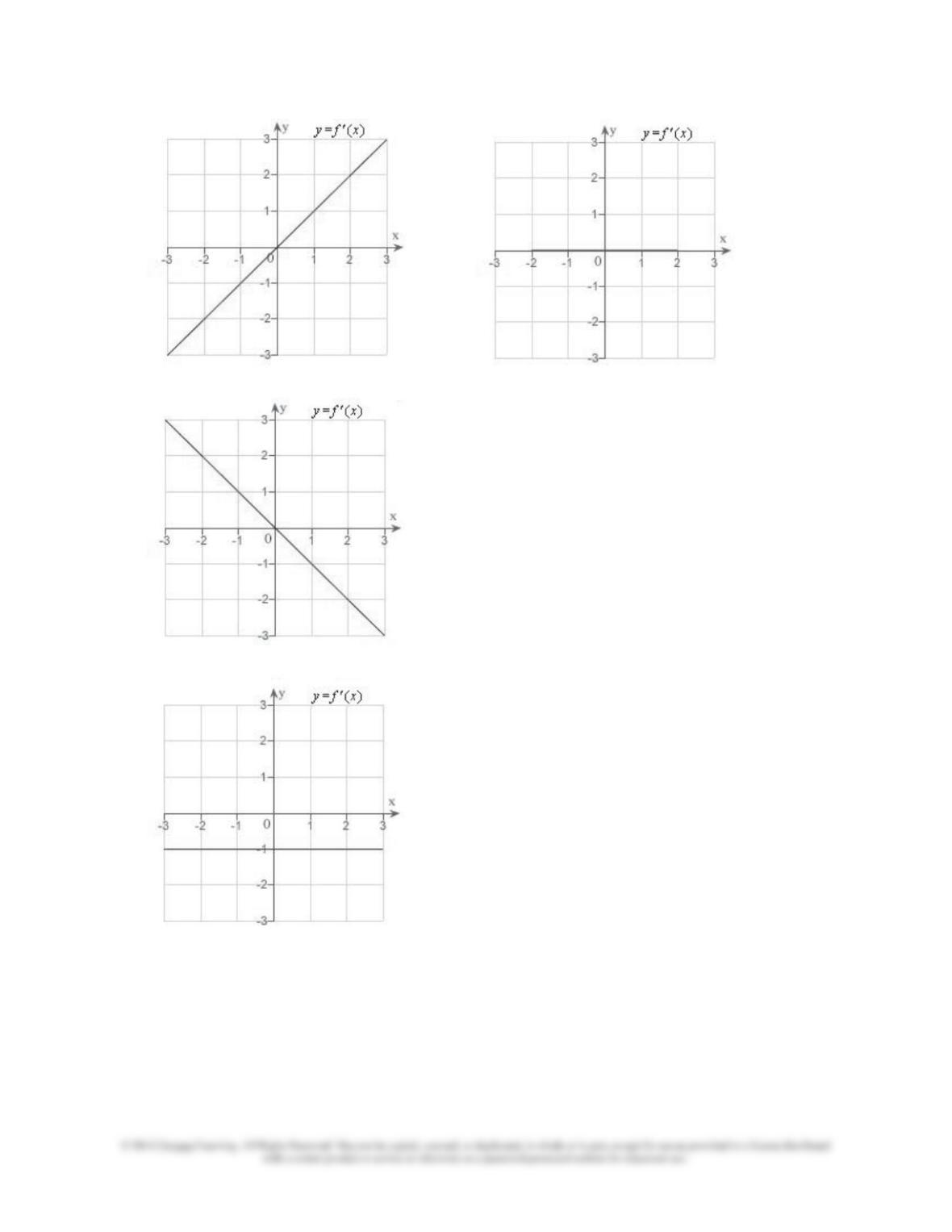
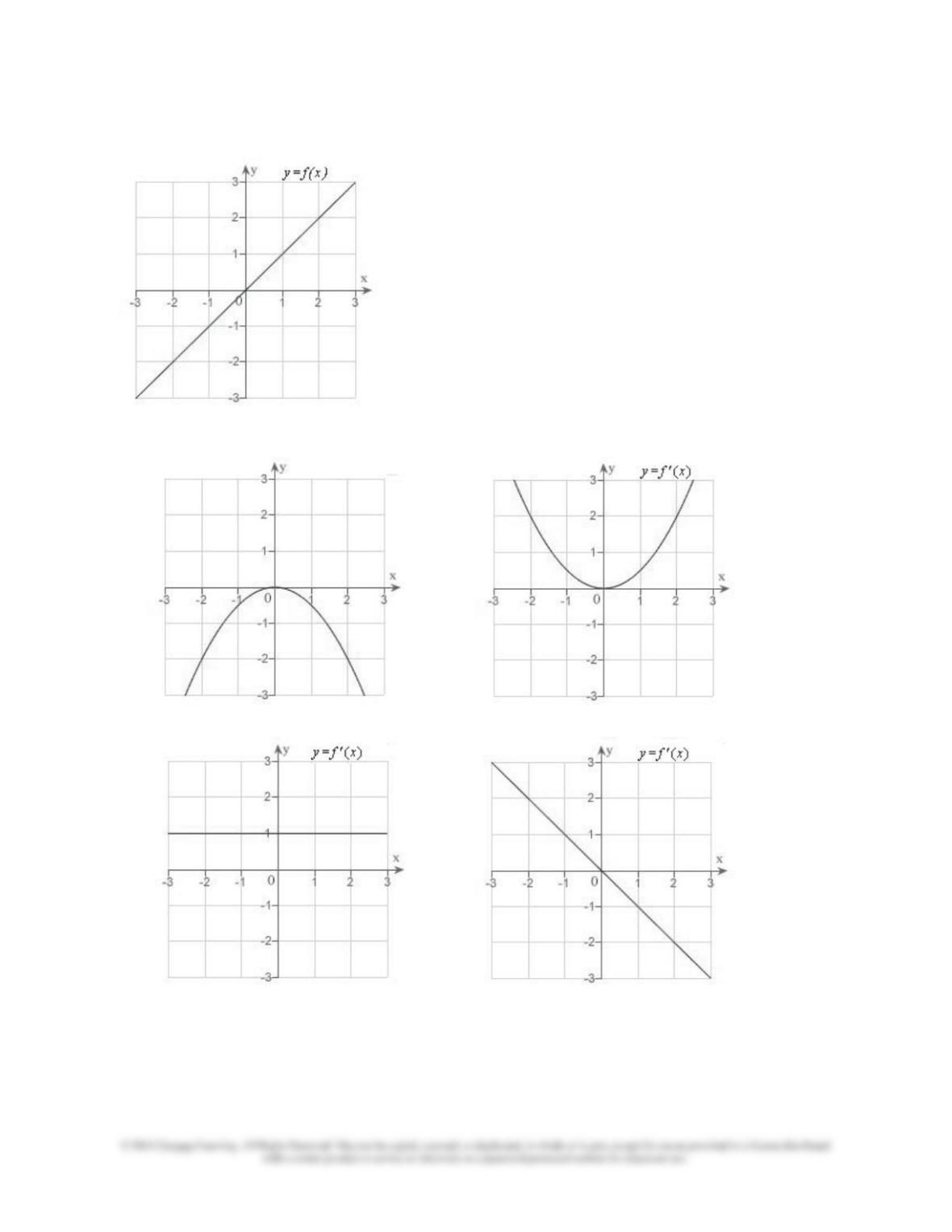
____ 14. The graph of f is shown in the figure. Sketch a graph of the derivative of f.
3.3 Increasing and Decreasing Functions and the First Derivative Test 161
a. d.
b. e. The derivative of f does not exist.
c.
162 Chapter 3: Applications of Differentiation
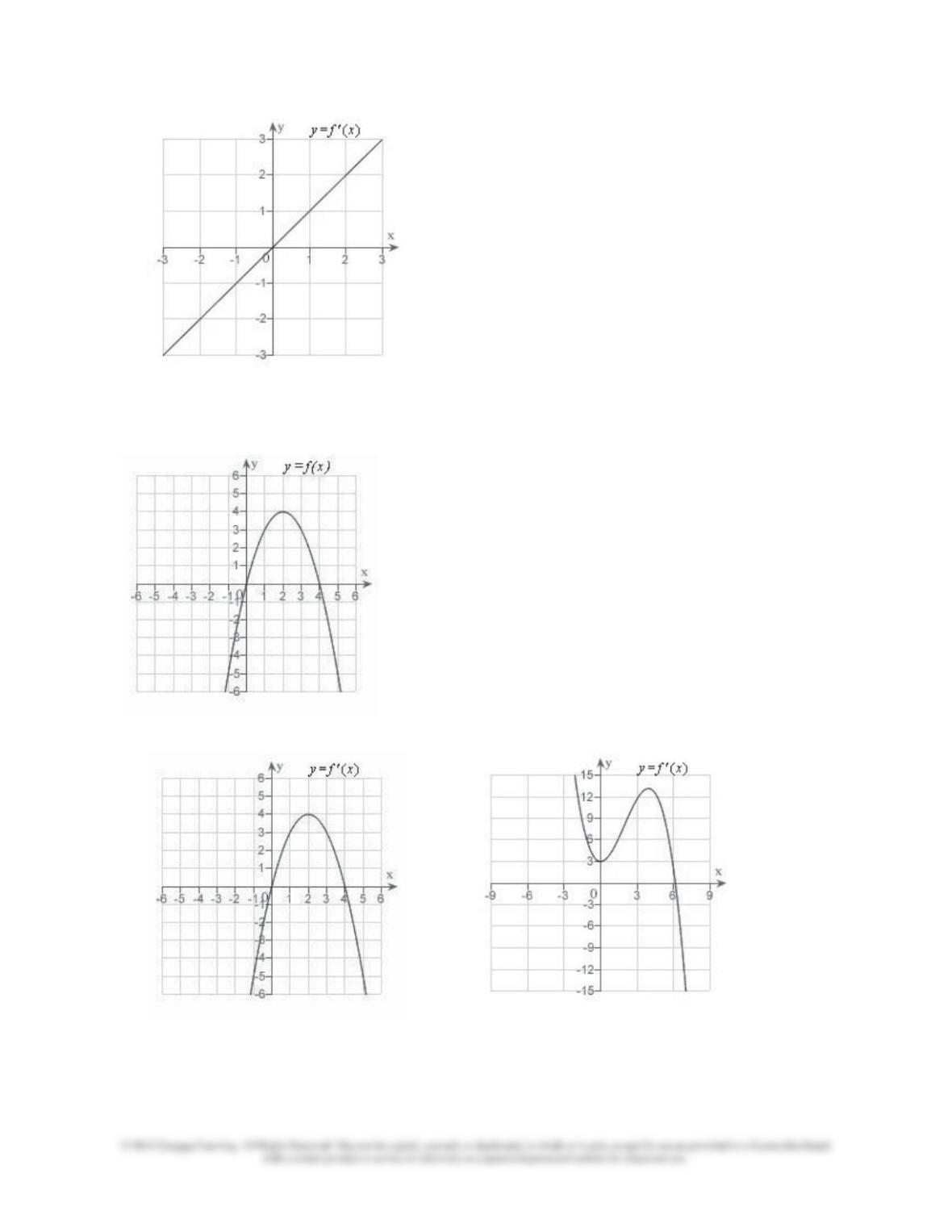
____ 15. The graph of f is shown in the figure. Sketch a graph of the derivative of f.
a. d.
b. e.
3.3 Increasing and Decreasing Functions and the First Derivative Test 163
c.
____ 16. The graph of f is shown in the figure. Sketch a graph of the derivative of f.
a. d.
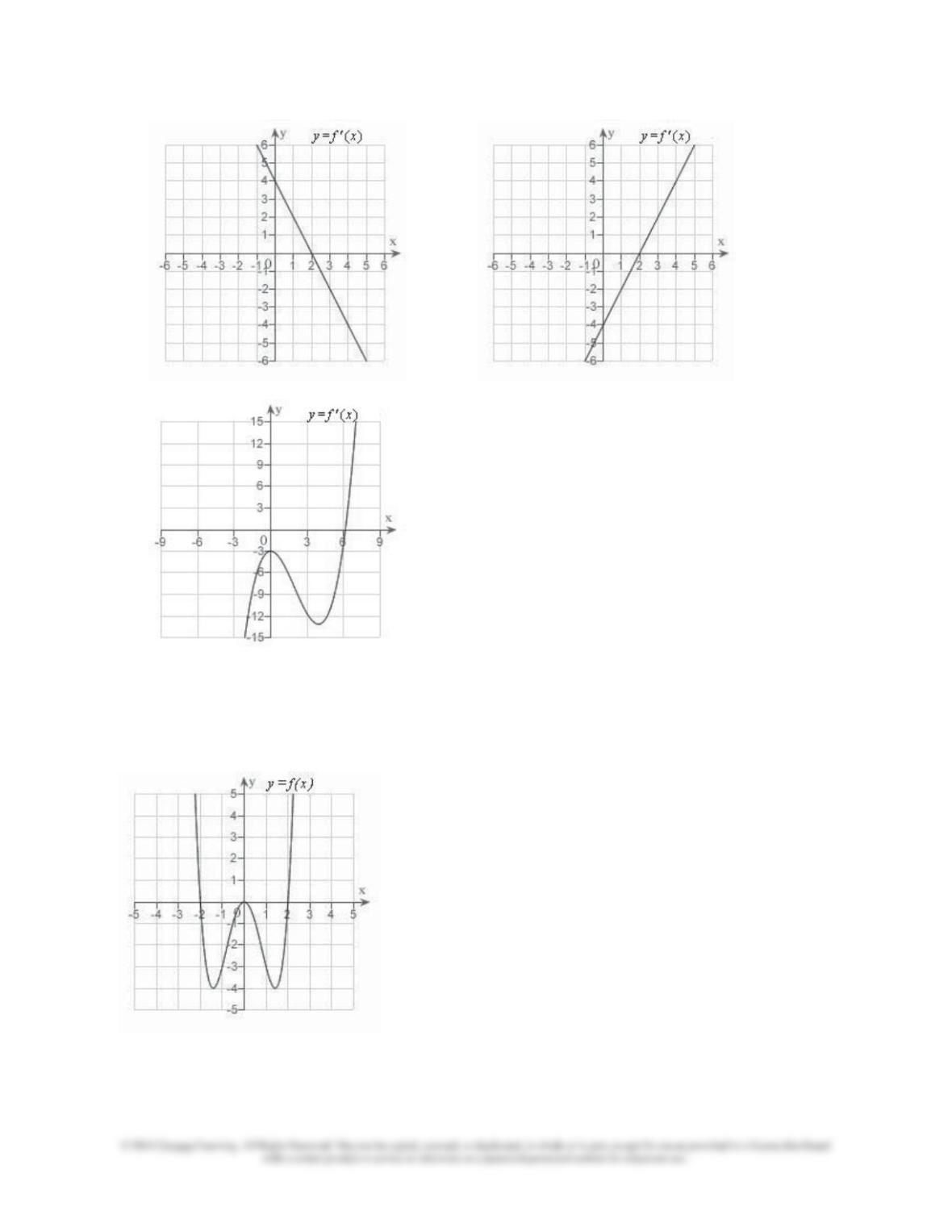
164 Chapter 3: Applications of Differentiation
b. e.
c.
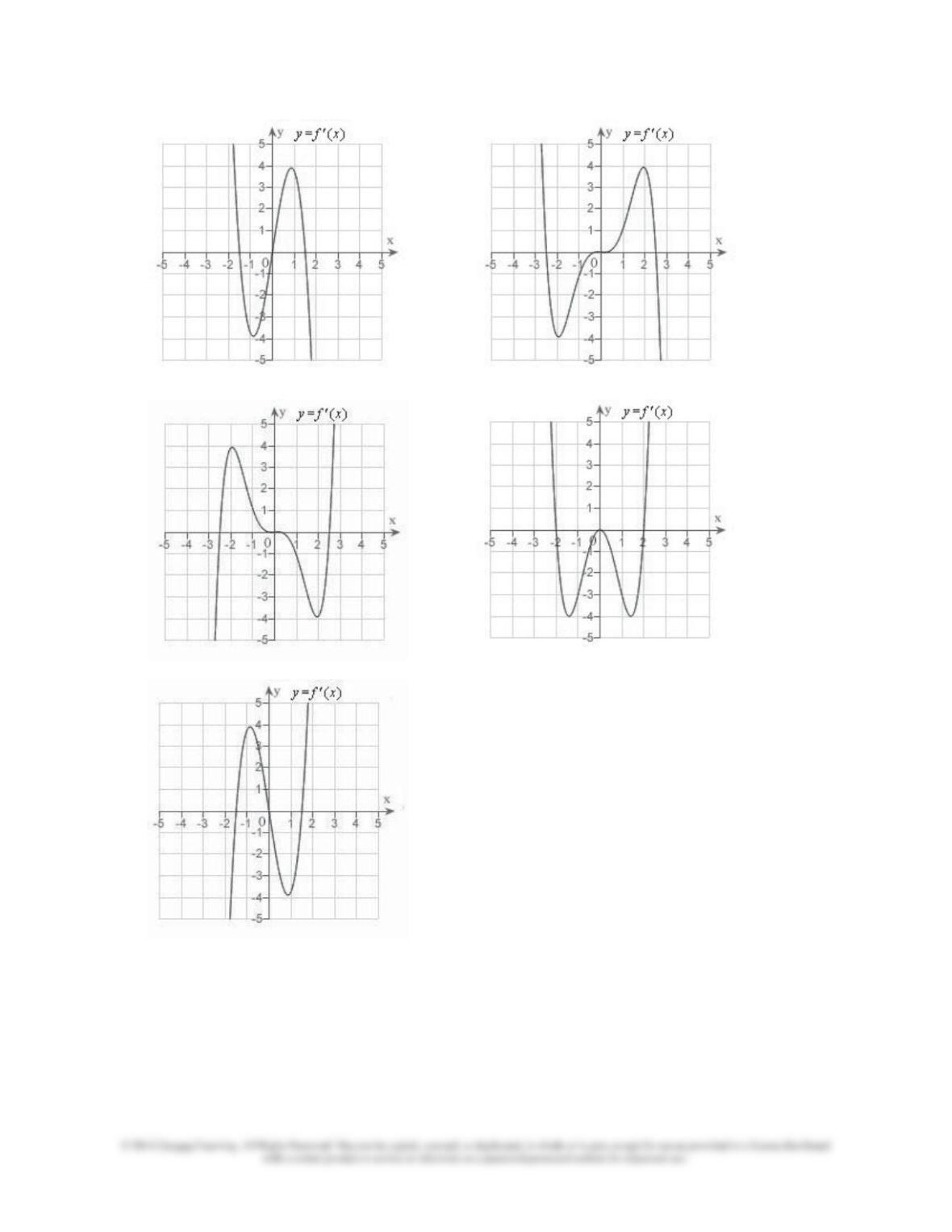
____ 17. The graph of f is shown in the figure. Sketch a graph of the derivative of f.
3.3 Increasing and Decreasing Functions and the First Derivative Test 165
a. d.
b. e.
c.
166 Chapter 3: Applications of Differentiation
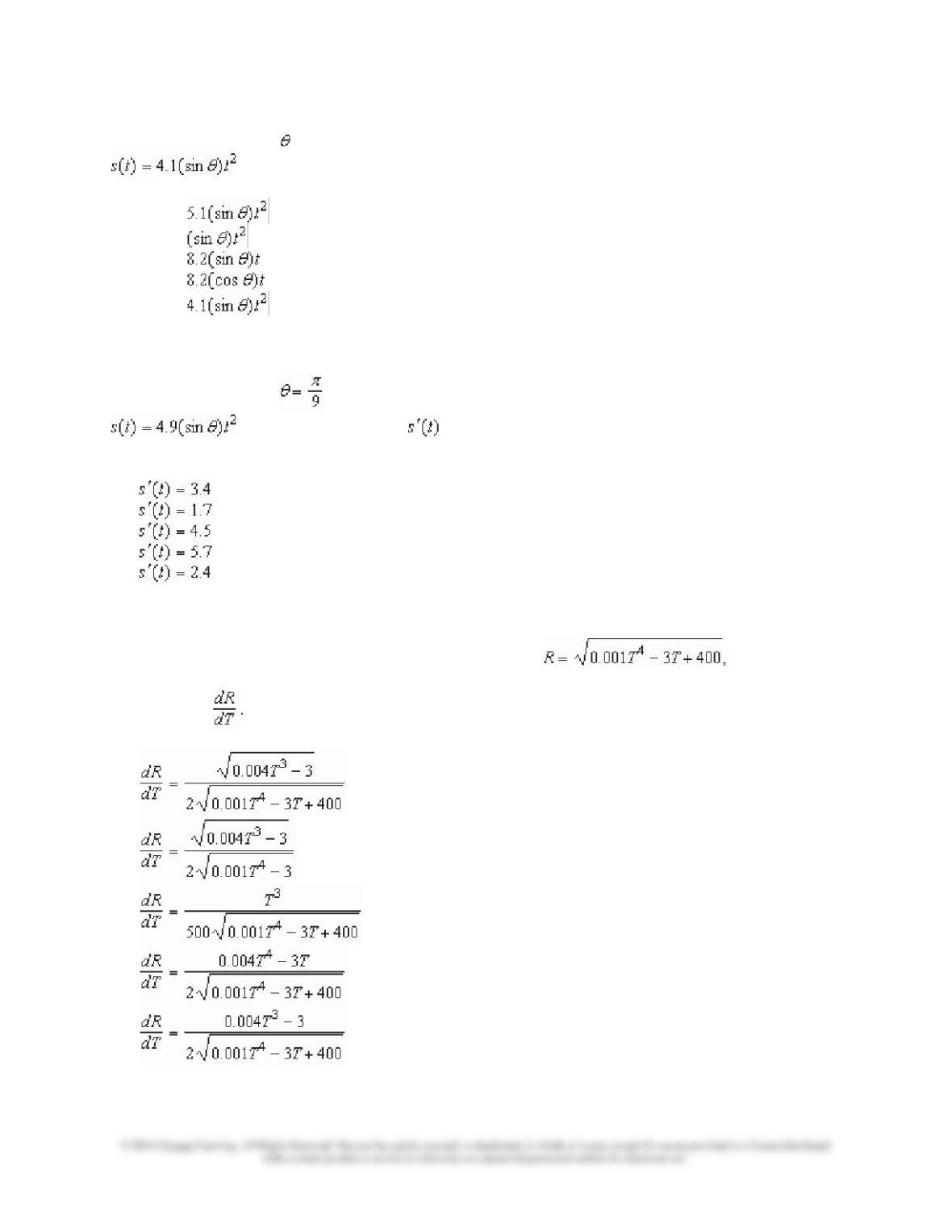
____ 18. A ball bearing is placed on an inclined plane and begins to roll. The angle of
elevation of the plane is radians. The distance (in meters) the ball bearing rolls in t seconds is
. Determine the speed of the ball bearing after t seconds.
a. speed: meters per second
b. speed: meters per second
c. speed: meters per second
d. speed: meters per second
e. speed: meters per second
____ 19. A ball bearing is placed on an inclined plane and begins to roll. The angle of
elevation of the plane is radians. The distance (in meters) the ball bearing rolls in t seconds is
. Determine the value of after one second. Round numerical values in your
answer to one decimal place.
a.
b.
c.
d.
e.
____ 20. The resistance R of a certain type of resistor is where R is
measured in ohms and the temperature T is measured in degrees Celsius. Use a computer algebra
system to find
a.
b.
c.
d.
e.
3.3 Increasing and Decreasing Functions and the First Derivative Test 167
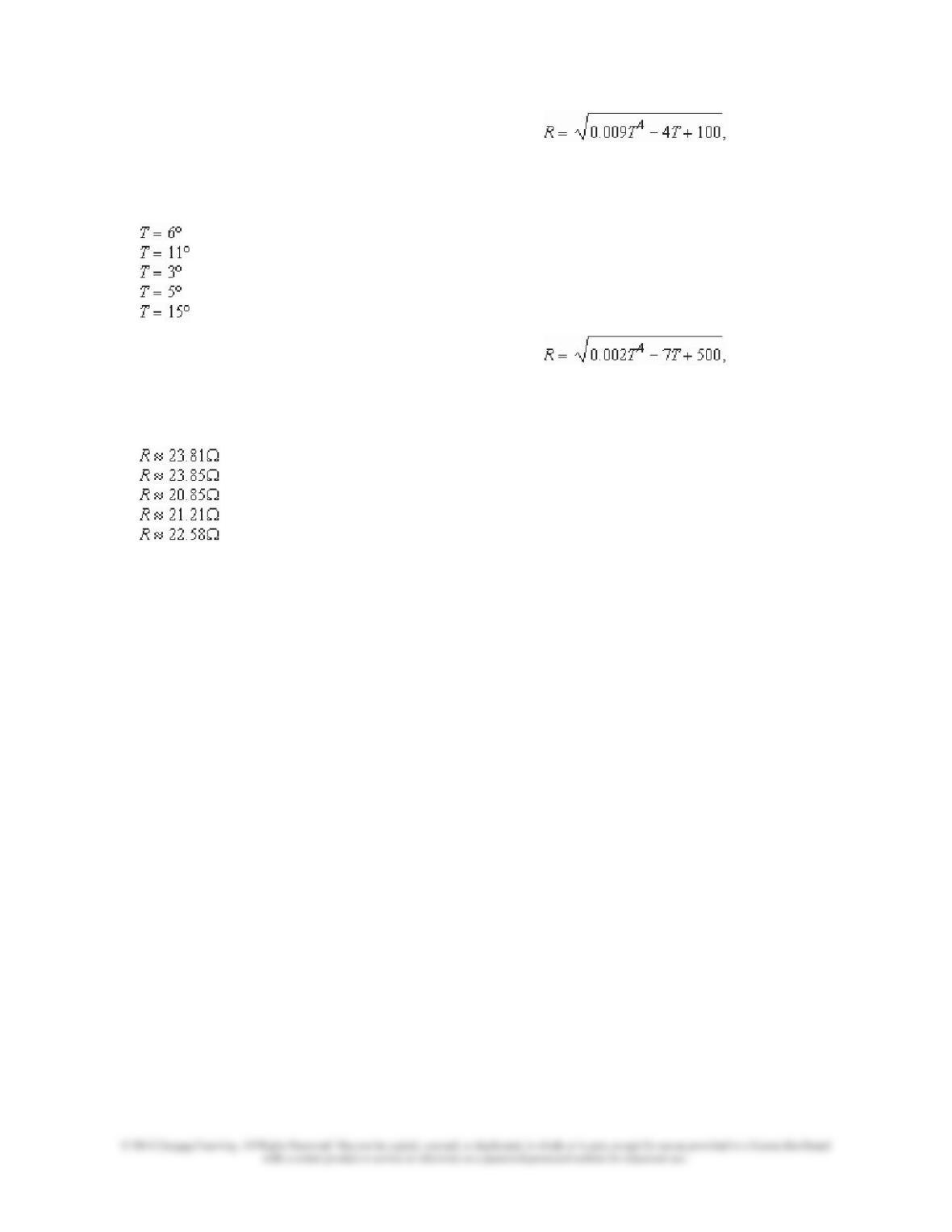
____ 21. The resistance R of a certain type of resistor is where R is
measured in ohms and the temperature T is measured in degrees Celsius. Use a computer algebra
system to find the critical number of the function. Round numerical values in your answer to the
nearest whole number.
a.
b.
c.
d.
e.
____ 22. The resistance R of a certain type of resistor is where R is
measured in ohms and the temperature T is measured in degrees Celsius. Use a computer algebra
system to determine the minimum resistance for this type of resistor. Round your answer to two
decimal places.
a.
b.
c.
d.
e.
168 Chapter 3: Applications of Differentiation
3.3 Increasing and Decreasing Functions and the First Derivative Test
Answer Section
MULTIPLE CHOICE
3.3 Increasing and Decreasing Functions and the First Derivative Test 169