44. Which of the graphs in Exhibit 3-13 illustrates a surplus exists at the indicated market price?
a.
Diagram A.
c.
Diagram C.
b.
Diagram B.
d.
Diagrams A and C.
45. Which of the graphs in Exhibit 3-13 illustrates a shortage exists at the indicated market price?
a.
Diagram A.
c.
Diagram C.
b.
Diagram B.
d.
Diagrams A and B.
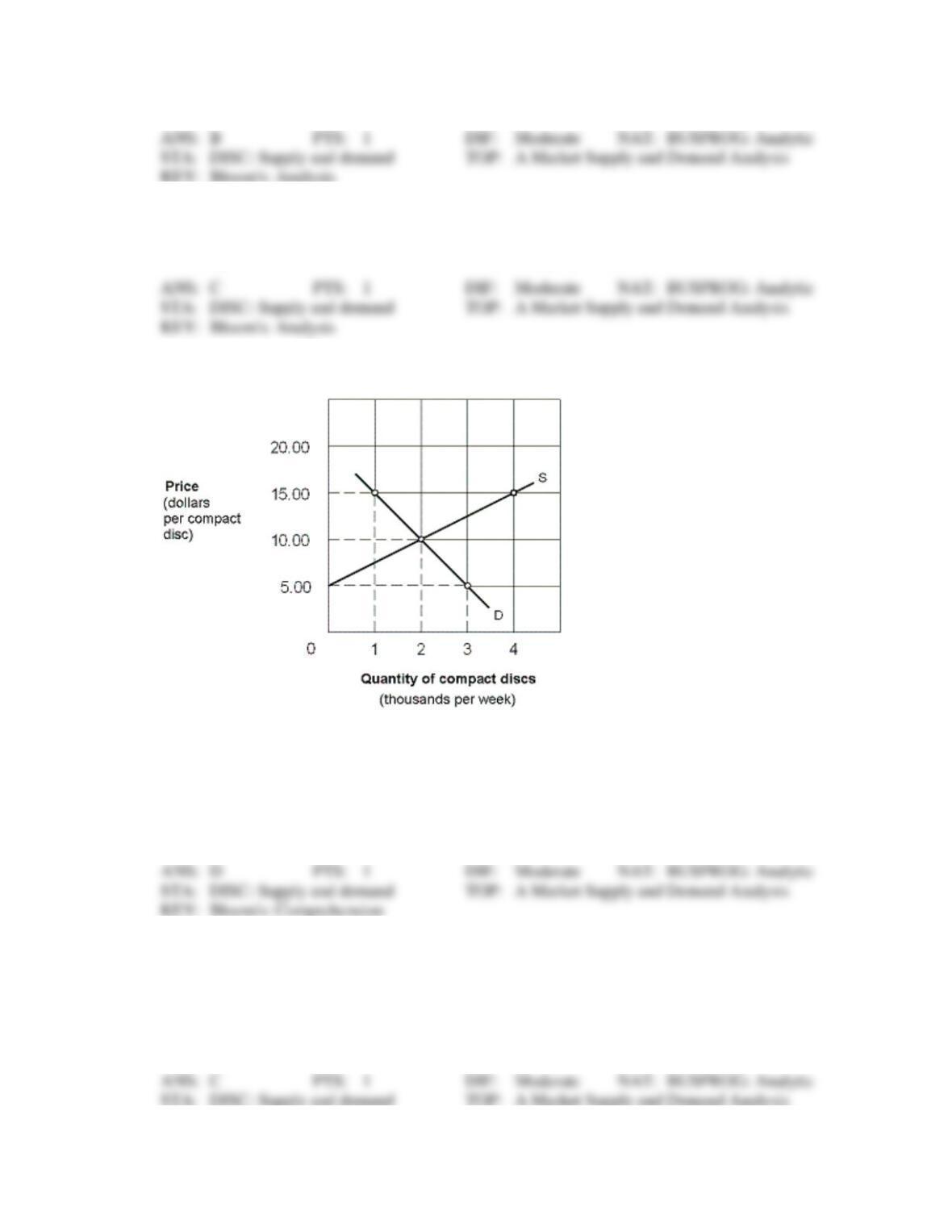
Exhibit 3-14 Supply and demand curves
46. In Exhibit 3-14, assume that the market price of compact discs is $15 each. This price is:
a.
an equilibrium price.
b.
not an equilibrium price because there is an excess quantity demanded at a price of $15.
c.
an equilibrium price because suppliers can store inventories in their warehouses.
d.
not an equilibrium price because the quantity supplied of compact discs is greater than the
quantity demanded.
47. In Exhibit 3-14, assume that the price of compact discs is $5 each. This price is:
a.
an equilibrium price.
b.
not an equilibrium price because there is an excess quantity supplied at a price of $5.
c.
not an equilibrium price because there is an excess quantity demanded at a price of $5.
d.
not an equilibrium price because the quantity supplied of compact discs is greater than the
quantity demanded.
48. In Exhibit 3-14, if the market price of compact discs is initially $15, a movement toward equilibrium
would require:
a.
no change, because an equilibrium already exists.
b.
the price to fall below $15 and both the quantity supplied and the quantity demanded to
fall.
c.
the price to remain the same, but the supply curve to shift to the left.
d.
the price to fall below $15, the quantity supplied to fall, and the quantity demanded to rise.
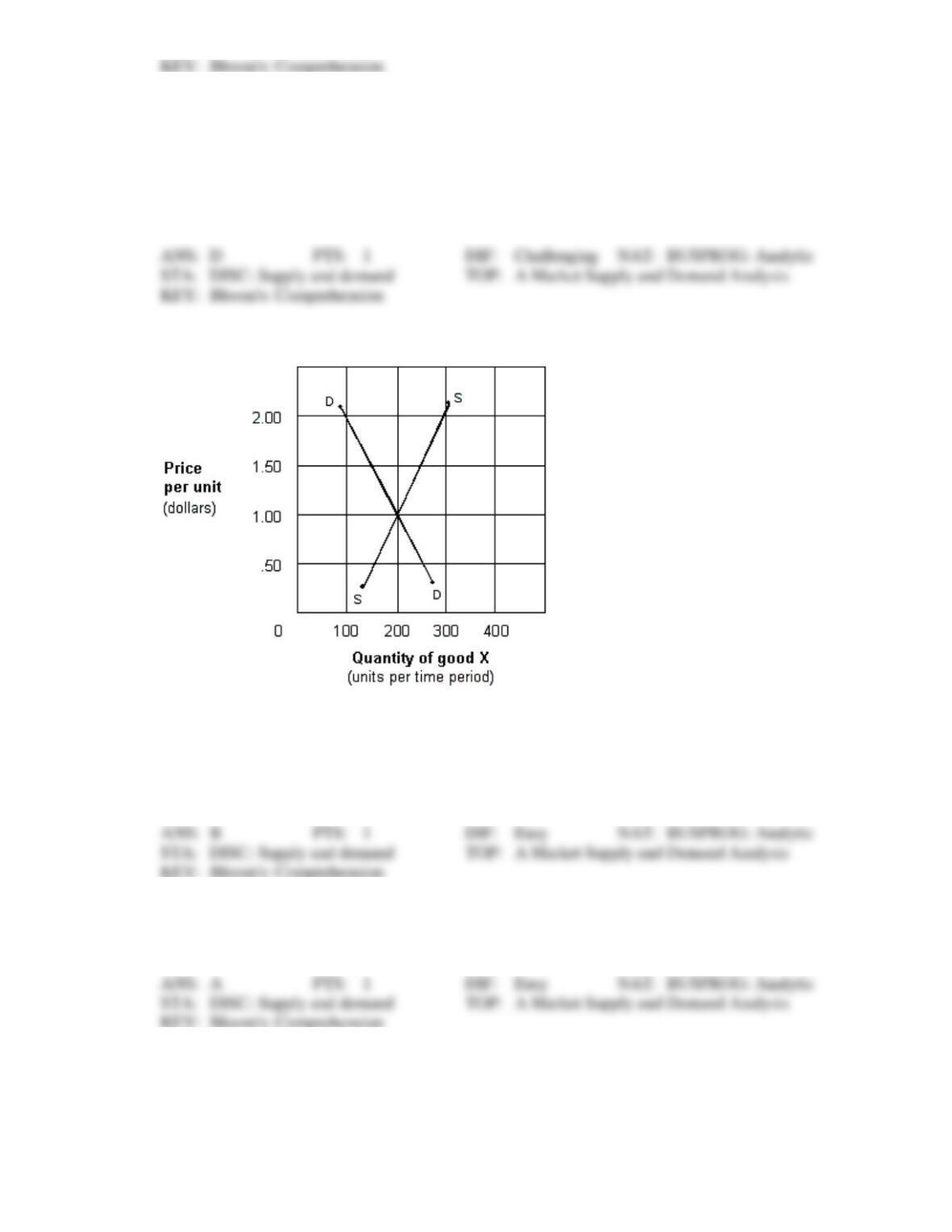
Exhibit 3-15 Supply and demand curves for good X
49. In Exhibit 3-15, if the price moves from $2.00 to $1.00, unsold inventories will:
a.
fall, putting upward pressure on price.
b.
fall, putting less pressure on price.
c.
rise, putting less pressure on price.
d.
rise, putting upward pressure on price.
50. In Exhibit 3-15, at a price of $.50 the market for good X will experience a:
a.
shortage of 100 units.
c.
shortage of 300 units.
b.
surplus of 100 units.
d.
surplus of 200 units.
51. In the market shown in Exhibit 3-15, the equilibrium price and quantity of good X are:
a.
$0.50, 250.
c.
$2.00, 100.
b.
$2.00, 300.
d.
$1.00, 200.
52. In Exhibit 3-15, if the market price of good X is initially $.50, a movement toward equilibrium
requires:
a.
no change, because an equilibrium already exists.
b.
the price to fall below $.50 and both the quantity supplied and the quantity demanded to
rise.
c.
the price to remain the same, but the supply curve to shift to the left.
d.
the price to rise above $.50, the quantity supplied to rise, and the quantity demanded to
fall.
53. In Exhibit 3-15, if the market price of good X is initially $1.50, a movement toward equilibrium
requires:
a.
no change, because an equilibrium already exists.
b.
the price to fall below $1.50 and both the quantity supplied and the quantity demanded to
fall.
c.
the price to remain the same, but the supply curve to shift to the left.
d.
the price to fall below $1.50, the quantity supplied to fall, and the quantity demanded to
rise.
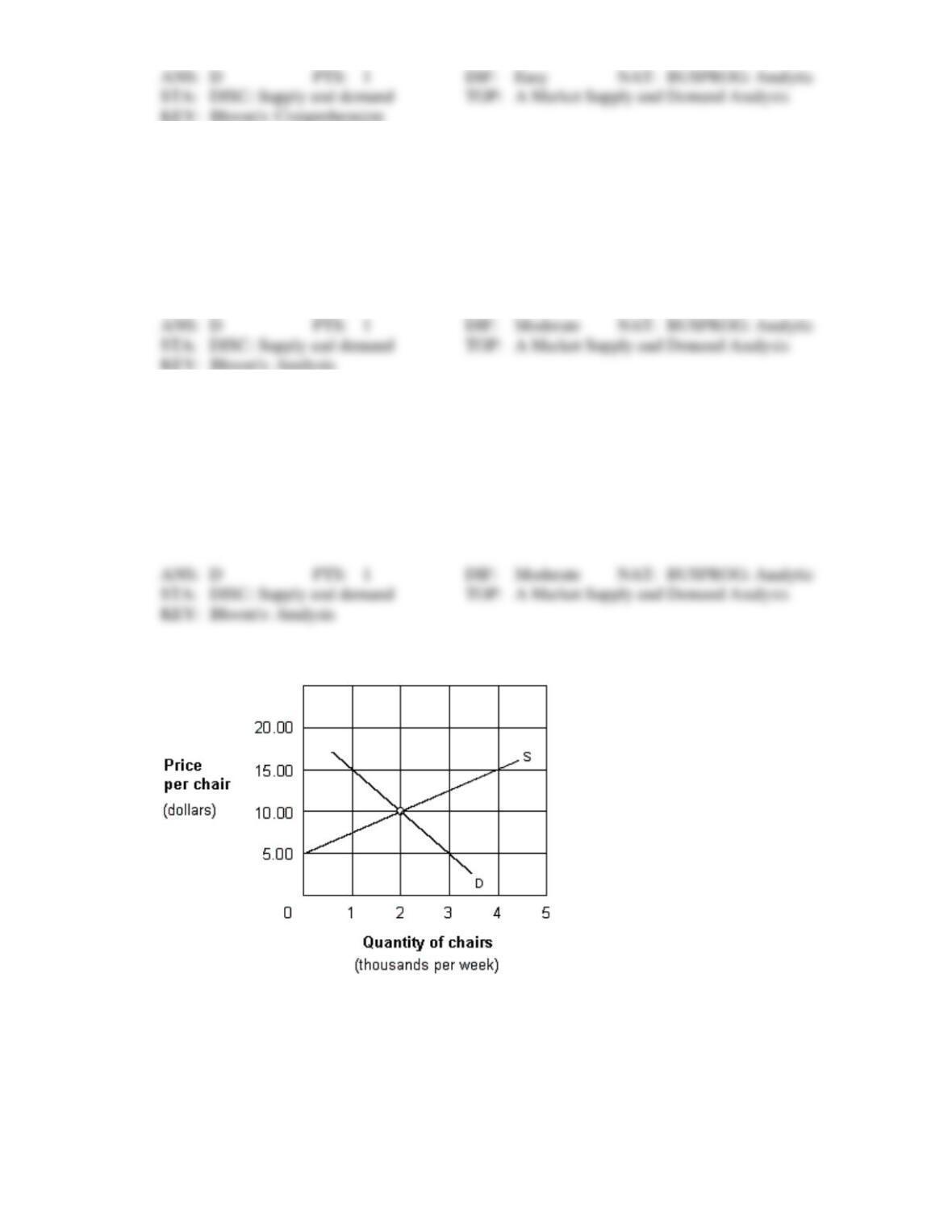
Exhibit 3-16 Supply and demand curves for chairs
54. In Exhibit 3-16, assume that the market price of chairs is $15 each. This price is:
a.
an equilibrium price.
b.
not an equilibrium price, since there is an excess demand at a price of $10.
c.
an equilibrium price, since suppliers can store inventories in their warehouses.
d.
not an equilibrium price, since the rate at which chairs are being supplied is greater than
the rate at which they are being demanded.
55. In Exhibit 3-16, assume that the market price of chairs is $5 each. This price is:
a.
an equilibrium price.
b.
not an equilibrium price, since there is an excess supply at a price of $5.
c.
not an equilibrium price, since there is an excess demand at a price of $5.
d.
not an equilibrium price, since the rate at which chairs are being supplied is great than the
rate at which they are being demanded.
56. In Exhibit 3-16, if the market price of chairs is initially $15, a movement toward equilibrium would
require:
a.
no change, because an equilibrium already exists.
b.
the price to fall below $15 and both the quantity supplied and the quantity demanded to
fall.
c.
the price to remain the same, but the supply curve to shift to the left.
d.
the price to fall below $15, the quantity supplied to fall, and the quantity demanded to rise.
TRUE/FALSE
1. According to the law of demand, if the price of a good increases, other things being equal, the quantity
demanded will decrease.
2. Demand curves slope downward to the right.
3. Other things being equal, a fall in the price of Coca-Cola will increase the quantity of Coca-Cola
demanded.
4. Higher milk prices reduce the demand for milk.
5. Other things being equal, an increase in the price of aspirin will decrease the demand for aspirin.
6. An increase in demand is reflected as a rightward (outward) shift of the demand curve and is caused by
an increase in price.
7. Other things being equal, an increase in the price of gasoline will decrease the quantity demanded for
gasoline.
8. If a vacation in Paris is a normal good, other things being equal, an increase in consumer income will
increase the demand for travel to Paris.
9. If movies are an inferior good, movie attendance will rise when consumer incomes fall.
10. If people buy more of a generic brand when consumer income falls, it is an inferior good.
11. If renting videos is an inferior good, demand for this service will rise when consumer income falls.
12. If pork and beans is an inferior good, other things being equal, an increase in consumer income will
decrease the demand for pork and beans.
13. If the price of good X increases and this causes an increase in the demand for good Y, then goods X
and Y are substitute goods.
14. If X and Y are substitutes, the demand curve for X will shift to the right when the price of Y decreases.
15. Suppose A and B are substitute goods. Other things being equal, the demand curve for A will shift to
the right when the price of B goes down.
16. Suppose A and B are complementary goods. Other things being equal, the demand curve for A will
shift to the right when the price of B goes up.
17. Suppose A and B are complementary goods. Other things being equal, the demand curve for A will
shift to the right when the price of B goes down.
18. If X and Y are complementary goods, the demand curve for X will shift to the right when the price of
Y increases.
19. The law of supply states that an increase in supply is represented graphically as a rightward shift of the
supply curve.
20. The law of supply indicates that an increase in price will cause an increase in supply which is reflected
graphically as a rightward shift of the supply curve.
21. According to the law of supply, price and quantity supplied are inversely related, ceteris paribus.
22. Other things being equal, a fall in the price of orange juice will decrease the quantity supplied.
23. The supply curve for chicken will shift to the right, if production costs increase.
24. An increase in the cost of chicken feed will reduce the supply of eggs.
25. If input prices increase, the supply curve for cheese will shift to the right.
26. A surplus in a market exists when there is an excess quantity demanded.
27. Surpluses cause prices to rise while shortages cause prices to fall.
28. Surpluses cause prices to fall while shortages cause prices to rise.
29. In economics, the term “surplus” means an excess quantity supplied.
30. Suppose the market price of a good X is below the equilibrium price. The result is a shortage and
sellers can be expected to decrease the quantity of that good X supplied.
31. A surplus means that the quantity supplied is greater than the quantity demanded at the prevailing
price.
32. A shortage means that the quantity demanded is greater than the quantity supplied at the prevailing
price.
33. Excess quantity demanded for a good creates pressure to push the price of that good down toward the
equilibrium price.
34. A shortage occurs when the quantity demanded exceeds the quantity supplied.
35. In economics, the term “shortage” means that the quantity demanded is greater than the quantity
supplied at the existing price.
36. An equilibrium price is unaffected by nonprice factors.
37. When the market price of a product is below the equilibrium price, shortages will result and sellers can
be expected to reduce the supply of that product.
38. The price system eliminates scarcity.
39. Equilibrium in a market exists when there is neither a surplus nor a shortage of the item.
ESSAY
1. Distinguish the laws of demand and supply. How are the laws of demand and supply illustrated
graphically?
2. Interpret what an increase in demand and an increase in supply mean. Discuss the causes of an increase
in demand and an increase in supply. How are increases in demand and supply expressed graphically?
3. Discuss how a market reaches equilibrium. How is it expressed graphically?