128.
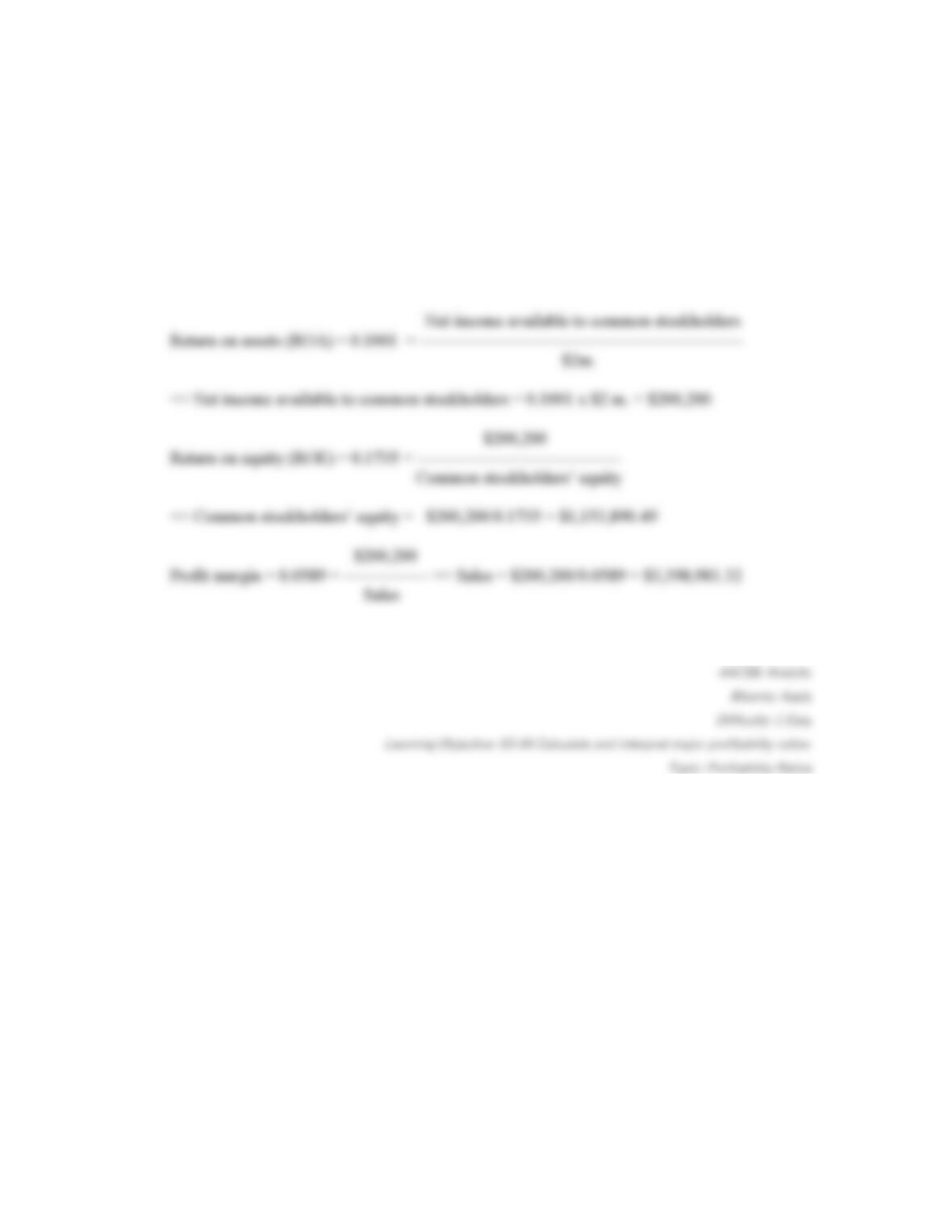
Profitability Ratios In 2013, Colin’s Guitars, Inc. announced an ROA of 10.01 percent, ROE
of 17.35 percent, and profit margin of 5.89 percent. The firm had total assets of $2 million
at year-end 2013. Calculate the 2013 values of net income available to common
stockholders, common stockholders’ equity, and net sales for Colin’s Guitars, Inc.
129.
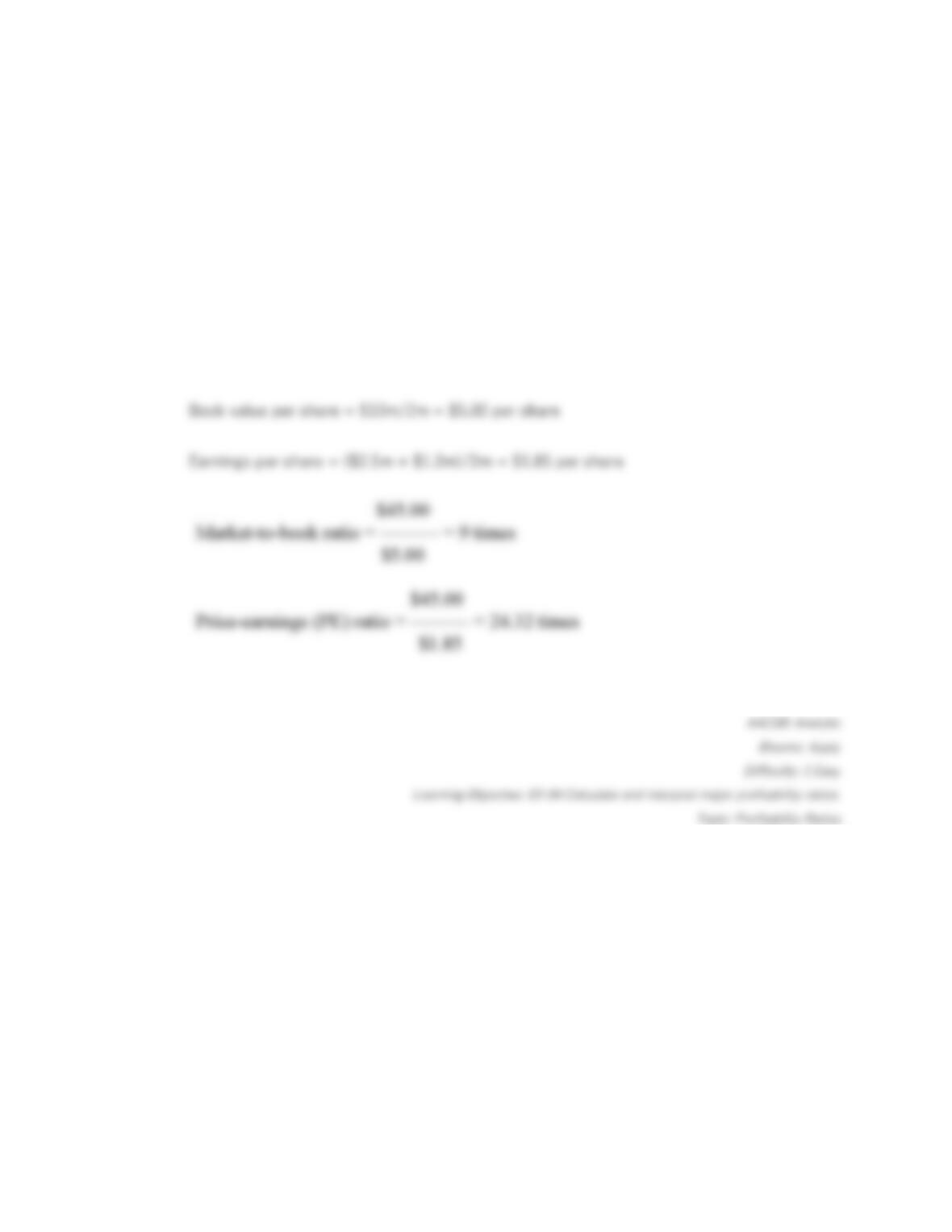
Market Value Ratios You are considering an investment in Taylor’s Hot Rods, Corp.
During the last year the firm’s income statement listed addition to retained earnings =
$2.5 million and common stock dividends = $1.2 million. Taylor’s year–end balance sheet
shows common stockholders’ equity = $10 million with 2 million shares of common stock
outstanding. The common stock’s market price per share = $45.00. What is Taylor’s Hot
Rods’ book value per share and earnings per share? Calculate the market–to-book ratio
and PE ratio.
130.
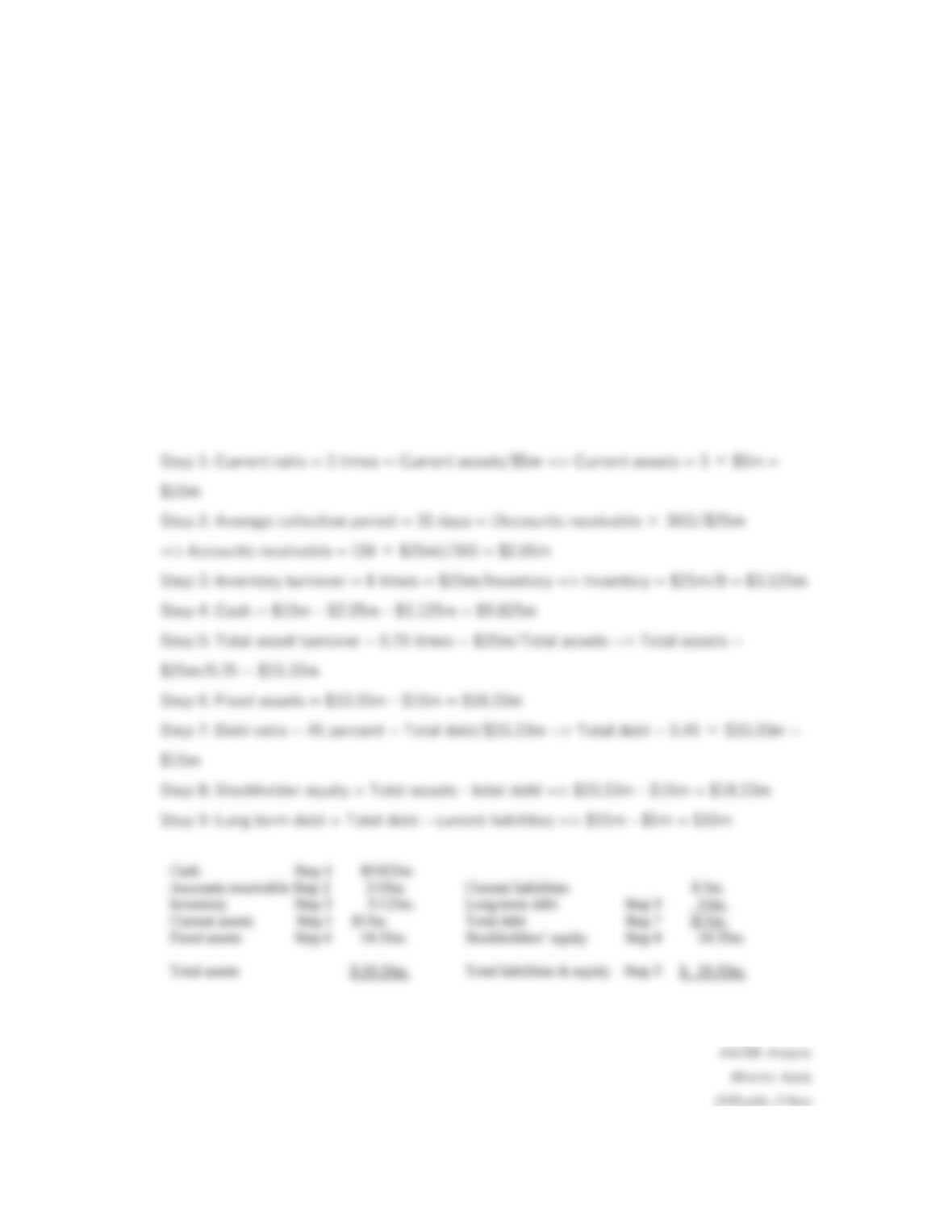
Ratio Analysis Use the following information to complete the following balance sheet.
Current ratio = 3
Current liabilities = 5 million
Credit sales = 25 million
Average collection period = 30
Inventory turns = 8
Total asset turns = 0.75
Debt ratio = 45 percent

131.
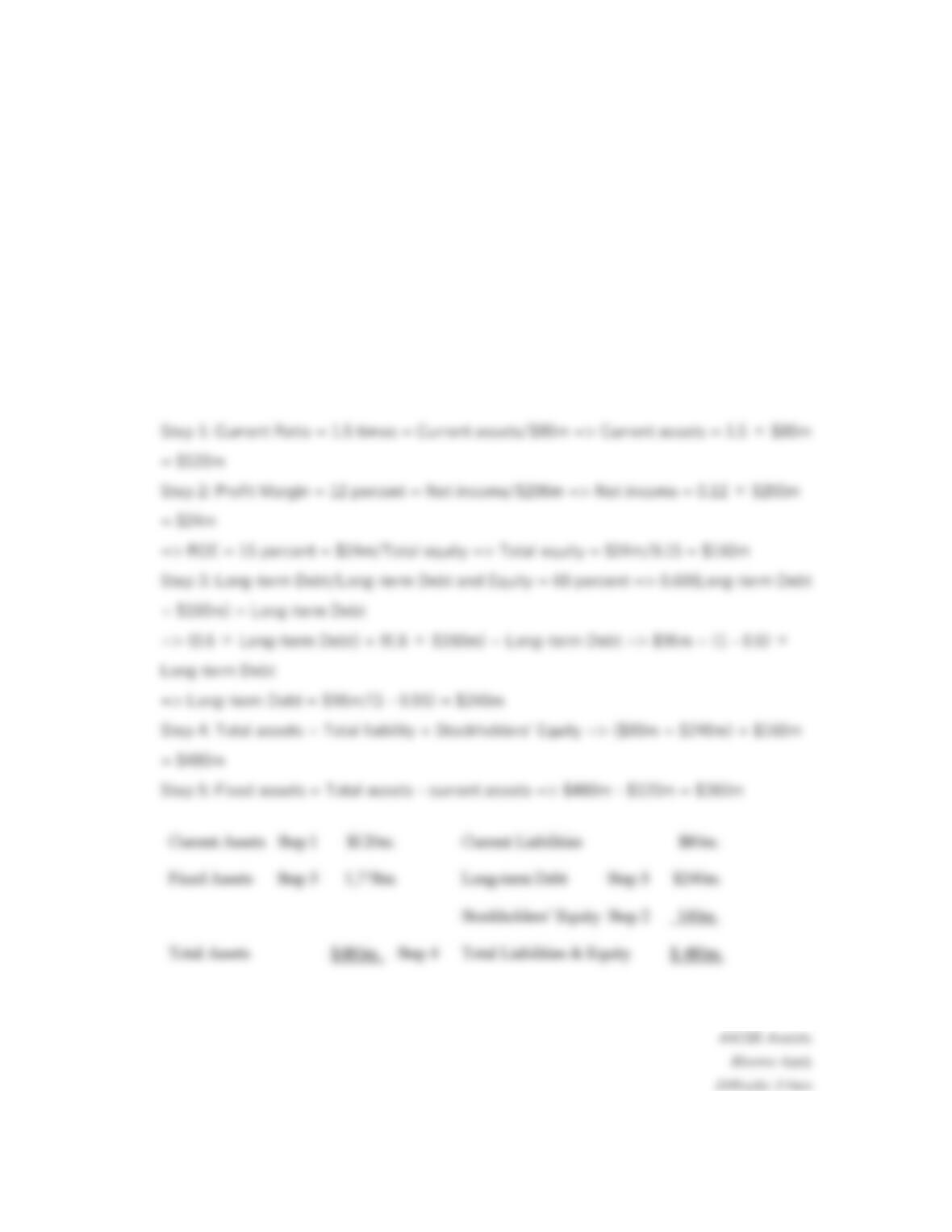
Ratio Analysis Use the following information to complete the following balance sheet.
Current ratio = 1.5
Current liabilities = $80 million
Profit margin = 12 percent
Credit sales = 200 million
Return on equity = 15 percent
Debt ratio = 60 percent
132.
DuPont Analysis Last year, K9 WebbWear, Inc., reported an ROE of 30 percent. The firm’s
debt ratio was 45 percent, sales were $20 million, and the capital intensity was 1.50 times.
Calculate the net income and profit margin for K9 WebbWear last year. This year, K9
WebbWear plans to increase its debt ratio to 60 percent. The change will not affect sales
or total assets, however, it will reduce the firm’s profit margin to 10 percent. By how much
will the change in K9 WebbWear’s debt ratio affect its ROE?
133.
DuPont Analysis You are considering investing in Dakota’s Security Services. You have
been able to locate the following information on the firm: total assets are $50 million,
accounts receivable are $1 million, ACP is 15 days, net income is $1.5 million, and debt–to–
equity is 2.1 times. All sales are on credit. Dakota’s is considering loosening its credit
policy such that ACP will increase to 20 days. The change is expected to increase credit
sales by 5 percent. Any change in accounts receivable will be offset with a change in debt.
No other balance sheet changes are expected. Dakota’s profit margin will remain
unchanged. How will this change in accounts receivable policy affect Dakota’s net income,
total asset turnover, equity multiplier, ROA, and ROE?
134.
Internal Growth Rate Last year, Marly Brown, Inc., reported an ROE of 30 percent. The
firm’s debt-to–equity was 2.50 times, sales were $20 million, the capital intensity was 1.5
times, and dividends paid to common stockholders were $500,000. The firm has no
preferred stock outstanding. This year, Marly Brown plans to decrease its debt–to-equity
ratio to 2.00 times. The change will not affect sales, total assets, or dividends paid,
however, it will reduce the firm’s profit margin to 10 percent. Use the DuPont equation to
determine how the change in Marly Brown’s debt ratio will affect its internal growth rate.

135.
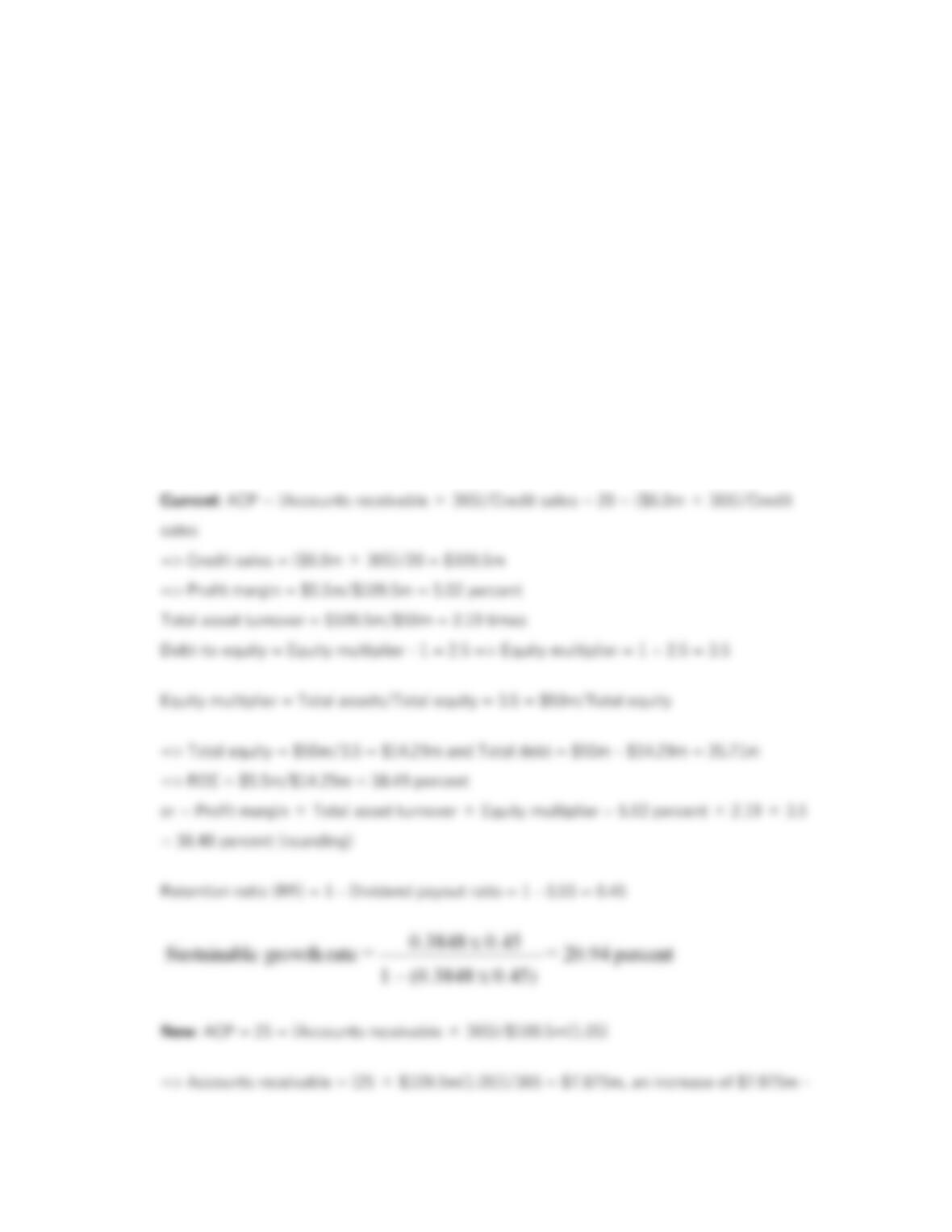
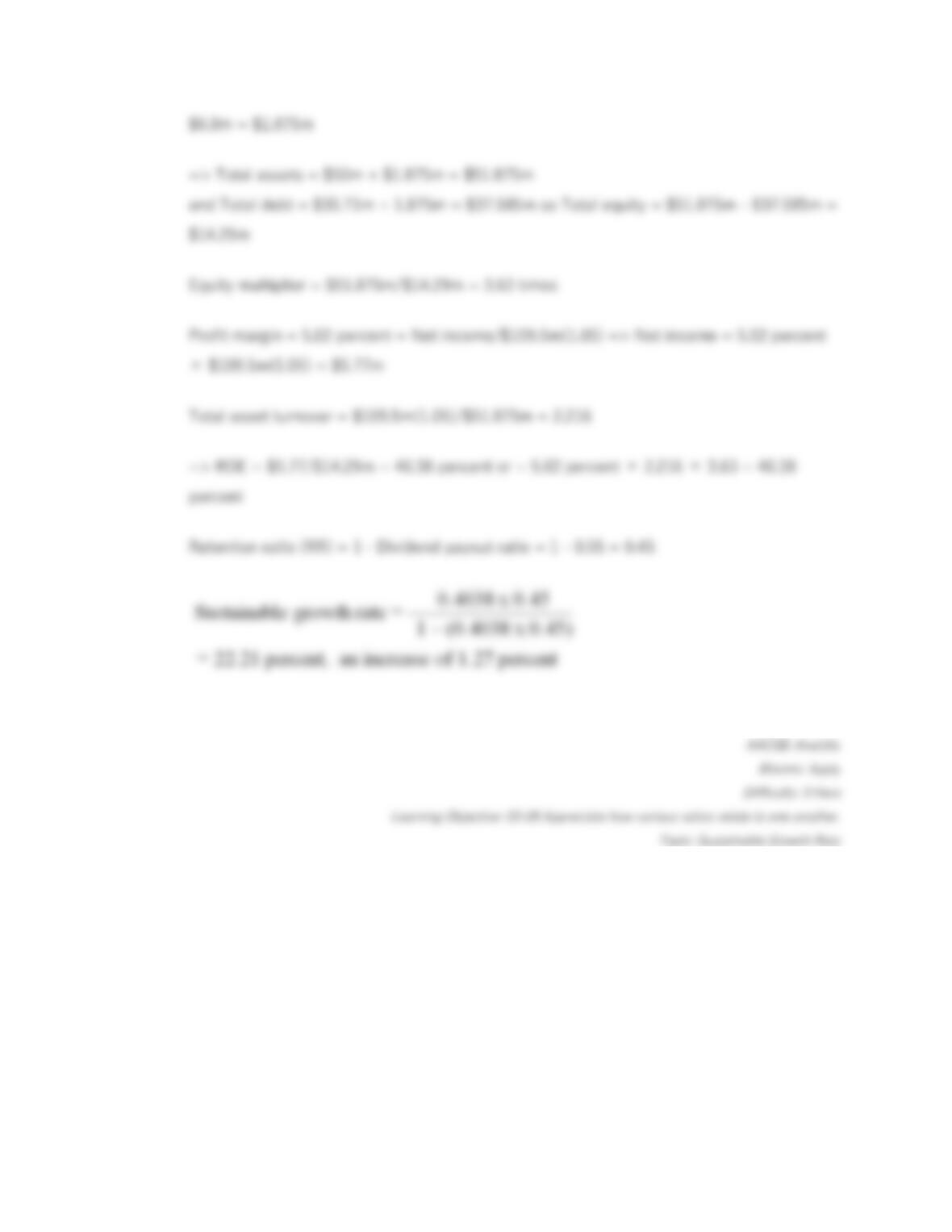
Sustainable Growth Rate You are considering investing in Annie’s Eatery. You have been
able to locate the following information on the firm: total assets are $50 million, accounts
receivable are $6.0 million, ACP is 20 days, net income is $5.5 million, debt–to-equity is 2.5
times, and dividend payout ratio is 55 percent. All sales are on credit. Annie’s is
considering loosening its credit policy such that ACP will increase to 25 days. The change
is expected to increase credit sales by 5 percent. Any change in accounts receivable will
be offset with a change in debt. No other balance sheet changes are expected. Annie’s
profit margin and dividend payout ratio will remain unchanged. Use the DuPont equation
to determine how this change in accounts receivable policy will affect Annie’s sustainable
growth rate.
136.
Explain what managers, analysts and investors might use to understand how ratios are
interrelated.
137.
Differentiate between time series and cross-section ratio analysis.