Chapter 03 – Job-Order Costing
3-61
86. The overhead for the year was:
Carter Corporation applies manufacturing overhead on the basis of machine-hours. At the
beginning of the most recent year, the company based its predetermined overhead rate on total
estimated overhead of $135,850. Actual manufacturing overhead for the year amounted to
$145,000 and actual machine-hours were 5,660. The company’s predetermined overhead rate
for the year was $24.70 per machine-hour.
Chapter 03 – Job-Order Costing
87. The predetermined overhead rate was based on how many estimated machine-hours?
88. The applied manufacturing overhead for the year was closest to:
Chapter 03 – Job-Order Costing
3-63
89. The overhead for the year was:
Snappy Company has a job-order costing system and uses a predetermined overhead rate
based on direct labor-hours to apply manufacturing overhead to jobs. Manufacturing overhead
cost and direct labor hours were estimated at $100,000 and 40,000 hours, respectively, for the
year. In July, Job #334 was completed at a cost of $5,000 in direct materials and $2,400 in
direct labor. The labor rate is $6 per hour. By the end of the year, Snappy had worked a total
of 45,000 direct labor-hours and had incurred $110,250 actual manufacturing overhead cost.
Chapter 03 – Job-Order Costing
90. If Job #334 contained 200 units, the unit product cost on the completed job cost sheet
would be:
Chapter 03 – Job-Order Costing
3-65
91. Snappy’s manufacturing overhead for the year was:
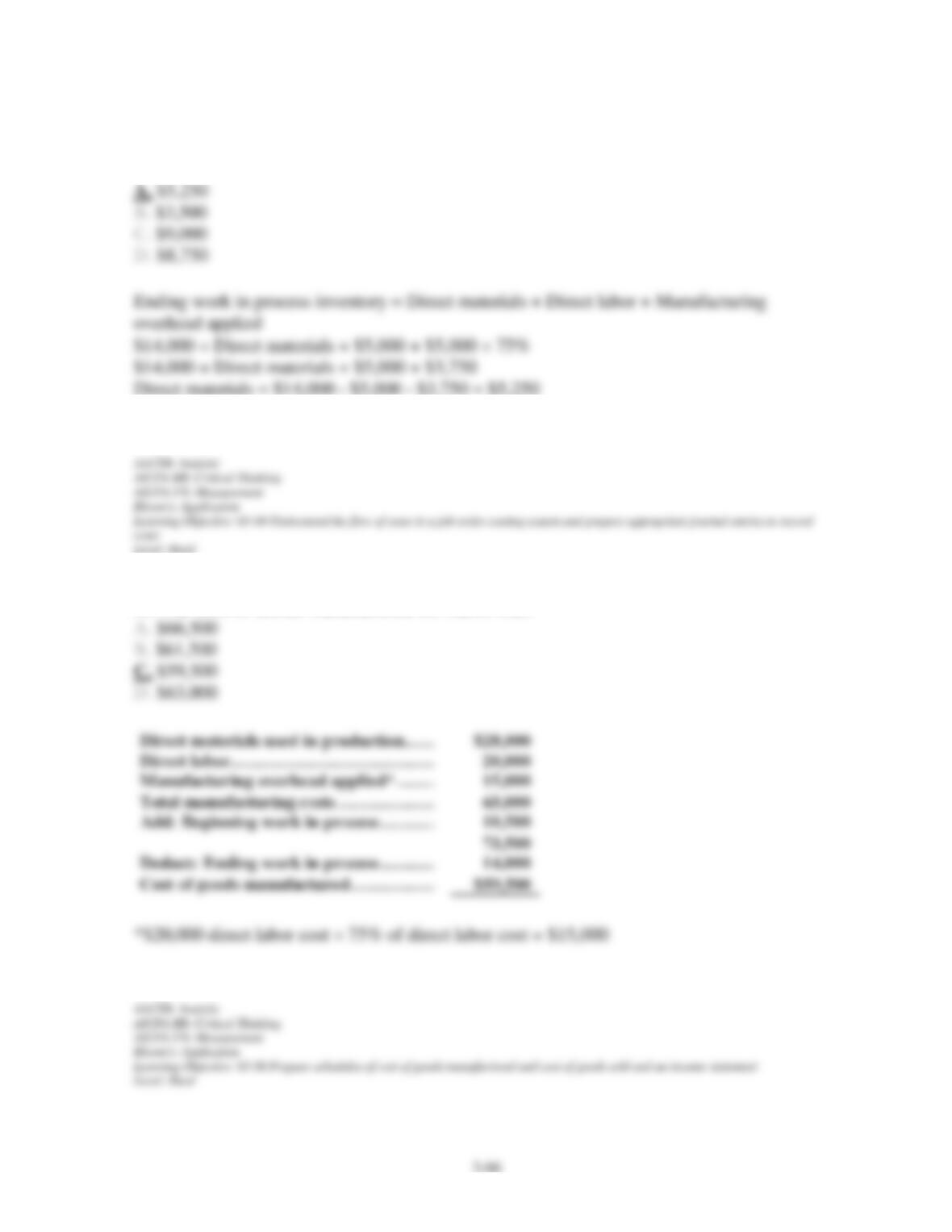
Lund Company applies manufacturing overhead to jobs using a predetermined overhead rate
of 75% of direct labor cost. Any underapplied or overapplied manufacturing overhead cost is
closed out to Cost of Goods Sold at the end of the month. During March, the following
transactions were recorded by the company:
Chapter 03 – Job-Order Costing
92. The amount of direct materials cost in the March 31 Work in Process inventory account
was:
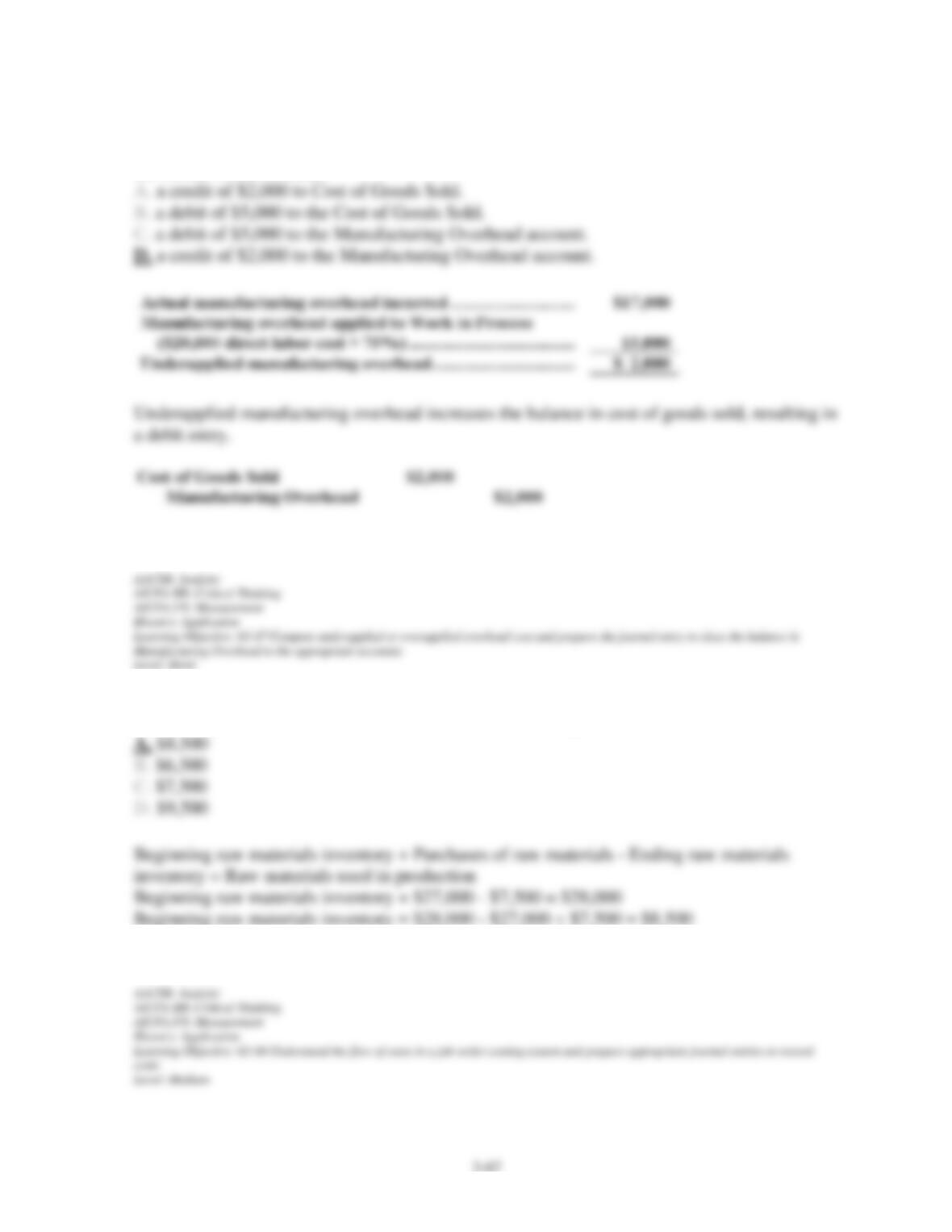
93. The Cost of Goods Manufactured for March was:
Chapter 03 – Job-Order Costing
94. The entry to dispose of the underapplied or overapplied manufacturing overhead cost for
the month would include:
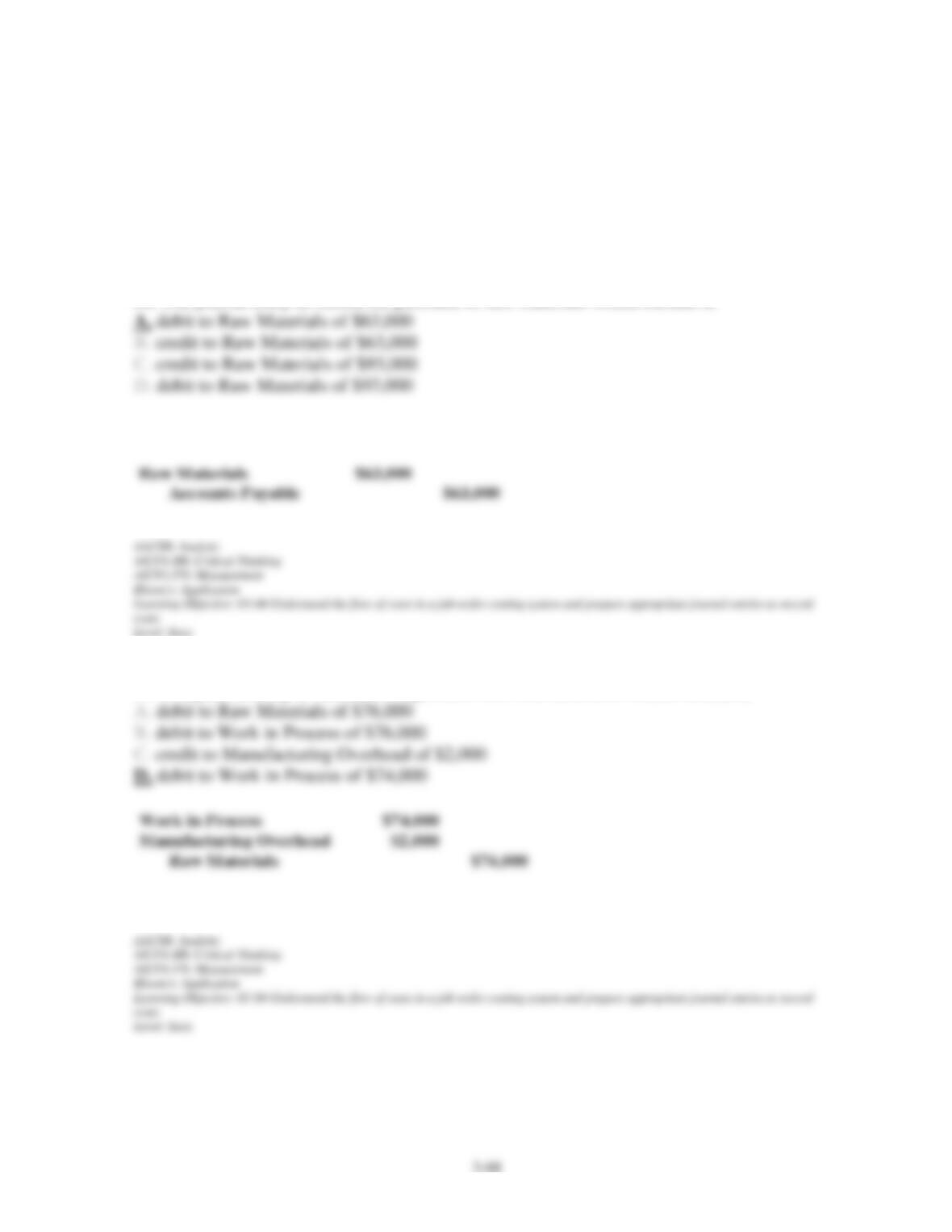
95. The balance on March 1 in the Raw Materials inventory account was:
Chapter 03 – Job-Order Costing
On April 1, Bogdon Corporation had $30,000 of raw materials on hand. During the month,
the company purchased an additional $63,000 of raw materials. During April, $76,000 of raw
materials were requisitioned from the storeroom for use in production. These raw materials
included both direct and indirect materials. The indirect materials totaled $2,000.
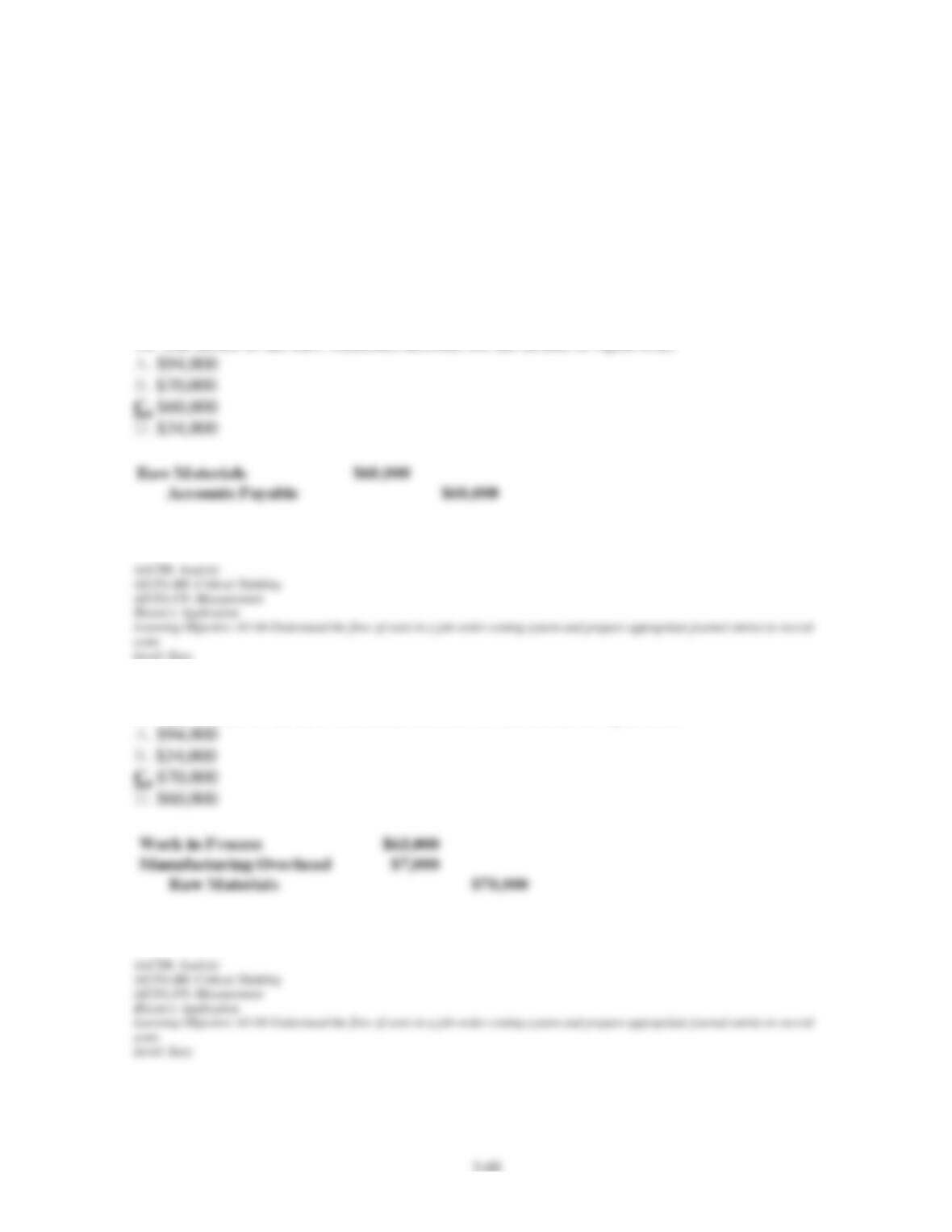
96. The journal entry to record the purchase of raw materials would include a:
97. The journal entry to record the requisition from the storeroom would include a:
Chapter 03 – Job-Order Costing
On April 1, Stelter Corporation had $34,000 of raw materials on hand. During the month, the
company purchased an additional $60,000 of raw materials. During April, $70,000 of raw
materials were requisitioned from the storeroom for use in production. These raw materials
included both direct and indirect materials. The indirect materials totaled $7,000. Prepare
journal entries to record these events. Use these journal entries to answer the following
questions:
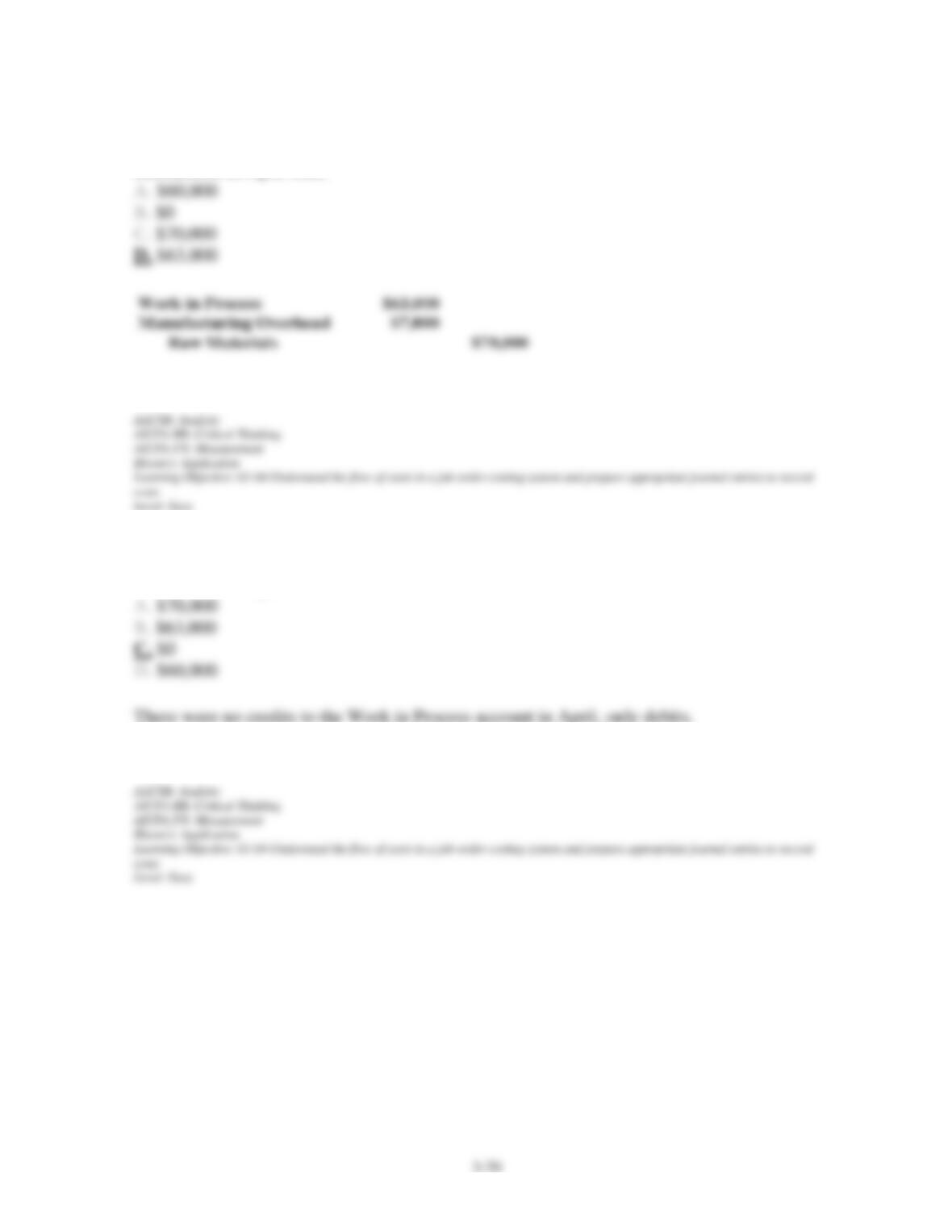
98. The debits to the Raw Materials account for the month of April total:
99. The credits to the Raw Materials account for the month of April total:
Chapter 03 – Job-Order Costing
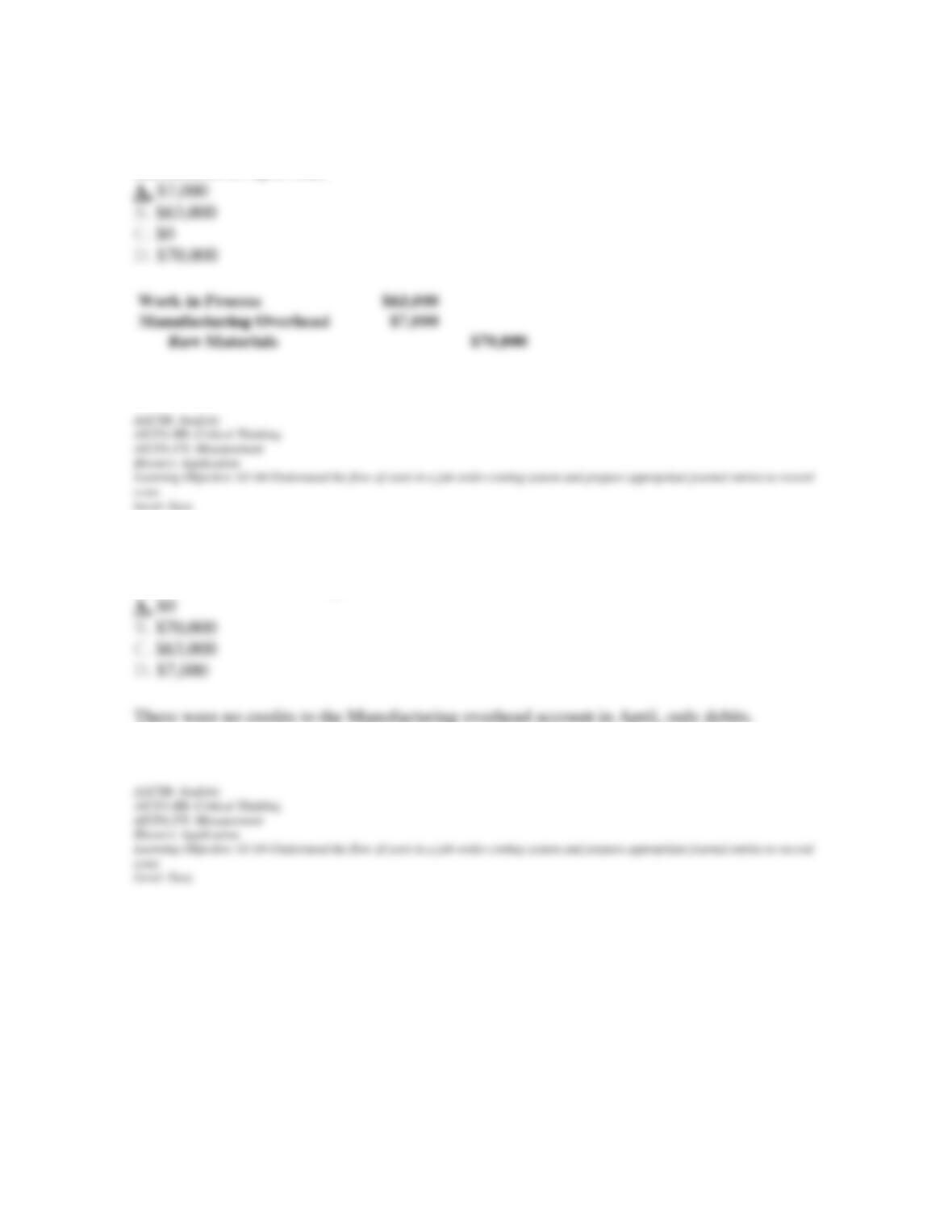
100. The debits to the Work in Process account as a consequence of the raw materials
transactions in April total:
101. The credits to the Work in Process account as a consequence of the raw materials
transactions in April total:
Chapter 03 – Job-Order Costing
3-71
102. The debits to the Manufacturing Overhead account as a consequence of the raw materials
transactions in April total:
103. The credits to the Manufacturing Overhead account as a consequence of the raw
materials transactions in April total:
During September, Stutzman Corporation incurred $86,000 of actual Manufacturing
Overhead costs. During the same period, the Manufacturing Overhead applied to Work in
Process was $81,000.
Chapter 03 – Job-Order Costing
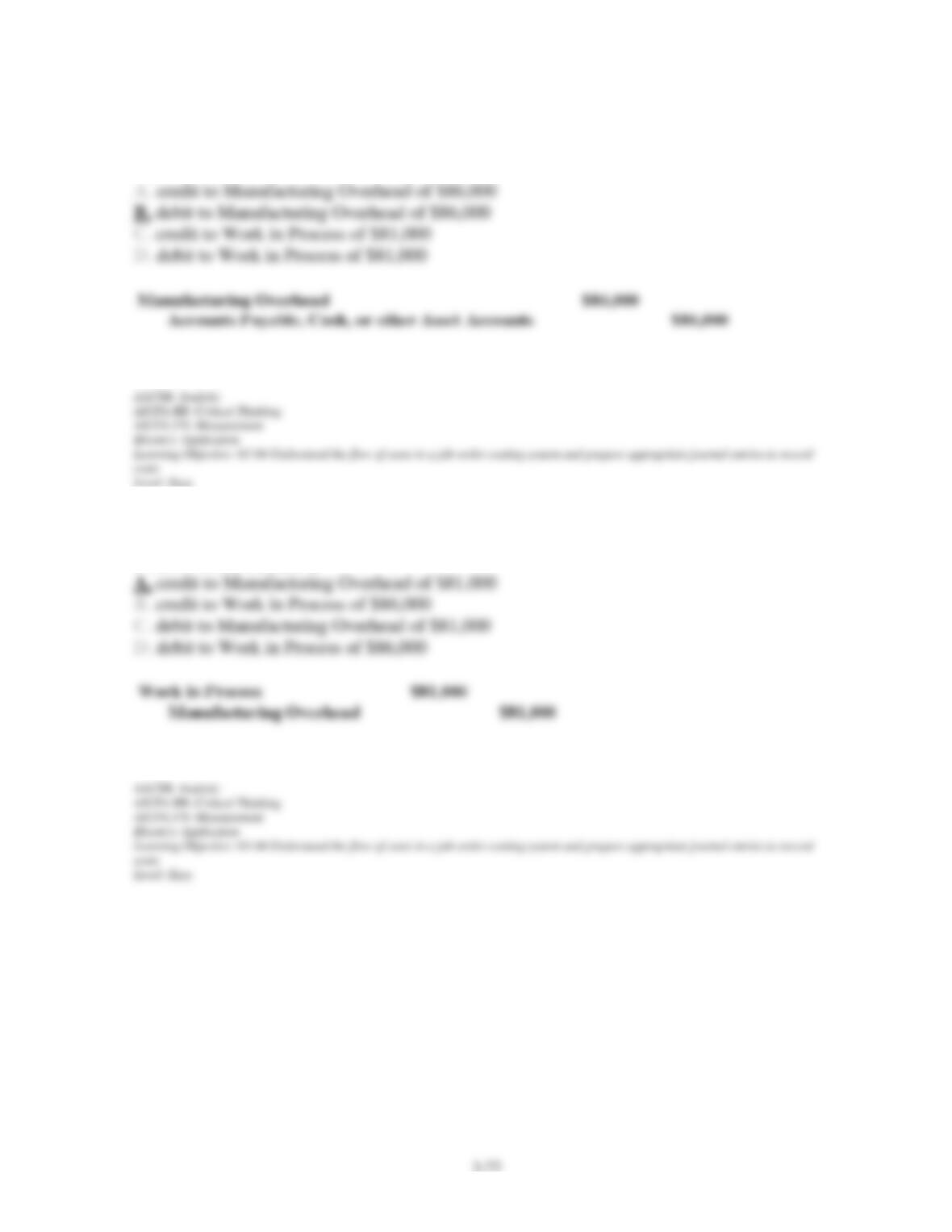
104. The journal entry to record the incurrence of the actual Manufacturing Overhead costs
would include a:
105. The journal entry to record the application of Manufacturing Overhead to Work in
Process would include a:
Chapter 03 – Job-Order Costing
3-73
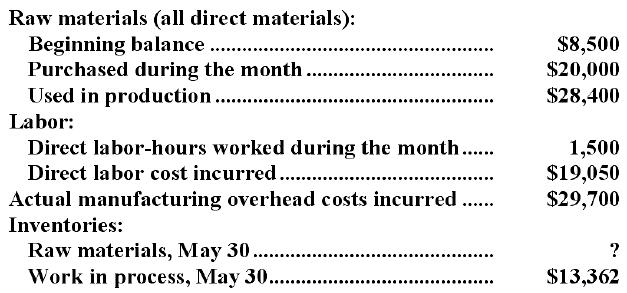
Daane Company had only one job in process on May 1. The job had been charged with
$1,000 of direct materials, $3,302 of direct labor, and $5,382 of manufacturing overhead cost.
The company assigns overhead cost to jobs using the predetermined overhead rate of $20.70
per direct labor-hour.
During May, the following activity was recorded:
Work in process inventory on May 30 contains $2,921 of direct labor cost. Raw materials
consist solely of items that are classified as direct materials.
Chapter 03 – Job-Order Costing
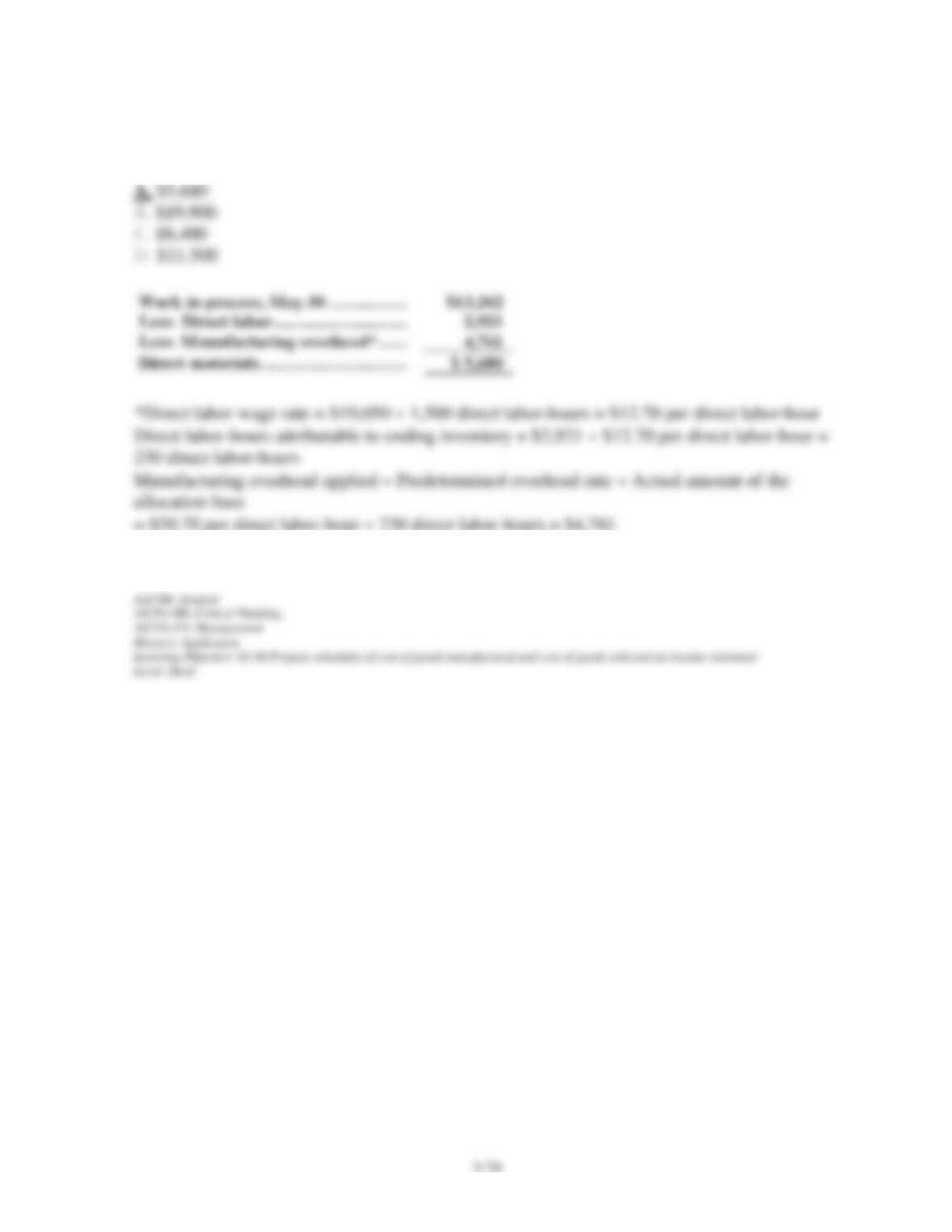
106. The amount of direct materials cost in the May 30 work in process inventory account
was:
Chapter 03 – Job-Order Costing
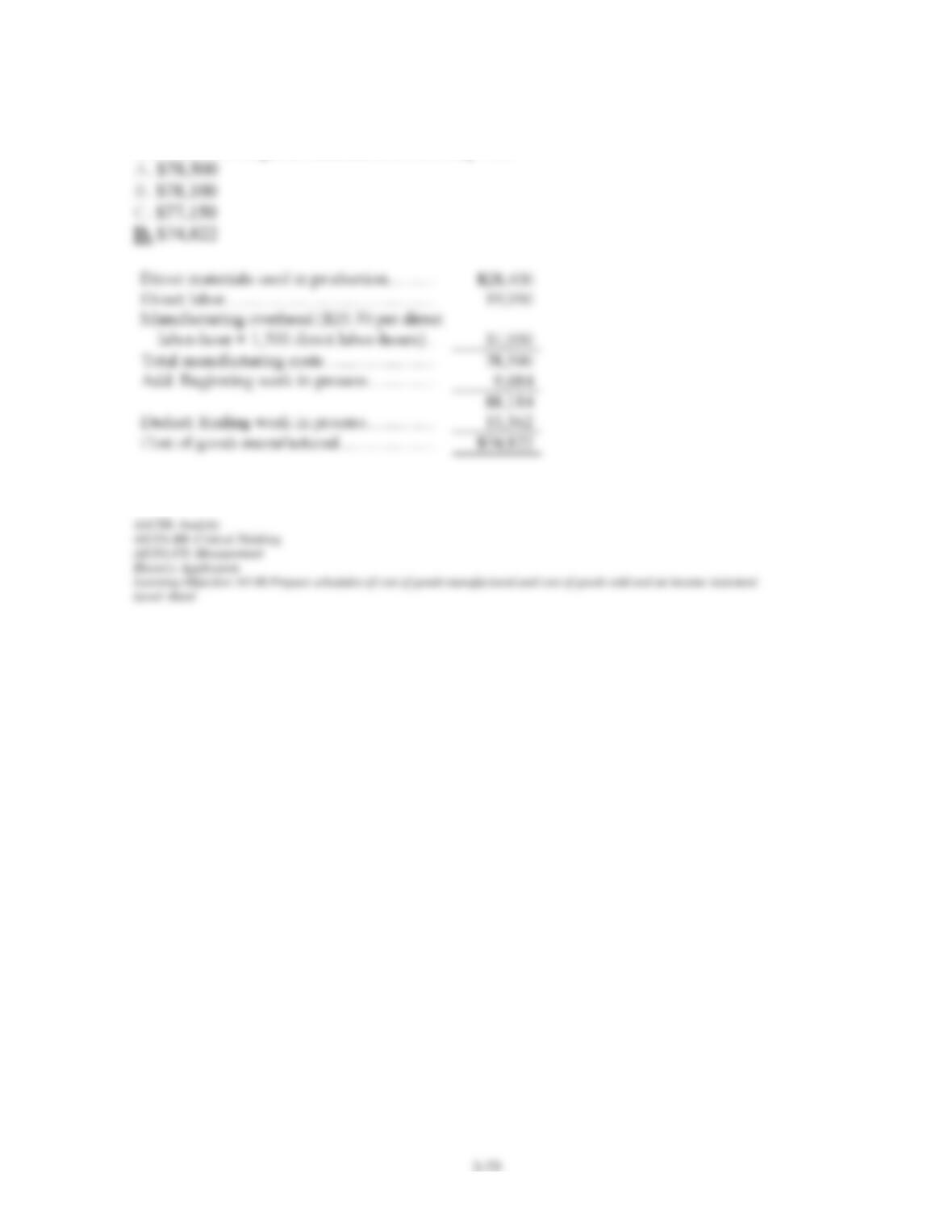
107. The cost of goods manufactured for May was:
Chapter 03 – Job-Order Costing
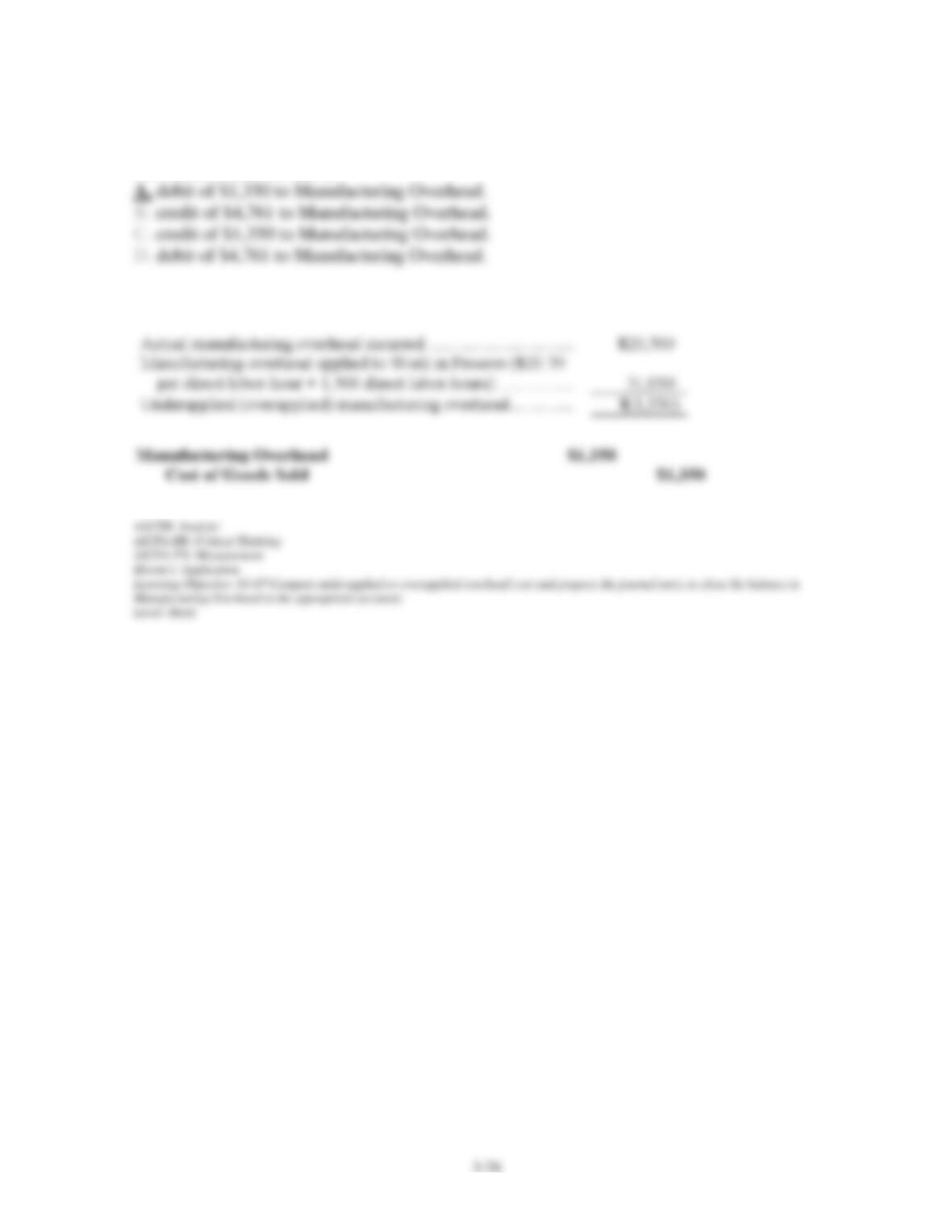
108. The entry to dispose of the underapplied or overapplied manufacturing overhead cost for
the month would include a:

Chapter 03 – Job-Order Costing
3-77
Chapter 03 – Job-Order Costing
3-78
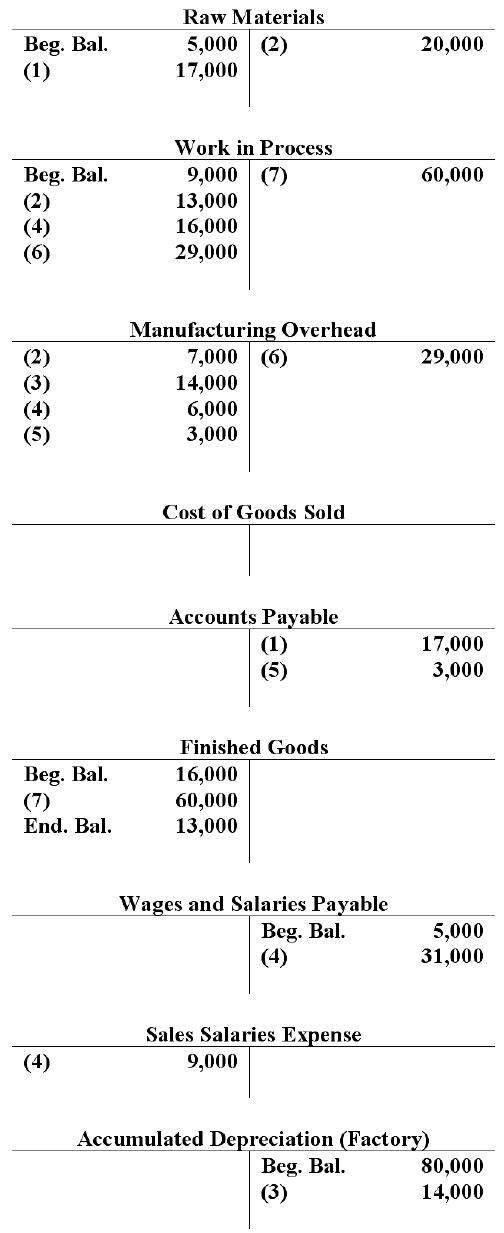
At the end of the year, the company closes out the balance in the Manufacturing Overhead
Chapter 03 – Job-Order Costing
account to Cost of Goods Sold.
109. The indirect labor cost is:
Chapter 03 – Job-Order Costing
110. The cost of goods sold (after adjustment for underapplied or overapplied manufacturing
overhead) is: