21
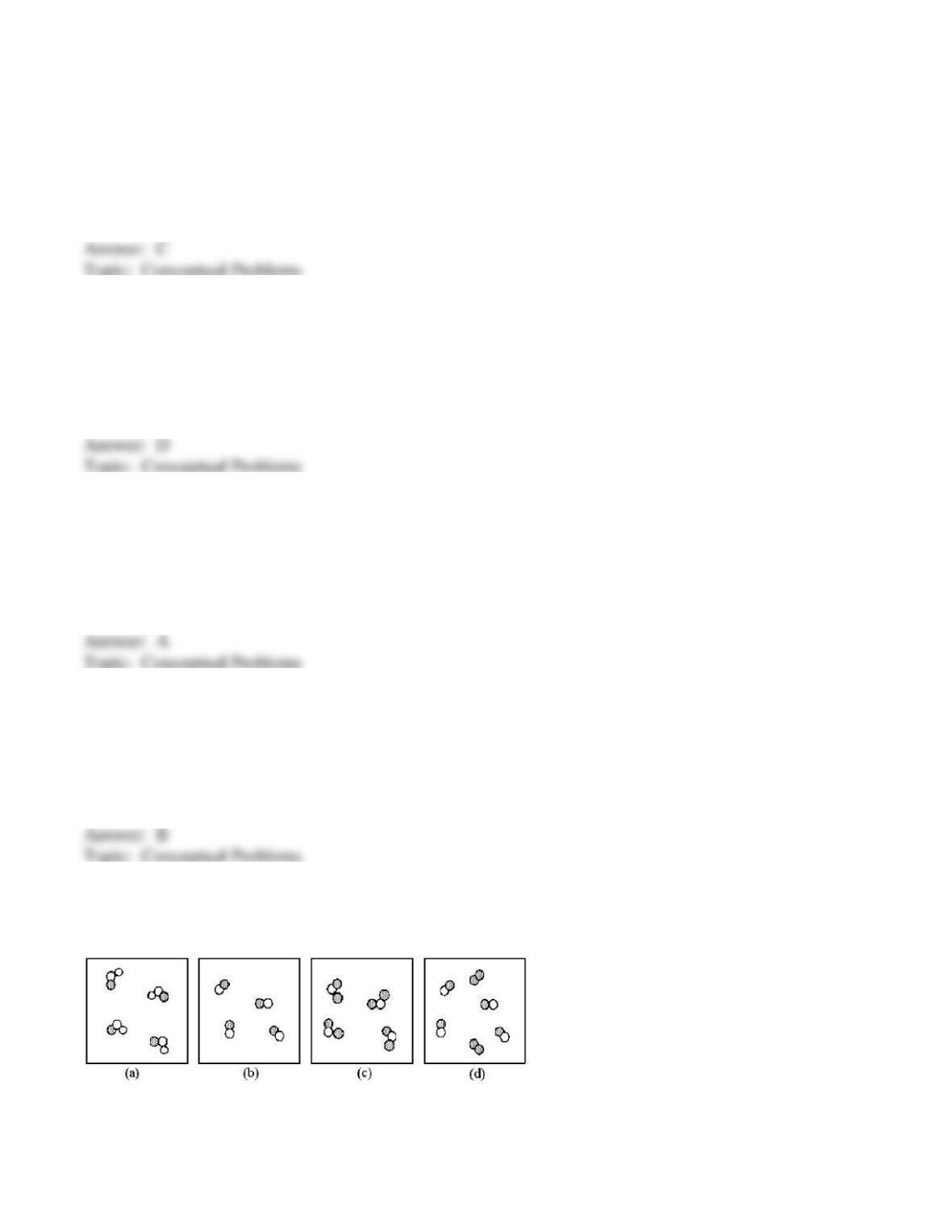
98) Acetone has the formula C3H6O. Which ball and stick model shown above represents acetone?
[gray spheres = C, black spheres = O, unshaded spheres = H]
A) model a)
B) model b)
C) model c)
D) model d)
99) Diethyl ether has the molecular formula C4H10O. Which ball and stick model shown above
represents diethyl ether? [gray spheres = C, black spheres = O, unshaded spheres = H]
A) model a)
B) model b)
C) model c)
D) model d)
100) Ethanol has the molecular formula C2H6O. Which ball and stick model shown above represents
ethanol? [gray spheres = C, black spheres = O, unshaded spheres = H]
A) model a)
B) model b)
C) model c)
D) model d)
101) 2-Propanol has the molecular formula C3H8O. Which ball and stick model shown above represents
2-propanol? [gray spheres = C, black spheres = O, unshaded spheres = H]
A) model a)
B) model b)
C) model c)
D) model d)
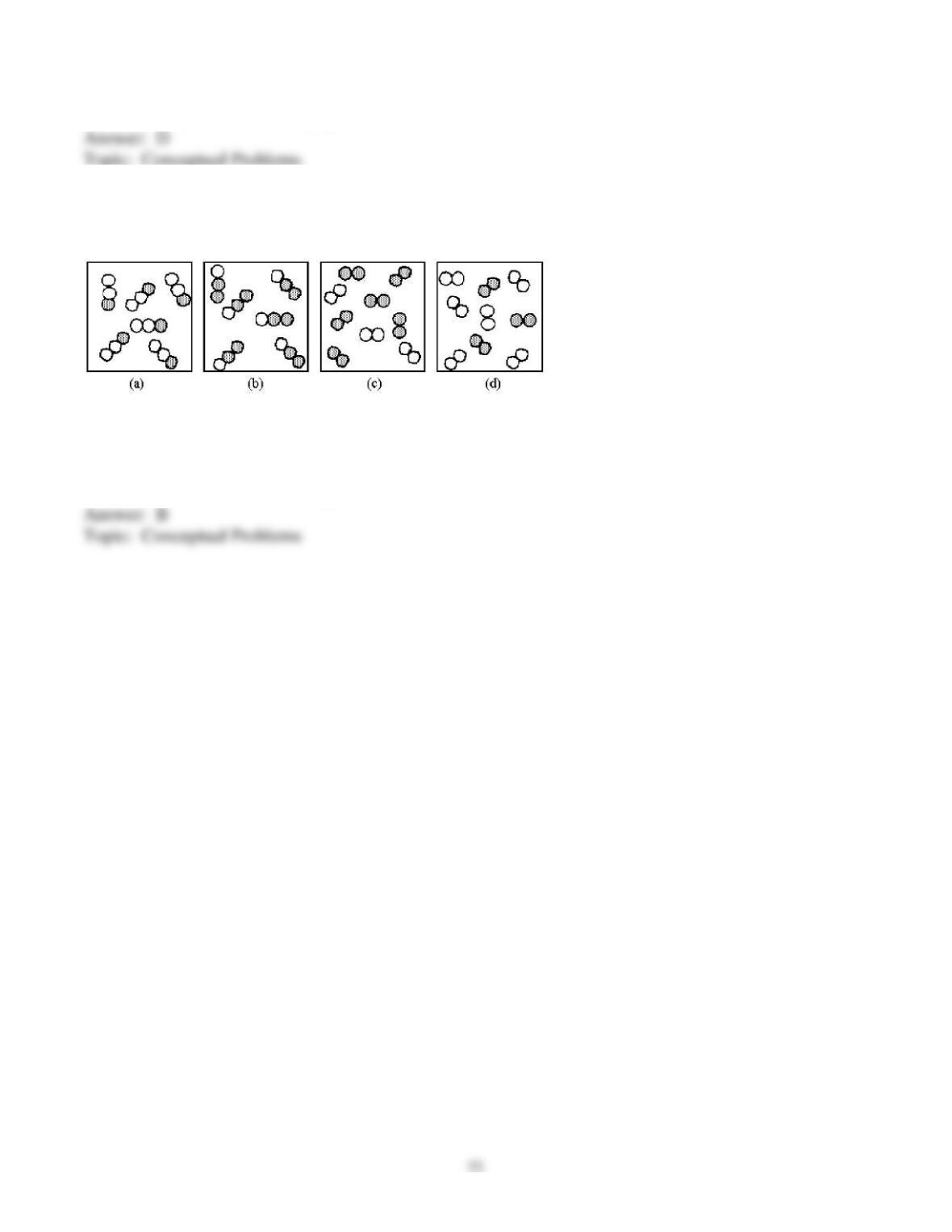
102) If unshaded spheres represent nitrogen atoms and shaded spheres represent oxygen atoms, which
box represents reactants and which represents products for the reaction 2 NO2(g) → 2 NO(g) + O2 (g)?
A) box (a) reactants and box (b) products
B) box (a) reactants and box (d) products
C) box (c) reactants and box (b) products
D) box (c) reactants and box (d) products
103) If unshaded spheres represent nitrogen atoms and shaded spheres represent oxygen atoms, which
box represents reactants and which represents products for the reaction 2 N2O (g) → 2 N2(g) + O2(g)?
A) box (a) reactants and box (c) products
B) box (a) reactants and box (d) products
C) box (b) reactants and box (c) products
D) box (b) reactants and box (d) products
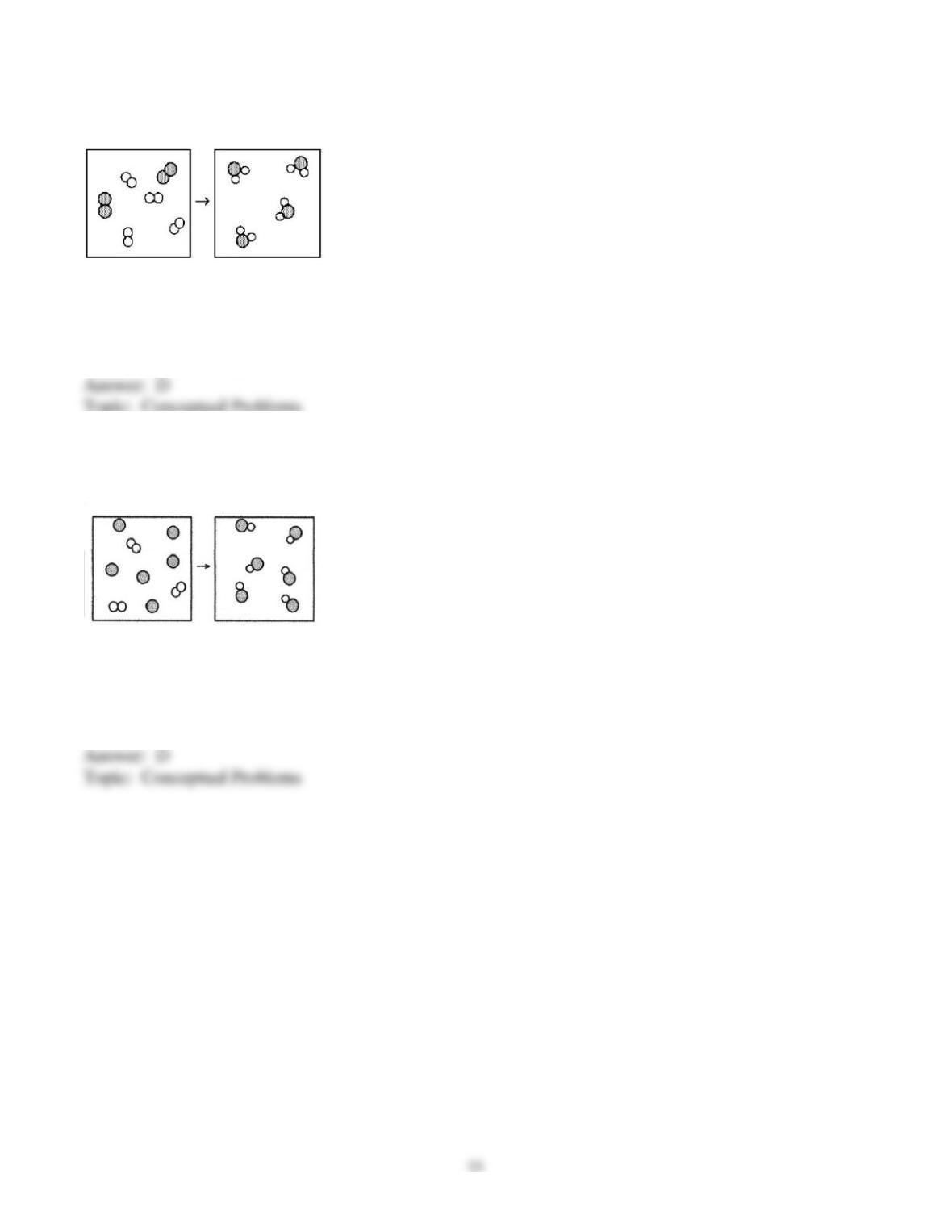
104) What is the balanced chemical equation for the reaction of element A (unshaded spheres) with
element B (shaded spheres) as represented below?
A) A + B → AB
B) 4A + 2B → 4AB
C) A2 + B2 → A2B
D) 2A2 + B2 → 2A2B
105) What is the balanced chemical equation for the reaction of element A (unshaded spheres) with
element B (shaded spheres) as represented below?
A) A + B → AB
B) A + 3B → 3AB
C) A2 + B → AB
D) A2 + 2B → 2AB
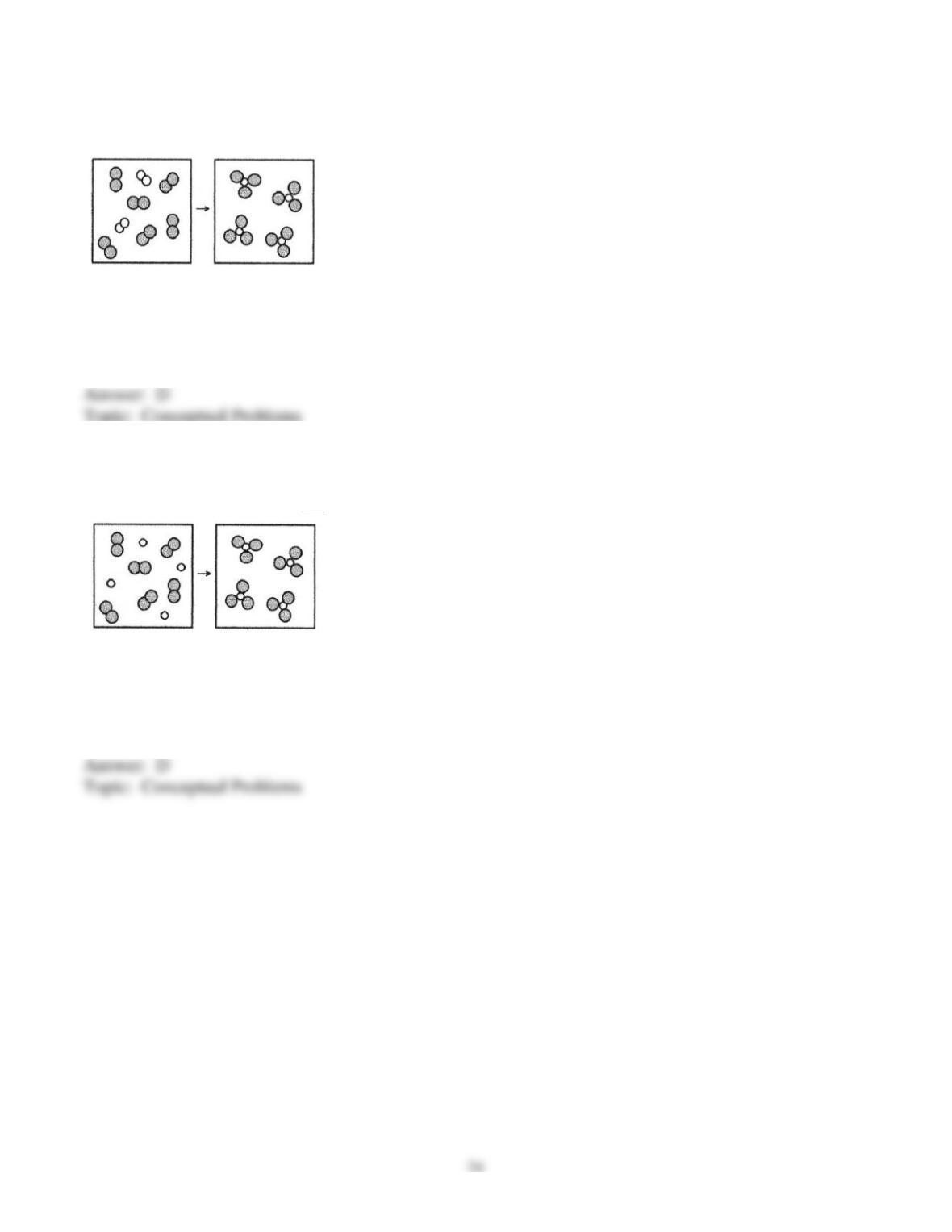
106) What is the balanced chemical equation for the reaction of element A (unshaded spheres) with
element B (shaded spheres) as represented below?
A) A + B → AB
B) A + 3B → 2AB
C) A2 + B2 → AB3
D) A2 + 3B2 → 2AB3
107) What is the balanced chemical equation for the reaction of element A (unshaded spheres) with
element B (shaded spheres) as represented below?
A) A + B → AB
B) 2A + 3B → 2AB
C) A + B2 → AB3
D) 2A + 3B2 → 2AB3
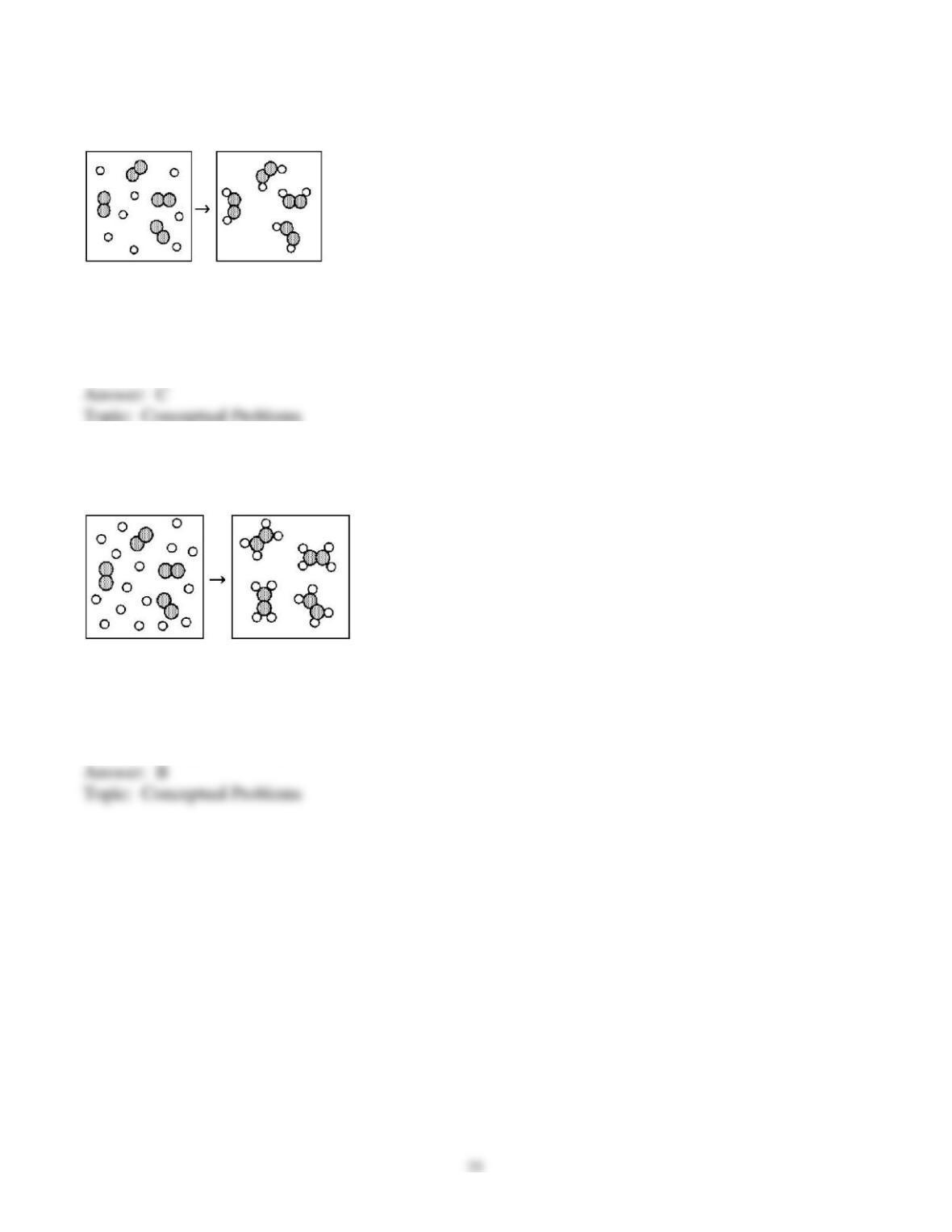
108) Reaction of A (unshaded spheres) with B2 (shaded spheres) is shown schematically in the
following diagram. Which equation best describes the stoichiometry of the reaction?
A) A2 + 2 B → A2B2
B) 8 A + 4 B2 → 4 A2B2
C) 2 A + B2 → A2B2
D) 4 A + 4 B2 → 4 A2B2
109) Reaction of A (unshaded spheres) with B2 (shaded spheres) is shown schematically in the
following diagram. Which equation best describes the stoichiometry of the reaction?
A) 4 A + B2 → 8 A2B
B) 4 A + B2 → A4B2
C) 16 A + 4 B2 → 8 A2B
D) 16 A + 4 B2 → 4 A4B2
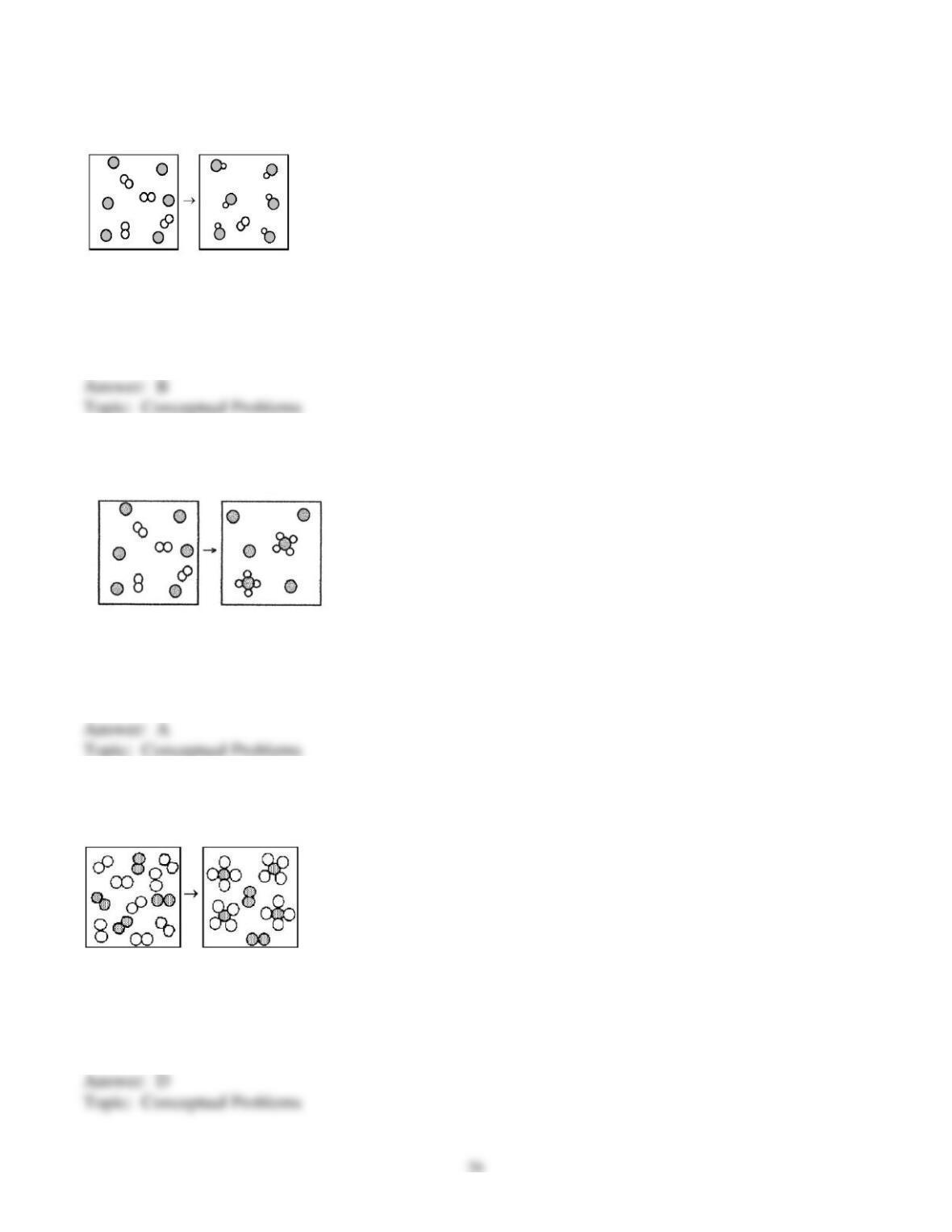
110) The following diagram represents the reaction of A2 (unshaded spheres) with B (shaded spheres).
What is the balanced chemical equation for this reaction, and what is the limiting reactant?
A) A2 + 2B → 2AB; A2 is the limiting reactant.
B) A2 + 2B → 2AB; B is the limiting reactant.
C) 4A2 + 6B → 6AB; A2 is the limiting reactant.
D) 4A2 + 6B → 6AB; B is the limiting reactant.
111) The following diagram represents the reaction of A2 (unshaded spheres) with B (shaded spheres).
What is the balanced chemical equation for this reaction, and what is the limiting reactant?
A) 2A2 + B → A4B; A2 is the limiting reactant.
B) 2A2 + B → A4B; B is the limiting reactant.
C) 4A2 + 6B → 2A4B; A2 is the limiting reactant.
D) 4A2 + 6B → 2A4B; B is the limiting reactant.
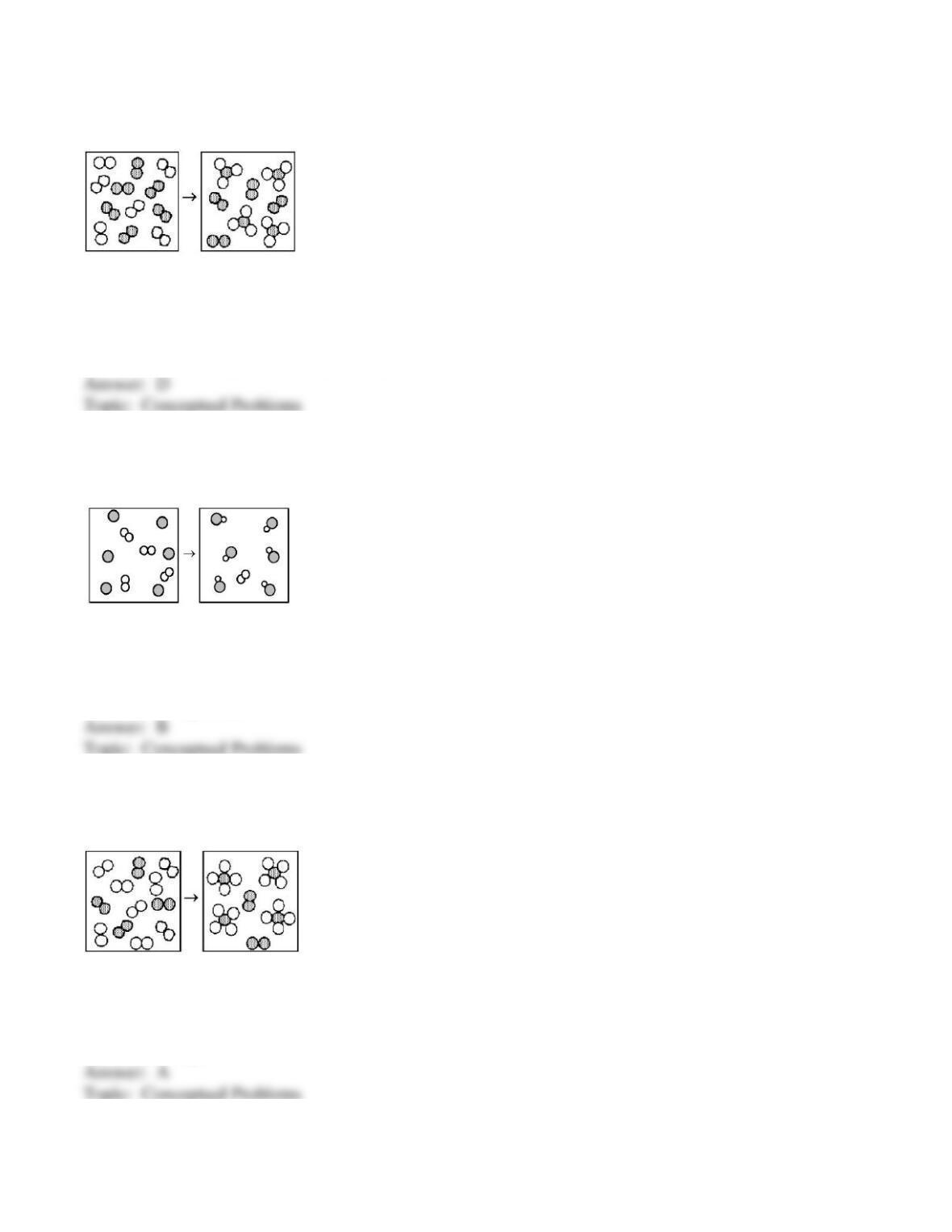
112) The following diagrams represent the reaction of A2 (shaded spheres) with B2 (unshaded spheres).
Identify the limiting reactant and write a balanced equation for the reaction.
A) A2 is the limiting reactant; A + 4 B → AB4.
B) A2 is the limiting reactant; A2 + 4 B2 → 2 AB4.
C) B2 is the limiting reactant; A + 4 B → AB4.
D) B2 is the limiting reactant; A2 + 4 B2 → 2 AB4.
27
113) The following diagrams represent the reaction of A2 (shaded spheres) with B2 (unshaded spheres).
Identify the limiting reactant and write a balanced equation for the reaction.
A) A2 is the limiting reactant; A + 3 B → AB3.
B) A2 is the limiting reactant; A2 + 3 B2 → 2 AB3.
C) B2 is the limiting reactant; A + 3 B → AB3.
D) B2 is the limiting reactant; A2 + 3 B2 → 2 AB3.
114) The following diagram represents the reaction of A2 (unshaded spheres) with B (shaded spheres).
How many moles of product can be produced from the reaction of 1.0 mol of A2 and 1.0 mol of B?
A) 0.5 mol of product
B) 1.0 mol of product
C) 3.0 mol of product
D) 6.0 mol of product
115) The following diagram represents the reaction of A2 (unshaded spheres) with B2 (shaded spheres).
How many moles of product can be produced from the reaction of 1.0 mol of A2 and 1.0 mol of B2?
A) 0.5 mol of product
B) 1.0 mol of product
C) 2.0 mol of product
D) 4.0 mol of product
116) The following diagrams represent the reaction of A2 (shaded spheres) with B2 (unshaded spheres).
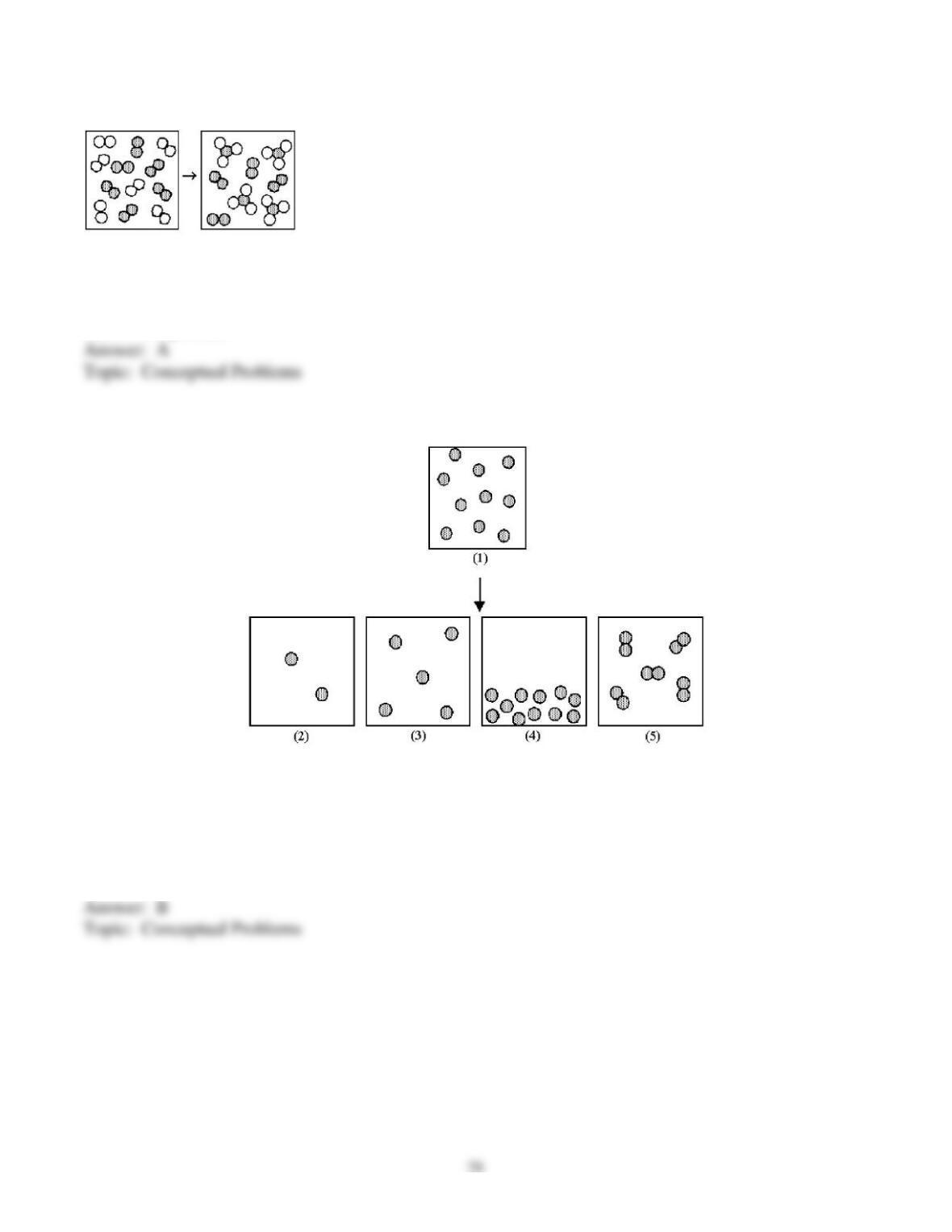
How many moles of product can be made from 1.0 mol of A2 and 1.0 mol of B2?
A) 0.67 mol product
B) 1.0 mol product
C) 2.0 mol product
D) 3.0 mol product
Box (1) represents 1.0 mL of a solution of particles at a given concentration.
117) Which of the boxes (2)-(5) represents 1.0 mL of the solution that results after (1) has been diluted
by adding enough solvent to make 2.0 mL of solution?
A) box (2)
B) box (3)
C) box (4)
D) box (5)
118) Which of the boxes (2)-(5) represents 1.0 mL of the solution that results after (1) has been diluted
by adding enough solvent to make 5.0 mL of solution?
A) box (2)
B) box (3)
C) box (4)
D) box (5)
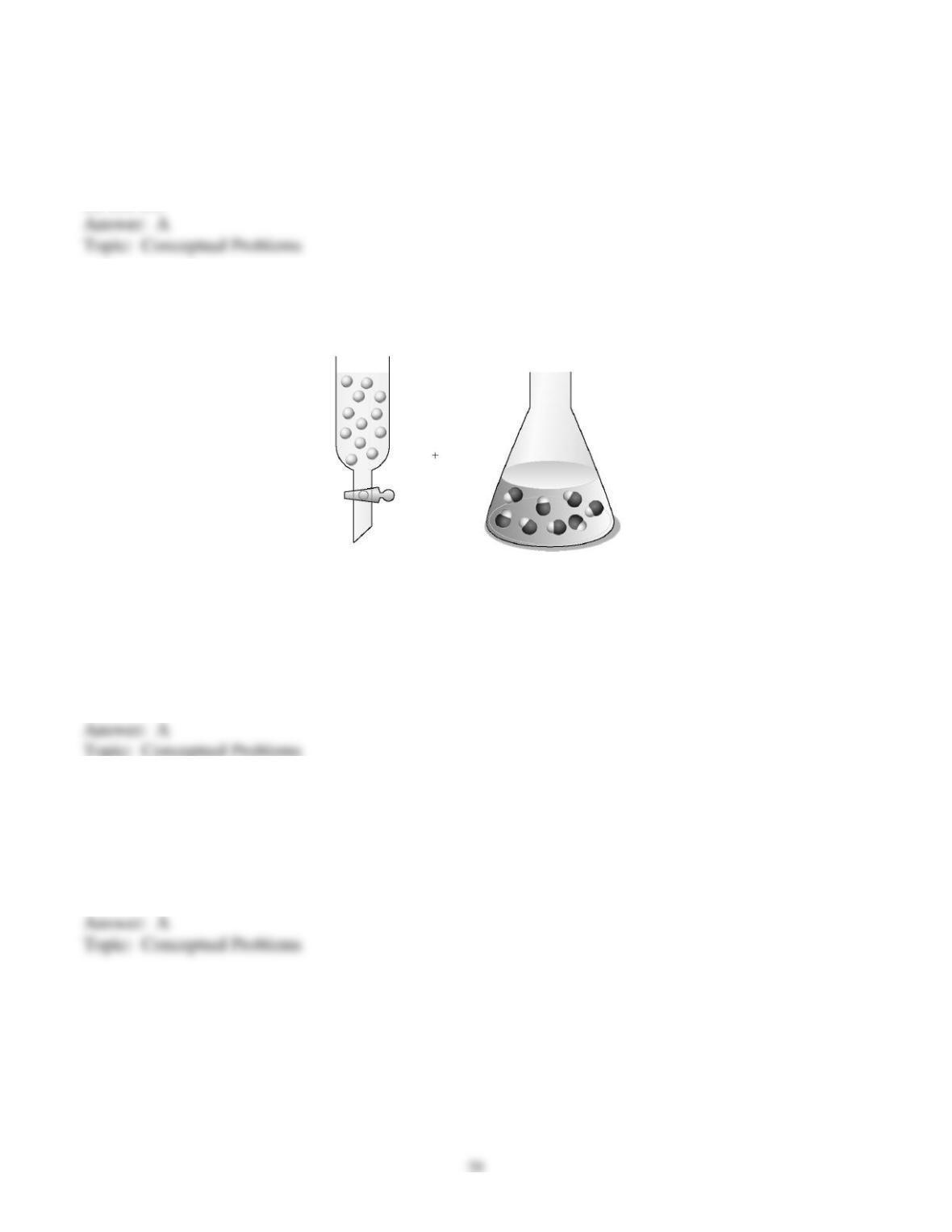
Assume that the unshaded spheres in the buret represent H+ ions, the shaded spheres in the flask
represent OH– ions, and you are carrying out a titration of the base with the acid.
119) If the volumes in the buret and the flask are identical and the concentration of the acid in the buret
is 0.250 M, what is the concentration of the base in the flask?
A) 0.167 M
B) 0.250 M
C) 0.375 M
D) 0.667 M
120) If the volumes in the buret and the flask are identical and the concentration of the acid in the buret
is 0.500 M, what is the concentration of the base in the flask?
A) 0.333 M
B) 0.500 M
C) 0.667 M
D) 0.750 M
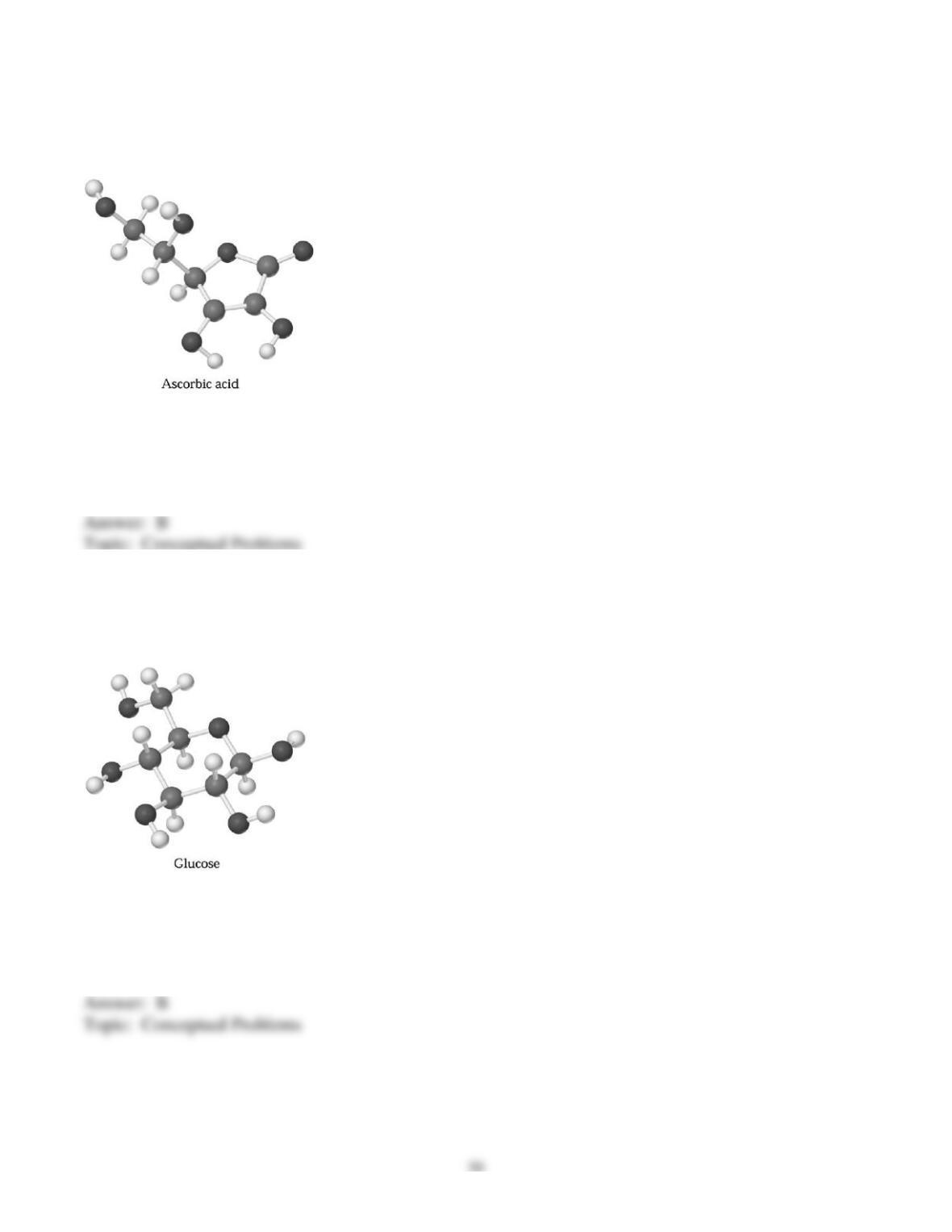
121) Ascorbic acid, C6H806, can be represented by the molecular model shown below. If 1.00 mol of
ascorbic acid is submitted to combustion analysis, how many moles of CO2 and how many moles of
H2O would be formed?
A) 3.00 mol CO2 and 2.00 mol H2O
B) 6.00 mol CO2 and 4.00 mol H2O
C) 6.00 mol CO2 and 8.00 mol H2O
D) 12.0 mol CO2 and 10.0 mol H2O
122) Glucose, C6H1206, can be represented by the molecular model shown below. If 1.00 mol of
glucose is submitted to combustion analysis, how many moles of CO2 and how many moles of H2O
would be formed?
A) 1.00 mol CO2 and 2.00 mol H2O
B) 6.00 mol CO2 and 6.00 mol H2O
C) 6.00 mol CO2 and 12.0 mol H2O
D) 12.0 mol CO2 and 12.0 mol H2O
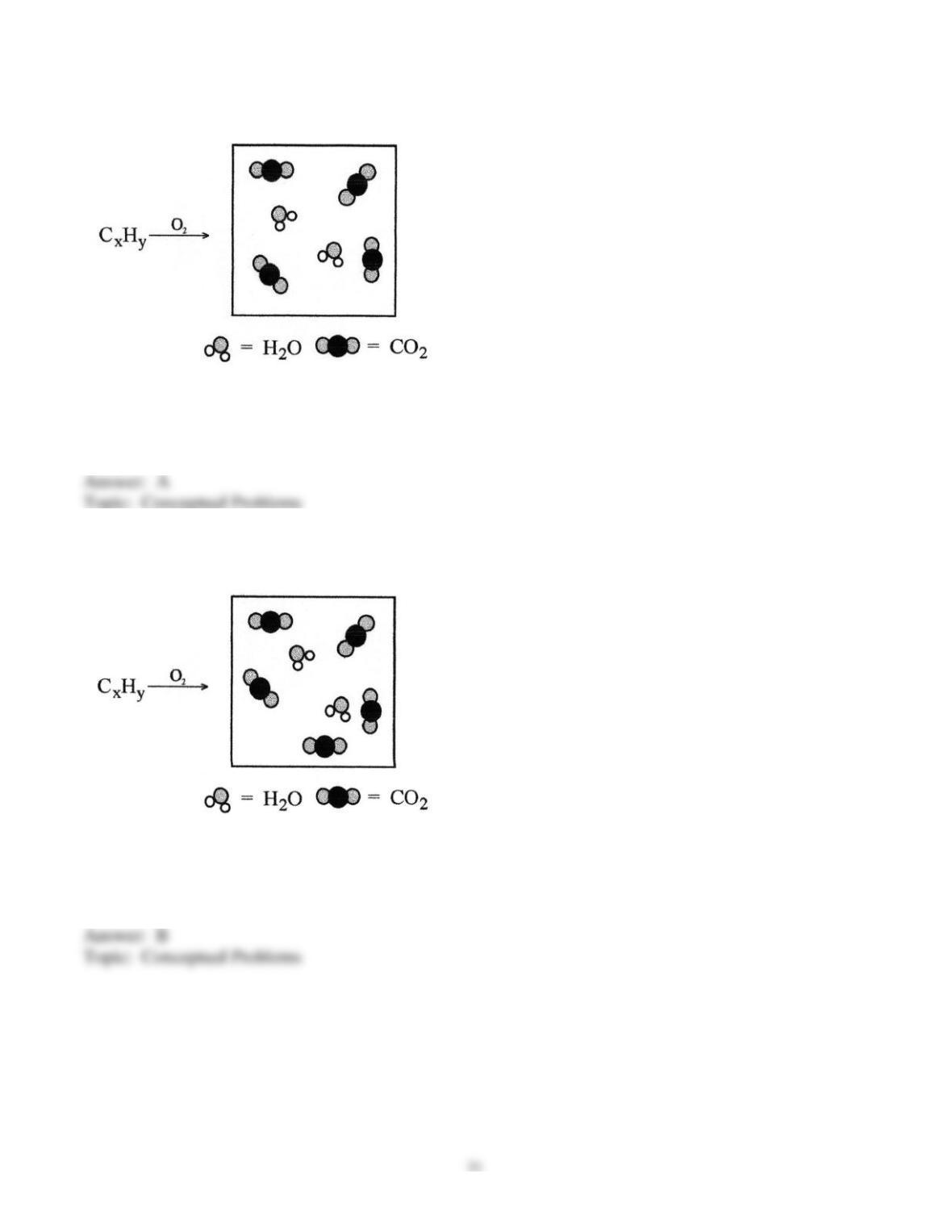
123) A hydrocarbon of unknown formula CxHy was submitted to combustion analysis with the
following results. What is the empirical formula of the hydrocarbon?
A) CH
B) C2H
C) C2H4
D) C4H4
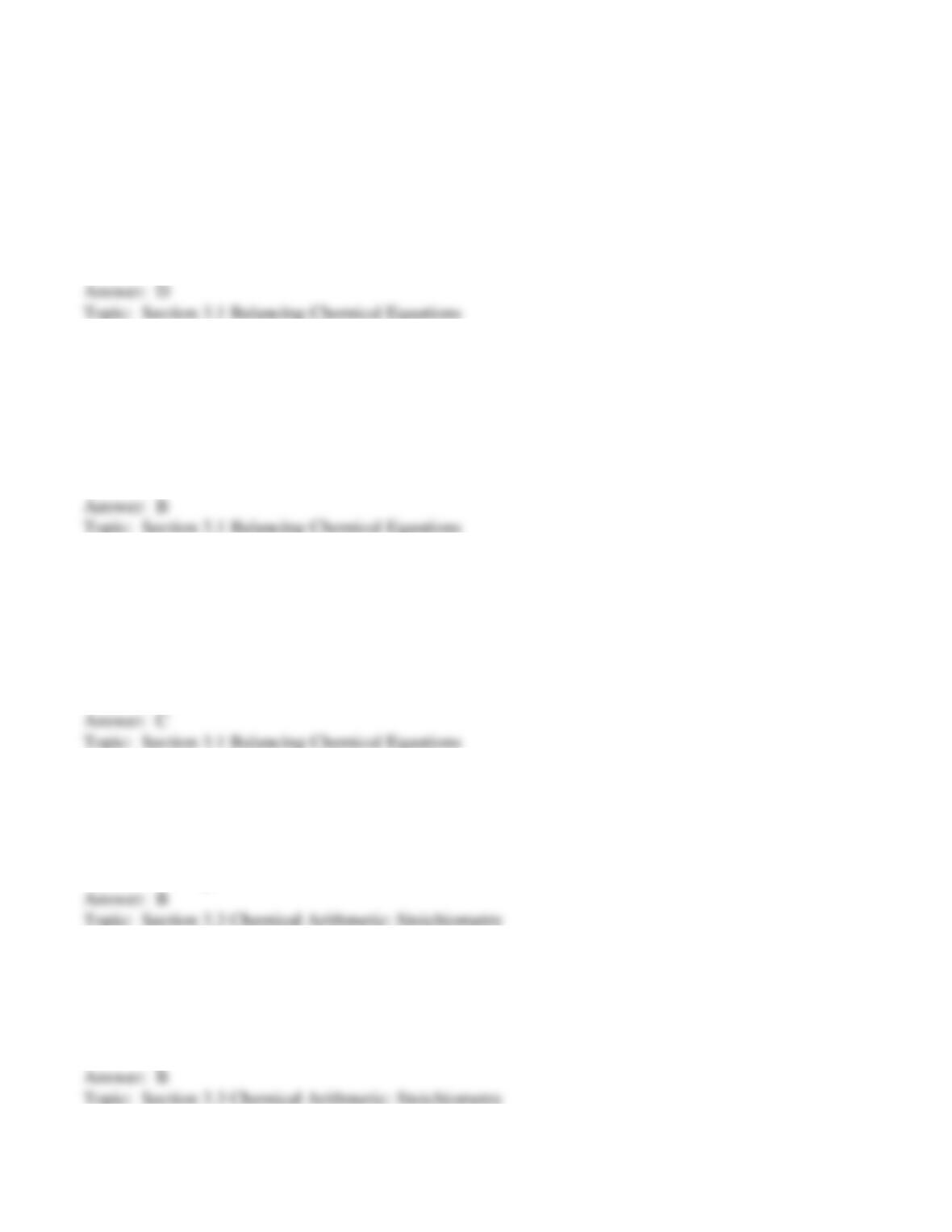
124) A hydrocarbon of unknown formula CxHy was submitted to combustion analysis with the
following results. What is the empirical formula of the hydrocarbon?
A) C5H2
B) C5H4
C) C10H4
D) C10H8
32
3.2 Algorithmic Questions
1) What is the stoichiometric coefficient for oxygen when the following equation is balanced using the
lowest whole-number coefficients?
_____ C2H6O (l) + _____ O2(g) → _____ CO2(g) + _____ H2O(l)
A) 9
B) 7
C) 5
D) 3
2) Aluminum metal reacts with aqueous iron( II) chloride to form aqueous aluminum chloride and
iron metal. What is the stoichiometric coefficient for aluminum when the chemical equation is balanced
using the lowest whole-number stoichiometric coefficients?
A) 1
B) 2
C) 3
D) 4
3) Calcium phosphate reacts with sulfuric acid to form calcium sulfate and phosphoric acid. What is the
coefficient for sulfuric acid when the equation is balanced using the lowest whole-numbered
coefficients?
A) 1
B) 2
C) 3
D) none of these
4) What is the molar mass of fluorine gas?
A) 19.0 g/mol
B) 38.0 g/mol
C) 6.02 × 10²³ g/mol
D) 1.20 × 10²³ g/mol
5) What is the mass of a single fluorine molecule, F2?
A) 3.155 × 10– 23 g
B) 6.310 × 10– 23 g
C) 19.00 g
D) 38.00 g
6) What is the mass of 0.500 mol of dichlorodifluoro methane, C Cl2F2?
A) 4.14 × 10⁻³ g
B) 60.5 g
C) 121 g
D) 242 g
7) How many moles are there in 3.00 g of ethanol, CH3CH2OH?
A) 0. 00725 mol
B) 0. 0652 mol
C) 15.3 mol
D) 138 mol
8) How many Fe(II) ions are there in 20.0 g of FeSO4?
A) 2.19 × 10– 25 iron(II) ions
B) 7.92 × 10²² iron(II) ions
C) 4.57 × 1024 iron(II) ions
D) 1.82 × 1027 iron(II) ions
9) What is the mass of 8.50 x 10²² molecules of NH3?
A) 0.00 829 g
B) 0. 417 g
C) 2. 40 g
D) 121 g
10) How many oxygen atoms are there in 7.00 g of sodium dichromate, Na2Cr2O7?
A) 0. 187 oxygen atoms
B) 2.30 × 10²¹ oxygen atoms
C) 1.60 × 10²² oxygen atoms
D) 1.13 × 10²³ oxygen atoms
11) How many chloride ions are there in 4.50 mol of aluminum chloride?
A) 3.00 chloride ions
B) 13.5 chloride ions
C) 2.71 × 1024 chloride ions
D) 8.13 × 1024 chloride ions
12) What is the molar mass of 1-butene if 5.38 × 10¹⁶ molecules of 1-butene weigh 5.00 μg?
A) 56.0 g/mol
B) 178 g/mol
C) 224 g/mol
D) 447 g/mol
13) What mass of carbon dioxide, C O2, contains the same number of molecules as 3.00 g of
trichlorofluoromethane, CCl3F?
A) 0.106 g
B) 0.961 g
C) 1.04 g
D) 9.37 g
14) What mass of phosphorus pentafluoride, PF5, has the same number of fluorine atoms as 25.0 g of
oxygen difluoride, OF2?
A) 0.933 g
B) 10.0 g
C) 23.3 g
D) 146 g
15) How many anions are there in 2.50 g of MgBr2?
A) 8.18 × 10²¹ anions
B) 1.64 × 10²² anions
C) 4.43 × 1025 anions
D) 8.87 × 1025 anions
16) How many cations are there in 10.0 g of sodium phosphate?
A) 3.67 × 10²² cations
B) 1.10 × 10²³ cations
C) 9.87 × 1024 cations
D) 2.96 × 1025 cations