65. If the manufacturing overhead-variance is prorated between inventory and cost of goods sold, how much
will be allocated to the ending inventory? (round to the nearest whole dollar)
66. By how much will Wilmington Company’s operating income differ if the manufacturing-overhead variance
is closed to Cost of Goods Sold instead of prorated between inventory and cost of goods sold?
67. A Gantt chart:
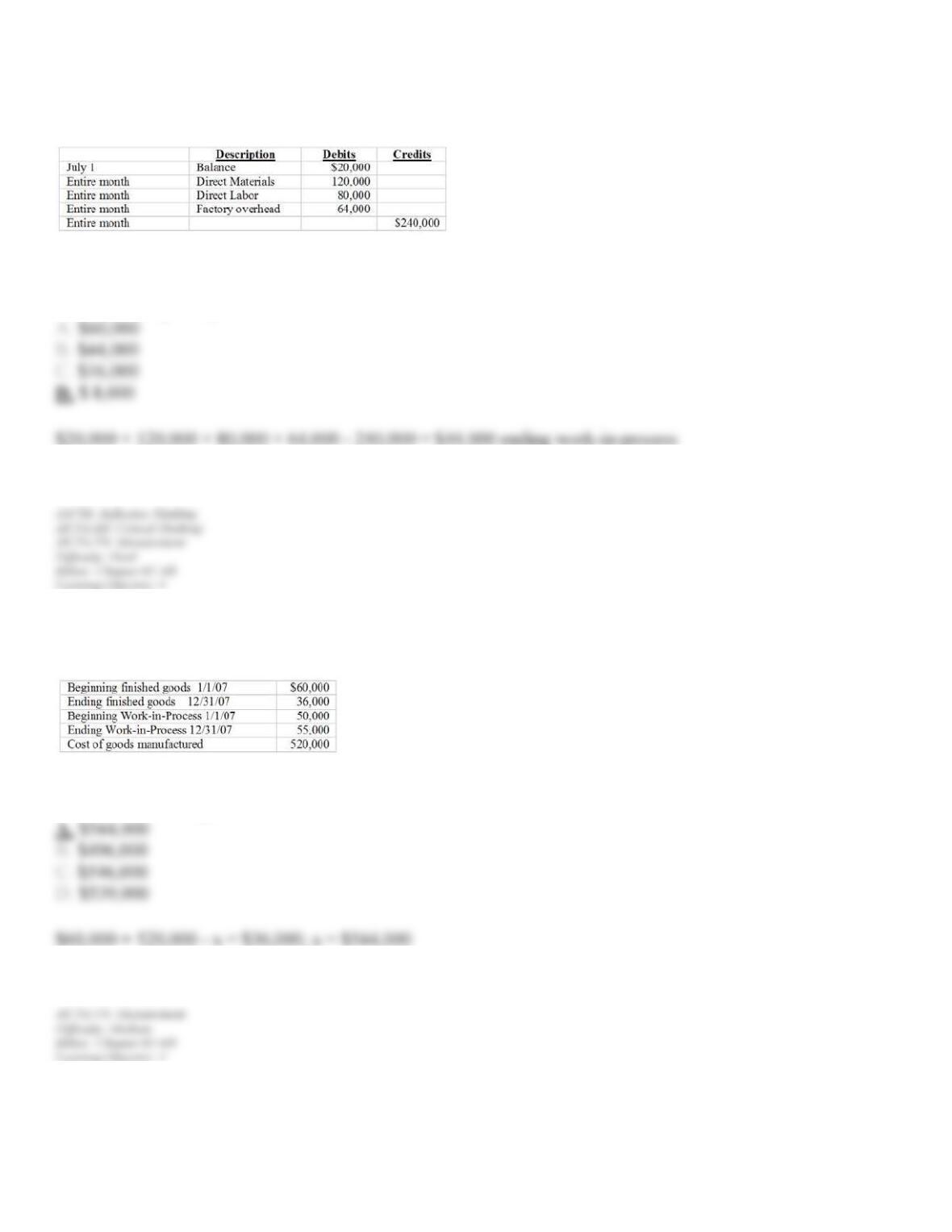
68. Stoughton Furniture uses a job-order cost system. The following debits (credits) appeared in the
Work-in-Process inventory account for July 2007:
Stoughton applies overhead to production at a predetermined rate of 80% based on direct labor cost. Job 80, the
only job still in process at the end of July, has been charged with direct labor of $20,000. The amount of direct
materials charged to job 80 was:
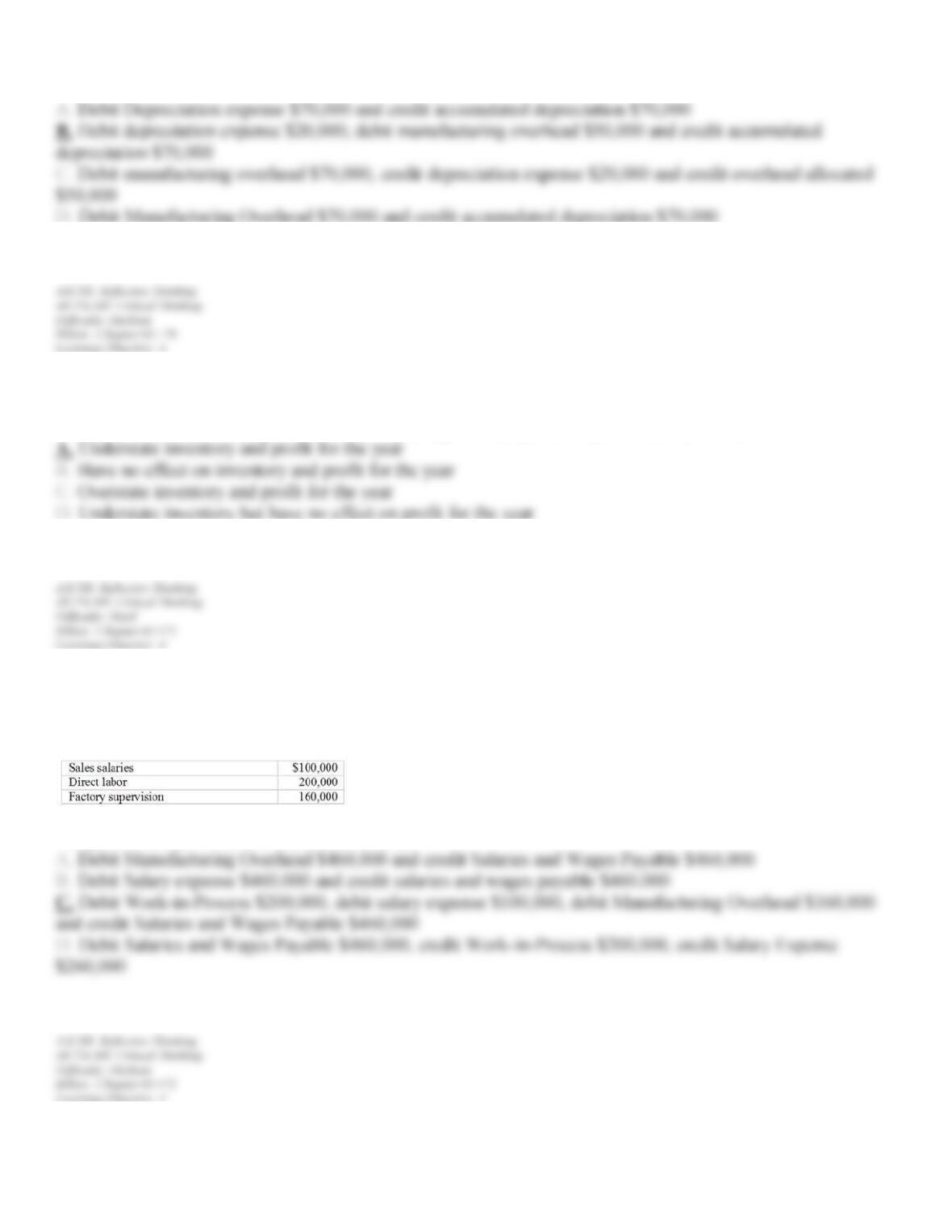
69. The following information pertains to Natick Wood Shop:
What is the cost of goods sold for 2007?
70. Hudson Company incurred $50,000 of depreciation expense on factory equipment and $20,000 for a copy
machine located in the sales manager‘s office. The journal entry to record this should be:
71. Oak Bluff Company incorrectly assigns a $50,000 overhead item to selling expense. Borden has more
inventory at the end of the year than at the beginning of the year. The result of this error will be to:
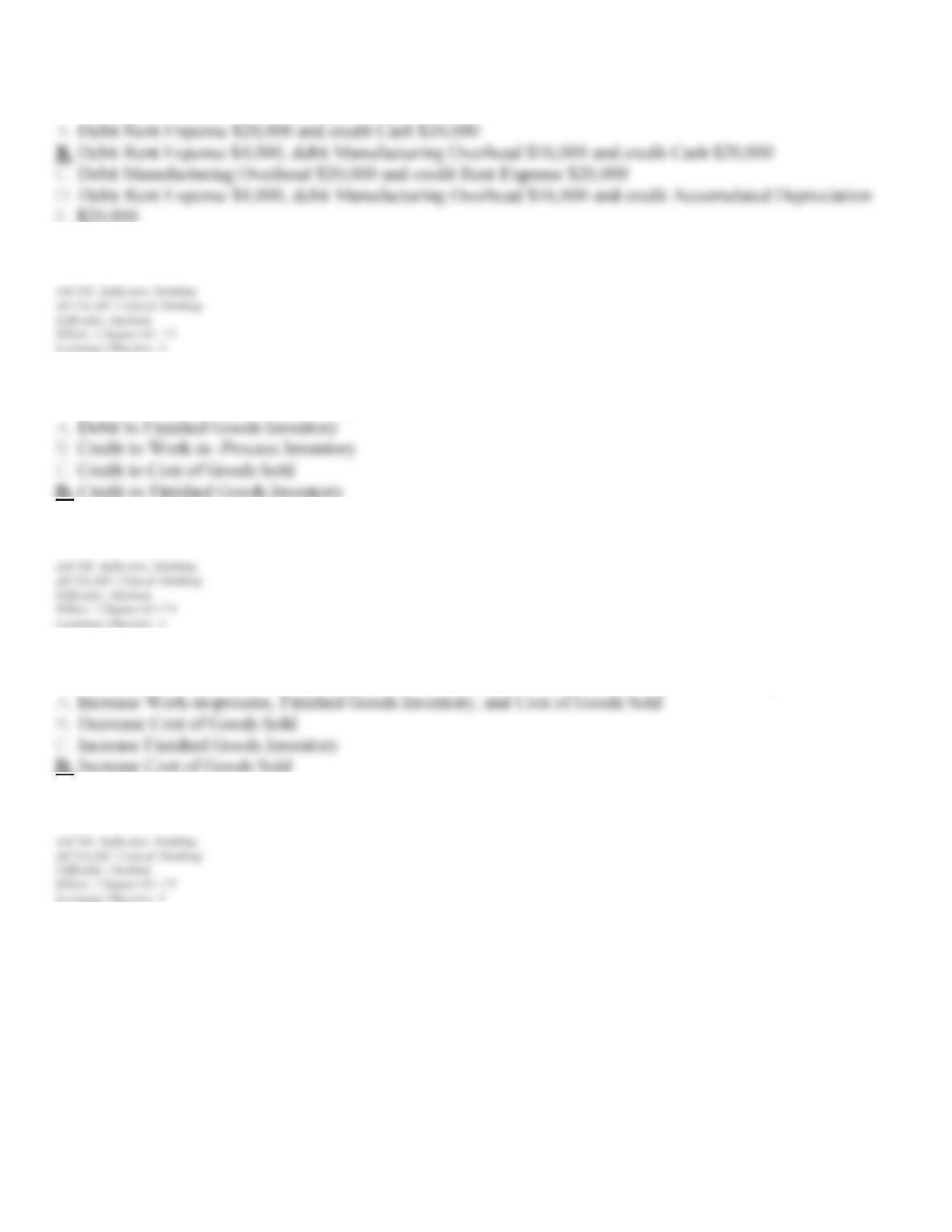
72. Belmont Corporation incurred the following labor costs during the month of July, 2007:
The journal entry to record the above should be:
73. Chatam Company wrote a check to cover the rent for May. The total of the check was $20,000; the
controller estimates that 80% of the square footage of the company was taken up by the factory and 20% by the
accounting and administrative offices. The journal entry to record this check should be:
74. The journal entry to record cost of goods sold would include a:
75. If actual manufacturing overhead is greater than applied manufacturing overhead, most companies will:
76. The predetermined overhead rate for manufacturing overhead for Mansfield Corporation was $8.00 per
direct labor hour. The estimated labor rate was $10.00 per hour. If the estimated direct labor cost was $150,000,
what was the estimated manufacturing overhead?
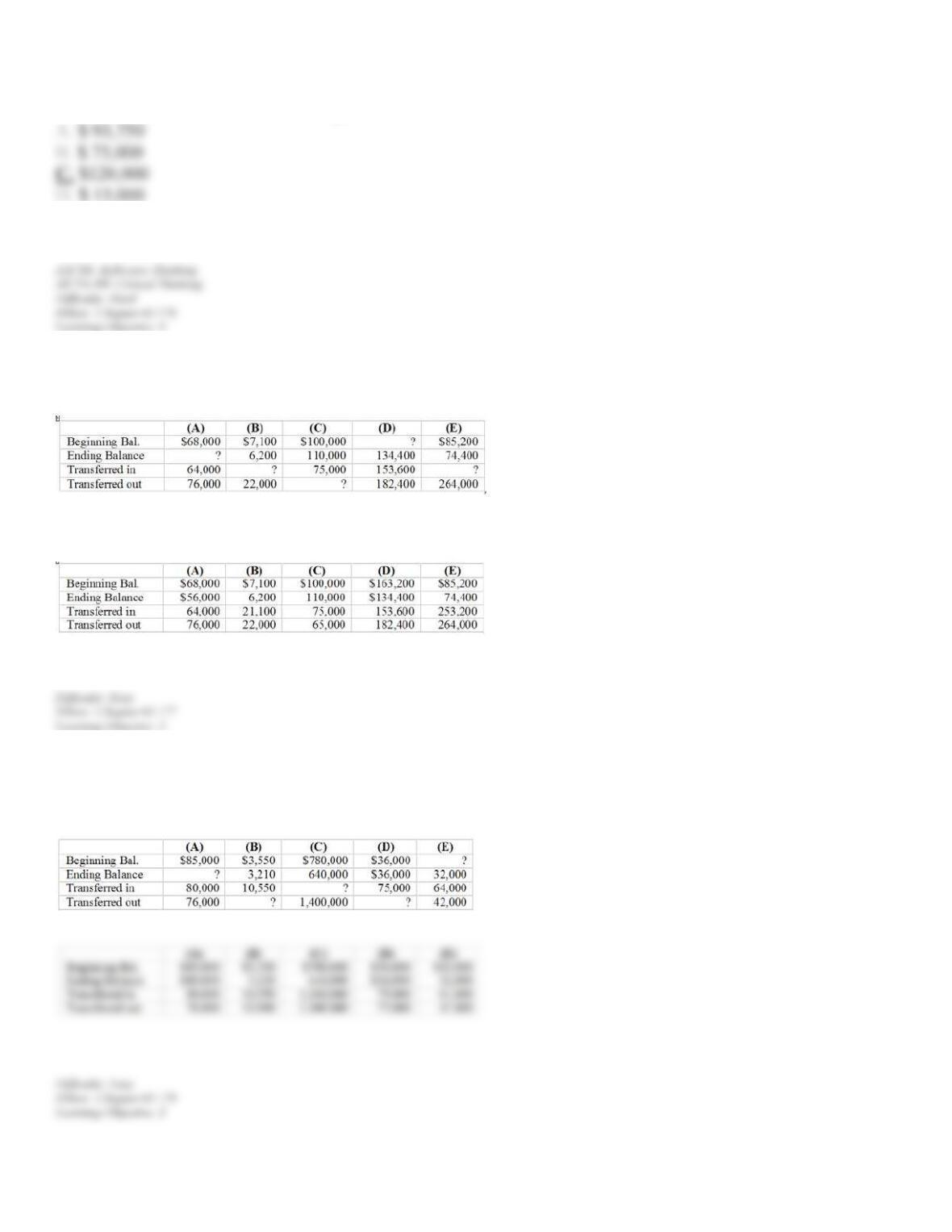
77. Fill in the missing items for the following inventories
78. Fill in the missing items for the following inventories
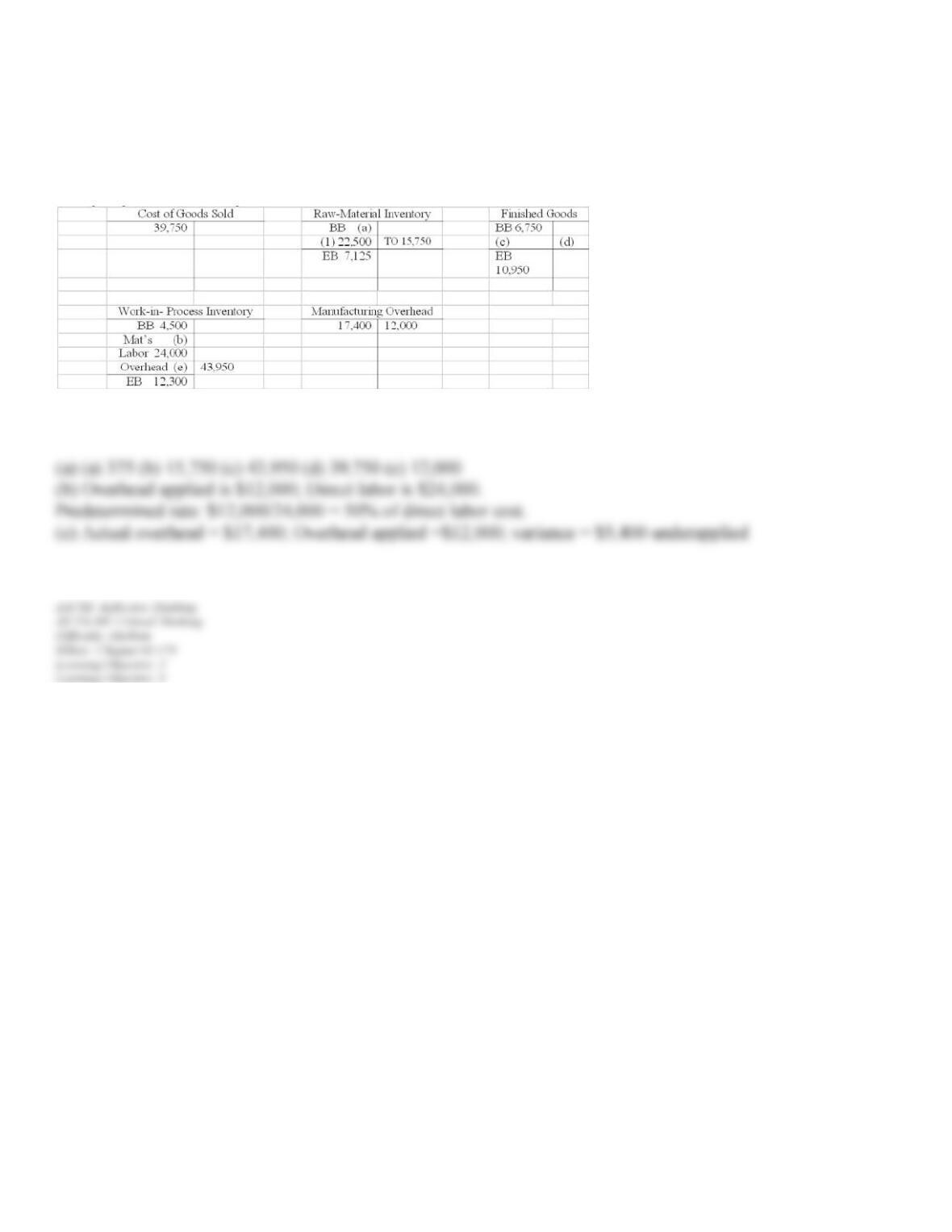
79. Assume that the following T accounts represent data from the Bertelson Corporation’s accounting records.
Required:
(a) Find the missing amounts represented by the letters a, b, c, d and e.
(b) Determine the company’s predetermined overhead rate, based on labor cost.
(c) Compute the Manufacturing Overhead variance.
BB = Beginning Balance; EB = Ending Balance TO = Transferred Out
(1) Denotes materials purchased
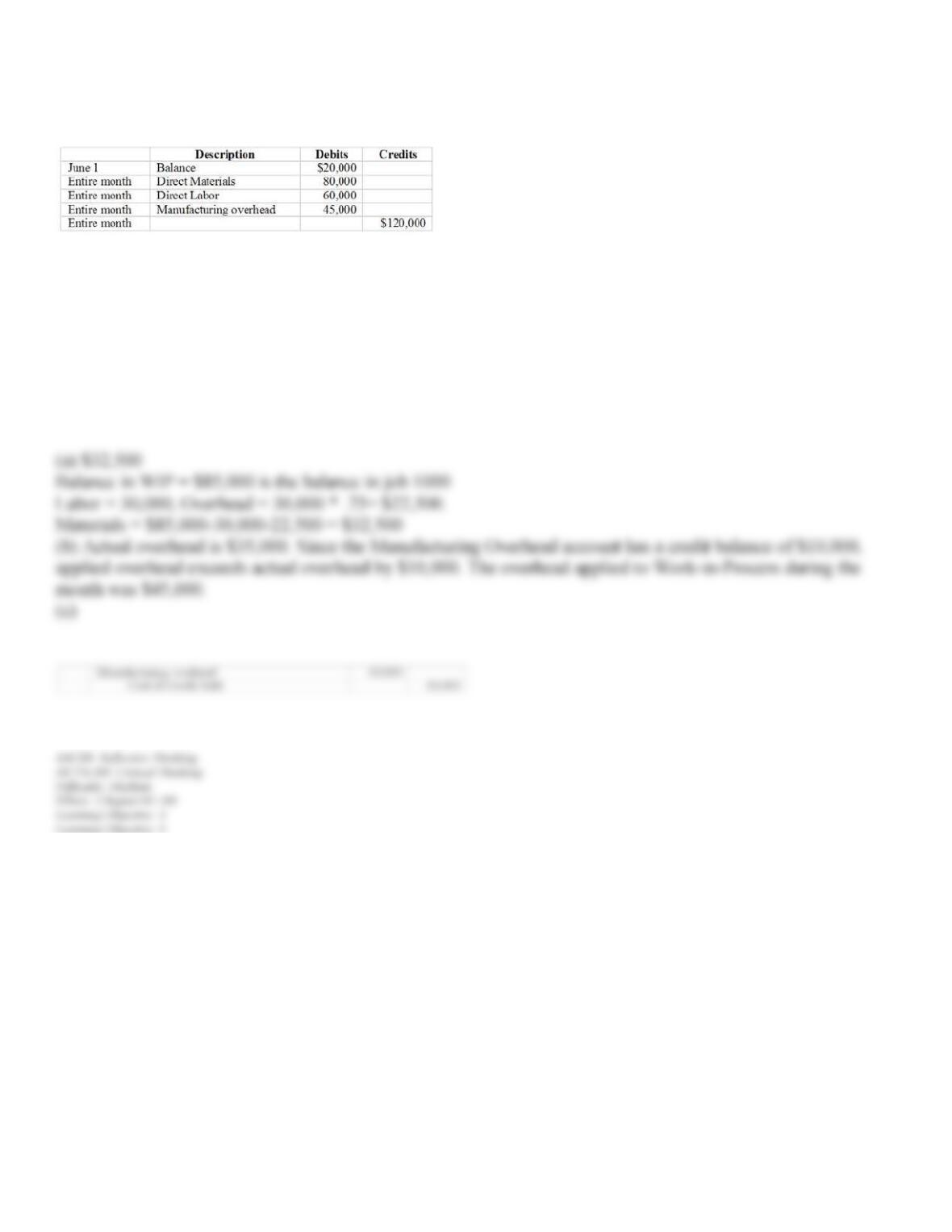
80. McGorry Furniture Company uses a job-order cost system. The following debits (credits) appeared in the
Work-in-Process account for February 2007:
McGorry applies overhead to production at a predetermined rate of 75%, based on direct labor cost. Job 1000,
the only job still in process at the end of June, has been charged with direct labor of $30,000. McGory‘s
Manufacturing Overhead account showed a credit balance of $10,000 at the end of February 2007.
Required:
(a) Calculate the amount of direct materials charged to Job 1000.
(b) Compute the actual overhead for February 2007.
(c) Assume that McGory closes its Manufacturing Overhead account each month. McGory does not prorate the
manufacturing overhead variance. Prepare the entry to close the overhead account at the end of February, 2007.
81. Butte Boat Company, experienced the following events during 2007:
Purchased $1,800,000 of lumber and other materials for building boats.
Incurred $200,000 for advertising.
Paid $60,000 to have lumber transported to its factory.
Had sales revenue of $6,000,000 during the year.
Incurred $400,000 of general and administrative expenses.
Took a periodic inventory at year-end and determined that material costing $ 400,000 was on hand. The
inventory at the beginning of the year was $200,000.
All costs incurred were added to the appropriate accounts. All sales were on credit.
Required:
Give the amounts for the following items in Butte Boat Company’s Raw-Material inventory account:
a) Transfers in (TI).
b) Beginning balance (BB).
c) Transfers out (TO).
d) Ending balance (EB).
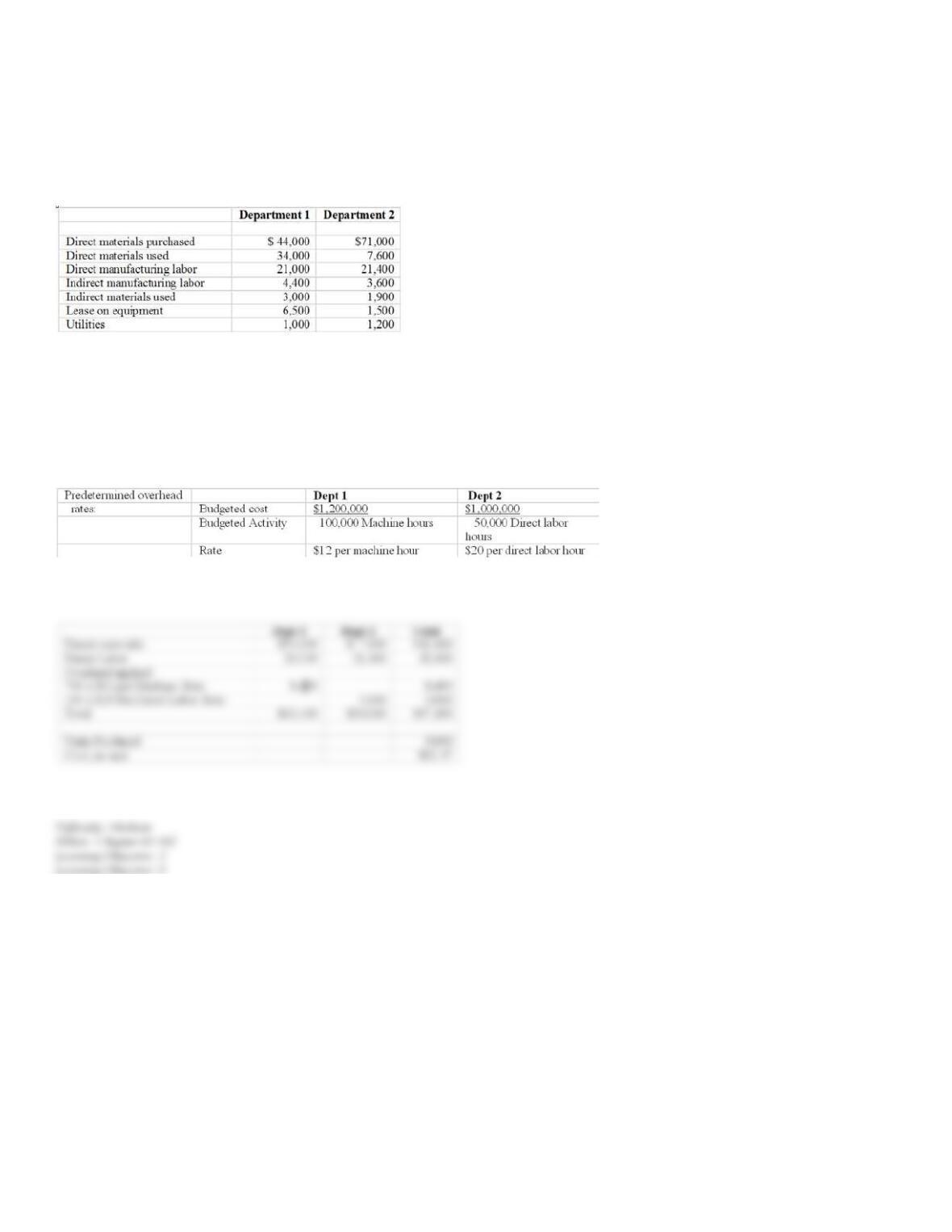
82. Osterville Manufacturing produces lamps for large department stores. For 2007, the two production
departments had budgeted allocation bases of 100,000 machine hours in Dept 1 and 50,000 direct
manufacturing labor hours in Department 2. The budgeted manufacturing overheads for 2007 were $1,200,000
for Dept. 1 and $1,000,000 for Dept. 2. For Job 100, the actual costs incurred in the two departments were as
follows:
Job 100 incurred 700 machine hours in Department 1 and 75 in department 2 and 200 manufacturing labor
hours in department 1 and 250 in department 2. The company uses a budgeted departmental overhead rate for
applying overhead to production. Job 100 consisted of 3,000 lamps.
Required:
Calculate the total cost and per unit cost of Job 100.
83. Ryan Brooks Architecture does custom architectural designs for individuals and corporations. The company
employs two assistants, who are paid $30 per hour. Clients are billed $100 per hour for the work of the
assistants and $150 per hour for Mr. Brooks’ design services. During July 2007, the assistants worked a total of
300 hours for Bridgewater Savings Bank and 200 hours for a custom designed house for Mr. and Mrs. Rodman.
Mr. Brooks worked 200 hours, spending 75% of his time on the Bridgewater Savings Bank job and 25% on Mr.
and Mrs. Rodman’s job. There were 100 labor hours that were not billable to clients. Overhead costs of $20,000
were incurred and assigned to clients on the basis of labor hours. Marketing and administrative costs were
$35,000.
Required:
(a) Compute the revenue and cost for each client.
(b) Prepare an income statement for July, 2007.
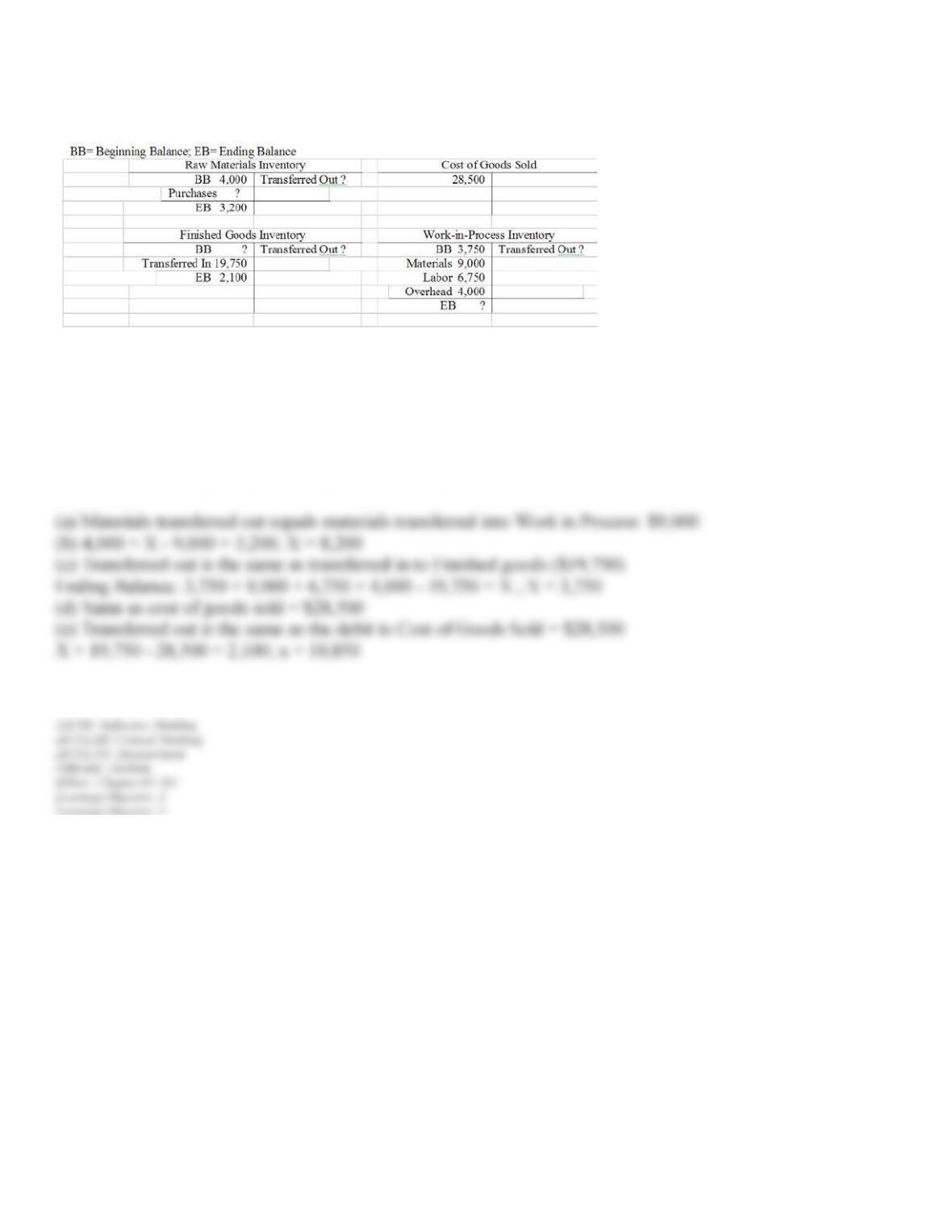
84. The financial records of Courville, Inc. have been destroyed in a fire. The following information has been
obtained from a separate set of records maintained by the accountant. Your assistance is now needed in
computing the missing items.
Required:
(a) Calculate the amount of direct materials transferred out.
(b) Calculate the amount of direct materials purchases.
(c) Calculate the ending work in process inventory.
(d) Calculate the amount of finished goods transferred out.
(e) Calculate the beginning finished goods inventory.
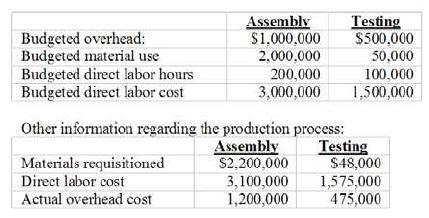
85. Precision Measurement Company manufactures precision-measuring devices used by industrial companies
in various capacities. The devices are produced in two stages: Assembly and Testing. The company has no
beginning inventories because all units produced last year were sold by the end of the year. At the beginning of
the year, the company has an order of 8,000 units. The company’s predetermined overhead rate is based on
materials used in assembly and direct labor hours in testing. Information concerning the predetermined
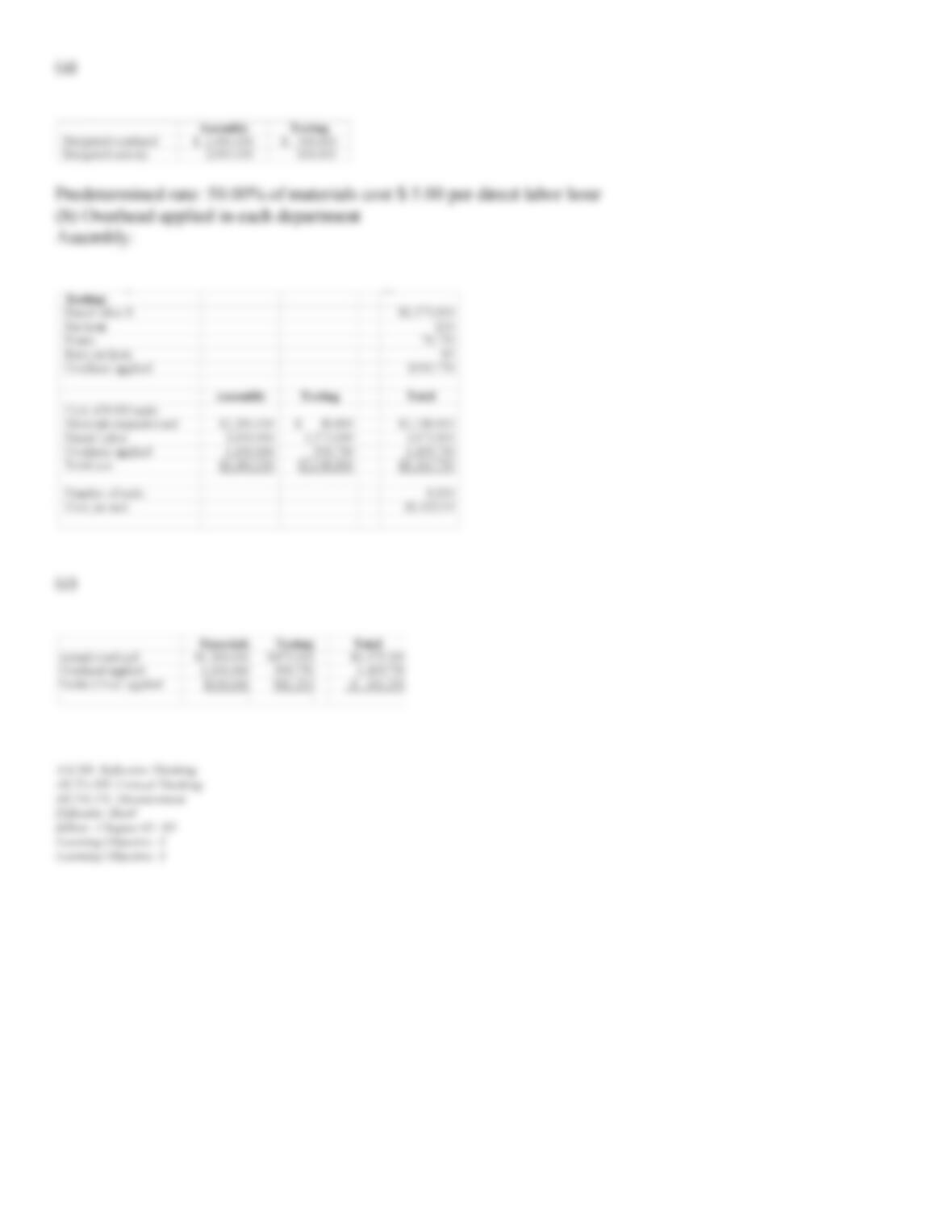
overhead rates appears below: Direct labor is paid $20 per hour.
Required:
(a) Compute the predetermined overhead rate for each department.
(b) Calculate the total and per unit cost of producing 8,000 units.
(c) Determine the manufacturing overhead variance in each department and for the company as a whole.
86. Kennedy Company uses a job order costing system with overhead applied to units
using a predetermined rate based on direct labor hours. At the beginning of the year, the company developed a
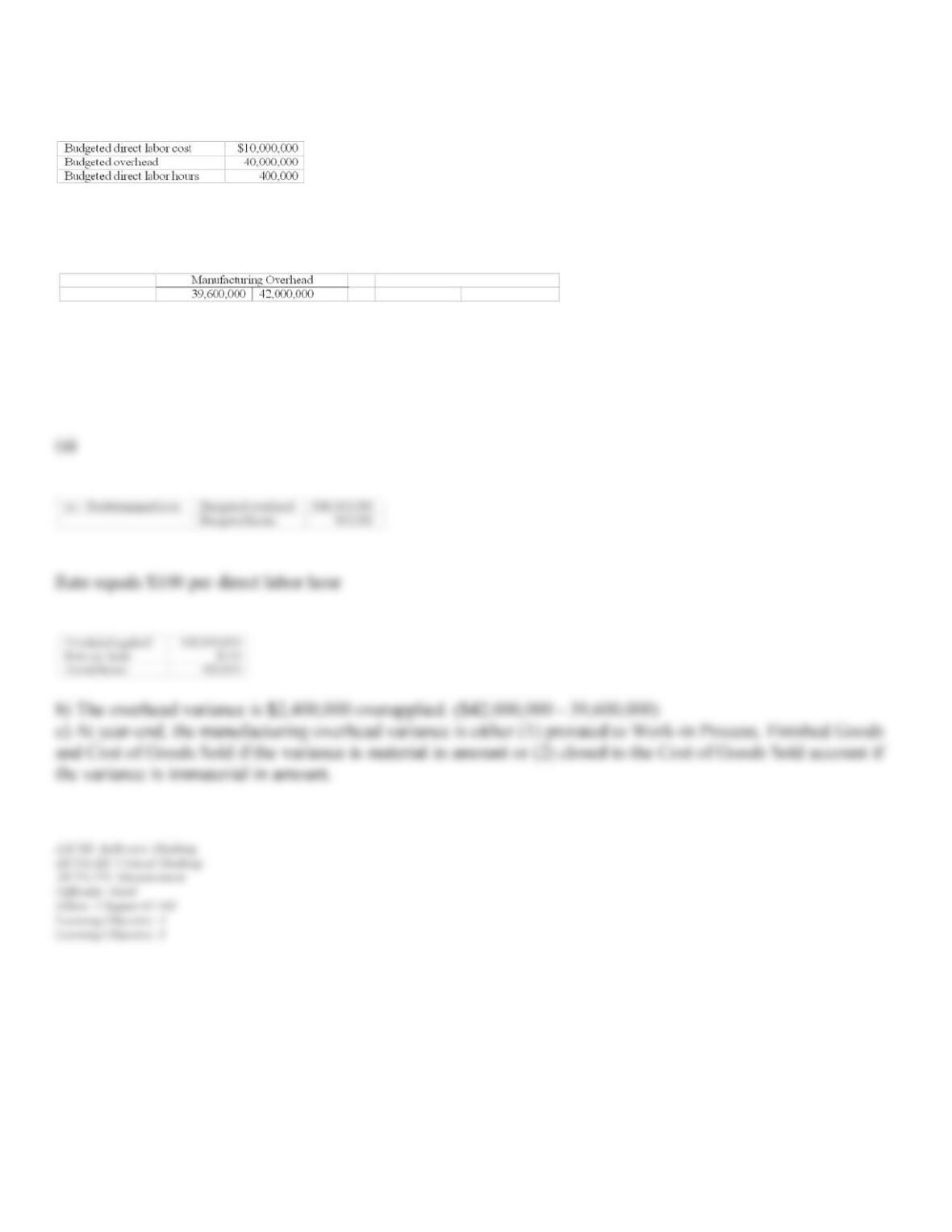
predetermined rate with the following information:
At year-end, the company’s overhead T account showed the following:
Required:
a) Determine the actual direct labor hours incurred
b) Determine the overhead variance. Calculate the separate components of the overhead variance.
c) What are the possible treatments of the overhead variance at year–end?
87. The Button Box is a custom decorating and design store. The company prepares custom draperies to order
for customers. The following transactions were incurred to support job number 757, custom drapes and
furniture coverings for a luxury home:
(a) Purchased $4,000 of materials on account.
(b) Issued $200 supplies from the materials inventory.
(c) Paid for the materials purchased in transaction (a)
(d) Issued $3,200 of materials to the production department.
(e) Incurred hourly labor to sew curtains of $1,500 and supervisory labor of $1,000. Supervisors are assigned to
as many as 10 jobs at once.
(f) Paid $2,000 for utilities and other miscellaneous items for the manufacturing plant.
(g) Overhead is applied at 200% of direct labor cost.
(h) Recorded depreciation on factory equipment of $1,000 and Sales director’s company car of $500.
Required: Prepare journal entries to record these transactions.
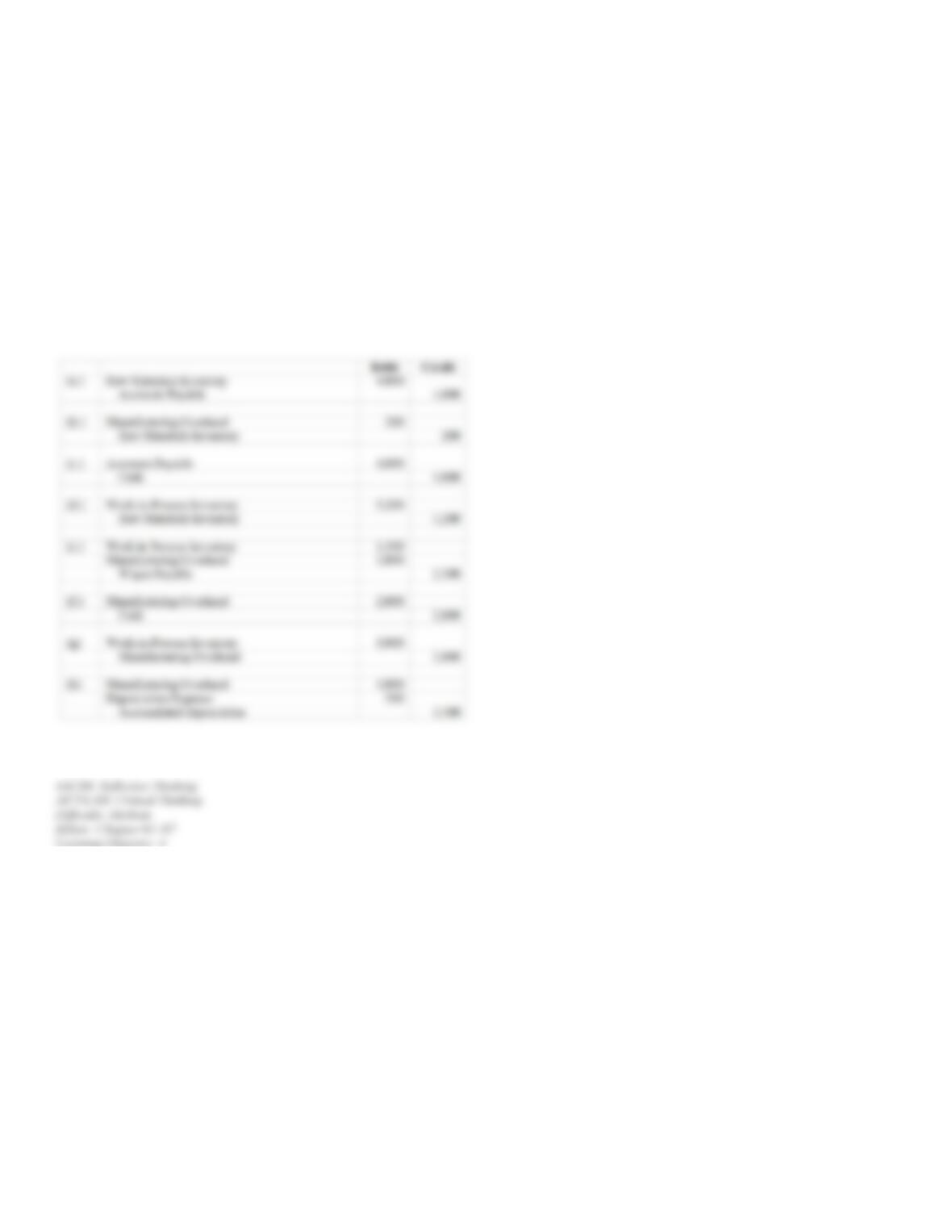
88. Mok Company uses a predetermined cost-driver rate based on direct labor hours. For November, Mok’s
budgeted overhead was $1,200,000 based on a budgeted activity of 400,000 direct labor hours. Actual overhead
was $1,300,000 with actual direct labor hours totaling 440,000.
Required: Calculate the over or under applied overhead for November.
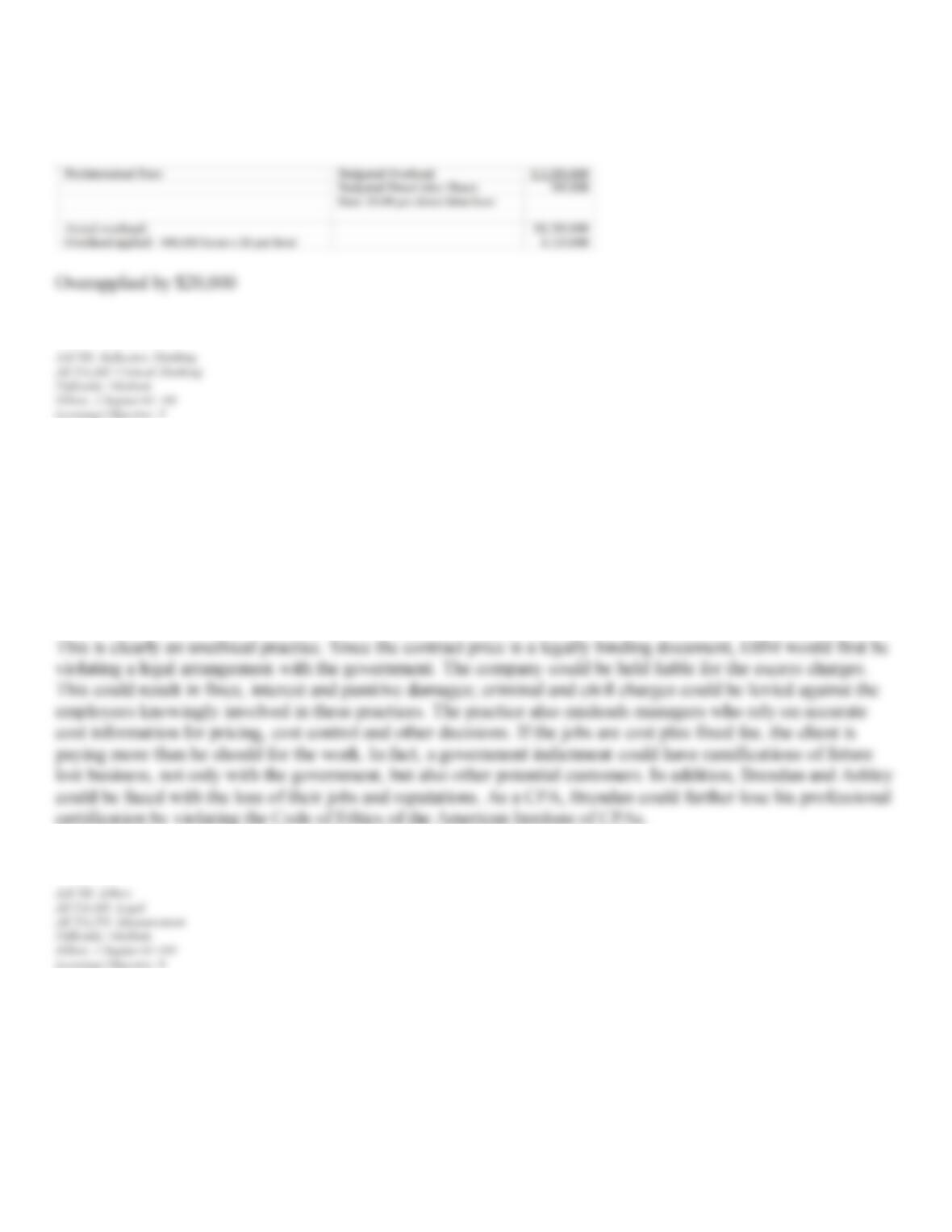
89. EBM is a large, publicly held Corporation. The company does about 80% of its work in government
contracts. All contracts use a cost plus fixed fee basis; costs of jobs are agreed upon by contract. Any overruns
will result in losses to the company. The company controller, Brendan Roche CPA, is discussing two current
jobs with the Job Supervisor, Ashley Henry. Job 100 is currently coming in under budget, but due to
construction problems, Job 102 is 20% overbudget. Roche is considering the possibility of having employees
who work on Job 102 record their time to Job 101.
Required: What are the implications of such actions?
90. Many organizations have been criticized for improprieties in assigning costs to jobs. This practice has been
prevalent in the defense contracting industry where companies have been caught overstating the cost of jobs for
which they were being reimbursed. Major universities have misreported grant money and have overstated costs
of research projects.
Required:
a) Discuss three actions that can result in incorrect job costing.
b) What actions can management take to ensure that proper accounting for jobs is taking place?
91. What is a Gantt chart? Describe how a Gantt chart can help management to avoid cost overruns.
92. Overhead is normally applied to production using a predetermined overhead rate based on some underlying
cost driver. The amount of overhead allocated to jobs will normally not be the same as the actual amount of
overhead cost incurred. The difference is called the overhead variance. Name two possible treatments for the
overhead variance at the end of the accounting period. What are the pros and cons of each treatment? When
should each be used?
93. Distinguish between job order costing, process costing, and operation costing.
Give an example of a company that would use each.
94. Briefly explain the difference between Actual Costing, Normal Costing, and Standard Costing. How does
each system assign direct and manufacturing costs to products? Why do many organizations use normal costing
or standard costing instead of actual costing?